




Abstract
COVID-19 has necessitated innovation in many parts of our lives and qualitative research is no exception, as in-person qualitative data collection has been complicated by the constraints of social distancing and the prioritization of participants’ and researchers’ safety. Consequently, virtual methods have quickly gained traction. However, there is little research that comprehensively explores the range of practical, rigorous, and ethical considerations that arise when designing and engaging in virtual qualitative research. Addressing this gap, we examine the process of designing and conducting a virtual qualitative study, using specific examples from our case study of student homelessness in Houston, Texas that drew from semi-structured interviews and the analysis of over 50 documents. Garnering insights from Salmons’ Qualitative e-Research Framework (2016), and benefiting from 22 technical memos that documented our process, we profile the challenges we faced—and choices we made in response—as we designed and conducted our study. Our findings suggest that in practice, engaging in virtual qualitative research, particularly in the era of COVID-19, is a purposive exercise that requires thoughtful, careful analysis around a number of methodological challenges as well as ethical and equity-oriented questions. Our exploratory work has timely implications for qualitative scholars in the current COVID-19 context, but also showcases the potential to conduct high-quality, rigorous, ethical qualitative research in a virtual format, offering a glimmer of hope for more equitable qualitative research in contexts of crisis and beyond.
COVID-19 has necessitated innovation in many parts of our lives—and qualitative research is no exception. Interviews are often the cornerstone of qualitative research and, historically, conducting them in person has been considered the “gold standard” (Novick, 2008; Opdenakker, 2006; Sy et al., 2020). Yet, in the COVID-19 era, in-person data collection—for semi-structured interviews, focus groups, and observation—has been complicated by the constraints of social distancing and the prioritization of participants’ and researchers’ safety. Conducting qualitative research virtually affords scholars the opportunity to study contexts of crisis while safeguarding participants and researchers (Lobe et al., 2020). As such, virtual methods has recently made traction (Lobe et al., 2020; Sy et al., 2020; Teti et al., 2020).
The extant body of literature on virtual qualitative research often profiles technology tools (e.g., Adom et al., 2020; Archibald et al., 2019; Moylan et al., 2015), with limited work critically addressing recruitment and establishing rapport with participants (e.g., Dodds & Hess, 2020, O’Connor et al., 2008)—particularly with vulnerable populations (e.g., Dodds & Hess, 2020). Additional field issues in virtual work such as researcher positionality or dissemination of findings are largely overlooked. With notable exceptions (e.g., Sy et al., 2020), ethical and equity-oriented issues are largely discussed as quite similar across modalities (Janghorban et al., 2014; Lobe et al., 2020; virtual vs. in-person Dodds & Hess, 2020).
Drawing on our own study of student homelessness in Houston during the pandemic, this paper adds to the scant, but growing body of literature on conducting qualitative research during the COVID-19 era (Adom et al., 2020; Dodds & Hess, 2020; Lobe et al., 2020; Sy et al., 2020, Teti et al., 2020). However, while COVID-19 forced us to reckon with our methodological choices, the implications of our work extend beyond the current health crisis and provide insights for the future of qualitative research. We argue that the process of designing and conducting virtual qualitative work presents more complex challenges and opportunities than the extant literature may suggest. Indeed, as our work demonstrates, virtual methods may be of heightened value for research that aims to address structural inequities in education, health, housing, and general well-being, while also presenting unique challenges.
Garnering insights from Salmons’ Qualitative e-Research Framework (2016), we present a comprehensive examination of the process of conducting virtual qualitative research that is rigorous, practical, ethical and equitable. Rather than simply approaching virtual work in a similar fashion to in-person, we advance the field of virtual qualitative research by examining the entire research cycle—from the initial design of the work through dissemination of findings—that researchers may need to grapple with in order to conduct high-quality, rigorous, and ethical virtual qualitative work. Directly resulting from this work is a tool, which we present in the Appendix, to support researchers in their conversations and decisions around conducting virtual qualitative research.
Research Context
We situate our discussion of virtual qualitative methods in our work studying student homelessness in Houston, Texas. Part of a longer-term ongoing project, we were examining homelessness in the context of a generational natural disaster—Hurricane Harvey—which struck the city in 2017. Harvey displaced tens of thousands from their homes (Mooney, 2018)—particularly those in Houston’s poorest and most marginalized communities (Fernandez, 2018). As a result, the number of students experiencing homelessness in Houston Independent School District more than quadrupled to nearly 30,000 (Pavlakis, Richards, et al., 2020). More than 2 years later, and even before the economic toll of COVID-19, thousands of Harvey’s victims remain homeless (Fernandez, 2018; Vigh, 2019).
Our work sought to understand how cross-sector collaborative actions address student homelessness and respond to crises (Hallett & Skrla, 2017; Miller, 2011; Pavlakis, 2014; Wilkins et al., 2016). Toward that end, we intended to frequently travel to Houston—240 miles from our research team’s location—to conduct interviews with school personnel, community service providers, and parents experiencing homelessness. In addition, while in Houston, we had planned to collect documents relevant to anti-poverty service delivery (e.g., flyers, professional development materials, and mission statements).
Our plans were complicated, however, when COVID-19 swept the United States in March 2020. We were compelled to engage in our work during the pandemic rather than wait until it subsided as COVID-19 only increased the need to provide actionable information to educators and service providers supporting vulnerable families. Reflecting historical patterns of homelessness, and supported by emerging evidence on evictions, COVID-19 is expected to substantially increase student homelessness (Miller, 2013; Murdock, 2020; see also Kauer, 2020). In addition, those facing housing instability are disproportionately vulnerable to the economic and public health impacts of the pandemic; people experiencing homelessness have double the hospitalization rates and double to triple the mortality rates from coronavirus (Culhane et al., 2020). Moreover, social distancing measures and the online delivery of K-12 schooling are likely to complicate schools’ and communities’ already challenging efforts to support these students (Kauer, 2020; Pavlakis, Roberts, et al., 2020; SchoolHouse Connection, 2020). To move forward in our work, we turned to the research on virtual qualitative methods.
Virtual Qualitative Research
Notably, the vast majority of the methodological literature profiles the technology tools available for virtual research (e.g., Adom et al., 2020; Archibald et al., 2019; Moylan et al., 2015). Even before the pandemic, scholars had begun to attend to how qualitative researchers may leverage technology—including the use of virtual formats—to conduct interviews remotely. While earlier literature focused on tools like email and chat/messenger software (e.g., McCoyd & Kerson, 2006; Olivero & Lunt, 2004; Opdenakker, 2006), more recent scholarship has examined videoconferencing software that allow for synchronous exchanges (e.g., Archibald et al., 2019; Deakin & Wakefield, 2013; Deutsch, 2011; Glassmeyer & Dibbs, 2012; Janghorban et al., 2014; Wilson, 2011), providing guidance, for example, on the tools’ features, advantages, and disadvantages for research purposes (Lobe et al., 2020).
A limited body of work addresses recruitment and establishing rapport, highlighting potential advantages such as overcoming geographic limitations (Archibald et al., 2019; Dodds & Hess, 2020) and faster recruitment time (Rupert et al., 2017). Of particular importance, however, is the impact of the digital divide, including issues around unequal access to virtual devices, tools, and internet connectivity (O’Connor et al., 2008; Sy et al., 2020).
To establish rapport, scholars (Archibald et al., 2019; Deakin & Wakefield, 2013; Lo Iacono et al., 2016; Sy et al., 2020) tout the benefits of using virtual techniques that allow for synchronous video exchanges (e.g., videoconferencing software) over other virtual techniques (e.g., messenger or chat tools, audio only exchanges or calls, or email). Use of videoconferencing software may negatively impact rapport if there is poor connectivity or “dropped” calls (Seitz, 2019), but experiencing technical difficulty can also have the unintended benefit of increasing bonds between the researcher and participant as they work together to resolve the technical issue (Archibald et al., 2019). Additionally, Seitz (2019) and Deakin and Wakefield (2013) note that exchanging multiple emails with a participant prior to a virtual interview can also help build rapport. Additional field issues, and how they may in fact differ in virtual contexts—such as the unique considerations around positionality or the dissemination of findings—have largely been overlooked in the literature.
Ethics of Virtual Qualitative Research
The extant literature tends to frame the ethical considerations of virtual qualitative research as comparable to those of in-person research (Dodds & Hess, 2020; Janghorban et al., 2014; Lobe et al., 2020). Indeed, Lobe and colleagues (2020) argue that “most of the fundamental ethical issues in online interviewing are the same as in face-to-face contexts” (p. 7), and that transitioning from an in-person format to a virtual one would likely only require a “simple ‘amendment’” (p. 7) to an IRB proposal for in-person research. Additionally, Dodds and Hess (2020), who began their study on youth alcohol consumption with in-person group interviews, but shifted to virtual group interviews when COVID-19 made in-person research infeasible, take a similar stance. In their discussion of the ethical considerations of their work, they maintain that “there were no key differences between face-to-face and online as both required the usual ethical procedures, such as, gaining informed consent and ensuring anonymity, privacy and confidentiality of the participants’ identity” (para. 10).
However, this may not always be the case. In fact, ensuring that virtual qualitative research is conducted ethically may require attention to different issues and some best practices from in-person research may not transfer (Salmons, 2016). For example, virtual work may afford participants and researchers greater privacy while maintaining physical safety; participants can choose not to use video, apply a virtual background, or in contrast to in-person interviews, even ethically withhold if they tested positive for COVID-19. However, virtual methods may also present new privacy concerns, as researchers may be intruding into participants’ personal space, especially if participants are in their own homes and do not use a virtual background or have access to headphones (see Sy et al., 2020).
Little to no work, however, has examined virtual qualitative research comprehensively, focusing on the interconnectedness of technological, practical, and ethical decisions. We bridge this gap by examining how we designed and conducted our qualitative case study of student homelessness as a fully virtual enterprise. In doing so, we discuss a myriad of considerations—methodological and ethical as well as technological and practical—that arose and highlight that the process may not be as simple as much of the extant literature suggests.
Conceptual Framework
Guiding our virtual qualitative research design process was Salmons’ Qualitative e-Research Framework (2016), which encourages critical reflection in developing comprehensive research designs in virtual spaces and highlights the need for scholars to consider best practices throughout all aspects of the research process. Table 1 presents and describes the interrelated categories included in Salmons’ framework and a brief description of each category. We drew upon the holistic nature of Salmons’ framework for organizational insights; the framework helped ensure that we remained thoughtful and purposive throughout the entirety of the study.
Categories in Salmons’ Qualitative e-Research Framework.

Method
In examining how we designed and conducted our qualitative case study of student homelessness as a fully virtual enterprise, we drew on detailed documentation of our research process. Throughout the study, our research team met virtually three times a week. These meetings gave us space to discuss methodological choices, examine field issues as they arose, check our coding to ensure trustworthiness (Guba & Lincoln, 1989), and encourage reflexivity throughout the research process (Schön, 1992; Warin, 2011). We kept detailed technical notes of our methodological decisions, both as we designed the study as well as throughout data collection and analysis. Our central data sources included multiple versions of a virtual interview procedure document that we created and, once we started qualitative data collection, analytical and self-reflective memos from our semi-structured interviews (Creswell, 2007). Below, we discuss these data sources in detail.
Procedural Document, Analytical, and Self-Reflective Memos
Conducting interviews in a virtual format required unexpected and unfamiliar labor. To address this, we used two researchers during interviews—one served as the interviewer and another as technical support. To ensure a smooth interview process, we created a virtual interview procedure document (VIPD) that clearly outlined the steps performed by each researcher.
Our team created the VIPD through an iterative process. Similar to a cognitive interview, we conducted several mock interviews and stopped at certain points to discuss what was not working and why—revising the VIPD as needed. In all, the document underwent eight iterations before we used it for data collection. Each version of the VIPD, annotated with our notes and edits (see Figure 1), served as technical memos documenting the evolution of and rationale for our methodological choices.
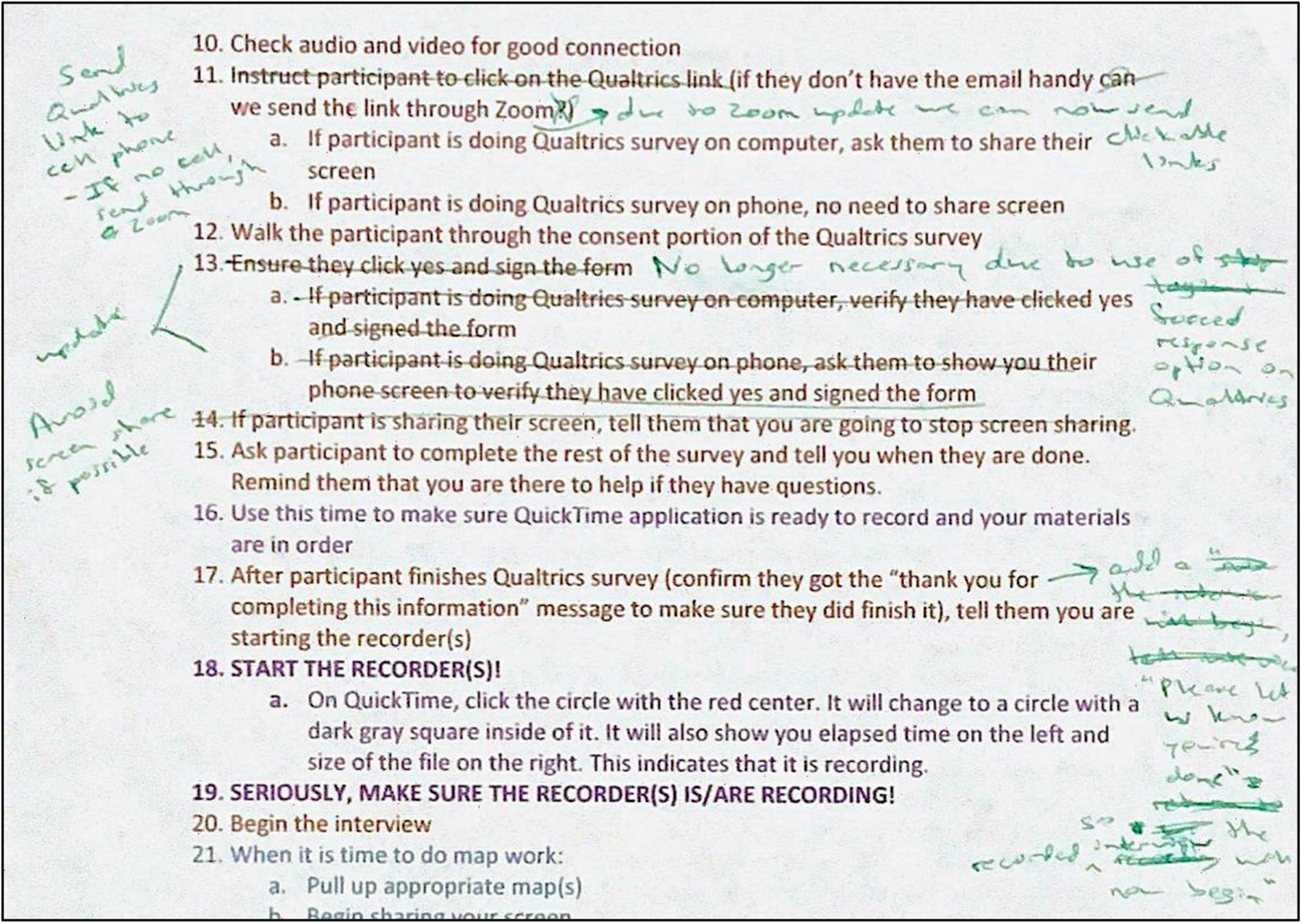
Excerpt of annotated virtual interview procedure document [VIPD], Version 5, 6-10-2020.
Once we began conducting our semi-structured interviews, we met virtually after each interview and then co-constructed detailed analytical and self-reflection memos (Creswell, 2007). The analytic memos provided additional technical documentation of the virtual process while our self-reflection memos noted our own impressions of the interviews. In all, we created 22 technical and self-reflection memos, of which eight were from the VIPD and 14 were based on the interviews.
Data Analysis
As we began analyzing our data, we first read through all of our documentation in its entirety. We then engaged in an open coding process, reading through the documentation carefully, line by line, to reveal key themes. Next, we engaged in axial coding where we grouped open codes around these key themes (Strauss, 1987). Finally, we made connections between our themes and the components of Salmons’ framework where applicable. Table 2 is an excerpt of the coding book generated from this process.
Data Analysis of Memos.

Discussion of Findings
A number of central themes emerged from our analysis, which we grouped into two overarching categories: 1) ensuring methodological rigor, and 2) assuring ethical and equitable research (see Table 3). We discuss each of these in turn, connecting our findings to the extant literature throughout. Extending the discussion below, considerations for other scholars in conducting their own research are highlighted in the study’s Appendix.
Key Findings.

Ensuring Methodological Rigor
Methodological rigor is of paramount concern to any study, irrespective of modality. While some scholars have focused on the choice of virtual platform as the primary methodological decision facing those conducting virtual qualitative research (Lobe et al., 2020), our experiences are consistent with the position that virtual research involves broader and more fundamental methodological considerations that are distinct from in-person research (Moylan et al., 2015; Nind et al., 2012; Salmons, 2016; Sy et al., 2020). Below, we highlight some of the key themes that emerged from our analysis, drawing loosely on Salmons’ Qualitative e-Research Framework for organizational insights and grouping them as: 1) aligning purpose, design, and methods, particularly in the context of COVID-19; 2) technological considerations; 3) use of a second researcher for interviews; 4) recruitment of participants; and 5) researcher positionality.
Aligning purpose, design, and methods in the context of COVID-19
We found that COVID-19 necessitated substantial changes to our research questions and interview protocols to ensure alignment between the purpose and design of our virtual study. As we note above, our original study purpose was to understand how cross-sector community and school stakeholders support students and families experiencing homelessness in the aftermath of Hurricane Harvey. With the onset of COVID-19, however, Houston was grappling with two disasters simultaneously. Initially we thought this only necessitated minor recalibration, such as adding a handful of interview questions about COVID-19 to our existing questions about pre- and post-Harvey supports for students and families experiencing homelessness in our interview protocols. However, as we saw COVID-19 transforming the world and our own lives daily, we realized that a more fundamental shift in our study was necessary to capture this historical moment. Thus, we shifted the purpose of our study away from primarily examining the lingering impacts of Harvey and centered the purpose of our study instead on the ways in which COVID-19 was shaping school and community actors’ efforts within a context where hurricane recovery was still very much a factor. In this way, the impacts of Hurricane Harvey became part of the context in which participants were also experiencing COVID-19.
As such, we revisited and revised our research questions to reflect the intersection of COVID-19 and Harvey recovery and substantially redesigned our protocols to align with this revised focus. It was a difficult decision to move away from our original focus, but we reminded ourselves that our protocols needed to align with our purpose to provide timely and appropriate feedback for improved service delivery. Moreover, as interviews progressed, it became clear that the ways in which our participants thought about their experiences with Hurricane Harvey in retrospect were now indelibly colored by the pandemic.
While we acknowledge that not all research endeavors may need such fundamental changes owing to adopting a virtual format alone, it is clear that the pandemic has left little about our society untouched. Indeed, the purpose of our study was indelibly altered by the pandemic. While Salmons’ framework encourages researchers to carefully consider the alignment between purpose, design, and methods, our work illustrates the ways in which these choices not only require alignment with one another, but also need to correspond to the needs and priorities of participants in a given moment in time. Our changes clearly resonated with our research participants; value and importance of the research emerged as a theme in our memos. Despite practitioners noting that COVID-19 increased their stress, some interviewees explicitly noted how thankful and excited they were for the opportunity to participate in our timely study, (interview memo, 7-7-2020; also interview memo, 7-29-2020). As such, researchers should be cognizant of how their questions, even on “unrelated” topics, may resonate with participants and how their answers will likely be inextricably tied to the historical moment in which they were offered.
Technological considerations
While technology should not be the sole consideration, it is an important one. Three subthemes emerged in our findings on technology: 1) choice of technological tools, 2) changes to data collection process, and 3) changes to researcher workload. First, consistent with Lobe and colleagues (2020) and others, our experiences suggest scholars must carefully consider the features of virtual platforms in planning their research. For example, we elected to conduct our interviews via Zoom—in part because we have an institutional license to the software. However, we discovered that our participating school district used Microsoft Teams, and this incongruence sometimes caused additional technological issues, such as miscommunication on how to log in.
Secondly, while the extant literature has focused on the choice of software and technology, our experiences also highlight the importance of attending to the process of conducting interviews over videoconferencing software (Adom et al., 2020; Dodds & Hess, 2020; Lobe et al., 2020). We discovered we could not simply replicate an in-person interview with virtual technology. In fact, several of the themes that emerged from our memo coding were related to technological considerations, such as the advantages and disadvantages of our technological choices as well as unexpected issues that arose in the process. For instance, our protocols called for us to share and mark up virtual maps of community assets with participants whose digital literacy and technological access varied greatly. In addition, toward our goal of collecting documents relevant to anti-poverty service delivery (e.g., flyers, professional development materials, and mission statements), which we could no longer do in person, we grappled with how to collect these documents from a distance (see Table 2). Working through solutions to these problems required several iterations of pilot testing.
Finally, while use of technology eliminated some of the tasks needed to conduct interviews in person (i.e., driving to the interview location), we found that the virtual environment increased our workload in other ways (i.e., conducting the interview while also attending to technologically-related tasks such as screen sharing). To address the additional workload necessitated by conducting interviews virtually, we made the choice to include two research team members in each interview: a primary interviewer and a technology support person to attend to audio recording, screen sharing, and annotations to virtual maps of community assets used in conjunction with our interview protocols. To coordinate the efforts of the two researchers and ensure the additional tasks of virtual research were completed, we used our VIPD to serve as a step-by-step guide for completing each interview that clearly delineated each researcher’s role and included tasks prior to the day of the interview, immediately preceding the interview, during the interview, and after the interview (see Figure 1 and Table 2).
Use of second researcher for interviews
We found that having a second researcher present for our virtual interviews had a number of advantages beyond the distribution of technical tasks. First, similar to Dodds and Hess (2020), who reported using a second researcher as a scribe and Glassmeyer and Dibbs (2012) who used a graduate student during some of their interviews to take notes on information such as visual cues used during the interview, the second researcher in our interviews was able to take copious notes throughout the interview. For instance, we were able to note: rapport (e.g., “[participant] seems a little cool and not chatty at first, but once she started answering questions, she seemed comfortable and very talkative,” interview memo from 8-10-2020); the potential advantages or disadvantages of the format (such as participants’ attention); and any technical difficulty (e.g., “audio and video, pretty good connection, word or two dropped here or there; dropped call at 48 min in, but connected right back,” interview memo from 8-11-2020). These notes were helpful in facilitating our post-interview discussions and memo creation—processes that encouraged reflexivity and increased rigor (Probst & Berenson, 2014).
Furthermore, the second researcher was able to share information with the primary interviewer in real-time via a private and secure messaging application (i.e., WhatsApp). Often, this allowed the researchers to communicate practical information during the interview, such as informing the interviewer that they turned the recorder on or that the consent signature was received in the Qualtrics; a practical advantage of using a second researcher not addressed in prior scholarship (e.g., Dodds & Hess, 2020). This communication also served as a “backchannel” to improve the data gathering. For example, after completing the informed consent process via Qualtrics, each participant completed a basic survey on the same platform that asked questions regarding their professional role, including questions on the community organizations and/or schools in the district with which they worked closely. During the interview, the second researcher would review these responses and inform the interviewer of any relevant information so the interviewer could tweak questions in response.
Extending the literature base (e.g., Dodds & Hess, 2020), we also found that the use of a second researcher improved rapport with participants. Because the second researcher took detailed notes and attended to the technical issues of the interview, the interviewer could focus their attention on the participant, maintaining eye contact and employing facial expressing and non-verbal cues to indicate their attentiveness—behaviors that are particularly crucial for building rapport in virtual interviews (Archibald et al., 2019; Glassmeyer & Dibbs, 2012). Additionally, ensuring that the participant was aware of who was on Zoom also built trust and rapport. Both researchers began the interview with their video and audio turned on and the interviewer introduced both researchers at the beginning of the call, before informing the participant that the second researcher would be present to provide support, but would be turning their audio and video off. This avoided distracting the participant with two video feeds and afforded the second researcher the ability to provide support in the background. Introducing both researchers also helped ensure that the participant knew who was present, information that must be explained more explicitly in virtual settings (Glassmeyer & Dibbs, 2012). Use of the second researcher complemented our other efforts to build rapport, such as exchanging multiple emails with participants prior to the interview (see Deakin & Wakefield, 2013; Seitz, 2019).
Recruitment of participants
The extant literature on virtual qualitative methods has identified both the challenges of recruitment in this modality as well as potential advantages over in-person methods, such as recruiting geographically distant populations or participants with mobility issues (e.g., Dodds & Hess, 2020; Sy et al., 2020). Consistent with Sy and colleagues (2020), our findings highlight the difficulties recruiting marginalized populations owing to limited or inconsistent access to virtual tools.
For some participant subgroups, such as school personnel and community service providers, recruitment would have taken place via email even for an in-person study. As such, our recruitment efforts for these groups remained largely unchanged and we were able to interview participants from these groups almost immediately. However, we found increased challenges when determining how to best recruit parents or guardians experiencing homelessness who are difficult to recruit under “normal” conditions due to high mobility and stress. We had originally expected to be physically present in shelters often and to build relationships with personnel at these organizations who may serve as gatekeepers (Hammersley & Atkinson, 1995), facilitating recruitment of parents or guardians through shelter and rehousing program staff and programming, and interviewing until we reached saturation (Charmaz, 2006).
Unable to recruit parents or guardians experiencing homelessness in these ways, we decided to intentionally foster relationships with shelter and rehousing personnel through informal virtual “coffees.” These virtual coffees allowed us to brainstorm appropriate ways to reach families, which included disseminating flyers advertising the study to families via the shelter’s initial intake informational packet as well as posting flyers on shelter bulletin boards. Additionally, these coffees afforded us the opportunity to work with shelter staff to understand and utilize existing resources to minimize barriers for interview participation. For instance, while one family shelter we were working with initially did not have on-site technology equipped with cameras and microphones, they spent the summer of 2020 addressing these barriers to better serve their families during the pandemic, which, in turn also served to reduce a barrier to interview participation for families without adequate personal technology. While recruitment of parents is still in the nascent stages, we learned through our virtual coffees that parents with personal technology could also use shelter WIFI in their rooms. These options enabled us to provide options to participants, minimize impacts on the shelter, foreground confidentiality and privacy, and also respond to the digital divide. An added benefit of these coffees was that it allowed us to develop a clearer understanding of how we might support shelter and rehousing staff through the creation of practical resources (e.g., community asset maps or materials to support grants) based on our findings—a goal of our original research plan.
Researcher positionality
What little writing exists on researcher positionality in virtual research suggests that determining one’s positionality in a virtual study rests upon the same considerations as in-person research (e.g., Salmons, 2011, 2016). In our virtual study, we found that our outsider positionality—none of us live or have ever lived in Houston or have ever belonged to any of the organizations that employed our participants— required intentional actions to deeply understand our study context. While virtual approaches may offer scholars the opportunity to access populations that would otherwise have been inaccessible due to safety, cost, or other factors, they do little to minimize the social distance between researchers and participants and contexts being studied. As such, researchers may need to undertake additional, creative and purposive efforts. While our virtual approach did not change our positionality, it did change how we addressed our outsider positionality.
An ancillary benefit of conducting in-person interviews is that the scholars often have to travel to and navigate through the neighborhoods, communities, and spaces where the participants live and work to collect data. Beyond these non-purposive efforts, prior to the pandemic, we had also planned to spend time extensively in areas of the city that were the focus of our data collection in order to develop a foundational sense of the neighborhoods and spaces in which our study was embedded. For instance, if a participant mentioned Houston’s historic “Third Ward” we wanted to have a general sense of its location and historical and social significance.
However, COVID-19 made it unsafe for us to travel. Instead, from a distance, our team drew from existing evidence (Staller, 2015) by exploring neighborhoods via online interactive maps, attending virtual public lectures about current local issues, setting alerts for relevant news media, and curating reading lists about Houston’s history, neighborhoods, and public policies. For example, virtual lectures hosted by a local university on the state of housing in Houston helped us better understand how shifts in housing stock and affordability were driving evictions and homelessness in the area.
Researchers should also carefully consider how their understanding of the research context impacts data collection and analysis—and should attempt to mitigate this impact when possible. For example, one participant exclaimed that the organization where she worked was “central to the community” but also noted that lack of transportation hindered access. To better understand her point, we explored the neighborhood virtually, using the street view in Google Maps to virtually “walk” the streets nearest the community service provider’s location, paying attention to distance, sidewalks, and the placement of large highways and other obstructions. We wrote a memo about this process and included both the insight we gained as well as the limitations of exploring the neighborhood virtually compared to being there in person.
Assuring Ethical and Equitable Research
We were also deeply concerned with the unique ethical challenges and opportunities of the virtual research process vis-à-vis traditional qualitative approaches (Eynon et al., 2008; Hewson & Laurent, 2008; Lo Iacono et al., 2016; Sullivan, 2012; Willis, 2012). As noted above, the ethics of virtual research has received relatively little attention (Sullivan, 2012), typified by Lobe and colleagues’ (2020) perspective that the fundamental issues are essentially the same across modalities and that a transition from an in-person format to a virtual one would likely only require a simple IRB amendment. In designing and conducting our virtual qualitative case study of student homelessness in Houston, we found that the ethical considerations differed substantially from those required for in-person qualitative research. Below, we discuss in detail ethical considerations as they relate to virtual qualitative research, centering on four themes: 1) obtaining consent, 2) access to participants, 3) risk, and 4) timeliness.
Obtaining consent
One of the ethical considerations our team needed to grapple with was how to obtain consent virtually. Obtaining consent via email is the most common way of replacing in-person consent procedures when conducting virtual research (Lobe et al., 2020). We decided against such a procedure, however, as it would not allow for the two-way conversation necessary for the researcher to explain the consent form verbally as well as allow the potential interviewee to read consent materials and ask questions in real time before agreeing to participate. Supported by research (Ogloff & Otto, 1991; Perrault & Keating, 2018) suggesting that consent forms—including those delivered online—are often not accessible to participants, due to unfamiliar vocabulary and other concerns, it was our ethical stance that a two-way conversation in real time was most appropriate for our study, especially because we would be interviewing vulnerable individuals, such as parents experiencing homelessness. Our process allowed us to verbally overview the IRB-approved consent form to participants, grant them time to read it on their own, and also answer any questions they may have before they signed.
We also recognized, as have others (Sy et al., 2020), that obtaining consent virtually needed to consider participants’ technological proficiency, particularly as it related to obtaining a participant’s digital signature on the consent form. After piloting several mechanics for obtaining consent, we ultimately chose to use the Qualtrics survey platform to obtain consent and demographic information. One reason we chose Qualtrics for consent purposes was the ability for participants to electronically sign the form on multiple devices (e.g., smart phone, tablet, laptop, or desktop) without additional tools (e.g., stylus) or specialized software (e.g., Adobe Acrobat). We asked participants to fill out the survey on their phones, if possible, to avoid the potential technical roadblock of switching screens between the Zoom interview and the Qualtrics survey. However, if participants did not have a mobile phone, they were able complete the Qualtrics survey using the same device they were using for the interview and we were able to provide guidance on screen switching, if needed. Ensuring that participants’ digital literacy did not create barriers to participation was of paramount concern during our decisions around the consent process. Indeed, when we coded each version of our virtual interview procedure, we found that reducing the technological proficiency needed of participants was the most common theme on this topic.
While such processes were certainly more time-intensive on the researchers’ part than simply emailing a form, it allowed us to ensure a more ethical, two-way informed consent process that did not unduly burden participants. Additionally, collecting the consent via Qualtrics, which returns responses in real time, allowed us to verify that the participant had agreed to participate in the study, provided a signature, and agreed to the separate question regarding consent for the interview to be audio recorded before proceeding with the interview.
Access to participants
Existing research has focused on the ways in which virtual qualitative research may increase access to certain participant groups—such as those with mobility impairments (e.g., Sy et al., 2020), and those residing in geographically remote areas, including rural areas (Lo Iacano et al., 2016; McCoyd & Kerson, 2006). While we found that the virtual format presented certain opportunities to expand access—for instance, several providers were more accessible to us than they might have been otherwise because their offices were effectively locked and some of their work was on pause—our findings also suggested cause for concern about the use of virtual formats in accessing marginalized populations (Sy et el., 2020).
As we note above, our inability to travel to Houston meant that we relied more on shelter providers as a means of reaching parents experiencing homelessness—a change that presented new ethical dilemmas. We knew that we had to remain cognizant of power differentials between shelter staff and families and the inherent complexities of consent in such relationships (Warin, 2011). In particular, we needed to ensure that parents understood that their decision to participate or not would not jeopardize their access to housing or supports.
We also knew that some families experiencing homelessness may lack access to devices, consistent internet connectivity, or electricity necessary to participate virtually, and that their traditional routes of accessing these resources (e.g., libraries) may have been closed due to COVID-19. To address these concerns, we extended our study timeline by several months. This additional time allowed us to maximize the possibility of conducting safe in-person interviews with families or to allow our team to collaborate with providers in developing viable alternatives, such as providing the technology ourselves (we even applied for additional grant funding to provide mobile-connected devices to facilitate the participation of parents remotely). Fortunately, we were eventually able to forge a relationship with a large shelter that had adequate access to devices and internet connectivity. A limitation of this approach is that we know the parents in this one shelter may have experiences that may be different from families experiencing homelessness not staying in a shelter or staying in one without appropriate technology and connectivity. Thus, we still had to grapple with equity concerns over whose voices would be captured in our research.
In other ways, we found that the virtual format presented opportunities for more equitable scholarship. Conducting virtual research eliminated our travel and lodging costs associated with in-person data collection, allowing our team to reallocate these funds. We were able to redirect resources to hire a native Spanish speaker to conduct interviews, thereby increasing our capacity to interview Spanish-speaking parents. Recouped funds could likewise expand research opportunities for graduate students, or early career scholars, or could amplify voices that are underrepresented due to geography (Lo Iacano et al., 2016; McCoyd & Kerson, 2006; White & Corbett, 2014), thereby democratizing qualitative research (Nind et al., 2012). These discussions offered us moments of hope for the future of qualitative research—extending far beyond the perspective that virtual methods are simply a way to avoid “a fallow period for research activities” during the pandemic (Adom et al., 2020, para. 11). However, we also considered that differential access to technology across institutions may pose barriers to virtual research.
Risk
Safety considerations for our participants, their communities, and our research team were paramount. We debated the ethics of if and when it could be safe to return to in-person interviews, mulling what data would be valid in making these decisions, and considering power dynamics around choice and consent for participants (Warin, 2011). To ensure that we could act nimbly, we revised our Institutional Review Board (IRB) documents to permit both virtual and in-person interviews.
Virtual approaches to qualitative research clearly minimize one key area of risk of particular concern during a pandemic—potential exposure to a deadly virus. However, our findings suggest that virtual approaches may also present differential risks that required thoughtful attention. For example, to protect participants’ privacy during Zoom interviews, we used the waiting room feature to prevent uninvited persons from joining. Furthermore, in order to empower participants and ensure their privacy, we added a statement to our email communication with participants prior to their interview that they could use a virtual background if they wished (VIPD, Version 7, 7-15-2020).
Additionally, we elected not to use Zoom’s built-in recording function, as it did not allow audio recording apart from video recording. Instead, we captured interview audio only using the same digital recorders we use in in-person interviews alongside QuickTime, a free audio recording program available on all Apple computers, that saves the password-protected files to our computer. While interviewing with video allowed us to read non-verbal cues and build rapport, recording the audio alone aided us in protecting participants’ confidentiality, especially since we only used the participant’s chosen pseudonym on the audio recording, rather than their actual name.
Timeliness
Contrary to Lobe and colleagues’ (2020) position that a simple IRB amendment is all that is needed to transition to virtual research, we found that transitioning the project to a virtual enterprise necessitated several rounds of IRB amendments. Each round extended our timeline incrementally and our team experienced conflicting priorities of conducting time-sensitive work while also crafting ethical research grounded in thoroughly-considered rationale and objectives. This tension was underscored by the importance of conducting this work during the pandemic (see Teti et al., 2020) while balancing the needs of our participants and of ourselves in the COVID-19 climate (see Sy et al., 2020).
We also carefully reconsidered the format and timeline for dissemination of our findings. In light of the pandemic, we wanted to provide actionable feedback to stakeholders as quickly as possible so they could best support students and families experiencing homelessness during this critical period. Thus, we chose to onboard an additional team member to support dissemination efforts—including continuously reporting findings and soliciting feedback from community providers, schools, and parents through informal and formal emails, videos, and flyers as well as virtual coffees and presentations.
Conclusions, Implications, and Future Research
Despite burgeoning interest in the use of virtual qualitative methods brought on by the COVID-19 pandemic and facilitated by technological innovations, the methodological literature on such techniques is limited. In this study, we draw on our experiences in designing a virtual study of student homelessness to elucidate the complex ways in which the considerations for virtual qualitative methodologies are, and should be, distinct from those of traditional in-person approaches. We find that switching to a virtual modality affected nearly all aspects of our research process, from designing our research questions to recruitment, data collection, analysis, and dissemination. In particular, we found that the virtual space presented unique challenges—and some unique opportunities—in ensuring that our research process was rigorous and equitable.
Our work also has implications for Salmons’ Qualitative e-Research Framework (2016). On one hand, the framework’s holistic approach—consisting of categories spanning the research processes from design through reporting—proved fruitful as we made methodological choices throughout our study process. Aligned to Salmons, we view these decisions as interconnected, impacting all parts of the research process, and wanted to ensure we were engaging in thoughtful consideration of our choices. However, in the attempt to ensure wide applicability, Salmons’ discussion of the framework’s categories, the questions provided for researchers’ consideration, and the implications of the answers to those questions tend to be quite broad, lacking detailed recommendations. As such, our work both applies and extends Salmons, highlighting the challenges and affordances we encountered in our virtual qualitative research as well as discussing the choices we made in response. Toward this goal, we developed a comprehensive, albeit not exhaustive, tool to support researchers engaged in the process of transforming or designing their own research in a virtual format. Complementing and extending the discussion of our findings, this tool (see Appendix), highlights practical (e.g., software) as well as ethical considerations, and provides recommendations for addressing these considerations.
While our work makes important in-roads in understanding virtual qualitative research and the complexities it may entail, it represents our analysis of our procedure documents and memos for one case study. Future research should consider the challenges, benefits, and applicability of virtual routes in other qualitative approaches such as Participatory Action Research and Youth Participatory Action Research or in studies relying on different forms of data, such as observations. Furthermore, future work should continue to deepen understandings of virtual qualitative work in a post-COVID-19 environment.
Yet in the current COVID-19 context, our work has timely implications for qualitative scholars. It is our aim that our transparency in our process proves helpful to other scholars as they engage in similar endeavors. We urge them to approach virtual qualitative work with a thoughtful and purposive eye towards both methodological rigor and ethics—and importantly, to continue to share their trials and tribulations with other qualitative scholars in order to move the field forward. Fundamentally, we hope that our work showcases the potential to conduct high-quality, rigorous, ethical qualitative research in a virtual format, offering promising prospects for qualitative research in contexts of crisis and beyond.
Footnotes
Appendix
Declaration of Conflicting Interests
The author(s) declared no potential conflicts of interest with respect to the research, authorship, and/or publication of this article.
Funding
The author(s) disclosed receipt of the following financial support for the research, authorship, and/or publication of this article: This research was partially funded through grants from the Spencer Foundation and the Moody Foundation.
