




Abstract
Globally, the numbers of children living in conflict zones and displaced by war have risen dramatically over the past two decades, and with this, scholarly attention to the impacts of war on children. More recently, researchers have examined how war-affected children are being studied, revealing important shortcomings. These limitations relate to the lack of child participation in research, the need for researchers to engage children in the research process as “active agents” rather than “passive objects” under study, as well as the need for researchers to pay closer attention to ethical dilemmas associated with researching war-affected children. To address these realities, innovative research methods that can be adapted across diverse sociocultural contexts are warranted. In light of these shortcomings, our research team integrated two arts-based methods: mask-making and drawing, alongside traditional qualitative data collection methods with a particularly marginalized population of young people: children born in captivity within the Lord’s Resistance Army in northern Uganda. In this article, we provide information on the context of northern Uganda. We describe how the use of mask-making and drawing was used as data gathering tools and the ways in which these arts-based methods had important benefits for the research participants, researchers, and impacted on the validity of the research as a whole. We propose that the use of these participatory visual methods enriched the themes elicited through more traditional methods. The article describes how these arts-based mediums fostered community building among children typically excluded from their communities and were successful as a tool to build trust between participants and the research team when exploring sensitive topics. The article concludes with implications for future research with war-affected children.
Research and practice has shown that delving into sensitive topics with children can be fraught with ethical issues and power imbalances between participants and researchers. In examining how war-affected and marginalized children are being researched, the selection of methods used when exploring and disseminating their experiences is vital. Engaging children as “active agents” rather than “passive objects” can greatly enrich the quality of the research, and children in many contexts may experience arts-based activities as less intrusive than some traditional data collection methods such as direct interviewing. This article contributes to our understanding of the ways in which arts-based qualitative methods may be more accessible and culturally meaningful in engaging with war-affected and marginalized groups, particularly children. The article explores the use of mask-making and drawing as ways to supplement and enrich interview data. We demonstrate how arts-based methods can be adapted by other researchers for the unique sociocultural context under study.
For children who grow up in conflict-affected areas, the tremendous challenges they face permeate every facet of their lives. War can have devastating impacts on children, ranging from short-term physical insecurity to long-term psychosocial and economic effects; the aftershocks of war felt long after peace has been restored and international attention has waned. The numbers of children living in conflict zones and displaced by war have seen a significant rise over the past two decades with nearly one in nine children in the world living in a conflict zone, and among these children, at least 25 million are out of school (United Nations Children's Fund, 2017). War disrupts cultural, familial, and social networks and renders societies devoid of many of the basic resources and socioeconomic structures to support children’s health, development, and well-being. As conflict and mass displacement become more protracted in many regions around the world, furthering our understanding of the experiences, alongside the immediate and long-term needs of war-affected children, is imperative.
During the past two decades, international concern and scholarly attention have focused its gaze on children affected by war (Honwana & Boeck, 2005; Wessells, 2006). Vital areas of research have explored children’s experiences, needs, and rights violations in the heat of conflict (Ochen, 2015; Olema, Catani, Ertl, Saile, & Neuner, 2014). Research has also examined children’s lives in the postwar period, including the health effects of war on children, children’s coping with war-related trauma (Ertl, Pfeiffer, Schauer-Kaiser, Elbert, & Neuner, 2014; Jordans, Tol, Komproe, & De Jong, 2009; Khamis, 2015), and the creation of effective postwar mental health interventions (Betancourt et al., 2010; O’Callaghan et al., 2014; Tol et al., 2014). Given the important links between war and displacement, research has also addressed the impacts of war-induced migration on children and families (Denov, Fennig, Rabiau, & Shevell, 2019; Mels, Derluyn, Broekaert, & Rosseel, 2010).
This scholarship has made significant contributions to the field and mobilized international interventions to address the impacts of war on children. In the wake of this expanded action, recent work has called for an overhaul of how researchers study war-affected children, revealing important shortcomings. These limitations relate to the lack of child participation in research, as well as the need for researchers to pay closer attention to ethical dilemmas associated with researching war-affected children (Akesson et al., 2014; Boothby, 2008; Denov & Blanchet-Cohen, 2016; Yohani, 2008). In relation to participation, despite provisions in the UN Convention on the Rights of the Child that children hold fundamental participation rights, scholarly inquiry and the design of services rarely incorporate child participation (Hilker & Fraser, 2009). Reflecting conventional notions of power and “expert knowledge,” traditional social science research has contributed to children’s marginalization by using methods and approaches that regard them as mere “objects” of research, rather than active participants (Denov, 2010). Given the ethical complexities and dilemmas inherent to research with war-affected populations, researchers have articulated the need to develop novel methods of data collection that allow participants to represent their experiences of war in contexts of reduced stress, and endorsing arts-based methods deemed effective in this vein (Yohani, 2008).
In light of these realities, our research team sought to explore the experiences of a unique population of war-affected children by using research methods aimed at addressing these issues. In this article, we trace the use of mask-making and drawing and demonstrate the ways in which arts-based methods complement and enhance more traditional data collection methods, providing a more nuanced understanding of the lives and complex social contexts of our child and youth participants—all of whom have been deeply impacted by war in northern Uganda. Prior to describing these arts-based approaches and their strengths and limitations, we provide information on the unique context of northern Uganda within which this research took place.
War in Northern Uganda: Abduction, Forced Marriage, and Children Born to Mothers in Lord’s Resistance Army (LRA) Captivity
Created under the leadership of Joseph Kony, the LRA was established to overthrow the Ugandan government and became well-known for its civilian atrocities. Kony initially formed the LRA to counter the abuse, exclusion, and oppression that the Acholi population experienced at the hands of the Ugandan government (Allen, 2006; Finnstrom, 2008; Schomerus, 2007). Over the course of the conflict—a period spanning 1986–2007—the LRA and Ugandan government troops targeted not only each other but also the civilian population. Kony believed any Acholi not actively supporting the LRA to be in collusion with the government: the Uganda People’s Defence Force (UPDF) (Allen, 2006; Finnstrom, 2008). In their battle against the UPDF, the LRA abducted an estimated 60,000–80,000 children into armed conflict (Shanahan & Veale, 2016). Children were preferred for several reasons: It was thought that they would not know the area well enough to escape, they would be easier to indoctrinate than adults, it was an efficient tactic to terrorize families and communities, and, as will be addressed further below, it gratified Kony’s vision and desire to create a “new clan” (Denov & Lakor, 2017).
While all children were potential targets, the abduction, forced marriage, and forced impregnation of women and girls featured prominently in the LRA’s modus operandi. Women and girls abducted by the LRA were involved in multiple roles and tasks as porters, combatants, and cooks (Apio, 2007; Veale, Mckay, Worthen, & Wessells, 2013). Moreover, as a critical part of his military and ideological operations, Kony organized and implemented a forced wife system (Watye Ki Gen & Children/Youth as Peacebuilders International, 2013). Within this system, girls—preferentially those aged 12 or 13—were captured and given to commander “husbands.” “Wives” became the exclusive property of the LRA commanders: These girls were required to obey any and every command and to never refuse their “husband’s” sexual services. The majority of these females became mothers, and their pregnancies were the result of repeated sexual violence by their commander “husbands.” This forced wife system had a clear objective to produce a new clan and a new generation of LRA fighters (Denov & Lakor, 2017).
It has been estimated that by 2001, 2,500 children were born as the result of rape in captivity, representing one quarter of all children held by the LRA (Apio, 2007). Akello (2013) estimates that 10,000 abducted girls became pregnant from sexual violence, many giving birth to two or more children. Hardships of life within the LRA resulted in high child mortality. Causes of death included starvation, disease, and injury from relentless attacks and bombings. As mothers and children escaped or were rescued and transitioned back to their ancestral lands, their former affiliation with the LRA resulted in severe stigma within their families and communities. Their identity as children born in captivity (CBC) led to situations where they, as well as their mothers, endured violence, poverty, injury, illness, and socioeconomic marginalization. Currently, thousands of children born in LRA captivity are living in northern Uganda. Minimal research had identified, assessed, and addressed the unique needs of this group of war-affected children, yet scholarly literature is beginning to emerge (Denov, 2015; Denov & Lakor, 2017, 2018; Denov et al., in press). Our research subsequently sought to explore lived realities and conflict experiences directly from those born of wartime sexual violence in northern Uganda.
Participatory Research With Children Born in LRA Captivity
Funded by the Pierre Elliot Trudeau Foundation, this study was a partnership between researchers at McGill University and Watye Ki Gen (WKG; We Have Hope). WKG is a community-based organization based in Gulu, northern Uganda, composed of a collective of women who were abducted by the LRA and held in captivity for periods of time ranging from 1 to 19 years. Now reintegrated into civilian life in the postconflict period, the women of the organization work to advocate for rights and needs and to strengthen the collective voice of former abductee women and their CBC, particularly within mechanisms of traditional justice.
Given increasing efforts to recognize young people’s rights and their capacity to act in competent and thoughtful ways, researchers have begun to include young people as coresearchers alongside adults (Maclure, 2011). Alderson (2000) argues that using such participatory approaches may not only temper power differentials, ethical concerns, and engage children and youth as active citizens but may also increase the reliability and validity of research. This research engaged three youth born in LRA captivity—two males, one female, between ages 18 and 22—as coresearchers. After receiving in-depth research training, these three youths were then involved in participant outreach, the development of interview guides, and in data collection in the form of leading focus groups with a peer group of children also born in LRA captivity. These youths helped to facilitate mask-making workshops and participated in preliminary data analysis as a part of the research team. In an attempt to redress traditional power imbalances between researcher and participant, youth affected by armed conflict were invited to play a leading role in research activities, not only to enhance the quality of the research but also to provide purposeful activities to foster youth ownership of the research process.
Data Collection: Qualitative and Arts-Based Approaches
Prior to data collection, the study received ethical approval from two research ethics boards: the Uganda National Council for Science and Technology/Office of the President of Uganda and the Research Ethics Board of McGill University, Canada.
For this study, exploring the rights, needs, and perspectives of CBC of the LRA, the research team integrated traditional qualitative data collection methods alongside arts-based approaches. Data were gathered between June and October 2015. Prior to data collection, informed consent was obtained for all research activities from all youth participants, as well as a parent or guardian.
Data collection was conducted with a total of 60 children or youth participants across three geographic regions in northern Uganda (20 youth per region): Gulu (urban), Pader (rural), and Agago (rural) districts. All children had been born to mothers held in LRA captivity. Participants had often spent their formative years in captivity, ranging from a few months after birth to 7 years. Children were between the ages of 12 and 19 at the time of data collection and included 33 males and 27 females. In each region, data collection consisted of (1) mask-making workshops co-led by our trained youth researchers, (2) focus groups co-facilitated by our youth researchers, (3) drawings completed by the youth immediately before being interviewed, and (4) individual semistructured qualitatve interviews discussing the drawings. In each region, participants were provided with transportation to a central location where they first participated in the mask-making workshop and then a focus group with their peers, followed by an interview with the research team. Workshops, focus groups, and interviews were carried out in Acholi, with English translation for the non-Acholi speakers. All activities were audio-recorded with permission and later transcribed and translated into English. While all the youth participants contributed to in-depth, semistructured qualitative interviews and focus groups, this article focuses exclusively on the arts-based data gathered from the mask-making workshops and drawing activities and considers its merits and limitations as a data gathering tool to supplement the data obtained through interviews and focus groups.
Arts-Based Methods: Mask-Making and Drawing
Arts-based research approaches use the artistic process and artistic expression as a way of understanding and examining experiences of researchers and participants (McNiff, 2008). Scholarship has begun to highlight the benefits of using arts-based approaches with war-affected populations as they enable survivors of war to represent their wartime experiences in a context of reduced stress and may promote activism (Denov, Doucet, & Kamara, 2012). Arts-based approaches—photography, video, theater, music, and visual arts—can have psychological benefits for war-affected populations, as they provide a means for communicating with the nonverbal mind and a way to safely access traumatic memory, ultimately helping with recovery from trauma (Gantt & Tinnin, 2009). Researchers are increasingly turning to the arts for their therapeutic, restorative, and empowering qualities (Leavy, 2009). Arts-based approaches are also thought to provide powerful data on the lived realities of young people and also help “youth express their voices, connect with communities and increase their civic engagement” (Friesem, 2014, p. 45). It has also been argued that they offer new and highly distinctive ways of collecting data, enabling new forms of analysis, knowledge transfer, presentation and publication, enabling learning, and facilitating participation (Evans & Foster, 2009; McKenzie, 2008). While there are multiple approaches to arts-based research, for the purposes of our research exploring the realities of children born in LRA captivity, we drew upon (a) mask-making and (b) drawing. In what follows, we examine the process, strengths, and limitations of these arts-based methods specifically in the context of our research, concluding with implications for research with war-affected children and youth in other contexts.
Mask-Making With Children Born in LRA Captivity: The Process
Three mask-making workshops took place over the course of the research—one in each region under study (Gulu, Pader, and Agago districts), and were facilitated by WKG staff and the youth researchers. Masks were made using plaster-of-paris strips, where participants worked together (in groups of 3–4) and helped each other in laying the plaster strips on the faces of their peers to construct the masks. During the mask-making process, participants were asked to reflect on (a) their past and their lives while in LRA captivity, (b) their present living situation in postwar northern Uganda, and (c) their hopes for the future. Once the mask had dried, participants decorated their masks using paint and objects such as feathers, flowers, rocks, pins, grass, leaves, and other found objects. Each color and object on the mask represented aspects of participants’ past, present, and future. Following the making of the mask, each youth who provided consent was asked to explain the significance of their mask to a member of the research team. This explanation was audio-recorded and included as qualitative data. As an arts-based method, the mask-making process, alongside participants’ explanations of their masks, became another vehicle through which participants could explore and express important aspects of their lived experiences.
Why Mask-Making? Merits of the Method
Fostering Engagement and Community
Given the proliferation of research that often casts war-affected children as “objects” under study, we sought a method that was more participatory and involved a process that engaged youth in an activity that was enjoyable, tactile, and nonthreatening. This method gave participants agency in how and what information they communicated to the research team. Our goal was to collect data in a relaxed setting where youth could express their reflections on war and postconflict integration in a context of reduced stress. We were also aware of the value of youth working collectively in a community of their peers who had similar experiences of adversity and marginalization. In many similar arts-based approaches, participants work alone—for example, while drawing or taking photographs. A key feature of our group of participants was their marginalization and stigmatization in mainstream northern Ugandan society as a result of their former affiliation with and familial ties to the LRA (Denov & Lakor, 2017, 2018). As such, mask-making—which required mutual aid and support throughout the process—allowed the youth to engage in the research process in a collaborative, energetic, and dynamic way that helped to bring about group cohesion. Moreover, participants expressed relief and joy at meeting other young people and enjoying a break from manual farm labor at home. One participant noted her enjoyment of the nurturing sensation of the vaseline lotion her peers spread on her face before the plaster strips were applied and exclaimed, “I feel like a baby again!”
The mask-making workshops were purposefully held over 2 days, prior to the focus group and the individual interviews. This allowed time for trust and a level of comfort to be built between youth participants, youth researchers, and the research team. The collective process involved in the mask-making workshop helped to foster community building, trust, and friendship among the participants.
A Culturally Meaningful Method
When engaging in sensitive research exploring themes of war and stigma, finding an arts-based activity that is culturally appropriate, safe, and ethical can be especially challenging when working in international and cross-cultural contexts. For this reason, consultation and engagement with local stakeholders and participants was vital. In the case of mask-making, two local researchers on the team had direct experience employing mask-making successfully with war-affected populations, specifically, with Acholi women and mothers who had been abducted into the LRA and who had been victims of sexual violence. The local researchers—who were themselves formerly abducted women with first-hand knowledge of mask-making in the context of a community workshop—explained that the mask was meaningful in several ways. Masks hold cultural significance for the Acholi and offer security and anonymity, while exploring difficult feelings and memories they felt were “shameful”—especially experiences surrounding wartime sexual violence (Children & Youth as Peacebuilders and Watye Ki Gen, 2014). The mask-making process also allowed the women to identify and choose aspects of their experiences they were comfortable sharing. Moreover, the supplies and space needed for this activity were affordable and accessible. Given each of these factors, mask-making represented not only an area of expertise for the researchers, but more importantly, a locally accepted and culturally appropriate means of eliciting challenges and sensitive information regarding war, sexual violence, and its long-term implications. With its reported acceptance among female survivors of wartime sexual violence and LRA captivity, the local researchers deemed mask-making to be a meaningful method to use with children born in the context of war and violence in northern Uganda.
The Data: Masks by Youth in Gulu, Northern Uganda
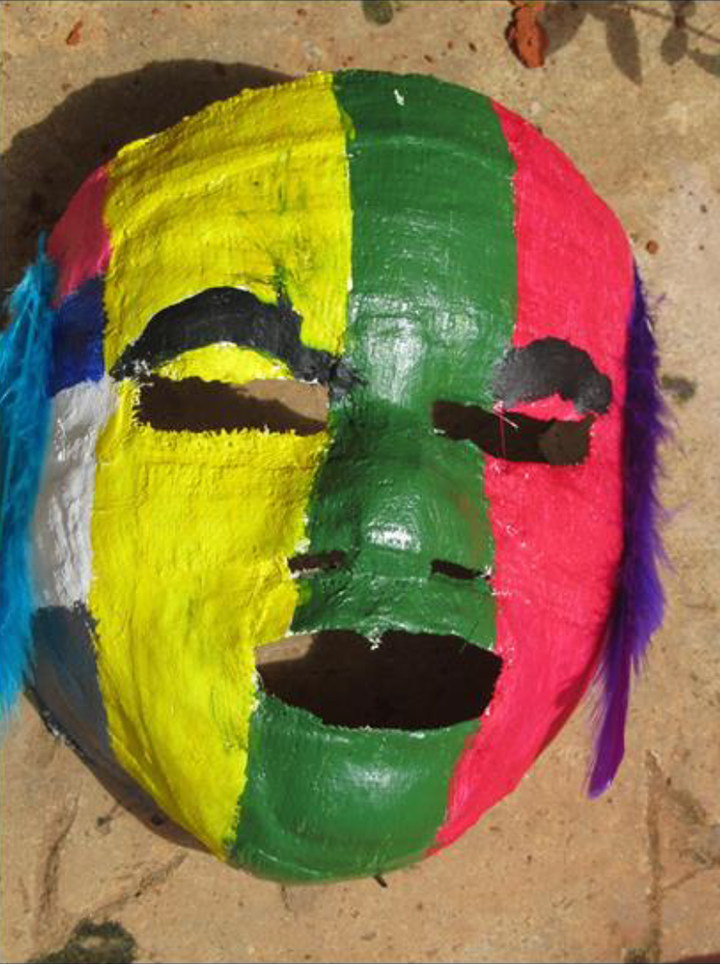
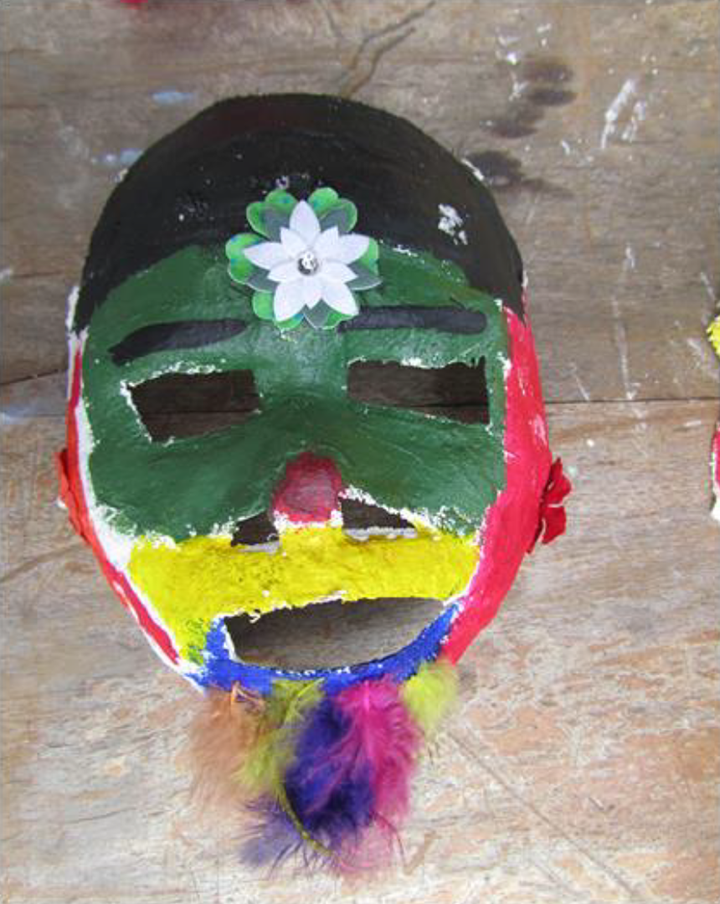
The mask-making process helped to introduce and solidify research themes and allowed participants an alternate means to reflect upon and express aspects of their past and present realities. The use of mask-making benefited the research itself in important ways. Engaging youth who were among the most socially isolated and marginalized within their communities in a peer-facilitated group activity allowed the participants to enjoy the process, while building trust. This appeared to enable participants to communicate more readily with the research team during interviews. Indeed, as participants were given time to reflect on their past, present, and future situations as they were laying the plaster, it provided the youth some agency over how they wanted to depict their experiences visually and verbally in their explanations to the researchers and, in turn, gave the researchers more than one source of information to draw upon. Each mask pictured below is shown beside an excerpt from the corresponding participant’s explanation of their mask. While not all 60 participants’ masks and verbal interpretations can be included below, these selected masks and quotations capture a few of the prominent research themes including the hardships of war, stigma, identity, socioeconomic marginalization, and hopes for the future that emerged through the data gathering process.
The Hardships of War and Captivity
Through the medium of their masks and in their explanations, many of the youth reflected upon the realities of their past growing up in the context of LRA captivity and narrated for the researchers their profound day-to-day struggles to survive. They reported the constant threat of injury and death due to combat, hunger, and sickness, and each spoke of the exhaustion of constantly being on the move ready to run from the fighting, as well as the violence they witnessed around them and that was inflicted upon their mothers: These red colors represent the blood that was shed from the people who got injured from gunshots, cut by pangas [machetes]…And for us the children, we were carried as our parents ran with us and we could see the bloodshed…These mixed colors here represent the kind of confusion we saw from the bush. And in it, the red colors represent the killings that were taking place in the bush by both the government soldiers and rebels in the bush. —Youth, male, age 18 (Mask: Figure 1). The yellow colors here represent the sunshine that we could see once in a while. Because from the bush we could stay under thick forests for long periods of time without seeing sunlight. Black represents the unhappy time that we remember…Things like killing, many unhappy situations that made our mother cry and us cry with our tears. She could hear bullets being fired and she would run to go and carry her child on her shoulders and that is how my mother was struggling with me in the bush. Green represents the grasses that we would run through and the grasses are very tall. We ran in the bush and beaten by rain, the tall grasses would be pricking and scratching you. Blue represents the mountains and water bodies that we were passing through. Very big water bodies, we could be carried across, very big mountains that we could climb for almost one day. —Youth, male, age 19 (Mask: Figure 2). This color on top represent the injuries that were caused as a result of getting burnt by a fire and the example is on me that many people died from the burning fire. The small black color on the white color represent the time when we were in the bush because when it is dark, at any time you can run. Red represents that when you started running, many injuries would be there. Yellow represents that when sun is there you should hurry with your work that you are doing because when it becomes dark, at any time you must run. The flower with the star represents how I will grow, as I would grow to be a very good girl. —Youth participant, female, age 14 (Mask: Figure 3).

Mask by male youth participant, age 18.
Mask by youth participant, age 19.
Mask by female youth participant, age 14.
Living in Captivity Versus Postwar Reintegration
Narrating the significance of the colors and objects chosen to adorn their masks, the participants were free to decide what to reveal or share with the research team. Through this open means of expression, the children shared their ambivalent or conflicted feelings toward significant family members and life in the LRA as compared to the harsh and unexpected social and economic challenges they faced when they integrated into civilian life: I heard that when I was still young and if I cried, the rebel soldiers would go to beat my mother. It is shown by the color orange. The orange color that I have put next to the nose represents the little happiness that we got when we were escaping from the bush because we were anticipating that when we escaped from the bush we shall be free of the hard life in captivity like all the time fighting, running, walking and death…Imagining that we would leave that life we gained that little happiness. But I then found that life at home is also not as good as we anticipated. —Youth participant, male, age 13 (Mask, Figure 4). The white color represents how I was unhappy and when I sit I can remember what used to happen in the past like how my mother and I were mistreated when we were in the bush. In the bush when my father was around, he could care for me, and when he was not around, other people would mistreat my mother. These flowers show the love that our family members showed to me when I had just come back home. Though later on, they were not showing me love. So the flower is to show how I was welcomed at home. —Youth participant, female, age 14 (Mask: Figure 5).

Mask by male youth participant, age 13.

Mask by youth participant, female, age 14.
Experiencing and Resisting Stigma
Social stigma was one the most prominent themes of the research, and participants described the myriad ways stigma permeated each level of their postconflict lives. Stigma manifested as violence, abuse, rejection, and exclusion by family, peers, teachers, and community. Youth also detailed the creative strategies they used to overcome adversity and challenge stigmatizing stereotypes through meaningful activities such as studying, working hard, and contributing to their communities: The black color represents the difficulties that I started experiencing from the bush with my mother, and up to now the problems and difficulties I am passing through. The problem of getting food and of no place to stay. That is, the reason why I have shaded my mouth black is because of lack of food to eat and also other difficulties that I experience. When I talk, they stigmatize me, that I was from the bush, that I have demons in my eyes. And people in the community want us to keep silent, but we are experiencing lots of insults. The stars show that even if people see that I am someone who is not useful, I need to do something in the future that can show that people should stop despising people from the bush. Because we are able to live normally like other people. We can even do things better than other people. —Youth participant, female, age 14 (Mask: Figure 6). Mask by female youth participant, age 14.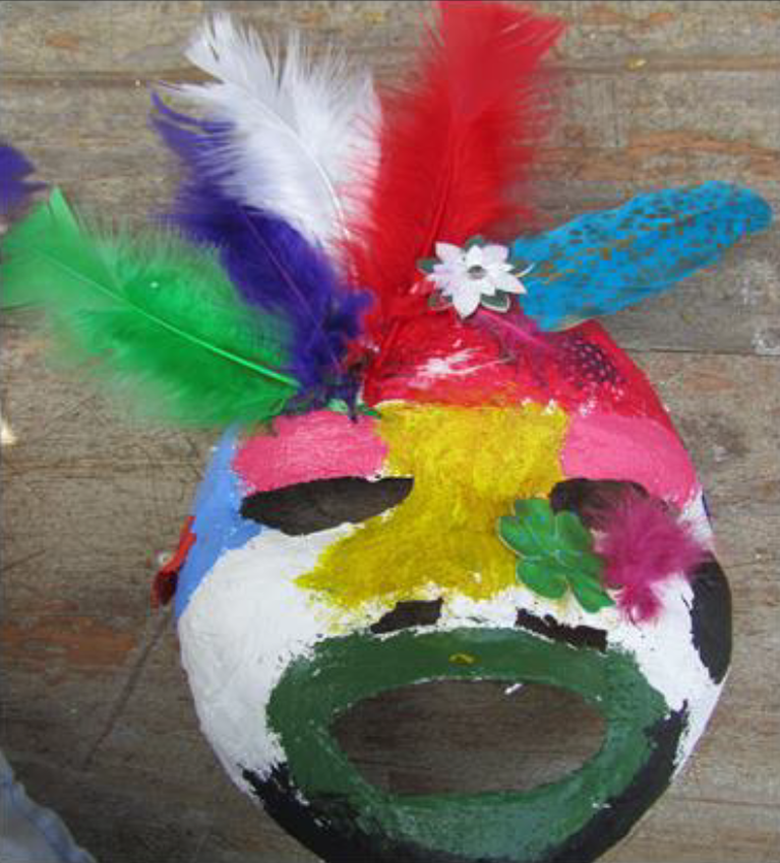
Postconflict Uncertainty and Hopes for the Future
In each of the participant’s explanation of their mask, they highlighted the uncertainty surrounding their ability to afford tuition and the paramount need for support in school and a focus on their studies. Education represented transcendence of their hardships’ past and present and the path toward their future goals. Gray represents whether our future could be good or bad. But when I study, I know my future will be bright. Feathers represent the beauty that I will get after studying and I would put on the graduation gown. So the feather represents the beauty that God has prepared for me in the future which I still don’t know. —Youth participant, female, age 17 (Mask: Figure 7).

Mask by youth participant, female age 17.
The mask-making process helped to identify issues of key concern to our participants and focus on our preliminary research themes. The masks provided insight into participants’ daily lives, both past and present. By providing a verbal explanation of their masks, participants offered an in-depth exploration of their realities across time, their self-perception within conflict and postconflict communities, and the challenges and opportunities in long-term reintegration. A nonthreatening, team-building activity that encouraged trust building among children, youth, and researchers, mask-making provided a medium through which difficult discussions could take place. The mask-making process ultimately provided the team with richer contextual information regarding daily life and long-term reintegration in northern Uganda than was obtained through interviews alone.
Drawing
The arts-based method of drawing played a valuable role in the research process as a tool for gathering information and helped to shape the direction of the research. In advance of the individual qualitative interview, youth participants were asked to draw two pictures: (a) one drawing mapping out their current family and living situation and (b) another drawing mapping out their living situation and their family when they lived in LRA captivity—referred to by participants as life “in the bush.” At the beginning of the one-on-one interview, participants were asked to explain their drawings to the researcher and were asked about their relationships to people depicted in the drawings. Based on the drawing and commentary presented, follow-up questions were asked by the researchers.
The value of drawing: mapping the socioecological system and context
An overarching goal of our research was to understand how the individual child fits within their sociocultural context or social environment; the relational dynamics between the child born in captivity and the child’s mother, father, stepfather, extended family, community, and society; and if/how they saw their roles and relationships shift radically with their postwar integration. The task of visually mapping out and explaining their drawings to the researchers to accompany the in-depth qualitative interview proved an invaluable source of information, solidifying the research themes that emerged from the interview data and even guiding and informing the interview questions.
In line with a socioecological approach (Boothby, 2008; Denov & Akesson, 2017), it is understood that the experiences of children and youth are nested within multiple interlocking spheres of family, community, society, nation, and state, and undergo mutual relational influence by complex sociocultural factors. As such, children cannot be studied in isolation. A major strength of the drawing method was that it provided a concrete, visual tool for children and youth to represent how they understood themselves within their past and present—wartime and postwar—social environments. As our study focused on the experiences of stigma, exclusion, identity, belonging, and reintegration, having each participant draw these two maps to depict two vastly different contexts, comparing family during and after war, proved to be an invaluable source of information to guide and supplement the research data.
This medium visually contextualized for the research team how participants perceived themselves in relation to their mother, father, family, home, community, and nation, at all levels of the social stratum. Discussed at the beginning of the interview, participants’ drawings not only served as a launching point for the individual interview, but the information elicited from youth’s drawings highlighted themes and culturally specific information the research team would not have otherwise known to explore.
Furthermore, we found that this activity opened the door for children to express very nuanced and ambivalent feelings surrounding maternal and familial rejection, and feelings of nostalgia for their time spent in captivity despite the perils of war. Such sensitive topics may have been difficult for the children to spontaneously verbalize within their individual interviews. Elements in their drawings cued the interviewers to ask them further questions, bringing forth thoughts, feelings, and reflections that identified salient themes. In what follows, we detail a few of these themes.
Stigma and sleeping arrangements
In their drawings, the children depicted the people, animals, places, and objects significant to them. Many of the participants drew a series of huts and illustrated their immediate and extended family members, alongside animals, trees, their schools, and churches (Figure 8). When asked to explain their drawings, patterns emerged as participants described their sleeping and eating arrangements. The participants often visually depicted and verbally detailed how they were segregated from other children and made to sleep separately from other family members. Some described being locked out, forced to sleep outside, or exiled completely from the home. In one drawing, a female participant drew the hut where she and her CBC sister slept, which was separate from that of their mother, stepfather, and non-CBC siblings. She explained further that their stepfather would lock them out completely when he was drinking and how they would have to run from him and find a place to sleep outside.

Drawing by female participant, age 14, depicting family living situation postwar.
In another drawing, a boy drew his family’s plot of land and described his social and geographic isolation where he was relegated to his own hut on the outskirts of his family’s farmland. Questioned about his drawing, another boy described sleeping in the cooking hut with his cousins who all had soft mats to rest on, while he was made to sleep on a rough burlap sack under a chair. Because of the repeated emerging theme of stigma and segregation, as well as denial of basic needs such as shelter, food, and physicial and emotional care, the research team added a question about sleeping arrangements to the interview guide, learning that it was of significance to the participants and pertinent to our understanding of their situation. Below are selected quotes and images from interviews with youth participants that illustrate these salient themes. They [half siblings who are not born in captivity] keep segregating me. When it comes to the time to eat they don’t want to eat with me because they say something will come into my mind and I can do anything to them. Even during playing, they don’t want to play with me. When it comes to sleeping, they don’t want to share a sleeping room with me because they say something may come on my mind and I could strangle them at night and they say I may have nightmares and some bad dreams. —Youth, female. When I find these children already sleeping, and I ask them if I can also spread my blanket to sleep, that cousin of mine would get up and go to my grandmother to report me. My grandmother then comes and begins insulting me saying that I should go away from her house. Even some days I sleep away from home. —Youth, male.
War as “better” than peace
The children’s drawings served as a launching point for interviewers, a supplemental way for youth to identify their major challenges. This visual medium also solidified and visually enriched themes that were emerging from interview and focus group data throughout the research process (Figure 9).

Drawing by female participant, age 15, of her family and living situation while in the Lord’s Resistance Army. Illustration shows mother and biological “bush-father” and siblings with sleeping and cooking area in “the bush.”
A powerful, but unanticipated, theme that emerged from the collective data was that for some of the participants; living in captivity was actually preferable to their postwar realities. Despite constant movement, violence, hunger, and risk of death and injury, participants explained that in captivity, they had both of their parents present in their lives, a high social status, and love. In contrast and as found in related research, children’s current living situation in the postwar period was characterized by family and community stigma, social exclusion, violence, and abuse by family and community (Denov & Lakor, 2017, 2018).
One female participant depicted her current living situation by drawing herself and her CBC sister holding hands, with sad faces, set apart from the rest of the family. The other family members—mother, stepfather, and non-CBC siblings—in the drawing had happy faces and were standing all together holding hands. When probed further about the drawing, the participant explained that she and her sister had sad faces because she and her sister were excluded from the rest of the family, had to sleep in a separate hut from the rest of the family, and were not valued or loved (Figure 10). Life was not all that bad [in captivity] because my father was still there and he always brought for us some help to my mother. Sometimes when he would go for his walk and he would return with many good things for me. He would even wake me up to eat what he brought for me because he used to love me so much. —Youth, male. In the bush, life was hard but my mother used to love me a lot. But here [postwar], love is divided. —Youth, male. The way we were loved and treated by our parents in the bush was better than now…While in the bush, we were not insulted like here at home. When we were born, we had both our mother and father; we also had better clothes to wear unlike here where our clothes are not nice…We also had nice food to eat while we were in the bush. While here, we cannot eat peacefully without our grandmother grumbling about how feeding us has become a burden to her. —Youth, male.

Drawing by female youth, age 14, illustrating family postconflict. She and her sister have “sad” faces and are depicted apart from siblings who had not been born in captivity or stigmatized.
Another boy did not draw himself in the family picture. When probed, he explained it was because he did not feel “welcome” or sense he belonged in that family. Another participant drew himself apart from the aunt and uncle with whom he lived with and illustrated his uncle with an angry red expression holding a bottle of alcohol. He described how his uncle’s alcoholism exacerbated the hatred and physical abuse inflicted upon him because of his identity as a child born in captivity.
Participants also shared their traumatic memories of their time in the bush where they witnessed and experienced violence, combat, and other atrocities (See Figures 11 & 12). Expression of their experiences through drawings served as a way to preserve some control over what CBC participants shared with the researchers visually as well as verbally when asked in a nondirective manner to describe their drawings. Then another thing that I remember was that when our mother escaped from the bush with my [younger sibling] and she left me in the bush with my other three siblings with our father. Then my father lay me on the ground and he lifted a panga [machete] and had wanted to cut me because I was crying. —Youth, male. I remember one incident that happened in a certain village. People were forced into a grass-thatched hut, and the hut was torched with them in it, and they all burned to death. I was looking on with my mother, and I could also hear some popping-like sounds…The older people did that. I cannot forget this incident. —Youth, male.

Drawing by male participant, age 16, illustrating family and living situation in the Lord’s Resistance Army (LRA). This participant illustrated a government ambush which occurred as frequent clashes between government military forces and the LRA, where the children were told to run.

Drawing by male participant, age 18, depicting what life and family were like within Lord’s Resistance Army captivity. This youth illustrated some of the atrocities and the violence/combat witnessed while in captivity.
Impact and Accessibility
As a medium for dissemination, drawings can be an emotionally powerful means to reach the broader community that is more accessible than academic writing. In our research, drawings of the bush depicted horrific scenes of war and violence witnessed and experienced by the children. Seeing the harsh realities of war, drawn by the hands of the children who lived and witnessed the atrocities, can carry a clear message and elicit an emotional reaction in a way that academic writing cannot. The research team held a community conference in Gulu to share the research findings with the local community. The conference was attended by community stakeholders including NGOs, justice, law enforcement, educators, as well as CBC, youth, and mothers. The visual medium of drawings and masks, created by the children themselves, was accessible to all audience members including those community members with low literacy who are often excluded from western forms of knowledge dissemination. The youth participants took part in the conference by standing up to speak directly to their community members about their experiences, alongside a showcase of their drawings, their masks, and their words. As evidenced by the reaction and feedback received during and after the conference, this medium provoked a powerful emotional impact in the community and fueled their motivation to create social change.
Limitations
While the benefits of arts-based methods are ample, there were challenges and limitations with the use of mask-making and drawing that deserve consideration within our study and when considering application of these methods in future research.
Our choice of mask-making workshops was investigated and considered a culturally acceptable and meaningful activity in consultation with local experts with previous experience in this method. However, on one occasion, local rural community members (nonparticipants) in observing one of the workshops were offended by the appearance white unpainted masks being laid out to dry. They commented that the unpainted masks resembled bones and could potentially trigger traumatic memories of the mass civilian killings that occurred in that region during the war. Fortunately, because local researchers had established a strong working relationship with local council leaders prior to engaging in the research, community members were quickly made aware of the goal of our research, and their concerns were addressed. This lesson nonetheless highlighted the vital importance of community consultation, trust, and relationship building during data collection. Moreover, factors such as age, maturity, gender, cultural/spiritual beliefs, and customs of participants must be considered, and researchers must be prepared to adapt research tools to each unique context.
As a strength, arts-based activities can allow participants to create distance from discussions of trauma and create safety with a self-directed locus of control. However, researchers must not assume that all participants will be comfortable with the method. For a group activity, such as mask-making, where each child lay down and others helped apply their plaster masks, a certain level of comfort and safety must first be established and discussed particularly for individuals who may have experienced trauma.
It must also be stressed that ethical issues were a major consideration in the study design due to multiple factors including the sensitive topics explored—issues of identity, stigma, sexual violence, war, past and ongoing trauma, the power dynamics inherent in research across cultural and sociopolitical lines, and the ethics of research with a population of young people experiencing some of the most extreme forms of socioeconomic marginalization. A full exploration of the ethics of arts-based research in the context of research with marginalized children/youth is beyond the scope of this article; however, this is an area of vital importance that must be addressed throughout all stages of the research process.
For both mask-making and drawing, the issue of interpretation of the art can also be viewed as a potential limitation. For each of the methods used in our study, participants were asked to explain the meaning and significance of their artwork, to allow the child to speak freely and have some control over what they chose to share with the research team. When arts-based methods such as mask-making and drawing are used with children who have experienced distressing events, it is important to consider that some may not be able to adequately articulate the meaning of their artwork, and therefore, researchers must remain cautious not to project their own interpretations onto the children’s art. In order to minimize harm and further marginalization, as well as misinterpretation of the data that could distort research findings, these methods should be used sensitively, intentionally, and responsibly by researchers.
Conclusion
In this article, we explored two arts-based research methods that our research team integrated alongside traditional qualitative data collection methods in our study of children born in LRA captivity—mask-making and drawing. As a mounting body of literature looking at arts-based research methods suggests, the use of mask-making and drawing had important benefits for the research participants, researchers, and the research process as a whole.
For this study, which sought to engage a particularly marginalized, often invisible, geographically isolated group of children and youth affected by war, these methods served as a tool to build trust and create safety between participants and the research team. With increasing global attention focused on the plight of children affected by armed conflict, the need for innovative methods that can be adapted across diverse sociocultural contexts which engage youth as active agents in research is more crucial than ever. This is particularly true for sensitive research conducted across international and cultural lines where researchers outside the population being studied may be asking participants to delve into difficult emotional terrain on topics such as stigma, identity, marginalization, and sexual violence. Given power imbalances inherent in a researcher–participant relationship that potentially widen across or within some cultures, there is a moral imperative to develop culturally appropriate and novel approaches to research that challenge traditional Western research paradigms. Such approaches are aimed at mitigating power imbalances, minimizing harm, and even stimulating community social action by involving children and youth as “active agents” and experts in their own experiences rather than “passive objects” under study.
While arts-based methods as a data collection tool may not be sufficient on their own, we contend that these methods can supplement, enrich, and potentially guide data collection through more traditional means such as interviews or focus groups. Such methods can enhance the validity of the research and provide insight into the broader sociocultural context by which to understand complex topics and participant experiences. By providing alternative and varied modes for children and youth to communicate, express themselves, and engage as active agents influencing the direction of research, these methods adapted cautiously and appropriately to the unique context can help to make a substantive contribution to the field of research with war-affected youth.
Footnotes
Declaration of Conflicting Interests
The author(s) declared no potential conflicts of interest with respect to the research, authorship, and/or publication of this article.
Funding
The author(s) disclosed receipt of the following financial support for the research, authorship, and/or publication of this article: This research was funded by the Pierre Elliot Trudeau Foundation.