




Abstract
Using drawings to bridge the communication barriers between adults and children, this article looks at examples of fieldwork with socioeconomically disadvantaged young families in Denmark with a parent who has multiple diagnoses. Studies suggest a link between a disadvantaged socioeconomic childhood and a predisposition to illness and disease in later life and that children of ill parents tend to be ill more often and be lonelier than their peers with healthy parents. These findings are underpinned by other studies showing how children’s social relations are vital to how they experience childhood and for their current and future health profile. Based on this knowledge, we wanted to study how children from families without a great deal of resources experience their family life but were faced with the dilemma of how to study this phenomenon. Reflection on these experiences shows that drawing is an effective method to facilitate conversations with children about difficult and taboo issues. The method’s strength lies in the way it materializes thoughts and feelings, in the way it generates a sense of “community” between the child and the researcher, which is often challenging in ethnographic research involving children. With their drawings, the children were able to express feelings, sentiments, and experiences that were difficult to articulate in words but not equally difficult to recall as a physical and mental experience or to draw on paper. The drawings illustrated a shared desire among the children who took part in the study for normality, routine, and stability in the family. Please note that we emphasize the importance of including other fieldwork data when interpreting drawings and that it is essential to have a solid contextual understanding of the field.
Introduction
Studies of poor socioeconomic conditions in childhood indicate links with a greater risk of illness later in life (Anda et al., 2006; Graham, 2007). New projects looking at multiple morbidities also indicate that adult patients with multiple simultaneous diagnoses often had a difficult childhood (Tomasdottir et al., 2015). The research also shows that children whose parents have poor health are not just ill more often than their peers, they are also lonelier than the children of healthy parents (Campo et al., 2007). This link is supported by studies showing that children’s social relationships are essential for how they see their health profiles as children as well as their current and future health profiles (Kirkengen, 2005). As such, this article adopts a social and policy perspective that focuses on prevention and early detection of problems in children and young people growing up in disadvantaged families (National Board of Social Services, 2018). It approaches the issue in an investigative manner by focusing on children’s experiences of their relationships and family lives.
Historically, anthropological studies of kinship and family have tended to focus on their positive aspects. Sahlin’s famous description of a “mutuality of being” presents kinship as a deeply felt, unified entity. However, as articulated by Peletz (2001), Lambek (2011), and recently in a Danish context by Mogensen and Olwig (2013), family and kinship relations also comprise ambivalent and negative qualities. Being part of a family plays a central role in our sense of self, but it is a complex phenomenon. It is a metaphor for strong and warm relationships but in practice, family relationships can be problematic, demanding, and linked to ambiguous feelings.
Children who grow up in families facing social challenges or who have chronic health issues will often do their best to conceal them and present an idealized picture of their family situation (Werner & Malterud, 2016). This can make it problematic to address issues and talk to children for research purposes.
From August to December 2015, the first author, Elisabeth Søndergaard (E.S.), completed Phase 1 of a two-part fieldwork project in Denmark among socioeconomically disadvantaged families with one parent with multiple diagnoses. The focus was on social relationships and networks in and around the families, and the idea was to gain greater knowledge of the ways in which children’s well-being and health are shaped in the family context. Along with the second stage of fieldwork, which consisted of follow-up visits to the families in spring 2017, this represents the qualitative element of a mixed-methods PhD study, the data from which form the basis for this article. The fieldworker followed six families and their extended networks (Burawoy, 1998); this article focuses on the data acquired from the children in these six families. More specifically, we present and discuss the experience of combining drawing with interviews as a research method when working with children.
After a brief introduction to general developments in research into children and visual research methods as a field, the article will explore the use of drawings combined with interviews to gain insight into children’s experiences of their family lives and relationships as these unfold day by day in families in which parental illness plays a constant role. Based on our own project and results, we will show how this type of method generated data that extrapolated on the empirical knowledge and understanding in the field. This is important because in this way the method supports an actor-oriented perspective that differentiates our understanding of the children’s lifeworld. Finally, we will reflect on the challenges involved in using drawing as a method in research involving children.
Developments in Research Involving Children and Visual Research Methodology
Within social science research into children, there is a growing interest in gaining insight into the children’s perspectives on different aspects of their everyday lives (Nielsen, 2012). The topics covered by various projects include children’s experiences of what is good or difficult in day-care institutions or schools (Kragh-Müller & Isbell, 2011), children’s perspectives on what constitutes a good school meal (Bruselius-Jensen, 2011) and good ideas on interior decoration of schools (Clark, 2010), children’s experiences of bullying (Søndergaard, 2013) or an outbreak of illness in their community (Denis-Ramirez, Sorensen, & Skovdal, 2017), chronically ill children’s interpretations of their own symptoms (Gabriels, Wamboldt, McCormick, Adams, & McTaggart, 2000; Stafstrom, Goldenholz, & Dulli, 2005), and children’s experiences of important situations in the home, day-care institution, or school (Müller & Nielsen, 1999; Nielsen, 1999). In all of these studies, the researchers spoke with, and to varying extents observed, children in their everyday lives, and invited them to produce drawings about the topics covered in the research. The same procedure was used in this project.
Whereas children’s perspectives were included in research projects about children in the past, nowadays the aim is far more to incorporate their perspectives into projects with or for children (Darbyshire, MacDougall, & Schiller, 2005; Mayall, 2000). The two scenarios may sound the same, but there is a basic phenomenological difference in the way the two approaches understand and treat the child’s “being-in-the-world.” Historically, researchers have usually regarded children as incapable, unreliable, and incomplete (Barker & Weller, 2003). Research about children was, therefore, a process in which an adult reconstructed the child’s experiences and understandings of the world. Although the approach was child-centered, the adults’ representation of the child contained an inherent and indisputable objectification. By comparison, children are regarded nowadays much more as acting subjects who are “experts” in their own lives, capable of expressing themselves with insight and meaning in their own words, mood descriptions, and/or drawings (Fargas Malet, McSherry, Larkin, & Robinson, 2010; Sommer, Pramling Samuelsson, & Hundeide, 2010). This changes the way in which children are perceived—partly as individuals, partly as a research field—and this means that childhood as a phenomenon cannot be studied in isolation but is instead considered as being a social and cultural construct (James, Jenks, & Prout, 1999).
The paradigm shift in research into children has facilitated a parallel development in new methods of generating data, of which the rise in the use of visual methods is one example (Christensen & James, 2000). This is partly due to a widely accepted view that the use of visual methods, such as video diaries, mapping exercises, photo-voice, or drawing, reduces the demands made on a respondent’s language skills. In other words, a nonverbal approach facilitates a different route into the participant’s lifeworld in terms of feelings, thoughts, and moods (Cox, 2005; Jolley, 2010; Koppitz, 1968).
Visual approaches support the participation of—as well as communication with—people who are either not able or not confident enough to express themselves linguistically (Wang & Burris, 1997). It has also been suggested that certain groups of participants, such as children and teenagers, are more comfortable participating in research projects through visual forms of representation because these remind them of activities in their daily lives (Clark, 1999; Croghan, Griffin, Hunter, & Phoenix, 2008). In line with this, it has been contended that the use of visual methods allows more active participation by these groups and facilitates access to more subtle data compared to traditional interviews (Mauthner, 1997).
Drawing as a Method in Research Involving Children
The raw material for children’s drawings consists of what they feel, experience, know, understand, or can imagine (Nielsen, 2012). The drawings can, therefore, be considered articulations of feelings, experiences, and meanings the children have not yet thematized (Bastrup-Madsen, 2001; Funch, 1996), albeit what the pictures express is also influenced by the children’s drawing skills, the level of their ability to abstract, and their knowledge of visual cultural codes in the world around them. Children learn to use visual cultural codes in the way they express themselves, both when drawing at home and in day-care institutions, but also when they encounter and use other visual cultural idioms, for example, in colloquial language, body language, and media images (Nielsen, 2012). Children’s drawings are also affected by the context and surroundings in which they are created, by the instructions associated with the activity, and especially by the kind of relationships the children have with the adults issuing the instructions. Children’s drawings can depict selected events from their lifeworld, aspects of what they have experienced that they consider important, what they have noticed, remembered, and consider important at the time of drawing. In other words, drawing allows children to express something emotional and something meaningfully experienced that they have not yet categorized or verbalized (Frederiksen, Gundelach, & Nielsen, 2014).
Children’s drawings are often regarded as reference data, that is as signs or symbols that relate and refer to something that they have stored away (Bastrup-Madsen, 2001; Everts & Whithers, 2006; Stone & Everts, 2006). For this reason, drawing as a method is often combined with further elaboration by the children, either written or oral, as was the case in this project. This provides the children with an opportunity to relate to what they had drawn and offer further explanations (Driessnack & Furukawa, 2012). The technique helps children recall certain experiences or moods, providing a different insight into the interpretations and meanings they associate with the situations they draw than that obtained by interviews or responses to a questionnaire (Butler, Gross, & Hayne, 1995; Driessnack & Furukawa, 2012; Gross, Hayne, & Drury, 2009).
Similarly, the drawings can act as a nonverbal stepping-stone into the world of childhood experiences and emotions (Cox, 2005; Jolley, 2010; Koppitz, 1968), and the follow-up conversations about their families can be expected to generate knowledge of the child’s relational experiences within the framework of the family (Cherney, Seiwert, Dickey, & Flichtbeil, 2006; Gernhardt, Rübeling, & Keller, 2013; La Voy, Brauch, Luxenberg, & Nofsinger, 2001). In this way, the use of drawings as a research method proved to served as an extremely useful support for conversations with the children about difficult and taboo subjects, despite the fact that the causes of the children’s concerns were varied.
Methodology and Analysis
The PhD project from which this article emerged used a mixed-methods design, including an interactive process involving participant observations, conversations, interviews, and children’s drawings. The research project is approved by the Danish Data Protection Agency (REG-026-2018). The two-phase fieldwork entailed following the family members in their social contexts over a period of time (Gulløv & Højlund, 2003). The aim was to gain insight into the priorities and logic that motivate action and make sense locally but are rarely captured in explicit statements (Hastrup, 1992).
Part of the design for this project was to include families with at least one parent with multimorbidity. In accordance with common definitions of the concept, it includes families with parents suffering from two or more concurrent, chronic illnesses (Diederichs, Berger, & Bartels, 2011). The combinations of illness varied across families and spanned mental disorders, chronic obstructive pulmonary disease, severe forms of arthritis, and various forms of substance abuse. The common denominator was that these conditions dominated day-to-day life and set the tone for the families’ everyday functioning. The families who participated were also socioeconomically disadvantaged due to the parents’ low levels of education and lack of a foothold in the labor market.
Phase 1 of the project (August to December 2015) consisted of 4 months of fieldwork involving six families with children aged 6–12 years and the families’ extended networks. During this time, E.S. focused on an open-observation approach revolving around the children’s everyday lives (Hammersley, 2007), combined with follow-up interviews to examine the significance of what had been observed (Hastrup, Rubow, & Tjørnhøj-Thomsen, 2011). Following the participant observations, descriptive field notes were written up, and semistructured interviews were then conducted with the children’s parents and key people in the children’s networks (teacher, handball coach, friends of the family, etc.). Based on the results from the first fieldwork, a detailed plan was drawn up for Phase 2 from February to April 2017.
Phase 2 consisted of focused fieldwork (Rubow, 2003). Semistructured interviews were conducted for the second time with parents and for the first time with the children. To support the interviews with the children and to demystify the interview situation, we used illustrative laminated pictures of various everyday situations in Danish children’s lives as our starting point (Harper, 2002). The themes for the interviews with the children included descriptions of their family and friendships and their own depiction of their everyday lives. In relation to the children’s social relationships and networks, the interviewers focused on the people whom the children themselves considered to be close or important in their daily lives and their experiences with these people. Additionally, draw-and-talk sessions were arranged with the child respondents (Wright, 2007). We talked about the drawings both while they were being made and when they had taken shape. The sessions were conducted in two settings: in family homes and in two group sessions at a family workshop, where a small group of children who knew each other well sat together while they drew and talked. In both settings, the session consisted of the children being asked to draw first a good situation in their family and then a difficult situation in their family. The effect of this method of asking children to describe opposing types of situations has been described elsewhere as an opportunity for the children to detail their experience of a situation heavy with meaning (Maxwell, 2006). The method helps the children communicate a more detailed perspective, compared to them only being asked to draw one of the two situations. The aim was to explore the widest possible range of meanings related to the everyday life and family life of our child respondents, and the method served this purpose. Such a dichotomized setup also demands awareness that the session may trigger an artificial polarization of the subject being studied: In this case, how the children experience various family situations. There is a risk of encouraging sharper divides than exist in the continuum of good and difficult family situations that is real life. This aspect further emphasizes the importance of combining the drawing method with other qualitative research methods in order to have soundly based insight into the context in which the session is held.
Both while drawing and afterward, we talked about the stories the children wanted to communicate, the specific motifs they were trying to draw, and the final results on paper. E.S. regularly asked what it was that made the situation good or difficult; the children were able to put this into words to varying degrees and in different levels of detail.
Once all of the children had participated in drawing sessions, content analysis (Elo & Kyngäs, 2008; Krippendorff, 2004) was used to analyze and categorize their drawings and the transcripts of the conversations held while they were drawing. Here, both types of material—drawings and transcripts—were regarded as a single data unit. The first author of the articles started by going through the drawings and oral elaborations on them in order to develop a thematic overview of them and categorize the data. The categories included: depicted individuals (the child itself as well as others), locations, activities, emotions expressed, moods, and the thoughts expressed as well as their thoughts about the whole exercise. Both authors of the article also reviewed all of the transcripts of the interviews with the children that preceded the drawing exercise, as well as the field notes from the drawing sessions, this time focusing on the thematic categories that had been identified. The authors then met again to review the results and identify the themes and subthemes which made up the definitive findings.
All participants gave oral consent to participate and were informed about their right to anonymity and to withdraw from the project at any given moment. In the cases of underage participating children, both the children themselves and the guardians gave oral informed consent. All names of children, parents, diseases, and individuals in the families’ networks are altered to secure the participants’ anonymity.
Roles and Relationships Between Researcher and Child Respondents
The project focused on examining roles and relationships in vulnerable families with children. However, it is also important to look more closely at the roles and relationships in which the researcher played a part, was assigned or took on during the project (Reventlow & Tulinius, 2005)—in this case, with particular focus on their significance for drawing as a method of working with child respondents.
Ethnographic research involving children is challenging, partly because common culturally based child/adult roles are blurred, as are the types of interaction and codes normally associated with them (Fine & Sandstrom, 1988; Mandell, 1991; Mayall, 2000; Pollard & Filer, 1996). When an adult stranger starts to visit your home, appears to have no clear purpose, and asks odd questions, this is not the normal adult role with which the child is familiar, so it may be difficult for a child to find an appropriate label for the researcher (Christensen, 2004). So what kind of adult was E.S. to the children? Above all, it seemed that they found her “a bit strange,” someone who did not fit any particular category. After a while, the children increasingly sought E.S. out and said that they enjoyed spending time with her. Perhaps, this was because E.S. tried throughout the entire process to demonstrate that she wanted their company and made every effort to approach the relationship with great sensitivity toward the children’s wishes and boundaries, not least the times when the children were not interested in her company. It is also important to note that the drawing exercise came at the end of the fieldwork after months during which E.S. continually visited homes, talked repeatedly with the parents, and spent “alone time” with all the children when they showed her their rooms, their favorite toy, or the trampoline in the garden. All the children had been interviewed by E.S. before their drawing exercise.
As we will show in the next section, the drawing exercises created a secure space for conversations in which the absence of well-established routines for the way children and researcher interacted was less pronounced. This helped the children to open up on topics that other elements of the fieldwork could not have reached in the same way. It also meant that E.S. dared to ask questions that she had not considered ethical or legitimate up until then. As a result, the method generated different knowledge and extra layers of knowledge. In order to maintain authenticity, the descriptions are reproduced in the first person.
Drawing as a Stepping Stone for Approaching Difficult Topics
When E.S. asked the child respondents to draw a good or a difficult situation in their family, they asked her to explain what exactly she meant. She explained that the good situation was the best situation they could imagine with their family and that a difficult situation was one that had been annoying or had made them sad. In both cases, she explained that it could be a situation that they remembered or one they had imagined. Twenty-four children participated in the drawing exercise and throughout the article, we draw on several examples from the collection they made. Based on two of these drawings, we will in the following sections in detail show how the method paved the way for the children’s narratives and how it helped them articulate perspectives that were difficult for them to tackle and put into words because of the gravity and complexity of the issues. We then expand on this discussion, integrating work from some of the other children.
I Wonder Where I’ll Spend Next Weekend
Of all the respondents, Simone spent the most time on her drawing. She was the only one who did not draw in the company of other children (Figure 1). She spent hours coming and going, spoke a lot about what she was thinking and the choices she made, continually adding elements, and offering detailed explanations throughout the process. Much of the time she just sat leaning over the page, thinking. Simone drew herself and her mother watching The X-Factor on TV on a Friday night. Her mother did not appear in the picture, but she was important to the story Simone wanted to tell. When I ask why her mother is not in the image, Simone explains that her mother may have gone to the kitchen to fetch sweets. Simone lives alone with her mother in a small terraced house. When I visited the family during Phase 2 of the fieldwork, they had just moved in. Quarrels with their previous neighbors had finally persuaded Simone’s mother to move. It was not the first time that this situation had arisen. Simone had not had to change school, but many other aspects of her daily life had been shaken up and were still in the process of settling down again. When Simone was with her father, about 1 weekend a month, they usually stayed with her grandparents. However, at the point in time when Simone made the drawing, her father and his parents were not on speaking terms, so she did not know where they would spend the next weekend together. The problems between her father and grandparents also meant that Simone had begun to doubt whether her grandparents were still part of her family. Both of these things were, of course, worrying for Simone, and she found it hard to understand them properly and know how to react.
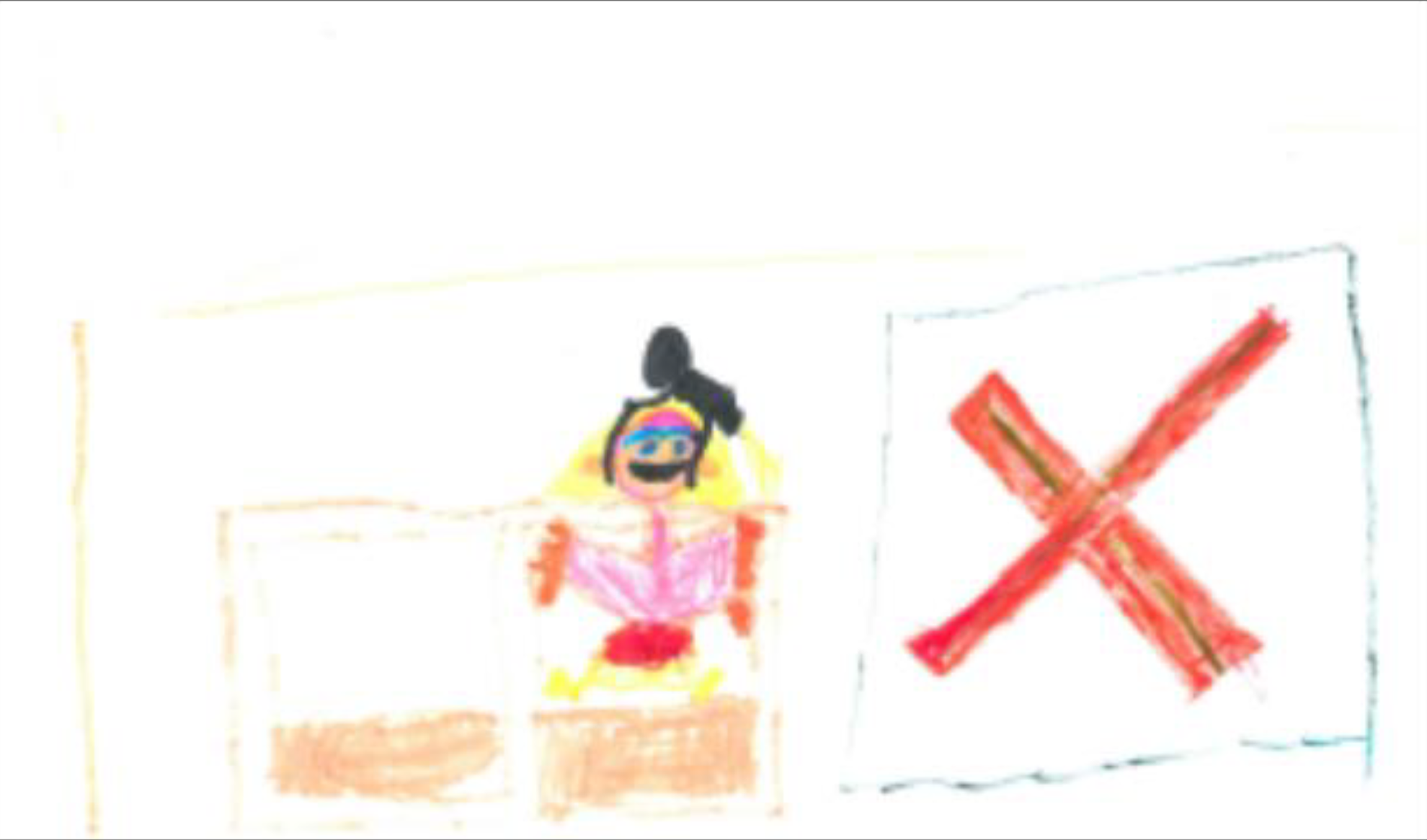
Drawing by Simone (7 years).
During the drawing exercise, she ran in several times to ask her mother, who was at home, where she thought she and her dad would spend the following weekend and repeatedly said to me and to herself, “I’ll just have to wait and see.” We talked about it because it would mean Simone would not be home watching The X-Factor with her mum as depicted in the drawing. Simone loved Fridays with The X-Factor. I asked her what it was that made Fridays so good, and she told me how they always went out to buy sweets and then sat on the couch, just Simone and her mum, and she was allowed to stay up late. She also thought that she would like to look nice like the girls on stage and then she drew a bow in her hair. She smiled from ear to ear as she talked about it; it was obviously a really nice situation about which to think and talk.
Based on my knowledge of the family, I know that Simone’s mother did everything she could to give Simone what she wanted. Although money was scarce, Simone’s room was packed with toys and she had just signed up for riding lessons, which she had been pestering her mother about for a long time. I also know, however, that Simone’s mother suffered from such severe depression that at times she found it difficult to function as a mother. During these times, even everyday activities like watching TV with her daughter were difficult.
How a 9-Year-Old Imagines Being With a Violent Father
Emily comes from a family beset with violent conflicts between her parents and a history of alcohol and physical abuse (Figure 2). Her parents are now divorced and all communication between them occurs via social services. Emily’s drawing shows her sitting between her father and mother while all three of them are drawing. They are engaged in a competition and the numbers above their heads show who won and who came second and third. Emily accidentally colored her own eye completely black and so, to save the drawing, she drew all three of them in sunglasses. It is not Christmas Eve, she explains to me, but the girl has just wrapped up a large present for her whole family, which explains the Christmas tree and packages in the drawing. Emily has also drawn a unicorn because she really likes horses.

Drawing by Emily (9 years).
I know that Emily often draws and makes plastic bead board patterns with her mother and Sabrina, her younger sister. I have joined in several times. The family home is an exhibition space for the girls’ creations, and all the horizontal surfaces in the sitting room are covered with colorful bead patterns, drawings, and small wax figures. However, in her depiction of a good situation in her family, she replaces her little sister with her father. At the time, Emily had not seen her father for 7 months. She had witnessed a violent incident between her father and his then girlfriend. As a result, the father’s visitation rights with Emily were suspended, but they are scheduled to start supervised visits soon. As she draws a star on the Christmas tree, Emily tells me quietly that she is looking forward to it. She would like them to start by being at home with her mother and doing something like drawing, as she has illustrated so well in her picture. It is the first time I have heard her express herself like that, but it is not hard to understand that it can be a difficult feeling—both to have and to speak about out loud—at home with her mother, who speaks badly of her father every day. Based on my interviews with the mother and knowledge of the family, I find it hard to imagine that Emily’s wish will come true, and I actually think Emily knows that too. However, the fact remains that this is the situation she chooses to draw. She reveals her own skepticism by saying that maybe it would be better if she and Dad went to the zoo.
The Longing for Normality, Stability, and Everyday Things
One theme that runs through the stack of drawings depicting good situations is normality, stability, and everyday things. Situations like playing ludo together, eating dinner together, sitting on the sofa watching television as a family, or drawing together feature repeatedly. Images of everyday life of repetitions and tranquility are frequent in the good situations. Similar normalization strategies have been described among children of parents with mental disorders (Fjone, Ytterhus, & Almvik, 2009; Trondsen, 2012; Trondsen & Tjora, 2014). Our data confirm research demonstrating disruptions in everyday rituals and routines and family members trying to find the best way of dealing with the situation (Haugland, 2005; Mordoch & Hall, 2008).
The children have to a great extent drawn a feeling, a mood, or an experience, the content of which is difficult to put into words but not hard to recall or draw (Cox, 2005; Jolley, 2010; Koppitz, 1968). The drawings illustrate stories and experiences and articulate feelings, relationships, and situations. By virtue of their sensual and liquid form, all of these things are retained in the drawings, which are an instrument for us to explore topics that would otherwise remain undiscovered and unarticulated (Wang & Burris, 1997). In other words, the drawing does something just by virtue of its materiality (Henare, 2007; Miller, 1992).
The meaning of a drawing is not “set in stone” in the same way as the spoken word, so drawing can be a less daunting activity for the children to engage in than, for example, an interview. As the examples show, drawing can act as a stepping-stone for a child and a researcher to approach difficult and taboo topics. Precisely because the drawings are open to a variety of interpretations and require explanation, elaboration, and knowledge of the context in order to understand the specific message, they are an obvious tool for approaching sensitive issues such as problematic family relationships and parental illness.
Not All Children Think It Is Fun to Draw
The majority of the child respondents found the drawing exercise stimulating and fun. They were keen to get started, and when handed a sheet of paper and felt-tip pens, they took their time deciding what to draw. They discussed the choice of possible situations aloud with themselves and asked detailed questions about the “rules” and what exactly was meant by a good and a difficult situation. They then spent considerable time drawing and making the pictures look the way they wanted them to. They commented continually, not only on the content of their drawing but also on their ability—or perceived lack thereof—to make what appeared on the paper conform to the ideas in their heads. However, some of the children did not like the exercise. One left the page blank, one spent very little time drawing, and two drew something completely different (e.g., “Is it okay if I draw a dinosaur?”). In these situations, the children were reminded of the task and encouraged to proceed with that in mind. If that did not enhance their participation, it was accepted that they either left the table or stayed and continued with their drawings despite the lack of focus. As long as it did not disturb the other children, it was found more important to retain a relaxed and inclusive atmosphere.
There may have been several reasons for the lack of focus and participation, including the feeling that they were not good enough at drawing or that they were unable to portray what they wanted to realistically enough (Einarsdottir, Dockett, & Perry, 2009). It is also important to take account of the fact that some of the children may not have wanted to draw or did not feel comfortable drawing what I asked them to draw. It was a recurring theme that the biggest challenge was deciding on a difficult situation and then getting it down on paper. It is, therefore, necessary to consider carefully the circumstances under which researchers can expect that children can or will be critical of their family (Jamieson, Simpson, & Lewis, 2011).
Asking children to focus on a difficult situation in their family may very well bring out associations with difficult emotions. According to Alderson (1995), it is always absolutely essential to be open and considerate of sensitive situations and carefully consider how the activities you set in motion as a researcher may spread like rings in water to other areas of the respondents’ lives unconnected to the research project. Marc, found the task downright unpleasant, for example (Figure 3).

Drawing by Marc (9 years).
He was upset at the memory of his mother going into hospital the year before. He had been really frightened and worried that his mother might die. After the exercise, his mother and E.S. spent a great deal of time explaining that his reaction had been natural and that the drawing was really, really good. E.S. thanked him warmly for his courage in drawing and talking about the situation but was left with a clear impression that Marc would have preferred not to have to think about it. It had sparked feelings that were uncomfortable for him, and perhaps he had ended up communicating more than he really wanted to share.
Whatever the underlying reason for individual children not drawing as instructed or reacting strongly to the task, it made the authors of the article aware that not all children love to draw and that children, like adults, have different communicative preferences. Learning this helped underline the strength of a mixed-method designs in projects where the aim is to obtain a broad insight into a meaningful issue such as understanding life as a child in a socioeconomically vulnerable family with a parent with multiple diagnoses.
Interpreting Drawings Requires Deep Insight Into the Context to Avoid Misinterpretation
The increasing use of visual methods has been accompanied by a realization that visual research methods are not without potential pitfalls. For example, there has been sharp criticism of the use of visual methods where these have been interpreted as neutral reflections of reality without regard to context, sender positioning, and the role played by the researcher, which are just as crucial in this type of research as any other method (Clifford & Marcus, 1986; Pink, 2005).
Most of the children’s drawings from the project make a different first impression when viewed on their own than along with the insight we gained by analyzing them in the context of other types of data from the fieldwork. Seen in isolation, it seems obvious, for example, to assign the church in Julie’s drawing a prominent role because it appears stately, all colorful, and very detailed on the right of the page (Figure 4).
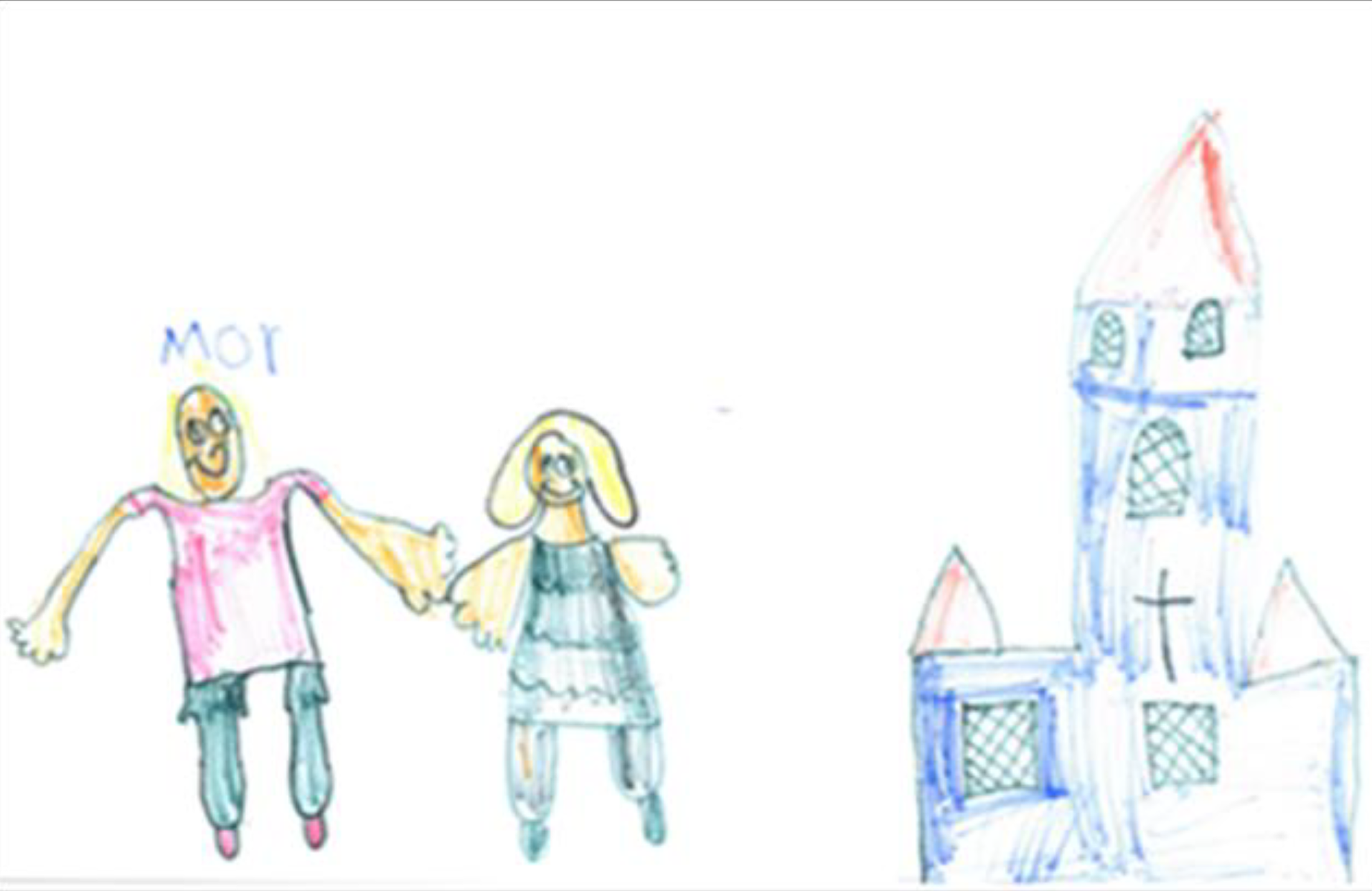
Drawing by Julie (9 years).
However, based on our conversation while she was drawing and prior knowledge of the family, it is clear that the church is only a prop for the story Julie wants to tell. The real story is that Julie and her mother pass the church on their way to the family workshop every week, which is the best situation Julie can think of with her family. The church is irrelevant in terms of traditional symbolism, but full of meaning as a “lever” to facilitate a conversation about how the weekly meetings at the family workshop, with their set routines for the evening meal and, in particular, the free space it provides her from a very chaotic everyday life, are important to Julie.
It serves as a prime example of the fact that drawings cannot be analyzed separately from the other data in the project. They must be understood along with the explanations that the children provided during the process and in light of the contextual understanding that emerges from other parts of the fieldwork. The drawings are one out of a broad range of aspects that help us better understand how the children see their own world and their own being in it.
The Absence of the Extraordinary
When working with children, it is essential to be aware of the level of abstraction of which the individual child is capable. In purely developmental terms, just what can you expect a child to be able to see, feel, and observe at different ages? Developmental psychology literature explains how children’s representations vary from one stage of development to another (Piaget, 1929; Vygotsky & Cole, 1978). A person’s ability to develop abstract thoughts or engage in abstract reasoning develops over time; small children are very direct thinkers and not given to a great deal of reflection. This puts major limitations on child interviews and how meaningful their accounts are. With the help of the drawings, new aspects can become clear. They helped pin down abstract themes not apparent in the same way in the interviews with the same children.
In the drawing process, it is, of course, interesting what actually appears on the page and what the respondent wanted to draw. However, while much attention is paid to what is produced, it is equally valuable to consider what the drawing does not include, what is absent (Frith, Riley, Archer, & Gleeson, 2005). In the child respondents’ drawings of good family situations, there is a noticeable absence of the extraordinary. Rubow (2003) describes in Samtalen how the obvious lack of a theme in a narrative can lead you down an analytical path and encourage you to seek out the outline of what is missing and explain it analytically. Rubow’s finding was based on interview material, but our empirical research shows that the same applies to drawings. The absence of the extraordinary makes even clearer the recurring longing for structure, sets frameworks and normality that the children express in their drawings, and puts the analysis on to the trail of how family life is experienced by children in socioeconomically vulnerable families with parents with multiple diagnoses.
This study is not the first of its kind in which feelings of normality and everyday life are highlighted as the best possible scenarios for vulnerable children and young people. Werner and Malterud (2017) discuss retroactive perspectives of adult children of alcoholics and how they had experienced informal support from adults during their childhood, in order to understand how health professionals could best replicate the good situations. One of the things that the participants stressed as crucial was “safe harbors” where they could forget the turbulence at home and feel a sense of normality. Like the child respondents in our study, they highlight the everyday situations—the daily routine with a grandmother, playing in the garden with a friend, or having dinner at the neighbor’s—as situations that allowed them to forget their problems for a while and instead gave them a sense of normality and stability.
Limitations of the Method
Our results may be influenced by the limitations of the method, including reporting bias and the risk of the drawings depicting stereotypes and normative representations (Campbell, Skovdal, Mupambireyi, & Gregson, 2010). Similarly, several children could have depicted what they thought I expected them to draw and talk about (Einarsdottir et al., 2009). They may also have been influenced and inspired by each other, as all but one of the children produced their drawings in the company of other children. Despite these limitations, the findings we reached using the method are consistent with previous studies of children’s experiences of growing up in disadvantaged families (Fjone et al., 2009; Werner & Malterud, 2016).
Another criticism of visual methods is that they are not, as claimed by some (Clark, 1999; Croghan et al., 2008), necessarily particularly suitable for the research with children (Punch, 2002). By claiming that visual methods per se are particularly relevant to the research involving children runs the risk of putting them all in the same category and invalidating the internal diversity of children as a group. In line with this, not all of the child respondents wanted to draw.
Researchers have also questioned whether visual methods really generate more knowledge and information than traditional interviews (Bagnoli, 2009). The question of what additional information visual methods add stems from a debate about whether different methods generate new knowledge about the phenomenon being studied or whether it is more a matter of looking at the phenomenon through different eyes. This debate relates to fundamental discussions within mixed-methods research about whether it is possible to integrate data collected by various methods, and if so, at what point in the process the data should be “mixed” (Mason, 2006).
Other methodological concerns about the visual approach have to do with ethics and the risk of exposing private circumstances and breaching anonymity (Moss, 2001). For example, can drawing reveal aspects of the respondent’s lifeworld that they really did not want to share and is that why they did not convey the information during the interview stage? As described above, one little boy became quite upset during the drawing exercise. This made us think about whether the method had overstepped the child’s boundaries and whether the fact that it resembles play from everyday life wins out over any reservations that the child might have.
Conclusion
Children—like adults—differ, so while some methods of generating data are well suited to the child sitting in front of you, other methods may be better suited to the child sitting beside you. It is always a good idea to use different methods of data acquisition, especially in projects like this, where the problems are complex and many factors are in play. In projects involving children, drawing combined with interviews can give rise to conversations about heavy and difficult subjects such as the children’s experiences of their daily lives with sick parents or mixed emotions about family quarrels. However, drawing is not a magic tool that mysteriously prizes open a black box of otherwise inaccessible data. Drawings always need to be analyzed and understood in conjunction with other data and on the basis of sound knowledge of their context. The fieldwork for the project involved close contact in their day-to-day lives with children and families for whom things had been really rough at times. This affects you as a person and as a researcher. You always have to adopt a thoughtful and critical approach to what you are studying, the methods used, and the interpretations made. The results presented in this article are relevant to researchers who want to take a child’s perspective as the starting point for their research and for professionals who work with children and whose work depends on good insight into children’s experiences and their lifeworlds.
Footnotes
Authors’ Note
The views expressed in this article are those of the authors alone.
Declaration of Conflicting Interests
The author(s) declared no potential conflicts of interest with respect to the research, authorship, and/or publication of this article.
Funding
The author(s) disclosed receipt of the following financial support for the research, authorship, and/or publication of this article: The research for this article was funded by the Innovation Fund Denmark (Grant Number 4135-00161B), Region Zealand Health Scientific Research Foundation, Rosalin Pedersen’s Fund, and the Research Unit for General Practice and Section of General Practice, Department of Public Health, University of Copenhagen. The funding bodies played no role in the design of the study, collection, analysis, and interpretation of data or in the writing of the article.
