




Abstract
This article explores the uses of photography as a basis for creating a reflective diary for students in teacher training programs. The students engage in creating still photographs of the school building of their placement, during various stages of the course. The study focuses on the analysis of selected photographs of three case studies, in conjunction with written narratives, which are integrated in the visual diaries. The aim of the study is to create an alternative approach for modeling student supervision in the second year of teacher training, enabling freedom of expression that encourages personal professional growth through the use of photography.
This study explores the possibilities of creating visual reflective diaries in teacher training practices. The students photograph the school building during various stages of their second year placement. 1 Teacher training practices employ reflective diaries as a tool for student professional growth. Reflective diaries create a platform for personal feelings and narratives by involving learners in processes of self-assessment and self-reflection and are considered an effective tool in teacher training practice. The students who participated in the study engaged in taking photographs of the high school where they were placed during their teacher training, from the first time they entered the school building, until their placement period concluded. The study relates to how photographs of the school building in conjunction with narratives, developed in visual reflective diaries, are able to empower and enhance the students’ insights, during the course of their reflective practice, regarding their professional development as teachers. It explores their effect on the process of supervision and the attitude of the supervisor and how the results may constitute a new model for teacher training in school placements.
One of the goals of the study is to examine ways to improve reflective practices among teaching trainees, which according to Schön (1983) are based on a capacity to reflect so as to engage in a process of continuous learning. Different approaches to reflective diaries emphasize different aspects of this tool by practitioners, be it collaboration and sharing or posing simplistic questions (Johns, 1995; Rolfe, Freshwater & Jasper, 2001). Self-reflection, such as in the case of the use of reflexive photography, involves “examining how one’s beliefs and values, expectations and assumptions, family imprinting, and cultural conditioning impact on students and their learning” (Larrivee, 2008, p. 344). Brookfield (1995) argues that examining our own experiences as teachers, as well as learners, helps us “to uncover our most deeply embedded allegiance and motivations as teachers” (p. 32). He asserts that our autobiographies are “one of the most important sources of insight into teaching to which we have access” (p. 31). Focusing on emotions, inhibitions and personal growth are part of the approach to critical reflective writing, in which the practitioner takes a conscious look at his emotions, experiences, actions, and responses, in order to draw out meaning and have a higher level of understanding. Zehle (2015) explains that visual diaries serve as a form of a photo voice that “involves engaging research partners in representing, and reflecting on their own experience through photographs” (p. 24). Visual diaries give the researchers the voice of the camera, which serves as a means for grappling with emotions and stimuli, such as the physical context people they find themselves in. The suggested diary form addresses students’ feelings and inhibitions at various stages of teacher training placement, in relation to the students’ initial encounter with the school premises, their emotions, and personal state of mind. The critical reflective practice in this case presents an alternative practice, which deals with unconscious emotional stimuli that manifests itself in relation to the physical being of the school. The physical surroundings, construction, smells, and layout take part in the overall experience of the students. The visual reflective practice resembles an autobiography with a time line based on personal, reflective, and visual material.
My previous research (Barromi Perlman, 2011) has shown that the practice of photography in mainstream schools in Israel is largely used to document school activities: trips, outings, theater productions, learning products, sports events, religious and civic ceremonies, military activities, graduation ceremonies, and administrative purposes. Teachers are often photographed in informal situations, such as in outings, parties, and ceremonies. Teaching students to use their cameras regularly, for their professional growth, can improve critical thinking and establish their sense of control. Holding a camera at work, recording events, controlling what is documented and presented is in itself empowering. The study aims to illustrate how holding a camera directed toward the school building (rather than documenting the pupils or school activities) carries the potential of enhancing the extent of students’ personal reflective abilities and can enrich the verbal descriptions of their personal experiences as well as the understanding of their emotions. The process of photographing the surroundings encourages the students to observe the school’s architecture, appearance, and its uses as well as the pupils’ behavior in the schoolyard. The advantage of photographing the building lies in the possibility of distancing oneself from the subject matter: the pupils. This indirect approach suggests new forms of expression and a freedom for choices such as place, time, angles, and location. It diverts students from the practice of photographing to document events, places, or people. Students are encouraged to create images that have a reflective, introspective, and personal value. By choosing what they frame, students must evaluate and assess their surroundings and make a statement about the school itself. This process both requires and creates an analytical distance between their feelings and the subject matter.
The study presents three case studies of students’ visual reflective diaries, which combine photographs and narratives. It presents the analysis of their diaries, which I conducted from a supervisor’s point of view, drawing on their potential and ability to progress in their teaching profession as well as their performance in class. The selection of these case studies was determined by the students’ willingness to participate, openness, ability to articulate their emotions verbally, and their level of engagement in the process. I identified those which generated different arguments as well as richness, necessary for an in-depth analysis. In each case study, all the photographs were presented in the study. The study also discusses how the photographs affect the supervisor’s perception of the students and the effect this has on the supervision itself.
Framework of Study
The research framework is a course that constitutes the first half of a second year placement in a teacher training program for design students in Tel Aviv. 2 The coursework took place over a period of 12 weeks, in 3 hr, weekly placements. The project involved collaboration with a high school in Tel Aviv, with pupils in Grades 9–12, in which the students tutored the pupils individually in a format of one-on-one instruction. 3 There are 15 students in the course on an average. Most students in general have no previous teaching experience; some have not entered a school building or yard since they graduated from high school. Their average age is 25.
The pupils in the chosen school have poor study skills and low scholastic achievements, coming from varied backgrounds—Jewish pupils, refugees from Sudan, children of migrant workers from Africa, and Muslim Arab citizens of Israel, living in Jaffa. The school is geared toward dealing with their behavioral problems and administers special programs with strict regulations regarding codes of behavior, as part of its pedagogical strategy, all of which have shown to be effective. Addressing pupils with low scholastic levels and irregular attendance has an effect on the student’s moods and mind-sets. Over the years, school security regulations have tightened in Israel, so that all main school gates are barred, locked, and guarded. Entering the school premises involves presenting identification to a security guard and having private possessions inspected. Some students react strongly to this first encounter and this is the point where they are expected to start photographing: on the street, at their initial encounter with the school. From my experience as a supervisor of teacher training programs, our second year students’ initial response, upon entering the premises of the school often relates to their personal experiences as high school pupils. 4 During the initial stages of their placement, many students claim to identify with the pupils. Some students acknowledged feeling threatened or taken aback by the firm school policy toward truancy, violence, and misconduct. I understood that their previous experiences as pupils are linked to their initial performance in the placement. My personal observations have shown that some trainees relive past personal traumas and fears experienced as pupils; they demonstrate inhibitions toward displays of authority, they might appear reluctant to enter the teacher’s lounge. 5 In such cases, I have identified the need to sever their emotional links to past recollections of being a frightened pupil in a new school building. A new identity needs to be forged, in which students perceive themselves as teachers, responsible for the pupils. This is one of the purposes of the visual reflective process: outwardly acknowledging these emotions while enabling students to articulate their fears, their dilemmas, and challenges, by means of reflective visual imagery.
Every school generates particular responses, deriving from its appearance, pedagogical approach to pupils, and level of scholastic achievements. Other factors are the pupils’ social, economic, and cultural background; the fashions and clothing attire; aesthetics of the building; the sounds and colors; and layout, all of which influence the general ambience and behavior patterns of the pupils and staff. Each school must be considered a unique universe, in relation to the context of the case study. Therefore, the study relates to the school as a case study school. This school building was built prior to the Second World War as a hospital. The hospital was reassigned as a hostel for soldiers, and in 1981, the building was transformed into a school. The layout of the building, yard, and general premises was adapted to meet the school’s needs, a process still in progress. Although the building functions as a school, the entrance does not have a classic school entrance appearance, which may explain for certain confusion the students experience upon initially entering the building.
School policy regarding restrictions of photographing children, in consultation with the principal, led me to direct the students to photograph the school building, premises, and courtyard. I considered this option and found that it fully enables the students to explore, search, investigate, and photograph whatever catches their eye at any given moment, without the need to pose, wait, or request permission, as long as there are no pupils in the frame.
Theoretical Background
In this study, the photographs of the school building served as stimuli for students’ emotions, memories, and senses. The stimuli incorporates the students’ responses to the physical environment: the space, colors, noises, odors, and design. Pink (2009) describes how ethnographers respond to their surroundings and their material environments through their sensations. Pink raises the notion of embodied knowledge, which involves biological processes (p. 24). MacDougall (2006) explains that we actually see with our bodies (p. 3), our embodied history responds to what exists all around us concretely, to time, space, and material objects (p. 99). The smells, tastes, touch, and vision are parts of our experience of our environment, through the body and its physical sensations. MacDougall adds that images are mirrors of our bodies, replicating the whole body’s activities. Corporeal images are images of the body behind the camera and its relation with the world (p. 3). Photographic images are inherently reflexive (p. 3), a process in which we articulate images of looking and being (p. 5). The images are what we know, deriving from a perceptual kind of knowledge.
Merleau-Ponty (2005) discusses the notion of corporeity, in which one’s own body is in a permanent condition of experience. Our response to the world in which we live, according to Merleau-Ponty, is not only conscious but also a physical response by the body and its sensorimotor functions. Thus, responses to surroundings are physical, in which all senses contribute to a process of perception: “The visible is what is seized upon with the eyes; the sensible is what is seized on by the senses” (p. 11). Perception of the world becomes an interpretation of the signs our senses provide, in accordance with the bodily stimuli. Immediate response to the physical environment is therefore not a cognitive intellectual response. Thus, the school building serves as a platform for physical, sensory, and emotional stimuli, involving senses—hearing, smelling, touching, listening, and seeing.
Mallgrave (2013) writes that our bodies respond directly to the spatial conditions we experience. He argues that “there is a biological sense that defines emotion as an evolved system of values (valence) through which humans, like all animals, take in and evaluate the conditions of the environment.” He also states, “Emotions are somatic, visceral and chemical events (“gut feelings”) … they precognitively inform our responses to things” (p. 13). Mallgrave’s approach strengthens the argument that regardless of the building’s function or social role, responses to environment and surrounding are emotional and physical, based on a biological and visceral source. At times these may involve confusion, which is described by Sarup (1993) as a sense of “bewilderment and loss of spatial orientation” when observing postmodern architecture (p. 171). People’s responses and perceptions of buildings tend to be emotional, such that entrances, doors, corridors, angles, depth, and color become personal impressions, open to interpretation.
Modernist cinematographers such as Robert Wiene understood this visceral response nearly a hundred years ago. Wiene toyed with the way audiences perceive reality by creating false realties in his films. In The Cabinet of Dr. Caligari (1920), Wiene used formations and contrast in lighting, movement, and juxtaposition, employing paint lights and shadows directly on set walls, floors, and background canvases. 6 In Battleship Potemkin (1925), Sergei Eisenstein created a dramatic scene on the Odessa Steps by means of montage and editing, in which the stairs serve as a platform that contains chaos, turmoil, conflict, suffering, pain, and drama. 7 These steps are disconnected from their original, practical function and are a symbol of oppression and injustice. A flight of stairs in the school building can symbolize a plethora of feelings, depending on whether the stairs lead down to a dank bomb shelter, or up into a crowded corridor. Each student creates his or her own collection of symbols based on a personal choice of signs, all derived from the visual information present in the school building.
The building’s function and relationship to power and knowledge are not necessarily reflected in the student’s photographs. Brecht writes that “less than ever does a simple reproduction of reality express something about reality” (In Benjamin, 1999, p. 526). Brecht understands that photographs do not offer knowledge of the truth, about economic and political power although they appear to be realistic. According to Slater (1997), “appearance and reality are quite distinct things. Appearances (the visible) are partial, incomplete, abstractions: they only show the superficial constellation of objects and events in the world” (p. 93). He adds, They are not ‘unreal,’ but they do not tell their own story. The determinations—forces, relations, history—which have formed and sustained an object are not visible in its immediate appearance, yet it is only by assembling the totality of these determinations that we can an image of the Real.” (p. 93)
Figure 1 is a sample photograph of the yard, focusing on the bench overlooking the yard. The student photographed the picture from a slightly low angle, turning it into a monumental object. It is in fact a popular bench, on which the children often sit. It overlooks the yard on one side and the corridor on the other. The light glowing from the bench enhances the object, not just as a bench but a proud symbol of students sitting together, of presence in the yard, of free time. The photograph is symmetrical; the columns on both sides lend the bench a sense of value, connoting Greek architecture. On the other side of the bench, two flags are positioned in the middle of an outdoor stage. This bench affords a good view of the stage and the flags. It presents a sense of control and order. The bench is positioned almost in the middle of the frame, so that the distance from the viewer appears equal to the distance from the far side of the frame and the space below and above is nearly equal. The light filters through the bench’s metal legs, so that each leg stands out while supporting the upper part of the bench. All the trees and plants lean, shading and protecting the bench and its potential guests. Overall, this image creates a positive and hopeful response, an optimistic outlook on the uses of the yard and its facilities.

Photograph of bench in the courtyard.
The bench in Figure 2 is photographed at a distance, from above, with a slight tilt of an angle. The light shines on the horizontal beam, which crosses the upper part of the frame. The beam restricts the view and limits the horizon, creating an imminent sense of tension. The empty yard suggests a desolate feeling of emptiness. On the right is a trash bin. The treetops above do not connect to the bench they appear to grow above the beam, which separates the yard from the exterior vegetation, which symbolizes the exterior world, beyond the school itself. The yard is dark and does not invite the viewer to engage with the image. This photograph seems to have been taken haphazardly, without much thought or emotion. The sense of detachment conveyed by the photograph suggests that the student photographer felt alienated by the physical environment. Thus, a simple and familiar object generates multiple meanings and readings based on an analysis of composition, angles, distance from viewer, and use of light. These visual components are parts of the photograph’s methods of formal analysis and are integrated with the students’ narratives.

Photograph of bench in the yard.
Methodology
Visual analysis involves examining the form and content of the photographs. It seeks to explore the formal construction, composition, and information in the fore and background of the photograph. It observes the angles and the distance from the object. (Distance from the object is a telling sign, an indication of the extent to which students felt comfortable approaching the objects, which often changes during the course of the semester). The visual analysis also addresses the choice of lighting and its effect on the manner in which the photograph is read. Van Leeuwen (2003) describes the tension between the visual lexis and visual syntax. The investigation of the process of creating meaning through the investigation of “people, places, and things” creates a visual syntax (p. 92). The visual syntax created through this process is fluid and connects to the personal, emotional state, and professional evolvement of the students in the various stages of their placement.
Analysis in this process comprises of interpretation of the visual data and the signs in the photographs, which are read in correlation with the narrative of the students. Barromi Perlman (2012) writes that “the analysis of photographs involves a close observation of the information in the photograph and an interpretation of the signs in the photographs and their related meanings” (p. 150). Observation brings forth different understandings and points of interest in each photograph (p. 150). Subjective interpretation allows for a design of meaning, which is dependent on how humans make particular kinds of meaning in the context of the communicative acts in specific situations (Rose, 2011). Barromi Perlman (2014) explains that in visual analysis The photographs are analyzed by investigation of the information in the photographs … as well as the formal construction of the image. The foreground and the background of the frame are observed, so that the whole composition needs to be considered, controlled and thought-out. (p. 57)
Packard (2008) relates to the boundaries of visual research methods and their illusive impression as potential power-leveling methodologies. In this case, while the study created an atmosphere of sharing and openness, it was restricted by internal hierarchal separation between student and supervisor. The study enabled the process of learning and unraveling the mind-set of the students, while the photographs served as a platform for a comprehensive assessment and evaluation of their progress during the course of their placement. Contrary to many photo voice projects conducted in schools (Miles & Howes, 2015), this study includes my analysis of the photographs and narratives, from the point of view of a teacher training supervisor. It integrated the students’ impressions, narratives, emotions, and reflections with the images they chose to present as well as their progression in relation to teaching and future prospects as teachers. All the diaries of all the students were analyzed in conjunction with their narratives, in relation to their personal progression. Each student is regarded as case study and each case study is a universe of its own, which generates its own meanings and interpretation. From a methodological perspective, it is important to clarify that the study does not assume that there is a better photograph, but rather holds that any photograph can be read and interpreted in context.
Data Collection and Analysis in Participatory Photography Research
Data collection was structured and geared toward creating a platform for personal progression, reflected by changes in the students’ perspectives and personal development. Data were collected for the purpose of the study for over 3 years, from over 50 students. The study acquired the characteristics of grounded theory research, in which data were gathered in stages, analyzed in order to assess the initial hypothesis, in a spiraling process. It was unclear how the students would respond, what level of insights they would be able to produce, and how open they would be to sharing their narratives to the class. Photography’s ubiquitous nature, the immediacy of image production, and accessibility of smartphones allow students to respond immediately to situations, store, and share the data. The photographs were taken using smartphones and uploaded to the Moodle 2 course website, on three designated dates. 8 The photographs were presented in class, as part of the coursework and discussed openly. These discussions enabled a profound understanding of the students’ choices. As a supervisor, I focus on empowering my students by enabling narratives that are fluid and open, so that any and all narratives are acceptable as part of the data collection, whether structured or semistructured. The openness toward the narratives derives from the desire to enable the students to develop a critical outlook on their personal progression. For this, I encourage the students’ to be able to unfold their feelings and dilemmas by conveying them through photographs and narratives. Deleuze (1991) explains that to unfold is to grow and to increase and that movement, going from fold to fold. Unfolding requires evolving and developing, an important learning strategy in teacher training.
The students were required to answer the following questions when presenting their work: What did you photograph? Why did you choose this particular spot? What were you trying to show? What does this say about how you feel about the school? Does it remind you of anything?
At a later point, individual interviews were conducted with several students, facilitating the choice of selecting the final case studies. The final process of analysis of the photographs, the diaries, class discussions, and individual interviews were carried out at the end of the semester. At that point, I was able to integrate the interviews, photographs, and pedagogical development as part of the final analysis.
The narratives and personal reflections carry an important role in the data collection, since the study wishes to integrate the visual with the reflective impressions, rather than creating a platform for the primacy of the visual. Using a form of photo elicitation, I directed the questions in order to address their visual choices and their relation to the professional persona. Pink (2004) writes that when informants view photographs, they can be engaged in interpreting the photographer’s visualization of reality (p. 68). Pink (2013) explains that meanings do not exist in photographs but are attached to them as part of the analysis. Information is not extracted from the photograph or from the participant, rather photographic interviewing is “informed by the ideas of inviting, co-creating and making knowledge with photographs rather than the notion of eliciting knowledge from respondents through them” (pp. 92–93). A photo elicitation interview “seems like not simply an interview process that elicits more information but rather one that evokes a different kind of information” (Harper, in Pink, 2013, p. 92). Building on this, I focused on the meanings that were portrayed through and in the photographs and their reflections of the students’ experiences. The layers of meaning were created during the viewing stage, as well as later, during the analysis. 9
This study in participatory photography draws on the principles of participatory research methods in education. Participatory study is a collaborative process, which is a form of action research. Eliadou (2015) explains that participatory photography is an innovative method in which “students can become engaged in research in a meaningful way, either as the subjects of the research, co- researchers, or as researchers of their own experiences” (p. 61). They take and interpret their own photographs in order to address important aspects of their experiences (p. 61). The method offers a voice to individuals that provides, which can lead to rich visual and verbal narratives.
Yet the role of the students in this case contains a duality. They are active participants in the research, they contribute data, while their work is assessed by their supervisor, who is conducting the research. Banks (2007) notes the existence of the duality of reflexive skills between those of the researcher and those of the subjects of research, in visual research-based participatory research (p. 51). The researcher needs to identify his or her contribution to the research in terms of data collection and influence asserted on the research subject. There is a need to mitigate the hierarchical relationship between the researcher and the research subject. Visual data suggest an effective means of including participants in data interpretation in participatory research, because researchers can elicit interpretation of visual data from participants regarding content and meaning of photographs (Burles, 2014). The data collection of the research relies “on records produced by the research subjects” (Banks, 1995). In these cases, the researcher asks the participants to create photographs for the sake of research, and the visual material is analyzed in conjunction with the related data, the interviews, and the subject’s narrative. The study relies on a collaborative form of enquiry (Denzin & Lincoln, 1994), in which the research subjects address themselves as self-determining participants, in the sense that their personal experiences and interpretations are part of the data. Their perspectives contribute to generating ideas and drawing conclusions. Each student needs to investigate and seek personal points of interest, while the collective work generates what Freire terms a “process of self- awareness through collective self-inquiry and reflection”(In Denzin & Lincoln, 1994, p. 328). The students produce the data and are active in creating meaning, so that the process is both individual and collaborative.
Case Studies
Tim
I photographed the stairs leading down to the bomb shelter, which serves as an art studio for the school. I was thinking the whole time, is it legitimate putting an art studio in a bomb shelter? Does it suit the aims of the class because the atmosphere in the bomb shelter is less formal? Or maybe the school wants the mess to stay in the shelter rather than find its place in the school building? On the other hand, maybe it just is an action of shoving art into the lowest, dingiest, filthiest and farthest corner of the school, because art is the least respected subject in the school. Many schools try to look different from prisons or army bases but are unsuccessful. This school is no different in my opinion. (Figure 3) Tim, First day of placement. I photographed a window where I noticed a sign in handwriting. It says: “are you tired of the routine of studying and would like a change”? I was surprised to see such a text that relates to the pupils so directly. I don’t know why it was written or what for and have not inquired. I was looking for something that wasn’t gray, dismal, boring, depressing, or institutional to photograph. It seems that the teaching is always gray, obsolete, and irrelevant to our changing times and to today’s youth. I feel sorry for the pupils, for the stage they are in; they feel trapped, controlled, confused, and don’t realize how little they know. (Figure 4) Tim, First day of placement. I was pleased to discover that the school allows the pupils to express themselves by means of graffiti on the wall. The painting looks quite cool, it speaks in a language that is clear to the pupils. (Figure 5) Tim, Four weeks after placement. I think it is nice to see a ping-pong table in the middle of the school. It makes the atmosphere less formal, even if the pupils do not play a lot or during school hours. (Figure 6) Tim, Four weeks after placement. There is still suspicion and the day to day in this school is not easy, neither for the pupils nor for the teachers. The pupils are dealing with social survival. (Figure 7) Tim, Four weeks after placement. I noticed that the wooden planks are attached to the wall to help the plants grow tall. I thought of this as a metaphor for our role as teachers. We raise a plank at a certain level, which is high for the pupils. We assist them and they grow tall. (Figure 8) Tim, Final day of placement. For the first time, something made me look up at the sky and I noticed a lot of trees. In this photograph, the palm trees and the sun remind me of Miami, a peaceful ending. (Figure 9) Tim, Final day of placement. Our short course ended. This photograph is a reminder that the pupil’s long course in high school will end as well, at the end of the school year or possibly a year later. They will mature into the real world, or to the largest institution: the army. What will they take from school when they move on? (Figure 10)


Tim, Final day of placement.
Analysis of Case Study 1
Tim joined our college’s teacher training program in the beginning of the second year, after having left another college. He was required to complete the coursework for the first and second years simultaneously and had no previous background in education. 10 As a result, he did not participate in the gradual adjustment process that occurs during the first year and began the second-year coursework without being emotionally prepared. His work demonstrated clear changes in his approach and use of reflective tools. The first round of photographs suggests his sense of vulnerability, seeking out the dark and dismal corners of the school building, and his bleak associations. This student was gradually able to construct positive symbols and metaphors in his images of the school. This indicates that he is capable of looking outward, beyond the physical structure of the school. The structure of the school building ceased to define him; his personal outlook at this point dominates his self-perception, so that the parameters of the building existed only as a metaphor. Thus, he could look up, at the sky. His personal and emotional growth is apparent in his choice of terminology and visual content. Nevertheless, most prominent is his change of perspective throughout the process, culminating in his ability to separate himself from the school and the coursework, and considering his prospects as a future teacher, and his pupils’ future. This progression begins with the sensation of being a frightened student. He compares the art studio to a prison and is surprised to see a sign inviting the pupils to engage in alternative ways of studying. All his photographs are straightforward; they are distanced from the objects, mostly photographed at an angle. The overall impression is that he preferred to remain unobtrusive. In Stage 2, he became open to positive images, such as a ping-pong table and graffiti as an indication of self-expression. In the photograph of the ping-pong table, the table is at an angle, split in half, with no net or rackets. It therefore seems to be a symbol of a ping-pong table rather than a functioning one, coinciding with his ambivalence. In Stage 3, change is evident; he chooses to articulate thoughts regarding successful teaching experiences. He writes: We raise a plank at a certain level, which is high for the pupils. We assist them and they grow tall. The plant shooting upward is an analogy of how teachers set high standards for their pupils. This shows that he was able to distance himself from his role as a student and a participant in the research and reflect on the role of teachers in general. His reflection from this point ceased to position himself at the center of the process but rather to consider the prospects of the pupils and their needs. In Stage 3, he completed a full circle and was able to consider the pupils’ feelings and contemplate their future, asking. What will they take from the school when they move on?
The last day of the student’s placement ended with a peaceful ending. This photograph depicts a group of palm trees, shooting up from different parts of the building in disarray. The trees create a mesh of lines and diagonals, which crisscross the frame. The last photograph he took was of the barred gate and guard post, but from the inside. This indicates that he felt part of the institution: He was not observing it as an outsider, but rather acknowledged its function as a gate and a passageway, one that not only closes but also opens. The gate appears pleasant, shaded by trees and plants, the light shines through the barred gate. At this concluding point, this student’s photographs were not part of a visual investigation or observation of his surroundings. Rather, the images adapted to his state of mind, he was in control of his emotions. The image of the entangled trees, barred gate, and guard supplied visual materials that mutually complemented each other.
Tania
At the beginning, I took pictures of bars. I was depressed and thought that going back to school was depressing. I photographed my frustration, I photographed locked gates that called out “not allowed, not allowed”. My photos reflect the energy of the children in the school. The school is all about boundaries—physical and emotional boundaries. That is why I immediately photographed bars and gates and locks. I do not like that fact that there are so many gray and cold obstacles; it creates a dismal and cold atmosphere. (Figures 11–13) Tania, Bars in the school yard. First day of placement. Tania, Bars at the top of the stairwell. First day of placement. Tania, Bars at the end of the corridor. First day of placement. After a few weeks, while leaving the school, during the course of the semester, Tania decided to add another photograph, showing the security guard’s hand opening the gate. The guard had become a friendly figure over the course of the semester. In her own words: When I photographed the hand of the guard opening the gate from the inside, I felt that I just had to take this photograph. (Figure 14) Tania, Guard opening barred gate at entrance to school building. After having begun the project with the pupils, my perspective of the school changed. I photographed what seemed like an extension of my feeling, of being light and open. By the end of the project, I began noticing happy things, colorful objects. I began seeing another side of things, that teaching could be enjoyable. I had an amazing pupil, gifted, smart, and I understood that I could learn a lot from him. I saw light in the shadows in the yard and optimism in the yard. I photographed a lit corridor, which seemed like fun. I feel that my eye saw a different environment. One full of colors, the photographs convey optimism, a sense of enjoyment and satisfaction at the end of the project. (Figure 15) Tania, Playing ball in the yard. Last day of placement. Did you notice the flowers previously? No, I didn’t see the details in the beginning, I only saw dark corridors. Everything seemed dark, dismal, and depressing. When you are familiar with a structure from the inside, when you are familiar with the pupils, it changes your perspective and the way you perceive education. The color in the photograph reflects my feelings. In my opinion, the depressing images I photographed in the beginning indicate a lack of understanding of where I was. (Figure 16) Tania, Flowers. Last day of placement. I was lucky to have had a good pupil. I saw that others struggled with their pupils’ lack of cooperation. My attitude was negative to begin with. I felt that I would never succeed, that my pupil would never cooperate. Those were my initial thoughts, in the beginning. I was completely negative. (Figure 17)


Tania, School corridor. Last day of placement.
Analysis of Case Study 2
Tania immigrated in her youth to Israel, 10 years ago. She studied in the Ukraine until the end of ninth grade and then lived in a boarding school for immigrant youth in the north of Israel. She considered her boarding school as an oasis and a very good school. In her own words:
My integration into Israeli society and love of learning were intertwined. I was not only studying in school. I was learning a new language and culture and filling the gaps with other Israeli youths my age. I had amazing teachers and I still go back to visit and feel as though it were my home. I never noticed that my old school had bars. There was only a huge gate at the entrance.
Tania came to the teacher training program with reservations regarding the practice of teaching. This placement was her first encounter with a school since having graduated high school. Her first impression was of the way in which the building was barred, the locks and gates on the building’s exterior and also inside the yard. She photographed from various angles and found bars everywhere. She noted that she felt trapped in a system that was dark and gray, all of which reflected on the pupils studying in this school. She was able to express her feelings, and there was a connection between her verbal descriptions and her visual presentations. The recurring sensation of being trapped reverberated in her own words “not allowed.” During Stage 1, the corridor in her photograph was dark. The light reflecting from the bars led to another set of bars behind it. The images were decisive, the themes repetitive. During the course of the semester, she was happy to discover that she was successful at teaching and indicated that she enjoyed herself. From that point on, her visual choices changed and enabled her to open up to the sources of light in the building. She decided to contribute another image, on her own, one that bridges between the notion of a locked gate and an unlocked gate, by means of human being, in charge of opening the gate.
By the end of the semester, her images became positive. Tania chose to photograph a flower painted on the wall, near a flowerpot. She demonstrated surprising independence and made me reflect on her in a positive way as a future potential teacher, considering her initial negativity. There was little correlation between the sense of satisfaction she reflected in her narratives and of her behavior throughout the course of the semester. She often spoke out in a rude, harsh, and dismissive manner about teaching and about the time demands required in planning and preparing didactic tools, methods, and strategies. Yet, she was capable of seeing the light, stopping and photographing it. The research emphasized the dual role of the researcher as a supervisor; it was clear that her case required me as supervisor to gain perspective regarding her ability to grasp the positive aspects of teaching while also displaying disrespectful and negative behavior. In our conversation at the end of the semester, she said that she was not aware that she enjoyed teaching at all, nor that she would finally seriously consider it as a future profession. The photographs positioned her as a promising student and directed me to regard her as such. Ultimately, her third year of placement in a high school proved to be very successful. She maintained a positive approach toward teaching. Her experience in her second year empowered and enabled her to connect to her potential and leadership qualities. Her case study stands out in its uniqueness; it shows how much potential the students have for change and improvement. Her dairy demonstrates that supervisors must take into consideration the potential the students have for growth, although they might present verbal ambivalence and negativity. Supervision and guidance should be conducted within a framework of support. Supervisors need to see themselves as allies of the students, to assist them to find their direction.
Orit
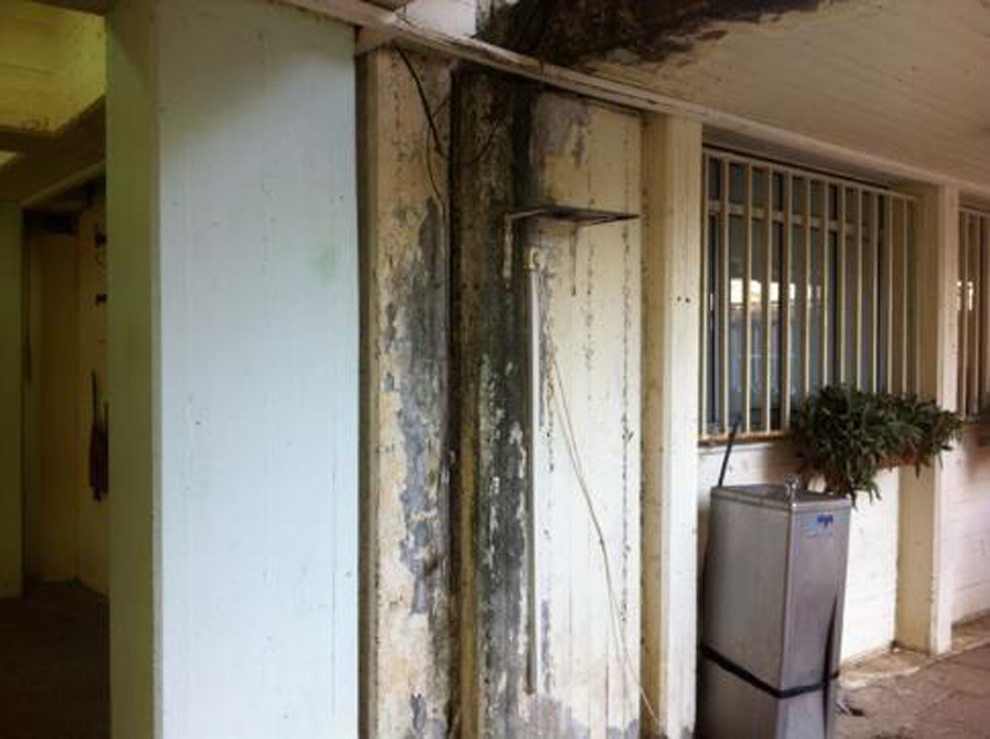
Orit was placed in the school a year before Tania (Case Study 2), before the building was renovated, when the walls badly needed painting and there was a general sense of neglect. I photographed areas in the school that are neglected, some intentionally and others due to natural causes (Figures 18 and 19) Orit, first day of placement. Orit, first day of placement. I sensed a dissonance between the plants and the building. The building suffocates the plants. There is a power struggle between them. The building overbears the plants. The school tries to integrate plants and nature in an urban environment. The city chokes nature. This attempt is like that of the school’s impressive attempt to take wild children and institutionalize them. The plants symbolize the pupils and the building symbolizes the school. (Figure 20) Orit, four weeks of placement. The children survive, just as the trees are full of leaves. There is a power struggle between the children and the system, as well as with the results of the system. The school is solid and chokes the plants it cultivates. The trees remain lonely, almost miserable, disrespected, but they persevere, green and full of leaves. I am very critical of institutions and mechanisms that function according to norms. I am not critical of the teachers; they are all doing their job. I am critical of our society and the culture in mainstream schools. This project has distanced me from mainstream education. I think I would be less suited to this field. I enjoyed teaching my pupil. I found her charming and think of her as a human being. I think of her in this institution. A young person, insecure, lacking tools. I blame the system. I think that my first round of photographs in the beginning was very positive. (Figure 21) Orit, last day of placement The vending machine is sort of nice, but the food is unhealthy. The machine is out of order. Why should pupils waste their money on a Coke? The wall is filthy I am less optimistic now, I see the neglect all over. Repair jobs are only half done. I photographed places in the school that reflect how the school chooses to treat detail, mostly by covering up the problem. For instance, only part of the wall was painted in light blue while the rest of the building was left dark and oppressive. The light blue wall partially covers an unpleasant appearance. I photographed corners and objects in the school that emphasize how I see the way the school is run and its essence. This is a testimony of my pessimism while teaching in this school. In the beginning I was very impressed. I thought the school was trying to save these pupils. I don’t believe in their approach: “we the teachers know what’s right for you and we will direct you there”. They don’t really look at each pupil individually. And there is no toilet paper in the bathroom. My pupil told me she doesn’t like her teacher. I saw the teacher passing by and trying to make changes to her work, the teacher remarked in passing about the fact that she chose to create a package design for chocolate as part of their project: “Is that what you eat for breakfast every day? What difference does it make if she has chocolate every now and then?” This is indicative of how the school functions. I feel a general disappointment with the school. They initially succeeded in convincing me that it is different and better, when we started off. I see that it is not. There is hypocrisy in education. It is a machine that sells junk and is flawed. I am disappointed”. (Figures 22 and 23)


Orit, last day of placement.
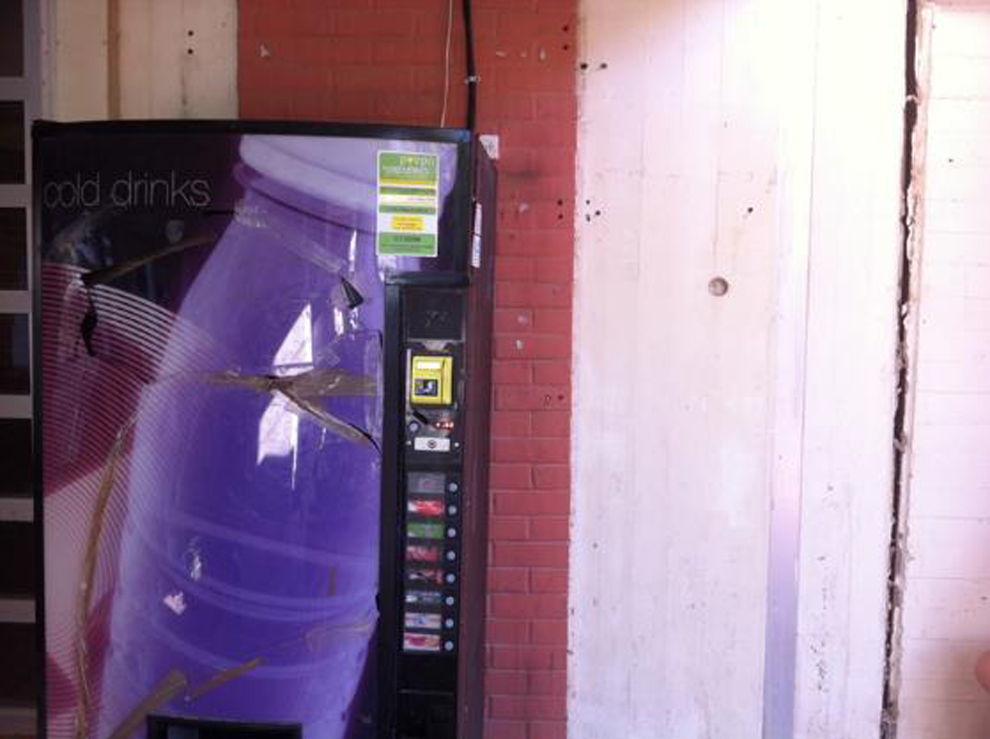
Orit, last day of placement.
Analysis of Case Study 3
This case study was selected because the student displays a unique approach. Orit claims that she began the semester with a positive outlook of both the project and the school. She explains that she gradually grew disappointed with the school, its function, and what it represented. In fact, from my perspective, she was initially critical and judgmental, and her approach did not change. She went into detail during the stages of course, discovering different flaws that she photographed. She voiced her criticism in her narratives and during the group discussion. All the while, her critical approach contrasted with her positive relationship with her pupil. The more disillusioned she grew with the school, the more she bonded with her pupil, feeling the need to protect her from what she perceived as harm. The photographs offered a platform to indulge in her negative feelings. She focused on details such as the vending machine and the half-painted walls and often complained about the lack of toilet paper in the bathrooms. She translated her negativity into photographs without horizon, depth of field, sky, light, or vegetation. Her feelings were translated into closely cropped photographs with internal borders in the image. Feelings of constraint and restriction were presented in images with vertical lines crossing the frame, serving as barriers. The photographs also contain contrasting colors, so that the negative and positive are positioned side by side.
Orit showed neither inhibitions nor restraint in expressing her negativity. She is clearly sensitive to her physical environment, to sights and smells (she told me in the past that she is hypersensitive to smells), sounds, and space. This is similar to the approach Mallgrave presents, in which our response to our buildings is initially a physical reaction. The cognitive understanding of our response is only secondary to our initial physical reactions. Thus, this student responded to the plant’s condition, claiming that they suffer from disrespect and are subsequently miserable. Her experience was shaped by her physical impression of the surroundings, the colors, the plants, and the neglect.
As her supervisor, I was challenged by the negativity she expressed through her visual diary, manifested in her photographs. She tended to overidentify with her pupil, defending her from her teacher’s remarks. I attempted to balance my evaluation of her abilities as a future teacher with her inability to contain her internal conflict regarding the school, both as an institution and as a physical entity. Her expressive photographic images and narratives forced me to acknowledge her sensitivities and assist her in selecting an appropriate school for her third-year placement in terms of education level and proper facilities. Orit chose to carry out her third-year placement in a high school with a modern building, which emphasizes Problem Based Learning pedagogy, in search of alternative forms of education. It proved to be successful and compensated for her disappointment in her second-year placement. 11 Eventually, in her fourth year, she began her practical training as a teacher in an elementary school. She was compelled to confront her ambivalent attitude, which proved to be challenging. Her default position of being critical toward her environment affected her ability to cope. This had taught me to heighten my awareness to such issues, as part of my practice and understand the implications they might have on the progression of the students.
Discussion
The study shows that the students involved in creating a visual reflective diary experienced a comprehensive learning process, involving observing, articulating, and introspecting. Learning to observe and document our surroundings can encourage a critical engagement among student/viewers. Using photography for investigating the school premises promotes a critical perspective to our surroundings. It incorporates the understanding of the profound affect the surroundings have on the experience the trainees undergo during their placement. Constructing the photographs, the desired frame, the moment, coupled with the subsequent selection process of images, requires the students to articulate and share their feelings and thoughts. According to Barthes (1984), photographs can awaken thought when the personal meaning of the image suggests something different from the literal one. In this case, photographs of the school suggest complex meanings and emotions. MacDougall (2006) explains that the written word is limited in creating and transmitting knowledge. The visual world can contribute unique qualities to our knowledge of our surroundings; the act of photographing in itself encourages the students to engage in their feelings, while practicing their teaching practices. Brown and Phu (2014) explain that by “feeling photography,” rather than “thinking photography,” we allow room for affect and feeling in photography, rather than using photography as a tool for surveillance, or as an ideological apparatus, or a tool for documenting events (pp. 2–6). Feeling photography can serve as a means to develop moral feelings and ethical responses (such as in the case of Orit and Tania). The embodied work, created through the process of elicitation of their sensory experience, by means of photographing the building and the environment, enabled new forms of communication. The students acknowledged that their sensory experience informed their reflexive understandings (as in the case of Orit who responded strongly to the decay and smells). The investigation of the premises invited the students to explore their attitudes and feelings. The building served as a metaphor for their feelings, so that any photograph of the building’s appearance served as an index of their emotions. The photographs served as windows into their emotional worlds. The experience involved all their senses, they responded to the sounds, smells, and colors of their surroundings, so that their experience was a multisensory experience (Pink, 2009). The photographs became a vehicle for describing their multisensory experience; their accumulated tacit sensory experiences and perceptions were translated into a visual documentation, which was embedded and enriched with verbal descriptions, all of which strengthened their overall descriptive abilities.
The uniqueness in this study is the predisposition of most of the students in the teacher training students in our program regarding the practice of teaching. The study acknowledged the necessity of a process of transformation. It acknowledge the importance of dealing with the students’ past traumas and inhibitions regarding schools and institutions. Analysis of the three case studies suggests that a common denominator was the emotion of negativity. Each case study dealt with this emotion differently. Tim’s initial negativity was infused with fear and tension. Tim embraced his negativity and slowly replaced it with a positive outlook. Tania translated her negativity to the physical barriers setup in the school. Orit developed her negativity into a critical approach, which tainted her overall experience. In general, during the initial stages of photography, the students related to feelings of oppression, taking sides with the pupils, rather than with the teachers or the staff. At this stage, they were unprepared to perceive themselves as teachers and embrace this role. Some responded by choosing to depict imagery of loneliness and neglect. Baudrillard (2000) addresses negativity toward the school and its intuitions as a powerful mechanism of society; he writes, “The University is in ruins” (p. 149). Educational institutions only serve as simulacrum of value when in fact, all around us there are nothing but dummies of power, but the mechanical illusion of power still rules the social order, behind which grows the absent, illegible, terror of control, the terror of a definitive code, of which we are the miniscule terminal. (p. 152)
From a didactic point of view, integrating visual diaries in the curriculum requires certain considerations. It is important to integrate photography skills into the coursework itself, in order to enhance students’ skills and enable them to control image production to correspond with their personal levels of satisfaction. It is important to allocate time in order to integrate the discussions and analysis in the course curriculum, in order to enable teacher trainers to endorse and apply visual reflective diaries practices and promote progression. Positive progression in this study is characterized by developing a constructive approach to teaching, to the school and the program. Students who concluded their documentation with a positive photograph displayed the ability to gain a new perspective and were able to present their experiences with a broader view of the school and its functions. Their terminology and selection of themes and narratives included terms such as hope, future, blue skies, improvement, and freedom.
On a personal note, during the course of this study, I learned that I was pleased to encounter positive photographs that present images of hope reflecting the students’ ability to cope with challenges and be positive. To conclude, this study demonstrates how use of photography promoted a process of progression in reflective processes and professional growth, not only for the students but also for the supervisor, who needs to be sensitive and open to the progression of the students and their processes.
Footnotes
Acknowledgments
I would like to thank my students in the Bed Design Program for their support in the research process. I would like to thank my husband, Lee Perlman for his professional advice. I would like to thank the Kibbutz College for their financial support.
Declaration of Conflicting Interests
The author(s) declared no potential conflicts of interest with respect to the research, authorship, and/or publication of this article.
Funding
The author(s) disclosed receipt of the following financial support for the research, authorship, and/or publication of this article: This research has been funded by the Kibbutz College of Education.