




Abstract
To address complex societal challenges, governments increasingly need to make evidence-based decisions and require the best available data as input. As much of relevant data is now in the hands of the private sector, governments increasingly resort to purchasing data from private sources. There is, however, scant empirical evidence and a lack of understanding of how governments go about data purchasing. Therefore, we develop a new conceptual-analytical framework to analyze three models of data purchasing by governments: purchasing raw or aggregated data, data analyses, and data-based services. Next, based on Dutch data purchases, we explore the utility of our framework and create an evidence base detailing what data, data analyses, and data-based services Dutch governments purchase from whom, how, and for what purposes in the context of societal challenges. Our results map buyers and sellers of data in the Dutch context, as well as the types of data sold and in which policy domains. We expose a serious lack of transparency in government reporting on data purchasing. We further discuss our results in view of possible archetypes of data purchases and what purchasing strategy implications they have. Lastly, we propose several recommendations to practitioners and a research agenda for academics.
Keywords
Introduction
For addressing societal challenges, public management increasingly seeks access to relevant data. Data is expected to provide necessary insights, and support evidence-based decision making and the measurement of policy impact. For instance, to be able to maintain and use infrastructure more efficiently, governments might use satellite data. Municipalities might use data about litter, the quality of plants and trees, and social care, to name a few examples. The problem, however, is that relevant data is no longer solely in the domain of the public sector, but increasingly in the hands of the private sector (Mayer-Schonberger & Ramge, 2022). Although governments, such as national statistical offices, have long been using private sector data and are often dependent on it, due to the growing ‘datafication’ and ‘platformization’, businesses now hold more and more of key relevant data and advanced governance capacities (Ruppert et al., 2017; Sharon, 2020; Van Dijck et al., 2018). At the same time, there is a wide range of opportunities where private sector data could become useful to governments in the EU (see e.g., Signorelli et al. (2024) for an overview of potential topic areas). Thus, business-to-government (B2G) data sharing has become a phenomenon of growing practitioner and academic interest.
To gain access to private sector data potentially valuable for addressing societal challenges, governments can follow several routes: (i) engage in voluntary B2G data sharing, (ii) impose data sharing obligations on businesses to share data for public interest in certain situations, and (iii) purchase data from the private sector. Much experimentation, in the EU and beyond, has followed the first voluntary route of B2G data sharing. There seems to be a consensus, however, that voluntary B2G data sharing has achieved limited results due to a number of barriers, such as a lack of incentives to contribute to the public interest (EC, 2020). More recently, the EU has taken steps to institutionalize some forms of data obligations mandating B2G data sharing under specific circumstances (e.g., in the Data Act). Our research, however, focuses on the last route, and we will introduce the generic term ‘data purchasing’ for further use.
Both academic and grey literature have primarily focused on voluntary B2G data sharing (George et al., 2020; Susha, 2020; Verhulst & Sangokoya, 2015), while data purchasing by governments has been completely overlooked in most B2G data sharing research. Similarly, public procurement literature does not specifically address how data is purchased from the private sector. At the same time, an exploratory case study by Micheli (2022) signals that purchasing business data may be one of the most commonly used approaches by local governments for gaining access to data in the EU and it poses several challenges, such as lack of control and risk of introducing inequalities among municipalities. Another challenge mentioned in the literature relates to the access governments can obtain to personal data about residents from the private sector and the associated legal and ethical issues (e.g., Simmons, 2009). Other few existing studies offer narrowly focused insights, primarily from the US and limited to certain types of data, for instance location data or satellite data (Borowitz, 2019; Shenkman et al., 2021). Meanwhile, the market for data is rapidly emerging, including in the B2G domain, as businesses are becoming increasingly interested in the potential of data monetization (Wixom et al., 2023). Certain types of data may be in higher demand, such as telecom data, online payment data, sensor data, and data from IoT devices (VNG Realisatie, 2017). Researchers warn that this market poses unique challenges, such as for instance the risk of monopolistic data suppliers (Martens & Duch-Brown, 2020). However, empirically we know little about the characteristics of such a B2G data market in any given country and how it should be managed by buyers. We do not know who is selling what kind of data to whom, how, and what for. Additionally, we do not know well how buyers should approach data markets. Data purchasing might be fundamentally different from most other types of purchasing. A lock-in situation is easily created, there might be relatively many niche suppliers, and the payment model can also differ significantly from other purchasing categories. For instance, once the data exists, in some cases, it can easily be resold by the supplier, even more so than with standard software procurement, which often involves additional services. This raises the question of whether standard purchasing models and theories, such as the portfolio strategy theory developed by Kraljic (1983), are still applicable.
Hence, we find ourselves in a niche where there so far has been no systematic research focusing on data purchasing by governments and any empirical account characterizing this phenomenon is missing. We find this problematic and an urgent issue to address, because the way governments handle data purchasing determines the extent to which public interests are safeguarded or potentially compromised. Given that there are so many unanswered questions, the first step is to assess the state of play as regards data purchasing by means of mapping and to empirically investigate which government organizations are purchasing what, from whom, how, and what for, for addressing societal issues. The second step is to discuss what this could mean for buyers regarding how they purchase data. Hence, in this paper, we pose the following research questions:
How can we map the purchasing of data by governments for addressing societal issues? What implications does this have for buyers in terms of their data purchasing strategies?
To answer these questions, we develop a conceptual-analytical framework to analyze data purchasing and conduct an exploratory study, using the Netherlands as an example, to identify cases of government organizations purchasing private sector data for addressing societal issues. We further analyze these cases based on the parties involved, the content of the purchase, the purpose, the procedure used (who, what, how, and what for). Finally, we develop several possible archetypes of data purchases and discuss their implications for purchasing strategies.
The Netherlands presents an interesting case study due to the quite developed nature of its public procurement function and several instances of governments utilizing data from providers. The insights gained from this country are likely to hold relevance for many others as well. Thereby, we aim to close the gap in the literature on digital government and on public procurement by contributing insights characterizing the phenomenon of B2G data purchasing.
State of the Art and Data-x Purchasing Framework
The literature on data purchasing is limited to a few previous studies (cited in the Introduction), hence our knowledge on the government/buyer perspective is very limited. There also appears to be a larger gap pointing to the lack of knowledge about how not just governments but organizations in general (including companies) acquire external data (Jarvenpaa & Markus, 2020). In the Information Systems literature, the terms purchasing, sourcing, procuring, or buying are often used as synonyms referring to a transaction where a particular good, service or building project is provided by one or more supplying organizations to one or more buying organizations (based on Schneider et al., 2013). As pointed out by Krasikov et al. (2022), using external data is not new to organizations and has been on the rise since the 1990s, but in the literature, this has been associated with simply “getting the data” and any systematic inquiry into how this is or should be done has been lacking.
Since deeper knowledge on the buyer perspective is lacking, we turned to the seller perspective. There is more that can be learnt from the literature on
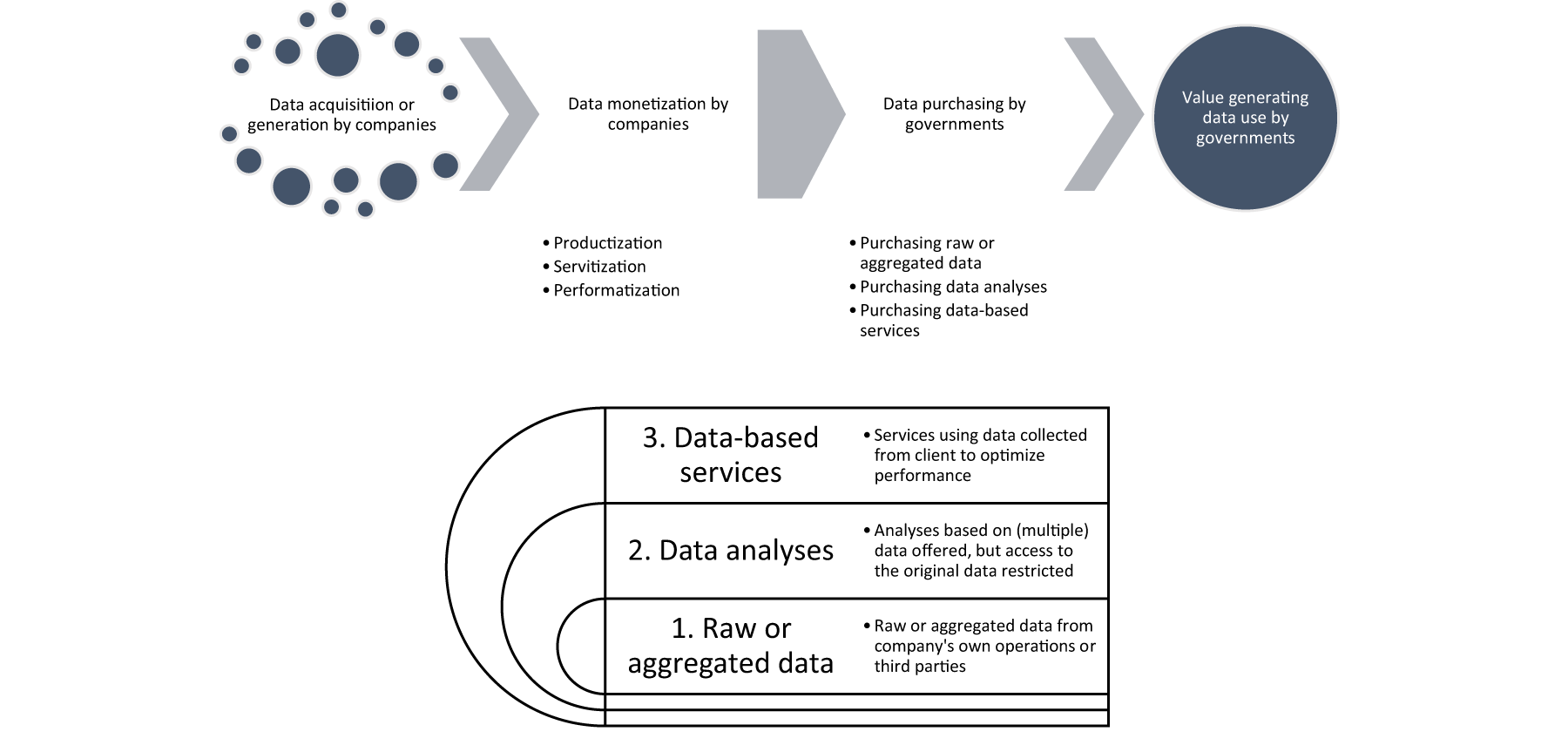
Conceptual-analytical framework of data-x purchasing by governments from companies (authors' elaboration based on Ritala et al., 2024).
The three aforesaid routes or combinations of routes are examples of direct data monetization by companies where a commercial transaction occurs for monetary rewards (Ofulue & Benyoucef, 2022). Data monetization also occurs indirectly in the case of data bartering (Wixom, 2014 cited in Ofulue & Benyoucef, 2022) and data wrapping (Hunke et al., 2022; Ofulue & Benyoucef, 2022). We, however, exclude these models from our investigation as we focus on direct spendings of governments.
Taking this framework as a starting point, our study is the first systematic effort to collect empirical evidence on the practice of data purchasing by governments. Academic research on B2G data sharing has so far mostly overlooked the data purchasing model and almost solely focused on voluntary access to private sector data. This is problematic due to the growing importance of data for governments and the unique characteristics associated with different forms of data purchasing. We fill in this relevant research gap by conducting an exploratory mapping of data purchasing by Dutch government organizations and by discussing how governments could act upon this knowledge.
In this research we conducted an exploratory embedded case study (Yin, 2009) of one EU country – the Netherlands. We assume that the Netherlands presents a typical and interesting case, due to several factors: its EU membership, its data infrastructure and data policy, and the fact that it faces multiple societal challenges that require public organizations to obtain data from private companies. We consider it a typical case because other EU countries also face similar societal challenges which can be potentially addressed with data. All EU countries are also bound by the EU public procurement directives. We consider it an interesting case because the data infrastructure in The Netherlands is rather advanced to support B2G data sharing. Moreover, since 2021, the Dutch national data strategy 1 puts strong emphasis on leveraging the potential of data for addressing societal challenges. Finally, researching the Netherlands is also motivated by pragmatic reasons of the authors having access to this case and possessing advanced background knowledge. The embedded nature of the case study implies that we include a number of sub-cases (cases of data purchases) from different levels of government. Given that this is the first systematic mapping study, we find the case study approach well suited.
To collect the data, we conducted a deep dive into the (open) government data relevant to government spending to collect publicly available information on our research question. To do so, we collected data on data purchasing ‘cases’ and focused on mapping which governments purchase private sector data from whom, what type of data is purchased, for what purpose, and how. We used publicly available information provided by two platforms to assemble our dataset: TenderNed 2 , and OpenRaadsinformatie 3 . Two other platforms, OpenSpending and Findo, were consulted but did not deliver results at the required level of granularity. The data collection took place between August 2023 and December 2023.
The first platform TenderNed serves as the Dutch government's official procurement platform, facilitating the dissemination of tender notifications by public authorities. Tenders exceeding certain monetary thresholds are subject to European procurement procedures as outlined in the Tender Act of 2012. For central authorities, such as ministries and judicial bodies, the threshold for service supply is
The second platform, OpenRaadsinformatie, is an initiative provided by the NGO Open State Foundation in collaboration with the Association of Dutch Municipalities (VNG). The platform provides information by extracting governmental board meetings and other documents from information systems of decentral authorities. The platform functionality did not allow us to conduct a systematic search to identify cases of data purchasing. Therefore, we used a workaround technique and conducted a search based on a list of 95 potential providers of data or data services. This list of providers was manually compiled based on:
Insights gathered during our talks with experts in the field, Input from previous research activities, A search for potential providers among the private sector participants at various GovTech conferences, and The TenderNed dataset.
The list is made available in the Appendix. Like the search within TenderNed, an in-depth and manual review of all provided documentation was necessary to ascertain whether the cases fall within the scope of the research. The search eventually resulted in 15 additional use cases.
Finally, we have collected several additional use cases through an open call advertised in several relevant professional networks, such as the knowledge network of VNG on data and society (Kennisnetwerk Data & Samenleving), and through talks with 8 experts in our network (e.g., municipal privacy officers). This resulted in 4 additional cases. In total, we ended up with 33 cases.
In terms of data analysis, for each case we extracted information and categorized each case based on a number of attributes (see Table 1 below): who (buyer, seller), what (type of offering), for what purpose (policy domain), and how (procedure). In addition, we created concise summaries of each case. The type of offering was determined based on our conceptual-analytical framework. The policy domains were assigned based on Vermeulen's (2015) categorization of social policy decentralization in the Netherlands 4 in combination with our expertise. The information about the remaining attributes was extracted as it appears in the two platforms we used (TenderNed and Openraadsinformatie). To determine the type of offering, the research team went through all the cases and based on the case summaries and where needed underlying documentation, reached consensus about the appropriate type of offering (data-x purchasing model). We encountered that categorizing some cases proved to be challenging due to the insufficient level of detail about the cases that we could derive based on publicly available documentation. Cases that involved provision of a dashboard or monitor were categorized as selling data analyses, or servitization.
Case Analysis Matrix.
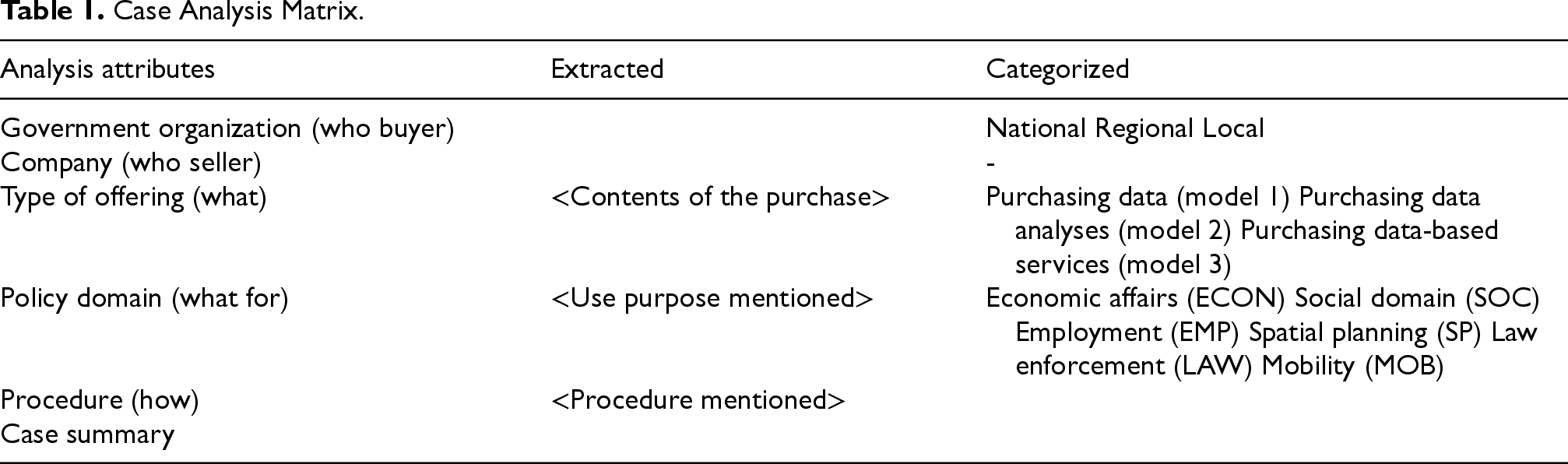
Case Analysis Matrix.
The same procedure was used to determine the policy domain.
As a validation step and to enrich the research findings with additional qualitative input, initial results of our research have been presented in a workshop setting to an audience of government practitioners attending an Overheid 360 congress 5 (held on 19 June 2024) and a Binnenlands Bestuur congress 6 (held on 3 December 2024) in the Netherlands, complemented by a preparatory interview with an experienced data purchaser. We used these opportunities to receive feedback on our approach to the mapping and on our initial results. No gaps were identified, and the participants recognized a number of findings, especially concerning dominant players. In addition, we also presented our results to over 80 Belgian civil servants during the Study Day Data in Local Governance 7 (held on 10 December 2024) in Ghent, Belgium. Many of the participants voiced agreement with our findings based on their experience, emphasized the need for a more effective market for data and data products, and expressed interest in sharing good practices and collaborating in joint acquisitions. This leads us to suggest that our findings can be relevant to other EU countries as well.
In this section, we first present some general observations regarding our collection of cases, such as who the buyers and sellers are and in which policy domains data purchasing occurs. Next, we discuss the case analysis results relative to the three models of data-x purchasing. Full analysis of the cases, including all analysis attributes from Table 1, is presented in the Appendix.
Who: Buyers and Sellers
Based on our analysis, we identified local government authorities, regional authorities, as well as national level agencies, as buyers of data, data analyses, data-based services or combinations in our sample. Table 2 illustrates which governments were identified and gives an overview of the cases.
Cases of Data-x Purchases Sorted on Level of Dutch Government.
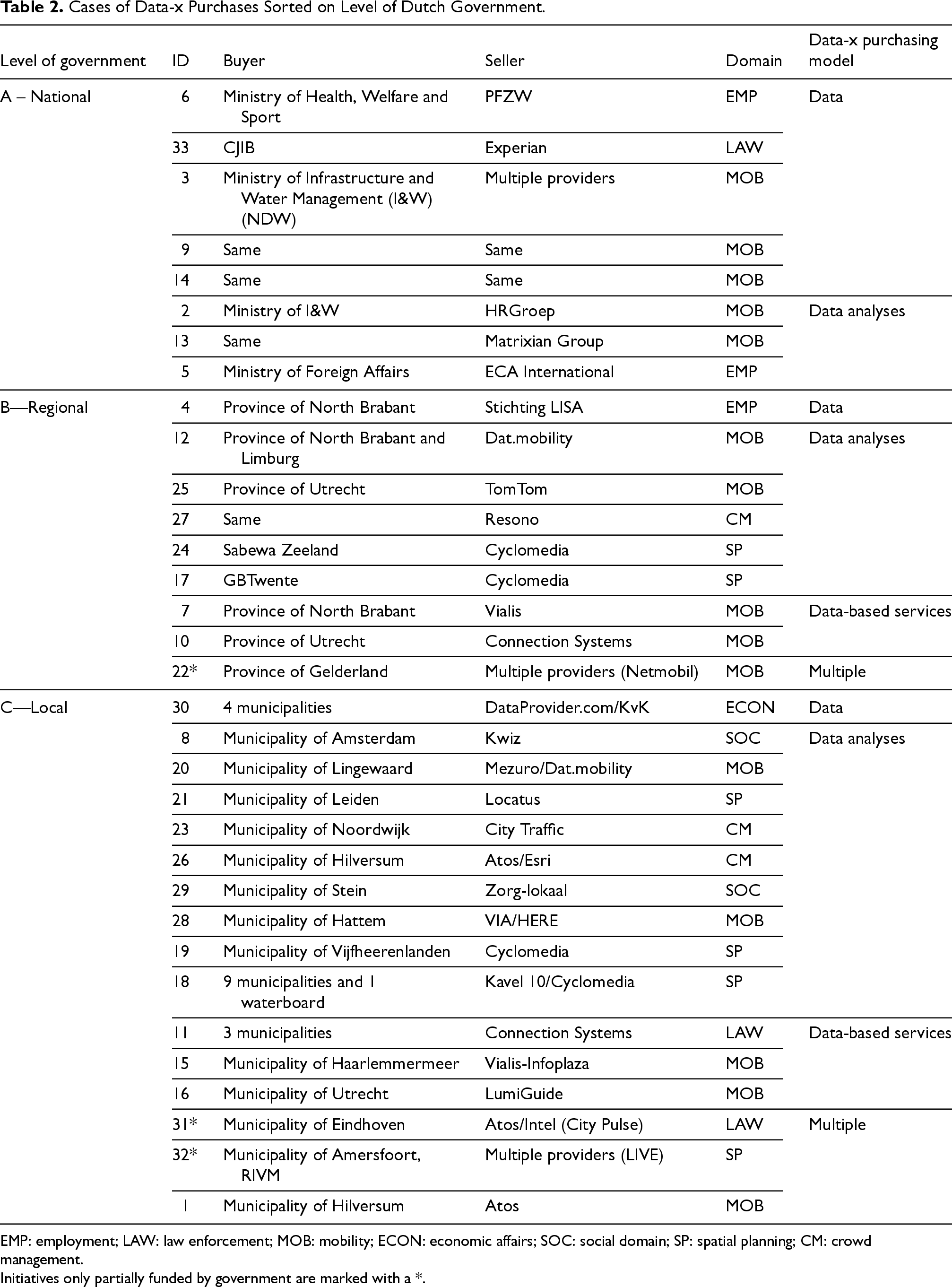
Cases of Data-x Purchases Sorted on Level of Dutch Government.
EMP: employment; LAW: law enforcement; MOB: mobility; ECON: economic affairs; SOC: social domain; SP: spatial planning; CM: crowd management.
Initiatives only partially funded by government are marked with a *.
Table 2 shows that
At the
We also identified two projects involving and partially funded by Dutch government organizations (at regional and local levels) which involved data purchasing (marked with * in Table 2). For instance, the LIVE project (which received initial funding from the EU) concerned multiple digital solutions for spatial insights into the redevelopment of the Leindert district in the municipality of Amersfoort, using various data sources. These included data provided by Geomaat, drones and mobile mapping, a WaterMonitor by NEO and Hydrologic, BoomPlus by NEO, 3D – CityPlanner by Strategis and NEO. The other case was the CityPulse project which received initial funding from the Dutch Research Council and aimed to provide an incident prediction dashboard and data analysis based on various sources.
At the
Having discussed the buyers, we now turn to the sellers. Figure 2 captures per case from whom the Dutch government organizations at different levels purchase data, analyses or services. The connectivity between governments and providers is visually depicted by lines, denoting the procurement from certain providers. Each governmental entity represents a single case; where multiple providers are connected to a single entity, it signifies the extent of provider involvement within a case. The colors assigned to entities denote the policy domains to which the data, analyses or services belong within governments. Figure 2 excludes three cases connected to National Road Data Portal (NDW) to maintain readability of the figure. NDW is a collaborative initiative with its dedicated implementation body, facilitating governmental cooperation in the acquisition, dissemination, and utilization of data aimed at addressing challenges in mobility and public infrastructure. Each case connects to numerous data/service companies (29 providers identified).
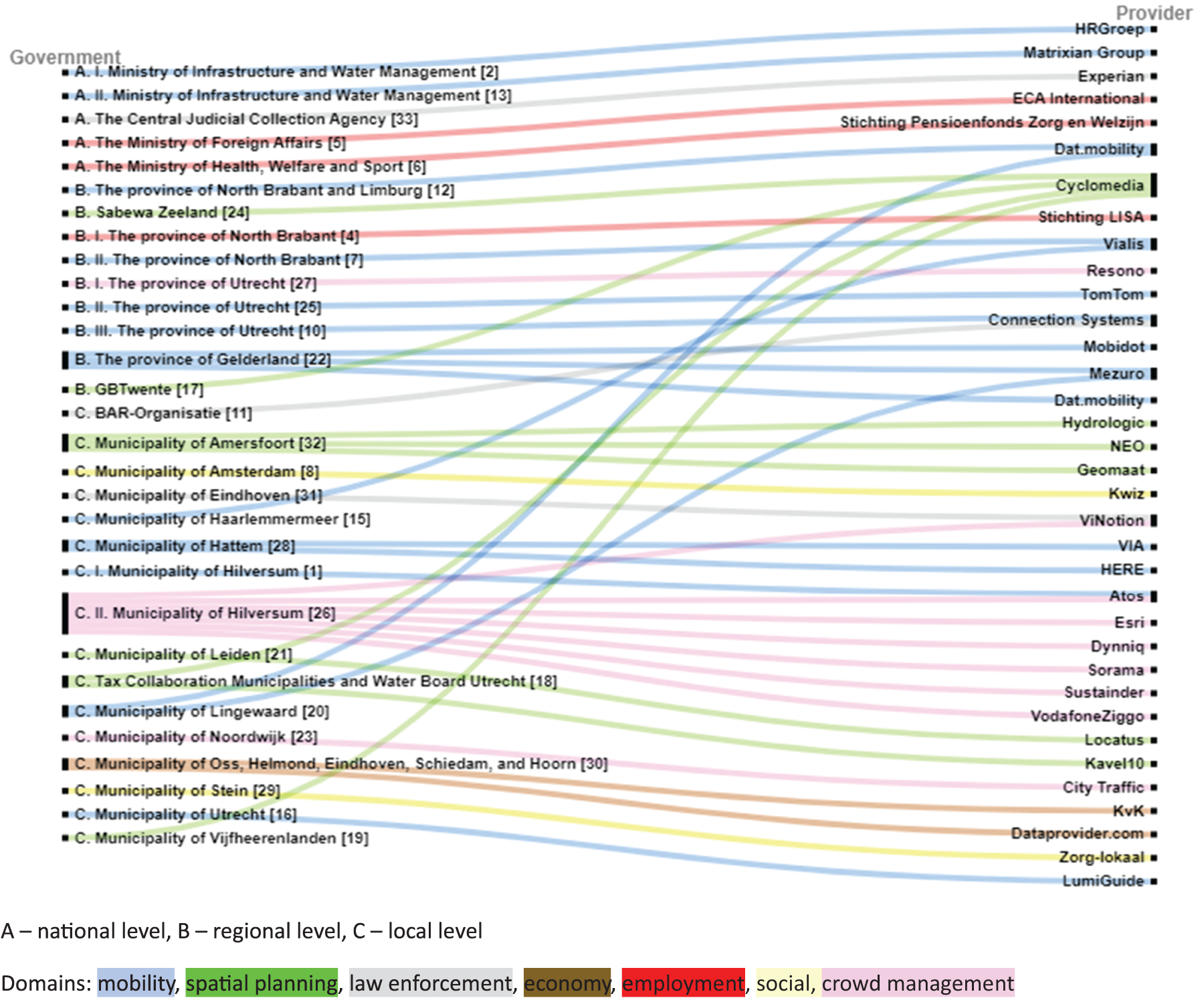
Company providers and government buyers of data, data analyses, and data-based services in the Netherlands.
Looking at the right side of Figure 2, the landscape of private sector providers of data and data services in the Netherlands appears to be rather versatile, including data science/analytics companies (e.g., Dat.mobility, Resono, Mezuro), providers of data, software, consultancy services (e.g., Atos, Bureau de Groot Volker, ECA International), and foundations (e.g., Stichting LISA, Pensioenfonds Zorg en Welzijn). The multiple lines connected to some companies in Figure 2 signify that these companies (e.g., Cyclomedia, Dat.mobility, Connection Systems, Vialis) have an established relation with a number of governments (e.g., Municipality of Vijfheerenlanden, Province of North Brabant, Province of Utrecht, NDW) and that these providers seem to have established a solid position on the data market.
A notable example is the company Cyclomedia. It collects visual data in public spaces for many governments using patented vehicle-mounted camera systems, producing 360° panoramic images and LiDAR data, alongside additional services like aerial photography. Their services are in demand among numerous governments, who sometimes opt for joint procurement to leverage cost efficiencies (e.g., BGTwente). However, in recent years, competitors like Kavel10 have also entered the market, this company is also represented in our sample.
Another example is Dat.mobility which has provided data and/or related services to multiple governments (e.g., the Municipality of Lindewaard, Province of North Brabant and Limburg). Interestingly, the company collaborates often with other providers within a certain project, including data providers like Mezuro and Mobidot.
Another interesting finding in our sample is the presence of non-profit organizations. For instance, the foundation Stichting LISA provides a database containing information on all establishments in the Netherlands where paid work is conducted. They offer access to both open data and data for a fee. Our sample reveals that North Brabant purchased data from Stichting LISA to inform the development and improvement of economic policies.
Table 3 presents our analysis based on the three data-x purchasing models and shows what kind of government organizations purchase what from what kind of providers.
Cases Analysis Sorted on Data-x Purchasing Model.
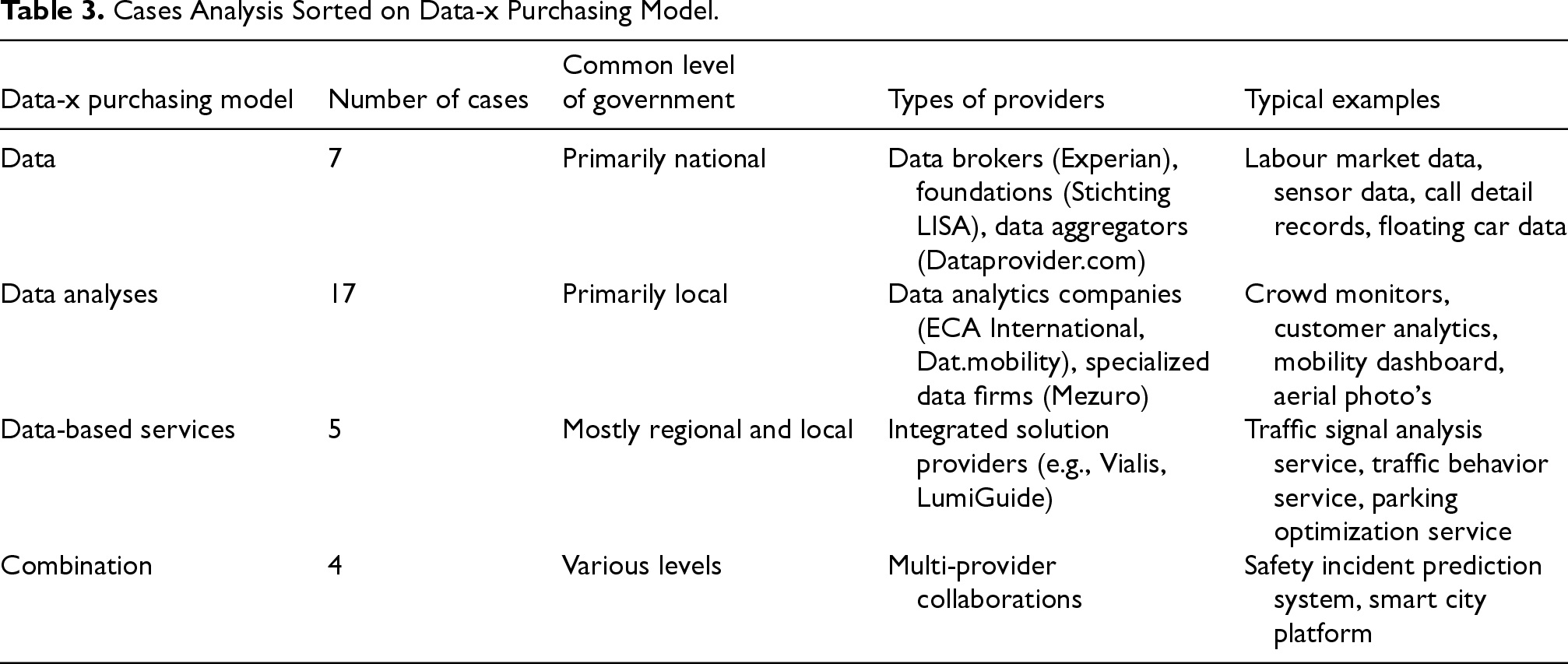
Cases Analysis Sorted on Data-x Purchasing Model.
Overall, we were able to identify seven cases of purchasing data, seventeen cases of purchasing data analyses, five cases of purchasing data-based services, and four cases of combination of models. The category of purchasing data analyses was most represented in our sample, which might suggest that this is the most popular model.
In terms of
In terms of
In terms of
We also categorized a number of cases as
Table 4 provides an overview of the various domains for which we could identify purchases of data, data analyses or data-based services. The domains where most of our identified use cases are concentrated are mobility, spatial (planning) domain, law enforcement, crowd management, employment. We added the crowd management domain to our categorization based on the identified cases.
Case Analysis Sorted on the Policy Domain.
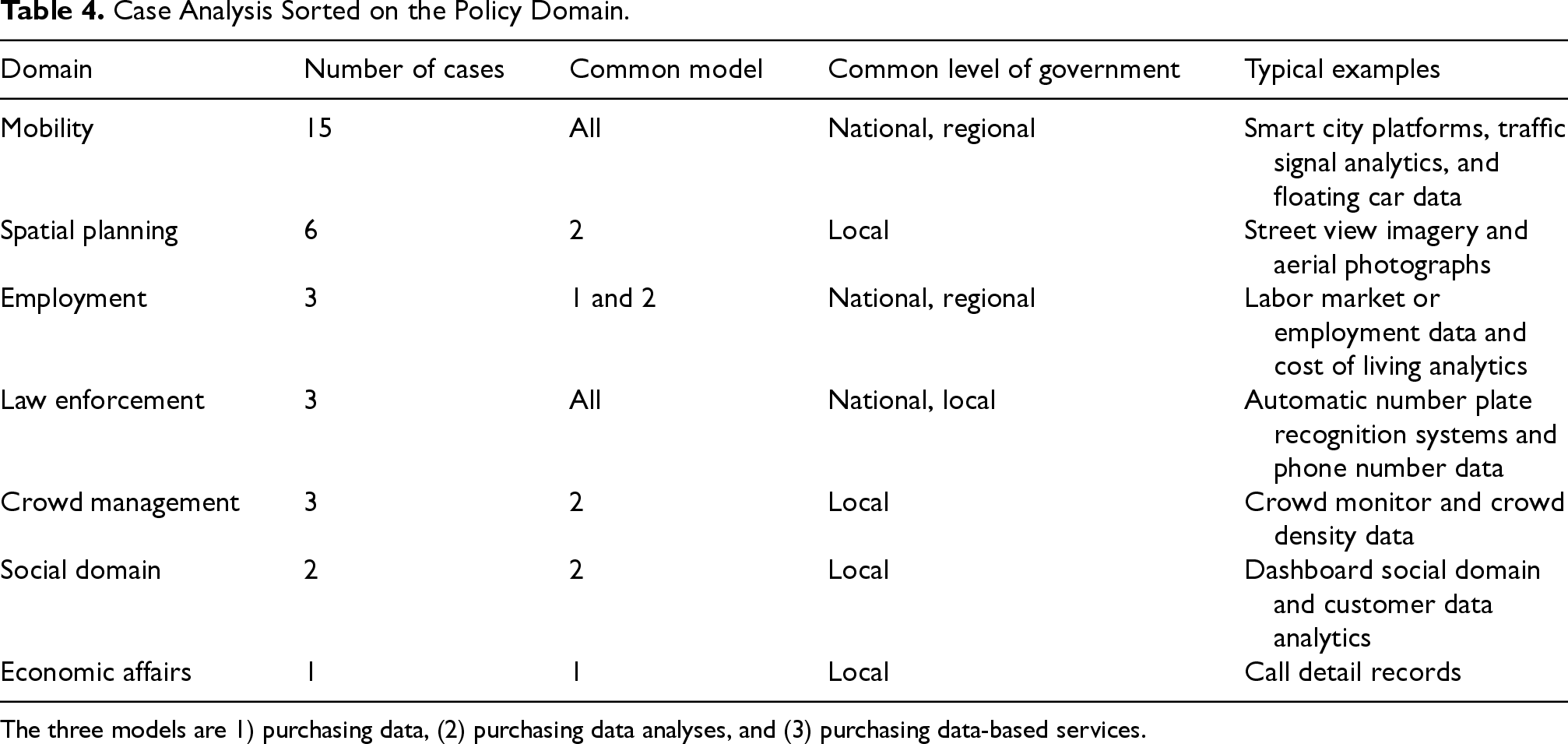
Case Analysis Sorted on the Policy Domain.
The three models are 1) purchasing data, (2) purchasing data analyses, and (3) purchasing data-based services.
Mobility is one of the domains where there is an active data market. In general, mobility challenges arise at local, regional, and national levels. However, it is most common that mobility challenges are addressed by regional and national governments, which is also reflected in our sample. Based on our sample, we found various types of data purchasing: data-based services, such as smart city platforms, data insights, such as traffic analyses or calculation models, as well as datasets, such as probe vehicle data, floating car data, and crowd-sourced data are prevalent. Providers that specifically offer many services in this domain are the aforementioned Dat.mobility and Vialis; they provide both data-based services and data analyses as well as datasets, and sometimes in combination.
The spatial (planning) domain represents another domain where an active data market exists. This domain involves tasks, such as the oversight of public spaces, including the maintenance, management, and regulation of amenities, as well as the control of visitor flows and the upkeep of cleanliness. These responsibilities are usually undertaken at the local level, which is also reflected in our sample. Based on our sample, we found various types of data purchasing, however, the most common is the procurement of data analyses and insights. A prevalent provider catering to various local governments in this domain is the aforementioned Cyclomedia. For purposes such as spatial planning, Cyclomedia offers, among other services, street view imagery and aerial photographs.
Within the domain of employment, several cases have been identified. The oversight of employment is a collaborative effort between central and decentralized authorities. At the municipal level, employment is predominantly categorized under the social domain. On a national level, these responsibilities are assigned to ministries, such as the Ministry of Health, Welfare, and Sport. Within our sample, predominantly regional and national governmental bodies have been represented in this domain. Our sample underscores the significance of procurement of datasets and data analyses within this domain.
Within the law enforcement domain, several cases have been identified. The oversight of public order and safety constitutes a shared responsibility between central and decentralized authorities. Within municipalities, this jurisdiction is specifically allocated to the domain of public order and safety. At the national level, this entails the involvement of implementing agencies, such as the Central Judicial Collection Agency (CJIB) and law enforcement agencies (e.g., the police, and customs), operating under the Ministry of Justice and Security. Both governmental levels are reflected in our sample. Our analysis reveals the presence of both data-based services and the procurement of datasets within our sample, as well as a combination of models. An illustrative example of a prevalent service within this domain, drawn from our sample, includes the procurement of automatic number plate recognition cameras for the enforcement of traffic regulations. A predominant provider of this service is the firm Connection Systems.
Crowd management is in fact not formally recognized within governmental structures or domains. Nonetheless, for this study, we have grouped these cases due to their significant overlap and prominence. Typically, such cases would fall within various established domains, depending on the objectives of a project. Crowd management entails the analysis of visitor flows within a specific area, such as festival grounds, sports stadiums, or commercial districts. This underscores why crowd management activities primarily occur at the local level. The objectives of crowd management initiatives can vary widely, ranging from ensuring public safety and order to stimulating economic activity or enhancing marketing strategies. Within our sample, the predominant offerings are data analyses. An example is the crowd monitor implemented by the Municipality of Hilversum and provided by Atos, generating data through sensors and GPS data to map visitor flows. Another example is the company Resono, which provides location data generated through various apps, such as weather apps, to map visitor numbers and crowd density, among other services.
The social and economic domains represent the lowest number of cases in our sample. The cases are at the municipal level and involve the purchasing of data or data analyses.
Data reuse by organizations is seen as essential to the development of data economy in the EU, and it is argued that it must be economically reasonable and socially accepted (Custers & Bachlechner, 2017). The fact that data is being monetized by companies is old news, but little is known about the cases when such monetization occurs towards governments as buyers. Our study is the first to shine a light on the B2G data market from an empirical standpoint and interrogate the phenomenon from the perspective of government as buyer of data, data analyses, and data-based services.
Mapping Data Purchasing
Our research first aimed to provide deeper insights into which governments are purchasing what, from whom, how, and what for, for addressing societal issues. We found that local governments, particularly municipalities, are the most frequent data purchasers. In terms of providers, the landscape of private sector providers of data and data services in the Netherlands is versatile, including data science/analytics companies, providers of data, software, product-service-data-solutions, and foundations. The policy domains include mostly mobility, spatial planning, law enforcement, crowd management, and employment. In summary, our research highlights the diverse landscape of data purchasing by governments in the Netherlands, spanning multiple levels of government and various policy domains. This is facilitated by a range of providers, each contributing to the evolving data ecosystem.
Our mapping exercise enriches the current limited knowledge on B2G data market (Martens & Duch-Brown, 2020) by providing an empirical account and characterization of it using the example of one EU country. In this way, we provide a further indication, alongside earlier work by Micheli (2022), that purchasing business data is a commonly used approach by governments to gain access to data in the EU. In addition, we show that the data-x purchasing framework we developed is well applicable in practice. All forms of data purchasing included in the framework are observed, with most purchases involving data analyses. The purchasing of raw data or data-based services, as well as combinations of models, occurs less frequently.
Archetypes for Data Purchasing
The previous section provides insight into how the data purchasing market has developed so far, but it does not indicate what governments can do with this information. The second aim of our research was therefore to analyze the implications of our mapping exercise for buyers in terms of their data purchasing strategies.
Based on our data sample, we were able to formulate
Archetypes for Data Purchasing in Different Domains and Markets Based on the Sample.
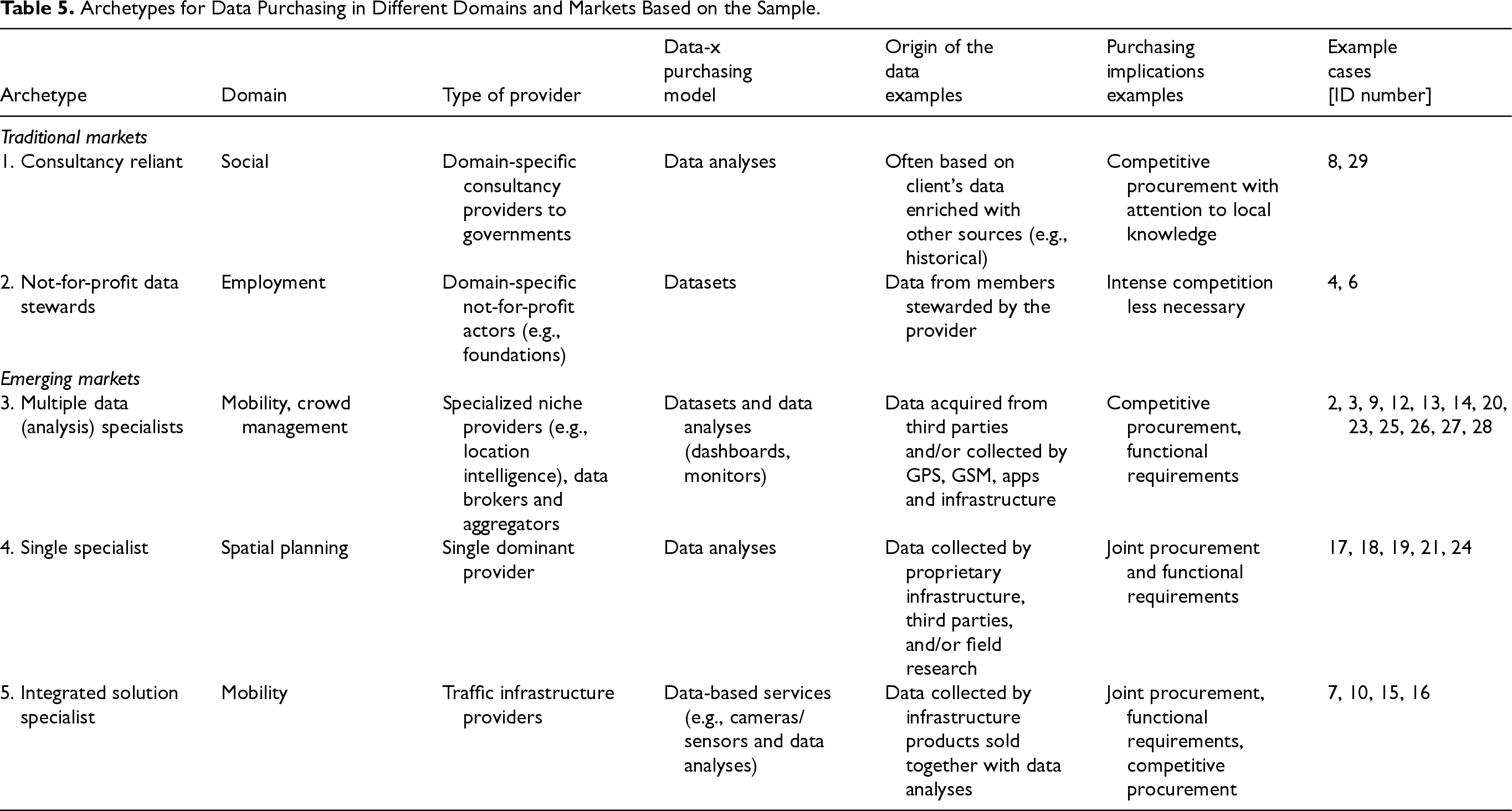
Archetypes for Data Purchasing in Different Domains and Markets Based on the Sample.
The first group of archetypical cases is labelled as traditional markets. For instance, in the social domain, we mainly identified purchases of data analyses from domain-specific providers of consultancy services to governments (like Zorg-lokaal and Kwiz specializing in the social domain). These offerings are often based on client's data, possibly enriched with data from other sources. We label these cases as
Another archetype of cases, labelled as
The second group of archetypical cases is labelled as emerging markets. Namely, in the domains of crowd management, spatial planning, and mobility, we observe that governments deal with a different type of players. For the crowd management domain, for instance, we notice that governments purchase datasets or data analyses (dashboard or monitors) from specialized niche providers – in this case, location intelligence companies (e.g., Resono, CityTraffic, Esri). Similarly, in the mobility domain, it also seems to be common for governments to purchase datasets (e.g., Mercedes, Nira) or data analyses (dashboards, monitors) from digital companies specializing in different types of location analytics (e.g., Mezuro, Dat.mobility, Here, TomTom). We label these cases as
In contrast to this, another group of cases is labelled as
The final archetype is the
In summary, distinguishing among these archetypes can be of value in determining the optimal purchasing strategy for governments engaging in data purchases, also beyond the Dutch context. For instance, joint procurement may be an appropriate strategy when dealing with a monopolist (Schotanus, 2007). Once there is a healthy market with private providers, competitive sourcing becomes more evident. In contrast, when governments procure data from non-profits, intense competition is less likely to yield optimal results.
With the insights described above, we complement the existing academic literature, which, as noted in the literature review, does not specifically address the purchasing implications of different types of data needs and lacked a systematic investigation. Our findings also reveal that, looking at the example of the Netherlands, governments at all levels (national, regional, local) utilize the three data-x purchasing models and acquire data, data analyses or data-based services. Although our sample does not allow for any conclusions regarding why certain governments choose to buy data, data analyses, or data-based services (‘sourcing decision’), we suggest that it might depend on the policy domain (e.g., data-based services might be more popular in the mobility domain) and/or the level of government (e.g., purchasing data could be more common among national or regional level government organizations). Thereby, our conceptual-analytical framework has proven to be a useful tool connecting the previously disjointed knowledge on data monetization and public procurement of data. Furthermore, our findings open a new chapter in research on ICT procurement (see e.g., Ghezzi & Mikkonen, 2023) which has not yet paid attention to procurement of data or data products.
In this final subsection of the discussion section, we address an overarching problem that posed a challenge for both of our research questions. This concerns the lack of transparency regarding which data is bought by whom, how, and for what purpose. For instance, there is no central database tracking which entities purchase what data, hindering a comprehensive understanding of the scope and expenditure of data procurement. A large portion of such transactions of interest are scattered at the level of project invoices and thus difficult to uncover in a systematic way. This finding also means that the open government data made available by Dutch governments was insufficient to meet our research needs which signals that the information disclosure strategies need revision to address this gap. As far as we know, this problematic lack of transparency regarding data purchasing is also present in many other countries.
The lack of transparency is especially important to address because, in our research, we encountered several niche players and markets that sell data or data services to many governments. To effectively counterbalance data sellers, it might be helpful if governments (and departments within governments) are aware of what data they are purchasing, for how much, and from whom. With better data, governments can better align their purchasing efforts, for example, by purchasing jointly or learning from one another. The latter seems particularly important in data purchasing because many data purchases are spread across the organization. There is often no single expert responsible for data purchasing, even though some types of data purchasing—though not all—can indeed be complex (e.g., privacy issues, ownership, etc.), while all sellers of data are likely to be experts in their field. Therefore, learning from one another and scaling up where possible seem important for gaining better control over data purchasing. Finally, transparency can also contribute to better demand management. For example, it might be sufficient to perform certain data analyses for one municipality, allowing other municipalities to reuse these results. Increased transparency can also help assess whether all purchased data and analyses truly add value, provided a central database also records how useful specific data purchases have been according to the users.
Conclusion
In this exploratory study, our objective was to map the state of play as regards data purchasing from the private sector for addressing societal issues (who, what, how, and what for) and to indicate what implications this has for buyers in terms of their data purchasing strategies. To answer this question, we investigated data purchasing in the Netherlands as a typical case and collected 33 cases of such purchases at national, regional, and local levels of government. We proposed a conceptual-analytical framework of data-x purchasing which, as demonstrated in our study, can be useful as an analysis tool for uncovering governments’ purchases of data from private companies. Furthermore, we developed five archetypes and indicated, among other things, the purchasing implications of each archetype. Our study was the first systematic attempt to map data purchasing at the level of a country and to indicate purchasing implications and we encourage other researchers to replicate this effort in other countries, be it in or outside the EU.
Our main conclusions are that data are purchased in different forms. There is however no comprehensive overview of what governments purchase, which makes this a rather opaque area of public spending. Such knowledge could be relevant for reducing information asymmetry in this particular marketplace, controlling public spending, and considering possible vendor dependencies.
We propose the following Increasing transparency around data-x purchases. We call for enhancing transparency about government data (service) procurement practices. The significance of these themes in public procurement has been underscored in broader literature (e.g., Bauhr et al., 2020; Schotanus, 2022; Titl & Schotanus, 2025), and also seem particularly relevant to procurement of data, data analyses, and data-based services. It would be beneficial for taxpayers and public organizations to critically review practices of such purchasing. The lack of transparency also seems like a missed opportunity because many governments likely have the same or similar procurement needs. A central database could create, among other things, learning opportunities. Be more alert to (changing) market situations. During our research, it became clear that the markets for data, data analyses, and data-based services are dynamic. One of the providers we examined was acquired. This happened in a market where we already encountered little competition. In a context where data is becoming increasingly important for governments, these developments are increasingly important for purchasers to be aware of, to monitor closely and respond to, as previously discussed (e.g., through more functional requirements or more joint procurement), but also for IT departments and regulators. For IT departments, the policy of contracting as few additional providers as possible is an understandable choice in terms of coordination costs, but not always when it comes to dependency and innovation. For regulators, it is crucial to be extra vigilant regarding acquisitions and mergers that could make governments overly dependent on a single party. In markets with only one or a few providers, a central database could also help make this market situation more transparent and facilitate in improving the balance of power between the government and the monopolist or oligopolists. Facilitating knowledge exchange and joint procurement. We call for more joint initiatives, knowledge sharing, and professionalization of this practice, especially among local governments. The practice of data purchasing may put smaller local governments, which typically have limited IT and procurement capacity, in a disadvantageous position vis-à-vis the private sector, especially when emerging markets are involved. With an eye to public spending and sovereignty of public institutions such as municipalities, provinces or the national government, more insights into procurement practices and an overview of the marketplace could support collective bargaining (Carrera et al., 2021), and the curtailing of monopoly positions. Ideally, this would extend to a European level where cities, regions, or member states could work together in sharing information, advertising their tenders, jointly procuring data and related services, and making these data available on national levels.
Our research also makes a
The
Responsible data-x purchasing. Data-x purchases may raise ethical issues, as some data originate from questionable practices, such as for instance data collected from a service to warn automobilists of speeding cameras. Should governments purchase data that were collected with the intention to support circumventing the law? Other services might thrive on originally public data and generate profits by selling them back to public organizations. We welcome research shining the spotlight on such cases and stimulating discussion on this issue. Challenges and implications of data-x purchases. We call on future research to dive deeper in the processes and challenges experienced by government organizations when it comes to purchasing data, data analyses, and data-based services and how these practices can be further professionalized. It is important to understand better how government procurers make purchasing decisions when it comes to data-x purchasing and how they engage with company providers. Evaluation of data-x purchases. There is little known about the outcomes of data-x purchases and how government procurers assess the added value of these products/services. It might lead to the conclusion that not all datasets or dashboards are used and could be falling short of providing actionable information. Such an evaluation and comparative overview of costs and benefits of data, insights from data and data-based services could inform expected quality, applicable use cases, and procurement and governance. Additionally, it might stimulate innovation and competition in the marketplace.
Footnotes
Acknowledgements
Iryna Susha, Sofie de Wilde de Ligny, and Mirko Tobias Schäfer acknowledge that this publication is part of the project Data purchasing by governments in the context of societal challenges: A mapping study with file number 406.XS.03.053 of the research programme SSH Open Competition XS which is financed by the Dutch Research Council (NWO). The authors wish to thank Iris Muis and Sander Prins from Utrecht University Data School for their assistance in the data collection process.
Fredo Schotanus acknowledges that partial funding was received to conduct public procurement research from the Dutch Ministry of Defense, Ministry of the Interior and Kingdom Relations/DGOO, Ministry of Justice and Security, Municipality of Amsterdam, Municipality of The Hague, Tax and Customs Administration, National Police, Central government purchasing cooperation (RIS), Public employment services organization in the Netherlands (UWV), Stichting Rijk, and the Dutch association for purchasing management (Nevi). The funders were not involved in the study design, analysis, the writing of this article, or the decision to submit it for publication.

CRediT Authorship Contribution Statement
Funding
The funding is acknowledged in Acknowledgements.
Declaration of Conflicting Interests
The authors declared no potential conflicts of interest with respect to the research, authorship, and/or publication of this article.
Notes
Author biography
Expert-Sourced Cases.
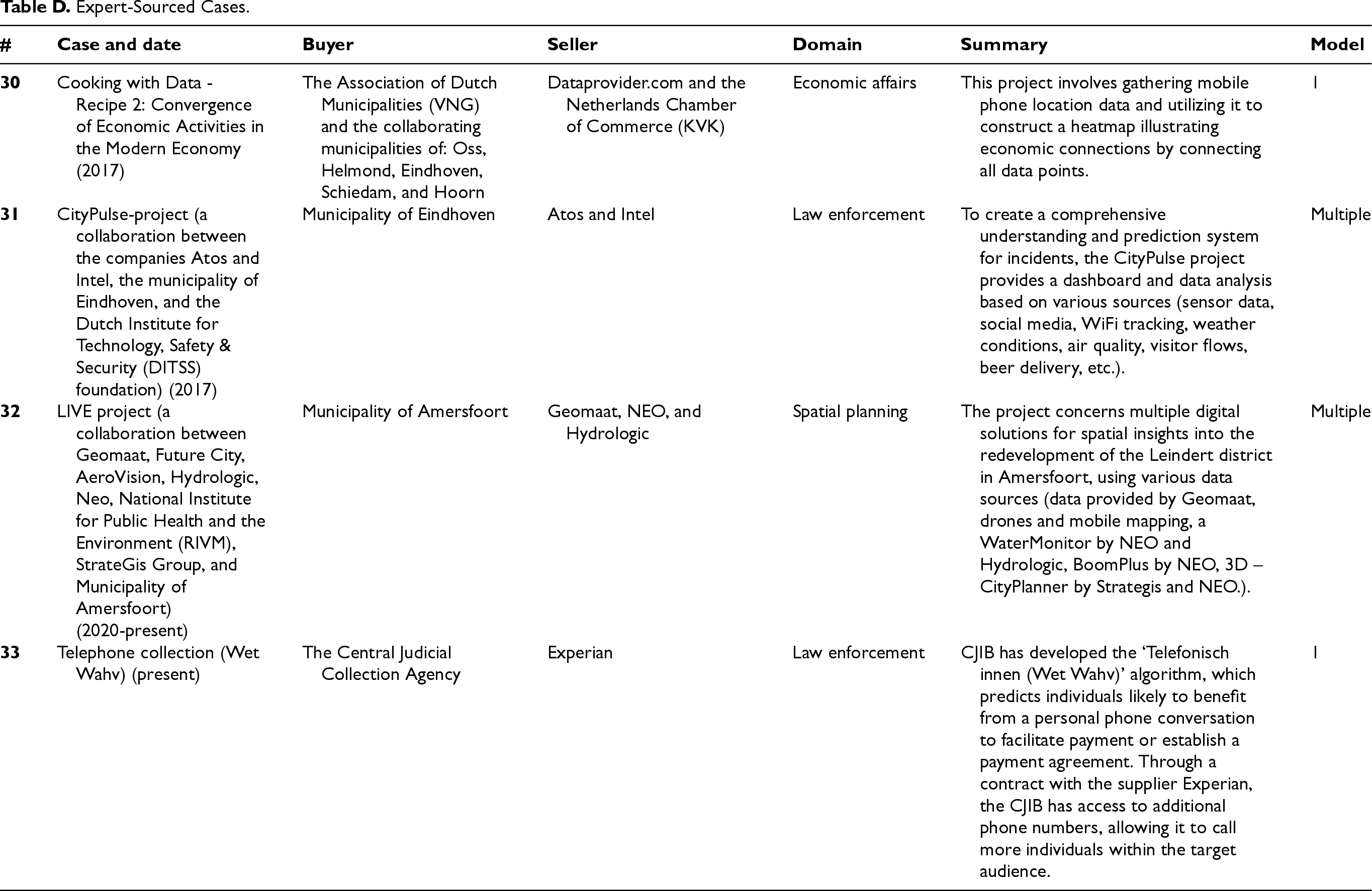
|
|
|
|
|
|
|
|
|---|---|---|---|---|---|---|
|
|
Cooking with Data - Recipe 2: Convergence of Economic Activities in the Modern Economy (2017) | The Association of Dutch Municipalities (VNG) and the collaborating municipalities of: Oss, Helmond, Eindhoven, Schiedam, and Hoorn | Dataprovider.com and the Netherlands Chamber of Commerce (KVK) | Economic affairs | This project involves gathering mobile phone location data and utilizing it to construct a heatmap illustrating economic connections by connecting all data points. | 1 |
|
|
CityPulse-project (a collaboration between the companies Atos and Intel, the municipality of Eindhoven, and the Dutch Institute for Technology, Safety & Security (DITSS) foundation) (2017) | Municipality of Eindhoven | Atos and Intel | Law enforcement | To create a comprehensive understanding and prediction system for incidents, the CityPulse project provides a dashboard and data analysis based on various sources (sensor data, social media, WiFi tracking, weather conditions, air quality, visitor flows, beer delivery, etc.). | Multiple |
|
|
LIVE project (a collaboration between Geomaat, Future City, AeroVision, Hydrologic, Neo, National Institute for Public Health and the Environment (RIVM), StrateGis Group, and Municipality of Amersfoort) (2020-present) | Municipality of Amersfoort | Geomaat, NEO, and Hydrologic | Spatial planning | The project concerns multiple digital solutions for spatial insights into the redevelopment of the Leindert district in Amersfoort, using various data sources (data provided by Geomaat, drones and mobile mapping, a WaterMonitor by NEO and Hydrologic, BoomPlus by NEO, 3D – CityPlanner by Strategis and NEO.). | Multiple |
|
|
Telephone collection (Wet Wahv) (present) | The Central Judicial Collection Agency | Experian | Law enforcement | CJIB has developed the ‘Telefonisch innen (Wet Wahv)’ algorithm, which predicts individuals likely to benefit from a personal phone conversation to facilitate payment or establish a payment agreement. Through a contract with the supplier Experian, the CJIB has access to additional phone numbers, allowing it to call more individuals within the target audience. | 1 |