




Abstract
Digital transformation, driven by disruptive technologies, is significantly altering economies and societies worldwide. For public organisations, embracing disruptive technologies can enhance efficiency, productivity, transparency, and service delivery. However, successful integration of these technologies requires comprehensive readiness at an organisational level. Accordingly, this study aims to identify and understand the critical factors that enable or constrain municipalities in developing their disruptive technology capability. The empirical analysis is based on data collected through a comprehensive questionnaire distributed to public managers in Slovenian municipalities between April and July 2023, yielding a sample of 143 responses. The results of a structural equation modelling approach reveal the complex relationships between identified disruptive technology capability determinants and components. These findings offer valuable insights for researchers, practitioners, and policymakers aiming to navigate the complex landscape of disruptive technology adoption within public organisations.
To enhance disruptive technology capabilities and drive disruptive technology adoption, the results indicate to:
- promote a proactive leadership style that fosters innovation,
- leverage government incentives,
- respond to citizen expectations,
- prioritise investments in skills development and infrastructure, and
- implement robust data management practices to enhance service delivery and decision-making.
Keywords
Introduction
Over the past two decades, governments have recognised the importance of accelerating digital transformation, which is revolutionising economies and societies through rapid technological advances (Li et al., 2023). This transformation is also driven by disruptive technologies (DT), which have the potential to induce significant societal changes. “Disruptive technology” refers to innovations that markedly alter processes and operations within a specific sector. Such technologies can challenge the status quo, reshape individuals’ lives and work, and instigate substantial organisational transformations (Burri, 2017; Christensen & Raynor, 2003; Manyika et al., 2013). Nevertheless, disruption is characterised by rapid or dramatic changes. For a long time, technology has been recognised as a source of disruption in people's lives, effecting change at all scales (Wimmer et al., 2020).
Examples of disruptive technologies include artificial intelligence (AI), the Internet of Things (IoT), blockchain technology (BCT), virtual and augmented reality (VR, AR), unmanned aerial vehicles (UAV), and more. These technologies can potentially drive significant changes in the private and public sectors (Brennan et al., 2019; Rodríguez Bolívar & Scholl, 2019). As these technologies continue to evolve, they impact citizens’ expectations, encompassing technological advancements and organisational structure shifts (Brennan et al., 2019; Burri, 2017; Manyika et al., 2013). This evolving landscape necessitates thoughtful consideration of the implications of these technologies and identifies opportunities for adaptation and innovation. The benefits of employing disruptive technologies in public operations are manifold: improving efficiency and productivity, reducing costs, enhancing service delivery, enabling data-driven decision-making, fostering a transparent and accountable work environment, and encouraging a culture of innovation to prepare organisations for future challenges (Brennan et al., 2019; Burri, 2017; Manyika et al., 2013; Wimmer et al., 2020). Realising these benefits will require different technological infrastructures, impeccable data governance and management, new leadership styles, innovative decision-making processes, and alternative methods of organising and delivering services (Gil-Garcia et al., 2018).
However, to effectively introduce disruptive technologies, public managers must comprehensively understand the potential applications of these technologies. They must also grasp how disruptive technologies interact with key organisational elements such as structure (Rudko et al., 2021), processes (Waardenburg et al., 2021), employees (Pan & Froese, 2022), and organisational culture (Farrow, 2020). Most critically, managers must assess their organisation's readiness and capacity for adopting disruptive technologies, considering possible internal and external constraints (Tomaževič et al., 2024). The most advanced technologies cannot guarantee effective and efficient operations unless the organisation has matured to a point where it is fully capable of adopting disruptive technologies. Hence, it is important to understand the determinants that influence this capability.
To investigate the factors that enable or constrain municipalities in developing their disruptive technology capabilities, we adapted the model proposed by Mikalef et al. (2022). The model was originally based on the Technology-Organization-Environment framework (TOE) (Tornatzky & Fleischer, 1990). This study extended the model to encompass disruptive technology aspects and all organisational elements—people, culture, structure, processes, infrastructure—to understand how different forces within these categories shape disruptive technology capability. The original study's focus on AI capabilities represents a critical area of research, given the rapid advancement and integration of AI technologies in public sector operations (Mikalef et al., 2022). The adaptation to include other disruptive technologies beyond AI acknowledges the broader spectrum of technological innovations that can impact municipal operations. The broader focus acknowledges that the journey towards becoming a smart city is multifaceted, requiring the integration of various disruptive technologies that extend well beyond AI (Radu, 2020).
To achieve our study objectives, we designed a comprehensive questionnaire distributed to public managers in Slovenian municipalities. The Slovenian government operates with two primary levels: national (state) and local (municipal). Local self-government is organised around municipalities, which gained prominence after the 1993 and 1994 reforms. Initially, Slovenia had 147 municipalities, which grew to 212 by 2011. The areas of work where municipalities have tasks following their general jurisdiction are defined illustratively in the Local Self-Government Act. Specifically, most municipal tasks are determined by laws governing individual areas of public administration (spatial planning, construction of facilities, local public environmental protection services, primary education, childcare, and others). The state may delegate tasks to municipalities if it also provides the necessary funds. State-local relations reflect decentralisation, with municipalities operating autonomously, but state interference is allowed only by law, ensuring local participation in its drafting (Kovač & Virant, 2011). For municipalities to effectively deploy disruptive technologies and for governmental entities (ministries) to facilitate the utilisation of these technologies, it is essential to understand the primary drivers and inhibitors. This understanding allows for targeted support of these transformative processes. Accordingly, this study poses two research questions: RQ1. What factors influence municipalities to develop disruptive technology capabilities? RQ2. How do these factors affect municipalities in the development of disruptive technology capabilities?
The remainder of this paper is structured as follows: Following the introduction, the second section offers a literature review and the development of hypotheses. Subsequent to this, the methodology is outlined. Empirical results are presented in section four, followed by a discussion of these findings in the fifth section. The paper concludes by synthesising all insights gathered throughout the study in the final section.
Literature Review and Hypotheses Development
The development of DT capability heavily relies on foundational concepts like technological, IT, and digital capabilities. These capabilities, enhanced by Mikalef and Gupta (2021) into AI capability and rooted in Information Systems (IS) research, represent an organisation's ability to effectively utilise new technologies beyond just adopting them (Conboy et al., 2020; Handali et al., 2020). Technological capability, a key competitive factor in the private sector and a source of public value in government settings, supports process enhancements, increases value and reduces costs (Coombs & Bierly III, 2006; Dierickx & Cool, 1989). Its positive impact on organisational performance is well-documented (Deeds, 2001; Zahra, 1996). Similarly, building on dynamic capability theory, digital capability is crucial for fostering innovative processes and adapting to changes (Teece & Pisano, 1994). Equally, IT capabilities involve leveraging technological and complementary resources (Bharadwaj, 2000; Liu et al., 2013).
Mikalef and Gupta (2021) defined AI capability as the organisation's ability to select, orchestrate, and use AI-specific resources effectively, a concept rooted in the Resource-Based View (RBV), which argues that internal resources are vital to enhancing performance and competitiveness (Barney, 2001; Butler & Murphy, 2008; Gupta & George, 2016). RBV is particularly effective in fostering unique, hard-to-replicate capabilities essential for AI implementation in dynamic technological environments (Bromiley & Rau, 2016). Finally, DT capability includes, besides AI, other emerging technologies (e.g., Internet of things, autonomous vehicles, blockchain, drones, digital twins, augmented and virtual realities), requiring a comprehensive strategic vision that also includes cultural readiness to embrace significant transformations in the public sector (Brennan et al., 2019; Burri, 2017; Wimmer et al., 2020) and encompasses data, technology and basic resources on the tangible side of capabilities and technical and business skills for the human-related capabilities. Based on the past literature, tangible capabilities are critical for the successful implementation of disruptive technologies. Data serves as the backbone of DT by providing the foundation for training, validating, and deploying models that drive advanced analytics and decision-making. High-quality data is essential for generating insights, predicting outcomes, and supporting real-time operations, with the success of these technologies depending heavily on data's availability, quality, and granularity (Chen et al., 2012; Gandomi & Haider, 2015; Gubbi et al., 2013; Janssen et al., 2012; Russell & Norvig, 2016). Alongside data, basic resources such as sufficient financial capital, human resources with the necessary expertise, and adequate time are essential to foster such innovation, meaning that an organisation needs to be capable of allocating enough staff hours and project timelines to successfully implement and adapt to DT (Ahlgren et al., 2016; Alsheibani et al., 2018; Desouza et al., 2020; Duan et al., 2019; Shin, 2017). Moreover, technology and technological infrastructure, including advanced computing systems, cloud availability, high-speed internet, and secure data storage, is vital for running AI, IoT, and other disruptive technologies smoothly (Stankovic, 2014; Wirtz et al., 2019). Regarding human-related capabilities, organisations implementing DT must balance technical and business skills. Technical skills, such as those held by data scientists, engineers, and IT specialists, are essential for handling vast amounts of data, developing algorithms, and integrating technology solutions effectively. These skills involve expertise in data analysis, algorithm development, and programming languages, as well as in cybersecurity and cloud computing, ensuring the technical soundness of the deployed systems (Dwivedi et al., 2021; Whang et al., 2023). At the same time, business skills, including strategic management, domain knowledge, project leadership and change management, are necessary to align technological innovations with organisational objectives. Leaders with these skills help identify key areas for technology application, manage resources, and ensure the smooth adoption of the technologies within organisational processes (Spector & Ma, 2019; Tomaževič et al., 2024; Valle-Cruz et al., 2024).
The literature review identifies key factors that either facilitate or hinder the development of DT capabilities within municipalities. Utilising the Technology-Organization-Environment (TOE) framework (Tornatzky & Fleischer, 1990), it highlights the primary influences on such capabilities. Tornatzky and Fleischer's (1990) TOE framework, originally designed for private sector firms and presented as the context of innovation decisions, outlines three key contexts influencing technology adoption and implementation: organisational, technological, and environmental (Figure 1). While intended for businesses, this framework has been widely applied to public sector organisations as well (e.g., Defitri et al., 2020; Neumann et al., 2024; Pudjianto et al., 2011; Zhang et al., 2017). In their description, the organisational context includes an organisation's size, structure, centralisation, human resources, and internal processes like decision-making and communication. It also covers external communication links, which connect organisations to suppliers, knowledge producers, and other external sources. The technological context focuses on the internal and external technologies relevant to the organisation, including current technologies and practices, as well as technologies that exist and are available to the organisation. The environmental context refers to the industry, competition, external resources and regulatory bodies. The environment provides both opportunities (resources and information) and constraints (regulations, capital availability, and market forces) that influence innovation (Tornatzky & Fleischer, 1990).
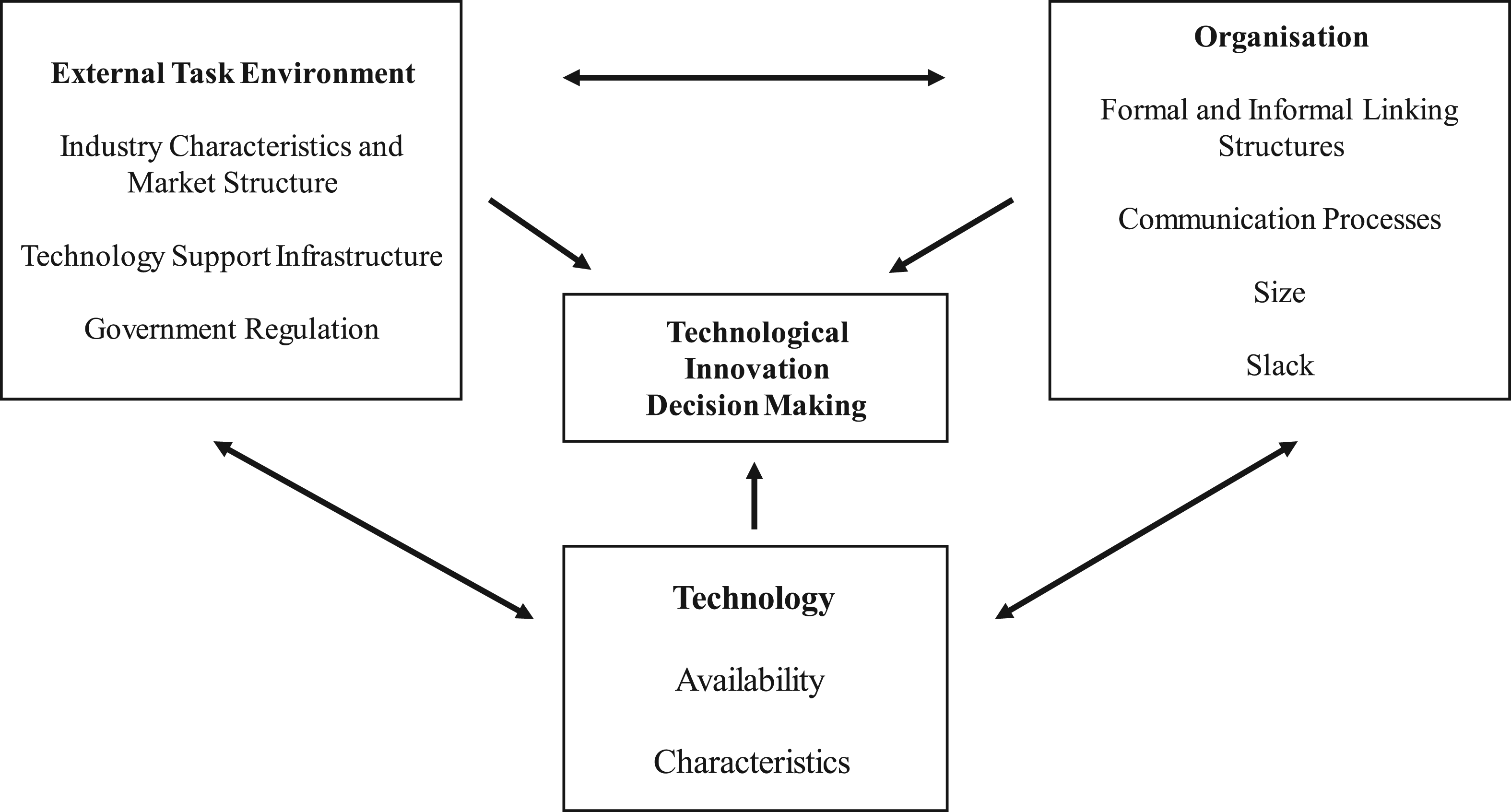
The context of technological innovation (original title) or the TOE framework. Source: Tornatzky and Fleischer (1990).
The TOE framework was the most suitable choice for our case because it comprehensively addresses not only the technological factors but also the organisational and environmental aspects that are critical for municipalities adopting disruptive technologies. Besides the TOE framework, several other models and theories exist for the adoption and implementation of technology. For example, the Technology Acceptance Model (TAM) is used to model the user acceptance of information systems, with two main factors, namely perceived ease of use and perceived usefulness (Davis et al., 1989) and the Unified Theory of Acceptance and Use of Technology (UTAUT), a technology acceptance model that uses the three constructs of performance expectancy, effort expectancy and social influence to explain users’ intentions to use an information system (Venkatesh et al., 2003). These two models focus primarily on individual user acceptance. The Diffusion of Innovations (DOI) theory centres on the diffusion process and explains the speed at which new technologies and ideas spread in organisations and how and why they spread (Rogers, 2003). However, the TOE framework captures the broader organisational context, including infrastructure, processes, and external pressures, which are crucial for understanding how municipalities can develop their disruptive technology capabilities in a complex and regulated environment. It stands out as one of the leading theoretical models for understanding the adoption and diffusion of technology across organisations. Its flexibility allows for the integration of specific contextual variables relevant to the particular technology or organisation under consideration (Wang & Lo, 2016). While not exhaustive, these factors are crucial in determining a municipality's capacity to develop disruptive technology capabilities, especially regarding human and tangible resources (Mikalef et al., 2022).
Government employees are crucial in adopting and using DT in the public sector, with their attitudes and willingness heavily influencing the success of digital transformation efforts (Ahn & Chen, 2022; Myeong et al., 2020). Research highlights that seeing direct benefits motivates technology adoption (Cruz-Jesus et al., 2019). Public managers of municipalities play a significant role in the decision-making process for DT adoption. Given that municipalities in Slovenia operate autonomously (Kovač & Virant, 2011), their managers’ perceptions of benefits and potential transformative impacts being key determinants in developing DT capabilities (Mikalef et al., 2019; Schaefer et al., 2021). Their effective planning, implementation, and evaluation shape how DTs will be utilised. Positive attitudes towards these technologies can lead to successful integration, while scepticism may impede adoption (Ahn & Chen, 2022; Sun & Medaglia, 2019). The role of fostering trust and positive expectations in the adoption process is vital, as trust often forms before direct experience with the technology and is influenced by media representation (Fritzsche & Duerrbeck, 2020; McKnight et al., 2002). Familiarity with an innovation boosts adoption likelihood, and high initial trust can reduce perceived risks and highlight benefits (Bedué & Fritzsche, 2022; Hengstler et al., 2016; Lu et al., 2011). Therefore, the subsequent (sub)hypotheses were formulated:
Perceived Financial Costs (PF)
The perceived financial costs associated with the adoption of new technologies have been a prominent theme in prior research (Baker, 2012). From the perspectives of public managers of municipalities, these costs are often viewed as barriers to the adoption process, especially when the measurable benefits of new digital solutions are not immediately apparent (Kuan & Chau, 2001). Scholars argue that the advantages of integrating technologies into public services should outweigh the expenses incurred in their development and operation (Batubara et al., 2018; Hou, 2017). Public organisations, largely dependent on government funding and tax revenues, usually face budget constraints that limit their flexibility in deploying new technologies (Misuraca et al., 2020). The introduction of new technologies also involves costs of supporting services and operational processes. These costs include overhead and personnel expenses, posing significant challenges for many organisations attempting to adopt these technologies. The scarcity of financial resources is a critical barrier, particularly for investments in high-cost technologies like AI. Municipalities with insufficient financial capabilities face considerable difficulties in undertaking such investments (Nam et al., 2021; Rjab et al., 2023; Ryan, 2019; Şerban & Lytras, 2020; Viale Pereira et al., 2017; Yigitcanlar & Cugurullo, 2020). As a result, the following (sub)hypotheses were proposed:
Organisational Innovativeness (OI)
Reintroducing the concept of organisational innovativeness into theoretical discussion highlights that openness to innovation is crucial for adoption decisions (Lai & Guynes, 1994; Oliveira & Martins, 2010). In this context, we refer to municipalities as the organisations under study. Organisational innovativeness, reflecting an entity's cultural values and predispositions, plays a significant role in the willingness to adopt technological innovations, including DT (Aboelmaged, 2014; Misuraca et al., 2020; Smit et al., 2020). Organisations with an innovative culture are more likely to experiment with new technologies and invest in pioneering solutions (Lin et al., 2020). DT adoption often requires collaboration across multiple stakeholders, particularly in data integration and platform sharing, demanding new governance models and solutions for acceptability challenges (Konashevych, 2017; Ølnes et al., 2018). Leadership's commitment to innovation is vital in overcoming barriers to adoption, aligning technology with strategic goals, and ensuring sufficient resources and data readiness for effective technology implementation (Horani et al., 2023; Hsu et al., 2019). Consequently, organisations prioritising innovation are typically more inclined to adopt DT than those with a conservative approach. Therefore, the subsequent (sub)hypotheses were formulated:
Perceived Government Pressure (PG)
Adoption of DT is heavily influenced by perceived government pressure, serving as a significant environmental factor. Regulatory norms and standards from the government create institutional pressures essential for adopting these technologies (Kuan & Chau, 2001). In this context, Perceived Government Pressure refers to the pressure exerted by national-level government institutions on municipalities. Often, state institutions establish digitalisation strategies that municipal managers feel compelled to follow, aligning local actions with national objectives (Mikalef et al., 2019). This requires developing organisational frameworks, ensuring data availability, and setting up pilot infrastructures for DT projects (Andreasson & Stende, 2019). However, factors such as legal uncertainties and frequent policy shifts can create a volatile environment that impedes DT readiness, affecting skills development and data governance (Agrawal et al., 2023). Additionally, government actions can strain municipalities by affecting budgets, staffing, and processes (Wirtz & Müller, 2019). In response, municipalities may reorganise resources to comply with governmental demands, thus facilitating the infrastructure for DT applications (Ølnes & Jansen, 2017). The absence of a comprehensive legal framework specifically for DT further complicates these issues, impacting the understanding of rights and responsibilities necessary for successful DT implementation (Balfaqih & Alharbi, 2022; Dash & Sharma, 2022; Hagendorff, 2020; Nam et al., 2021; Rjab et al., 2023). As a result, the (sub)hypotheses were presented as follows:
Perceived Citizen Pressure (PC)
Research highlights that social influence significantly impacts the decision-making process for adopting new technologies, driven largely by public opinion and societal expectations (Tung & Rieck, 2005). This is particularly true in municipalities, which play a key role in public service delivery and are directly influenced by the needs and opinions of citizens; hence, the Perceived Citizen Pressure refers specifically to the pressure exerted by citizens on municipalities. As primary service recipients, citizens’ heightened expectations are shaped by digital advances in the private sector, setting higher standards for public services (Bousdekis & Kardaras, 2020; Zavolokina et al., 2023). Consequently, municipalities face significant public pressure to adopt new, efficient technologies. This societal influence not only drives municipal decisions but also accelerates the adoption of DT, encouraging a citizen-responsive digital transformation. Such an approach aims to meet current and anticipate future needs, promoting a proactive, citizen-centric public administration (Bousdekis & Kardaras, 2020; Bullock et al., 2020; Schaefer et al., 2021; Zavolokina et al., 2023). Therefore, the subsequent (sub)hypotheses were formulated:
Government Incentives (GI)
Government incentives can be seen as catalysts for municipalities to implement disruptive technologies, offering the essential resources required to develop and integrate new technologies into their operations (Komninos, 2006). Given that municipalities depend on government support by the national-level government institutions to navigate new directions in technological adoption, the level of support they receive is expected to significantly influence the extent to which they promote the development of disruptive technologies. Moreover, governments often offer incentives tied to financial benefits to encourage the pursuit of significant objectives, which facilitate the adoption of new technologies or the recruitment of skilled managers and staff in public organisations (Misuraca et al., 2020). In the context of adopting new technologies, the availability of financial support along with skilled managers and employees is crucial for municipalities navigating through digital transformation processes (Niehaves et al., 2019; Schaefer et al., 2021).
Previous studies have identified the lack of financial opportunities as a primary obstacle already in the adoption of e-government, emphasising that substantial change at the community level demands considerable resources from diverse funding sources (Beynon-Davies & Martin, 2004; Hahamis et al., 2005; Previtali & Bof, 2009). Government incentives will be even more crucial when it comes to the adoption of disruptive technologies, as these incentives not only provide the necessary financial backing but also facilitate the organisational transformations needed for such advanced technologies. Hence, the (sub)hypotheses were given as follows:
Based on the developed hypotheses proposing relationships between identified determinants of disruptive technology capability and its components, a conceptual model for municipalities was proposed to offer a comprehensive framework for understanding how various technological, organisational, and environmental factors contribute to the development of disruptive technology capability, defined through human and tangible resources (Figure 2).
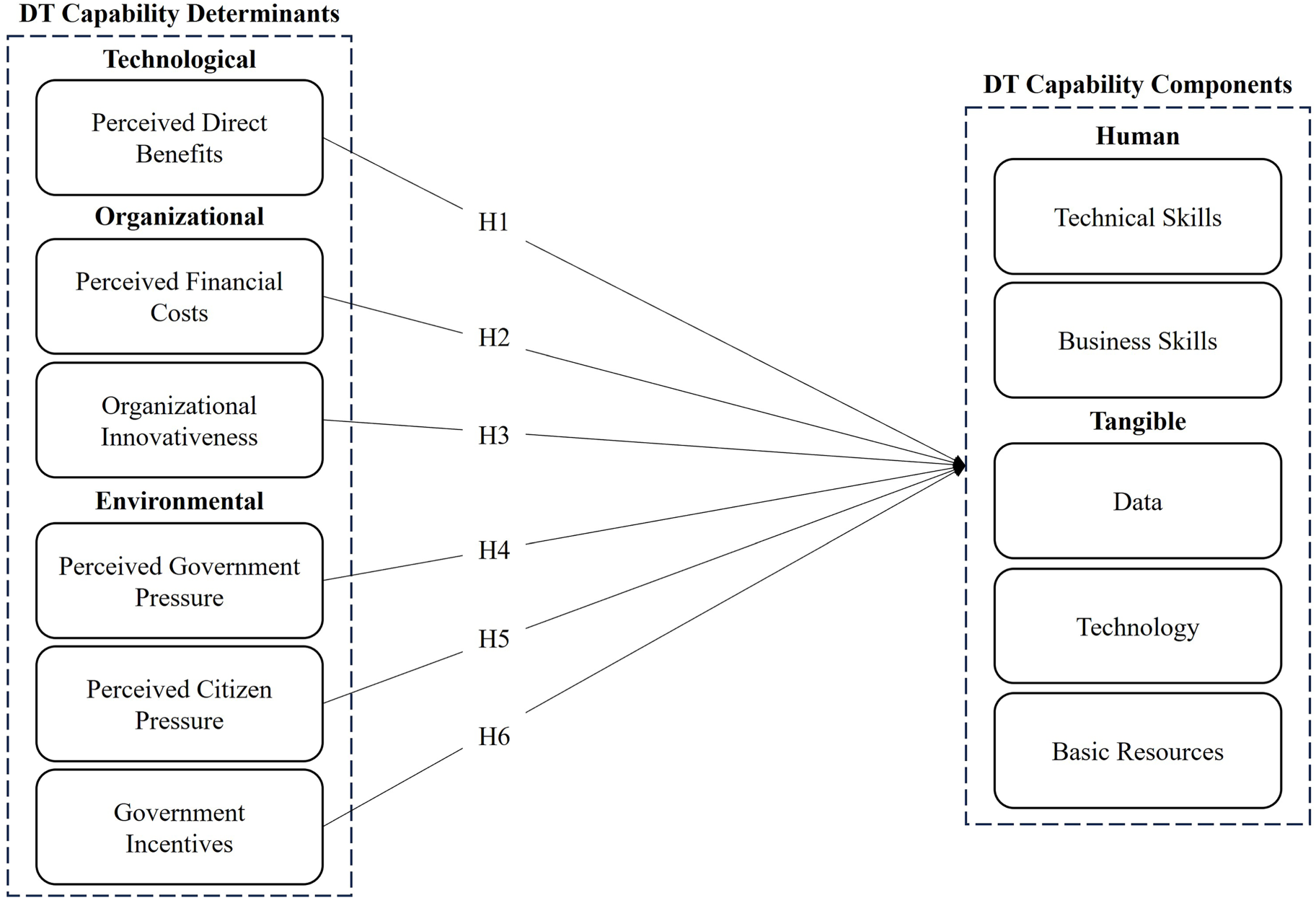
Proposed research model. Note: Only the main hypotheses are presented for simplicity. Source: Presentation adapted from Mikalef et al. (2022).
Data Collection and Sample
For this study, data were collected through a web-based survey deployed using the open-source web application 1KA (One Click Survey; www.1ka.si). The survey was conducted in June 2023. The target populations for this survey were public managers, i.e., the directors of municipalities and heads of departments within these municipalities. These public managers play a critical role in guiding and implementing (disruptive) technological initiatives, requiring both a deep understanding of municipal operations and a solid foundation in technical expertise. This is especially true in smaller municipalities with limited staff and resources, where public managers often take on both managerial and technical responsibilities.In Slovenia, there are 212 municipalities representing critical local interfaces between citizens and the public administration (Kovač, 2014). To uphold the integrity of the research process, special attention was devoted to ensuring the anonymity of respondents’ data. All 212 municipalities were invited to participate in the survey, but not all responded. There are 143 representatives of municipalities included in the survey (Table 1). Most of the respondents were female (62.0%), with the majority having 11 to 30 years of work experience, although their managerial experience varied. The majority of respondents work in municipalities with up to 20 employees (43.4%) or 21 to 40 employees (33.6%), lack a dedicated department or employees for IT or digitalisation (67.1%), and rely on external IT or digitalisation contractors (93.7%).
Demographic Characteristics of the Respondents.
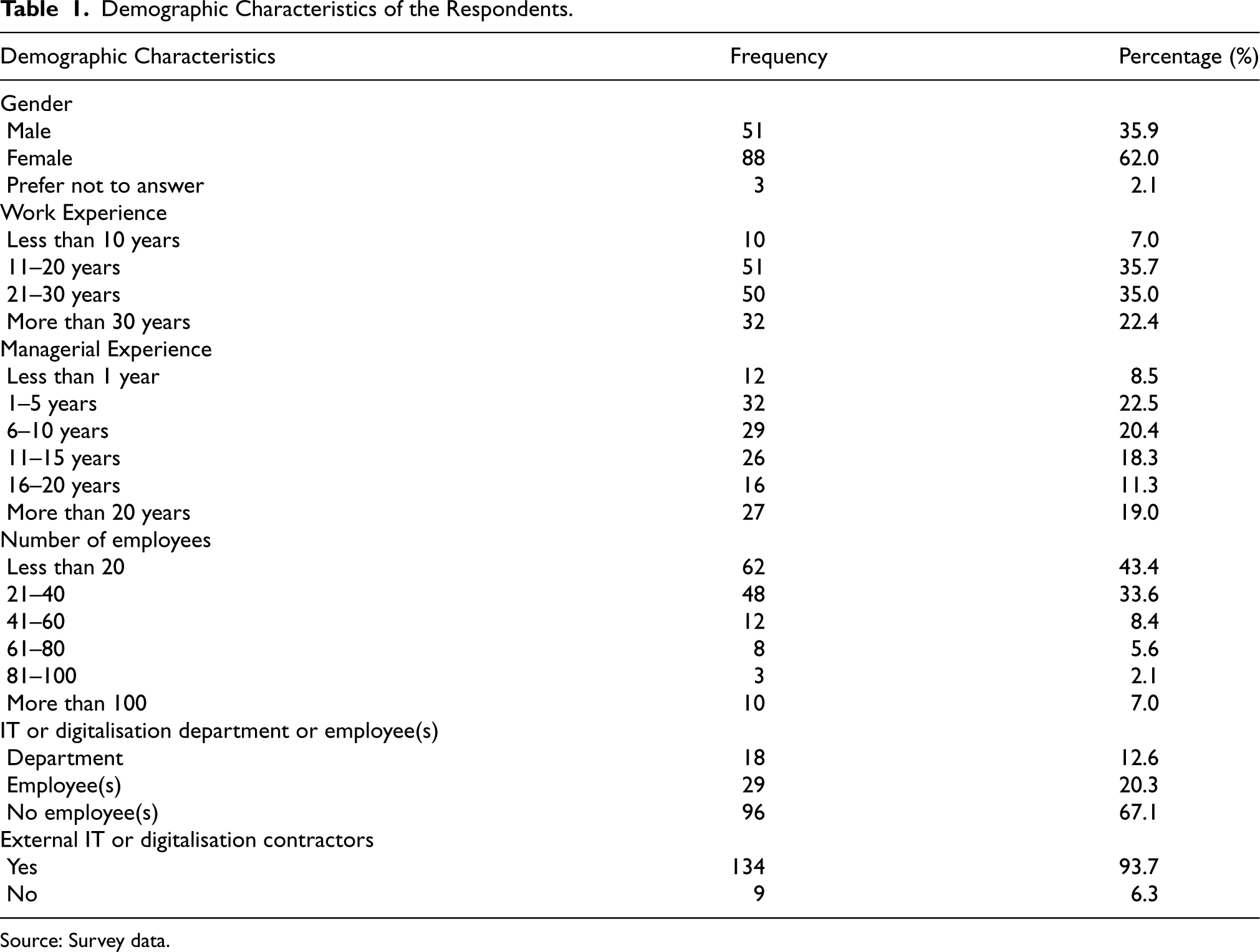
Demographic Characteristics of the Respondents.
Source: Survey data.
The questionnaire used for this study was initially validated by Mikalef et al. (2022); however, their work focused on Artificial Intelligence (AI). To ensure that our study comprehensively addressed the nuances of disruptive technology and all organisational elements, we adapted the questionnaire significantly. This adaptation was undertaken by a multidisciplinary research group composed of law, management, and statistics experts. The collective expertise ensured that the questionnaire was finely tuned to measure disruptive technology capabilities effectively.
The revised questionnaire comprises 46 items, organised into seven thematic sections. The first section, perceived financial costs, contained items (3) measuring high initial implementation costs, ongoing maintenance expenses, and employee training costs regarding disruptive technologies. The second section, organisational innovativeness, included items (3) measuring the extent to which leadership actively accepts, seeks, and generates innovative ideas for digital development. This was followed by a section on perceived citizen pressure, more precisely, items (4) measuring citizens’ desire for digital services, their frequency of inquiries regarding digital services, their preference for using digital services over physical ones, and their regular requests for co-creating local policies. The fourth section concerned perceived government pressure (3 items) about the government's provision of data security and protection policies for municipalities, the establishment of regulations or laws concerning digital services for citizens and utilising disruptive technologies, and the clarity of these regulations or laws. The next section, perceived direct benefits, included items (4) measuring the expected improvements in data accuracy, data security, municipal operational efficiency, and document processing speed due to the use of disruptive technologies. This was followed by a section on government incentives, more precisely, items (3) measuring the extent to which the government (ministry) provides sufficient recommendations, financial resources, and strategic guidance to promote the use of disruptive technologies. Finally, disruptive technology capability comprised several sections (technology (3 items), data (4 items), basic resources (3 items), and human skills (both technical (5 items) and business (6 items)), including diverse items (5) measuring the municipality's access to and integration of various data sources, the computing and internet capabilities, and data storage infrastructure; the digital skills of employees and their effectiveness in data processing, as well as the recruitment of experts skilled in advanced and disruptive technologies; the availability of financial, human, and time resources for further digital development; the leadership's approach to guiding digital development, its recognition of the benefits of disruptive technologies, and its collaboration with stakeholders; and the leadership's response to employee resistance to digital changes, its awareness of the need for change management, and its commitment to new digital values.
The final version of the questionnaire consists of 46 items formulated as statements. Respondents expressed their agreement with the statements on a 5-point Likert scale: 1—Strongly disagree, 2—Disagree, 3—Neutral, 4—Agree, 5—Strongly agree, with the option of choosing the answer “I do not have enough information”. The Likert scaling method for measuring responses to a statement is widespread in the social sciences, including public administration research (Croasmun & Ostrom, 2011). The full version of the questionnaire, including a short survey description, is available from the authors.
Scale Reliability and Validity
In order to assess the validity of the measurement model, structural equation modeling (SEM) using IBM SPSS AMOS 27.0 (Arbuckle, 2021) was conducted. The maximum likelihood estimation method was applied to examine the relationships between observed variables and latent constructs. The baseline version of the measurement model was derived from the proposed research model (Figure 2). Modifications of the measurement model were carried out in order to achieve adequate validity and reliability of the model (Table 2). Out of a total of 46 items included in the conceptual model, 27 were retained in the final version (adjusted model), while 11 were excluded. Additionally, two constructs measuring Basic Resources and Technology were combined in the final version of the model. The measurement characteristics of the adjusted model are presented below. Scale reliability was assessed with Cronbach's alpha coefficient (Cα)—all coefficients are above 0.7, indicating adequate internal consistency of the latent variables. Convergent validity was assessed through composite reliability (CR), where values of CR (all are above 0.8) indicate the observed variables measure a latent factor well. Average variance extracted (AVE) values mainly exceed the threshold value of 0.50, with the exception of two latent variables (Data in Basic Resources & Technology), where the AVE is just below the threshold.
Reliability and Validity Test.
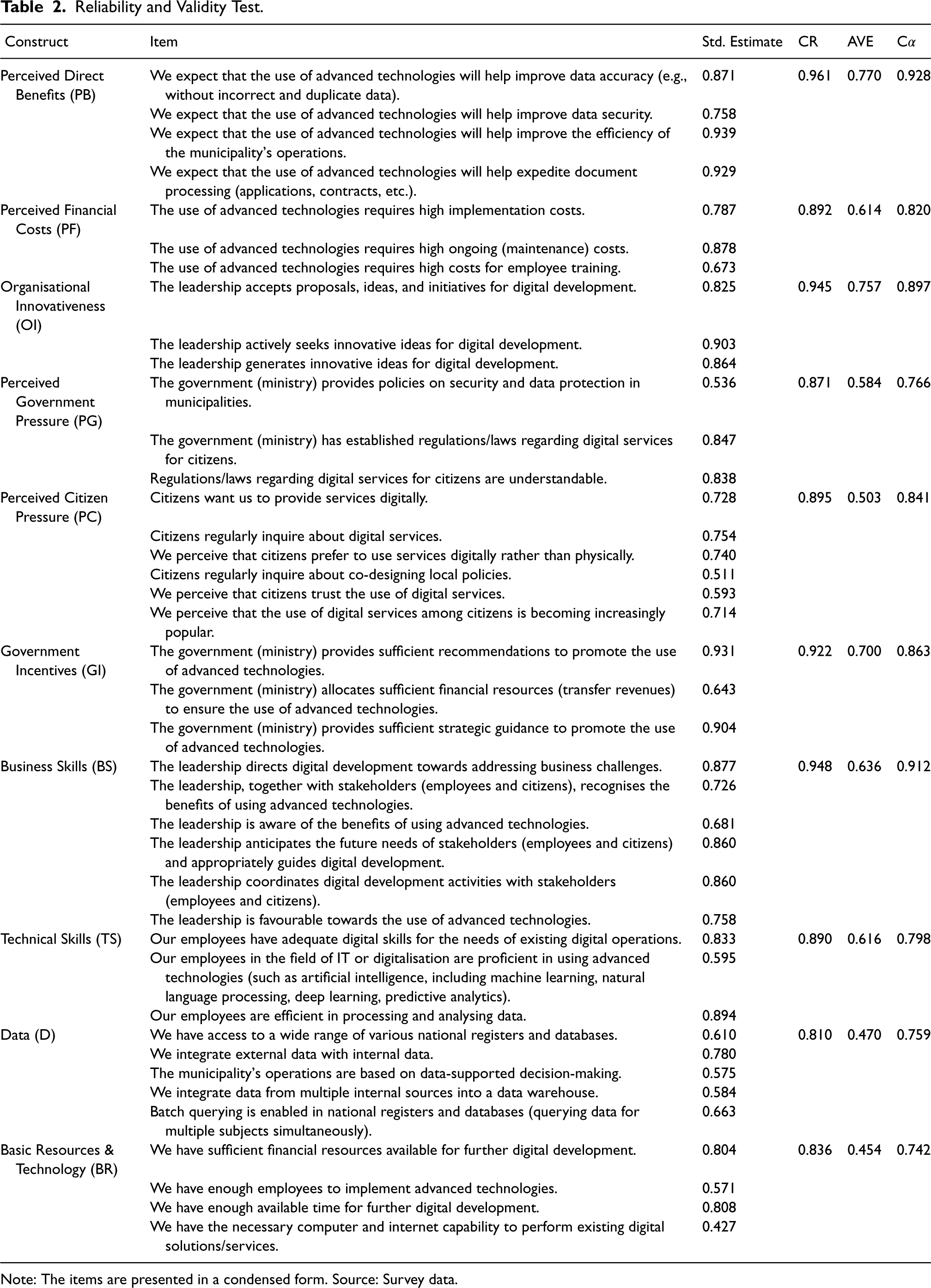
Reliability and Validity Test.
Note: The items are presented in a condensed form. Source: Survey data.
In order to assess discriminant validity, the AVE scores and the squared correlation between the latent variables were examined (Table 3). The AVE of each latent variable is greater than the squared correlation between latent variables in pairs, with the exception of the squared correlation between Organisational Innovativeness and Business Skills, which are highly (but not excessively highly) correlated.
Discriminant Validity.
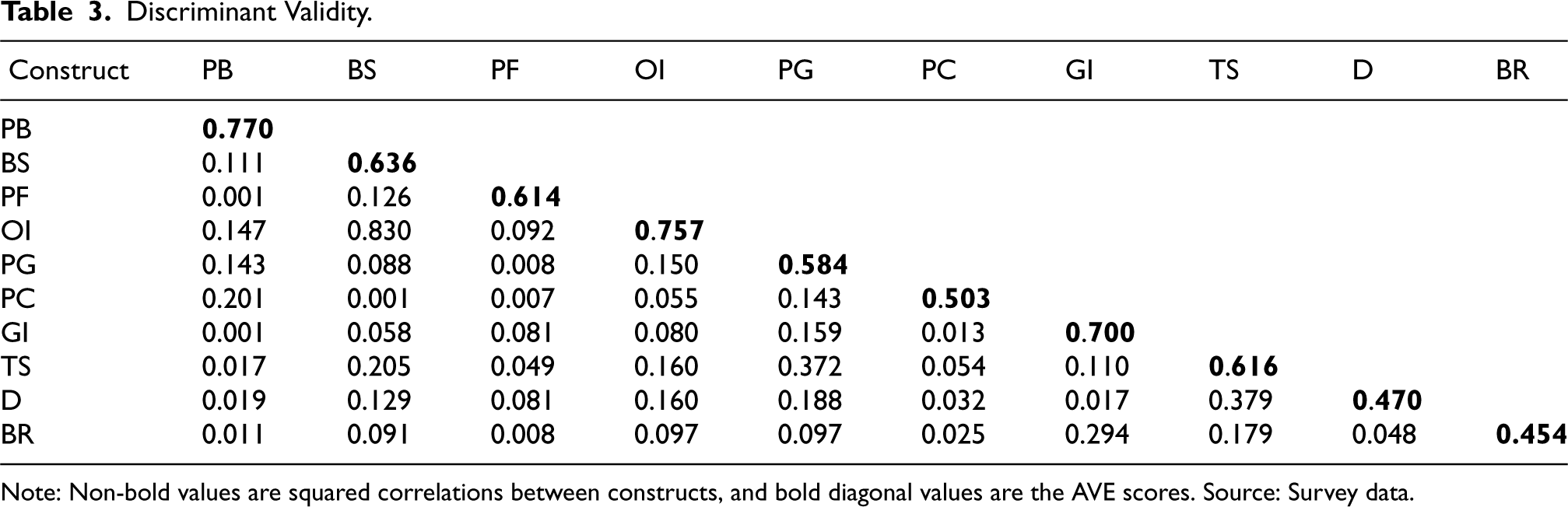
Note: Non-bold values are squared correlations between constructs, and bold diagonal values are the AVE scores. Source: Survey data.
Additionally, commonly used fit indices were used to assess the goodness-of-fit of a model. It was found that a model demonstrates an acceptable fit based on several indices, such as CMIN/DF of 1.822, RMSEA of 0.076 and Parsimonious Normed Fit Index (PNFI) of 0.600, while relative indices (CFI = 0.847; TLI = 0.815) indicate borderline acceptable fit.
The validity and reliability of the measurement were evaluated from multiple perspectives. We confirmed an adequate level of internal consistency of the constructs, the presence of composite reliability, and both discriminant and convergent validity. Additionally, we achieved an appropriate data fit, enabling us to proceed with the development of the measurement model to test the proposed hypotheses.
Due to the lack of adequate validity and reliability of an initial model found through confirmatory factor analysis (CFA), which was performed in the statistical software IBM SPSS AMOS 27.0 (Arbuckle, 2021) using the maximum likelihood estimation method, an adjusted model was created. Table 4 presents predicted correlations between constructs as part of the hypotheses presented in the conceptual model. Non-significant correlations are removed from the final version of the model.
Hypothesis Statuses.
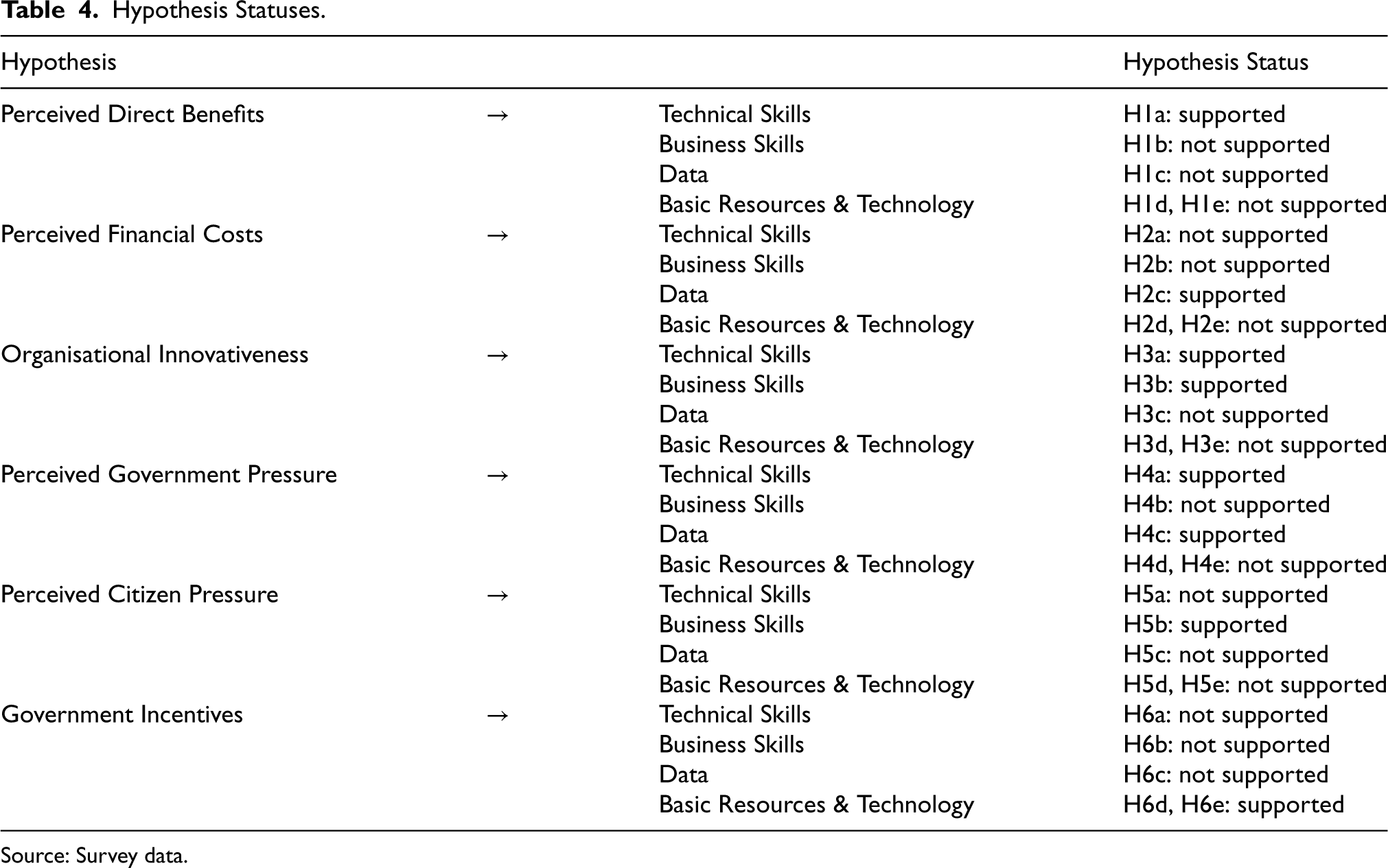
Hypothesis Statuses.
Source: Survey data.
Figure 3 and Table 5 present path coefficients that appear statistically significant in the analysis using structural equation modeling. Technical Skills of the public managers are highly positively impacted by perceived government pressure (β = 0.631; p < 0.001), while the impact of organisational innovativeness is weaker, although positive (β = 0.274; p = 0.003). However, the Technical Skills of employees are negatively impacted by the direct benefits of disruptive technologies usage (β = -0.223; p = 0.013), indicating that the more positive direct benefits of disruptive technologies usage are, the less technical skills of employees are perceived as adequate for disruptive technologies usage. Business skills of managers are greatly impacted by organisational innovativeness (β = 0.974; p < 0.001) but negatively impacted by citizen pressure (β = -0.191; p < 0.001). The data appears to be impacted by Perceived government pressure (β = 0.509; p < 0.001) much stronger than by perceived financial costs (β = 0.253; p = 0.011), while the Basic resources & Technology are impacted solely by Government Incentives, but the impact appears to be strong (β = 0.552; p < 0.001).
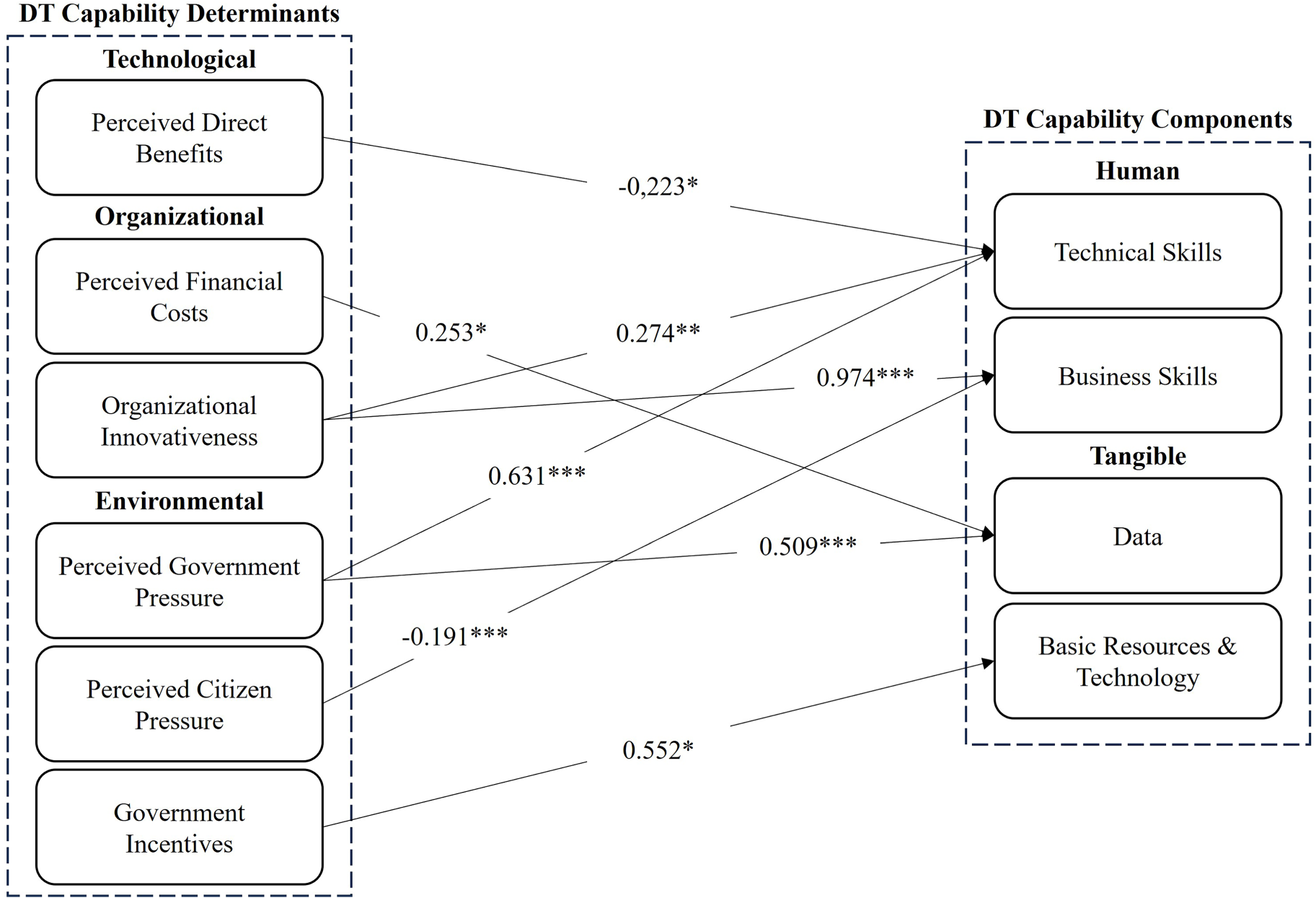
Adjusted structural model. Note: Only statistically significant results are presented for simplicity. *p < 0.05, **p < 0.01 ***p < 0.001. Source: Survey data.
Unstandardised and Standardised Estimates and the Proportion of Variance Explained for Adjusted Structural Model.
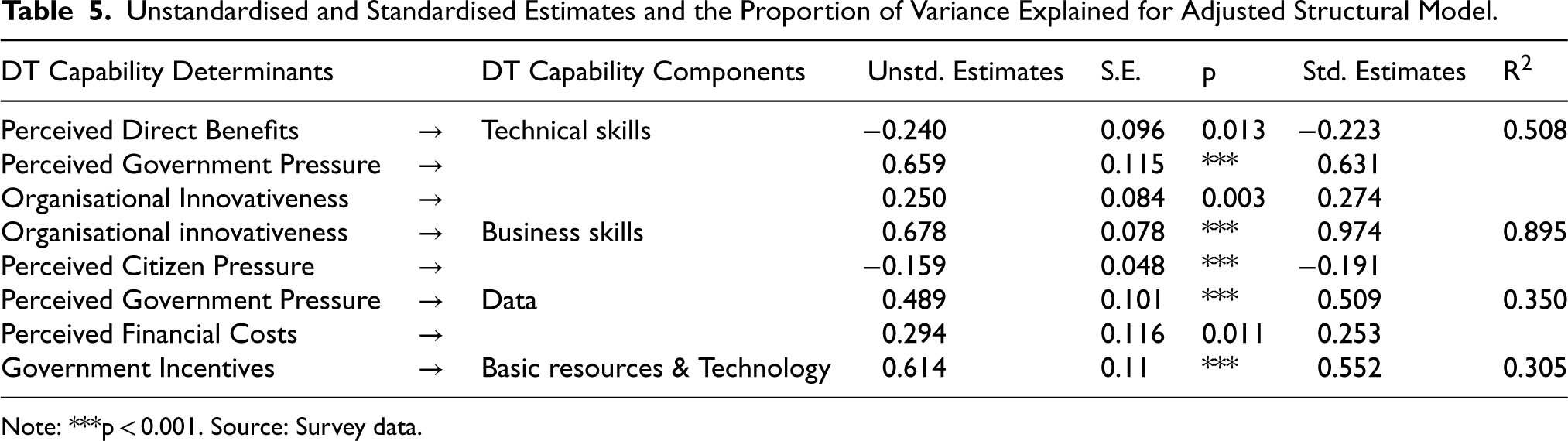
Note: ***p < 0.001. Source: Survey data.
This study set out to uncover the pivotal factors that either facilitate or impede the development of disruptive technology capabilities in Slovenian municipalities. Utilising a structural equation modeling approach, our empirical analysis juxtaposes our hypotheses against a backdrop of 143 responses from public managers. These hypotheses were grounded in existing theories and literature on the adoption and integration of disruptive technologies in public sector organisations.
Our analysis uncovers several critical insights. Although it was anticipated that Perceived Direct Benefits would positively influence DT capability components (H1), only the impact on Technical Skills (H1a) is significant. Surprisingly, this impact is negative, as indicated by a coefficient of −0.223, contradicting theoretical expectations, such as those proposed by Cruz-Jesus et al. (2019), who argued that recognizing direct benefits promotes technology readiness and adoption. The unexpected negative relationship between Perceived Direct Benefits and Technical Skills could be due to an “expectation-reality gap,” where anticipated benefits exceed current employee skills, revealing a deficit in technical competencies (Prashar et al., 2023; Zhao et al., 2021). The public sector is also known to lag behind the private sector regarding digital skills demand (Mankevich et al., 2023). This gap becomes more apparent as managers recognize the full potential of these technologies, leading to a heightened awareness of existing skills shortages. This increased awareness may reflect not a decline in skills but rather a reassessment of the competencies needed to effectively utilize new technologies.
However, Technical Skills are proven to be positively influenced by Organisational Innovativeness, with a coefficient of 0.274 (H3a). This suggests that innovative organisational cultures, with their openness to learning, are more conducive to enhancing technical skills (Lin et al., 2020). Furthermore, Perceived Government Pressure has an even stronger effect (H4a), with a coefficient of 0.631, highlighting how government initiatives are instrumental in driving technical skill development. Programs such as Slovenia's Digital Strategy for 2030 (NIO, 2023) and the Administration Academy's training in data science and business intelligence are pivotal in preparing civil servants for digital tasks (OECD, 2021). These programs are crucial for meeting government demands for digital transformation. The initial negative impact of Perceived Direct Benefits on Technical Skills actually underscores a critical adoption phase where recognising benefits highlights existing skill gaps, prompting further investment in skills and innovation, as supported by the positive effects of Organisational Innovativeness and Perceived Government Pressure.
Since Perceived Financial Costs are often viewed as barriers to technology adoption, especially in public organizations with tight budget constraints (Baker, 2012; Misuraca et al., 2020), we expected them to hinder DT capability development (H2). However, it was surprisingly supported in the context of Data (H2c), with a positive coefficient of 0.253. One explanation for this result could be that when municipalities anticipate high financial costs, they may prioritize investments in data management as a critical step toward leveraging digital transformation. Robust data management, crucial for AI and the Internet of Things (IoT), has become a priority since many digital transformation barriers revolve around data integration, standards, and sharing (Campion et al., 2022; Mikalef et al., 2019). As Campion et al. (2022) noted, resistance to data sharing remains a key challenge for AI adoption.
Nevertheless, Data capability is positively impacted by Perceived Government Pressure (H4c), as demonstrated by a coefficient of 0.509. Supporting results in Technical Skills and Data (H4a and H4c) confirm that Public Government Pressure drives certain aspects of DT capability, consistent with literature indicating that government policies are key drivers for technological advancements in the public sector (Kuan & Chau, 2001; Mikalef et al., 2019). Municipalities respond to this pressure by enhancing their technical and data capabilities, often aligning with national digitalization strategies (Andreasson & Stende, 2019). The analysis shows that Public Government Pressure significantly boosts data capabilities, aligning with initiatives like the EU’s Regulation 2023/138, which mandates the management of high-value datasets (European Commission, 2023), and Slovenia's Digital Strategy for 2030 (NIO, 2023), emphasizing data as a strategic asset and promoting a dynamic data ecosystem. These regulations require comprehensive data management and promote innovation, ensuring municipalities align with broader digital transformation goals.
The influence of Organisational Innovativeness on DT capability components (H3) shows two positive impacts. While the first one, on Technical Skills (H3a), has already been discussed, the second, on Business Skills (H3b), receives strong support with a high coefficient of 0.974. This implies that an innovative organisational culture significantly enhances the business skills necessary for implementing disruptive technologies. Specifically, such environments enhance leadership's ability to steer digital development toward addressing business challenges, recognize and leverage the benefits of advanced technologies alongside stakeholders, anticipate future needs, and coordinate digital initiatives effectively. Innovative organisations tend to have flexible, dynamic decision-making processes that can rapidly adapt to new business models and environmental demands, which is crucial for navigating the complexities of disruptive technologies (Smit et al., 2020).
Business Skills are also influenced by the Perceived Citizen Pressure (H5). Contrary to expectations that such pressure would enhance DT capabilities, the results indicated a negative impact, with a coefficient of −0.191 for Business Skills. This finding is, however, not surprising for Slovenian municipalities and is also aligned with insights from a recent study by Aristovnik et al. (2024), which highlighted a notable hesitancy among Slovene municipalities, especially in rural areas, to embrace digital transformation. This reluctance is also attributed to the preference of local citizens for in-person services over digital alternatives, thereby reducing the motivation for public managers to advance digitalisation. This scenario is further exacerbated by a significant digital skills gap among the population in Slovenia, as evidenced by the Digital Economy and Society Index (2022), which reports that nearly half of Slovenia's workforce possesses insufficient digital skills.
Lastly, the results reveal that Government Incentives play a critical role in supporting Basic Resources and Technology (H6a) within municipalities. The positive influence, reflected in a coefficient of 0.552 for these areas, underscores targeted government support's pivotal role in providing the essential infrastructure and technological foundations necessary for DT capability. This substantiation aligns with the literature that emphasises the necessity of a robust infrastructural base as a precursor to wider technological adoption and capability enhancement in public organisations (Niehaves et al., 2019; Schaefer et al., 2021). The result suggests that when municipalities receive government incentives specifically allocated for technological advancements and basic resource acquisition, there is a tangible improvement in their capacity to integrate and leverage new technologies.
Conclusion
The urgency for municipalities to adopt disruptive technologies is highlighted by the rapid technological evolution that has reshaped economies and societies over the last two decades. Innovations like AI, IoT, blockchain, and others hold the potential to transform operational processes and service delivery in the public sector. To effectively leverage these technologies, municipalities must navigate a complex array of factors, including technological readiness, data governance, leadership styles, and organisational readiness. The study aimed to explore how the identified factors influence municipalities in developing their disruptive technology capabilities. Prompted by the increasing need for municipalities to transition toward disruptive technology-based solutions, the study emphasises the importance of external and in-house competencies for deploying such solutions. This emphasis is rooted in the overarching goal of enhancing the quality and efficiency of services provided by these public entities. We adapted the enablers and inhibitors to disruptive technology capability based on Mikalef et al. (2022) and the Technology-Organization-Environment (TOE) framework (Tornatzky & Fleischer, 1990) by extending the model to all organisational elements (people, culture, structure, processes, and technological infrastructure). Our empirical investigation, based on a sample of 143 responses from public managers in Slovenia, yielded notable insights regarding key enablers and inhibitors of DT capabilities. These findings carry significant implications for researchers exploring the value-generation potential of novel disruptive technologies in public organisations, as well as for practitioners and policymakers steering the transition into the disruptive technology era.
The results of the study reveal interesting findings. Perceived direct benefits negatively impact the assessment of technical skills in disruptive technology capabilities. Higher expectations by public managers regarding technology outcomes lead to a harsher evaluation of employees’ technical competencies. This phenomenon occurs because managers, recognising the potential of disruptive technologies, become increasingly aware of the existing skills gap among their staff. Moreover, the impact of perceived financial costs on disruptive technology capability is also unexpectedly positive regarding data capability. This suggests that public managers view financial costs as an investment rather than a burden. In other words, they may prioritise spending on data management capabilities as a foundational step towards leveraging DT. Furthermore, organisational innovativeness impacts technical and especially business skills. The impact is positive, suggesting that the more the organisation shows innovative qualities, the better the technical skills of employees and the better the business skills of managers. Additionally, government pressure significantly affects the employees’ technical skills and data capabilities. Results suggest that the greater the pressure from the government, the more employees are technically skilled in using technologies, and data maturity is also higher. Moreover, perceived citizen pressure has a negative impact on business skills, which is not so unexpected for Slovenian municipalities, especially rural ones. This reluctance can be attributed to the preference of local citizens for in-person services over digital alternatives, thereby reducing the motivation for public managers to advance digitalisation. Finally, government incentives (financial resources allocation, recommendations, and directions) positively affect basic resources and technology.
This study, while extensive, is not without limitations that future research could address. First, the reliance on subjective evaluations from public managers may introduce biases that could affect the interpretation of the findings. Additionally, the study focuses on municipalities oriented towards public service provision rather than policymaking (Aristovnik et al., 2021), which limits the generalisability of the results to other types of public administrations or governance levels. Furthermore, while the sample of the study is methodologically sufficient to reveal general patterns of DT capabilities in municipalities, it is too limited to conduct segmental analyses between different types of municipalities.Finally, the cross-sectional nature of this study captures only a snapshot in time, which may not fully represent the dynamic process of technology adoption and capability development.
Future research could address these limitations by employing longitudinal study designs to track changes and developments over time, providing a more dynamic view of how disruptive technology capabilities evolve. Expanding the scope of the study to include a wider range of public organisations would help to generalise the findings and broaden the understanding of disruptive technology determinants and components across different governmental contexts. Moreover, increasing the sample size or using stratified sampling would allow for better representation of various types of municipalities (e.g., urban vs. rural, large vs. small) and enable more robust and reliable segmental analyses. Finally, qualitative methods could be integrated to offer richer, more contextual insights into managerial perceptions and on-the-ground challenges and drivers associated with adopting disruptive technologies in public administration.
Overall, this study contributes to the ongoing dialogue among scholars, practitioners, and policymakers focused on the digital transformation of public administrations. By providing empirical evidence and nuanced analyses, it aids in shaping policies and practices that foster an innovative, efficient, and responsive public sector ready to meet the demands of a rapidly advancing technological landscape.
Footnotes
Acknowledgements
The authors acknowledge the financial support from the Slovenian Research and Innovation Agency (research core funding No. P5-0093, project No. J5-2560 and project No. J5-50165). In preparing this manuscript, the authors utilised ChatGPT, version 4o, developed by OpenAI, for limited and supplementary purposes. Specifically, ChatGPT was employed to check the grammar, enhance clarity, and polish the language in certain sections of the manuscript. It must be stressed that the role of the ChatGPT was minor and purely supportive in nature. The core content of the manuscript, including all scientific interpretations, conclusions, and critical revisions, is the exclusive output of the human authors. ChatGPT did not contribute to the intellectual content or scientific insights of the manuscript.

Author Contributions/CRediT
Conceptualisation: A.A.; Methodology: N.K.; Software: N.K.; Validation: N.K., E.M.; Formal analysis: N.K.; Investigation: A.A., D.R., E.M.; Resources: D.R., E.M.; Data Curation: D.R., E.M., N.K.; Writing—Original Draft: E.M., D.R., N.K.; Writing—Review & Editing: A.A., E.M.; Visualisation: D.R.; Supervision: A.A.; Project administration: A.A., D.R.; Funding acquisition: A.A.
Funding
The authors acknowledge the financial support from the Slovenian Research and Innovation Agency (research core funding No. P5-0093, project No. J5-2560 and project No. J5-50165). The funders had no role in study design, data collection and analysis, decision to publish, or preparation of the manuscript.
Conflicting Interests
The author(s) declared no potential conflicts of interest with respect to the research, authorship, and/or publication of this article.