



Abstract
Background
In occupational therapy, various accessible and effective interventions have been used to improve social skills and participation of individuals with Autism Spectrum Disorder (ASD). The objective of this systematic review was to examine whether virtual, augmented, and mixed reality (VAMR) training affect the development of social skills in individuals with ASD.
Methods
A literature search was conducted across MEDLINE, EMBASE, ERIC, and Web of Science databases. Full articles were reviewed and meticulously screened. Data were extracted from the studies, statistical heterogeneity was evaluated, and effect size was calculated.
Results
Using these criteria, 2,929 articles were identified and seven studies were selected. In total, seven studies with 417 individuals with ASD were included. All studies were judged to have an unclear risk of bias concerning the randomization process as they failed to report sufficient information about the selection of the reported results. When analyzed by developmental period, interventions applied to individuals with ASD for social skills were most common from middle childhood to early adolescence.
Conclusion
Current evidence is insufficient to support effectiveness, and further research is needed to better understand the scope of VAMR training that can provide social skills to individuals with ASD. Nevertheless, this review is significant in that it concluded an intervention combining cognitive behavioral training and VAMR training is useful for individuals in the developmental age group from mid-childhood to early adolescence for their social skills development.
Introduction
Health is defined as a state of physical, mental, and social well-being and a positive concept that emphasizes social and personal resources and physical capacities (WHO, 2001). Health for groups and populations also includes the social responsibility of the members of the group or population as a whole. Social interaction skills are observed when a person interacts with others. Social interaction skills refer to how effectively a person uses both verbal and nonverbal skills to communicate, including initiating and terminating, producing, physically supporting, shaping content, maintaining the flow of verbal support, and adapting to social interaction (AOTA, 2020). Social participation involves social interactions with others, including family, friends, peers, and community members, and supports social interdependence (Gillen & Brown, 2023; Hammel et al., 2008). The promotion and maintenance of social skills were identified as personal strengths and assets. These include managing emotions, effectively expressing needs, seeking occupations
Autism Spectrum Disorder (ASD) occurs in approximately 1% of the population and characterized by difficulties in social communication and repetitive behaviors (APA, 2013; Baird et al., 2003). ASD is a neurodevelopmental disorder typically diagnosed during childhood and is characterized by social deficits, narrowed interests, and repetitive and stereotyped behaviors (Alpert, 2021; Baird et al., 2003; Lord et al., 2020). The social and emotional skill difficulties that challenge children in the autism spectrum can also predispose them to a range of negative outcomes (Tantam, 2012), including fewer age-appropriate friendships, higher rates of peer rejection, social isolation, and loneliness (Chamberlain et al., 2013; Ochi et al., 2020). Previous research has shown that social skill deficits in individuals with ASD can lead to poor academic and occupational achievement (Cohen & Volkmar, 1997) and an increased risk of depression, anxiety, and other psychological disorders (Attwood, 2006; Tantam, 2003). Hence, accessible and effective interventions that enhance social and emotional management skills are needed for the rehabilitation of individuals with ASD.
The rapid development of digital health has ushered in novel opportunities for innovation in ASD rehabilitation. The necessary of virtual reality (VR), augmented reality (AR), and mixed reality (MR) as interventions for ASD has been reported (Leong et al., 2022; Mesa-Gresa et al., 2018). VR has become one of the most promising tools to address the psychological needs of individuals with ASD in various settings. VR is a form of digital therapy that uses computer technology to create realistic visual, audio, tactile, and integrated virtual environments. With immersive, interactive, and highly perceptive characteristics, it offers a safe, repeatable, and diversifiable environment for individuals with ASD to learn during treatment (Georgescu et al., 2014). VR reduces social pressure on the patient, provides a realistic environment for more effective training, and possibly reduces the required training hours. Current studies were covered a wide range of training interventions, including training in social adaptation and communication skills (Manju et al., 2018; Zhao et al., 2018), emotional skills (Bekele et al., 2014; Ip et al., 2018; Lorenzo et al., 2016), and cognitive functions (Didehbani et al., 2016; Vahabzadeh et al., 2018), and daily living skills such as shopping (Lamash et al., 2017), driving (Ross et al., 2018; Wade et al., 2016), and street crossing (Josman et al., 2008; Saiano et al., 2015). AR, which can be considered another type of VR, is a real-time view of an existing world superimposed by virtual data. Unlike VR technology, which fully submerges people in an artificial environment to avoid the existing world, AR technology enhances feelings by overlaying computer-generated objects over the real world (Raajan et al., 2014). AR provides artificial visual and auditory information superimposed on a veridical, real-world environment. AR is often presented using tablets, smartphones, and AR glasses (Dechsling et al., 2021). MR refers to a new type of environmental visualization that merges the real world and the virtual digital world, allowing physical objects and digital things to coexist and interact in real time. A previous study on stroke patients reported that the interactive media-based feedback of the MR system intuitively conveyed the stroke patients’ performance ability and supported self-evaluation (Leong et al., 2022)
Virtual, augmented, and mixed reality (VAMR) training may be particularly helpful for the delivery of interventions to individuals with ASD because it allows simulations of real-world situations to be created, and newly learned coping skills can be rehearsed and reinforced in a safe and controlled environment. VAMR training creates a platform for individuals with ASD to participate in a range of activities that can alleviate their social and behavioral problems. VAMR training can be used to generate cognitive and behavioral experiences in individuals with ASD before they enter the real world and encounter stimuli (Dechsling et al., 2021; Lorenzo et al., 2016). In the last decade, the number of publications on computer-based or VAMR training involving individuals with autism, has increased significantly (Dechsling et al., 2021). Most studies on ASD and VAMR training have focused on social and emotional skills (Lorenzo et al., 2016; Mesa-Gresa et al., 2018) and multiple studies have reported the benefits of skill training (Didehbani et al., 2016; Kandalaft et al., 2013; Maskey et al., 2014; Newbutt, 2013; Yang et al., 2018). In addition, computer technology methods have been described as highly motivating for many individuals with ASD (Dechsling et al., 2021; Newbutt, 2013; Yang et al., 2018). Interventions for social skills are needed for individuals with ASD, as accessible and effective interventions to improve social skills can offset unfavorable developmental trajectories. Recent reviews have reported studies targeting children with ASD, but no review has examined the effectiveness of social skills across all age groups in the ASD population.
The objectives of this review were to provide a comprehensive summary of studies utilizing VAMR training to enhance social skills in individuals with ASD, evaluate the existing methodologies used and the social skills targeted, and identify research gaps in the literature. Hence, this systematic review focused on systematically reviewing the effectiveness of VAMR in the training and social skills rehabilitation of the ASD population. To achieve this goal, we performed a systematic search for studies assessing this type of intervention in the ASD population, and evaluated the effectiveness of VAMR training on different skills, including social skills.
Materials and Methods
Data Sources and Searches
A literature search of studies from the date of inception conducted until November 4, 2023, was conducted using the MEDLINE, EMBASE, ERIC, and Web of Science databases. Online Appendix I lists the keywords attached (Online Appendix 1). All articles were carefully screened by two assessors, and relevant articles were selected for inclusion in the present study. This systematic review was registered with the International Prospective Register of Systematic Reviews (PROSPERO CRD42023479160).
Study Selection
The inclusion criteria were as follows: Randomized controlled trials (RCT), VAMR training, studies involving participants with ASD, and studies on social skills. The exclusion criteria were as follows: studies based on animals; RCT that did not present VAMR training; studies that did not contain social skills; studies using drugs, injections, and acupuncture as the intervention; and articles for which the full text was not provided. The electronic databases searched for this review included all major journals, so a hand search of journals was not performed for this study.
The author screened publications by referring to the PRISMA, not consulting (Moher et al., 2009). Using these criteria, 2,929 articles were identified and 663 studies were excluded as duplicates. A total of 2,266 papers were screened by abstract and full text, and 2,243 papers were excluded according to the selection and exclusion criteria. Twenty-three studies were assessed for their eligibility. Six papers that did not target ASD, seven papers that did not apply VAMR training, and three papers that did not include social skills were excluded. Therefore, seven studies were selected (Figure 1). Flow Chart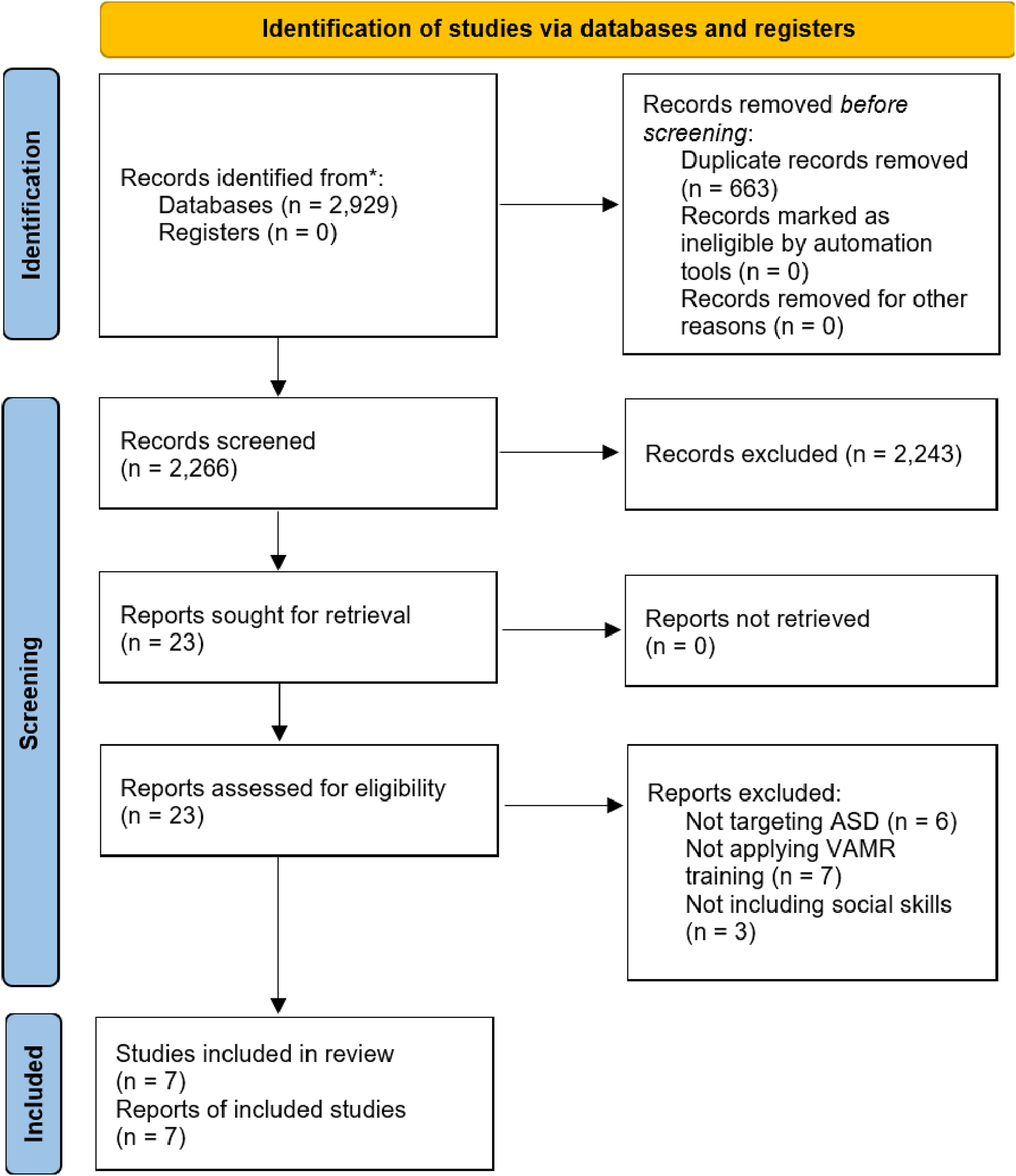
Studies that met the inclusion criteria or those that could not be included based on abstract content were selected for a full-text review. Two independent assessors evaluated the abstracts of the remaining studies for eligibility. Two assessors independently assessed study eligibility. Any disagreements in study selection were resolved during consensus meetings.
Operational Definition
The variables for the primary research question for this study were: ‘Population’ was individuals with ASD, ‘Intervention’ was VAMR training, and ‘Outcome’ was social skills. Social Participation is defined as activities that involve social interactions with others, including family, friends, peers, and community members, and support social interdependence (Gillen & Brown, 2023; Hammel et al., 2008). Social interaction skills are a group of performance skills that represent small, observable actions related to communicating and interacting with others in the context of engaging in personally and ecologically relevant daily life tasks involving social interactions with others (Fisher & Marterella, 2019). In this study, social skills were operationally defined as a concept that included both social engagement and social interaction skills presented above.
Data Extraction
The data to be extracted from the selected articles using the search criteria were as follows: Authors, publication year, research design (e.g., type of randomized controlled trials), number of research groups, number of research participants, selection and exclusion criteria for research participants, age range of research participants, intervention method, intervention period and time, method of measuring research outcomes, and timing of measuring research outcomes.
Data Synthesis and Analysis
The quality of each study was independently assessed by assessors using the Cochrane ‘Risk of bias 2’ (RoB 2) tool (Sterne et al., 2019). Based on the criteria from the RoB 2 tool, studies were categorized as being at low risk of bias as green, high risk of bias as red, and having some concerns as yellow. The assessments were conducted for five individual domains: bias arising from the randomization process, bias due to deviations from intended interventions, bias due to missing outcome data, bias in the measurement of the outcome, bias in the selection of the reported result, and overall bias. The PICO (Patient, Intervention, Comparison, & Outcome) method was used for this systematic review (Liberati et al., 2009). For the two-group studies selected, effect sizes (Cohen’s d) were calculated for the social skills outcomes. When the mean values and standard deviations (SD) were reported, the effect sizes were calculated using the following formula: d = M1–M2 / SD. The following formula was when only t-statistics were reported: d = 2 t/ × (df). The following thresholds were used to interpret the effect sizes: 0.2 was considered small, 0.5 was considered a medium effect and 0.8), and large effect (Cohen, 2016). This study analyzed intervention methods for social skills by dividing age groups according to developmental stages. Developmental development throughout life was classified according to the Newman classification (Newman & Newman, 1991) as follows: Infancy (0–2 years), toddlerhood (2–3 years), early school age (4–6 years), middle childhood (6–12 years), early adolescence (12–18 years), later adolescence (18–24 years), early adulthood (24–34 years), middle adulthood (34–60 years), later adulthood (60–75 years), and very old age (>75 years).
Results
Description of Studies
Seven studies included in this systematic review were randomized controlled targeting ASD. In seven controlled trials, the same outcomes were measured before and after the intervention in both the control and experimental groups. Of the seven controlled trials, six applied a randomized two-group design (Beaumont et al., 2021; Chu et al., 2023; Genova et al., 2021; Maskey et al., 2019; Smith et al., 2021; Wijnhoven et al., 2020) and one applied a randomized three-group design (Kouhbanani et al., 2021).
A total of 417 individuals with ASD were included; the number of participants in each study ranged from 14 to 109. The mean number of participants was 32.5 in the experimental group and 22.7 in the control group. The experimental group had a minimum of seven participants and a maximum of 53 participants. The control group had a minimum of five participants and a maximum of 56 participants.
Characteristics of Selected Studies
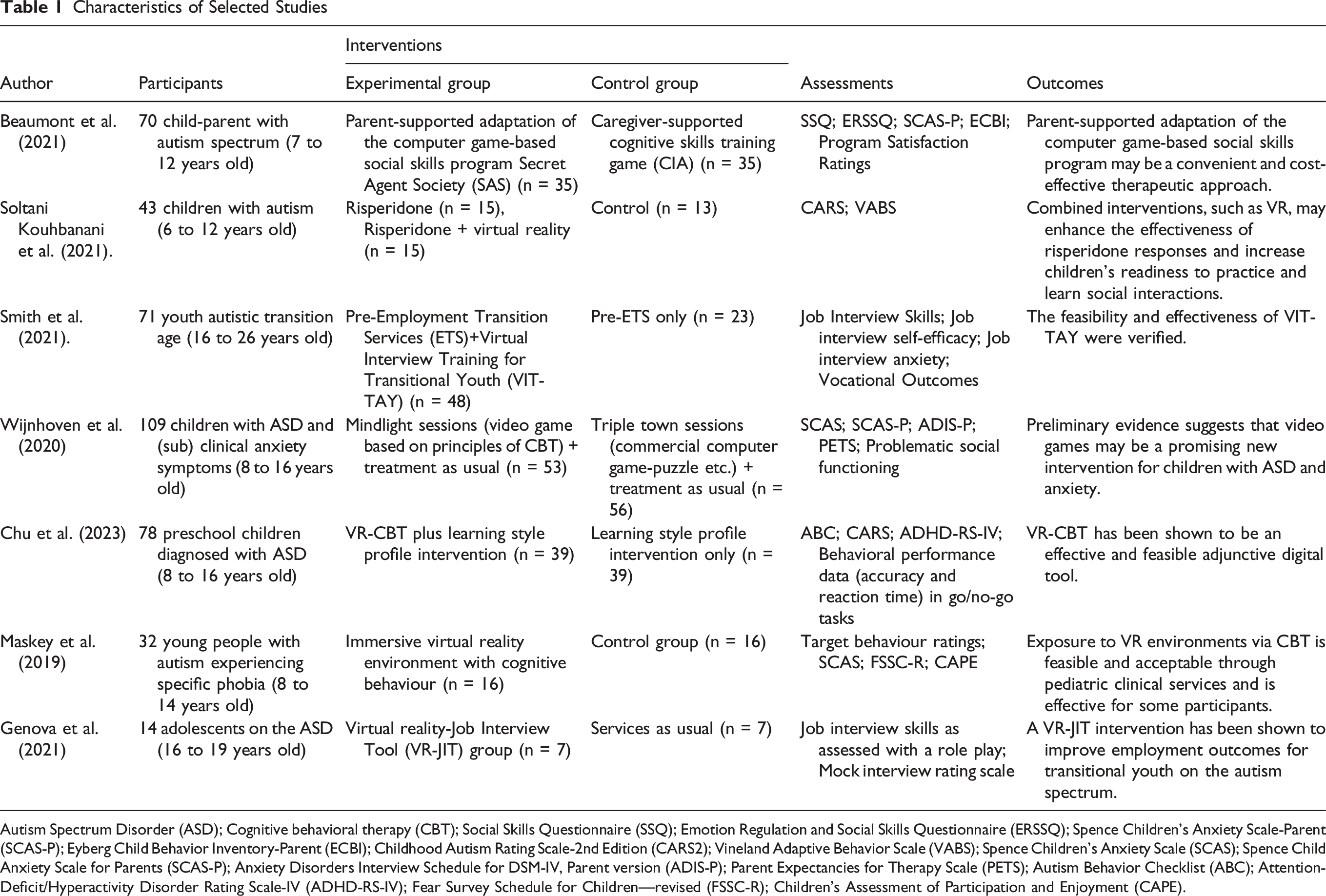
Autism Spectrum Disorder (ASD); Cognitive behavioral therapy (CBT); Social Skills Questionnaire (SSQ); Emotion Regulation and Social Skills Questionnaire (ERSSQ); Spence Children’s Anxiety Scale-Parent (SCAS-P); Eyberg Child Behavior Inventory-Parent (ECBI); Childhood Autism Rating Scale-2nd Edition (CARS2); Vineland Adaptive Behavior Scale (VABS); Spence Children’s Anxiety Scale (SCAS); Spence Child Anxiety Scale for Parents (SCAS-P); Anxiety Disorders Interview Schedule for DSM-IV, Parent version (ADIS-P); Parent Expectancies for Therapy Scale (PETS); Autism Behavior Checklist (ABC); Attention-Deficit/Hyperactivity Disorder Rating Scale-IV (ADHD-RS-IV); Fear Survey Schedule for Children—revised (FSSC-R); Children’s Assessment of Participation and Enjoyment (CAPE).
Risk of Bias of the Studies
All studies were judged to have an unclear risk of bias concerning the randomization process as they failed to report sufficient information about the selection of the reported results. All studies, except Beaumont et al. (2021) were judged to have a low risk of bias owing to the randomization process. All studies except those by Genova et al. (2021) were judged to have a low risk of bias due to deviations from the intended interventions. All studies were judged to have a low risk of bias due to missing data, as there were no dropouts from pre-test to post-test and outcome data were available for all or nearly all participants at the end of the intervention. All the studies were assessed as having an unclear risk of bias. Figure 2 shows a visual depiction of the risk of bias assessment for each study using three colors to indicate the different levels of bias risk: red = high, yellow = unclear, and green = low. Bias Assessment Graph
Effects of VAMR Training for Improving Social Skills
Social Skills According to Development Through Life
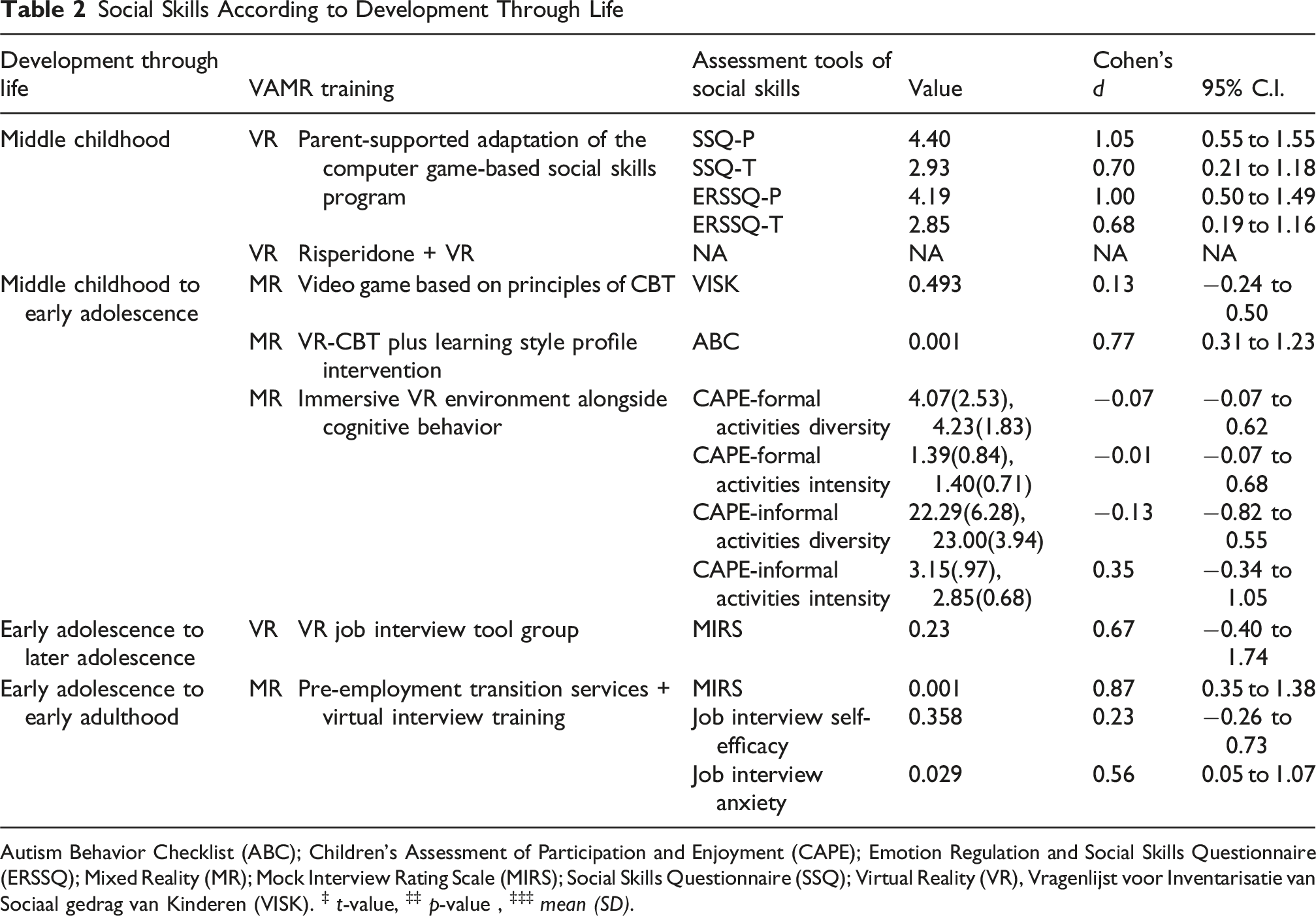
Autism Behavior Checklist (ABC); Children’s Assessment of Participation and Enjoyment (CAPE); Emotion Regulation and Social Skills Questionnaire (ERSSQ); Mixed Reality (MR); Mock Interview Rating Scale (MIRS); Social Skills Questionnaire (SSQ); Virtual Reality (VR), Vragenlijst voor Inventarisatie van Sociaal gedrag van Kinderen (VISK). ‡ t-value, ‡‡ p-value , ‡‡‡ mean (SD).
Three studies have been reported in middle-aged to early adolescents (ages 6–18 years), and three MR studies have been reported. The intervention methods used were video games based on the principles of Cognitive behavioral therapy (CBT) (Mindlight sessions) (Wijnhoven et al., 2020), VR-CBT plus learning style profile (LSP) intervention (Chu et al., 2023), and an immersive VR environment with cognitive behavior (Maskey et al., 2019). Anxiety is a common mental health problem in children with ASD (Wijnhoven et al., 2018). CBT is the most effective evidence-based therapy for anxiety (Warwick et al., 2017). There are some important challenges in providing CBT to anxious children with ASD as they have difficulties with verbal expression and abstract thinking (Johnco & Storch, 2015). Mindlight uses neurofeedback to train children to regulate the arousal levels associated with anxiety through relaxation and concentration (Hammond, 2005). Accordingly, Wijnhoven et al. reported the effect of video game Mindlight on anxiety symptoms and disorders in children with ASD (Wijnhoven et al., 2020). Chu et al. designed a non-wearable VR intervention platform (VR-incorporated CBT) with interventions of both sensory and motor stimulation for preschool participants with ASD, considered the developmental manifestation of autism, and introduced LSP training as another intervention. They presented the effects of VR-CBT and LSP interventions along with the effects of LSP intervention alone, suggesting the effectiveness of VR-CBT as an adjuvant for preschool children with ASD (Chu et al., 2023). Given the potential utility of combining CBT and VR to treat specific phobias in individuals with ASD, Maskey et al. (2019) investigated the combination of an immersive virtual reality environment (VRE) with therapist-delivered CBT to reduce anxiety. Wijnhoven et al. found that the effect of social skills on reporting was small (0.13). Chu et al. examined the effect of social skills on reporting as a medium of 0.77. Maskey et al. examined the effects of social skills on reporting, which ranged from negligible (−0.01; formal activities intensity) to small (0.35; informal activities intensity). From middle childhood to early adolescence, the average effect of VAMR training on social skills in children with ASD was 0.17, which was considered small.
One VR study was conducted for individuals from early to late adolescence (ages 12–24). A VR job interview tool group was used as the intervention method (Genova et al., 2021). Genova et al. reported the feasibility of implementing Virtual Reality JIT (VR-JIT) (Smith, Ginger, Wright, Wright, Taylor et al., 2014), a computerized interview simulator that allows participants to practice interviewing a virtual person (Genova et al., 2021). Genova et al. examined the effect of social skills on reporting as a medium of 0.67.
One MR study was conducted for individuals between early adolescence and adulthood (ages 12–34). The intervention method used was Pre-Employment Transition Services combined with Virtual Interview Training (Smith et al., 2021). Virtual Interview Training for Transitional Youth (VIT-TAY) is a virtual interview platform in which trainees can watch video clips of a virtual interviewer and answer questions directly or change the direction of conversation as needed. The results show that VIT-TAY can lead to significant improvements in job interview skills, reductions in job interview anxiety, and increases in competitive employment rates (Smith et al., 2021). Smith et al. examined the effect of social skills of reporting in a job interview: small (0.23; job interview self-efficacy), medium (0.56; job interview anxiety), and large (0.87; interview rating scale), with an average effect of 0.55, which is considered medium.
Discussion
This systematic review aimed to identify intervention studies using VAMR training to improve social skills in individuals with ASD and to examine the impact of VAMR training on social skills. In total, seven studies with 417 individuals with ASD were included, and the number of participants in each study ranged from 14 to 109. Although this area of research is still in its infancy, the minimum and maximum number of participants across studies are noteworthy, as the number of participants in quantitative research can be critical to reliability and validity. Four studies (Beaumont et al., Smith et al., Wijnhoven et al., and Chu et al.) were characterized by a large number of participants (70 to 109). Three studies (Kouhbanani et al., 2021, Maskey et al., 2014 and Genova et al., 2021) were characterized by a small number of participants (14 to 43).
In this review, since children with ASD were not set as keywords but as individuals with ASD, the developmental period of the participants included in the study was from childhood to adulthood. As a result of analyzing the developmental period of the participants included in the study, most studies on social skills applied to VAMR training for improving social skills in individuals with ASD were conducted from middle childhood to early adolescence and early adulthood. In studies that applied social skills as an outcome to participants only in the middle childhood development period, interventions combining parenting programs and drugs with VR were applied, because the participants were young. For the developmental age group corresponding to middle childhood to early adolescence, an intervention combining CBT and VAMR training was provided and social skills were assessed. CBT is the most effective evidence-based treatment for anxiety and phobia (Warwick et al., 2017). In the context of ASD, two meta-analyses and one Cochrane review reported moderate-to-large effects of CBT (James et al., 2020; Sukhodolsky et al., 2013; Ung et al., 2015). However, these techniques may not be effective for children with ASD, and the National Institute for Health and Care Excellence (NICE) ASD management guidelines in the UK state that CBT needs to be adapted to increase the likelihood of its effectiveness in individuals with ASD (Ellie et al., 2013). Suggested adaptations include developing impairment-specific hierarchies, using more specific visual strategies, incorporating the child’s specific interests, and involving parents in treatment (Moree & Davis, 2010). In the paper selected for this study, CBT combined with VAMR training was used as an intervention method, as CBT has been adapted to ASD. VR has been used as a training method for job preparation in ASD, which corresponds to the developmental stages from early adolescence to early adulthood. VR was used as a training method for job preparation in individuals with ASD, corresponding to the developmental stages from early adolescence to early adulthood. Thus, VAMR training can be applied in various ways across different developmental stages in ASD individuals
By comparing the effects of VAMR training on social skills in individuals with ASD by developmental stage, the selected articles in this study showed that VAMR training combined with parental adaptation programs were very effective in improving social skills in middle-childhood children with ASD. VAMR training for job preparation and interview training were moderately effective in improving social skills during the developmental stages between early adolescence and adulthood. Finally, VAMR training combined with CBT were small and effective in improving social skills from middle childhood to early adolescence in the ASD population.
The results of this review indicate that VAMR training can effectively improve social skills in individuals with ASD. However, owing to the large variability in intervention types, developmental stages, and types of targeted social skills, the relative benefits of various interventions remain unclear. However, it appears that the greatest benefits are the result of parent-supported adaptation of the computer game-based social skills program, whereas the benefits of VAMR training combined with CBT may be more limited. Although virtually all studies resulted in improvements in participants’ social skills, the large variability in interventions makes it challenging to determine the optimal frequency to produce the greatest improvements based on this review.
Social interaction skills are a group of performance skills that represent small, observable actions related to communicating and interacting with others in the context of engaging in personally and ecologically relevant daily life tasks involving social interactions with others (Fisher & Marterella, 2019). The effective use of social interaction performance skills is demonstrated when the client completes interactions in a manner that matches the demands of a social situation. Ineffective use of performance skills occurs when a client routinely requires assistance or support to perform activities or engage in social interactions (AOTA, 2020). As ASD individuals experience limitations in these social skills throughout their lives, the results of this study, which investigated the effectiveness of VAMR training on social skills according to the developmental stages of ASD, have great clinical utility. This review evaluates the existing research by combining a vast number of journals that publish research in the fields of ASD and VAMR. This is a transparent review targeting VAMR training for social skills in individuals with autism, and it differs from previous reviews in that it uses a more comprehensive search string and diverse set of search platforms.
The limitations of this review include of only reviewed published articles obtained during the search process, excluding unpublished data and review articles or reports. In addition, most studies included a small number of participants, which may have limited the power of the estimates. The number of large, multicenter RCTs that have provide a higher level of reliability in the efficacy of interventions for individuals with ASD is limited, and meta-analyses have not been performed. Future studies should examine the literature and conduct meta-analysis by combining different types of data from different sources to elaborately discuss individuals with ASD.
Conclusion
This systematic review highlights that there is limited evidence supporting VAMR training for social skills may be most beneficial for individuals with ASD. Current evidence suggests that VAMR training for social skills may be beneficial for individuals with ASD and inform the basis of VAMR training for social skills applied to individuals with ASD by analyzing the intervention methods and type of outcome measurement. The results of this study can be used as a basis for the application of VAMR training in individuals with ASD in the clinical setting. Particularly, regarding the developmental age group corresponding to middle childhood to early adolescence, an intervention combining CBT and VAMR training should be provided in order to improve their social skills. Further research is necessary to better understand the scope of VAMR training that social skills can provide to individuals with ASD.
Supplemental Material
Supplemental Material - Virtual, Augmented, and Mixed Reality Training for Improving Social Skills in Individuals With Autism Spectrum Disorder: A Systematic Review
Supplemental Material for Virtual, Augmented, and Mixed Reality Training for Improving Social Skills in Individuals With Autism Spectrum Disorder: A Systematic Review by Si-nae Ahn in Hong Kong Journal of Occupational Therapy
Footnotes

Funding
The authors received no financial support for the research, authorship, and/or publication of this article.
Declaration of Conflicting Interests
The authors declared no potential conflicts of interest with respect to the research, authorship, and/or publication of this article.
Supplemental Material
Supplemental material for this article is available online.
References
Supplementary Material
Please find the following supplemental material available below.
For Open Access articles published under a Creative Commons License, all supplemental material carries the same license as the article it is associated with.
For non-Open Access articles published, all supplemental material carries a non-exclusive license, and permission requests for re-use of supplemental material or any part of supplemental material shall be sent directly to the copyright owner as specified in the copyright notice associated with the article.
