



Abstract
Background
Gardening as a leisure activity has been shown to be potentially beneficial for older adults, this study aimed to assess the physiological and psychological impacts of a specific horticultural activity, watering indoor plants, compared with playing a computer game - the Klondike Solitaire Card Game.
Methods
This crossover study included 100 older adults recruited from a nursing care facility for older people in Shanghai, China. They were allocated to either engage in watering indoor plants (horticultural group) or playing a computer game (control group). For the inclusion criteria, screening for cognitive function was conducted to exclude those with severe cognitive impairments, thereby focusing on those capable of participating fully in the study activities. Brainwave activities, blood pressure, and psychological states were measured through pre- and post-test questionnaires to evaluate the physiological and psychological effects.
Results
The activity of watering indoor plants was associated with significant reductions in both systolic and diastolic blood pressure, in contrast to the computer game activity. Additionally, participants in the horticultural group showed increased brainwave mean values, indicating heightened relaxation and focus, while decreases were observed in the control group. The experimental group reported reduced anxiety scores, along with increased feelings of comfort and relaxation, and also exhibited significantly higher meditation levels, which indicates a profound mental relaxation effect.
Conclusion
Our findings suggest that engaging in indoor horticultural activities, such as watering houseplants for 10 minutes, can reduce mental and physical stress levels in older adults.
Introduction
Horticultural therapy encompasses various activities, including flower arrangement, gardening of plants, vegetables, and fruits, and simply being in nature (Hassan & Deshun, 2023; Patil et al., 2009). Gardening has recently gained popularity among various clinical and research professions as an age-appropriate and sustainable option for improving the health of older adults (Wakefield et al., 2007). Whether performed as a group or on an individual basis, gardening has several subtle practical benefits for older adults. Horticultural activities such as gardening are said to improve self-expression, self-esteem, social interactions, hand-eye coordination (D’Andrea et al., 2024), gross motor skills, and sensory stimulation, ameliorate feelings of loss in the older adults, and provide opportunities for creativity. Gardening can be considered a moderate-to-rigorous type of physical exercise (Armstrong, 2000), thus providing psycho-physiological benefits as well. Furthermore, it may provide both physical and mental stimulation.
Advances in technology have provided scientists with a more detailed understanding of the electrical activity within the human brain. Brainwaves measured using electroencephalograms (EEG) typically occur during both resting and active mental states, with an individual’s behavior, thoughts, and emotions reflected as neural activity within the brain. An EEG records these neural changes and visually represents them in the form of various waves categorized into beta, gamma, theta, alpha, and delta based on their frequencies, which are 13–30 Hz, >30 Hz, 4–8 Hz, 8–13 Hz, and 0–4 Hz, respectively (Desai et al., 2015). The brainwaves captured in an EEG offer insight into human brain activities. The signals produced during an EEG arise from the depolarizing and hyperpolarizing postsynaptic potentials of several pyramidal neurons.
Recently, NeuroSky MindWave introduced EEG headsets, an advanced tool for measuring brain wave activity. In 2009, this headset was used to diagnose attention deficit hyperactivity disorder (ADHD) and stress-related problems with an 86% accuracy rate (Mostow et al., 2011). Various studies have examined the psychological effects of different sensory inputs, such as vision, taste, and hearing, on EEG activity (Ajiro et al., 2009), and additional techniques involving EEGs are currently being developed, including experiments on human–computer interfaces. EEGs have also emerged as a tool for managing stress and anxiety, proving helpful for confirming various mental health diagnoses and detecting other brain abnormalities (Hassan et al., 2018a, 2018b).
Advancements in EEG technology suggest that EEGs could be useful for assessing the impact of gardening on feelings of relaxation in older adults—a type of assessment that has not yet been empirically examined. Previous studies have explored the psychological effects of gardening on humans using various measures, including heart rate, electromyography, galvanic skin response, blood pressure, and the Profile of Mood States (Nishii, 2011). Notably, the Semantic Differential Method (SDM) and State-Trait Anxiety Inventory (STAI) are seldom used as measures.
Horticultural therapy is a unique and effective treatment in occupational therapy that offers (1) physical benefits, such as improving motor skills and coordination; (2) psychological benefits, including stress reduction and enhanced self-esteem; (3) social benefits through fostering social connections and teamwork; and (4) occupational benefits, such as developing routine and organizational skills (Kam & Siu, 2010; Kaplan & Kaplan, 1989; Sempik et al., 2003). By incorporating gardening activities, occupational therapists can address several occupational performance issues and promote the overall health and well-being of individuals with various conditions.
Horticultural therapy is a valuable intervention in occupational therapy for older adults with mild cognitive impairment. Research has shown that engaging in horticultural activities can have positive effects on cognitive function, emotional well-being, physical health, and overall quality of life (Detweiler et al., 2012). Horticulture is a meaningful and purposeful activity that can improve cognitive skills such as attention, memory, problem-solving, and executive function. The hands-on nature of gardening tasks can enhance sensory stimulation, motor coordination, and fine motor skills, making it a holistic intervention for older adults with cognitive impairments (Patil et al., 2009). Furthermore, horticulture offers opportunities for social interaction, sensory engagement, and connection with nature, promoting emotional regulation, reducing stress and anxiety, and improving overall mental health (Soga et al., 2017).
With the growing interest in horticulture therapy for older adults, up-to-date, research explorations of the impact of horticultural activities on older adults are necessary. This study aims to investigate the impact of watering plants, a form of horticultural activity, on the psycho-physiological health of Chinese older adults in the form of a randomized controlled study. In addition to behavioral measures, this study uses physiological measures such as EEG to capture the impact of watering plans on older adults’ well-being.
Methods
Study site
The study was conducted indoor in a controlled environment at a nursing care facility for older people in Shanghai, China, inside a large hall with white walls and four windows on the north side. The room was kept quiet and warm to ensure that participants were free from external disturbances and could work comfortably. The experimental room measured approximately 9 m in length, 4 m in width, and 5 m in height. All measuring instruments were placed behind the participants to avoid any disturbances during the experiment that may affect the results. The experiment was conducted on a winter day, from 9:00 am to 4:00 pm, in a room with a controlled light intensity of 500 lux and a room temperature of 26°C.
Participants
A total of 100 Chinese female older adults (mean age: 68.3 ± 5.8 years) were recruited after careful screening by the medical staff of Tongji University, and based on their medical history, absence of cognitive impairment, and their family history, job status, and life experiences. The participants were chosen if they were: (1) in good physical health (able to walk independently) and had good visual perception (i.e., those with poor vision and poor physical health were excluded), (2) over 65 years old, (3) not taking any medication, and (4) residing in residential care homes in Shanghai, China. Investigators from the university contacted the nursing care residents after receiving approval from their staff via phone call. Each participant was given 50 yuan in cash as a participation token. Written informed consent was obtained from all participants for their participation and inclusion of their photographs in the manuscript. This study was approved by the Ethics Committee of the College of Architecture and Urban Planning at Tongji University in China (Ref. No.: CAUP23310056).
Materials
Fifteen indoor plants of nearly identical sizes, placed in plastic pots about 5 mm in diameter, were selected from a local nursery in China, each costing 20 yuan.
Protocol
The participants were allocated into: (1) a horticulture group consisting of 50 participants who watered indoor plants by hand for 10 minutes, or (2) a control group of 50 participants who played a computer card game - Klondike Solitaire, which required similar levels of physical activity for the same duration. Klondike Solitaire is a digital version of the classic card game played with a standard 52-card deck, excluding Jokers. It is displayed on a computer screen, where players interact with virtual cards using a mouse or keyboard. The game layout includes a tableau of seven columns of cards, with the first column containing one card and each subsequent column having one additional card; only the top card of each tableau pile is visible, with the others facing down. In four foundation piles, players aim to organize each suit in ascending order from Ace to King. The remaining are undealt cards form the stockpile, and as players draw cards, these move to the waste pile, from which they can be played onto the tableau or foundations.
A cross-over study design was used to measure physiological differences between the two activities. On the first day of the study, participants from the horticulture group engaged in plant watering, while the control group played the computer game. On the following day, the groups switched tasks. Plant watering took place on a large table in a seated position, and the computer game was played in a computer room at the nursing care facility, also in a seated position. The overall experimental setup is illustrated in Figure 1. Experimental photographs showing a subject performing (a) the control activity and (b) the horticultural activity.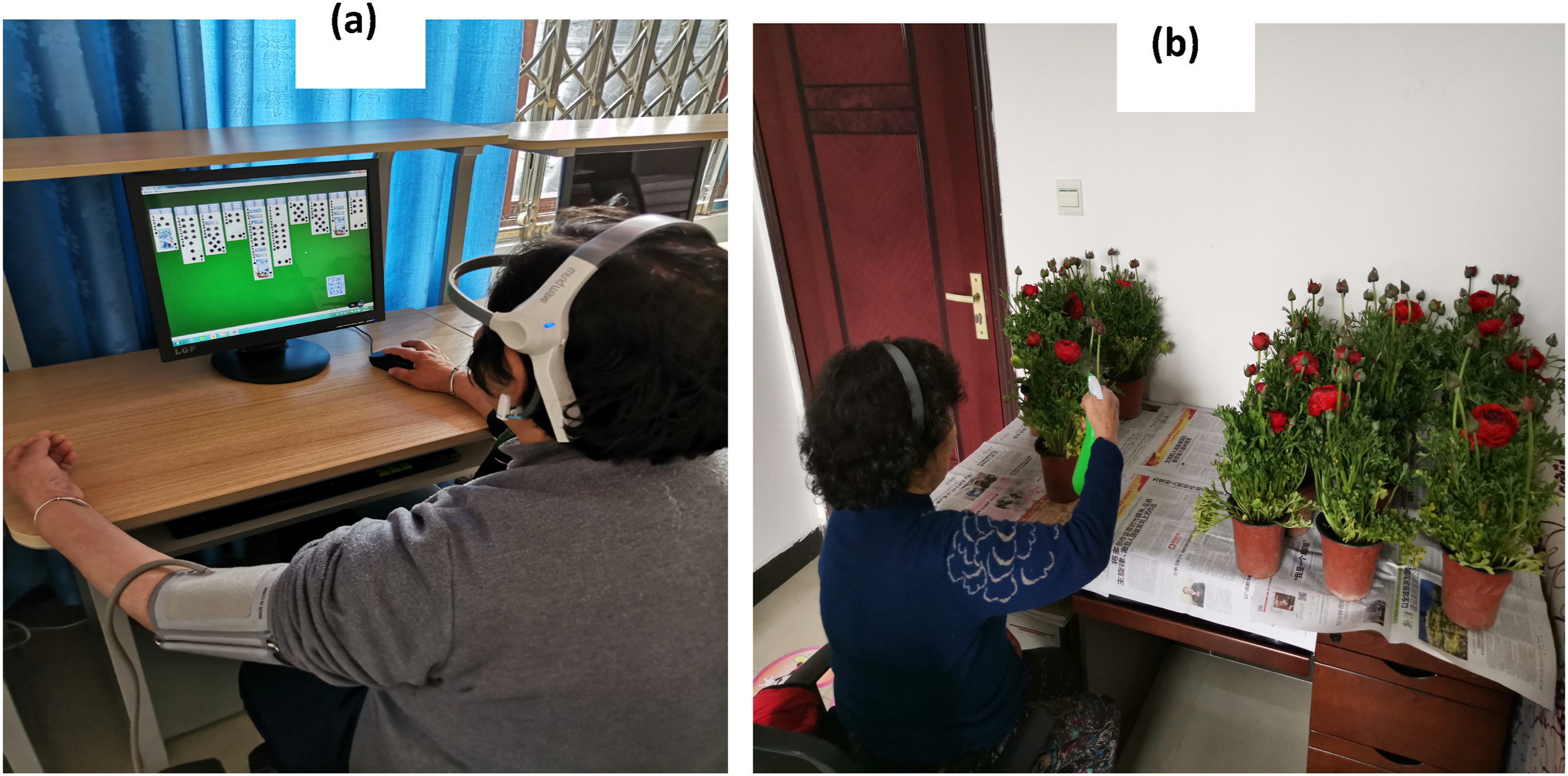
Procedure
Before the start of the experiment, participants were given brief instructions in both written and PowerPoint formats. They were then provided with pretest questionnaires that collected basic information such as their age, height, and weight, along with questions from the Semantic Differential Method (SDM) (Sabu & Robinson, 2021) and State-Trait Anxiety Inventory (STAI) (Bee Seok et al., 2018) questionnaire.
After completing the pre-test questionnaires, participants were led to the experimental hall and rested in a seated position for 5 minutes. Following this rest period, their blood pressure was measured. They were then fitted with an EEG headset (MindWave-EEG headset, NeuroSky Beijing Oriental Creation Technology Co., Ltd, Beijing, China, https://neurosky.com; Robbins & Stonehill, 2014) and instructed to perform either horticultural or control tasks while seated for 10 minutes. To assess physiological and psychological responses, systolic and diastolic blood pressure, EEGs, STAI, and SDM questionnaire were utilized. Blood pressure was measured before and after each task using a sphygmomanometer from Omron, a company based in China. EEG data were continuously recorded throughout the experiment. The MindWave EEG headset (MW001) developed by NeuroSky, which captures EEG data at a rate of 512 Hz per second, was used to monitor electrical brainwave activity in the frontal lobe, specifically the Fp1 region (Robbins & Stonehill, 2014), along with meditation and attention levels, inside the human brain. The MindWave EEG headset comprises a sensor arm with an EEG electrode, a headband, a Bluetooth device, and an ear clip. It features two dry sensors that act as detectors and filter raw EEG signals. The sensor tip specifically targets brainwave signals from the frontal lobe. These sensors can also pick up ambient noise from computers, electrical devices, human muscles, electrical sockets, and light bulbs. The ear clip serves as a reference point, assisting the headset’s ThinkGear chip in filtering out electrical noise (Vourvopoulos & Liarokapis, 2014).
The participants’ psychological state was then recorded using the SDM questionnaire. A 13-point rating scale for SDM assessment was examined to check feelings of “comfortable-uncomfortable,” “relaxed-awakened,” and “natural-artificial.” The SDM method is a reliable and valid self-reporting technique for obtaining information about participants’ moods toward certain environmental conditions (Hassan & Deshun, 2023). The 20-item STAI is a self-assessment tool designed to evaluate an individual’s emotional states, such as feelings of nervousness or anxiety, across four distinct scales (Hassan & Deshun, 2023). To derive STAI scores, the responses for all 20 items are totaled, with lower cumulative scores signifying reduced levels of anxiety (Julian, 2011). The participants completed both the SDM and STAI before and after the horticulture and control tasks, respectively.
Results
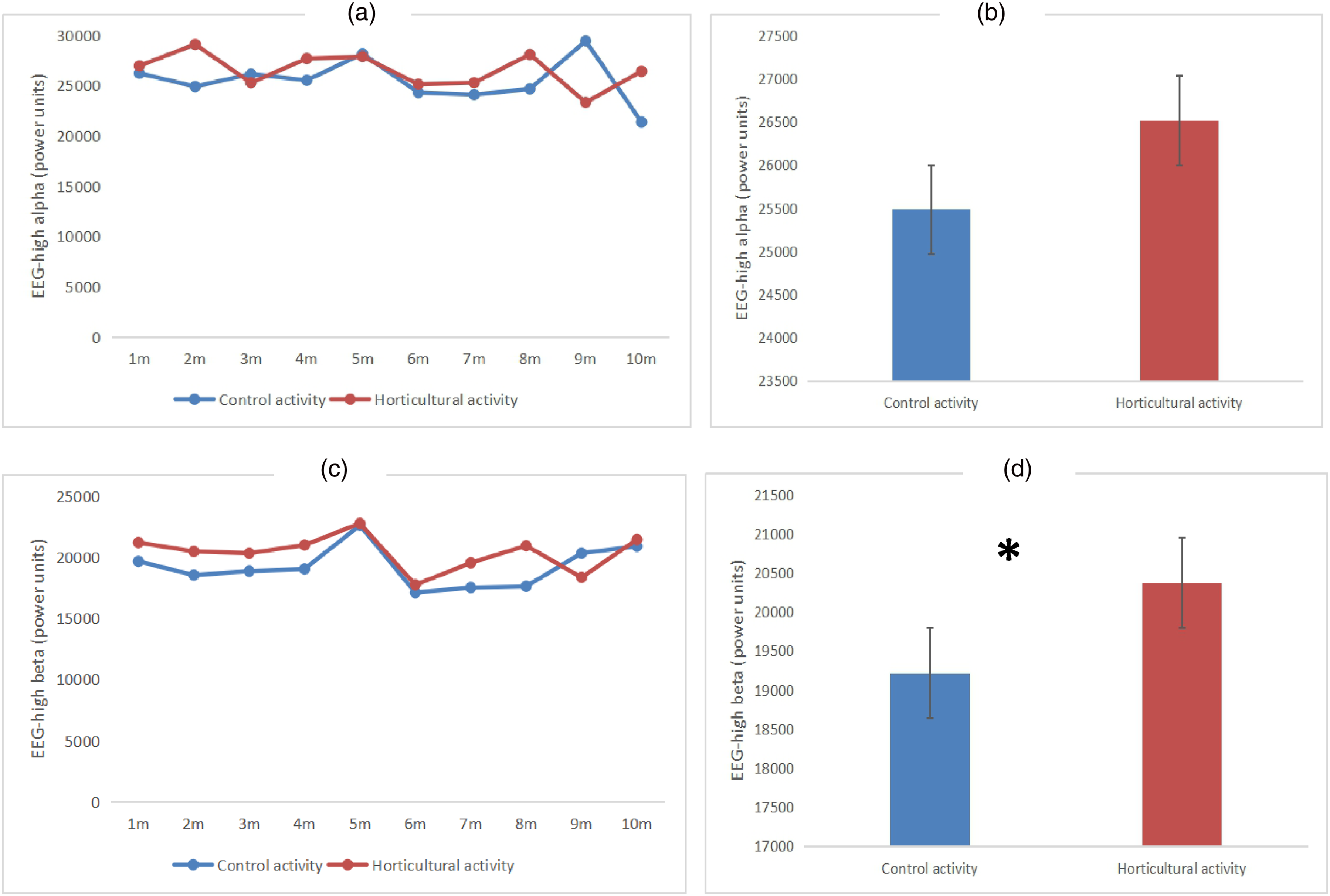
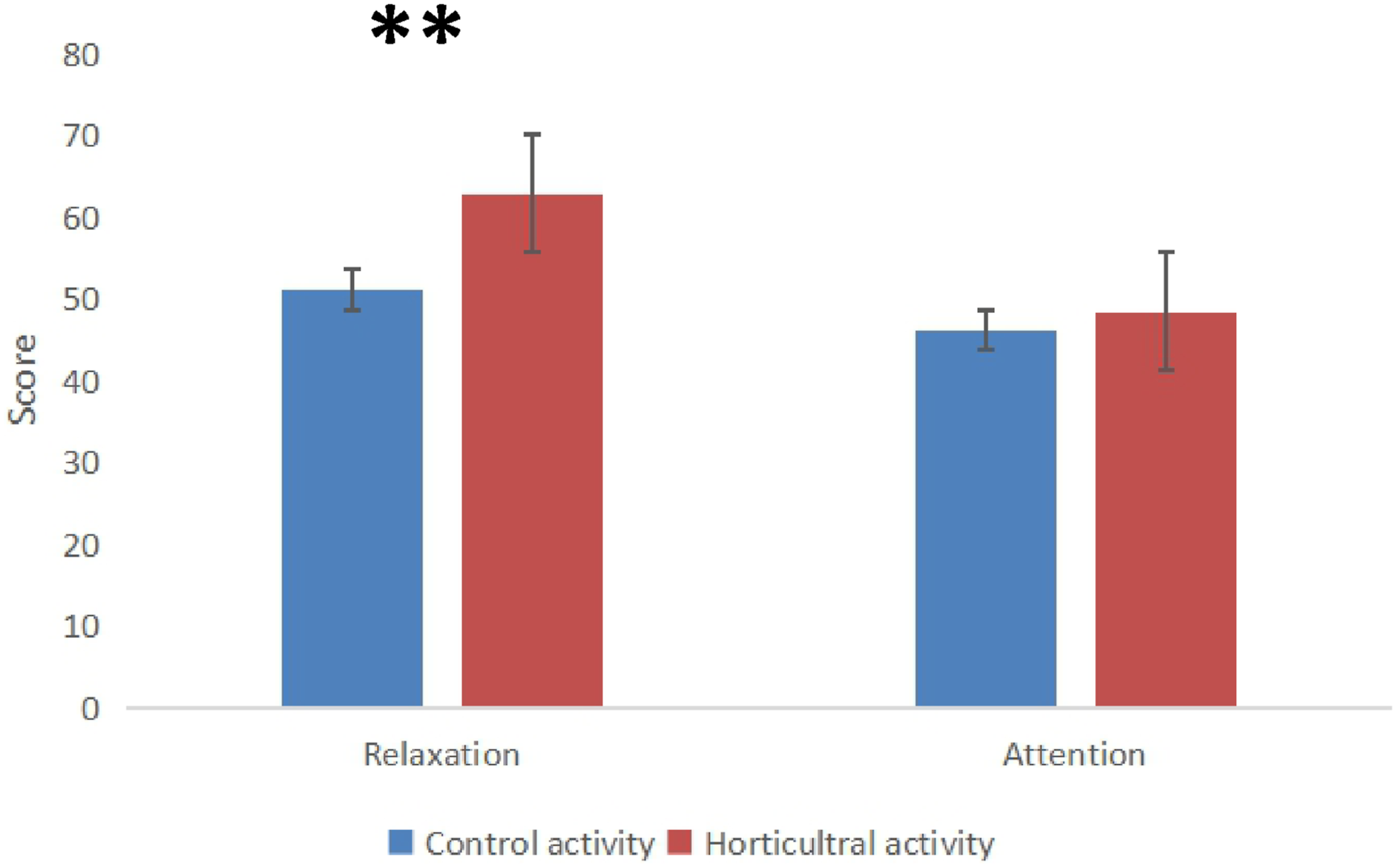
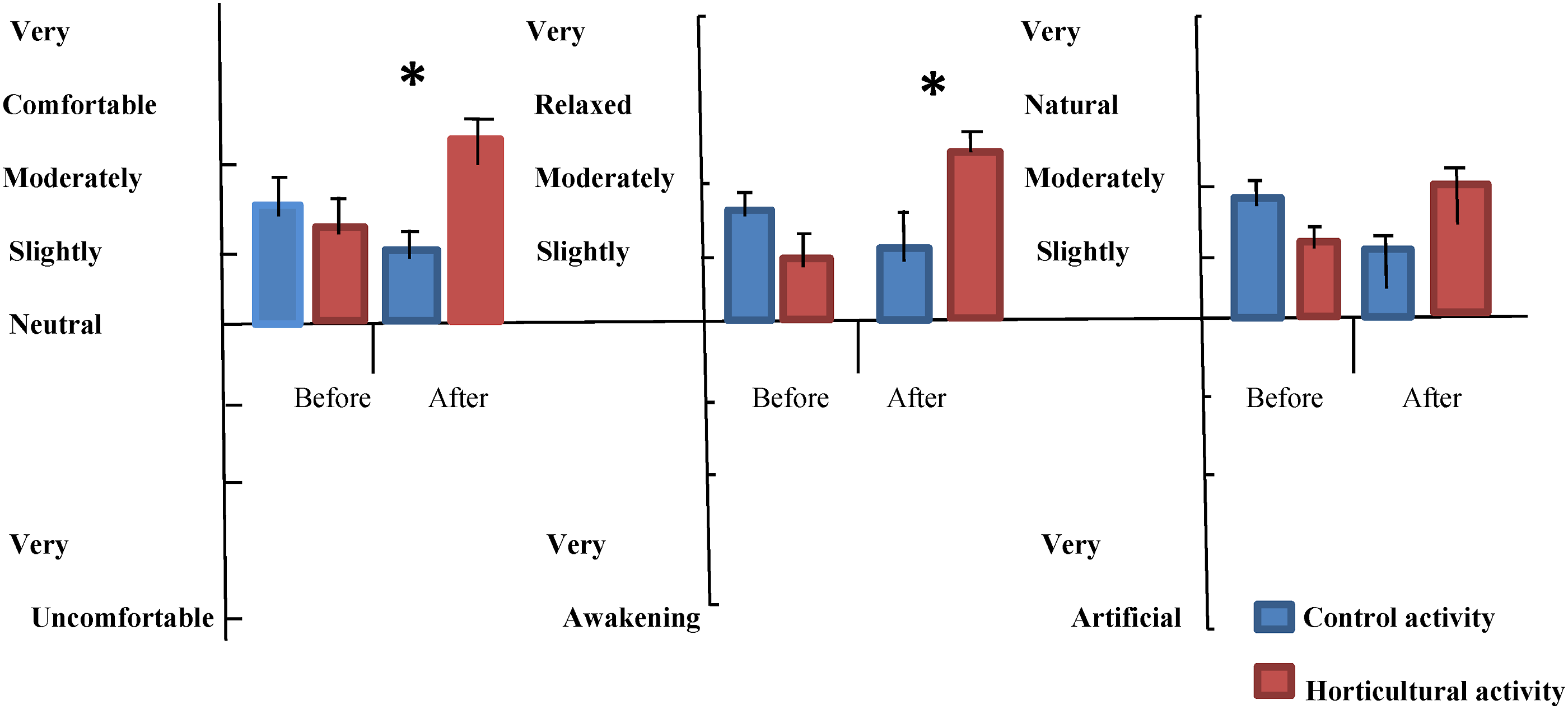
Our study found that there were significant differences in blood pressure (measured in mmHg) between the two groups (p < .05). Specifically, both systolic (p = .01) and diastolic (p = .01) blood pressure levels significantly decreased in participants after engaging in horticultural activities, compared to those who participated in the control activity (Figure 2). However, we observed no significant difference in pulse rates between the two groups (p = .10). Participants exhibited more pronounced fluctuations in EEG-high alpha (power units) and EEG-high beta (power units) brainwave patterns following the horticultural activity compared to the control activity. Specifically, most EEG-high alpha (power units) brainwaves demonstrated an increase in one-minute analysis for the horticultural group compared to the control group (Figure 3(a)). Furthermore, the overall mean alpha (power units) over 10 minutes did not increase significantly after the horticultural activity (p = .32; 26518.55 ± 1755.07) compared to that observed in participants undertaking the control activity (25486.89 ± 2234.81) (Figure 3(b)). Repeated-measures analysis of variance (ANOVA) that compared the mean values of EEG high-alpha (power units) between the horticultural and control groups in relation to changes over time showed a non-significant difference in relaxation levels, F (1,98) = 1.43, p = .23, and no significant main effect for time within the groups, F (9,98) = 1.08, p = .37, across the two activities. Moreover, the one-minute analysis indicated that most EEG high-beta (power units) brainwaves increased more in the horticultural group than in the control group (Figure 3(c)). Furthermore, the overall mean beta (power units) significantly increased after the horticultural activity (p = .03; 20371.39 ± 1487.87) compared to the mean observed after the control activity (19214.16 ± 170; Figure 3(d)). Repeated-measures ANOVA comparing the EEG high-beta (power units) mean values between the horticultural and control groups with respect to time changes revealed a non-significant difference, F (1,98) = 1.63, p = .20. Additionally, no significant main effect for time was found within each group, F (9,98) = 1.60, p = .10. The EEG MindWave headset showed that participants’ mean relaxation level (i.e., meditation level) significantly increased after the horticultural activity compared to the control activity (p < .01). However, no significant difference was observed in the attention scores between the two groups (p = .46; see Figure 4). The STAI and SDM pre- and post-test questionnaires highlighted differences: participants in the experimental group exhibited a significant decrease in STAI anxiety scores (p < .01) after the horticultural activity (41.4 ± 6.19) compared to those in the control group (45.56 ± 2.31), but no significant differences were found before the tasks. The SDM results indicate that participants felt significantly more comfortable and relaxed after the horticultural activity than after the control activity (p < .01; see Figure 5). Comparison of systolic and diastolic blood pressure (mmHg) between horticultural and control activities. N = 100; mean ± SD; *p < .05 (paired t test). Comparison of EEG brainwave activity during control and horticultural activities: (a) Mean high alpha brainwave activity for 1–10 minutes; (b) Overall mean values for high alpha; (c) Mean high beta brainwave activity for 1–10 minutes; (d) Overall mean values for high beta. N = 100; mean ± SE; *p < .05 (paired t test). Comparison of relaxation and attention levels between control and horticultural activities. N = 100; mean ± SE; *p < .05 (paired t test). Participant scores for feelings of comfort, naturalness, and relaxation before and after control and horticultural activities. N = 100; mean ± SD; *p < .01 (Wilcoxon signed-rank test).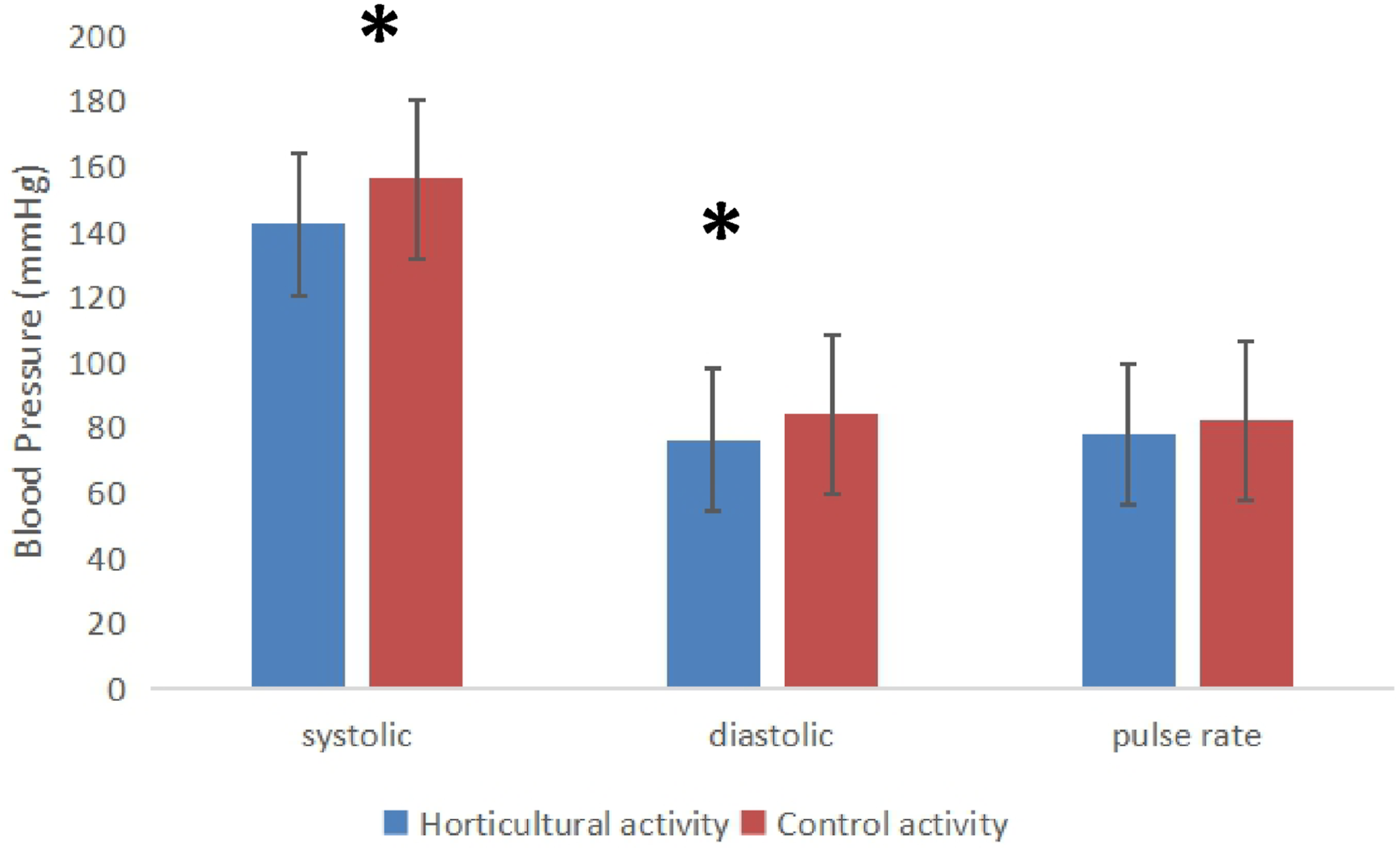
Discussion
We investigated the therapeutic effects of watering indoor plants, a form of horticultural activity, on older adults by analyzing psychological and physiological responses. The systolic and diastolic blood pressure of participants in the experimental group significantly decreased after the horticultural activity compared to the measurements observed in the control group after the computer-game activity.
Blood pressure is an indicator of the autonomic nervous system’s activation; thus, the observed decrease in blood pressure suggests a state of relaxation, calmness, and stress reduction. These findings differ from those of previous experiments on the effects of horticultural activity, where horticultural activities with indoor plants were conducted by young adults (Hassan et al., 2018a). The present study was conducted with older adults, which suggests the potential for greater blood pressure reduction.
This study further utilized EEG data to assess stress or comfort levels. It focused on the behavior of EEG high-alpha and EEG high-beta waves following horticultural activity. The EEG findings showed that participants experienced an increase in alpha activity within the first 10 minutes of performing horticultural tasks. This rise in alpha brain activity suggests that engaging in horticultural activities may foster mental relaxation. Increases in alpha brain power have been associated with more relaxed and pleasant states of consciousness (Başar, 2012), and decreases in alpha activity indicate feelings of fear or stress (Kostyunina & Kulikov, 1996). In contrast, lower alpha brain wave activity was observed in control activities associated with mental stress. Similarly, a distinct pattern emerged with beta brain wave activity. During a 10-min plant-watering session, most participants exhibited an increase in high beta brain wave activity shortly after initiating the horticultural activity. Conversely, a decrease in high beta waves was observed among control participants who completed a computer game.
Consistent with the literature, our results indicate that an increase in attentiveness is correlated with an increase in beta activity (Neuper & Pfurtscheller, 2001). The higher beta brain activity in the participants tasked with watering plants indicates that they were highly attentive and more alert during the horticultural activity; however, lower beta activity is associated with drowsiness and a lack of attentiveness (Lee et al., 2014). Thus, the horticultural group participants’ increases in high alpha and high beta suggest an increase in relaxation state (Vijayalakshmi & Abhishek, 2010).
Brainwaves naturally fluctuate between resting and active states, reflecting the intricate electrical activity within the brain that manifests our emotions, thoughts, and behaviors (Jing & Takigawa, 2000). EEGs capture these electrical patterns, translating them into frequencies or brainwaves. Lower frequency brainwaves are predominant when a person is relaxed, extremely tired, or in a dreamy state; conversely, higher frequency brainwaves are observed when a person is highly alert, anxious, or energized (Keefe et al., 1971). Data from the eSense meditation meter in EEG headsets showed that participants had significantly higher relaxation scores after engaging in horticultural activities compared to after engaging in control activities, which highlights the substantial shift in emotional states—particularly relaxation—that occurs with such activities. Furthermore, results from the STAI and the Semantic Differential Method (SDM) questionnaires conclude that, unlike the control activities, horticultural activities with indoor plants can positively impact mental stress levels.
Based on these results, we strongly recommend that carers for older adults consider providing daily horticultural activities, especially to those living in nursing homes; these may serve as a treatment for controlling hypertension, maintaining good health, and addressing other health-related risks that older adults may face in the future.
Limitations
This study has some limitations. For instance, the horticultural activity examined was conducted over a relatively short period and involved only one type of plant. Future research should investigate the potential roles of different types of plants and a more specifically defined control group in analyzing the effects of horticultural activity on older adults. Future studies should also examine participants of all ages within an indoor or outdoor environment. Finally, horticultural studies with different seasonal flowers and different nationalities are warranted.
Conclusion
Our research demonstrates that watering indoor plants (a horticultural activity) for 10 minutes, as compared to playing a computer game (control activity), can reduce psycho-physiological stress in older adults by lowering systolic and diastolic blood pressure, leading to relaxation and decreased anxiety. These findings highlight the potential therapeutic benefits of incorporating simple gardening tasks into older adults’ daily routines. From an occupational therapy perspective, horticulture, as a non-pharmacological intervention, can provide a holistic approach to improving older adults’ quality of life and well-being and promote physical health and mental well-being through meaningful engagement and interaction with nature.
Footnotes
Acknowledgments
We would like to express our thanks to Prof. Chen Qibing, Prof. Liu Yinggao, and Yan Lei for their support in designing the study and recruiting participants for the experiment.
Author contributions
Li Xiaoyi and Ahmad Hassan were responsible for the study design, performed the statistical analysis, and drafted the manuscript. Jiang Tao and Professor Zhang Deshun provided assistance with minor revisions. All authors have read and approved the final manuscript.
Declaration of conflicting interests
The author(s) declared no potential conflicts of interest with respect to the research, authorship, and/or publication of this article.
Funding
The author(s) disclosed receipt of the following financial support for the research, authorship, and/or publication of this article: This work was supported by the Guizhou University (Ref. No.: renjihezi2018-50).
Consent for publication
The subjects’ written informed consent was obtained for publication, and consent for the publication of images was also secured.

Data availability statement
The research data supporting the findings of this study have not been made available due to confidentiality reasons.