



Abstract
It has long been established that occupational therapists (OTs) play an important role in assisting clients suffering from a variety of physical and mental health conditions. Cyberpsychology is a relatively new field in medicine that pertains to how technology influences people's mental health and behavior. It covers the effects of social media, online gaming, virtual-augmented reality, artificial intelligence, and other forms of technology on individuals. Among the known psychological phenomena arising from individuals’ interactions with digital technologies are cyberbullying and technology addiction. This commentary explores how OTs in the cyberpsychology field can develop personalized interventions to enhance digital well-being and promote healthy technology use.
Introduction
Cyberpsychology is an interdisciplinary field examining the intersection of psychology, technology, and human-computer interaction (Debb, 2021; Fortuna, 2023). It involves studying how emerging technologies both shape and are shaped by human experiences, cognition, perception, emotion, motivation, and behavior (Debb, 2021; Fortuna, 2023). Key topics in cyberpsychology include online identity, virtual relationships, internet addiction, cyberbullying, FOMO (fear of missing out), privacy concerns, impression management, digital mindfulness, human-AI interaction, and much more (Debb, 2021; Fortuna, 2023).
Occupational therapists (OTs) work with their clients to help them regain independence and function and improve their overall quality of life (Portillo et al., 2023). Therapists often adopt a holistic approach to address both physical and mental health problems via personalized intervention plans (Leland et al., 2017). As technology continues to advance and become increasingly integrated into our daily lives, it has a significant impact on our well-being and daily functioning (Korte, 2020). Several studies have documented the detrimental effects of technology on health and functioning (Limone & Toto, 2021; Nakshine et al., 2022; Pandya & Lodha, 2021). The harmful effects of technology extend to (1) physical health impacts, (2) psychological impacts, (3) impacts on sleep and (4) risky online behaviors.
Physical health impacts
Excessive screen time, poor posture, and sedentary behavior related to technology use can lead to physical health issues (Nakshine et al., 2022). Overreliance on technology can interfere with or even impair daily functioning (Grissinger, 2019).
Psychological impacts
The main harmful effects of technology are low mood (Limone & Toto, 2021) and increased anxiety (Limone & Toto, 2021). Overreliance on technology for information retrieval can result in a reduction in critical thinking skills and impaired cognitive capacity (Firth et al., 2019). Finally, technology addiction is a recognized psychological problem, such as computer gaming disorder or excessive social media use (Kuss & Lopez-Fernandez, 2016).
Impacts on sleep
Disturbed sleep behaviors (AlShareef, 2022; Fuller et al., 2017), behavioral changes including increased substance use and aggression (Crane et al., 2021), impulsivity, and attention problems (Lissak, 2018; Nakshine et al., 2022) can all result from overuse of technology.
Risky online behaviors
Misuse of technology can result in loneliness and social isolation (Antonucci et al., 2017). Figure 1 provides a summary of the main possible harmful effects of technology on health and functioning. Summary of the possible harmful effects of technology on health and functioning.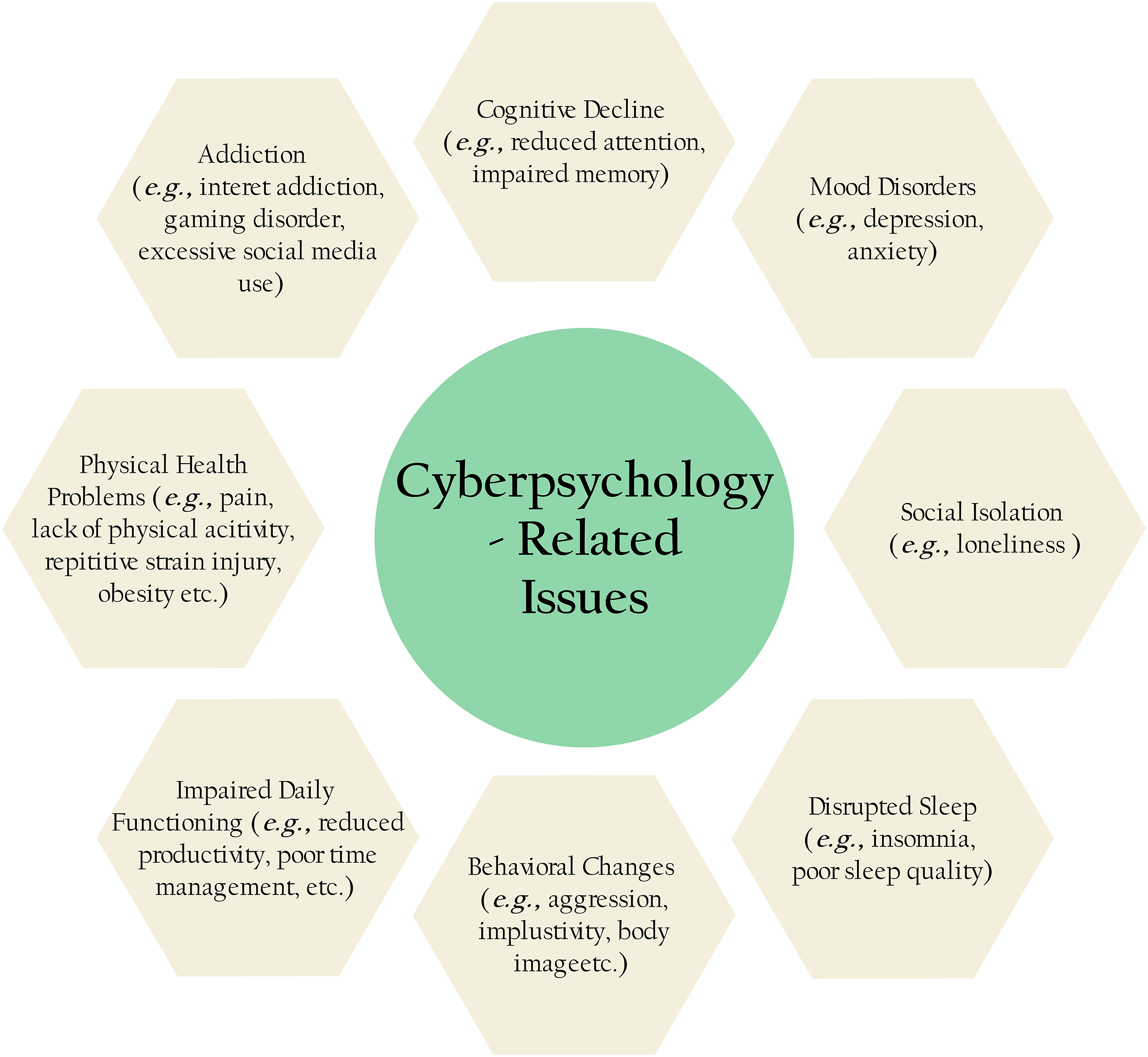
Figure 1 illustrates some of the key cyber-psychology issues that OTs may encounter when working with clients who engage excessively or problematically with technology. These issues often interrelate and exacerbate one another. Specifically, excessive technology usage can contribute to the following: 1. Mood disorders such as depression and anxiety, 2. Social isolation, 3. Sleep disturbances, 4. Behavioral changes, 5. Impaired daily functioning, 6. Physical health issues, 7. Addiction, 8. Cognitive decline. It is important for OTs to recognize how these issues interact. For example, social isolation may exacerbate depression, while sleep deprivation negatively affects cognition. A holistic view allows OTs to comprehensively address the range of biopsychosocial factors related to problematic technology use.
Digital overload, often known as information overload, is one of the main psychological drawbacks of technology (Swar et al., 2017). With the spread of smartphones, social media platforms, and continual connectedness, people are constantly overloaded with a tremendous amount of information and stimulation (Swar et al., 2017). Overwhelm, stress, and difficulty focusing and concentrating are possible effects of this constant flow of information (Nakshine et al., 2022).
Another psychological effect of technology is the impact on social interactions and relationships (Antonucci et al., 2017). While technology has made communication more convenient and accessible, it has also changed the nature of our social interactions (Antonucci et al., 2017; Lissak, 2018). Social media platforms have altered the way we connect with others, often leading to a sense of superficiality and a decrease in the quality of social relationships (Winstone et al., 2021). Excessive use of technology can lead to social isolation and a reduced sense of belonging (Kusumota et al., 2022). In addition, cyberbullying has been widely recognized as a major potential risk factor for mental health problems among youth.
Given that human brains are not designed to process such a large amount of information, doing so can have a negative impact on cognitive performance and mental health (Korte, 2020). A recent meta-analysis of 41 studies discovered a strong correlation between multitasking (also known as the "online brain") and significantly reduced overall cognitive performance (Firth et al., 2019).
Technology has also had implications for mental health (Nakshine et al., 2022). Studies have shown a correlation between excessive screen time and mental health issues such as depression (Christie et al., 2021; Lissak, 2018), anxiety (Christie et al., 2021; Nakshine et al., 2022), and sleep disturbances (AlShareef, 2022; Fuller et al., 2017; Jahrami, Abdelaziz, et al., 2021; Jahrami et al., 2023; Limone & Toto, 2021). Constant exposure to idealized images and lifestyles on social media platforms can contribute to feelings of inadequacy (Nakshine et al., 2022), low self-esteem (Firth et al., 2019), and body image concerns (Jiotsa et al., 2021; Lissak, 2018). Moreover, the addictive nature of technology, particularly with regard to online gaming and social media use (Cash et al., 2012; Kuss & Lopez-Fernandez, 2016), can lead to problematic Internet use and addiction, further exacerbating mental health issues (Cash et al., 2012).
OTs can analyze the technology usage patterns of their clients and educate them on the potential negative consequences of excessive or problematic technology use (Small et al., 2020). They can advise on healthy technological habits, such as limiting screen time via goal-setting interventions (Dwyer et al., 2020; Small et al., 2020). This can involve setting limits and employing reminders or alerts, using digital detox apps doing mindfulness exercises to raise awareness of technology use, or using behavioral methods to prevent impulsive or excessive digital engagement (Dwyer et al., 2020; Schmuck, 2020). See Figure 2. Occupational therapy in the cyberpsychology model for practice.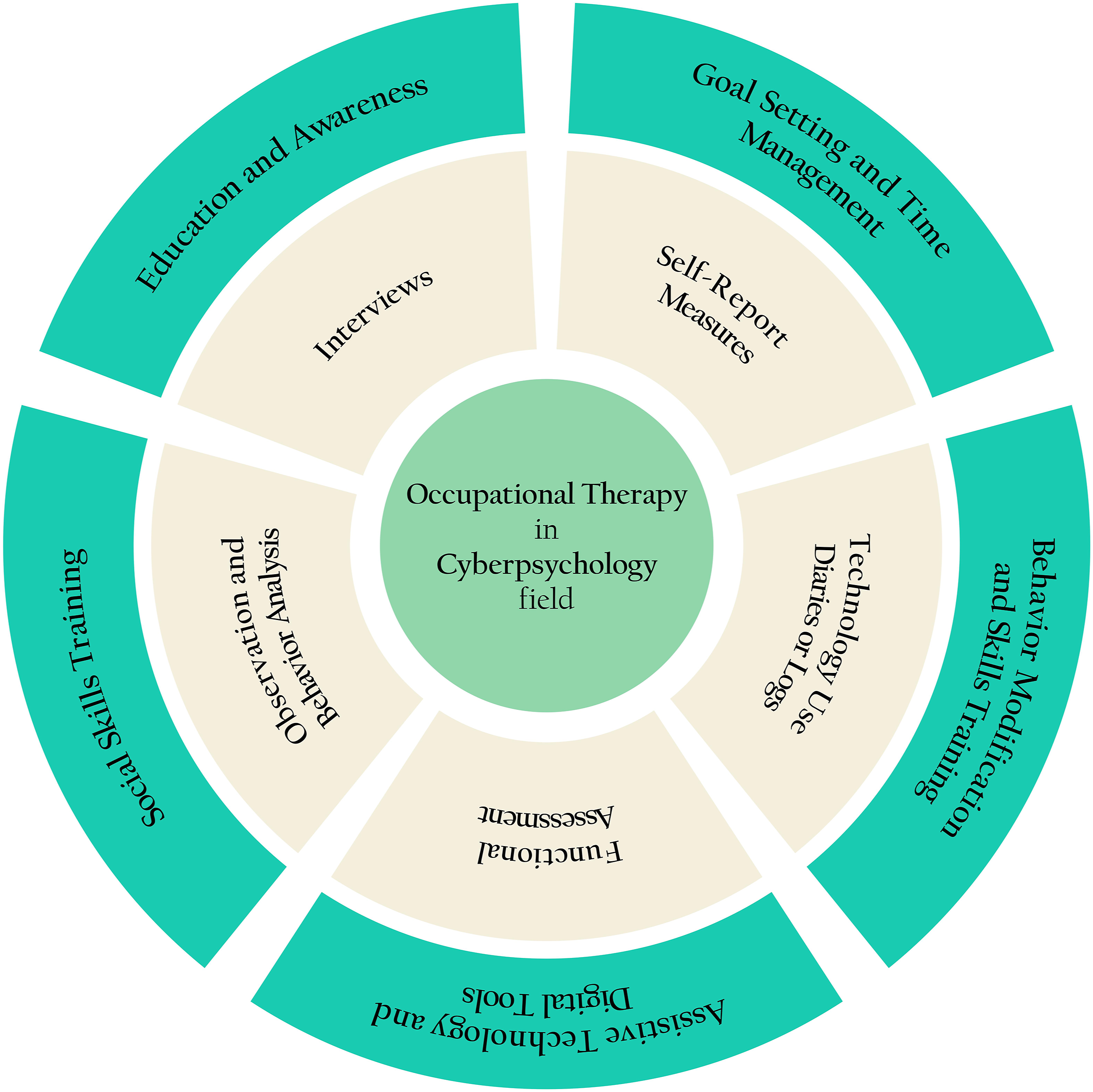
OTs can assist their clients in developing efficient time management methods and creating daily routines that prioritize meaningful activities other than technology use (Larsson-Lund et al., 2021). OTs can assist people in developing alternate coping strategies and leisure activities that lessen their reliance on technology and consequently the biopsychosocial harms associated with problematic technology use (Holmefur et al., 2021). By assisting individuals in developing alternative coping strategies and engaging in leisure pursuits that reduce dependence on technology, therapists open up new avenues for well-being (Holmefur et al., 2021; Jahrami et al., 2022; Jahrami, Rashed, et al., 2021; Larsson-Lund et al., 2021). Intervention may involve teaching relaxation techniques, promoting physical exercise, fostering artistic endeavors, or exploring new hobbies (Xie et al., 2022). To establish a harmonious equilibrium with technology, therapists can also contribute to improving the physical environment (Jahrami et al., 2022). This could entail designating technology-free zones in homes or workplaces, implementing guidelines for the timing and usage of technology, or mitigating distractions associated with electronic devices (Nakshine et al., 2022). OTs may also explore the use of monitoring and controlling apps and devices as assistive technology to promote digital balance (Larsson-Lund et al., 2021). These apps can provide suggestions, prompts, and reminders to facilitate a healthy balance and reduce excessive screen time (Attia et al., 2017). See Figure 2.
One effective intervention for addressing social media addiction as well as risky Internet behaviors is educational counseling, which empowers individuals to develop a profound understanding of their struggle and the risks associated with it (Pluhar et al., 2019). By delving deeper into the complexities of their addiction or risky Internet behaviors and comprehending its repercussions, individuals can embark on a transformative journey toward overcoming it (Pluhar et al., 2019). This process involves self-monitoring behaviors and critically assessing the impact of addiction on various aspects of their lives (Pluhar et al., 2019). OTs play a pivotal role in this endeavor, providing invaluable resources to educate individuals about healthy social media usage, safe online behavior and digital citizenship skills (Lonergan et al., 2023). See Figure 2.
The Model of Human Occupation (MOHO) (Kielhofner, 2002), Person-Environment-Occupation (PEO) model (Baptiste et al., 2017), and Ecology of Human Performance (EHP) framework (Dunn et al., 1994) can all be used to explain OTs' role in cyberpsychology. First, the MOHO stresses occupational motivation, occupational involvement patterns, and the impact of the environment on occupational performance. This theory provides justification for occupational therapists to examine the impact of technology and virtual environments on motivation, habits, routines, and occupational involvement. In the field of cyberpsychology, OTs can use MOHO as a framework for understanding how technology and virtual environments impact occupational identity, occupational competence, occupational adaptation, and the habituation of online behaviors. The MOHO provides tools for evaluating disruptions in occupational participation and analyzing the barriers and supports to meaningful online activity.
Second, the PEO model emphasizes the transactional interaction between the individual, the environment, and employment. Occupational therapists can use this model to investigate how virtual environments and human-technology interactions influence occupational performance and make changes to optimize the fit between the person, environment, and desired vocations. OTs can apply the PEO model to study how personal capacities and online environments influence occupational performance in digital spaces. The model provides a method for evaluating human-technology integration and modifying virtual environments or occupations to optimize well-being and functioning.
Third, the EHP framework underscores the interrelationship between person, context, task, and performance. OTs can use this framework to evaluate which contextual factors and personal variables influence occupational performance in digital spaces. This allows OTs to make modifications to the contexts and tasks to support performance. EHP enables the analysis of digital environments to reduce barriers and facilitate optimal occupational engagement. The models provide complementary lenses for occupational therapy's role in understanding and facilitating participation in digitally mediated occupations.
Nomophobia is the fear of being without communication, losing internet connections, and being disconnected from the mobile phone (Leon-Mejia et al., 2021). The term was first coined by the UK Post Office in 2008 (Leon-Mejia et al., 2021). Considering the significance of mobile phone use on mental health, the Post Office commissioned a research organization named YouGov to investigate whether mobile phone users in the UK were experiencing anxiety over their mobile phones (Leon-Mejia et al., 2021).
For nomophobia, OTs can help by focusing on developing healthy coping skills and learning to manage stress and anxiety in various populations (Jahrami et al., 2022). This can be done through cognitive‒behavioral therapy (CBT) and mindfulness-based approaches, which can help individuals identify their triggers as well as learn how to be present in their environments and in their bodies (Lee & Cho, 2021). With these humanistic approaches, a positive awareness of internal experiences can be beneficial to the clients and therapists who work with them (Lee & Cho, 2021). See Figure 2.
A common presentation for teenagers struggling with nomophobia is their intense anxiety and fixation whenever separated from their mobile device. This included distress if the phone was in another room charging overnight or forgotten at home before school. The constant connection to the device hinders the youth's ability to be present with friends, focus in class, and sleep well. The attending OT can utilize cognitive-behavioral techniques to uncover the problematic thought patterns driving the device obsession, such as exaggerated worries about missing social updates. The OT and the client can work on constructive coping strategies to challenge those unhelpful thoughts. The OT can also guide their clients through mindfulness and grounding practices to tolerate anxiety when device access is limited. These may include square breathing, body scans, and meditation.
Beyond CBT and mindfulness, key OT strategies may include addressing these emerging issues. Conducting thorough activity analyses to identify occupational barriers related to nomophobia and poor sleep habits. Collaborating to set achievable goals focused on restoring balance in daily routines and occupations. Adapting tasks and home environments to promote participation in healthy technology usage and sleep hygiene practices. Utilizing occupations such as leisure exploration, social participation, and lifestyle redesign to displace problematic technology interaction.
General health and well-being, both physically and emotionally, can be severely impacted by sleep disorders (related to technology use) (AlMarzooqi et al., 2022; Jahrami et al., 2022, 2023). OTs may play a significant role in the strategy for treating sleep disorders. OTs assist people with sleep disorders in establishing healthier sleep habits, managing stress, and developing coping mechanisms through direct interventions. See Figure 2.
OTs often evaluate a person's current sleep habits, including sleep pattern, sleep length and sleep interruptions. They will then evaluate the person's surroundings, including their sleeping quarters and any presleep rituals (Limone & Toto, 2021; Lissak, 2018). They will next develop a customized therapy plan with clear objectives and therapies. Interventions can target different lifestyle aspects, specifically dietary changes, frequent exercise, and avoiding screens an hour before bedtime (AlShareef, 2022). Other therapies might include CBT, which can assist the patient in addressing any irrational sleep-related beliefs, and relaxation techniques such as mindfulness and deep breathing (Anderson, 2018). See Figure 2.
The implementation of randomized controlled trials (RCTs) empowers OTs to gain a comprehensive understanding of the potential risks, side effects, and limitations associated with digital treatments (Lambert et al., 2022). This knowledge is crucial for therapists to deliver the utmost care to their clients, armed with a deep understanding of the efficacy of these treatments. By conducting RCTs, OTs can ensure that their interventions undergo thorough testing, evaluation, and comparison with alternative forms of therapy. This rigorous approach guarantees that clients receive the highest standard of care, supported by evidence-based practices.
To conclude, OTs have an important role in addressing problematic technology use and promoting digital wellbeing. By drawing on key OT theories and frameworks, therapists can provide assessment, education, and interventions to help people develop healthy relationships with technology. Specific strategies involve fostering alternative coping skills, modifying environments, utilizing apps and devices, counseling on digital citizenship, and addressing associated issues such as sleep disorders. Further research through rigorous methods will continue to build the evidence base for OT in the emerging field of cyberpsychology. This will allow OTs to optimally support participation, performance, and wellbeing in today's digital world.
Footnotes
Declaration of conflicting interests
The author(s) declared no potential conflicts of interest with respect to the research, authorship, and/or publication of this article.
Funding
The author(s) received no financial support for the research, authorship, and/or publication of this article.
