



Abstract

“Healthy living medicine should not be politized or used to create division but should rather be a unifying force.”
There is voluminous, indisputable evidence that moving more and sitting less, consuming a healthy diet, and not smoking reduces the risk of chronic disease and premature mortality, but it has been difficult to improve the prevalence of these.
1
Admittedly, it has been a struggle to improve healthy living behaviors in the United States (U.S.). A key factor in the perpetuation of this unhealthy living and chronic disease crisis is the current approach to health care— a model focusing on treating chronic conditions when they are well entrenched, characterized as a reactive, secondary prevention model. While there is recognition of the need to shift to a proactive, primary prevention model—where chronic disease risk factors and diagnoses are not allowed to manifest, primarily through the practice of healthy living medicine—little progress has been made. In fact, reimbursement for the delivery of healthy living medicine is profoundly limited, hampering this approach from taking hold. Figure 1 illustrates the continuum of health, from primary, proactive care to secondary, reactionary care.
1
The P4 Continuum Model. Reprinted with permission: Sagner M, McNeil A, Puska P, Auffray C, Price ND, Hood L, Lavie CJ, Han ZG, Chen Z, Brahmachari SK, et al. The P4 Health Spectrum—A Predictive, Preventive, Personalized and Participatory Continuum for Promoting Healthspan. Prog Cardiovasc Dis. 2017;59:506-521. doi: 10.1016/j.pcad.2016.08.002.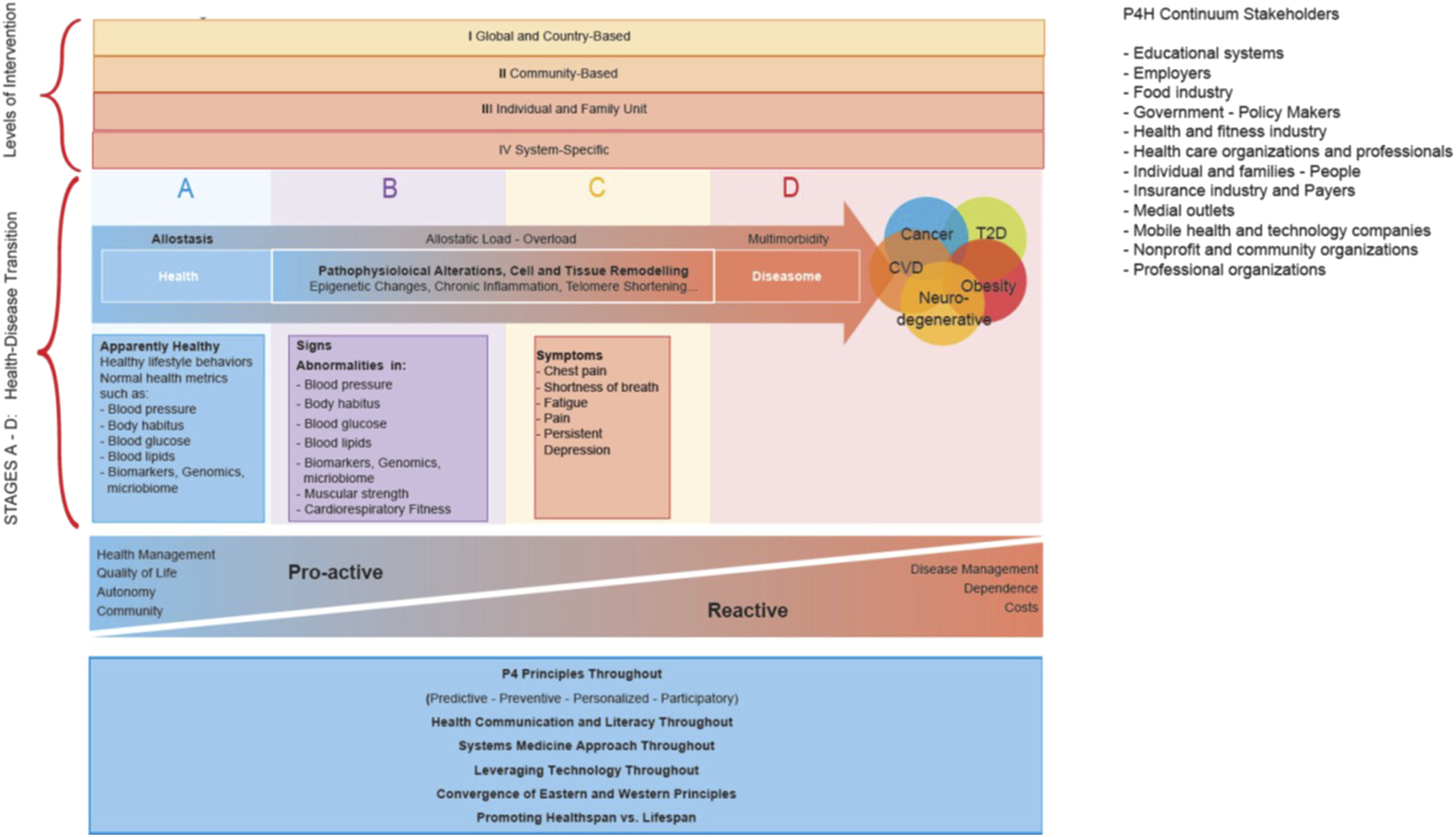
Imagine not being cognizant of the current political landscape and being introduced to a movement called Make America Healthy Again, which “advocates for a comprehensive national strategy to combat the chronic disease epidemic, which includes addressing the root causes such as poor diet, environmental toxins, and inadequate health care” and “supports policies that promote preventative health care, increase access to nutritious food, and reduce the environmental factors contributing to chronic illnesses like cancer, diabetes, and heart disease.” 2 Those committed to healthy living medicine would probably be enthusiastic to support such a movement. Unfortunately, placed within its larger political and ideological context, the Make America Healthier Again movement is something much more controversial and polarizing. In a recent opinion piece, MSNBC producer Hannah Holland 3 highlighted salient concerns with the movement: it mixxes facts (e.g., the chronic disease and unhealthy lifestyle crises) with conspiracy theories (e.g., anti-vaccination and promoting unpasteurized milk). Sadly, a brand and movement with great potential—Make America Healthy Again—is highly politicized and, in our current society, divisive.
Over the past 2 years, our group, led by Ross Arena, Colin Woodard and Nicolaas Pronk, has focused on drivers of health behaviors and outcomes. Links between distinct health behaviors/outcomes and regional U.S. cultures, politics, policy and the physical and social environment have been demonstrated through a series of publications.4-7 Of note, some of our findings have reinforced the link between health behaviors/outcomes and both health inequities and social determinants of health - health behaviors and outcomes are worse for underrepresented individuals in underserved communities.5,8,9 This work has culminated in a proposed ecological framework for drivers of health, with cultural belief systems as an important inception point for eventual health outcomes.
10
Figure 2 illustrates this framework—moving forward, it is imperative forcing factors upstream from health behaviors be considered in both the public health and health care arenas. We have been extremely thoughtful in discussing our findings in a way that does not blame or disparage one cultural belief system over another in the context of the variance in the prevalence of unhealthy lifestyle behaviors and poor health outcomes. Rather, our group has tried to make the point that the U.S. is comprised of distinct regional cultural belief systems and a one-size-fits-all message in the context of increasing the practice of healthy living behaviors is ineffective. There is a need to tailor our health messaging and interventions to resonate with unique cultural belief systems to increase the likelihood for behavior change. Simply stated, healthy living medicine should not be politized or used to create division but should rather be a unifying force. An Ecological Framework for Population Health and Well-Being. Legend: The framework depicted represents a cohesive complex adaptive system in which all levels interact with other levels of the system. Lower levels are dependent upon the higher levels to operate within. Social capital and power dynamics are highlighted as critical factors that span all levels. Reprinted with permission: Pronk NP, Woodard C, Zimmerman FJ, Arena R. An ecological framework for population health and well-being. Prog Cardiovasc Dis. 2025;90:13-21. doi: 10.1016/j.pcad.2025.03.013.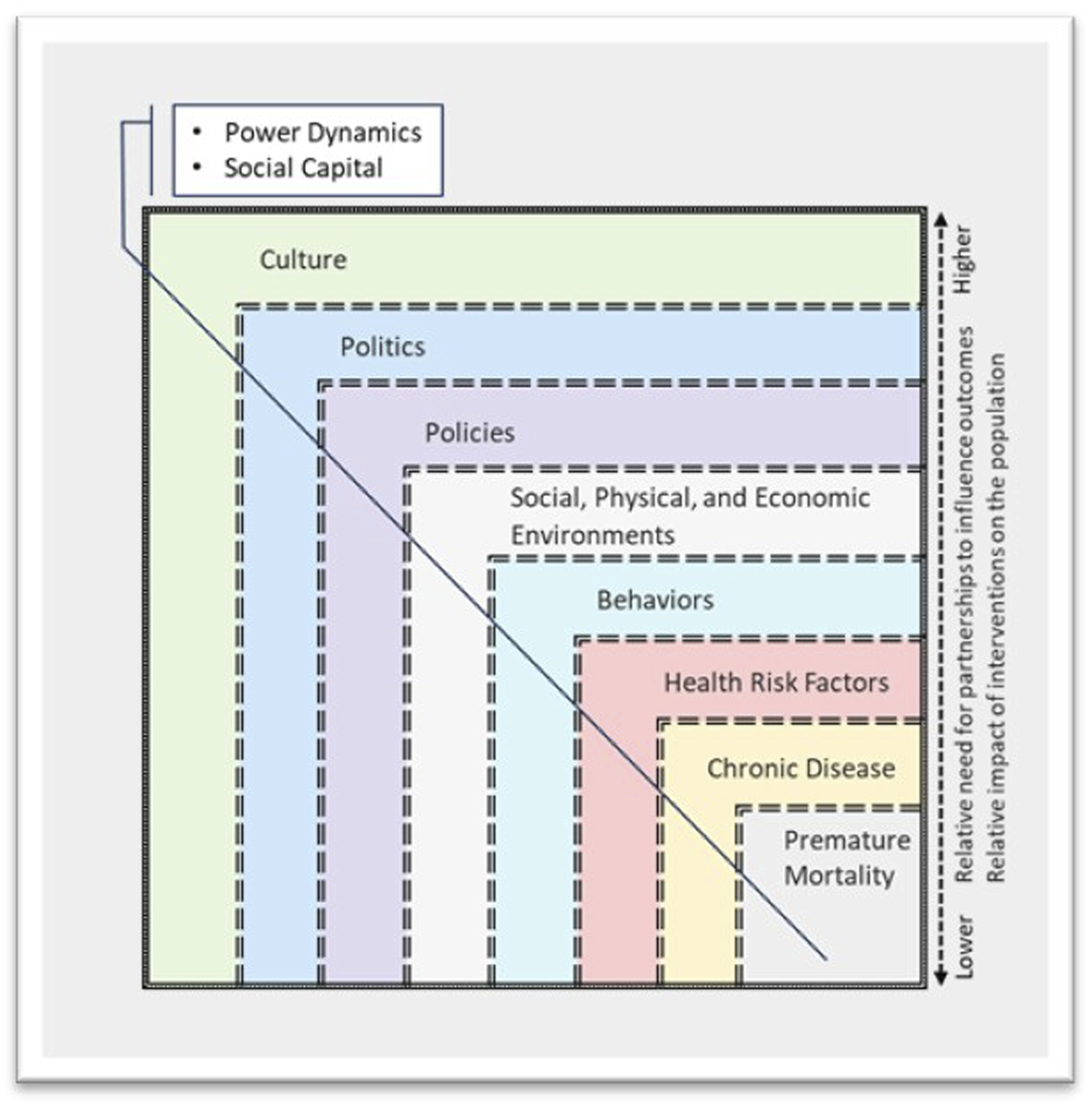
In a recently published commentary on health communication from the perspective of the son of an Italian immigrant barber, RA proposed the following: 1) As a health professional, when providing guidance on healthy living behaviors, the following principles should be adhered to: “a) Listen first. Let a person tell you their story, whatever that may entail. Pay attention. Remember what you are being told, and take genuine, nonjudgemental interest in the matter. Make a person feel that they are in a safe and trusted space when they share. b) Be open to all cultures and viewpoints. Accept a person for who they are and find common ground. Treat a person with respect and expect the same in return: and c) When giving your perspective or advice, make sure you craft your messaging with points 1 and 2 in mind.” 11
Many in the healthy living medicine community have a request for the creators of the Make America Healthy Again movement. Please consider rethinking the focus of the movement to prioritize the importance of healthy living behaviors and healthy living for all individuals living in the U.S. A previous publication suggests the Make America Healthy Again movement be approached using the clinical practice guideline process—making health recommendations based upon the amount and quality of scientific evidence. 12 There is indisputable evidence supporting of the efficacy of health living medicine (i.e., physical activity, healthy nutrition, weight management, not smoking, minimizing alcohol use, stress reduction, healthy restorative sleep and making positive connections with others), with peer reviewed evidence spanning decades.13-15 Given the quality and volume of evidence, healthy living medicine would undoubtedly be afforded a Class I, Level A recommendation. There are many things left to argue and disagree over, if that is what we want to do as a society—promoting healthy living does not have to fall into this category. Therefore, we urge all stakeholders to come to the table and find common ground in using quality scientific evidence to unify rather than polarize the country and, indeed, Make America Health Again.
Footnotes
Declaration of Conflicting Interests
The authors declared no potential conflicts of interest with respect to the research, authorship, and/or publication of this article.
Funding
The authors received no financial support for the research, authorship, and/or publication of this article.
