



Abstract
This program review presents data for the Deans’ Fit Family Challenge (DFFC) and proposes future directions for improvement, informed by the Social Cognitive Theory. The DFFC is a multi-week physical activity competition held annually between three health professional programs, focusing on the development of self-efficacy, self-regulation, and social support of health-related fitness. Participants competed in teams of two and tracked their activity minutes weekly using the ChallengeRunner app or through manual entry. Weekly winners were announced, and the winning college was determined from a composite score of active minutes and weight loss. Since 2019, 1164 participants reported an average of 217.1 weekly minutes of physical activity during the DFFC. An average of 94.0% of participants reported minutes in week 1, compared to 56.3% in week 8. The DFFC is an important initiative to potentially promote physical activity levels among participating programs. While motivational strategies are being incorporated and executed in the DFFC, there is a need for ongoing exploration and improvement to enhance future competition-based interventions among health professional students, faculty, and staff.
“The DFFC promoted and provided opportunities to participate in regular physical activity when social interactions decreased.”
Introduction
Physical activity (PA) is associated with a wide range of physiological and psychological benefits. Studies have shown that regular PA helps reduce the risk of many chronic diseases, including hypertension, diabetes, and obesity.1-4 Recent research conducted by the National Cancer Institute estimated about 110,000 deaths would be prevented each year if the U.S. adults (aged 40 or older) increased their moderate-to-vigorous physical activity (MVPA) by 10 minutes per day. 5 Additionally, PA has been found to be an effective way to improve mental disorders such as anxiety and depression.6-8 To obtain substantial health benefits, the Physical Activity Guidelines for Americans, 2nd ed, recommend that adults engage in at least 150 minutes per week of moderate-intensity physical activity, 75 minutes per week of vigorous-intensity physical activity, or an equivalent combination of both intensities, and at least two days per week of muscle-strengthening activity. 9
Alternatively, physical inactivity poses a major health problem in the United States, including among students and employees in healthcare settings (pharmacy, medicine, nursing, and dentistry). Working in high stress environments, health professional students and employees are vulnerable to mental, emotional, and physical health issues.10-13 Research demonstrated that health professionals are more likely to have overweight and obesity compared to those in other professions, 14 and a meta-analysis conducted in 2019 revealed that medical students experienced anxiety at a higher rate (33.8%) than the general population (3%). 15
Wellness among healthcare workers is a critical issue that affects the quality of care they provide to their patients.16-18 To support the physical and mental well-being of healthcare employees and students, various strategies have been implemented in academic settings and workplaces.19-22 In a 2014 study in Philadelphia, 790 university students were assigned to different online social network groups to assess the impact on physical activity. 19 Results showed that social comparison groups with competitive networks and individual incentives had significantly higher attendance rates compared to the social support groups. In 2020, Melnyk and colleagues conducted a systematic review of 29 randomized controlled trials that tested interventions that aimed to improve lifestyle behaviors, health and wellness among physicians and nurses. 21 The results indicated that physical activity levels were increased through the use of visual triggers, pedometers, and health coaching with texting.
Proposed by Bandura, the Social Cognitive Theory (SCT) is a widely used and robust behavioral theory that has been studied in the context of interventions to promote physical activity.23-26 The SCT describes the dynamic interplay of personal, behavioral, and environmental influences. 27 The primary constructs of SCT include self-efficacy, self-regulation, incentive motivation, social support, outcome expectations, collective efficacy, observational learning, facilitation, and moral disengagement.23,28 The SCT has been widely used by researchers in designing and evaluating interventions targeted to improve physical activity, especially among university students.24,26,29-32 A random-effects meta-analysis of 44 studies revealed that SCT models accounted for 31% of the variance in physical activity behavior. 29 The results of a prospective study indicated good fit (accounting for 55% of the variance) of a SCT-based model to the data of the physical activity in a sample of 277 university students in Virginia. 33 Self-efficacy was found to be the strongest determinant of physical activity, followed by self-regulation and social support. 33 Research involving 396 university students indicated that psychosocial factors were significant predictors of physical activity, including self-efficacy, outcome expectations, and social support. 31 The SCT and its constructs have also been used as a foundation for telehealth interventions. A qualitative study of 56 college students suggested the importance of self-efficacy for developing effective text messaging interventions to promote physical activity. 24 In 2019, Wang and colleagues found that the use of mobile fitness apps had a significant positive effect on physical activity levels through social support and self-efficacy among 384 Chinese college students. 32
To encourage physical activity among health professional students and employees, the Harrison College of Pharmacy (HCOP) at Auburn University (AU) held the first Dean’s Fit Family Challenge in the fall semester of 2018. The program is called a “family” challenge because we think of our college community as a close-knit family. In 2019, it was expanded to include AU College of Nursing (AUCON) and the Edward Via College of Osteopathic Medicine—Auburn campus (VCOM-Auburn) and was renamed the Deans’ Fit Family Challenge (DFFC). The objectives of this review are to describe the implementation and results of the DFFC (2019-2022), and to propose future enhancements of the DFFC, informed by the SCT.
Methods
Participant Recruitment
Participants representing each college competed in teams of two, where at least one member of each team was a current HCOP, AUCON, or VCOM-Auburn employee or student. Additionally, participants had the flexibility to pair themselves, meaning that teams were comprised of all students, all employees, or a student with an employee. A very small number of teams included a student or employee with a family member or friend. At the beginning of the Fall semesters, all HCOP, AUCON, and VCOM-Auburn employees and students received the DFFC “kick-off” email, including the link to register and weigh in. Participation was voluntary, and each participant signed an acknowledgment of their permission to share their activity data with their college’s DFFC coordinators.
Deans’ Fit Family Challenge
The DFFC, which is held annually for 8-10 weeks, is a health and wellness competition designed to promote physical activity among HCOP, AUCON, and VCOM-Auburn employees and students. Auburn University is a Carnegie Classification R1 institution with approximately 30,000 undergraduate and graduate students for the years described. It is a land grant institution with several open green spaces and a 240,000 square foot recreation and wellness center which are available for all students and employees. VCOM-Auburn is one of the four campuses of Edward Via College of Osteopathic Medicine with about 600 medical students. Edward Via College of Osteopathic Medicine is a private, fully accredited osteopathic college, and partners with Auburn University to provide VCOM-Auburn students access to various amenities, including workout facilities on Auburn University’s campus. Both institutions are in Auburn, Alabama, US.
During the DFFC, participants record their weekly minutes of MVPA through a Google Form (2019) or the ChallengeRunner app or website (2020 - 2022; Challengerunner.com). At the start of the DFFC, participants are provided with a list of activities that count and do not count as MVPA (Appendix 1). Weekly winners are announced via email to all participants and are presented on informational displays within the colleges (Appendix 2). These weekly emails also include motivational information intended to encourage physical activity. Additionally, to encourage physical activity among HCOP participants, several group fitness classes are offered throughout the DFFC. These classes provide opportunities for participants to engage in physical activity with their peers, friends, and teammates. At the conclusion of the DFFC, an overall winner for cumulative PA minutes is selected for each college.
The DFFC incorporates key constructs of the SCT, which are reflected in various components of the competition (Appendix 3). The primary goal of the DFFC is to cultivate a culture of an active lifestyle among employees and students, instead of being structured as an interventional trial. Therefore, the DFFC aims to create a positive and motivational environment that supports HCOP, AUCON, and VCOM-Auburn employees and students in developing self-efficacy and social support for their physical activity and fitness. It is worth mentioning that DFFC continued during COVID-19 pandemic in 2020, but the group activities were moved outdoors, following mask and social distancing guidance. Participation in individual physical activities during the pandemic continued as each participant felt comfortable. Self-regulation is also addressed in the DFFC, with participants tracking their minutes of physical activity. The DFFC provides additional motivation for participants to engage in physical activity through incentives given to the weekly winners. Incentives are customarily valued at $20 and include restaurant gift cards or items donated from local businesses. This program is funded by the deans’ offices of the three colleges and is managed by faculty members who care about the wellness of community members. These faculty members are responsible for all planning, communication, and management of the DFFC each year.
Data Collection
The DFFC focuses on participants’ physical activity, which is measured by weekly MVPA activity minutes. In 2019, one member per team submitted MVPA minutes every Friday via a Google Form distributed by the DFFC committee. Since 2020, the process was updated, and each team tracked minutes of physical activity using the ChallengeRunner app or website (challengerunner.com). 34 ChallengeRunner is an online and mobile platform for creating, managing, and tracking health and wellness programs. It is compatible with several popular fitness trackers and applications (Apple Health, Fitbit, Garmin, Google Fit Online and Mobile, Misfit, Omron, Oura, Polar, Samsung Health, Strava, Suunto, Under Armour MapMyFitness, and Withings), enabling participants with compatible devices to automatically submit their data. Participants were also able to submit and edit their MVPA data manually via the app or website.
Due to limited access to individual data from the other two colleges, we are only presenting weekly logged minutes and minute reporting rates among HCOP participants.
Data Analysis
Descriptive statistics were used for the presentation of participant characteristics and trends over the past four years. SPSS 22.0 (IBM, Armonk, NY) was used for data analysis.
Ethical Considerations
There is no consent process among DFFC participants since we used existing DFFC 2019-2022 data. Prizes were offered to DFFC winners, but no direct compensation was provided for their participation in this program review. Only DFFC coordinators for each college had access to the ChallengeRunner data. The data collected initially included participants’ names but were later de-identified for the purpose of analysis. This study has been approved by the Institutional Review Board of Auburn University (#23-085 EX 2302) and Edward Via College of Osteopathic Medicine (#2023-015).
Results
Since 2019, 1164 students, faculty, and staff have participated in the DFFC (Figure 1): 122 (10.5 %) from AUCON, 284 (34.4%) from VCOM-Auburn, and 758 (65.1%) from HCOP. The numbers of student and faculty/staff participants, as well as the total number of students, are available in Appendix 4. To align with the academic calendar, the DFFC lasted nine weeks in 2019 and 2021; ten weeks in 2020; and eight weeks in 2022, generally beginning mid-September and concluding mid-November each year. Number of DFFC participants of each college from 2019 to 2022.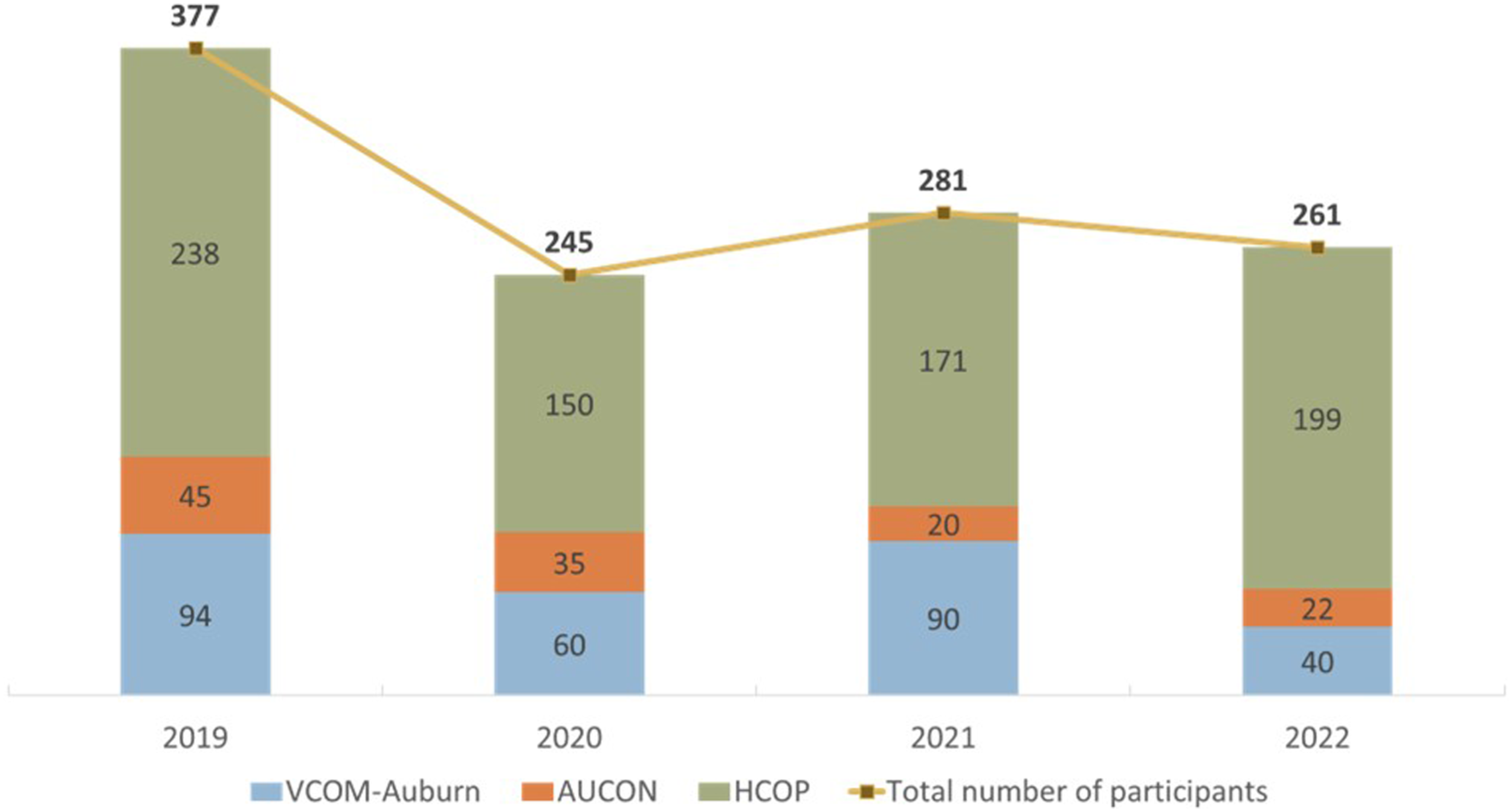
Physical Activity
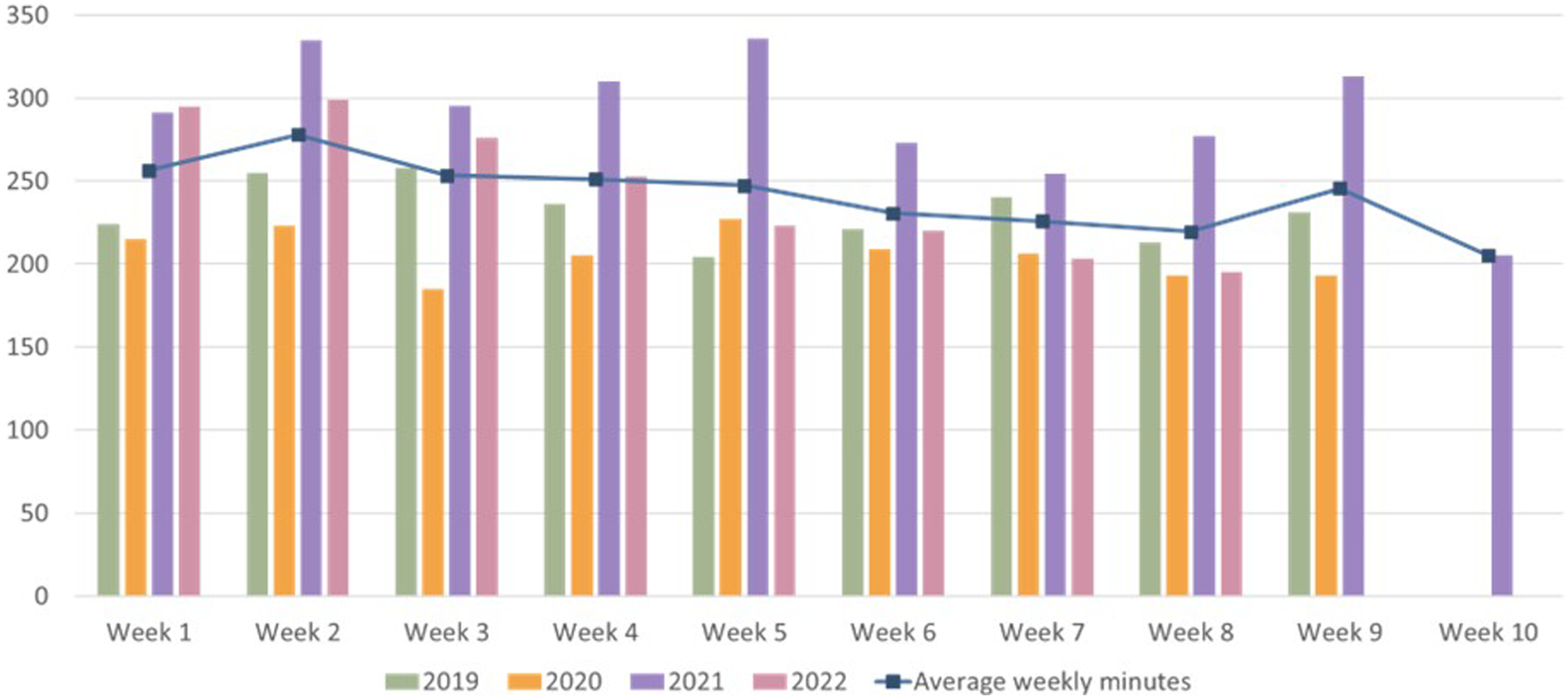
A total of 1164 participants logged an average of 1970.3 total and 217.1 weekly PA minutes per participant throughout the four years reported here. Figure 2 shows the average weekly PA minutes logged per participant, which increased year-to-year (170.2 minutes in 2019, 193.1 minutes in 2020, 221.8 minutes in 2021, and 302.4 minutes in 2022). In contrast, Figure 3 shows that weekly PA minutes of HCOP participants, the largest group across all four years, decreased week-to-week during the DFFC, with an average of 256.3 minutes in week 1 and an average of 219.6 minutes in week 8. The percentage of HCOP participants who reported minutes also decreased week-to-week among HCOP participants (Appendix 5). Across all 4 years, an average of 94.0% of HCOP participants reported minutes in week 1, which dropped to 56.3% in week 8. The data presented in Figures 3 and Appendix 5 were only available for HCOP participants. Average PA minutes per participant per week in the DFFC from 2019 to 2022 among three programs (N = 1164). HCOP average of logged minutes per participant in the DFFC from 2019 to 2022 (N = 261).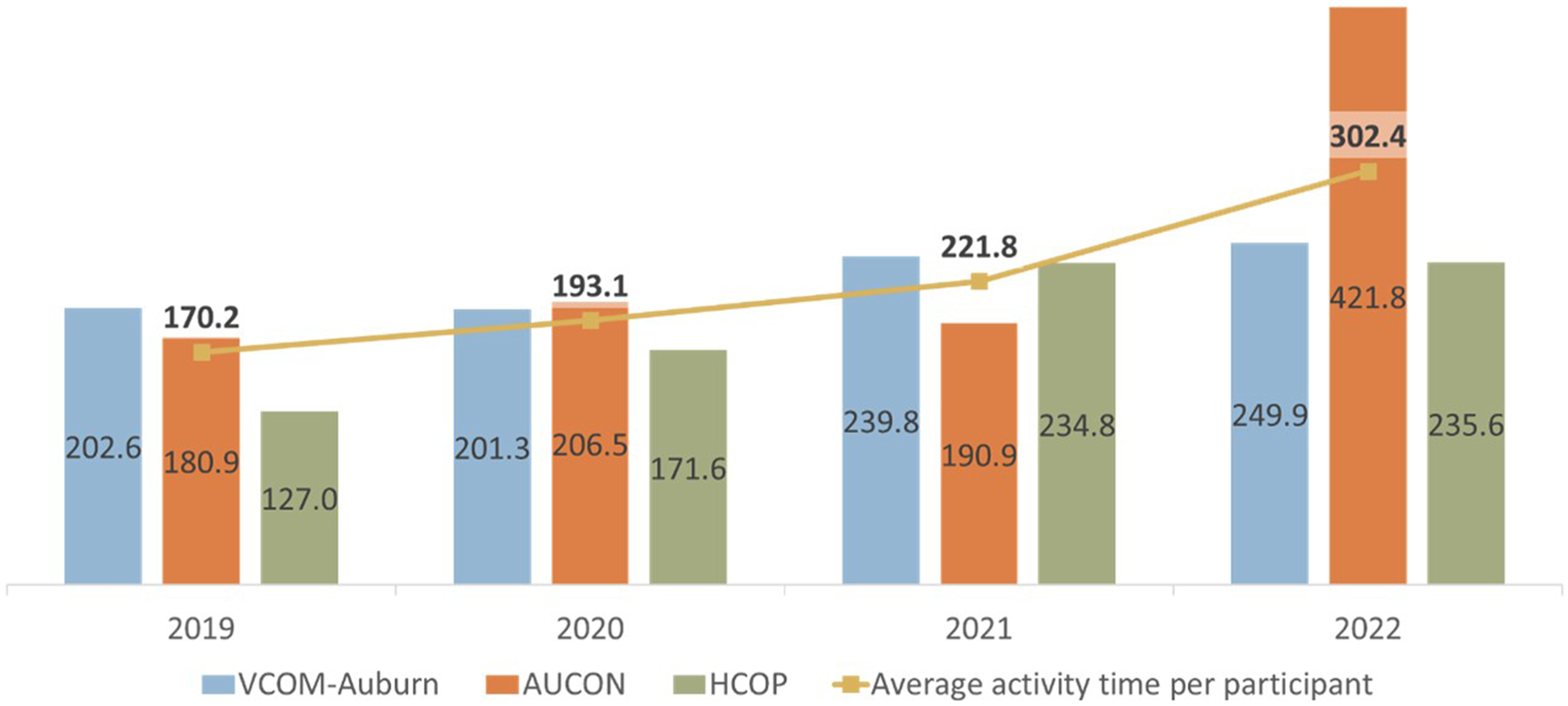
Discussion
The purpose of this study was to describe the implementation and results of the DFFC and propose future directions for improvement. The DFFC leveraged a range of strategies to encourage participants to adopt a regular exercise routine, including competition, social support, incentives, and self-tracking. Since expanding to include multiple colleges, 1317 health professional students, faculty, and staff members have participated in this health and wellness initiative. Over the past four years, the average PA minutes per participant has increased each year, indicating the positive role of the DFFC in encouraging participants to engage in physical activity. Due to tight schedules and higher pressures, health professional employees and students experience higher levels of stress and anxiety compared to the general population.20-22 The objective of the DFFC is to promote physical activity among health professional employees and students, leading to improved health and wellness outcomes through a structured competition that includes resources, opportunities, and incentives for physical activity.
The observed increase from 2019 to 2022 in PA minutes could be attributed to various factors. It has been demonstrated that individual (self-regulation, time, and convenience), social (social support and monitoring), and environmental (neighborhoods, resources, weather, and communication) factors impact physical activity levels among health professional students and employees.35-37 Program enhancements over the years described, such as the introduction of new activities or the improvement of existing ones, may contribute to greater interest and participation among students and employees. Moreover, the possibility of participants engaging multiple times over the years adds another dimension. If individuals from earlier years continued to participate and maintained their motivation for physical activity, this sustained involvement could influence the overall increase in PA minutes over time. Also, differences observed among the three participating colleges could play a role. For instance, colleges with greater resources for physical activity or those fostering a stronger sense of community engagement might exhibit higher levels of participant involvement and thus contribute to variations in average PA minutes across different programs. The 2020 DFFC coincided with the COVID-19 pandemic. During that time, the participating colleges operated in a hybrid education and work model in which students and employees were not on campus full time. The literature indicates that the COVID-19 pandemic negatively affected the physical, emotional, and mental well-being of health professional students and employees.38-42 During the lockdown, they reduced their overall exercise levels and engaged in more unhealthy behaviors, such as smoking and prolonged sitting.43,44 The DFFC promoted and provided opportunities to participate in regular physical activity when social interactions decreased. Additionally, the DFFC also focused on the mental health of participants and offered online, on-campus, and off-campus resources to support their well-being. While the number of participants decreased from 2019 to 2020, the number of participants in 2021 and 2022 increased compared to 2020. Additionally, the average PA minutes increased year-to-year.
Like many physical activity interventions, the DFFC faced challenges with retention. Reporting rates for PA minutes waned each year from the beginning to the end of the program. In a study aimed at increasing non-sedentary behaviors involving 82 university students, 63% of participants remained engaged in the intervention group throughout the 6-week follow-up period, and the engagement rates were 85% at week 2 and 68% at week 4. 45 In a weight management program for young university students, the retention rates were 77%, 69%, and 62% at the 6-, 12-, and 18-month visits, respectively. 46 Over the years described, the reporting of minutes in the DFFC decreased to about 60-70% as the end of the semester and final exams approached. In 2019, participants received the link to the Google Form via email, and they had to manually submit their PA data weekly. Beginning in 2020, participants with compatible devices were able to automatically track their minutes via the ChallengeRunner platform, leading to substantial increases in reporting rates. This appears to have led to a higher initial PA reporting rate and a more gradual decrease in the number of participants who reported PA, compared to 2019 (Figure 4). Along with understanding why people stop exercising, further strategies are needed to identify and address barriers that may prevent participants from consistently reporting their physical activity minutes during the DFFC.
Informed by the SCT, there are several potential ideas and approaches to promote participation, reporting, and retention in the DFFC. Self-efficacy, which in this context refers to a person’s confidence that they can increase or sustain their level of physical activity, is positively associated with behavior engagement, and evidence suggests that receiving instruction or training is associated with higher self-efficacy.24,31,47 Thus, incorporating education may enhance self-efficacy and thereby engagement in PA. For example, educational talks focused on evidence-based behavior change strategies may help participants take a more sustainable approach to increasing their PA, leading to greater self-efficacy. Second, self-regulation refers to one’s ability to control their thoughts, emotions, and behaviors in order to work toward and attain some outcome, such as perform a target amount of physical activity.29,33 Self-monitoring is one method of self-regulation that is already incorporated into the DFFC. 48 Participants must log their exercise minutes (manually or automatically) weekly. Additional reminders (e.g., emails) may prompt more participants to log their minutes each week and weigh out at the conclusion of the DFFC.49,50 Participants could be encouraged to engage in other self-regulation strategies, such as goal setting (e.g., target steps or PA minutes each week)51,52 and self-reinforcement (e.g., purchase a new audiobook)53,54 for goal achievement, which has the potential to enhance engagement. As for social support, adding more group activity opportunities (e.g., group fitness classes; pickup games of pickleball, basketball; group walks/runs; etc.) may enhance the interpersonal interaction and cater to the diverse needs of DFFC participants, leading to increased engagement.54-56
Additional factors and strategies should also be considered to enhance DFFC engagement. Over the years described, there were times when the reporting rates dropped, often coinciding with specific events in the academic calendar (e.g., major holidays). To maximize participation, it is critical to ensure the DFFC is well aligned with institutional calendars. For example, the reported physical activity data suggested that participants were less likely to maintain physical activity routines during breaks or heavy exam weeks. Although there are several kickoff emails sent before the DFFC, a “fun” promotional campaign may increase initial signups. Social media is also a popular component in PA interventions.57,58 It may be used in the DFFC to disseminate information, remind participants to track their PA minutes, encourage them to exercise, and create virtual support groups where they can share their progress, successes, and challenges.
Limitations
There are limitations to this study. The DFFC is a noncompulsory, physical activity program instead of a randomized controlled trial, making it impossible to control covariates or other factors that potentially impact the results. This descriptive study reviewed DFFC participation over the past four years but did not explore the correlational relationships between any variables or make any causal inferences or predictions. Therefore, there is no established cause-and-effect relationship, and the generalizability of these findings is limited. Moreover, the voluntary nature of participation in the DFFC, with no randomization or sampling process, may have resulted in a lack of representativeness of the sample. Compared to the general population, participants of the DFFC may exhibit a higher level of motivation and enthusiasm for physical activity due to self-selection for participation.
Furthermore, measurement bias may occur because this study is reliant on existing data which is not collected for research purposes. The weight data and activity minutes (in 2019) were self-reported, which could be subject to recall bias or cheating. Evidence shows that exercise provides health benefits, irrespective of whether it leads to weight change. 59 Therefore, beginning in 2023, weight was removed as a component of the DFFC. Participants used the ChallengeRunner platform since 2020, but they had access to their data and were able to edit their activity minutes at any time. Although participants had to submit a photo of themselves standing on the scale, with their feet and weight visible to confirm the accuracy of their weigh in and weigh out data, this could easily be circumvented. Hence, the accuracy of the physical activity minutes and weight loss could not be guaranteed. In fact, several 2022 participants questioned the veracity of data for one team who reported PA minutes that were perceived as exceptionally high.
Conclusion
Over the past four years, DFFC participation among AUCON students averaged 1.3% of the primarily undergraduate students, 35% among HCOP Doctor of Pharmacy and graduate students, and 21% among VCOM-Auburn 1st and 2nd year students. Student participation levels in HCOP indicate a continued increase after the pandemic, while AUCON student participation maintained pandemic levels, and participation among VCOM-Auburn students increased initially after the pandemic and decreased in the last year reported here. Faculty who oversees the DFFC continue to revise the program to maximize participation. Despite fluctuations in the number of participants, reporting and weighing, average PA minutes per participant increased each year. In future years, additional strategies for the DFFC are warranted to improve participation, retention, and trustworthiness of data. Further work needs to compare additional interventions to promote physical activity and explore participants’ acceptability and experiences. Additionally, investigating the effects of the physical activity challenge on academic performance among health professional students could provide a deeper understanding of its comprehensive benefits.
Supplemental Material
Supplemental Material - Promoting Physical Activity Among Health Professional Students, Faculty, and Staff Members: A Competition-Based Intervention
Supplemental Material for Promoting Physical Activity Among Health Professional Students, Faculty, and Staff Members: A Competition-Based Intervention in Chenyu Zou, MS, Joshua C. Hollingsworth, PharmD, PhD, Robin Gosdin Farrell, DNP, CRNP, and Brent I. Fox, PharmD, PhD in American Journal of Lifestyle Medicine
Footnotes
Author’s Note
This abstract was presented as a poster presentation at Southern Pharmacy Administration Conference (SPAC), Houston, Texas, in June 2022.
Author Contributions
Chenyu Zou: Conceptualization, Methodology, Validation, Data Analysis, Data Curation, Writing—Original Draft
Joshua C. Hollingsworth: Validation, Data Curation, Writing—Review & Editing
Robin Gosdin Farrell: Validation, Data Curation, Writing—Review & Editing
Brent Fox: Conceptualization, Methodology, Data Curation, Writing—Review & Editing, Supervision.
Declaration of Conflicting Interests
The author(s) declared no potential conflicts of interest with respect to the research, authorship, and/or publication of this article.
Funding
The author(s) disclosed receipt of the following financial support for the research, authorship, and/or publication of this article: Funding for the Deans’ Fit Family Challenge was provided by the Deans’ offices of Auburn University College of Nursing, Auburn University Harrison College of Pharmacy, and Edward Via College of Osteopathic Medicine—Auburn Campus. In 2019, the Blue Cross Blue Shield Community Pharmaceutical Care Fund supported the DFFC. The DFFC was supported by the Blue Cross/Blue Shield Community Pharmaceutical Care Fund, the HCOP Office of the Dean, the HCOP Executive Student Council, the AUCON Office of the Dean, and the VCOM-Auburn Office of the Dean. No generative AI was used in any portion of the manuscript writing.
Ethical statement

Data Availability Statement
The participants of this study did not give written consent for their data to be shared publicly, so due to the sensitive nature of the research supporting data is not available.
Supplemental Material
Supplemental material for this article is available online.
References
Supplementary Material
Please find the following supplemental material available below.
For Open Access articles published under a Creative Commons License, all supplemental material carries the same license as the article it is associated with.
For non-Open Access articles published, all supplemental material carries a non-exclusive license, and permission requests for re-use of supplemental material or any part of supplemental material shall be sent directly to the copyright owner as specified in the copyright notice associated with the article.
