



Abstract
“Adolescents who sleep for <6 h per day were 5.6 times more likely to develop overnutrition than those who sleep greater than or equal to 8 h.”
Introduction
According to the World Health Organization (WHO), Adolescence is the phase of life between childhood and adulthood, from ages 10 to 19. 1 Overnutrition can be defined as abnormal or excessive accumulation of fat in the adipose tissue that may affect the health status of individuals explained by overweight/obesity. 2
World Health Organization defines overweight as body mass index (BMI) for age, Z-score between +1 and +2 standard deviation (SD), and obesity as BMI for age and Z-score >+2 SDA. 3 Nowadays, overweight and obesity are rapidly growing public health problems that our world is facing. Its prevalence is high not only in the developed world but also in developing countries. In the 21st century, overweight and obesity are the most severe public health problems among adolescents and they are significant predictors of adulthood obesity, morbidity, and mortality. 4
Globally, there has been a significant increase in the number of overweight children and adolescents. In 2016, over 340 million children and adolescents were considered overweight or obese, which is a substantial rise from previous years. The prevalence of overweight and obesity among children and adolescents aged 5-19 years has increased from 4% in 1975 to over 18% in 2016. This increase has been similar among both boys and girls, with 18% of girls and 19% of boys being overweight in 2016. In 1975, the prevalence of obesity among youngsters and adolescents aged 5-19 was less than 1%, while in 2016, there were 124 million obese children and adolescents, which accounted for 6% of girls and 8% of boys. 5
Worldwide, overweight/obesity is a significant health concern, especially in children and late adolescents. It is a major risk factor for non-communicable diseases like dyslipidemia, cancer, cardiovascular diseases (CVD), and type II diabetes mellitus. 6
In many Sub-Saharan African countries, research and investment in health have been mainly focused on infectious diseases and undernutrition. Meanwhile, overweight and obesity are recognized risk factors for chronic non-communicable diseases. A study conducted in 7 African countries on the prevalence of overweight and obesity among school adolescents shows that overweight ranges from 8.7% in Ghana to 31.4% in Egypt. Obesity burdens ranged from 0.6% in Benin to 9.3% in Egypt. The study also suggests the need to explore other potential risk factors for overweight, including socio-economic status.7,8
In low-income countries like Ethiopia, information about adolescent obesity is scarce. This condition is a major risk factor for various diet-related diseases such as cardiovascular diseases, hypertension, type 2 diabetes, and certain cancers. Globalization, economic growth, urbanization, and changing dietary habits are contributing to the rapid increase in overnutrition in developing countries. Factors such as high-fat, high-sugar, energy-dense foods, and low-intensity activity are leading to dramatic changes in living environments and promoting positive energy balance.9-11
Sedentary life like prolonged sitting or screen time can lead to reduced energy expenditure and an imbalance between energy intake and expenditure, potentially causing weight gain and obesity. Inadequate sleep can affect appetite regulation and food choices, leading to cravings for high-calorie foods and overeating. Overeating, consuming more calories than the body needs, is a major contributor to obesity. Eating while studying can result in mindless eating and excessive calorie consumption, contributing to weight gain.12-14
Despite various strategies, studies show that overnutrition among adolescents is still a growing problem. In Ethiopia, the prevalence of overweight/obesity among children and adolescents is 11.3%, indicating an emerging issue.6,15,16 Despite the growing concern about overnutrition among adolescents, there is a lack of studies investigating the dietary habits and determinants of overnutrition specifically among secondary and preparatory school adolescents in Debre Birhan town. Previous studies have primarily focused on undernutrition or nutrition in general, leaving a knowledge gap in understanding the factors contributing to overnutrition in this age group. The current study aims to examine dietary behaviors and factors contributing to overnutrition in secondary and preparatory school students.
Methods and Materials
Study Area and Period
The study was conducted from March 18 to April 20, 2021, in Debre Berhan town which is the capital city of North Shewa Zone. Debre Berhan is located 130 km northeast of Addis Ababa and 694 km from Bahir Dar. 17 According to the city administration education office report for 2020/2021, there are 2 private and 3 governmental secondary and preparatory schools in Debre Berhan town. The total number of secondary and preparatory school adolescents in Debre Berhan town was 5046 (2115 male and 2931 female). Of all, 3692 adolescents were enrolled in government and 1354 were in private high schools. 18
Study Design and Population Characteristics
This institutional-based unmatched case-control study employed a thoughtful approach to selecting cases and controls. The cases consisted of secondary and preparatory school adolescents with sex and age-specific BMI greater than or equal to +1 z-score, while the controls were adolescents with sex and age-specific BMI between −2 and +1 z-scores. To ensure a focused study population, we established the following inclusion criteria: secondary and preparatory school adolescents aged 15-19 years, and adolescents with sex and age-specific BMI above the 5th percentile. We also set specific exclusion criteria to minimize confounding factors, including female adolescents who are pregnant, and adolescents on medications for known chronic diseases, such as antiepileptic medications and ART medications that may result in weight gain.
These selection criteria were justified by the following reasons. By targeting adolescents aged 15-19 years, we ensured that our study focused on the late adolescent age group, which is the target population of interest. Setting a BMI threshold above the fifth percentile helped identify individuals who are at risk of overnutrition, aligning with the study’s objectives. Meanwhile, excluding pregnant adolescents avoided confounding factors related to pregnancy that could affect weight status. Similarly, excluding adolescents on medications for chronic diseases that may lead to weight gain ensured that our study focused on the general adolescent population without the influence of specific medical conditions or treatments. These clear inclusion and exclusion criteria helped define the study population and ensured that our findings are relevant to the target group of late adolescent school students without potential confounding factors.
Sample Size Determination
Epi info version 7.2.3.1 was used to calculate sample size by 2 population proportions with assumptions of 95% Confidence interval, 80% power, and 2:1 controls to cases ratio, by considering major determinant variables from a previous study which was conducted in southern Ethiopia.
19
Finally, by taking the largest sample (180), adding a 5% non-response rate, and multiplying by 1.5 design effect, the total calculated sample size required for this study was
Sampling Technique and Procedures
First, the 5 schools found in Debre Berhan town were stratified as private and governmental, then 2 schools (1 from private and 1 from governmental) namely, Millennium Secondary and Preparatory and Debr Eba Secondary and Preparatory School) were selected by lottery method respectively. To identify cases and controls, the first mass general screening (general survey) was carried out for all adolescents by measuring the height and weight of each adolescent to know their BMI for age
In private schools there were a total of 859 students, of which 3 students were above 20 years old and 92 students were undernourished, so 764 students were eligible for this study, and from governmental schools, there were 1860 students from those 149 were above 20 years and 256 were undernourished. So, 1455 students were eligible for the study. By considering the total number of eligible adolescents attending each selected school, a proportional allocation of cases and controls was used and cases and controls were selected by a simple random sampling technique using computer-generated random numbers. To get cases and controls unique identification number was given for each adolescent in each section since their list was used in Excel during the survey. For each case, 2 controls were sampled from the same school in which cases were drawn.
Anthropometric Measurement Procedure for Screening
Weight and height were measured using calibrated equipment. Height was measured to the nearest 0.1 cm in a standing position at the Frankfurt plane with the occipital, shoulder, and buttock touching the vertical stand using a Seca 206 height measuring stadiometer (Seca, Germany). Weight (in kilograms) was measured in light clothing and barefoot using a calibrated Omron HBF-400 digital weighing scale (Omron, Japan) to the nearest 0.1 kg. The weight measuring scale was checked by measuring standardized known weights and adjusted to zero level before weighing each adolescent. To ensure accurate measurements, data collectors asked participants to remove their bags, books, exercise books, and other materials and stand in the center without any support until the result was recorded. 20
Height and weight measurements were taken 3 times, and if any variation occurred, the average value was recorded to the nearest 0.1 cm and 0.1 kg, respectively. BMI was calculated as the weight divided by height squared (kg/m2) and was computed using the WHO Anthro-Plus software. Based on the Z-score value, obesity was defined as greater than +2SD, overweight as greater than +1SD, and normal weight as between less than +1SD and greater than −2SD. 3
The dependent variable of this study is Overnutrition, and the independent variables are socio-demographic and socio-economic variables, Dietary Habit and Food Frequency food-related factors, Physical Activity Level Factors, and Anthropometric Measurements.
Data Collection Tools and Procedures
Prior to data collection, all students underwent anthropometric measurements as part of the screening process to identify cases and controls. Subsequently, the data collection process was conducted using interviewer-administered semi-structured questionnaires adapted from previous studies.19,21 Our questionnaires were based on 4 established tools: the Food Frequency Questionnaire (FFQ), Dietary Habits Questionnaire (DHQ), Global Physical Activity Questionnaire (GPAQ), and Socio-demographic Questionnaire. These tools were selected for their validity and reliability in assessing dietary habits, physical activity, and socio-demographic characteristics in adolescent populations.
The questionnaire consisted of 4 comprehensive parts. The first part focused on socio-demographic and socio-economic characteristics, utilizing a semi-structured questionnaire to gather information on participants’ age, gender, educational level, and family income. The second and third parts comprised the food frequency questionnaire and dietary habits sections, which were used to assess participants’ dietary patterns, including frequency and portion sizes of food consumption. The fourth part employed the Global Physical Activity Questionnaire (GPAQ) to evaluate the level of physical activity among participants, encompassing various types of activities such as walking, moderate and vigorous intensity activities performed at school, as part of home and yard work, to get from place to place, and in spare time for recreation, exercise, or sport. To enhance accuracy, participants were asked to recall their activities over the last 7 days preceding the interview. 21 To ensure data quality, the data collection process was carried out by 6 BSc nurses who were trained in questionnaire administration and supervised by 2 MSc Nurses with expertise in adolescent health and nutrition.
Data Quality Assurance
The rigor of our data collection was ensured through a multi-faceted approach in developing and validating our interview guide and questionnaire. The interview guide questions were adapted from previous studies. An expert in Child and Adolescent Nutrition carefully reviewed and validated the guide to ensure its content and structure were appropriate for our research objectives. The questionnaire underwent a thorough process to establish its reliability and validity. A pre-test was conducted to assess the questionnaire’s reliability and identify any potential issues with clarity or flow. Content, construct, and criterion validity were assessed to ensure the questionnaire effectively measured Dietary Habits and Determinants of Overnutrition. Content validity was ensured by comprehensive coverage of relevant aspects, while construct validity was confirmed by its alignment with theoretical constructs. Criterion validity was established by comparing questionnaire results with established standards.
The data collection tool was first prepared in English and then translated into Amharic version for ease of understanding by participants and then it was translated to English version to ensure its consistency with independent language translators. Before data collection, a pre-test was conducted at Basso secondary and preparatory schools with 5% of the intended sample size. This pre-test assessed language clarity, instrument appropriateness, and time estimates, allowing for necessary adjustments. Six data collectors and 2 supervisors received 2 days of comprehensive training in anthropometric measuring techniques, data collection tools, and procedures. Supervisors and investigators closely monitored the data collection process to ensure high-quality data. All collected data was double-checked by supervisors and investigators for accuracy and consistency. A random sample of questionnaires was used to further assess consistency. These rigorous procedures ensured the reliability and validity of our data collection instruments and ultimately contributed to the trustworthiness of our research findings.
Data Processing and Analysis
Before analysis, data were checked for completeness and then each completed questionnaire was assigned a unique code. Data were entered using Epi Data version 4.2 and exported to a Statistical Package for Social Sciences (SPSS) version 25 for analysis. World Health Organization Anthro Plus software was used for computing BMI for age. Socio-demographic profiles of variables frequency distribution, and summary statistics such as mean and standard deviation were computed for cases and control groups.
Descriptive statistics was done based on the nature of the variable using frequencies, percentages, mean, and standard deviation. Bivariable and multivariable logistic regression models were used to identify determinant factors linked to overnutrition. In the bivariable models, independent variables that showed a statistically significant relationship (P-value less than .25) with the outcome variable were considered candidate variables for the multivariable logistic regression models. P-values less than .05 were considered statistically significant in the multivariable regression. Finally, results were presented in the form of texts, tables, and graphs.
The amount of multi-collinearity was tested and fitted using variance inflation factor and tolerance in the final multivariable models, and it was found to be within a tolerable range (all variables of variance inflation factor value were less than 1.26) and tolerance (all variable value greater than 0.78). The assumption was fitted for the data with a P-value of .493 in the ultimate multivariable model’s goodness of fit Hosmer Lemeshow.
Results
Socio-Demographic and Socio-Economic Characteristics
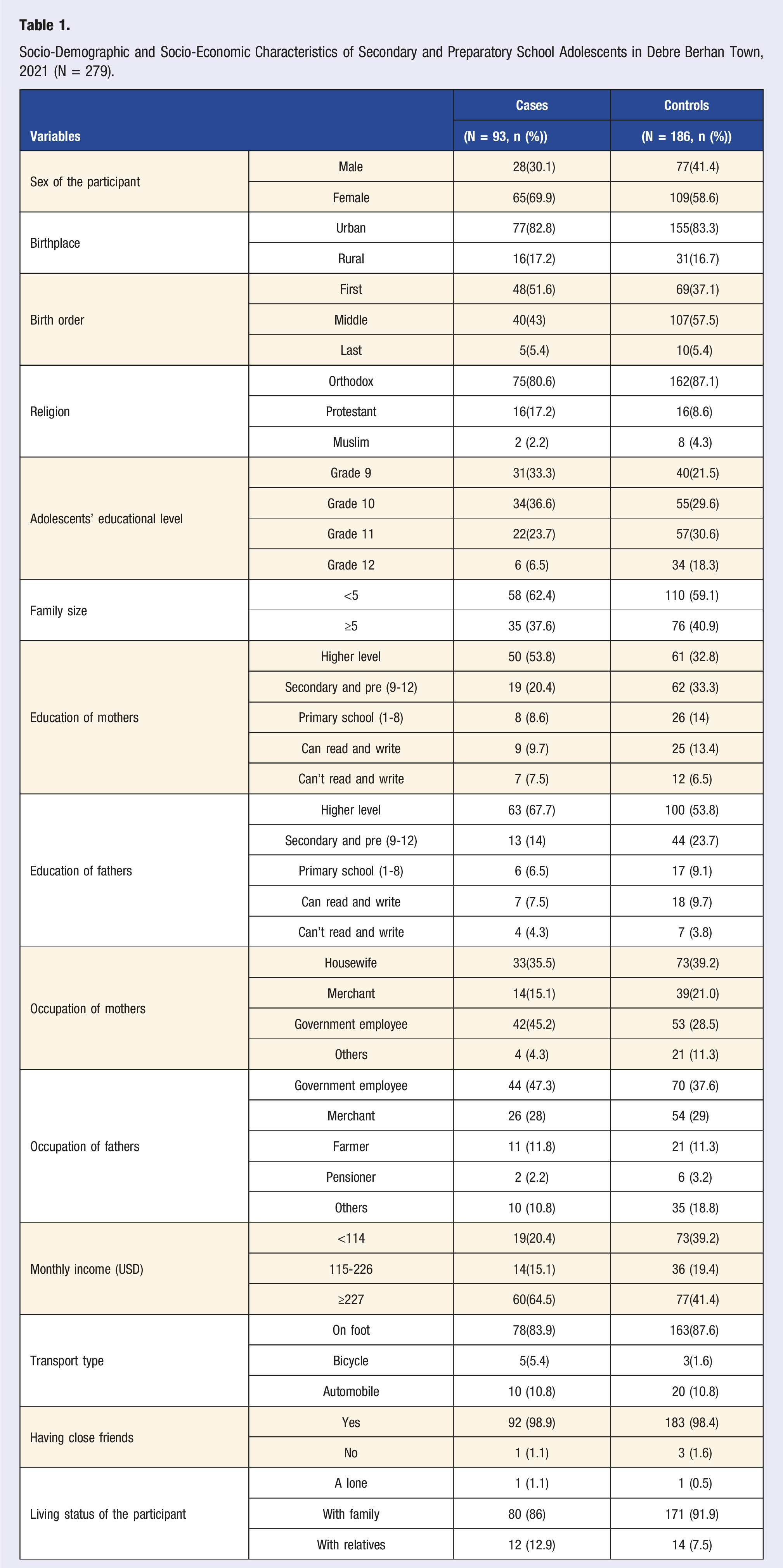
In this study, from a total of 285 sampled adolescents, 279 adolescents (93 cases and 186 controls) participated which made the response rate of 98 % for both cases and controls. The majority of the cases 65 (69.9%) and controls 109 (58.6%) were females.
The mean age of cases and controls were 17.05 ± 1.08 and 17.04 ± 1.1 years with the minimum and maximum ages of 15 and 19 years old respectively. The majority of the participants in both case and control groups 75 (80.6%) and 162 (87.1%), respectively, were orthodox religion followers. Nearly half of the mothers in the case group 50 (53.8%) and 61 (32.8%) in controls attended a higher level of education and 42 (45.2%) of mothers in the case group and 53 (28.5%) in control groups were government employees.
Socio-Demographic and Socio-Economic Characteristics of Secondary and Preparatory School Adolescents in Debre Berhan Town, 2021 (N = 279).
Study Participants Dietary Habit
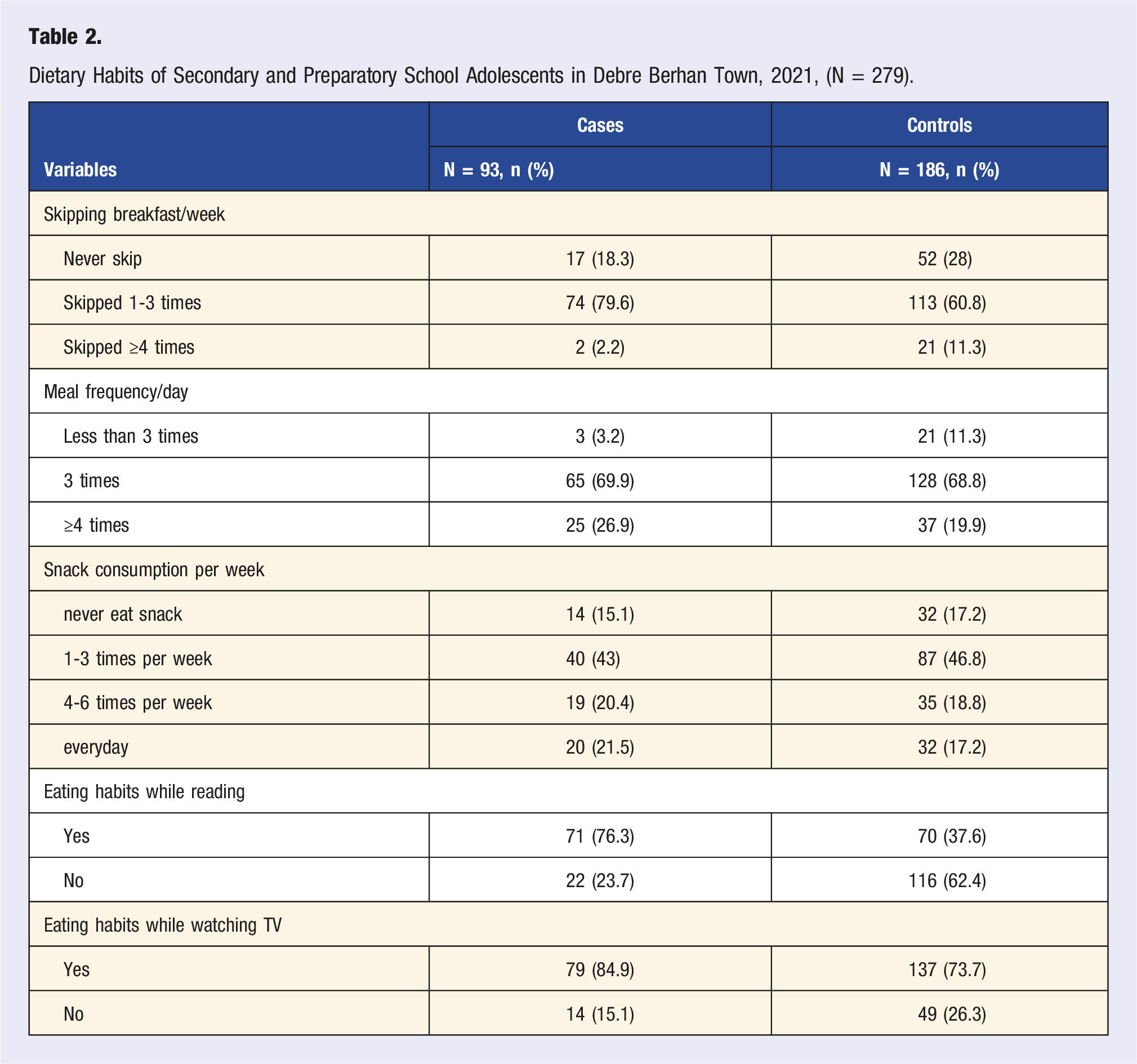
Dietary Habits of Secondary and Preparatory School Adolescents in Debre Berhan Town, 2021, (N = 279).
Food Frequency Pattern
Nearly more than half of the adolescents in both groups 14 controls consumed sweet foods 2-4 times per week. The majority of adolescents 77 (82.8%) in the cases group and 117 (62.9) of controls consumed fast food 2-4 times per week. In both case and control groups, 68 (73.1%) and 94 (50.5) and 69 (74.2%) and (103 (55.4) respectively had vegetable and fruit consumption 2-4 times in a week. A large percentage of the cases group 79 (84.9%) and controls 1 [40 (75.3%)] didn’t eat at all fat and oil in food the last week preceding the survey
Physical Activities and Sedentary Behavior
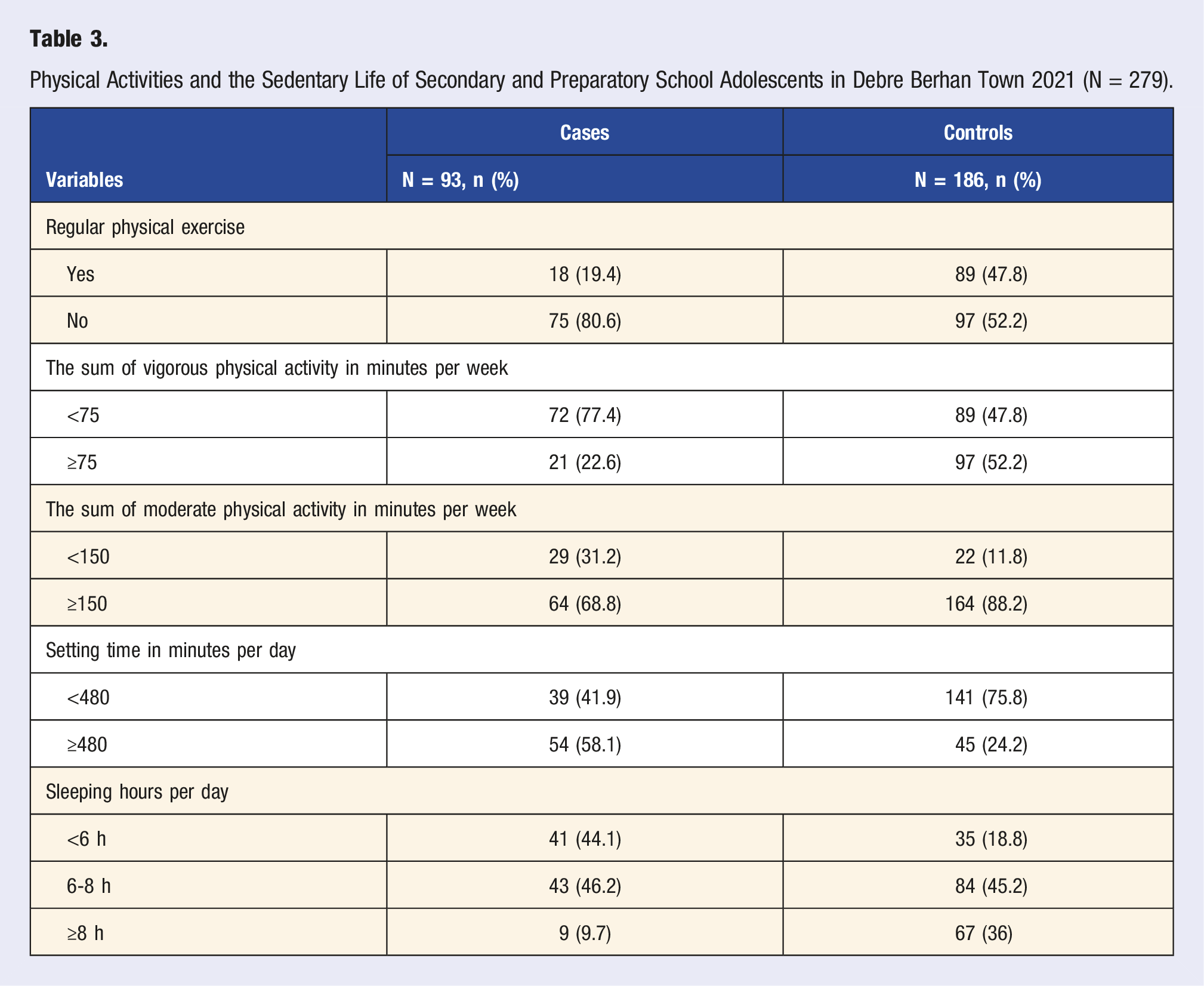
Physical Activities and the Sedentary Life of Secondary and Preparatory School Adolescents in Debre Berhan Town 2021 (N = 279).
Determinants of Overnutrition
In this study, bivariable logistic regression analysis was carried out to see the relation of each independent variable with the outcome variable. Those variables with P-values less than .25 were included in the multivariable analysis. These variables were the sex of participants, educational level of the mother, days of skipping breakfast, meal frequency per day of the participant, adolescent’s average family income per month, sleeping hour per day, eating habits while reading, the sum of vigorous physical activity in minutes per week, the sum of moderate physical activity in minutes per week, sitting time in minute per day.
Those variables with P-P-value <.25 in the bivariable analysis were fitted to multivariable analysis to control confounders and to test significant association with the outcome variable. Variables having statistically significant association (P-value <.05) in multivariable logistic regression were adolescents’ average family income per month, sleeping hours per day, eating habits while reading, the sum of vigorous physical activity in minutes per week, and sitting time in minutes per day.
The multivariable analysis proved that an odd of adolescents earning an average family income of ≥227 USD were 2.67 times and between 115-226 USD were 3.16 times more likely to develop overnutrition than those adolescents who earn <114 USD with (AOR = 2.67; 95% CI: 1.214-5.9) and (AOR = 3.16; 95% CI: 1.06-9.43) respectively.
Similarly, the odds of adolescents’ eating habits while reading were 4 times more likely to develop overnutrition than those adolescents who did not have eating habits while reading (AOR = 3.87; 95% CI: 1.95-7.686).
Likewise, adolescents who had sedentary behavior, where they sit or recline, for more than ≥480 min per day were 2.5 times more likely to develop overnutrition than their counterparts (AOR = 2.52; 95% CI: 1.278-4.97).
In this study, adolescents who practice a vigorous type of physical exercise for <75 min per week were 2.4 times more likely to develop overnutrition than those who practice for ≥75 min per week (AOR = 2.38; 95% CI: (1.149-4.92).
Bivariable and Multivariable Analysis Results for Determinants of Overnutrition Among Secondary and Preparatory School Adolescents in Debre Berhan Town 2021, (N = 279).
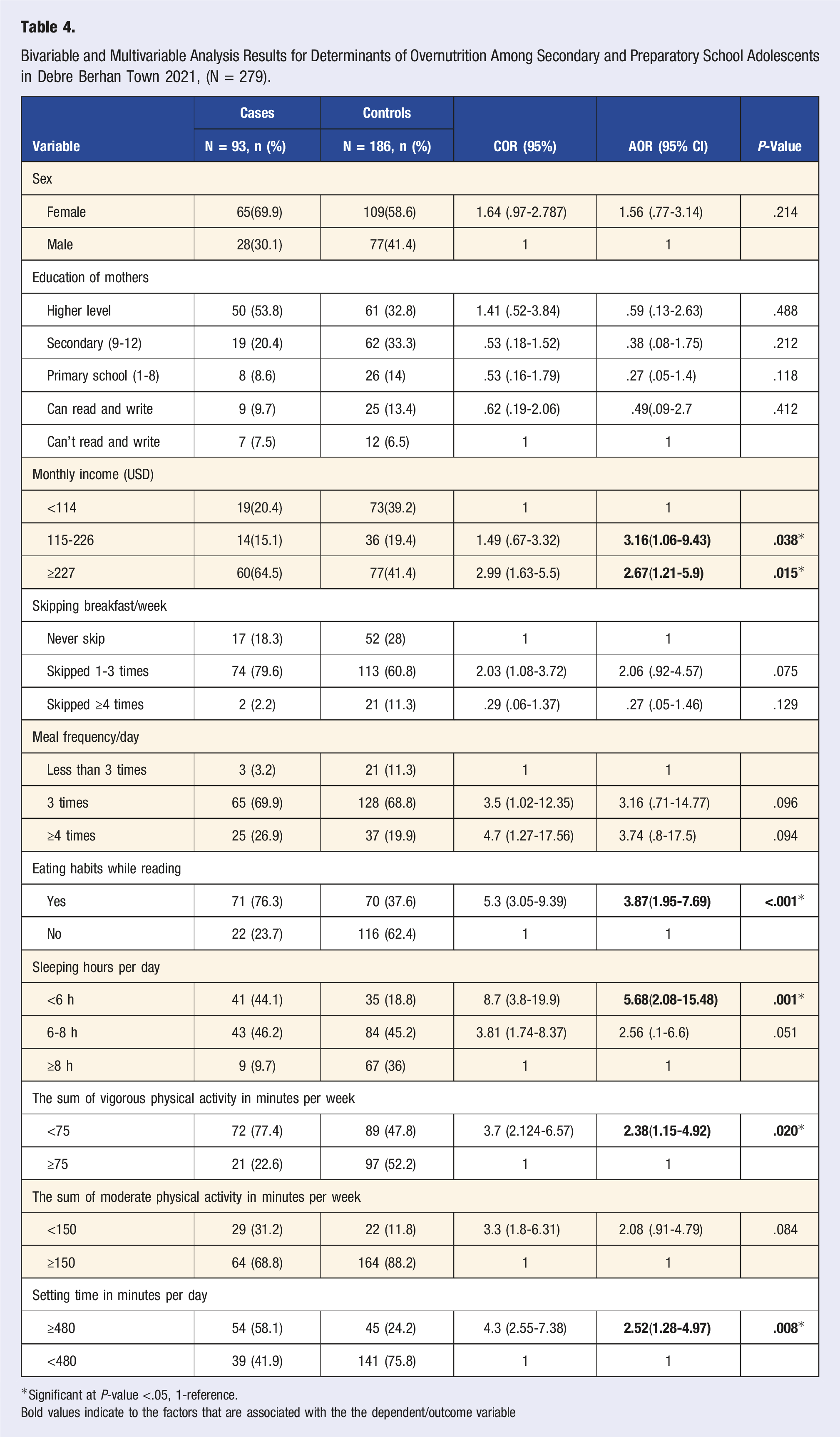
*Significant at P-value <.05, 1-reference.
Bold values indicate to the factors that are associated with the the dependent/outcome variable
Discussions
This study was conducted to determine Dietary Habits and Determinants of Overnutrition Among Secondary and Preparatory School Adolescents: A Multi-Center Unmatched Case-Control Study. The variable that has a significant association with overnutrition by using multivariable analytic techniques were adolescents’ average family income per month, sleeping hours per day, eating habits while reading, the sum of vigorous physical activity in minutes per week, and sedentary behavior/sitting time in minute per day.
In this study, adolescents’ average family income per month was a significant determinant of overnutrition. The odds of earning an average family income of ≥227 USD was 2.67 times higher develop overnutrition than those who earn <114 USD. The current finding is in line with the findings done in Japan, 22 Tanzania, 23 Bangladesh, 24 and also in Ethiopia, a case-control study in Hawassa and cross-sectional studies in Bihar Dar19,25-27 were also consistent with the current result. This might be due to high-income levels having a higher risk of exposure to energy-dense foods and a sedentary way of life and also the change in lifestyle, and dietary pattern associated with increased income. On the contrary, a critical review in the US shows that lower-income households tend to have higher rates of overweight/obesity in the United States and other developed countries that are low-income families are more exposed to junk food and other cheap calories including processed sugars. 28
In the current study adolescents who had sedentary behavior, those who sit/recline for ≥480 min per day were 2.52 times more likely to develop overnutrition than those adolescents who sit/recline for <480 min per day. This finding was supported by a case-control study in Bangladesh, sedentary time was a risk factor for overweight/obesity 24 and also a study in New Zealand on the association between BMI and sedentary behavior in female adolescents and the relationship between childhood sedentary behavior and biomedical health indicators29,30 and also another study on sedentary behavior and health outcome in Brazil found that there is strong evidence for a relationship between sedentary behavior and overnutrition.30,31 This may be due to low energy expenditure during sedentary time. 32
Adolescents who engage in vigorous physical exercise for less than 75 min per week were 2.38 times more likely to develop overnutrition compared to those who engage in 75 min or more per week. This finding aligns with previous studies conducted in Ethiopia on overnutrition in adolescents and its associated factors in Dale district schools33,34 and Malaysia on socio-demographic, dietary, and physical activity determinants of overweight and obesity in adolescents 35 and Nepal where low physical activity was identified as a public health concern among middle and late adolescents aged 15-19 years. 36 ]. Additionally, a study in Kenya on overweight/obesity and physical activity in school children 37 and research in Ethiopia, specifically Gondar and Bahir Dar, on overweight/obesity and associated factors among high school students, revealed that students who did not engage in moderate or vigorous sports activities were at a higher risk of being overweight compared to those who did.25,38 This underscores the importance of regular and sufficient levels of physical activity as a critical factor in energy expenditure, essential for maintaining energy balance and weight control in adolescents. 39
In the current study, adolescents who sleep for <6 h per day were 5.6 times more likely to develop overnutrition than those who sleep greater than or equal to 8 h. This finding is in line with the studies in Kuwait on Short Sleep Duration and Its Association with Obesity and Other Metabolic Risk Factors. 40 Also, it is in line with a USA survey on the relationship between insufficient sleeping time and the body mass index in adolescents and another study in Canada shows that the inadequate sleep duration categories <6 h was associated with the presence of overweight41,42 besides this, the study which is conducted in China on the association between sleep duration and overweight/obesity in adolescents shows that both short sleep duration and long sleep duration were found as risk factors for overweight/obesity in Chinese adolescents and optimal sleep duration may prevent overweight/obesity. 43 This might be due to an increase in snacking or an increase in the number of meals consumed per day and more energy needed to sustain extended wakefulness psychological distress and disrupted meal timing, and increases in sedentary behavior seem to be the most compelling mechanisms linking poor sleep with increased overnutrition risk in adolescents44-46 and also it might be due to sleep influencing energy metabolism. One of its main functions is to conserve energy and the proposed mechanism that associates insufficient sleep with weight gain is a decrease in energy expenditure. On the other hand, the study in Australia argues that sleep duration was not related to overweight. 47
Moreover, this study found that the odds of adolescents’ eating habits while reading were 3.87 times more likely to develop overnutrition than those who do not have eating habits while reading. This finding is comparable to the study in Italy on eating habits and lifestyle in students with obesity during the COVID-19 lockdown, which was found with BMI gain. 48 This may be due to an increase in meal frequency per day and also overeating of foods that might increase our vulnerability to gain weight.
Conclusions and Recommendations
Overnutrition is a significant emerging public health problem and multiple factors are associated with it. According to the findings of this study, the determinants of overnutrition were adolescents’ average family income per month, sleeping hours per day, eating habits while reading, the sum of vigorous physical activity in minutes per week, and sitting time in minutes per day.
This finding suggests that promoting an active lifestyle reduced sedentary behavior and healthy eating habits should be a national public health priority; because early interventions on modifiable risk factors are likely to decrease the rate of adolescent overnutrition. Educational programs about overnutrition and associated health consequences should start early in school to prevent its increasing prevalence in adolescents and public health programs are needed to increase awareness of risk factors for overnutrition among adolescents to reduce the future burden of obesity-associated chronic non-communicable diseases.
Supplemental Material
Supplemental Material - Dietary Habits and Determinants of Overnutrition Among Secondary and Preparatory School Adolescents: A Multi-Center Unmatched Case-Control Study
Supplemental Material for Dietary Habits and Determinants of Overnutrition Among Secondary and Preparatory School Adolescents: A Multi-Center Unmatched Case-Control Study by Eleni Dagnaw Abeje, Shiferaw Birhanu Aynalem, and Hailemariam Mekonnen Workie in American Journal of Lifestyle Medicine.
Footnotes
Acknowledgments
First, special thanks go to the Debre Berhan city administration education office for giving us the information that we needed and we would also like to thank also school directors, data collectors, supervisors, and study participants. We would like to thank Bahir Dar University for giving us the chance to conduct this study.
Author Contributions
All authors made substantial contributions to the conception and design, acquisition of data, or analysis and interpretation of data; took part in drafting the article or revising it critically for important intellectual content; gave final approval of the version to be published; and agreed to be accountable for all aspects of the work.
Declaration of Conflicting Interests
The author(s) declared no potential conflicts of interest with respect to the research, authorship, and/or publication of this article.
Funding
The author(s) received no financial support for the research, authorship, and/or publication of this article.
Ethical Statement

Data Availability Statement
The datasets used and/or analyzed during the current study are available from the corresponding author upon reasonable request. The original dataset was not shared in order not to compromise the confidentiality of the participants and to maintain privacy.
Supplemental Material
Supplemental material for this article is available online.
Appendix
References
Supplementary Material
Please find the following supplemental material available below.
For Open Access articles published under a Creative Commons License, all supplemental material carries the same license as the article it is associated with.
For non-Open Access articles published, all supplemental material carries a non-exclusive license, and permission requests for re-use of supplemental material or any part of supplemental material shall be sent directly to the copyright owner as specified in the copyright notice associated with the article.
