



Abstract
Cardiovascular disease (CVD) and mental health disorders contribute to significant healthcare expenses. Lifestyle approaches that empower and enable patients to participate in their recovery are needed with the increasing complexity of cardiac patients. Traditional Tamil medical practice of Siddha self-inquiry meditation targets holistic health through intuitive lifestyle transformation. We describe 4 complex cardiac patients who explored Siddha based Hunger Gratitude Experience (HUGE) mindful eating and reported elevated levels of optimism and deeper experience of life as outlined by the 5000-year-old secular Siddha medical tradition. We cannot exclude the role of suggestion and placebo effect in descriptive series. However, the simultaneous improvement in physical health and emotional wellbeing along with demonstrated resilience against unforeseen adversities suggests this is Uvagai, the true essence of Siddha higher consciousness. Uvagai is extreme happiness and may be accessible universally with little formal training and targets positive psychology to improve wellbeing. While flow and bliss states are transient transcendental experiences, Uvagai may be more profound and therapeutic in CVD despite age and comorbidities. Seeking Uvagai can potentially overcome health disparities, including rural, minority, and underprivileged populations for better health. HUGE allows CVD patients to safely engage in Uvagai, experience higher consciousness and intuitively sustain lifestyle transformation.
“The self-inquiry principles of Siddha are secular, simple, and directly target a deeper mind-body connection despite functional limitations.”
Cardiovascular disease (CVD) is the leading cause of mortality worldwide. 1 Together, CVD and mental health disorders contribute to significant healthcare expenses for individuals and society. 2 While health care providers increasingly recognize the association between psychological disorders contributing to CVD, there are no widely accepted clinical interventions to address their complex interactions. Our group has developed a novel self-inquiry meditation program derived from Tamil Medicine Siddha principles for comprehensive whole health. 3 This work illustrates how the Hunger Gratitude Experience (HUGE) mindful eating practice helps CVD patients to connect resilience with fasting and wellbeing. Because the program is cost-effective and complimentary, it has the potential to expand health benefits to those experiencing health disparities, including rural, minority, and underprivileged populations. HUGE has been shown to have the potential to reverse chronic diseases, including obesity, metabolic syndrome, and CVD, through improving outlook and transforming lifestyle. 4 Also, because the practice works by empowering patients, it may alleviate stress and anxiety. We describe how four patients with CVD applied these positive psychological tools to transform lifestyle and gain holistic health.
Overcoming angina in complex CVD. A 49-year-old woman with obesity weighing 135.5 kg presented with exertional angina in 2019, after her lifetime companion died and she lost her job. An abnormal stress test led to a cardiac catheterization that revealed mid-left anterior descending 60% and posterior descending artery 80% diffuse coronary artery disease (CAD). The first marginal branch of the circumflex artery was 100% occluded, with collaterals noted. Percutaneous revascularization to the marginal artery was attempted but was unsuccessful. She participated in our cardiac-wellness group clinic in 2019 and began the HUGE fasting about once a week, and adopted a heart-healthy diet, foregoing many unhealthy “fast foods.” In 2020, she found a deeper mind-body connection (flow state, described below), allowing her to increase her 24-hour fasting to twice weekly. Currently, she exercises regularly without any angina and no longer requires anti-anginal medications. Moreover, she has lost 10% of her body weight (– 13 kg, Figure 1), and has regained self-confidence to engage with life, despite complex CAD that is not amenable to revascularization. Furthermore, she reports that her relations with her family and friends have improved. After three years following our mindfulness methods, she reports feeling decades younger.
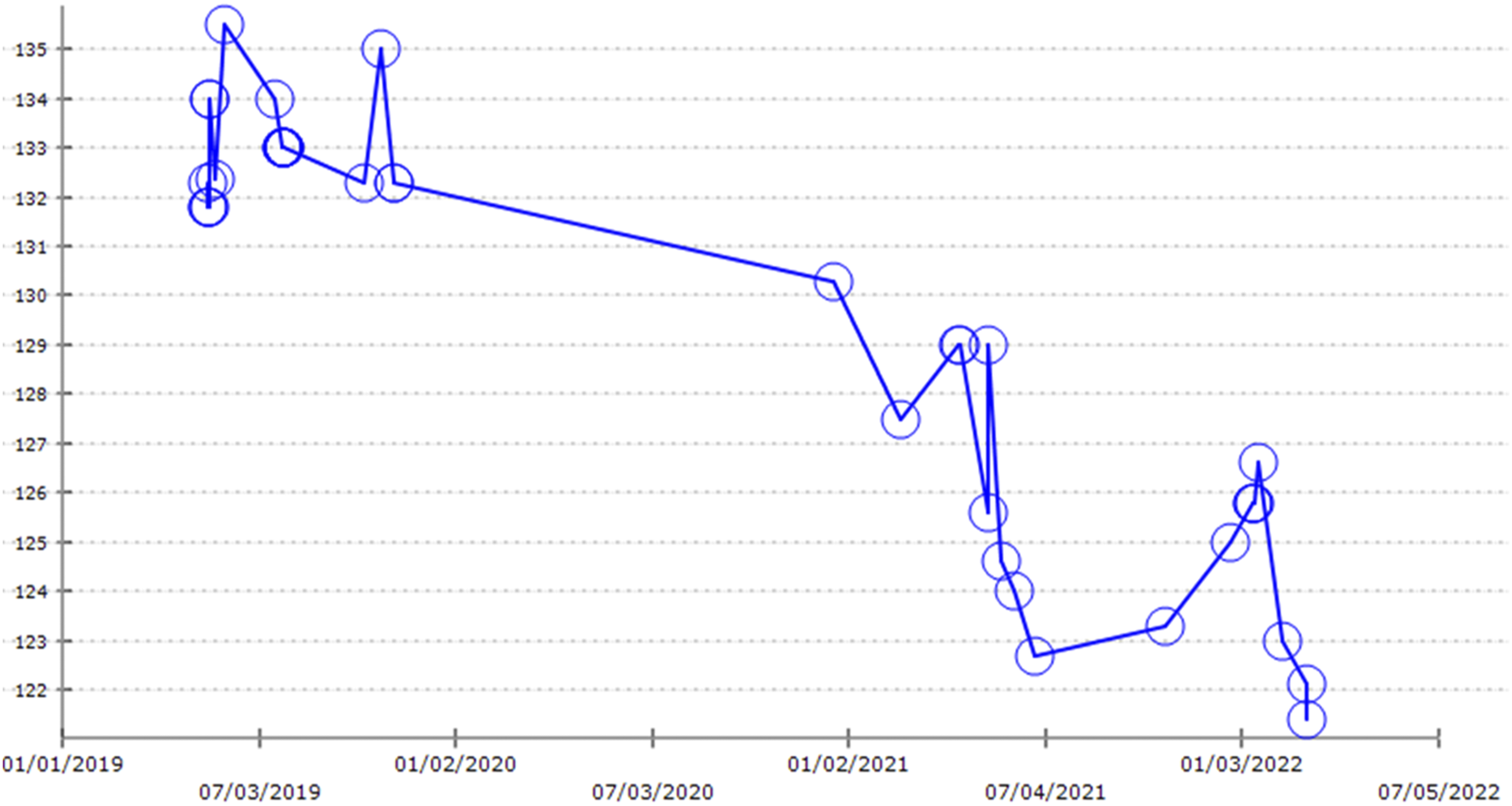
Patient electronic medical record weight chart demonstrating clinical improvement through intentional weight loss (weight in kgs, Y axis) over months (date, X axis) with the HUGE program. The 10% weight reduction allows the patient to exercise without angina despite failed revascularization for multivessel CVD.
Flow—Uvagai experience during prolonged fasting. A 64-year-old man with angina, exertional dyspnea, obesity, and metabolic derangements was diagnosed with severe two-vessel CAD and ischemic cardiomyopathy. The patient had recently completed our HUGE program, declined coronary artery bypass surgery, and undertook a 50-day water-only religious fast.
5
On day 45, he was hospitalized for dehydration and general weakness. However, the patient reported higher mental clarity, emotional energy, and a deep sense of calm and peace. His confidence was high, and he reported feeling profoundly grateful for life. He shared that he “wished that people everywhere would recognize the true value of life instead of taking life for granted and worrying unnecessarily.” After discharge from the hospital, he adopted a primarily plant-based diet with improved cardiac function a year later.
Flow—Uvagai experience despite CVD and several comorbidities. Since 2015, a 70-year-old woman had been coping with heart failure related to several advanced medical conditions, including CAD, atrial fibrillation, transcutaneous aortic valve replacement for severe aortic stenosis, hypertension, diabetes, obesity, cirrhosis with portal hypertension, variceal bleeding requiring transfusion, anemia, pulmonary hypertension, chronic kidney disease, and arthritis. She participated in our eight-week Siddha self-inquiry group clinic in 2019. Despite her functional limitations, she began practicing hunger gratitude (HUGE), fasting up to 23 hours once weekly, and volunteering locally. Her outlook improved from being an optimistic person to one who perceives her “cup as full and overflowing with abundance.” This viewpoint became her “new normal.” Her family noticed her remarkable enthusiasm and zest for life, despite her comorbidities and having become bed-bound with painful spontaneous vertebral compression fractures. She did not require CVD hospitalization and remained optimistic and deeply grateful for life until her death due to sepsis complications in 2020.
Uvagai—Extreme optimism despite life adversities. The patient is a 75-year-old author with coronary artery disease, heart failure, hypertension, hyperlipidemia, type 2 diabetes, obesity, and arthritis developed pulmonary edema despite guideline-directed optimal medical therapy. She began our hunger gratitude meditative practice in February 2020. Within six months, she lost over 30% of her body weight and reported feeling decades younger, with an improved attitude and optimism towards life. She embraced altruism, meditation, and Siddha mind-body methods outlined elsewhere.
3
During the most recent 12 months, she has been through significant mental stress, dealing with a financial crisis, threats to her safety as well as unexpectedly losing her healthy 41-year-old son due to suicide. Despite these highly stressful life events, she has remained remarkably optimistic and resilient. She continues to be productive by writing books as well as contributing to her community by volunteering. When specifically asked to rate her overall happiness and optimism now on a scale of 1–10; she responded with a rating of 10, due to her participation in our program two years earlier.
Clinical Benefits of Self-Inquiry
Psychologists and integrative health care providers increasingly recognize the mind’s contribution to wellness, but western medicine has failed to fully harness positive psychology toward holistic healing.
6
Patients with cardiac disease are often older, with several comorbidities and physical limitations. Socioeconomic challenges and mental health disorders such as depression and anxiety hamper meaningful recovery, making “holistic health” harder to achieve. Because self-inquiry is founded on Siddha higher consciousness principles, patients with cardiac disease can apply these methods toward the following aims: 1. Metabolic risk factor control 2. Heart health and symptom reduction 3. Reduced stress and anxiety 4. Resilience and confidence toward life’s challenges 5. Finding deeper meaning in life
These benefits can be achieved at a very low cost, within months, do not require extensive training or close medical supervision, and may be undertaken despite comorbidities.
Siddha
Siddha is a Tamil medical system continuously practiced for over 5000 years. 7 The herbal and pharmaceutical treatments this alternative system offers can treat over 2000 ailments. 8 The real essence of Siddha is higher consciousness. The scientific and secular approach is especially pertinent to overcome disparities and thrive in high-stress environments. The word “Siddha” means “the perfect human being” and the goal of this way of life is to achieve deep and lasting happiness in everyday life. Although several generations of Siddhars (enlightened masters, philosophers, and doctors combined) have systematically taught these methods, a deeper transformation has been challenging to achieve at the individual level. Over the centuries, various Siddha mind-body practices like ogam (yoga), dance (Bharatanatyam), martial arts (kung-fu), and meditative methods (Zen) have been disseminated globally by Tamil Siddhars like Bodhidharma, 9 as a means of improving holistic health. The true essence of Siddha is higher consciousness and can be directly explored to improve health. As Siddha is intended for humanity to achieve its highest potential, its eternal values reach beyond geo-political and religious boundaries. The self-inquiry methods are complementary and can be explored while still pursuing conventional evidence-based medical therapies.
Self-Inquiry through HUGE
Self-inquiry (Si) is directing attention inwards and asking oneself “Who am I?” Systematically exploring our inner nature can be a life-changing endeavor. People are often busy with daily life challenges, making reactively “habitual” decisions rather than deliberate introspection with the potential for more fulfilling “intuitive” lifestyle choices. 10 Some people find meaning through dedication to work, sports, mindfulness, or philosophy. People who seriously commit to elevating consciousness are a rarity, and even then, there is no definite, clearly defined path toward a specific goal. Siddha teaches self-inquiry in a secular, intuitive, and verifiable progression. We have refined the ancient Siddha self-inquiry tools to suit modern life and adapted the meditative methods for cardiac patients.
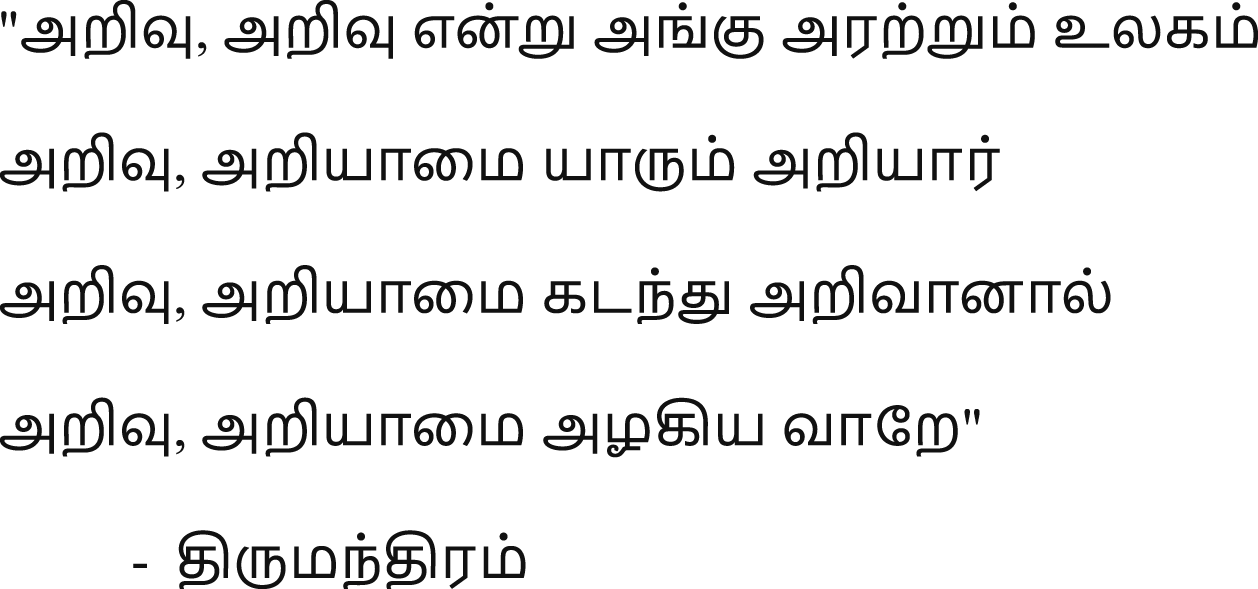
Intelligence, Intelligence the world babbles
Intelligence and Knowledge are superficial
Deeper Realization beyond Intelligence
Unfolds the beauty of Life
Fasting has numerous potential health benefits, is voluntary, and can be readily reversed by consuming food.
13
This practice differs from starvation, where there is inadequate access to food, threatening health and life. Starving increases stress, whereas fasting is a relaxing experience. Also, combining gratitude as a thought, emotion, and more profound direct experience reinforces the mind-body connection. For example, gratitude can be engendered by smiling 20 times every hour, which is ten times more than the average adult. Another option is perceiving gratitude initially for specific events, then people and circumstances before expanding it to all of life in general (Figure 2). A recent study found that optimism, but not gratitude, was associated with superior cardiac outcomes. This study, however, did not attempt to improve the experience of gratitude.
14
Self-Inquiry (Si) Siddha meditative tradition asks, “Who am I?”, “What is life about?” through mind-body methods like martial arts, dance, or yoga. Engaging the body is central towards elevating consciousness. Hunger Gratitude Experience (HUGE) is a Si method that can be explored safely at any age despite disabilities and chronic diseases. People begin by attempting 20 smiles an hour (20Smph) and relate gratefully with life events. Mindful eating allows recognition of emotional and habitual eating habits. Flow state can be reached in days–weeks with this lifestyle intervention. Next is acceptance of physical hunger (intermittent fasting for 14–24 hours and calorie restriction, hungry 1–2 hours before meals routinely) with gratitude for people and life circumstances, increasing meaning in life and optimism over weeks/months. Finally, the deeper experience of gratitude for life becomes a natural state with confidence to intuitively engage metabolic switching and natural ketosis several times a week. Uvagai is experience of zest for life and lasting state of flow. Uvagai can transform outlook, lifestyle, and health. Some find it easier to fast (A) or explore gratitude (B) at the outset before finding the intuitive balance to engage in HUGE meditative Si.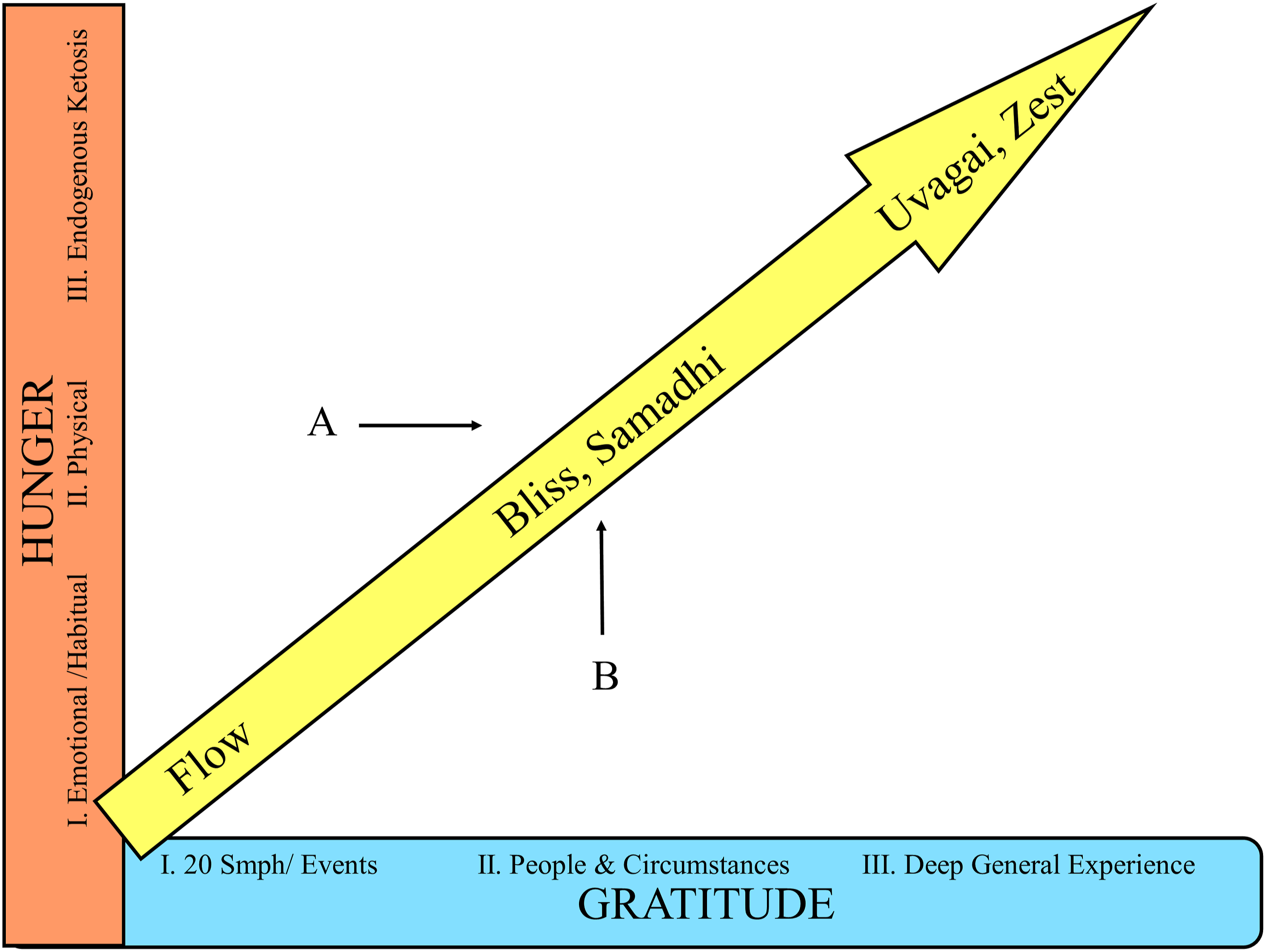
In the absence of drugs that potentiate hypoglycemia, eating disorders, and cirrhosis, people can typically train themselves to fast 24–36 hours, with only water. After 12–15 hours of fasting, metabolic switching and hepatic natural ketosis begin, preferentially burning lipid stores for energy. Fasting allows people to overcome emotional and habitual eating. Real physical hunger can also be endured within a few weeks or months using HUGE. An increase in blood ketone levels denotes metabolic switching and may aid cognition of CVD patients for better focus, positively reinforcing HUGE. 15 People learning HUGE as a Siddha Si meditative method typically do not start with levels of blood glucose, ketones, or other physical health metrics; they first recognize the psychological benefits and value of self-empowerment. Thus, many CVD patients find it easier to make other lifestyle changes like quitting cigarettes or exploring new exercise regimens. HUGE also expands empathy along with deepening trust in interpersonal relationships.
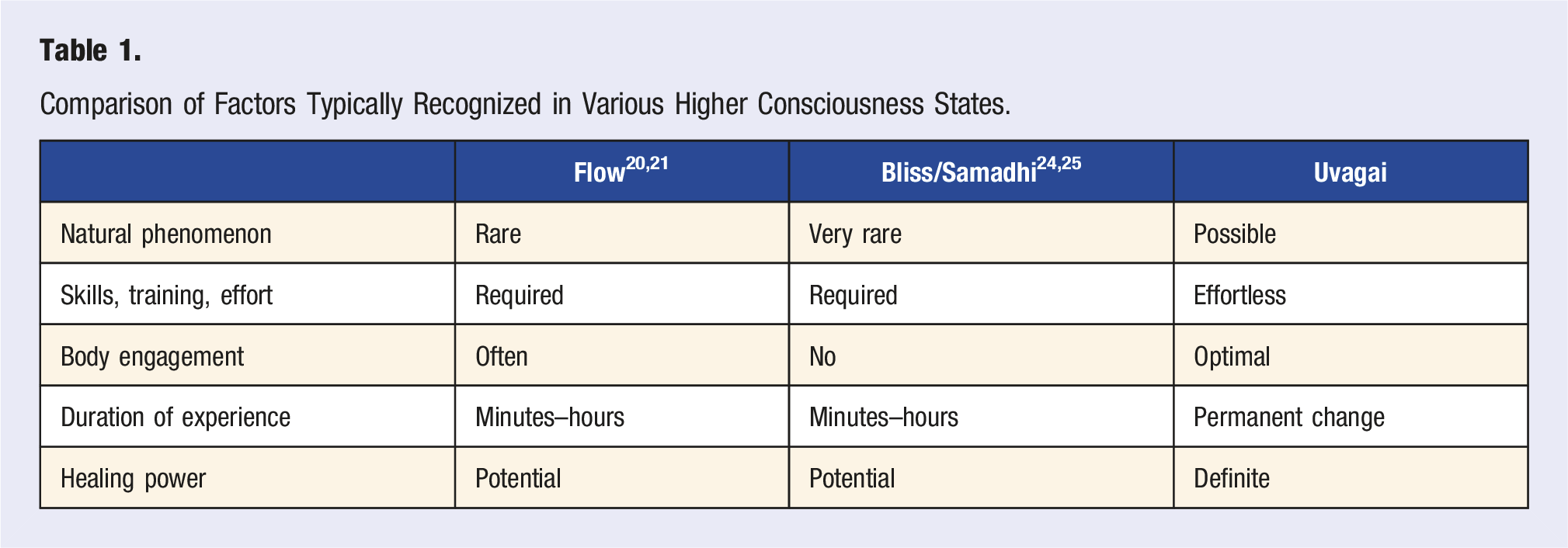
Uvagai—Higher Consciousness
Comparison of Factors Typically Recognized in Various Higher Consciousness States.
Limitations
This work is not a randomized controlled study, and the potential to scale the practices within different medical practices remains to be proven. Standardized quality of life questionnaires and formal functional assessments were not used, and the role of suggestion and placebo effects have yet to be assessed. The broader scope of Siddha lifestyle transformation requires better quality of life and psychometric tools to be fully quantified. We are starting studies in collaboration with psychologists, psychiatrists, and nutrition and exercise physiologists to better evaluate the effectiveness of self-inquiry and lifestyle changes in CVD.
Conclusions
The increasing complexity of medical and mental health challenges requires urgent durable solutions. Siddha, an ancient Tamil traditional medical system, is gaining recognition in the West. The self-inquiry principles of Siddha are secular, simple, and directly target a deeper mind-body connection despite functional limitations. Based on these principles, we have developed HUGE as a holistic lifestyle practice to enhance wellbeing. HUGE allows cardiac patients to safely engage flow, experience higher consciousness and Uvagai. Siddha HUGE fasting and the Uvagai experience may transform patients’ outlook and lifestyle as well as improve CVD outcomes.
Footnotes
Declaration of Conflicting Interests
The author(s) declared no potential conflicts of interest with respect to the research, authorship, and/or publication of this article.
Funding
The author(s) received no financial support for the research, authorship, and/or publication of this article.
