



Abstract
Similar to other medical professions, the field of physical therapy is transitioning from a reactive to proactive model of care. This holistic approach to practice largely includes physical activity but also includes the often-overlooked field of nutrition. The purpose of this research study was to assess the knowledge, attitudes, and beliefs of nutrition in physical therapy students. Subjects included current students and recent graduates of doctoral physical therapy programs (N = 151). A cross-sectional mixed methods survey was disseminated to Doctor of Physical Therapy (DPT) students. The survey consisted of 49 questions including demographic information, a nutrition knowledge test (NKT), and questions about attitudes and beliefs regarding nutrition. The mean NKT score of this sample was15.09 ± 3.33 out of 28 total points. Only 19.2% of total respondents agreed or strongly agreed with feeling comfortable counseling clients and only 2.6% agreed or strongly agreed that their nutrition courses adequately provided them with the proper tools to educate clients on nutrition. However, 60.2% of respondents agreed or strongly agreed that an introductory nutrition course should be a requirement of any DPT education. Findings demonstrate a gap in knowledge of nutrition among physical therapy students.
“By allowing students the opportunities to learn about education pertaining to multiple professions, students may have a better understanding of the topic and scope of practice within their field.”
Introduction
It is well established that a person may be considered “healthy,” but have a very poor quality of life. Health-related quality of life is a multi-dimensional concept that includes multiple domains of health (i.e., physical, emotional, mental, social, etc.). 1 One of the overarching goals of Healthy People 2020 was to “attain high-quality, longer lives, free of preventable disease, disability, injury and premature death.” 2 In order to obtain this goal, a shift from reactive to proactive healthcare is required. More recently, a holistic approach to healthcare is being incorporated into hospitals, educational programs, and overall healthcare establishments. 3 This holistic approach utilizes health promotion and prevention of diseases with a large emphasis on the role of nutrition in quality health.
It is universally accepted that limited physical activity and poor activity tolerance can negatively impact quality of life. 2 An often-overlooked component of physical health is eating patterns and nutrition, which has been shown to play a role in health status and recovery. 4 Poor eating patterns can increase the risk of developing chronic diseases including type II diabetes, hypertension, and other cardiovascular conditions, and has even been found to play an important role in both dementia and cancer.4,5 Not only that, but poor eating patterns may even exacerbate the typical age-related changes seen in skeletal muscle. 6 A decline of muscle mass and strength with age, or sarcopenia, typically affects adults within the 4th decade of life, with a decrease of 30–50% of skeletal muscle mass and function by the time individuals reach 80 years of age.6,7 The mechanisms underlying sarcopenia are likely multifactorial in nature, however, largely revolve around excessive fat infiltration within muscles and a decrease in protein synthesis. 6 Not only can inactivity affect the interplay behind fat infiltration and muscle degradation/synthesis, but nutrition may also greatly impact development or progress of sarcopenia. 6 Because a poor eating patterns and inactivity can exacerbate age-related reductions in muscle mass and further complicate treatment and recovery during a physical therapy plan of care, it is important for physical therapists to be aware of how patients are choosing to fuel their bodies. 5 It is well known that nutrition has a large impact on disease progression, mortality and quality of life, and it has been found that disease prevention through nutrition is very cost-effective. 5 Thus, physical therapists should be prepared to provide patient nutrition education in comprehensive plans of care.
Review of Literature
According to the American Physical Therapy Association (APTA), it is within the scope of physical therapy practice to offer information on eating patterns and nutritional matters to patients, clients, and the community. 8 However, it is clear that physical therapists and physical therapy students may lack the nutrition education required for providing this information on eating patterns and nutrition.9,10 Long et al., reported that only 30% of sports physical therapists received nutrition education training during their Doctor of Physical Therapy programs, although most had positive attitudes towards receiving nutrition education. 10 More recently, a study conducted by Day et al found that only 25.6% of entry-level physical therapy students received some form of nutrition education training throughout their DPT education. 9 This trend is evident in other health professions as well. Extensive research on the lack of nutrition education amongst medical students sheds light on the large gap of nutritional knowledge within the healthcare field as a whole.11-16 Adams et al., conducted a survey to determine the amount of and type of nutrition instruction at U.S. medical schools. The survey was disseminated to all medical schools across the county and 106 schools responded. Although 93.3% of schools responded with some form of required nutrition education, only 30% of schools required a separate nutrition course. 17 Moreover, Berner et al., suggested that physical therapists Overall, there seems to be inadequate nutrition education within physical therapy and across other healthcare educational programs.
Similar to other health professions, the field of physical therapy now allows for direct access, or the ability to see a physical therapist without prior authorization from a physician. 18 With direct access to physical therapy services, patients can more easily attend physical therapy for primary care and prevention, in which nutrition education could be included. While the ability to treat patients without a physician referral allows for greater access to physical therapy, it comes with great responsibility from the physical therapist. It requires a holistic, person-centered approach that includes obtaining information on eating patterns and nutrition and educating on balanced nutrition in order to make meaningful changes within patient care. Even though physical therapists may be aware that they could include nutrition education and screening within their plan of care, they may lack the foundational knowledge to appropriately educate patients.8-10
It is clear that there is a strong need for a call to action related to nutrition education within healthcare and especially the field of physical therapy.8-10 The purpose of this research study was to assess the knowledge, attitudes, and beliefs of nutrition among physical therapy students.
Subjects
The participants of this study were a convenience sample and included current and recent graduates of entry-level doctor of physical therapy students attending universities across the United States. Students were included if they were currently enrolled in a DPT program or a recent graduate. Universities were grouped by region (i.e., Midwest, West, South, or Northeast) according to the U.S. Embassy website. 19 This study was approved by a University affiliated Institutional Review Board.
Methods
Study Design
This study was a cross-sectional concurrent embedded mixed methods survey, 20 which involves simultaneous collection of quantitative and qualitative data with the quantitative data being the primary source. In this case, survey data was collected with open-ended questions garnering supplemental qualitative data.
Survey Development
This survey included 49 questions about demographic information, nutrition knowledge, and attitudes and beliefs regarding nutrition. Question types included multiple choice, Likert scale-type and open-ended. Respondents were able to view their answers once their survey was complete. Questions to assess knowledge were adapted from several pre-existing Nutrition Knowledge Tests (NKT) from previous research studies of both physical therapy and medical students and were developed by the primary researcher (LM).10,21,22 The answer to those questions were verified by the resources10,21,22 used as well as nutrition websites and textbooks. The attitude and belief questions were developed by a current Physical Therapy resident and a PhD with expertise in survey methodology development. Questions were developed based on constructs of the Theory of Planned Behavior (attitude, behavioral, subjective norms). Content validity using qualitative methods was conducted for the first iteration of the survey. Two PhD’s with content expertise in health behavior and mixed methodologies reviewed the instrument for content validity. 23 Researchers met on numerous occasions with LM to review the instrument and make modifications based on their expertise.
Data Collection
A survey link was disseminated via class email lists at a Midwestern university, which follows a normative model of physical therapist professional education as identified by the Academy of Physical Therapy, 24 as well as social media blurbs on a university affiliated ‘Doctor of Physical Therapy Students’ Facebook page (response rate 3%). A brief description of the study was provided with a request to voluntarily complete the survey via an included electronic link. Survey responses were collected using Qualtrics software (copyright © 2020 Qualtrics). Responses were kept anonymous and there was no compensation for participation. The IP address of the respondent was used to identify potential duplicate entries from the same user. A link to the Bill of Rights for Research Participants was included.
Data Analysis
All statistical analyses were performed using Excel and IBM SPSS Statistics Software. 25 Percentages were calculated for composite data. Two open-ended questions were analyzed to determine specific themes pertaining to the barriers facing physical therapists on nutrition education and recommendations for future education. For these open-ended questions, a content analysis was performed on recurring themes. For reliability purposes, a second coder coded 30% of responses to validate the content analysis. There was a kappa agreement of .81, which indicated strong agreement between coders. Correct answers on the NKT were scored as 1 and incorrect answers were scored as 0. An NKT total score out of 28 points was calculated for each individual and a percentage out of 100 was recorded for future comparisons (see questions 20–47 for the NKT). The mean and standard deviation was calculated via excel.
Results
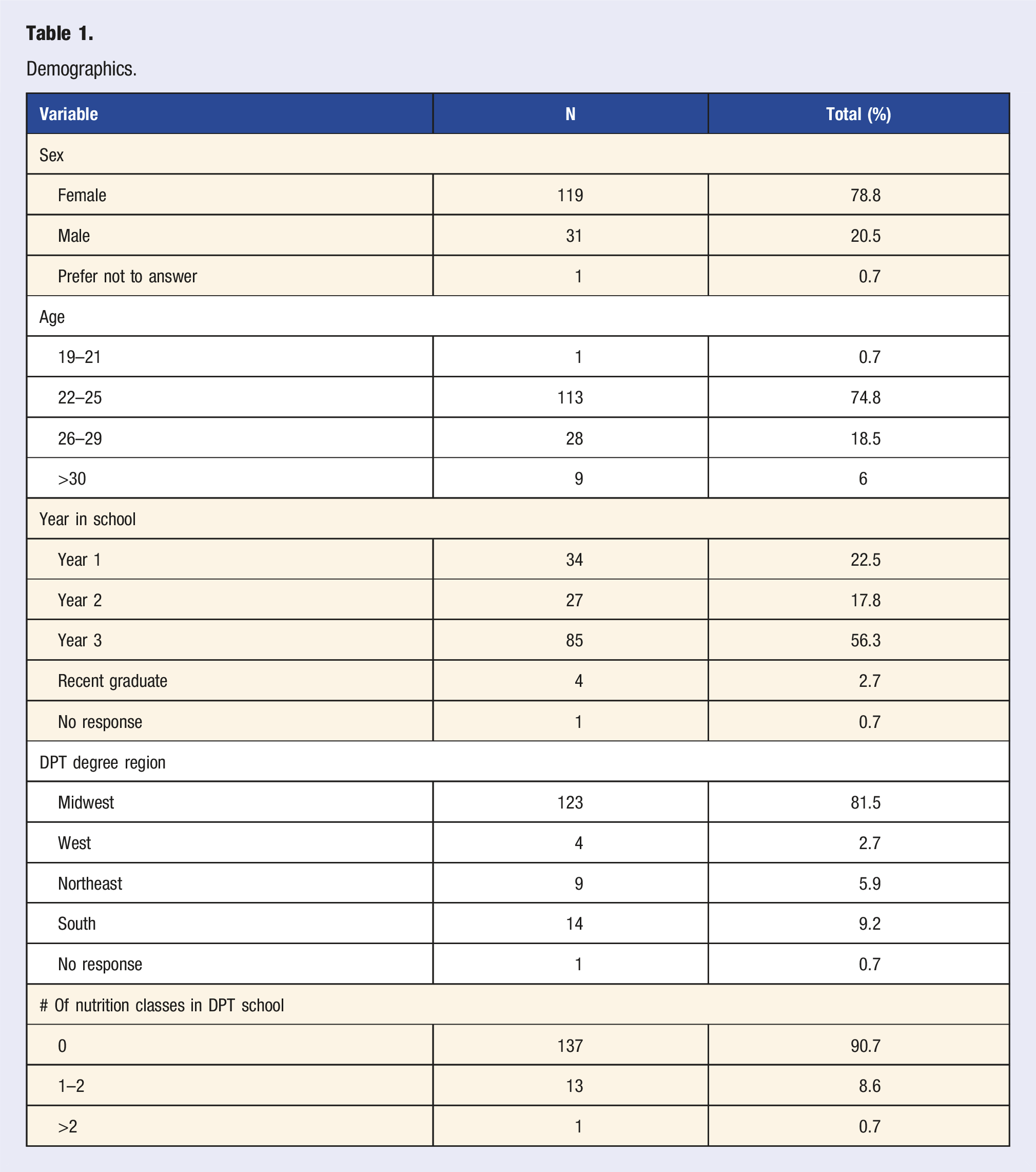
Demographics.
Nutrition Knowledge
Out of 28 total questions, the lowest score was 6 and the highest score was 21, with a mean NKT score of 15.09 ± 3.33. This equates to 53.89% out of a percentage of 100.
Attitudes and Beliefs
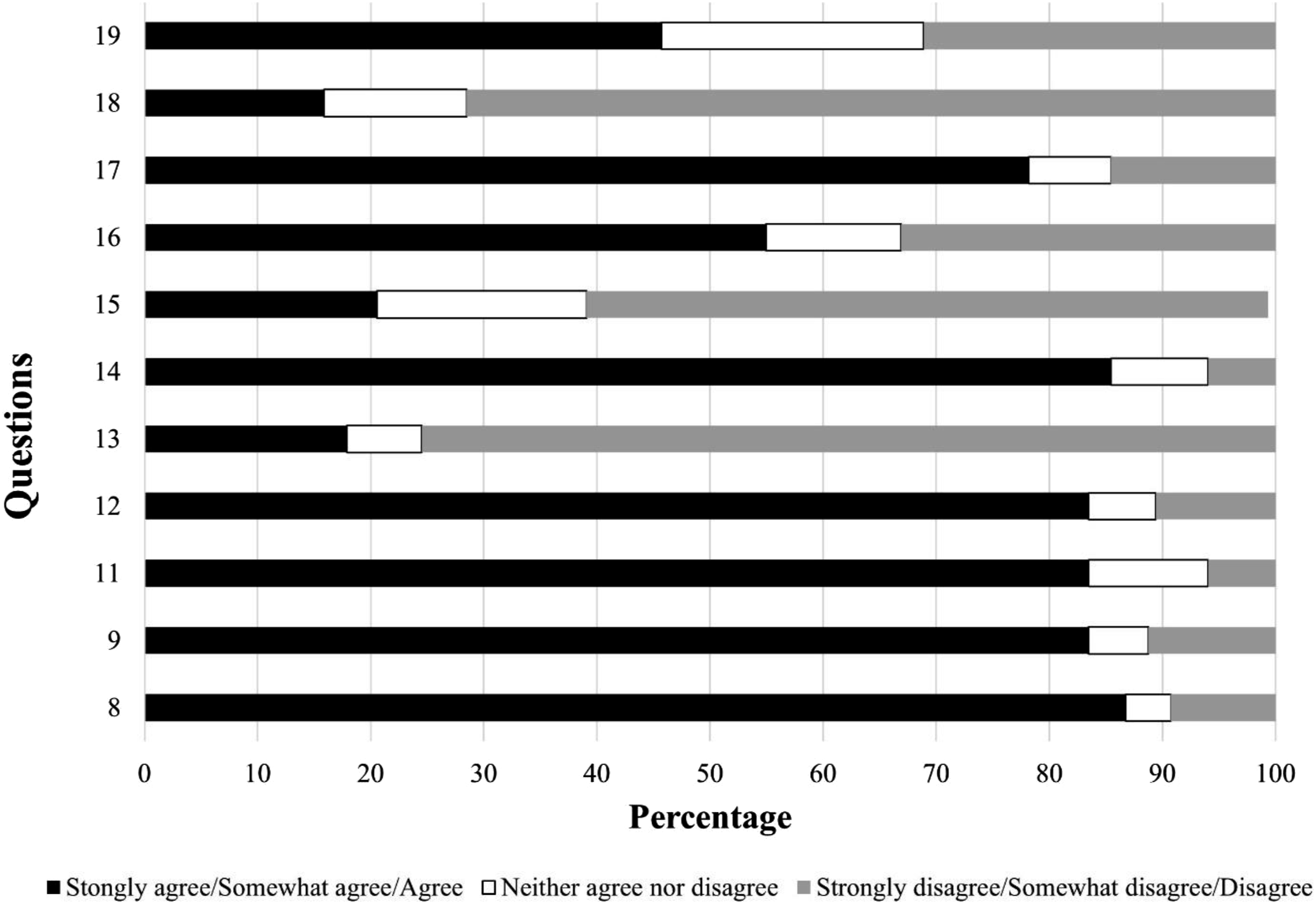
Attitudes and Beliefs Regarding Nutrition.
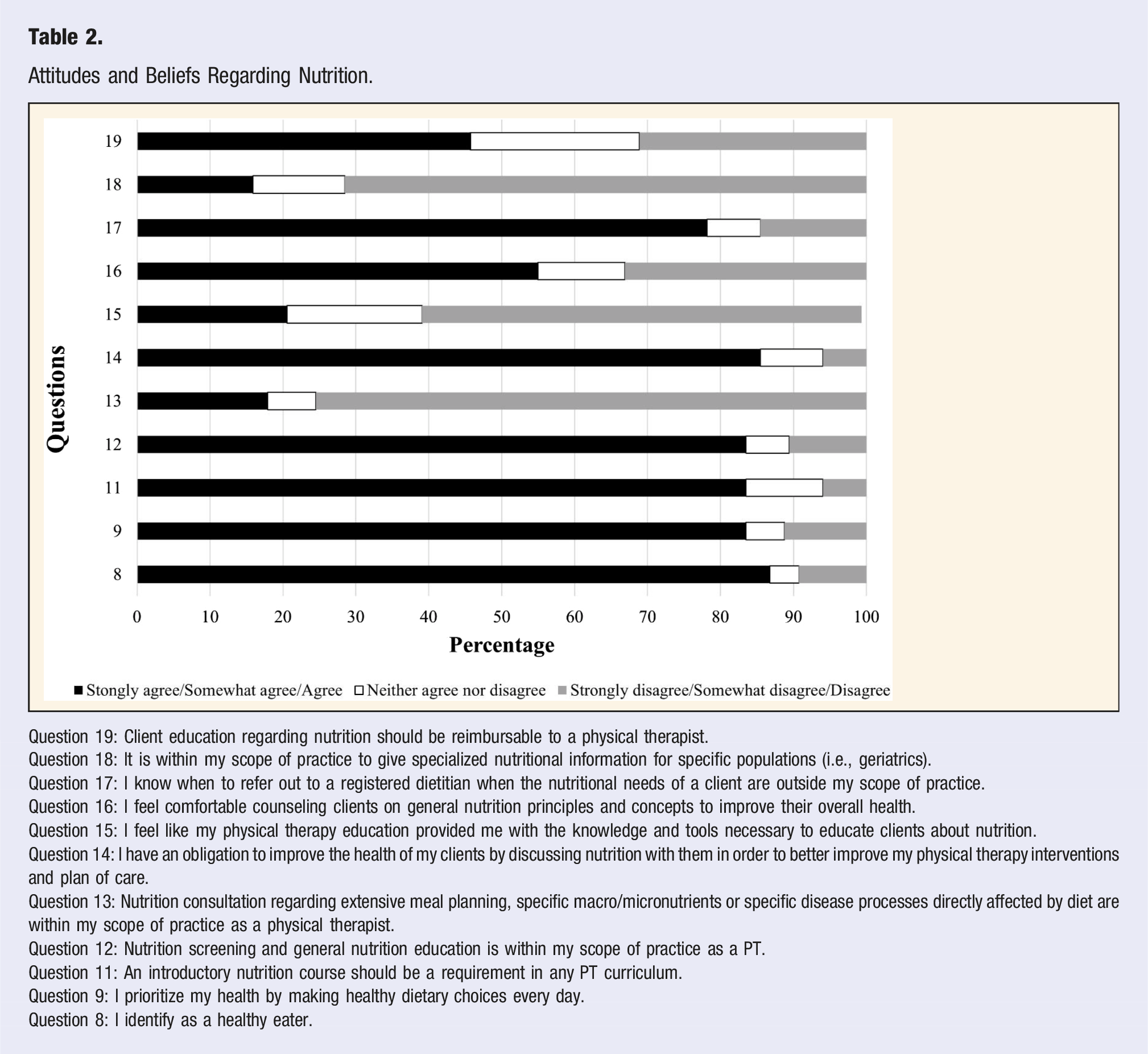
Question 19: Client education regarding nutrition should be reimbursable to a physical therapist.
Question 18: It is within my scope of practice to give specialized nutritional information for specific populations (i.e., geriatrics).
Question 17: I know when to refer out to a registered dietitian when the nutritional needs of a client are outside my scope of practice.
Question 16: I feel comfortable counseling clients on general nutrition principles and concepts to improve their overall health.
Question 15: I feel like my physical therapy education provided me with the knowledge and tools necessary to educate clients about nutrition.
Question 14: I have an obligation to improve the health of my clients by discussing nutrition with them in order to better improve my physical therapy interventions and plan of care.
Question 13: Nutrition consultation regarding extensive meal planning, specific macro/micronutrients or specific disease processes directly affected by diet are within my scope of practice as a physical therapist.
Question 12: Nutrition screening and general nutrition education is within my scope of practice as a PT.
Question 11: An introductory nutrition course should be a requirement in any PT curriculum.
Question 9: I prioritize my health by making healthy dietary choices every day.
Question 8: I identify as a healthy eater.
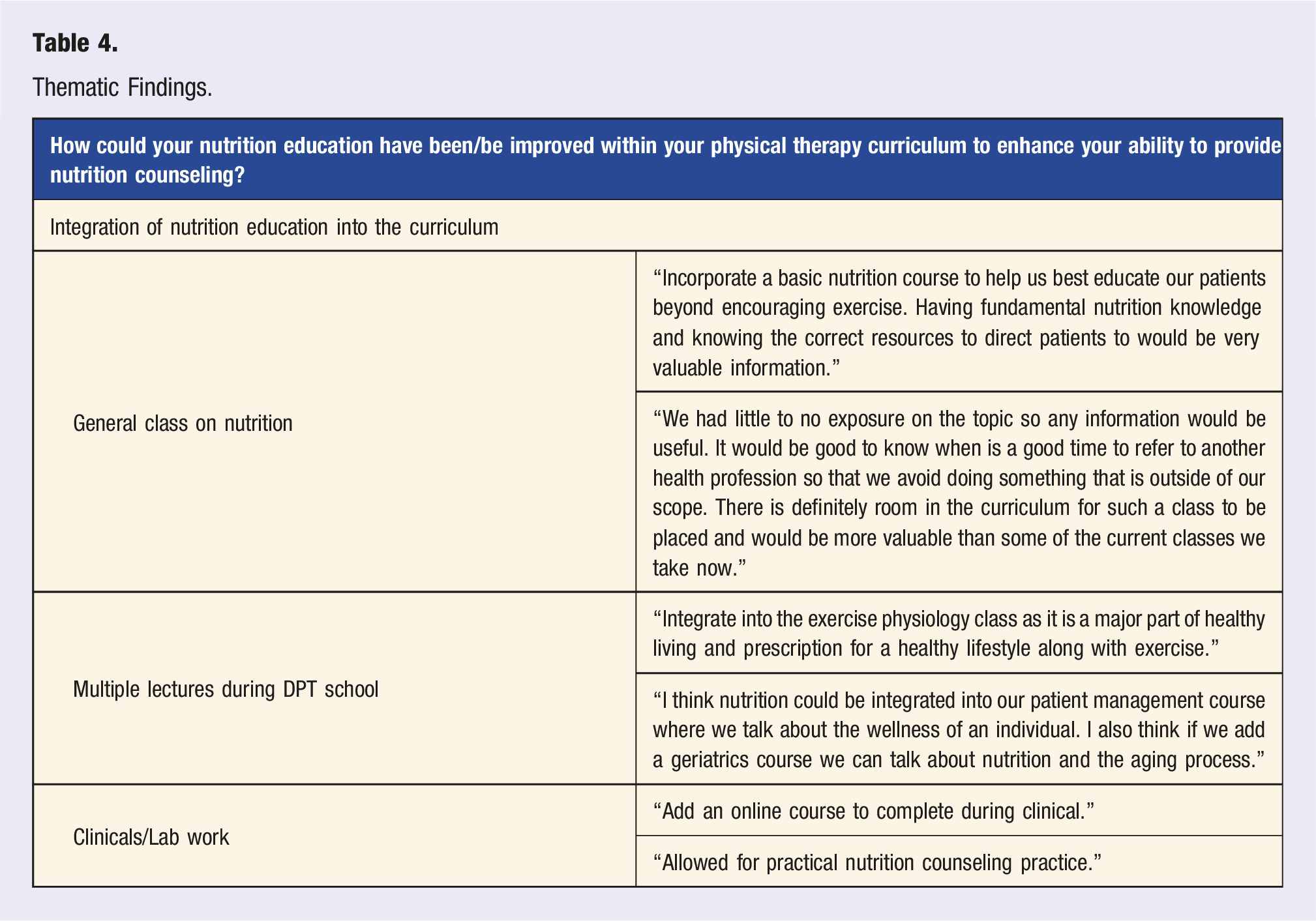
Theme Table 1
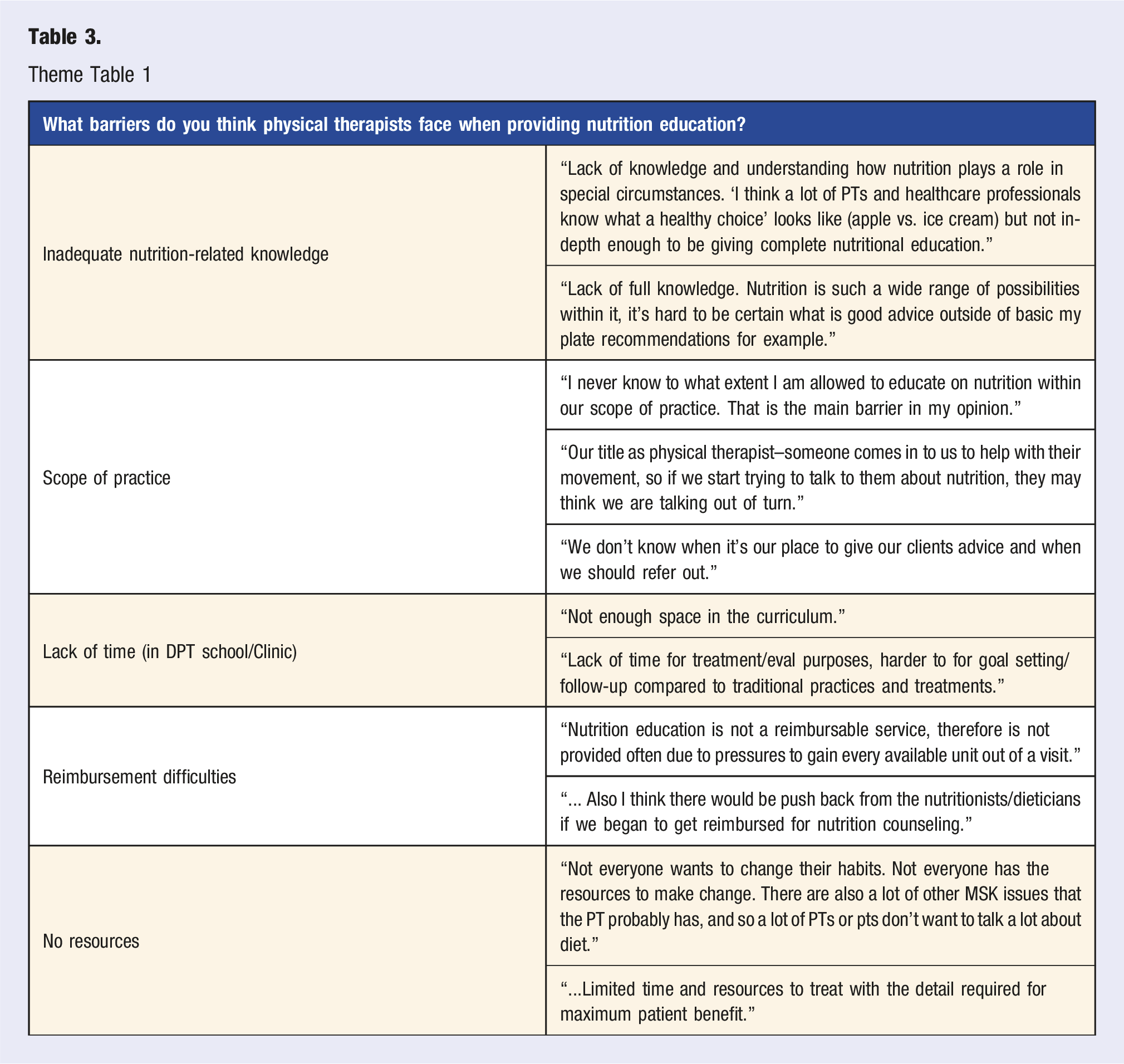
Thematic Findings.
Discussion
The purpose of the study was to assess the knowledge, attitude, and beliefs of nutrition among current physical therapy students. The NKT scores found from this study were lower than expected. Students scored an average of 15.09 points out of 28 total points, or 53.89%. Average NKT scores found by Long et al., for sports physical therapists, were 65.63%, and similar scores were found by Day et al., at an average of 70% for entry-level physical therapy students.9,10 However, it should be noted here that we did not use the same NKT as in the studies by Long et al. and Day et al., which might explain the lower NKT scores of our participants (this study’s NKT included also some geriatric specific questions). Despite our lower NKT scores, the students within this present study also reported less overall training in nutrition throughout their DPT education. According to Long et al., 30% of sports physical therapists received some form of nutrition training during their DPT program. 10 Day et al. found a similar finding of 25.6% of entry-level physical therapy students receiving formal nutrition training. 9 Of note, only 9.3% of students participating in this present study reported receiving some form of formal nutrition education during their DPT education. This difference in education may contribute to the similar differences seen in NKT scores between research studies.
When evaluating whether students have a preferred method of delivery, it seems that students would prefer nutrition education presented throughout their DPT program in the forms of either a mandated course, an elective course, and/or integrated throughout other courses and lab work.9,26 Walsh et al., 27 looked at the attitudes and nutrition knowledge in medical students after completion of an integrated nutrition curriculum compared to a stand-alone nutrition course. They found that medical students’ attitudes and knowledge about nutrition were not affected by the mode of nutrition education delivery, but students in the integrated curriculum may have felt their education was inadequate compared to taking a single, dedicated course. Regardless of the method of nutrition education, it is clear that additional nutrition education is desired for physical therapy students.
It was postulated that the survey data would show that physical therapy students would feel general nutrition education is within their scope of practice, in accordance with the APTA’s stance on nutrition within physical therapy. 8 However, through this study, it was found that only 33.1% of students agreed or strongly agreed that basic nutrition screening and patient education is within their scope of practice, and only 19.2% of respondents felt comfortable counseling clients on basic nutrition education. It is evident that there may be a misunderstanding among students pertaining to what is within their scope of practice regarding nutrition and physical therapy, and the lack of nutrition education may lead to reduced confidence pertaining to appropriate patient education regarding nutrition.
From this study, five main barriers to nutrition counseling within the field of physical therapy were found. They included inadequate nutrition-related knowledge, inappropriate scope of practice, lack of time, reimbursement difficulties, and no resources. Several of these barriers pertain to DPT education and several revolve around patient care. In order to develop well-rounded, educated students, we need to expand future curricula and clinical experiences to include topics including scope of practice and more specifically, the scope of nutrition education within the field of physical therapy. One potential opportunity for this could be through an interprofessional curriculum or course. Interprofessional education within healthcare occurs when students from two or more professions learn together, collaborate, and integrate purposeful information in an educational or clinical environment. 28 By allowing students the opportunities to learn about education pertaining to multiple professions, students may have a better understanding of the topic and scope of practice within their field.
The remaining barriers (reimbursement difficulties, lack of time, and no resources) likely will affect clinicians. Reimbursement difficulties may also correlate with a lack of resources and lack of time. If insurance companies do not see the value of educating patients on nutrition, nor understand the potential health benefits to this education, reimbursement difficulties may occur. If clinics begin having difficulty with reimbursement pertaining to nutrition education by physical therapists, employers may not endorse spending the time or resources on nutrition education for patients. However, numerous studies have found a correlation between eating patterns and overall health and well-being; moreover, Healthy People 2020 promotes healthy eating patterns in order to prevent chronic disease and injury.1-5 A key piece to this unsolved puzzle may be to further educate insurance companies on the potential health benefits and subsequent reduction in health care costs associated with educating patients on healthy eating patterns and lifestyle.
There were several limitations of this study. Firstly, we had a very low response rate on the survey. The data was self-reported and given via an online survey with no supervision provided. Therefore, there is potential that academic dishonesty occurred, specifically during the NKT portion of the survey. There was a large sample bias within this study, with 78.8% of respondents being female and 66.89% completing their DPT education at the authors’ primary institution. However, according to datausa.com, 68.5% of the physical therapy workforce in 2018 was female. 29 Additionally, this current study included only 28 questions to assess nutrition and likely, a more in-depth test is required to effectively cover all aspects of nutrition.
Conclusion
The results presented in this study suggests that entry-level physical therapy students require more education on basic nutrition and want to receive more education throughout their doctoral program. However, further research is needed to determine the best methods for disseminating this education throughout DPT curricula, especially as the scope of practice regarding nutrition differs from state to state. We can conclude there is a gap in knowledge of nutrition among physical therapy students and the findings may suggest that providing a general nutrition course throughout DPT education may lead to greater student and clinician knowledge of nutrition, and subsequent utilization of a holistic approach to practice. Additional research among physical therapists of varied experience levels and specialties could garner different results and warrants further investigation.
Supplemental Material
Supplemental Material - Knowledge, Attitudes, and Beliefs of Nutrition Among Physical Therapy Students
Supplemental Material for Knowledge, Attitudes, and Beliefs of Nutrition Among Physical Therapy Students by Lydia Moore, PT, DPT, Kailey Snyder, PhD, MS, and Anastasia Kyvelidou, PhD, MS in American Journal of Lifestyle Medicine
Footnotes
Declaration of Conflicting Interests
The author(s) declared no potential conflicts of interest with respect to the research, authorship, and/or publication of this article.
Funding
The author(s) received no financial support for the research, authorship, and/or publication of this article.
Ethical Approval
The protocol was approved by the Institutional review board of Creighton University.

Supplemental Material
Supplemental material for this article is available online.
References
Supplementary Material
Please find the following supplemental material available below.
For Open Access articles published under a Creative Commons License, all supplemental material carries the same license as the article it is associated with.
For non-Open Access articles published, all supplemental material carries a non-exclusive license, and permission requests for re-use of supplemental material or any part of supplemental material shall be sent directly to the copyright owner as specified in the copyright notice associated with the article.
