



Abstract
Resistance training (RT) is a form of exercise that provides numerous health benefits. One barrier to participation may be the technical demands associated with some exercises. While recommendations for RT, including the number of repetitions, sets, rest, and training loads are established, recommendations for exercise selection have not been addressed. We used a Delphi-type method in three iterative surveys. In the first survey, 17 experts rated the technical complexity of 77 different strength training exercises as having low, moderate, or high technical demands. A second survey was generated based on the first, such that exercises receiving a majority high complexity vote were removed. In the second survey, experts rated the remaining exercises as either appropriate or too advanced for a novice. Exercises were deemed appropriate if 70% agreement was reached. Lastly, experts rated exercises as being appropriate for adults over the age of 60. Experts agreed that 41 different exercises were appropriate for novices and that 32 of the exercises were appropriate for novice adults over the age of 60. Our findings provide recommendations for program design to compliment already established recommendations for RT of repetitions, sets, rest periods, and training loads.
“This study provides researchers, practitioners, and participants with a rationale for exercise selection to compliment previous recommendations on the quantitative components of programming.”
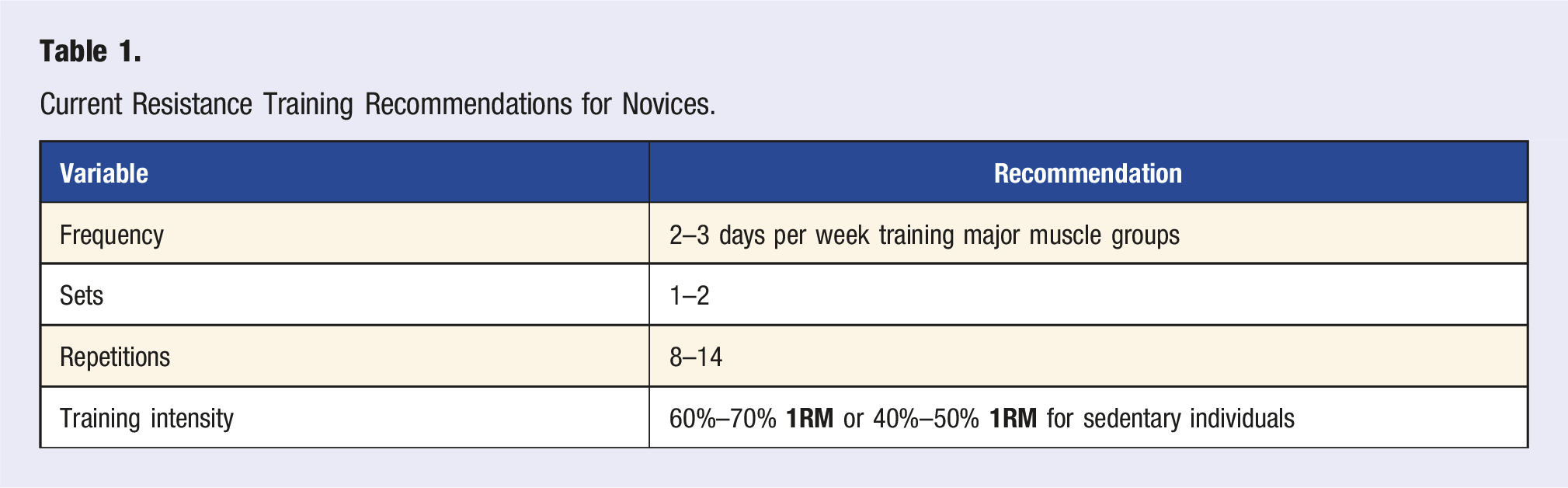
Current Resistance Training Recommendations for Novices.
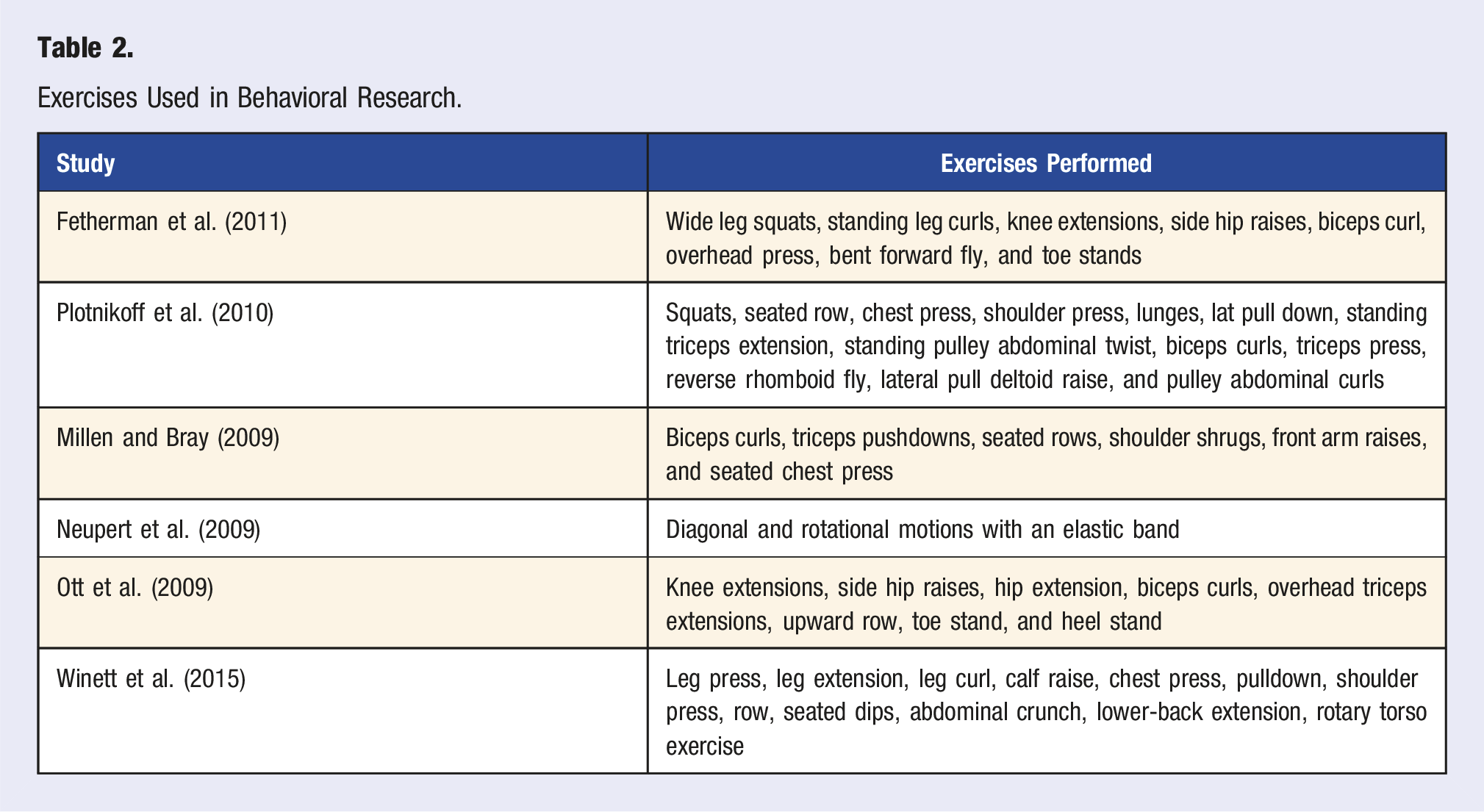
Exercises Used in Behavioral Research.
Resistance Training as a Skill
RT is a complex form of exercise that requires knowledge of training splits, repetition schemes, appropriate rest periods, and more. Movements such as overhead pressing, lunging, squatting, and push-ups are foundational skills with which competency can be developed to enhance physical activity participation across the lifespan. 15 RT exercises can be categorized into movement patterns 16 such as a squat, a push or pull with many variations existing under these “umbrella” movement patterns. RT movements primarily occur in the sagittal plane. 17 Movement patterns are characterized by specific joint actions. For example, the squat movement pattern is characterized by eccentric knee and hip flexion followed by concentric knee and hip extension. Other movement patterns include the hinge (hip bridges, Romanian deadlifts), horizontal pushes (push-ups), horizontal pulls (rows), vertical pushes (overhead press), and vertical pulls (pull-up). Each of these patterns contains exercise variations of different levels of complexity.
Successful RT performance is not due solely to muscular strength.18,19 Both load and task difficulty must be considered. Higher loads increase the muscular demands (i.e., recruitment of more muscle fibers)
20
and higher levels of complexity increase the technical difficulty of the exercise. Complexity may be enhanced by performing unilateral exercise variations, increasing movement speed, the demand for balance, coordination, postural, and joint stability.
21
Complexity can also be increased by moving from single joint exercises (e.g., leg extensions) to multi joint exercises (e.g., squats) or from multi joint exercises (e.g., squats) to multi-segment exercises (e.g., squat to overhead press).
21
For example, a machine-based exercise that trains the quadriceps such as the leg extension is less technically demanding than a back squat which also trains the quadriceps (see Figure 1). Example of Nominal Task Difficulty for Exercises that Train the Quadriceps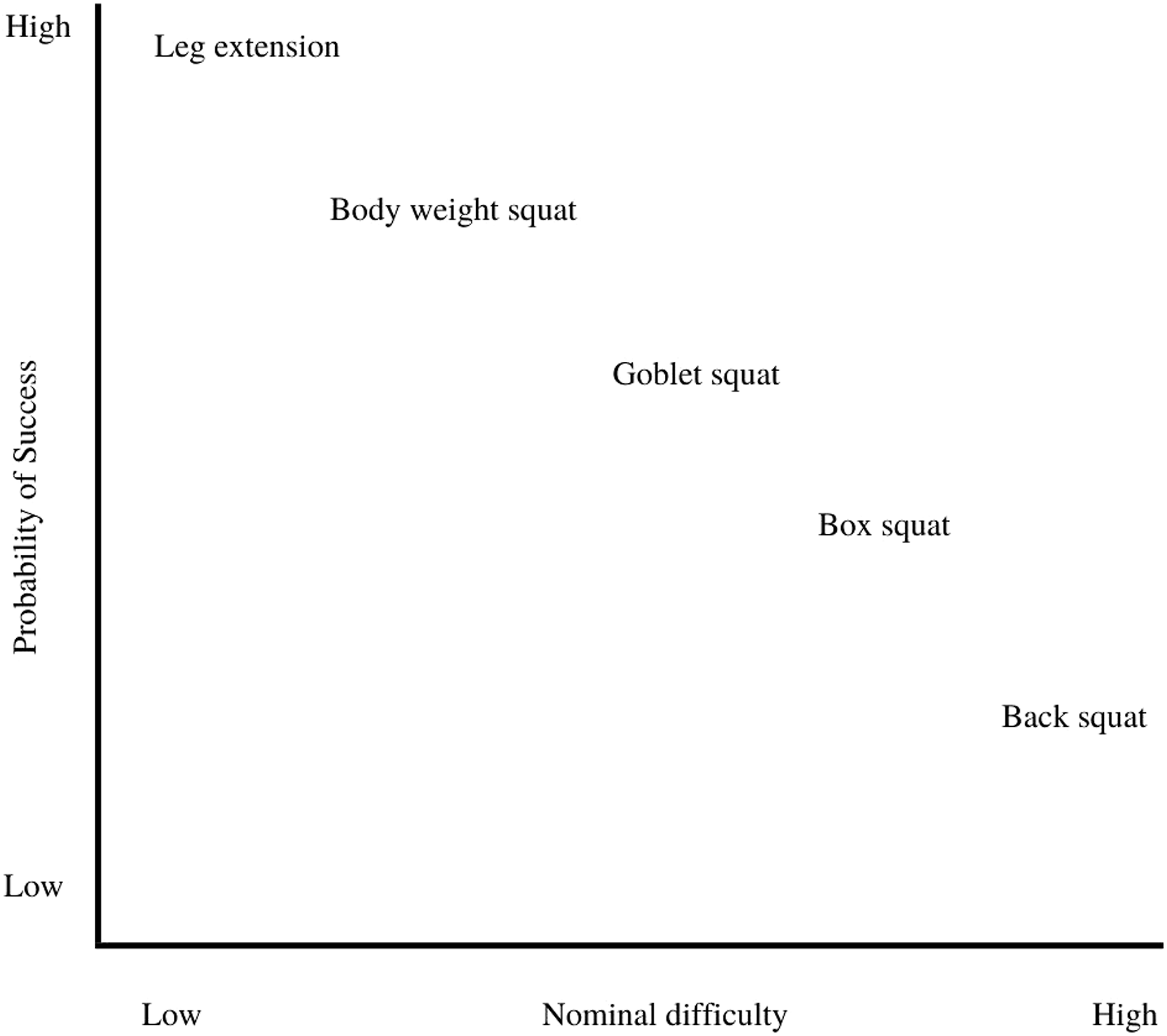
Further, when selecting RT exercises, nominal and functional task difficulty should be considered. The nominal difficulty of a task is considered to reflect a constant amount of task difficulty, regardless of the skill level of the individual. For example, across the complexity spectrum of “squat” movement patterns, a leg press is nominally easy, a body weight squat (increased complexity) is more challenging, a band resisted squat (increased load) is even more challenging, and a back squat (increased load and complexity) is the most challenging of these variations. Functional task difficulty refers to how challenging the task is relative to the skill level of the individual performing the task and to the conditions under which it is being performed. 22 Functionally, a back squat may be easy for an expert but advanced for a novice while still being a nominally challenging exercise.
Advancing Resistance Training Recommendations with Qualitative Components
For independent RT promotion, previous studies, to some extent, have been performed initially in structured settings with supervision and access to a variety of equipment. During follow-up periods, participants are expected to perform RT independently.9-14 These interventions may be costly in terms of equipment and time. Programs with built-in low technical demands may reduce the time needed (and subsequently the costs) to gain technical competency. Because the uptake of strength training reduces the risk of chronic diseases, mortality, obesity, disability, anxiety, and depression,23-25 it is of significant public health importance to provide complete details on RT prescription. Currently, only quantitative components of programming (e.g., reps, sets, load) exists whereas qualitative components (exercise selection) have been largely ignored.6-8 This expert consensus study sought to fill this missing gap by developing recommendations for resistance exercise selection. This information, in conjunction with established quantitative guidelines will provide clear RT prescription details for novices. Additionally, recent recommendations for adults over the age of 60 state that beginner older adults should perform 1 set of 10–15 repetitions at a resistance that is tolerated. Older adults should train major muscle groups through multi-joint movements using free weights and or machines on at least two nonconsecutive days per week. 26 Therefore, to supplement these recent guidelines we also aimed to provide guidance for RT exercise selection for healthy adults over the age of 60.
Methods
The study was approved by the University’s Institutional Review Board (IRB Protocol #22163R-E). To obtain consensus on exercise selection for novices, a Delphi-type method was utilized. This method is an iterative approach using repeated rounds of voting to determine group consensus from experts for topics where opinion is important. 27 Initially, a comprehensive list of exercises was created by examining published sources.16,28 Additionally, once a list was developed colleagues were contacted to add exercises to the list that they believed may be appropriate for novices. When feedback was obtained, the exercises were separated into those that used machines, bands, dumbbells, and body weight.
Selection of Experts
Our approach was to select individuals who have knowledge of exercise prescription across a range of populations in terms of clinical practice and/or research experience. Experts were chosen based on experience in personal training, strength and conditioning, and exercise prescription. We used a purposive sampling approach by contacting known experts for survey 1 and survey 2 and 3. As survey 2 and 3 were used to make final recommendations, we sought experts with a minimum of 10 years of experience as Delphi panel members.
Procedures
In the first survey round, an invitation email describing the study was sent to twenty experts asking them to participate. Of the twenty contacted experts, seventeen completed the survey. Ratings were provided via Qualtrics, a web-based software program for dispensing surveys. Experts were instructed to rate each exercise as requiring low, moderate, and high levels of skill and to rank each exercise on a 0–10 scale for difficulty, with 0 representing the lowest levels of technical difficulty and 10 representing extreme technical difficulty. Experts were instructed to focus on the technical components of the exercise rather than the strength demands of the exercise.
The second survey was based on the initial questionnaire. Exercises from the first survey that were categorized as having high skill demand were removed. The lead author contacted 8 experts in strength and conditioning based on known history of experience. In this survey, exercises were presented, and raters were asked to dichotomize exercises as either appropriate for a novice or too advanced for a novice. Novice status was defined as an untrained individual with no RT experience or who have trained but not for several years. 8 Raters were asked to only think of the technical component of the exercise and read the following: “For each of the following exercises please rate them as whether they are appropriate for a novice (untrained individuals with no RT experience OR who have not trained for several years) or not. Please only think of the technical component. For example, a leg extension may be challenging if the weight is heavy, but this difficulty is due to the weight, not the technical component.”
Experts were given two weeks to complete the survey. After experts completed the survey, inter-rater agreement was calculated by assessing the total number of agreements between raters divided by the total possible number of agreements between raters. While there is no reference point for agreement on exercise selection, we decided that if there was a majority vote that the exercise was appropriate for a novice and if agreement between raters reached 70%, the exercise would be deemed appropriate for a novice.
Survey 3 followed the same procedure as survey 2. From survey 2, exercises which were rated as appropriate for a novice were used to create survey 3. Experts read the same script prior to rating each exercise but were instructed to think specifically about healthy adults who were 60 years or older when making their decision.
Survey 1 Results
Experts (n = 17) included physical therapists, personal trainers, and strength and conditioning coaches. Fifteen experts were male. Eight participants had a bachelor’s degree, five had a master’s degree, and four had a PhD or a doctorate in physical therapy. On average, participants had 9.5 years of experience of training.
Machine Exercises
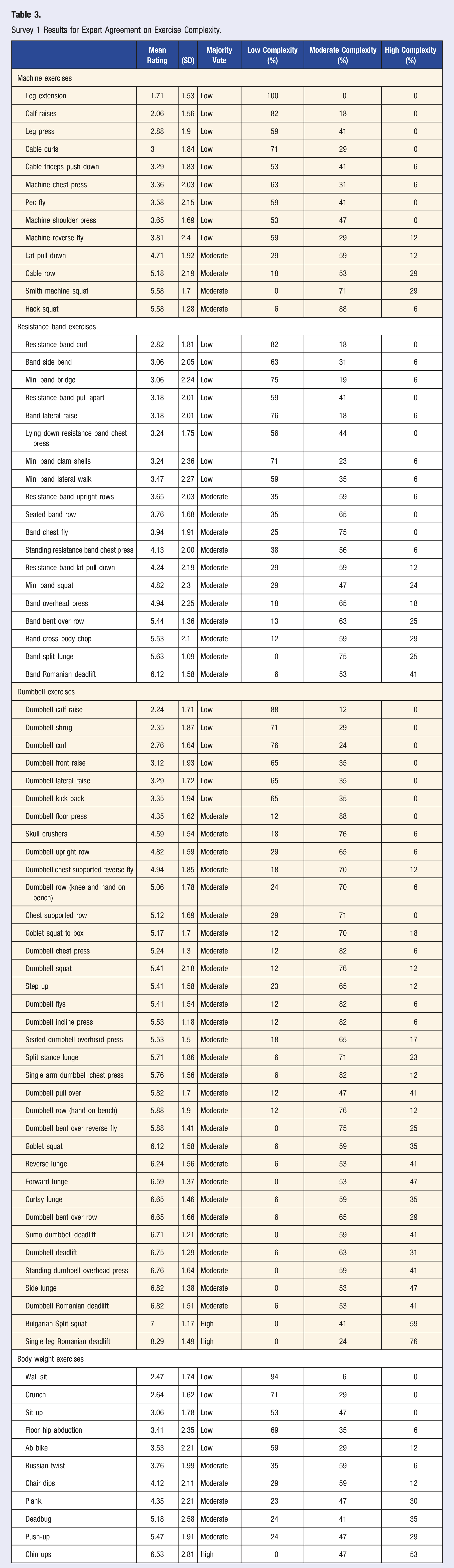
Survey 1 Results for Expert Agreement on Exercise Complexity.
Resistance Band Exercises
Eight of the resistance training band exercises received a majority vote as having low complexity. No exercises received a unanimous vote of having low complexity. The band split lunge received no votes as a low complexity exercise. On average, raters ranked the band exercises as having a difficulty of 4.1 out of 10 (Table 3).
Dumbbell Exercises
Six of the dumbbell exercises received a majority vote as having low complexity. No exercises received a unanimous vote of having low complexity. The dumbbell bent over reverse fly, forward lunge, sumo deadlift, standing overhead press, side lunge, Bulgarian split squat, and single-leg Romanian deadlift all received no votes as low complexity exercises. On average, raters ranked the dumbbell exercises as having a difficulty of 6.5 out of 10 (Table 3).
Body Weight Exercises
Five of the body weight exercises received a majority vote as having low complexity. No exercises received a unanimous low complexity vote. The chin up received no low complexity votes. On average, raters ranked the body weight exercises as having a difficulty of 4.0 out of 10 (Table 3).
Survey 1 Discussion
In the first round of the survey, three exercises received a majority vote as having high levels of complexity. Forty-eight were rated as having moderate complexity and twenty-eight were rated as having low complexity. Consistency was observed when comparing the 10-point scale to ratings of complexity for each modality. Raters ranked low complexity exercises as less difficult on the 10-point scale for every exercise, and raters ranked all the high complexity exercises higher than the moderately complex exercises.
Survey 2 Results
Of the 8 experts, one participant had a bachelor’s degree, five held master’s degrees and three had a PhD. Six of the experts were male. On average participants had 18.1 years of experience training people (range 10–51 years).
Machine Exercises
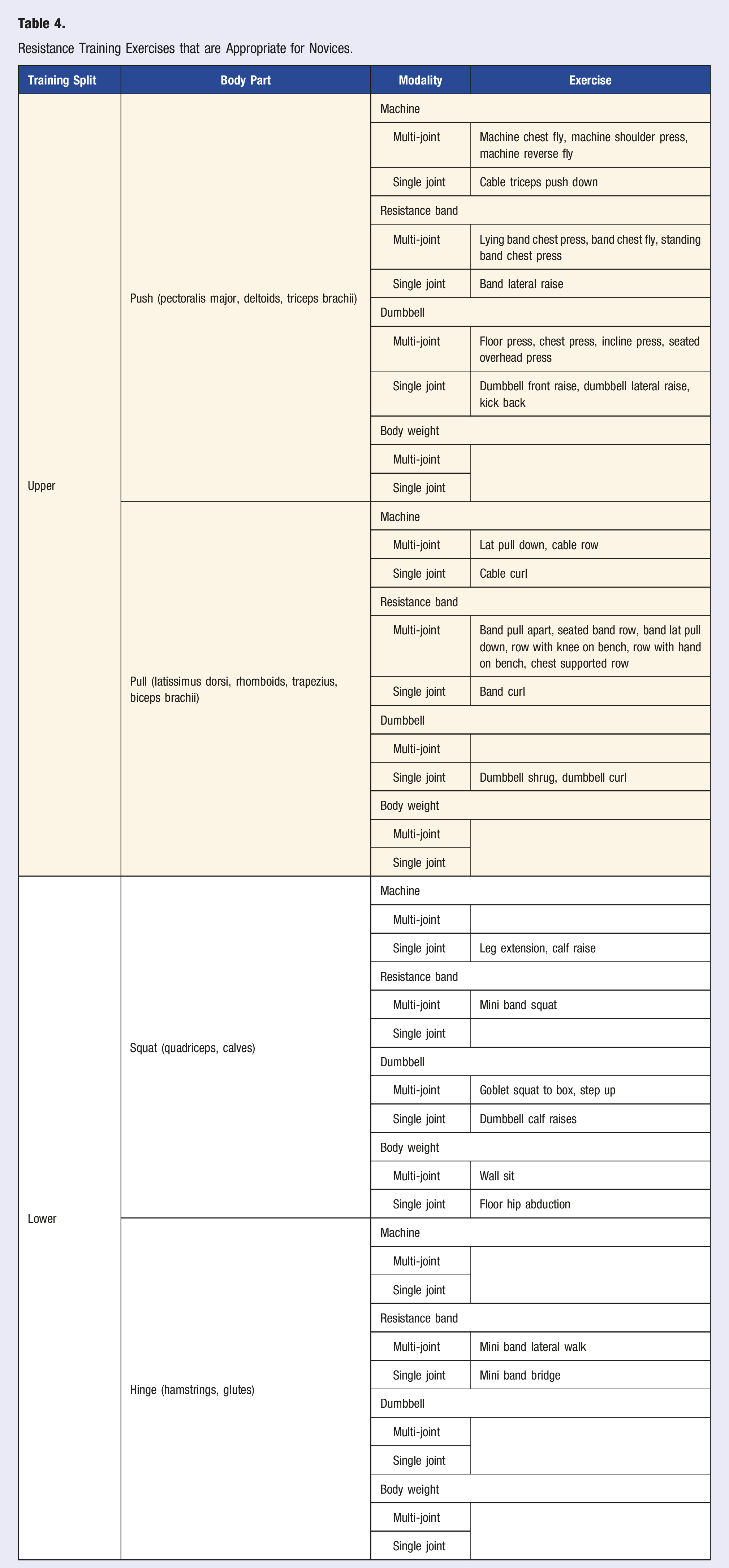
Eleven machine-based exercises received a majority vote as being appropriate for a novice. Of those, 9 received an overall agreement of 70% or higher. These exercises included the leg extension, calf raise, cable curls, cable triceps push-down, machine chest press, machine shoulder press, machine reverse fly, lat pull down, and cable row (Figure 2). Interrater Agreement for Machine Exercises.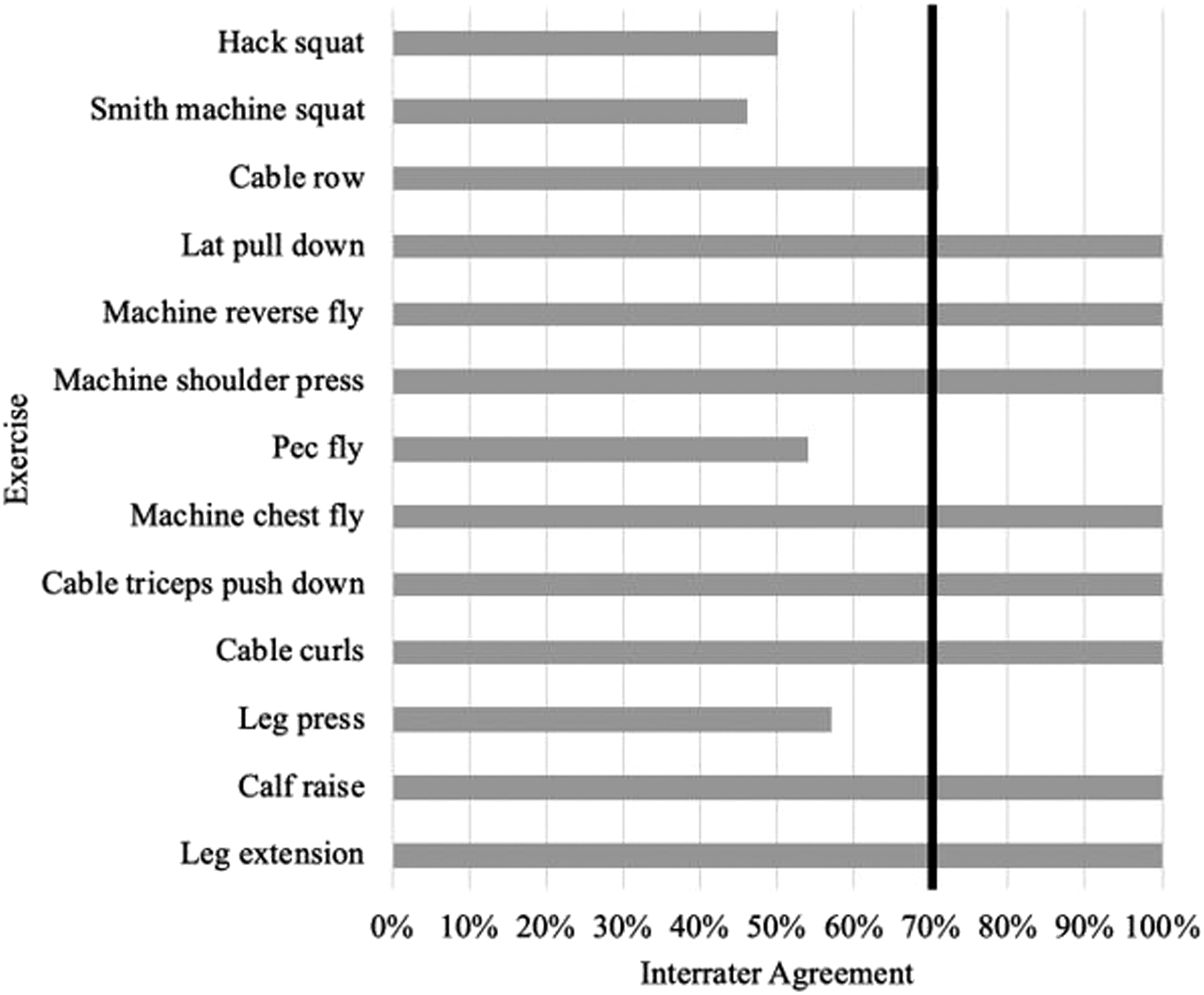
Resistance Band Exercises
Except for the band Romanian deadlift and band cross body chop, each band exercise received a majority vote as being appropriate for a novice. Of those, 12 received an overall agreement of 70% or higher. These exercises included the resistance band curl, band side bend, mini band bridge, band pull apart, band lateral raise, lying band chest press, mini band lateral walk, seated band row, band chest fly, standing band chest press, band lat pull down, and mini band squat (Figure 3). Interrater Agreement for Resistance Band Exercises.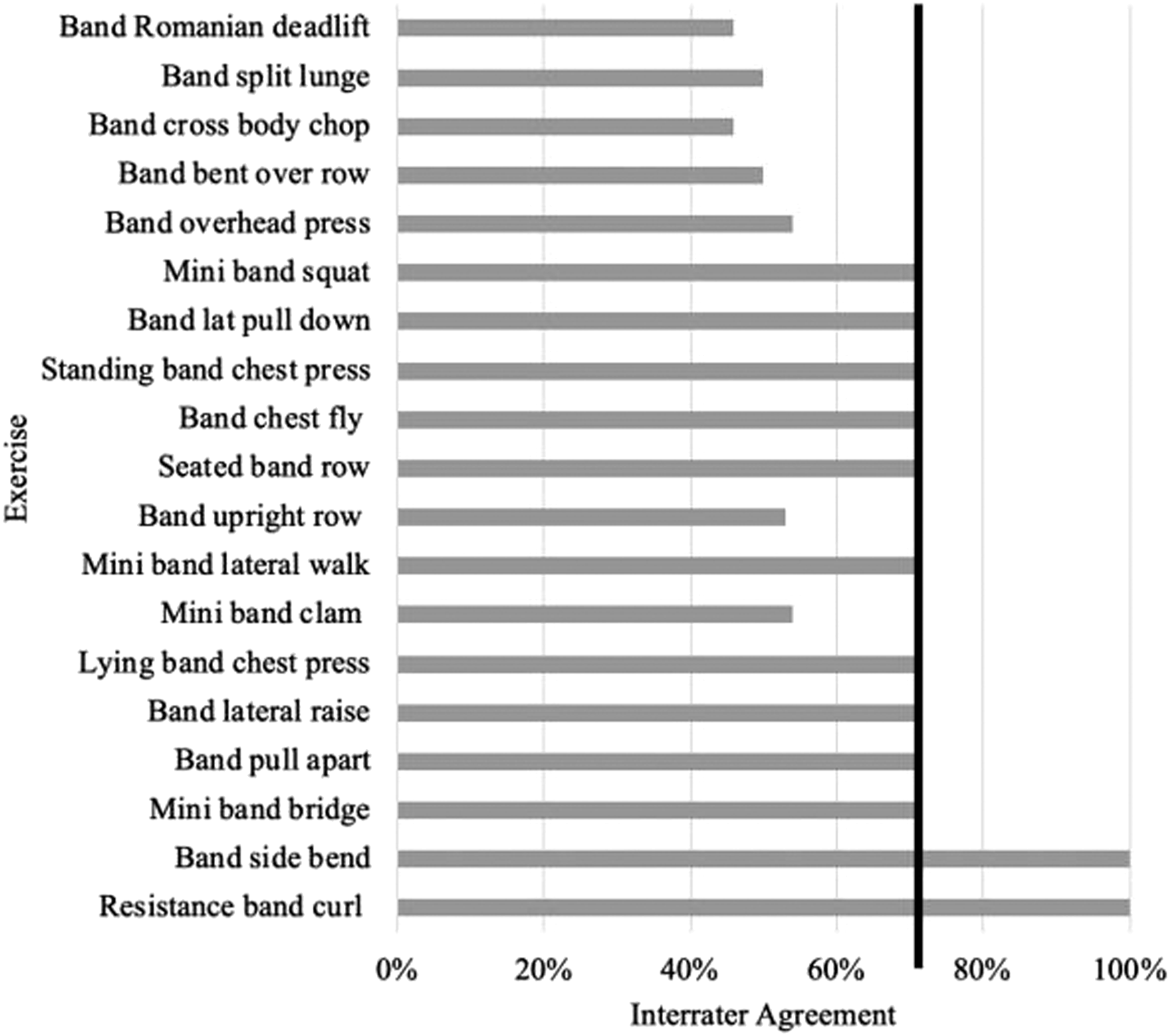
Dumbbell Exercises
Twenty-five dumbbell exercises received a majority vote as being appropriate for a novice. Of those, 15 received an overall agreement of 70% or higher. These exercises included the dumbbell calf raise, dumbbell shrug, dumbbell curl, dumbbell front raise, dumbbell lateral raise, dumbbell kick back, dumbbell floor press, dumbbell row with knee on bench, chest supported row, goblet squat to box, dumbbell chest press, step up, incline press, seated overhead press, and dumbbell row with hand on bench (Figure 4). Interrater Agreement for Dumbbell Exercises.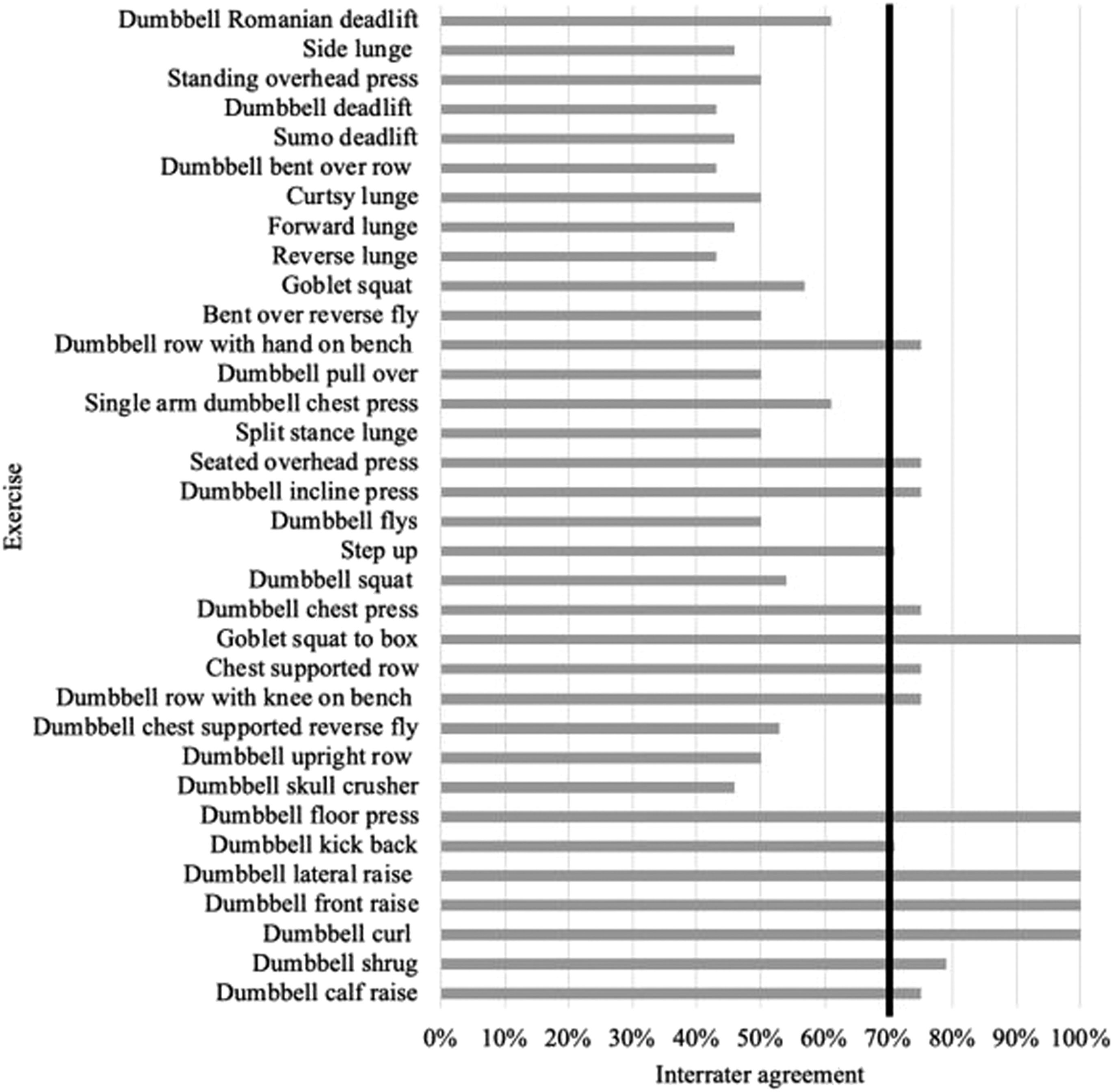
Body Weight Exercises
Eight body weight exercises received a majority vote as being appropriate for a novice. Of those, 5 received an overall agreement of 70% or higher. These exercises included the wall sit, crunch, floor hip abduction, ab bike, and plank (Figure 5). Interrater Agreement for Body Weight Exercises.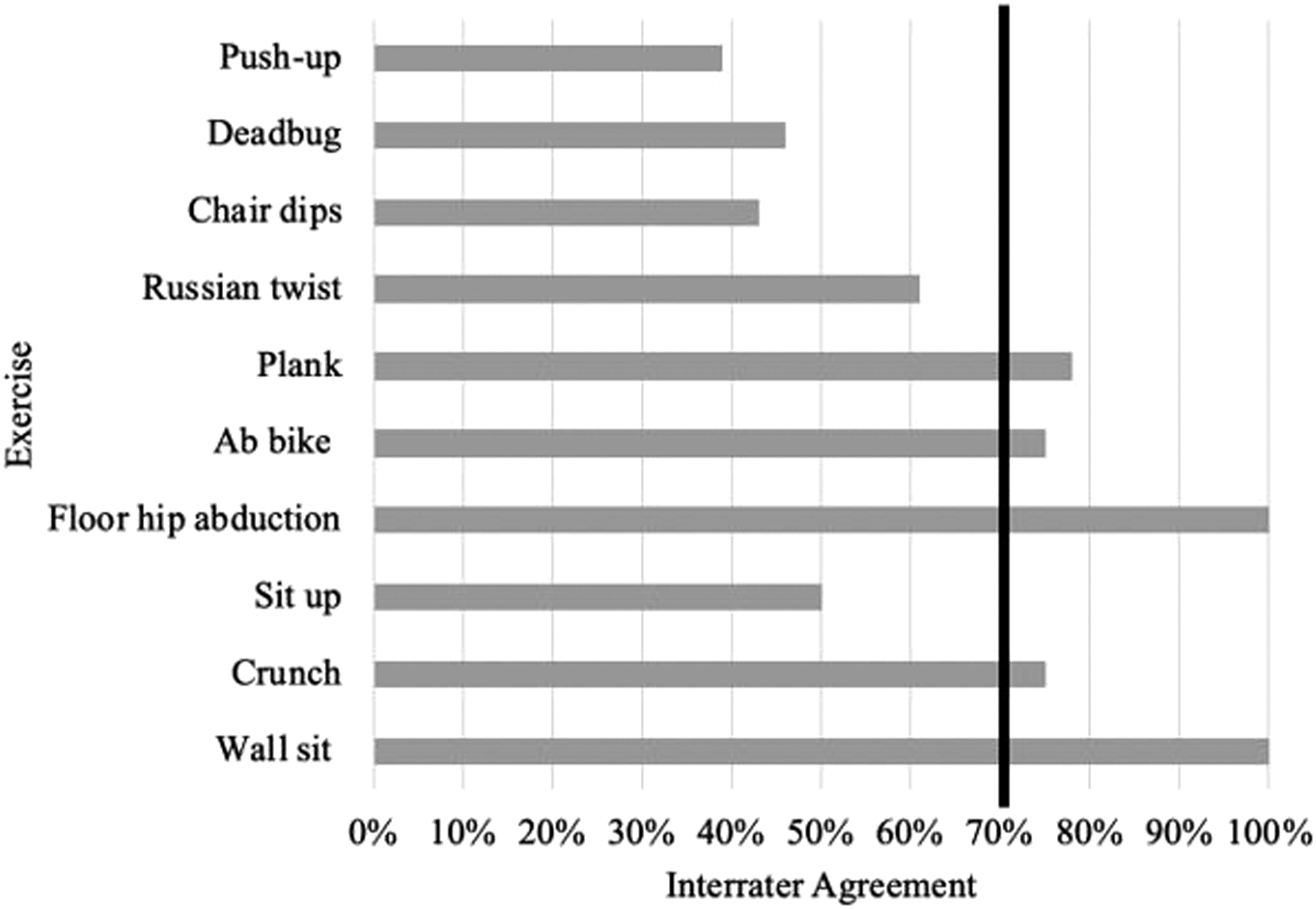
Survey 3 Results
Seven of the eight original experts responded to survey 3 and nine additional exercises did not meet the threshold for agreement for healthy novice adults 60 years or older. These exercises included the mini-band lateral walk, band chest fly, dumbbell kick back, dumbbell row with knee and hand on bench, incline press, seated dumbbell overhead press, sit up, ab bike, and plank.
Discussion
The purpose of this paper was to obtain expert consensus for exercise selection amongst novices. Recommendations describing the quantitative aspects (i.e., reps, sets, load, rest periods) of RT have been well established, while exercise selection had yet to be addressed. Centered on established movement patterns, we developed a list of exercises where successful performance is expected based on novice skill level. Additionally, we decomposed exercises based on modality (e.g., machines, resistance tubing, dumbbell exercises, body weight). To our knowledge, this is the first paper to provide an expert consensus on RT exercise selection based on skill level. While guidelines do exist for RT participation, insufficient guidance is provided for qualitative components.
Our second survey dichotomized choice selection for each exercise and was conducted with experts who had a minimum of 10 years of experience in resistance exercise prescription. Experts agreed that 41 different exercises from four different RT modalities were appropriate for healthy adult novices. Based on the breadth and depth of the experience of the experts, this survey provides a strong rationale for exercise selection for future research with novices. In the last survey, nine additional exercises were eliminated, leaving 32 exercises for novice adults over the age of 60. For older adults, experts failed to reach 70% agreement on exercises that involved balance (mini band walk), overhead movements (incline press, overhead press), and spinal flexion (sit up, ab bike).
Compared to aerobic training, RT has more variety and a greater technical demand. From a practical standpoint, this may serve as a barrier to participation as individuals may not know what to do for RT. Furthermore, behavioral research to promote RT would benefit from guidelines that prescribe safe exercises for novices. By providing recommendations for novices, researchers can implement programs that do not require as rigorous contact periods because safe technique, via low technical demands, is built into the program.
Last, it is also important to note that progression in load can occur without progressions in exercise complexity. For example, going from seated to standing increases exercise complexity. 21 A person may go from a seated row to a bent over row using the same weight. In this case, complexity is enhanced, though weight is not. However, a person with lower technical skill can still increase their muscular strength by enhancing load on a low technical demand (e.g., going from seated band resisted row with 20lbs of resistance to 30lbs of resistance). In this expert consensus study we were able to provide exercise selection recommendations for individuals who are novices to resistance training. Providing a starting point for novices where successful technical performance is expected can foster competency and further participation in RT. The results of the expert consensus also supplement current quantitative recommendations.
There were limitations which should be considered. Several potentially appropriate exercises were missing, and regressions were not included. For example, there were no body weight push-exercises that were deemed appropriate for novices. However, there are many push-up regressions that could be appropriate (e.g., push-ups on knees, wall push-ups). Additionally, missing from machine-based exercises for the hamstrings were the lying hamstring curl and seated hamstring curl. Next, many of the exercises which were rated as appropriate for a novice came from the upper body category. Last, while a list of low skill demand exercises was developed, this list was not directed at participants with chronic conditions who may have functional limitations. Thus, when selecting exercises, these recommendations should be used in conjunction with good clinical judgment.
Conclusion
Resistance Training Exercises that are Appropriate for Novices.
Footnotes
Declaration of Conflicting Interests
The author(s) declared no potential conflicts of interest with respect to the research, authorship, and/or publication of this article.
Funding
The author(s) received no financial support for the research, authorship, and/or publication of this article.
