



Abstract
Charity sports events, specifically 5K events, reach large numbers of people and may help promote physical activity (PA). Few studies exist applying Self-Determination Theory (SDT) to participation in these events. This study examined changes in SDT constructs of Autonomy, Competence, and Relatedness satisfaction in participants (n = 207) of charity 5K events and (2) examined relationships among post-event SDT constructs, PA, and intention to complete future events. Participants completed online surveys before and after a charity 5K event using the Psychological Needs Satisfaction in Exercise Scale, Behavioral Regulation in Exercise Questionnaire-2, and International Physical Activity Questionnaire-Short Form. Repeated measures analysis of covariance analyzed the first purpose and regression the second. Competence satisfaction increased (P = .04) and relatedness satisfaction decreased (P = .04). Higher post-event relatedness satisfaction was associated with intention to complete future charity 5K events (OR = 1.05, 95% CI: 1.00, 1.11). Higher post-event autonomy, competence, and relatedness satisfaction and intrinsic motivation were associated with greater post-event MET-minutes of PA (all P < .05).Findings may be useful for promoting PA and helping organizations increase participation. Specifically, events facilitating relatedness among participants may lead to repeat participation as these events have opportunities to fulfill SDT outcomes and increase post-event PA.
“...charity sports events may foster more enjoyment and intrinsic behavioral regulation for PA compared to external behavioral regulation...”
completing charity 5K races leads to an increase in competence for physical activity
Introduction
In recent years, the popularity and prevalence of charity sports events 1 have increased. One of the most popular of these events is the 5K race as this event welcomes participants of all ages, physical activity (PA), and fitness levels from recreational walkers to competitive athletes. Many of the organizations hosting the events create family-friendly atmospheres by offering games, music, or other activities to enjoy before and after the event. This added time with participants provides leaders of the host organization the opportunity to share messages about their mission and rally support among participants for the cause. This behavior of volunteerism through PA in charity sports events has been termed “physical philanthropy.” 2
Charity sports events such as the 5K rely on participants’ willingness to volunteer time and finances through PA, and many American adults do not regularly engage in PA.3,4 Combining sport and charity has been referred to as “cause-related marketing.”5,6 As such, marketing and promotion strategies can be tailored to increase participation in charity sports events and physical philanthropy,7,8 benefiting the cause and the participants. Some research has employed and expanded public relations theory by studying participation in nonprofit fundraising events such as Relay for Life benefiting the American Cancer Society, Race for the Cure benefiting Susan G. Komen, and March for Babies benefiting the March of Dimes.9,10 However, while these are all PA events, this research focused on motivations related to the cause and communication about these events. Other recent research on participation in charity sports events has expanded into social and behavioral sciences to understand how these events may have potential for leveraging continued PA after the event.11-13 For example, in a descriptive study by Bernhart and colleagues, 11 they determined that a local charity sports event successfully recruited over 6000 participants to walk or run to support breast cancer. Funk and colleagues 12 explored how charity sports events may help participants develop positive attitudes toward PA. Lastly, Lane and colleagues 13 conducted a randomized trial to understand how to leverage PA networks in the community in an insufficiently active population. The current study builds on this existing research by applying Self-Determination Theory (SDT) to examine participant motivations and outcomes to improve the understanding of how organizations and researchers may work together to promote PA around these events. As organizations increase their understanding of participant motivations for supporting charities through PA, they may identify additional methods to tailor recruitment, marketing, and promotion efforts to reach more individuals.
Previous studies of motivations for participating in charity sports events have predominantly been exploratory or used a less common theory in community health and behavior research.14-17 For example, Bunds and colleagues 16 used semi-structured interviews to explore participant attachment to religious charities hosting sport events, and Rundio and colleagues 17 compared participant motives in cause-related sport events and non–cause-related sport events. Filo and colleagues used the Psychological Continuum Model to explain factors such as attachment and camaraderie in a charity sports event.14,15 Thus, few have attempted to explain marketing and promotion of PA through charity sports events using a behavior theory.5,18 Therefore, theory-driven approaches to increasing our understanding of best practices for marketing and promoting PA in charity sports events are needed. SDT 19 has been applied in diverse settings to better understand PA behaviors. 20 According to SDT, individuals will engage in behaviors when intrinsic motivation is high. Intrinsic motivation can be increased when a person’s needs for autonomy, competence, and relatedness are met as a result of performing a behavior. Intervention and observational studies have demonstrated that when engaging in PA, some individuals fulfill needs for autonomy (ie, volition to do a behavior), competence (ie, experience mastery), and relatedness (ie, shared connections with others),21-23 thereby enhancing intrinsic motivation to do PA.24,25 One study explored SDT and PA in participants of a non-elite mass participation sports event, 26 yet no studies could be found that examined the application of SDT to PA in charity 5K events.
Researchers’ descriptions of participant motivations and experiences in charity sports events often are indicative of SDT tenets. For example, researchers have identified that participants in charity sports events experienced feelings of accomplishment 27 and camaraderie, 15 which may mirror the SDT needs of competence and relatedness, respectively. Subjective norms was included in other research on PA-related fundraising events9,10 and subjective norms are similar to the relatedness variable of SDT. Other studies found that participants fulfilled their desires to support the charity,14,16,28,29 which may connect to meeting one’s need for autonomy to select the event benefiting a specific charity. These studies, among others,1,30 report findings similar to constructs of SDT. Previous findings related to variables like those in SDT provide a rationale for studying SDT in the context of 5K events benefiting nonprofit organizations. Therefore, SDT was selected to guide this study believing there may be high potential of future charity sports events to recruit certain groups of people who might not otherwise participate in these events.
In the context of charity sports events, specifically the popular 5K race, we could not identify any studies that examined SDT and PA. One study found that event achievement was associated with intrinsic regulation, but this event was longer than 5 km which may dissuade less competitive individuals from participating. In addition, the authors did not assess needs satisfaction and did not apply the full theory. 26 Understanding the relationships of SDT and PA in charity sports events such as the 5K may help identify leverage points8,31 for reaching more people through satisfying needs through the events as well as how to promote PA after completing the events.
Therefore, the primary goal of this research is to apply SDT to PA in the context of the charity 5K to help researchers and nonprofit organizations understand how to reach more people and promote PA. First, we examined changes in participants’ needs satisfaction for autonomy, competence, and relatedness for PA from before to after completion of a charity 5K event. We hypothesized that individuals participating in the event would report increased needs satisfaction of autonomy, competence, and relatedness for PA from pre- to post-event. Second, we examined whether post-event needs satisfaction and intrinsic motivation were associated with post-event self-reported PA and intention to complete future charity 5K events. We hypothesized that higher post-event needs satisfaction and intrinsic motivation would be positively associated with participants’ post-event self-reported PA and intention to complete future charity 5K events.
Methods
Study Design and Sample
We recruited a convenience sample of individuals (n = 207) registered for local charity sports events of 5K distance or shorter in a pre-post study. Inclusion criteria were (1) 18 years or older, (2) registered to participate in a charity sports event between August 2018 and December 2018, (3) provided online informed consent, and (4) completed pre- and post-event surveys. The University of South Carolina Institutional Review Board approved study procedures.
Recruitment and Data Collection
Charity sports events of 5K distance or shorter in the Columbia, SC, area were identified through a local running website and additional online searches. The first author contacted leaders for each event by email prior to the event, asking to share information about the study with their event registrants.
Data were collected through online surveys. Participants were recruited in 1 of 3 ways. First, the event leader provided an email list of registered participants to the first author and individual email invitations were sent. Second, in some instances, the event leader(s) sent an email on behalf of the first author. Lastly, some event leaders agreed to only share an announcement on social media. Participants were eligible to complete the pre-event survey up to 3 hours before the event start time.
Post-event surveys were sent to the same participants who completed the pre-event. Participants were sent 3 requests at 2-, 4-, and 6- week post-event to complete their survey. Participants who completed both surveys were given the option to be entered into a drawing for 1 of ten $50 incentives.
In total, 65 event organizers were contacted regarding the study. Three-hundred fifty-seven participants started the pre-event survey. Two-hundred eighty participants (78%) were sent a post-event survey. In total, 207 participants (74% response rate of the 280 eligible) were included in the final sample.
Measures
Description of Measures Included in the Pre- and Post-Survey.
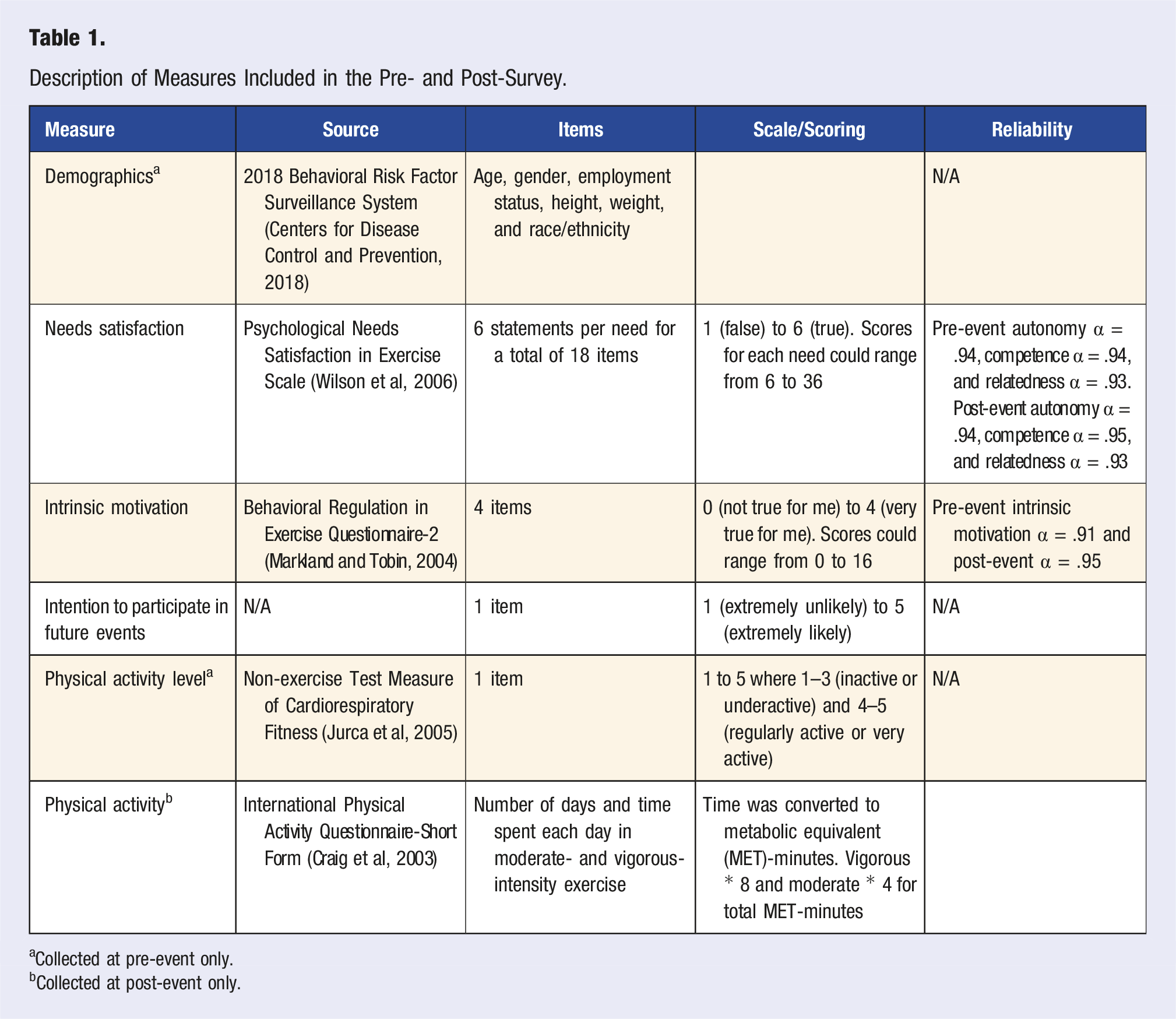
aCollected at pre-event only.
bCollected at post-event only.
Data Analysis
All data were analyzed using SAS v.9.4. Missing data were handled using full information maximum likelihood estimates. Due to high levels of self-reported PA, along with distributions of measures violating normality assumptions, the post-event MET-minutes PA variable was winsorized, a method that addresses extreme values. 32 In this study, all MET-minute values above the 90th percentile were replaced with the 90th percentile. One respondent was removed from the analysis due to an implausible value of MET-minutes of PA (ie, participant reported 1 full day of vigorous PA).
Chi-square, Fisher’s exact, and Student t-tests were used to compare differences between participants who completed both surveys and participants who were eligible but did not complete the post-event survey. Next, repeated measures analysis of covariance was used to examine change in autonomy, competence, and relatedness satisfaction from pre- to post-event (1 model for each of the 3 needs). An a priori power calculation (using GPower) indicated that 148 participants providing pre- and post-measures were needed to yield a power of 95% to detect a small-to-medium effect (Cohen’s f = .15).
To address the second purpose, we conducted a series of multiple linear and logistic regression models to estimate the relationships of participants’ post-event needs satisfaction and intrinsic motivation (independent variables) on post-event PA and intention to complete future charity sports events (dependent variables). Physical activity was tested as a continuous variable (MET-minutes per week), and post-event intention was tested as a categorical variable (high vs low intention) due to a strong positive skew as a continuous variable. Because of the strongly interrelated SDT constructs, each SDT construct was tested in its own regression model rather than including all SDT constructs in a single model. For relationships between the independent variables and post-event PA, we calculated standardized regression coefficients to indicate which of the variables had the greatest influence on post-event PA.
All models controlled for known covariates of PA including race (white vs non-white), age, gender, and education (less than college degree vs college degree or higher). Models also controlled for pre-event PA and the corresponding pre-event SDT independent variables. Statistical significance was defined a priori at .05.
Results
Descriptive Results
Characteristics of Participants (n = 207) Completing Charity Sports Events.
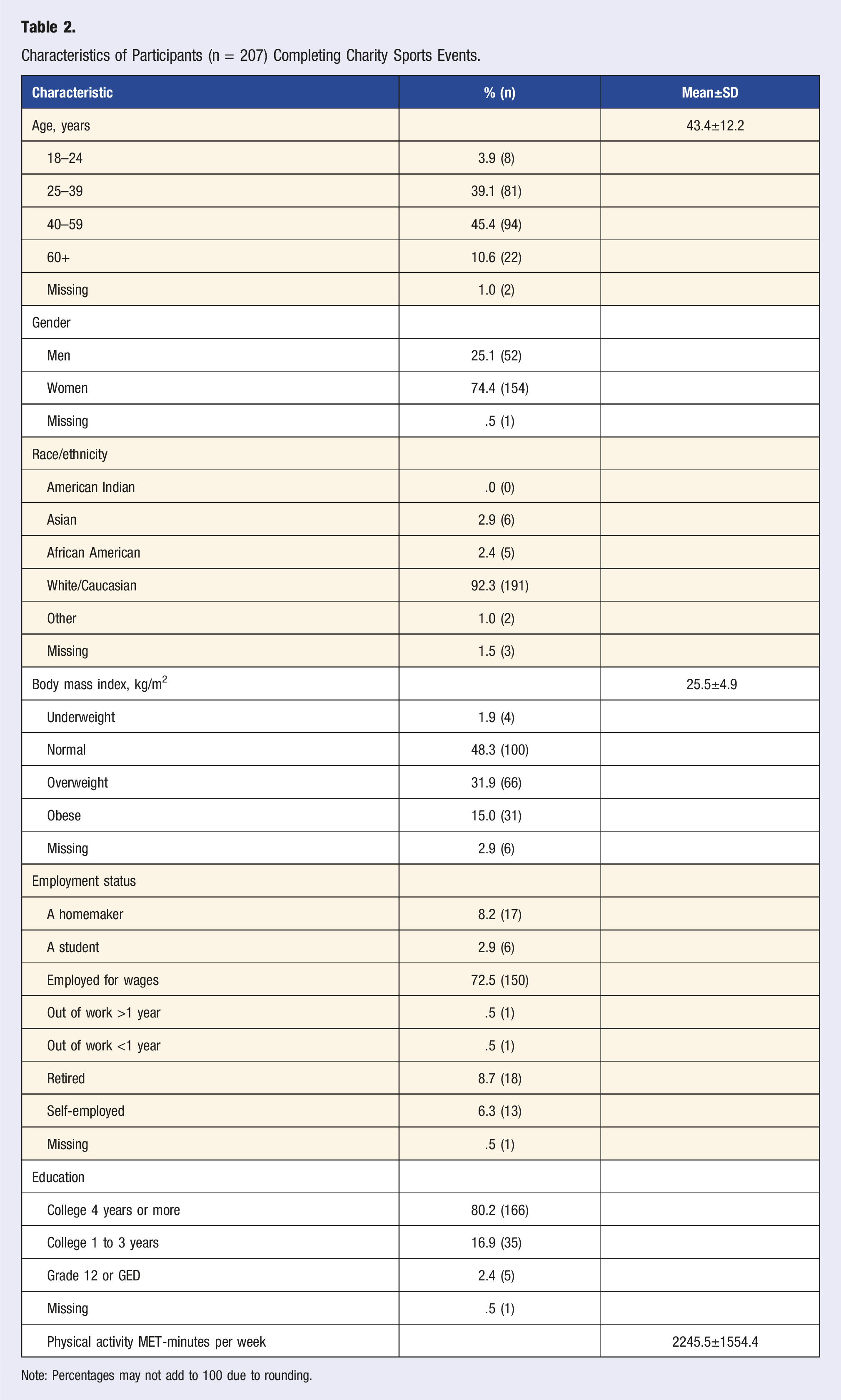
Note: Percentages may not add to 100 due to rounding.
Change in Need Satisfaction for Exercise
Change in Need Satisfaction from Pre-Event to Post-Event.
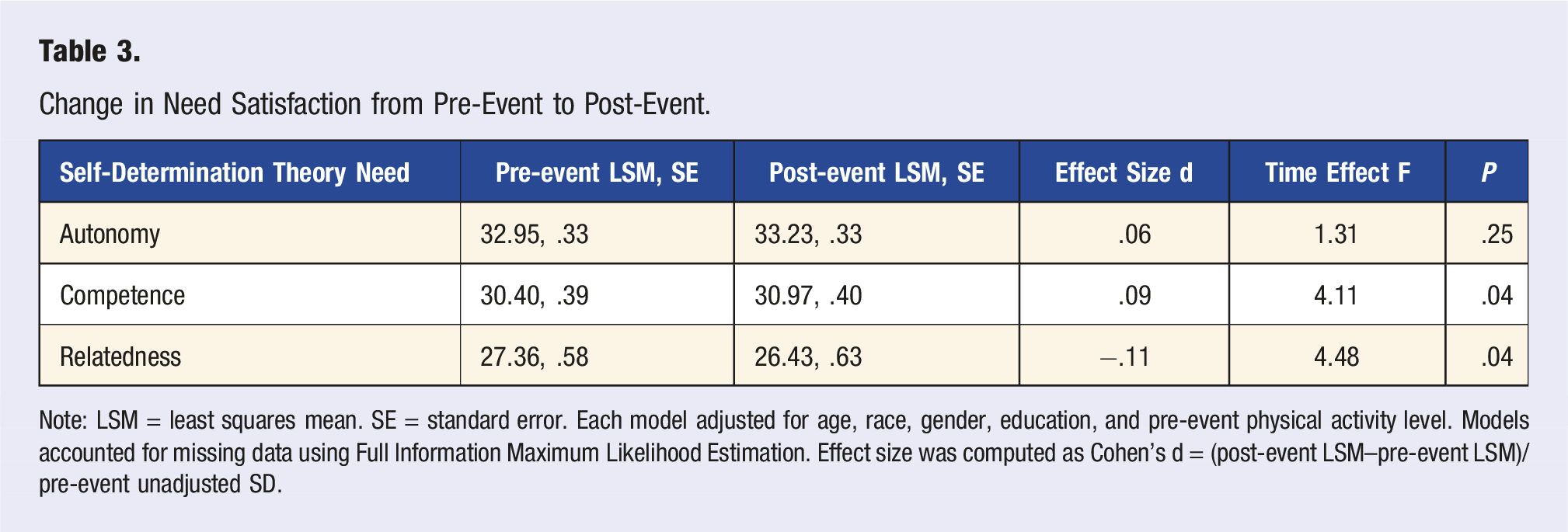
Note: LSM = least squares mean. SE = standard error. Each model adjusted for age, race, gender, education, and pre-event physical activity level. Models accounted for missing data using Full Information Maximum Likelihood Estimation. Effect size was computed as Cohen’s d = (post-event LSM–pre-event LSM)/pre-event unadjusted SD.
Physical Activity
Relationships Between Self-Determination Theory Determinants of PA and MET-minutes of PA.
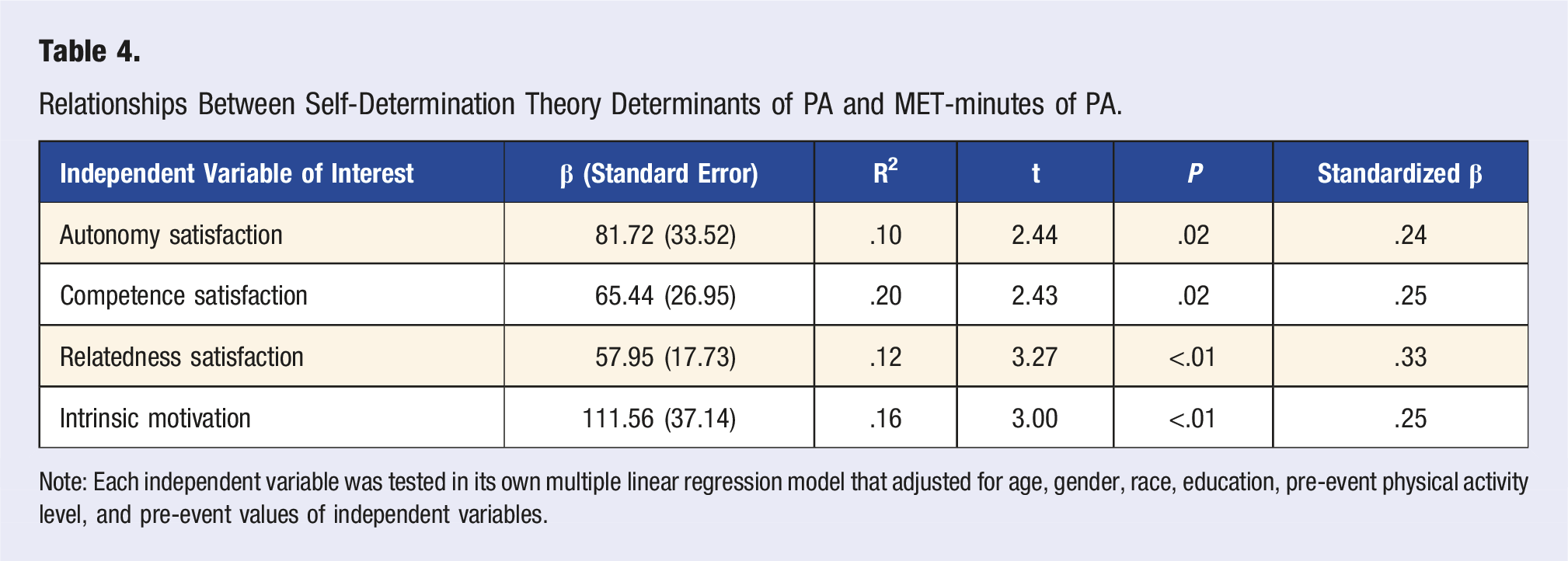
Note: Each independent variable was tested in its own multiple linear regression model that adjusted for age, gender, race, education, pre-event physical activity level, and pre-event values of independent variables.
Intention to Participate in Future Charity Sports Events
Relationships Between Self-Determination Theory Determinants of Physical Activity and Intention to Repeat Participation in a Charity Sports Event.
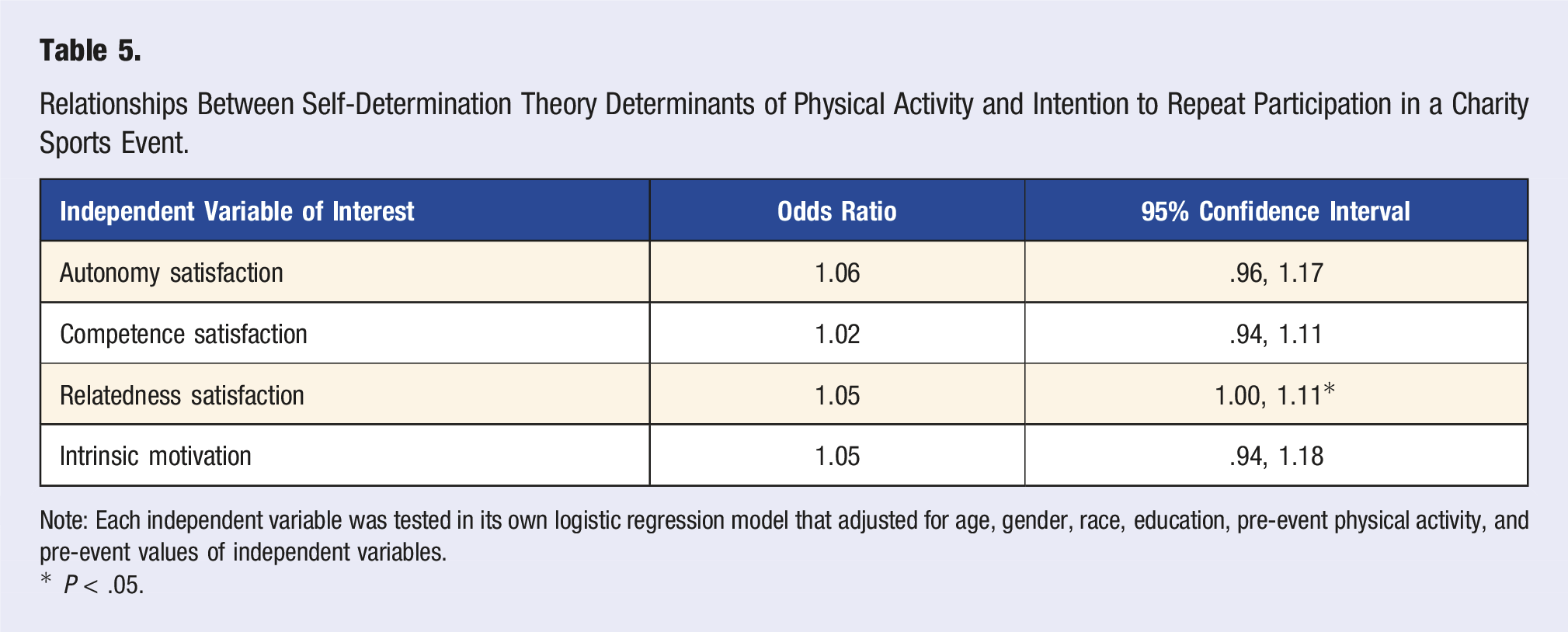
Note: Each independent variable was tested in its own logistic regression model that adjusted for age, gender, race, education, pre-event physical activity, and pre-event values of independent variables.
* P < .05.
Discussion
This study applied SDT to explore individuals’ experiences in completing a charity 5K race. We investigated changes in participants’ needs satisfaction from pre- to post-event and whether post-event needs satisfaction and intrinsic motivation related to post-event self-reported PA and intention to participate in future events. Findings suggest that completing charity 5K races leads to an increase in competence for PA. This study also confirmed relationships between SDT needs satisfaction and PA in the context of charity 5K races.
Overall, more than 3000 people participated in the 14 events included in this study. Of those included in the study, nearly half were between the ages of 40 and 59. This finding aligns with a previous finding examining demographics of participants in a large charity sports event. 11 Reaching individuals in this age group for PA remains paramount for delaying the age of onset of chronic diseases and maintaining functioning for activities of daily living. 33 Charity sports events may also provide adults in this age group the opportunity to support nonprofit and other organizations promoting health conditions of importance to them while also helping them to remain active. 30 Further, these events may provide a relatively stress-free environment for adults who prefer outdoor or other social exercise settings.
Nearly half of the sample had overweight or obesity. Due to already high levels of obesity among American adults 34 and associated co-morbid conditions with overweight and obesity, 35 promoting participation in charity sports events may help increase levels of intrinsic motivation for weight management through PA. Participants have described events as fun and enjoyable. Completing a charity sports event may provide participants a more enjoyable form of PA compared to formal exercise programs and classes. Indeed, a previous study identified connections between enjoyment of an activity and adherence. 36 Compared to other PA or weight loss programs, charity sports events may foster more enjoyment and intrinsic behavioral regulation for PA compared to external behavioral regulation. Furthermore, individuals preparing for an event raising support for a cause they care for may also contribute to increased goal setting and accountability toward PA.
Our study hypothesized that participants’ satisfaction for autonomy, competence, and relatedness needs would increase after participating in a charity sports event. Consistent with our hypothesis, competence increased. Within the context of charity sports events, competence may refer to the participants’ experience and feelings of their accomplishment and ability to overcome challenges by choosing a 5K event and successfully completing it. In addition, events often provide a t-shirt, finishing medal, and/or printed results further showcasing participants’ accomplishments and competence for PA. Although effect sizes were small, the changes in these feelings after completing the event suggests that charity sports events may positively affect individuals on a deeper level compared to engaging in PA in other settings. Feelings of competence may extend to another similar construct associated with PA, self-efficacy. 37 For example, completing a charity sports event, particularly for individuals who have not completed one previously or recently, leads to mastery experience of an activity. Given that mastery experience is the strongest source of self-efficacy, 38 our observations of an increase in competence are supported.
Contrary to our hypothesis, we observed a decrease in relatedness satisfaction for exercise from pre- to post-event. This result seems counterintuitive based on SDT and PA, 21 as well as previous findings of participants describing their experiences in charity sports events where they highlighted the sense of shared identity and community at charity sports events.15,28 We believe this unexpected finding may be explained in 2 ways. First, we recruited a convenience sample where many participants reported previously completing at least 1 charity sports event in the past 12 months. Thus, we may have observed a ceiling effect for higher scores for relatedness. Second, some participants may not have had plans to complete another event in the near future when they completed their post-event survey. Thus, they may have experienced declines in social interactions and connections related to PA.
A second goal of our research was to examine whether post-event needs satisfaction (autonomy, competence, and relatedness) and intrinsic motivation were associated with post-event PA and intention to participate in future events. We found post-event autonomy, competence, relatedness, and intrinsic motivation were significantly associated with PA. These findings align with a previous systematic review examining the relationship between these SDT constructs and PA behaviors. 20 Completing charity sports events allowed participants to meet competence needs for PA. According to the conceptual framework of SDT for exercise behavior, 20 once needs are met, individuals will develop more autonomous motivations for PA and then PA behavior adoption and maintenance.
Consistent with our hypothesis, relatedness satisfaction was significantly and positively associated with intention to repeat participation in charity sports events. This finding confirms previous research where participants described how the event created a sense of community and camaraderie.15,16,28 Further, a lack of exercise partners may prevent people from engaging in PA 39 and charity sports events may offer the social component of other exercise programs. The creation of a supportive relational environment is good news for nonprofit organizations that host these events. Post-event autonomy, competence, and intrinsic motivation were not associated with intention to participate in future events. Our measures referenced SDT and exercise, but not SDT and charity sports event participation. The finding that autonomy did not predict future intention is unexpected given that most participants likely were in control as the one responsible for finding an event, paying the registration fee, and providing transportation to the event. Therefore, more work is needed to develop measures of SDT specifically in the context of charity sports events.
This study had several limitations. First, our study may have had selection bias due to relying on a convenience sample. Participants who self-selected into the study may have different motivations and experiences in these events and PA than those who did not complete surveys and enroll in the study. Thus, inferences to the overall target population may be limited. Second, this study relied on self-report data, which is prone to social desirability biases. Although we used established and validated PA measures and followed protocol used in previous studies to account for overreporting of post-event PA levels, 32 individuals often overreport PA levels on self-report measures. Due to cost and feasibility limitations, we were unable to use accelerometers or other sensor measures of physical activity. Future studies should explore using direct methods of PA measurement, even if in only a sub-sample of participants.
Additionally, we were unable to assess changes in PA from pre- to post-event. We selected the International Physical Activity Questionnaire-Short Form (IPAQ-SF) due to its recognition as a widely used self-report measure of PA in research. However, a limitation of the IPAQ-SF is that it was not designed to measure the effect of an exposure on changes in PA. Thus, we used the IPAQ-SF at post-event and a shorter PA questionnaire at pre-event to covary for participants’ pre-event PA. Future studies may consider another PA questionnaire designed for assessing change in PA such as the Godin-Shepard Leisure Physical Activity Questionnaire. 40 A fourth limitation of our study is we did not randomize individuals to either participate in a charity sports event, non–sports-related event, or another condition, nor did we have a comparison group, which limits our ability to make causal statements regarding changes in need satisfaction attributed to completing the event. In addition, we did not follow participants for a long period of time limiting our ability to observe long-term changes in needs satisfaction and PA after having completed a charity 5K event. One final limitation of our study is that 1 of our 3 recruitment methods consisted of organizations who had a scheduled event sharing information about the study on their social media. While this approach is useful, research has determined that fraudulent participants may seek to enroll in online studies, particularly when incentives are provided.41,42 Quality control activities such as verifying participant registration and completion of online surveys can protect against fraudulent participants in future studies.
Despite these limitations, our study had several strengths. First, few studies have conducted psychological or motivational theory-driven research to study participation in charity sports events. Our investigation contributes a better understanding of how these events may be leveraged to promote PA while also benefiting nonprofit organizations, such as suggesting marketing strategies aimed at emphasizing competence and relatedness.8,31 In addition, our study was one of the first to use an established health behavior theory, SDT, to explore charity 5K participation. This inclusion fills an important gap where limited research applying SDT to PA currently exists in the context of these events. Third, this study confirms the relevance and alignment of behavioral constructs of SDT including competence, relatedness, and intrinsic motivation and the associations of these constructs with PA behaviors. 20
As charities and other organizations continue to organize and host these events, future research should continue to investigate opportunities to promote PA among participants. 12 Researchers may also wish to investigate how nonprofits can tailor marketing strategies directed toward experiences of competence satisfaction for PA. The increasing number of these events increases the likelihood of participating in events benefitting causes and organizations they wish to or already support. It also provides the opportunity to rally themselves and others to support the cause while fulfilling needs satisfaction of autonomy, competence, and relatedness for exercise. These events provide value for nonprofit organizations and individuals hoping to increase PA levels and improve health. This study builds on existing research and may help nonprofits understand participant motivations and experiences to better market future events. Regarding competence, accomplishing the 5K race distance may be marketed as a turning point for recreational walkers and runners to complete more 5K races and potentially build confidence in their ability to complete longer race distances. Organizations may also consider providing a family or group discounted rate to register, encouraging participants to sign up with others, thereby targeting relatedness.
Footnotes
Acknowledgments
We would like to thank the Prevention Research Center at the University of South Carolina for their financial assistance in supporting the study. We would like to thank the event organizers who agreed to assist the lead author and allow participants to be recruited for the study. Finally, we would also like to thank the participants for their time and completing the surveys. The preliminary findings of this study were presented at the Active Living Conference.
Declaration of Conflicting Interests
The author declared no potential conflicts of interest with respect to the research, authorship, and/or publication of this article.
Funding
The author received no financial support for the research, authorship, and/or publication of this article.
