



Abstract
Background: Recent literature identified social media message features predictive of user engagement. Desired information from a patient perspective and use of social media information from a provider perspective in diabetes care is less clear. Purpose: Our study analyzed diabetes patients’ desired information from social media and how such information could be used in conjunction with doctor–patient communication to enhance compliance with recommended care. Methods: A survey examined diabetic patients’ interests in searching for various diabetes information on social media and assessed the potential impact of social media sourced information on doctor–patient communication. This survey was followed by a content analysis of major US diabetes organizations’ Facebook pages, which were considered for effectiveness in their communication with diabetes patients. Results: Survey participants were most interested in diabetes management recommendations. Diabetes knowledge positively correlated with interests in diabetes management recommendations but negatively correlated with prior use of social media for diabetes information. 70.9% of patients had discussed information from social media with their doctor. The content analysis showed narrative evidence and updates on diabetes-related research findings, and medical policies generated a higher level of user engagement. Conclusion: While survey participants showed greatest interests in health recommendations and tips, only 11.7% of the analyzed social media posts included such information. Posts that included diabetes-related information led to higher engagement than posts that emphasized social values. Patients in general have asked doctors about information received on social media which suggests that social media can be a useful platform for communicating diabetes care information.
“Social media platforms have become a powerful tool in promoting needful information to patients with diabetes.”
Introduction
Receiving up-to-date information on diabetes management strategies can significantly enhance diabetic patients’ life quality. To implement these management strategies and lifestyle changes, diabetic patients must be aware of these changes and take an active role in the process. According to the common-sense model of illness representation, 1 patients formulate illness representations and test ways to improve their conditions using three basic sources of information: “lay” information assimilated from prior communication and knowledge related to the illness, trustworthy or authoritative sources such as doctors or significant others, and patients’ current experience with the illness.1,2 Seeking health information on social media is an important way for patients to be active problem-solvers because it increases patients’ understanding of and ownership over their health challenges. Social media also provides opportunities for patients to seek and interact with a community of patients with similar health conditions, which are main ways to formulate illness representations. 3 While previous research identified the benefit of seeking health information on social media, additional research is needed to understand the joint impact and interplays among social media and other sources of information that help formulate illness representations and to create high-quality and effective messages in order to better impact behavior outcomes.
Recent research in identifying social media message features that correlated with user engagement can be substantially advanced by considering research on desired information from a patient perspective and the role of social media information in the doctor–patient communication.4-6 The overall objectives for this research are to 1) evaluate diabetic patients’ interests in searching for different types of diabetes information on social media, 2) assess whether patients’ diabetes knowledge, physical activity, and stress level moderate information-seeking intention, 3) explore the potential impact of social media sourced information on doctor–patient communication, and 4) assess major diabetes organizations’ current practices on social media to explore ways to improve communication efficiency.
Social Media for Diabetes Communication
The Centers for Disease Control and Prevention identified diabetes as the seventh leading cause of death in the United States. 7 Receiving up-to-date diabetes education and self-management strategies are crucial aspects of diabetes care. The American Diabetes Association guideline noted that diabetes self-care can help reduce healthcare costs while improving weight management and blood sugar levels.8,9 Studies also found the number of prediabetic participants that end up having diabetes decreased from 58% to 31% with intensive lifestyle interventions. 10
Using the Internet to find health information is becoming more commonplace. A poll from 2007 indicated over 80% of American adults who had Internet access reported that they have looked for healthcare information online. As familiarity with accessing online health information increases, the relationship between doctor and patient also evolved. In a 2005 study, researchers found that 40% of participants had shared information they had found online with their healthcare providers. 2 Additionally, the chances of behavior change increased when a patient used the Internet to find health-related information more frequently.11,12 Research also found a positive correlation between time spent on an online health community website and patients’ knowledge of their condition. 4 These findings corroborated the notion that Internet-sourced information is instrumental in helping patients formulate illness representation.
One of the main reasons people look online for this information is to help manage chronic medical condition like diabetes. 13 Social media platforms have become a powerful tool in promoting needful information to patients with diabetes. Because social media is an online application that allows users to create and share content, and over half of the U.S. adults reported accessing social media platforms such as Facebook multiple times a day,14,15 social media has the potential to be a health information intervention that is both cost-effective and discrete. 16 A large body of research emphasizes the importance of diabetes self-management and suggests using social media for patient self-care education is viable and promising.5,16 Additional research is needed to establish efficiency in using social media as a platform for patient self-care education because prior research focused on engagement rates to predict message effectiveness or the outcome of social media usage without directly examining the diabetic patients interest and intention to seek information on social media. Moreover, understanding the joint impact and interplays among social media and other sources of information (e.g., healthcare providers) and finding the types of diabetes-related information that best engage social media users can provide a critical tool for improving diabetes self-management and other aspects of care.
Study Aims
The current research used a mixed-method approach to explore the effectiveness of diabetes communication on social media using survey and content analysis methods. The survey has three specific aims. First, the research aims to explore the types of information diabetic patients would like to acquire on social media. Prior research suggested that individual determinants of health information-seeking behavior include both demographic and psychosocial factors. Because demographic factors received an ample amount of examination in prior research, 14 the second aim of the survey is to assess the moderating effects of individual-level psychographic and behavioral factors (i.e., diabetes-induced stress level, diabetes knowledge, and exercise habits) on patients’ interests in different types of diabetes-related information. Because treatment options on the Internet are only effective when doctors or other providers are informed and receptive to these options, 17 the third aim of the survey is to explore if diabetic patients have discussed information acquired from social media with their doctors and whether acquiring diabetes information on social media would affect doctor–patient communication.
To further explain and cross validate the survey results, we conducted a content analysis to explore the correlations between user engagements and various message features in posts from major U.S. diabetes organizations’ Facebook accounts. Facebook was selected as the social media platform for analysis because it is an especially promising social media platform for health communications because of the large number of users that access it every day. 15 Comparing to other social media platforms, adoption of Facebook is the highest among adults 30-64 without heavily skewed toward the younger age brackets. Also, findings can be compared with past research that focused on health information on Facebook.4,18 The content analysis has three specific aims: 1) to understand major diabetes organizations’ current practices on Facebook by identifying the types of messages featured in their posts, 2) to explore which types of information are more likely to be presented together in diabetes organizations’ Facebook posts, and 3) to cross-examine the survey results and increase understanding of what types of posts elicited more responses.
Research Methods
Survey Design
A total of 509 U.S. participants with type I or type II diabetes were recruited from a professional online panel provided by Qualtrics. Each participant received a $4.50 monetary incentive. Aside from demographic factors, the survey measured intention to seek diabetes information on social media, media usage, and perceived credibility of social media as a source for diabetes information.
Information-seeking intention was measured in two different ways. First, participants selected the types of diabetes-related information that interests them from a list of fourteen different types of diabetes-related information. These fourteen types of information were initially selected from prior research that examined health communication effectiveness and the ADA guideline to ensure the comprehensiveness of the options.4,5,19 Specifically, because one of the main objectives of diabetes online communication is to provide diabetes management knowledge and strategies, 20 four categories were developed based on the ADA diabetes self-care guideline: food and nutrition therapy, physical activity tips, stress and emotion management, and smoking cessation. The rest of the categories focused on communication about diabetes research updates (i.e., updates on current diabetes research and updates on medical policies), information that motivates behavior changes (i.e., narrative evidence and statistical evidence), and information that emphasizes social values of the communication (i.e., seasonal greetings and event promotion). Second, participants also indicated their interest in each of the fourteen different types of diabetes-related information individually using a seven-point scale (1 = Not Interested All, 7= Very Interested).
Diabetes knowledge was assessed using the diabetes knowledge test that included 23 questions.
21
Each question was paired with four options including one correct answer. The questions measured factual knowledge related to diabetes, such as, “The effect of unsweetened fruit juice on blood glucose is
Diabetes-induced stress was measured using a previously validated diabetes distress scale. 22 This scale asked participants to evaluate eight different items such as “Feeling overwhelmed by the demands of living with diabetes.” using a seven-point scale anchored by “1 = Not a Problem” and “7 = A Very Serious Problem.” Each participant’s answers to these eight items were averaged to generate a single diabetes-induced stress score.
Physical activity was assessed using the Paffenbarger Physical Activity Questionnaire (PPAQ). The PPAQ scale was selected because prior research demonstrated PPAQ is more effective in capturing physically active individuals than other measurements such as the Aerobics Center Longitudinal Study (ACLS). 23 Specifically, the PPAQ measure was constructed from a question that asked, “How many times a week do you engage in regular vigorous activities or with enough intensity to work up a sweat, get your heart thumping, or get out of breath?” Participants answered this question by evaluating different types of physical activities individually (e.g., brisk walking, jogging, and bicycling). The answers were combined into a single measure by averaging the frequency of various vigorous physical activities.
Interest in seeking diabetes-related information was measured separately for each type of information on a seven-point scale anchored by “1 = Not Interested All’ and “7= Very Interested.” As source credibility can significantly affect communication on social media, 6 the perceived credibility of different types of social media accounts (i.e., hospital, non-profit organization, personal accounts, and local support groups) was measured by asking participants to rank the credibility of each type of accounts on a seven-point Likert-type scale, anchored by “1 = Not Trustworthy at All” and “7 = Very Trustworthy.” Lastly, participants indicated whether they have searched for diabetes-related information on social media and discussed social media sourced information with their doctors (1 = yes, 0 = no), followed by an open-ended question asking why they have/have not discussed information acquired from social media with their doctors. A thematic analysis was conducted to analyze these open-ended responses. The researchers first familiarized themselves with the results and then used open and axial coding to identify preliminary themes. Next, exemplar responses were determined via in vivo coding to demonstrate the identified themes.
Content Analysis
Using keyword search and filtered search functions on Facebook, we first identify 43 diabetes-related Facebook accounts. Next, we ranked these Facebook accounts based on the number of followers. The top five U.S.-based pages with the most followers were selected for analysis (i.e., American Diabetes Association, Juvenile Diabetes Research Foundation, Diabetes Research Institute Foundation, Children’s Diabetes Foundation, and DiaTribe Foundation). The coding started in March 2020, and messages posted on these five accounts from May 31, 2019, to Jan 31, 2020, were coded because the most recent posts were still generating user engagements (e.g., views, comments, and likes). This sampling frame resulted in 899 posts selected for coding.
Coding Procedure
This study used individual Facebook posts as the unit of analysis and coded textual information presented in each post. Two coders first coded 40 randomly selected posts together to establish an understanding of the coding categories and to ensure coding consistency. This process led to further clarification, development, and refinement of the codebook. Using the revised codebook, the primary coder coded all 899 posts, and the second coder randomly selected and coded 100 posts (11.12%) to establish inter-coder reliability. The analysis based on agreement percentage and Krippendorff’s alpha indicated inter-coder reliabilities were established for all coding categories (α range from 0.82 to 1).
The content analysis coding categories were initially developed based on our survey results. Because very few posts provided information on physical activity tips, stress and emotion management, or smoking cessation, these 3 categories were combined with food and nutrition information into the “health recommendations and tips” category in the content analysis. Based on the preliminary coding of randomly selected posts, the initial coding scheme was revised, and the following eleven message features were coded. The presence of a message feature was coded as 1, whereas the absence of such message feature was coded as 0.
Efficacy information conveyed confidence that a diabetes management strategy will work and can be implemented. Health recommendations and tips provided information on diabetes management tips such as healthy eating patterns, dietary intakes, psychosocial issues, and physical activities. Narrative evidence included personal or anecdotal evidence provided in the formats including interviews, opinions, stories, or testimonials. 24 Statistical evidence referred to numerical or quantitative information related to diabetes research or management strategies. Updates on research findings shared recent medical or clinical diabetes research results, whereas updates on medical policies provided information on diabetes-related medical service coverage, procedure, or eligibility (e.g., insurance coverage).
In addition to coding categories that are directly related to diabetes self-care and dimensions of the common-sense model of illness, other message elements commonly featured in diabetes social media posts were included in the analysis. These message elements were identified based on prior research and the preliminary coding. Specifically, link to website(s) refers to the inclusion of external link(s) that direct viewers to other websites. Appreciation included information that expressed a feeling of admiration, approval, or gratitude toward an individual(s) or organization(s) that contributed to diabetes-related causes. Event promotion refers to messages that bring awareness and/or encourage participation in a diabetes-related event. Donation is defined as information that directly solicited monetary donations or volunteering. Posts that promoted charity events were coded as event promotions instead of donations. These eleven coding categories were not mutually exclusive because a post could contain multiple types of information (e.g., updates on research findings and a link to external websites could be presented together within the same post).
User engagement, or the experience that users have when using technology, is characterized by several attributes including focused attention and maintained interest. 25 On social media platforms like Facebook, the most common way to identify high levels of user engagement with a post is to count the number of likes, shares and comments that each post receives from users because each of these indicators identifies varying levels of engagement from the users. 26 Specifically, likes are seen as the most passive form of engagement, with comments being more active, and shares indicating even greater levels of active engagement. Therefore, likes, comments, and shares of each post were coded separately.
Results
Survey Results
A total of 509 U.S. participants with type I or type II diabetes provided responses to the survey. The average age of the participants was 37.55 years old (SD = 9.40, range = 22-71). A majority of participants are male (67.6%). Participants were non-Hispanic White (46.3%), Hispanic or Latino (36.5%), African Americans (6.5%), and Asians (4.7%). Over 60% of participants used social media between 1 and 6 hours a week (34.71% use social media 1–3 hours, 26.04% use social media 4–6 hours), whereas only 2.96% of the participants do not use social media on a weekly basis.
Most participants (77.41%) indicated that they have searched for diabetes-related information on social media. Participants who never used social media to get diabetes-related information were asked to indicate why they have not used social media for diabetes information. Among these participants, the most selected reason was “I don’t trust information from social media” (64.76%), followed by “I prefer to get information from doctors than online” (30.48%). Accessibility issues and the digital divide did not appear to hinder acquiring diabetes communication on social media because only 1.9% of the participants indicated they do not know how to get diabetes information on social media.
Participants were asked to evaluate the perceived credibility of four types of diabetes-related social media accounts: official accounts from non-profit organizations, hospitals, local support groups, and individual accounts. A repeated-measure ANOVA was conducted using account type as the independent variable and credibility evaluation as the dependent variable. The results indicated a significant difference between perceived credibility of the four types of accounts (F (3, 504) = 21.58, p = .001, η2p = .10). Non-profit organizations’ official accounts were perceived as the most credible (M = 5.61, SD = 1.15), followed by hospitals’ official (M = 5.48, SD = 1.2), local support groups (M = 5.06, SD = 1.23), and individual accounts (M = 4.07, SD = 1.67).
Participants indicated their interests in different types of information by selecting all the types of diabetes-related information that interests them. As seen in Figure 1, participants were more interested in information that is directly related to diabetes care and management such as food and nutritional therapy, diabetes self-management, and tips on physical activities. Meanwhile, participants showed less interest in information that emphasized the social values of communication, such as event promotion, seasonal greetings, and donation solicitations. Patients’ Interests in Different Types of Information.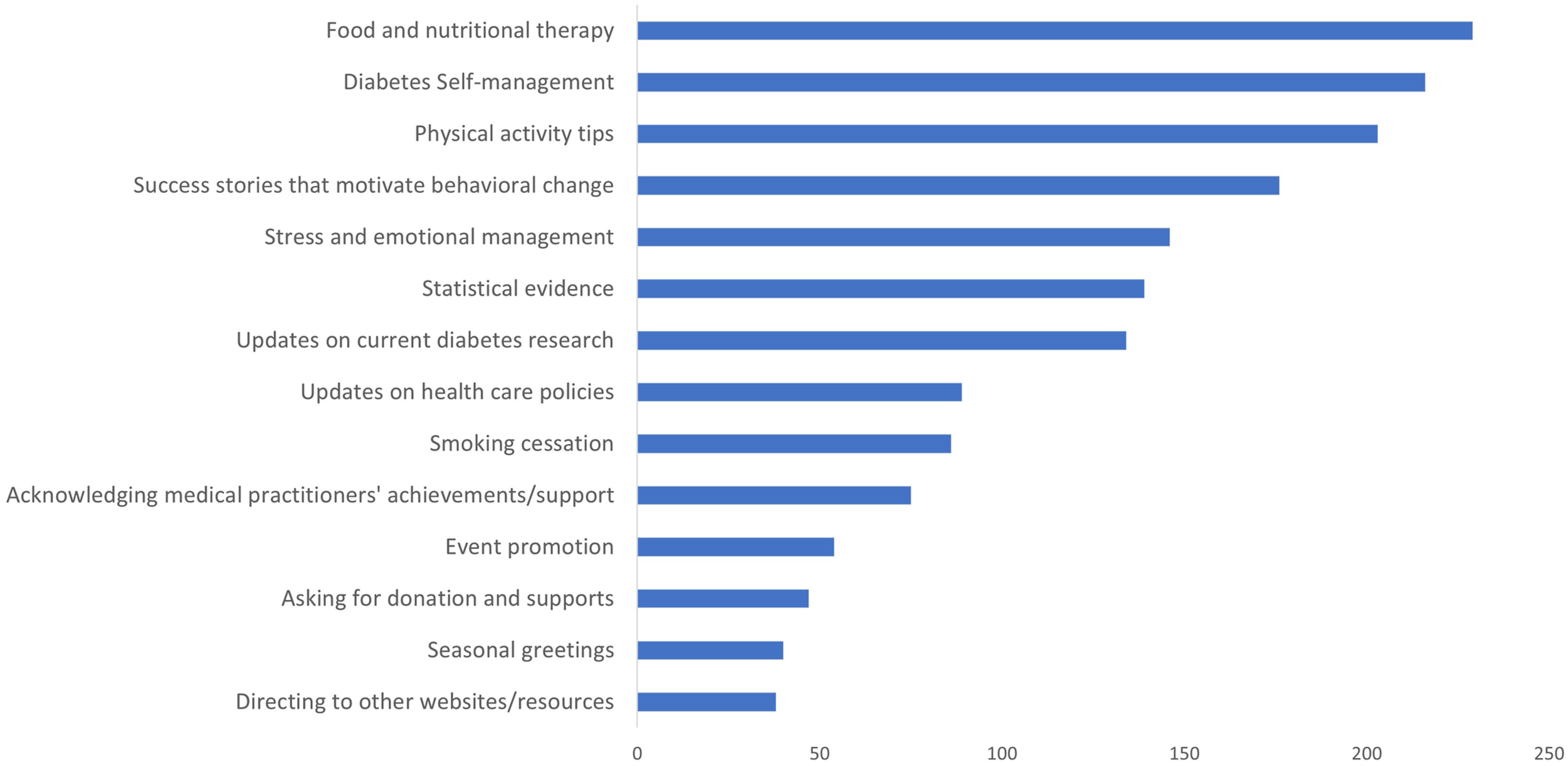
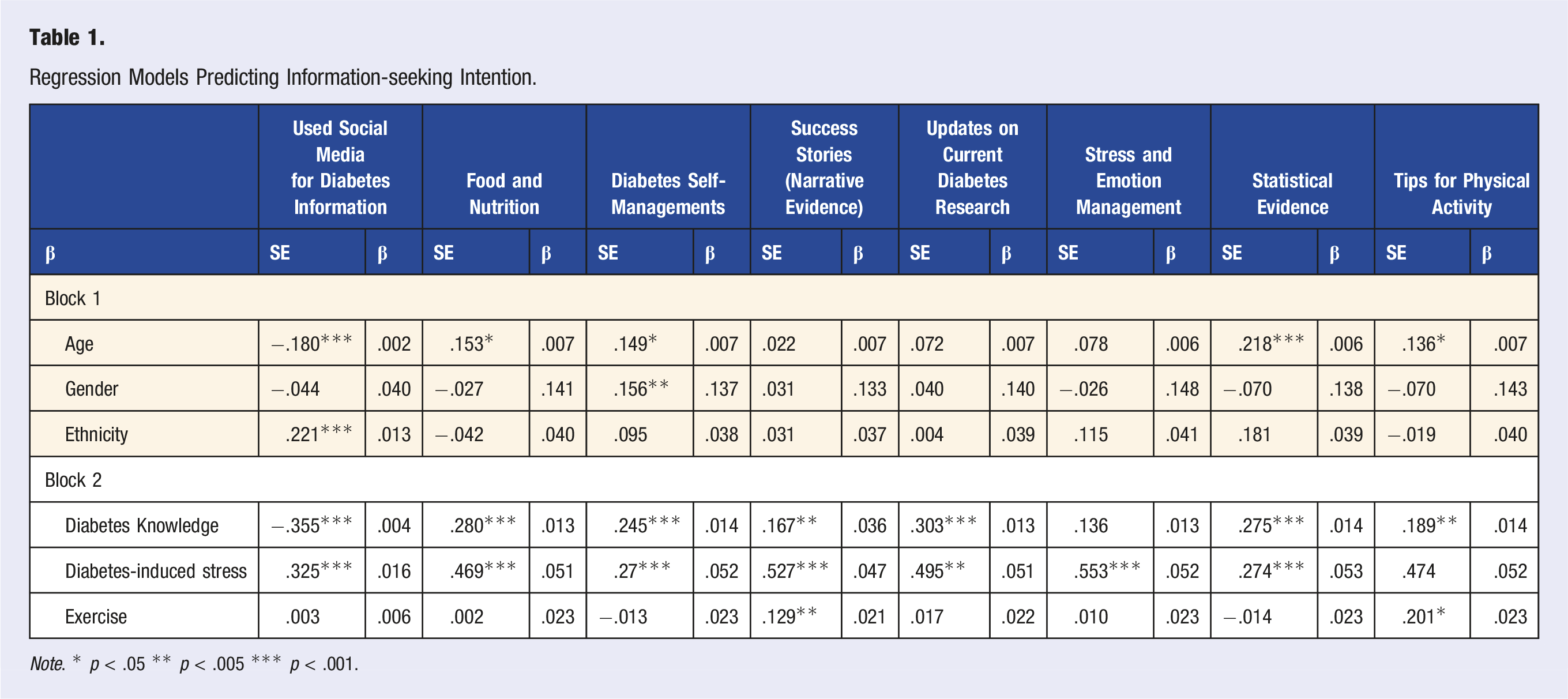
Regression Models Predicting Information-seeking Intention.
Note. * p < .05 ** p < .005 *** p < .001.
Participants with a higher level of diabetes knowledge were less likely to use social media as a source for diabetes information (β = −.36, SE = .004). Diabetes-induced stress level was positively correlated with the usage of social media for diabetes information (β = .33, SE = .016), but the amount of exercise showed no correlation with the use of social media for diabetes communication. Results indicated diabetes knowledge is positively correlated with interests in diabetes management tips (e.g., food and nutrition and diabetes self-management), diabetes research findings (e.g., updates on current diabetes research and statistical evidence), but not emotion and stress management. By contrast, the diabetes-induced stress level is positively correlated with diabetes management tips, research findings, and emotional and stress management tips except for tips for physical activity. The amount of exercise only positively correlated with success stories and tips for physical activity.
Lastly, the survey examined whether participants have communicated diabetes information acquired from social media with their doctors. The results showed 70.92% of participants have discussed diabetes information that they read on social media with their doctors. Participants also explained why they have (or have not) discussed such information with their doctors. Three major themes emerged in these open-ended responses: (1) skepticism about diabetes management/treatment information on social media, (2) concerns about doctors’ reactions, and (3) interest in potential diabetes management strategies from online sources.
Skepticism about the credibility of diabetes-related information on social media motivated or prevented participants from discussing this information with their doctors or providers. For example, several participants commented that they have discussed diabetes information learned from social media with their doctors because “I want to confirm the correctness of such information,” “(to) clear the doubt about misleading information,” or “to find out if it’s valid.” These notions are exemplified by one response, “I read some fake info that a medicine will cure diabetes in less than a month without any exercise and diet control. I discussed it with my doctor and came to know it’s fake.” Interestingly, participants hesitated to discuss information acquired on social media with their doctors due to the same concerns about the credibility of social media sourced information. This is exemplified by a participant’s comment, “Social media information is not very reliable, and I don’t want to waste my doctor’s time by discussing it with my doctor.” Similarly, another participant commented, “I don’t believe in social media or other things. I think most info is fake and also my doctor is always busy, he won’t even give time to discuss this.” In sum, the main reasons that affect participants’ decisions to discuss diabetes management information acquired from social media with their doctors are the concerns about whether information communicated via social media is credible and if doctors are available to discuss different treatment options.
The other major theme emerged from participants’ responses is the concern that doctors would react negatively to information from social media. For example, several participants mentioned, “doctors do not like when someone tells them what they learned on the Internet,” “doctors would not like to discuss information (that) patients get from the Internet,” or “I think most doctors discourage patients from using googled or online information.” The last theme of participants’ responses is the interest in potential diabetes management strategies. Aside from credibility concerns, interest in exploring effective diabetes management strategies is one of the main reasons that motivated participants to discuss diabetes information on social media with their doctors. Some participants recalled that they discussed specific diabetes treatment or management strategies learned from social media with their doctors. For example, one participant mentioned, “I discussed things that I’d not heard about (from my doctor) like increasing protein intake can have an impact on my A1C.” Another participant mentioned he/she was motivated to discuss diabetes information learned from social media with the doctors because “I read about the effects (of) constantly varying the insulin intake according to the blood glucose level and would like to check it with my doctor.”
Content Analysis Results
Presences of Message Feature in Analyzed Posts.
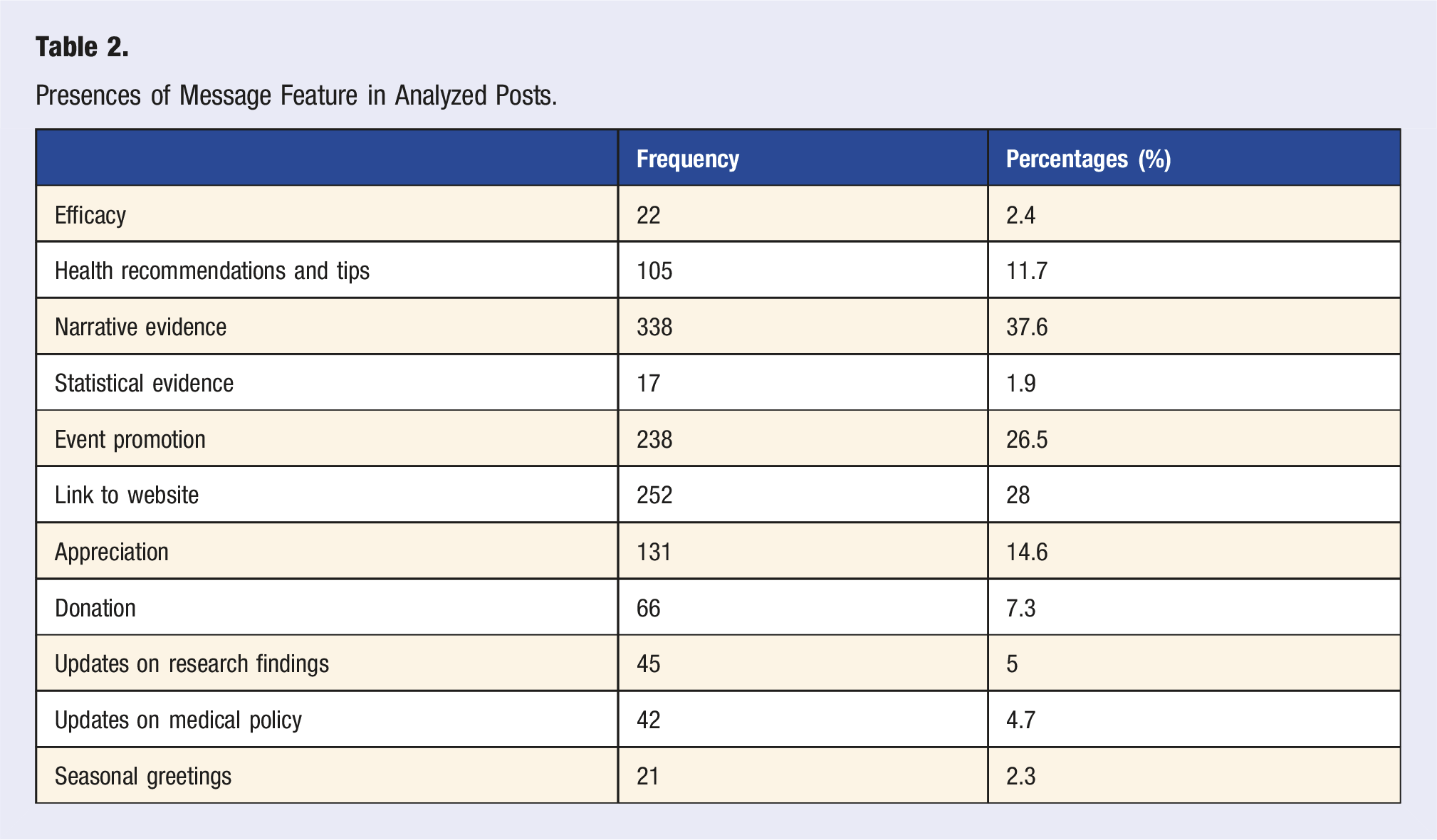
A Spearman’s rho nonparametric test was conducted to examine the strength of association in the usage frequency of the message features. Positive ρ values indicate the message features were more likely to be used in combination, whereas negative ρ values indicate the two strategies were less likely to be featured together. Because less than 3% of the posts included efficacy language, seasonal greetings, and statistical evidence, these three categories were excluded from the analysis. Results showed narrative evidence was more likely to be presented with appreciation (ρ = .23, p < .005). Direction to external websites was more frequently presented with updates on current research findings (ρ = .12, p < .05) but not update on medical policies (ρ = .17, p = .41). Interestingly, while narrative evidence was used in 37.6% of the posts, narrative evidence was not more likely to be presented with health tips (ρ = −.22, p = .43). No significant correlations were observed among other message categories.
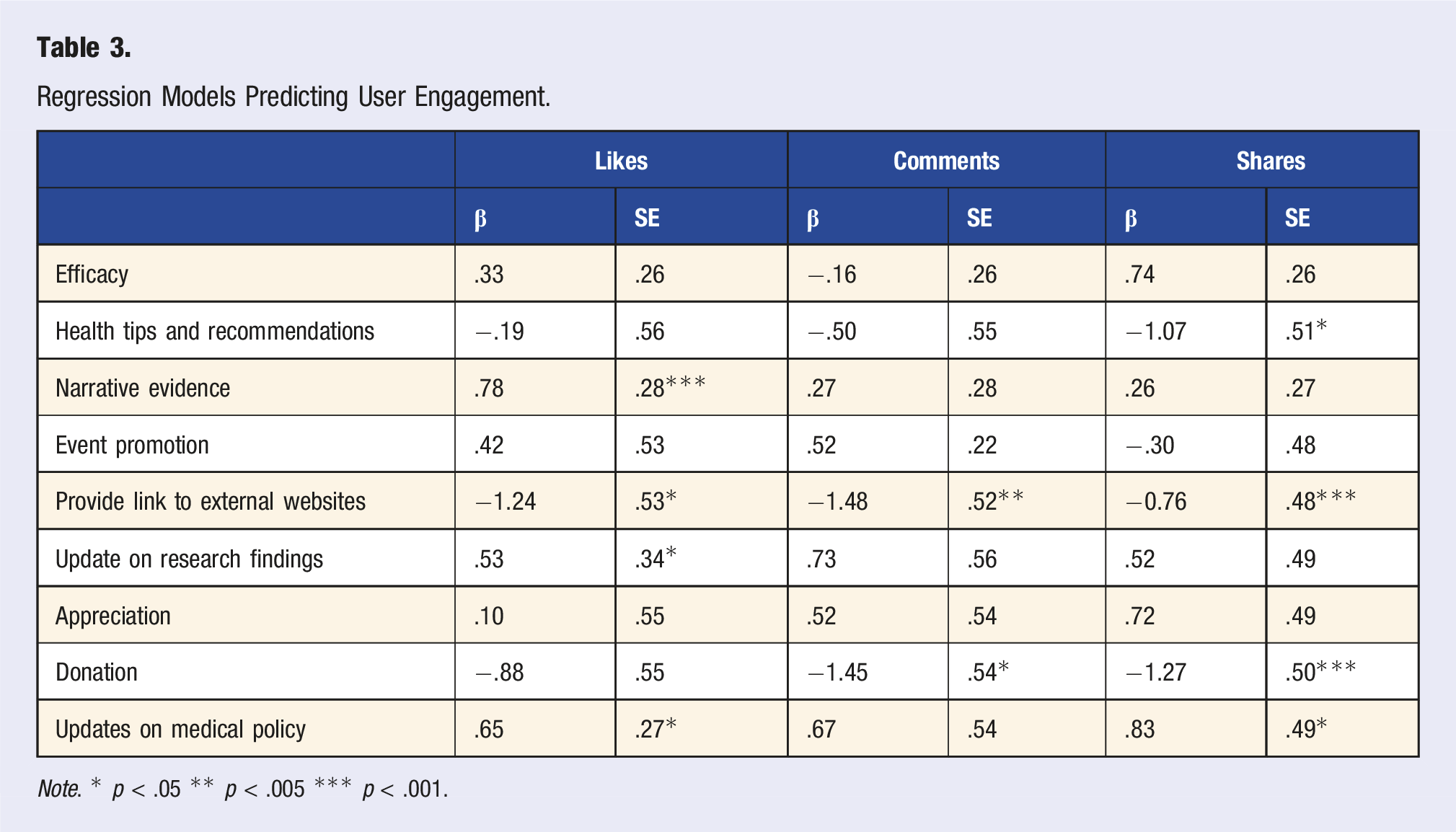
Regression Models Predicting User Engagement.
Note. * p < .05 ** p < .005 *** p < .001.
Results indicated that posts with narrative evidence received 3.74 times more likes compared to posts without narrative evidence. While survey participants indicated they are most interested in health tips and recommendation (e.g., food and nutritional therapy, tips on physical activity, and diabetes self-management and education), the negative binominal regression analysis indicated posts included health tips and recommendations received lower user engagement rates than other posts. Specifically, posts with recommendations received 46.22% fewer likes and 23.65% fewer shares comparing to posts without recommendations. Additionally, although 27.3% of survey participants indicated they are interested in receiving statistical information, the content analysis showed merely 0.78% of the posts included statistical information, which suggest a mismatch in this area.
Posts that focused on providing medical/Medicare policy updates or research findings also generated more user engagements than other posts. Posts that included recent research findings received 30.40% more likes than other posts. Posts the provided updates on medical policies also received 7.08% more likes than posts that did not provide updates on medical policies. However, posts that provided updates on research findings did not receive higher user engagement rates than other posts.
Information focused on diabetes organizations’ operations was not effective in terms of eliciting user engagement. Posts that solicited donations led to 26.87% fewer likes, 59.56% fewer comments, and 53.02% fewer shares compared to other posts, while information about event promotion and appreciation did not predict likes, shares, or comments. While a large portion of the posts included links to external websites, posts that provided links to external websites received 50.96% fewer likes, 47.05% fewer comments, and 54.17% fewer shares compared to other posts, which is consistent with findings from prior research. 4
Discussion
The present research generated valuable insights for enhancing the effectiveness of diabetes communication on social media. First, the results showed similarities and differences in patients’ interests in receiving diabetes-related information on social media. Individual differences were observed in the survey, such that participants were more interested in searching for information that fits their current physical or mental status, which is similar to prior research that examined individual differences among different demographics. 14 Specifically, only diabetes-induced stress level is positively associated with stress and emotion management information. Meanwhile, participants with a higher level of diabetes knowledge and/or physical activity were more interested in diabetes management information and updates on current research than others.
Results suggest narrative evidence was more likely to have a universal appeal to all participants, such that diabetes knowledge, stress level, and activity level were all positively correlated with interest in narrative evidence. The inclusion of information that emphasized social values of the communication and non-profit organizations’ operations (i.e., event promotion, donation, or appreciation) led to lower engagement levels than other posts, which was also consistent with survey findings. In addition, both content analysis and the survey suggested the ineffectiveness of providing external links. Due to the word limit imposed by the social media platform, inserting links to external websites appeared to be a viable way to present more information to the readers. However, the findings from the current research corroborated different bodies of research suggested external links should be used with caution. 4 Recent research suggested a large number of posts on social media using catchy headlines or descriptions accompanying the link to lure viewers into clicking on the link are commonly considered to be clickbait. 28 Due to the prevalence of clickbait links on social media, viewers usually are skeptical of external links on social media. 28 Additionally, the requirements to follow the link and to adapt to different multimedia features also may present cognitive constraints that hinder comprehension, especially if external links bring irrelevant details or are not coherent with the information presented in the social media post. 29
Source credibility is also vital to the effectiveness of diabetes communication on social media. The survey results showed diabetes knowledge level was associated with stronger interests in diabetes-related information but negatively correlated with prior usage of social media for diabetes information. Similarly, although survey participants showed greater interest in seeking information related to diabetes management strategies and recommendations than other types of information, the inclusion of health recommendations resulted in less user engagement. A potential explanation could be offered to explain these seemingly contradictory findings. First, user engagements such as like and share reflect interest, agreement, or even fondness of the piece of information. 4 Although survey participants showed a high level of interest in searching for diabetes management-related information, they may also hold skeptical views about the credibility of such information presented on social media. More than half of the participants who never actively tried to acquire diabetes-related information on social media were due to a lack of trust in social media. This is corroborated by the open-ended responses that suggest skepticism of information on social media is the main reason that explains how participants decided whether they should discuss social media sourced health information with their doctors. Thus, concerns over the credibility of the health recommendations could result in a lower user engagement rate due to the fear of identifying and disseminating false information on social media.
The discussion on source credibility also brought attention to the use of statistical information in diabetes communication. While survey results indicated statistical evidence was the sixth most interested type of information, less than 2% of the posts analyzed in the content analysis included such information. Prior research indicated statistical evidence was found to be more persuasive than story evidence and can promote perceived credibility. 12 If concerns over the credibility of information are a major obstacle for diabetes communication on social media, practitioners should consider incorporating more statistical information in social media postings to engage viewers and to enhance the credibility of the message. It is worth noting that some research pointed out that statistical evidence as a message feature lacks clarity and is often used as supportive explanatory information. 27 Thus, statistical evidence could be woven into other types of information to further enhance the effectiveness of diabetes communication on social media. For example, updates on recent research findings and/or medical policies can provide statistical evidence to strengthen the argument and enhance the perceived credibility of the information.
Finally, the survey yielded insights on how social media sourced information may affect doctor–patient communication in potentially positive or negative ways. As the Internet brings unprecedented accessibility to lay medical knowledge, prior research suggested seeking health or medical information online could disrupt the traditional doctor–patient communication pattern, which is associated with the demystification of medical expertise and increasing skepticism about health professionals.17,30 However, through the examination of survey participants’ responses, demystification did not appear as the outcome of receiving diabetes-related information on social media. While over 70% of the respondents indicated they discussed information acquired online with their doctors, most of them were seeking to verify Internet-sourced information rather than challenging or being skeptical about recommendations given by their healthcare providers.
Prior research showed that while some medical specialists embraced Internet-sourced information, others view Internet-informed patients as a challenge to their power.17,30 Based on the actor-network theory, social media communication, medical specialists and patients are connected by constantly shifting network of relationships, and the status and power of each party (i.e., social media, patients, and medical specialist) in this network are constantly changing. 31 As the process of transforming these relationships may have complex and unintended effects, social media information can usefully support and reinforce the role of medical specialists in these relationships rather than just challenging or replacing the role of medical practitioners. Thus, it is argued here that effective diabetes information on social media should establish alignment with medical practitioners and help facilitate doctor–patient communication.
In conclusion, diabetes communication on social media is growing rapidly, which has brought unique opportunities and challenges. Using message features identified by theory and empirical research, the survey results offered insights on diabetes patients’ interests in seeking various types of information on social media and how individual determinants affect information-seeking intentions, while the content analysis findings cross-examined the survey results, demonstrated factors that predicted higher user engagements, and identified message features that could be used more frequently to enhance diabetes communication on social media. This research further explored the potential impact of acquiring social media sourced diabetes information on doctor–patient communication. Together, these findings hold promise for improving the effectiveness of diabetes social media communication. Following this line of inquiry, future research can explore strategies to enhance the credibility of social media sourced diabetes information and examine whether introducing novel diabetes treatment or management strategies can be usefully introduced to the patient community using social media.
Supplemental Material
sj-pdf-1-ajl-10.1177_15598276211064832 – Supplemental Material for Using Social Media for More Engaged Users and Enhanced Health Communication in Diabetes Care
Supplemental Material, sj-pdf-1-ajl-10.1177_15598276211064832 for Using Social Media for More Engaged Users and Enhanced Health Communication in Diabetes Care by Zijian H. Gong, and Conrad Lyford in American Journal of Lifestyle Medicine
Footnotes
Declaration of Conflicting Interests
The authors certify that they have no affiliation with or involvement in any organization or entity with any financial interest or non-financial interest in the subject matter or materials discussed in this manuscript.
Funding
The author(s) received no financial support for the research, authorship, and/or publication of this article.

Supplemental Material
Supplemental material for this article is available online.
References
Supplementary Material
Please find the following supplemental material available below.
For Open Access articles published under a Creative Commons License, all supplemental material carries the same license as the article it is associated with.
For non-Open Access articles published, all supplemental material carries a non-exclusive license, and permission requests for re-use of supplemental material or any part of supplemental material shall be sent directly to the copyright owner as specified in the copyright notice associated with the article.
