




Abstract
Purpose: To investigate the relationship between smartphone use, television viewing, and the “active couch potato” in sufficiently active adults. Methods: A sample of 328 sufficiently active adults aged 18 to 80 years (mean ± SD = 38 ± 15 years) completed surveys assessing smartphone use, television viewing, physical activity, and sedentary behavior. Active couch potatoes were defined as individuals who met physical activity guidelines and engaged in 8 or more hours per day of sedentary behavior. Results: Mean smartphone use was 4.04 ± 3.74 hours per day. There were 128/328 (39%) participants coded as active couch potatoes. Active couch potato was significantly positively (Wald = 7.326, P = .007) associated with smartphone use. Being an active couch potato was not (Wald = 0.658, P = .417) associated with television viewing. Sedentary behavior and smartphone use were significantly greater (t ≥ 3.55, P < .001) among active couch potatoes (11.35 ± 3.25 hours sitting per day, 4.95 ± 4.5 hours smartphone use per day) than sufficiently active, nonsedentary individuals (5.06 ± 1.64 hours sitting per day, 3.45 ± 3.04 hours smartphone use per day). Conclusion: In sufficiently active adults, smartphone use predicted being an active couch potato and television viewing did not.
‘…“high smartphone use was predictive of being simultaneously physically active and highly sedentary”’
Emerging empirical evidence has identified an area of concern for the health and well-being of American adults: sedentary behavior. Indeed, sedentary behavior has been called the “new smoking” as it contributes to all-cause mortality, including cardiovascular disease.1-6 The adverse health effects associated with large amounts of sedentary behavior include disruption of lipid metabolism, resulting in increased triglyceride levels, decreased high-density lipoprotein cholesterol, decreased insulin sensitivity, and deleterious effects on cardiac stroke volume and output.2,7-12 To reduce risk of such negative health outcomes, it is recommended that individuals participate in regular physical activity and minimize sitting.13-15 The benefits of physical activity in preventing cardiovascular disease, metabolic disease, certain types of cancer, and mental deficits are well documented.13-16 However, despite the benefits of regular participation in physical activity, researchers are finding evidence that sedentary behavior has an independent, dose-response relationship with increasing risk of all-cause mortality.1,3,4,6,17-21 In other words, the health costs associated with sedentary behavior may be independent of the health benefits of physical activity.
Current research suggests adults in the United States are sitting for large amounts of time.22-30 For example, an investigation of adults ≥50 years old found participants were sedentary 62% of the day, engaged in about 73 bouts of daily sedentary behavior, with an average time of 8 minutes of sitting without a break, and all participants engaged in at least 1 daily bout of sedentary activity that lasted greater than 30 minutes. 23 Diaz et al 22 demonstrated adults 45 years of age and older to be sedentary 77% of the time, which was 12 hours per day over a 16-hour waking day with the mean sedentary bout length of 11.4 minutes. Several additional researchers have independently reported that adults spend greater than 8 hours per day participating in sedentary behavior.25,27,28,30
Researchers have identified many common sedentary behaviors, all of which appear to be inversely related to physical activity. 31 Among these activities, previous research has identified watching television as one of the most common contributors to sedentary behavior.6,24,26,29,32 Indeed, research has found a negative relationship between television watching and physical activity. 31 Watching television can be very motivating as it offers a high reward (ie, entertaining, stimulating) at a low behavioral economic cost (ie, little effort to perform).33-37 Similarly, a device that provides easy access to high reward screen-based activities at a low behavioral economic cost is the modern day, internet connected, smartphone. Like the television, research indicates that adults perceive the smartphone to be primarily a leisure device.38-40 Given its widespread use, that it is almost always on-hand, and that it is primarily a leisure device used to access traditionally sedentary behaviors (eg, watching videos), the smartphone may be replacing the television as modern society’s preferred platform for screen-based media. 41
Previously published research with college-aged individuals and adults beyond this age found a positive relationship between smartphone use and sedentary behavior but no relationship between smartphone use and physical activity, independent of sex and age.38,39,42,43 Another investigation demonstrated high technology use, which was primarily driven by smartphone use, was associated with meeting recommended physical activity guidelines. 44 Thus, it is possible to be a high-frequency smartphone user and be highly sedentary, but also participate in regular physical activity. If so, being a high smartphone user may predict being an “active couch potato,” which is defined as an individual who meets or exceeds physical activity guidelines (ie, is sufficiently physically active) but is also highly sedentary. 45 Active couch potatoes are at greater risk for developing cardiometabolic disease relative to a person who is both physically active and engages in little sedentary behavior.3,6,17,21 This greater risk for developing cardiometabolic disease is believed to be the result of increased waist circumference, systolic blood pressure, 2-hour plasma glucose, fasting glucose, triglycerides, and high-density lipoprotein cholesterol seen in active couch potatoes relative to sufficiently active individuals who were not active couch potatoes.1,21 Because of the increased risk for disease, the active couch potato deserves attention to identify which activities contribute to excessive sedentary behavior despite the active couch potato’s regular participation in physical activity.
This idea that smartphone use is predictive of the active couch potato phenomenon was initially explored with a correlational study using a sample of college students. 46 In that study, participants were divided into tertiles based on their smartphone use (ie, low, moderate, and high users). Among the 3 groups, there was a significant negative correlation between physical activity and sedentary behavior in the low smartphone use group, a lesser relationship in the moderate use group, and no relationship in the high use group. In other words, greater physical activity was associated with lower sedentary behavior in the low and moderate smartphone users but not among the high smartphone users. This suggests that as smartphone use increases there may be a greater likelihood of being an active couch potato, as shown by the weakened relationship between physical activity and sedentary behavior. More recently, in adults a linear regression analysis revealed that the interaction between sedentary behavior and physical activity (ie, physical activity × sedentary behavior) was positively related to smartphone use. 39 In other words, as sedentary behavior and physical activity increased concomitantly, so did smartphone use. This also suggests that smartphone use may predict being an active couch potato. Theoretically, this seems possible as there are many smartphone functions that likely encourage sitting (eg, watching videos, surfing the internet) and other smartphone functions that may encourage physical activity (eg, fitness apps and physically interactive video games such as Pokémon Go!, WellnessLiving, Virtuagym).47-49 Relative to low-frequency users, high-frequency smartphone users may be more likely to use both the smartphone functions—those that may encourage sedentary behavior and those that could encourage physical activity. However, this possibility has not been adequately tested. To date, only one study has operationalized the active couch potato phenomenon, but this investigation was in college students. 46 Therefore, a limitation with this line of research has been researching the operationalized active couch potato in all adult ages. Furthermore, previous research examining the active couch potato phenomenon did not include the most commonly studied predictor of sedentary behavior: television viewing.
Therefore, the purpose of this research was to use an operational definition of an active couch potato using validated measures of sedentary behavior and physical activity to investigate the relationship between smartphone use, television viewing, and the active couch potato phenomenon in adults aged 18 to 80 years. Previous research suggests that the smartphone is positively associated with sedentary behavior and is primarily a sedentary activity while there is no relationship between smartphone use and physical activity,38-40,42,43 whereas a study from a separate research group found a positive relationship between physical activity and technology (driven by smartphone use). 44 Previous research also suggests television viewing to be positively associated with sedentary activity and inversely associated with physical activity.6,24,26,29,31,32 Furthermore, prior evidence suggests the possibility of a relationship between smartphone use and being an active couch potato 39 while this does not appear to be the case with television viewing.24,26,29,31 Finally, age has shown to have an inverse relationship with smartphone use 50 and females have reported greater smartphone use than males.38,51 Thus, sex and age are potential covariates to the relationships of interest here. Because there is an independent relationship between sedentary behavior and all-cause mortality, despite participation in physical activity, we chose to compare individuals who are sufficiently physically active and highly sedentary (active couch potatoes) with those who are sufficiently physically active and not highly sedentary. This is an important population to investigate as sufficiently active adults may not realize that they too can be at risk for the negative health effects associated with excessive sitting.
As such, the tested hypotheses were as follows:
Smartphone use would be positively associated with being an active couch potato, independent of sex and age.
Television viewing would not be associated with being an active couch potato.
Methods
All procedures were approved by the university institutional review board. A method of snowball sampling was conducted, which invited participants to complete a short survey about smartphone use, television viewing, physical activity, and sedentary behavior. The recruitment script read: You are being invited by a [omitted for blind peer review] University researcher to complete a brief (10 minutes), anonymous online survey. The survey is hosted by a secure University server. By completing the survey you will be helping [omitted for blind peer review] University researchers learn more about adult’s smartphone use and exercise habits. Additionally, after completing the online survey, please forward this invitation and survey link to at least ten of your friends. Ask them to complete the survey and likewise forward the invitation to at least ten of their friends, and so on and so on. You may access the survey by clicking on the following link or pasting it into your browser.
Initially, three university researchers (two in the Midwestern United States and one in the Southeastern United States) emailed the link to the recruitment script and survey to students, parents of students, colleagues, and friends. These groups then forwarded the email to their friends who forwarded the email to their friends and so on and so forth. The link to the script was also posted to a social media website (Facebook). Participation was voluntary and anonymous. The link to the script was limited to adults ≥18 years old. Using this method, 423 adults completed the study over a 2-month period. Because two adults did not own a smartphone, 421 (n = 255 females, 40 ± 16 years old) adults were included in the study.
The instrument used for the study was completed online and took approximately 10 minutes to finish. The survey was hosted on a secure server provided by one of the researchers’ university. The first page of the online survey was the consent form where the participant provided consent by reading the form and then clicking the “I agree” button. This online survey was similar to previous pen-and-paper surveys used to identify the relationship between smartphone use and sedentary behavior in college students. 38 The survey assessed demographic information (eg, sex, age, employment status), smartphone use, television viewing, leisure time physical activity, and sedentary behavior.
Daily smartphone use was assessed using a method described by a previous study.
52
This self-report measure is correlated with objectively measured smartphone use and has been used in multiple, published studies.38-40 Smartphone use was assessed via the following questions: “Can you access the internet with your smartphone?” and “As accurately as possible, please estimate the total amount of time you spend using your smartphone each day. Please consider all uses except listening to music. For example: consider calling, texting, email, social networking (eg, Facebook, Twitter, Snapchat, Instagram, Pinterest, etc), sending photos, gaming, surfing the internet, watching videos, and all other uses driven by “apps” and software.”
Television viewing was assessed by the following questions: “On average, how many hours of TV do you usually watch on a weekday?” and “On average, how many hours of TV do you usually watch on one day during the weekend?” Self-reported television viewing reported as total time spent watching television has been used in other studies to measure weekly television time.6,32,53 Average daily television viewing was calculated using the following equation: daily television viewing = (minutes of television viewing per week day × 5) + (minutes of television viewing per weekend day × 2)/7. This variable was then converted to hours per day (minutes per day ÷ 60).
Physical activity was assessed using the validated Godin Leisure-Time Exercise Questionnaire. 54 Participants reported the average number of times they participated in light-, moderate-, and strenuous-intensity exercise for more than 15-minutes over a 7-day period. From these data, a single physical activity score was calculated using the method described by Godin. 54
Because the Godin Leisure-Time Exercise Questionnaire is a well-validated instrument for assessing leisure-time physical activity, but does not include a sedentary measure, sedentary behavior was assessed using the validated International Physical Activity Questionnaire (IPAQ).55,56 This instrument has been shown to have adequate reliability and validity for assessing sedentary behavior independent of physical activity. 56 The 2 sedentary items on the questionnaire include average daily weekday sitting and average daily weekend sitting.55,56 Average daily sitting was calculated using the following equation: daily sitting = (minutes of sitting per week day × 5) + (minutes of sitting per weekend day × 2)/7. This variable was then converted to hours per day (minutes per day ÷ 60).
The primary interest of this investigation was to assess the relationship of smartphone use and television viewing with being an active couch potato. To date, the active couch potato phenomenon has not been operationalized. In this study, we operationalized the concept and thus provide a method for determining if an individual is an active couch potato or not. Research suggests sitting less than 8 hours per day will independently protect against all-cause mortality. 57 Accordingly, a criterion for being an active couch potato in this study was sitting 8 or more hours per day. Additionally, according to the American College of Sports Medicine and The Physical Activity Guidelines for Americans, physical activity recommendations suggest 150 minutes of moderate-intensity or 75 minutes of vigorous-intensity aerobic exercise per week will protect against all-cause mortality.13,15 Therefore, a second criterion for being an active couch potato in this study was to meet or exceed physical activity recommendations. When using the Godin physical activity questionnaire, as was the case in the present study, a score of ≥24 has been identified as the threshold for categorizing an individual as meeting the criteria for being physically active.13,15,54 Therefore, this study categorized individuals as active couch potatoes (coded as 1) if they were simultaneously sedentary for 8 or more hours per day and had a Godin score of ≥24. Those meeting the physical activity guidelines (Godin score of ≥24) and not highly sedentary (<8 hours per day of sedentary activity) were categorized as sufficiently physically active, nonsedentary (coded as 2). The questionnaires were completed by 423 individuals. Of these participants, 95 were not sufficiently physically active (scored <24 on the Godin physical activity questionnaire). Therefore, the final sample consisted of 328 total participants.
Statistical Analyses
A chi-square test was used to assess the sex differences between the active couch potato and sufficiently physically active, nonsedentary groups. Descriptive statistics were calculated for age, amount of smartphone use, and amount of television viewing per week. A binary logistic regression was then conducted to test whether smartphone use, television viewing, sex, and age were predictors of being an active couch potato or not. Furthermore, independent-samples t tests were then used to assess differences between active couch potatoes and sufficiently physically active, nonsedentary individuals for all significant predictors. Data were analyzed via the Statistical Package for the Social Sciences (SPSS version 21).
Results
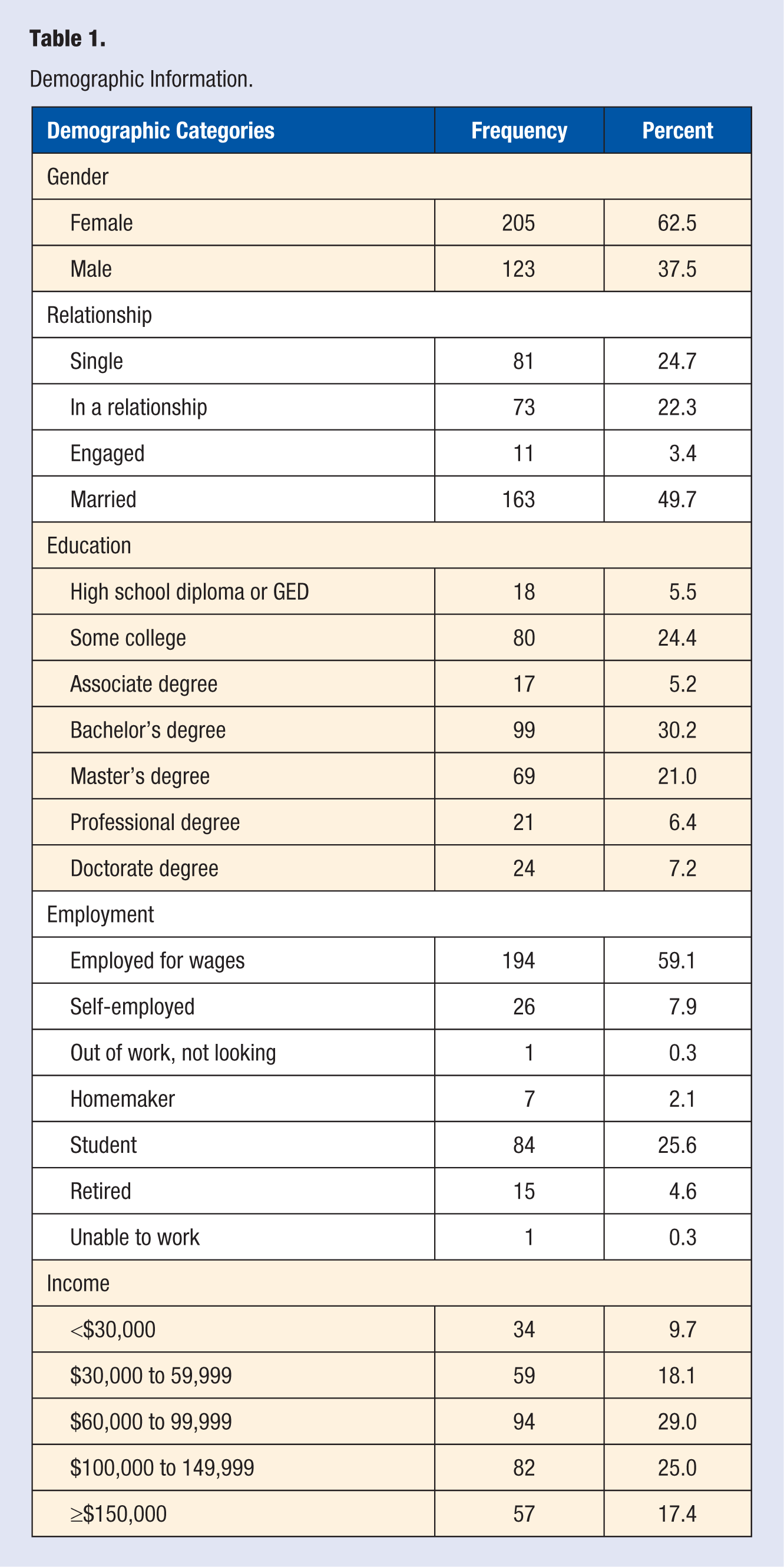
The participant’s age ranged from 18 to 80 years (mean ± SD = 38 ± 15 years). The sample consisted of 205 females (62.5%) and 123 males (37.5%). Additional demographic information such as relationship status, education, employment status, and income is included in Table 1. Total daily smartphone use was 4.04 ± 3.74 hours per day. Within this final sample, 128/328 (39%) participants were coded as active couch potatoes due to being sedentary ≥8 hours per day while simultaneously having a Godin score ≥24. Males and females were equally distributed among the 2 groups (ie, active couch potatoes and sufficiently physically active, nonsedentary individuals). Indeed, 45 males and 83 females (65% female) were categorized as active couch potatoes and 78 males and 122 females (61% female) were categorized as sufficiently physically active, nonsedentary individuals.
Demographic Information.
Results of the binary regression are presented in Table 2. Results revealed being an active couch potato was significantly and positively associated with smartphone use (Wald = 7.326, P = .007). In other words, with each additional hour of daily smartphone use, the odds of becoming an active couch potato increased by 9.11% (Exp(B) = 0.911). Although trending toward significance, results further suggest that being an active couch potato was not associated with age (Wald = 3.567, P = .059). Last, sex (Wald = 0.3280, P = .567) and watching television (Wald = 0.658, P = .417) were not associated with being an active couch potato.
Summary of Binary Regression Predicting “Active Couch Potato.”
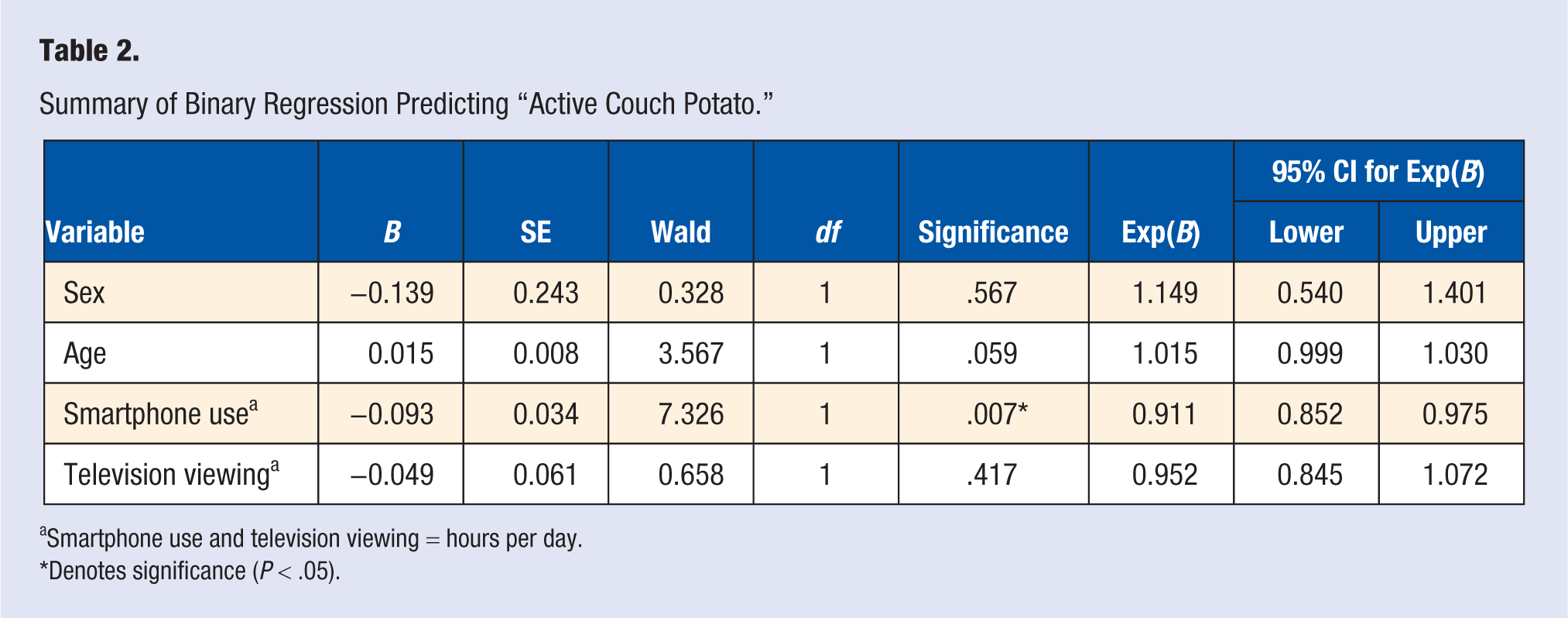
Smartphone use and television viewing = hours per day.
Denotes significance (P < .05).
Results of the independent-samples t tests are depicted in Figures 1 and 2. These data demonstrated that active couch potatoes (35 ± 15 years) were significantly (t = −2.472, P < .014) younger than sufficiently physically active, nonsedentary individuals (39 ± 16 years). Additionally, sedentary behavior and smartphone use were significantly greater (t ≥ 3.55, P < .001) among active couch potatoes (11.35 ± 3.25 hours sitting per day, 4.95 ± 4.5 hours smartphone use per day) than sufficiently physically active, nonsedentary individuals (5.06 ± 1.64 hours sitting per day, 3.45 ± 3.04 hours smartphone use per day). Finally, there was no significant difference (t ≥ 0.508, P ≥ .145) in television viewing or physical activity between the active couch potatoes (2.42 ± 2.47 television viewing hours per day, 58.53 ± 35.02 Godin score) and the sufficiently physically active, nonsedentary group (2.08 ± 1.64 hours television viewing per day, 56.77 ± 27.71 Godin score).
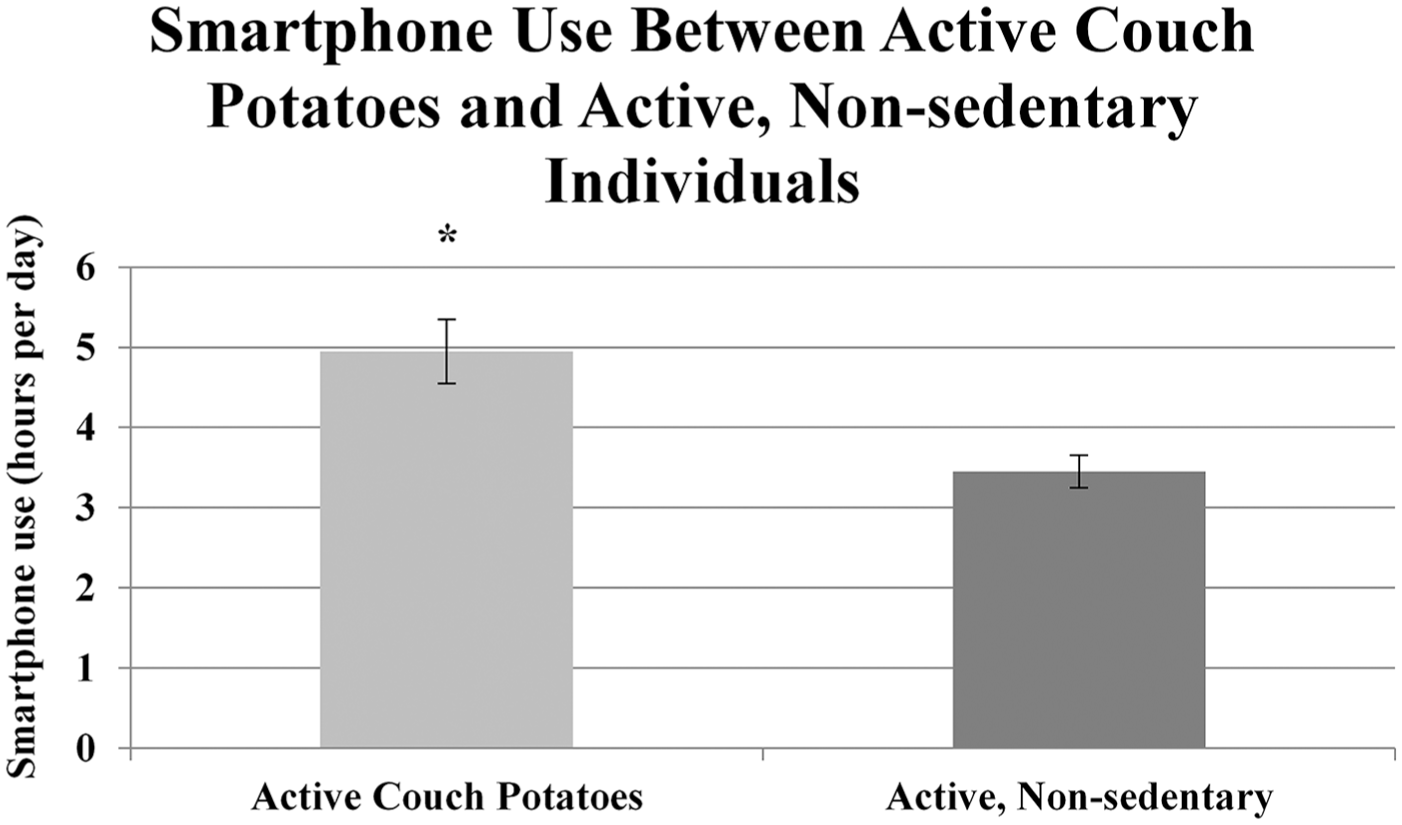
Differences in daily mean smartphone use between active couch potatoes and sufficiently active, non-sedentary individuals (±SE).
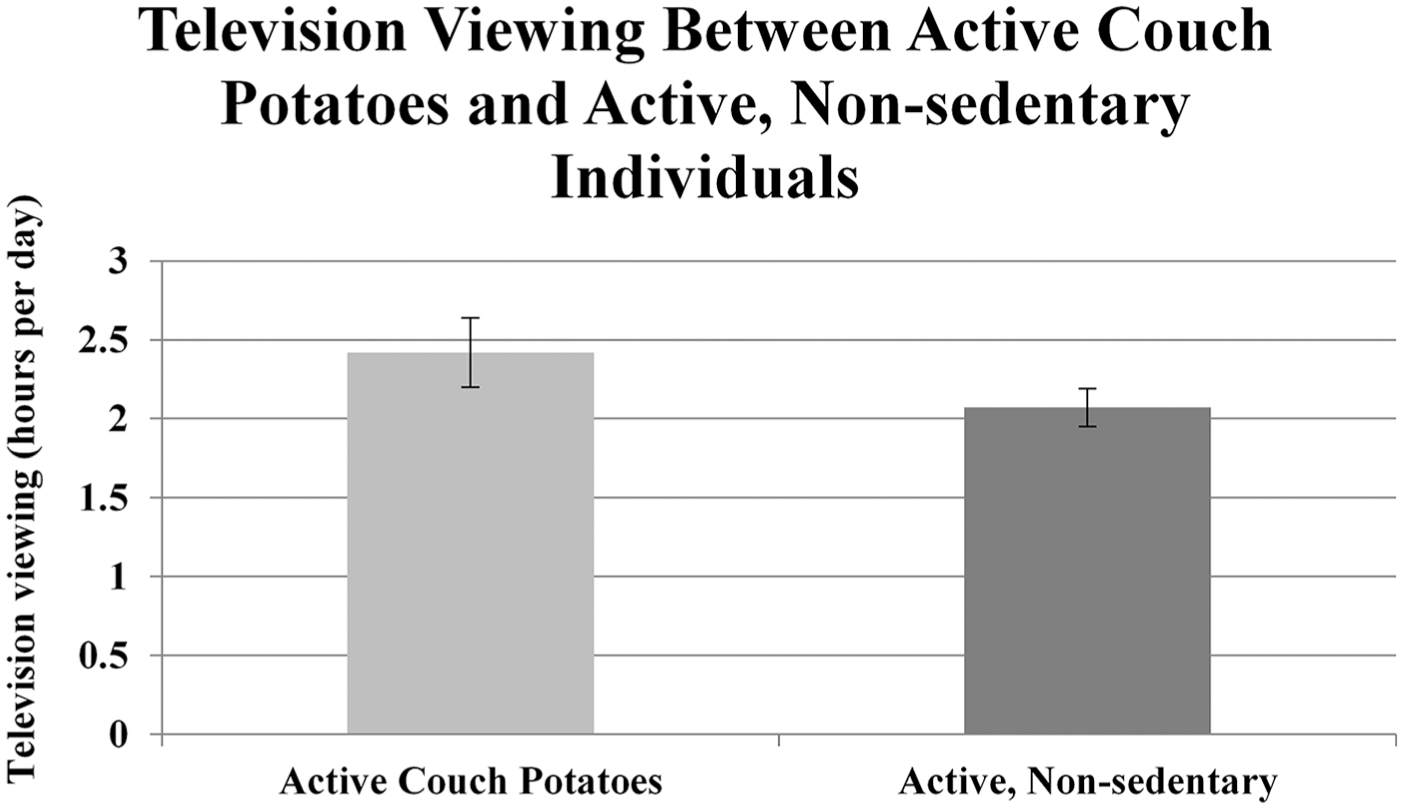
No significant differences in daily mean television viewing between active couch potatoes and sufficiently active, nonsedentary individuals (±SE).
Discussion
This study aimed to expand on previous research that demonstrated smartphone use is positively associated with sedentary behavior and is not related with physical activity. The current investigation assessed the relationship between an operationally defined active couch potato (ie, and individual who engages in regular physical activity and is also highly sedentary), smartphone use, and television watching in sufficiently active adults ranging in age from 18 to 80 years. A contribution of this study is the provision of a method, using previously validated surveys, for operationalizing the active couch potato. The data demonstrated that smartphone use predicted being an active couch potato. Indeed, active couch potatoes reported 59% greater smartphone use than sufficiently physically active, nonsedentary individuals. The active couch potatoes were also slightly younger and engaged in greater amounts of sedentary behavior than the sufficiently physically active, nonsedentary individuals. There were no differences in television viewing or sex between the groups.
Research has shown the ubiquity of the smartphone58-60 and its use in high amounts. Furthermore, elevated smartphone use has repeatedly been linked to large amounts of time allocated to sedentary behavior.38,39,42,43 This is logical because the smartphone provides easy access to a wide variety of traditionally sedentary activities (eg, watching television, playing games, surfing the internet). On the other hand, the smartphone allows access to activities that may promote physical activity such as fitness applications, activity trackers, and physically interactive video games (eg, Pokémon Go!).47,49,61 In this regard, these devices could potentially have the capacity to encourage both sedentary and physically active behavior depending on how the device is being used. 37 This could explain why the present study, as well as those that previously did not operationally define individuals as active couch potatoes, have reported that high smartphone use was predictive of simultaneously elevated physical activity and sedentary behavior (ie, being an active couch potato).39,46
While watching television has previously been identified as the most prevalent31,32,45 traditional, leisure-time sedentary activity, it was not associated with being an active couch potato in the present study. This is not surprising as television use has previously been shown to be positively associated with sedentary activity and inversely associated with physical activity.6,24,26,29,32 In other words, television viewing may promote a physically inactive and concomitantly sedentary lifestyle. However, the modern smartphone may be replacing television viewing as the primary screen-based, leisure-time activity.37,39 This may be because the smartphone provides easy access, in nearly any environment, to many leisure activities (eg, watching videos, playing video games, browsing the internet) that were typically associated with traditional screens (eg, televisions, personal computers). However, as mentioned previously, unlike a television the modern smartphone also provides access to activities which may promote physical activity (eg, fitness apps).44,47-49 This could explain why those individuals who were identified as active couch potatoes in the present study used the smartphone 59% more than the sufficiently physically active, nonsedentary individuals; because they were using the device for both physically active and sedentary pursuits. Therefore, it appears that high interaction with the smartphone, even when sufficiently physically active, contributes to increased sedentary behavior in a way that traditional screens do not, thus promoting the active couch potato phenomenon.
While this is the first study that we are aware of which assessed the relationship between smartphone use and being an active couch potato in adults ranging in age from 18 to 80 years, it is not without limitations. First, this study relied on self-report survey instruments. Second, this was a nonexperimental study and therefore causal inference cannot be made. In other words, we cannot assume that smartphone use is causing these participants to be active couch potatoes or if being an active couch potato causes greater smartphone use. Additionally, while television and smartphone use were assessed, computer use, which may also contribute to an individual’s sedentary behavior, was not assessed. Future studies should use objective methods to examine physical activity, sedentary behavior, smartphone, and computer use. Additionally, experimental and longitudinal research designs should be conducted to manipulate smartphone use and assess its effect on physical activity, sedentary behavior, and the active couch potato phenomenon.
Conclusion
The current study examined the relationship between the likelihood of being an operationally defined active couch potato and smartphone use in sufficiently active adults. This investigation agrees with an earlier study in college students, which also operationally defined the active couch potato, to demonstrate that high smartphone use was predictive of being simultaneously physically active and highly sedentary. 46 The present study also found that smartphone use predicted being an active couch potato while watching television did not. Prior research has demonstrated a positive association between sedentary behavior and both television watching and smartphone use but only television watching, and not smartphone use, has been linked with reduced physical activity. This may be because smartphones have functions that may promote sedentary behavior (eg, watching videos) much like traditional screen use as well as functions that may promote physical activity (eg, fitness apps). This may promote the active couch potato phenomenon. Additionally, individuals who engage in a physically active and highly sedentary lifestyle interacted with their smartphones more than individuals who participate in a physically active and low sedentary lifestyle, which suggests the smartphone may be contributing to individual’s sedentary activity, even when they are sufficiently physically active. Therefore, further attention should be given to understanding the relationship between smartphone use and the health-compromising active couch potato lifestyle. Health awareness messages should be provided which describe the importance of being both physically active and reducing sedentary time to prevent negative health consequences. It may be advantageous to suggest reducing daily smartphone as an avenue to reduce the risk of being an active couch potato. Specifically, these messages should be provided to high smartphone users because of the positive relationship between smartphones use and sedentary behavior, even in the regular exerciser.
Footnotes
Declaration of Conflicting Interests
The author(s) declared no potential conflicts of interest with respect to the research, authorship, and/or publication of this article.
Funding
The author(s) received no financial support for the research, authorship, and/or publication of this article.
Ethical Approval
All procedures were approved by the university institutional review board.
Informed Consent
The first page of the online survey was the consent form where the participant provided consent by reading the form and then clicking the “I agree” button.
Trial Registration
Not applicable, because this article does not contain any clinical trials.
