




Abstract
As the incidence rate of lifestyle-related chronic conditions such as cardiovascular disease, obesity, and type 2 diabetes continues to increase, the importance of regular exercise and a healthy diet for improving or maintaining good health is critical. Exercise training is known to improve fitness and many health risk factors, as well as to improve the performance of competitive athletes. It has become increasingly clear, however, that nutrient intake before, during, and after exercise sessions has a powerful influence on the adaptive response to the exercise stimuli. In this review, the science behind nutrient timing will be discussed as it relates to exercise performance, recovery, and training adaptation. Evidence will be provided that validates intake of appropriate nutrients before, during, and immediately after exercise not only to improve exercise performance but also to maximize the training response. Ultimately, the combined response to exercise and proper nutrient intake leads to not only better performance in athletes but also greater health benefits for all exercisers.
‘Without proper nutrition, exercise goals will not be fully realized.’
Exercise training has many purposes. The average person may exercise train to maintain or improve body weight, lower risk factors associated with disease, or to simply maintain a healthy lifestyle. For the athlete, the goal is generally to improve athletic performance. While the goals of the average person and the athlete may differ substantially, their physiological and cellular responses to exercise will be similar as long as exercise intensity and volume are made relative to fitness level. However, an important determinant of the adaptive response to exercise is the nutritional status of the individual. It has long been known that diet can have a major impact on exercise performance as well as training adaption, and its influence cannot be overstated. Simply put, without proper nutrition, exercise goals will not be fully realized.
While proper nutrition is certainly important in achieving exercise goals, it has become increasingly evident that when one eats can be just as important as what one eats. That is, the timing of nutrient intervention or “nutrient timing” can have a significant impact on exercise performance, recovery, and training adaptation. These responses to nutrient timing are not limited to the elite athlete. Everyone, young and old, male and female, untrained and trained, will respond to nutrient timing.
The type of exercise one performs will dictate the training response of the body. For example, weightlifting will increase muscle mass, while endurance cycling will increase cardiovascular fitness and muscle endurance. The type of nutrients consumed and when they are consumed, however, will substantially affect the quality of an exercise session, rate of recovery, and magnitude of training adaptation. In essence, to have quality exercise sessions, recover fully, and maximize exercise-training adaptation, appropriate nutrient supplementation during and immediately postexercise is essential. Nutrient supplementation at critical times of the day and developing a meal plan that is strategically positioned around the exercise-training program are also advantageous.
In this review, the science behind nutrient timing will be discussed as it relates to exercise performance, recovery, and training adaptation. Evidence will be provided that validates intake of appropriate nutrients before, during, and immediately after exercise to improve exercise performance and maximize the training response. Nutrient supplementation and meal planning throughout the day as it relates to exercise training will also be discussed.
Nutrient Timing
Simply stated, nutrient timing is the delivery of appropriate macronutrients during the time in which the body is primed to use them most effectively. 1 Nutrient timing as it relates to exercise can be divided into 3 phases: the energy phase, the anabolic phase, and the adaptation phase. The energy phase represents the period immediately prior to and during exercise. The anabolic phase is the period immediately after exercise and lasts for about 60 to 90 minutes. During this time, often referred to as the anabolic or metabolic window, 1 the exercised muscle is highly sensitive to nutrient intervention. The adaptation phase follows the anabolic phase, and if appropriate supplements and meals are continued during this period an elevated response to nutrient intervention can be sustained for many hours, resulting in a faster recovery and training adaptation.
The Energy Phase
The energy phase is divided into 2 critical time periods: pre-exercise and during exercise. The pre-exercise period, which will be discussed first, represents the 4 hours before exercise when nutrient supplementation can have a positive influence on exercise performance. We will then discuss the primary focus of the energy phase—nutrient supplementation during exercise.
The Pre-Exercise Period: 4 Hours or Less Before Exercise
Dietary strategies such as carbohydrate loading are designed to maximize muscle glycogen stores in the days before an endurance event 2 and have been shown to be effective in not only increasing glycogen storage to above-average levels but also to improve exercise performance in bouts lasting more than 90 minutes.3-5 However, it has been demonstrated that ingesting a meal containing 150 to 200 g of carbohydrate 4 hours before exercise can also significantly increase muscle glycogen stores 6 and improve exercise performance.2,7-10
Pre-exercise carbohydrate intake has not been without controversy, however. Early research suggested that carbohydrate consumption 30 to 45 minutes prior to exercise elevated plasma insulin, resulting in early exercise hypoglycemia and reduced time to exhaustion. 11 However, the majority of studies do not support this finding. Most investigations report either no adverse effects on performance12-16 or significant performance improvements2,7-10 following pre-exercise carbohydrate supplementation. In addition, some have demonstrated an additive, positive effect on performance when supplementation is provided both before and during exercise.17,18 Intake of 150 to 200 g carbohydrate 2 to 4 hours before a long, intense exercise bout is a reasonable strategy (Figure 1); however, one should determine which pre-exercise feeding strategy works best through experience.
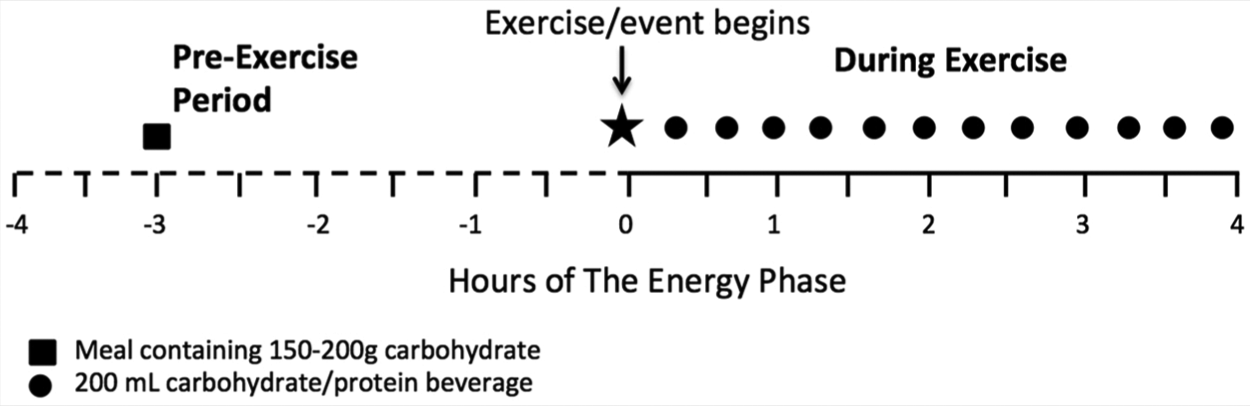
Recommended Nutrient Supplementation During the Energy Phase.
Supplementation During Exercise
Blood glucose and muscle glycogen are essential fuel sources during intense, prolonged exercise, yet the carbohydrate stores of the body are limited. Skeletal muscle stores about 300 to 500 g glycogen, the liver stores 60 to 100 g glycogen, and only about 15 to 20 g glucose are available in the blood. 19 The primary purpose of carbohydrate supplementation during exercise, especially when prolonged and intense, is to maintain euglycemia, or normal blood glucose levels. When blood glucose becomes low and muscle glycogen stores are depleted, prolonged intense exercise simply cannot continue.
Exercise performance
It is well established that endurance exercise performance is significantly improved when carbohydrate is ingested during exercise compared to placebo beverages.20-25 As exercise intensity increases to ~70% V
Carbohydrate supplementation has also been found to benefit resistance exercise. Wax et al provided 1 g carbohydrate per kg body mass immediately before and 0.17 g carbohydrate per kg body mass every 6 minutes during an isometric resistance exercise protocol to fatigue and found that total force output was higher when carbohydrate was provided compared with placebo. 29 Likewise, Haff et al found that carbohydrate supplementation increased the total amount of work that could be performed during an isokinetic resistance exercise session consisting of 16 sets of 10 repetitions at 120° s−1 consisting of knee extension and flexion. 30 Therefore, carbohydrate intake can benefit resistance exercise performance, as well as endurance performance.
Effect of multiple carbohydrate types on endurance performance
Several investigations have demonstrated that when multiple carbohydrate types (eg, dextrose, fructose, and maltodextrin) are ingested, the maximal rate of exogenous carbohydrate oxidation can be increased significantly.31-33 Recent investigations have demonstrated that endurance performance can be improved as well. Currell and Jeukendrup reported an 8% improvement in time to complete a simulated time trial when cyclists ingested a glucose–fructose (2:1 ratio) supplement compared to isocaloric glucose only supplement provided immediately before and every 15 minutes during exercise. 34 Others have shown significant improvements in time to exhaustion when supplementing with a combination of dextrose, maltodextrin, and fructose with added whey, compared to dextrose only. 35 It is believed that ingesting multiple carbohydrates optimizes the use of various intestinal carbohydrate transporters such that the rate of absorption is increased beyond that of a single carbohydrate and leads to increased exogenous carbohydrate oxidation, which spares endogenous carbohydrate stores. 31
Effect of Carbohydrate Supplementation on Immune System Function
While moderate to vigorous endurance exercise is associated with bolstered immune system function, prolonged and exhaustive exercise can negatively impact the immune system, resulting in decreased immune function and higher rates of upper respiratory tract infections.36 -39 Many nutritional countermeasures have been investigated for immune system protection, including glutamine, bovine colostrum, carbohydrate beverages, phytonutrients such as quercetin, and antioxidants such as vitamins C and E.40-44 Of these, carbohydrate ingestion has been demonstrated to be the most effective.37,40
Carbohydrate ingestion can attenuate exercise-induced changes in plasma cortisol and epinephrine, which can suppress immune function during and after prolonged endurance events such as marathons.45,46 Compared to runners ingesting a placebo treatment, those who ingested carbohydrate during exercise had significantly lower plasma cortisol levels and decreased leukocyte trafficking.37,45 Similar results have been shown in exhaustive, prolonged cycling. Scharhag et al provided placebo, 6%, or 12% carbohydrate beverages during 4 hours of cycling and reported that the ingestion of 6% carbohydrate significantly attenuated the exercise-induced immune response, of phagocytic neutrophils and monocytes via a reduction in cortisol release. Moreover, increasing the concentration to 12% carbohydrate provided no additional improvement in immune function over that of the 6% beverage. 47
Others have demonstrated that ingesting carbohydrate compared to placebo during prolonged endurance cycling or running attenuates the increase in both pro- and anti-inflammatory cytokines, which are potent mediators of the immune system and the inflammatory response.40,46,48-51 Taken together, these results strongly indicate that carbohydrate intake can have a significant positive effect in attenuating suppressed immune function and the inflammatory cascade during and after intense, prolonged exercise.
Carbohydrate/Protein Supplementation During Exercise
Several investigations have reported significant improvements in endurance exercise performance when a carbohydrate/protein beverage is ingested during exercise compared to a carbohydrate-only beverage.35,52-56 Ivy et al compared the effects of placebo, carbohydrate only, and carbohydrate/protein supplementation on endurance performance in trained cyclists. The participants cycled at intensities alternating between 45% and 75% V
As discussed earlier, a mixture of carbohydrate types has been shown to be more effective than a single type in improving performance. Given that adding protein to a carbohydrate supplement can improve endurance performance compared to carbohydrate only, recent studies investigated the combined effects of multiple carbohydrate types plus added whey protein on endurance performance. Ferguson-Stegall et al compared the effects of a 6% carbohydrate beverage or a 3% carbohydrate/1.2% protein beverage on time to exhaustion during cycling exercise. 35 The carbohydrate beverage contained 6% dextrose, and the carbohydrate/protein beverage contained 1% each of dextrose, maltodextrin, and fructose, and 1.2% whey protein isolate. Supplementation was provided every 20 minutes during exercise. Time to exhaustion was 28.7% greater in the low carbohydrate/protein treatment compared to the carbohydrate treatment when exercise intensity was near ventilatory threshold. 35 McCleave and colleagues also found significantly improved time to exhaustion in trained female cyclists and triathletes when comparing a mixed carbohydrate/moderate protein supplement with a higher calorie carbohydrate supplement. 53 These results suggest that the efficacy of a supplement in benefitting endurance performance can be optimized by using multiple carbohydrate types and adding a moderate amount of protein. This may be of particular interest to athletes and exercisers who desire a lower-calorie alternative when exercising to meet weight loss or body composition goals.
While the benefits of carbohydrate/protein supplementation have been demonstrated during endurance exercise, a recent investigation found improved performance in simulated soccer-type exercise. 57 Using the Loughborough Intermittent Shuttle Test, which includes jogging, running, and sprinting, 58 Highton and colleagues demonstrated a trend for improved distance covered and sustained speed when participants ingested at 15 minutes intervals during exercise a beverage containing 6% carbohydrate and 2% whey protein compared to 8% carbohydrate only. 57 Moreover, carbohydrate/protein supplementation has been shown to attenuate muscle damage during resistance exercise. 59 Therefore, the benefits of carbohydrate/protein supplementation extend beyond endurance exercise and have relevance to sport-specific performance and resistance exercise training as well.
Despite the many reports of improved endurance and sport performance with carbohydrate/protein, some studies using isocaloric carbohydrate and carbohydrate/protein treatments found no difference in time to exhaustion60-62 or in time trial performance.
63
Given the conflicting findings across studies, and the relatively small sample sizes used in many of the investigations, Saunders et al examined data across multiple studies to determine if performance was in fact related to changes in physiological measures during exercise.
64
To accomplish this, 38 subjects were combined from 3 studies in which cyclists performed rides to exhaustion at 75% V
Effect on Carbohydrate/Protein Supplementation on Muscle Damage and Soreness
In 2 investigations previously described by Saunders and colleagues, carbohydrate/protein supplements ingested during endurance exercise resulted in longer times to exhaustion compared to carbohydrate alone, and also demonstrated lower levels of plasma creatine kinase (CPK) in the carbohydrate/protein treatment compared to carbohydrate only.54,55 Saunders et al also compared the effects of a 6% carbohydrate beverage with a 6% carbohydrate/1.8% protein hydrosylate beverage taken during and immediately after a 60 km simulated time trial on plasma CPK levels as well as muscle soreness ratings 24 hours postexercise. 56 Plasma CPK and ratings of muscle soreness were significantly increased compared to pre-exercise levels in the carbohydrate only treatment, but no significant increases were found when the combination beverage was ingested. 56
While the early research of Saunders and colleagues54-56 suggested that the addition of protein was in some way protective against muscle damage and soreness 24 hours postexercise, it was not evident if this effect was due to the protein itself or the additional energy provided in the nonisocaloric beverage. To address this question, Valentine et al investigated the effects of carbohydrate and carbohydrate/protein beverages matched for both carbohydrate and caloric content on plasma CPK and myoglobin.
62
Participants ingested 250 mL of placebo, carbohydrate (7.75%), carbohydrate plus carbohydrate (9.69%), and carbohydrate/protein (7.75% carbohydrate and 1.94% protein) every 15 minutes during cycling exercise at 75% V
Summary of the Energy Phase
Carbohydrate is an essential fuel source for exercise, and ingesting carbohydrate before as well as during endurance exercise can improve exercise performance, delay the onset of fatigue, and protect immune system function. A supplement containing a mixture of carbohydrate sources can increase time to exhaustion compared to ingestion of a single carbohydrate source, presumably by sparing endogenous carbohydrate stores. The addition of protein to a carbohydrate supplement has been found to reduce muscle damage that occurs after intense endurance as well as resistance exercise. It also may improve exercise performance beyond that of carbohydrate alone, although this has not been a universal finding. The benefits of supplementation are relevant for both endurance exercise and resistance training and apply to both recreational exercisers and elite athletes. A practical strategy for supplementation during exercise is to ingest a beverage containing 3.0% to 6.0% carbohydrate every 15 to 20 minutes during prolonged exercise (Figure 1). One should also consider the addition of 1.0% to 1.5% protein to their supplement.
The Anabolic Phase
It has often been said that breakfast is the most important meal of the day, and recent research appears to support this claim. However, a claim can be made that the second most important meal of the day is the postexercise supplement. Immediately after an intense exercise training session the body is in a catabolic state. Blood insulin is low, cortisol and other catabolic hormones are elevated, muscle and liver glycogen levels are reduced or depleted, muscle protein breakdown is elevated, and substrate availability is low. Once exercise has ceased, this catabolic state will prevail for many hours unless actions are taken to shift the body into a predominately anabolic state. To make this metabolic shift, nutrient intervention is required.
The exercised skeletal muscle is very responsive to nutrient intervention postexercise. When carbohydrate and protein are ingested in the minutes post-exercise, the glucose and amino acids derived from these macronutrients initiate the shift to an anabolic state by raising blood insulin levels, lowering cortisol and other catabolic hormones, and increasing substrate availability. Because muscle is highly insulin sensitive postexercise, this ensures the rapid uptake of blood glucose and amino acids, which promotes muscle glycogen and protein synthesis, while also reducing protein breakdown. Since insulin sensitivity declines with time, the effectiveness of nutrient intervention will also decline. Consuming the appropriate types and amounts of nutrients immediately to 45 minutes after an acute bout of exercise can increase the rate of muscle glycogen storage, reduce muscle damage, increase protein accretion, and speed exercise recovery. When incorporated into an exercise-training program, this results in greater training adaptation.
Muscle Glycogen Storage
Although muscle glycogen represents less than 4% of the total energy stores in the body, it is the most important fuel source during prolonged moderate-to-high exercise, high-intensity interval exercise, and resistance exercise. Moreover, research suggests that the activity of a number of metabolic enzymes including those controlling glucose transport and protein metabolism is influenced by the glycogen level of the muscle. For these reasons, the restoration of muscle glycogen is paramount in the exercise recovery process.
Timing of carbohydrate supplementation
Postexercise muscle glycogen synthesis occurs more rapidly when carbohydrate is consumed immediately after exercise as opposed to waiting several hours. 65 Muscle glycogen synthesis rates range between 5 and 7 µmol g−1 wet wt h−1 over 4 hours of recovery when carbohydrate is consumed immediately postexercise, and these rates can be maintained for 6 to 8 hours by continuing carbohydrate supplementation at 2-hour intervals.65-67 Moreover, synthesis rates have been reported to be in excess of 15 µmol g−1 wet wt h−1 during the first 30 to 40 minutes after exercise.68,69 Delaying supplementation for 2 hours reduces the rates of muscle glucose uptake and glycogen synthesis by 50% or more and occurs despite normal increases in blood glucose and insulin levels.65,70 If carbohydrate is not adequately supplied postexercise, the rate of muscle glycogen synthesis can be extremely low. 66 Therefore, providing a carbohydrate supplement soon after exercise has the added benefit of starting the muscle glycogen recovery process immediately, thereby maximizing the effective recovery time.
The frequency and amount of carbohydrate supplementation can have dramatic effects on the rate of glycogen storage. Ivy et al found that supplementing at 2-hour intervals with 1.2 to 1.5 g glucose kg−1 body mass increased the glycogen synthesis rate up to 5 to 7 µmol g−1 wet wt h−1. 66 When supplements exceeded 1.5 g glucose kg−1 body mass, the synthesis rate did not increase further. However, research suggests that faster rates of synthesis can be obtained during the immediate hours postexercise with greater amounts of carbohydrate if frequency of supplementation is also increased.71-74 For example, Jentjens et al 72 and van Loon et al 74 reported synthesis rates of 8 to 10 µmol g−1 wet wt h−1 when subjects were provided 1.2 g glucose kg−1 body mass h−1 at 30-minute intervals over 3 to 5 hours of recovery. Increasing the amount of carbohydrate ingested to 1.6 g kg−1 body mass h−1, however, did not have an additional benefit. 75 While muscle glycogen synthesis can be maximized with carbohydrate intake of approximately 1.2 g kg−1 body mass h−1 provided in 15- to 30-minute increments, this amount of carbohydrate is excessive and the frequency of supplementation impractical.
Addition of protein to a carbohydrate supplement
Many investigators have demonstrated that the addition of protein to a carbohydrate supplement can significantly enhance the rate of muscle glycogen synthesis during the first 4 hours of recovery.69,76-79 However, not all studies support these findings.72-75 The differences in findings can most likely be attributed to differences in experimental design, including frequency of supplementation, and the amount and type of carbohydrate and protein provided. The evidence, however, is considerable that the addition of protein to a carbohydrate supplement will increase the efficiency of muscle glycogen storage when the amount of carbohydrate ingested is below the threshold for maximal glycogen synthesis or when feeding intervals are 1 hour or more apart.69,76-79 In fact, maximum rates of muscle glycogen synthesis can be achieved with substantially less carbohydrate and reduced frequency of supplementation when protein and carbohydrate are coingested. Furthermore, a carbohydrate/protein supplement has the added benefits of reducing muscle damage and soreness and increasing protein synthesis.
Muscle Damage and Soreness
Muscle damage during exercise occurs from the mechanical stress placed on the muscle fibers and the catabolic hormonal environment that increases muscle protein breakdown postexercise. 80 The longer nutrient supplementation is delayed postexercise, the longer this catabolic state prevails, leading to increased muscle damage, inflammation, and soreness.
Acute supplementation
Roy et al found that consuming a carbohydrate supplement (1 g kg−1 body mass) immediately after resistance exercise reduced 3-methylhistidine excretion and urea nitrogen during the first 10 hours of recovery. 81 These results suggest that adequate carbohydrate supplementation can decrease myofibrillar protein breakdown and limit muscle damage. Etheridge et al reported that consuming 100 g of protein immediately after 30 minutes of downhill running prevented a decline in maximal quadriceps strength and power output during a 72-hour recovery period. However, the supplement had no effect on limiting the increase in blood markers of muscle damage or ratings of muscle soreness. 82 Cockburn et al compared the effects of water, a carbohydrate sports drink, milk, and a milk-based carbohydrate/protein supplement on muscle soreness, isokinetic muscle performance, and plasma CPK and myoglobin concentrations. At 48 hours postexercise, milk and milk-based carbohydrate/protein supplementation had attenuated the decrease in isokinetic muscle performance and increases in CPK and myoglobin relative to water and the carbohydrate sports drink. 83 In a subsequent study, these researchers found that consuming the milk-based carbohydrate/protein supplement postexercise as compared to pre-exercise limited development of muscle soreness and better maintained muscle strength over 48 hours of recovery. 84 However, White et al reported that supplementing with carbohydrate/protein before or after eccentric quadriceps contractions on an isokinetic dynamometer had no effect on muscle damage, soreness, or performance up to 96 hours postexercise. 85 Also, Wojcik and colleagues reported that eccentric exercise increased muscle protein breakdown as indicated by urinary 3-methylhistidine levels and increased plasma IL-6 with no effect of carbohydrate or carbohydrate/protein supplementation. Quadriceps isokinetic peak torque was depressed similarly for all groups 24 and 72 hours postexercise as well. 86 Of course, the differences in findings may be accounted for by the type of exercise used to induce muscle damage, the degree of muscle damage imposed, the type of supplement provided, and the lack of controlling participants’ dietary intake outside of the experimental trials.
Chronic supplementation
The benefits of carbohydrate/protein supplement over subsequent days of training have also been investigated. Luden et al provided a carbohydrate or carbohydrate/protein beverage to 23 runners immediately after each training session for 6 days before a cross-country race. After a 21-day washout period, subjects repeated the protocol with the alternate beverage. Although postintervention CPK and soreness were significantly lower after carbohydrate/protein supplementation than after carbohydrate supplementation, running performance did not differ between treatments. However, it was noted that the runners with the highest training mileage had the most improvement in race performance after the carbohydrate/protein supplement. 87 Chronic carbohydrate/protein supplementation of US Marine recruits was found to be of benefit to their health during 54 days of basic training. 88 Recruits were randomly assigned to placebo, carbohydrate, or carbohydrate/protein treatment groups. Compared with placebo and carbohydrate groups, the carbohydrate/protein supplementation group had an average of 33% fewer total medical visits, 28% fewer visits due to bacterial/viral infections, 37% fewer visits due to muscle/joint problems, and 83% fewer visits due to heat exhaustion. Muscle soreness immediately postexercise was reduced by carbohydrate/protein supplementation compared with placebo and carbohydrate groups on both days 34 and 54. 88
In summary, postexercise carbohydrate/protein supplementation may be more effective than carbohydrate only in reducing indicators of muscle damage and soreness. This may be especially significant during periods of intense, chronic exercise training.
Effect on Protein Accretion
Protein accretion is determined by the difference in protein synthesis and degradation. Following an acute bout of exercise, protein synthesis increases; however, net protein balance is negative as the increase in protein synthesis is offset by increased protein breakdown. 89 Ingestion of amino acids or protein postexercise, however, stimulates protein synthesis, resulting in a positive net protein balance.90,91
Acute effect
The first study to demonstrate the importance of nutrient timing on muscle protein synthesis was conducted by Okamura and colleagues. 92 Dogs were exercised by treadmill running and infused with a glucose/amino acid mixture immediately or 2 hours postexercise. When the dogs were infused immediately postexercise, muscle protein synthesis increased significantly within 15 minutes. When infusion of the mixture was delayed for 2 hours, there was no increase in protein synthesis; furthermore, when the infusion was started after the 2-hour delay, the synthesis rate was significantly lower than observed when infusion occurred immediately postexercise. It was concluded that stimulation of protein accretion is better served by provision of nutrients sooner rather than later postexercise. 92 This view was supported by the research of Levenhagen et al. 70 Cyclists were provided a carbohydrate/protein supplement immediately or 3 hours after cycling at moderate intensity for 1 hour. Whole body and muscle protein synthesis were determined during the 3 hours after supplementation. When the supplement was provided immediately postexercise, whole body protein synthesis was 12% higher and leg muscle protein synthesis 300% higher than when the supplement was delayed. Importantly, positive protein balance was only reached when supplementation occurred immediately post-exercise. 70
Whether there is an advantage to nutritional supplementation within the first hour after exercise has been recently challenged. 93 It has been pointed out that the rate of protein synthesis was the same when a supplement composed of 6 g of an essential amino acid (EAA) mixture and 36 g of carbohydrate was provided either 1 or 3 hours after resistance exercise. 94 It was also reported by Tipton et al that immediate pre-exercise ingestion of an EAA/carbohydrate solution resulted in a significantly greater and more sustained muscle protein synthesis response compared to its immediate postexercise ingestion. 95 Moreover, the effect of an acute bout of exercise on muscle protein synthesis has been found to last for several days.96,97
A closer evaluation of these studies, however, shows they do not refute or diminish the importance of supplementation in the first hour postexercise. First, Fujita et al found that supplementing 1 hour before exercise with an EAA/carbohydrate supplement did not result in enhanced postexercise muscle protein synthesis. 98 Second, Tipton et al later reported no significant difference in net muscle protein synthesis postexercise when 20 g of whey was consumed immediately before versus 1 hour postexercise. 99 Third, when the effect of timing of nutrient supplementation on protein synthesis postexercise is evaluated, the supplement ingested closest in time to the exercise generally has the greatest impact. For example, the increases in muscle protein synthesis reported by Phillips et al at 3, 24, and 48 hours after exercise were 112%, 65%, and 34%, respectively. 97 Finally, there are few studies that actually compare the response of supplementation immediately or within the first 45 minutes postexercise with delaying supplementation for several hours as evaluated by Okamura et al 92 and Levenhagen et al. 70 In summary, most acute exercise studies clearly support supplementation soon after exercise for optimal stimulation of protein synthesis and protein accretion.
Chronic effect
Results from a number of exercise training studies using various forms of exercise and subject populations support the use of early postexercise nutrient intervention to enhance training adaptation. Suzuki et al investigated the effect of meal timing after exercise on body composition in 20 male rats assigned to groups fed either immediately or 4 hours postexercise. Resistance exercise (squatting) was conducted 3 days per week for 10 weeks. At the completion of training, body weight was comparable between the groups. However, hind limb muscle weight was 6% higher and adipose tissue weight 24% lower in rats fed immediately after exercise compared with rats fed 4 hours postexercise. 100 One of the first human studies addressing the effect of nutrient timing on training adaptation corroborated these results in elderly men. 101 Esmarck et al investigated the effects of nutrient timing in 13 men (74 ± 1 years) who completed a 12-week resistance-training program while receiving a carbohydrate/protein supplement immediately after or 2 hours after each exercise session. Subjects receiving the supplement immediately postexercise had a significant increase in fat-free mass, cross-sectional area of the quadriceps femoris, and mean muscle fiber area, whereas no significant increases in these parameters were observed for subjects receiving supplementation 2 hours postexercise. Increases in dynamic and isokinetic muscle strength were also greater in subjects supplemented immediately postexercise. 101
Cribb and Hayes demonstrated the efficacy of nutrient timing in young resistance-trained men. Their exercise program consisted of 12 weeks of resistance training before supplementation started, followed by 10 more weeks of resistance training after onset of supplementation. The supplement consisted of a mixture of carbohydrate, protein, and creatine and was provided immediately before and after exercise in one group and before breakfast and late evening before sleep in a second group. At the completion of training, the subjects that received the supplement pre- and postexercise had a 100% greater increase in lean body mass and a 33% greater increase in the cross-sectional area of the IIa and IIx muscle fibers from the vastus lateralis than subjects receiving the supplement at the beginning and end of the day. Furthermore, improvements in strength were significantly greater in subjects supplemented immediately pre- and postexercise. 102 Similar results were found by Hulmi et al. 103 These investigators provided protein (15 g of whey) or nonenergetic placebo to subjects immediately before and after each resistance exercise session. Exercise sessions were performed twice per week over 21 weeks. Protein supplementation increased muscle cross-sectional area and altered muscle mRNA expression in a manner advantageous for muscle hypertrophy. 103
Supplementation during exercise has also been found to improve training adaptation to resistance exercise. Bird et al conducted a 12-week resistance exercise-training program in which supplementation (6% carbohydrate, 6 g EAA, 6% carbohydrate + 6 g EAA, or placebo) was provided throughout each exercise session. 104 Bird et al reported the carbohydrate/EAA supplementation increased lean body mass and the cross-sectional areas of type I, IIa, and IIb muscle fibers compared with placebo and reduced myofibrillar protein breakdown as indicated by a reduced urinary excretion of 3-methylhistidine 48 hours after the last exercise session. Interestingly, the provision of carbohydrate and EAA separately improved body composition and muscle fiber cross-sectional area relative to placebo, but these improvements were not as advantageous as those seen with the carbohydrate/EAA supplement. 104 These results support the additive effect of carbohydrate and protein supplementation on protein accretion.
Only a few studies have investigated the effects of nutrient timing on adaptation to aerobic exercise training. Ferguson-Stegall et al compared the effects of a carbohydrate/protein supplement (low-fat chocolate milk), isocaloric carbohydrate supplement, and a calorie-free placebo on training adaptation occurring over 4.5 weeks of exercise training.
105
Subjects cycled 60 min d−1, 5 d−1 wk−1 at 75% to 85% of V
Ferguson-Stegall et al also reported that carbohydrate/protein supplementation in the form of low-fat chocolate milk resulted in greater improvements in body composition. 105 This result is supportive of the findings of Josse and colleagues, who studied the effects of daily exercise and a hypoenergetic diet varying in protein and calcium content from dairy foods on the composition of weight lost over 16 weeks in premenopausal, overweight, and obese women. 107 Participants were randomly assigned to a high protein, high dairy (HPHD; total protein, 1.33 ± 0.04 g/kg d−1), adequate protein, medium dairy (APMD; total protein, 0.84 ± 0.02 g/kg d−1), or adequate protein, low dairy (APLD; total protein, 0.72 ± 0.02 g/kg d−1) treatment group. The quantity of total dietary protein and dairy food-source protein was 30% and 15%, 15% and 7.5%, and 15% and less than 2% for the HPHD, APMD, and APLD groups, respectively. Dairy protein consumption for each group was controlled by the number of supplements per day. Weight loss was the same for all groups; however, fat loss during the last 8 weeks of treatment was greater in the HPHD group than in the APMD and APLD groups. Also, the HPHD group demonstrated a significant gain in lean mass, whereas the APLD and APMD groups lost lean mass. These findings highlight the importance of protein supplementation in exercise programs designed for weight management.
Not all studies have found that nutrient supplementation postexercise results in a faster training adaptation. Verdijk et al trained 2 groups of elderly men (72 ± 2 y) for 3 d wk−1 for 12 weeks. 108 One group ingested 10 g of protein before and immediately after each exercise session, and the other group received a placebo. All training occurred 90 minutes after a standardized breakfast. Leg strength and quadriceps mass increased significantly with no difference between groups. The investigators concluded that protein supplementation immediately before and after exercise does not further augment the increase in skeletal muscle mass and strength after prolonged resistance-type exercise training in healthy elderly men when their daily protein consumption is normal. 108 While a well-controlled study, it has notable limitations. The amount of protein provided was rather small, as it has been reported that a much higher amount of protein is required to maximize postexercise protein synthesis in elderly men.109-111 The exercise sessions were also carried out only 90 minutes after breakfast. It is highly likely that nutrients from breakfast were still being metabolized during and following the exercise sessions in both the placebo and protein groups and therefore prevented a true evaluation of effects of protein supplement ingestion immediately before and after exercise on the adaptive response.
Hoffman et al 112 and Erskine et al 113 also found no improvement in training adaptation when supplementing with protein around each exercise session. Hoffman et al studied the effect of 10 weeks of protein supplement timing on strength, power, and body composition in resistance-trained men. 112 Erskine et al evaluated the effect of protein supplementation over 12 weeks of elbow flexor resistance exercise. Participants were randomly assigned to receive protein or placebo before and after each exercise session. 113 However, in neither the Hoffman et al 112 nor Erskine et al 113 studies was nutrient consumption controlled after the exercise training sessions. In summary, most investigations demonstrate that supplementation that ensures appropriate nutrient levels within the first 45 minutes postexercise results in the greatest adaptive response to endurance as well as resistance exercise training.
Appropriate postexercise nutrient supplement
Both amino acid and protein supplementation postexercise stimulates protein synthesis. However, the type and amount of these nutrients affects the magnitude of response. Several studies have reported that only the EAA are necessary for stimulation of muscle protein synthesis.114,115 Of these, leucine appears to be of most importance because of its ability to activate the mTOR signaling pathway, which controls mRNA translation. 116 Whey protein, which comprises about 20% of milk protein, has a high leucine content and is rapidly digested. Milk protein has been found to promote greater muscle protein accretion than soy protein after exercise. 117 Moreover, isolated whey protein was found to stimulate muscle protein synthesis to a greater degree than casein and soy protein. 118 There are few studies comparing protein mixtures. However, Riedy et al recently reported that a blend of whey and soy protein prolonged the elevation in blood amino acid levels after ingestion relative to whey protein alone and produced a greater total muscle protein synthesis. 119 However, simply maintaining an elevated blood amino acid profile does not guarantee that protein synthesis will continue,120,121 suggesting that more research needs to be conducted to determine if combinations of fast and slow digesting proteins will have an overall greater effect on protein synthesis and accretion (Figure 2).
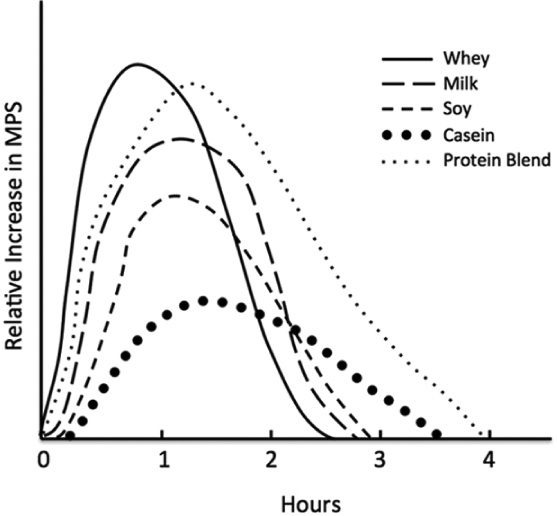
The relative Increase and Duration in Muscle Protein Synthesis (MPS) Following Postexercise Supplementation With Different Proteins or Protein Mixtures.
Carbohydrate ingestion has also been found to stimulate protein synthesis postexercise, most likely as a result of increased insulin secretion.81,122,123 Insulin is also a strong inhibitor of muscle protein breakdown, 91 and many studies suggest that the combination of carbohydrate and either protein or EAA can have an additive effect on muscle protein synthesis and net whole body protein balance.75,123,124 Chronic training studies comparing carbohydrate plus protein or EAA supplementation with protein supplementation alone also support the superiority of a combination of macronutrients to stimulate recovery and training adaptation.104-106 The amount of supplementation is also of importance. Cuthbertson and colleagues have estimated that consuming 10 g of a mixture of EAA could maximize muscle protein synthesis, 125 and Moore et al reported that 20 g of whey protein provided soon after resistance exercise maximized muscle protein synthesis in young adults. 126 However, for older individuals, the requirement may be as high as 40 g.109 -111 These results have been used to make recommendations regarding postexercise protein supplementation. However, the rate of protein accretion is also affected by the rate of protein breakdown. Recently, Deutz and Wolfe provided strong evidence that with increased carbohydrate/protein intake, there is a progressively greater insulin response, resulting in a proportional inhibition of muscle protein breakdown and increased protein accretion. 127 If true, this suggests that there is no practical upper limit to the anabolic response to protein when combined with carbohydrate in a supplement or in the context of a meal.
The Adaptation Phase
The adaptation phase represents the 4 to 6 hours after the effects of the initial postexercise supplement have dissipated. As described earlier, a rapid rate of muscle glycogen storage that follows postexercise supplementation can be maintained up to 6 to 8 hours with periodic carbohydrate feedings.65-67 A similar pattern is likely to occur with protein synthesis. Phillips et al found that supplementing with a carbohydrate/protein supplement 24 and 48 hours after exercise resulted in an increase in muscle protein synthesis, although the response was not as high as when supplementing 3 hours postexercise. 97 Continuously maintaining high blood amino acid levels, however, does not mean that protein synthesis will be sustained as protein synthesis is only elevated for about 1 to 2 hours following carbohydrate/amino acid supplementation.94,128 Likewise, raising blood amino acid levels to 1.7-fold above basal level via intravenous infusion increases muscle protein synthesis within 0.5 hours of infusion onset; however, despite maintaining elevated blood amino acid levels with continuous infusion the rate of muscle protein synthesis declines to near baseline level within 2 hours. 121
Recently, West et al provided whey protein either as a single 25-g bolus or as repeated, small, “pulsed” 2.5-g protein drinks every 20 minutes for 200 minutes in a nonexercised state and after resistance exercise. 129 Providing the protein as a bolus increased blood EAA levels above those when pulsing the supplementation the first 60 minutes postexercise. Pulsed supplementation resulted in a smaller but sustained increase in aminoacidemia that remained elevated above that produced by the bolus supplement from 180 to 220 minutes after exercise. Despite an identical net area under the essential amino acid curve, muscle protein synthesis was elevated to a greater extent after bolus supplementation than after pulsed supplementation, and the increased rate of synthesis following bolus supplementation was related to greater activation of signaling proteins in the mTOR signaling pathway. 129
Based on these results, we propose that supplementing at 2 to 3 hour intervals postexercise will maintain a relatively rapid rate of muscle glycogen storage and protein synthesis if supplementation starts soon after the completion of exercise. While the supplement must contain sufficient amounts of carbohydrate and protein, they need not to be as high as used to initiate the recovery process. It is important to note that from a practical perspective, not all feedings must be supplements. Exercise training and nutrient supplementation can be intermixed with regular daily meals and snacks. Table 1 provides eating schedules that accommodate several different exercise-training schedules. Even a snack before retiring to bed can be an effective strategy to optimize protein accretion.
Examples of Possible Timing of Workouts, Supplements, and Meals for 3 Different Daily Training Schedules a .
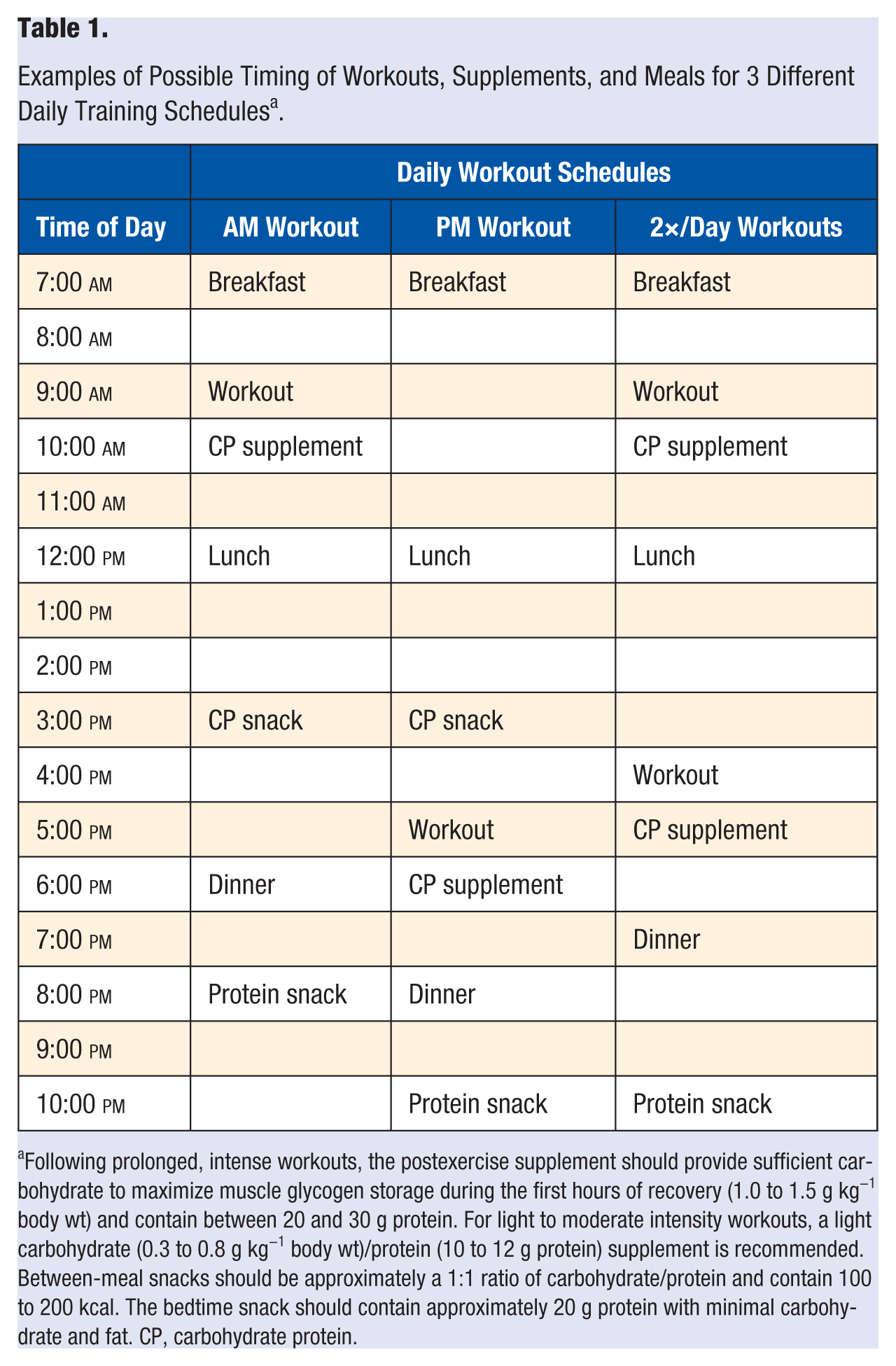
Following prolonged, intense workouts, the postexercise supplement should provide sufficient carbohydrate to maximize muscle glycogen storage during the first hours of recovery (1.0 to 1.5 g kg−1 body wt) and contain between 20 and 30 g protein. For light to moderate intensity workouts, a light carbohydrate (0.3 to 0.8 g kg−1 body wt)/protein (10 to 12 g protein) supplement is recommended. Between-meal snacks should be approximately a 1:1 ratio of carbohydrate/protein and contain 100 to 200 kcal. The bedtime snack should contain approximately 20 g protein with minimal carbohydrate and fat. CP, carbohydrate protein.
Late night snacking is not normally recommended. Research clearly shows that obese individuals tend to skip breakfast and eat the majority of their daily calories from late afternoon to bedtime.130-132 However, if one is trying to build muscle and increase lean body mass, a low-calorie protein supplement before bedtime may help. Beelen et al found that ingestion of a carbohydrate/protein supplement following a late afternoon resistance exercise session increased protein synthesis for approximately 2 hours. 133 However, protein synthesis was found to be remarkably low during the sleeping hours. Res et al 134 repeated the study by Beelen et al, 133 but provided a 40-g casein supplement or placebo 30 minutes before bedtime. When the casein supplement was provided, whole body protein synthesis was increased throughout the night and net protein balance remained positive. In addition, muscle protein synthesis also remained elevated. 134
Conclusions
Nutrient timing can have a dramatic effect on exercise performance, recovery, and training adaption. Carbohydrate supplementation provided in the hours before exercise can improve exercise performance, and carbohydrate intake during exercise can delay the onset of fatigue and protect immune function. Research suggests that the addition of protein to an exercise supplement may be more efficacious than carbohydrate alone, and carbohydrate/protein supplementation during exercise has the added benefit of attenuating exercise-induced muscle damage and soreness. Carbohydrate/protein supplementation immediately postexercise will significantly increase the rate of muscle glycogen synthesis, while delaying supplementation for several hours will significantly slow the rate of glycogen synthesis and its rate of recovery. Supplementing with protein or EAA postexercise will increase protein synthesis and accretion, but again the combination of carbohydrate plus protein or EAA appears to be more efficacious. If postexercise supplementation is performed routinely and with the appropriate protein/carbohydrate mixture, it can have a significant beneficial influence on body composition and rate of training adaptation. The principles of nutrient timing are relative easy to implement and apply to recreational exercisers and elite athletes alike.