



Abstract
This paper addresses recent studies on numerous glass materials for retrospective analysis to ascertain radiation dose after catastrophic, large-scale radioactive incidents. These glasses have shown to be versatile retrospective dosimeters in medical and industrial settings, providing great spatial resolution, sensitivity, and water resistance. A review analyzing the retrospective applications of the glass has been conducted, emphasizing the potential of these materials in measuring unintentional radiation exposures. The novelty of this work lies in providing a comparative framework linking thermoluminescence (TL) response, effective atomic number (Zeff), dose-response behavior, and radiation-induced structural alterations across multiple glass materials. The relevant scientific research was rigorously assessed to compare thermoluminescence (TL) response, effective atomic number (Zeff), dose response, and radiation-induced structural alterations in glass materials. From the review, effective atomic numbers ranged from 9.23 to 15.1, strongly aligning with the Zeff of bone, indicating the potential of glass materials as bone-equivalent retrospective dosimeters. The dose-response relationship demonstrates that TL intensity exhibits the most significant correlation with the administered dose and glow curve occurring between 150 to 273 °C, indicating stable charge trapping and recombination processes. Morphological and structural analysis confirmed the dose dependent structural alteration of the glass samples. Despite certain constraints, such as long-term stability, optical bleaching, and dependable dose reconstruction, glasses exhibit potential efficacy as a retrospective dosimeter. This study incorporates thermoluminescence, effective atomic number, and dose-induced structural evolution in a cohesive framework, providing a comprehensive comparative analysis to improve the understanding of glass-based materials as bone-equivalent retrospective dosimeters for post-accidental radiation evaluation.
Keywords
Highlights
• Glass screen protectors of mobile phone exhibit an excellent TL response that makes them appropriate for retrospective dosimetry application. • The effective atomic numbers (Zeff) of screen protector glass, ranging from 9.37 to 10.24, correspond with those of bone, indicating their potential utility in assessing accidental radiation exposures. • TL and structural analysis validate dose-dependent behavior and sustained glow peak. • Zero dose signal can be omitted by chemical treatment with HF and TL-wideband KG3 filter ensures precise measurements of zero dose signal.
1. Introduction
In the occurrence of a significant radiation catastrophe, such as a nuclear disaster or a terrorist assault involving a dirty bomb, numerous individuals may be subjected to an indeterminate level of ionizing radiation. Consequently, an expedited approach for evaluating absorbed doses is essential for executing a triage, which entails categorizing victims according to the severity of their injuries and the urgency of their treatment requirements. The general populace often lacks specialized radiation dose sensors, such as personal dosimeters. Nonetheless, if the designated dosimeters are unavailable in the vicinity, personal items may function as improvised dosimeters during a nuclear incident or radiation mass fatalities. This category of dosimeter is referred to as a retrospective or look-back dosimeter. Retrospective dosimetry is the primary method employed to determine dose from accidental events. However, emergency retrospective dosimetry has many challenges, including signal loss due to environmental factors such as light and temperature exposure, and uncertainty in dose reconstruction caused by differences in material composition. These constraints can influence the precision and dependability of dose estimation. The materials selected for a retrospective dosimeter should be highly sensitive to radiation, possess minimal hygroscopicity, and be able to reliably retain the absorbed energy until the subsequent dose measurement.
For this, researchers have been looking into the use of various personal objects as emergency dosimeters, such as cell phones, which are held in close proximity to the human body (ICRU, 2019). Besides this some researchers have also investigated car wind screen,1,2 commercial kitchenware glass 3 and commercial glass 4 as retrospective dosimeter. Though various borate glass materials have also been studied for their structural, optical, and mechanical properties, their main emphasis has been placed upon their application as radiation shielding materials, which is beyond the scope of this review article dealing with retrospective dosimetry.5-11 Various components of mobile phones were characterized, including electronic components12-20 display glass,21-25 touch screen glass,26,27 printed circuit boards of electronic watches 28 and RFID chip card modules, 29 utilizing luminescence techniques for physical retrospective dosimetry. The luminescence technique, such as thermoluminescence (TL) or optically stimulated luminescence (OSL), is typically employed for emergency dosimetry. One drawback of utilizing mobile phone components is that the methods are destructive since the items are typically destroyed during sample preparation. This poses a significant challenge regarding public acceptance, as the phones become inoperable. It is advisable that emergency dosimeters should not be considered highly valuable items. Protective glass of smart phones is widely utilized to safeguard the display screen of smartphones and can be replaced without necessitating the destruction of an expensive device.30-35 Eyeglass lenses are also utilized worldwide and are worn by a significant segment of the population. In the event of an accident involving radiation release, it is possible to conduct assessments to determine the exposure dose experienced by the general population in the surrounding area. 36 Vehicles from various brands are usually positioned at a designated distance around the outermost boundaries of nuclear facilities. So, the potential application of car windscreens in post-accident dose reconstruction following unplanned nuclear incidents and natural disasters, as well as unforeseen occurrences related to the extensive use of radioactive and nuclear materials has also been confirmed by.2,37 An analysis of commercial window glass brands commonly used in Bangladeshi homes has been conducted for retrospective accident dosimetry, confirming their suitability. 4 Certain types of kitchenware glass can be used as dosimeters, particularly for measuring radiation exposure following unplanned incident. 3
The widespread interest on glass samples prompted to review existing research on the dosimetric properties, feasibility of utilizing readily available glass samples (utilized in different form) and to identify their potential challenges and limitations as retrospective dosimeter. However, it is also important to point out that there is a lack of thorough evaluation in the current literature that associates the structural and compositional characteristics of various glass materials with their TL performance and dosimetric reconstruction potential. Moreover, there is a lack of thorough evaluation of the impact of radiation-induced structural changes, material-specific processing (e.g., tempering and ion exchange), and fading characteristics on dosimetric reconstruction potential. This review aims to bridge this information gap and provide a thorough evaluation of TL characteristics and structural and compositional characteristics of glass-based materials and their applications. To the best of our knowledge, a comprehensive comparative evaluation of glass samples as retrospective dosimeter that includes characterization study of different glasses has not yet been published, despite the fact that there are already a number of review publications on retrospective dosimetry. This paper summarizes the latest published literature regarding the structural and dosimetric characterization results of different types of glasses for retrospective dosimetry.
2. Dosimetric Technique
2.1. Thermoluminescence (TL) Dosimetry
Thermoluminescence (TL) dosimetry is a recognized method for quantifying ionizing radiation exposure, based on the capacity of specific materials to capture and retain charge carriers following interactions with radiation. Upon heating these materials, the trapped charge carriers recombine at luminescence centers, resulting in the release of stored energy as light, which correlates with the absorbed radiation dose. The TL intensity is quantified through a glow curve, offering essential insights into trap depth, charge carrier dynamics, and recombination mechanisms. The primary benefits of TL dosimetry consist of its capability to quantify accumulated dose over long durations, its high sensitivity across a wide spectrum of radiation energies, and the possibility for multiple readouts if the material remains partially annealed.
Since there is relatively wide availability, optical transparency, and capacity to form stable trapping centers, glass matrices—particularly aluminosilicate and borosilicate glasses—have been shown to be highly promising for TL dosimetry. The intrinsic TL attributes of different types of glasses can be utilized in retrospective dosimetry, particularly for radiation incidents where standard dosimeters are unavailable. Microstructure imperfections, processing methods, and composition all have a significant impact on how glass reacts to a radiation. The formation of traps, recombination efficiency, and glow curve properties can all be strongly impacted by the presence of transition metal impurities, rare earth dopants, or alkali metals.
However, to increase the suitability of glass materials for TL dosimetry, certain challenges need to be resolved. TL efficiency varies significantly among glass compositions and is influenced by several factors, including thermal history and processing parameters that change during tempering or ion exchange treatments. The long-term stability of TL signals in glass is another major issue, specifically regarding signal repetition and fading effects. Combining advanced signal processing methods with a deeper understanding of defect kinetics can increase the dependability of glass-based TL dosimeters. Future research should focus on enhancing glass compositions, streamlining measuring processes, and incorporating computational modeling to raise the accuracy of dose reconstruction in real-world scenarios.
2.2. Optically Stimulated Luminescence (OSL) Dosimetry
An improved technique for quantifying ionizing radiation exposure, Optically Stimulated Luminescence (OSL) dosimetry, relies on the principle that certain materials can retain charge carriers produced by radiation in metastable traps. When exposed to light from an optical source like LED or laser, trapped electrons recombine with holes in luminous centers, resulting in emitted light. The intensity of this light is directly proportional to the radiation dose received. Significant insights into the behavior of charge carriers, recombination rates, and the energies associated with trapping states can be revealed through the examination of the OSL signal using a decay curve. The technology’s exceptional sensitivity has led to its widespread application; it facilitates rapid readouts and enables multiple measurements without significantly reducing the signal.
An important benefit of OSL over Thermoluminescence (TL) dosimetry is that, the capacity for stimulation at lower temperatures may reduce the potential for structural alterations or thermal quenching brought on by high-temperature annealing. Furthermore, optical stimulation technique could potentially focus on deeper traps with a longer lifetime, reduce fading effects and permits instantaneous dose readout. This makes OSL particularly suitable for environmental monitoring and retrospective dosimetry since precise dose reconstruction depends on the stability of the signal. Furthermore, contrary to TL, where a single heating cycle destroys the recorded information, OSL enhances its practical application in dose verification and quality assurance procedures by managing the stimulation wavelength and intensity, therefore facilitating multiple dose readout.
The application of OSL dosimetry with glass materials, including smartphone screens, enhance the possibility as passive dosimetry in emergency assistance. It is reasonable that glass, specifically aluminosilicate or borosilicate from smartphone screen, may function efficiently as an OSL medium due to its potential to act as radiation-sensitive trap centers. However, obstacles remain in comprehending the charge detrapping mechanism, fine-tuning stimulation parameters, and minimizing background responses that could impede dose precision. Moreover, the compositions of the glass material can differ significantly based on the manufacturing techniques, which may cause variations in OSL efficiency and the linearity response. The integration of advanced mechanism for signal processing with material engineering techniques focused on improving the sensitivity of OSL has the potential to significantly boost the performance of glass-based dosimeters in quantifying radiation exposure.
2.3. Electron Spin Resonance (ESR) Dosimetry
Electron Spin Resonance (ESR) dosimetry is a precise technique for the dosimetry of exposure to ionizing radiation through the detection of radiation-induced paramagnetic defects in solid substances. The absorption of ionizing radiation by a material may yield unpaired electrons or free radicals that are trapped in defect sites of the solid matrix. ESR consists of exposing the material in a static magnetic field and microwaves, facilitated with electron spin states. The ESR signal intensity is directly proportional to the number of trapped unpaired electrons and the latter is associated with the dose of received radiation. Since this non-destructive technique yields a multiple observations and long-term stability of the trapped charge, ESR is highly suitable for retrospective dosimetry.
The inherent thermal stability of ESR dosimetry stands out as a significant advantage compared to other methods like Thermoluminescence (TL) and Optically Stimulated Luminescence (OSL). In contrast to TL, where heating upon readout may cause loss of stored data, but using ESR multiple dose determinations can be possible without signal loss. ESR is also capable for wide range and is especially well suited for high dose application. e.g. dosimetry of radiation accidents, archaeological dating, and forensic science. Its sensitivity to low doses, however, is less than that of TL and OSL and may limit its usefulness in some low-exposure situations.
Glass materials, especially those consisting of aluminosilicate and borosilicate, show ESR-active defect centers when irradiated and are hence suitable for use in ESR dosimetry. The main paramagnetic defects that contribute to ESR signals in irradiated glass include oxygen-hole centers (OHCs) and silicon-related E’ centers, both of which demonstrate stable ESR responses for prolonged durations. The enduring stability of these defect centers in glass significantly boosts the prospects for ESR-based retrospective dosimetry in contexts like nuclear accidents, radiological terrorism, and evaluations of occupational exposure. Furthermore, smartphone screen protectors, generally composed of tempered aluminosilicate glass, have been suggested as passive ESR dosimeters because of their common accessibility and ability to capture radiation exposure after an event.
While there are benefits to ESR dosimetry in glass materials, it encounters a number of significant challenges. The development of defects and the intensity of the ESR signal are influenced by the manufacturing process, glass composition and heating history which leads to the differences in dosimetric response. Manufacturing impurities and background signal from existing defects may also make complicated to reconstruct the absorbed dose. Signal processing methods such as spectral deconvolution and complex calibration techniques are important to increase ESR sensitivity and minimize ambiguity. More research should focus on refining glass formulations to enhance ESR response, varying stimulus conditions to maximize signal recovery, and determining standardized calibration techniques in order to enhance the applications of ESR dosimetry with glass-based material. More research should focus on refining glass formulations to enhance ESR response, varying stimulus conditions to maximize signal recovery, and determining standardized calibration techniques to enhance the applications of ESR dosimetry with glass-based material.
2.4. Radio Photoluminescence (RPL) Dosimetry
An advanced radiation detection method is Radio Photo Luminescence (RPL) which relies on the formation and optical readout of stable luminescent centers when exposed to ionizing radiation. In contrast to TL and OSL dosimetry, RPL focuses on the formation of permanent luminescent defects which can be excited frequently without degradation. The stability and reusability features make RPL particularly suitable for long term retrospective dosimetry. The fundamental concept of RPL dosimetry depends on the formation of luminescent color centers in particular materials, especially silver-doped phosphate glasses, when subjected to radiation exposure. Ionizing radiation leads to the formation of metastable silver clusters (Ag0 and Ag2+) from silver ions (Ag+). These groups are then stimulated by ultraviolet (UV) light, resulting in the emission of distinct photoluminescence. The emitted light’s intensity corresponds immediately with the absorbed radiation dose, enabling precise and uniform dose measurements. One particular benefits of RPL over Thermoluminescence (TL) and optically stimulated luminescence (OSL) is its non-destructive redout measurement procedure, which maintains the integrity of the stored data and allows for repeated measurements without reducing the signal quality.
RPL dosimetry is more efficient and helpful to traditional luminescence techniques in several ways. First of all, it shows an exceptionally constant signal that barely fades even under extreme environmental conditions like temperature and humidity fluctuations. This makes RPL particularly suitable for sustained environmental monitoring as well as retrospective accident dosimetry. Furthermore, it is exceptionally adaptable because to its extremely wide dose range, which includes large doses used in industry and emergency radiology as well as modest levels used in medicine. Lastly, RPL demonstrates a relative insensitivity to readout conditions, which reduces uncertainties associated with heating rates (as seen with TL) or stimulating power (as observed in OSL).
Glass-based RPL dosimeters, particularly silver-doped phosphate glass dosimeters, have become the focus of a great deal of research owing to their sensitivity and repeatability. These glasses are widely utilized in environmental, medical and personal dosimetry because of their ability to store radiation induced data for long duration. However, some variables including glass compositions, manufacturing conditions and the incorporating dopants can influence the dosimetric sensitivity of RPL materials. The ongoing research suggested that the optimization of silver ion concentration and the synthesis condition may enhance the RPL performances and signal homogeneity.
The Comparison Between Major Retrospective Dosimetry Techniques

The comparative table of these techniques is given below:
3. Dosimetric Principle
3.1. Retrospective Dosimetry
Retrospective dosimetry is the process of estimating a person’s radiation exposure after being exposed, particularly in the absence of direct monitoring data. There is typically a lack of rapid information on personal radiation exposures after radioactive incidents. Retrospective dosimetry facilitates precise dose evaluation, which is crucial for identifying potential health issues. This facilitates timely medical responses and supports ongoing health surveillance. This also offers essential information for analyzing the health effects of radiation exposure, which is utilized to improve safety measures and preventive approaches. The subsequent illustration (Figure 1) depicts the retrospective dosimetry procedure utilizing several types of glass. The precise reconstruction of doses encourages scientific studies and adheres to legal and regulatory requirements in the aftermath of radiation incidents. Radiation exposure induces specific signals in many materials, which is the physical concepts underlying the majority of dose reconstruction techniques. The interaction of ionizing radiation with matter can result in the ionization and excitation of atoms and molecules, leading to the formation of stable or metastable states. This phenomenon is depicted in Figure 2. The alterations resulting from radiation can be detected and quantified to determine the absorbed dose. Ionizing radiation can generate unpaired electrons in particular materials, leading to paramagnetic centers. EPR spectroscopy recognizes unpaired electrons through the analysis of their resonance absorption within a magnetic field. In optically stimulated luminescence (OSL), ionizing radiation captures electrons within defects of the crystal lattice. The interaction of light results to the emission of electrons, resulting in luminescence that corresponds directly with the amount of energy absorbed. Similar to OSL, Thermoluminescence (TL) encompasses the capture of electrons within crystal imperfections. Heat enables the electrons to get released, generating light with an intensity that is proportional to the radiation dose. The luminescence techniques, such as thermoluminescence (TL) and optically stimulated luminescence (OSL), are commonly used for emergency dosimetry. Illustration of retrospective dosimetry process Illustration for interaction of matter with Ionizing Radiation

3.2. Dosimetric Properties of Materials
“Dosimetric properties” in radiation dosimetry refer to the characteristics of dosimeters that determine their reliability and precision in measuring ionizing radiation doses. Accurate dose estimations are essential in multiple contexts, including medical therapy, radiation protection, and environmental surveillance. The essential dosimetric properties consist of the glow curve, sensitivity, linearity, repeatability, fading, and energy dependency.
3.2.1. Glow Curve
TL glow curves are of major concern in dosimetric applications, which provides information concerning the nature of charge trapping and recombination mechanisms in luminescence materials. The glow curve is the light emitted intensity versus temperature during heating a previously irradiated material at a constant rate. Such luminescence is attributed to thermal charge carrier extraction from trapping and their subsequent recombination with centers of luminescence and subsequent photon emission.
3.2.2. Sensitivity
The sensitivity of a thermoluminescent dosimeter is an essential parameter that influences its ability to accurately measure low levels of radiation. Environmental monitoring, medical dosimetry, and retrospective accident dosimetry are examples of applications that require high sensitivity for accurate low-dose measurement. The sensitivity of thermoluminescence is quantitatively defined as the thermoluminescent intensity per unit mass per unit dose, serving as a crucial performance metric for dosimetry applications. The attributes of this material are significantly influenced by the types and concentrations of dopants or impurities incorporated into it. The modifications lead to alterations in trap densities and recombination centers, consequently affecting charge carrier dynamics. Additionally, factors such as the integration range of the glow curve, the spectral response of the photomultiplier tube, pre-irradiation annealing procedures, heating rates, and variations between material batches also affect TL sensitivity. 38 An important factor in sensitivity is the material’s capacity to capture and retain charge carriers from the conduction band. These carriers are subsequently released through controlled heating, leading to radiative recombination and TL emission.39,40 However, inconsistencies in materials and processing conditions that lead to variations in TL sensitivity and offer significant challenges in achieving standardization and reproducibility. Additional investigation to focus on refining dopant selection, optimizing synthesis approaches, and employing innovative defect engineering methods to enhance TL efficiency and minimize variations between batches. Moreover, the integration of computational modeling and machine learning algorithms could reveal deeper insights into sensitivity mechanisms, potentially leading to the development of more stable and highly sensitive TL materials for precise radiation dosimetry.
3.2.3. Dose Linearity
The relation between radiation dose and dosimeter response is crucial for maintaining dosimetric precision. The linear dose-response demonstrates that the TL signal obtained corresponds directly with the absorbed radiation dose, resulting in accurate and dependable dose measurements across a wide range of exposure values. Linearity serves a crucial role in minimizing calibration procedures and uncertainties in dose reconstruction, particularly in the contexts of retrospective and accident dosimetry. Non-linear behaviors may occur due to structural changes in the material resulting from radiation exposure. The alterations, including trap saturation, recombination center depletion, and defect clustering, can lead to either sub-linear or supra-linear responses at elevated doses. 41 Moreover, prolonged or repeated exposure might result in modifications to the trap depth distribution, potentially affecting charge carrier dynamics and the characteristics of thermoluminescence emission. Although many TL materials have a wide linear range, it is still difficult to maintain linearity throughout larger dose regimes. Future research should be focused on improving the linearity of dose response. This can be done by improving material composition, controlled defect engineering and applying sophisticated kinetic models to minimize nonlinear effects at high dose application.
3.2.4. Repeatability
The ability of a dosimeter to yield repeatable and precise measurements when subjected to the same exposure conditions is the most significant factor in assessing its reliability. Excellent repeatability is an essential parameter in dosimetric applications, where repeated measurements show negligible deviation, thus improving the accuracy and reliability of dose measurements. Repeatability uncertainty, which forms the foundation of dose reconstruction in thermoluminescent materials, should be ideally below ±5%. 42 Several parameters, including material homogeneity, charge carrier recombination kinetics, and instrument precision affect the possibility of achieving high repeatability levels. The possibility of inconsistent subsequent TL measurement caused by variations in shape of glow curve, efficiency of charge trapping and fading.
3.2.5. Fading
The gradual loss of the stored thermoluminescence (TL) signal over time referred to as fading is a very important factor influencing the reliability of dosimetric materials. In retrospective accident dosimetry, dose reconstruction must be accurate, particularly if performed after exposure. Hence, it is very important to have as little fading as possible to preserve the genuineness of the dose recorded. Among the various fading mechanisms, thermal fading is prominent, particularly because charge carriers will be released from unstable traps with low activation energy. The degree of signal loss is extremely trap-depth dependent and on the external storage conditions, particularly temperature variations. Elevated temperatures accelerate the emptying of shallow traps, leading to the reduction of the measurable TL signal. Consequently, dosimetric materials with deeper and thermally stable traps are preferred to ensure dose retention for long durations. Despite material synthesis and dopant engineering developments intended to minimize fading, substantial challenges confront the creation of compatible fading correction techniques. Research in the future ought to try to produce TL materials with designed trap distributions, incorporate developed kinetic modeling to predict signal degradation, and refine correction algorithms to improve accuracy in long-term dosimetric applications.
3.2.6. Energy Dependence
The suitability of a new thermoluminescent (TL) material for dosimetric applications is based on various parameters, one of which is energy dependency. The response of a TL sensor to radiation over an energy range determines its energy response and hence directly affects the accuracy and reliability of the dose estimation. Variations in the energy of radiation significantly affect the inherent variations in the absorbing characteristics of the materials and as a result, generate this dependence. Incident photon energy and the Zeff of the material are influential parameters in determining the TL yield as they are equivalent to the absorbed energy. Previous work demonstrates that with a fixed dose, these parameters can drastically alter the resulting TL signal. Thus, an in-depth understanding and accurate description of energy dependence is required to minimize systematic errors and maximize the material’s versatility in various radiation conditions. Future studies should be focused on developing TL materials of low energy dependence or utilizing correction methods to enhance dosimetric accuracy.
4. Different Types of Glass: Material Characteristics
4.1. Composition and Structure
The composition and structural characteristics of glasses used in daily life, such as kitchenware glass, car windscreen glass (found in Toyota, Honda, and other brands’ vehicles), general-purpose commercial glass, eye glass, mobile phone screen and their protector glass, differ to meet particular mechanical, thermal, and optical requirements. The variations observed serve a crucial role in their thermoluminescence (TL) behavior, rendering them essential for a range of dosimetric and retrospective applications.
4.1.1. Kitchenware Glass
Kitchenware glass (Reko-China, Skoja-France, Godis-China, Glass Tum-Malaysia, Lodrat-France) is generally composed of borosilicate glass, which consists of silica (SiO2:70–80%), boron oxide (B2O3:10–15%), along with trace amounts of sodium oxide (Na2O) and aluminum oxide (Al2O3) and other impurities. The addition of boron enhances thermal shock resistance and chemical durability, rendering it suitable for high-temperature applications. In TL research, borosilicate glasses exhibit moderate TL sensitivity but provide minimum background noise and structural stability, which are useful for retrospective evaluation and controlled dosimetric experiments in known conditions. 3
4.1.2. Commercial Glass
Commercial soda-lime glass, which is used in windows, is composed of Silicon dioxide (SiO2): 70–75%, provides the basic glass network; Sodium oxide (Na2O): ∼12–15%, acts as a flux to lower the melting temperature; Calcium oxide (CaO): ∼8–10%, improves durability and chemical resistance; Trace additives like Al2O3, MgO, and Fe2O3 may be present to adjust thermal and mechanical properties. Although this type of glass is not dosimetry-optimized, it is widely available and has been studied in retrospective dosimetry, 4 particularly when samples are taken from public or industrial settings. Its TL behavior is influenced by thermal history, impurities, and structural inhomogeneity, which can result in electron trapping centers that give off TL glow.
4.1.3. Car Wind-Screen Glass
The windscreens of commercial vehicles from manufacturers such as Toyota, Honda, and others are generally constructed from laminated soda-lime glass. This configuration consists of two layers of soda-lime silica glass adhered together with a polyvinyl butyral (PVB) interlayer. The primary components of soda-lime glass are SiO2, Na2O, and CaO. The design of these windshields emphasizes mechanical strength, shatter resistance, and UV filtering. Notably, the glass layers have the ability to retain latent TL signals when subjected to ionizing radiation.
Recent investigations have examined the application of this type of glass from vehicles as unplanned accidental dosimeter.2,37 The outer layer, being the most exposed, frequently displays a TL signal that can be linked to previous radiation doses, positioning windscreen glass as a passive, opportunistic dosimeter in practical situations.
4.1.4. Eye-Glass
Eyeglasses, also known as spectacle lenses, are predominantly constructed from either optical glass or high-quality plastics, selected for their optical clarity, mechanical strength, and lightweight characteristics. The constituents of this particular glass include silicon dioxide (SiO2): Approximately 60–70% constitutes the main glass network. While potassium oxide (K2O) and sodium oxide (Na2O) decrease the melting temperature, barium oxide (BaO) increases the refractive index. Lead oxide (PbO): enhances density and brilliance in older lenses. The aforementioned materials might exhibit thermoluminescence properties, making them attractive candidates for retroactive dosimetry in cases of unintentional radiation exposure.
4.1.5. Mobile Phone Screen and Protector Glass
Mobile screen protectors glass are largely made from tempered glass, which has excellent mechanical strength and durability. Aluminosilicate glass is typically used for the most critical portion of the protectors, recognizable through the high concentration of aluminum oxide (Al2O3) and silicon dioxide (SiO2), which offers an optimum mix of structural strength and pliability. The composition gives satisfactory resistance against mechanical stress, such as scratches and impacts. 31 Tempering is included in the production of tempered glass by heating the material to high temperatures and then quenching it. This process generates tensile strains in the glass and compressive stresses on the surface, resulting in an observable strength increase over untreated glass. However, the luminescence centers responsible for radiation-induced thermoluminescence (TL) signals may be influenced by such stress distributions. Besides, quenching can affect defect formation and thus potentially alter trap depths and charge carrier retention. It should be noted here that tempered glass, when broken, shatters into small, relatively harmless pieces rather than sharp shards, thereby greatly improving safety. 32
Certain screen protectors are also strengthened chemically by ion exchange process. In this process small sodium ions are swapped with larger potassium ions. This substitution may alters the defect states and charge mobility in the glass matrix, that may affect the TL properties. Additionally, surface treatments like anti-glare, anti-peep, or oleophobic coatings can create extra impurity centers or hinder radiation interaction, which in turn affects energy absorption and luminescence efficiency. Laminated glass protectors, composed of several bonded layers, introduce further complexities since non-uniform radiation exposure across these layers may result in discrepancies in TL response. Considering these factors, a thorough understanding of manufacturing processes and material modifications is crucial for enhancing screen protector glass for retrospective dosimetry applications. Additional investigations are necessary to methodically assess the influence of these variables on TL characteristics, aiming to improve the dependability of mobile phone screen protectors as prospective dosimetric materials.
The preliminary investigations conducted by Bassinet et al. and Discher et al. concentrated on the thermoluminescent responses and intrinsic background properties of commercially available screen protector glass for retrospective dosimetry. Motivated by favorable outcomes, these samples attracted significant interest, with multiple research teams seeking to characterize and assess their potential in retrospective dosimetry. Bassinet et al. 31 utilized 20 models of glass screen protectors for mobile phones from various brands (Belkin, Mobilis, Otter Box, ZAGG…) in their investigation. The majority was comprised of tempered glass, yet the manufacturing process incorporated supplementary treatments such as anti-fingerprint and anti-scratch coatings, as well as privacy filters. The protectors exhibited a thickness ranging from 0.21 to 0.5 mm. Discher et al. 34 investigated 9 models of glass screen protectors for mobile phones from various brands, including Uniformatic, Belkin, Mobilis, Otter Box, and ZAGG, in their study. Most of them were screenforce InvisiGlass. Muslima et al.35,43 selected six distinct types of commercially available mobile phone screen protector glasses from the Malaysian market for their study. Accessibility and compatibility with widely used phone brands in Malaysia, such as the iPhone (models IP7/8/11/12/13max/promax), Xiaomi, Samsung, and Huawei, were given the utmost importance during the selection process. Bassinet et al. conducted an investigation into the radiation-induced TL signal as well as the intrinsic background signal. The study categorized the glasses based on the shape of their radiation-induced TL glow curve. The essential dosimetric characteristics, including optical stability, measurement reproducibility, dose response, and long-term stability of the TL signal, were studied for a specific category of glass. The findings of a dose recovery test were additionally documented. Discher et al conducted an investigation into screen protector glass to optimize the parameters of the TL measurements, focusing predominantly on the filter combination and detection window, followed by a thorough analysis. The ultimate objective of their investigation was to establish a comprehensive measurement protocol. Muslima et al. presented a comprehensive analysis of the TL dosimetric properties associated with six distinct specifications of tempered glass.
The key properties of thermoluminescence, such as the glow curve, dose-response, linearity index, sensitivity, repeatability, and fading, were thoroughly examined. The effective atomic numbers of smartphone screen protector glass have been assessed to ascertain tissue equivalency for human health and to establish a reliable calibration process.
The surface morphology, material compositions, and effective atomic number of the tempered glass have been investigated through scanning electron microscopy (SEM) and energy dispersive X-ray spectroscopy (EDX) techniques. 43
4.2. Effect of Manufacturing Processes
Moreover, it has been observed that glass materials can also be significantly affected by changes in the processes of their preparation, apart from changes in their composition. The glass materials, such as tempered glass commonly used in smartphone screens, are usually subjected to thermal and chemical hardening processes. The thermal hardening treatment involves rapid cooling of glass materials, which can cause compressive stresses on the glass surfaces and tensile stresses within the core region. These stresses can cause glass structure deformation and defect sites, which can be considered as charge trap sites. On the other hand, ion exchange strengthening is usually applied to aluminosilicate glasses, which are commonly used in smartphone screens. The glass surfaces are subjected to replacement of smaller sodium ions with larger potassium ions. The replacement of ions can cause lattice stresses and changes in glass structure, which can be considered as defect sites and can trap charges.
4.3. Radiation Interaction With Screen Protector Glass
Energy is transferred to the glass matrix when ionizing radiation interacts with glass materials, which subsequently causes numerous defects and accumulation of energy throughout the material. The interactions have the potential to markedly change the physical and chemical characteristics of the glass. Defects generated during radiation exposure have the capacity to retain energy within the glass matrix. When subjected to further stimulation, like heating (thermoluminescence) or optical excitation (optically stimulated luminescence), the trapped electrons and holes may recombine, emitting the stored energy in the form of light. This luminescence is frequently employed in dosimetric applications to quantify the absorbed radiation dose. The response of TLDs to irradiation is influenced by the type and energy of the radiation, along with the specifications of the dosimeter. The extracted literature concentrated on photon radiation has been summarized in result section, whereas electron, proton and neutron dosimetry have not been thoroughly examined for retrospective dosimetry. This is because photons are extremely invasive electromagnetic waves that can penetrate human tissue and air for long distances. High levels of gamma radiation exposure after an accident can result in immediate health consequences, including skin burns and Acute Radiation Syndrome (ARS), which presents symptoms such as nausea, vomiting, and a reduction in white blood cell counts. Prolonged exposure heightens the likelihood of developing cancer and cardiovascular diseases.
4.3.1. High Energy Photon Source
Our literature assessment reveals that the performance of different types of glass dosimeters under photon irradiation has been extensively studied. The radiation-induced TL signal of commercial glass was studied by Yasmin et al. 4 The analysis encompasses the corresponding glow curves, relative sensitivity, dose response, energy response, reproducibility, and fading for both the ERESCO model 200 MF4-RW X-ray machine and the Gammacell-220 60Co source. Various glass-based commercial kitchenware (Reko-China, Skoja-France, Godis-China, Glass Tum-Malaysia, Lodrat-France) has been examined for 60Co gamma-ray and confirms their potential for retrospective dosimetry. The mobile phone screen and screen protectors were examined by Discher et al, 26 and Bassinet et al., 31 who found that the intensity and form of the TL signals differed from sample to sample. However, the analysis of glasses from Bassinet et al revealed that they could be categorized into two primary groups. A peak is observed at approximately 90°C for the first category. A further peak is observed at approximately 350°C, along with at least one peak within the range of 150-250°C.
The primary peak for the second category is identified within the range of 200-300°C, with an additional peak noted at approximately 100°C. A comprehensive investigation was conducted on the dosimetric properties of a glass category (category 2). The reproducibility of the pre-bleached radiation-induced TL signal was examined by this group through the repetition of cycles. For 5 cycles, the TL signal reproducibility remained within 4% for these samples.
Preliminary results are intriguing, yet additional studies involving a larger sample of screen protectors are essential to fully understand the potential of glass sourced from mobile phone screen protectors as a valuable retrospective dosimeter in the case of a radiological incident. They suggested to analyze the elemental composition of screen protector glass of mobile phone and TL spectra to optimize the detection window for the adoption of better measurement protocol. In 2022 Bassinet et al 33 observed the effect intrinsic background signal of screen protector glass and their effect on TL measurement. They also discussed the HF treatment technique to reduce the intrinsic background signal. In this regard, it was noteworthy that two of the three samples showed a decrease in intrinsic background dose when measured at longer wavelengths (beyond about 600 nm). Subsequently, Discher et al examined screen protector glass and documented the findings utilizing nine distinct combinations of glass filter and interference filter to determine the optimal detection window. The selection of filter combinations has been demonstrated to influence the shapes of TL glow curves. The study on fading was conducted over a period of 21 days, and it was confirmed that the choice of filters remained independent. Additionally, they noted that the fading of some types of screen protector glass—such as the invisible glass shield from ZAGG/Belkin and the Alpha glass from Otter boxes—was much pronounced than that of other types. The bleaching study for 500s was conducted by Discher et al and validated the independence of the detection window. The study indicates that the screen force invisi glass screen protector from Belkin exhibits reduced sensitivity to bleaching. Later Muslima et al 43 performed complete study on TL and structural analysis for screen protector glass. In the dose range of 2–10 Gy, the study shows a linear dose-response with a 99% regression coefficient. Furthermore, all the safety glasses demonstrated independence concerning photon energy levels of 6 MV and 10 MV. The TL glow curves of the samples exhibited a broad glow peak ranging from 125 °C to 325 °C at a dose of 10 Gy. The kinetic parameters of the safety glasses were examined through the analysis of the glow curves, employing the peak shape and initial rise method.
4.3.2. Gamma Source
The extensive applications of 60Co gamma rays have attracted considerable attention, while the common use and accessibility of screen protector glass materials have generated significant interest owing to their benefits of rapid sample preparation, rigidity, chemical inertness, and sensitivity to ionizing radiation.44,45 The study on the TL characterization of commercial glass, kitchen ware, car-wind screen, mobile phone screen and screen protector glass under gamma source was conducted.2-4,35-37,46 They noted that the most prominent glow peaks occur at temperatures ranging from 130 ◦C to 270 ◦C, indicating their potential applicability in TL dosimetry. For reproducibility analysis, in comparison to the initial cycle, the standard deviations for the tempered glass were 1.2%, 3.9%, 6.7%, and 12.6% for the next four cycles. In the first two irradiation cycles of kitchenware glass, the TL response of the compact and loose powder samples showed a rising pattern. Over the next two to five cycles, the loose powder sample showed a distinct decreasing trend, with a 3.7% reduction in TL response from cycle 3 to cycle 4. Additionally, the reduction in TL signal was assessed by comparing it to the intensity measured on the first day, revealing a decrease of 6% on the second day. Additionally, the HD antipeep tempered glass shows a negligible reduction in TL yield of approximately 23% after 28 days of irradiation.
4.3.3. X-Ray Source
The interaction of X-ray radiation with glass initiates a complex array of atomic and electronic-level physical and chemical processes, ultimately leading to the creation of defects and the storage of energy. The process can be primarily attributed to three significant mechanisms of interaction including photoelectric absorption, Compton Scattering and pair production. In this context, photoelectric absorption serves as the primary mechanism for most glass compositions, as they generally possess a lower atomic number. The literature search confirmed that the screen protector glass has not been investigated in context of X-ray sources.
4.2.4. Electron Source
High-energy electron radiation interacts with glass via multiple mechanisms that lead to atomic-level changes, the creation of defects, and the entrapment of energy. The energy delivered by electrons can be integrated into the glass network, leading to the formation of metastable defects that act as trapping centers for charge. Trapped charges can subsequently be released through external stimulation, which underpins the principles of thermoluminescence (TL) and optically stimulated luminescence (OSL) dosimetry.
5. Results
A thorough literature search of studies that focused into different types of glasses for retrospective dosimeter application was done to complete this review.
Summary of the Essential Features and Significant Outcomes From the Literature

The present study provides a comprehensive and comparative evaluation of the thermoluminescence properties of different glasses used in the field of retrospective dosimetry. This review provides a comprehensive synthesis and critical evaluation of critical dosimetric characteristics such as the thermoluminescence glow curve, dose-response relationship, fading properties, energy response, and background dose levels of different glasses, as opposed to previous studies that were based on individual experimental results. The relationship between the composition and structural properties of the glasses and the charge trapping properties induced by radiation is discussed in the context of thermoluminescence. This comprehensive evaluation provides a more defined framework for the selection of glasses for the accurate reconstruction of accidental doses.
5.1. Effective Atomic Number
Elemental Composition of Screen Protector Glasses and Their Effective Atomic Number (Muslima et al. 2024)


EDX spectrum of screen protector glass 35
The table illustrates the presence of oxygen in tempered glass, which is readily comprehensible, as oxygen plays a crucial role in glassmaking by covalently bonding with silicon to create silica (SiO2). The EDX mapping analysis presented in the table indicates that silicon (9 wt% to 21 wt%) and carbon (7 wt% to 16 wt%) are the primary components found in all varieties of tempered glass (refer to Table 2). The inclusion of supplementary components in the glassmaking process can be partially ascribed to the use of fluxing agents and stabilizers. The fluxing agents, including alkali oxides like soda ash (Na2CO3) and potassium oxide (K2O), serve to reduce the melting temperature of the mixture. In contrast, stabilizers such as alkaline earth oxides, specifically calcium oxide (CaO) and magnesium oxide (MgO), are incorporated to enhance the properties of the glass. 48
5.2. TL Glow Curve
A Summary of Glow Curve Temperatures
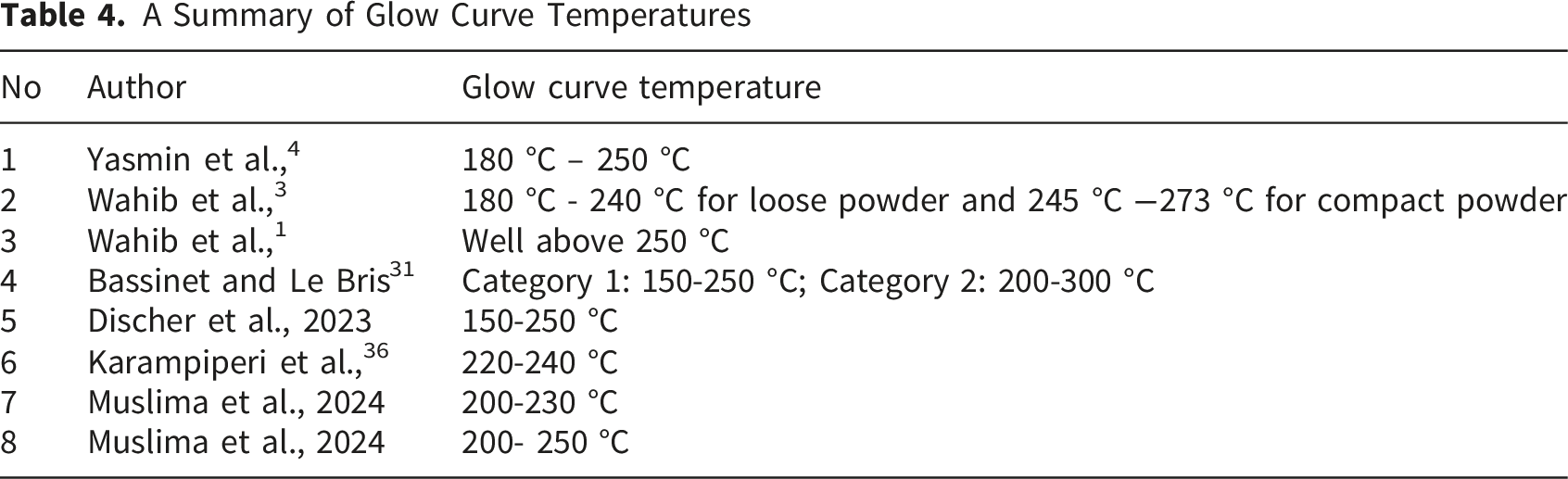
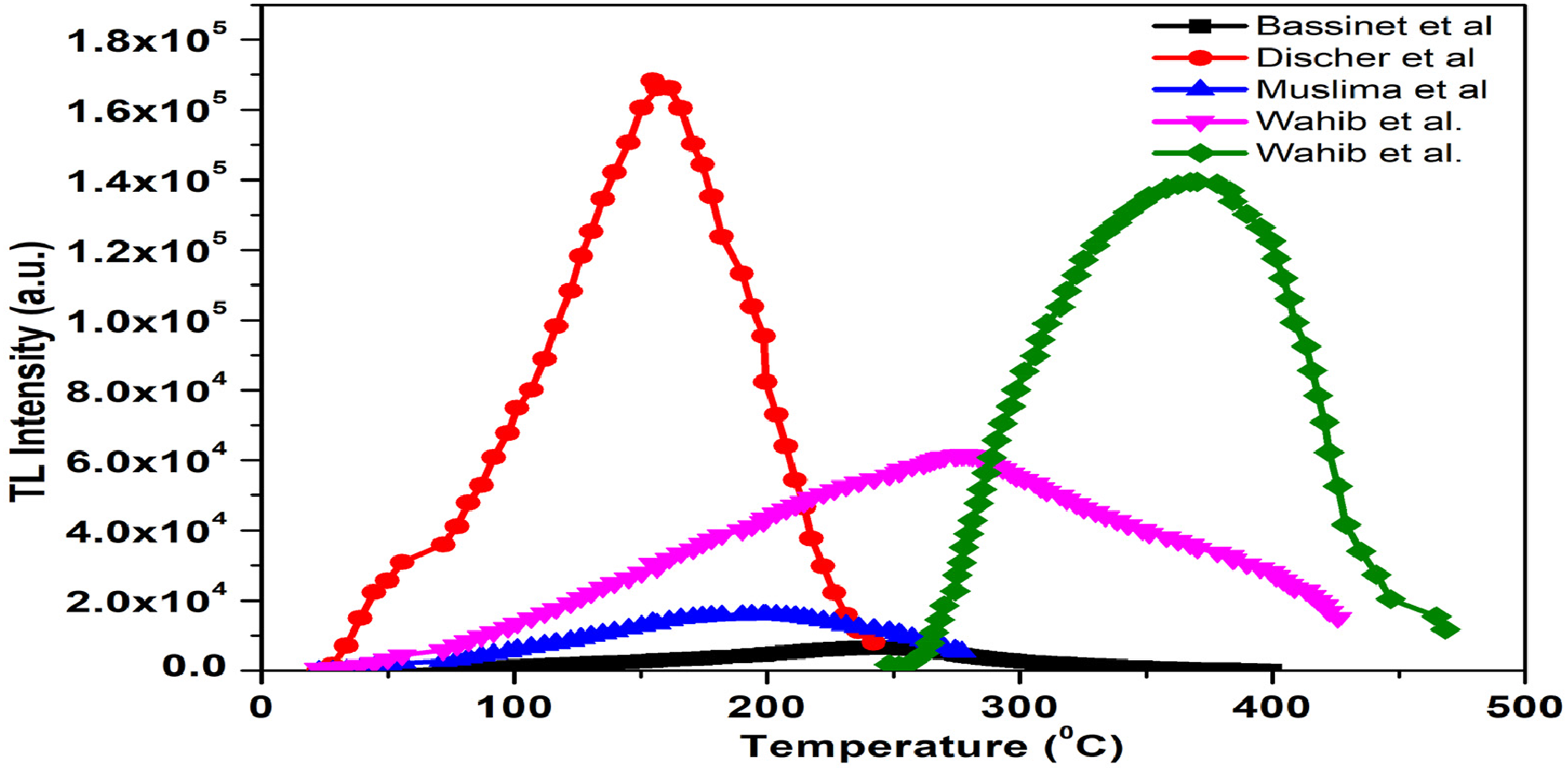
5.3. Sensitivity
According to,
51
a material’s TL sensitivity is its TL intensity per unit mass per unit dose. In TL dosimetry, it is a crucial property for a material to have. The types and amounts of dopants or impurities significantly influence the TL sensitivity of the material. For commercial glass, Nasir glass, a Bangladeshi glass brand, demonstrates the most promising performance for retrospective dosimetry. The Lodrat brand kitchenware glass offers exceptional sensitivity for both loose and compact powdered samples. The TL sensitivity graph of car wind screen illustrates that all examined samples exhibit a significant low-dose sensitivity compared to high-dose exposure. The radiation-induced sensitivity of two classed screen protectors was evaluated by.31,33 One category demonstrates high sensitivity, whereas the other displays reduced sensitivity. The reason behind this hypothesis is the chemical composition of the glass sample. The sensitivity of screen protector glass was also briefly analyzed for gamma and photon source by.33,35,43 They also confirmed the changes in sensitivity with respect to dose and elemental composition. The sensitivity for both source is depicted in Figure 5 for two most prominent screen protector glasses of Muslima et al. For both case sensitivity is high at higher doses.
5.4. Dose Linearity
Since an ideal TLD should have a linear response over an acceptable range of doses, a greater range of linearity with doses may offer a feasible option for dosimetry applications. In comparison with the other brands, the Lodrat brand kitchenware glass sample showed a better reaction for both loose and compacted powdered media and notable linearity is evident for car wind screen across the two dose ranges, from 1 Gy to 10 Gy and from 10 Gy to 100 Gy, indicating a significant potential for utilizing windshield glass as a fundamental basis for retrospective dosimetry. Bassinet et al., 2022 studied the dose response for pre bleached screen protector up to 20 Gy and indicated linear dose response and it could be possible to calculate the accident dose using just one calibration point. The dose linearity for both gamma and photon sources was examined by Muslima et al. in 2024 at 2–50 Gy and 2–20 Gy, respectively. Figure 6 depicts the dose linearity curve for both sources. An excellent dose linearity with a strong correlation coefficient is attained for all samples. Additionally, the examined samples display sub linearity behavior because all accessible trapping or defect sites for electrons emitted during irradiation are fully occupied.
The intensity of thermoluminescence in glass materials is known to escalate with the increase of absorbed doses of radiation, owing to the step-by-step filling of electron and hole traps that are generated in the glass matrix. The dose response of glass materials is affected by changes in their chemical composition. Variations in the concentration of network formers, modifiers, and impurities are known to affect the concentration and depth of traps, thereby influencing the trapping and recombination of charge carriers, leading to linear, sublinear, and supralinear dosage response of some types of glasses.
5.5. Fading
The most critical characteristic for a TL material to qualify as a dosimeter in retrospective accident dosimetry is fading. It is referred to as thermal fading, resulting from carriers originating from unstable traps. The fading behavior of both forms of Lodrat brand kitchenware glass samples was examined, revealing that the TL intensity for the compact powder samples diminished quickly and sharply during the first day after irradiation, demonstrating a signal fading of 84.6% from the initial value. The TL intensity stabilized significantly starting from day three, with the TL signal diminishing by 93.7% and 94.6% for the measurements taken three and six days after irradiation, respectively. In contrast, for loose powder samples, the signals diminished by only 26.7% one day after irradiation. Fading studies for commercial glass suggest that it is feasible to reconstruct the absorbed dose for durations extending up to four weeks after exposure. The fading study of the car wind screen demonstrated the TL signal is most pronounced during the initial seven days following irradiation, which aligns with expectations due to the higher initial magnitude of the TL signal. This is particularly evident in the Honda brand motor vehicle wind screen glass, followed by Toyota and Proton, with respective values of 56.7%, 52.6%, and 52.1%. In this context, the windscreen for Proton exhibits the most consistent signal owing to its superior activation energy compared to other car brands. It is clear that there exists significant potential for dose reconstruction over an extended duration of several weeks, with necessary corrections to account for fading. The data from Toyota indicates a more complicated pattern following the first two weeks post-irradiation, although there seems to be a notable stability during this timeframe. Bassinet et al., 2022 examined the stability of the pre-bleached radiation-induced thermoluminescence signal for 10 Gy over several durations. The signal degradation was minimal up to 100 hours and remained around 20% for the examined duration of 12 days. The results are encouraging as the necessity for a fading correction factor may be eliminated. Discher et al. (2023) presented the fading curves for a storage duration of 21 days for two specified detection windows. Initially, the fading characteristic seems analogous for both detection windows and seems to be unaffected by the selection of filters. Secondly, the signal degradation of the examined safety glasses can be categorized into two groups: Samples P4, P11, P16, P17, and P32 exhibit a signal loss of approximately 10–18% after 21 days of storage, while samples P6, P7, P28, and P34 have a signal loss of about 65–74%. For the eye glass sample the signal that persists one month after irradiation is adequate for performing post-radiation measurements. Muslima et al. (2024) investigated the loss of TL signal for gamma source, revealing a reduction of 6% on the second day, 8% on the third day, and 23% on the twenty-eighth day. The findings demonstrate that the material exhibits negligible fading, predominantly occurring within the initial days following exposure. The experiment demonstrates that HD anti-peep smartphone screen protector glass offers robust performance with very reduced fading over a 28-day duration. This indicates that HD anti-peep tempered glass could have significant applications in retrospective dosimetry. With increasing photon irradiation period, all samples show a progressive decline in TL responses. The HD Antipeep sample demonstrates a 40% loss over 28 days. Over a period of 28 days, curve matte glass demonstrates the most significant reduction in TL intensity, while large curve auto absorption glass experiences a loss comparable to that of HD anti-peep glass (Muslima et al., 2024). However, the former loses over 25% of TL intensity within just 4 days, whereas the latter only loses 7% during the same timeframe. This outcome is further corroborated by the activation energy and mean lifetime values.
5.6. Intrinsic Background
A diamond grinding bit can mechanically minimize the intrinsic background signal.
21
More over, Bassinet et al. (2022) investigated the intrinsic background signal of screen protectors and revealed that the standard deviation of the intrinsic background dose distribution across the surface of the protector was under 30%. This amount is slightly elevated compared to the 10% found by Discher and Woda for the rear glass of a mobile phone display, although it remains an acceptable degree of homogeneity for retrospective dosimetry. In the 100–200 °C temperature range, a chemical treatment employing HF was tested to lower the intrinsic background signal of screen protectors that may be utilized for dose assessment. Discher et al. (2023)
34
advocated adopting the TL-wideband KG3 filter to ensure precise measurement of the zero-dose signal. The Intrinsic background signal of an aliquot from
33
is shown in Figure 7. Further investigations are recommended to mitigate the zero dose signals. Chemical pre-treatment was effectively utilized in the preliminary investigation of protective glasses.
31
Moreover, the study on eye glass sample also confirmed the chemical treatment with HF reduces the intrinsic background signal. Intrinsic background signal of an aliquot from Bassinet at al
33
(reproduced)
5.7. Morphological and Structural Analysis
Morphological analysis has been performed for kitchenware glass, car wind screen and eye glass sample. The SEM/EDX analysis for car wind screen shows that Si, Na, K, Ca, Al, Mg, C O and S are the constituent composition among the glasses. Kitchenware glasses also contains similar compositions at different percentages. Muslima et al.,
35
also performed SEM/EDX analysis to examine radiation-induced surface damage and to ascertain the relative distribution of the elemental composition of the samples. The abundant elements in all screen protector glasses are Oxygen (61%–67%), Silicon (11%–20%), and Carbon (7%–16%). The additional constituents include Magnesium, Mg (1.6%–2.57%); Potassium, K (0.67%–1.35%); Aluminum, Al (0.3%–4%); Calcium, Ca (0.51%–0.75%); and Sodium, Na (3.91%–6.21%).
35
The inclusion of impurities like Si, C, Ca, Mg, K, O, and Al in protective glass is believed to significantly augment the quantity of luminescence-trapping centers, hence inadvertently enhancing the TL response in these materials. Micro-Raman spectroscopy demonstrated a distinct relationship between the escalating gamma radiation dose and the resulting microstructural damage. The examination of the intensity ratio (ID/ISi) for additional components relative to silica, in conjunction with the area of deconvoluted micro-Raman spectra in high-frequency regions, revealed dose-dependent structural alterations and internal defect annealing. Figure 8 depicts the raman spectrum of screen protector glass sample at 2, 30, 50 Gy from.
46
Additional validation of structural changes within the examined dose range was achieved through the evaluation of crystallite size (Lc), dislocation density (δ), lattice strain (ε), and FWHM (Full Width at Half Maximum) derived from XRD (X-ray diffraction) patterns. All of these results point to the possibility of using smartphone screen protector glass as a practical material for dosimetry applications in emergency situations. The structural and morphological changes induced by the exposure of glass materials to radiation include bond splitting, defects, and rearrangement of the glass material. The defects induced by the exposure of glass materials to radiation act as traps for the electrons and holes that produce the TL. The density of the induced defects directly influences the TL sensitivity and linearity of the dose–response curve. Therefore, the comprehension of the structural changes induced by radiation is essential for the accurate assessment of dose using glass-based retrospective dosimeters. Raman spectrum for screen protector glass sample
46
(reproduced)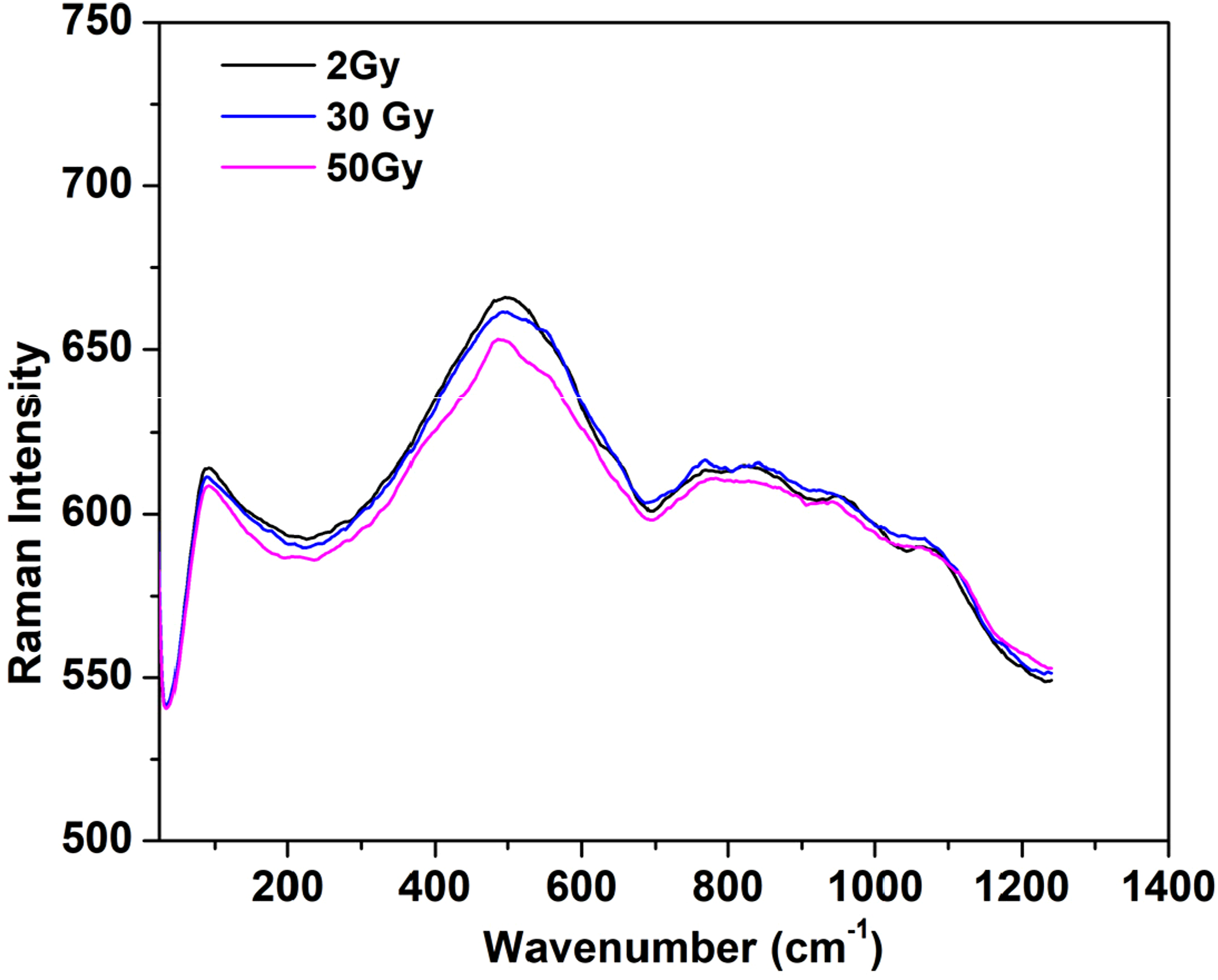
6. Challenges and Remedies
In retrospective dosimetry employing glass samples, signal loss is an important issue that can greatly influence the precision of dose reconstruction. Signal fading refers to the reduction in the intensity of the retained luminous signal over time after being subjected to ionizing radiation. If this effect isn’t properly addressed, the actual absorbed dose may be underestimated. A reconstructed dose that is significantly lower than the actual absorbed dose could arise from failing to account for signal fading. This underestimating impedes the exact estimation of radiation dose, which is essential for efficient risk assessment including quick medical response. Reconstruction of radiation exposure can have better accuracy if the elements causing signal fading can be reduced. The natural background signal indicates notable diversity among different screen protectors and cannot be attributed to radiation exposure. The intrinsic background signal superimposes over the radiation-induced TL signal, especially at higher temperatures. Some screen protectors contain very homogeneous intrinsic background signals, while others are rather heterogeneous. Inhomogeneity can be the cause of non-homogeneous dose estimations for the same screen protector. To achieve the best thermal stability and minimize the impact of the intrinsic background signal, an appropriate range of integration must be introduced. The intrinsic background signal was not studied for commercial glass, kitchenware glass and car wind screen glass. But it can be shown from another study on other types of glass that intrinsic background affects the TL signal. So, it’s important to consider the intrinsic background signal for these types of glasses. The reliability of a glass-based retrospective dosimeter can be achieved through the prevention of optical bleaching, enhancement of long-term stability in signals, and the reduction of inherent background signals. It has been proven that the use of a chemical treatment with HF can reduce zero-dose TL in screen protectors. On the other hand, the use of a wide-band TL filter with a material called KG3 ensures accurate results in the measurement process (Discher et al., 2023). Bleaching can be controlled through the use of darkness during storage and the restriction of exposure to light prior to the test process. Long-term fading can be controlled through the use of stable trap structures in glasses, pre-annealing techniques, and fading correction factors. Reliable retrospective dosimetry can be assured by investigating the mechanisms driving TL signal attenuation in various glass materials and developing methods that lessen signal degradation with time. Standardized protocols may be established by systematically investigating the impacts of different pre-irradiation and post-irradiation thermal treatments on TL signal stability and reproducibility.
7. Future Research
The trapped carriers may be excited by short thermal pulses, resulting in radiative recombination. This technique may assist in the separation of individual TL components as well as improve signal purity from background noise. 52 The introduction of certain dopants is essential for the regulation of the radiation sensitivity of screen protector glass for dosimetric applications. Rare Earth Elements (REEs) like Ce, Tb, and Eu have been found to play a profound role in the thermoluminescent (TL) signal by affecting both the position and intensity of the peaks of the glow curve. This is due to their capability to create new recombination centers and alter charge trapping dynamics. Also, transition metals such as Fe, Mn, and Cu have the ability to modify deep trap states, further impacting charge carrier storage and resulting in signal fading instability. Of note is the introduction of boron oxide (B2O3), as this enhances neutron sensitivity, thereby qualifying boron-doped glass for potential application in mixed-field radiation dosimetry. In addition, surface modification by metal nanoparticles emerged as a new technique to enhance TL efficiency by localized surface plasmon resonance (LSPR) effects. While such modifications offer significant enhancements in dosimetric performance, further work is required to optimize dopant concentrations to their maximum, evaluate long-term stability and look at possible trade-offs between sensitivity and fading. Further work must be conducted to investigate the advantageous effects of two or more dopants in order to produce very stable and effective dosimetric materials.
8. Conclusion
The aim of this review was to review and combine all studies in order to demonstrate the appropriateness of frequently used glass materials for retrospective dosimetry, particularly focusing on the research gap in the development of bone-equivalent materials that can accurately mimic doses from accidental exposures. • • • • •
Footnotes

Funding
The author received no financial support for the research, authorship, and/or publication of this article.
Declaration of Conflicting Interests
The author declared no potential conflicts of interest with respect to the research, authorship, and/or publication of this article.