



Abstract
This mini-review explores adaptive responses in organisms exposed to high radiation levels, drawing comparisons between Chernobyl’s wildlife—specifically its darker-pigmented frogs—and residents of Ramsar, Iran, a region with high natural background radiation. Chernobyl’s wildlife adaptations are not surprising, as substantial evidence in humans, demonstrates similar adaptation to high radiation levels. Studies reveal that mechanisms such as increased melanin production in frogs and enhanced DNA repair capabilities in Ramsar residents help mitigate radiation damage. These adaptations provide a framework for understanding resilience to environmental stressors and contribute to broader discussions on evolutionary survival mechanisms in extreme environments. By examining ecological and physiological responses across species, this review sheds light on radiation’s role in natural selection and potential applications for environmental and radiobiological research.
Keywords
Introduction
The 1986 Chernobyl disaster released vast amounts of radioactive materials, 1 leading to widespread environmental contamination and establishing the area as a key location for examining the long-term ecological impacts of radiation. While acute exposure caused considerable ecological and biological harm,2-5 some recent studies have reported the presence of diverse animal communities and signs of adaptation to the prevailing levels of radiation,6-8 despite ongoing uncertainties and scientific debates regarding the long-term effects of such exposure.9,10
Amphibians serve as a valuable model for investigating the impacts of ionizing radiation on wildlife, given their extended lifespans, limited mobility, and reliance on both aquatic and terrestrial habitats. 6 Recent studies on Chernobyl frogs, such as the November 2024 report indicating that radiation-exposed frogs show no signs of accelerated aging or elevated stress, 11 make complete sense when considered alongside earlier research on radiation adaptation. Similarly, a 2022 report documented a fascinating adaptive response in frogs residing in the Chernobyl Exclusion Zone (CEZ). 12 These frogs, now referred to as “Chernobyl black frogs,” (Eastern tree frogs (Hyla orientalis) that have a darker, nearly black coloration) have developed darker pigmentation, likely as a direct response to the high levels of radiation in their environment. The increased melanin content in their skin serves a critical function; melanin absorbs and dissipates radiation energy, thereby providing an additional layer of cellular protection against the harmful effects of radiation. This external physical adaptation not only helps these frogs to mitigate the dangers posed by their environment but also illustrates how evolution can lead to significant phenotypic changes in response to specific ecological pressures. Additionally, analysis of blood physiology biomarkers in tree frogs from the CEZ shows comparable levels to those found in frogs from outside of the CEZ, where only natural background radiation is present. 13 The investigated blood parameters, used to assess homeostasis and detect kidney and liver function, are known to be susceptible to alterations induced by ionizing radiation. This would suggest that the amphibian inhabiatnats of the CEZ have adapted well to their radioactive environment.
Aside from frogs, other organisms chronicilly exposed to high levels of background radiation have similarly acquired a melanized phenotype. For instance, melanized fungi have been found thriving in the intense radiation environment on the walls of the Chernobyl reactor.14,15
In 2002, an international team conducted a seminal study on human populations in Ramsar, Iran—an area known for its exceptionally high natural radiation levels.
16
This study, published in Health Physics, has since been cited more than 600 times and remains highly influential. As shown in Figure 1, this research showed that the human body could adapt biologically to consistent, high background radiation, which sheds light on why animals like the frogs in Chernobyl might display similar resilience.
16
This adaptation to a high background radiation environment appears to hold true during an individual’s lifetime (through the radiation adaptive response or Raper–Yonezawa effect) and perhaps also over many generations through natural selection.
17
Despite High Radiation Levels in the High Background Radiation Areas (HBRAs) of Ramsar, No Clear Increase in Radiation-Related Health Problems (eg, Cancer or Decreased Lifespan) has Been Consistently Observed, Suggesting Possible Adaptive Biological Responses. Cultured Lymphocytes From Ramsar Residents Show Paradoxically Lower Chromosomal Aberrations or Micronucleus Formation after in Vitro Radiation Exposure Compared to Controls, Consistent With an Adaptive Response (Yonezowa Effect) Induced by Their Chronic Radiation Exposure
The concept of evolution is deeply intertwined with the ability of organisms to adapt to their environments. This process, driven by natural selection, allows species to survive and thrive in response to various challenges, including environmental stressors like radiation. The cases of Ramsar residents and Chernobyl frogs highlight the remarkable ways in which different organisms have evolved to cope with their environmental hazards.
What We Learned from the Chernobyl Exclusion Zone
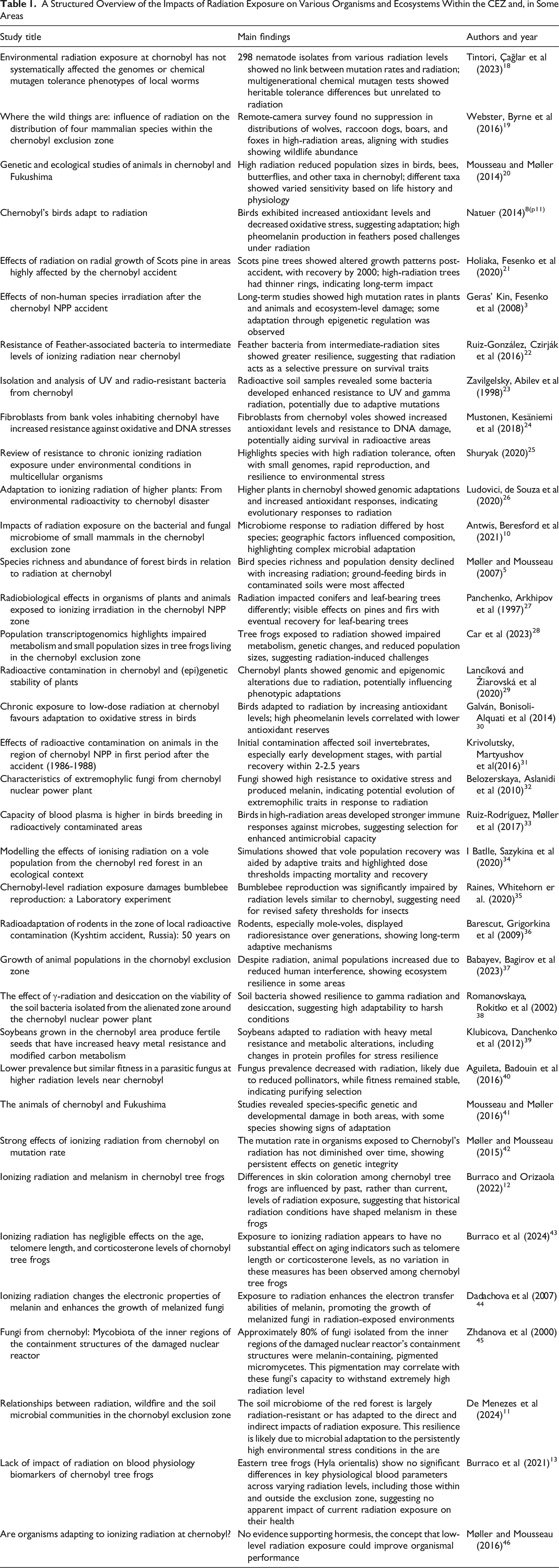
A Structured Overview of the Impacts of Radiation Exposure on Various Organisms and Ecosystems Within the CEZ and, in Some Areas
Adaptation and Resilience in Response to Chronic Radiation Exposure
Some organisms in Chernobyl appear to have developed physiological or genetic adaptations to withstand chronic radiation. Studies on birds, such as those by Galván et al, 30 show that certain species may have adapted to oxidative stress through increased antioxidant levels, although trade-offs are apparent in birds with high pheomelanin production, which face more challenges under radiation stress. Similarly, findings on vole fibroblasts and extremophilic fungi illustrate enhanced antioxidant responses and melanin production, which may help mitigate radiation’s damaging effects. Melanin is a quinone/semiquinone-containing molecule that is a stable free radical and can scavenge reactive oxygen species (ROS) and also can act as a free radical sink. Electron spin resonance spectroscopy (ESR) analysis has detected that the melanin undergoes chemical changes upon interacting with ionizing radiation, consistent with a role in coping with, or perhaps even utilizing, the elevated levels of ionizing radiation in the environment.32,41 Dark pigmentation is known to offer protection against various radiation sources by neutralizing free radicals and reducing DNA damage, with melanin pigmentation specifically proposed as a buffering mechanism against ionizing radiation. 29 Tree frogs within the CEZ exhibited significantly darker dorsal skin compared to frogs from outside the Zone. This dark skin coloration was not associated with any apparent physiological costs, such as changes in body condition or oxidative status. These adaptations suggest that, while radiation remains a severe stressor, some species can develop mechanisms for survival that may offer insights into broader biological resilience under environmental stress.
Radiation’s Differential Impact Across Species and Ecosystems
The severity of radiation effects varies significantly across taxa, with higher radiation sensitivity observed in species with particular life histories or biological traits. 47 For instance, microbial communities and small mammal gut microbiomes exhibit changes in composition and resistance based on radiation levels, hinting at complex microbial adaptations. Plant and fungal species also display both resistance and alterations in growth patterns or biochemical properties. 10 After Magnaporthe oryzae rice blast fungus strains were exposed to gamma ray radiation from the radioactive source 60Co, morphology, growth rate, and spore production ability were examined using the gradient range of absorption doses. It was discovered that ionizing radiation at varying doses could influence spore production in this fungus and ultimately improve M. oryzae’s ability to survive. 48 However, not all organisms exhibit the same degree of resilience, and factors such as reproductive strategies, metabolism, and ecological interactions play critical roles in determining species’ outcomes. 49 For example, bumblebees20,35 and some bird populations 5 show declines in reproductive success, suggesting that radiation’s ecological footprint may extend across trophic levels and potentially impact ecosystem dynamics and species richness.
Long-Term Ecological Changes and Conservation Implications
The cumulative data indicate that high radiation areas within the CEZ show both ecological disruptions and surprising recoveries. Some animal populations, including large mammals, have rebounded in areas where human activity is absent, benefiting indirectly from the ecosystem’s reduced human interference. Conversely, studies highlight reduced population densities and physiological damage in species that are more radiation-sensitive. For instance, compared to relatives from control sample locations, fungal isolates obtained from the Chernobyl Nuclear Power Plant exhibited greater genetic homogeneity and IR resistance. The analysis of Puccinia graminis genotypes from the CEZ revealed the emergence of new, more virulent races of the fungus that causes stem rust, as well as weaker defenses in plants. On the other hand, the examination of the anther smut disease-causing Microbotryum lychnidis-dioicae from the same region revealed no evidence of genetic change, despite the fact that its prevalence was lower in the Chernobyl environment. 50 This juxtaposition points to complex ecological balances where species that can tolerate or adapt to radiation have opportunities to thrive, while more vulnerable species experience declines.
Cannon and Kiang (2022) 51 note in their review that even long after the Chernobyl and Fukushima nuclear accidents, wildlife exposed to lingering radiation, despite decreasing levels, showed clear signs of adaptation. Understanding the molecular mechanisms behind these changes is crucial for supporting the recovery of affected ecosystems. In this light, studies on Drosophila melanogaster (fruit flies) from the Chernobyl Exclusion Zone (CEZ) offer valuable insights. Flies from areas with higher chronic radiation exposure produced offspring that were more resistant to radiation, while those from areas with lower, more natural radiation levels were more sensitive. This pattern has been linked to changes in transposon activity, which can influence genome stability. 52
Interestingly, while flies exposed to CEZ conditions over generations showed more dominant lethal mutations and lower survival rates, their point mutation rates stayed relatively stable. The research also found that not all changes could be attributed to radiation alone, factors like geography and population origin played a role, too. 53 These findings lay the groundwork for future studies that aim to untangle how genetic changes are passed down in chronically irradiated organisms and how those changes interact with other environmental stressors.
To help make sense of such complex data, Fornalski (2014) 54 proposed a Bayesian modeling framework that can integrate prior knowledge, account for uncertainty, and compare competing models. This kind of statistical approach is especially useful in multifaceted situations like those in Chernobyl, where many variables are at play. It allows researchers to better isolate the specific effects of radiation exposure, making it an important tool for ecological radiobiology and risk assessment.
Need for Continued Research
The findings underscore the need for long-term, multi-site studies to disentangle the effects of radiation from other environmental variables. Further research is necessary to clarify the mechanisms of adaptation and potential genetic resilience, particularly as many of these studies remain correlational rather than experimental. Additionally, cross-comparisons between sites like Chernobyl and Fukushima can improve understanding of radiation effects across environmental contexts, time frames, and radiation types. Moreover, there is a critical need to integrate molecular, physiological, ecological, and evolutionary data to build a more holistic understanding of organismal responses. Given the potential for nuclear accidents and long-lasting environmental radiation impacts, these studies offer valuable insights into radiobiology, conservation strategies, and ecosystem management in contaminated areas.
In summary, Table 1 highlights a diverse range of responses to chronic radiation, revealing patterns of adaptation, resilience, and ecological complexity that are essential for understanding the long-term consequences of nuclear contamination on wildlife and ecosystems. These studies contribute to a broader scientific framework for assessing environmental stress resilience and offer a foundation for future research in radioecology and conservation biology.
Groundbreaking 2002 Study in Ramsar
In Ramsar, a region in Iran known for its high natural background radiation, residents have exhibited unique physiological adaptations over generations. DNA is recognized as a key direct target of damage when cells are exposed to ionizing radiation. Gamma rays can induce DNA damage by depositing energy along the backbone of the molecule. Consequently, this interaction can result in various forms of structural damage, including single strand breaks (SSB), double strand breaks (DSB), cross-linking between DNA and proteins, and alterations to both bases and sugar components of the DNA. 55 Research has shown that these individuals possess cellular mechanisms that enhance their ability to repair DNA damage caused by radiation exposure.16,56 This adaptation allows them to maintain health and reproductive success in an environment that would be detrimental to many other species. Such protective cellular responses reflect an evolutionary process that has favored individuals capable of surviving in conditions that would otherwise be harmful.
In Ramsar, radiation exposure levels average about 10 mSv annually but can reach up to 260 mSv in localized areas. 16 In 2002, an international team observed that residents did not exhibit the adverse health effects assumed to be associated with such levels of exposure. Instead, the study found evidence of adaptation, with the residents’ cells showing signs of increased DNA repair activity and chromosomal stability, suggesting that protective mechanisms developed over prolonged radiation exposure. This adaptive response to radiation challenged previous assumptions and has become a cornerstone of understanding biological resilience to radiation. 16 Similar adaptive effects have also been documented in other high natural background radiation areas, such as Kerala in southwest India. Jain et al 57 investigated the DNA repair capacity in individuals living in high-level natural radiation areas (HLNRA) along the Kerala coast. Their study focused on the efficiency of DNA double-strand break (DSB) repair, a critical pathway for maintaining genomic integrity. The results indicated that individuals in HLNRA exhibited more efficient DSB repair compared to those from areas with normal radiation levels, suggesting a comparable adaptive response—likely shaped by chronic exposure to low-dose radiation over generations. 57
In fact, the highest radiation levels recorded in Ramsar have been observed on a wall in one house in the high-background radiation areas (HBRAs) of the city, where readings have reached as high as 142-143 µSv/h. This detail was documented in the book “The Physical Basis of Ionizing Radiation and its Application in Medical Diagnosis” authored by SMJ Mortazavi et al (2011). 58
The parallel between Ramsar residents and Chernobyl frogs underscores the diverse strategies that organisms employ to adapt to challenging environments. While the residents of Ramsar have developed internal cellular adaptations, the Chernobyl frogs exhibit a visible external change. Both examples demonstrate the principle of adaptive evolution, where species modify their biology and physical traits to enhance survivability in response to environmental stressors. This interplay between genetics, environment, and evolutionary pressures highlights the complexity of life and the ongoing process of adaptation in the face of adversity. A key difference however is that the Chernobyl frogs seem to have evolved their darker phenotypes over generations rather than quickly changing color over an individual lifetime (or at least over the short observation period of 48 hours). 12 Further investigation into the adaptive response of frogs to environmental radiation during their lifetimes is required.
Key Differences in Radiation Sources: Chernobyl Vs Ramsar
The radiation profiles of Chernobyl and Ramsar are quite different, each with unique sources and exposure risks. In Chernobyl, radioactive fallout from the 1986 disaster has left lingering contaminants like 137Cs and 90Sr, which pose long-term risks to anyone living in or around the CEZ. For people and animals, the primary exposure comes from external gamma radiation as well as the internal risks associated with eating contaminated food or breathing in radioactive dust particles. However, radon—a main source of radiation in Ramsar—isn’t a major concern in Chernobyl. Radon levels there are much lower than in Ramsar, where naturally high concentrations of 226Ra decay into radon gas, creating elevated radiation exposure for local populations. 14
Unlike Chernobyl, where radiation came from a nuclear accident, Ramsar’s radiation is entirely natural. It mainly stems from the decay of uranium-series radionuclides found in the Earth’s crust. In particular, the high levels of 226Ra in the local hot springs and surrounding soil lead to the release of radon gas. 59 When inhaled, this gas delivers a chronic internal dose of high-LET (linear energy transfer) alpha radiation, especially to the lungs. Because alpha particles deposit energy in a very concentrated way, they can cause significant biological effects, particularly in the delicate tissues of the respiratory system.
Although radium and its decay products also emit gamma rays, which penetrate the body and contribute to whole-body exposure, many studies suggest that the primary health concern in Ramsar comes from internal alpha radiation. This is due to the high relative biological effectiveness (RBE) of alpha particles at the cellular level. That makes Ramsar’s exposure profile quite different from Chernobyl’s, where people were exposed mostly to dispersed radioactive particles like 137Cs and 90Sr through inhalation or ingestion. These isotopes emit beta and gamma radiation, both of which are low-LET and typically cause less dense ionization than alpha particles.
This difference is important. While Chernobyl’s radiation was more widespread and short-term, Ramsar provides a rare example of long-term, high-LET radiation exposure in a human population. That makes it a uniquely valuable natural setting for studying how the human body might adapt to high-LET radiation over time, a question that’s becoming increasingly relevant for space exploration, where astronauts face similar risks from cosmic radiation. 60
Comparing Human and Animal Radiation Doses in Ramsar and Chernobyl
Radiation exposure in both Ramsar and Chernobyl affects humans and animals, but the biological impact varies depending on the source of exposure and the species involved. In Chernobyl, the external gamma radiation impacts both humans and animals similarly, affecting tissues throughout the body. In addition, both people and wildlife there are also at risk of internal radiation from ingestion or inhalation of radioactive materials, which distribute radiation more evenly across internal organs, further contributing to whole-body dose.
In contrast, Ramsar, the high radon levels create a different type of risk and exposure scenario. Since radon exposure primarily impacts the lungs, most radiation dose models are based on human anatomy and respiratory physiology. Translating these doses to animals like frogs requires a different approach. For frogs living in the Chernobyl area, internal radiation exposure comes from different sources—like eating contaminated insects or dermal absorption of radionuclides while in aquatic environments. While radon isn’t an issue there, the variety of radioactive materials in the environment means frogs could have a broader spread of exposure across their bodies, affecting various organs. Given this consideration, both Ramsar and Chernobyl offer important insights into how different environments and exposure routes can shape biological responses to radiation. Studying these responses helps us better understand how different species might adapt to different ecological conditions. Mortazavi and his team61-63 have also previously conducted studies involving rodents in areas with naturally high background radiation or simulated high radiation environments using hot soil samples from Ramsar. However, the noticeable lack of studies on non-human biota in Ramsar highlights a significant research gap—one that offers promising opportunities for future ecological and radiobiological investigations and may draw increased interest from researchers in the field.
Findings on Other HBRAs
Besides Ramsar, there are world-known HBRAs, where residents are chronically exposed to radiation levels far exceeding the global average of ∼2.4 mSv/year. Yangjiang (China), Kerala (India), and Guarapari (Brazil) are among the most studied HBRAs, offering insights into the long-term health effects of low-dose, chronic radiation exposure. In contrast to predictions of the linear no-threshold (LNT) model, these populations also do not show clear signs of increased cancer or genetic damage. This review summarises key findings from these regions and includes Ramsar (Iran) for comparison.
Study Findings
Yangjiang, China
Long-term studies in Yangjiang show no statistically significant increase in cancer mortality compared to nearby control areas. 64 A cohort study of over 31,000 residents found no positive dose-response relationship for solid cancer mortality, with an excess relative risk (ERR) for all cancers of −1.01 Gy−1 (95% CI: −2.53, 0.95). Similarly, no consistent pattern emerged for non-cancer diseases. 64 Cytogenetic surveys have reported increased chromosomal aberrations at the cellular level, but without observable clinical impact. 65 Congenital disorders, including Down syndrome, showed no significant increase once maternal age was controlled. 66
Kerala, India
Kerala’s coastal HBRA, particularly Karunagappally, has been studied using detailed cancer registries. No increase in overall cancer incidence was found despite annual external gamma doses ranging from 4 to over 20 mSv/year. 67 In a cohort of nearly 70,000 residents, ERR for all cancers was estimated at −0.13 Gy-1 (95% CI: −0.58, 0.46). Furthermore, there was no significant increase in hereditary or congenital disorders in exposed populations. 66 While cytogenetic studies show radiation-related changes, such as increased frequencies of dicentric chromosomes with rising dose, these have not translated into observable disease.
Guarapari, Brazil
In Guarapari, where annual doses typically range from 3.5 to 10.9 mSv for residents and beachgoers, epidemiological studies similarly reveal no significant excess in cancer or congenital disorders compared to Brazilian cities with standard background radiation. 68 Hospital-based data from a 10-year surveillance period show comparable cancer mortality and birth defect rates. These observations do not support the LNT hypothesis and suggest the possibility of a dose threshold or adaptive response, though no clear protective (hormetic) effect has been definitively demonstrated.
Comparative Overview Including Ramsar
Comparative Overview of Observed Adverse and Beneficial Effects of Long-Term Residents’ Exposure in HBRA’s

Given these considerations, besides Ramsar studies, findings from other HBRAs including Yangjiang, Kerala, and Guarapari consistently demonstrate a lack of increased cancer or genetic damage in populations chronically exposed to high natural background radiation. These results challenge the universal applicability of the LNT model at environmental dose levels. While some studies hint at adaptive or hormetic responses, there is no definitive proof of beneficial health effects. Continued monitoring and refined cohort designs are necessary to detect subtle or long-latency outcomes.”
Adaptive Response
Viruses are frequently regarded as existing at the boundary of life due to their reliance on host cells for replication. Nonetheless, it is important to recognize that all living organisms, including those with deoxyribonucleic acid (DNA), are vulnerable to a range of chemical and physical factors that can harm their DNA. These damaging agents can originate from natural sources or be artificially created by humans. Notable examples include solar ultraviolet light, both ionizing and non-ionizing radiation, and various industrial chemicals. Despite this vulnerability, organisms have evolved a variety of protective mechanisms to mitigate or eliminate such damage. One specific protective mechanism is known as the adaptive response (AR). 71 This phenomenon is observed in numerous radiobiological studies that reveal a reduction in the incidence of lesions, mutations, or even mortality among irradiated cells or organisms. 17 AR refers to a biological process that occurs when an organism is exposed to low levels of ionizing 72 or non-ionizing radiation, 73 referred to as the primary dose (PD). During this process, the organism activates defense mechanisms that enhance its capacity to repair DNA damage, minimize mutations, and withstand higher doses of radiation in the future, known as the challenge dose (CD).17,74,75 Typically, AR manifests after a specific time interval between the PD and the CD. 76
Research has demonstrated that various physical and chemical agents can trigger AR across a wide array of organisms, from bacteria 77 to human cells.78,79 To verify this response, multiple biological indicators have been evaluated, including DNA damage, chromosomal abnormalities, cell viability, and mutation rates. Current investigations are exploring the potential of AR for applications in radiation protection and cancer treatment, particularly in the context of radiotherapy. 80 Since over 50% of fungal genes are identical to human genes and many of these genes are involved in the response to IR, melanized fungi exhibit a notable ability to survive against ionizing radiation and sustain doses up to 1000 times higher than those of mammals. An investigation into yeast. To assess the organism’s resistance to gamma radiation, Exophiala dermatitidis was performed, and the protective function of DNA repair and redox homeostasis genes was validate. 81
Recently, Bugała and Fornalski developed a biophysical model to explain the radiation adaptive response, tailored specifically for situations involving constant dose-rate irradiation. This model was calibrated using data from residents living in various regions with high background radiation, such as Ramsar in Iran, Kerala in India, and Yangjiang in China. 82 The study focused on particular outcomes, including chromosomal aberrations, cancer incidence, and cancer mortality rates. Among the reviewed publications, about 45% reported evidence of an adaptive response concerning chromosomal aberrations, with an average decrease of roughly 10% in these aberrations. For cancer incidence, the reduction was around 15%, and cancer mortality exhibited a reduction of approximately 17%, limited to the studies that demonstrated an adaptive response. In contrast, the remaining 55% of studies on chromosomal aberrations were assessed in relation to the linear no-threshold (LNT) hypothesis, but their results were found to be inconsistent with the linear model. 82
Some of research studies have investigated the potential of radioadaptive responses as a biological countermeasure against the harmful effects of space radiation during long-term interplanetary missions. Mortazavi et al (2005) 83 have highlighted how low doses of ionizing radiation can trigger protective mechanisms that may significantly reduce radiation-induced health risks in astronauts. Additionally, Fornalski has discussed the strategies for contemporary radiation protection in deep space missions, aimed at improving astronauts’ health in the context of long-term exposure to low dose rates of ionizing radiation. 84 He has explored the connection between the development of adaptive responses and radiosensitivity (or radioresistance), as well as their possible real-world applications through a recent simplified biophysical model. 84 Radioadaptive responses hold promise as a biological countermeasure to reduce the harmful effects of cosmic radiation during interplanetary travel, potentially enhancing astronaut safety and mission succes.
Given the early findings on Ramsar residents, the recent observations of adaptation in Chernobyl frogs are not surprising. The radiation levels in the frogs’ environment are actually lower than those in parts of Ramsar; for instance, ambient radiation in the CEZ ranges from 0.01 to 32.4 µSv/h, compared to Ramsar’s peak wall measurement of 142-143 µSv/h. In light of this, it makes sense that Chernobyl frogs wouldn’t show significant adverse effects like accelerated aging or high stress—similar to how Ramsar residents have adapted over time without major health issues.
Additionally, a 2022 report documented that some frogs in Chernobyl have developed a darker pigmentation, leading scientists to dub them “Chernobyl black frogs.
12
” This darkening is likely an adaptive response to radiation, as melanin—the pigment responsible for darker skin tones—can absorb and dissipate radiation energy, providing a layer of cellular protection (Figure 2). This change mirrors the protective cellular adaptations seen in Ramsar’s residents, albeit manifesting as an external physical trait in frogs. Although studies on Chernobyl frogs have reported signs of adaptive melanization, these findings should be interpreted with caution due to inherent limitations such as small sample sizes, selection of control groups, and methodological shortcomings. Nevertheless, such observations offer a valuable starting point for formulating hypotheses and designing more rigorous investigations into adaptive responses among other species exposed to chronic radiation and underscore the need for broader comparative studies across taxa to better understand the mechanisms and extent of radiation-induced adaptation. Frogs in Chernobyl Have Developed Darker Pigmentation, Earning Them the Nickname “Chernobyl Black Frogs.” This Dark Coloration is Believed to be an Adaptive Response to Radiation, as Melanin—The Pigment Responsible for Darker Skin Tones—Absorbs and Dissipates Radiation Energy, Offering Cellular Protection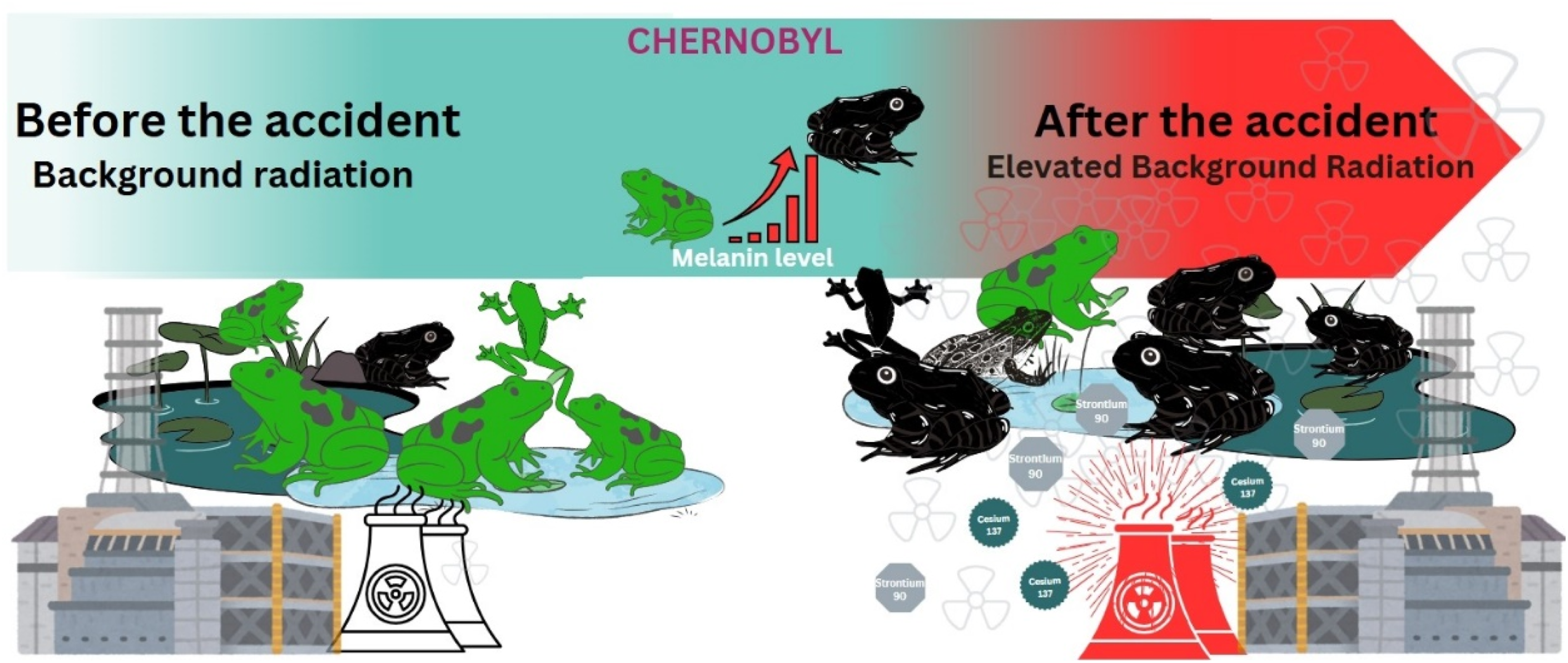
Implications for Understanding Life’s Resilience to Radiation
Together, these findings underscore a powerful theme: life has the capacity to adapt to environmental stressors like radiation. Mortazavi’s early work in Ramsar suggested this possibility, and subsequent studies in Chernobyl and other radiation-exposed areas continue to support it. This pattern aligns with the concept of hormesis, which posits that low to moderate stressors can activate protective biological responses. In both Ramsar’s residents and Chernobyl’s frogs, we see evidence of life adapting to radiation in ways that support cellular stability a nd, potentially, long-term health and survival.
Understanding these adaptations could have practical implications, from improving radiation protection for people working in high-radiation fields to designing safer living environments near radiation sources. This research may also offer insights into medical treatments, especially for conditions like cancer, where radiation plays a role in treatment. The fungus curvularia soli A21 ONO 76640 has recently been exposed to gamma rays, which has increased the production of melanin pigment in this mushroom. Following extraction, the mushroom’s antimicrobial activity against bacteria, fungi, and viruses has been tested, and its cytotoxic effect against human breast cancer and skin cancer cell lines has been confirmed. 85 The early research on Ramsar has thus opened new avenues for exploring how life endures, adapts, and even thrives under conditions that were once assumed to be unlivable.
Conclusion
In conclusion, the adaptive responses observed in Chernobyl’s wildlife and among Ramsar residents highlight just how remarkably living systems can adjust to long-term radiation exposure. In Chernobyl, a wide range of species, from birds and insects to small mammals and amphibians, have shown changes at the physiological, biochemical, and even genetic level. These changes may represent stress responses, but many also suggest true adaptations. One striking example is the darkened skin of Chernobyl’s frogs, with higher melanin levels that likely offer protection—a mechanism not unlike those found in humans. In fact, research on Ramsar residents shows that even our more complex biology can develop resilience to high levels of natural radiation through enhanced cellular responses like improved DNA repair.
These patterns of adaptations, whether it’s pigment changes in frogs or cellular defenses in humans, reveal an underlying resilience built into life itself. Understanding how different organisms cope with radiation not only deepens our knowledge of evolution and environmental stress but also opens the door to new ideas in radiobiology, public health, and even space medicine. Insights like these can inform everything from conservation efforts to radiation safety and potential medical strategies in high-radiation settings.
Footnotes

Funding
The author(s) disclosed receipt of the following financial support for the research, authorship, and/or publication of this article: This study was supported by the Ionizing and Non-ionizing Radiation Protection Research Center (INRPRC), Shiraz University of Medical Sciences, Shiraz, Iran.
Declaration of conflicting interests
The authors declared no potential conflicts of interest with respect to the research, authorship, and/or publication of this article.