



Abstract
No formal review of qualitative research in hand surgery has been previously performed. The primary objective of this study was to evaluate the reporting quality of hand surgery qualitative research with the Standards for Reporting Qualitative Research (SRQR), a 21-item checklist. The secondary objectives were to describe qualitative research in hand surgery by domain, determine differences in reporting quality based on use of a reporting guideline, publication of SRQR and journal of publication, and to identify important outcomes in hand surgery conditions. Fifty-five studies were included from MEDLINE, Embase, PsycINFO, and Emcare. The median SRQR score was 16. The lowest reported sections were context, data collection methods, and data analysis. Qualitative research was found in multiple domains of hand surgery. There was a significant difference between papers that used a reporting guideline and studies published after the publication of the SRQR. Clinical/medical/basic science journals had the highest median SRQR score. Outcomes identified were pain for carpal tunnel syndrome and pain, function, unintentional harm, recurrence, and recovery time for Dupuytren disease. To further improve reporting quality in hand surgery qualitative research, we recommend that investigators ensure they provide rationale for their methodology and become familiar with the SRQR guidelines.
Keywords
Introduction
Qualitative research contributes new knowledge and perspectives to health care through the use of nonquantitative methods. 1 It seeks to incorporate the patient’s own words into scientific literature and can provide further insight into the patient experience than conventional quantitative methods. 2 To exemplify the difference between the 2 research approaches, 2 studies examining patient satisfaction in hand surgery are described below: Rane et al 3 conducted a quantitative study which investigated patient satisfaction in the hand surgery clinic by employing a chart review and analyzing the Press Ganey Outpatient Medical Practice Survey, which uses a 5-point Likert scale. Comparatively, Park et al 4 performed a qualitative study exploring how patients define high-quality care in hand surgery and used semistructured interviews and thematic analysis. Both sought patient opinions and identified factors relating to patient satisfaction in hand surgery. Yet, the results of each were distinct from the other and offered complimentary insight into their shared research question.
Qualitative research within the surgical literature is becoming more common. 5 Quantitative approaches however are still seen as a more reliable method as they are based on numeric data and statistical analyses that can be reported objectively and propagated by other researchers. 6 Nevertheless, qualitative research can be used to supplement quantitative methods with an example being the development of core outcome sets. 7 Core outcome sets are an agreed standardized collection of outcomes that should be reported in all trials for a certain research area. 8 Within hand surgery, there is substantial heterogeneity in measured outcomes, such as in Dupuytren disease. 9 Using qualitative research or summarizing themes within existing qualitative research can advance core outcome set development.
When it comes to using qualitative findings to inform quantitative research or clinical management, it is important to have rigorous qualitative research with transparency and accurate reporting. Within core outcome set data, Jones et al found that none of the papers that used qualitative methods reported a methodological framework and that papers poorly reported reaching data saturation, which is the point where new data would not change the identified theory and are frequently used to indicate the end of data collection.10,11 To date, there has been no review of qualitative research in hand surgery assessing the quality of the studies.
There is no widely accepted standard for quality assessment of qualitative research. 11 Instead, the Enhancing the Quality and Transparency of Health Research network endorses the following reporting guidelines: the Consolidated Criteria for Reporting Qualitative Research (COREQ) and the Standards for Reporting Qualitative Research (SRQR).1,12,13 The COREQ provides reporting guidelines for interviews and focus groups. The SRQR has a wider scope and provides criteria for all forms of qualitative research. It is a 21-item checklist for complete, transparent reporting of qualitative research. It includes the fundamentals of all research studies (title, introduction, methods, results, discussion, conflict of interest, and funding) while describing qualitative specific items for methodology and reporting results. Detailed explanations of each item are provided in a table and supplementary appendix in the original article. 13
The primary objective of this systematic review was to evaluate the reporting quality of hand surgery qualitative research with the SRQR. The secondary objectives were to: (1) determine which hand surgery domains qualitative research has been conducted in; (2) describe the methodology of qualitative research in hand surgery (such as reporting guideline use); (3) compare SRQR scores for studies using reporting guidelines with those that did not; (4) determine if the SRQR resulted in improved reporting of qualitative research in hand surgery since its initial introduction; (5) analyze reporting quality by journal publication; and (6) identify outcomes for common conditions investigated within hand surgery qualitative research with content analysis.
Methods
Protocol and Registration
This review was conducted according to the Preferred Reporting Items for Systematic Reviews and Meta-Analyses Statement 2020. 14 The protocol was registered in PROSPERO (CRD42023405166).
Eligibility and Search Strategy
The inclusion criteria were as follows: articles in hand surgery that report qualitative research for patients/caregivers in primary studies and were published between January 1, 2008, and February 11, 2023. Studies were excluded if they were not in English or pertained to hand burns or brachial plexus injuries.
MEDLINE, Embase, PsycINFO, and Emcare were searched using terms relating to hand surgery AND qualitative research (Supplemental Material 1). The search was performed with the assistance of a health sciences librarian. The date of January 1, 2008, was chosen to capture studies published after consolidated reporting frameworks were made available for qualitative research. The timeframe also contained approximately 7 years pre-publication and post-publication of the SRQR.
Study Screening and Selection
Studies were uploaded into Covidence for review. 15 Three reviewers (C.H., X.-W.L., R.P.L.) worked independently and in duplicate for title and abstract screening in addition to full-text screening using piloted extraction forms. Conflicts in the title, abstract, and full-text screening were resolved through consensus.
Data Extraction
Three reviewers (C.H., X.-W.L., R.P.L.) worked independently and in duplicate for data extraction. The following data were extracted into Microsoft Excel: author, publication year, journal of publication, country, condition/surgery, population description, number of participants, aim, paradigm, qualitative research approach, data collection method, data analysis method, reporting guideline, data saturation, techniques for trustworthiness, and SRQR score (Supplemental Material 2). All conflicts were resolved by consensus.
Data Analysis
Interrater reliability was calculated for title and abstract as well as full-text screening using the K statistic and interpreted according to Landis and Koch 16 benchmarks, with 0 representing no agreement and 1 representing perfect agreement. A descriptive analysis was conducted for study reporting, characteristics, methodology, and results. Journal impact factors were determined on Clarivate 17 and journal reporting quality was also characterized with descriptive analysis. A 2-tailed, 2-sample t test performed on Microsoft Excel was used to calculate the difference between SRQR scores for: (1) studies that reported using a reporting guideline and those that did not; and (2) studies published before and after the SRQR. A value of P < .05 was considered significant.
Content Analysis
Content analysis was performed to identify outcomes for the 2 most frequently reported conditions in hand surgery qualitative research. Only articles that solely discussed these conditions were included. Content analysis is a systematic manner of coding themes and was chosen for this study as it is useful for summarizing the collective conclusions of included studies. 18 The methodology as described by Thomas and Harden was performed. It involved the following 3 stages: (1) free line-by-line coding; (2) organization of “free codes” into related areas to construct “descriptive” themes; and (3) development of “analytical” themes. 19 Triangulation was performed to add rigor to the analysis process. 18 Three reviewers (C.H., X.-W.L., R.P.L.) independently performed each step of the content analysis described above. Codes or themes were discussed at each stage. Discrepancies in themes among the authors were discussed until agreement was achieved.
Results
A total of 2569 studies were identified of which 55 were included in the review (Figure 1, Supplemental Material 3). 14 Of the studies that were screened, an example of a study that appeared to meet the selection criteria but was excluded was by Andrews et al. 20 It described qualitative research investigating parents with children with congenital limb differences, which did include the hand; however, as the study also included the upper and lower limb, it was excluded as it included areas outside of hand surgery.
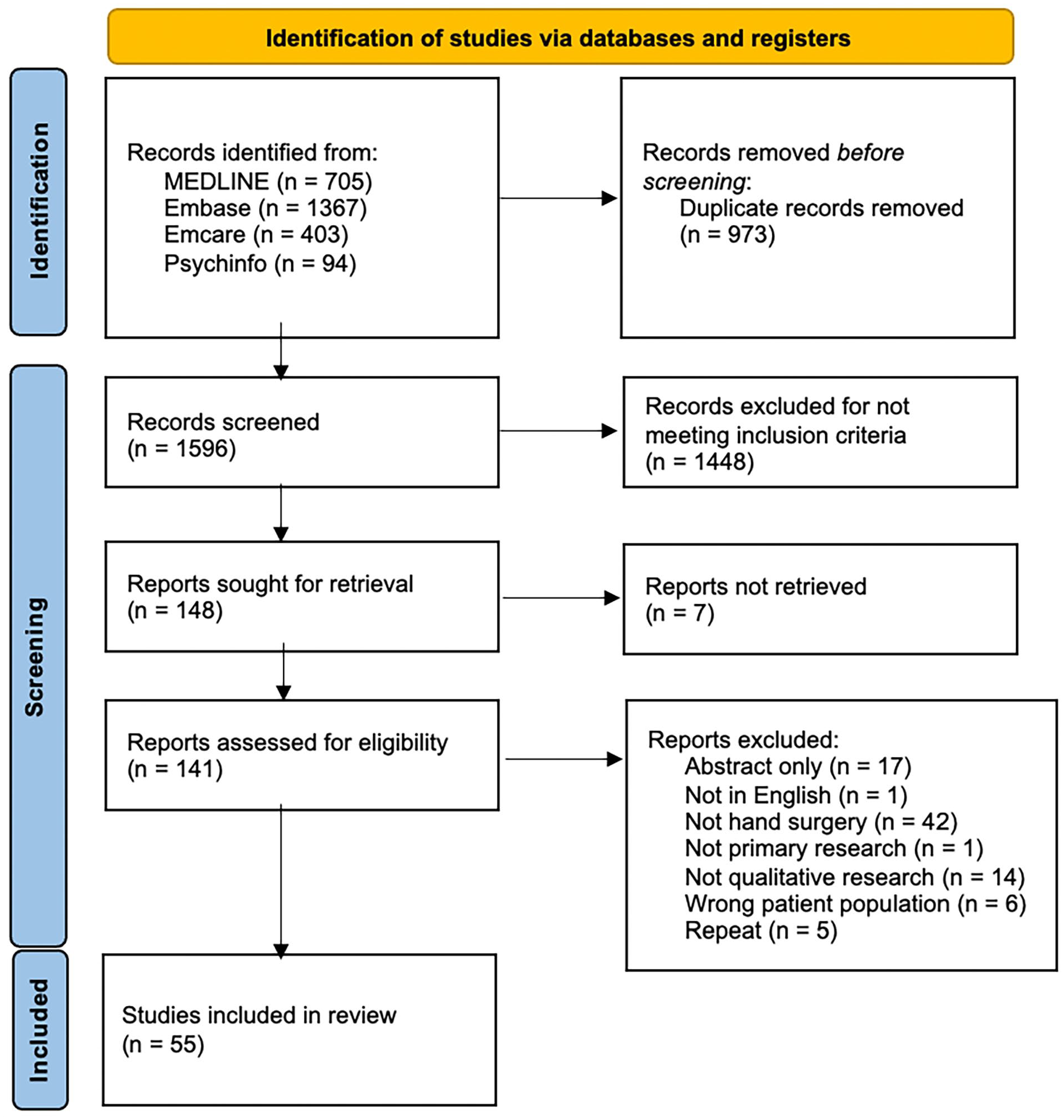
Preferred Reporting Items for Systematic Reviews and Meta-Analyses flow diagram. 15
Qualitative Research in Hand Surgery
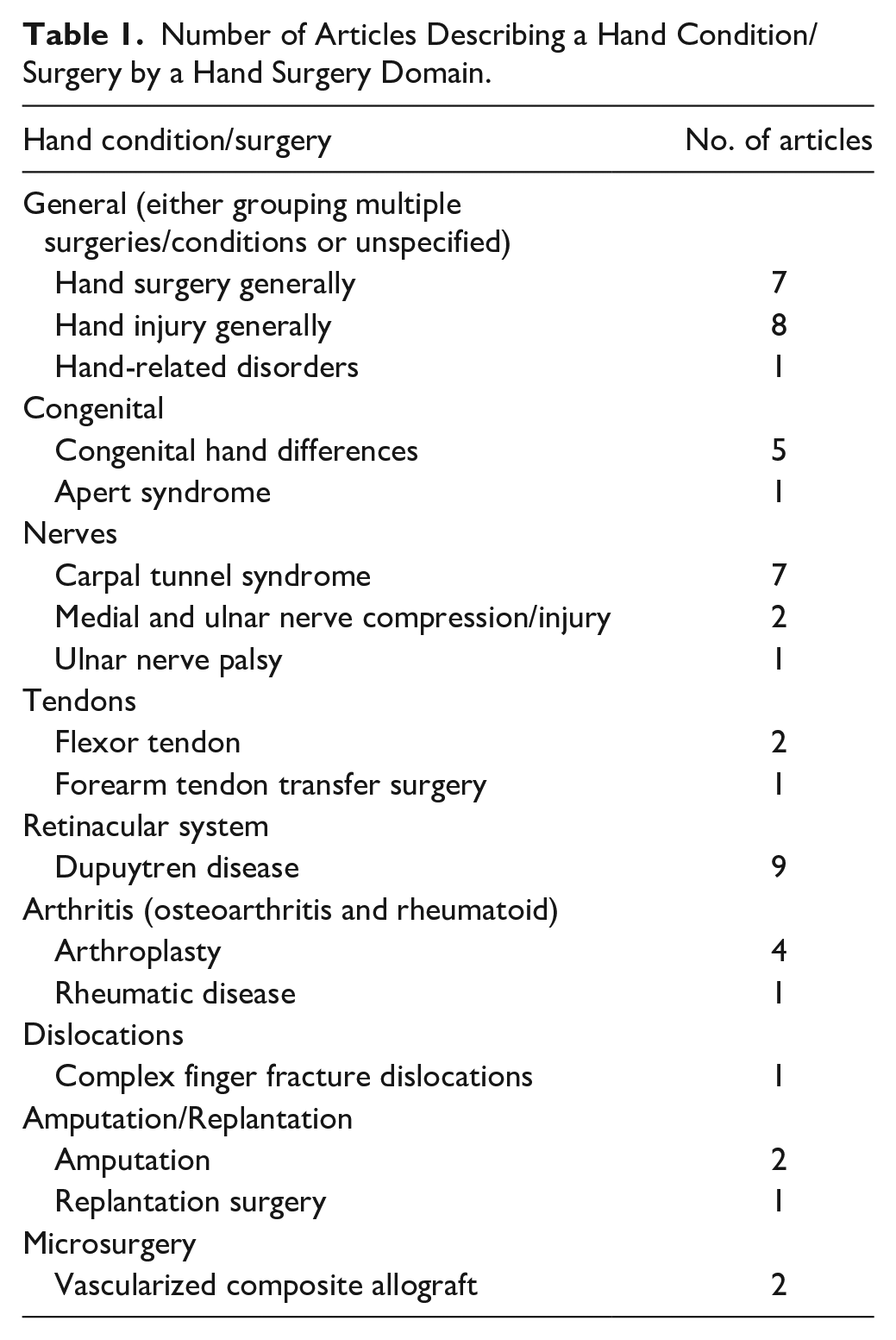
Qualitative research was identified in the following hand surgery domains: general (either grouping multiple surgeries/conditions or unspecified), congenital, nerves, tendons, retinacular system, arthritis, dislocations, amputation/replantation, and microsurgery. Dupuytren disease (n = 9/55, 16%) and carpal tunnel syndrome (n = 9/55, 16%) were the most common conditions of interest in hand surgery qualitative research (Table 1). There were also studies that explored hand injuries, conditions, or surgeries generally by grouping various procedures or conditions together in their sample (n = 16/55, 29%). Twenty-three studies (42%) directly described qualitative research as it pertained to a surgical procedure. The other studies discussed a condition that could be seen by a hand surgeon and included topics such as conservative management or patients’ experiences living with the conditions.
Number of Articles Describing a Hand Condition/Surgery by a Hand Surgery Domain.
Only 3 studies mentioned their research paradigm, for which all were constructivism—where understanding and knowledge is produced from experience and reflection, thus constructed between the researcher and their subjects. 21 Thirty-five percent (n = 19/55) of studies did not specify their methodology including mixed method studies that did not state the qualitative methodology they partook. Of those that did, the majority used phenomenology or phenomenological approaches (n = 14/55, 25%) or qualitative descriptive (n = 9/55, 16%). Almost all the studies used some form of interviews (n = 51/55, 93%) with semistructured interviews as the sole form of data collection being the most common (n = 30/55, 55%).
SRQR and Methodology
The median SRQR score was 16 (min: 11, max: 20). The lowest reported SRQR sections were context (n = 16/55, 29%), data collection methods (n = 23/55, 42%), data analysis (n = 26/55, 47%), and techniques to enhance trustworthiness (n = 28/55, 51%). The best reported sections, where all studies met the criteria, were problem formation, purpose or research question, synthesis and interpretation, and integration with prior work; implications; transferability; and contribution(s) to the field (Table 2).
Articles That Met Criteria for the 21 SRQR Items.
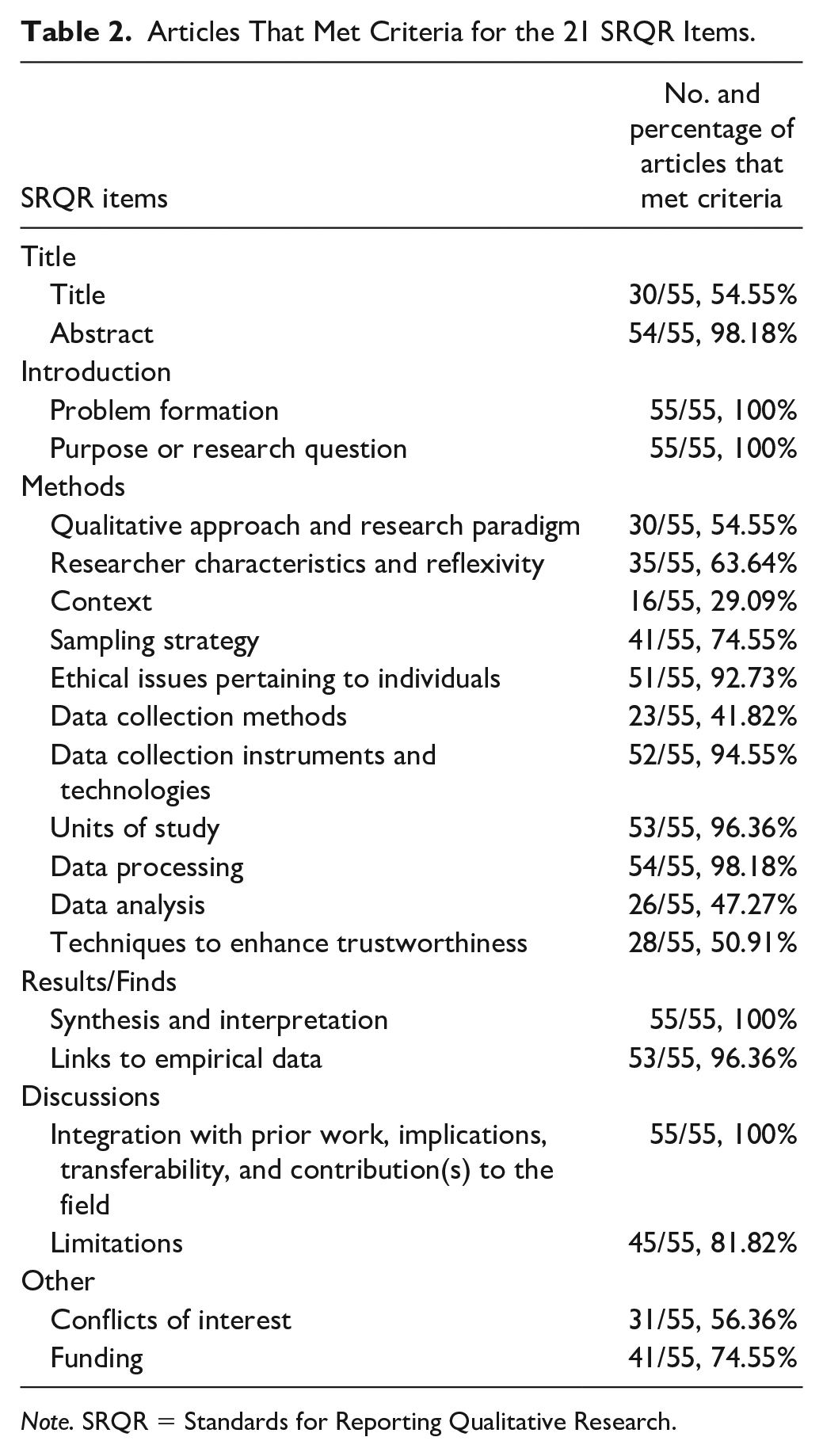
Note. SRQR = Standards for Reporting Qualitative Research.
Thirty-one studies (56%) commented on data saturation. Six studies (11%) mentioned using a reporting guideline: 3 used the COREQ, 1 used SRQR, and 2 used both. Studies that used a reporting guideline had a significantly higher SRQR score (P = .02) with studies using a reporting guideline having a mean score of 18/21 (n = 6) compared with 15.8/21 (n = 49) for those that did not. Methods to enhance trustworthiness were used in all but 9 studies. Triangulation was mentioned in 42 (76%), member checking in 10 (18%), and an audit trail in 5 (9%).
There was a significant difference between studies published before or after the publication of SRQR (P = .007), with studies published before having a mean score of 14.8/21 (n = 19) and after 16.7/21 (n = 36).
Journal Distribution
Journals were classified into 6 categories: (1) plastic/hand surgery; (2) clinical/medical/basic science; (3) allied health; (4) qualitative/social science; (5) multidisciplinary; and (6) other (Supplemental Material 4). Most papers (n = 16/55, 29%) were published in plastic/hand surgery journals. The articles within this category were evenly split between 2 journals: (1) Journal of Hand Surgery; and (2) Plastic and Reconstructive Surgery. They both had the same median SRQR score of 16/21, but the Journal of Hand Surgery had both a higher maximum (19/21) and minimum value (14/21). Articles published in clinical/medical/basic science journals had the highest median SRQR score (18/21) and the article published in a qualitative/social science journal had the lowest (15/21).
Content Analysis
A content analysis was undertaken to identify outcomes in Dupuytren disease and carpal tunnel syndrome articles as those were the 2 most common conditions described in the literature.
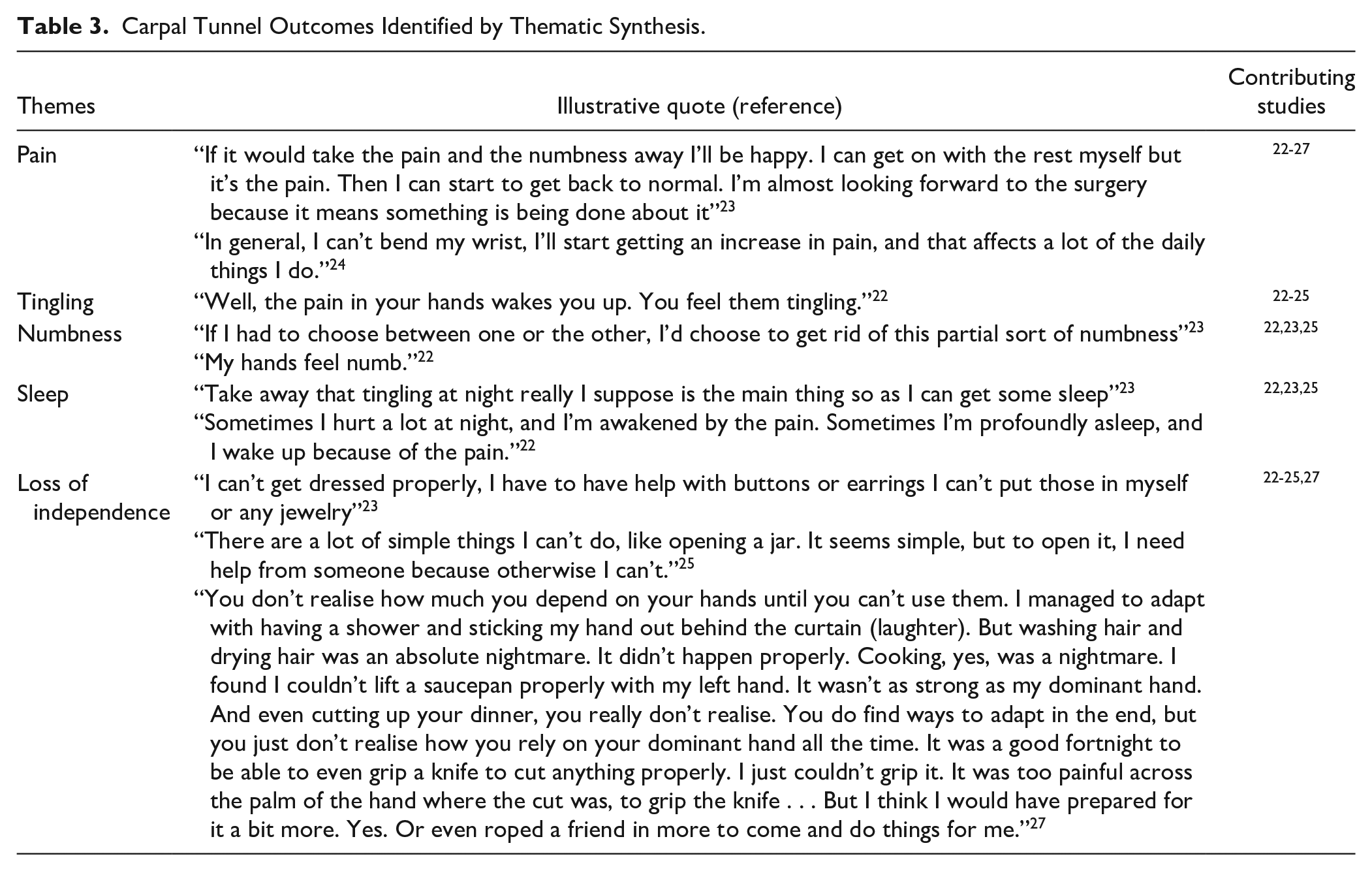
Within carpal tunnel syndrome, the predominant theme was pain (Table 3).22 -27 Occasionally, it was described as tingling and numbness.22,23,25 The impacts of the pain were also repeated throughout the literature. Having the pain affect patients falling asleep or waking them up from sleep was documented.22,23,25 In addition, patients described a loss of independence as they described needing help doing activities of daily living due to the pain.22 -25, 27
Carpal Tunnel Outcomes Identified by Thematic Synthesis.
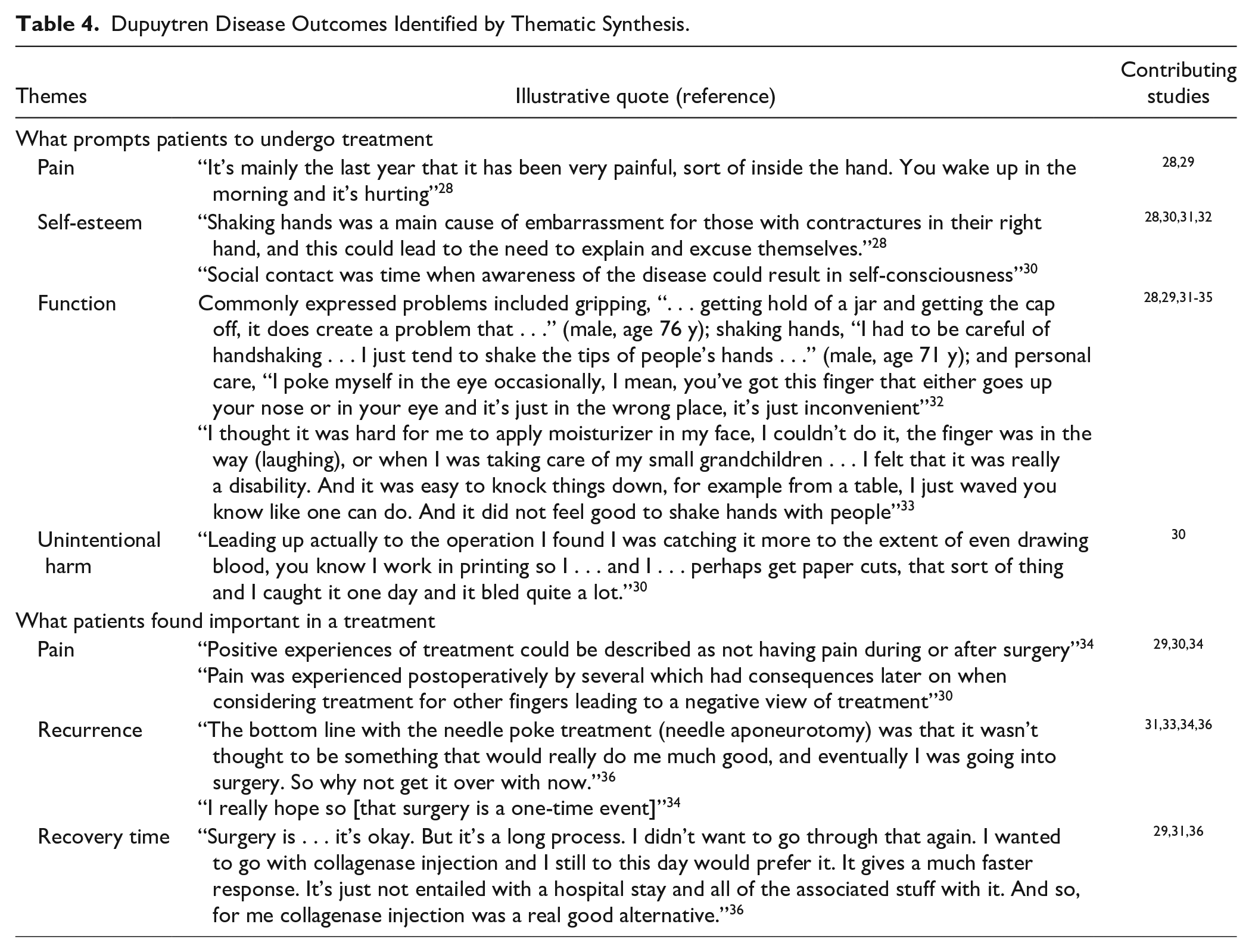
The outcome themes within Dupuytren disease articles were more heterogeneous (Table 4). They could be separated into what prompts patients to undergo treatment and what they found important in treatment. What prompted patients to undergo treatment included pain,28,29 self-esteem, 28 ,30 -32 function,28,29,31 -35 and unintentional harm. 30 Function encompassed using the hand to perform activities of daily living or to return to doing activities that were meaningful to them. Unintentional harm was noted when participants described injuring or fear of injuring the diseased hand/finger due to the contracted positioning. What patients found important in the treatment they received were less painful options,29,30,34 recurrence,31,33,34,36 and recovery time.29,31,36
Dupuytren Disease Outcomes Identified by Thematic Synthesis.
Discussion
This review focused on the reporting quality of qualitative research in hand surgery. A total of 55 articles over a period of 15 years were included, indicating a wide utility of qualitative research methods in evaluating hand surgery. As qualitative research seeks to evaluate a research query using a humanistic approach, it is an invaluable research method when attempting to understand people’s beliefs, experiences, attitudes, and behavior. 6 People’s emotions and experiences are key components of understanding and evaluating hand surgeries, which affect not only the physical health of the patient but also their social-emotional well-being.
Strategies to improve the rigor and trustworthiness of qualitative research have been documented and include member checking, external audits, and triangulation. 37 The results of this study indicate that 84% of the articles used 1 or more of the aforementioned strategies. Specifically, triangulation was the most popular strategy used by researchers. Nonetheless, the rationale for why a technique to enhance trustworthiness was used was only given in 51% of the studies. Thus, nearly half of the studies did not explain why the technique was appropriate or what addition it gave to their study.
Techniques to enhance trustworthiness was 1 of the 4 main SRQR items found to be lacking in hand surgery qualitative studies. The other areas were context, data collection methods, and data analysis. Twenty-nine percent of articles did not provide a rationale for context, which meant they failed to specify why a setting or site was chosen in the study. Just as in quantitative research, context greatly influences the transferability of certain research results to specific groups of individuals. As such, describing why a certain context was chosen for the specific research question is crucial and an area that warrants improvement in future qualitative research, especially in the topic of hand surgery.
Although data collection methods were always reported in qualitative hand surgery articles, justification of why a specific collection or analysis method was chosen was rarely given. Specifically, 42% of the articles examined did not provide appropriate rationale for why they used a certain data collection method and 47% did not include a rationale for their data analysis method. This presents a lack of justification for why it is suitable for their research question. 13 As such, future qualitative research studies would benefit from justifying why their specific data collection method and data analysis method were chosen to improve the rigor of their research.
Fifty-five percent of hand surgery articles examined lacked a title that would meet the standard within the SRQR. 13 To meet the SRQR standard, the study must indicate the approach (eg, ethnography, grounded theory) or data collection methods (eg, interview, focus group) in their title. 13 As the title is the “initial impression” of a research article, regardless of it being quantitative or qualitative, it needs to be drafted accurately and meticulously. Most readers will only read the title and the abstract of a research paper, and only very few will read the full paper. 38 Therefore, it is crucial to have a descriptive but also accurate and concise title that is not misleading.
Previous research conducted by Karpinski et al examined the outcomes and outcome measures in Dupuytren disease research. It found that range of motion was the most commonly reported outcome, appearing in 77% of included studies yet there were 29 unique definitions of it. The authors called for core outcome sets to help standardize outcome reporting. 9 As qualitative research acts as a key component for core outcome set development, 7 this study sought to report outcomes that were identified through content analysis. Our outcomes of pain, self-esteem, function, unintentional harm, recurrence, and recovery time can be used as a comparison for core outcome set research in Dupuytren disease.
The outcomes for carpal tunnel syndrome were also identified through content analysis with pain and subsequent sleep disturbances and loss of independence being noted. Jerosch-Herold et al examined relevant outcomes regarding carpal tunnel syndrome. Specifically, they found that the most frequently assessed outcome was symptoms resolution with sensations of pain and sensory function being the most reported outcome. 39 This is consistent with this study. Based on this study and the study by Jerosch-Herold et al, it would be reasonable to conclude that patients with carpal tunnel syndrome value pain relief, which is a salient determining factor for them when evaluating treatment options.
This study also found that while some studies mentioned following the SRQR in their study design, none of them received a full score based on SRQR. This might be due to the subjective nature and variable understanding of the SRQR tool among researchers. Although a detailed table is provided in SRQR which provides a list of 21 items that are considered essential for complete, transparent reporting of qualitative research, their descriptions are still open to interpretation by the researcher. For example, for the item “title,” it is described in the SRQR as a “concise description of the nature and topic of the study identifying the study as qualitative or indicating the approach (eg, ethnography, grounded theory) or data collection methods (eg, interview, focus group) is recommended.” 13 It was observed that some researchers found having a title without the methodology was satisfactory. Furthermore, researchers frequently failed to provide a “rationale” for specific items, deciding that only stating the item was sufficient instead. In the case of “qualitative approach and research paradigm,” the large majority of studies (95%) did not state their research paradigm, despite the advice from the SRQR. 13 For the purposes of this study, we did indicate completion of that item if the authors provided the approach and rationale, but we recorded which studies failed to include paradigm to highlight this discrepancy in the literature.
Nonetheless, this study demonstrated that the reporting of qualitative research has improved over time with studies published after the SRQR having a statistically significant higher SRQR score. This improvement was also seen in a meta-review study conducted by de Jong et al, 40 where they found that primary qualitative studies showed a positive trend in reporting quality, which may have been facilitated by the publication of the COREQ. As qualitative studies in health continue to gain prominence in the future, the use of reporting guidelines for qualitative research will certainly lead to improvement in the quality of research and ultimately contribute to improvement of individual and population health.
Limitations of this study include the exclusion of the COREQ. As the composition of qualitative research in hand surgery was unknown, the SRQR was chosen a priori due to its broader scope. Yet, as most qualitative research in hand surgery used interviews, the COREQ could have been an appropriate reporting guideline for those studies and researchers in hand surgery may be more familiar with it as it was published before the SRQR. This review also did not complete a risk of bias analysis of the methodological quality of primary qualitative studies as there is no widely accepted standard for assessing methodology of qualitative research. 11
Conclusions
This is the first systematic review of qualitative research in hand surgery. Reporting deficiencies within the literature included failure to provide rationale for context, data collection methods, data analysis, and techniques to enhance trustworthiness. To further improve the reporting quality of qualitative research and thus advance the rigor within hand surgery qualitative research, we recommend hand surgery researchers become familiar with the SRQR.
Supplemental Material
sj-docx-1-han-10.1177_15589447231225271 – Supplemental material for A Systematic Review of Qualitative Research in Hand Surgery
Supplemental material, sj-docx-1-han-10.1177_15589447231225271 for A Systematic Review of Qualitative Research in Hand Surgery by Caroline Hircock, Xue-Wei Lin, Rafael P. Lansang, Cameron F. Leveille, Lucas Gallo and Achilles Thoma in HAND
Supplemental Material
sj-docx-2-han-10.1177_15589447231225271 – Supplemental material for A Systematic Review of Qualitative Research in Hand Surgery
Supplemental material, sj-docx-2-han-10.1177_15589447231225271 for A Systematic Review of Qualitative Research in Hand Surgery by Caroline Hircock, Xue-Wei Lin, Rafael P. Lansang, Cameron F. Leveille, Lucas Gallo and Achilles Thoma in HAND
Supplemental Material
sj-docx-3-han-10.1177_15589447231225271 – Supplemental material for A Systematic Review of Qualitative Research in Hand Surgery
Supplemental material, sj-docx-3-han-10.1177_15589447231225271 for A Systematic Review of Qualitative Research in Hand Surgery by Caroline Hircock, Xue-Wei Lin, Rafael P. Lansang, Cameron F. Leveille, Lucas Gallo and Achilles Thoma in HAND
Supplemental Material
sj-xlsx-4-han-10.1177_15589447231225271 – Supplemental material for A Systematic Review of Qualitative Research in Hand Surgery
Supplemental material, sj-xlsx-4-han-10.1177_15589447231225271 for A Systematic Review of Qualitative Research in Hand Surgery by Caroline Hircock, Xue-Wei Lin, Rafael P. Lansang, Cameron F. Leveille, Lucas Gallo and Achilles Thoma in HAND
Footnotes
Acknowledgements
The authors would like to thank Laura Banfield (Health Sciences Librarian) for her help in developing the search terms and Emily Dunn for her support in manuscript preparation and submission.
Supplemental material is available in the online version of the article.
Ethical Approval
Ethical approval was not needed for this study as it was a review.
Statement of Human and Animal Rights
This article does not contain any studies with human or animal subjects.
Statement of Informed Consent
Informed consent was obtained when necessary.
Declaration of Conflicting Interests
The author(s) declared no potential conflicts of interest with respect to the research, authorship, and/or publication of this article.
Funding
The author(s) disclosed receipt of the following financial support for the research, authorship, and/or publication of this article: This study was supported by the Michael G. DeGroote School of Medicine-McMaster Medical Student Research Excellence Scholarship award given to C.H.

References
Supplementary Material
Please find the following supplemental material available below.
For Open Access articles published under a Creative Commons License, all supplemental material carries the same license as the article it is associated with.
For non-Open Access articles published, all supplemental material carries a non-exclusive license, and permission requests for re-use of supplemental material or any part of supplemental material shall be sent directly to the copyright owner as specified in the copyright notice associated with the article.
