



Abstract
A novel zero-waste pattern generation system, named SNU-ZWP (Zero-Waste Pattern), has been developed to improve fabric utilization efficiency and minimize textile waste. The system implements the ABCD (Arrangement-Based Conventional pattern Dilation) method, which enables automatic transformation of conventional garment patterns into zero-waste layouts. The ABCD method consists of three processes: dilation, rectangular adjustments, and auxiliary-rectangular adjustments, each supported by specialized algorithms. The system was further enhanced with a 3D garment simulator, enabling two-dimensional zero-waste patterns to be placed onto a virtual human body for realistic visualization. To evaluate its performance, 10 participants were recruited to test the system in generating zero-waste patterns. The results demonstrated that SNU-ZWP is effective across multiple dimensions, providing improved efficiency in zero-waste pattern design, enhanced creative pattern-making capabilities, and potential applications in both educational and industrial contexts. These findings indicate that this study focuses on both developing and evaluating the SNU-ZWP system, demonstrating its potential to advance innovative zero-waste fashion design and sustainable production practices.
Keywords
Introduction
The fashion industry, while generating significant global economic benefits, is considered one of the most polluting industries due to high waste generation. 1 In the last two decades, not only has the textile industry doubled the production, but also the average global annual consumption of textiles has also doubled from 7 to 13 kg per person, reaching a threshold of 100 million tons of textile consumption. 2 More recently, global fiber production increased to 124 million tons in 2023, up from 116 in 2022, and has more than doubled since 2000 when it was 58. If business continues as usual, production is projected to reach 160 million tons by 2030. 3 The fashion industry’s environmental impact includes generating over 92 million tons of waste annually. 4 Approximately 87% of global textile waste is disposed of in landfills, while less than 1% of all textiles are recycled back into clothing.5 –7
In the apparel industry, fabric accounts for 50%–60% of manufacturing costs. 8 During the fabric cutting process, an average of 15% of fabric is wasted,9 –11 primarily because most garment pattern pieces have irregular shapes and cannot be nested perfectly like puzzle pieces. Various technologies are being applied to improve nesting efficiency and minimize fabric waste.12 –16 Existing approaches are not intended to achieve 100% marker efficiency but rather focus on optimizing the placement of finalized garment patterns. In contrast, zero-waste pattern design develops garment patterns from the outset with the aim of utilizing 100% of the fabric. This requires a fundamentally different approach compared to conventional nesting optimization software.
The concept of zero-waste fashion has emerged with the goal of eliminating fabric waste in the garment production process. However, since no standardized process exists for zero-waste pattern design, 17 a high level of creativity and mathematical thinking is required to achieve the goal. 10
While existing CAD systems have long incorporated waste-reduction features in marker making process, they are not specifically designed to support the creative process of zero-waste pattern design. This gap requires designers to manually combine multiple tools and perform repetitive adjustments, which demands significant time and effort. Therefore, this study aims to address these limitations by developing an automated pattern generation system specifically tailored for zero-waste fashion design.
Literature review
The concept and evolution of zero waste patterns
Zero-waste fashion is not a newly introduced concept in the modern era, as numerous examples from traditional cultures demonstrate the complete utilization of fabrics without generating waste. Examples include the Himation, Chiton, and Peplos of ancient Greece, the Sari of India, and the Kimono of Japan.
This design philosophy persisted into the 20th century. Ernesto Thayaht developed the Tuta, a jumpsuit-style garment, 11 Bernard Rudofsky created adjustable, one-size-fits-all clothing using rectangular fabrics, and designers such as Zandra Rhodes and Yeohlee Teng also introduced Zero Waste Collections. Since the early 21st century, zero-waste fashion has garnered significant attention. Notably, designers such as Holly McQuillan and Timo Rissanen have presented various zero-waste designs, while Julian Roberts, Mark Liu, and Issey Miyake have introduced innovative approaches to zero-waste design.
Classification of zero waste pattern generation methods
Based on a synthesis of previous studies, this research classifies zero-waste fashion design into five approaches, as illustrated in Figure 1.17 –20

Classification of zero waste pattern generation methods: (a) puzzle cut, (b) geometric cut, (c) subtraction cut, (d) minimal cut, and (e) figure cut.
The first approach is puzzle cut, which involves strategically laying out pattern pieces to nest them efficiently on rectangular fabric, closely resembles the process of assembling puzzle pieces. Puzzle cutting has the advantage of potential commercial applicability, as it is similar to conventional pattern construction. 21 In particular, fashion companies often request existing styles be transformed into zero-waste patterns, 17 making puzzle cutting a useful approach. However, it should be acknowledged that when conventional patterns are transformed into zero-waste patterns, the resulting styles cannot be expected to remain identical. Pattern shapes and garment fit are often subject to modification, and decisions must be made regarding the acceptable degree of design change. Rissanen and Mcquillan emphasized that openness, flexibility, and commitment are essential in adapting existing designs into zero-waste fashion. Maintaining a completely identical style is rarely feasible, thus requiring a flexible approach toward design transformation. 17 The second approach is geometry cut, a method that constructs patterns using geometric shapes or abstract forms. This method goes beyond merely eliminating fabric waste, allowing for design possibilities that differ from conventional pattern-making practices. The third approach is the subtraction cut method, developed by British fashion designer Julian Roberts. 19 Unlike traditional process, this method focuses on creating negative spaces within the garment by cutting holes in the fabric and utilizing these openings to fold, drape, and manipulate the material. It generates unexpected, sculptural forms and integrates pattern making directly into the design process. The fourth approach is minimal cut, a method in which garments are designed primarily through draping, with mini mal cuts made in the fabric. 20 This technique preserves the fabric’s integrity more effectively than other methods and relies extensively on draping for design development. It involves creating basic openings, such as slits or necklines, and shaping the garment directly on the body. The final approach is figure cut, which involves cutting fabric into specific shapes and reconstructing the pattern pieces. Building on this foundation, this study aimed to develop a new technique by drawing inspiration from and integrating specific elements of zero-waste pattern-making methods proposed in previous research.
Design process of zero-waste patterns
Traditionally, design and marker planning are treated as separate processes, and designers typically carry out their design work without considering fabric dimensions or marker planning. 22 In contrast, the zero-waste pattern design process integrates marking into the design, significantly expanding the possibilities for waste reduction. According to Rissanen and Mcquillan, 17 the zero-waste pattern design process is not fixed like the traditional garment development process and can be implemented in a variety of ways. Additionally, in the fashion industry, new zero-waste designs are often developed from existing ones, during which the design esthetics evolve, leading to changes in style. 17
Limitations of zero-waste patterns and the need for automation
There are several limitations of zero-waste pattern design. First, zero-waste pattern design integrates design development into the pattern-cutting stage, instead of finalizing the design prior to pattern making. However, because it is difficult to immediately predict how two-dimensional pattern cutting will translate into three-dimensional garment forms, designers often need to switch between multiple software systems or resort to manual work, resulting in significant inefficiency. Second, it is challenging to develop attractive styles while utilizing the entire fabric, which limits its marketability. Third, unlike conventional pattern design methods, it lacks a standardized process, making pattern development time-consuming. Fourth, it lacks flexibility in pattern modification, as even small changes in design or fabric size can disrupt zero-waste outcomes. Fifth, zero-waste patterns developed for specific sizes present challenges in grading, resulting in limited size flexibility.
To overcome this, Hwang and Lee 23 proposed a Modular System to enhance the commercial viability of zero-waste fashion. They modularized essential pattern pieces, connected them with zippers or snaps, and created virtual prototypes. However, while this approach increased the potential for commercialization, the resulting garments did not fully achieve zero-waste. Carrico et al. 24 proposed inserting panel-shaped bands to improve the size flexibility of zero-waste patterns, which are typically one-size and difficult to grade. This method allows adjustments by varying band width, though it may pose certain limitations in maintaining esthetic consistency as the bands scale with grading. McQuillan et al. 25 developed Make/Use, an open-source system that allows users to adapt ready-made patterns, print materials, and templates into preferred zero-waste designs. Although it did not integrate parametric grids or fully automated pattern generation, as some templates required manual adjustment, it represented an important step toward more accessible zero-waste design practices. SXD (Shelly Xu Design) applies AI technologies such as sketch recognition and deep learning to convert brand signature products into zero-waste designs. 26 The system supports multiple sizes and has been primarily applied to basic items rather than transforming all types of patterns. ElShishtawy et al. 22 pointed out that, although both the cutting and packing field and zero-waste fashion design research aim to eliminate fabric waste, the relationship between the two has not been sufficiently connected. They emphasized the need for automated markers that integrate these fields in order to enable industrial applications of zero-waste fashion design. Zhang et al. 27 developed software that combines CAM and CAD to provide linked edits for modifying zero-waste patterns. This enabled adjustments within the constraints of existing patterns but was limited to modification rather than the creation of new zero-waste designs.
Despite these advancements, overcoming the limitations of zero-waste patterns remains challenging with existing marker-making tools and design software. To address these issues, this study developed dedicated standalone software named SNU-ZWP, implemented in C++ using Embarcadero development tools. The system is not an add-on for existing CAD software but an independent prototype designed to test algorithms for automatic zero-waste pattern generation. It enables designers to automatically generate diverse zero-waste pattern outcomes from conventional garment patterns. This system will allow designers to efficiently create diverse design variations, strategically leveraging unexpected modifications to enhance design flexibility and inspire creative thinking.
Methods
System implementation
The SNU-ZWP (Zero-Waste Pattern) system was developed using Embarcadero C++ builder. Its architecture consists of three modules: a Pattern Importer (PI), a 2D Zero-Waste Pattern Generation module, and a 3D Garment Simulator.
The PI module imports existing garment patterns in DXF or.pattern format and preprocesses them by automatically detecting and removing unnecessary internal lines such as grainlines, fold lines, and seam-allowance marks. This step refines the data to retain only the outer contours needed for zero-waste transformation.
The 2D module applies the proposed ABCD method, which executes three algorithms (dilation, rectangular, and auxiliary-rectangular) to automatically generate zero-waste layouts from conventional patterns. The resulting patterns are then transferred to the 3D Simulator module, which maps them onto a virtual human model for drape visualization.
The system supports standard CAD formats (DXF, OBJ) for compatibility with existing workflows. Its intuitive graphical interface allows real-time manipulation of pattern position, rotation, and scale, and provides adjustable parameters such as the number of dilation iterations, auxiliary-pattern generation, and line-simplification thresholds to explore diverse design variations.
Data preparation
In this study, 13 styles were selected to encompass a variety of designs including tops, bottoms, dresses, and outers as shown in Table 1.
Patterns and garment style used in the experiment.

Pattern shape transformation
This study is based on the principle that by arranging conventional patterns in different ways on rectangular fabric, diverse zero-waste pattern outcomes can be produced depending on the initial placement. Similar to traditional marker systems, the method allows patterns to be arranged directly on the fabric. Since fabric dimensions directly affect design outcomes, users can freely define the width, length, and measurement unit, which serve as key parameters for zero-waste pattern generation. As illustrated in Figure 2(a), the interface allows users to specify arbitrary fabric sizes (in mm, cm, or inches) and manually place pattern pieces before transformation. Figure 2(b) shows the pattern orientation control interface, which includes rotation (±45°), duplication, mirroring, and symmetry options that enable independent orientation of each pattern piece. These orientation controls influence the resulting layout and shape transformation, which are later visualized through 3D drape simulations (see Figures 3–5).
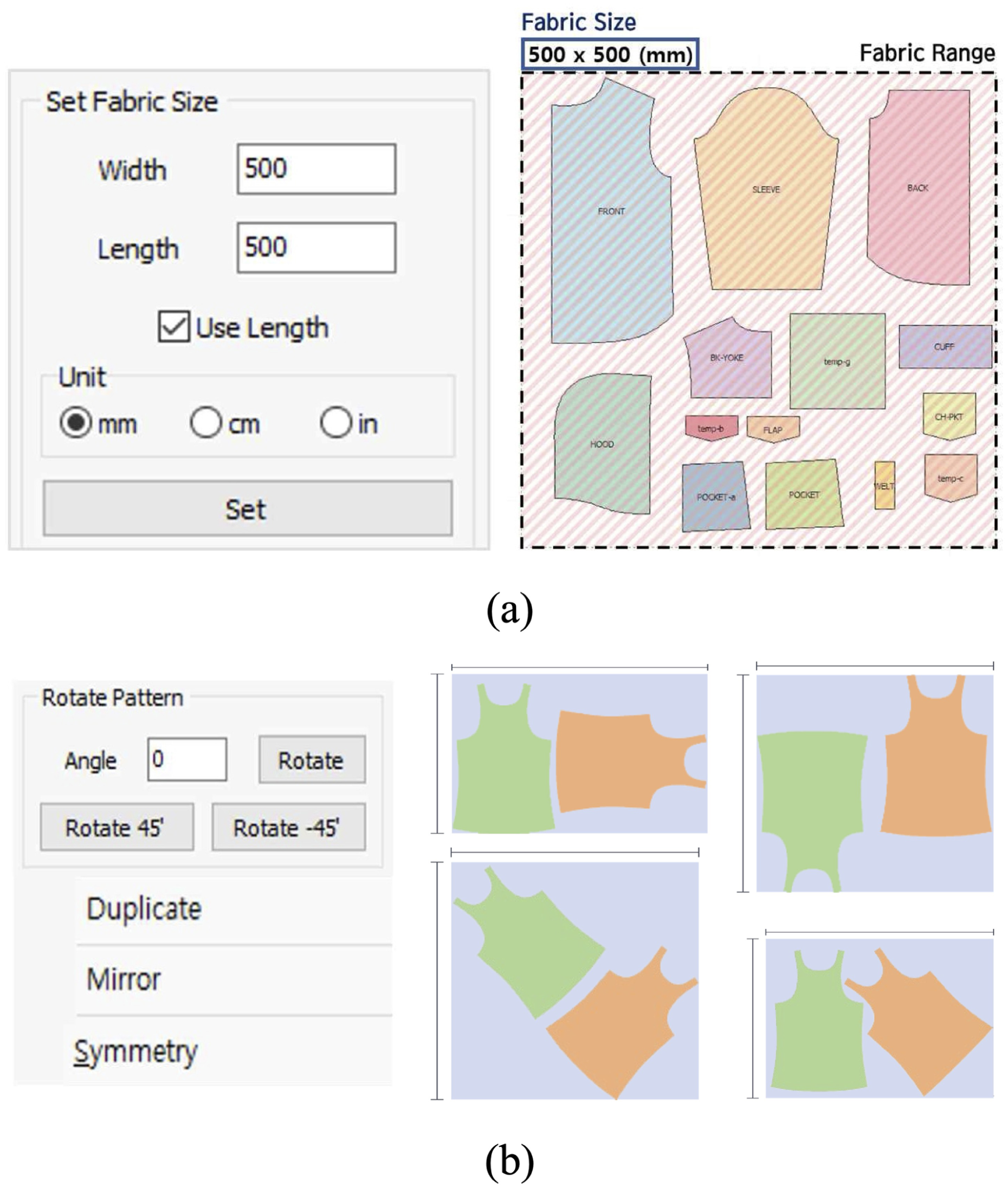
(a) Interface for fabric size and unit settings with manually arranged pattern pieces on rectangular fabric (example size: 500 × 500 mm) and (b) pattern orientation control showing examples of alternative layout directions.

Drape simulation result: dilation type.

Drape simulation result: rectangular type.
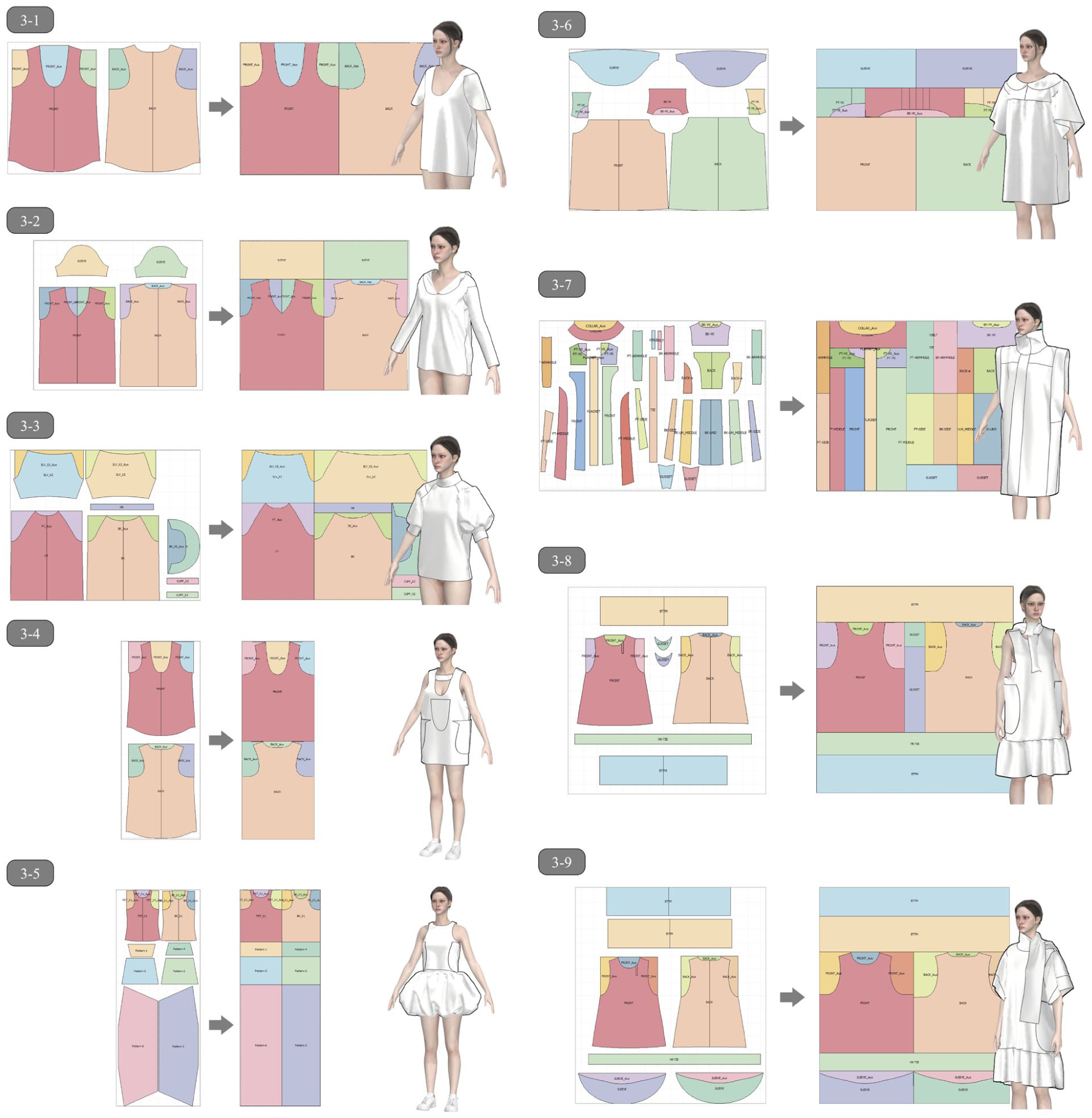
Drape simulation result: auxiliary rectangular type.
As zero-waste patterns aim to utilize 100% of the fabric width with one or multiple sets of patterns, the system was designed to support continuous loading and addition of multiple pattern sets. To enable flexible placement, the orientation of each pattern piece could be freely adjusted along the warp, weft, or bias directions. In cases where the arrangement extended beyond or fell short of the predefined fabric width, the system automatically scaled the pattern pieces to fit the fabric width, thereby allowing adjustment of their initial size.
A novel method was devised to transform conventional patterns into zero-waste patterns by freely arranging the original patterns on rectangular fabric and iteratively expanding each pattern’s boundaries until the fabric is completely filled. This approach was termed the ABCD (Arrangement-Based Conventional pattern Dilation) method. Existing zero-waste pattern approaches often rely on manual iteration and offer limited design flexibility, making it difficult to reproduce results or generate diverse variations. To overcome these limitations, this study adapted the principle of the image dilation algorithm to the context of fabric layouts, developing a new computational approach for automatic zero-waste pattern generation. By systematically expanding the boundaries of conventional patterns to fill the entire fabric area, the ABCD method provides a structured and reproducible way to achieve zero-waste layouts while preserving a wide range of design possibilities.
The ABCD approach transforms pattern shapes through three distinct methods. The first method, termed the dilation type, applies dilation to each garment pattern piece. This method either transforms the entire pattern shape or preserves specific parts using functions such as auxiliary pattern generation, disable dilation, and line simplification. The second method, referred to as the rectangular type, transforms all pattern pieces into rectangular shapes. The third method, referred to as the auxiliary rectangular type, transforms patterns into rectangular shapes while preserving the shape of auxiliary patterns, integrating principles from both the first and second methods.
Dilation type
To achieve pattern dilation, the patterns were first arranged, then converted from vector format into images, with distinct colors assigned to each pattern piece. Subsequently, as shown in Figure 6, an algorithm was developed to iteratively dilate the pattern outlines until they encounter pixels of different colors.

Flowchart of dilation algorithm.
As the outlines of each pattern continued to dilate, uneven seam lines were generated. To address this issue, the lines were simplified using the Ramer-Douglas-Peucker (RDP) algorithm.28,29 This algorithm recursively identifies the point farthest from the straight line connecting the start and end points of a curve. If the distance exceeds a specified threshold, the point is retained; otherwise, it is removed, simplifying the curve.
Additionally, a feature was implemented in the 2D Zero-Waste Pattern Generation module to enable or disable the dilation of specific pattern pieces, preventing fit issues caused by excessive deformation. This functionality is accessible through the system interface, allowing users to selectively constrain dilation during pattern transformation. The operation and outcome of this feature are illustrated in Figure 7(b) of the Results section.
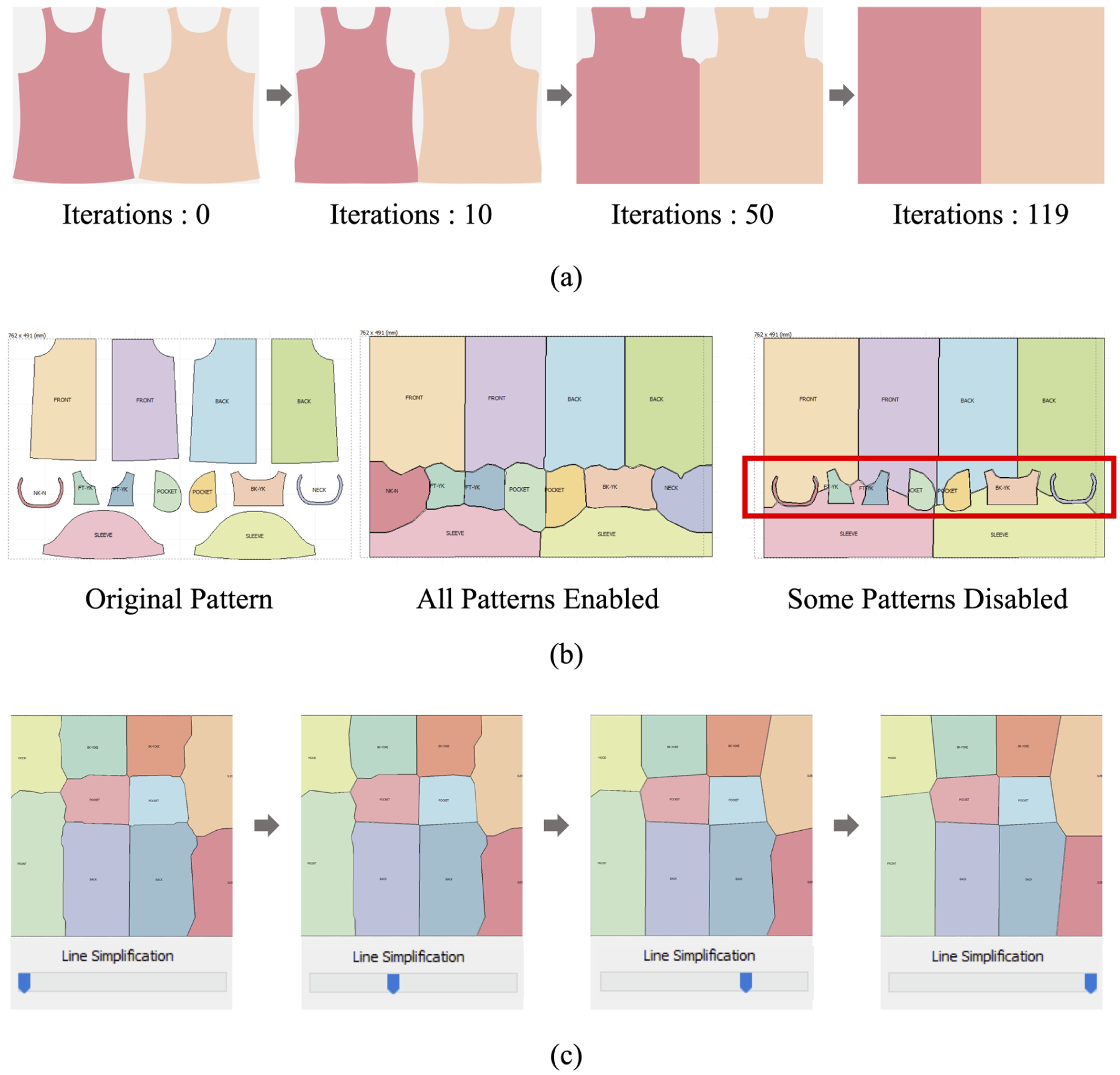
Dilation algorithm applied to garment patterns: (a) iteration of dilation algorithm, (b) enable/disable dilation, and (c) line simplification.
Auxiliary patterns can be classified into two types such as simple and special ones. As shown in Figure 8, new patterns are generated by adding lines opposite to the selected lines. A simple auxiliary pattern is generated based on single or multiple line segments, while a special auxiliary pattern is generated across multiple patterns. These auxiliary patterns can be utilized for various design elements including pockets, pocketing, facings, half-moons, linings, and side panels.

Generation of auxiliary patterns: (a) simple auxiliary pattern and (b) special auxiliary patterns.
Rectangular type
The rectangular type method transforms all pattern pieces into rectangular shapes, facilitating the creation of patterns similar to geometric cut or minimal cut, as suggested in previous studies. This was implemented using an algorithm that creates a rectangle around the pattern as shown in Figure 9(a), expands it by 1 mm on all sides (top, bottom, left, and right), conducts collision tests, and stops upon detecting a collision. During this process, rectangular cavities may form as shown in Figure 9(b). To resolve this, points within a distance less than the specified cavity threshold are merged, eliminating gaps. Additionally, the method includes a feature that allows users to create internal lines for design elements such as necklines, slits, darts, and shirring. Furthermore, pattern merging function was developed to reduce the number of pattern pieces by combining adjacent ones.

Rectangular type patterns: (a) rectangular type marker and (b) removing rectangular cavity.
Auxiliary rectangular type
The auxiliary rectangular type method transforms pattern into rectangular shapes while preserving auxiliary patterns. This method effectively integrates principles from the first and second methods. In this method, rectangles are generated around both the original and auxiliary patterns. Then, these rectangles are expanded to fill the fabric. Subsequently, seam allowances are automatically generated along the pattern’s outline at a specified distance (Figure 10).

Auxiliary rectangular type marker: (a) generation of auxiliary rectangular type marker and (b) generation of seam allowance.
User evaluation
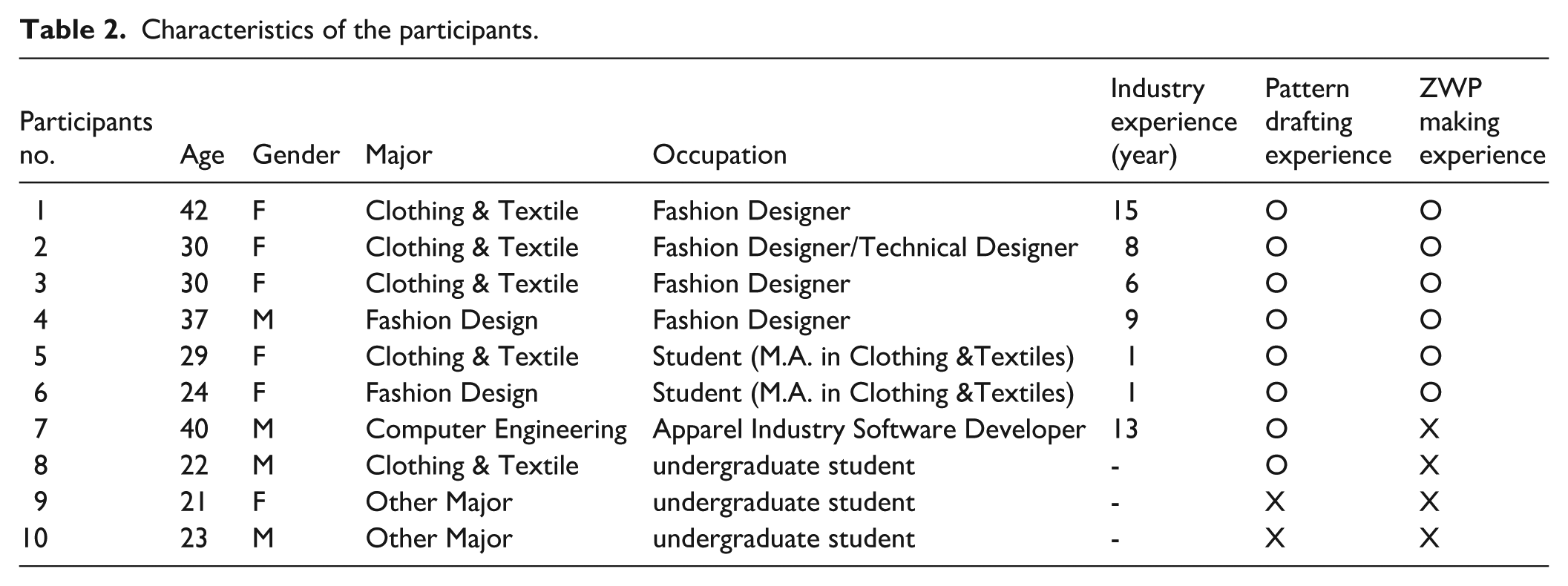
To assess the appropriateness and industrial applicability of the developed method, a user evaluation was conducted using both quantitative and qualitative research methods. This study, which involved human participants, received Institutional Review Board approval following an ethical review (IRB No. 2406/002-001). The experiment included 10 participants, aged between 21 and 42, representing both genders and possessing diverse expertise in apparel. The participants included apparel majors, fashion designers with 15 years of practical experience, and a software developer specialized in the apparel industry. Additionally, undergraduate students and non-majors were also included to evaluate the effectiveness of the zero-waste pattern education. Participants used the developed SNU-ZWP software for over an hour to create zero-waste patterns. During this session, they were instructed to import conventional 2D patterns, apply and adjust the dilation function, optionally enable or disable dilation for specific pieces, simplify irregular lines, generate auxiliary rectangular patterns, and finally simulate the resulting garments on a 3D avatar. After completing these tasks, they completed a survey and participated in semi-structured interviews. The characteristics of the participants are summarized in Table 2.
Characteristics of the participants.
Participants reviewed the original patterns and drape simulation results of 13 original styles as shown in Table 1, then they designed a total of six zero-waste patterns—two for each of the three pattern generation methods. Finally, they conducted drape simulations on three of the patterns. Afterward, they reviewed the developed 2D zero-waste patterns alongside their corresponding 3D garment, followed by a survey and interviews.
The survey and interviews were adapted from the study by Zhang et al., 27 employing a 7-point Likert scale, with modifications made to align with the objectives of this study. To obtain a comprehensive understanding of the participants’ experiences, additional in-depth interviews were conducted. As presented in Table 3, the evaluation criteria encompassed four categories: pattern-making methods, program usability, program applicability, and the assessment of zero-waste pattern outcomes. Quantitative scores were collected through multiple-choice questions, followed by in-depth interviews to gain qualitative insights.
Evaluation criteria.

Results and discussion
System overview
In this study, the SNU-ZWP (Zero-Waste Pattern) software was developed as a standalone application, implemented in C++ using Embarcadero development tools. Unlike an add-on for existing CAD systems, it was designed as an independent program specifically for zero-waste pattern generation. The software architecture consists of three main modules. The 2D Pattern Importer module allows users to import and modify conventional 2D patterns. The Zero-Waste Pattern Generator module transforms these patterns into zero-waste layouts through algorithms such as dilation, rectangular, and auxiliary-rectangular adjustments. Finally, the 3D Drape Simulator module provides real-time visualization by placing the generated zero-waste patterns onto a virtual human body, as previously shown in Figure 11.

Overview of the SNU-ZWP (zero-waste pattern) system.
Zero-waste pattern generation
The result of applying the dilation algorithm to transform conventional patterns into zero-waste patterns are shown in Figure 7(a). The outlines of each pattern piece expand iteratively, continuing until the newly generated pixels meet and fill the entire rectangular fabric. Users can adjust the maximum expansion of the pattern by specifying the number of dilation iterations. In debug mode, images are saved at each dilation interval set by the user, allowing them to observe the progression. Dilation may be applied to all pattern pieces, or selectively omitted for specific pieces, as illustrated in Figure 7(b). Additionally, as shown in Figure 7(c), the number of points on the irregular lines produced by the dilation algorithm can be reduced using the RDP algorithm. The software provides an interactive track bar that allows users to adjust the degree of line simplification.
As illustrated in Figure 12(a), internal lines such as necklines, slits, darts, and shirring can be created when designing a rectangular type marker. Users can freely adjust the width and depth of the neckline, the angle and length of the darts, and the length and position of the slits and shirring. Additionally, as shown in Figure 12(b), adjacent pattern pieces can be merged to reduce the number of pieces, implementing the minimal cut approach.

Rectangular type patterns: (a) generation of neckline, slit, dart, shirring and (b) merge patterns.
Drape simulation results
The 2D zero-waste pattern outcomes developed by the study participants, along with their 3D drape simulation results, are presented in Figure 3 (dilation type), Figure 4 (rectangular type), and Figure 5 (auxiliary rectangular type). These figures demonstrate the variations in results across different participants.
Quantitative assessment of the system
Most study participants highly rated the zero-waste pattern-making method giving it an average score of 6.7. In particular, they emphasized the design inspiration process and the creativity of the ABCD method, which received average scores of 6.8 and 6.7, respectively. Participants perceived that the program could facilitate the easy and rapid development of zero-waste patterns (average score of 6.6). However, they indicated that improvements were needed in terms of program usability (average score of 4.3) and user interface (average score of 5.5). Additionally, the commercial and educational applicability of the program was positively evaluated, receiving average scores of 6.5 and 6.3, respectively. User experiences were further explored in-depth through interviews from multiple perspectives. The evaluation results, based on a 7-point Likert scale, are summarized in Figure 13.

User evaluation results.
Qualitative insights from participants
The results of follow-up in-depth interviews confirmed that the SNU-ZWP had a positive impact on creativity, efficiency, and practicality. Participants responded favorably to the software’s ability to inspire design ideas and enhance the esthetics of the final outcomes. Additionally, the software was evaluated as having high commercial potential and was considered effective for transforming existing products into zero-waste styles, making it valuable for both educational and industrial applications.
However, general suggestions for improvement were made regarding the UI/UX, the addition of new features, and overall user convenience. The key recommendations included the simplification of the menu bar, visualization of the fabric saving effects, and enhanced pattern adjustment features. Based on these evaluations, the software was further improved.
Importantly, gender was not identified as a significant factor influencing participants’ evaluations. Instead, differences were more strongly associated with experience level. Experienced designers preferred the rectangular and auxiliary-rectangular approaches, emphasizing their practicality and relevance for industrial application. By contrast, student participants were more engaged with the dilation approach, perceiving it as a creative and experimental method for generating innovative design variations. Analysis of the semi-structured interview content regarding participants’ overall experience with the developed system and the design outcomes revealed four thematic categories of user experiences.
Inspiration in zero-waste pattern design
Participants noted that the program enabled unconventional approaches, facilitated creative outcomes, and generated interesting designs through serendipity. However, participants with higher professional expertise in fashion design (Participant 1: fashion designer with 15 years of experience; Participant 2: fashion designer with 8 years of experience) expressed some dissatisfaction, pointing out the difficulty of intentionally embedding or controlling the degree of creativity. This indicates that the system is not primarily intended for developing precisely targeted designs but rather serves as a tool well-suited for stimulating ideation in zero-waste pattern design.
It seems possible to use existing patterns to generate new designs through serendipity, and then refine them through further pattern modifications and design adjustments to pursue practical design directions. Since the software can produce a wide variety of unexpected outcomes, it can serve as an initial brainstorming tool and provide inspiration for design development, (Participant 1) Since each person arranges the patterns differently, the possibility exists for new and original designs to emerge depending on the placement. In particular, the greater the number of pattern pieces, the higher the likelihood of generating unexpected designs. I also think that viewing the garment on the avatar could provide additional inspiration to designers, (Participant 2) In conventional patternmaking, there are many constraints such as grainline directions, but this system offered a high degree of freedom, allowing me to place patterns more flexibly and obtain creative design outcomes. I had previously learned to draft garments by drawing curves and darts on rectangular paper and believed that clothing could only be made in this way. This experience broke that assumption. Especially since it is often difficult to move beyond one’s own preferred style when designing, viewing diverse outcomes provided me with new inspiration. (Participant 5) It was fascinating to see that by using the original patterns with a predefined fabric width and freely arranging them, novel design sketches could be generated. Reflecting on my past design experience, when starting with ready-to-wear as the basis, it was often difficult to break away from conventional frameworks. However, this system unexpectedly produced creative and diverse silhouettes, suggesting its potential usefulness in fashion design. An interesting moment occurred when a piece created while forming the neckline was transformed into a pocket, showing how certain parts of a garment can be repurposed for entirely different functions, (Participant 4)
Potential for education and industry
Participants emphasized that the program extends beyond a simple design tool, showing potential for both educational and industrial applications. By adapting existing popular styles into zero-waste formats based on actual fabric dimensions and integrated marker-making, the software was seen as a practical tool for industry. At the same time, it was evaluated as an effective educational resource, helping users intuitively understand and internalize the concept of zero-waste design.
Rather than explaining zero-waste only as an abstract concept, I found it valuable to create patterns based on actual fabric specifications and visually connect them to design outcomes, which seems highly useful for industry. It clearly shows the limitations of applying zero-waste in current cut-and-sew practices while encouraging the exploration of creative approaches to overcome them. I also believe that, with a user-friendly interface and integration with AI tools, this developed system could evolve into a practically applicable resource in the field, (Participant 3) Even as a non-expert, I was able to gain an understanding of zero-waste patterns after using the program for about an hour, which shows its educational value, (Participant 7, Participants 10)
Improved efficiency
Participants evaluated the zero-waste pattern-making program as efficient, noting that it simplifies the production process compared to conventional methods and enables faster generation of outcomes.
The tools were similar to those I had used in Adobe Illustrator and Photoshop, so I was able to adapt quickly. It was also efficient that the position and angle of patterns could be changed with just a few clicks, and entirely new outcomes could be generated through this simple process, (Participant 8) This software can greatly reduce the time required for zero-waste design and generate diverse design ideas. I found that patterns could be created easily and quickly with just a few clicks, (Participant 7, Participants 9)
Evaluation of outcomes
Participants generally found the results esthetically appealing. However, some noted limitations for commercial use, citing discomfort in wearability or overly experimental designs. They further evaluated the Dilation Type as useful for creative ideation, while the Rectangular and Aux-Rectangular Types were regarded as more practical and marketable.
The Aux-Rectangular Type has commercial potential as it incorporates practical design intentions while allowing variation in both patterns and designs, (Participant 1, Participant 3) The Aux-Rectangular Type can balance straight and curved lines within the patterns, enhancing garment fit in an aesthetically pleasing way, which suggests potential for commercial use, (Participant 2) While the Rectangular and Aux-Rectangular Types have limitations in expressing the body’s curves and volume, the Dilation Type retains curves and allows the user to adjust them as desired. As a designer, I found this type the most effective for generating design ideas. (Participant 4)
Ecological implications compared to conventional cutting
The proposed SNU-ZWP system primarily demonstrates the technical feasibility of transforming conventional patterns into zero-waste layouts. Therefore, its ecological advantages should be interpreted cautiously and in relation to current industrial practice.
In conventional marker making, 15% fabric loss is frequently reported,9 –11 mainly due to the irregular shapes of pattern pieces and the constraints of fabric width. However, when conventional patterns are converted into zero-waste patterns using the ABCD method, certain design modifications, silhouette changes, or fit adjustments are inevitably introduced. As several participants with professional experience pointed out, such modifications may limit the direct adoption of the generated designs in commercial production, especially for styles that must maintain precise silhouette or fit consistency.
From this perspective, the ecological benefit of the proposed method lies less in guaranteeing a fixed percentage of fabric saving and more in shifting the waste-reduction decision to an earlier design stage. By flexibly combining arrangement, dilation, and rectangularization methods as appropriate within the design process, the system makes it possible to explore pattern layouts that approach full-width utilization before the cutting plan is finalized. Even if the final industrial pattern does not achieve 100% utilization, its fabric consumption can be guided by zero-waste principles, which is difficult to accomplish with conventional marker solutions. This aligns with earlier calls to connect zero-waste fashion design and cutting-and-packing research at the software level. 22
In addition, the system has potential for ecological improvement in educational and exploratory contexts. Several participants noted that visualizing the relationship between fabric width and pattern transformation helped them recognize how small layout changes can accumulate into fabric waste or savings. Such awareness-raising and design-space expansion represent meaningful ecological outcomes at this developmental stage of zero-waste pattern research. In other words, the contribution of the SNU-ZWP system is to reduce the structural causes of pre-consumer waste by offering designers more zero-waste–oriented options at the earlier design development stage rather than to claim an immediate, full-scale reduction equivalent to 15% of current industrial waste.
Finally, the ecological performance of the system will depend on future extensions, such as size-grading strategies, and integration with existing CAD/CAM environments. With these developments, the ecological benefit of the system could be further expanded and generalized beyond the current experimental scenarios.
Conclusions
A novel zero-waste pattern design process, referred to as the ABCD method has been developed, which consists of three types including dilation, rectangular, and aux-rectangular. This method transforms conventional patterns into zero-waste patterns. In the dilation type, the Ramer–Douglas–Peucker (RDP) algorithm, a widely used line simplification method, was applied to reduce the number of points and enable real-time line simplification. Additionally, auxiliary patterns and the disable dilation feature were incorporated to preserve the original shape of specific patterns. An algorithm was also developed to merge adjacent patterns and eliminate empty spaces when generating patterns using the rectangular type and aux-rectangular type. Furthermore, a 3D garment drape simulator module was integrated to provide three-dimensional visualization of the developed zero-waste pattern shapes, allowing them to be viewed as draped on a virtual human body. To evaluate the system, 10 participants were recruited to develop zero-waste patterns. After conducting drape simulations on three final patterns, user experiences with the program were explored from multiple perspectives through surveys and in-depth interviews. This study is significant as the first research to transform conventional patterns into zero-waste patterns. The findings demonstrate that an automated pattern generation system can enhance design efficiency and serve as a versatile tool for both educational and industrial application
Footnotes

Ethical considerations
This research was conducted under the approval and supervision of the Seoul National University Institutional Review Board (IRB Approval No: 2406/002-001).
Consent to participate
Informed consent to participate was obtained from all participants prior to the study.
Consent for publication
All research participants were informed about the publication of their personal data (including individual details and images) and provided written informed consent for publication.
Funding
The authors disclosed receipt of the following financial support for the research, authorship, and/or publication of this article: This work was supported by the National Research Foundation of Korea (NRF) Grant funded by the Korean Government (MSIT) (RS-2023-00208052) and the Korea Institute for Advancement of Technology (KIAT) grant funded by the Korea Government (MOTIE) (P0012770, Professional Human Resources Training Project).
Declaration of conflicting interests
The authors declared no potential conflicts of interest with respect to the research, authorship, and/or publication of this article.