




Abstract
The search for novel materials for a variety of end-use applications has been encouraged by increased concern for the environment. This review offers a comprehensive analysis of biocomposites derived from natural resources, which have attracted considerable research interest. It focuses on key categories of biodegradable polymers and natural fibers, detailing their manufacturing processes, bonding mechanisms, and inherent properties. The paper emphasizes both physical and thermal features of different bio-based materials, particularly in automotive applications, and evaluates their compatibility with different matrix materials. Drawbacks and possibilities related to processing of biodegradable fiber-reinforced materials are explored, alongside a performance comparison with traditional materials commonly used in the automotive sector. The review concludes by addressing the economic implications and prospects of biocomposites, highlighting their potential as a rapidly emerging field in polymer science with significant applications within the vehicle sector.
Keywords
Introduction
Fibers made from organic-based biocomposites combine biodegradable materials with a bio-based matrix to create a sustainable alternative to traditional synthetic composites. These substances make use of fibers from nature that come from renewable resources, including hemp, flax, jute, sisal, kapok, cotton, coir, kenaf, kudzu, linden, banana, pineapple, oil-palm, alpaca, bison, sheep, angora, and others. Fibers combined with a biodegradable or bio-based matrix material, such as bio-resins, bioplastics, natural latex, soy-derived protein, chitin, chitosan, starch-based polymers, hydrogels, aerogels, gelatin, bio-based epoxies, poly(3-hydroxybutyrate-co-3-hydroxyvalerate) (PHBV), polybutylene adipate-co-terephthalate (PBAT), polycaprolactone (PCL), polylactic acid (PLA), etc. to form a composite material with improved structural performance.1–5 Natural fiber-based biocomposites has gained significant attention in various industries, including automotive applications. They offer several key advantages that make them important in sustainable automotive materials.6-8 Natural/bio-fiber composites have gained traction as eco-friendly alternatives to synthetic fibers, showcasing promising sound absorption properties. Leading automotive manufacturers including Mercedez-Benz, Toyota, Audi, and Ford have embraced sustainable practices by incorporating renewable materials such as cereal chaff, linseed, cane, and roselle fiber in the internal car parts in addition to front/rear bumpers. Ongoing research focuses on leveraging bio-based and biodegradable resins like polybutylene succinate and polylactic acid, coupled with bio-based epoxy resins, to enhance structural integrity and acoustic performance in automotive thermoset composites. This evolution contributes to lightweight design, reducing fuel consumption, lowering production costs, meeting safety standards, and ensuring biodegradability.9,10 Renewable materials comprising hessian, roselle hemp, reed, sugarcane fiber, coconut husk, and agave fiber are utilized in the transport industries as a result of optimized performance properties. Low density together with low weight advantages of such fibers reduce energy consumption in aircraft applications and increase the sustainability of the product. In addition to its greater strength, and biodegradability, jute fibers are a good choice for a variety of uses, including windows, doors, automobiles, furniture, water pipes, fabricated roofing, floor tiles, and decor for walls. 11 Reinforced composites made of coir fibers are used in connected, commercial, and industrial uses. These include wrapping supplies, safety helmets, rope, finishing nets, brushes, sleeping surfaces, car interiors, paneling, roofing, storage tanks, projector, and voltage stabilizer covers. 12 Sisal fibers are mostly utilized in mats, carpets, cement reinforcements, as well as car sectors. Sisal fibers which are entirely biodegradable, strong, opposed to abrasion, and durable. 13 Kenaf materials with a capacity for composites fabrication because of their low density, intense mechanical characteristics, and biodegradability. 14 Flax fiber has several advantages: flexibility, luster, good abrasion resistance, minimal mass, improved stiffness with strength, resilient, and recyclability. 15 Bagasse utilized for variety of applications such as producing biofuel for renewable energy sources as well as developing composite materials. 16 Following its significant strength, stiffness, and low density, bamboo fiber is frequently utilized in interior design projects like furniture and wall panels. Even though there are currently few automotive uses for bamboo composites, further research on the material may expand its potential for usage in aerospace and structural applications alongside automobile applications. 17 A variety of natural fibers, their production, growth time, retting or extracting procedure, isolation, and processing technique all impact the features of the natural fibers. The impact of processing methods and fiber variations on the strength of tensile action, density, elastic modulus, and extension at fracture of natural fiber composites became the subject of various investigations.18,19 This review paper provides a concise overview of renewable based resources or materials in automobile projects, covering topics consisting of polymer materials for composite materials made from renewable resources, fabrication techniques, mechanical advantages, lightweight body panels and structural components, durability and environmental benefits, along with the difficulties and potential paths in this area.
Natural fibers in automobile applications
Considering organic fibers have recyclable or biodegradable properties and are ultimately based on natural sources, they are gradually taking the place of chemical-based synthetic materials in automobiles. 20 Flax, hemp, kenaf, jute, sisal, abaca, banana, coconut, coir, cotton, recycled fibrowood, wood, wood flour, and wool are among the natural fibers utilized in the manufacturing of automobiles as shown in Figure 1.21–25

Natural fibers used in automobile applications.
Various components are fabricated from natural fibers and their corresponding matrix identification for use in automotive applications are presented.
Flax fiber
Flax fiber is a naturally occurring cellulosic fiber with a low volume and exceptional tensile force. Fiber possesses favorable environment with energy-saving properties due to its biodegradability, low weight, and reliable thermal insulation properties. In addition to its useful features, flax fibers are utilized for the automobile business to create desired elements that tend to be usable with polyester, epoxy, polyethylene, polypropylene, etc. Some biobased polymers are polylactic acid (PLA), starch, PHB, and oil-based matrix. These materials are used in wall reinforcements, interior panels, bumpers, spoilers, insulation panels, bicycles, tennis rackets, and skis that offer outstanding results at a lower weight.23-26
Hemp fiber
Sustainable fibers of cellulose called hemp fibers gets obtained through hemp stalks from herbs that were valued to their strength, durability, and sustainability. Hemp fibers are integrated with PLA, polyhydroxyalkanoates (PHA), and starch-based biopolymers to produce entirely recyclable composites. Applications include hoods, trunk lids, seat backs, and acoustic insulation.27,28
Kenaf fiber
The plant Hibiscus cannabinus is the origin of kenaf fibers, which are highly sought after for their great durability, stiffness, and strength. To create biocomposite products for cutting-edge industrial uses like fenders, bicycles, and surfing boards as well as to lessen noise and vibration in automobiles these fibers can be combined with biopolymers. 29
Jute fiber
Hessian based materials are widely recognized for their excellent strength in tension along with inexpensive value, and biodegradability. Advanced industries including sports equipment, construction, automotive, and aerospace can create sustainable composite materials with great performance by combining jute fibers with biopolymers. 30
Sisal fiber
A high-strength, long-lasting fiber made of Agave Sisalana that is resistant to degradation. Both structural and non-structural applications are made of them. Based on their exceptional fracture toughness along acceptable bending and tensile characteristics, sisal fiber-reinforced composites outperform other NFCs and can be employed in situations where good impact strength is required.31,32
Abaca fiber
A naturally occurring cellulosic fiber produced by Musa textilis that possesses exceptional strength, elasticity, and resilience against degradation from seawater. Abaca fiber composites are used to create lightweight, fuel-efficient parts that decrease greenhouse gas emissions and increase durability for the aerospace and automotive sectors.33,34
Banana fiber
Bast fiber is made by the Musa species, which is coveted for its biodegradability, sustainability, and outstanding yield strength. 35 Among many natural fibers, banana fibers helped in attaining numerous properties such as swelling, mechanical, dielectric properties, and thermal degradation. 36
Coconut fiber
A fiber with a high lignin content is taken from the coconut husk and is noted for its stiffness and strength. Following a peculiar property, this fiber can flow at conditions between 92 and 150°C, which is below the point of decomposition Td and above the temperature of transition Tg. In the automobile industry, this fiber offers an environmentally conscious replacement for traditional materials. 37
Cotton fiber
A cellulose fiber that comes from cotton plant seeds is renowned for its high tensile strength, breathability, and softness. Cotton fibers can be mixed with different biodegradable matrices for producing composite materials. Lightweight and fuel-efficient elements have become common in automotive applications, particularly for interiors. 38
Strength properties of natural fibers in automotive components
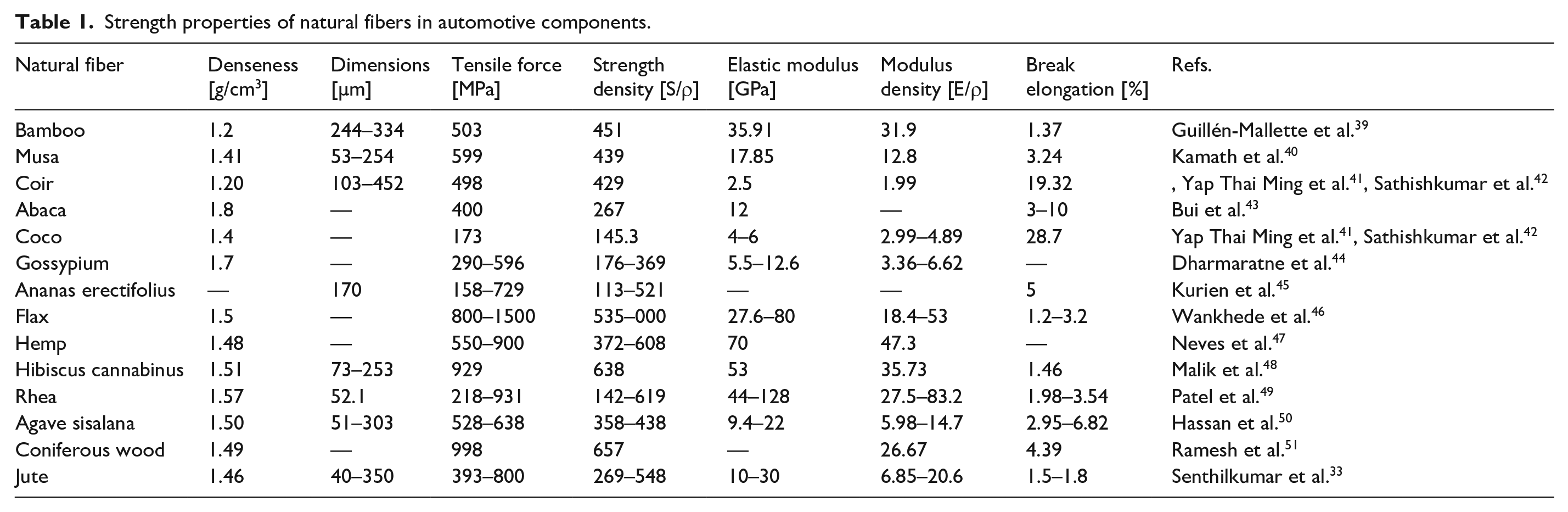
The automotive sector utilizes a growing number of natural fibers because of their cost-effectiveness, sustainability, and good engineering properties. Table 1 lists the mechanical specifications of typical organic fibers that are pertinent for automotive use. The use of natural fiber reinforcements in place of man-made materials in composites is growing in popularity among automobiles and component vendors as a sustainable alternative. Although natural fiber composites (NFCs) initially limited to unstructured parts, the idea of employing NFCs in more structural and exterior portions is gaining traction quickly due to ongoing, continuing studies. Many natural fibers used in automobiles are vegetable fibers because of their excellent characteristics as well as their substantial amounts of acoustic and thermal insulation. The automobile industry has enormous possibilities for natural fiber-based composites because of growing need of sustainable development and low-mass components. Based on research, using natural fiber composites can help reduce a vehicle part’s weight and expense by 30% and 20%, respectively. Henry Ford incorporated hemp fiber for fabricating pioneering composites of auto parts in the 1940s. Further uses of hemp, a natural fiber, were carried out by East German Trabant’s body, Daimler-Benz, and Mercedes in 1950, 1994, and 1996, respectively. For example, the European automobile industry primarily employs linseed and hempen, conversely sisal, hessian, and hibiscus cannabinus are brought in primarily from Bangladesh, the Republic of Brazil, and the US, and Philippines bananas. Flax fiber has been a particularly significant renewable resource used by the German automotive industry. 12
Strength properties of natural fibers in automotive components.
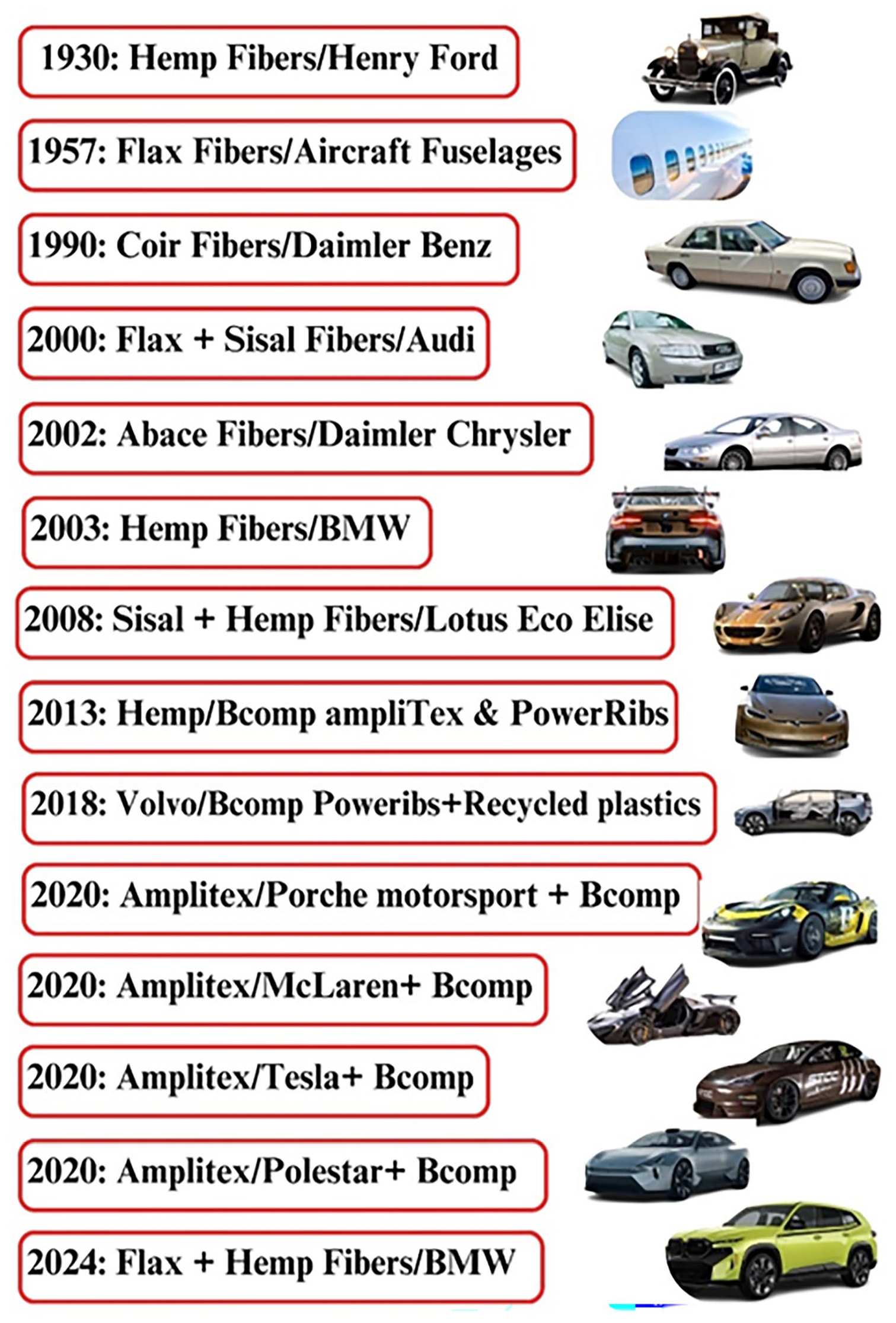
The trajectory of organic/natural fibers employed in the automobile sector is shown in Figure 2.
Automobiles based on natural fibers have acceptable mechanical features and address non-biodegradability and greenhouse gas emissions. The automotive and insulation industries are where composites manufactured from natural fibers are most commonly used. Figure 3 shows the composite fiber revenue by applications. As a result, replacing all the synthetic composites in automobiles with natural fiber posed an additional issue. Therefore, at first, natural fiber-reinforced composites were only utilized for the fabrication of structurally devoid elements like panels, parcel shelves, spare tire covers, wood trims, headliners, and seat fillers. They were also restricted to interior parts.

Thermal properties of different natural fibers relevant to automotive components
Thermal characteristics are important when utilizing natural fibers in automotive applications because they influence how the material behaves at different temperatures, which in turn affects durability, efficiency, and reliability. Organic fibers have worse heat stability than matrix. 58 Lignin, cellulose, and hemicellulose are the primary components of organic fibers. 59 A total of four stages of natural fiber’s thermal energy disintegration. In the initial phase, water that does not bond chemically to the fiber loses water and low-molecular-weight components break down between 50°C and 150°C. The subsequent phase, occurring within the temperature range of 200°C–350°C, involves the breakdown of hemicellulose. 60 Cellulose decomposition is linked to the third phase, which usually occurs between 320°C and 400°C. On the other hand, the breakdown of lignin is connected to the last phase, which may occur at temperatures between 100°C and 900°C. 61 Despite this, based on an analysis of the literature, it is possible to determine that the hydrogen bonds barely affect the fiber and polymer adherence. Primary constituents of renewable materials, cellulose, hemicellulose together with lignin, have macromolecular structures that prevent convergence between the groups with polarity during treatment. As a result, inadequate adhesion qualities of the composite, fiber pull-out, and issues with fiber dispersion were brought on by the integration of the matrix and the fiber.62,63 To get over these constraints, considerable chemical processing was performed. The purpose of top layer of material modification was to improve material adherence to the polymer. Compatible substances can be added, or the fiber can be chemically treated to change the polymer structure in conjunction with surface treatment. Poor thermal properties are another concern with utilizing natural fibers in composite materials. Natural fiber processing temperatures vary to the maximum of 200°C. Composites heat tolerance is more significantly impacted by chemical treatment during fiber mixing with biodegradable polymers. 64 Table 2 shows how material modification affects various aspects of the heat performance of the biocomposite.
Treated natural fibers thermal properties for biocomposites.

Various natural materials have organic biopolymers, mostly composed of polysaccharides and proteins, including chitin, collagen, silk, and cellulose. Meanwhile, derived from petroleum-manufactured biopolymers including polycaprolactone (PCL) and polyvinyl alcohol (PVA) and biomass-based PLA are examples to illustrate. A renewed interest in producing composites from naturally occurring biopolymers has emerged in the past few years. The impact of natural fiber and biopolymer thermal behavior on composites’ thermal decomposition has been thoroughly studied by scientists. The most widely researched biopolymers for producing panel materials for composite applications include starch, PLA, PVA, and PCL. Composites called hybrids are produced by introducing two or more natural fibers to decrease the retention of moisture, increase mechanical characteristics, and improve thermal characteristics. Composites thermal tolerance for materials reinforcement have been demonstrated to be improved by hybridization in numerous papers.76,77 Table 3 displays a few of the results pertaining to the properties of hybrid biocomposites composed of processed organic fiber strengthened by biomass matrix.
Composite materials made from biopolymers and natural fibers.

A large number of fibers induction led to an enhancement in thermal properties in thermoplastic starch-based hybrid composites including date palm, flax, cornhusk, sugar palm, seaweed, kenaf, coir, sisal, aloevera, and banana fibers. The natural fibers’ cellulose content is more thermally stable than its starch content. By adding more natural fibers, TPS-based composites’ temperature adaptability is increased, suggesting superior fiber-to-TPS matrix adherence for prospective use in automobiles. By thoroughly evaluating thermal properties, manufacturers can ensure that the natural fibers will perform reliably under the demanding conditions typical of automotive environments, ultimately contributing to safer, more efficient, and sustainable vehicle components. 91
Automotive parts using natural fibers
The transportation industry is using a greater number of natural fibers because of their cost, sustainability, and lightweight. Some of the most common products are doors sheets, seats support headliners, cargo freighters, as well as other interior decorative elements. These fibers have several advantages, including a lower overall environmental impact on the automobile, increased performance from less weight, and possibly even lower production costs. One of the most important steps in designing automobiles that are more efficient and ecological is the incorporation of natural fibers. For instance, it has been shown that composites based on manmade fibers of glass may meet the dimensional and reliability requirements of vehicle both inside and outside parts. Excellent strength features promoted the automotive industry’s adoption of fiber-glass-built-up polymers. On the other hand, glass-fiber-based plastics exhibit drawbacks such as relatively dense fibers, difficulty within the manufacturing process, awful reuse qualities in addition with medical issues associated using such materials. In response to government requirements, the automotive industry is focusing on the ecological effects of an auto entirety span. More sectors utilizing renewable resources are seeing an increase in their use as well, including construction, aerospace, and marine. German automakers usually utilize natural fibers with polymer bases to build parts for doors, seats, shelves, and dampening and wrapping pieces, among other components. For its interior components, Toyota makes use of composites derived from sugar cane. DaimlerChrysler is part of an innovative technology transfer program that uses green materials to promote sustainability. To promote global sustainability, the company concentrated on using natural resources rather than fossil fuels. In particular, it created a supply network for automobiles centered on renewable resources, which will help producers develop raw materials for the vehicle industry. According to a different study, natural fibers are used in railroads to create berths, dividers, floor and ceiling panels, and modular restrooms. Various natural fibers with different polymers are used by industries like Mercedes-Benz, Ford, Toyota, Volkswagen, General Motors, BMW, Mitsubishi, Fiat, Volvo, Citroen, Honda, and Mazda to fabricate different components such as dashboards, acoustic insulation, ceiling liner, cargo area floor, sliding door inserts, door panels, parcel shelves, engine encapsulations, spare tire wheel cover, luggage compartment, and rear flap lining.58,92–96 Table 4 lists the kinds of fibers which are frequently used to make various parts for automotive manufacturing.

Composites made of natural fibers exhibited ductile crash behavior without abrupt fracturing. Natural fibers replaced carbon fibers, cutting the carbon footprint by 75% and improving the finished products’ sustainability at a 30% cost savings.
The raw materials used in certain transport industries are shown in Figure 4. Automotive composites market is projected to expand as the demand for lightweight materials, fuel efficiency, and compliance with global emissions regulations drive the increased use of composites in passenger vehicles. A recent study estimated the market’s value at $9.5 billion by the end of 2022, with expectations to reach $16.5 billion by 2030, indicating a 7% annual compound growth rate (CAGR) for the duration of the plan.57,100,101

Matrix materials for natural fibers-based biocomposites
Organisms that are plant-based substances and animals are examples of sustainable natural resources from which biobased matrix materials or polymers are generated. These polymers bond the reinforcing fibers, which are usually renewable resources, and distribute loads throughout the composite to act as the continuous component in material composites. These matrices ensure structural integrity through binding, load transfer, protection, and shaping. Materials including linseed, cannabis sativa, hessian, and kenaf commonly utilized fibers along with biobased matrix materials because of their favorable technical qualities and advantages for ecology. Compatibility between biobased matrices and natural fibers is crucial for effective composite performance. Green resins are made from polylactic acid (PLA), polyhydroxyalkanoates (PHA), and epoxy obtained from plant oils. Bioplastic thermoplastics include starch-derived plastics, cellulose-based materials, polylactic acid (PLA), and polytrimethylene terephthalate (PTT). Biobased matrix materials and polymers provide a long-term substitute for conventional petrochemical-based composites. Their compatibility with natural fibers preferred them suitable for situations involving reducing weight in automobiles, fuel efficiency in addition with decreased ecological impact were top concerns.57,100,101 On the contrary, it is possible to order recyclable polymers based on where they came from, manufacturing process, or attributes. Classifications of the various biodegradable polymers are given in Figure 5.

Polysaccharides
The most common polymers in nature, polysaccharides (glycans), also called carbohydrates, are vital for the survival of living things. Polysaccharides are naturally occurring compounds with a special mixture that includes environmentally beneficial characteristics and utility. These substances are recyclable, biodegradable, and environmentally friendly. Prominent polysaccharides including amylum, polypeptides, cellulose, N-acetylglucosamine polymer, xanthan polysaccharide, hydrolyzed starch, cellulose, and seaweed extract can be found with their common names. 109
Amylum
Starch represents one of the most intriguing organic polymers owing to their simple accessibility, affordable price (between 0.25 and 0.6 USD/kg), polymeric structure, and ability to be recycled, sustainable, and reversible. Unfortunately, these materials still have fragility, significant moisture sensitivity, poor mechanical characteristics, processing difficulties, and other issues that keep them inappropriate for use in certain industrial applications. 110
Proteins
Renewable resources and important macromolecules in biological systems are the basis for protein extraction. Alpha-amino acid chains naturally occur in proteins, which are expanded via the synthesis of amide bonds. Due to their significantly lower breakdown temperature compared to other organic polymers, they are not as commonly used in mixtures. There are two types of proteins: plant-derived (from potatoes, triticum, maize grain, glycine max, as well as peas) and animal-derived (from milk protein, lactoserum, keratin, connective tissue protein along with gelatin protein). Soy protein is appealing due to its biodegradable nature, environmental friendliness, abundance of naturally occurring resources, and desirable functional qualities for industrial use.111,112
Natural materials
Poly (hydroxyalkanoate) (PHA)
A variety of fossil fuels, renewable resources, chemicals, and carbon dioxide may be combined to make PHA. PHA is biodegradable and inherently biocompatible, this polymer attracted numerous opportunities to explore. Numerous research on fabrication for bacterial PHAs have been reported; still, the costs associated with producing these polymers were significantly higher than those of traditional petrochemical-based plastics. Considering the shift to sustainable materials, evaluating the environmental problems associated with traditional plastics requires utilizing PHAs in conjunction with natural fibers and fillers. PHA’s reputation for biodegradability and biocompatibility has led to its widespread application in waste management, biomedical engineering, automotive, and packing. 3
Biodegradable synthetic polymers
Lactic acid-based polymer
Lactic acid polymer, a widely researched and used compostable thermoplastic polyester, offers a chance to replace conventional polymers made from fossil fuels. PLA is a polyamide with outstanding processability that is reusable, compostable, bioabsorbable, and regenerative (made from sugar from potatoes, corn, and beets). PLA finds extensive application across various sectors including wrapping materials, textiles, healthcare sectors, fibers, personal products along with the automobile sectors. 113
Natural fibers compatibility with various matrix materials
Natural fiber is categorized according to where it comes from plants, animals, or minerals. Botanical fibers are structural polysaccharide, whereas protein-based materials such as keratin, sheep fibers, and sericin. Botanical based fibers include cereal straw, sclerenchyma fiber, pericarp, hard-plant fiber, and lignocellulosic fibers.
The fundamental constituent of all fibers made from lignin is structural polysaccharide. The linear macromolecule known as cellulose is composed of β-1,4-glycosidic bonds in link with β-D-glucose at the C1 and C4 positions, leading to a linear polymer structure. Microfibrils, which have transparent and non-transparent regions and are 2.9–5.1 nm in thickness are created when structural polysaccharides chains aggregate. It is insoluble in water yet resistant to hydrolysis due to its compact, exceptionally clear structure, parallel, solid supramolecular fiber with a high breaking force, and restricted entry. A refractory compact structure is formed by microfibrils, which are held together via the oxygen atoms on a single strand or a nearby strand forming a hydrogen link to the hydroxyl groups that compose of those of glucose on that strand. Hemicellulose, the next fastest-growing organism on globe following a substance called structural polysaccharides was thought to contain 2.7 times more moisture that of lignified fibers. Hemicellulose has a complicated structure than cellulose, which is mostly composed of 1,4-β-D-Glucopyranose connections. Trans-4-hydroxy-3-methoxycinnamyl alcohol, trans-4-hydroxy-3,5-dimethoxycinnamyl alcohol, and trans-4-hydroxycinnamyl alcohol are the three main precursors that commence the dehydrogenative polymerization that results in lignin, which is classified as a polymeric natural product. In addition to binding the natural fibers into bundles and influencing their luster and feel, pectin is a crucial component of natural fibers. Plant tissue contains pectins to varied degrees; fruit peel and gum are the main places to find them. There are 2.9%–3.9% peptides in raw linseed. The distinct microstructure along with the minimal dense value of cellulose are primarily responsible for these favorable physical and structural characteristics. Worldwide, plant fibers have a particular tensile force of 1598–2940 MPa and an individual elasticity of 11–128 GPa. Modulus of elasticity for hemicelluloses estimated to be 8 GPa, whereas that of cellulose is approximately 140 GPa. Humidity ratio affects the two values. Moreover, it is well known that lignified fiber acts in the role of compatibilizer amongst both types of cellulose, strengthening the structure of fiber.114–116 The geometrical arrangement in the primary elements of the fiber cell membrane is shown in Figure 6.

Considering that fiber’s hydrophilic character sometimes causes it to cling easily to matrix polymers. Several approaches to outer layer modification have been tried to resolve this problem. These changes not only make them more wettable with the polymer matrix but also less absorb moisture, occasionally resulting in special qualities and processing simplicity. Surface modification usually involves one of four approaches: procedure based on chemical (alkali treatment, acetylation, silane coupling, etc.); mechanical treatments (irradiation, plasma activation, steam shock); physicochemical processes (solvent removal); and processes based on mechanics (forging, rolling), which have been tried by numerous researchers.119,120
The inclusion of natural fibers such as poly(1,4-dioxan-2-one) fiber/polylactide composites increased the shear strength at the interface between PLA and plasma-processed PPDO material relative to the untreated condition. The increase in strength was caused by an induced polar functional group. The outer layers of PPDO strand produced oxygen-based functions as a result of the plasma of oxygen processing. Hydroxyl along with carboxyl groups can produce main covalently and subsequent bonds of hydrogen on the PPDO fiber interface with hydrogen in the PLA matrix, which would enhance interface adherence. Considering optimal circumstances, including medium power level, medium chamber pressure, and plasma treatment duration, it has been found that the shear strength of sisal/PP composites was greater for air plasma-treated fibers (3.1 MPa) than for argon plasma-treated fibers (2.6 MPa).
Figure 7 comparison reveals that sisal fiber treated with Ar-plasma exposure for half a minute has more profound curves than its unmodified version, likely because of engraving effect its Ar-plasma’s interface over the strand. The modified fibers show some granules, and the grooves are notably deeper compared to the untreated surface. Additionally, air plasma-treated fibers display prominent cracks on the surface. These cracks increase the interface area, potentially enhancing the bonding among air plasma-modified material and PP, thereby improving the interfacial shear strength. 121
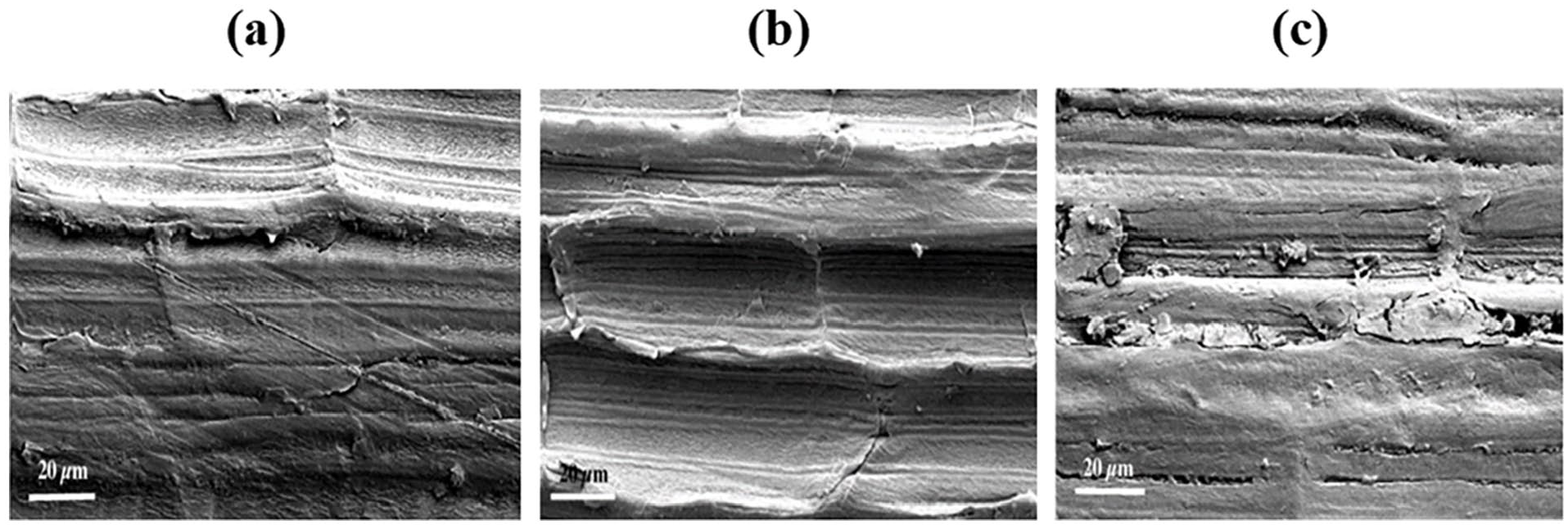
Scanning electron microscope photos of sisal fibers that has been: (a) unmodified, (b) Argon plasma-processed, and (c) atmospheric plasma-processed. 121
Jute material processing has produced results that are comparable, and biocomposites showed increased performance. The miscanthus fiber experienced a corona discharge, and they noticed that the chemical oxidation and physical etching increased miscanthus/poly (lactic acid) and miscanthus/polypropylene laminates physical characteristics. 122 Researchers examined at how sugarcane cellulose processed with alkali affected the strength and stiffness of polyamide composite materials strengthened with bagasse.123,124 The best characteristics were shown by the biocomposites formed from 1% alkali-modified sugarcane throughout all of the levels of sodium hydroxide evaluated. The best adhesive for organic fiber surfaces was found to be silane. Heat, pH, silane organofunctionalization, and hydrolysis duration are some of the variables that affect its absorption. Silane experiences the phases of breakdown, water retention, and bonds forming during treatment. Post-hydrolysis, silanol groups react with hydroxylated cellulose together with matrix functional groups (Si-matrix). Silane modification enhances the fiber’s water absorption capacity, thereby improving its reactivity with the matrix of polymers chemically. Figure 8 displays the outer alteration of organic fibers together with a schematic illustration of it.

Diagrammatic illustration of naturally occurring fiber surface modification. 125
For instance, outer layer modification jute materials with a base, chameleon minerals, hydrogen peroxide, and siloxane procedures can improve the bonding of jute and PLA composites. Using specialized prepreg fabrication method combined with these surface treatments resulted in at least a 45% improvement in modulus of elasticity and bending modulus. 126 The effects of silane methods on non-woven hibiscus cannabinus/poly (lactic acid) composites and the simultaneous impact of siloxane and alkaline treatments on boehmeria nivea fiber/ poly (lactic acid) composites were investigated by further researchers. Researchers observed notable improvements in their mechanical characteristics throughout, with the best outcomes coming from the combination of siloxane along with alkaline procedures. 127 Acetylation modification, an esterification method, used to plasticize natural fibers. In this process, acetyl groups (−CH3COO) react to the fiber’s hydrophilic hydroxyl molecules, eliminating any water that may already be present. This reaction reduces the fiber’s hydrophilicity, enhancing dimensional stability and improving fiber dispersion in polymer composites. After acetyl the fibers’ ability to absorb water is greatly decreased because acetyl bonds are substituted for hydroxyl chains, making them more resistant to water absorption. C7H5ClO is used in benzoylation to cure natural fibers. By interacting with the hydroxyl chains within the cellulose, the benzoyl (C6H5CO) molecule decreases the water-loving property of the cellulose fibers. Among various strategies for developing effective coupling agents, adding MHA grafted compatibilizer agents provides strong bond with the external layer of the fiber matrix. Maleic units connect physically with the hydroxyl molecules on the material’s interface through bonds of hydrogen and covalently through precipitation processes. Natural substances like fungus and protease can be used as a substitute for chemical and physical approaches. Among the many benefits of biological alterations are the ability to remove hydrophilic gelatin and hemicellulosic components with a lower energy expenditure. The efficiency of the composites is improved by this association, which increases the bonding among the fiber and the matrix. 128
Manufacturing techniques
Natural fiber-reinforced biocomposites are typically produced using methods like those for synthetic fiber composites. Common processing techniques for natural fiber-reinforced biocomposites include hand lay-up, extrusion, mold injection process, high pressure press/compression molding, resin transfer molding (RTM), and vacuum-assisted resin infusion (VARTM)129,130 as shown in Figure 9. The physical characteristics possessed by natural fiber-reinforced composite materials are determined by several elements, including distribution, dimension ratio, layout, and mild temperatures (under 200°C), which are all significantly influenced by the processing methods and suitable parameters. Thus, design as well as manufacturing engineers would primarily focus on several criteria, such as the preferred characteristics, find an appropriate procedure to create organic fiber-reinforced biocomposites by taking into account the dimensions and form of the final composites, their rate of production, the characteristics of raw materials, and the expense related to production equipment.
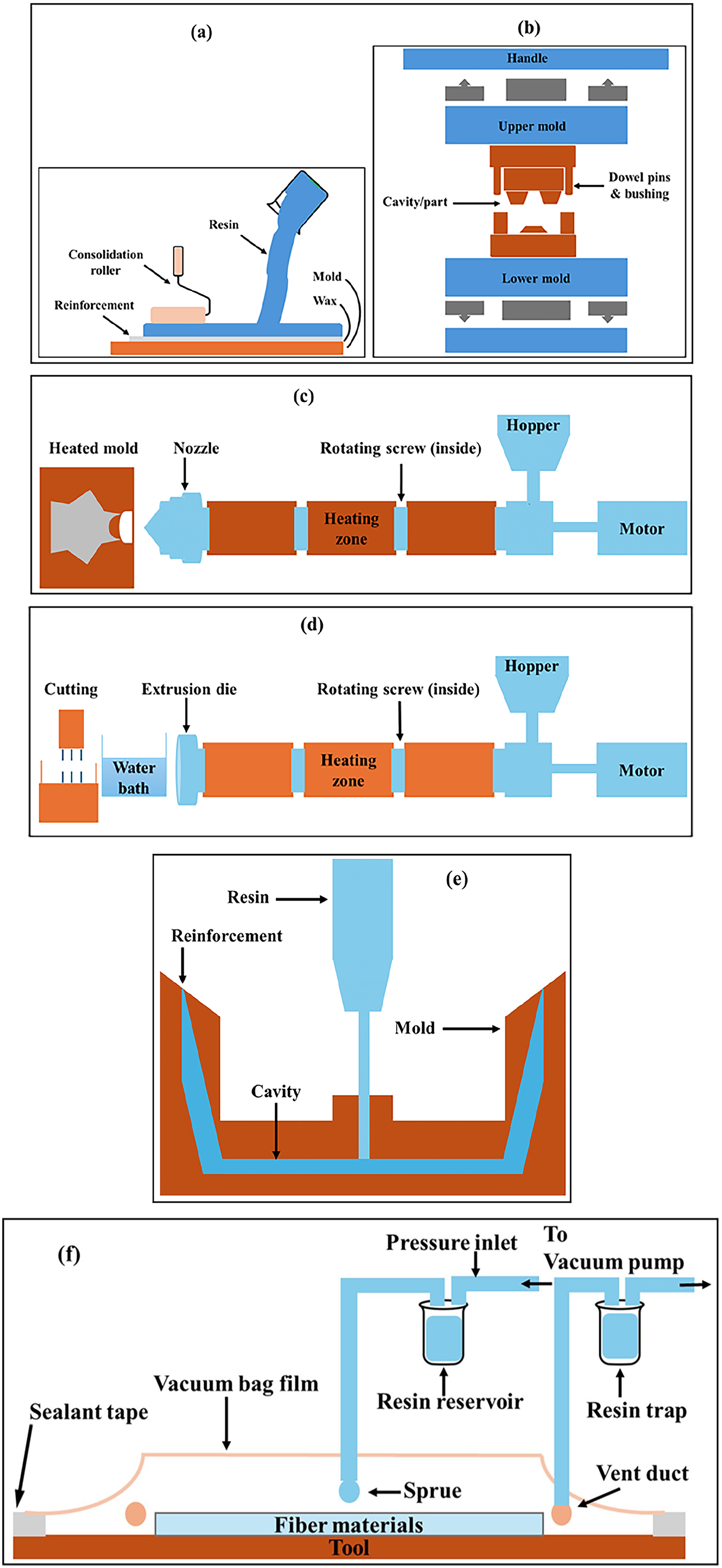
Fabrication techniques for biocomposites: (a) hand lay-up, (b) compression molding, (c) injection molding, (d) extrusion molding, (e) resin transfer molding (RTM), and (f) vacuum-assisted resin transfer molding (VARTM).
Many scientists investigated the possibilities utilizing renewable resources as strengthening materials for reusable matrices in injection-molded fabrication. With mold injection, intricate geometric components with functional aspects can be quickly and large-scale fabricated. Compared to compression molding, there are several benefits (low warping and loss of volume, economies of scale, and high function integration). Automotive components can be produced via compression molding, which can also be used to make components at high manufacturing rates. Although it is a relatively new field of study for natural fiber, one common process used in the production of manmade fiber is pultrusion together with a great promise for usage with both natural fiber and biodegradable polymers. Recent research has reported on the pultrusion of various matrices and natural fiber. The profiles showed certain characteristics like glass composites with fiber reinforcement, depending on natural material type usage. Fabrication of composite materials by compression molding non-wovens or mats have the highest values of stiffness and tensile strength. Figure 10 displays an analogous graph of the tensile force versus fiber volume proportion for various composites production methods. The end characteristics of a component in terms of stiffness, structural integrity, and impact toughness are influenced by the length of the fibers within a reinforced polymer matrix. Regarding possible uses in the automobile sector, natural fiber-reinforced biocomposites are therefore suitable options.54,131,132

An analogous relationship between fiber proportion by volume and tensile strength for various composite manufacturing methods.
Possibilities and limitations in manufacturing composites enhanced with natural fibers
Biocomposites, or natural fiber reinforced composites, processing offers several opportunities as well as challenges. The inherent variety of natural fiber characteristics poses a significant problem as it can impact the final composite material’s performance and uniformity. Moisture absorption by natural fibers can cause problems with dimensional stability and gradual degradation. Additionally, the chemical reaction among cellulose fibers and the polymer is usually weaker in contrast to manmade fiber composite materials, requiring chemistry of outer layer treatments or a use of binding substances to increase adhesion. Biocomposite processing methods also need to be optimized to balance composite performance and fiber integrity because processing procedures can harm renewable sources and composites. Biocomposites fabrication is always complicated by the low stability of biobased raw materials because these procedures are designed for synthetic materials. Therefore, enhancing the properties as well as materials processability, pretreatment/modification of raw materials becomes an essential component of the fabrication of biocomposite using traditional fabrication techniques. Optimizing water-holding capacity, temperature stability, fiber allocation, material class, quantity, and manufacturing are crucial in biocomposites to achieve desirable properties. Figure 11 represents the specified temperature at which the components of the biofibers break apart. Hemicellulose degradation is the first step in the breakdown of biofibers. Another crucial problem in the production of biocomposites is the fibers splitting throughout the production phase. Fabrication method taken into consideration primarily determines the degree of fiber damage. Furthermore, variables including fiber entangling, length, temperature, pressure, shear rates, and collisions between fibers and mold, among others, also affect the breaking of fibers. Moisture infiltration increases with a larger fiber volume fraction. Furthermore, ductility is changeable. In composites, the fiber dimension is also very important. Inadequate reinforcing dispersion in biocomposite leads to weak or fiber-rich (cracking-prone) regions.

The specified temperature at which the components of the biofibers break apart.
Process variables, fiber sizes, fiber orientation, and both chemical and physical treatments (such as bonding agents, treatment with alkali, etc.) can all affect the arrangement of the fibers in the composites. Composite materials components are assembled through machining procedures. Because of their complicated microstructure, biocomposites require substantially more intricate machining as compared to manmade fibers. When damage like peel-up, debonding, or matrix cracking occurs, machining has a significant impact on the material’s mechanical performance degradation. Biocomposite laminates are made of several plies, which can cause delamination. Wear on the tool assembly and the materials’ abrasiveness are challenges while machining biocomposites. It is also crucial to consider the material behavior when machining composites because the material will vary during the machining process. The aforementioned techniques for fabrication have experienced significant development and have demonstrated efficacy in producing biocomposites that exhibit favorable attributes and quality. To create high-performance composites with a range of innovative uses, a great deal of research is required.133–135
Considering natural fibers are better for the environment, there are still many advantages to using them, regardless of these difficulties. Renewable sources-based fibers are typically environmentally friendly, renewable, and biodegradable. Additionally, they have desirable characteristics like stiffness, high specific strength, as well as minimal density this qualifies them for low-mass purposes. Improvements in surface treatments, chemical treatments, and hybrid composite formulations are improving biocomposites performance and reliability. Moreover, renewable matrices fabrication to combine with organic fibers to create composite systems that are completely sustainable is gaining momentum. The automotive sector is investigating the application of biocomposites for lightweight structural elements and body panels, influenced by the need for more environmentally friendly and fuel-efficient automobiles. The matter of biodegradable composites has the ability to overcome existing constraints and increase its applications with more study and innovation.119,136
The biocomposites mechanical specifications
Important issues with biocomposites are their mechanical characteristics, which mostly rely on the connection between the material and polymer, polymer matrix, as well as reinforcing properties. To fully utilize biocomposites, one must be acquainted with their features and characterization methodologies. Table 5 displays the mechanical characteristics of several different biocomposites.
Mechanical characteristics of several different biocomposites (Reproduced from Ref. 137 with permission from Elsevier, license number: 5174100515962).

Many biomechanical parameters, including tensile force and modulus of elasticity along with bending force, stiffness of extensibility, strength at compression, as well as extension must be determined to assess the mechanical performance of biocomposite materials. On the other hand, manmade fibers offer extensive results in terms of strength characteristics than the biodegradable based materials. Furthermore, the strength properties of biofiber-based materials might be enhanced through modifying the outer layer chemistry or making other chemical changes.
Starc based composites
A variety of reinforcing natural fibers, such as carnauba, timber and coniferous woods, fibroin, araucaria cellulose husk, Phoenix dactylifera and linseed, and recycled paper fiber, are combined using starch-based monomers to increase the polymeric materials’ elasticity or impact on durability and reduce their dependence on water. For instance, a matrix made of plasticized cassava starch and cellulose nanofibrils derived from cassava waste combine to serve strengthening elements. The final performance of the material is characterized due to plasticizer’s bonding along with the availability of residual sugars. The transcrystallization of starch chains surrounding the surface of the nanofibrils is likely the reason why the glycerol/sorbitol mixture prevents stress transfer within polymer adhesion. Another starch composite made of raw wood hemp core as a reinforcement stated the improved strength traits. Rise in SPF (fibers from sugar palm), the biocomposites’ tensile strength and modulus exhibited a rising trend, whereas the percentage of extension dropped from 7.99% to 3.27% after SPF was given. The following resulted from the remarkable intrinsic binding of sugar palm starch (SPS) and cellulose fibers at the material-polymer contact. Thermoplastic starch (TPS’s) force of tension and elasticity value expanded up 260% when fiber from salvaged newspapers was used as a reinforcing material. Moreover, the addition of silk fiber was shown to considerably improve the thermoplastic rice starch (TPRS)/silk biocomposites elasticity as well as greatest force value. These illustrations highlight the possibility for renewable reinforcing to improve the strength inherent in biocomposites based on starch.138,139
Poly (hydroxy alkanoates) (PHA) based composites
PHA adheres to lingo-cellulose fiber more readily than traditional polyolefins, so its polar feature makes it suitable for biocomposite applications with improved mechanical properties. At a volume percentage of 20%, hemp/biomer 226 samples exhibit the maximum tensile strength (21.4 MPa), modulus (2.4 GPa), and elongation (4.20%). Incorporating hemp fiber enhanced modulus, but decreased force value together with extension compared to typical matrix. Modulus of bending and tension reached 3.64 GPa as well as 44.3 MPa, each, at 19.5% content percentage. In wood fiber-biopol composites, process temperature significantly affects tensile strength, ranging 22.7 MPa at 217°C to 16.7 MPa at 238.6°C. Considering uniform heat, the modulus number ranged between 2.84 and 2.13 GPa. The integration of PHA with diverse renewable sources materials like cannabis sativa, wood, linseed, jute along with agave offers promising route to develop high-performance, eco-friendly biocomposites. These materials meet the rising need for environmentally friendly resources across a range of industries by having improved strength and lowering their environmental impact.112,138
Poly(lactide) based composites
Research demonstrated that adding more cellulose fiber reinforcements to PLA-based composites enhanced their tensile and flexural properties. Table 6 highlights several biocomposite systems produced with PLA as the matrix using different approaches. 140
Mechanical properties for various lactide polymer composites.

The essential function that weaves patterns or weave designs serve in composites made with fibers. As an illustration, hemp/PLA composite with a twill structure fabric as reinforcement showed 15% and 10% greater impact and tensile characteristics, respectively, than the plain weave. The fabricated hemp fabric composites’ coefficient of thermal expansion significantly decreased (between 69.4 × 10⁻⁶ m/°C and ×106− m/°C) when the material’s percentage by volume increased from 5.98% to 19.7%. This suggests in which the materials possess a lot of prospects in components that are used in the automotive and aerospace industries and are exposed to a broad spectrum of heats. Similarly, jute fibers, when combined with PLA, result in composites with notable improvements in strength values. Jute/PLA blends exhibit enhanced reliability and offer environmental advantages, rendering them appropriate for application in diverse sectors such as construction, transportation, and packaging, where mechanical robustness and sustainability are crucial attributes. 152
Performance comparison for biocomposites with traditional materials commonly used in automotive applications
When comparing biocomposites to traditional materials commonly used in automotive applications, several performance aspects need to be considered. These include mechanical properties, environmental impact, cost, and processability.
Mechanical properties
Traditional materials like steel and aluminum typically have higher tensile strength and stiffness compared to biocomposites. For instance, steel’s tensile strength can reach up to 400 MPa, whereas biocomposites such as hemp/PLA typically show lower values around 30–50 MPa. However, some biocomposites like hemp/PLA or jute/PLA show improved tensile force value as well as modulus of elasticity, thus becoming appropriate for certain non-structural automobile uses. Metals generally exhibit better impact resistance than biocomposites. However, biocomposites reinforced with natural fibers like hemp or flax can have enhanced impact properties compared to pure polymer matrices. Biocomposites are lighter than traditional materials. For example, biocomposites can weigh up to 30%–40% less than steel, which is beneficial for reducing the overall vehicle weight and improving fuel efficiency. 153
Environmental impact
Sustainable biocomposites derived from natural sources, making them environmentally friendly compared to metals and conventional composites. Materials like PLA contribute to lower carbon footprints. Comparing biocomposites to traditional materials, which would need energy-intensive recycling processes, might help reduce waste and detrimental impacts because they are made either reusable or disposable.
Cost
The raw materials for biocomposites can be more expensive than traditional materials due to the processing required for natural fibers and biopolymers. However, as production scales up and technology advances, costs are expected to decrease. Biocomposites may require different processing techniques and equipment, which could lead to higher initial manufacturing costs. However, the lightweight nature of biocomposites can lead to cost savings in the long run, particularly in transportation and fuel efficiency.
Processability
Metals are well understood and have established processes for forming and shaping. Biocomposites may require specialized processing methods, such as specific temperature and pressure controls to ensure proper fiber-matrix bonding. Biocomposites are capable of being customized for particular uses by changing the kind and quantity of organic fibers which are incorporated into them. This flexibility may result in the fabrication of raw materials with attributes that are suitable for use in automobile parts.154,155
Concept of lightweight in automotive
Lightweight innovation is essential for achieving energy savings, enhancing vehicle performance and safety, and adding comfort for passengers. Increasing the cruising range of electric or hybrid vehicles is particularly significant. Despite this, lighter components require less energy since they employ less mass, which lowers their inherent main energy requirement. For this, whether in the past or the future, lightweight has always been an important idea and trend in the automotive industry. Moreover, to minimize pollutant emissions from vehicles during production, it’s essential to use non-toxic materials and adopt low-emission processes. This approach is crucial for achieving eco-friendly outcomes. 156
Environmental and economic consideration of biocomposites
Biocomposites present significant environmental and economic advantages compared to traditional materials. Biocomposites are environmentally friendly since they are made from sustainable materials, which minimizes reliance on petroleum and coal and carbon footprints. They are often biodegradable or compostable, aiding in waste reduction and mitigating environmental pollution at the end of their lifecycle. Biocomposites also tend to have lower embodied energy, meaning the energy required for their production is less than that of conventional composites and metals. Economically, while the initial cost of raw materials for biocomposites might be higher, advancements in production technology and economies of scale are expected to bring these costs down. Furthermore, biocomposites can lead to long-term savings through their lightweight nature, which improves fuel efficiency and reduces transportation costs. Additionally, the agricultural sector benefits economically from the demand for natural fibers, creating new markets and job opportunities. The adaptability and customization of biocomposites also enable tailored applications, potentially lowering costs associated with over-engineering materials for specific uses. Overall, biocomposites offer a green and affordable substitute for conventional materials, with both environmental as well as economic benefits driving their adoption in various industries. 102 A sustainable advantage of biocomposite recycling in a circular economy is shown in Figure 12.

Sustainable advantages of biocomposite recycling in a circular economy. 102
Future of biocomposites
The primary sectors for biocomposites are the transportation in addition to building industries, that we have investigated in our research so far. Although biocomposites are gaining popularity, it is still difficult to substitute traditional polymer composites with materials that provide equivalent engineering and practical stability throughout use, preservation, and disposal without damaging the surroundings. As a result, it is anticipated that the demand for and adoption of material composites would expand due to rising buyer and manufacturer knowledge about sustainability and social problems, the discovery of new uses, and improvements in manufacturing methods. A significant barrier to the commercialization of biocomposites reinforced with organic fibers was the underappreciation of scientific inquiry in countries with poor infrastructure where these fibers are abundant. However developed countries have mostly surmounted this challenge, especially those in Europe, which have emerged as leaders in this field in recent years. Nevertheless, despite the attraction of recyclable and renewable matrices and reinforcements, scientists studying materials need to address issues pertaining to implementing parameters for biocomposites, concentrating on affordability and efficiency. Furthermore, regulatory requirements are needed to verify these materials’ functionality. Composites made from bio used for constructive applications have to go with rules for handling substantial amounts of recyclables. It is projected that the subsequent batches of biological composites will be used for a variety of purposes, such as long-term interior applications and consumer goods that are mass produced for immediate usage. Composites are particularly susceptible to humidity and temperature, and even while they are renewable and potentially completely biodegradable, they may be more expensive if they are made entirely of organic substances and decompose. Using an appropriate polymer could make composites 100% biodegradable, though controlling their biodegradation remains challenging. While composites have some benefits, their functionalities vary greatly from one another. The development of more sophisticated methods of handling natural fibers and fabricating composites will help to mitigate their limitations.157–160
Conclusion
In conclusion, the development of biocomposites especially those made of natural fibers and biodegradable polymers has accelerated due to the greater requirement for ecologically sound and renewable resources. These materials offer significant advantages in a variety of contexts, particularly in the automobile sector, where their mechanical and thermal properties provide a viable alternative to traditional materials. Considering their compostability, they are possible a useful solution to the trash management problem related to polymer-based substances. Identifying the extraction of raw materials, sustainable development, application of biocomposites’ interfacial qualities, to achieve the objective, secure longevity of service in the proposed application, design of products, and fabrication of materials and manufacture will all become essential. Biocomposites have the ability to decrease the footprint while upholding benchmarks for performance, despite difficulties with processing along with standardization. Future advancements in material science and manufacturing techniques are expected to further enhance the viability and adoption of biocomposites, positioning them as a key component in the next generation of automotive.
Footnotes
CRediT authorship contribution statement
Sultan Ullah: Conceptualization, Literature, Data collection, Writing – original draft preparation, and Visualization. Zeenat Akhter: Visualization & editing. Arvydas Palevicius: Supervision, review & editing. Giedrius Janusas: Conceptualization, Resources, Supervision & Idea.
Data availability statement
The authors confirm that the data supporting the findings of this study are available within the article.
Declaration of conflicting interests
The author(s) declared no potential conflicts of interest with respect to the research, authorship, and/or publication of this article.
Funding
The author(s) received no financial support for the research, authorship, and/or publication of this article.
Ethics approval statement
Not applicable.
Patient consent statement
Not applicable.
Clinical trial registration
Not applicable.
