



Abstract
This work presents a new compound to improve thermal comfort and decrease energy usage. The compound is composed of palm fiber, clay, and sand. The purpose of the paper is to assess the impact of combining sustainable and bio-sourced materials into bricks as heat-insulating materials, in addition to embedding the use of biocomposites in buildings. The composites were prepared by adding date palm fibers (size of 0.4 mm) with varying weight concentrations (from 0 wt% to 5 wt%). On the other hand, this biocomposite has been experimentally verified in terms of thermal and physicochemical characterization and energy economy. The TGA and DSC analyses revealed that including DPF impacted the matrix’s thermal properties. The results of FTIR and XRD indicate that fiber inclusion does not influence the chemical structure of the matrix and the non-emergence of new chemicals. This means chemical stability. SEM microscopy images also showed that palm fiber mergins do not affect the matrix. This is due to the excellent blend between palm fiber and clay, which increases the vacuum volume and porosity. Furthermore, the results showed a noticeable decrease in thermal conductivity as the palm fiber weight increased. As well as the energy economy. Hence, DPF has an excellent impact on the thermal and physicochemical properties of the biocomposite. Therefore, adding palm fiber to biocomposites enhances thermal insulation in construction.
Introduction
The construction sector is a prominent sector characterized by substantial energy demands, with roughly 40% of yearly overconsumption.1,2 excess energy consumption in buildings worldwide has led to exhaustible non-renewable resources. Most often, the isolation of buildings relies on petrochemicals (polystyrene) or other natural sources, which require high energy consumption for processing (such as glass and stone wool). These substances significantly impact the environment, primarily due to the production phase of fossil materials, which involves the consumption of fossil materials and the consumption of unsustainable materials for their disposal. This process creates obstacles to recycling and end-of-life reuse. 3 Home brickmakers in the Middle East and Turkey use fibrous ingredients like straw to enhance brick tensile strength. 4 Every year, in season date harvesting tags, palm waste accumulates and is available, sustainable, and low-cost.5,6 Palm waste is used to promote the development of polymer compounds and biodegradable compounds. 7 Researchers stimulated the development of new compounds that are dependent on this waste. 8 Scientists have started research on nature-friendly biocomposites in recent decades to appreciate and respect the environment and seek out sustainable materials used in buildings, such as heat-insulating materials that reduce energy consumption. 9 Such as wheat straw, 10 Coconut, 11 rice straw,12,13 sugar cane fibers, 14 and palm fibers.9,15,16 The use of environmentally friendly materials that reduce damage to the environment and these biomaterials are renewable and sustainable with a cheap carbon footprint, unlike the derivable materials from fossil materials, also promotes biomaterials from waste limit, and the exploitation of these renewable materials is an excellent step toward achieving a sustainable future. 17 Adding eco-friendly fibers to gypsum and cement gives innovative compounds with excellent thermal properties, as stated in Asdrubali et al., 3 which shows that using natural materials improves thermal conductivity and can increase thermal insulation in buildings. Similarly, Haddadi et al. 18 conducted a numerical investigation on the thermal conductivity of date palm fiber composite. They discovered that including natural fibers creates pores in the matrix, reducing thermal conductivity. Furthermore, they discovered that the size of these pores influences thermal conductivity. Another study focused on Benchouia et al.’s 19 experimental evaluation of a new eco-friendly insulating material based on date palm fibers and polystyrene, where the results confirmed that adding natural fibers to the polystyrene improves heat insulation quality through a decrease in thermal conductivity. Moreover, the thermal conductivity results indicated that palm wood is viable for promoting insulating compounds. When determining natural fibers and integrating them into a compound, physicochemical characterization of compounds that include them is essential before using this biocomposite in buildings.
This article aims to develop a biocomposite by improving the thermal performance of the compound, which includes different mass parts of the palm fiber mass; these innovative compounds ensure the buildings’ comfort needs by mitigating greenhouse gas emissions, thereby conserving energy and preserving the environment. The experimental characterization of the prepared compounds and developed were obtained by physicochemical analysis by the diffraction a rayon x (XRD), SEM (Scanning Electron Microscopy), TGA (Thermogravimetric analysis), DSC (Differential scanning calorimetry) and Infrared transformation (FTIR), as well as, thermal characterization of the bio compound to determine thermal conductivity, The unique purpose of this article is to employ this compound in buildings construction in order to get excellent thermal insulation.
Samples and material preparation
Materials
The materials utilized in this work to produce the new biocomposite are DPF sand and clay.
The clay
Figure 1 illustrates the clay used in the study. It has been collected from Briquèterie “SAFCER” Didouche Mourad, Constantine, Algeria.

Clay powder for sample preparation.
The chemical and mineralogical compounds of this material are mentioned in Table 1.
The chemical elements of the clay.

The sand
Figure 2 illustrates the sand used in the study. It has been collected from Briquèterie “SAFCER” Didouche Mourad, Constantine, Algeria.

Sand powder for sample preparation.
Date palm fibers (DPF)
Figure 3 shows date palm fibers used in this work, the harvested served of the oasis of Ouargla-Algeria. Date branches were rinsed from dust and sand with water before use. This fiber drying process was done in the sun for 3 days, followed by drying inside the oven at 60°C for 48 h until well dried. After that, an electric mill ground the fiber, and the size of the sieve used during fiber grinding was 0.4 mm, and we got 0.4 mm-diameter fibers. The selection of this sustainable component from the date palm is based on its good thermophysical characteristics.

Date palm fiber during and before squashing.
Samples preparation
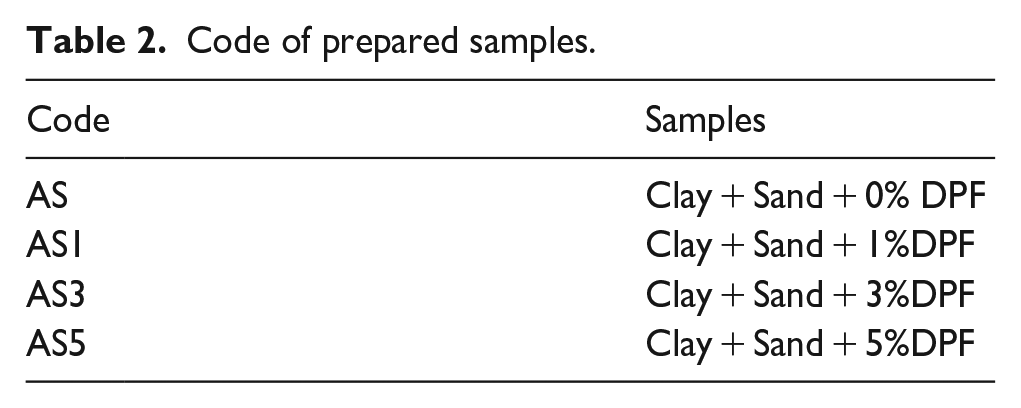
The composite samples were configured by mixing clay, sand, and DPF of varying weights and adding date palm fibers in the following weights: 0%, 1%, 3%, and 5% for preparing biocomposite materials. Then, we mixed the ingredients in a bowl for 3 min to ensure good mixing and homogenize the mixture; the samples were prepared for physicochemical characterization following TGA, DSC, FTIR, XRD, and SEM techniques.
As for the characterization thermal conductivity technique, clay and sand are mixed with palm fiber in the following proportions: 0%, 1%, 3%, and 5%, in a suitable mixing bowl for 3 min before applying water because mixing dry ingredients is necessary in order to achieve homogeneity in the melange. Following this, water was added progressively to the mixture, and the water ratio was commensurate with the weight of the added palm fiber. The mixture is mixed thoroughly and continuously for 5 min until the paste is homogeneous. Then, we pour it into rectangular-shaped molds with a size of 16 × 8 × 4 cm³ for 72 h to reduce water loss by evaporating it in the air. The paste is then extracted from the molds and preserved at ambient temperature for 672 h in a laboratory. Table 2 displays the terminology for each sample, while Figure 4 illustrates composite samples made from (clay + sand) reinforced date palm fibers.
Code of prepared samples.
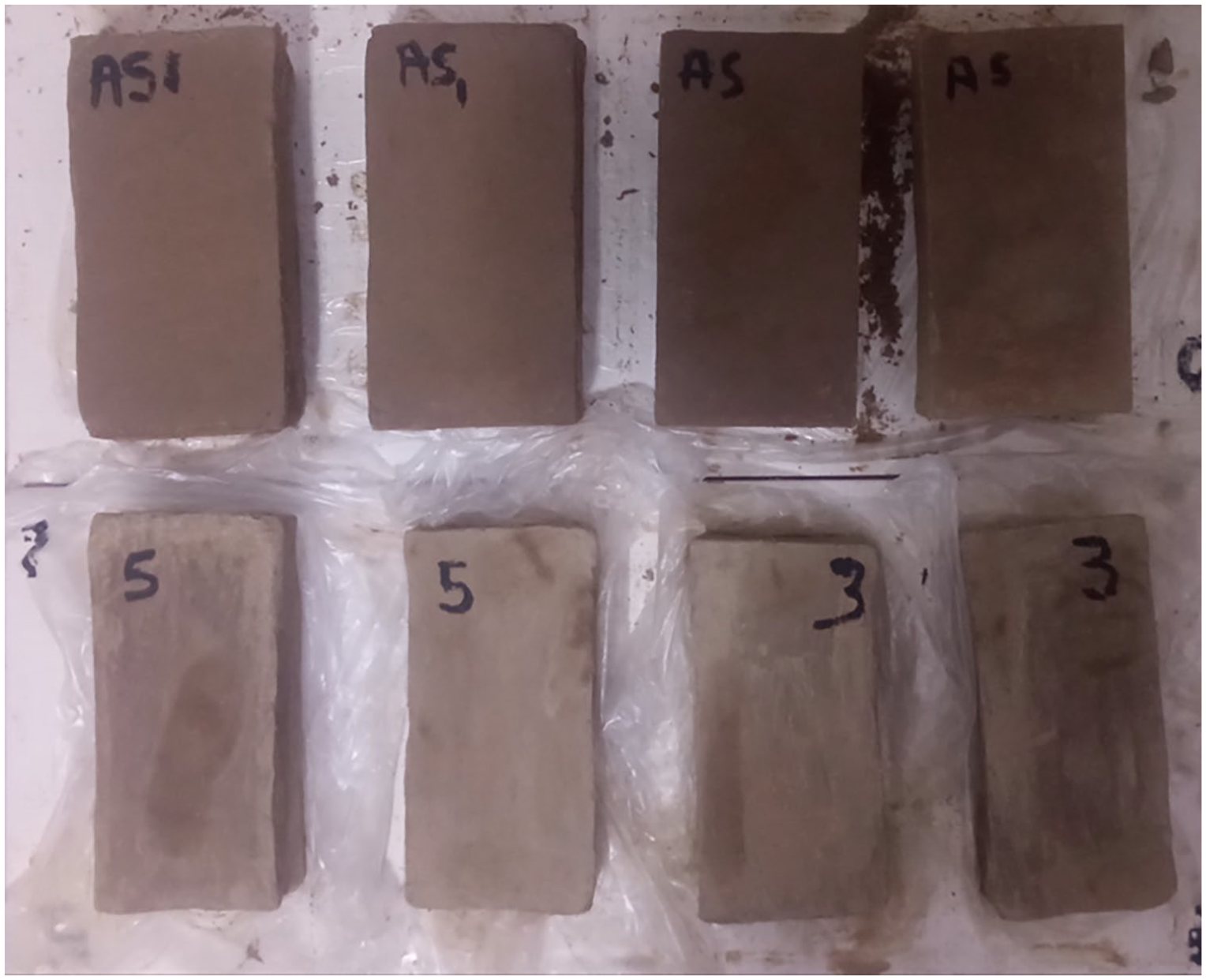
The samples of: AS, AS1, AS3, AS5.
Measurements methods
TGA (Thermogravimetric analysis)
Mettler Toledo was used to accomplish a simultaneous thermal analyzer (TGA); this technique tracks changes in mass and heat flow as a function of temperature from 21°C to 350°C below an atmosphere regulated by nitrogen, with a 20 ml/min flow rate and a 10°C/min warming up rate.
DSC (differential scanning calorimetry)
In this work, differential scanning calorimetry (DSC) was utilized. This technique allows us to follow the differences in mass and thermal flow according to heat from 21°C to 350°C below an atmosphere regulated by nitrogen, with a 20 ml/min flow rate at a 10°C/min warming up rate.
Infrared transformation (FTIR/Bruker)
This work used spectroscopy for infrared transformation (FTIR) Bruker, an effective characterization technique. This analysis allows for the analysis of the molecular bonds of specimens and the measurement of the influence of adding palm fibers to clay and sand. Spectral data was collected in a range of 4000–200 cm−1 with no change of separator with a spectral resolution of 1 cm−1, and range intensity was embodied within the transmission factor (T %).
XRD
The diffraction X-ray (XRD) analyses of biosource samples were implemented using copper anodes and K1 radiation with wavelengths of 1.5406 Å and K2 with wavelengths of 1.5443 Å at 45 kV and 40 mA and the Bruker D8 advance A 25 scale to investigate how the addition of fibers affects the analysis of crystalline and mineralized phases.
SEM
The Quattro S Scanning electron microscopy (SEM) was utilized for the microstructural monitoring of samples and the effect of palm fibers on clay and sand.
Thermal conductivity
To measure thermal conductivity, the CT meter machine was used for samples (AS, AS1, AS3, AS5); the hot wire technique was used, based on the principle of placing a hot wire between two samples of the same material to measure conductivity, as shown in Figure 5.

The CT-meter machine of the measure the thermal conductivity.
Energy economy
The primary objective of all the studies applied to the samples is to achieve the best thermal insulation and reduce heat loss dissipation. The objective of this experimental search of the compound is to be used in the construction sector, so the energy gain of the composite material was calculated before and after the inclusion of palm fibers. So, two exterior walls with the same thickness were compared. One comprises a composite material with different concentrations while the other does not, 20 so the heat flux across the two walls is:

a = the area (m²).
∆T = the temperature variance.
e = the thickness (m).

For an area of (a = 1 m2):


As well, for the same thickness:

Thus, using previous equations, the energy economy that results from the use of composite materials in buildings can be calculated by the following equation:

Result and discussions
TGA
The aim of the TGA analysis is to study the weight loss introduced by high temperatures in the chemical composition of palm fibers. Figure 6 shows us TGA analysis curves for clay and sand and, after adding date palm fibers, by a different proportion, as the shape shows weight loss for samples AS, AS1, AS3, and AS5. The difference in weight loss is due to the various ratios of added fibers, and the higher the ratio of palm fiber, the greater the weight loss compared to the raw sample AS, which is due to elevated temperature with water evaporation. A significant difference in weight loss between 190°C and 331°C indicates cellulose degradation when adding palm fibers. 21 The temperature between 21°C and 60°C was noted as weight loss in the samples AS1 and AS3, but the sample AS5, on the other hand, compared to the raw AS, is almost zero. This temperature result is close to the one predicted by Bellel and Bellel. 15 As shown in Table 3.

TGA graphs of all samples AS, AS1, AS3, and AS5.
Temperature effect on weight loss.
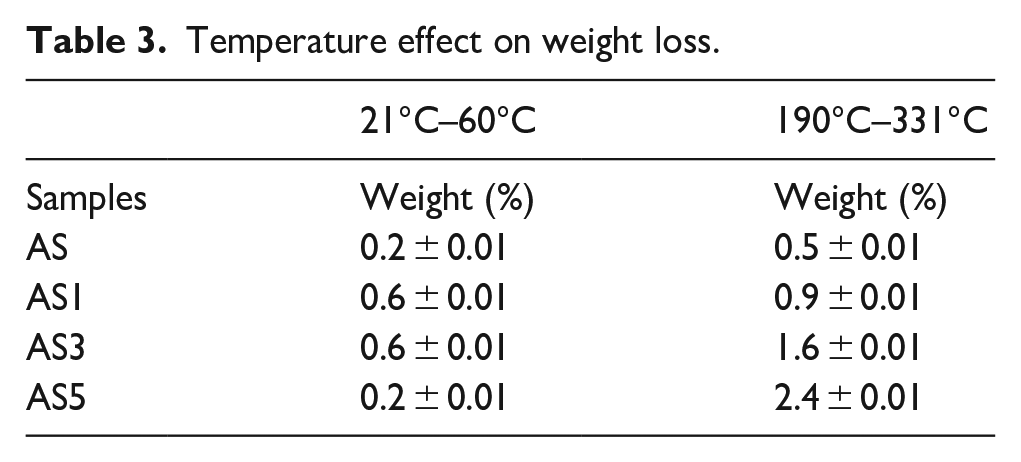
Figure 7 illustrates the outcomes of the weight thermal analysis (TGA) conducted on date palm fibers pure, where a curve displays the DPF decomposed by a two-phase thermal degradation. In the first phase, the raw DPF weight loses a temperature range between 40°C and 190°C due to water’s evaporation, and the sample also loses 5% of its initial mass. In the second phase, a temperature ranges between 190°C and 333°C due to the deterioration of cellulose; this temperature result is close to the one predicted. 21 Thermogravimetric analysis results show that date palm fibers (DPF) will deteriorate from 190°C.

TGA graph of sample raw date palm fiber (DPF).
DSC
A differential scanning calorimetry analysis survey was conducted to study thermal transitions caused by high temperatures.
Figure 8 presents the differential scanning calorimetry (DSC) curves for AS, AS1, AS3, and AS5. The analysis results reveal that the DSC recorded an internal temperature peak at 96.61°C. This peak is caused by the heating of samples, which produces water evaporation. The results also revealed that convergent curves prove that the inclusion of palm fibers does not alter the chemical structure and the non-emergence of new chemicals, as Saad Azzem and Bellel. 22 Figure 9 illustrates the DSC curve of palm fiber, revealing a high-temperature peak between 50°C and 120°C, which attribute to water evaporation, as noted by Bellel. 23

DSC graphs of all samples AS, AS1, AS3, and AS5.

DSC graph of sample raw date palm fiber (DPF).
FTIR
The reason for using FTIR analysis is to recognize the chemical composition of the palm fibers used in this work and check the chemical stability of the biocomposite.
Figure 10 shows FTIR spectrums for pure sample (sand + clay) AS and samples after adding palm fibers. FTIR spectral analysis of the pure AS sample provides the following information:

FTIR spectrums of all specimens AS, AS1, AS3, AS5.
Spectroscopic analysis FTIR of the sample reveals that the peaks are concentrated at 3700 and 3633 cm−1 compatible with the hydroxyl groups vibration of the kaolinite. 24 The water molecule vibration of the OH group created a peak of 1633 cm−1.24,25 Also, the spectrum revealed the bands of carbonates centered in 1454 cm−1. 25 The peak at 1600 cm−1 corresponds to group Si-O-Si elongation vibrations.24,26 The expansion of the Al-OH group resulted in a peak of 912 cm−1. 25 Peaks 530,796,696 cm−1 indicate the malformation of the quartz Si-O bond. 24 Results of FTIR spectroscopy of samples AS1, AS3, and AS5 containing palm fibers of varying concentration show no difference in peaks compared to the pure AS sample. This confirms that palm fibers do not affect the chemical properties and the non-emergence of new materials, which means that palm fibers do not interact with clay or sand and can be combined with some.
Fourier transform infrared spectroscopy (FTIR) of raw date palm fibers is illustrated in Figure 11, and analysis revealed the chemical elements of sustainable fibers where basic peaks were observed. Therefore, the spectrum results revealed that the extended absorption range of hydroxyl is concentrated at 3326 cm−1 due to hydrogen vibration associated with the hydroxyl O-H group.17,27,28 C-H saturated vibrational extending from CH and
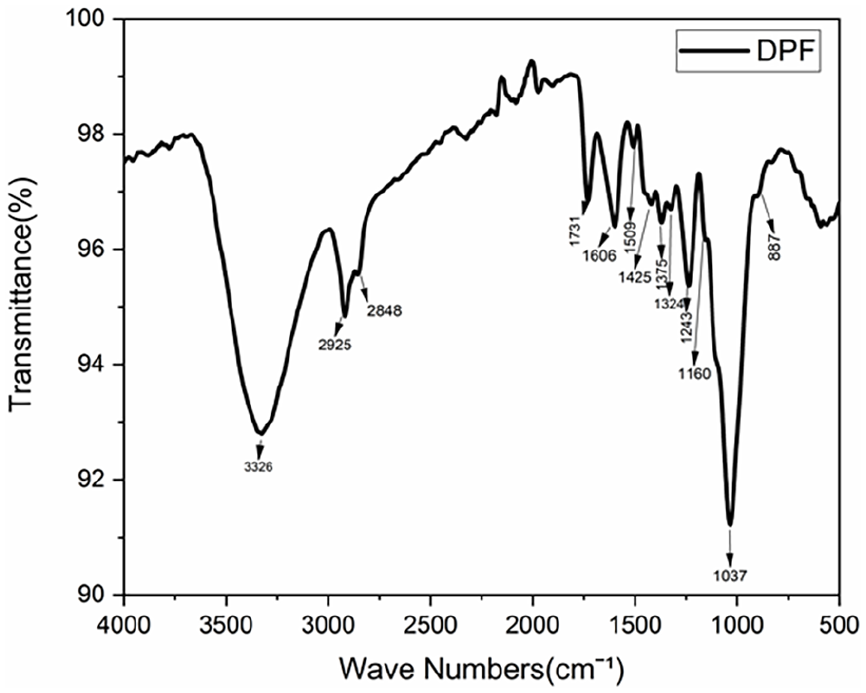
FTIR spectrums of specimens raw date palm fiber (DPF).
The diffraction a rayon x (XRD)
Figure 12 represents the diffraction of a DPF rayon x pattern. There is a prominent apex at 2θ = 21.9°, in accordance with the crystal plane (002) of cellulose. 36 Other clear peaks are approximately 2θ = 16° and 35° in the fiber, corresponding to (10-1) and (040) crystal faces of natural cellulose (cellulose I). 36
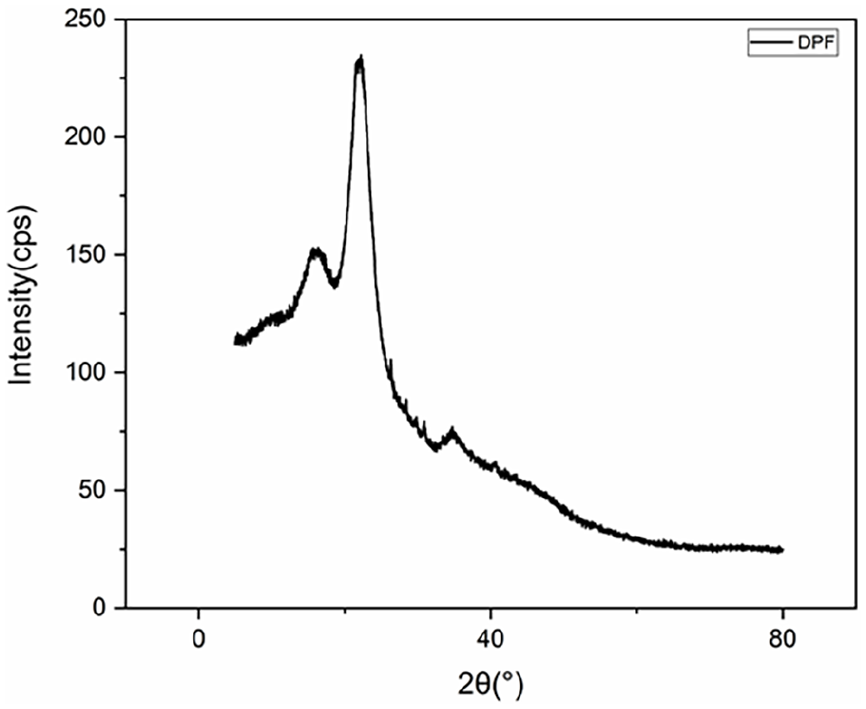
X-ray diffraction diagram of sample raw date palm fiber (DPF).
The other, Figure 13, presents the results of the XRD of all samples AS, AS1, AS3, and AS5. The results obtained by adding different concentrations of palm fibers show no change in the mineral composites, and no new compounds appear when the fiber is added. Thus, the palm fiber addition does not impact the matrix’s crystalline structure.
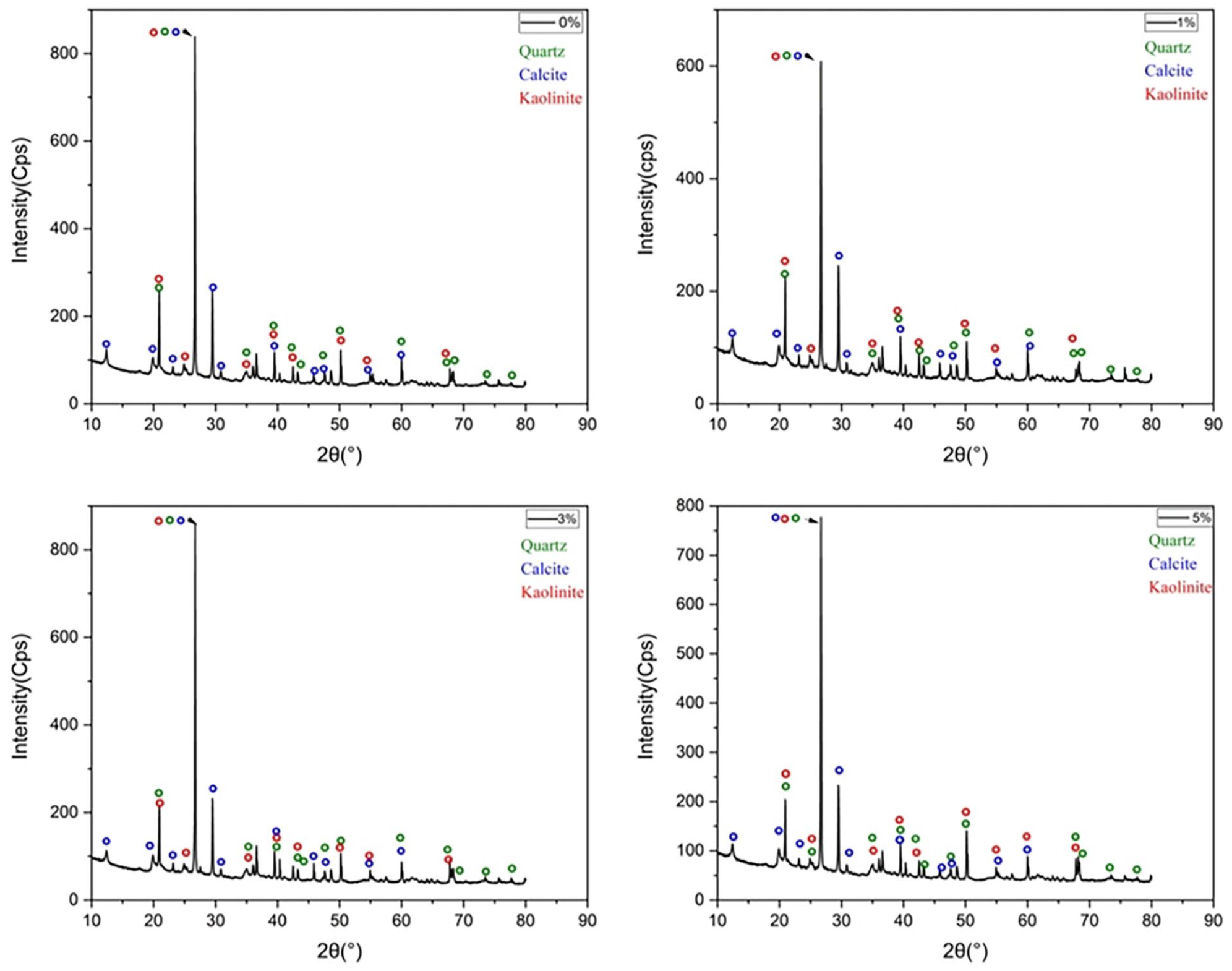
X-ray diffraction patterns of sample.
SEM
The reason for using SEM analysis is to observe the morphology of the samples and recognize the microstructure of the palm fibers used in this work.
Figure 14 illustrates the image taken by the electronic microscope (SEM) of raw and pure palm fibers, which shows their cylindrical, longitudinal, and irregular shapes. It also indicates threads that allow excellent adhesion to clay and sand.

Scanning electron microscope (SEM) image of (a and b) raw DPF
Figure 15(a) shows the sample AS raw image for (clay + sand), and image 15 (b) shows Sample AS1 consisting of (clay + sand + 1% fiber) and image (c) The sample shows AS3 and consists of (clay + sand + 3% fiber) and the last image (d) shows AS5 the sample consisting of (clay + sand + 5% fiber), the comparison of images shows a discrepancy in the size of pores and consequently the effect of plant fibers on the porosity of this matrix and also a comparison present that the higher the focus of fiber has also been the size of the pores increased.

Scanning electron microscope (SEM) image of AS (a), AS1 (b), AS3(c), AS5 (d).
The results obtained in Figure 15(d) show that the AS5 sample is better because it contains the largest porous size, including the integration of green fibers in a matrix that augments the porosity volume to decrease thermal conductivity to increase thermal insulation, and this is a result corresponding to Saad Azzem and Bellel. 22
Thermal conductivity
Figure 16 outlines the connection between palm fiber concentration and thermal conductivity. The impact of palm fiber on thermal conductivity is included in this graph. By incorporating 1% of DPF, the thermal conductivity is reduced by 25.7% – moreover, 29.4% when adding 3% of fiber. Figure 16 also showed that when adding 5% of fiber caused a significant decline in thermal conductivity with 66.12%; analogous behavior was documented by Mekhermeche et al., 37 who discussed the influence of the inclusion of palm to (clay + sand) on the thermal conductivity. Thus, from the results, the AS5 sample has the best thermal conductivity, 0.29 W/m.k. Furthermore, the merging of palm fiber significantly affects the reduction of thermal conductivity.
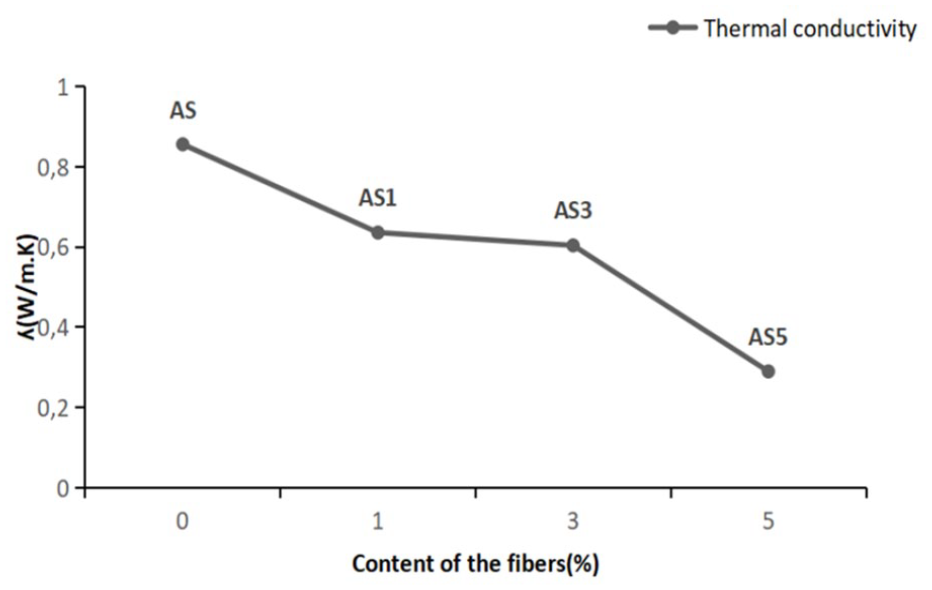
Relationship between thermal conductivity and fiber content.
Energy economy
The findings are summarized in Table 4, which shows the results of compounds containing different concentrations of palm fibers and pure material that does not contain fiber.
Energy economy outcomes based on palm fiber content.

From Table 4, it can be seen that the pure material in which palm fibers are not included does not provide energy, either when 1% of palm fibers are included, a saving of 26% of the energy, and also When 3% of fibers are included, saving energy by 29.4%, On the other hand, a compound containing 5% palm fiber has the lowest thermal conductivity, any excellent thermal performance, as well as an excellent energy economy of 66.1%. Results also indicate through the recycling of date palms that the higher the concentration of fibers, the more energy saving and, similarly, halenur. 38 However, the compound contains 5% fibers, which can be nominated as the best compound for buildings concerning thermal insulation and energy economy.
Conclusions
This article reveals the effect of integrating palm fibers with clay and sand as a heat-insulating and energy-providing biomaterial, as the results were enhanced experimentally and by studying this sustainable compound’s thermal and physicochemical properties. Furthermore, the findings of our research are pretty convincing, and thus, the following conclusion can be drawn:
TGA results indicated that adding palm fiber caused a minor decrease in mass while maintaining thermal stability, as DSC analyses revealed a high-temperature peak, resulting in a high thermal capacity for the compounds to which the fibers were added. Thus, TGA and DSC results proved that the thermal properties are good without influencing the thermal properties. Palm fiber incorporation resulted in the shaping of pores and increased blanks. This is due to the excellent attachment to the matrix and the unaffected matrix structure. The results of the SEM microscopic images of the biocomposite confirmed this.
Following the addition of different amounts of palm fibers to clay and sand, FTIR and XRD results showed that no new chemicals were formed, and the chemical makeup of the matrix was not changed. This proves the compound is chemically stable, and date palm fibers do not affect the matrix’s microstructures. Regarding thermal conductivity, adding palm fiber powders at varying percentage concentrations resulted in a 66.12% decrease, particularly in the sample containing 5% fibers, thereby enhancing insulating capacity, providing thermal comfort, and promoting good energy efficiency.
Eventually, integrating 5% of fibers into clay and sand improves the compound’s thermal and physiochemical properties and achieves building standards. Consequently, these biocomposites strengthen the construction sector.
Footnotes
Declaration of conflicting interests
The author(s) declared no potential conflicts of interest with respect to the research, authorship, and/or publication of this article.
Funding
The author(s) received no financial support for the research, authorship, and/or publication of this article.
