



Abstract
This study introduces an innovative approach to designing a customized bra to the specific needs of mastectomy patients, aiming to reduce the discrepancies in breast displacement and consequently alleviate associated pain. Through mastectomy patient interviews, recognizing the limitations of current mastectomy bras, which often fail to accommodate the unique body shapes and needs of breast cancer survivors, this research leverages Magnetic Resonance Imaging (MRI) and Three-Dimensional Surface Imaging (3D-SI) to develop a custom-fit bra prototype. The methodology involves the analysis of body shape changes post-mastectomy and the development of a prototype bra that effectively supports prostheses while minimizing common issues such as displacement, discomfort, and skin irritation. The results showcased a pronounced reduction in breast movement in all directions with the prototype bra, further enhanced using a novel cooling textile, improving the wearer’s overall comfort. Moreover, our investigation delved into the potential of integrating MRI and 3D-SI anthropometric data in bra design. By comparing two Prototype bras with differing dimensions but identical design features, we discerned marked differences in their performance. Crucially, the Prototype bra, shaped predominantly using MRI data, reduced breast displacement and evaluated better fit compared to the bra using 3D-SI data. Results from the study indicate that the prototype significantly improves fit and wearer comfort, suggesting a promising direction for future development of mastectomy bras. The findings highlight the potential of utilizing medical imaging data in garment design to create more inclusive and considerate solutions for post-surgical care.
Keywords
Introduction
Breast cancer is a significant health concern in South Korea, with 31.6% of patients undergoing mastectomy procedures. 1 A mastectomy, which involves the surgical removal of breast tissue, can vary in its extent, ranging from a partial to a complete removal that includes the nipple and axillary lymph nodes. 2 Such procedures frequently lead to various physical complications. Notably, 78% of patients exhibit up to a 3° upper body twist, which can present as conditions like scoliosis or restricted shoulder joint mobility.3–5 One effective remedy is the continued use of a breast prosthesis, which has been demonstrated to alleviate scoliosis and improve upper limb mobility.6–8 Mastectomy bras and breast prostheses primarily aim to restore a patient’s natural body silhouette and balance following tissue loss.5,8 However, current bra designs often lead to discomfort.9–11 The discomforts discussed in previous studies regarding bras include dissatisfaction with the fit, discomfort when wearing prosthetic breasts, and displeasure arising from the materials and design, which are the main issues. Firstly, Inadequate fit is a common issue, as many mastectomy bras do not align with the altered body shape post-surgery, causing discomfort, and insufficient support.10,11 Additionally, the Asian market for mastectomy bras is notably Neglected, with available imported products often not Fulfilling the Asian body type.12–14 Particularly in the Korean market, 72% of bras for mastectomy patients rely on imported brands for Europeans and Americans. These are not considered Asian body types, wearing bras that do not reflect the wearer’s physique results in poor fit and reduced functionality.15–17 Consequently, due to the analogous problems only 27.1% of Korean breast cancer patients choose mastectomy bras, while 47.4% prefer commercial bras. 15 Secondly, the prostheses’ weight can result in unnatural movements of the prostheses and collisions with the thorax, leading to discomfort and instability in the bra. 18 This misalignment results in low satisfaction regarding fit, esthetics, and movement, and can lead to psychological distress.13,16,19 Additionally, the weight of prosthetic breasts can be burdensome over time, especially with prolonged wear.10,18 A study indicates that wearing an artificial breast can increase pressure, notably at 0.5 kPa in the lower part of the breast, also affecting shoulder comfort. 20 These findings underscore the need for designs that better distribute prosthesis weight to reduce pressure. Finally, certain materials and designs can cause skin irritation, 17 and the seams of the bras irritate the affected area, suggesting a need for designs with fewer seams.21,22 The lack of breathability and limited style options also reduce the preference for these bras.23,24
The importance of post-mastectomy bras for breast cancer survivors is clear.23,25 They play a crucial role in adapting to bodily changes post-surgery, restoring natural body lines, and preventing physical imbalances. 26 These bras are vital for maintaining physical balance and a natural, comfortable posture. They also provide psychological stability and enhance confidence, crucial for social interaction and daily activities.9,27 Therefore, the continuous improvement of post-mastectomy bras is essential. Enhancing their design to address current issues while preserving their key functions is crucial for improving the quality of life for post-mastectomy patients. However, most research on the benefits of these bras relies primarily on observational surveys, with a noticeable lack of in-thickness scientific analysis focusing on their functional requirements. With the diverse range of post-surgical body shapes, standardizing bra manufacturing is challenging. Custom bras would ideally address this diversity, but many patients are hesitant to undergo body exposure, hindering such efforts. Therefore, there is a need to explore non-invasive body measurement methods to reduce body exposure and ensure patients’ psychological comfort and stability.16,28
This research strives to identify the specific needs of mastectomy patients and propose a Prototype bra design that addresses discomfort caused by asymmetric breast movement. Through interviews, we aim to establish design standards for enhanced bra functionality and develop a prototype using both MRI and 3D-SI body measurement techniques. This research extends the foundational work established by prior studies, 29 with a focus on the development and evaluation of customized mastectomy bras. Prototype bras for this study are designed using breast measurements acquired from Magnetic Resonance Imaging (MRI) – a type of Projective Photography Measurement (PPM) utilized for medical purposes – and Three-Dimensional Surface Imaging (3D-SI) for anthropometric analysis. The primary aim of this study is to develop and assess a customized bra specifically for mastectomy patients, leveraging data from both imaging techniques. However, MRI measurement postures significantly differ from anthropometric postures of 3D-SI, which are measured in an upright stance. The breast MRI obtained process involves the patient lying prone, stretched underneath a plate, thereby altering the intact breast shape exhibited in an anthropometric posture. This leads to the challenge of recording different values at the same measurement situation. However, according to previous studies, 34 the breast, being a soft tissue comprised primarily of fat and thin fascia without a skeletal structure, can potentially conform to a bra designed using MRI measurement data, provided the breast volume remains consistent. In line with this, as follows the study, 29 a comparative analysis of breast volume using MRI data and 3D-SIM data showed no statistically significant difference in the breast volumes obtained through both methods. Furthermore, to validate these findings, the patient’s projective data were analyzed using mammography system measurement programs (Hologic R2 and Volpara, Volpara Solutions, New Zealand). The outcome affirmed that the breast volume remained unaltered across the two measurement techniques. Therefore, it can be inferred that even if the breast shape undergoes deformation due to measurement posture, the overall breast volume remains constant. This indicates the potential to create custom-fit garments if the breast measurements acquired through MRI are appropriately processed and transformed. This similarity provides a basis for our hypothesis testing of previous research, aiming to use these measurements in bra fabrication. Therefore, we introduce a novel approach to bra developing using medical image data collected during treatment. In Korea, MRI scans are conducted multiple times at actual costs throughout the treatment of breast cancer patients. Thus, the ability to manufacture a customized bra using MRI data could significantly alleviate the psychological discomfort associated with the exposure required for collecting human anatomical data.
To develop the bra prototype, the study involves: (1) analyzing user requirements; (2) developing individual bra components, including selecting appropriate fabric; (3) deriving bra size specifications for pattern development; and (4) evaluating the prototype. The objective of the proposed prototype is to mitigate breast sagging and attenuate the impact of prosthesis movement. By utilizing physical imaging medical data from mastectomy patients, for this study develop enhanced customized bras. This method aims to reduce the necessity for extensive body exposure and elevate psychological comfort by providing bras precisely tailored to individual measurements obtained via MRI data. The efficacy of the Prototype bras will be evaluated in terms of their ability to limit breast displacement during physical activities and their wearability, utilizing both 3D-SI and MRI data for a comprehensive comparison with existing bra designs. This methodical and innovative approach is designed to augment the comfort and overall quality of life for mastectomy patients, representing a significant advancement in post-surgical care.
Related study
Projective photography measurement (PPM)
Projective Photography Measurement (PPM) primarily involves the analysis of radiographic images taken within the human body for medical purposes. It’s commonly referred to as a medical image analysis technique. This method of measurement is not only straightforward but also highly reliable. 30 Various methods, such as Ultrasonography, Mammography, Computed Tomography (CT), Positron Emission Tomography Computed Tomography (PET-CT), and Magnetic Resonance Imaging (MRI), are employed in diagnosing breast cancer. 31 Of these modalities, Ultrasonography, Mammography, CT, and PET-CT can cause significant deformation in the breast’s shape due to image taking technique and patient posture used, making it challenging to capture the external contour of the body. In contrast, MRI provides detailed imaging of both internal body structures and the external silhouette. It facilitates the identification of bone and muscle positions that are crucial in clothing design. Moreover, MRI can be used to determine the volume of the breast and its tissue, offering the advantage of multi-angle imaging. Moreover, MRI offers the benefit of being non-invasive without the associated risks of radiation exposure, thereby posing no adverse effects on the human body. Its ability to reproduce the human body shape makes it valuable in medical fields, particularly in capturing the 3D shape of the human body and in mammoplasty procedures.32,33 As such, the data derived from MRI has vast potential for applications in apparel manufacturing. 29
Three-Dimensional Surface image measurement(3D-SIM)
Three-Dimensional Surface image (3D-SI) employs a three-dimensional scanner to capture, measure, and analyze the surface of the human body. In contrast to direct measurement methods, which can be affected by variables like respiration, Three-Dimensional Surface Imaging measurement(3D-SIM) provides more precise measurement data. This technology merges the principles of anthropometric measure method with Three-Dimensional Surface data.34,35 Since the 1980s, 3D-SIM has seen extensive use in both human engineering and clothing research.36–38 The benefits of 3D-SIM are manifold. It allows for swift data extraction from the human body without requiring direct physical contact. Additionally, measurements can be conducted flexibly at any given time. Compared to traditional direct measure methods, it is viewed as a more accurate and dependable measurement technique.39,40 Notably, these measurements are obtained using an anthropometric posture, a fundamental position crucial for apparel manufacturing. 39
Breast-supportive mechanisms by the bra’ component
The breast-supportive functionality of bras is closely correlated with the cup component that envelopes the breast. To engineer a cup for enhanced support, it’s crucial to consider both the force of gravity on the breast and the pressure exerted by the cup material. Breasts are primarily made up of Cooper’s ligaments, skin, and fat with unskeletonized structures, making them particularly susceptible to gravity.41,42 The center of gravity for the breast usually lies at the lowest point of its verge line on the breast. Since sagging is the most prominent inferior of the breast, supporting the lower portion of the breast can prevent it.31,35,36 This phenomenon can be attributed to the fact that the clothing pressure of bras is higher in the lower cup compared to the upper cup, especially at the base of the lower cup.20,43 This area records pressure up to 1.5 kPa, while other parts record less than 1 kPa. 20 Therefore, evenly distributing the pressure concentrated at the bra cup’s bottom is crucial. This can be achieved by applying external pressure or using internal structures to counteract external forces like gravity.43,44 External pressure can be introduced by incorporating highly elastic fabric. Pressing the breasts could limit the movement caused by the body’s motion and gravity. However, this approach isn’t suitable for mastectomy patients, and can also lead to excessive compression of the lymph nodes. Hence, this study suggests the implementation of a lifting panel, which is called a sling panel, to improve the bra’s internal support. The pattern-making method for supportive bras45,46 and the previous research suggest that bra cups with elastic internal sling panels can effectively reduce breast impact shock.16,17,43,47 In other words, for enhancing internal support, a sling structure can be introduced to support the breast, or an elastic fabric can be employed to exert pressure. The internal sling structure primarily counteracts breast vibration and gravity-induced movement, while the external fabric provides secondary support.44,46,47 When considering the breast’s physical movement, its position to acceleration shows a nonlinear pattern: starting from a static state, peaking, then returning to a position close to its original state.48–50 Since walking-induced breast movement is mainly influenced by the upper body, vertical motions are the most common.49,51,52 Moreover, larger breasts undergo more significant positional changes due to vertical motion.17,53 The bra’s supportive functionality is more influenced by the shape of the lower cup than by the position of the shoulder strap attachment.54,55 This suggests that breast movement discomfort mainly arises from vertical motion, with the most notable changes occurring at the breast’s lowest point. Therefore, controlling vertical breast movement is essential. The breast-supportive function can be improved by sling structure, enhancing the breast’s load-bearing capacity. If the elastic panel is located along the upper cup or cup neckline, it might affect the shoulder straps, increasing shoulder and back pressure, which isn’t ideal. 48 Studies17,56 have shown that breast contouring is more effectively achieved using a dual panel than a single panel. Hence, for optimal breast contouring and supportive functionality, a double-panel design is ideal.44,46,56 When choosing materials for breast-supportive functionality, fabric elasticity is critical. Using a more elastic interior material than the external material can better prevent breast sagging.43,47 Also, using the same low elongation material for the entire exterior and a high elasticity material for the interior offers better fit and stability.44,48
A bra’s clothing pressure by breast weight is distributed to the shoulder straps and the wings.57,58 These mechanisms are vital as it aids in managing the weight of the breasts or prostheses. To ensure the wearer’s comfort, it is essential to attain an optimal balance and appropriate level of clothing pressure. Therefore, the design of the bra’s wing part should be broader than standard to increase support function. Such Supportive function can be realized through limitation excessive stretch using additional double layering processing. 48 Nevertheless, too broad wing causes discomfort due to constriction. Straps of bra bear a significant load due to the weight of the bra and breasts, often leading to distortion and discomfort in the shoulder muscles. 55 The pressure received from the strap on the side wearing the breast prosthesis was at least 10 kPa, which was higher than the average pressure of 2.6 kPa in other parts of the bra. 59 To mitigate this, designing two-line or wide shoulder straps is a beneficial approach.60,61 Broad shoulder straps help distribute the weight of the breasts more evenly.62,63
Design and development of supportive bras: Advances and considerations
Participant experiences and requirements to develop prototype bras
Participants for the interview study were recruited who voluntarily expressed their interest in participating by posting an announcement at Seoul National University Hospital. Eligibility criteria included having undergone a unilateral mastectomy and having experience wearing mastectomy bras. The study participants had undergone the removal of a breast, and then loss of clothing resistance points for bras. Therefore, participants were required to wear specially designed mastectomy bras. For this study, nine mastectomy patients volunteered for the user requirements interview. The study lasted for 2 weeks, beginning on September 2, 2019. The process of this study obtained ethical approval from the Institutional Review Board (IRB No. 1808/003-010) of Seoul National University. The interviews for user requirements were conducted using a semi-structured format, allowing nine study participants to discuss their overall experiences with bras for post-surgical use and wearing breast prostheses, as well as their current situation. The researchers posed questions regarding the participants’ experiences with wearing bras for breast cancer patients, changes in body silhouette, and purchasing behavior. In response to the inquiries, the study participants openly shared their experiences and expressed their needs. Data were recorded through note-taking and audio recording after obtaining the participants’ consent. The collected data were organized into a script, following the chronological order of the interviews, based on the written notes and audio recordings. Through iterative comparative analysis and contrast, using open coding technique, 66 similar themes were extracted, and subcategories were derived to construct overall categories, along with the selection of key themes. Categorized data were reviewed by three peer researchers and four advisory members involved in the research planning to ensure the objectivity of the categorization process conducted by the researchers.
This process involved developing Prototype bras with improved daily wear functionality by applying improvement methods to the components of the bras based on the analyzed feedback and requirements obtained through the interview study. Requirements were organized based on their association with bra components, including the cup, cradle, wing, and shoulder strap, and subsequent improvement plans were formulated. Specifically, a supportive mechanism was designed to be incorporated within the cup to counter breast displacement. Moreover, enhancements were proposed for additional components, such as shoulder straps and wings, to augment the bra’s comfort.
Fabric composition and material analysis
For the application of the fabric composition analyzed by each component of the bra, parameters such as the fiber composition ratio, mass, density, thickness, and elongation ratio of the material were sought from the Korea Apparel Testing and Research Institute (KATRI). Moreover, to assess enhancements in the performance of the external fabric, additional analysis was conducted on the contact coldness sensation.
To analyze the fiber composition ratio, five fabric samples measuring 5 by 5 cm were processed using the solubility method outlined in KS K 0210. Initially, the samples were treated approximately 10 times in 250 ml of carbon tetrachloride. For cotton and polyester blends, the dissolution process involved the use of 70% sulfuric acid, at 100 times that of the sample’s weight. Post-cotton dissolution, the solution was neutralized with an ammonia solution, at 50 times of the sample, followed by drying. The weight of the remaining fiber was then measured after oven-drying. In the case of rayon and acetate blends, the samples were immersed in 100% acetone, at 100 times of the sample’s weight, and agitated for 30 min at room temperature (20–25°C) to dissolve the acetate component. Subsequently, the oven-dried weight of the remaining fiber was measured to calculate the dry fiber composition ratio and quantification. It recorded units by %. For mass measurement, the small test piece method of KS K 0514 was employed, utilizing five fabric samples sized 60 by 60 cm. These samples were conditioned to achieve moisture equilibrium for 24 h under standard conditions, after which the weight per unit area of the fabric was calculated. Density analysis employed the pick counter measurement method for knitted material density, following KS K 0512. After conditioning five 20 by 20 cm fabric samples for over 16 h, ensuring the absence of unnatural wrinkles or tension, the count of wales and courses within a 5 by 5 cm area was recorded. It is represented in units of thread count/ 5 cm. Thickness measurement adhered to KS K ISO 5084, applying a pressure of less than 0.1 ± 0.001 kPa to the reference plate where the fabric was positioned, and the vertical distance between the reference plate and the pressure plate was measured. It recorded units by mm. For evaluating the elongation of knitted fabric, the static load method based on KS K 0642 8.16.1.D was selected. Conditioned samples measuring 6 by 60 cm were marked at 20 cm intervals. A load of 4.9N/5 cm was applied in a 10 cm/min tensile speed interval using the cut strip method of stretching. It represented in units of %.
Contact coldness sensation refers to an immediate sensation that arises when a heat source, such as the skin, contacts a surface with a lower temperature. Qmax, represented in units of J/cm2/s (which equates to W/cm2), essentially captures the peak value of heat transferred instantaneously over an area of 1 cm2. This sensation is quantitatively measured using a parameter known as Qmax, which is the maximum heat absorption value. The Qmax value is determined using a device called KES-F7 (Thermolabo Ⅱ, Kato Tech, Co., Ltd, Japan). The process to measure Qmax involves positioning a fabric sample on a flat surface calibrated to 30°C. Following this, the fabric surface is brought into contact with a heat source plate. The heat source plate then detects the heat transfer from the fabric and computes the maximum heat flux value (Qmax). This process is performed five times, with the average value recorded as the result. Twentydegree celsius, 65% RH, five times repeated measurement in an experimental environment, and the average value calculated at this time, the temperature of the preheating plate was maintained at 30°C, and the temperature difference between the thermometer and the test piece was 10°C. Following the criteria outlined in Annex B of the Japanese Industrial Standards (JIS) L1927, it is determined that there is contact cooling functionality present at a value of 0.1 J/cm2/s. Specifically, the previous studies found that an increase in Qmax values is associated with a heightened sensation of coolness on the skin.63–65
Data collection and prototype development
Among the interview study participants, four consented to provide 3D-SI and MRI data voluntarily, which were utilized to design and fabricate a Prototype bra. This process and the evaluation process obtained approval from the Institutional Review Board (IRB, IRB No. 1908/002-029). These four participants engaged in displacement breast movement and subjective wearing sensation evaluation of the prototype and Control bras. Throughout the study, these participants are referred to using the identifiers A, B, C, and D instead of their actual names.
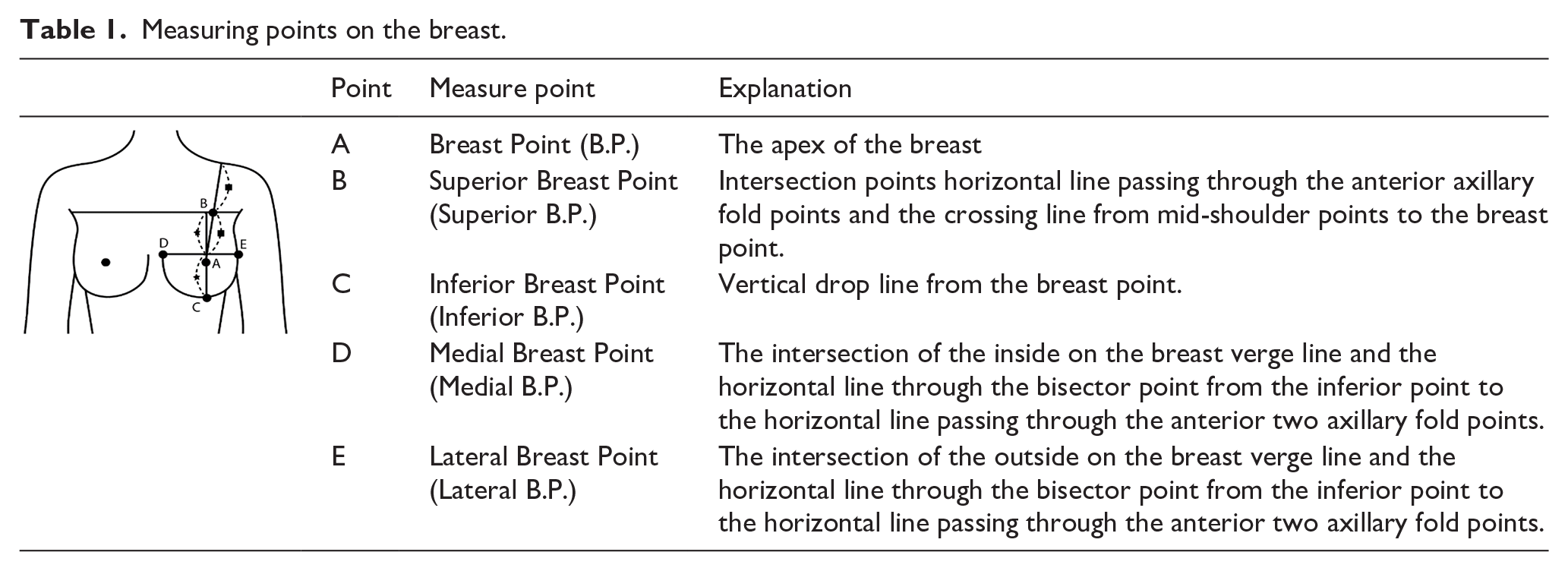
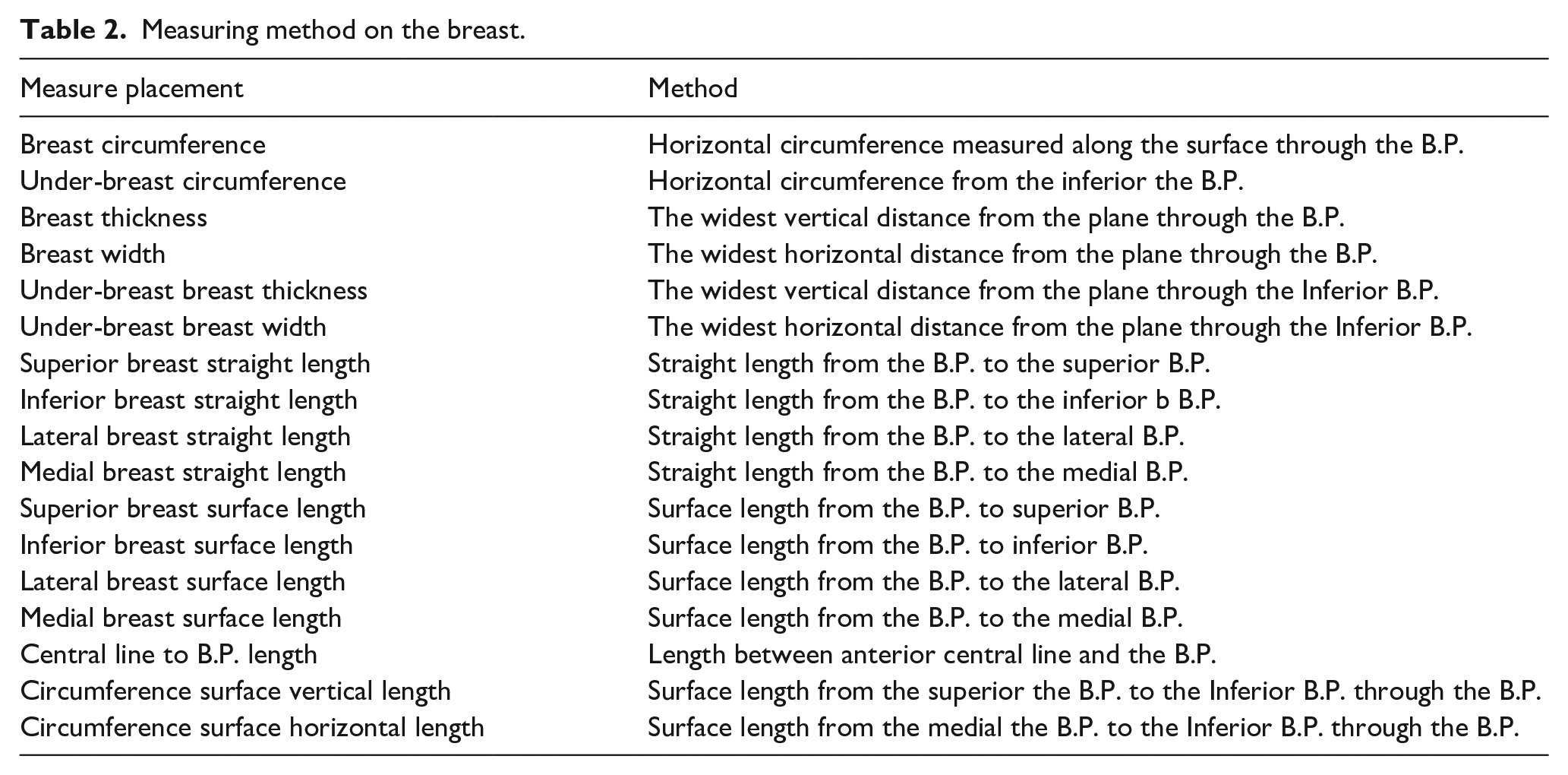
For the 3D-SI collection, the standard anthropometric posture adopted for measurement was a 360° upper body scan, with the arms raised at a 45° angle, aligning with the standard anthropometric posture. Each scanning session lasted approximately 45 s, during which the patient was instructed to maintain correct posture as still as possible and breathe only to the extent that it did not cause the ribcage to expand noticeably. During the measurement experiment, the participants wore the Size Korea measurement bras designed to minimize human body deformation caused by pressure applied to the body. The body measurements were then captured using a 3D handy scanner (Artec EVA 3D scanner, USA). This scanner employs safe structured light scanning technology, ensuring a non-invasive and accurate capturing of body dimensions. For the detailed analysis of the saved data, we employed Design X software from 3D Systems, USA. Whereas, for MRI collection an MRI scanner (Biograph MR, Germany) was used, and the images were obtained from the upper body, specifically from the front neck area down to the waistline, as the measuring posture, the participant lay prone on the bed with their breast protruding through a hole in the bed. The Picture Archiving and Communication System (PACS) program was used for analysis and human data measurement (Figure 1). The 3D-SI and MRI analysis software has similar configurations, and the surface area and straight-line distance of the 3D image were measured (Figure 2). The points of measurement used (Table 1) and the methodologies employed (Table 2) are detailed in the respective tables.

Comparative analysis of breast data images: Magnetic Resonance Imaging (MRI) on the left versus Three-Dimensional Surface Imaging (3D-SI) on the right.

Comparative analysis of measurement procedures by imaging method: 3D-SI-based breast detail measurement (top) versus PACS-based breast detail measurement (bottom).
Measuring points on the breast.
Measuring method on the breast.
In this research, two Prototype bras were created using different measurement methods: (3D-S) and MRI. The bra based on 3D-SI data was named “Prototype bra 1”, while the one using MRI data was called “Prototype bra 2.” Both prototypes were designed using the same pattern-making methods to compare fit. Pattern-making of the Prototype bra 1 was crafted from measurements derived from 3D-SI, focusing on five key breast measurement points and 17 breast-related metrics, including various circumferences and lengths around the breast. However, the previous study 27 noted differences in measurement values at the same body sites when comparing 3D-SI and MRI, mainly due to different measurement postures. Since apparel manufacturing typically relies on 3D-SI measurements, directly using MRI data could lead to ill-fitting bras, reducing comfort and functionality. Therefore, it was necessary to adjust MRI measurements to align with pattern-making standards using 3D-SI.
To address this, the study developed a method to calculate bra size charts based on representative dimensions from 3D-SI data. For Prototype bra 2, a reliability analysis between MRI measurements and practical body measurements for pattern-making was conducted. From this, 14 relevant items were identified. Items with high factor loading were deemed to have a strong correlation. Regression analysis was then performed, using these highly correlating items as independent variables and the other metrics as dependent variables. This analysis helped establish an equation for creating Prototype bras. The study was conducted using IBM SPSS Statistics software (IBM Corp, USA). This new equation allowed for the effective use of MRI data in bra pattern-making.
Evaluation of breast displacement and wearing experience
This study involved a comprehensive evaluation of bras and was conducted by the same four volunteers who were engaged in the pattern-making process (IRB No. 1908/002-029). The aim was to ascertain whether the functionality of the bras was enhanced by our measurement method. Quantitative and qualitative evaluation methods were employed to assess the usability of the completed Prototype bras. The quantitative method involved measuring breast displacement during movement to evaluate the bras’ supportive feature design. Qualitative evaluation was performed through a wearing test. This was assessed through a comparative analysis of breast displacement between Prototype Bra 1, Prototype Bra 2 and a commercially available Control Bra (Figure 3). The Control Bra selected for this study were top-selling products from medical supply stores within hospitals, chosen for their excellent customer evaluations. Composed of 85% nylon and 15% spandex, the Control Bra also featured a prosthesis pocket made of a 95% cotton blend.

The control bra for comparative evaluation analysis.
At the first step, quantitative evaluation was estimated through breast displacement by motion. Breast displacement evaluation aimed to assess how well the sling panels of the Prototype bras controlled the breast’s vertical and lateral movements caused by human body motion. This was conducted based on previous studies25,44 that measured and compared breast movement during walking. The breast displacement study lasted for 2 weeks, beginning on September 5, 2019. In the experiment, Prototype 1, Prototype 2, and the Control Bra were worn randomly. Breast displacement during motion was measured using a 3D motion analyzer composed of eight infrared cameras (Opti-trak Prime13) and 9.5 mm pearl reflective markers with an adhesive base. Nine reflective markers for motion capture were attached at various points on the body, including the left and right Breast points and sternum points, the lower ends of the 10th ribs on both sides, and the toe and heel of both shoes, to measure breast displacement (Figure 4). In this study, the criteria points utilized to assess changes in breast displacement were the sternum points, the lower ends of the 10th ribs on both sides and the toes and heels of both shoes. Marker points for the breast point were affixed to the bra and positioned directly over the nipples. Preliminary experiments confirmed that when the marker was placed directly on the body, it was influenced solely by breast movement, rather than the supportive function of the bra. To demonstrate the relationship between the breast and the bra, a preliminary experiment was conducted by creating holes in the bra and attaching markers, followed by walking. However, it caused destroying the bra’s frame, making it impossible to accurately measure the appropriate movement of the bra. Therefore, markers were attached to the bra while ensuring maximum adherence to the breast to measure movement. However, we confirmed that excessive fixation of the bra can hinder the natural movement of the breast. Thus, in the experiment, Markers were attached to the bra to measure movement while ensuring minimal interference with intact breast movement.

Equipment and environment for collecting breast displacement data.
Participants walked on a treadmill at velocities of 2 km/h (slow walking) and 4 km/h (fast walking) for the breast displacement evaluation study, confirmed to be safe and comfortable through preliminary experiments for walking velocity for mastectomy patients. To maintain psychological stability, the laboratory was isolated from external influences using curtains. The experimental conditions were controlled with a temperature set at 24 ± 0.5℃ and a humidity level of 37 ± 1%. The kinematic data of the breast were collected during walking. Each participant walked for 3 min at each velocity. The participants walked on the treadmill for 3 min at a velocity of 2 km/h, followed by a 10-min break, then walked again for 3 min at 4 km/h. After a 10-min break, they changed the other bras and repeated the process. For the breast displacement evaluation, data were collected for 1 min in the middle of each walking 3 min period. The gait cycle was defined as the period from when the left foot lifted off the ground to when it touched the ground again. Data were collected for x-axis (lateral movement) and y-axis (vertical movement) displacement of both breasts using 3D motion analyzing software (STT Insight). Excel (Microsoft Corp), MATLAB (Matlab R 2018, Mathworks, Inc), and IBM SPSS Statistics for Windows Version 22.0 (IBM Corp, USA) were used for data filtering and analysis.
as the Next step, qualitative evaluation was designed to analyze the subjective fit sensations during bra wearing (IRB No. 1908/002-029). The study was conducted for 3 weeks, starting from September 5th, 2019. The experimental garments used in the study were Prototype Bra 1, Prototype Bra 2, and a Control Bra. Each bra was randomly assigned for 1 week of wear, and a questionnaire evaluation regarding the comfort of the clothing was conducted every week. To ensure the reliability of subjective evaluations, which may be compromised by short-duration wear, participants were instructed to wear the bras for at least 5 h per day throughout the week. The questionnaire was developed based on previous studies.66–68 The evaluation utilized a Likert 5-point scale, where 1 indicated discomfort (not at all) and 5 indicated comfort (very much). The questionnaire consisted of a total of 20 items, including 17 items related to bra design and bra fit comfort, and three items related to comfort based on movement. For data analysis, descriptive statistics and non-parametric tests were performed to verify differences using IBM SPSS Statistics for Windows Version 22.0 (IBM Corp, USA).
Results and discussion
Structural and functional needs for improved bra design
Mastectomy patients predominantly use mastectomy bras to preserve a natural look and ensure physical balance while wearing a breast prosthesis. The classification of inconveniences and improvement needs for post-mastectomy bras, as identified through interviews with study participants and organized by bra component, are presented below (Table 3).
Participants’ recommended enhancements for mastectomy bra, organized by components.

A major problem identified was the unbalanced movement of the breast prosthesis and the remaining breast during physical activities. Patients reported low stability of the bra’s fit and a tendency for the prosthesis to dislodge due to the low hold within the bra. Furthermore, significant positional shifts of mastectomy bras were noted especially in the location of the worn prosthesis. Also, given that the weight of the breast prosthesis is principally borne by the shoulder and the bra’s wing, patients experienced musculoskeletal discomfort in areas like the neck, shoulder, and back. This suggests a need for a structurally enhanced design capable of supporting the breast including prosthesis and distributing the breast prosthesis weight more evenly. The fit of the mastectomy bra, which affects all its components including the cup, cradle, and wing, is another critical concern. The displacement of the mastectomy bra is tied to its fit and occurs as the bra’s resistance point is primarily focused on the intact breast due to the loss of the other. This issue can be resolved by designing a cup that provides a better fit for the intact breast and making structural modifications to the wings and elastic bands.
Concerns about the exposure of the affected area or neckline gaping, bilateral asymmetry, cup size, neckline length, strap attachment position, and others, are also connected to the bra’s fit. These aspects should be considered in the cup design process. Enhancements in these areas can augment the supportive function, curbing imbalanced movement and dislocation of the prosthesis. Regarding pain attributed to the bra, the design must be able to evenly distribute the weight of the breast prosthesis to reduce pressure on the body, specifically in the strap, cradle, and wing.
Design innovations in mastectomy bra components
Table 4 presents the strategies for refining the Prototype bra components, reflecting the mastectomy bras’ enhancement requirements. To bolster the shaping and supportive functions of the mastectomy bra, not just the cups, but also the cradle and wings necessitate careful design.
Improvement design directions for the Prototype bra, categorized by components.

Most commercially available mastectomy bras are designed as shaping bras with small cradles and broad cup areas. This design has the benefit of covering a wide range of surgical areas but comes with the drawback of the low stability of the prosthesis. By redesigning the cup with a rounded bottom shape, the cradle and wire casing line can act as a support, limiting the movement of both the breast and the breast prosthesis. Research comparing breast compression based on the shape of the bra cup has also mentioned that the round-shaped full cup can distribute clothing pressure more evenly across the entire cup area compared to other cup designs. 41 Furthermore, the breast displacement range was reduced on the round-shaped full cup. 42 These findings suggest that the round type might be beneficial for breast supportive function. In response to these findings, the prototype pattern for this study was designed as a wireless, rounded full-cup bra consisting of cups, a cradle, wings, prosthesis pockets, and straps.
Prototype bra design development: cup design
The design of this mastectomy Prototype bra, which includes an upper bra cup and lower cups, considers the challenges experienced by mastectomy patients and addresses their unique needs.
The round-shaped full cup design of the bra effectively covers the scars from breast cancer surgery and the breast prosthesis. In bra construction, either a non-woven fabric or a mold which is sponge-based is used to shape the cup in common.69,70 The molded approach of sponges provides a pre-formed structure that offers consistency in the shape of both breasts. it often lacks breathability and flexibility and may not adequately accommodate individual breast shapes. Particularly, in cases where the breast and prosthesis are smaller than the mold cup, the fixation of the prosthesis can be weak, leading to easy displacement. Whereas non-woven fabric, however, conforms better to the body, offers superior air permeability and hygroscopicity, and reduces skin irritation, but it might not provide the same level of breast support and shaping. Designing a bra cup is possible with a two-part divided cup as the upper and lower cups, but this can lead to the lower cup becoming flat, weakening the shape and position fixation of either the prosthetic or intact breast. Therefore, by further dividing the lower cup with an additional cut, it can be shaped three-dimensionally, maintaining the rounded form of the breast, and preventing the cup from stretching due to the cut lines. For such a reason, the cup of this Prototype bra has been divided into three sections. To reduce the deformation of the cup, top stitching was applied to the seam of the exterior fabric, and a non-stretch cotton tape was added over the seams of the non-woven fabric on the interior cup and along the cup perimeter. Also, the expanded cup perimeter line, achieved by increasing the height of the cradle and the side seam, provides better coverage, support, and shaping effect.
To address the issue of cup interior exposure, we concentrated on the phenomenon where the cup neckline length in mastectomy patients appears uneven, depending on the presence or absence of the breast. For the subjects, bras were worn with the prosthesis. The length of the shoulder straps was adjusted to ensure the cup neckline closely conformed to the body and remained unstretched cup neckline so that the bra properly fit the human body before 3D scanning. Then, the cup neckline length was measured. The area with intact breast tissue is connected to the body through a thin muscle membrane and skin tissue, forming a natural protrusion line along the thorax. In contrast, the side wearing a prosthesis is separated from the body, with the cup neckline positioned directly above the thorax. As a result, the length of the cup’s upper edge line appears shorter on the prosthesis side compared to the intact breast, and because of gravity, the cup neckline on the prosthesis side was observed to sag lower than on the intact breast side (Figure 5). Comparing the cup neckline lengths of the subjects each, observed that the intact breast side had an average length of 17.93 cm (with a standard deviation of 1.4), while the prosthesis side measured an average length of 17.12 cm (with a standard deviation of 1.3). as the result, on both side of the cup neckline, an average length difference of 0.81 cm. Reducing the length of the cup neckline on the prosthesis side compared to the intact breast reduces the gap, providing a more balanced appearance. This was done to ensure accuracy in the measurements and to reflect the true fit of the bra on the altered body shape. In addition, the use of an elastic band on the neckline adds elasticity, increasing the fit for various forms of the thorax after mastectomy.

Comparison neckline length between the intact breast and the removed breast.
The prosthesis pocket designed to hold the prosthesis is expanded toward the side seam to accommodate a variety of prosthesis shapes. This adaptation ensures a versatile fit for the user’s needs. The design includes a horizontal incision to provide a three-dimensional space for the breast prosthesis, enhancing the comfortable fit. In addition, the design considers breathability and practical use. It includes two ventilation holes to allow for air circulation, reducing sweat and discomfort during extended wear. It helps to maintain a comfortable micro-climate inside the bra, crucial for users wearing the bra for prolonged periods. Finally, an opening is included in the design for the insertion and removal of the prosthetic breast. Expanding openings for the vent and prosthesis pocket further enhance comfort and practicality. The cup of a mastectomy bra is a crucial component as it directly shapes the breast. It should be designed to fix the positions of the intact breast and prosthesis and minimize breast unnecessary motion. Although using a wire could effectively enhance the shape of the breast, research indicates that wires can constrict the breast, compress lymphatic vessels, and obstruct lymph circulation. 45 Therefore, wire-type bras are unsuitable for patients who have undergone mastectomy due to breast cancer. In non-wired bras, the constraining force around the cup perimeter is weaker, leading to the breast being pushed toward the Lateral and Inferior points. 71 Therefore, non-wired bras must be designed to secure the positions of the breasts and prevent breast sagging. Design methods to enhance corrective functionality include applying external pressure or installing internal reinforcement structures to counteract external forces such as gravity. While post-mastectomy surgical bras or sports bras made from strong elastic fabrics can effectively control breast movement, they may stimulate the surgical site or hinder lymphatic circulation, making them an inappropriate design approach. Similarly, supportive bras that use pattern-making techniques to press down on the upper and side parts of the cup can improve corrective functions through external structural changes. However, this approach may inadvertently press down on the prosthesis, further flattening the mastectomy site and highlighting the imbalance between the two breasts. Additionally, unnecessary pressure can irritate the surgical site or interfere with lymphatic circulation, rendering it an unsuitable design strategy.23,27
Therefore, in this study, the approach chosen to address breast sagging and restrict unnecessary movement was the implementation of an internal reinforcing structure within the cup. Wearing a bra generates pressure from the center of the body toward the outside, so it must be designed to distribute the load added to the outer point of the breast and the lower point of the breast along the verge line of the breast.48–50 To enhance the corrective power for the breast, installing the sling in double layers increases its corrective capability, with the overlapping part of the sling becoming the focal point of correction.43,46,56 Given the tendency for the breast to move laterally and downward, the sling in supportive bras is often designed to direct the breast toward the center and upward of the body.17,44,56 However, for bras designed for mastectomy patients, excessive uplift of the prosthetic breast should be avoided. Consequently, in this study, we aimed to design a structure that supports the prosthetic breast by installing a reinforcing structure reflecting the lower breast curve, which can counteract the acceleration and force when the breast descends. Considering that the clothing pressure on the prosthetic breast is higher at the inferior point 20 it is advisable to move the overlapping point of the sling to the inferior point of the breast for optimal correction. Accordingly, the sling designed in this study was developed in a V-shape to distribute the forces applied to the internal, lower, and external points of the breast which is a double structure designed that can support the lower part of the breast (Figure 6). V-shaped double structure placed from the top of the upper cup and the side of the upper cup to the verge line of the breast and overlapped on the lower breast along the verge line of the breast. This design supports the intact breast and breast prosthesis from below and reduces the sudden acceleration of sagging during vertical movement. If the sling crosses above the nipple point, it could result in undue compression of the front of the breast. Therefore, using the human body shape from 3D-SI and adhering to the principles of pattern making, a pattern is drawn without infringing on a circle with a 1.5 cm diameter centered on the nipple point. Following this, the lengths of “Length on the top of the upper cup” (a in Figure 6), “Length on the side of the upper cup” (b in Figure 6), and “Overlap length along the perimeter line” (c in Figure 6) were measured and applied to the bra. The average length on the top of the upper cup was found to be 4.5 cm (with a standard deviation of 0.9), the length on the side of the upper cup averaged 5.2 cm (with a standard deviation of 1.1), and the overlap length along the perimeter line averaged 6.1 cm (with a standard deviation of 1.2). The stretch ratio of the power net fabric was then applied to adjust the pattern lengths accordingly.

development of the sling the cup (left) and the reinforcement of the wing (right): “(a)” represents length on the top of the upper cup, “(b)” means length on the side of the upper cup, and “(c)” represent overlap length along cup perimeter line.
The elasticity and supportive function of the reinforcing structure in the lower cup tend to be proportional. However, if the elasticity of the reinforcing structure connected to the top side of the cup is too high, the shoulder strap is pulled up and an increased amount of pressure is applied to the shoulder and back, which is not ideal. 59 The corrective power is further amplified when the elasticity of the sling is higher than that of the external fabric.43,46 Accordingly, regarding the study, 47 this study applied the 15–20% reduction rate to the pattern.
Prototype bra design development: wing design
Non-wire bras often lack the support to properly shape the breast, causing shifts in remaining breast tissue toward the armpit or back and leading to potential misplacement of the breast prosthesis. To address these challenges, the bra is designed with an expanded Cradle and wing height to enhance shaping and the supportive functions for Breast and prosthesis. By increasing the area of the strap and wing, the weight of the breast is distributed across a broader area than in a standard bra, providing additional support and helping to shape the body. 72 As the wing is an area where clothing pressure is often high, similar to the strap at the back, it’s important to provide additional support to this area. In the case of mastectomy bras, the wings have been widened for this very reason.
To prevent the strap hook on the wing from rising upwards due to the weight of the breast prosthesis, a factor that can increase clothing pressure, a back scoop design has been implemented to distribute the weight across the bra strap. This back scoop pattern-making method is suitable for increasing supportive function(reference). Also, the wing reinforcement panels are attached on the inside in an X-shaped configuration, thereby boosting the supporting strength of the wing (Figure 6). This support approach is grounded in research findings that indicate maintaining posture through muscle pressure can help alleviate muscle strain. 72
In addition, the wings and a cradle have been expanded using a three-row Hook & Eye closure, providing further adjustability and support rather than the ordinary two-row Hook & Eye closer. The elastic band, attached to the cradle and wings, is responsible for approximately 80% of the bra’s support, 73 so a wider band contributes to more effective breast support. Moreover, the wings are made from a band with at least 20% elastic fabric or a powernet according to study results. 74 This level of compression, provided by the reinforcement panel in the wings, can limit the movement of the bra, helping to alleviate discomfort by distributing the weight of the breast prosthesis and improving the bra’s positional stability. The method for determining the bra’s circumference involves applying the fabric’s elasticity to the bra design, as expressed in equations (1) to (3) in orders.


Prototype bra design development: strap design
The risk of musculoskeletal pain and lymphedema due to bra straps has been proposed.17,75 The 10 mm bra strap, which is commonly used, tends to be too narrow for supporting the weight of the breast prosthesis, and thus, may cause shoulder and neck pain.9,11 Even if participants wear a breast prosthesis that weighs almost the same as the intact breast, the breast prosthesis does not belong to the upper body by the muscle fascia or skin, so the bra must fully endure the weight of the breast prosthesis. Strap inserting a pad at the resistance point of the shoulder serves to mitigate shoulder pain resulting from the load on the breast.58,59,76 Consequently, wide straps with 20 mm were attached to disperse the breast weight and reduce the burden on the shoulder. Drawing on previous research,47,61,62 this study aimed to reduce shoulder pain caused by the weight and movement of the chest by using non-woven fabric as shoulder pads. Furthermore, it sought to limit the stretching of bands by leveraging the low elasticity properties of non-woven fabric.
Prototype bra design development: fabric and stitch application
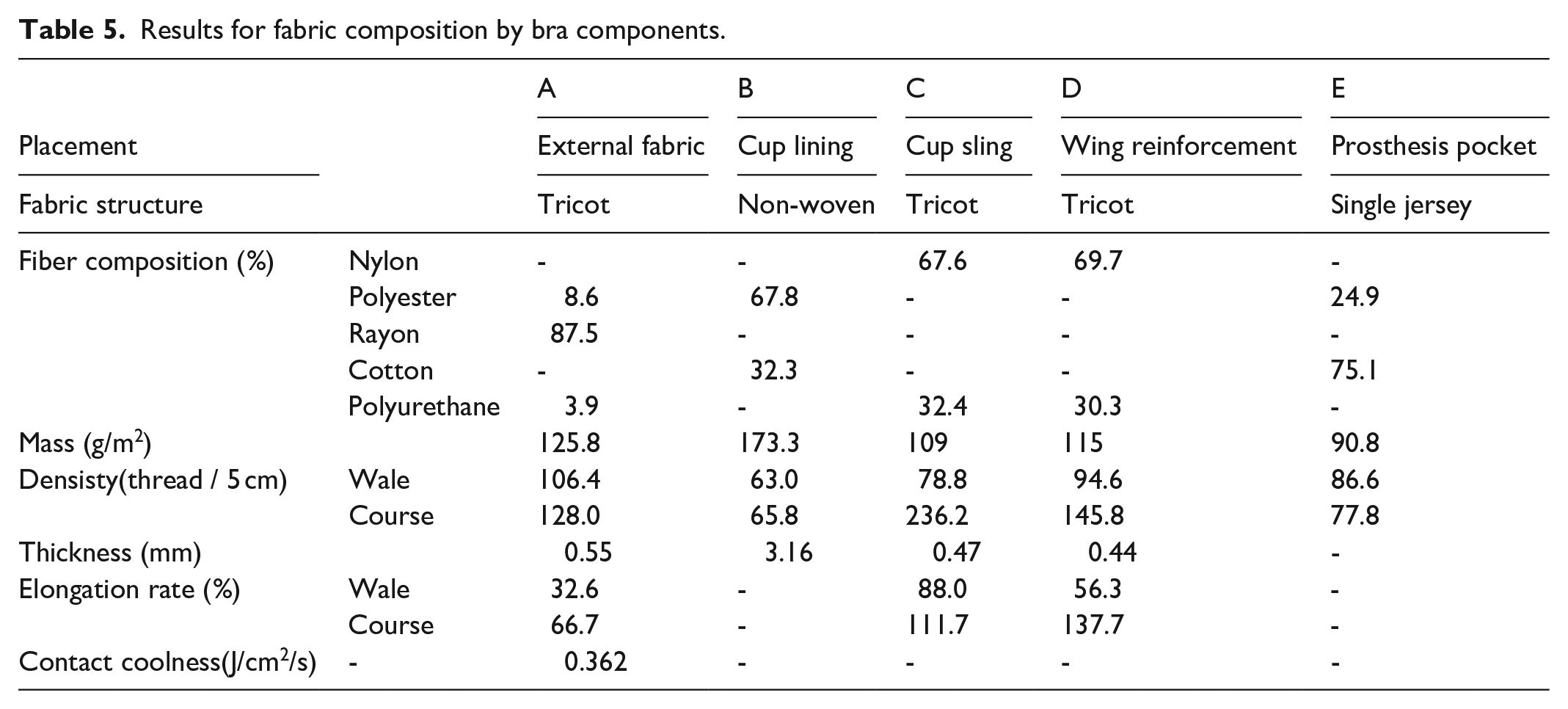
Given the physiological impacts of breast cancer treatments and the use of prosthetics, including increased body temperature and sweating, this study acknowledges the critical role that fabric selection plays in designing mastectomy bras. The increased use of composite fabrics in mastectomy bras is largely due to their high elasticity, aiding in better supportive capabilities. However, such fabrics often display poor sweat absorption properties leading to discomfort. Moreover, post-mastectomy, patients’ skin tends to become more sensitive, underlining the need for fabrics that minimize skin irritation and provide a cooling effect, in addition to promoting ventilation. The fabric composition is indicated in Table 5, and the fabric placement are shown in Table 6.
Results for fabric composition by bra components.
The technical drawing of the bra, informed by fabric composition.
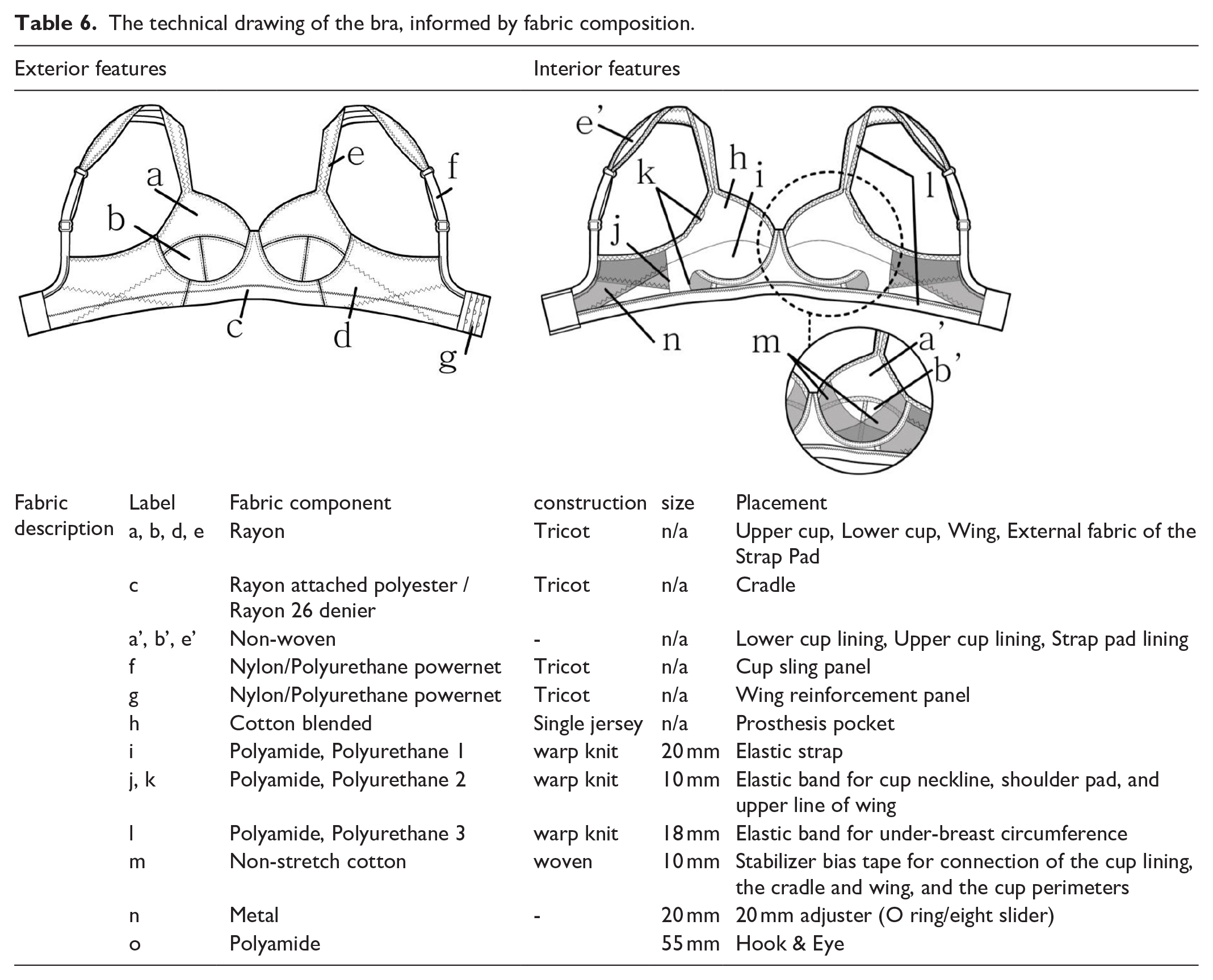
For the external fabric (A) of the Prototype bra, a tricot rayon fabric containing 87% rayon, 6.8% polyester, and 3.9% polyurethane was selected. In this study, the external fabric of the prototype mastectomy bras was chosen for high rayon content material of its suppleness, and cooling properties. This material, renowned for its breathability and skin-friendly characteristics, should decrease irritation while enhancing comfort. According to the JIS L 1917 standard, a fabric is considered to possess a cooling effect if it has a value of 0.100 j/cm2/s or greater. 77 The higher the Qmax value, the better the coolness sensation of the fabric.63–65 In comparison to a previous study 78 where the contact coolness sensation of a fabric identified as a cooling material was 0.204 j/cm2/s, and the experimental result for the Qmax value of the cooling material showed in another study 79 was 0.183 j/cm2/s, the rayon fabric used in this research demonstrated a value of 0.362 j/cm2/s. This suggests that the rayon fabric under consideration exhibits superior contact coolness sensation. The external fabric (A) can be referred to as Rayon, was placed on the Upper cup, Lower cup, Wing, and external fabric of the Strap Pad. Additionally, to ensure the stability of the bra’s position, elasticity is typically restricted in the cradle area. To increase the fixed position of the bra, a non-stretch polyester and Rayon 26 denier fabric is attached to the inside external fabric for use.
The non-woven fabric used to form a volume of the bra cup lining. Typically, both sides of non-woven are bonded with another fabric for use. Non-woven fabric is breathable, lightweight, and has structural strength, making it suitable for such applications.69,70 In this case, one side of the non-woven fabric was bonded with a single jersey, a blend of polyester and cotton, and a 15 denier non-stretch nylon fabric. As a result of blending, the non-woven fabric composite is a cotton blended fabric(B) that combines 67.8% polyester and 30.3% cotton. Polyester, being a synthetic fiber, offers high resilience, allowing the bra cup to maintain its shape even after continuous washing and extended use. Non-woven fabric is a type of fabric made by chemically or mechanically bonding raw materials without going through the yarn-spinning process. Non-woven fabrics used in bras vary from hard to soft types. For enhanced breathability 2200D non-woven was chosen, a fabric slightly softer than the hardest 6800D non-woven. Non-woven fabric is primarily used in the lower cup lining, upper cup lining, and strap pad lining. For the connections of non-woven fabric cups, as well as the connections between the cradle and wings and along the cup perimeter, a non-stretch cotton bias is utilized. This tape, being 100% cotton, offers the advantages of being soft and less irritating upon skin contact.
The tricot powernet material for the supporter in the mastectomy bra, primarily due to its excellent stretch, strength, and recovery properties. It provides comfort and durability, making it ideal for creating a supportive structure that can bear the weight of a breast prosthesis. The sling of the cup is made from a powernet (C), a blend of 67.6% nylon and 32.4% polyurethane. Nylon, known for its exceptional strength, abrasion resistance, and elasticity, is suitable for offering the required structure and support for the cup. Simultaneously, polyurethane enhances the blend’s elasticity and resilience, ensuring the cup maintains its shape and provides a consistent fit. In the wing section of the bra, a powernet (D) with slightly greater rigidity was utilized to enhance the bra’s positional stability. Powernet for the wing’ reinforcement is made up of 69.7% nylon and 30.3% polyurethane, and has a mass of 115 g/m2, which is greater than the mass of powernet for the cups (C), which is 109 g/m2. As the referencing research43,46 suggests a better fit and stability can be achieved by constructing the external layer entirely from a low elongation and the sling from a high-elasticity material, the fabrics consistent in this study, the cup sling and the wing reinforcement fabric had a higher elongation rate than the external fabric. The external fabric (A) showed an elongation rate of 32.6% in the wale direction and 66.7% in the course direction. In contrast, the powernet (C) showed an elongation rate of 88.0% in the wale direction and 111.7% in the course direction, while the powernet (D) showed an elongation rate of 56.3% in the wale direction and 137.7% in the course direction.
The prosthesis pockets of prototype are crafted from a Cotton blended single jersey fabric(E) that combines 75.1% polyester and 24.9% cotton. Cotton, a natural fiber, imparts softness and breathability to the material, thus reducing the risk of discomfort and skin irritation. Additionally, its superior moisture absorption capabilities further enhance the wearer’s comfort by managing sweat and preventing moisture buildup.
Additionally, shoulder straps and elastic bands made of a warp-knitted blend of Polyamide and Polyurethane were used. The band used for the shoulder straps, while less stretchy than the elastic band, provides better support. Instead of the commonly used 10 mm band, a 20 mm band was employed to enhance corrective power. The shoulder straps extend from the back scoop to the shoulder pad area, featuring an eight-shaped slider for length adjustment and an O-shaped ring to connect to the shoulder pad via bar tack stitching. A 10 mm elastic plush band, featuring a soft side and chosen for its straight design without picots, aims to reduce skin irritation.
Anthropometric data of participant
The participants in this study were four volunteers who voluntarily enrolled in the bra fit assessment process, drawn from those who participated in the user-requirements performance interview for the bra. Bra pattern-making sizes were designed using participant body data. The average age of the participants was 49.75 years, with an age range of 45–54 years. According to BMI classification, two participants were classified as overweight, while the other two fell within the normal range. All participants had undergone unilateral total mastectomy for breast cancer and had not received reconstructive surgery. All participants also had prior breastfeeding experience. Notably, three out of the four participants developed swelling after undergoing concurrent lymph node dissection during their breast cancer surgery (Table 7).
Anthropometric data of participant.

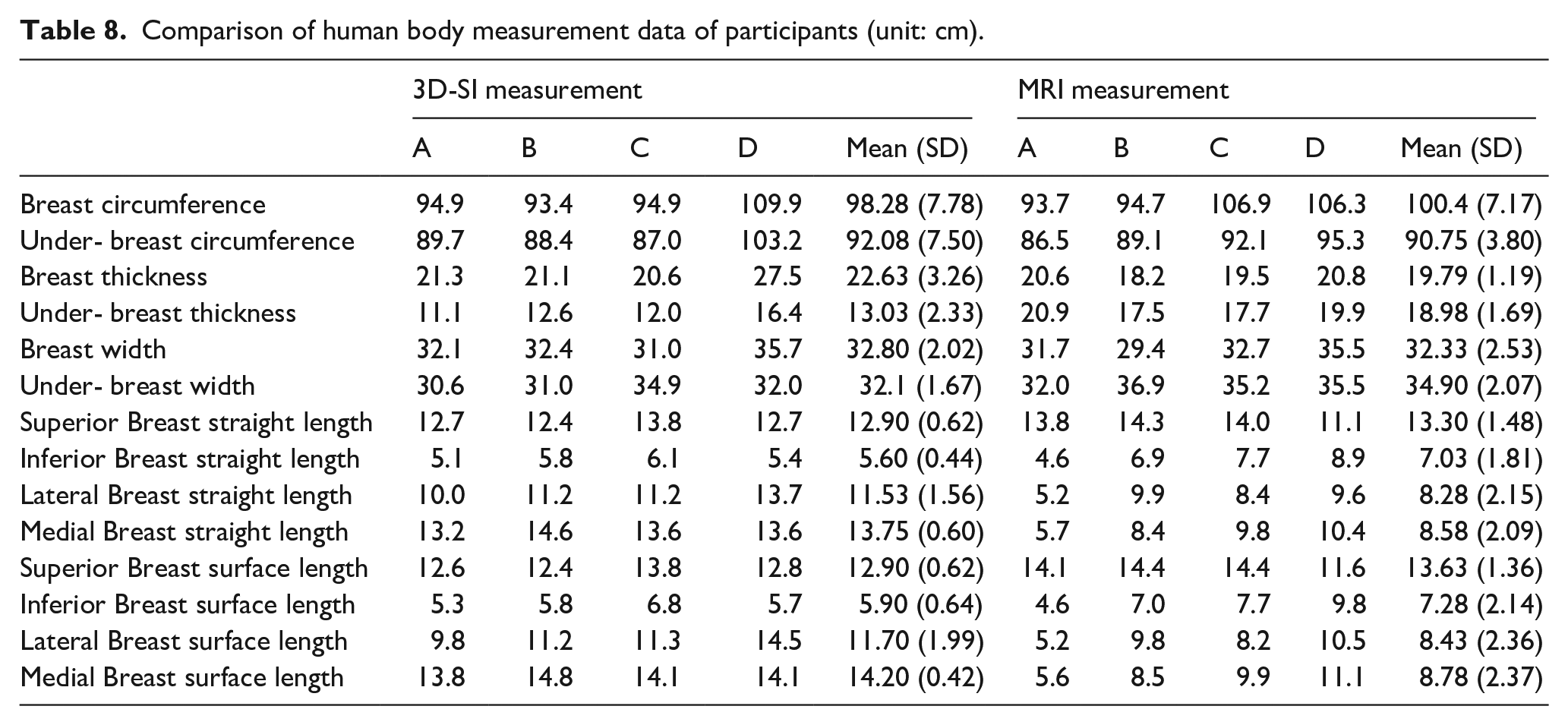
Body data was analyzed from participants’ 3D-SI and MRI images, encompassing a total of 14 metrics (Table 8). Notably, measurements of breast thickness, breast width, and under-breast width revealed differences between standing and prone positions. Additionally, among the Superior, Inferior, Lateral, and Medial points around the breast, the length of the outer boundary point was impacted by posture. The lengths of the lateral and medial points of the breast showed longer in 3D-SI measurements compared to MRI data due to breast sagging.
Comparison of human body measurement data of participants (unit: cm).
Factor analysis for bra design parameters
Factor analysis was carried out on 14 items extracted via reliability analysis, yielding three distinct factors, with details displayed in (Table 9). The first factor involved in the formation of the three-dimensional shape of a bra cup, encompassing items, such as breast circumference, medial breast surface length, lateral breast surface length, superior breast surface length, and circumference surface horizontal length, holds a factor load of 6.05 and accounts for 43.20% of the cumulative load. These items, primarily related to bra cup design, identified the length of the body surface as the factor 1 representative size due to its highest correlation with other items. The second factor incorporates under-breast circumference, breast width, vertical breast length, and under-breast width, holding a factor load of 3.45 and a cumulative load of 24.63%. The factor 2 items can shape the bra’s length, base, and wings, with under-breast circumference, breast width, circumference surface vertical length, and under-breast width serving as the representative size due to its strong correlation with other items. The factor 3, accounting for a factor load of 3.17 and a cumulative load of 22.65%, primarily influences the design of the base structure for bra pattern-making, including under-breast thickness, breast thickness, the length from the central line to B.P., and inferior breast surface length selected as the representative size. Thus, we’ve selected the column surface length, under-breast circumference, and under-breast breast thickness as representative dimensions for each factor, respectively. Using these representative sizes, we were able to derive seven items essential for bra developing, as indicated in Table 10. the circumference length significantly impacts cup design elements like breast circumference, medial breast surface length, lateral breast surface length, superior breast surface length. Regarding the under-breast circumference, both the breast width, circumference surface vertical length, and breast thickness showed significant results, enabling us to establish the height of cradle and the bra length.
Factor analysis from MRI data measurements.

Regression analysis from MRI data measurements.
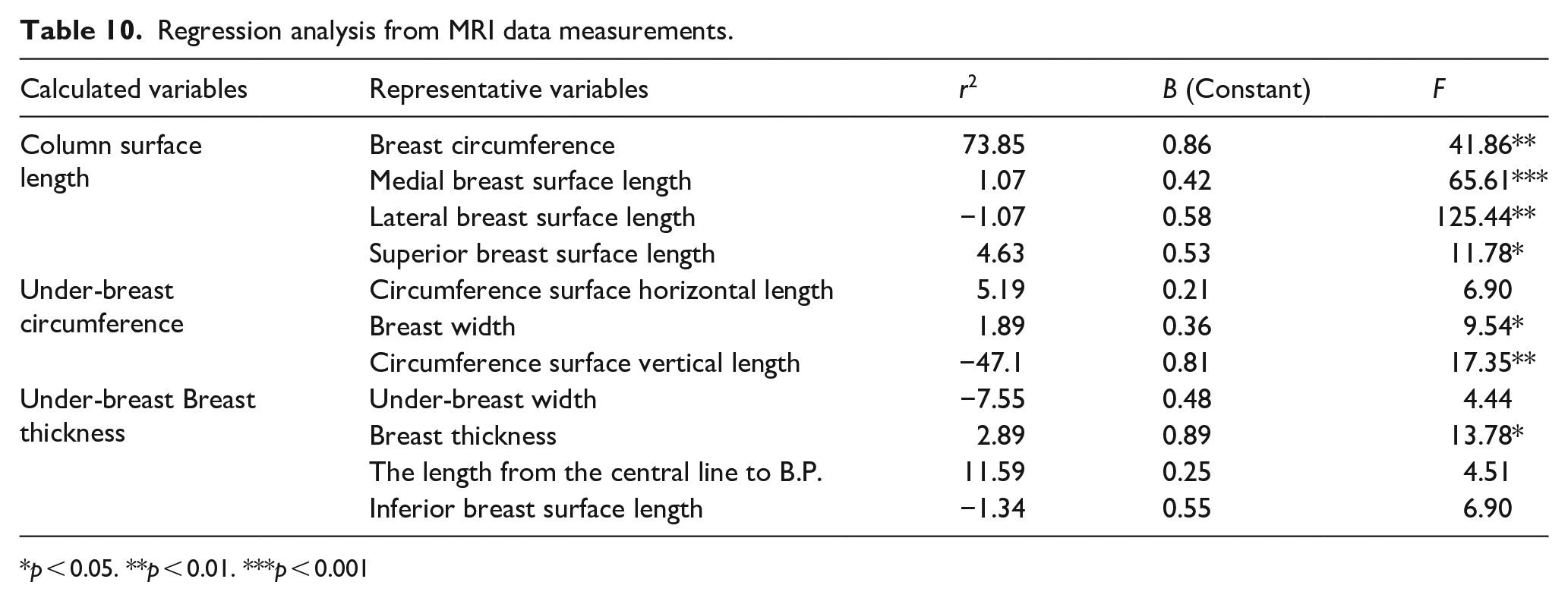
p < 0.05. **p < 0.01. ***p < 0.001
Lastly, breast thickness significantly correlates with under-breast thickness. The following calculation formula was established based on the results of the regression analysis, enabling the derivation of bra developing dimensions from MRI data for bra development using equation (4).

The developing dimensions for the creation of Prototype Bra 1 using 3D-SI data and Prototype Bra 2 using MRI data modified by equation (4) are as follows (Table 11). Additionally, Table 11 compares statistically the developing dimensions of Prototype Bra 1, Prototype Bra 2, and the Control bra. The finished samples of the Prototype bras applying the design and improvement of each component of the Prototype bras according to improvement requirements are shown in Figure 7. The statistically significant differences in measured values by bras were observed at the following items: the sideline on the upper cup length, the verge line on the cup length, the cradle height, the cradle length, the wing upper line length, and the back scoop length. The statistically significant difference in length observed in the sideline on the upper cup length and the tendency for greater length in the neckline length suggests that the Control bra has a larger upper cup size compared to the Prototype bras. In the cup perimeter length, the Prototype bras were designed with a greater length than the Control Bra, which is also related to the difference observed in the cradle height. To prevent the cup neckline from lifting, the Prototype bras were designed to the reduce upper cup size extend the length of the cup perimeter, and increase the cradle height, providing effective coverage for both the intact and prosthetic breast. In contrast, the cradle length appeared shorter in the Prototype bras compared to the Control Bra. The support panel located on the upper edge of the cup designed in the Control Bra was removed in the prototype. This support panel can accentuate the area where lymph nodes have been removed by fitting closely to the underarm area. Furthermore, because the Prototype bra is designed without side seam lines, the cradle width appears shorter. Lastly, examining the wing upper line length, back scoop length, and the length of the prototype the back scoop length was increased relative to the Control Bra, which resulted in a serial reduction in the length of the wing upper line length.
Comparison of bra measurements (unit: cm).


p ⩽ 0.05. **p ⩽ 0.01. ***p ⩽ 0.001.

Prototype bras completion.
Quantitative evaluation by breast movement analysis
In the study conducted, the movement of the intact breast and prosthesis along the x-axis (lateral) movement during one gait cycle was observed when walking at velocities of 2 and 4 km/h, while wearing the Prototype Bra 1, Prototype Bra 2, and a Control Bra. Statistically significant differences were seen in the breast movements among these three types of bras (Table 12). At 2 km/h, Prototype Bra 1 showed an average movement of 5.80 cm for the intact breast and 7.03 cm for the prosthesis. Prototype Bra 2 demonstrated a smaller average movement, with 5.37 cm for the intact breast and 6.27 cm for the prosthesis. The Control bra had an average movement of 5.37 cm for the intact breast and 6.27 cm for the prosthesis. The lowest lateral movements for both the intact breast and prosthesis were seen in Prototype bra 2. At a velocity of 4 km/h, Prototype Bra 1 recorded an average movement of 6.12 cm for the intact breast and 6.46 cm for the prosthesis. Prototype Bra 2, on the other hand, continued to demonstrate a lesser movement, with an average of 5.36 cm for the intact breast and 6.33 cm for the prosthesis. The Control Bra displayed more significant movements, with an average of 6.32 cm for the breast and 7.43 cm for the prosthesis. Prototype Bra 2 consistently exhibited the lowest lateral movement of the intact breast and prosthesis at both velocities, with the smallest standard deviations of 0.39 (remaining breast side) and 0.45 (prosthesis side).
Comparison breast displacement comparison related to x-axis (lateral) breast movement. (unit: cm).

p ⩽ 0.05. **p ⩽ 0.01. ***p ⩽ 0.001.
As a result of examining the displacement according to the A control of each bra cup at each velocity revealed that there was a larger lateral movement on the prosthesis side than on the remaining breast side, with the increase in velocity not having a significant impact. Regardless of the velocity changes, the sequence of properly limiting lateral movements for each bra cup was as follows: Prototype Bra 2 > Prototype Bra 1 > Control Bra. Prototype Bra 2 had the smallest average and standard deviation of lateral movements of the bra cup, indicating better design and size adjustment for minimizing these movements. Notably, the lateral movement in the cup of the Prototype bras was less than that in the Control Bra cup, suggesting that the cup and wing supports of the Prototype bras effectively control the lateral movement of the breast. When examining the lateral movement of the breast, intact breasts tend to move more with increased velocity. In contrast, when fitted with a prosthesis, Prototype Bra 1 and 2 demonstrated reduced lateral movements with increased velocity. Notably, Prototype Bar 2 showed similar average values and standard deviations at velocities of 2 and 4 km/h. This suggests that it consistently controls breast movement regardless of velocity, indicating a proper fit and effective support to the breast. When examining the lateral movement of the breast, intact breasts tend to move more with increased velocity. In contrast, when fitted with a prosthesis, Prototype Bra 1 and 2 demonstrated reduced lateral movements with increased velocity. Notably, Prototype bra 2 showed similar average values and standard deviations at velocities of 2 and 4 km/h. This suggests that it consistently controls breast movement regardless of velocity, indicating a proper fit and effective support to the breast.
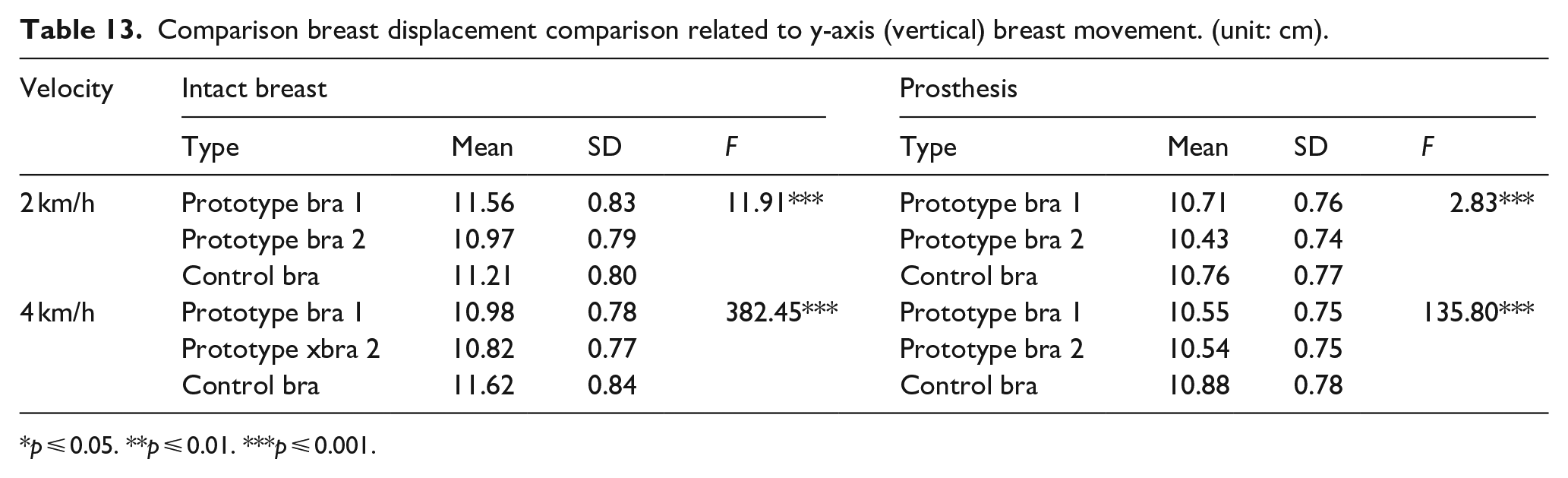
In this study, the intact breast and prosthesis movement along the y-axis direction (vertical) movement during one gait cycle was observed when wearing Prototype Bra 1, Prototype Bra 2, and a Control Bra at velocities of 2 and 4 km/h. The breast movement of each type of bra was statistically different (Table 13).
Comparison breast displacement comparison related to y-axis (vertical) breast movement. (unit: cm).
p ⩽ 0.05. **p ⩽ 0.01. ***p ⩽ 0.001.
At 2 km/h, the vertical movement of the intact breast with Prototype Bra 2 showed the least variation, with an average of 10.97 cm and a standard deviation of 0.79. In contrast, the Control Bra demonstrated the highest variation with an average of 11.21 cm and a standard deviation of 0.80. The movement of Prototype Bra 1, though greater than that of Prototype Bra 2, was still lower than the Control Bra, with averages of 5.80 cm and standard deviations of 0.41. Furthermore, for prostheses, Prototype Bra 2 showed the least variation with an average of 10.43 cm and a standard deviation of 0.74, whereas the Control Bra showed the highest at an average of 11.21 cm and a standard deviation of 0.80. Both intact breasts and prostheses showed restricted vertical movement in the order of Prototype Bra 2 > Prototype Bra 1 > Control Bra at 2 km/h velocity. At 4 km/h, the intact breast movement in Prototype Bra 2 showed the least variation, with an average of 10.82 cm and a standard deviation of 0.77, which was lower than both Prototype Bra 1 (average 10.98 cm, SD 0.78) and the Control Bra (average 11.62 cm, SD 0.78). At 4 km/h, the order of proper breast movement control was Prototype Bra 2 > Prototype Bra 1 > Control Bra. As velocity increased, the vertical cup movement of the Control Bra increased, while that of Prototype Bra 1 and Bra 2 decreased, suggesting that the sling of the cup and the reinforcement panels for the wing in these bras provide more effective support with increased velocity. Breast movement in the y-axis direction was more pronounced than in the x-axis movement. The data showed a trend where the vertical movement of the bra was more pronounced than its lateral movement. Interestingly, the side of the prosthesis, which is detached from the body, predominantly moved horizontally, while the intact breast side exhibited more vertical movement. Significantly, when comparing the average values of these bra cup movements, the sequence was consistently observed in the reduced breast movement on both axes Prototype Bra 2 > Prototype Bra 1 > Control Bra. This movement underscores the effectiveness of the sling of the cup and the reinforcement panels for the wing in the Prototype bras, maintaining a tendency for consistent vertical breast movement limitation across different velocities. Prototype bra 2, which was custom-made based on MRI measurement results, demonstrated superior control over lateral and vertical breast movement compared to other bras. Notably, the fact that Prototype bra 2 more effectively controls breast movement than Prototype bra 1, which was developed using the same method and material, suggests that the conversion of MRI data is more appropriately suited for the formation of the cup.
Qualitative evaluation of the fit
To evaluate bras comparatively, subjective sensory evaluations were conducted on Prototype Bra 1 and 2 and the Control Bra. Statistically significant differences emerged in overall fit and comfort-related questionnaires between Prototype Bras 1 and 2 and the Control bra, while some questionnaires in the comfort based on movements showed statistical differences (Table 14).
Qualitative evaluation of the fit.

p ⩽ 0.05. **p ⩽ 0.01. ***p ⩽ 0.001.
Fit evaluations related to the front cradle, cup, wings, and shoulder straps were statistically significant across all categories. Prototype Bra 2 received statistically superior evaluations. While Prototype Bra 1 was similar to the Control Bra, it received better evaluations in terms of the fit of a wing, prosthesis pocket size, comfort of armpit, tactile of fabric, overall supportive sensation, and overall fit of the bra. The fit on the wing was higher in Prototype bra 2, whereas Prototype bra 1 excelled in wing pressure, ensuring comfort under the arm. Consequently, Prototype bra 2 demonstrated the best overall supportive sensation and fit, with a larger preference deviation than Prototype bra 1 and the Control Bra. All items related to the fit evaluation when wearing a prosthesis showed statistically significant differences. Prototype Bra 2 outperformed other bras in items related to the degree of adjustment, prosthesis pocket size, and entrance size for prosthesis wear. Upon wearing the bras showed a statistically significant perception of symmetry between the intact breast and the prosthetic breast. Prototype Bras 1 and 2 allowed wearers to feel a balanced sensation due to an internal sling structure improving breast adjustment functionality. Regrettably, since the Control Bra lacks wing reinforcement panels, a comparative evaluation couldn’t be conducted. Concerning discomfort or pain attributed to shoulder pads or straps, the Prototype bra garnered more favorable feedback in comparison to other bras. This suggests that, in bras designed with heightened anthropometric compatibility, the collective interaction of each component reduces the pain stemming from breast weight. The assessment of fabrics revealed statistically significant variations among the bras. Prototype bras were rated higher, indicative of its employment of breathable and contact-cooling materials. Overall fit evaluation showed statistically significant results across all items. The cohesion of the breast by the bra cup and the adherence of the prosthesis were evaluated to be better in Prototype bra 2. Stability, correction degree, pressure level, overall fit, and comfort were notably better in Prototype bra 2. The participants evaluated that Prototype bra 2 was more comfortable than Prototype bra 1, with a better-fitting cup and reduced bra cup movement. The cohesion of the breast by the bra cup and the adherence of the prosthesis were evaluated to be better in Prototype bra 2. Stability, correction degree, pressure level, overall fit, and comfort were notably better in Prototype bra 2. The fact that Prototype bra 2 received better subjective fitting evaluations than Prototype bra 1, despite both being developed using the same method and materials, suggests that MRI data may be more suitable for bra developing. Additionally, the relatively better fit of bra cups developed using MRI data infer that the characteristics of the breast may be more appropriately captured by MRI measurement techniques. This implication is supported by prior research indicating that traditional breast measurement methods for bra developing may be inadequate. 80 There was a statistically significant difference in positional stability during daily activities, particularly concerning changes in the cup position. For Prototype Bra 2, there was a notable shift in the position of the bra’s center front. As a result, it might be beneficial to consider methods to minimize positional fluctuations, such as elevating the front center’s height. Both Prototype Bra 1 and the comparative bra exhibited significant cup position alterations. While other statistical disparities weren’t pronounced, Prototype Bra 1 displayed tendencies for shifts in either prosthetic breasts or the intact breast position within the cup. The cup design of Prototype bra 1 is based on the 3D-SI measurement method.
Conclusion
In conclusion, this study developed functional bras for mastectomy patients, leveraging medical imaging techniques to tailor bras to individual post-surgical needs. Discomfort and physical complications arise from existing mastectomy bra designs, emphasizing the need for bras that align with the altered body shapes of mastectomy patients and accommodate prostheses effectively. Also, mastectomy bras have some improvement points such as poor fit, discomfort due to the prosthesis’s weight, skin irritation from materials, and a lack of consideration of the Asian body type, particularly for South Korean patients.
Through an innovative approach combining Magnetic Resonance Imaging (MRI) and Three-Dimensional Surface Imaging (3D-SI), this research successfully developed a prototype bra that aims to mitigate these challenges. The results show promising directions for the design of mastectomy bras that can significantly improve the quality of life for breast cancer survivors. Key findings include the effective control of prosthesis displacement, enhanced wearer comfort, and the potential for custom-fit bras based on precise medical imaging data, addressing both physical and psychological needs post-mastectomy.
Based on the comprehensive investigation and innovative methodologies presented in this research, specialized bras for mastectomy patients. By integrating 3D body imaging techniques such as MRI and 3D-SI, this study has successfully designed and assessed a prototype bra that significantly improves the comfort and quality of life for post-mastectomy patients. Key findings include the effective control of prosthesis displacement, enhanced wearer comfort, and the potential for custom-fit bras based on precise medical imaging data, addressing both physical and psychological needs post-mastectomy. Bras developed using MRI and 3D-SI imaging had different dimensions, yet the materials and developing methods applied were identical. However, the prototype bra created with MRI-measured data received better evaluations for breast movement restriction and fit compared to the bra made with 3D-SI. This suggests that MRI data may better describe breast morphology than 3D-SI.
This research marks a significant step toward personalized post-mastectomy care, offering a new paradigm for the development of mastectomy bras that prioritize the well-being and dignity of survivors. The findings underscore the potential of using medical imaging data to create customized bras that address specific post-surgical needs, reducing the psychological and physical discomfort associated with traditional mastectomy bras. This research contributes significantly to the field by offering a novel approach to post-surgical care, highlighting the necessity for ongoing innovation in the design of mastectomy bras to enhance patient well-being. The study advocates for the continued exploration of non-invasive measurement techniques and the importance of addressing both the physical and psychological needs of mastectomy patients through personalized apparel solutions.
Research limitations and directions for future research
This study acknowledges several limitations. A primary constraint was the difficulty in recruiting mastectomy patients, resulting in a relatively small sample size. This small cohort may raise concerns about the representativeness of the study results and the evaluation of various bra sizes. A notable challenge was the reluctance of total mastectomy patients to reveal their illness and expose their bodies for research purposes. Despite efforts, even participants in the interview study expressed their unwillingness to partake in research that required bodily exposure. This limitation emerged due to the ethical requirement that participation in human research must be entirely voluntary, as advised by the Research Ethics Committee. Additionally, a potential source of error identified was the possibility of inaccuracies in marking nipple points on the prosthesis bra cup, which could have been affected by body changes post-mastectomy. This underscores the necessity for a standardized protocol for wearing and evaluating mastectomy bras in future research endeavors.
Despite these challenges, the study makes a significant contribution by highlighting the usefulness of medical imaging in apparel manufacturing. It paves the way for developing personalized mastectomy bras, a promising area for future research. The study’s proposed bra design for mastectomy patients showed effectiveness in controlling prosthesis displacement and enhancing wearer comfort. The study underscores the importance of ongoing innovation in post-surgical apparel, particularly in creating bras that offer support, comfort, and a sense of normalcy for mastectomy patients. However, this study lacks evidence of the relationship between prototype bras and various prosthetics in optimizing design and comfort for mastectomy patients. Therefore, in the future research is needed to refine methods for controlling prosthesis movement and improving fit, considering the various shapes and materials of prostheses and the pocket for prostheses. It calls for further research into non-invasive measurement techniques, the exploration of new materials, and design improvements that can adapt to the diverse body shapes and sizes of mastectomy patients worldwide. Future work should also focus on refining the prototype based on feedback from wear tests, exploring the relationship between different types of prostheses and bra designs, and expanding the study to include a broader demographic to enhance the representativeness and applicability of the findings.
Footnotes
Acknowledgements
Not applicable.
Author’s Note
Youn Joo Kim is also affiliated to Department of Fashion Merchandise Design, Dankook University, Yongin-si, Gyeonggi-do, Republic of Korea.
Authorship
Kim, Y.J. designed prototypes and identified the topic of the study, conducted a literature review, and wrote the manuscript introduction, discussion, and conclusion sections of the manuscript. Goo, D.S. conducted the sample preparation and contributed to the project conceptualization.
Declaration of conflicting interests
The author(s) declared no potential conflicts of interest with respect to the research, authorship, and/or publication of this article.
Funding

Ethics and consent
This research was conducted under the approval and supervision of Seoul National University Institutional Review Board (IRB Approval No: 1908/002-029) regarding ethical issues including consent to participate.