



Abstract
With the progression of age, the risk of falls in the elderly population escalates. Hip fractures are perceived as one of the most severe consequences of such falls and are often described as “the last fracture in one’s life,” with mortality rates reaching 20%−30% and accompanied by a significant rate of disability. To address this pressing issue, our study conducted an in-depth analysis of the mechanical properties of Artificial Cartilage Foam (ACF) and Carbon Fiber Reinforced Polymer (CFRP). Based on this research, we devised a laminated structure where ACF acts as the outer layer, with CFRP positioned centrally, capitalizing on the material’s intrinsic shock-absorbing attributes. Building on this structure, based on this structure, a specialized protective clothing design tailored for the elderly to counteract age-related balance impairments is proposed. Furthermore, we undertook experiments to gage user anxiety levels and assess the wearability comfort of the attire. Our findings indicate that this protective garment can effectively absorb the impact energy generated during falls, significantly reducing the risk of injury in the elderly. Additionally, its ergonomic design helps alleviate the psychological distress elderly individuals may experience due to the fear of falling. This research presents an innovative and effective strategy for enhancing fall protection in the elderly demographic.
Keywords
Introduction
A study published by the World Health Organization 1 showed that the risk of falls was highest in people over 65 years old, with approximately 28%−35% falling at least once a year, increasing to 42% in people over 70. According to the World Health Organization, more than 50% of hospitalizations among the elderly are due to falls, for which approximately 40% of the unnatural mortality rate is in this population. 2 The elderly get, their bones, muscles, and joints deteriorate, and bone mineral density, muscle mass, and strength decline with age. Thus, increasing the risk of falls and the rate of fall-related injuries are known as the most common causes of chronic pain, dysfunction, disability, and death for the elderly. There is an increased risk of fragility fractures following a fall, where the fracture is due to low-energy trauma (a fall from a standing or lower height). Approximately 50% of intertrochanteric fractures and hip fractures in the neck of the femur are associated with falls and injuries for the elderly. Among the top five fatal major injuries affecting the elderly are all related to falls. 3 Hip fracture is among the most important causes of morbidity and mortality in the elderly, 4 and 95% of hip fractures are due to falls. 5 Approximately 50% of the elderly requires care after a hip fracture, and 1/3 of them are severely disabled and require continuing care. Many of them have difficulties completely rehabilitation from a hip fracture, and it results in an overall 12%−20% reduction in expected survival rate among the elderly; approximately 30% of hip fracture patients will die within the first year, with a 5%−20% increased risk of death within the first year after fracture.6–8 More patients will experience long-term sequelae as loss of function.9,10 Hip fracture due to falls of the elderly has a destructive effect on their personal health and living standard. It is also a devastating blow to modern healthcare systems. The annual morbidity of hip fractures is expected to reach 4.5 million cases worldwide by 2050. 11 Parkkari et al. 12 found that most hip fractures are due to the trochanter of the femur of falls, with hip fracture mortality rates as high as 20%–30% and high disability rates. It indicates that the research on hip fracture prevention needs to focus on lateral falls. The hip protector may reduce the risk of hip fracture by mitigating the effects of falls.13,14 However, the elderly are reluctant to wear hip protectors due to the inconvenience of donning and doffing and being easily damaged.15,16 Therefore, promoting the lightness and convenience of the hip protector and enhancing its protection performance could increase the willingness to wear it among the elderly and ensure its protection capabilities to them.
Some scholars have provided valuable views about different fall impact force protection materials. 17 Choi et al. conducted a “torso release” experiment to prove the effect of outdoor public facilities materials in distal radius fractures during fall prevention and to emphasize the development of outdoor public facilities surface materials requirement. 18 Li et al. conducted a fall experiment to quantify the surface material characteristics on impact forces, which provided valuable information for the ground design of human fall protection and the development of human head injury standards. 19 Wang et al. used composites reinforced with braided textiles that exhibit high structural stability and excellent damage tolerance to enhance protective materials in sports, making them ideal materials for sports-protection equipment. Foster et al. explored the viability of using open-cell polyurethane auxetic foams to augment the conformable layer in a sports helmet and improve its linear impact acceleration attenuation. 20 As for impact forces protective clothing, most studies were conducted by sports or particular professional jobs, such as Ade N, who investigated the use of airbag safety vests in equestrian sports. 21 Hughes et al. Assess the impact force attenuation properties of the materials in rugby clothing. 22 Harifi, T (Harifi and Montazer, Tina) team used nanotechnology to open new routes for producing functional sportswear. 23 Teyeme et al. concluded effective methods for the comfort and impact performance of protective and sports clothing in the combination of objective and subjective measurement techniques. 24 However, it has yet to explore how to protect the elderly from hip fractures in composite energy-absorbing materials. Due to the complexity of the environment of falls for the elderly, it requires innovative and adaptable, portable, better protective performance and responsive new materials to meet their requirements and protect them from injuries under various environments.
Therefore, in this paper, we conduct innovative research about protection materials for hip fractures due to falls for the elderly. Above all, we describe the characteristics and applications of the studied materials and then, through trial and error, develop a protective method to defend against the dangers of different environments at the moment while with superior protective performance to reduce hip fractures and other related injuries caused by accidental falls of the elderly.
Materials and methods
Materials
Artificial Cartilage Foam Material
Artificial Cartilage Foam Material (ACF) is a new polymer material with a three-dimensional ultrastructure designed based on the function and structure of human cartilage, as shown in Figure 1. 25 Its main component is polyurethane, 26 with stable surface microstructure, mechanical properties, and energy absorption. The combined effect of this material’s matrix stiffness and micro and nanostructure is the key to improving the material’s energy absorption capacity and multiple impact resistance.

Artificial cartilage foam (ACF).
The internal molecular structure of ACF artificial cartilage bionic energy-absorbing material is between 20 and 200 nm in size, which is very similar to the structure of human cartilage. 27 When the material is impacted, its internal molecular side chains deform in a highly elastic state, prolonging the time of velocity change of the cushioned object, at the same time, converting the kinetic energy of the impact into thermal energy through deformation, which can absorb more than 70%−90% of the impact force and maximize the protection of the human body from the damage of the impact force. Under 50 J energy impact, the maximum peak force of five impacts, the maximum deformation, and the energy absorption capacity are almost unchanged. With stable multiple impact resistance, good recoverability has a broad application prospect in multiple impact protection.
Carbon Fiber Reinforced Polymer material
Carbon Fiber Reinforced Polymer (CFRP) is a functional material with carbon fiber as reinforcement and polymer resin as matrix, which has a series of excellent properties such as high specific strength (about 761 × 103 N-m/kg, 4–5 times that of steel), lightweight (about 1.7 g/cm3), etc., which are listed as one of the strategic critical materials for the country in the 21st century. 28 CFRP is light, stiff, and strong and can provide central stiffness and support for composite laminates.
CFRP can reduce the total weight of an object by more than 50% compared to using steel structures as the primary manufacturing material and by more than 30% compared to aluminum alloy or magnesium alloy structures. 29 In addition, CFRP is also an excellent protective material because of its higher rigidity and energy absorption than traditional metallic materials, with 6–7 times more collision energy absorption than steel and 3–4 times more than aluminum. 30 CFRP has the advantages of superior impact resistance, energy, shock absorption, viscoelasticity, etc. It also has the inherent properties of carbon materials and the soft workability of textile fibers. 31 Its excellent overall performance is incomparable to any single material. CFRP is a high-performance composite material, and its formation process involves two main components: fibers and the matrix, as shown in Figure 2.

Carbon fiber reinforced resin matrix composite.
Synthetic fibers, as a crucial constituent of CFRP, are typically produced from materials like polypropylene, polyacrylonitrile, or other organic polymers. These raw materials are initially synthesized into polymer chains through a polymerization reaction. Subsequently, these organic polymer fibers undergo a high-temperature process known as carbonization to transform them into highly pure carbon fibers. During carbonization, non-carbon elements in the organic raw materials, such as hydrogen, oxygen, nitrogen, are eliminated, resulting in high-strength and high-stiffness carbon fibers. This process is typically carried out in an oxygen-depleted environment to prevent oxidation, ultimately yielding carbon fibers.
The matrix of CFRP predominantly employ non-biodegradable materials, particularly thermosetting resins, which grant them remarkable environmental durability and structural robustness. Thermosetting resins belong to the class of polymers characterized by their three-dimensional network structure post-curing, providing outstanding stability even at high temperatures without the risk of softening or melting. In the realm of CFRP production, epoxy resin (EP) stands as a prevalent choice for the thermosetting resin matrix. This matrix is achieved through a chemical reaction that combines epoxy monomers with curing agents, resulting in a solid, thermosetting foundation. Epoxy resin is favored for its exceptional adhesion, strength, and resistance to chemical corrosion, rendering it versatile and well-suited for a broad spectrum of applications. As a consequence, CFRP has emerged as a pivotal reinforcement material for advanced composites, playing a crucial role in industries such as aerospace and weaponry.
Methods
Key material structure design methods
ACF materials exhibit the characteristics of integrated cushioning, shock absorption, and energy absorption. At a height of 800 mm, ACF materials display a peak impact resistance ranging from 9000 to 22000 N, which led to the selection of 3-mm thick ACF material. To optimize impact protection, a sandwich structure was designed, with the outer layer consisting of ACF material and a CFRP (Carbon Fiber Reinforced Plastic) spring plate in the middle. During a fall, the outer ACF layer absorbs 70%–90% of the impact force, reducing the instantaneous impact forces. Utilizing a CFRP spring plate with an elastic modulus of 49 effectively absorbs the remaining force, as depicted in Figure 3, further reducing the impact force by 77%–99%. The final impact force transmitted to the body is only 1%–9%, minimizing the risk of fatal injuries to the greatest extent and providing maximum protection to the hip joint and femur. The energy absorption and transmission structure is illustrated in Figure 4.
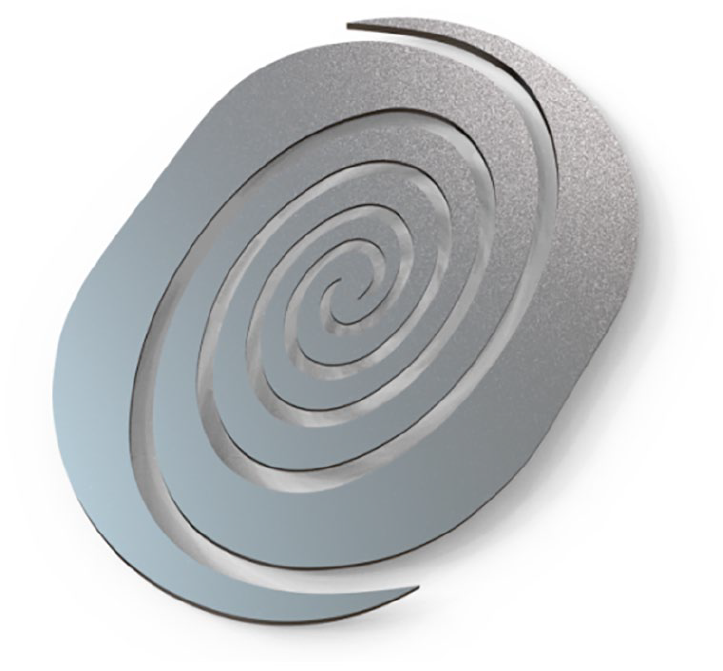
CFRP leaf spring structure diagram.

Energy absorption transfer diagram.
The composite material structure designed for fall protection in this paper is based on the integration of two ACF energy-absorbing materials with a CFRP plate spring. This design takes into account the curvature of the hip joint, allowing it to conform to a fitting arc, denoted as “r,” as depicted in Figure 5. To achieve this, an appropriate adhesive or resin is utilized to bond the edges of the CFRP materials, creating a hollow space. This hollow space provides the necessary flexibility and mobility for the CFRP spring within the ACF material. This bonding method ensures a secure connection between the layers, guaranteeing the stability of the ACF-CFRP sandwich structure. Additionally, the use of stitching or a combination of adhesive and stitching can be considered to further enhance the structural stability.
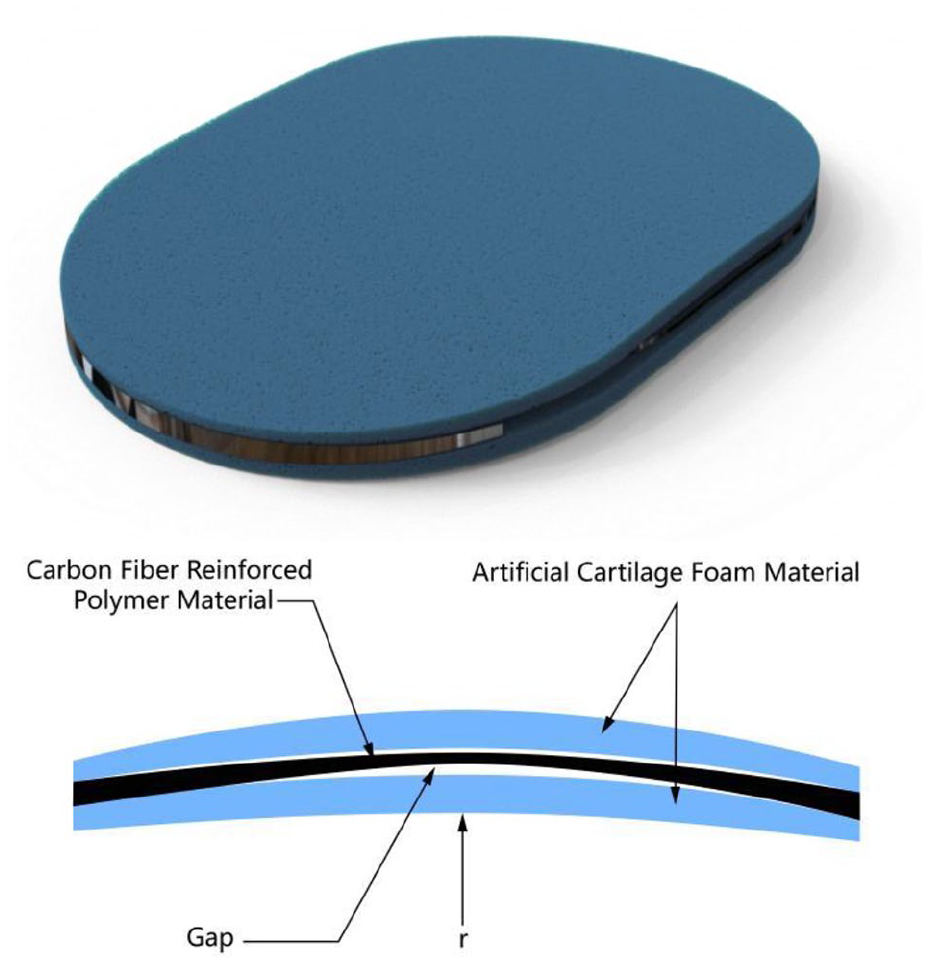
ACF-CFRP composite energy-absorbing material section.
The thickness of the upper and lower ACF energy-absorbing materials gradually tapers from the center toward the ends. This serves a dual purpose: it reduces the impact force in the central region and ensures that the material’s edges remain inconspicuous under clothing. In the central portion between the two ACF energy-absorbing materials, CFRP material forms the space necessary for the plate spring’s thickness. This space allows the plate spring to move within the ACF energy-absorbing material, facilitating the absorption and release of energy by the plate spring.
Apparel structure design methods
The clothing design for the elderly, in particular, should consider their habits, mobility, and behavior, and therefore requires functional changes to clothing. Research on the lifestyle of the elderly found that the target group likes to wear loose and comfortable casual home pants, and the risk of falling is highest in the process of going out and moving around at home. Therefore, overall consideration of the hip fall protection clothing design should meet the elderly’s needs, as shown in Figure 6. The details are described as follows.
Protective design: Protective measures are essential in the case of a lateral impact during a fall, which often poses a risk of injury to the upper femur, particularly the greater trochanter bone. 32 Consequently, this design emphasizes protection on both sides of the hip. Clothing structure data around the hip joint’s greater trochanter were determined through fitting tests to ensure effective protection. ACF-CFRP composite energy-absorbing material protection pads are placed inside an external pocket, securely fastened with nylon straps to minimize sliding. In shaping the protection pads, an elliptical design was chosen based on various considerations. The elliptical shape better accommodates the hip skeletal structure typically seen in older individuals, which tends to have a degree of ellipticity rather than being perfectly circular. This design provides enhanced support and stability, thus reducing the risk of bone fractures during falls.
Parametric design: Taking into account individual variations in older individuals, such as hip curvature and fat distribution, a parametric design approach is employed. This approach allows for adjustments to the ACF-CFRP composite energy-absorbing material protection pads according to individual needs. By altering the thickness and aspect ratio of the protection pads, it can be tailored to the body shape of different elderly individuals, ensuring that the pad aligns with the hip structure of each user. This design flexibility enhances the effectiveness of fall prevention clothing for older individuals, reducing the risk of injury resulting from falls.
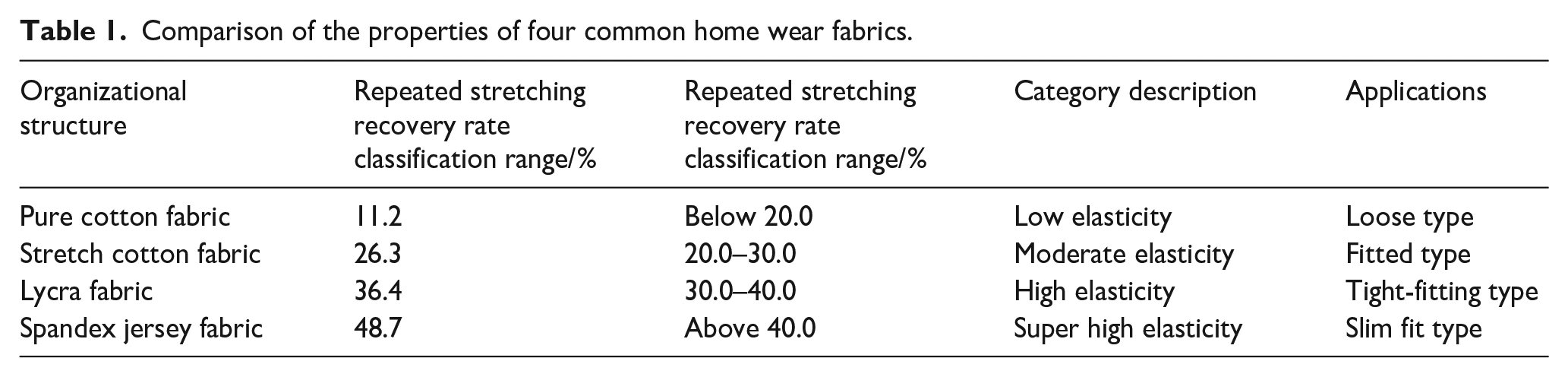
Comfortable design: Clothing is the closest to the human body. The pattern of clothing should be in line with the physical shape of the elderly, so the use of an elastic band design in the waist to help the clothing fits the body better in order to improve wearing comfort; by comparing the properties of four kinds of body-hugging apparel fabrics (such as Table 1) stretch cotton fabric is soft and skin-friendly at the same time has high elasticity, and the human body fit is high. But combined with the characteristics of the fabric and the style of fall protection clothing, it is advisable to choose a high-waist, tight-fitting version, so lycra fabric is a optimal fabric for the elderly fall protection clothing in this paper; ACF-CFRP composite energy-absorbing material protection pads are placed in three-dimensional pockets design around the hip, to make sure there is no sense of oppression on the body. When the human body’s lower limbs are moving, the hip’s dynamic and static form hardly changes. At the same time, the design of the protective pad conforms to the curved surface of the human body, which helps to achieve good movement function.
Convenient for dress and undress design: Because of the reduced mobility of the limb joints of the elderly, the design must consider the convenience of dress and undressing. The use of an elastic band design at the waist allows the elderly to put on and take off the pants more easily. In order to assist the users in better taking off the ACF-CFRP composite energy-absorbing material protection pads, there designed a Velcro with a pull loop outside.
The functionality and esthetics combination design: In order to meet the physical and psychological needs of the elderly population, streamlined decorative lines are added on both sides of the hip, which can highlight the three-dimensional silhouette and hide the prominent appearance of the hip pad; the color is based on soft tones, such as beige, light gray and some other low-saturation gray scheme, which meets the warm and peaceful living atmosphere of the elderly. It is also convenient to match and easy to clean.

Design of elderly fall protection clothing.
Comparison of the properties of four common home wear fabrics.
Through the study of a mass of data related reference to the body of the elderly,33–36 an inclusive sizing specification design is used. After three rounds of sample revisions, we received the relevant specification sizes for the elderly hip fall protection clothing, as shown in Table 2.
Dimensional specifications table.

The design structure of the elderly hip fall protection clothing in this paper is shown in Figure 7. To maximize the movement comfort of the clothing, we applied the side seam splicing method to the structure design. In order to improve the comfort of wearing, we increased the width of the crotch and the inclination angle of the inner crotch seam in the design. According to the position of the hip greater trochanter determined in section 3.2, the garment structure data was confirmed through fitting tests, and the placement of the protective pads was also determined. Combined with the design of the side concealed pockets through which a split line was designed on both sides over the pants. In the mid-position of the front trouser piece, it was divided longitudinally. It extended 2 cm to both sides to increase the space for hip movement.

Garment structure diagram.
Experimental methods
Key material impact experiments
In order to explore the usability of ACF and CFRP materials in elderly hip fall protection clothing, we chose the impact energy experimental method under the protective device. The experiments took the impact resistance of the materials as the core of the evaluation data and collected data related to the energy absorption efficiency and protection effect. The aluminum rods were covered with different experimental materials. Applying a pendulum impact test method with a constant impact force to simulate the data changes of the impact on the hip when the elderly fall under the protection of different materials. Moreover, by comparing and analyzing the experimental data, we obtained the simulation efficiency of the impact protection performance of different materials when the elderly falls. To evaluate the impact protection performance, we conducted the experiments according to the arrangement of the drop test equipment shown in Figure 8. The microcomputer-controlled metal pendulum impact test machine used in this experiment is from Shenzhen Meister Technology Co., Ltd. in China (model ZBC2303-C). The experimental unit is Shijipaichuang Co., Ltd., certified nationally in China. The aluminum alloy bar was processed into a 55 mm × 10 mm × 10 mm square with no opening access according to the equipment requirements in this experiment. The impact pendulum was 2 mm in width, and the effective area was 20 mm² with a constant 300 J of the impact force.

Pendulum impact tester.
The experimental method selected, the pendulum impact test, known as the Charpy impact strength method, is a traditional mechanical test method used to test the impact toughness of materials. It is widely used due to its simplicity, time-saving, visualization, and other characteristics. The principle is to place the specimen on the pendulum impact machine’s experimental table, using its free fall impact force so that it bends and is subject to load until it breaks. The impact toughness of the material is evaluated by assessing the impact energy consumed per unit cross-sectional area, that is, the impact energy absorption ability of the experimental material specimen.
The basic working principle of the pendulum impact tester is to use the kinetic energy of the free fall of the pendulum to hit the experimental material specimen, resulting in impact force, which causes the sample to deform or break. After impacting, the pendulum continues to fall until all the kinetic energy is converted into potential energy. At this point, the tester calculates the energy consumed during the fall of the pendulum by measuring the height to conclude the impact energy absorbed by the specimen. The impact resistance can be evaluated by measuring the impact energy the specimen absorbs. According to the physical principle of impact, kinetic energy transformation uses the energy absorbed by the experimental material when it is impacted by an external force to evaluate its impact resistance. Therefore, with constant impact energy hit on the experimental material, measuring how much energy is absorbed by the specimen, you can get the energy absorptivity of the material (the experimental material by the impact force is the experimental material under the action of constant impact energy, the energy in the unit cross-sectional area consumed and absorbed after the impact ), the experimental principle is shown in Figure 9.

Pendulum impact tester basic working principle.
The impact protection performance experiment has two methods -the Charpy impact strength method and the cantilever beam impact strength method. The principle is all using impact strength to obtain the experimental material unit area of energy absorption. The amount of impact energy absorbed by the experimental material reflects the strength of its impact resistance. In both experiments, the strength of the impact resistance can be expressed in the following formula.3. Results.

Where a represents the impact strength of the simply supported beam or cantilever beam in kJ/m2 (kilojoules per square meter); A represents the amount of impact absorbed by the specimen (in J); b represents the width of the specimen (in mm); d represents the thickness of the specimen (in mm), and in case of notched impact, the thickness should be the remaining thickness after minus the notch thickness. Considering only to evaluate the properties of energy-absorbing materials, the experimental aluminum rods are not taken opening treatment. At the same time, for rigid materials, the existence of structural plasticity in a certain degree of thickness and support span has a big impact on test results, for international Standards: the thickness of less than 3 mm specimens normally does not apply in simply supported beam or cantilever beam impact test, and the upper thickness limit normally not exceed 10 mm. Therefore, we took a thickness of 10 mm according to the standard requests.
In order to obtain accurate data, we added a common protective and energy-absorbing material - EVA resin blended foaming material (EVA) to the control group. EVA material has extensive applications in terms of protection, which can be used for shock absorption, cushioning, sound insulation, cold prevention, etc. China Bangdong Plastic Products Co. produces the EVA material of foam back film we chose, LTD. its VA content is between 15% and 22%, and the energy absorptivity is about 32%. The experiment was divided into four groups for comparison and analysis: the bare aluminum rod group, single-layer EVA aluminum rod group, single-layer ACF aluminum rod group, and ACF-CFRP composite energy-absorbing material aluminum rod group. We conducted 10 experiments for each group, removed the outliers, and obtained the average distribution of experimental results. The experimental materials are shown in Figure 10.

Experimental materials.
The forced energy on the metal pendulum is a constant value in the impact test, 300 J, with the strongest destructive effect on experimental materials and without rebound buffer effect. The experiment can not fully equal the real situation when the human falls. Their clothes rarely wear out when they fall. Therefore, this paper does not extensively explore the exceptional case of material stricken.
User anxiety measurement method
The physiological functions of the elderly declined gradually with age, leading to physical activity limitation and psychological stress increasing. It is more likely to generate mental problems of fear and anxiety. 37 Anxiety is a common psychological illness among the elderly. 38 It is a mental situation when individuals experience mental tension and fidgeting without corresponding objective factors. 39 Several studies have pointed out that anxiety is an important risk factor for falls in the elderly.40–43 To analyze the correlation between anxiety and falls has a positive effect on reducing fall accidents and maintaining physical and mental health in the elderly. In the assessment process, we started with clothing donning and doffing. The elderly were allowed to wear hip fall protection clothing and normal clothing in different scenarios by Q&A recording method to keep all their anxiety data during the experiment. The degree of anxiety during the experience was set at 1–10, and higher scores mean higher anxiety.
In the study of falls in the elderly, caregivers play a critical role in companionship as implementers of the actual caregiving behavior. 44 Both children of the elderly and professional caregivers may experience anxiety during the caregiving process because of various possible dangerous situations the elderly face. 45 Therefore, reducing caregiver anxiety was also one of this study’s essential goals. The 24-h anxiety scores of caregivers were recorded by every 2 h of supervision during the day, and evaluated their anxiety levels the point of 0–10. A score of 0 indicated no anxiety, while a score of 10 indicated it hit the upper limit of their tolerance.
Comfort experiment
The function-oriented design of the apparel structure has a huge effect on its comfort 46 ; the key factor of the category of product analysis and user need is comfort. Therefore, the subjective assessment method compares the comfort of the composite energy-absorbing material hip fall protection clothing, the ordinary fall protection clothing, and the ordinary home clothing in this paper. Subjective comfort assessment can intuitively and effectively reflect the feelings of the wearer about the clothing. The subjective assessment system contains six dimensions: heat, humidity, stuffy degree, weight, activity limitation, and tightness. 47 The Fritz seven-level semantic difference scale was chosen as the evaluation scale. The test environment was in a climate chamber produced by Weiss Technik, Germany. The specific experiment procedure and the related tasks that required cooperation in this study were informed to all participants before testing. According to the American College of Sports Medicine recommendations, the target heart rate is 120–150 beats per minute during aerobic exercise for the elderly, 48 so the treadmill speed was set at 3–6 km/h in this experiment. The experiment of subjective assessment was divided into six phases: phase 1, sitting still for 10 min; phase 2, mild exercise, and participants were required to jog on the treadmill for 15 min at a speed of 3 km/h; Phase 3, moderate exercise, participants were required to jog on the treadmill for 5 min at a speed of 6 km/h; Phase 4 a set of stretching, kicking and squatting exercise for 10 rounds and 2 min each; Phase 5 lie down and stand up for five times; Phase 6 walking up and down stairs slowly for 20 steps. For each phase, took the subjective assessment and scored.
Results
Impact experiment results of key material
The 40 experimental data were collected from 40 impact experiments, as shown in Table 3.
Shows the result of the impact experiment.

After comparative analysis, we found that 30% of the materials were successfully broken in the impact experiments. Moreover, some of the materials that were forced into deformation instead of broken in the impact experiments are unstable, as shown in Figure 11.
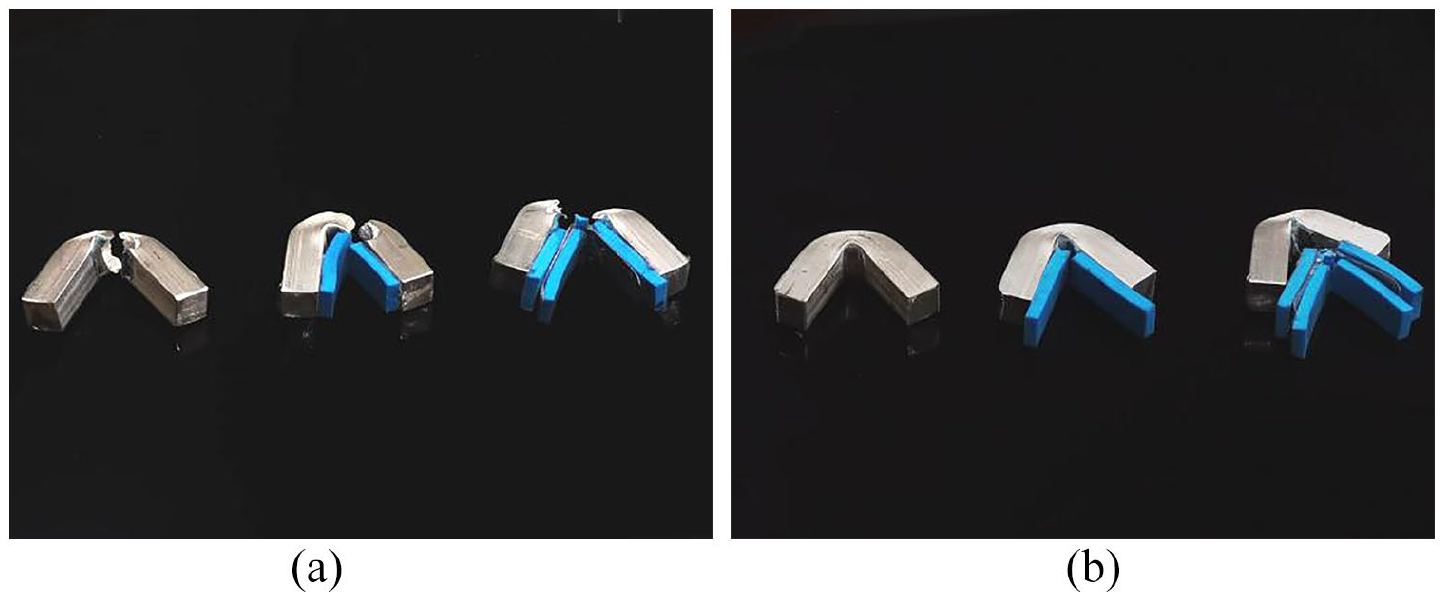
The control group of Impact experiments. (a) broken experimental materials and (b) unbroken experimental materials.
The experimental materials deformed during the experiment could not fully absorb the energy effectively, leading to the conversion of energy partly into force of friction and resulting in unbroken experimental materials data in the impact experiments. Since this part of the material failed to absorb the impact energy of the pendulum completely, a large data drift can not accurately identify this experiment. For specific data, refer to Figure 12. We eliminated them and collated the valid ones, as shown in Table 4.

Experimental real-time data display.
Shows the valid result of the impact experiment.

From the valid data we collected from the broken test in advance, the experimental data of the specimen have some stability and consistency, which can apply to this paper. The results in Table 3 show that in the bare aluminum rod group, energy data were from 198.81 to 263.35 J, with a numerical difference of 64.54 J, and the data drift rate reached 32.46%. In contrast, in the test of impact break experimental material, the energy data of the bare aluminum rod group were from 220.17 to 226.43 J, with a numerical difference of 6.26 J only. The data drift rate was reduced to 2.84%. In the single-layer EVA group, energy data was from 200.14 to 261.99 J, with a numerical difference of 61.85 J. The data drift rate reached 30.90%.
In contrast, in the impact break experimental material test, the energy data of the single-layer EVA aluminum rod group were from 236.43 to 241.38 J, with a numerical difference of 4.96 J only. The data drift rate was reduced to 2.09%. In the single-layer ACF aluminum rod group, the energy data were from 205.33 to 275.00 J, with a numerical difference of 69.67 J, and the data drift rate reached 33.93%.
In contrast, in the impact break experimental material test, the energy data of the single-layer ACF aluminum rod group were from 259.52 to 261.34 J, with a numerical difference of 1.82 J only. The data drift rate was reduced to 0.7%. In the ACF-CFRP composite energy-absorbing material aluminum rod group, energy data were from 201.99 to 291.48 J, with a numerical difference of 89.85 J, and the data drift rate reached 44.48%. In contrast, n the test of impact break experimental material, the energy data of the ACF-CFRP composite energy-absorbing material aluminum rod group were from 275.38 to 291.48 J, with a numerical difference of 16.10 J only, and the data drift rate reduced to 5.84%.
According to the comparison, we can conclude that the drift data have little effect on the experiment results, which is almost negligible. Therefore, it confirmed that the data of the impact break experimental materials we collected are valid enough. It is a reliable basis for scientific and effective analysis of experiment results. Calculating the valid data in Table 4 gives us average results in Table 5.
Average results of valid experiments.

In order to compare and analyze the data and eliminate the sample errors, it is necessary to calculate the data averages. By comparing these average data, we can draw the following conclusions: the average valid impact energy (absorbed impact energy) of the bare aluminum rod group is 223.10 J; the average valid impact energy of the single-layer EVA aluminum rod group is 238.63 J; the average valid impact energy of the single-layer ACF aluminum rod group is 263.30 J; the average valid impact energy of the ACF-CFRP composite energy-absorbing material group is 283.81 J. It is improved that the impact energy absorption performance of the experimental materials with ACF and CFRP by 60.71 J. 1 Joule = 10.2 kg-cm, so the absorbed impact force is 60.71 J = 619 kg-cm.
To compare the data of the four groups in the above table shows that taking the bare aluminum rod impact data as basic, each additional layer of energy-absorbing material will enhance the impact force resistance of the experimental material. For example, the average energy absorption of the single-layer ACF aluminum rod group is 37.2 J higher than the bare aluminum rod group and 16.7% higher in energy absorptivity. And then, compare the ACF-CFRP composite energy-absorbing material with the single layer of ACF material, which is 59.82 J higher in energy absorption and 26.8% higher in energy absorptivity. Last, compare the ACF-CFRP composite energy-absorbing material with the single EVA 15.53 J, which is 6.9% higher in energy absorptivity. It can be concluded that ACF-CFRP composite energy-absorbing material has the best energy absorptivity and impact resistance.
According to the impact experiment results of key material, the following conclusions can be drawn:
Comparing the experimental results of bare aluminum rods and ACF-CFRP composite energy-absorbing materials, the buffering effect of ACF-CFRP composite energy-absorbing materials is pronounced. The experimental results show that the flexibility of the energy-absorbing material is increasing from 223.10 J of the average impact energy absorbed by the bare aluminum rod to 283.81 J of the energy absorbed by the ACF-CFRP composite energy-absorbing material. Suppose the average impact energy absorbed by the bare aluminum rod group is regarded as the zero point, and the average impact energy absorbed by the bare aluminum rod group of 223.10 J is regarded as the base point. In that case, it is found that the data of each group are 15.53, 37.20, 60.71 (Table 6), corresponding to the single-layer EVA, single-layer ACF, and ACF-CFRP composite energy-absorbing materials, respectively. The data can be regarded as the growth rate at the average absorbed impact energy base point, that is, the average absorbed impact energy increased by 15.53% for the single-layer EVA group, 37.2% for the single-layer ACF aluminum rod, and 60.71% for the ACF-CFRP composite energy-absorbing material.
Converting the average absorbed impact energy of ACF-CFRP composite energy-absorbing material (without considering the rebound impact energy absorptivity) into impact force at 1 Joule = 10.2 kg-cm, the average absorbed impact of ACF-CFRP composite energy-absorbing material reaches 619 kg-cm, which indicates that ACF-CFRP composite energy-absorbing material can absorb a large impact force when it is impacted. It should be noted that the impact force of 619 kg-cm was generated on the practical action area of the pendulum impact 2 × 10 = 20 mm². This energy conversion contact area has the characteristics of a small contact area and weak cushioning force compared with the energy conversion contact area when the older adult falls. Therefore, the fall impact force received during a realistic fall is much smaller than the impact force of 619 kg. Cm on the experimental material in this experiment.
A comparison of the data from the bare aluminum rod group and the single-layer EVA aluminum rod group shows that even the widely used shock-absorbing material EVA has an increased value of 15.53 J of impact energy absorption and a buffer rate of 15.53%, reaching 158.4 kg-cm. Moreover, through the comparison of the single-layer ACF aluminum rod group and ACF-CFRP composite energy-absorbing material, the impact energy absorption of the ACF-CFRP composite energy-absorbing material is higher than the single-layer ACF aluminum rod group as absorptivity of 45.18 J, the buffer rate increased by 18.9%, to 192 kg-cm. This shows that ACF-CFRP composite energy-absorbing material has better cushioning and energy absorption performance than single-layer ACF material, which indicates that ACF-CFRP composite energy-absorbing material has a broader application prospect in fall-proof clothing for the elderly.
Net average data table.

From the above comparison, we can see that our proposed ACF-CFRP composite energy-absorbing material can effectively improve the cushioning of impact, which can effectively enhance the daily protection effect of hip fall protection clothing for the elderly. The main limitation of this study is the experiment under laboratory conditions, and the difference with the real-life situation may impact the experimental results. In addition, the specimen of this study was small, and further expansion of the specimen collection is needed to gain a more comprehensive understanding of the effectiveness of hip fall protection clothing for the elderly. Further study is needed in-depth on selecting materials and material combinations to improve the comfort and protective capability of hip fall protection clothing for the elderly in the future.
User anxiety measurement results
In order to verify the rationality and practical effects of the design results, this study adopted a relatively small sample experimental testing method and collected factual usage experience feedback information from 10 older people aged 60–80 years old from Taihu Senior Service Center in Binhu District, Wuxi City, Jiangsu Province, based on the user anxiety measurement method in the previous paper, in order to verify the effectiveness of the elderly fall protection clothing designed in this paper. Multiple experiments were conducted on these 10 older people by purposive sampling to verify the performance of the anti-fall clothing for the elderly designed in this study. The experimental data were statistically summarized and converted by percentage to obtain Figure 13. based on the experimental results, the following conclusions can be drawn.
When using fall protection clothing for the elderly for the first time, the elderly generally show a certain degree of anxiety. This anxiety may stem from concerns about the fall protection performance of the product. However, as the use time increased, older adults developed a sense of trust in the fall protection clothing designed herein, reducing anxiety and concern about falls. The average anxiety decreased by 79.9% per day when seniors wore protective clothing. Older adults generally perceived the fall protection clothing as having better protection, significantly reducing their psychological anxiety. Therefore, good protection is essential in reducing anxiety among older adults.
The average anxiety of caregivers decreased by 77.7% per day. The average anxiety level was higher when the elderly were not wearing fall-proof clothing, and caregivers had the highest level of anxiety at night due to the need for caregivers to consider the awakening state of the elderly during sleep time due to unexpected events. The mean anxiety level of caregivers was lower when the older adults were wearing fall-proof clothing, with a flat decreasing trend. Upon detailed questioning, this was related to the effect of caregivers gradually adapting and developing trust in protective clothing during use.
The psychological anxiety of older adults wearing fall protection clothing is less than that of caregivers because it reduces the psychological burden of older adults by increasing their sense of safety and reducing the risk of falls when they wear fall protection clothing. On the other hand, older adults’ falls are uncertainties for caregivers, and even if older adults wear protective pants, accidents may still occur, leading to increased psychological stress for caregivers. As a result, caregivers may be more concerned about the safety of older adults and more likely to feel anxious.

Results of caregiver anxiety comparison.
The results of the user anxiety measures studied in this paper allow us to conclude the effectiveness and practical effects of the fall-proof clothing design for the elderly, whom seniors act more confidently without worrying too much about the risk of falling when wearing fall-proof clothing. This confidence can also help seniors become more independent in their daily activities and improve their quality of life. It can also reduce caregivers’ workload, leading to increased caregiver satisfaction.
Comfort experiment results
During this trial, we invited 10 elderly people with regular perceptual expressions and divided the experiment into six test phases according to the subjective evaluation experiment introduced in the previous section. The average height of the participants was 168 ± 3 cm, and their weight was 60 ± 5 kg. In this experiment, we purchased the top-ranked protective clothing based on the sales ranking of Taobao.com (the most extensive online retailing platform in China) while ensuring that the product had a positive rating of 95% or more. Figure 14 shows the average of the subjective evaluation scores scored by the participants. It can be seen that the elderly fall protection clothing designed in this study is better than ordinary home pants in terms of tightness (+4.9%), less comfortable than ordinary home clothing in terms of restricted movement (+7.6%), and heaviness (+10.6%), and comparable to ordinary home pants in terms of moisture (+0.8%), stuffiness (+0.4%), and warmth (−2.7%). Compared with ordinary fall-proof clothing, fall-proof clothing for the elderly showed excellent performance in terms of thickness (−2.5%), stuffiness (−0.21%), humidity (−2.1%), tightness (+8.9%) and restricted movement (−10.7%).

Subjective rating of clothing comfort.
According to the results of the comfort experiment data, we found that the elderly fall protection clothing performed well in terms of tightness due to our customization according to the characteristics of the elderly body to ensure the degree of fit of the clothing. Compared with ordinary loungewear, it is slightly deficient in the sense of restricted activity and heaviness. This may be because we focused on the fall-proof performance when designing the protective material but did not give enough consideration to the comfort aspect. More attention must be paid to selecting and combining materials in future designs to improve comfort. Regarding humidity, stuffiness, and warmth, elderly fall protection clothing is similar to ordinary home wear, showing good breathability and warmth. Compared with ordinary fall protection clothing, elderly fall protection clothing performed better in terms of thickness, stuffiness, humidity, tightness, and restricted movement. This is mainly because we optimized the selection and combination of materials, which makes the protective materials lighter, breathable, softer, and more in line with the comfort feeling of the elderly. Therefore, the experimental results indicate that the elderly fall protection clothing designed in this paper still has room for improvement in terms of comfort. However, it is already better than ordinary protective clothing.
Conclusions
Non-communicable diseases, including fall-related injuries, are becoming a significant challenge that aging societies face worldwide. 49 In this study, we used ACF-CFRP composite energy-absorbing materials to manufacture protective pads that are suitable for the hip shape of the elderly and integrated them into the fall impact protective clothing for the elderly. A pendulum impact test verified the functionality, and the physical impact assessment of the developed elderly fall protection clothing were conducted to verify the impact absorption performance objectively. Subjective experiments related to user anxiety and wearing comfort were also conducted to demonstrate the practicality of the protective clothing. Our developed elderly fall protection clothing based on ACF-CFRP composite energy-absorbing material can meet the hip protection needs of the elderly in their daily lives while reducing psychological anxiety. The protective pads of ACF-CFRP composite energy-absorbing material can reduce the impact force generated by a fall by 60.71 J and help prevent hip fracture during a fall. This study confirms using ACF-CFRP composite energy-absorbing material for manufacturing ACF-CFRP composite energy-absorbing material protective pads for falls in the elderly, which is different from the existing fall impact ACF-CFRP composite energy-absorbing material protective pads using EVA foam material. This research helps to improve the quality of life of the elderly by developing elderly fall protection cloth pment of protective clothing in other fields. Shortly, it is hoped that the properties of the above-designed ACF-CFRP composite energy-absorbing material will be used to manufacture fall-impact protective clothing for the elderly with superior motion adaptability.
Footnotes
Author contributions
Conceptualization, S.Z. and H.C.; methodology, S.Z. and H.C; validation, S.Z.; formal analysis, C.L.; investigation, S.Z.; resources, S.Z.; data curation, C.L.; writing—original draft preparation, S.Z.; writing—review and editing, S.Z. and H.C.; visualization, S.Z.; supervision, H.C. and L.S.; software, S.Z.; project administration, H.C. and L.S.; funding acquisition, S.Z. and H.C. All authors have read and agreed to the published version of the manuscript.
Declaration of conflicting interests
The author(s) declared no potential conflicts of interest with respect to the research, authorship, and/or publication of this article.
Funding
The author(s) disclosed receipt of the following financial support for the research, authorship, and/or publication of this article: All funding for this study was provided by the first author, Shifan Zhao.
Institutional review board statement
Not applicable
Informed consent statement
Informed consent was obtained from all subjects involved in the study.

Data availability statement
The data presented in this study are available upon request from the corresponding author.