



Abstract
Concrete is weak in tension, causing brittle failure without warning. Fiber is one of the simplest techniques to increase tensile strain. Several kinds of fibers (synthetic) are available such as steel fiber, glass fiber, and carbon fiber. However, these fibers are expensive and cannot be easily accessible. Researchers use agricultural fiber in concrete instead of synthetic fibers to offset this deficiency. Although, several studies have shown that agricultural fiber may be utilized to increase concrete tensile strength. However, a details review is required which combines all relevant information and the reader can evaluate the benefits of agricultural fiber. Therefore, this review focus on a comprehensive and up-to-date overview of the impact of agricultural fiber on concrete slump flow, mechanical quality, and durability. Furthermore, scanning electronic microscopy, enhancement methods, and agricultural fiber-reinforced concrete (AFRC) applications are also reviewed. Five different types of agricultural fiber including coconut, jute, banana, rice straw, and hemp fibers were selected. According to the findings, agricultural fiber increased concrete’s mechanical and durability qualities while comparably decreasing the slump. The optimum dose is essential as the higher dose adversely affects mechanical performance. The typical optimum amount varies from 1% to 2% by weight/volume of the binder. Among various types of agricultural fiber, coconut fiber is super performance. Less research is carried out on hemp, straw ash, and banana fibers than on coconut and jute fibers.
Introduction
Concrete is one of the most utilized building materials on the globe. 1 However, its use has been limited due to its poor tension, crack formation resistance, and crack strain capacity. 2 Fiber is often proposed as an option for regular concrete to solve its brittleness. 3 Fiber has been utilized to strengthen brittle matrixes. 4 The inclusion of fibers has been shown to increase concrete efficiency significantly, according to thorough studies.5,6 According to ACI 544.5R-10, thicker fibers are less efficient than thin fibers in decreasing the breadth of drying shrinkage fractures. 7 Cracks developed at an early age on the concrete surface without any load are mainly shrinkage cracks 8 which decrease the concrete performance. Because of the increased surface area of microfibers, they are especially helpful in preventing drying shrinkage cracking in concrete. 9 Furthermore, using fibers helps reduce concrete permeability and leakage.10,11
Concrete is reinforced with various fibers, including organic and inorganic fibers. 12 The kind of fiber used is determined by many factors, including size, thickness, tensile flexural strength, elastic modulus, and the material used. Furthermore, the extent to which these fibers influence concrete performance. 13 Fibers are often categorized into two kinds: metals and nonmetals. Steel fibers are metal, whereas glass, propylene, and carbon fibers are nonmetallic. 14 Most scientists concentrate on steel fibers, 15 glass fibers, 16 polypropylene fibers, 17 carbon nanofibers, 18 and carbon fibers. 19 These fibers, unfortunately, are too expensive.
Furthermore, these fibers are unlikely to be readily accessible. Additionally, the stiffness of these fibers is substantially greater, which has an unfavorable influence on concrete flowability. Natural fiber (NF) rather than metallic strands should be considered to offset the above obstacles.
NF are generally classified into three categories (plant, animal, and mineral origin) based on their origin (Figure 1). The plant-based fibers are widely acceptable among the other categories due to their availability everywhere. The plant fiber can obtained from different parts of the plant including bast, leaf, seed, fruit, and wood. 20

Classification of NF.
The most often used plant fibers include coconut, hemp, kenaf, jute, bamboo, and sisal. Proteins are the main component of animal fibers, including silk, wool, and hair. Animal fibers are mostly used in the textile industry. Compared to the other category, mineral fibers are not technically preferred for various applications because of their unsafe characteristics. 21
Natural fiber-reinforced concrete (NFFC) is appealing for low-cost construction in developing nations. 22 Regarding sustainability 23 and biodegradability, NF has become the preferred reinforcing material, 24 non-toxic, and environment-friendly. 25 The bio-based materials are increasing due to the need for eco-friendly nature. 26 Furthermore, the green composite from agriculture waste is low-cost. 27 NF has properties that are especially helpful for creating biocomposites and minimizing CO2 releases into the atmosphere. Biocomposites have become increasingly famous as attractive products in several sectors, such as building, architecture, and biomedicine. 28 NF is also cheaper than artificial fibers, has better stiffness, can be recycled, and can be accessible worldwide. 29 NF-based biocomposites have replaced synthetic plastics for various purposes due to their various advantages, with their extensive accessibility, biodegradability, lightweight, economical, and comfortable fabrication. 30 Numerous scientists have recommended NFCC in several industrial applications.24,31 –33
Roselle, sisal, coconut, sugarcane bagasse, hemp, and jute fiber have increased the strength qualities of concrete. The chopped NF reinforcement increases the cement matrix’s energy absorption capacity, transforming a brittle material into a flexible material. When used as a reinforcing ingredient in concrete, NF is said to act as a crack arrestor, delaying fracture development and resulting in ductile failure. 34 Fiber reinforcement has created a new class of construction materials with enhanced tensile capacity and flexibility. 35 Fiber reinforcement into matrices is largely responsible for improving strength and ductility. NF as a reinforcing agent bridges matrix fractures, transmits stresses into the matrix, and prevents microcracks formation in composites. 36 Therefore, NF-reinforced cement composites are the best-suited economic points for earthquake-resistant structures, factory foundation floors, and the fabrication of lightweight concrete roofing, ceiling boards, and wall plaster. 37 A limited investigation has also been done on using NF as reinforcing elements in concrete, including banana, hemp, coconut, and jute fibers.
Brief literature shows that NF (agriculture fiber) can increase the tensile capacity of concrete-like synthetic fibers. However, knowledge about NF is still scarce, and more detailed investigation is required before being used practically. This article reviewed the findings of agricultural fibers such as banana, hemp, coconut, rice straw, and jute fibers. It is important to thoroughly analyze and critically evaluate the relevant literature to properly recognize current achievements and identify prospective research gaps in this sector for future developments. The present research provides information on the agricultural fibers reinforced concrete qualities such as flow properties, strength properties, durability, and microstructure analysis.
Physical and chemical properties
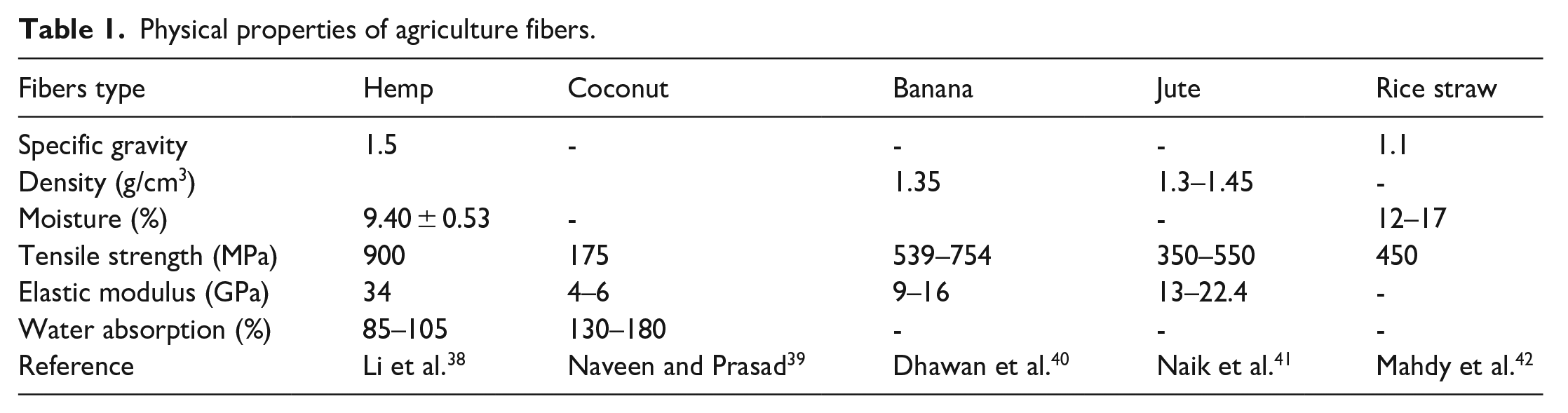
Agriculture fiber offers several unique physical features including greater tensile capacity, bulkiness, sound and heat insulation, minimal thermal conductivity, and antistatic characteristics. Table 1 depicts the physical aspect of agricultural fibers used in concrete as per past researchers. The elastic modulus and tensile strength of hemp are 34 GPa and 900 MPa respectively which is greater than among the other types of fibers (coconut fibers, banana fibers, banana fibers, and rice straw fibers).
Physical properties of agriculture fibers.
NF are generally composed of different constituents such as cellulose, lignin, hemicellulose, pectin, waxes, and water-soluble compounds, as shown in Figure 2. These constituents contribute to the unique properties of NF.

Constituents of NF. 43
All plant-based fibers include cellulose, which has identical fundamental chemical structures but differing levels of polymerization due to differences in the cell shape of each kind of cellulose. It is challenging to produce a single list of all the fiber attributes since various fibers, different growing circumstances, and different testing techniques were employed by different research. For example, hemp fibers contain 70%–74% cellulose, 15%–20% hemicellulose, 3.5%–5.7% lignin, 0.8% pectin, and 1.2%–6% pectin. 44 The chemical constituents of jute fiber are cellulose (64.4%), hemicellulose (12%), pectin (0.2%), lignin (11.8%), water-soluble (1.1%), wax (0.5%), and water (10%). 45 A study 46 reported that rice straw fibers contain 64% cellulose of which 63% crystalline cellulose. Banana fibers contain 55% cellulose, 8% extractives, 12% moisture, 9% ashes, and 18% lignin. 40 The banana fibers were manually scraped off the banana sheath of the collected pseudo stems and then cut into various sizes. To address the durability issues associated with organic compounds inherent in NF, such as waxes, lignin, and pectin, fibers were first immersed in a 5% sodium hydroxide solution at room temperature for 60 min. The fibers were extensively cleaned with tap water for at least 10 min to eliminate the hemicellulose, lignin, and wax surrounding the cellulose. This method commonly exposes cellulose, enhances fiber surface irregularity, and improves interfacial bonding strength. 47 Agricultural fibers, being mostly sourced from plants, maintain the original color of the plant. The color of plant fibers may vary across various plant species and growth environments, with lignin often contributing to a brownish color. Furthermore, the treatment and preparation method also impact the agriculture fibers’ color. However, most researchers noted that the agriculture fibers are brown as demonstrated in Figure 3.

Slump flow
Concrete workability describes how quickly and uniformly fresh concrete may be placed, and compacted. Any concrete mix should be able to be poured, set, fill the forms, encircle the reinforcement, and easily workable with other embedding components. Concrete’s strength and workability are directly related. Concrete strength improves as typical concrete flowability increases, impacting the concrete’s durability. Workability influences the capacity, performance, appearance, and sometimes even labor costs of placement and finishing processes. The design/construction team has a range of expectations and objectives regarding optimal concrete design. The operational engineer needs more strength and a good connection with the reinforcing steel. In terms of esthetics, the architect is engaged. The owner values load-carrying capacity as it permits reduced cross-sections of the structural member and further serviceable floor space. A worker wants concrete that flows, places, and compacts fast and readily, but a finisher requires something durable and superior finishing. It is well known that most fiber reduces concrete flowability except banana fibers, as shown in Figure 4. Using hemp fibers reduces the flow, indicating a decline in flowability (Figure 4(a)). This discovery explains the high porousness of hemp strands, which absorb substantial water. 52 The addition of hemp fibers to concrete decreased the slump of the composite mix due to the high-water absorption capacity of the fibers which absorb more water and no free is available.

Furthermore, it is clear that the addition of 1% hemp reduced the mix’s workability considerably; as a result, adding more hemp fibers than 1% is not advised. 56 However, a study 53 observed that banana fibers slightly increased the slump flow of concrete having minimum slump at 0% addition of banana fibers while maximum slump flow at 2.0% addition of banana fibers (Figure 4(b)). Mostly fibers decreased the slump value due to their larger surface area. However, the author used silica fume and fly ash, which might positively impact concrete flowability due to filling voids, and ultimately, the concrete has the same workability with the addition of banana fibers. Furthermore, a study 57 observed a considerable decrease in slump value with adding banana fibers. The slump value for reference concrete is 40 mm, while the 2.5% banana fibers reinforced concrete slump value is 10 mm. Even the author 57 increased the water-to-cement ratio from 0.6 to 0.7 content to improve the slump value of banana fibers reinforced concrete.
However, the slump value is still 75% less than from reference concrete slump value. They claim the decreased slump value is due to the water absorption of banana fibers. Coconut fibers also decreased the slump flow of concrete (Figure 4(c)). A study reported that the decline in fiber length raised the quantity of air, and extra air in the concrete had a more adverse influence on the flow. 58 With the enhanced surface area of coconut fibers (CF), it may be essential to use more mortar to cover them, causing no mortar to be accessible for lubrication. The decline in the flowability may be associated with the raised surface area of CF.
Furthermore, CF increased frictional resistance among the aggregate and fiber requiring the additional paste to decrease this internal resistance. Though fibers offer various advantages to concrete, they harm the flowability of freshly mixed concrete.59,60 The large surface area of fibers has increased water usage. More possible power is required to flow by its mass due to greater resistance between fibers and concrete ingredients. 61 However, the findings are still satisfactory, and the slump value reduction is due to the fibers absorbing a considerable amount of water. 62
Jute fibers also decline the flow similarly to the other types of fibers (Figure 4(d)). Savastano et al. 63 found that fibers had worse workability than the reference mixture without fiber. Similarly, according to Mansur and Aziz, 64 the flowability of pastes and mortar decreased as the length and amount of jute fiber increased. The increased length and percentages of fibers required more water to cover them, and no free water was available. Therefore, the slump value decreased with the addition of fibers. Like the other types of NF, rice straw fibers also reduced the slump value of concrete (Figure 4(e)). The decrease in workability with the addition of fibers is associated with the additional surface area of fibers, fibers increase the friction resistance, and the NF absorbs more water. Therefore, more water is required to maintain slump value. Moisture absorption by natural hydrophilic fibers causes these observed losses in workability. Fiber aspect ratio and percentages in mixes are the two most important elements that impact the degree of flowability loss in NF-reinforced concrete. However, the fiber pre-treatment to minimize the water absorption might improve the workability of mixes. NF might be pre-wetted before being added to a mixture. Alternatively, using the water absorption characteristic of fibers in mixture design might result in very workable NF-reinforced cement mixes but a detailed study is required.
Strength properties
Compressive strength (CS)
Figure 5 and Table 2 describe the compressive strength (CS) by adding different kinds of agricultural fibers. It can be observed that all types of fibers (hemp fibers, banana fibers, coconut fibers, jute fibers, and rice straw fibers) improved the compressive strength of concrete. However, the performance depends on the optimum dose of fibers.

Summary of compressive strength of concrete with different agricultural fibers.

The hemp fibers increased the CS of concrete up to 2.0% addition and further addition decreased the concrete CS (Figure 5(a)). The CS of concrete improved by 25% more than from the reference mix at a 2.0% addition of hemp fiber. However, further addition of hemp fibers (3.0%) declined the CS of concrete, but it is still greater than reference concrete. A researcher 65 used hemp fiber in a mortar with different percentages from 0% to 3% and different lengths of hemp fiber range 6–18 mm. Results indicate that 2.0% hemp fiber having a length of 12 mm has better performance. Therefore, it can be concluded that hemp fibers can be utilized instead of synthetic fibers.
A study on the combined addition of polypropylene fibers and banana fibers. Results show that the maximum concrete CS was noted at 0.5% banana fibers and 1.5% propylene fibers as shown in Figure 5(b). Furthermore, it can be noted that the 2.0% addition of banana fibers without the addition of propylene fibers decreased the CS of concrete compared to the reference concrete. The study 66 noted that the 0.5% banana fiber decreased the compressive strength by 2.7 as compared to the blank blends. However, a study noted that banana fiber length did not affect CS at the lower fiber percentages of up to 0.25%. In comparison, shorter fibers performed better than longer ones at larger doses of more than 0.25%. 47 A study noted that banana fibers enhanced the microstructure by improving bonding among the fibers and the matrix, as well as reducing the size of the interfacial transition zone (ITZ) and, as a consequence, the penetrability by sealing its holes, which enhanced the composite’s strength characteristics. 47
The coconut fibers (CF) increased the CS of concrete up to 1.5%, and further addition decreased the concrete CS (Figure 5(c)). A study 72 reported that the 0.5% coconut fibers increased CS by 6.45% compared to the reference concrete. Coconut fibers were widely utilized in concrete because they have the best tenacity of all NF.31,78 At 1.5% inclusion of coconut fibers, the research found a 25% improvement in CS compared to reference concrete. 79
The jute fibers increased the CS of concrete up to 0.1%, and further addition decreased the concrete CS (Figure 5(d)). Research reported that 0.1% jute fiber 68 increased CS by 7.96% compared to the blank mix. According to a study, 80 adding a small quantity (0.25%) of jute fiber to concrete resulted in an adequate enhancement of its CS, irrespective of the length of the jute fiber. In contrast, the incorporation of jute fibers at a concentration of 0.10% reduced CS.
The rice straw fibers improved the concrete CS up to 0.75% addition while further addition caused a decline in the concrete CS (Figure 5(e)). However, a study 51 noted that rice straw fibers decreased the concrete CS regardless the rice straw fibers were used in dry or saturated conditions. Adding natural sustainable fibers instead of synthetic fibers to concrete, such as hemp, coconut, jute, banana, and rice straw, shows improvements in concrete mechanical qualities. The improvement can be due to decreased crack propagation and increased tensile strength.
Split tensile strength (TS)
Concrete is a brittle material and cannot resist high tensile forces. Tensile forces cause fractures to appear in the concrete. Therefore, the TS of concrete is critical in determining the load at which the concrete splits. Concrete TS is determined using a variety of tests, including flexure and splitting tensile tests. Fiber is one of the easiest approved methods to improve concrete TS. Figure 6 depicts the TS of concrete with various kinds of agricultural fibers.
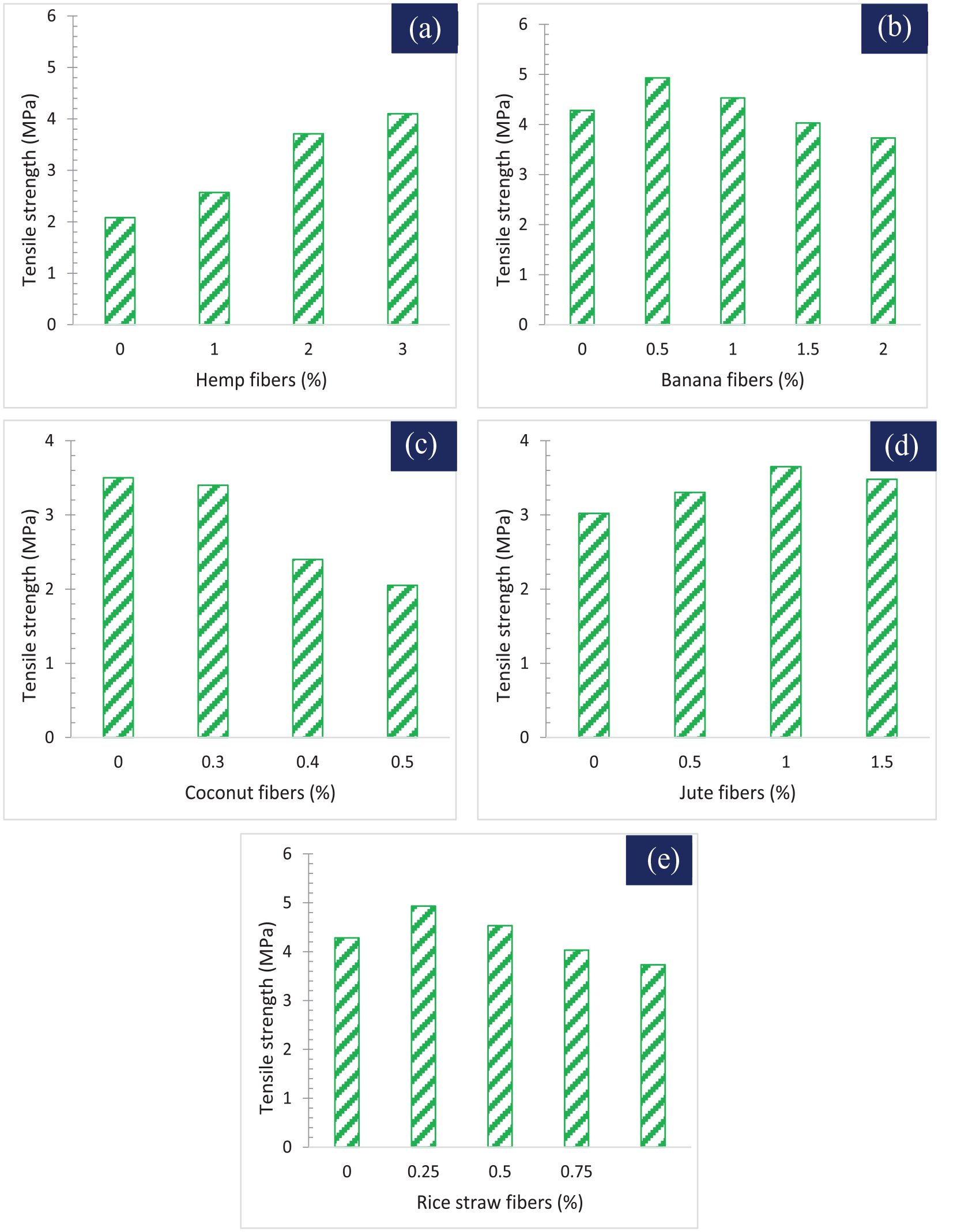
The concrete TS increased with up to 3% addition of hemp fibers as presented in Figure 6(a). Research on environmentally friendly concrete made from industrial hemp fibers. The factors in the testing program were the kind of fiber utilized, the volumetric proportion ratio of the additional fibers, and the decrease in the number of coarse particles assessed as a proportion of the concrete volume. For the 0.5% hemp blends, the TS is decreased by around 15%–30% due to coarse aggregate decline. However, the TS improved and almost reached the same level as the reference mix result when the hemp content was raised to 0.75% and 1%. Therefore, it seems that the hemp fiber addition made up for the loss of coarse aggregate via its function as a shear crack bridging material. According to the findings, the 0.75% and 1% hemp volume fractions are appropriate and suitable as an ideal replacement for reducing coarse aggregate.
It should be noted that the results of the TS according with the ASTM requirements, that is, they are typically lower than the results of the modulus of rapture. Additionally, the TS findings for plain concrete are around 10% of the compressive capacity. However, fiber-reinforced concrete does not always follow this rule. 56
The TS of concrete increased with up to 0.5% addition of banana fibers as presented in Figure 6(b) and further addition of banana fiber decreased the concrete TS. A study reported that in the lower percentage of banana fiber up to 1%, a substantial influence of fiber length on concrete TS was detected which indicates that the longer fibers are more efficient than shorter ones. However, an opposite tendency was observed beyond 1% fiber content. 47
The concrete TS decreased with adding coconut fiber (Figure 6(c)). However, a study noted that when 1.5% coconut fibers were added, the TS increased by 20.4% compared to the control sample. 79 Increased fiber content only favors concrete TS at relatively modest fiber doses of up to 1%. Compared to the control sample, the compressive capacity rose with the percentage of CF up to 0.5%. However, a more significant coir fiber content lowered the mortar’s compressive capacity. 81
The TS of concrete increased with up to 1.0% addition of jute fibers as presented in Figure 6(d) and further addition of jute fiber decreased the concrete TS. A study observed that the increasing percentages of fibers up to 2%, the TS of jute, sisal, coconut, and sugarcane fiber-based samples increased by up to 137.7%, 103.8%, 73.6%, and 34%, respectively. 82 A study 83 used combined jute and nylon fiber and conducted a series of tests. The findings demonstrate that the concrete mixture containing a combined volume fraction of 1% nylon and jute fibers exhibited the greatest increase in tensile strength (TS), with a notable rise of 14.10%. Incorporating fibers into concrete may effectively inhibit the propagation of microcracks, thereby enhancing the split tensile strength of the material. The introduction of nylon and jute fibers into concrete more than 1.5% results in a decrease in TS due to the inadequate bonding with the concrete matrix.
The TS of concrete increased with up to 0.25% addition of rice straw fibers as presented in Figure 6(e) and further addition of rice straw fiber decreased the concrete TS. According to a study, 42 including rice straw fibers in concrete manufacturing resulted in a marginal increase in compressive strength, reaching a maximum improvement of 7.0%. However, the tensile and flexural characteristics saw a considerable enhancement, with improvements of up to 17.1% and 25.8% respectively. Hence, incorporating rice straw fibers increased TS compared to compressive strength.
Flexure strength (FS)
Figure 7 illustrates the FS of concrete by adding various kinds of fibers (hemp, coconut, jute, banana, and rice straw fibers). The FS of concrete increased with up to 3% addition of hemp fibers as presented in Figure 7(a). A study reported that the fiber-reinforced blend’s increased FS and ductile post-cracking performance were two advantages of using industrial hemp fibers in a concrete blend. Notably, the increase in FS was more pronounced in the 28-day tests than in the earlier 7-day tests. This might be explained by the fact that after 28 days, the interfacial bond connection between the fibers and the concrete matrix develops. Industrial hemp fibers were also used to reduce the amount of coarse aggregate while maintaining flexural load-deflection performance, lowering the use of natural resources, and producing a sustainable concrete material. 56 The effect of hemp fibers on the setting time of cement was explored in research. The results showed a considerable boost in FS and a drop in the composite modulus of elasticity for optimum fiber content. 84
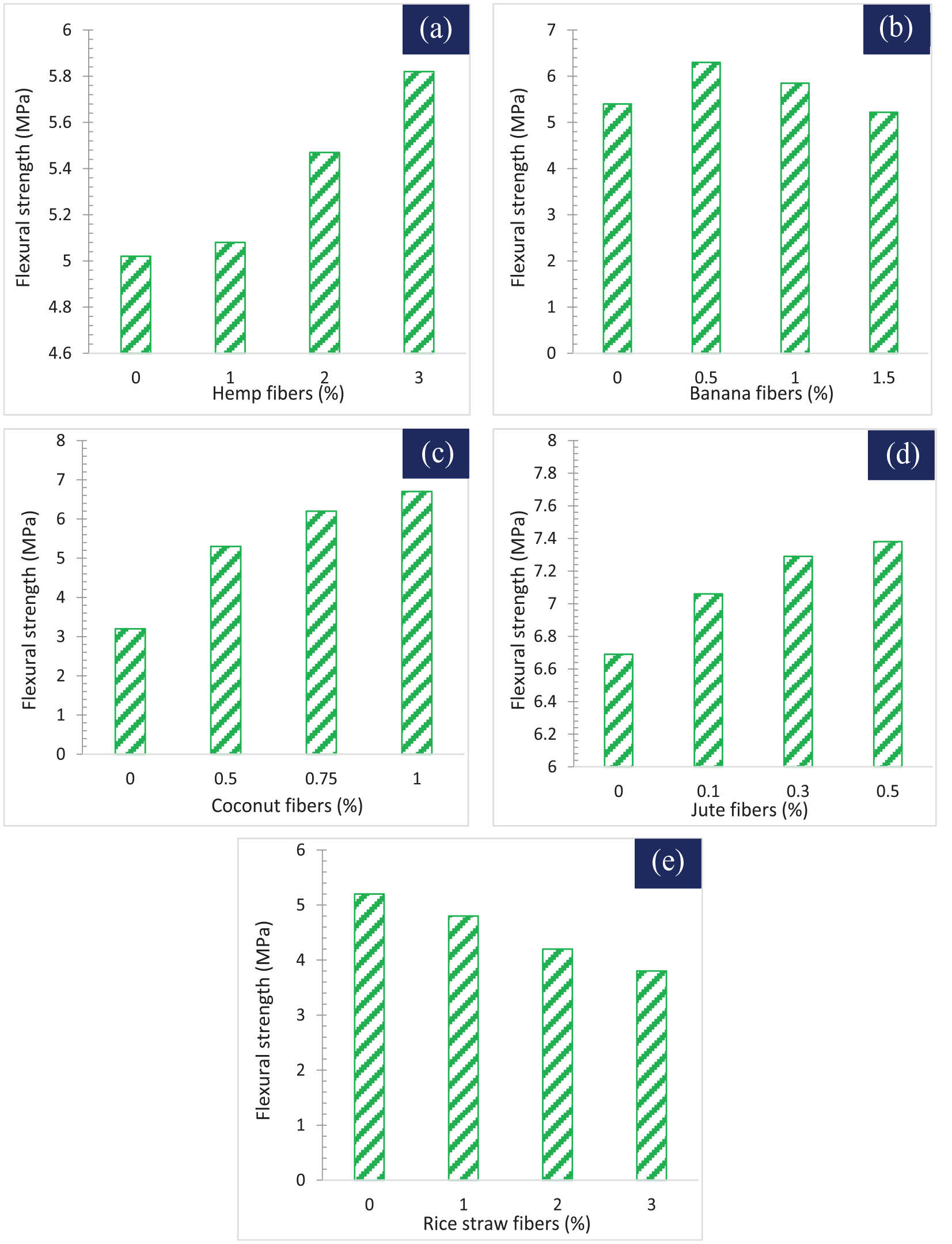
The FS of concrete increased with up to 0.5% addition of banana fibers and further addition of banana fiber caused a decrease in concrete FS as presented in Figure 7(b). Adding banana fibers to concrete did not significantly improve FS, although it did have little influence when shorter fibers were employed at lower fiber doses. In contrast, the FS of all banana fiber reinforced concrete (BFRC) blends with longer fibers declined as the fiber percentage increased. 47
The FS of concrete increased with up to 1% addition of coconut fibers (CF) as presented in Figure 7(c). Compared to the reference concrete, research noticed that adding 1.5 CF enhanced FS by just 3%. 79 The flexural performance of the coir fiber-reinforced concrete has improved significantly. Improving the fiber content enhanced the FS. The surface of the CF seems harsh, allowing for better interfacial contact between the fiber and the concrete ingredients. 76 According to the authors, 81 the introduction of 0.75% CF reduced FS by 16.5%, compared to the reference mix.
The FS of concrete increased with up to 0.5% addition of jute fibers as presented in Figure 7(d). The bending capacity of the jute fiber reinforced (0.369 MPa) was observed to be the maximum at 1.5%, followed by sisal-based concrete (0.291 MPa), coconut (0.254 MPa), and sugarcane fiber reinforced concrete (0.246 MPa). 82 The findings indicate a considerable enhancement in the FS when the volume concentration of jute fibers ranges from 0.1% to 0.25%, and when the fiber cut length is either 10 mm or 15 mm. However, it was shown that the mechanical characteristics were negatively impacted by increased fiber length and percentage content. 85
However, the rice straw fibers addition decreased the FS of concrete as presented in Figure 7(e). Research 40 showed that the use of fine rice straw fibers resulted in enhanced compressive strength compared to coarse rice straw fibers. However, the flexural strength of concrete including fine straw fibers declined compared to concrete containing coarse straw fibers.
Modulus of elasticity
The performance of hemp fibers was studied in research and the results of the experiments revealed that low lignin concentration and excellent fiber separation increased the strength of hemp fibers treated in a 10% (by weight) NaOH solution. The average tensile strength of hemp fibers was 857 MPa, with an elastic modulus of 58 GPa. 86 However a conclusions reveal that adding hemp fibers to concrete reduced the dynamic elastic modulus of the material. 52 A study observed that NaOH-treated banana fibers caused to increase in the elastic modulus. Research also revealed a considerable increase in strength, which may be related to the fiber-matrix interface and bridge phenomena. 87 The total energy absorption in the compression and flexure was increased by 72.5% and 162%, respectively, with a 1.5% addition of coconut fiber. Although compressive and bending capacity does not improve, post-crack parameters such as flexibility, residual strength, and toughness improve with a more significant coconut coir percentage in the concrete. 81 The authors observed that less research considered elastic modulus in their research. Therefore, a more detailed study is recommended.
Durability
The water absorption test determines the speed at which the interior and exterior concrete surfaces absorb water. The evaluation measures the increase in concrete weight brought on by water absorption. Higher water absorption causes lesser durability because water includes many dangerous elements that leach into the concrete, producing decomposition and lowering durability. According to research, 62 it was shown that the hemp fiber blends exhibited a range of 41%–49% higher absorption values compared to the control mixes. Additionally, it was observed that the fiber length and treatment type had no significant impact on the absorption value of the concrete mix. 62 Notably, the amount of water absorption was increased by adding CF. 88 A Study has shown that fiber has little effect on water absorption and heat conductivity. 72 Regular concrete has a lower elastic modulus than fiber concrete. Concrete’s tensile strain characteristics would be strengthened by the addition of CF, preventing the development and spread of early fractures 89 which led to less water absorption. The highest water absorption rate was calculated to be 3.07% when jute and nylon fibers comprised 2% of the fabric. When jute and nylon fibers were mixed at 0%, 2.40% was estimated to be the lowest quantity of water absorption (control concrete). However, mixing jute and nylon in a volume proportion was thought to improve water absorption. This boost in water absorption may be ascribed to the fact that the fibers trap more air in concrete than blank concrete (concrete without fibers) and absorb more water in concrete by volume fraction than concrete without reinforced nylon and jute fibers. 83 A study 90 noted that a 1.5% addition of jute fibers shows 2.84% water absorption while reference concrete shows water absorption 2.09%. Therefore, the water absorption of jute fibers reinforced concrete is 35.8% higher than that of reference concrete. The increase in water absorption is due to jute fibers’ higher water absorption capacity.
It was examined that including coconut fibers in concrete enhanced its penetrability. The penetrability of the sample is influenced significantly by the continuous pore composition of the samples. 91 The bigger the diameter of continuous openings, the more porous the concrete. Continuous holes may be created in various situations, including the capillary network produced by hydration, the interfacial transition zone (ITZ) among paste and aggregate, and microcracks formation. 92 According to research, 80 jute fiber-reinforced concrete has a lower density than concrete not reinforced with fibers. In research, 93 it was shown that the density of the reference sample, which did not include any additional fibers, was higher compared to the sample that had rice straw fibers. This phenomenon may be attributed to gaps formed by the fibers inside the concrete matrix and the plant fibers exhibit a comparatively lower mass than other constituent ingredients. Therefore, using straw fiber insulating concrete has the benefit of reduced weight because of its comparatively lower apparent density. The lower density results in more water absorption and leads to less durable concrete.
The coconut fiber reinforced concrete has fewer plastic shrinkage gaps and generates denser concrete, the increase in density is connected to fracture prevention. Compaction becomes an issue with the inclusion of 4% (higher percentage) coconut fibers developing in porous concrete and decreased fresh density. According to one research, adding 1.5% fibers boosts density by 15% above reference concrete. 94 According to the results, when nylon and jute are combined after each curing period, concrete shrinkage is lowered compared to the reference mix. 83 When the quantity of nylon and jute in the concrete is raised, the dry shrinkage reinforced with nylon and jute mixed by the volume of the fraction is gradually lowered. The study’s findings, 95 showed that the risk of shrinking was lowered when the quantity of fiber was raised. By strengthening the bond between the fibers and the concrete matrix, fibers may decrease shrinkage by preventing shrinking during drying. 96 The most crucial quality of concrete fibers for reducing shrinkage cracks is their largest influence on crack prevention. 97
According to similar findings, adding fibers to a composite may help diminish cracking brought on by shrinkage. 98 In hardened cement-based compositions, free and constrained shrinkage problems during the drying process are frequent. Several tests have shown that adding nylon fiber to mortar has no impact on these problems. According to Toledo Filho et al., 99 adding short sisal and coconut fibers increased the drying shrinkage of cement mortars by 2%–3%. Additionally, they discovered that drying shrinkage was higher in composites including sisal fiber than composites containing coconut fiber due to sisal fiber’s high water absorption and less flat surface. A study 51 concluded that dry shrinkage of concrete increased with the addition of rice straw fibers.
Furthermore, the washed rice straw fibers before being added decreased the shrinkage compared to unwashed but still greater than reference concrete. Silva et al. 100 studied a fiber-enhanced cement matrix and discovered significant drying shrinkage. The increased porosity of the samples generated by the fibers was responsible for this. Therefore, the fiber characteristics, fiber volume percentages, and matrix pore structure all have an impact on the shrinkage characteristics of fiber reinforced mortar mixtures.
Overall, little study has been done on concrete’s durability, especially when using hemp, rice straw, and banana fibers.
Scanning Electronic Microscopy (SEM)
SEM increases the ability to assess the microstructure of cement and concrete. It will also aid in the evaluation of concrete durability difficulties as well as the effects of supplementary cementing chemicals or fibers.
Figure 8 shows the SEM of untreated and treated hemp in concrete. The interaction between the hemp fiber and concrete matrix was inadequate in untreated hemp fiber-reinforced concrete. This was evident from the observation that more fibers were pulled out, as seen in Figure 8(a). The reported outcome is likely attributed to the smooth surface of the fibers. A more smooth surface indicates less friction between the two adhering surfaces, leading to fibers requiring a decreased load for extraction.

SEM: (a) untreated hemp fibers and (b) treated hemp fibers. 101
In contrast, the treated hemp fibers exhibited higher bonding between the fiber and concrete matrix. This was evident from the observation that more fibers remained intact, as seen in Figure 8(b). Consequently, the findings of this research indicate that the use of treated hemp fibers leads to a significant enhancement in the initial compressive strength. Moreover, it has been shown that treated hemp fibers exhibit reduced brittleness and increased ductility. This implies that the composite material exhibits enhanced durability and increased resistance to long-term cracking.
More significant rectangular gaps or pores with well-defined borders inside the matrix of banana fiber-reinforced concrete were observed in Figure 9(a). Furthermore, between 3.23 and 5.89 μm, a definite interfacial transition zone (ITZ) was detected between fibers and paste, and the fibers could be easily distinguished. Also, according to the authors, microcracks were seen in the plain concrete composite. 47 However, no evident microcracks were found in the BFRC composite (Figure 9(b)). This might be due to the fibers being added, which helped to bridge the gap between the microcracks and stopped them from spreading further. Therefore, the concrete has more strength and durability.

SEM: (a) reference mix and (b) banana fiber mix. 47
Furthermore, the fibers were encased in cement paste, which impacts matrix strength due to a stress transmission process among ingredients and fibers. It can be concluded that fiber integration enhanced the microstructure of concrete by improving bonding among the fibers and the matrix. Decreasing the dimension of ITZ results in decreased matrix permeability by filling holes, which enhances the strength of the concrete.
Several voids were identified in the reference mix (Figure 10(a)). Nevertheless, the results shown in Figure 10(b) and (c) indicate that incorporating coir fibers reduced the microcracks’ density. The propagation was well controlled, and the concrete matrix was securely bonded due to the bridging action facilitated by the fiber. The 1.75% fiber reinforced shows a strong microstructure, with no structural flaws in voids and cracks. Therefore, the 1.75% fiber mix exhibits better strength and durability. However, with further addition of coconut fiber at a concentration of 2%, the substantial water absorption properties of the fibers resulted in a decrease in slump flow and a rise in the probability of void formation. The increase of the void results in a reduced resistance to cracking. Cracking was seen at the phase boundaries, diminishing the fiber’s anchorage inside the concrete. It is also important to remember that the significant reason for enhanced concrete strength is fiber slippage concerning the matrix. Because of a stress transmission mechanism among the ingredients and fibers, the fibers are around the paste within the matrix, enhancing the matrix’s strength. The reduced anchoring of fibers at higher percentages decreased the mix performance. The higher dose of coconut fibers decreased the mix strength and service life.
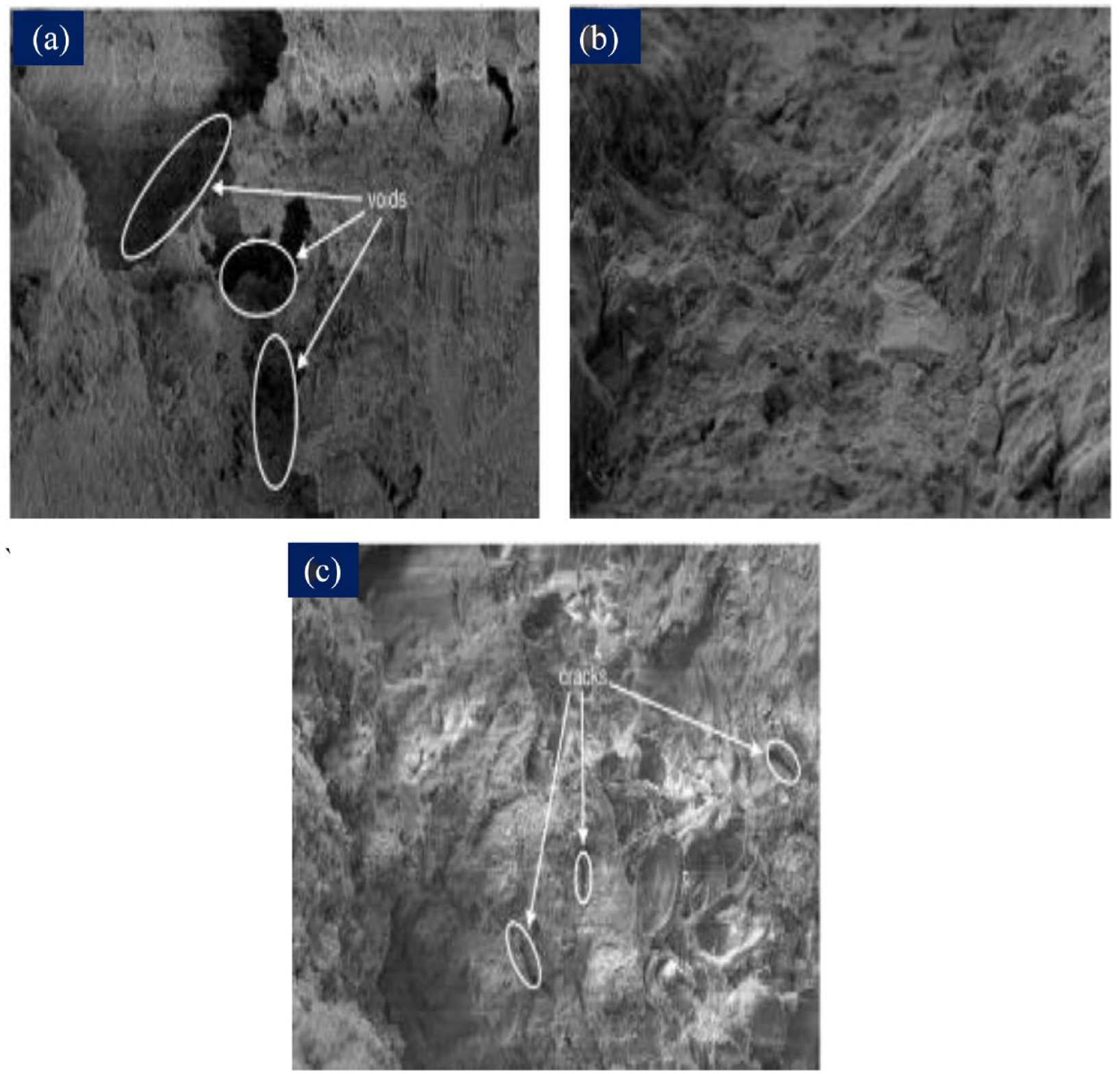
SEM (1000×): (a) 0%, (b) 1.75%, and (c) 2.0% coir fibers. 102
The advantages of fiber-reinforced concrete were more prominently seen in comparison to regular concrete due to its enhanced anchoring capabilities (Figure 11). Therefore, the compressive strength of reference concrete is 40.2 MPa while the compressive strength of 1.5% jute fiber reinforced concrete is 45.7 MPa which is 13.6% more than from reference concrete.

SEM: (a) reference and (b) jute fiber concrete. 90
The fibers exhibited a notable level of adhesion to the matrix, enabling them to serve as a mechanism for stress transmission, thus improving the overall strength of the concrete (Figure 12(a)). However, at larger percentages, the rice straw fiber matrix bonding was comparatively inadequate, characterized by significant holes between the fibers and the matrix (Figure 12(b)). Additionally, the fibers that were exposed outside the matrix exhibited a relatively smooth surface. Examining the enlarged image of the fiber surface revealed the non-uniform distribution of the gelling material, which seemed quite thin. Additionally, a limited quantity of sand particles adhered to the gelling material. The quantity of gelling material included in the fiber concrete samples was consistent. Additional fibers were incorporated into the sample containing 10% fiber content, accompanied by a reduced presence of gelling substance on the surface of the fibers. Consequently, this led to a reduced bonding between the fiber matrix.

SEM: (a) 2.5% and (b) 10% rice straw fibers. 93
Enhancement methods of natural fiber properties
Partially substituting cement with cementitious material lowers the alkalinity of concrete. The pozzolanic reaction reduces the soluble alkali content of cement and reduces portlandite. Early carbonation and decreased alkalinity by partial substitution of cement with silica fume proved remarkably efficient in minimizing the degradation of NF-reinforced concrete, according to Tolédo Filho et al. 103 Binary and ternary blends of slag, metakaolin, and silica fume were useful in decreasing the degradation of fiber-reinforced concrete subjected to wet-dry cycles, according to Mohr et al. 104 According to Silva et al., 100 fiber-cement composites treated with metakaolin and calcined waste crushed clay brick had a four times greater ultimate bending capacity and 42 times greater toughness than reference concrete. Because natural fibers are hygroscopic, the strength of materials that include natural fibers decreases. Any material that is drawn to water has a feature called hydrophilicity. Hydrophilic surfaces exhibit a high water attraction. These fibers are harmless, biodegradable, and non-toxic. 105 The hydrophilic nature of the material has an impact on its mechanical characteristics. 106 Applying chemical treatments improves the characteristics of the fiber. Reduced moisture absorption in natural fibers is achieved by alkali treatment. 107 The fiber’s chemical treatment boosted the interfacial adhesion between the fiber surface and polymer blend, improving the composites’ thermomechanical characteristics. When fibers are treated chemically with alkaline, saline, or both, the tensile capacity of the fibers increases. 108 It is possible to reduce fibers’ hygroscopic and chemical character with acetylation treatment, which also increases dimensional stability. The surface treatment of the fibers is another frequent use. 109
The improved fiber matrix adhesion of acetylated and silane surface-treated NF was reported by Bledzki and Gassan, 110 who ascribed it to the fibers’ lower moisture absorption characteristic. Sanal and Verma 111 reported increased fiber cement paste binding and hardness in alkalized coir fiber-reinforced concrete. According to Barrett et al., 21 Alkali treatment not only increases fiber strength but also favorably improves fiber-matrix adhesion. The fibers increased the strength properties and resilience of concrete composites to accelerated aging caused by alternating wetting and drying cycles, according to Claramunt et al. 112 Correspondingly, heat treatment (pyrolysis) of fibers at 200°C has increased vegetable fiber adherence to concrete. Arsène et al. 113 claim that oxygen-free pyrolysis dehydrates the chemical elements of NF, enhances its surface roughness, and improves adhesion.
Applications
NF positively affects the environment since it resolves the disposal issue with polymeric composites. NF offers an environmentally friendly alternative to synthetic fibers in composite applications. Plant, animal, and mineral origins are used to categorize NF. Plant-based fibers are widely acceptable because they are readily available and renewable. Natural composite fibers are quickly gaining popularity as a potential metal substitute in several industries, including vehicles, aircraft, ocean, and communications. 114 NF is used in various goods, including building materials, particle boards, insulating panels, food and animal feed, cosmetics, medications, biopolymers, and fine chemicals. 115 Because they can effectively increase the strength properties of concrete. Therefore, NF is utilized as reinforcement in the building sector. 111 NF offers several advantages over composites composed of synthetic fibers, including affordability, lightweight, high specific strength, nonhazardous nature, eco-friendliness, renewability, etc. Their use in various areas, such as aeronautical engineering, is thus prospective. 116
The automotive and aerospace industries actively produce NF parts for interior components. 117 Additionally, NF is used to create insulation products for various uses, including blowing insulation, pouring insulation, impact sound insulation, and ceiling panels for thermal and acoustic soundproofing. 118 Mirror casing, paperweights, projector covers, voltage stabilizer covers, mailboxes, helmets, and roofs have all been made from coir/polyester composites. In structural and infrastructural applications, NF composites have been utilized to construct load-bearing components such as beams, roofs, multifunctional panels, water tanks, and pedestrian bridges. 119 Primary structural uses for jute-based green composites include interior components in the housing, temporary outdoor applications such as low-charge homes for protection and rehabilitation, and transportation. Due to insulating properties, jute may use car door/ceiling panels and panels dividing the engine and passenger compartments. 120 The creative use of banana fiber in under-floor protection for customer automobiles has recently sparked interest in banana fiber-reinforced composites. 121 Aside from traditional cement composites, plant-based NF-reinforced materials have diverse applications in the building sector. Soil and embankment stabilization utilizing synthetic fiber geotextiles is familiar and successful, according to Bergado et al. 122 Biodegradable fibers and textiles might be employed when the demand for ground enhancement is short-term and construction sustainability is a concern. Combining chemically pre-treated NF and cementation may also be excellent for long-term soil stability.
Conclusions
The current research provides information on the qualities of reinforcing agricultural fibers and a thorough examination and discussion of mechanical parameters such as compressive capacity, tensile capacity, flexural capacity, and elasticity. Furthermore, durability, scanning electronic microscopy, enhancement of agriculture fibers reinforced concrete properties and finally application of agriculture fibers are discussed. The review concludes with the following findings:
Most researchers show that the flowability declined with any agricultural fiber due to the larger surface area of the fiber and water absorption of agricultural fiber.
Strength properties such as compressive, flexural, tensile strength, and modulus of elasticity increased by adding all kinds of agricultural fibers. The improvement in concrete mechanical performance with adding agricultural fibers is due to crack prevention like synthetic fibers, which increased the load-carrying capacity.
The optimum dose is important. Researchers suggest different optimum amounts dependent on fiber length, diameter, and aspect ratio. However, the optimum dose range varies from 1% to 2% on the weight of the binder based on the majority of research.
The performance of coconut fibers is better than other agricultural fibers (hemp, jute, and banana).
The durability properties of concrete improved with the addition of agricultural fibers. Still, little data is accessible on the durability performance of concrete with the addition of agricultural fibers.
SEM findings reveal that agriculture fibers improved the microstructure due to crack prevention, enhancing strength characteristics.
The study demonstrated that agricultural fibers could be used in concrete to improve strength. Agriculture fibers are easily accessible and economical as compared to synthetic fibers. However, a detailed investigation is required before being used practically.
Recommendations for future research
Less researchers focus on hemp, banana fibers, and rice straw fibers. Therefore, a detailed study is required.
The durability aspects of agriculture fibers reinforced concrete should be investigated in detail.
Different treatment methods should be applied to improve the performance of concrete with agricultural fibers.
Pozzolanic materials should be added to agriculture fibers reinforced concrete for better performance.
Agriculture fibers reinforced concrete should be studied at elevated temperatures and acidic environments.
Footnotes
Declaration of conflicting interests
The author(s) declared no potential conflicts of interest with respect to the research, authorship, and/or publication of this article.
Funding
The author(s) received no financial support for the research, authorship, and/or publication of this article.
