



Abstract
Nowadays, the safety of special children has gradually become a hot spot of social concern. In this paper, aiming at the problems of autism spectrum disorder children who are easy to get lost and drown, intelligent monitoring clothing with lost warning and drowning rescue functions is designed. Firstly a clothing technology system based on multi-MCU and BeiDou dual-mode positioning was set up. Then according to their characteristics of physiology and psychology, CLO was used for virtual simulation design of color, pattern, and style of sample clothes. Finally, the product prototype of intelligent monitoring clothing was evaluated from various aspects. The results confirm that the clothing can meet the physical and psychological needs of these children. Its intelligent sensor positioning, data acquisition and transmission, and waterproof and rescue functions are designed accurately, which can not only play an early warning and protection role when children go beyond the fence and drown, but also reduce the monitoring burden of parents to a certain extent. This study also provides a reference for the design of intelligent monitoring clothing for special children.
Introduction
Autism spectrum disorder (ASD) is a kind of neurodevelopmental disorder that begins in infancy. Center for Disease and Prevention(CDC) estimates that about 1 in 44 8-year-old children have been identified with ASD. There are differences in behavior and cognition between ASD children and the ordinary, especially in the fields of language, attention, and emotion. It is difficult for them to understand abstract and symbolic language, and they tend to over-rely on sensory stimuli, showing excessive preference or extreme aversion to certain stimuli.1,2 In addition, special children need more care due to physical or mental problems. At the same time, some studies show that drowning caused by unattended ranks first among the causes of child injury and death, which has become a serious public health problem threatening children’s health and lives.3,4 Parents also bear more pressure and are prone to depression and anxiety. 5 In fact, many parents face multiple stressors of caregiving, work, and family chores. Parents reported that many times they have to leave temporarily to deal with trivial matters,which prevented them from directly caring for their kids.
In addition,ASD children are often less visible when they are lost or drowning because of their tendency to run and communication difficulties. As a result, ASD children face a higher risk of getting lost and drowning. Therefore, how to use scientific and technological means to strengthen the supervision of ASD has become the focus of dealing with such problems. In addition to relying on guardians and society, the safety of ASD children also needs to be ensured by means of technology. To design an integrated system of detection and rescue, parents can work without constant care. When children are in potential danger, parents can timely detect and respond quickly, and stop the occurrence of children’s loss and drowning, and ensure the safety of children’s lives, which is of great significance to social harmony, stability, and sustainable development.
In recent years, with the rapid development of electronic technology, especially the breakthrough of miniaturization technology of electronic components, intelligent wearable devices based on clothing have increasingly come into the public view.6,7 Some researchers have started to seek auxiliary solutions for ASD children’s physiological safety problems in the field of intelligent clothing.8,9 Cañete et al. 10 developed an assistive technology to support the daily life of ASD children. Alwakeel et al. 11 developed a wearable device based on the WSN system. The device can automatically identify and issue alerts, which provides safety for ASD children. Lei et al.12,13 focused on the combination of positioning elements and clothing. They hope to improve the effect of loss prevention by optimizing the combination of positioning tracking systems and clothing. Linhan et al. 14 produced positioning clothing, which used low energy-consuming iBeacon components in children’s clothing to position children, and designed the style and pattern by combining the psychological and personality characteristics of children. Weiqing et al.15,16 studied the relationship between clothing design and safety based on the special physical and mental conditions of ASD children, and analyzed how to improve the safety of the design, which is conducive to reducing the harm caused by the external environment to children. Overall, these studies have achieved some degree of psychological supervision of ASD children, but have fallen short in terms of physical supervision. 17
It can be seen from the above studies that only a few intelligent clothes have put forward relative solutions to the problem of ASD children’s lost safety. This study mainly discusses the loss and safety protection of autistic children, and designed an intelligent monitoring garment integrating the functions of loss warning, drowning alarm, and rescue. By connecting the mobile phone APP, the location and status information of the children can be transmitted to the cloud, so that rescue can be carried out the first time, thus effectively protecting the lives of autistic children. At present, satellite positioning technology has achieved large outdoor coverage but has no indoor positioning capability. The existing 2G/3G/4G mobile communication network constitutes the communication network with the largest coverage on the ground. As a result, the seamless coordination between navigation satellite and ground network, multiple ground positioning technologies, and indoor and outdoor high-precision has become the future development trend. 18
Furthermore, in the existing studies, the designers have designed the styles and structures by drawing 2D style, structure and effect drawings of the garments or only based on the prototype samples of children’s clothing. The former is a static display. Designers rely on graphic design software to draw garment structures, make garment patterns, carry out artistic design, and display of garments. Although these can achieve the initial visualization of existing design concepts, they cannot achieve a more visual fit. The latter is a dynamic physical presentation. The designer needs to create a physical garment (prototype garment) with the help of a standardized children’s clothing prototype, and then let the child wear the prototype first, finally make corrections through visual observation and anthropometric measurements. However, because of the differences in children’s growth and development, the prototype does not guarantee the fit of every child. As a result, designers often make repeated pattern corrections, which reduces the efficiency of garment design and development. In the field of color psychology. Altan et al found that a significant proportion of ASD children have visual hypersensitivity and prefer cool colors with low saturation, because cool tones help the affected children’s cortical activity to reach equilibrium. 19 On the other hand, in pattern psychology, Zhao et al concluded that figurative patterns are more intuitive.20,21 For example, plants and animals in nature and animated characters are more likely to be perceived and accepted by ASD children, which leads to certain emotions.
In summary, there is a gap in the field of research and virtual simulation design of intelligent monitoring clothing. On this basis, this study aims to design intelligent monitoring clothing for ASD children to reduce the risk of loss and drowning when parents are unable to pay direct attention due to special circumstances, while reducing the caregiving pressure on parents.
Methods
Objectives
Modern clothing design needs to establish the mechanism of intelligent clothing design through the internal coupling and causal drive between multi-dimensional elements. According to the physical and mental characteristics of ASD children, determined the main goal of meeting the child’s sensitive body and mind, reducing the child’s risk of wandering and drowning, while reflecting the trend of intelligent safety clothing design, and decomposed it into the sub-goals of psychological, physiological, technical safety, and product function and sustainability.
Design Scheme
Based on the above design objectives, the whole research includes four parts: technology system design, clothing design, simulation, and evaluation, as shown in Figure 1.

The main flow of the research method.
In the first part, the technology system is the key, including lost warning test, drowning rescue, and intelligent monitoring. To meet the lost and drowning warning function, the technology system should take positioning technology as the core. What’s more, to achieve better supervision, mobile terminals are also required for parents to receive data, understand the situation, and implement decisions.
In the second part, three aspects: fabric, structure, and appearance are studied. Due to a load of electronic components, the rationality of the placement of electronic components and the distribution of flexible sensing lines should also be considered in the clothing structure to ensure safety without affecting the overall esthetic appearance. ASD children are more sensitive to the feeling of the fabric, the fabric should be waterproof and moisture-permeable, light, and breathable. To meet the drowning rescue function, the selection and layout of waterproof materials also need to be considered. To relax and reduce anxiety, ASD children’s clothing should be dominated by soft and cool colors, and the selected pattern materials should be close to the actual life, easy to be accepted and loved by them, thus strengthening the emotional connection between the children and the clothing.
In the third part: through 3D body scanning technology and virtual simulation technology to design multiple color and figure combination clothes, and try on the “body” of ASD children. ASD children should wear specific visual detection instruments, and virtual clothing pictures should be shown to them on an electronic screen to test the children’s acceptability and preference.
In the fourth part, the evaluation of clothing can be carried out in five sub-goals. The degree of achievement of the monitoring function can be evaluated by testing the accuracy, sensitivity, stability, and early warning effect of the clothing technology system. During the sustainability evaluation, the purchase cost, cleaning, maintenance difficulty, and service life should be considered.
Clothing technology system
Hardware module
The technology system mainly consists of the clothing hardware module, drowning rescue device and system, and upper computer software (APP). The clothing hardware module is responsible for the acquisition, transmission, and execution of safety information. It uses a total of three MCUs (micro control unit, also known as SCM single chip micyoco): stm32f103c8t6, esp8266mini, and esp-01s. esp8266mini acts as the main MCU, esp-01s only plays the role of communication bridge. Through the ATNM332D BeiDou dual-mode positioning module and a sensor for data acquisition, and the communication between the three MCUs, a triple-core, integrated drowning protection, and wandering protection system is realized. The drowning protection device is responsible for protecting drowning children and extending the rescue time. The APP is responsible for monitoring, prediction and analysis of children’s information. The power module uses a 18650 rechargeable lithium battery, and the battery supplies power to the three MCUs and the BeiDou module through the circuit management, so that the system can operate stably. The BeiDou module uses Zhongke Microelectronics ATGM332D. And its volume is small, which is just 16.0 × 12.2 × 2.4 mm3. Various parameters can be set through the serial port, and can be saved in the flash inside the module. The module has a variety of charging methods that can adapt to the storage requirements of different scenarios. For the module, it is compatible with 3.3 V/5 V levels and has a strong autonomous range. Meanwhile, the module comes with a rechargeable backup battery. When the module is unable to supply power autonomously, the backup battery can meet the power supply requirements for a period of time. In addition, the module also comes with an IPX interface, which can be connected to an active antenna for additional power replenishment. In summary, the diversified charging methods make the garment hardware system have a good endurance. This also extends the service life of the garment to a certain extent.
Drowning protection devices
The common drowning protection devices on the market are mainly divided into two types: filling type and inflatable type. Most inflatable drowning protection devices use steel cylinders for the storage of liquid carbon dioxide, the overall weight is too heavy, which does not meet the requirements of children’s wear comfort. The filled drowning protection inner filling material is foamed polyethylene (EPE) pearl cotton, as shown in Figure 4(b). The pressure of filling materials exerted on the body shall not exceed the allowable value of 1.96–3.92 kPa in the comfortable range of clothing pressure. 22 If the allowable value is exceeded, it will hinder health and affect the development of cartilage tissue and organs in children. EPE is a closed cell structure with a large volume ratio of gas and solid, so it is soft and light in weight. It can meet the buoyancy and waterproof requirements of the drowning protection device while taking into account comfort. Moreover, EPE is cheap, non-toxic and environmentally friendly, and is an excellent buoyancy material.
Fabrics
ASD children are very sensitive and show an excessive preference or extreme aversion to certain stimuli. With this in mind, this design should minimize the aversive stimuli to them and reduce their discomfort as much as possible. Therefore, in terms of style and fabric, the three indicators of fabric softness, style comfort, and freedom of putting on and off should be mainly considered. The assessment is made by observing whether the child has any psychological and physiological abnormalities after wearing the garment. Specifically, fabric softness refers to the fabric should be skin-friendly, soft, will not bring to the child’s skin prickly and allergic feeling; style comfort refers to the clothing should be more comfortable, easy to move, the child will not have tight and binding feeling after wearing; freedom to put on and take off refers to the clothing should be easy for the child to put on and take off. Clothing that is not easy to put on and take off will cause children to resist and reject behavior. From the perspective of physiological characteristics, children’s skin is more sensitive than adults, some soft fabric with relatively lightweight is suitable, and the connection between smart wearable devices and clothing needs to be arranged on the surface of clothing according to the design requirements through sewing, adhesive bonding, and hot-melt bonding to avoid discomfort. 23 Besides, considering the underwater protection function, fabric with the performance of waterproof, wear resistance, and poor hydrophilicity is preferred, so polyester is selected. In terms of other details, considering the potential hazards of heavy metals and scratches caused by metal zippers, the resin is selected as the zipper material.
Module design and clothing simulation
Hardware and software
The hardware module takes the on-board transceiver as the carrier, and integrates four module parts: power, BeiDou dual-mode positioning, drowning rescue, and immersion warning. The hardware module size is 8.2 cm × 9.5 cm × 1.8 cm, and the voltage of the power supply (lithium battery) is 3.3 V. The signal used by the hardware device does not affect the comfort of the children. The total size of clothing hardware is not more than 100 × 100 mm, which is smaller than the size of most control panels on the current market, and is easier to place and assemble (Figure 2).

Hardware module.
BeiDou positioning module accesses stm32SCM through the serial port and communicates with Arduino using UART protocol (main code is as follows):
After compiling and uploading, the BeiDou module can obtain the positioning information and send it to stm32SCM after parsing. Then upload the information to the cloud for saving. Benefiting from GPS+BeiDou positioning, the reliability and security of data are guaranteed. Parents can see their children’s real-time location on mobile phone APP.
The warning module is connected with the electrode immersion sensor by the esp SCM. When a child is drowning, the sensor receives an immersion signal, which will send information to the cloud through the Internet of Things communication function of esp SCM. If the system judges drowning, it will send a distress message and trigger a buzzer to attract the attention of passers-by and help rescue.
The user can see the detailed location and distress status of the child on the cell phone through APP, and an alert will be issued immediately if there is a risk of getting lost or drowning. The APP interface consists of six parts: current address, positioning accuracy, current electronic fence center, fence center latitude and longitude, fence radius setting, and the location of the warded person from the center of the electronic fence radius, as shown in Figure 3.

(a) APP main interface and (b) Interface of abnormal situation.
ASD child guardians or related persons can download the APP terminal on their cell phones (the interface is shown in Figure 3(a)). The APP will receive the longitude and latitude data and detailed location data uploaded to the cloud by the anti-lost and drowning protection system. Users can click on the APP to modify the fence data to set the child’s action radius and central area, and after confirming the fence data, click to refresh the fence data to complete the modification. It is assumed that the location of the parent is the center of the fence at this time, and its radius of the fence set on the APP is 200 m. When the child wearing the garment leaves the parent more than 200 m, GPS+BeiDou positioning module will upload the real-time monitoring location information to the cloud through the communication module, and feedback to the parent’s cell phone. At this time, the user’s cell phone will immediately receive the “Warning! Abnormal! Guardian beyond fence radius!” (Figure 3(b)).
When a child is drowning, the probe of the flood sensor is energized by the water immersion and sends an electrical signal to the circuit between the sensor and the communication module. Similar to the lost warning, the drowning warning infor-mation is thus uploaded to the cloud. In this case, the cell phone interface will show the signal “Warning! Abnormal! Risk of drowning!”. When both lost and drowning situations occur at the same time, the information is transmitted at the same time. In this case, the user’s cell phone displays a double abnormal signal.
Design and simulation
Structure design
To meet the requirements of drowning protection, the movement range and body size of ASD children were analyzed from the perspective of ergonomics. From the movement range, the children’s hands are stretched up when drowning, so the buckle belt is used to connect the coat and trousers to prevent the clothes from being washed away by the water. And children’s movement is large, and the structural design needs to take into account the structure function and the movement comfort. To explore the market acceptance of such clothing, 50 parents of ASD children were selected for a market survey, which showed that they would like their children to wear exposed (18%) and hidden drowning protection devices (73%). The clothing style of the exposed type is shown in Figure 4(a), the built-in protection device are shown in Figure 4(b).

(a) Device exposed type and (b) device built-in type.
Based on the information above, a style of loose and zippered coat is designed to avoid discomfort, such as being too small, too tight, and inconvenient to move. And the waterproof fabric pocket is designed on the right side of the jacket to place the clothing function module considering its concealment problem. In addition, the waterproof solvent is sprayed on the surface of the clothing to avoid the problem of failure of the clothing due to water. EPE is placed in the clothing interlayer of the back, abdomen, and other parts by splicing. It can not only integrate functions into the clothing, which is applicable to most scenes in life, but also prevent the wearer and his guardian from feeling pressure due to extra attention.
Appearance design
The psychology of color and pattern believes that visual perception plays the most fundamental role in psychological phenomena. It is clear that the color preference of ASD children is cool colors, so six color options with light purple and dark purple, light blue and dark blue, and light green and dark green as the main colors were selected. ASD children are more sensitive to figurative patterns represented by four common images (flowers, dolls, clouds, and small animals) which were selected from many cartoon elements for pattern design exploration. Illustrator is used to design the style. Four pattern applications as examples are shown in Figure 5.
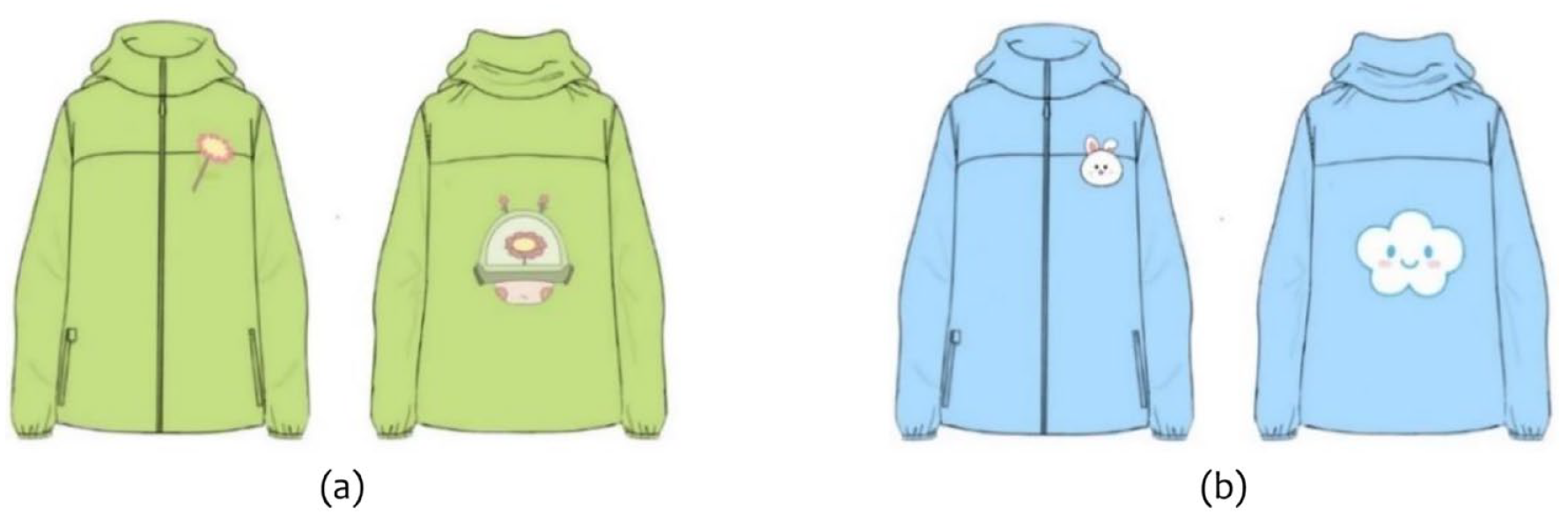
(a) Light green style and (b) Light blue style.
Virtual simulation
To reduce the sample production times, and quickly generate fitting effect, the parametric modeling technology is applied. 24 CLO 3D software (a feature-rich 3D visual apparel design tool) is used to carry out the structural design and virtual simulation display based on static 2D structural design and dynamic fabric display. Based on GB/T1335.3-2009 “children’s clothing size” (China’s current standard on children’s clothing size, applicable to batch production of infant and children’s clothing), the boy’s torso size 150/72 is selected as the modeling prototype. The main parts are shown in Table 1.
150/72 boys’ main dimensions.

The main fabric of the clothing is set to “polyester,” the thickness is set to 0.8 mm, the density is 135 g/m2, and the details are “weft-strength 58, warp-strength 59, and diagonal tension 57.” For the fabric material settings, the texture map is “repeat,” the type is “fabric matte,” the replacement map is “replacement degree 3.00, particle spacing 4.00,” and the reflection is “Surface roughness is intensity 50, reflection intensity 15.” By arranging and combining the above colors and cartoon images, six design schemes of color and pattern-matching were preliminarily obtained, and the corresponding virtual simulation effect drawings is generated. The 3D clothing display effect and pattern blocks (structure triangle grid) are shown in Figure 6.

(a) Virtual clothing model and (b) virtual try on.
As shown in Figure 6, the 3D virtual simulation design process is short time-consuming, easy to change, low cost, and can quickly, intuitively and stereoscopically present the clothing design effect.
Tests and results
Psychological and physiological
A total of 20 children diagnosed with ASD (excluding visual disorders such as color blindness ) according to the CARS(Childhood Autism Rating Scale) criteria were selected for the color matching and pattern preference experiment. To balance the order effect, a random order presentation of the existing scheme was adopted. The entire experiment was conducted on the E-Prime 3.0 platform(a computerized experiment design, generation, and operation software) and displayed on a screen. The ASD children were guided by the experimenter and the teacher to complete the experiment. The visual dwell time of the children was recorded by the machine, and the verbal choices were recorded by the experimenter. It is important to note that the experimental procedure included three practice tests and five formal tests. The single visual dwell test is 2 min. Finally, the rate of children’s choice in all formal experiments was counted.
The data from five formal experiments with 20 children with ASD showed that the clothing design scheme with light green as the main color was selected the most frequently, about 35% of the total number of choices (secondly, 20% choose light blue), as shown in Figures 5 and 6. Because of its suitable saturation and brightness, light green avoids a strong impact on children’s vision. At the same time, light green is fresh and soft, with flowers and vivid cartoon dolls, full of vitality, and childlike interest which is beneficial to mobilize the positive emotion of children.
Technology and function
In order to test the stability of ASD children’s intelligent monitoring clothing, the clothing technology system was carried out. The test scheme is shown in Figure 7.

Test scheme of clothing technology system.
Lost warning module test
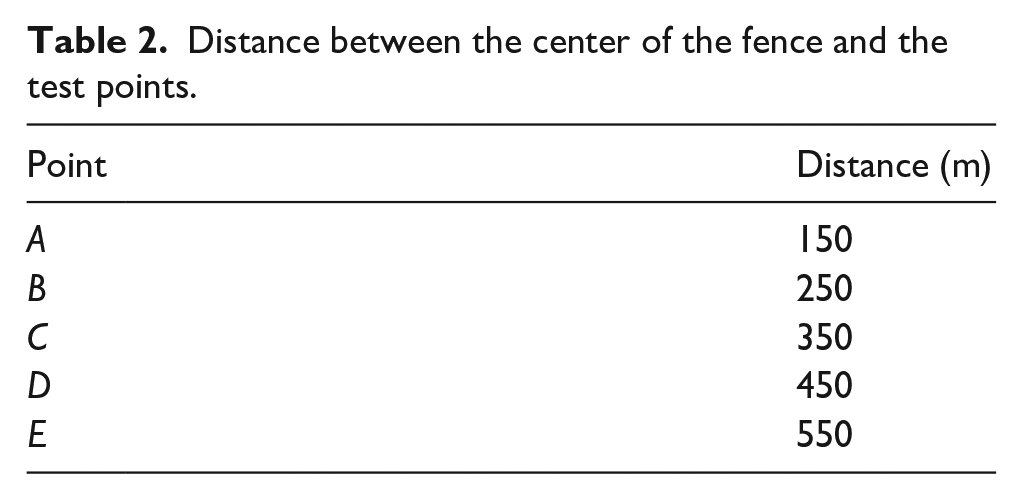
Firstly, in order to simulate as much as possible the real scenario of a lost child, common buildings with life density of 20%–35% and greening rate of 25%–35% were selected as the experimental scenario. A landmark building within the scene was selected as the central scene (fence center). To improve the relevance and accuracy of the experiment, five ASD children aged 9–12 years old were selected as volunteers, three were male and two were female. Then, the fence radius data was set to 500 m, and five locations near the center of the fence were selected as test sites (Table 2). Finally, the five children were allowed to wear the clothing to each test site in turn. The positioning distance after reaching each location was recorded separately, as well as the warning of the APP after exceeding the fence radius.
Distance between the center of the fence and the test points.
The positioning distance after the tester arrived at each location is shown in Figure 8(a), and the experimental data test results are shown in Figure 8(b).

(a) Distance record and (b) experimental data results.
After several groups of tests, it was found that the average error of this positioning module was 5.3 m. APP alerts when five testers exceeded the radius of the fence by 4.3–5.6 m. Therefore, the positioning accuracy of this clothing is high and the error is reasonable, which can meet the demand for instant positioning monitoring of parents.
Drowning warning module test
The test is a sensitivity test, including two test parts of the APP display information time, and buzzer warning time. In the normal state, the light of the warning module is green, when the sensor triggers a warning due to immersion into water, the light is red. We carried out a total of 10 underwater experiments, each lasting 15 s. The experiment interval was 30 s, and the total time was 7 min. In each experiment, the children took 7 s to enter the water and 5 s to come out of the water, and the actual time under water was 3 s. In this test, firstly, the sensor probe is immersed in water to confirm whether the buzzer can respond. Secondly, whether the stm32 SCM can upload information through the cloud and display it on the APP is checked. After confirming that both are running normally, the timer is used to record the APP prompting time of abnormal conditions and the buzzer warning time. The test experiment results of the APP prompting time and buzzer warning time are shown in Figure 9.

The time of APP prompting and buzzer warning.
The test results found that the signal response of the immersion warning module is sensitive, and the average time for the APP to display the warning information is 0.74 s; the buzzer is also able to respond quickly, and the average time for receiving information is 0.65 s. Therefore, this clothing warning module has a sensitive response and timely data transmission, which is conducive to gaining time for parents to make decisions and actions when children are in danger of drowning.
Product function test
The finished clothing was made based on the above-mentioned overall design scheme, and the realization degree of the anti-lost and anti-drowning functions were evaluated in a comprehensive experimental test. The test is conducted in the Wuhan Textile University (including the staff residential area) and the complex buildings of South-Central Minzu University. To verify the effectiveness of the anti-drowning, underwater experiments are conducted in indoor swimming pools considering its safety and hygiene. Location F of the students’ dormitory was selected as the center of the fence, and location G at the water surface inside the swimming pool in the university was selected as the endpoint of the radius. A map of the area is shown as Figure 10. And considering the psychological peculiarities of ASD and the safety of underwater experiments, normal children were selected for underwater experiments in this study.
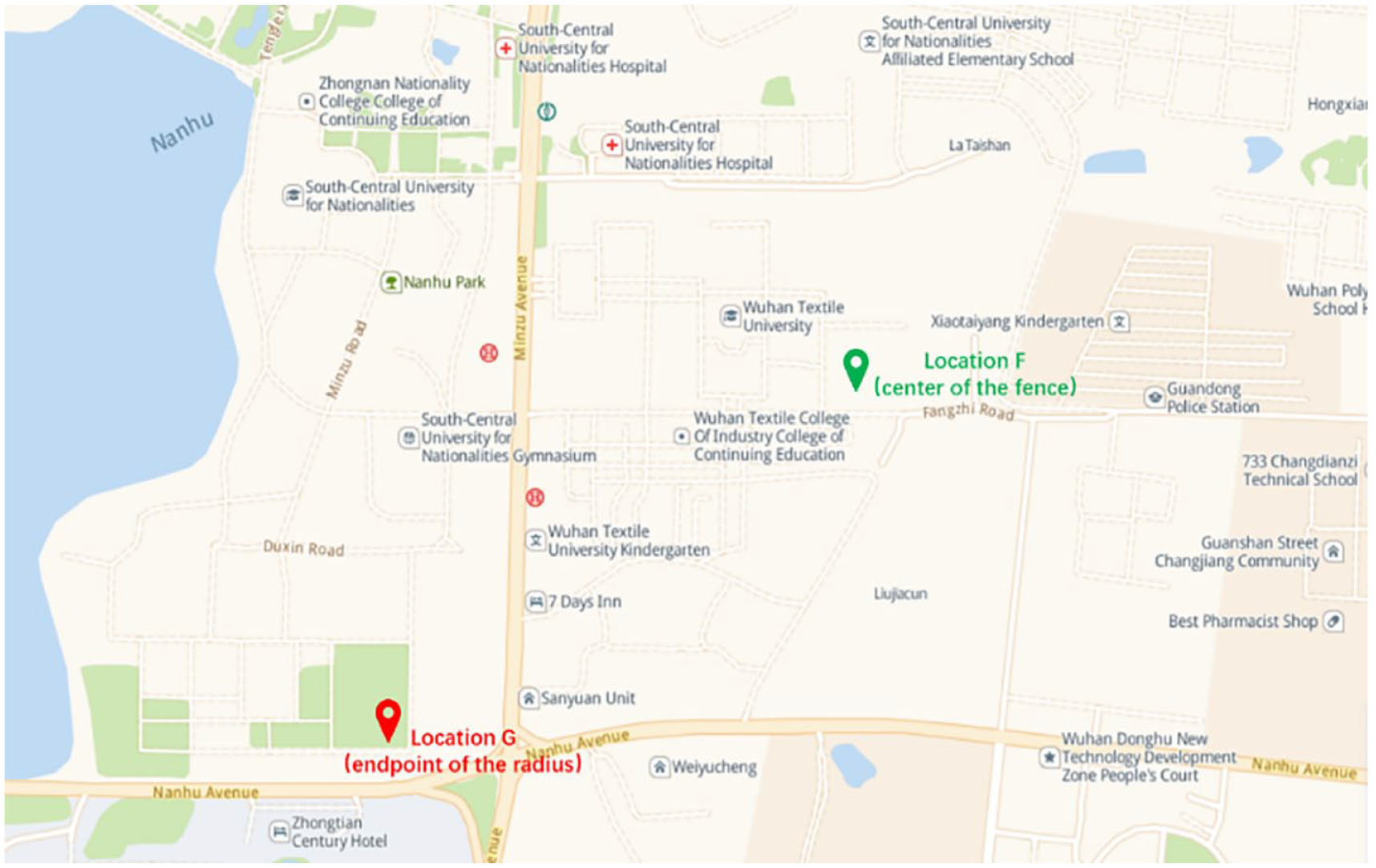
Map of the test area.
According to the simulated drowning test results, the APP warning effect shows that the actual linear distance between the two places is 860 m, exceeding the preset safety radius of 500 m. The APP interface can receive the prompt of “Warning! Abnormal! Guardian beyond fence radius!” in time after exceeding the radius of the fence, and the loss monitoring function has been better realized. When children enter the water, the water immersion sensor detects the water source and triggers the buzzer and gives a warning. At the same time, the APP interface received the warning of “Warning! Abnormal! Risk of drowning!” in time. The timer recording APP is used to display the information time and the buzzer warning time at 0.75 and 0.62 s, respectively, which verified the validity of the above warning module experimental results.
As shown in Figure 11, when the child is in a natural upright state underwater without any other action assistance, the intelligent clothing can lift the child and make the shoulder of the child above water, which achieved the effect of drowning protection. The rationality of the above filling material selection and layout was verified. Moreover, the surface of the clothing fabric did not absorb water, and there was no obvious water ingress in other parts. It shows that the impermeability of the fabric itself increases the underwater floating performance and safety.

Underwater experiment.
The wearable device adopts a detachable and modular design, with small energy consumption, light weight, good concealment and strong endurance. And the combination of BeiDou positioning and APP expands the application surface of intelligent terminals and realizes the miniaturization, flexibility, and flattening of intelligent guardianship clothing products. Additionally, the application of 3D virtual fitting technology shortens the development time of ASD children’s clothing while improving the development efficiency, reducing the times of making physical samples and also improving the accuracy of pattern making. Besides, the use of durable and easy-to-clean clothing fabrics is significantly better than cotton knitted fabrics, which reduces the development price of intelligent clothing, and the cheap EPE material also effectively reduces the overall cost of clothing.
Conclusions
Based on the special condition of ASD children’s bodies and minds, this paper investigates the literature data and existing market for the real problem that children are prone to loss and drowning. Combining the experiments of BeiDou positioning, drowning rescue, APP, clothing virtual simulation and evaluation, an innovative design of ASD children’s intelligent monitoring clothing with the functions of anti-lost and anti-drowning are developed. The clothing chooses a loose, light, and breathable green jacket as the clothing style, with a vivid and lovely cartoon image, which is conducive to meeting the physiological and psychological comfort needs of ASD children. The use of 3D virtual simulation to design the clothing appearance and try it on children, effectively shows a large number of color matching and figures applications, easy to change, low cost, and also enables children to intuitively select their favorite clothing.
The BeiDou positioning module test showed that the clothing could be positioned, but the positioning accuracy had an error of 5.3 m. The sensitivity test of the warning module clearly showed that the average time of APP prompting display and buzzer warning was 0.74 and 0.65 s, which indicated that the warning response was timely and sensitive, and could meet the demand for a timely warning. Underwater experimental tests show that the design of choosing EPE as the padding material and splicing in the inner layer of the clothing can lift children underwater and reduce the risk of drowning.
According to the above experimental results, this study concluded that intelligent clothing is effective in reducing the risk of loss and drowning of children. At the same time, the design of intelligent monitoring system and protection system has also improved the energy input of parents, guardians, and society in monitoring ASD children, thus reducing social risks and improving people’s quality of life and health level.
Overall, the experiment tested not only the basic functionality of the prototype, but also the comprehensiveness, coordination, and stability of the entire apparel technology system. That is, it tested whether the system can operate efficiently and stably when various functional modules work together. Therefore, this study not only tested whether the function could be achieved, but also tested the adaptability of the garment under the effect of various factors.
Although the microcontrollers, sensors, and EPE materials used in this study are currently available in the market, there is no combination of these and no combination with ASD children. The innovation of this study lies in the optimized combination of positioning technology and anti-drowning materials in the market, which constitutes a systematic product with wandering warning and drowning protection functions. This allows not only the original functions of commercial materials to be used, but also new systemic functions. In addition, the use of commercially available materials also demonstrates that our products can be easily developed and marketed to serve ASD children as soon as possible.
However, the rationality of the clothing technology and hardware integration design still needs to be improved. In-depth research can be conducted in the future in terms of further clarifying the psychological condition and needs of children, improving the accuracy of the positioning module, the sensitivity of the warning module, and enhancing the precise effect of virtual simulation.
Footnotes
Acknowledgements
Thanks for the support of Wuhan Clothing Digital Engineering Technology Research Center. Thanks to the participants who participated in the survey.
Declaration of conflicting interests
The author(s) declared no potential conflicts of interest with respect to the research, authorship, and/or publication of this article.
Funding
The author(s) disclosed receipt of the following financial support for the research, authorship, and/or publication of this article: This research was funded by Hubei provincial department of education – Philosophy and social sciences research project (21Q104, 22Q089), Nurture project of WTU (20220609), Teaching and research project of WTU (20220100108, 2021JY105), and Innovation and entrepreneurship training program for college students of WTU (202210495020, S202210495053X).
