



Abstract
Today, the textile sector is one of the largest economic sectors globally in terms of production amount, labor employment, and gross domestic product. At the same time, it is also one of the least sustainable sectors due to its profound negative environmental and social impacts. In the absence of a single legislative body at the global level, as well as a lack of global inter-governmental cooperation, there is also no unified legislation regarding the sustainability of the textile sector. However, the Earth is a single interconnected ecosystem; therefore, the responsibility for mitigating the negative consequences must be shared. The transition of the textile sector to a sustainable model requires a complete transformation of perception and behavior patterns at the governance, industry, and consumption levels. This research contributes to the existing literature about the social, environmental, and economic assessment of the textile sector focusing on the sustainability challenges in all three domains; furthermore, the paper provides a broad overview of existing and planned global and regional policies, regulations, and initiatives related to the transition of the textile industry to a sustainable development model.
Introduction
Intergovernmental Panel on Climate Change (IPCC) in its report of 2018 called global warming “human-induced” in the Climate change report of 2021, IPCC stated that climate change and the resulting environmental, social, and economic crises are the results of human activity, more so their failure to keep consumption within the planetary limits.1,2 Sustainable development as a concept or principle to sustain human social, economic, and environmental activities was defined in the so-called Brundtland Report in 1987; however, concerns about the changing climate and the devastating impact of overproduction and overconsumption were already expressed in the Limits to Growth (1972), and the Stockholm Declaration (1972) stating 26 principles to reduce the environmental (water, land, air) degradation and subsequent decline in human well-being and economic growth.3 –5 The declaration served as a basis for the development of environmental protection policies and regulations, affecting a wide variety of industries, including the textile sector. Nevertheless, 50 years later (Figure 1) we face an unprecedented planetary emergency – a triple planetary crisis (climate change, pollution, biodiversity loss) threatening the viable future on the planet.6,7 United Nations report “Making Peace with Nature. A Scientific Blueprint to Tackle the Climate, Biodiversity and Pollution Emergencies” (2021) started with UN Secretary-General’s António Guterres foreword: “Humanity is waging war on nature. This is senseless and suicidal.” 8
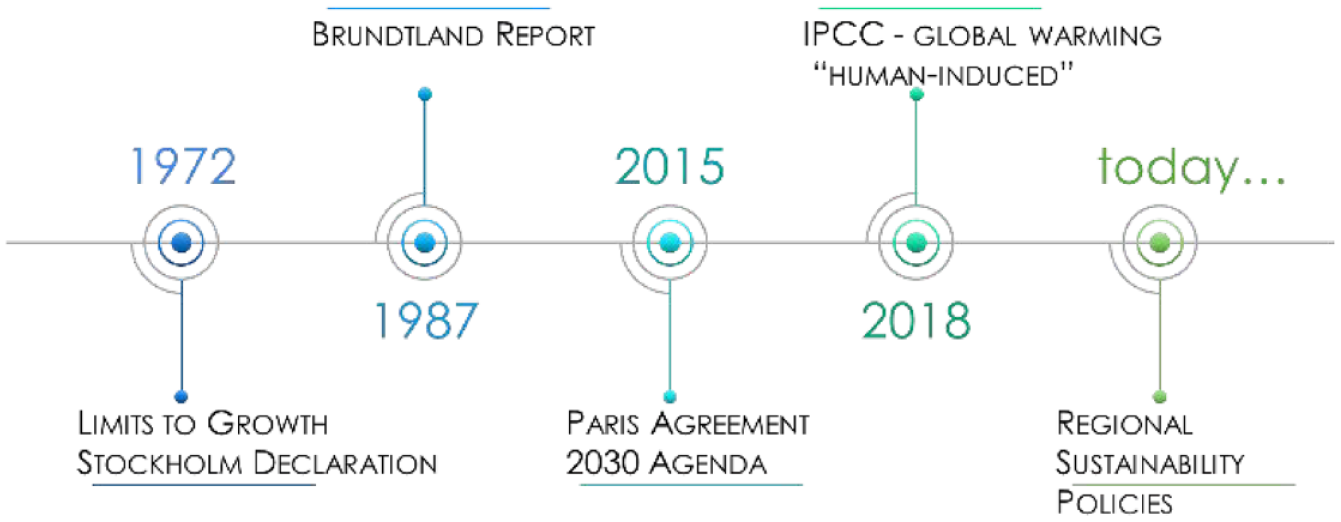
Timeline for acknowledging climate challenges.
Looking at the textile sector (textiles, clothing, leather, and footwear) from the perspective of Maslow’s hierarchy of needs, textiles and textile products fit into all levels of needs, be they basic deficiency needs or growth needs.9,10 Research shows that the conscious wearing of clothing (animal skins) began somewhere between 83,000 and 170,000 years ago setting in motion the migration of modern humans to the colder regions of the globe. 11 Human-made textile history dates back to the beginning of human civilization, becoming one of the oldest industries; however, until the Industrial Revolution, the industry developed slowly and was based almost exclusively on manual labor (a craft) and the production of individual textile products, mostly intended for their primary function – protection of the human body against the influence of the external environment. 12
Rapid technological progress after the Industrial Revolution contributed to the development and globalization of the industry, scaling up the amount of produced goods and reducing manufacturing time and costs – the beginning of mass production. Initially, mass-produced clothing was intended to uniformly clothe certain groups of society, for example, military personnel (beginning even before the Industrial Revolution with the reign of Louis XIV in France). 13 But due to relatively low costs and fast development times, it quickly spread to the production of other clothing as well like underwear, sleepwear, and basic garments for disadvantaged groups of society; finally at the end of the 20th century becoming an exponentially growing phenomenon known as fast fashion – on the one hand, democratizing the availability of textile goods for the bigger masses, on the other creating social and environmental challenges in unprecedented proportions threatening the achievement of the goals of global sustainability agenda. 14 In 1973 in the United States Congress, economist Kenneth E. Boulding said: “Anyone who believes that exponential growth can go on forever in a finite world is either a madman or an economist.” 15 Sarcastic but quite accurately describes the textile industry’s linear approach to the production, consumption, and disposal of textile goods (mostly apparel).
Today, the textile industry is one of the largest economic sectors globally in terms of production amount, labor employment, and gross domestic product (GDP) (the exact data varies from source to source and depends on what is covered under the term “textile industry”). At the same time, it is also one of the least sustainable sectors due to its profound negative environmental and social impacts – pollution (water, air, soil), use of hazardous chemicals, resource intensity (energy, water, land, raw materials), degradation of various ecosystems, threatening biodiversity, waste (post-industrial, post-consumer and pre-consumer (unsold goods) textile waste, air emissions, chemicals), human rights and labor rights violations (safety and health problems, child labor, slavery, inequality).16 –18 The social, environmental, and economic costs due to a mostly linear approach to textile product production, consumption, and disposal are significant, becoming a tragedy of the commons.19,20
The covid-19 pandemic highlighted the sustainability challenges in the industry, especially the gaps in social sustainability management in global supply chains; with the sharp drop in demand during lockdowns, it was the livelihoods of workers and their ability to make a living that suffered the most as the industry lacks social guarantees, and many are employed without contracts, it also exacerbated the exploitation of workers.18,21 –25 Moreover, single-use/disposable personal protective equipment (PPE), the volume of which increased significantly during the pandemic, has created additional waste and microplastics pollution, thus worsening the overall environmental footprint of the industry. 26 Due to reduced demand and the lockdowns during the pandemic, the industry experienced an economic downturn. The existing linear approach is unfit for the resource-strained ecosystem. Besides, the data from various surveys show that the position of consumers regarding textile products has also changed toward a more sustainable approach due to the impacts of the pandemic thus signaling to the manufacturer that the previous linear business approach should also be changed.27,28
The topic of sustainability in the textile sector is relevant and much discussed by researchers, industry representatives, policymakers, and consumers. However, although there are separate regulations and initiatives for a specific area/topic of sustainability in different countries, thus far there is no globally recognized uniform legislation that would determine or regulate the sustainable operation of the textile industry. In addition, the industry’s supply chains are complex, often geographically covering different regions with different legislation or lack thereof, thus being deficient in transparency and traceability.17,29,30 Furthermore, due to the diverse and fragmented nature of the processes, and the lack of quality and reliable data and collaboration between stakeholders, the sustainability of textile products on a mass scale is difficult to fully assess; moreover, it hinders data-based decision-making leaving more room for errors and speculations.31,32 According to Fashion Transparency Index 2022, the average disclosure score of sustainability policies, impacts, and outcomes on social and environmental sustainability throughout supply chain of 250 biggest fashion brands and retailers is 24% (the policies and commitment part being more disclosed (51%), but the actual impacts, and outcomes like risks concerning decent work, remuneration, race, and gender equality, overconsumption and their management, and traceability are rather low; moreover, around one-third of these companies score below 10%). 33
Transition to a more sustainable textile sector should be obtained in all three domains – social, environmental, and economic; therefore, falling in line with United Nation’s Sustainable Development Goals (SDGs): (i) promoting equal rights and possibilities to all regardless of gender, race or social background (SDG5 Gender equality); (ii) reducing water consumption and water pollution (SDG6 Clean water and sanitation); (iii) ensuring that human well-being comes before profit (SDG8 Decent work and economic growth) (iv) keeping the consumption within the planetary limits (SDG12 Responsible consumption and production) (v) taking action to reduce emissions (SDG13 Climate action). 34 However, if the benefits of the environmental and economic transition to a more sustainable, more circular (closed-loop) model are quite predictable and rationally implemented will bring positive changes, then for the social sustainability, these changes are yet to be understood.32,35 –37
Different studies show very different data on each specific type of impact; therefore, it is difficult and even impossible to objectively assess the true extent of the sector’s negative impact, due to different measurement methodologies and interpretations, lack of statistically valid data, and lack of transparency and traceability throughout textile supply chains. Also, the practice of withholding or falsification of the data is of significant concern – “greenwashing,” “socialwashing,” “greenhushing” are the terms connected to false sustainability claims both in the social and environmental domains.38,39 Moreover, most of the research papers cite and recite the same studies and reports often referring to outdated data that cannot be tested for statistical validity, nor are mutually comparable. Therefore, the authors of this paper often do not refer to direct statistical data.
This research contributes to the existing literature about the social, environmental, and economic assessment of the textile sector focusing on the sustainability challenges in all three domains; furthermore, the paper provides a broad overview of existing and planned global and regional policies, regulations, and initiatives related to the transition of the textile industry to a sustainable development model.
Sustainability policies, regulations, and initiatives
According to the World Trade Organization’s (WTO) Statistical Review of 2022 China, EU, India, Türkiye, and the U.S. were the leading textile exporters in 2021, and Bangladesh and Viet Nam are important garment exporting regions. 40 Therefore, the sustainability policies and regulations of these countries will be discussed in further sections of this paper. The authors are aware of the limitations caused by the language barrier, the available information on national policies and regulations is reviewed mainly in English and may therefore be incomplete.
In the absence of a single legislative body at the global level, as well as a lack of global inter-governmental cooperation, there is also no unified legislation regarding the sustainability of the textile sector. However, as sustainability challenges become more relevant and publicly acknowledged, new initiatives and organizations are formed and standards developed with the aim of promoting social and environmental sustainability in the textile ecosystem. In addition, international agreements and commitments related to achieving sustainability goals and tackling climate change are also being introduced in the textile industry. Companies are encouraged to improve their sustainability performance and take responsibility for all stages of the supply chain.
The United Nations is strongly committed to achieving climate goals, the Paris Agreement, SDGs, Global Alliance on Circular Economy and Resource Efficiency (GACERE), Industrial Development Organization (UNIDO) are just some of the examples of measures taken to achieve the set goals.34,41 –43 The Alliance for Sustainable Fashion is an initiative helping to ensure the contribution of the fashion value chain to the achievement of climate goals. 44 The Fashion Industry Charter for Climate Action launched in 2018 and renewed in 2021 was created to achieve net-zero emissions by 2050 in the textile sector. 45 The Ethical Fashion Initiative promotes sustainability and inclusiveness in emerging economies. 46
The textile industry is associated with serious social risks and violations. Various organizations and initiatives have been established to promote the social sustainability of the industry. The International Accord for Health and Safety in the Textile and Garment Industry (originated from the Bangladesh Accord) signed by 190 brands and trade unions promotes worker safety in the industry.47,48 The International Labor Organization’s (ILO) Better Work Programme brings together policymakers, industry (brands, factory owners), workers, and different unions advocates for improving working conditions (health and safety, respect for human rights, decent work) in the garment industry. 49 A similar mission has been undertaken also by the Clean Clothes Campaign, Fashion Revolution and its Good Clothes, Fair Pay campaign, or Who Made My Clothes campaign.50 –53 The transparency pledge – a coalition of human and labor rights organizations and trade unions was formed to improve transparency in the textile supply chains. 54 SA8000 Standard is a social certification program awarded to companies that respect human and labor rights, and decent work practices. 55 ISO 26000:2010 Guidance on social responsibility promotes sustainable development. There are also several initiatives on impact reporting like Global Reporting Initiative (GRI), and CDP reporting.56 –58
To address the social and environmental risks existing in the industry the Organization for Economic Co-operation and Development (OECD) has created Due Diligence Guidelines for multinational companies in the garment and footwear sector. 59 The Fashion Pact is a global initiative of different textile stakeholders promoting environmental sustainability. 60 Better Cotton Initiative and Cotton 2040 Initiative advocate for sustainability in cotton production.61,62
European Union (EU)
According to the European Apparel and Textile Confederation (EURATEX) textile sector employs 1.3 million people (2021) in Europe mostly in SMEs (around 70% being women), biggest European textile producers being Italy, France, Germany, Spain, and Portugal. Europe mainly specializes in high-added-value textile goods and textile innovations.63 –66
More than two-thirds of consumed textile goods in the EU are imported (accounting for 2%–10% of the global environmental impact created by EU consumption; having the fourth highest environmental footprint of EU consumption), mostly coming from China, Bangladesh, Türkiye, Vietnam, India, and others.64,67 –69 Textile and textile product production was moved from Europe to developing countries due to lower costs after the abolition of textile quotas in 2005. 70
In the last two decades, especially after the ratification of the Paris Agreement, the EU has developed a wide range of sustainability strategies, policies, and action plans, thus making Europe a global leader in sustainable development and climate action initiatives. Europe’s strategy of 2018 – A Clean Planet for All – stated that “immediate and decisive climate action is essential” to achieve climate neutrality by 2050 and ensure the global temperature increase keeps within 2°C above pre-industrial levels. 71 EU Zero Pollution Action Plan (2021) sets a vision to achieve zero pollution by 2050 targeting water, air, soil pollution, and pollution from consumer products. Some EU countries even have their national climate ambitions, for example, Finland wants to achieve climate neutrality by 2035.72,73
However, since most of the textile production takes place elsewhere, the negative environmental impact created by the EU production is relatively small compared to the rest of the world, also most of the social challenges are extra-territorial; therefore, Europe alone is unable to create a sufficient impact at the global level. 74 Thus, cooperation (all sectors, policymakers, and citizens) is particularly important and here Europe is the frontrunner making social and environmental regulations, standards, and laws binding on all who, for example, want their goods to be sold in the EU market.
Textiles and textile products as any other goods are regulated by the legislative acts protecting consumer rights and concerning the overall safety of the products – Product Safety Directive, Market Surveillance Regulation, Unfair Commercial Practices Directive.75 –77 Furthermore, textile products sold on the EU market must comply with the Textile Labelling Regulation (planned to be reviewed) which defines the textile fiber names, and the labeling requirements for the identification of fiber composition. 78 Additional regulations as well as industry standards set requirements for specific areas or product groups, for example, the Regulation on personal protective equipment, the Directive on the safety of toys, the Industrial Emissions Directive, or the use of hazardous chemicals in textile products is regulated by the Registration, Evaluation, Authorisation and Restriction of Chemicals (REACH) Regulation.78 –82 However, in terms of sustainability, the textile industry is currently practically unregulated from a legal perspective.
The textile sector in Europe is considered one of the twelve key sectors in terms of its economic significance as well as profound environmental footprint, thus potentially important in promoting the necessary change.83,84 The European Commission has created a strategic plan (as a part of its Circular Economy package) for the sustainable development of the textile sector (mostly focusing on the apparel industry, as it accounts for the majority of the volume of textile products) based on circular economy principles – the Strategy for Sustainable and Circular Textiles, thereby contributing to the achievement of the common goal of the European Union – climate neutrality by 2050 (the European Green Deal and Climate Law), as well as falling in line with European Consensus on Development, the United Nations Sustainable Development Goals, and objectives of the Paris Agreement, creating a framework for future legislative acts.85 –90 Currently, 16 documents related to the textile industry are under development, and according to Dirk Vantyghem, Director General at EURATEX are planned to be prepared and adapted within the next 5 years. 91 However, thus far most of the EU proposals and policies concerning the textile sector sustainability are based on voluntary principles and, therefore are not mandatory or legally binding.
The strategy intends on making the European textile ecosystem independent (energy and material supply), competitive at the global level (innovative products and business models), and resilient to various external crises that could significantly affect textile supply chains (energy, pandemics, wars), following the principles of sustainable growth, the efficiency of resource and energy use (focusing on renewable and recycled resources and on-demand production), reduction of the environmental footprint of textiles throughout their entire lifecycle (both for products of EU origin and imported goods), as well as improving the well-being and life quality of those employed in the industry (EU and globally), therefore sustaining the sector in all three domains – social, economic, and environmental.
To transform the EU textile sector from a linear to a circular model, the European Commission has created a framework, defining the main objectives and proposing means (regulations, legislative acts, and policies to be developed) to achieve these objectives in all three sustainability pillars: Environmental (sustaining the overall lifecycle of textiles and textile products (longevity, recyclability, use of recycled and renewable materials, non-toxicity, tackling fast fashion, extended producer responsibility throughout the value chain); reducing environmental degradation (renewable resources, recycled materials, tackling microplastic and chemical pollution, reduced emissions, reduced landfilling and incineration of textiles, balance between production and consumption, transparency of supply chains, awareness raising)); Social (sustaining social justice and equality (human rights, working conditions, and remuneration according to international labor standards, elimination of forced labor and child labor, skills development); sustaining consumer rights (tackling green-washing, education, transparency, increased product quality, extended producer responsibility throughout the value chain)); Economic (industrial resilience (innovative products with high added value, economically profitable business models, tax policy and investments promoting sustainable products, digitalization)). 87
To achieve the sustainable development goals stated in the EU Strategy for Sustainable and Circular Textiles and Industrial Strategy the Commission in cooperation with various stakeholders plans to develop a set of activities and commitments for the greening and digitalization of the textile ecosystem (innovative business models, resource-efficient manufacturing processes, skilled workforce, reuse and repair culture, investments boosting the competitiveness of the EU textile sector) – a Textiles Ecosystem Transition Pathway (2023). 92 The implementation of the strategies is planned to be regulated by the new Ecodesign for Sustainable Products Regulation, the revised Waste Framework Directive and related regulations for packaging, and other legislative acts to be revised and/or composed in the near future.93 –95
Despite the automation of some stages of textile supply chains, such as CAD/CAM 2D and 3D systems, automated gradation, cutting, printing, fabric manufacturing technologies, and specialized automatic or semi-automatic machines and sewing lines, textile, especially clothing, production is still labor-intensive to this day. Moreover, according to a Eurobarometer survey on European citizen attitude toward the environment, and expressed in the Report of the Conference on the Future of Europe, the majority express their desire to be actively involved in the transition process toward a more environmentally sustainable Europe.96,97 Therefore, social sustainability both from the perspective of the consumer and those employed in the industry worldwide is one of the key objectives. The new textile strategy focuses on raising awareness and accessibility of sustainable textile products, protecting consumer rights against false or misleading green claims, and ensuring respect for human rights and equality.
The Empowering Consumers for the Green Transition Directive and the Green Claims Directive together with the recommendations for the assessment of environmental footprint and the so-called Right to repair and Sustainable Consumption of goods initiative aim to inform the consumer about the durability, repairability of the textile product; moreover, any terms claiming the sustainability of the product will be allowed only based on the assessment of internationally recognized labels for environmental excellence (e.g. EU Ecolabel) or relative legislative acts.98 –102
To promote the upskilling and reskilling of the workforce for successful green and digital transition and competitiveness of the EU textile ecosystem, as well as to improve gender equality and equal opportunities for all, within the European Skills Agenda the Commission has launched the EU Pact for skills and the following textile related initiative – the Textiles, Clothing, Leather, and Footwear (TCLF) Pact for Skills.84,103 –107 Furthermore, considering that the EU is one of the largest importers of textile goods international cooperation and the promotion of environmental and social sustainability standards globally is one of the cornerstones of this strategy. In addition, it is in its interests to ensure that the imported textile goods comply with the principles of sustainability both from the point of view of materials and production, as well as human rights, fair working conditions, and remuneration and eliminating forced labor.108 –111
However, the question remains unanswered, how the transition to the new textile ecosystem and the introduced regulations will affect those employed in the textile industry outside the EU, for example in low-income countries. Recent studies show that a transition to a circular economy model could potentially lead to a decrease in employment in textile production; however, it offers new job opportunities in reuse, repair, and recycling; nevertheless, the full impact of the transition is yet to be seen and is strongly dependent on the successful and rational implementation of the policy, taking into account all stakeholders. 35
The textile industry is resource-intensive (energy, water, land, primary raw materials) throughout the whole value chain (from the fiber cultivation to the final product and its distribution), thus has a profound impact on biodiversity loss, an increasing amount of greenhouse gas emissions, and overall environmental degradation. 112 Given that the majority (up to 80%) of the environmental impact of the product is determined at the design stage of product development, the new Ecodesign requirements (product-specific rules) that would become mandatory for textile products sold on the EU market could make a great contribution to reducing the negative impact and achieving EU and UN climate-neutrality goals. 113
The EU Ecolabel and the Green public procurement criteria (both to be used voluntarily, and implemented prior to the sustainable textiles strategy development) define aspects of textile product longevity, use of hazardous chemicals, and reduction of environmental impact throughout the supply chain.114 –116 Moreover, the Chemicals Strategy along with the REACH Regulation set the framework to minimize the use of hazardous substances in textiles. 117 However, The new Ecodesign Regulation (at the time of writing the article the Regulation was submitted for public consultation) and its delegated acts plan to regulate the above-mentioned aspects in a legally binding manner, setting mandatory minimum quality requirements for the performance of textile products, recyclability, the proportion of recycled fibers in textile products, thus reducing the environmental impact of the industry, but at the same time thinking about the economic viability and affordability of sustainable textile products.
In addition, whereas the revised Waste Directive determines the separate collection of textile waste by 2025, the Commission proposes the Extended producer responsibility (EPR) scheme – additional taxation to support the recycling and/or reuse of textile products, promoting the circularity throughout the product lifecycle, including the post-consumption waste treatment according to the waste hierarchy, not only creating the ecosystem for textile collection, reuse, and recycling but also promoting the circular product design. 118 France, Sweden, and Netherlands are among the EU countries, that have already implemented EPR schemes for textiles. 119
The EU Commission’s initiative on microplastics pollution together with the new Ecodesign Regulation and ISO standards under development (EN ISO 4484) plan to set the framework for the limitation of microplastics pollution, starting from the design phase to production, consumption, and post-consumption.120,121
The Ecodesign Regulation and Waste Directive plan to tackle the destruction of unsold textile goods, therefore reducing the waste of valuable resources and fighting overproduction. Some European governments have already altered their national legislation to limit the destruction of unsold or returned textiles by promoting donation or recycling, for example, France, Germany, Belgium.122 –124 However, the proposal for a regulation on shipments of waste addresses the textile waste export outside the EU, ensuring its sustainable handling. 125 Moreover, mandatory design requirements and waste management according to waste hierarchy create the framework for the transition of the textile industry to circular principles, thus limiting the negative impact (carbon emissions, dependency on fossil fuels, climate change, microplastics pollution to name a few) caused by fast fashion. Furthermore, several voluntary initiatives to address the problem of overconsumption and overproduction are included in the Sustainable Textile Strategy, for example, #ReFashionNow, the new European Bauhaus, the Sustainable Consumption Pledge, etc.126 –128
The main objective of economic sustainability is to ensure the growth of the sector with the least possible social and environmental impact by creating high-quality products and ensuring their circulation for as long as possible, as well as effectively managing their end-of-life use – introducing the “product as a service” concept, where traditional economic principles of maximum profit shift from volume sold to quality and durability, given that the product owner (the business) is responsible for the whole lifecycle (from fiber to product during and after use) of the textile product.
Circularity in the textile sector opens the possibility to develop new innovative products and business models scaling up from the niche market to affordable, economically viable, and environmentally friendly products, thereby not only boosting the overall competitiveness of the EU textile industry but also ensuring the compliance of imported textile goods to the EU sustainable product requirements, thereby promoting free but fair trade, leveling the playing field among the competitors. 129
According to the strategy the reuse and repair ecosystem in the EU needs to be scaled up creating new businesses and jobs, therefore boosting also the social economy and keeping the textile products in circulation as long as possible. In addition, various measures such as favorable taxation would be applied to promote the reuse and repair sector. 130
The textile supply chains are very complex and fragmented, and they lack transparency; therefore, it is difficult to get quality data and measure the impact of the industry. To improve the data quality, availability, and transparency of the textile supply chains, providing full information about the product and its sustainability indicators for both the producer (at every stage of the supply chain) and the consumer, along with the review of the Textile Labelling Regulation it is planned to introduce the Digital Product Passport for textiles; however, given the sheer amount of textile goods, it is not yet clear how to achieve that.
One of the monitoring/control instruments on the implementation of these new regulations along with the Digital product passport and increased market surveillance would be the new Corporate Due Diligence Directive, making the producer/retailer responsible and accountable for the whole (EU and global) supply chain, thereby ensuring the product compliance with the social and environmental sustainability standards, and their business models compatible with the objectives stated in the Paris Agreement. 131
Considering that the EU textile market is mostly represented by imported textile goods, the strategy tends to set social and environmental standards reaching beyond the Member States, and therefore impacting and strengthening also the global textile industries, which is significant from the perspective of achieving the UN Sustainable Development Goals.
In conclusion, the European initiative and desire to transform the textile industry and promote its sustainability, as well as promote the return of production to Europe, is commendable. New strategies, action plans, and laws and regulations under development have marked a positive trend in promoting the sustainability of the industry, but Europe is small, and production mostly takes place outside of it, therefore both environmental and social consequences directly affect regions outside of Europe. Considering that most of the laws regulating the industry are still in the development or implementation stage, it is difficult to judge how effective they will be and how they will fit in with the rest of the world. Given the complexity of the textile industry’s supply chains, as well as the lack of quality data and transparency, there is a high risk of finding loopholes.
Major players in the textile sector
The raw material extraction and textile product manufacturing is mostly located in Asia and emerging economies (China, India, Türkiye, Bangladesh, Pakistan) due to lower costs; however, USA and EU are also considerable players in the textile sector, especially through providing demand. 18 Nevertheless, most of the social and environmental challenges occur in developing countries where the regulative mechanisms are less strict or even non-existing. 132 According to International Trade Union Confederation (ITUC) Global Rights Index 2022 rates countries on their performance in respecting labor rights among the top 10 worst countries for workers appear such textile producing countries as Bangladesh and Türkiye. 133
United States of America (US)
The United States produces around 8% of global fiber production and accounts for 14% of global textile product consumption (more than 90% are imported). 134 According to the National Institute of Standards and Technology (NIST) report on Circular Economy for Textiles around 85% of discarded textile goods end up incinerated or in landfills, remaining 15% are collected according to textiles recovery system but mostly sent to the low-income regions to be resold. 134 Similar to the EU, the U.S. is dominated by the import of textile products, so the largest social and environmental impact from the US textile industry is formed in the producing countries.
Textile products sold on the U.S. market must comply with several labeling regulations to ensure consumer safety and respect for their rights – federal labeling regulations for label content – fiber composition, country of origin, and manufacturer. The Textile Fiber Products Identification Act (TFPIA) stipulates mandatory indication of fiber composition (generic names and percentage) in the labels, invoices, and advertising materials for most clothing and household textile products. 135 The act is designed to protect U.S. consumer rights against misbranding of textile goods and also potential false green claims. This act does not apply to woolen goods, since they are regulated by the Wool Products Labeling Act, and furs that are regulated by the Fur Products Labeling Act.136,137 Federal Trade Commission (FTC) has developed Green Guides to help producers comply with the TFPIA. 138
Moreover, textile products must also comply with the Flammable Fabric Act which regulates the production of highly flammable clothing and interior furnishing; Federal Hazardous Substances Act (FHSA) that regulates consumer products (including textiles) containing hazardous substances, the textile product should have label alerting consumer. The Consumer Product Safety Improvement Act (CPSIA) regulates safety requirements for products intended for children.139 –141
In addition, the Care Labeling Rule provides clear and understandable care information for textile products (appropriate terminology, symbols), rules are applicable to all wearing apparel (except hats, gloves, disposable non-woven garments, handkerchiefs, belts, suspenders, and neckties) and certain piece goods for apparel making at home (except manufacturer’s remnants with unknown fiber composition and trims up to five inches wide). 142
The U.S. sustainability policy in the textile sector is not as broadly defined as in the EU; moreover, the legislation varies by state. Thus far compliance with sustainability principles depended on the company’s own initiative, but more and more especially after rejoining the Paris Agreement different bills related to the promotion of sustainability in the textile industry are appearing both in different states and on a national scale mostly tackling mostly workers’ rights violations (social sustainability), GHG emissions and promoting circularity and EPR (environmental sustainability).
The National Environmental Policy Act of 1969 (NEPA) was the first federal environmental law in the U.S. defining the national environmental policy based on social, environmental, and economic sustainability principles. 143 A year later the act was amended by the Environmental Quality Improvement Act of 1970, and based on the environmental policy, various laws related to water and air quality and pollution prevention were adopted.
Textile manufacturing must comply with the rules stated by the Clean Air Act meeting National Emission Standards for Hazardous Air Pollutants (NESHAP) due to fabric printing, coating and dyeing, and leather finishing and the Water Pollution Control Act (the Clean Water Act) that regulates the discharge of pollutants into waterways of the U.S.144 –147 Resource Conservation and Recovery Act (RCRA) regulates solid and hazardous waste management promoting pollution prevention and recycling.148,149 The Comprehensive Environmental Response, Compensation, and Liability Act (CERCLA) determines responsibility for environmental contamination leading to the endangerment of public health, and ecosystems, thereby, textile manufacturers are obligated to report any hazardous substance discharge. The Emergency Planning and Community Right-to-Know Act (EPCRA) aims to improve public awareness of the possibility of chemical risks and establish an effective emergency response system by imposing a mandatory requirement on manufacturers to report the storage of hazardous chemicals. 150 The Frank R. Lautenberg Chemical Safety for the 21st Century Act manages the use of chemicals. 151
Moreover, the Safe Drinking Water Act (SDWA) sets limits on water contamination to ensure the safety of drinking water. 152 The state of California has adopted the Safe Drinking Water and Toxic Enforcement Act known as California Proposition 65 which restricts the use of hazardous chemicals and heavy metals causing cancer and reproductive damage. 153
Several states have established so-called Carpet stewardship programs and signed them into bills to reduce the postconsumer carpet-related waste amount by promoting recycling and waste management according to the waste hierarchy (Minnesota, Oregon, New York, California).154 –157 To fight the textile (clothing, footwear, household textiles) waste landfilling and incineration Massachusetts has introduced the waste disposal ban and works on developing a textile collection, reuse, and recycling ecosystem. 158
New York, California, Maine, and Colorado enacted laws restricting the use of per- and poly-fluoroalkyl substances (PFAS) in textile products, and similar legislation is also going through U.S. Congress.159 –162 PFAS are used for water- and stain-proof coatings of textiles but are found to be harmful to the health. 163
Several bills on workers’ safety and rights have been adopted or are being discussed aiming to strengthen the social sustainability of the American textile industry. The Fashioning Accountability and Building Real Institutional Change (FABRIC) Act (introduced in the Senate in 2022, currently under revision) amending the Fair Labor Standards Act of 1938 – a bill protecting American garment workers’ rights, promoting transparency and increasing accountability for violations, setting hourly pay to ensure decent wage. 164 The bill also plans to establish Domestic Garment Manufacturing Support Program and a 30% reshoring tax credit to restore national textile production. 165 The state of California appears to be more active in passing social sustainability laws. Similar to the FABRIC Act – the Garment Worker Protection Act (Senate Bill 62) is effective since January 1, 2022, aiming to ensure decent wages and enforce better working conditions for Californian garment workers by introducing joint liability on brands and retailers. 166
The Fashion Sustainability and Social Accountability Act (The Fashion Act – Assembly Bill A8352, New York) (currently under consideration) promotes social and environmental sustainability by introducing a legally binding mandatory due diligence for companies working in New York or wanting to sell their products on New York’s market – transparency throughout the entire supply chain, reduction of negative environmental impact by reducing carbon footprint, and use of hazardous chemicals, and promotion of decent work, therefore aiming for the industry to develop according to the goals set in SDGs and Paris Agreement. 167 The Securing Wages Earned Against Theft (SWEAT) bill (A46/S1977, New York, currently under revision) was designed to ensure payment for work already performed by creating an employee lien on their employer’s assets.168,169
To fight the forced labor issue in the textile industry (among other industries mentioned in the law) and ensure that no American companies are involved in funding forced labor in the Xinjiang Uyghur Autonomous Region of China, the U.S. Senate issued the Uyghur Forced Labor Prevention Act (H.R.6256) – signed in to federal law in 2021. 170 To protect textile workers from overexposure to cotton dust during cotton handling and processing U.S. Occupational Safety and Health Administration (OSHA) created mandatory guidelines – The Cotton Dust Standard. 171
The federal child labor law regulates the employment and welfare of minors – the Fair Labor Standards Act setting the minimum age of employment to be 14 (in agriculture 12), prohibiting the employment of children in hazardous occupations, and determining the allowed occupations and working time limits from 14 to 16 years. 172 Child labor laws may vary from state to state and differ from federal law, in that case, the law with more strict regulations is applicable.
China
China has recently experienced tremendous economic growth but also faces many sustainability challenges rapidly breaching planetary boundaries since thus far economic growth was more important than the environment and human welfare. An increasing amount of solid waste and pollution are of serious concern endangering human health and biodiversity.173,174 China is the world’s leading textile-producing and exporting country as well as one of the largest consumer markets making a significant contribution to national economic development and job creation; however, its impact on the environment is devastating, especially due to air (dependence on coal) and water (hazardous chemicals) pollution it creates.40,175 Therefore, the effectiveness of China’s environmental policy is significant on a global scale.175,176
China’s Green Development in the New Era (2023) – the white paper released by the State Council on January 2023 summarizes China’s achievements toward a sustainable green economy and its involvement in solving global climate emergencies. 177 The ideas and strategies of Chinese governing institutions seem to be well drafted; however, the utopian manner in which they are presented and obvious inconsistency with the facts make one question whether the reality corresponds to the party’s manifestos. The authors have carried out a review of political documents, maintaining neutrality, but drawing attention to the need to critically evaluate the document’s compliance with reality.
Environmental and sustainability policies and regulations have been developed starting from the late 1960s (the first Environmental Protection Law passed in 1989); however, due to a lack of communication, enforcement, and monitoring from authorities, progress in achieving the long-term sustainability goals was insufficient. 178 Also, the Suggestions of the State Council on Strengthening Major Work on Environmental Protection (2011) indicate shortcomings in the implementation of environmental policies. 179
The development of sustainability policies is tied to National 5-year Plans for Environmental Protection.180,181 Moreover, China has also pledged to become carbon neutral by 2060; therefore, the transition to a low-carbon economy in all economic sectors is the priority of the Chinese government. 182 Also, consumer surveys show changes in consumer thinking and behavior, showing an increased interest in sustainable products and overall demand for sustainable development strategies from the government.183 –185 Therefore, over the last two decades but even more, after the ratification of the Paris Agreement and UN SDGs China has developed a detailed framework for environmental protection and pollution prevention strategies and regulations to meet the nation’s sustainable development plans and build an Ecological Civilization. The new development strategy was also included in the Constitution of the People’s Republic of China putting the sustainable use of natural resources, environmental protection, green spatial development, effective implementation, monitoring and governance, technological innovations, and public participation as the main priorities.186,187 Moreover, transitioning to a circular economy has been made a national strategy to achieve sustainable development and become an Ecological Civilization. Transitioning to a green, low-carbon circular economy also requires the involvement of citizens and a change in consumption habits. The Opinions on Accelerating the Establishment of Green Production and Consumption Law and Policy System (2020) defines the development of green production and consumption to achieve climate goals. The Implementation Plan for Promoting Green Consumption (2022) envisages that by 2025, China will mostly consume only sustainable green products (textiles being one of the key sectors), and curb overconsumption. 188 The transition to a green economy also envisages strengthening the governance structure – the Guiding Opinions on Building a Modern Environmental Governance System issued by The General Office of the CPC Central Committee and the General Office of the State Council (2020); the Guiding Principles on Building a Modern Environmental Governance System. 176
Starting from 2014 (Premier Li Keqiang declares war on pollution) with the renewed Environmental Protection Law China’s environmental policy intends to provide stricter control, inspection, and performance evaluation and punishment for non-compliance.189,190 Textile factories must comply with environmental policies otherwise the law determines severe fines, suspension of their operations, or, even criminal charges. The new regulations have also caused a rise in the prices of textile goods produced in China since the manufacturing infrastructure must be adjusted to meet environmental requirements.
China has developed a wide range of regulations for environmental protection and pollution prevention. Laws are binding on textile manufacturers and promote clean production, green design, consumption, and pollution control by introducing standards and monitoring measures. The Law on Promoting Clean Production (implemented in 2003/revised in 2012), the Law on Evaluation of Environmental Effects (implemented in 2003, amended in 2016), the Law on the Prevention and Control of Water Pollution (effective since 1984, amended in 2017), the Marine Environment Protection Law (effective since 1982, revised 2022), Enforcement Regulations for Law on Prevention of Air Pollution (1991) are among the most important environmental laws intended to reduce the negative impact of industries, including the textile sector.191 –195 Such standards as GB 4287-2012 Discharge standards of water pollutants for dyeing and finishing of the textile industry, GB 28937-2012 Discharge Standards of Water Pollutants for the Woolen Textile Industry, GB 28938-2012 Discharge Standards of Water Pollutants for Bast and Leaf Fibers Textile Industry are compulsory for the implementation of environmental protection laws.196,197 In addition, the Zero Discharge of Hazardous Chemicals Initiative (ZDHC) addresses the sector’s created water pollution by the discharge of hazardous chemicals. 198
Since the growing amount of waste is of serious concern, Chinese policymakers have issued regulations on waste management and the development of a recycling ecosystem and banned waste import. The Law on the Prevention and Control of Environmental Pollution by Solid Wastes (2020) restricts the import, dumping, and disposal of solid and hazardous waste. 199 In addition, the Notice on Issuing the Implementation Plan for Prohibiting the Entry of Foreign Garbage and Advancing the Reform of the Solid Waste Import Administration System (2017), and the Notice on Issuing the Work Plan for the Pilot Construction of “Waste-free City” (2019) aim to improve the domestic waste management and develop the renewable resource sector thus reducing the strain on virgin resources. 200 The Environmental Protection Tax Law (rates varying in different regions and on pollution levels, replacing the Pollutant Discharge Fee system (1979), effective since 2018) is an enforcement mechanism with an aim to reduce pollution (air, water, solid waste, noise), all polluting industries are subjected to the new tax policy and are encouraged to reduce the negative impact and switch to a more environmentally friendly production process. 201
According to the State Council, the textile sector has been declared as one of the industrial sectors that need to transit to a circular business model – the Circular Economy Promotion Law of the People’s Republic of China (effective since 2009, revised in 2018).202,203 The law supplemented by the Circular Economy Development Strategy and Near-term Action Plan (2013) and the Leading Action Plan on Circular Development (2017) promotes the transition of the industry to the circular economy model, efficient use of resources, and overall sustainable development (environmental, social and economic). 204 Strategic plans define support for science and technological innovations that will serve as driving forces in the implementation of a sustainable low-carbon economy and overall pollution prevention. 176
The Outline for Building a Strong Textile Country (2011–2020) by China National Textile and Apparel Council (CNTAC) (2012) promoted the development of the textile recycling system. The Textile Industry Development Plan (2021–2025) – the 14th 5-year plan of CNTAC plans to direct the development of the industry to the improvement of quality and not quantity creating high-added value products based on recycled materials driven by technological innovations and focusing more on the internal market. Transitioning to circular business models, greening and sustainable development of the industry, as well as effective recycling systems and use of materials remain some of the cornerstones of the development plan. 205
The Implementation Opinions on Accelerating the Recycling of Waste Textiles (2022) were released by the National Development and Reform Commission jointly with several ministries to promote the development of an industrial-level textile waste recycling ecosystem, thus increasing the amount of recycled textile waste up to 30% by 2030 while also developing the production and use of recycled fibers, promoting green design, strengthening social sustainability and innovations, developing standards and strengthening political support through favorable tax system.206,207
The Opinions of the General Office of the State Council on Establishing Unified Green Product Standards, Certification, and Labeling Systems (2016) emphasizes the necessity of green product standardization to promote green production and consumption raising the prestige and credibility of the Chinese economy also at the global level. 208 Furthermore, various Chinese industry standards could be applied to textile products that meet sustainability requirements (mostly environmental sustainability), for example, the China Green Product (CGP) label (CNCA-CGP-10: 2020 Green product certification implementation rules for textile products; GB/T 35611-2017 Green product assessment—Textile products), Ecological Textiles (CQC22-026780-2010 Certification Rules for Ecological Textiles; GB/T 18885-2009 Technical specifications of ecological textiles), China Low-Carbon Products (CNCA-LC-0106 2016 Low Carbon Product Certification Implementation Rules for Textile Fabrics); Green Fiber certification.209 –212 Moreover, Made in China 2025 is a 10-year plan (issued in 2015) that aims to increase the competitiveness of Chinese manufactured goods by developing innovative, sustainable, high-added-value products; textiles (new materials) are among the priority sectors. 213
The Ecological Civilization concept also includes the promotion of social sustainability, Chinese President Xi Jinping in his speech at the 14th National People’s Congress emphasized the importance of putting people first to build modern Ecological Civilization. 214 The Social Responsibility Office of the CNTAC encourages different initiatives to promote social, environmental, and economic sustainability within the textile sector, for example, the Family Friendly Factory initiative aims to improve working conditions for the female workforce, taking into account their needs and creating people-oriented management systems. 215 CSC9000T China Social Responsibility Management System for the Textile and Apparel Sector promotes respect for human rights, decent work, environmental protection, economic sustainability, and industry competitiveness. 216 However, China has not ratified many of ILO’s labor rights conventions, among the most important being labor rights conventions on the right to freedom of association and collective bargaining, Forced Labor Convention is effective only since August 12, 2023.217,218,219
India
India is one of the oldest textile-producing and exporting countries, and still to this day textile sector is one of the biggest contributors to its national economy, employing millions of people (mostly women and the rural population).220,221 Cotton and cotton product production is the leading textile industry in the country; it is supported by the Government of India with the Minimum Support Price (MSP) Order (although the cost of cotton is, therefore, one of the highest in the world, thus competitiveness is adversely affected), various state support systems are also granted to other fiber industries, for example, jute industry (MSP, Jute Packaging Material (Compulsory Use in Packing Commodities) Act, 1987 – the Government buys jute sacking for grain packaging), wool industry (Integrated Wool Development Programme (IWDP) – to promote the competitiveness of the industry) and to develop the textile industry as such by technological, skills and sectoral (handloom, handicrafts) support schemes and infrastructure development.220,222 –224 Textile policy in general is formulated and developed by the Ministry of Textiles and its subordinate regulatory bodies. 225
In India textile goods are regulated by general laws protecting consumer rights (also regulating online sales) and tackling unfair business practices – the Trade Marks Act (1999), the Designs Act (2000), the Consumer Protection Act (2019), the Consumer Protection (E-commerce) Rules (2021).226 –229 The Micro, Small, and Medium Enterprises Development Act (2006, amended in 2020) categorizes the textile sector in India and promotes the development and competitiveness of textile enterprises. 230 The Textiles Committee Act (1963) established the Textiles Committee as the quality control mechanism for textiles and textile machinery; while tax payment procedures are regulated by the Textiles Committee (Cess) Rules (1975).231 –233
The textile sector being one of the leading economic sectors in India, especially considering the large production area of cotton and its products, has a vast negative environmental impact – excessive use of raw materials (land, water, energy, non-renewables) and chemicals, waste generation, and pollution. However, textile sector sustainability policies in India are rather under-developed. Regulations on different aspects of sustainable development may vary from state to state, but the existing sustainability initiatives are mostly led by the public sector (industry). For example, the Circular Apparel Innovation Factory (CAIF) is an industry-led platform that aims to transform the textile sector into a more sustainable one, targeting all three sustainability domains – social (green jobs, decent work, responsible consumption), environmental (reducing carbon emissions and pollution, promoting effective and responsible use of materials), economic (promoting sustainable growth).220,234 –236 Moreover, the Project SU.RE. – Sustainable Resolution (launched in 2019) led by the biggest textile brands of India aims to transform the Indian textile sector into a sustainable model, therefore, contributing to the achievement of UN SDGs by reducing GHG emissions, increasing resource efficiency, introducing effective waste and wastewater management and addressing negative social impacts of the industry. 237
Nevertheless, India has committed to achieving UN SDGs and become a New India by 2022.238,239 Already in 2008 India’s National Action Plan on Climate Change (NAPCC) had set the priority goals for mitigating climate change and promoting sustainable development of the nation – renewable energy, rational consumption of resources, sustainable habitat and agriculture, pollution prevention, and overall Green India. 240 Moreover, India’s Ministry of Textiles has signed a cooperation agreement (2022) with the United Nations Environment Programme (UNEP) and the Cotton Corporation of India (CCI) to promote sustainability and circularity in the Indian textile sector. 241
However, so far there is no common strategy from the Indian government side to ensure a sustainable transition. Nevertheless, different sustainability disciplines promoted through various governmental supporting schemes are worth mentioning, for example, the Integrated Processing Development Scheme (IPDS) to promote and develop environmentally friendly water and wastewater management; the Integrated Skill Development Scheme to ensure a quality and competitive workforce in the industry; the Technology Upgradation Fund Scheme (TUFS) to modernize textile manufacturing facilities.242 –244 Moreover, the Make in India Initiative (2014) was launched to develop local production, attract foreign investment, and raise the overall competitiveness of Indian products. 245
The textile sector must comply with general environmental regulations (the Environmental Protection Act (1986) and related Environment (Protection) Rules (1986)), for example, restrictions setting limits on water consumption and pollution (the Water (Prevention and Control of Pollution) Act (1974) together with the Water (Prevention and Control of Pollution) Cess Act (1977) aim to prevent water pollution and maintain national water resources by imposing taxes on polluting industries) and air pollution (the Air (Prevention and Control of Pollution) Act (1981)) pollution or the use of hazardous chemicals (the Manufacture, Storage, and Import of Hazardous Chemicals Rules (1989)), as well as waste management (the Hazardous Waste (Management, Handling, and Transboundary Movement) Rules (2008), the Solid Waste Management Rules (2016)).246 –253 The Regulation of Persistent Organic Pollutants Rules (2018) addresses human health risks and environmental safety. 254
The Environment (Protection) Fifth Amendment Rules (2016) Standards for the discharge of effluents from the textile industry set limitations on the quality of industrial wastewater to be released into the ambient environment in order to protect the environment and prevent freshwater pollution. 255 Moreover, the Zero Liquid Discharge (ZLD) policy and standards by the Central Pollution Control Board (CPCB) regulate industrial wastewater management and promote wastewater recycling in the textile industry amongst other industries. 256 The knitwear cluster Tirupur in Southern India is one of the examples of the successful implementation of ZLD. 257
India is a member of ILO; therefore, must respect the principles of ILO’s Constitution and Conventions; however, like China, India has not ratified ILO’s labor rights conventions on the right to freedom of association and collective bargaining; also, the Occupational Safety and Health Convention is not ratified.258,259 Nevertheless, there are several recent national laws and regulations concerning labor rights and occupational health and safety management – the Code on Wages (2019), the Code on Social Security (2020), the Occupational Safety, Health, and Working Conditions Code (2020), the Industrial Relations Code (2020).260 –263 There is also legislation in force that prohibits forced labor (the Bonded Labor System (Abolition) Act (1976)), child labor (the Child Labor (Prohibition and Regulation) Act (1986)), and advocates for the protection of women’s labor, which is especially important in the textile industry, where the majority of workers are women (the Sexual Harassment of Women at Workplace (Prevention, Prohibition and Redressal) Act (2013)).264 –266 The Factories Act (1948) regulates general working conditions in textile factories. 267
Türkiye
The textile sector is the leading exporting industry in Türkiye; moreover, Türkiye is the fourth biggest textile product exporting country and fifth clothing exporter in 2021.40,268 Since 1999 Türkiye has been the EU candidate; however, due to various inconsistencies and violations, the admission is still in question. 269 Also, Türkiye has ratified the Paris Agreement only in 2021, committing to achieve climate neutrality by 2053. 270 Nevertheless, sustainable development strategies have been included in National Development Plans since 1996, besides Turkish sustainability policies and regulations are developed trying to comply with EU policy, for example, the Green Deal Action Plan of Türkiye (2021) aims for Türkiye to transition to a more sustainable economy complying with the EU’s Green Deal objectives and therefore strengthening the overall Turkish – EU cooperation.271,272 The Climate Change Action Plan (2011–2023) focuses on preventing climate change, enhancing clean and renewable energy use, reducing carbon footprint, raising the welfare of the population, and promoting sustainable industrial development. 273
Environmental policies in Türkiye have been developed since the 1970s; however, thus far they lack effective implementation. 274 The Environmental Code 2872 (1983) is the main environmental law aiming to protect the environment by preserving land and natural resources, preventing pollution (water, land, air), and preserving biodiversity by following sustainable development practices. 275 Various regulations for specific environmental matters are issued based on this code. 276 The Water Pollution and Control Regulation (2004) and the Control of Pollution Caused by Hazardous Substances in and around Water Bodies Regulation aim to protect ground and surface water resources and prevent pollution by developing discharge standards (for fiber and yarn production and textile finishing, for discharge of hazardous chemicals) and setting management rules. 277
Furthermore, textile manufacturers must comply with the Integrated Pollution Prevention and Control (IPPC) Directive that regulates the pollution created by textile manufacturing processes. The Integrated Pollution Prevention and Control Communique in Textile Sector (2011) intends to reduce the negative impact of the industry on the environment by controlling emission discharge and waste generation during the manufacturing process; thus, promoting clean production and energy and material use efficiency. 278
Considering that the Turkish textile industry is highly dependent on export opportunities to the EU, its textile products must meet the requirements of EU sustainability policies and regulations at all stages of the supply chain. Therefore, in 2021 as part of their Sustainability Action Plan Türkiye announced the Turkish Textile Industry Sustainability Action Plan to transform the national textile sector to meet the objectives of the European Green Deal. 279 To implement the Action Plan a Sustainability Platform is planned to be established. The overall objective of the Plan is to reduce the environmental footprint of the national textile industry while at the same time promoting the development of exports to Western countries. Similar to the European strategy the new Turkish textile strategy promotes transparency and traceability throughout the textile value chain, use of renewable energy and sustainable materials, development of a recycling ecosystem and waste management, social sustainability, and changing consumer behavior toward more sustainable and responsible buying habits. 280
The Zero Waste campaign by the Turkish Government was initiated in 2017 and is run by the Turkish Red Crescent. The collection and recycling of textile waste were included in the campaign with the year 2019 aiming to reduce the amount of landfilled textile waste.281,282
Türkiye has ratified all of ILO’s fundamental conventions on labor rights. 283 Labor rights and working conditions are regulated by the Labor Law and the Act on Occupational Health and Safety.284,285 However, textile workers in Türkiye still face many labor rights violations and safety and health hazards. The report on the impact of the Covid-19 pandemic showed how unprotected textile workers are and highlighted the lack of health and safety regulations; the Human Rights Outlook lists Türkiye as a high-risk country for forced labor; also the growing number of Syrian refugees increases the human rights violations and risks of child labor.286 –288
Bangladesh
Bangladesh is the third biggest garment exporting country in the world (mostly exporting to EU and U.S. markets), employing more than 4 million people. 40 Since the eighties, the government has supported the development of the industry with the help of various tax incentives. Although the garment industry has contributed to the economic development of the country and improved the well-being of the population, working conditions and respect for labor and human rights are among the worst in the world. Moreover, the environmental footprint and contribution to climate change are significant – severe water pollution (six rivers have been declared biologically dead, others highly contaminated, therefore dangerous to health) resulting in biodiversity loss, freshwater scarcity, and health hazard.132,289 Therefore, the following political strategies, statements and legislative acts should be evaluated critically.
With the National Environmental Policy and Action Plan in 1992 began the development of environmental protection policies. 290 Moreover, the Environmental impact assessment (EIA) mechanisms have been in place in Bangladesh since 1992 and are being strengthened through national legislation (environmental protection is also included in the Constitution of the People’s Republic of Bangladesh); however, in reality, in the long term, the industry shows low performance in environmental and social sustainability.132,291,292 In addition, Bangladesh is one of the countries most affected by climate change. 293 The National Adaptation Plan of Bangladesh (2023–2050) based on the National Environmental Policy (2018) summarizes the strategy and tasks for achieving the climate goals. 294
The development of textile policy and legislation is under the responsibility of the Ministry of Textile and Jute. The Ministry issues industry-related laws, for example, the Handloom Board Act (2013), the Silk Development Board Act (2013), the Jute Act (2017), and the National Jute Board Act (2008). 295 The Textile Policy (2017) focuses on the development and international competitiveness of the industry by improving quality standards, creating jobs and improving skills, promoting the growth of exports, and attracting foreign investment. Attention is also paid to sustainability issues – transition to an eco-friendly textile sector by promoting waste management systems, ensuring their effective implementation, and monitoring and preventing pollution. 296 The Bangladesh Garment Manufacturers and Exporters Association (BGMEA) is also involved in policymaking and general industry development. 297 BGMEA with the support of the Bangladeshi Government seeks to promote the transition of the industry to the circular economy model, the Circular Economy in Bangladesh’s Apparel Industry (CREATE) project is a policy-development project aiming to promote the social, environmental, and economic development of the textile industry through transitioning into the circular economy model.298,299
The Textile Act (2018) focuses on the development of the industry, ensuring the quality of textile products, as well as making factory registration mandatory. 300 The Textile Industry (registration and one-stop service center) Rules (2021) require mandatory environment and fire safety clearance prior to factory registration; therefore, trying to improve safety in the factories and overall environmental performance. 301
The textile sector in Bangladesh must comply with environmental regulations and standards set by the Environmental Conservation Act (1995), the Environmental Conservation Rules (1997), the Forest Act (1927), the Environmental Courts Act (2000).302 –305 Moreover, given that the textile sector is water-intensive; in addition, a large amount of chemicals is used during several manufacturing stages, the textile sector should comply with national water legislation, for example, the Bangladesh Water Act (2013) that regulates water management promoting sustainable use of water resources, also establishing basic rights to access to drinking water and water for domestic use. 306
The Government of Bangladesh through the support of international organizations and investment had introduced several projects and initiatives to make the textile sector more socially and environmentally sustainable, for example, the Promotion of Social and Environmental Standards (PSES) project was aimed to increase the compliance of the textile sector of Bangladesh with labor and environmental laws and standards, also advocating for inclusive workforce, but the Initiative to Promote Sustainability in the Textile and Leather Sector in Bangladesh (STILE) aims to implement environmental legislation into the sector-oriented regulations and monitoring.307,308
Historically the Factories Act (1965) regulates working conditions and safety requirements in factories, remuneration, working hours and holidays, punishments for non-compliance, and child labor (including minimums age). 309 After the Rana Plaza accident, Bangladeshi Government had to step up with the health and safety regulations; nevertheless, Bangladesh has still not ratified ILO’s Occupational Safety and Health Convention. 310 The Accord on Fire and Building Safety in Bangladesh signed between brands and retailers and trade unions ensures a safe and healthy working environment in Bangladeshi textile factories. 48
The Bangladesh Labor Act (2006, amended 2018) protects labor rights; the amendment of 2018 is designed in accordance with ILO’s recommendations to give more security to workers and improve the work environment, also providing punishment for violation of the law, as well as provide social security to expectant mothers. 311 The Amendment of Bangladesh Labor Rule 2015 in 2022 includes maternity benefits, health, and safety improvements, and regulations on gender-based violence. 312
Viet Nam
The textile and garment sector is one of the leading sectors in the national economy, employing more than 2 million people, also Viet Nam’s textile sector is export-oriented (mainly exporting to U.S., EU, China, and Japan); therefore, needs to comply with international norms and standards concerning textile product and labor sustainability requirements.313,314 The negative impact of the textile sector in Viet Nam is profound – degradation of natural ecosystems, pollution (water, air), a growing amount of waste, and labor rights violations. 315
The environmental policies development dates back to the 1990s with the passing of the Environmental Protection Law in 1993. 316 However, due to the development of international environmental policies and resulting consequences, the Vietnamese Government has committed to achieving carbon neutrality by 2050, developed its national plans, and adjusted legislation to meet international standards and secure its export development. 317 However, the following political strategies, statements and legislative acts should be evaluated critically given the political system in the country. National Environmental Protection Strategy aims to prevent environmental pollution, restore the environmental balance, raise the overall capacity to adapt to climate challenges and transform the economy to a low-carbon, circular model promoting sustainable growth and tackling overproduction and overconsumption. 318 In addition, the National Action Plan for the Implementation of the 2030 Sustainable Development Agenda represents the Vietnamese strategy to achieve SDGs, and National Green Growth Strategy for the 2021–2030 period, a vision toward 2050 aims for nations’ sustainable development in all the domains – social, environmental and economic.319,320 The government also plans to transition Vietnam’s economy to a circular economy model, thus trying to reduce the negative impact of industries and contributing to the achievement of climate goals. 321
Viet Nam textile and garment industry development strategy for 2030, and vision for 2035 falls in line with national Environmental Protection, SDGs, and Green Growth strategies aiming to develop the textile industry as the leading export sector by raising the quality standards of produced goods, therefore improving the competitiveness and resilience of the industry. The growth is planned following the principles of the circular economy, thus promoting sustainable development and achievement of national climate goals. Moreover, the plan envisages reducing dependence on the import of raw materials by developing local textile production, including the production of environmentally friendly materials. In addition, it is planned to develop large-scale and capacity industrial parks with the help of attracting foreign investments, as well as invest in infrastructure development to raise productivity and product quality, and reduce energy consumption, GHG emissions and implement effective recycling ecosystem (including wastewater management); moreover, transparency, traceability, and skills development are also a focal point of the strategy. 322
Textile products must comply with general legislation protecting consumer rights and concerning product safety – the Law on Advertising (2012), the Law on Protection of Consumer Rights (2010) and the Law on Product and Goods Quality (2007).323 –325 Moreover, textile goods must also comply with the National Technical Regulation on the Content of Formaldehyde and Certain Aromatic Amines Derived from Azo Colorants in Textile Products (2018); specific regulation is binding on toys – the National Technical Regulation on Safety of Toys.326,327 The requirements for textile product labeling (including the use of the national language, specifying the composition, hygiene, and safety information, instructions on use, and year of manufacture) are determined by the Decree on Goods Labeling (2017). 328 Environmentally friendly textile goods can apply for the Vietnam Green Label according to the Circular on providing orders, procedures, and certification of eco-labels for environment-friendly products. 329
Furthermore, textile production must comply with general environmental performance regulations like the Environmental Protection Law (2020, including extended producer responsibility (EPR) rules and management of wastewater), the Economical and Efficient Use of Energy Law (2010), the Law on Chemicals (2007), the Law on Water Resources.330 –332 The effluent of textile manufacturing wet processing is regulated under the National Technical Regulations on Environment and on Industrial Wastewater.333,334 However, compliance with regulations thus far is rather low. 335
Although there are existing laws on labor rights in Viet Nam, the risk of exploitation, forced and child labor, and other labor violations and safety and health hazards are still high.336,337 Moreover, Viet Nam has not ratified ILO’s convention on freedom of association. 338 However, as an export-dependent country, Viet Nam must align its regulations with international labor conventions, and the amended Labor Code (2019) aims to incorporate ILO’s standards prohibiting child and forced labor, sexual harassment, discrimination (race, religion, political opinions, gender, marital status, disabilities), and regulating labor rights, wages (including minimum wages) and payment methods, paid leaves, employment contracts, and their termination, health and safety requirements, working hours. 339
Concluding remarks
The social, environmental, and economic consequences created by the textile sector can no longer be ignored. They have left the greatest impact on developing countries, on the one hand promoting their socio-economic development, on the other hand leaving devastating negative consequences. However, the Earth is a single ecosystem; therefore, the responsibility for mitigating the negative consequences must be shared.
The developed countries have taken the leading role in the development of sustainability strategies and legislation, but less developed countries (the main producing regions that are most vulnerable to climate and social challenges) are in a hurry to develop their regional sustainability strategies in order not to lose their export positions. All the leading textile countries seem to be on the run for the top position of being the champion of sustainable textile product production. However, the biggest shortcoming of the proposed policies is the lack of defined actions, measures, tools, and techniques for their implementation and effective monitoring. Moreover, the credibility of the developed policies and legislation is strongly influenced by the political regimes in some of the textile producing countries.
All three domains of sustainability – social, environmental, and economic – are interrelated, challenges in one cause consequences in another, likewise the globe’s ecosystem is unified, and degradation on one side of the globe has an impact on the overall system. Therefore, the transition of the textile sector to a sustainable model requires a complete transformation of perception and behavior patterns at the governance, industry, and consumption level. Moreover, raising awareness and educating consumers about the objective impacts of the textile industry could be a key driver toward paradigm change.
The alternative costs of cheap mass-produced textile goods in a linear business model are human welfare and the environment. Accordingly, the transition to the Circular Economy model is seen as the main sustainability strategy.
Sustainability policies in the textile sector have not yet been fully implemented or are only in the development stage; consequently, for now, it is not possible to assess their effectiveness. Moreover, the complexity of textile supply chains is one of the most important complicating factors in the implementation of comprehensive sustainability. Therefore, the policies and regulations should be mutually compatible at a global level to promote sustainable development, given the global nature of the industry.
The implementation of policies will determine the success of the industry’s sustainable transition; however, the alarm about the looming climate challenges caused by human overconsumption of natural resources was already raised half a century ago, and yet only relatively recently has humanity decided to take action. For this reason, the answer to the question posed in the title is ambiguous.
Footnotes
Declaration of conflicting interests
The author(s) declared no potential conflicts of interest with respect to the research, authorship, and/or publication of this article.
Funding
The author(s) disclosed receipt of the following financial support for the research, authorship, and/or publication of this article: This work has been supported by the European Social Fund within the Project No 8.2.2.0/20/I/008 «Strengthening of PhD students and academic personnel of Riga Technical University and BA School of Business and Finance in the strategic fields of specialization» of the Specific Objective 8.2.2 «To Strengthen Academic Staff of Higher Education Institutions in Strategic Specialization Areas» of the Operational Programme «Growth and Employment».
