




Abstract
Natural fibers are an excellent alternative since they are inexpensive and easily accessible in fibrous form. Several researchers claim that jute fiber (JTF) can be used in concrete to improve its strength and durability performance. This review describes the characteristics and potential uses of some jute fibers in concrete. The main theme of this review is to summarize the effect of JTF on fresh properties of concrete, strength parameters, and durability characteristics. It can be concluded that jute fibers improved strength and durability aspect but decreased the fluidity of concrete in a similar way to synthetic fibers. However, there is little research available on the durability of concrete reinforced with JTF. Furthermore, the optimum percentage of JTF in concrete is critical as the higher dose adversely affects strength and durability characteristics due to lack fluidity. The typical range of optimum dose of JTF varies from 1% to 2% depending on the length and diameter of jute fibers. The review also identifies the key for future researchers to further, enhance the properties of concrete reinforced with JTF.
Introduction
In the building industry, concrete is the most frequently utilized material in the world.1 –3 However, because of its sensitivity to weak tension, poor resistance to crack opening, and low fracture strain capacity effects it used. 4 Fiber-reinforced concrete is often regarded as an alternative to plain concrete in order to compensate for the brittleness of plain concrete (improved the tensile strength). 5 Fiber has been employed to reinforce weak matrixes. 6 Several researchers discovered that the addition of fibers to concrete considerably enhances the properties of the concrete.7 –10 According to the American Concrete Institute (ACI), thick fibers are less effective in reducing the breadth of plastic shrinkage fractures as compared to thin fibers. 11 With the increased surface area of microfibers, the majority of tiny diameter microfibers are very effective in reducing plastic shrinkage cracking of concrete. 12 Furthermore, the introduction of fibers aids in the reduction of permeability and leaking in the concrete mix.13 –16
Fibers of many types, including organic and inorganic fibers, are used to reinforce concrete components. 17 The kind of fibers used in concrete to improve tensile capacity is determined by a number of factors, including the surface of the fibers, length, modulus of elasticity, and the substance from which they are formed. Furthermore, the extent to which these fibers have an impact on the performance of concrete is unknown. 18 Fibers are often divided into two types: metallic fibers and nonmetallic fibers. Metallic fibers are distinguished from nonmetallic fibers by their ability to conduct electricity. Metallic fibers are mostly steel fibers, while nonmetallic fibers include glass fiber, propylene fiber, carbon fibers, and other such materials. 19 Most researchers focus steel fibers, glass fibers, propylene fiber, and carbon fibers. However, these fibers are too costly. Also, these fibers cannot be easily available. Furthermore, the stiffness of these fibers is much higher which adversely effects the flowability of concrete. The different studies proposed natural fibers instead metallic fibers.
It has been discovered that natural fiber reinforced cement composites are an interesting option for low-cost building construction in developing countries. 20 Natural fibers have become one of the most popular reinforcing materials in terms of sustainability and biodegradability, 21 Non-toxic and natural environment-friendly, 22 features that are particularly beneficial for the manufacture of biocomposites natural fibers, on the other hand, help to reduce CO2 emissions into the surrounding environment as well. In a range of sectors, such as automotive, aviation, packaging, construction, architectural, and biomedical, bio composites are becoming increasingly popular as attractive products. 23 Furthermore, natural fibers can be found all over the world, which are cheaper than artificial fibers, have more stiffness, and can be recycled. 24 Natural fiber-based bio composites have essentially replaced synthetic plastics in a variety of applications due to their numerous benefits, including their broad availability, biodegradability, lightweight, low cost, and ease of fabrication. 25 A range of natural fiber composites has been proposed by a number of researchers for use in a variety of technological applications.21,26 –28
Roselle, sisal, coconut, sugarcane bagasse, hemp, and jute have been found to increase the compressive and tensile strength of concrete composites.20,29 –32 Research 33 evaluated the influence of roselle fiber on the compressive and tensile strengths of cement matrix and the results showed that it was effective. To change a brittle material into a ductile one, the chopped natural fiber reinforcement enhances the energy absorption capabilities of the cement matrix. It has been claimed that natural fibers are used as reinforcing agents in cement or cement concrete composites, act as crack arrestors, preventing fracture growth and ultimately leading to non-catastrophic failure. 34 The use of continuous fiber reinforcement has resulted in the development of a new class of building materials with improved tensile strength and ductility. 35 The incorporation of fiber reinforcement into matrices is the most important factor in the improvement of strength and ductility. Consequently, it has been found that natural fibers, acting as reinforcing agents, bridge gaps in the matrix and transmit stresses into it, thereby inhibiting the formation of micro-cracks in composite materials. 36 As a result, natural fiber reinforced cement composites are particularly well suited for applications such as shatter and earthquake resistant construction, foundation floors for machinery in factories, the fabrication of lightweight cement-based roofing and ceiling boards, wall plaster, and construction materials for affordable housing. 37 In this review, a particular focus has been given to jute fiber (JTF) in concrete.
Jute fibers (JTF), which are derived from annual plants and are abundant, might be regarded as a potential material for concrete composites because of their low cost and availability. They feature a pentagonal or hexagonal cross shape, and their soundproofing, ultra-violent protection, and antibacterial qualities make them an excellent choice for outdoor use. 38 The excellent mechanical qualities, jute textiles are appropriate for use as reinforcements in bionic and laminated composites. In terms of structural qualities, the jute fabric-reinforced composites fulfill the criteria of commercial materials while maintaining a relatively cheap cost. 39 Jute is a particularly important degradable natural fiber because of its high specific characteristics, cheap cost, ease of supply, and environmental friendliness composite. 40 The mechanical qualities of jute and sisal fibers are naturally superior to those of coconut and sugarcane, and this effect is mirrored in the concrete samples reinforced with the corresponding fibers. 41 A study claims 42 that, jute fibers are about seven times lighter than steel fibers and have a tensile strength of 250–300 MPa, which is sufficient for most applications. A researcher also explores the influence of short discrete jute fibers on the failure and impact characteristics of cementitious composites, as well as the effect of long continuous jute fibers. 43 According to them, the addition of jute fibers to concrete increases the strength, impact resistance, and cracking resistance of the mixture. 43 Several studies imply that jute fibers can be considered a proper replacement for the traditional fibers in concrete materials.44 –46
Many variables may impact the properties of natural fiber reinforced concrete (NFRC), including the fiber type used and the amount of fiber used. Aside from the hydrophilic nature of the fiber, the characteristics of NFRC may be altered by the quantity of fiber used in the composite and the amount of filler used. Overall, substantial fiber content is essential for composites to function well to obtain high performance. The optimum is also important for better performance of concrete. The influence of fiber content on the qualities of NFRC is of great importance, as previously stated. A lot of researchers focus on jute fiber (JTF) instead of steel fibers. As the steel fiber is costly as well as thermal expansion and corrosion problems. However, the knowledge of JTF in concrete are scattered and no one can easily judge the importance of coconut fiber in concrete. Therefore, this review focus on the physical properties of JTF, fresh properties, mechanical and durability aspects of concrete reinforced with JTF. A successful will also give the idea for a new researcher to choose and apply coconut fiber in concrete.
Chemical and physical properties of JTF
Jute is a lignocellulosic fiber that is made up of both textile and wood fibers. It belongs to the group of bast fibers (fiber collected from bast or skin of the plant). Jute fiber is a bast fiber made from the bark of the jute plant. It contains cellulose, hemicellulose, and lignin as well as some other minor elements such as lipids, pectin, aqueous extract, and other tiny amounts. Jute fiber is made up of tiny cellulose units that are encased and held together by lignin and hemicellulose. 47 Detailed characteristics of the different natural cellulosic fibers are shown in Table 1. Table 1 illustrates that JTF has a greater cellulose content, which contributes to its higher tensile strength. Therefore, it is expected that JTF will enhance the mechanical properties of concrete particularly tensile capacity. Jute fiber is made up of many cells. These cells are made of cellulose-based crystalline microfibrils that are joined to a whole layer by amorphous lignin and hemicellulose. A multiple layer composite is created when many of these cellulose and lignin/hemicellulose layers in one main and three secondary cell walls adhere to one another. The ratio of cellulose to lignin/hemicellulose and the orientation of the cellulose microfibrils in these cell walls vary. 48
Details of chemical compositions of different natural fibers. 41 .

Jute fibers are of silky texture as shown in Figure 1. JTF has certain distinctive physical characteristics, such as high tensile strength, bulkiness, sound, and heat insulation capabilities, poor thermal conductivity, and antistatic properties. Because of these characteristics, JTF is better suitable for the production of technical textiles in particular specialized applications. JTF has an average length of 0.1 in and an average diameter of 12 µm. The average length-to-breadth ratio is around 90. JTF has a density of 1.48–1.50 g/cm3. The color varies from yellow to brown to gray depending on the stage of development and retting, among other factors. Because of its stiffness and rigidity, jute has a lesser elasticity than other fibers. This has the benefit of allowing jute to be used as a bagging material since it maintains its form when loaded. The following Table 2 lists the usual physical features of JTF.

Physical properties of jute fiber.

Treatments
Cellulose is highly stable in a reduced alkali solution under normal circumstances. However, at high-temperature settings, cellulose is susceptible to alkaline destruction. In a recent study, Wang et al. 54 found that 120°C was the optimal alkali treatment temperature. The temperature of the alkali treatment was set at 120°C for 90 min to guarantee that the lignin and hemicellulose of the jute fibers were selectively eliminated while maintaining the premise of not hurting the cellulose. The following is the procedure for treating the jute fiber’s surface after it has been spun.: After being soaked in NaOH solutions at different concentrations (0%, 2%, 4%, 6%, 8%, and 10% (by weight) for 90 min at 120°C, the jute fibers were dried at 120°C for a total of 90 min. After that, the materials were washed with distilled water to remove any remaining lye and bring them back to neutral. Following that, the jute textiles were dried at 80°C until they reached a consistent weight. The concept of hot-alkali therapy is shown in Figure 2. The alkaline solution eliminates the majority of the hemicellulose and lignin that have an unstable structure while retaining the cellulose that has a stable structure and improved mechanical qualities. The crystallinity and elective surface area of the fibers are also increased as a result of the hot-alkali treatment. A study 54 found that hot alkali treatment increased the mechanical characteristics of laminated composites, particularly for the jute fabric reinforcement that was 6% NaOH-treated. When compared to untreated fabrics reinforced composites, the tensile strength, flexural strength, tensile modulus, and flexural modulus of 6% NaOH-treated fabrics reinforced composites were all increased by 37.5%, 72.3%, 23.2%, and 72.2%, respectively, when compared to untreated fabrics reinforced composites. After treatment with hot alkali, the fiber pull-out and gaps on the tensile fracture surface were minimized.

(A) Principle of hot-alkali treatment and (B) preparation processes of laminated composites. 54
In addition, research 55 found that NaOH treatment changed the structure of cellulosic fibers. Water molecules cover a vast number of gaps in the amorphous area of cellulosic fibers, which are composed mostly of cellulose. Hydroxyl (OH) groups are sensitive to alkali, and the hydroxyl groups in this compound were broken down in the presence of alkali. Activated molecules create fiber–cell–O–Na groups between the cellulose molecular chains as a result of the reaction. As a result, the hydrophilic hydroxyl groups in the composite are decreased, which has the effect of decreasing the moisture absorption quality of the composite. NaOH treatment also eliminates a small percentage of hemicelluloses, lignin, pectin, wax, and oil-covering components, among other things. The reduction of hemicellulose is more noticeable than the reduction of lignin. Due to the reduction in the diameter of the fiber, the aspect ratio (length/diameter) rises. The surface of the fiber becomes clean and more consistent (elimination of microvoids). When the effective fiber surface area is increased, the stress transfer capacity from matrix to fiber is increased.
However, excessive alkali concentration damages the fiber, even more, resulting in a considerable reduction in strength. However, alkali treatment diminishes fiber strength, but it enhances the compatibility of a composite material; thus, a composite material must undergo optimal alkali treatment to ensure compatibility. 55 A study claimed that, by soaking the jute fibers in an alkaline solution, the hemicellulose may be removed. Due to increased friction and stronger bonding with the cement slurry, this deepened the grooves on the fiber surface. 45
Scan electronic microscopy
The SEM analysis of raw and treated fabrics reinforced composites revealed the tensile fracture surfaces of the composites. Several voids are seen on the fracture surface of the untreated sample as a result of fiber pull-out and there are visible gaps between the fiber root and the epoxy as shown in Figure 3(a). Because the surface of untreated jute fabric contains a high concentration of hydroxyl and impurities, it does not adhere well to epoxy. Additionally, under the influence of tensile stress, the strength of jute fibers was not fully developed. 56 The hot-alkali treatment, on the other hand, enhanced the interfacial compatibility between the jute cloth and the resin. Figure 3(b) to (f) demonstrates that the fiber pull-out and gaps between the fibers and the epoxy are almost undetectable. The dispersion of jute fibers in the resin is greater than that of untreated textile reinforced composites. For this reason, the hot-alkali treatment eliminated pectin, wax, and other impurities from the jute fibers’ surfaces while simultaneously increasing the surface roughness of the fibers’ surfaces as well as their effective surface areas.57,58 Additionally, the removal of lignin and hemicellulose, which was accomplished by the treatment, resulted in an improvement in the crystallinity of the cellulose. Accordingly, jute fibers adhered better to the matrix when they were treated with hot alkali before drying 59 and the tensile tension was effectively transmitted between them. These are congruent with the mechanical characteristics of laminated composites, which are discussed more below. After being subjected to a hot-alkali treatment, laminated composites showed better interfacial compatibility and mechanical characteristics.

SEM Results of alkali hot treatment: (a) 0%, (b) 2%, (c) 4%, (d) 6%, (e) 8%, and (f) 10% NaOH.
Fresh concrete properties
Workability
Figure 4 depicts the slump flow of concrete with varying percentages of JFT. It can be noted that the flowability of concrete is reduced with the addition of JTF. The introduction of JTF into concrete lowers the fluidity of a freshly mixed concrete mixture, resulting in a reduction in slump properties. 60 The decrease in flowability with JTF is caused by the large specific surface area and the smaller diameter of the JTF. Furthermore, the hydrophilic JTF moisture absorption characteristics resulted in a decrease in the slumping of the fabric. 61 With increasing volume dosage of fibers, a process is known as “balling” occurs, resulting in the concrete becoming stiff and a loss in flowability. 50 For lower fiber fractions, JTF with a greater aspect ratio has significantly less influence on the slump of concrete than JTF with a lower aspect ratio. A shorter length, that is a smaller aspect ratio of JTF has a larger number of fibers, resulting in a bigger negative influence on the slump of new concrete when a constant amount of JTF is used. A decrease in fiber length increased the amount of air contained in concrete and a larger amount of air contained in concrete had a more detrimental effect on slump. 62 The increased surface area of coconut fibers (CFs), it may be necessary to use more cement paste to coat them, resulting in less cement paste being available for lubrication. The decrease in the fluidity of concrete mixes when Cesare is added may be linked to the increase in surface area of CFs. Additionally, CFs enhanced frictional resistance between the aggregate and fiber necessitating the inclusion of extra cement paste to reduce this internal friction. 30 Although fibers have several benefits in concrete, the inclusion of fibers has a detrimental influence on the flowability of freshly mixed concrete.63,64 Fibers have a very big surface area, which has led to an increase in water consumption. Due to the increased friction between the aggregate and fibers in the mixes, more potential energy is required for concrete to flow by its weight. 65 Table 3 shows the summary of slump values with different dose of jute fibers.

Slump flow. 66
Summary of fresh and mechanical performance of concrete with jute fiber (JTF).

Hardened concrete properties
Compressive strength (CS)
Figure 5 depicts the CS of concrete with fluctuating proportions of JTF. It can be noted that the CS of concrete increased with jute fibers up to 0.10% addition and then decreased with further addition of jute fibers due to lack of fluidity. According to the findings of one research, adding fiber to concrete up to a particular percentage boosts the compressive and tensile strength of the concrete. 73 The rise in fiber aspect ratio, on the other hand, causes the strengths to fall due to lack of fluidity. Another research 60 demonstrates that the length and volume of the fibers have a favorable effect on the characteristics of hardened concrete. The confinement of the fiber reinforcement on the specimen has a favorable effect on the CS of the specimen. Lateral expansion occurs as a result of compression and since the fiber prevents this expansion, the CS of concrete increases. As a result of their strength, the fibers are capable of withstanding stress and shear. 74 When the dosage is increased over 2.0%, the compaction process becomes more difficult owing to a lack of flowability which leads in a decrease in strength. On the basis of comparisons with reference concrete, it has been stated that a 1.5% increase in fiber content enhanced compressive strength by over 15%. 75 Fibers with a concentration of 1.0% by volume in concrete result in a considerable improvement in the mechanical characteristics of the concrete at both the initial and later ages. The greatest gain in 28-day strength was found to be 29.15% according to the findings. 76 A study 70 showed that an increase in the fiber percentages results in a rise in CS. According to the capacity of fibers to constrain fracture extension, this results in a decrease of the stress concentration generated by cracks, which in turn results in a delay in the pace at which cracks expand. It can be shown that the CS of concrete improves from 10% to 37% after 28 days of curing as a consequence of the addition of JTF to the mixture. 70

Compressive strength (CS).
Compressive strength is improved by 55% as compared to reference concrete with a 0.5% addition of wood fibers. 77 At the same dose of jute fibers (0.5%), the compressive strength of concrete is 30% higher than the reference concrete. 70 At 1.0% addition of wood fibers, compressive strength improves by around 200% as compared to reference concrete. 77 At the same dose of jute fibers (1.0%), the compressive strength of concrete is 37% higher than the reference concrete. 68 However, the strength tends to decrease beyond the 1.0% addition of wood fiber. 77 Similar a study also claimed that the compressive tends to decrease beyond 1.0% addition of jute fibers. 68 A study conducted that hemp fibers decreased the compressive strength of concrete. At 1.0% addition of hemp fibers, compressive strength is 58% less than compared to the reference concrete. 78 Similarly, a study also concludes that banana fibers decreased the compressive strength of concrete. At 1.0% addition of banana fibers, compressive strength is 6.0% less than compared to the reference concrete. 79 However, a study observed that coconut fibers improved the compressive strength of concrete. At 1.0% addition of coconut fibers, compressive strength is 26% than as compared to the reference concrete. 80
Adding plant-based natural fibers to concrete increases its compressive and tensile strengths as well as its toughness. It also enhances the concrete’s cracking behavior and impacts resistance qualities. It also improves its fatigue strength and impact resistance as well as its strain capacity. 81 The explanation for this may be summarized as follows: the fiber bridging effect prevents transverse deformation of concrete, resulting in an improvement in the compressive strength of concrete. 82 Adding fiber at a lower volume tightens the bond between the composite ingredients and allows for the development of an unbroken bound. 37 Furthermore, increasing the rate at which fibers are introduced into concrete results in an increase in voids, which may result in a reduction in CS. 83 Similarly, the propensity of fiber with an aspect ratio greater than 120 to ball up results in a poor distribution of fiber in the concrete mix, which limits the capacity of the concrete for CS. 37 Table 3 shows the summary of the compressive strength of concrete reinforced with jute fibers.
Figure 6 depicts the relative analysis of CS with different proportions of JTF. Compressive strength (7 days) of control concrete is taken as a reference compressive strength. The optimum dose of jute fibers (0.10%) was selected for comparison. Findings suggested that 7 days CS of concrete at 0.10% addition of jute fiber is 11% more than reference concrete CS (7 days of control concrete compressive strength). CS at 14 and 28 days at 0.10% addition of jute is 22% and 34% more than as compared to the reference concrete CS. Furthermore, higher (0.25 and 0.50%) show CS about 10% and 20% lower than reference concrete strength at 7 and 14 days of curing respectively while 28 days CS is equal to the reference strength.

Relative compressive strength.
Split tensile strength (SP)
Figure 7 depicts the SP of concrete with variable proportions of JTF. It can be noted that SP of concrete is enhanced with jute fibers up to 0.10% addition and then decreased with further addition of jute fibers due to lack of fluidity in a similar manner to the CS. Additionally, it has been shown that the addition of 2.0% fibers by volume may boost the SP of concrete by around 40%. 84 Fibers are utilized to increase the elasticity of concrete by postponing the emergence of tension fractures or preventing the creation of cracks, resulting in fiber reinforced concrete having a higher tensile strength than plain concrete. Crack-stopping instead of crack prevention is the impact of fibers. When 0.25% JTF with a 10 mm length was added to normal concrete, the compressive and tensile strength rose by roughly 26% after 28 days. 85 The SP of the 5% alkali-treated jute fiber-reinforced epoxy composites were greater than that of the 10% treated ones. 86 By contrast, when 6% NaOH is used to treat fabrics reinforced composite materials, the results show that the tensile strength, flexural strength, tensile modulus, and flexural modulus of the treated fabrics reinforced composites are increased by 37.5%, 72.35%, 23.25%, and 72.25%, respectively, when compared to the results of the untreated fabrics reinforced composites. For one thing, alkali treatment at 120°C improves the contact area between fibers and epoxy resins, while also increasing the crystallinity of fibers that have had their impurities, such as lignin and hemicellulose, removed by the alkali treatment at 120°C. 54 It is worth mentioning that, some studies claim that fiber increased the SP of concrete more efficiently than it increased the CS.26,74 However, the optimum dose of fibers is important as the higher dose results in porous concrete due to lack of fluidity which adversely affects the performance of concrete. Different researchers recommend different optimum values depending on fiber length and diameter. However, typically the range of optimum dose fibers varies from 1% to 2% by volume of binder. Furthermore, Table 3 shows the summary of SP of concrete reinforced with JTF.
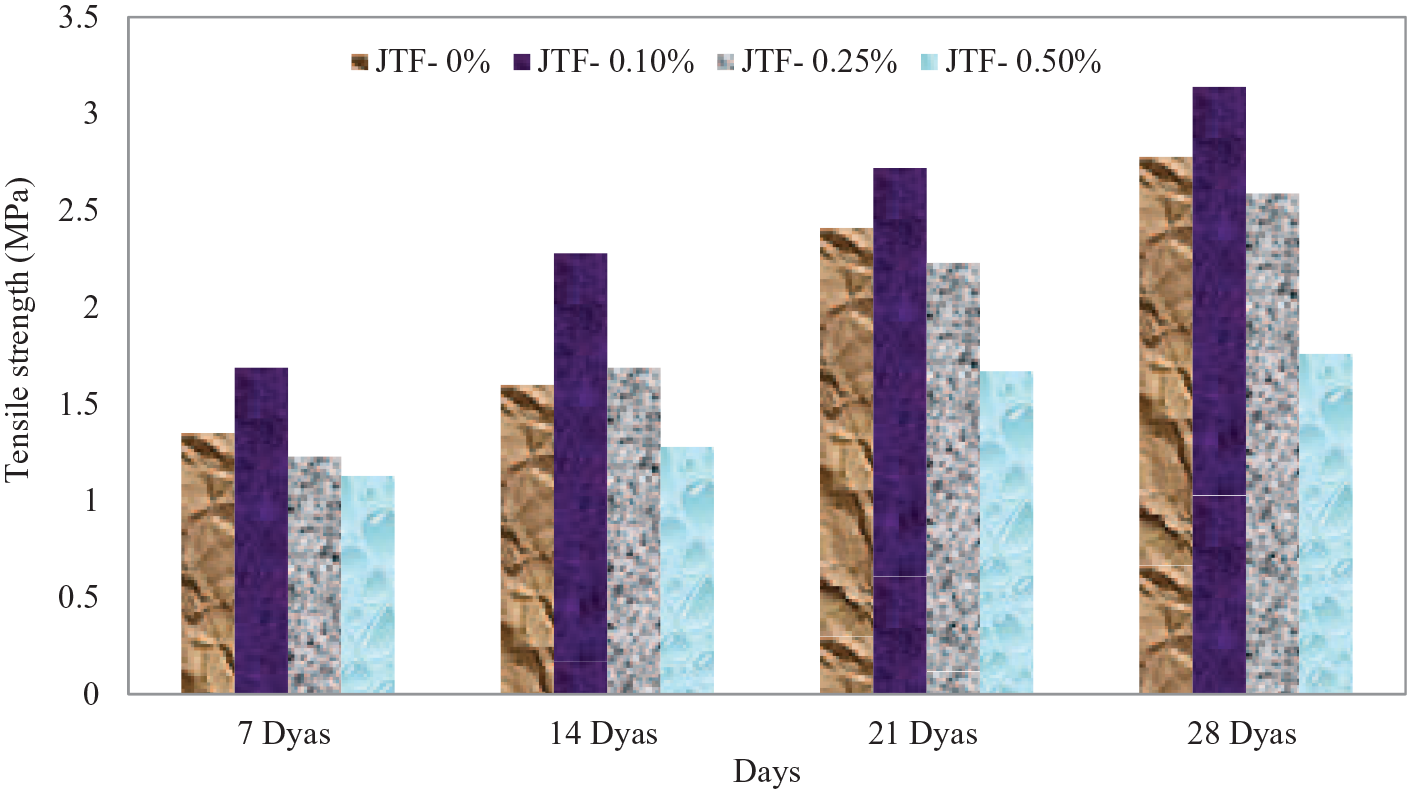
Tensile strength of concrete.
Figure 8 depicts the correlation among CS and SPT of varying percentages of JTF. A regression line among CS and SPT seems to be straight. A correlation exists between two variables when one of them is related to the other. As SPT is about 10%‒15% of CS of the strength of concrete. Therefore, a strong correlation is existing between CS and SPT R2 values is almost equal to 90%.
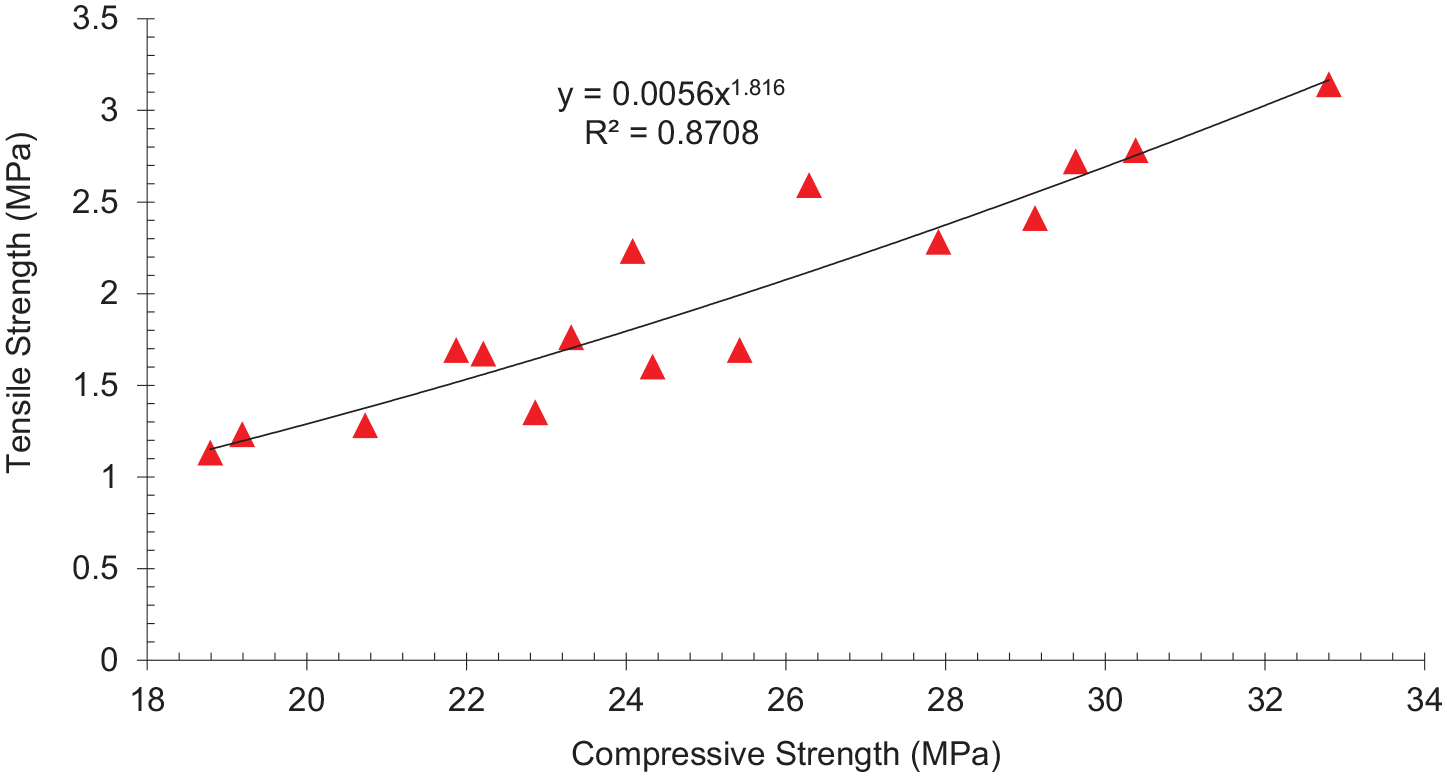
Relation between CS and SPT of concrete.
Flexure strength (FS)
Figure 9 depicts the FS of concrete with varying proportions of jute fibers. It can be noted that split FS of composite improved with jute fibers up to 0.10% addition and then decreased with further addition of jute fibers due to lack of fluidity in a similar manner to the CS. The confinement of the fiber reinforcement on the specimen has a positive effect on the FS of the concrete sample. When there is compression, there is a lateral expansion which results in tension and shear as a consequence of the contraction. Because of their strength, the fibers are capable of withstanding strain and shear. This confinement has the ability to reduce the specimen’s transverse deformation while at the same time enhancing its FS and stiffness. When the amount of coconut fiber in the concrete is raised, especially beyond the optimum percentages, the process of compaction becomes more difficult, resulting in porous concrete and a drop in FS. The FS of composites was enhanced by 3.16% and 9.5% respectively, after being subjected to a 5% alkali treatment for 2 and 4 h. 87 A 9.1% increase in the FS and a 9.7% rise in the modulus of elasticity were reported in the treated JTF after treatment with an alkaline solution. 88 It is generally recognized that alkali treatment increases fiber-matrix adhesion by removing contaminants from the fiber matrix, both naturally occurring and artificially created. An alkaline aqueous solution was used to change the topology of the fiber which resulted in increased flexural strength. 89 Only when a 10 mm fiber was used at a dose of 0.50% did the modulus of rupture of a concrete beam rise by roughly 6.0%, indicating that the addition of JTF did not improve the strength of the beam. The modulus of rupture decreased for the tested three fiber contents of 0.25%, 0.50%, and 1.00% for fibers with a length of 20 mm, regardless of the fiber content. Additionally, the findings demonstrate that adding JTF in a considerable quantity (1.0%) had a negative influence on the modulus of rupture, regardless of whether the fiber aspect ratios were 100 or 200. 60 A 35:0 weight percent relative weight fraction of jute and sisal fiber results in hybrid composites with improved FS due to the inclusion of the two fibers. FS (56.31 N/mm2) was achieved by the composite. In essence, FS is a combination of the tensile and compressive strengths and it deviates from this with the interfacial shear strength between the fiber and the matrix. 46 It was discovered that the addition of JTF to the concrete mix resulted in an increase in the FS of the composite. It is estimated that the increase in FS of JTF concrete is between 5 and 10%, depending on the fiber percentages and the test age of the concrete samples. 70 Furthermore, Table 3 shows the summary of the flexure strength of concrete reinforced with jute fibers.
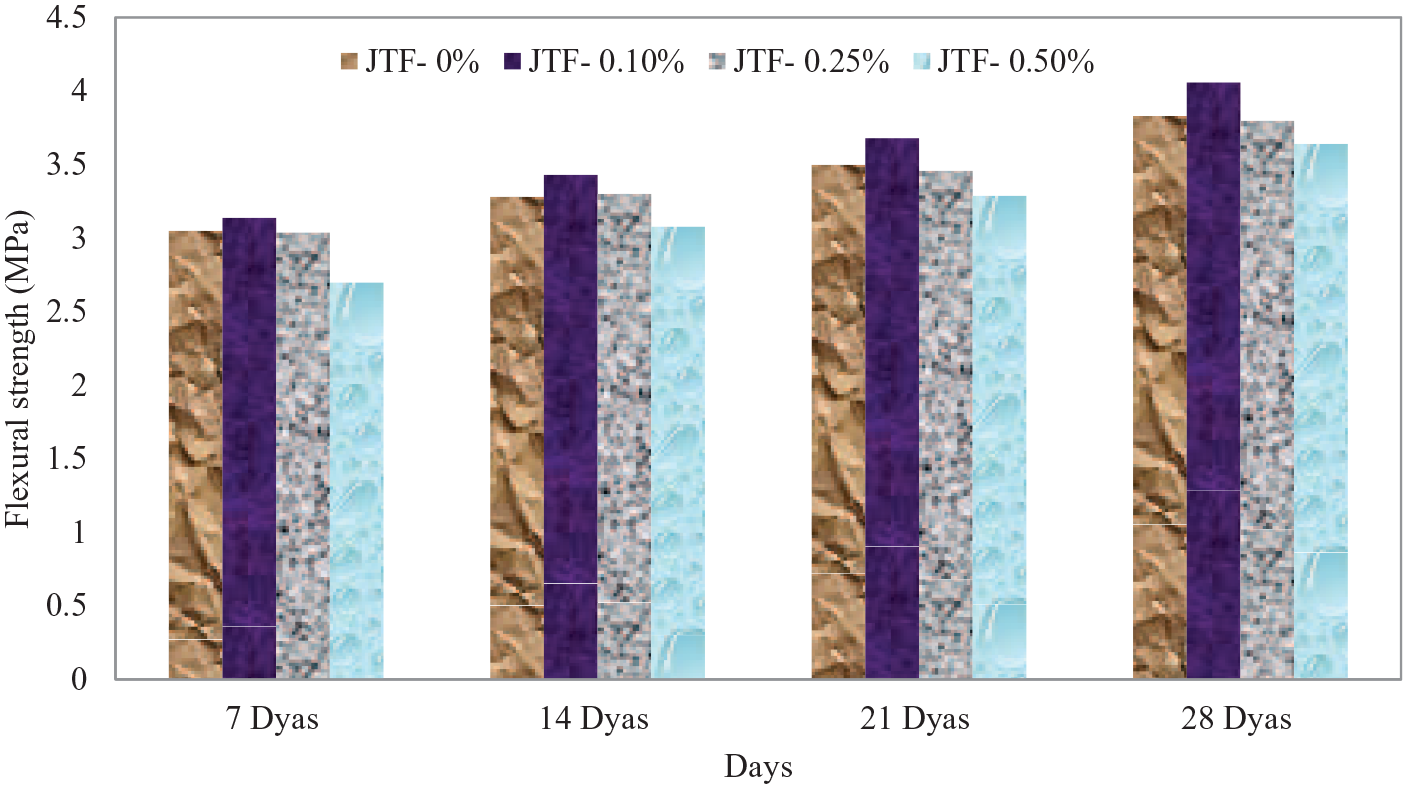
Flexural strength (FS) of concrete.
Figure 10 depicts the correlation among CS and FS of varying percentages of JTF. A regression line among CS and FS seems to be straight. A correlation exists between two variables when one of them is related to the other. As FS is about 10%‒20% of CS of the strength of concrete. Therefore, a strong correlation is existing between CS and FS having an R2 value equal to 80%.
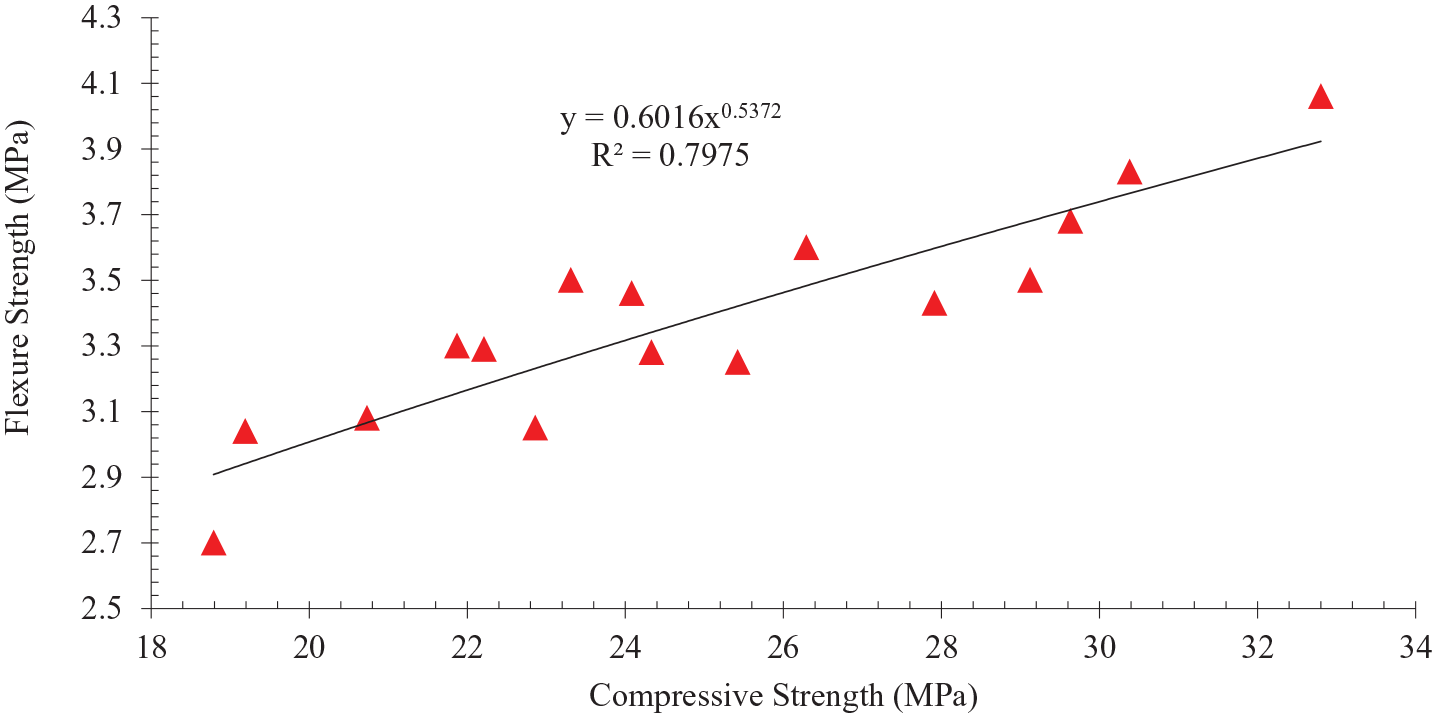
Relation between CS and FS of concrete.
Durability
Water absorption (WA)
Figure 11 shows the WA of concrete reinforced with nylon and JTF combined after 28 days. The highest amount of WA was estimated to be 3.07% when 2% of nylon and JTF were combined and the minimum amount of WA was assessed to be 2.40% when 0% of nylon and JTF were combined by the volume fraction respectively (control concrete). However, it was hypothesized that the incorporation of nylon and JTF together by volume percentage would result in an increase in WA. This enhancement in the WA of concrete can be attributed to the fact that more water is absorbed by nylon and JTF in concrete than that of concrete without reinforced nylon and JTF by volume fraction as well as the fact that more entrapped air is present in concrete by nylon and JTF than that present in the blank concrete (without fibers). 90 Normal concrete has a lower elastic modulus than fiber-reinforced concrete. As a consequence, the inclusion of fibers would result in an increase in the tensile characteristics of concrete which would prevent the creation and growth of early fractures. 91 In other words, fibers are used to improve the density of concrete which results in a reduction in the WA of concrete and an increase in its durability of the concrete. Excess fibers cluster in the concrete composite when the dose is increased after optimum percentages, resulting in a large number of microcracks in the concrete 92 which cause enhanced WA. Therefore, it is suggested that used an optimum dose of fiber is or used a high dose of plasticizer.

Water absorption of concrete. 90
Density
Figure 12 depicts the comparison of bulk density of concrete reinforced with various amounts of nylon and JTF. The maximum density was calculated to be 2388 (kg/m3) when no nylon or JTF were used in concrete at 28 days and the lowest density was estimated to be (2300 kg/m3) when 2% nylon or JTF were used in concrete at 28 days respectively. It has been determined that the density of concrete decreases when nylon and JTF are used as reinforcement. This decrease in density may be ascribed to the increase in porosity and air voids which resulted in insufficient compaction of the mixture’s high nylon and JTF content. The density of concrete was also reduced because the density of nylon and JTF is lower than the density of other concrete components and nylon and JTF trapped more air in the concrete than the control combination, resulting in a lower density of concrete. It is supported by research, 60 which concluded that the density of concrete reinforced with jute fiber is lower than the density of concrete without reinforced fibers. In contrast, according to research, 26 the fiber with a dose of 2.0% had the maximum density when compared to the control mix. For additional addition of fibers (after 2%), density was reduced with the lowest density at 3.0% addition of fibers and maximum density was achieved at 2.0% addition of fibers. The increase in density of concrete blends including fibers is attributable to crack prevention since fiber-reinforced concrete has less voids and produces denser concrete because of the fracture prevention technique. However, at greater doses, such as 4.0% fiber replacement, the compaction process becomes more difficult, resulting in porous concrete and a reduction in the fresh density of concrete. 26

Density of concrete. 90
Dry shrinkage (DS)
The DS was measured on concrete specimens reinforced with nylon and JTF that were grouped together by their volume percentage as shown in Figure 13. It has been seen that the DS of concrete is reduced when nylon and JTF are mixed together after each curing time, according to the findings. 90 There is a significant reduction in DS of concrete reinforced with nylon and JTF combined by the volume of fraction and this reduction is progressive with increasing the amount of nylon and JTF in the concrete. This viewpoint is consistent with the findings of the study, 93 which concluded that increasing the quantity of human hair fiber reduces DS. A study 78 found that the DS deformations of hybrid fiber-reinforced concrete were lower than those of the basic concrete without fibers, indicating that they were more stable. Fibers may aid in the reduction of DS in concrete by increasing the binding strength between the fibers and the concrete matrix, which helps to restrict DS during the drying process. 94 Fibers in concrete have the most significant influence on crack prevention which is the most significant parameter of fibers in concrete to reduce DS. 95 These results are similar to those of other researchers who observed that including fibers into a composite may help to reduce cracking caused by DS in a composite. 96 The PVA fibers might be used to reduce free DS in concrete by altering the internal water circulation inside the concrete, according to the study. 97 It has been reported that the DS values of all prepacked aggregates of fiber-reinforced concrete samples with blended polypropylene fibers were significantly lower than those of plain prepacked aggregate concrete specimens up to 180 days when compared to plain prepacked aggregate concrete specimens. Fibers prevent the creation of microcracks on the surface of the concrete which prevents the movement of hazardous components in samples. As a result, crack density and dimension are reduced and the negative effects of DS are eliminated, resulting in reduced crack density and dimension. 98

Dry shrinkage of concrete. 90
Acid resistance
Compressive strength (CS) is diminished after an acid assault, and it was discovered that there was a drop of 40.625% from 30 to 90 days after the acid attack. When JTF was added at a rate of 1% and 2%, a reduction in compressive strength of 35.77% and 39.39% was observed, respectively. 99 The CS before and after the acid attacks procedure is shown in Figure 14(a) and (b) respectively. The inclusion of fiber, on the other hand, effectively regulates the growth and production of first fractures and reduces the porosity of the concrete, which prevents sulfuric acid from penetrating the concrete quickly. 91 Sulfuric acid-induced concrete erosion is primarily characterized by the breakdown of calcium aluminate and calcium hydroxide in the concrete.100 –102 The rate at which sulfuric acid penetrates the concrete body and reaches calcium hydroxide and calcium aluminate will have a significant impact on the rate of erosion. As a consequence of the inclusion of fibers, a rise in the porosity of concrete leads to an increase in the density of concrete. The increase in density would result in a decrease in the rate of sulfuric acid penetration into the concrete. Less information is available on the acid resistance of concrete with the addition of JTF.

Acid attack (a) before and (b) after compression. 99
Conclusions
Natural jute fiber (JTF) has the potential to be an effective material for reinforcing concrete strength. Natural fibers (JTF) have become one of the most popular reinforcing materials in terms of sustainability and biodegradability, non-toxic and natural environment friendly. In this review, the characteristics of concrete reinforced with JTF are studied. The focus is given to the fresh, hardened, and durability aspects of concrete with the addition of JTF. The details conclusion is given below.
The fluidity of concrete was reduced with the addition of JTF due to the larger surface area of fiber which enhanced the harshness of concrete.
Hot alkali treatment of JTF results in considerable improvement in the bond between cement paste and fibers which ultimately improved the mechanical and durability aspects of concrete.
Mechanical strength such as compressive, split tensile, and flexure strength improved with the addition of JTF.
Maximum compressive strength (28 days) was observed at 2% addition of JTF which is 20% more than control concrete. The optimum dose of JTF is important as the higher dose causes a decrease in mechanical and durability performance of concrete due to a lack of flowability. Therefore, the review suggests a higher dose of plasticizer for the higher dose of fibers.
Durability performance of concrete such as density, water absorption, dry shrinkage, and acid resistance of concrete improved with JTF. However, less information is available durability aspects of concrete with jute fibers.
Finally, the findings of the whole investigation revealed that JTF has the credibility to be used in concrete instead of synthetics fibers. However, relatively little research is available on the subject of durability aspects of concrete reinforced with JTF. Therefore, the review recommends detailed studies on the durability performance of JTF reinforced concrete. Furthermore, the review also recommends the physical and chemical treatment of JTF to improve the performance of concrete. Some studies claim that the performance of JTF reinforced is poor as compared to the other types of fibers due to the poor bonding of JTF. The review also recommends pozzolanic materials such fly ash or silica fume into JTF based reinformed concrete to improve bond strength with cement paste.
Footnotes
Declaration of conflicting interests
The author(s) declared no potential conflicts of interest with respect to the research, authorship, and/or publication of this article.
Funding
The author(s) received no financial support for the research, authorship, and/or publication of this article.
