



Abstract
In this study, stainless steel, copper, and silver wires were intermingled with two polyamide 6.6 filaments through the commingling technique to produce three-component hybrid yarns. The produced hybrid yarns were used as weft in the structure of plain woven fabric samples. The electromagnetic shielding effectiveness parameters of samples were measured in the frequency range of 0.8–5.2 GHz by the free space technique. The effects of metal hybrid yarn placement, number of fabric layers, metal types, and wave polarization on the electromagnetic shielding effectiveness and absorption and reflection properties of the woven fabrics were analyzed statistically at low and high frequencies separately. As a result, the samples have no shielding property in the warp direction. Metal types show no statistically significant effect on electromagnetic shielding effectiveness. However, fabrics containing stainless steel have a higher absorption power ratio than copper and silver samples. Double-layer samples have higher electromagnetic shielding effectiveness values than single-layer fabrics in both frequency ranges. However, the number of layers does not have a significant effect on the absorbed and reflected power in the range of 0.8–2.6 GHz. There was a significant difference above 2.6 GHz frequency for absorbed power ratio. An increase in the density of hybrid yarns in the fabric structure leads to an increase in the electromagnetic shielding effectiveness values. Two-metal placement has a higher absorbed power than the full and one-metal placements, respectively. The samples which have double layers and including metal wire were in their all wefts reached the maximum electromagnetic shielding effectiveness values for stainless steel (78.70 dB), copper (72.69 dB), and silver composite (57.50 dB) fabrics.
Introduction
Electromagnetic (EM) waves are emitted from devices that are used especially for communication and data transfer applications such as mobile phones, wireless networks, and base stations at various frequencies. The purpose of EM shielding is to restrict penetration of EM waves in specific areas. When the EM wave encounters an EM shield, it is attenuated by the three electromagnetic shielding effectiveness (EMSE) components, namely, reflection, absorption, and multiple reflections (generally neglected).1 –3 Reflection from a surface of shield material and absorption in a volume of shield material are the two major factors of shielding effectiveness (SE). The combined effect of reflection and absorption losses determines the effectiveness of the shield. 4 Metal plates are considered to be the best materials for EM shielding, but they have some disadvantages such as rigid structure, high cost, and dimensional change on heating.
It is known that conventional textile materials are transparent in the EM radiation spectrum due to the their electrical insulating properties, but protective textile materials developed against EM interference are more suitable in comparison with other shielding materials (e.g. metal shielding, foam shielding, etc.) because of their cost effectiveness, flexibility, and lightweight structure.5,6 Hybrid yarns containing conductive continuous filaments are more efficient in terms of fast production, long-term stability, and washing fastness compared to other textile materials. Woven fabrics produced by hybrid yarns have been used for EM shielding in daily as well as professional technical application fields such as for the military, in the medical sphere, as protective housings, clothing, and special wallpapers. There is a large volume of published studies describing the role of weave structure, fabric density, and the ratio and type of conductive filler material on the EMSE of the woven fabric.7 –12 Cheng et al. 8 noted that the EMSE was affected positively with the decreasing diameter of metal wire and the increasing number of conductive fabric layers and fabric density. In a similar way, Rajendrakumar and Thilagavathi, 10 Ortlek et al., 9 and Duran and Kadoğlu 12 found that the increase in fabric density provides an increase in EMSE of fabrics for all the fabric types and most frequency ranges due to the reduction of aperture size and dipole effect. Furthermore, the authors showed that plain weave structures have higher EMSE values compared to more complicated woven structures such as twill and satin.8,9 It was also pointed out by Su and Chern 7 that plain weave exhibits optimum EMSE behavior compared to the other weaves. Duran and Kadoğlu 11 emphasized the importance of conductive material, density, filament diameter, fabric thickness as well as other factors to achieve EM shielding. Most researchers have reported that the value of EMSE increases up to a certain level. After this resonance point, EMSE has shown a tendency to decrease due to the smaller wavelength of high-frequency EM waves.12,13 A remarkable amount of literature has been published on revealing the frequency range where a significant level of EM shielding is achieved. 13 In general, findings obtained from the literature show that EMSE values can be tailored by modifying these yarn and fabric parameters for the different frequencies of EM waves.
The purpose of this study is to better understand EMSE, absorption, and reflection characteristics of woven fabrics with different structures. In this context, different fabric structures were designed to investigate the absorption and reflection components related to EMSE. The results from this work make several contributions to the existing literature: the technique of metal hybrid yarn production (commingling) is the first novelty of this study; the second novelty is the statistical evaluation of the absorbed and reflected power ratio in EMSE for the low and high frequency ranges separately; the third novelty is to present a proposal about the metal type, number of layers, and hybrid yarn placement in composite fabric structure for reaching maximum EMSE based on absorption.
Materials and method
Production of samples and experimental design
In this study, stainless steel (SS), copper (Cu), and silver (Ag) wires were used as shielding materials in the hybrid yarn structure. Properties of the used filaments are given in Table 1.
Technical properties of filaments.

SS, copper, and silver metal monofilaments were combined with two polyamide 6.6 yarns in an intermingling machine using the commingling method. The commingling technique is an alternative fast and cost-effective technique for the production of hybrid yarns containing metal wire. Metal filaments were commingled with yarns at 5 bar pressure and 150 m/min production speed. The metal filament was centered between two polyamide yarns before feeding into the intermingling jet. Figure 1 presents the three-component commingling process diagram.

The three-component commingling process.
Properties of the produced hybrid yarns are given in Table 2. Microscopic images of the produced composite were taken at 20× magnification ratio by a digital camera microscope (Figure 2).
Technical properties of hybrid yarns.

PA: polyamide; SS: stainless steel.
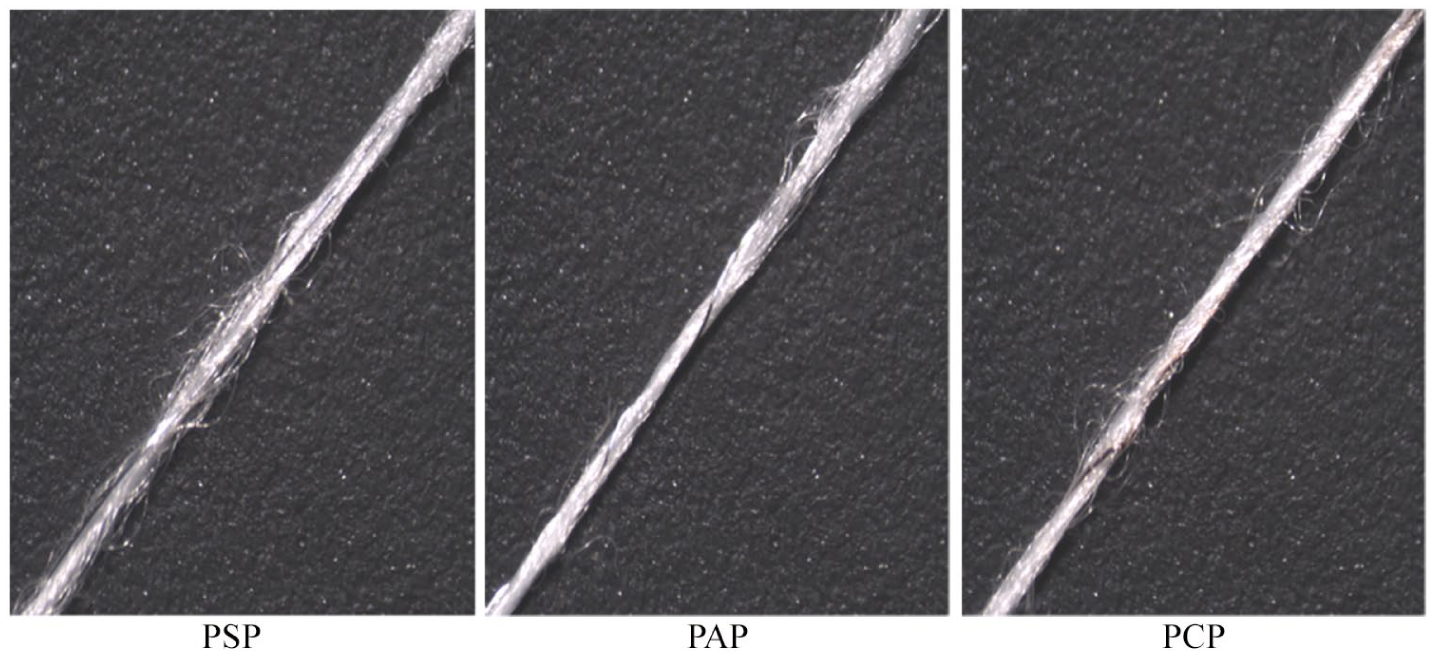
Microscopic images of different types of hybrid yarns (20×).
Plain woven fabrics were produced with 22 ends/cm and 12 picks/cm densities by a projectile weaving machine. Textured polyester yarn (150 den/36 f) was used as the warp in the weaving process. Metal hybrid yarns and 100% cotton yarns (30 tex) were used as the weft with three different placements in the fabric structure. In total, nine different metal composite fabrics were produced. Control samples were prepared using 100% cotton fabric with the same properties. The fabrics were plied in the warp direction and sewn together to obtain double-layer samples. Table 3 shows the properties of the produced composite fabrics. Microscopic images of composite fabrics are shown in Figure 3.
Properties of composite fabrics.

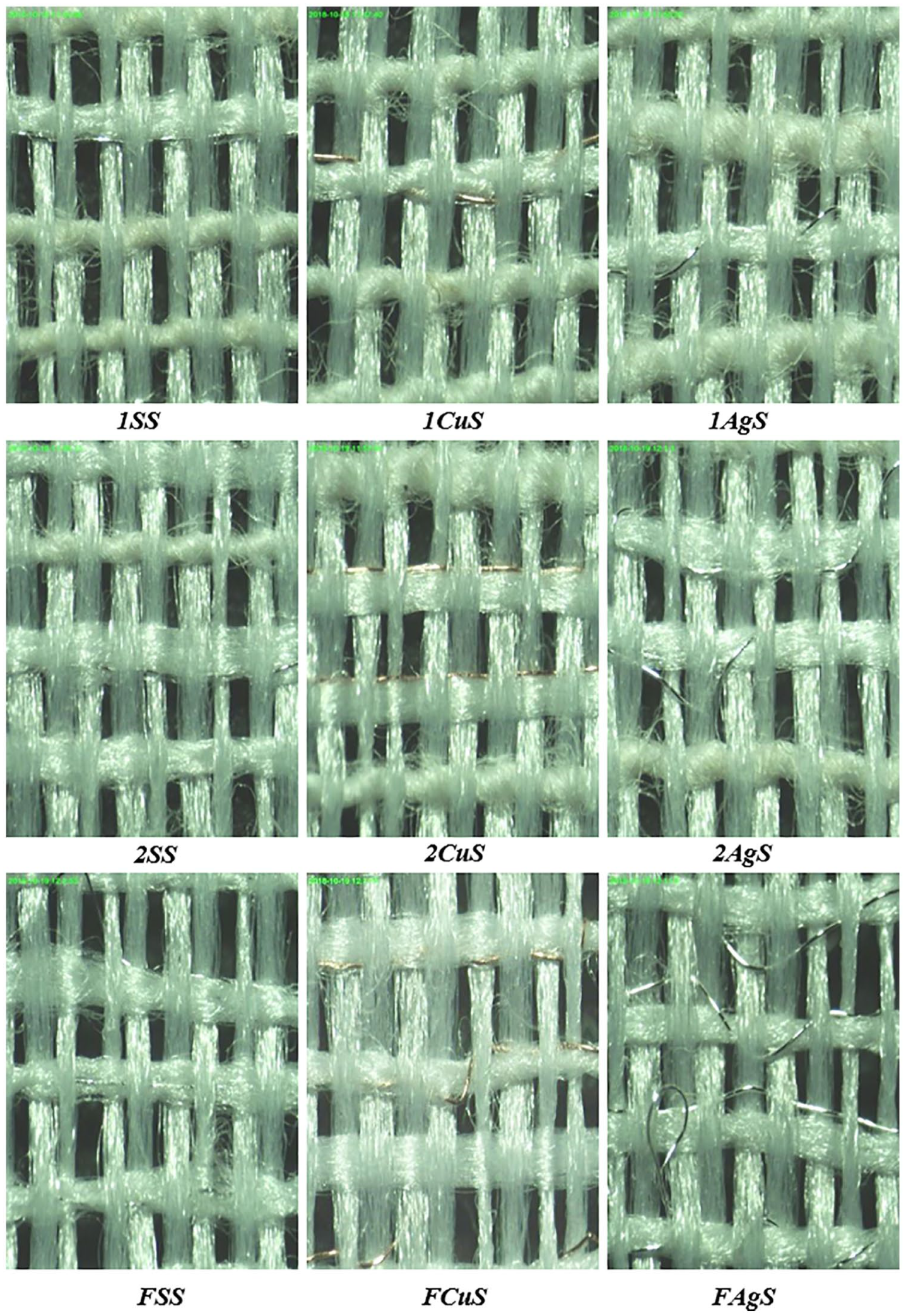
Microscopic images of composite fabrics (30×).
Measurement of EM properties of fabric samples
The free space test method was used for determining the EM characteristics of composite fabrics. The reflection (S11/S22) and transmission (S21/S12) coefficients were measured using an Agilent PNA-L model network analyzer with the range of 0.8–5.2 GHz. During the measurement process, single- and double-layer fabric samples were placed between two horn antennas (Figure 4).

Electromagnetic shielding test diagram.
Vector network analysis involves measuring the incident, reflected, and transmitted waves which travel along the transmission lines. Vector network analyzer terminology generally indicates measurements of the incident wave with the reference channel. Channel R measures the reflected wave, and the transmitted wave is measured with the channel T as shown in Figure 5. 14

Electromagnetic wave behavior. 14
The transmitted power (T) and reflected power (R) are used for SE characterization. R is not only the power that has been reflected from the external surface, but also includes internal surface reflection and multiple reflections. T, R, and A can be expressed using equations (1) to (3), respectively. Power ratios were expressed as the percentage of power values calculated from the following equations 2

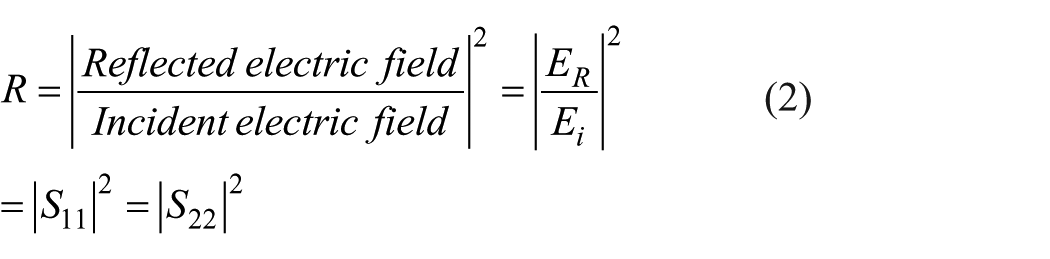

Shielding effectiveness (SET) can be evaluated as the sum of the shielding components such absorption (SEA), reflection (SER), and multiple internal reflections (SEM). This well-known decomposition was originally developed by Schelkunoff and is called the Schelkunoff decomposition in the literature. Schelkunoff decomposition in terms of decibel (dB) is given in equations (4) and (5)15,16

SET is defined as the logarithmic form of the ratio between the field or power intensity with (ET, HT, PT) and that without (E0, H0, P0) the shielding material. The SE values can be calculated as dB by the following equation 17

SET can be improved by increasing reflection and/or absorption. However, the increase in reflection causes secondary interference (secondary pollution) from the shield material to the environment. 18 Therefore, SEA and SER components should be evaluated separately to define the EM shielding characteristics of materials. If the SEA value is higher than 10 dB, SEM is negligible in this case; SET can be expressed only SER and SEA.16,18,19
Textile materials can be classified according to their SE values in professional (medical equipment, quarantine material, professional security uniform for electronic manufacturers, etc.) and general using classes (casual wear, office uniform, maternity dress, apron, consumptive electronic products, etc.) as given in Table 4. 20
Classification of EMSE.

EMSE: electromagnetic shielding effectiveness; SE: shielding effectiveness.
In this study, the data obtained from the EM measurements of woven fabrics were evaluated using the mentioned equations. The EMSE of the samples was examined with reflection and absorption components in detail. The obtained data were analyzed statistically at low (0.8–2.6 GHz) and high (2.6–5.2 GHz) frequencies separately using SPSS software package. EMSE, absorption, and reflection were chosen as the dependent variables. Metal type, number of layers, and hybrid yarn placement were chosen as the independent variables. Kruskal–Wallis test was applied to compare independent samples. After that, Mann–Whitney U test was used for determining the differences between groups. The Kruskal–Wallis and Mann–Whitney U are distribution-free and rank-based nonparametric test methods.21,22
Results and discussion
The effects of metal type, metal placement, number of fabric layers, and wave polarization on the SE, absorption, and reflection values of the samples were investigated. SE measurements were performed in the vertical and horizontal directions (rotation at 90 degrees) between 0.8 and 5.2 GHz. Previous studies indicated that the EMSE performance is related to the frequency level.3,12 Therefore, the obtained results were analyzed statistically at low (0.8–2.6 GHz) and high (2.6–5.2 GHz) frequencies separately. EMSE, absorption, and reflection of the samples were calculated using equations (1) to (4) using the scattering (S) parameters obtained from the measurements.
The results showed that the EMSE values of all samples were lower than 5 dB in the warp direction. EM shielding was only observed in the weft direction of samples. EMSE, absorbed, and reflected power results of SS, copper, and silver composite fabrics are shown in Figures 6 to 8, respectively.

EMSE, absorption, and reflection graphs for stainless steel composite fabrics.
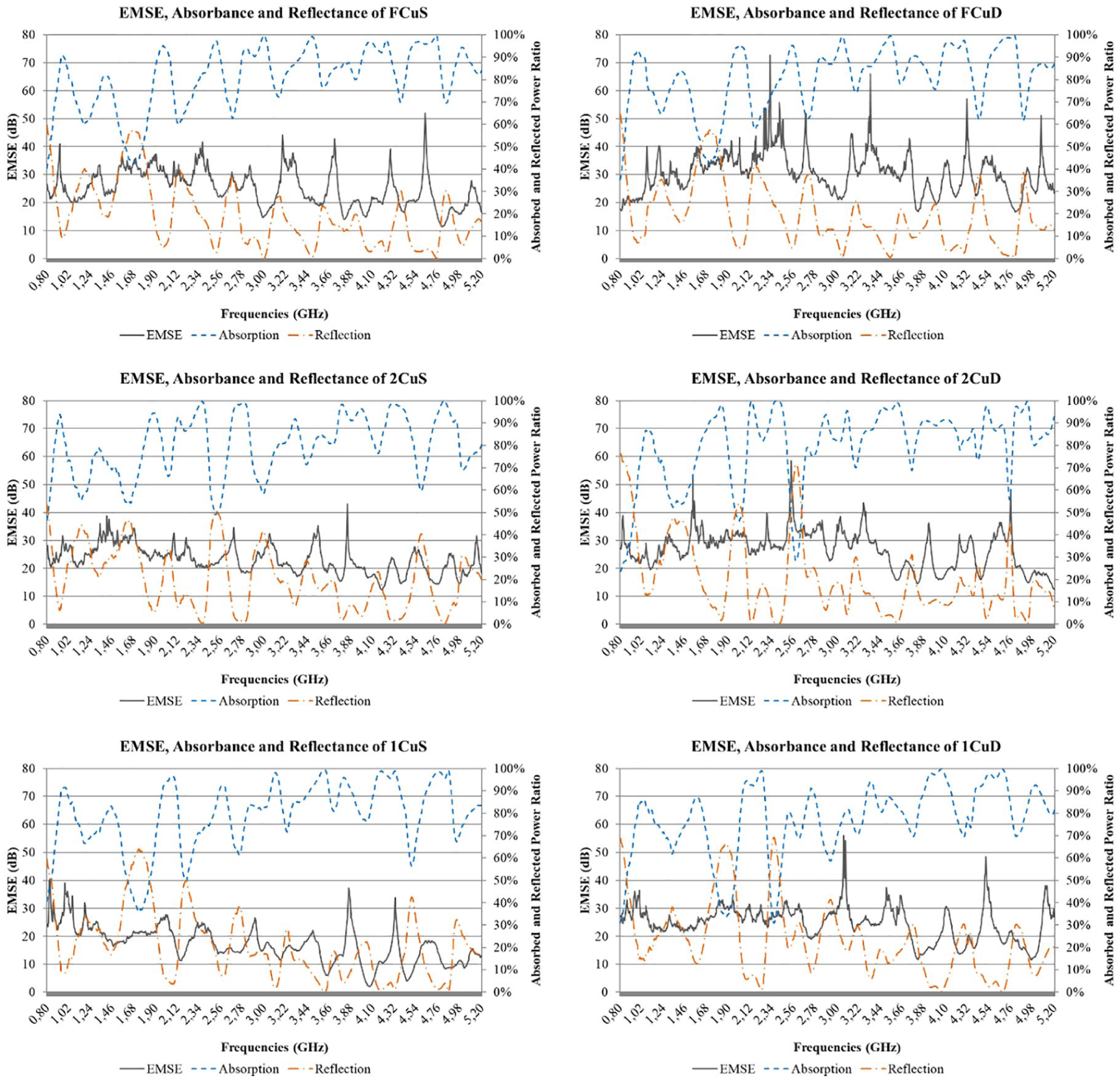
EMSE, absorption, and reflection graphs for copper composite fabrics.

EMSE, absorption, and reflection graphs for silver composite fabrics.
Effects of metal types on EM shielding properties
In this research, the EMSE measurements were conducted at 1001 different frequency points. Data were analyzed in two sections: 0.8–2.6 and 2.6–5.2 frequency ranges. Kruskal–Wallis test was used for comparing the effect of metal types on the EMSE, absorption, and reflection properties. Mean ranks of Kruskal–Wallis test for metal types are given in Table 5.
Mean ranks of Kruskal–Wallis test.

EMSE: electromagnetic shielding effectiveness.
As shown in Table 5, the mean rank values of the SS, copper, and silver samples were very close to each other. It is apparent from Table 6 that no significant differences were found between EMSE and metal types for both frequency ranges (p > 0.05). The findings of this study are consistent with those of Telli et al. 23 who found that there were no significant differences between woven fabrics containing SS and copper wires in terms of EMSE for different frequencies.
Kruskal–Wallis test statistics for the material type effect.

EMSE: electromagnetic shielding effectiveness.
There was a significant difference among metal types with absorbed and reflected power ratios for both ranges (p < 0.05). According to the mean rank values (Table 5), the highest absorbed and the lowest reflected power were observed in the SS composite fabrics for both frequency ranges. These findings support the idea of Cheng et al. 24 who noted that SS has high absorption and low reflection of EM waves. It can be observed from Table 7 that there was a significant difference between SS with copper and silver composite fabrics (p < 0.05). But there were no significant differences between silver and copper composite fabrics in terms of absorbed and reflected power (p > 0.05). It can be said that the use of SS is more appropriate to reduce secondary EM pollution.
Mann–Whitney test statistics for material type.
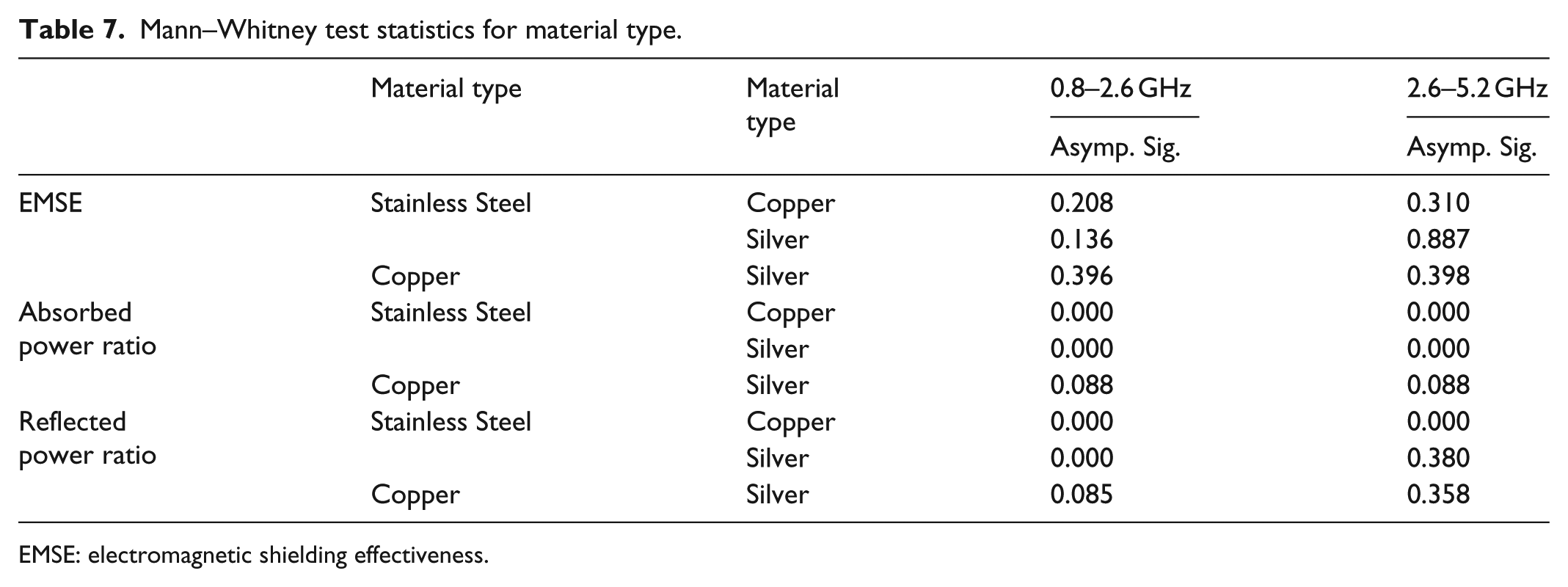
EMSE: electromagnetic shielding effectiveness.
Effects of the number of layers on EM shielding properties
Table 8 presents mean ranks for the number of layers. Double-layer fabrics have higher mean rank values than single-layer fabrics in terms of EMSE for both frequency ranges. As shown in Table 9, there was a significant difference (p < 0.05) between the two groups. This result corroborates earlier findings. In previous studies, it was determined that the increase in the number of layers affects EMSE of the fabric. This was seen as due to the increase in metal content and thickness of the fabric, which causes a decrease in the gaps in the fabric structure.4,8,25 In Figures 6 to 8, EMSE generally decreased by increasing the frequency, especially for single-layer samples. There is no obvious decreasing trend with the change in frequency for double-layer samples. Double-layer structures exhibit a more stable EMSE against frequency changes.
Mean ranks of Kruskal–Wallis test for the number of layers.

EMSE: electromagnetic shielding effectiveness.
Kruskal–Wallis test statistics for the number of layers.
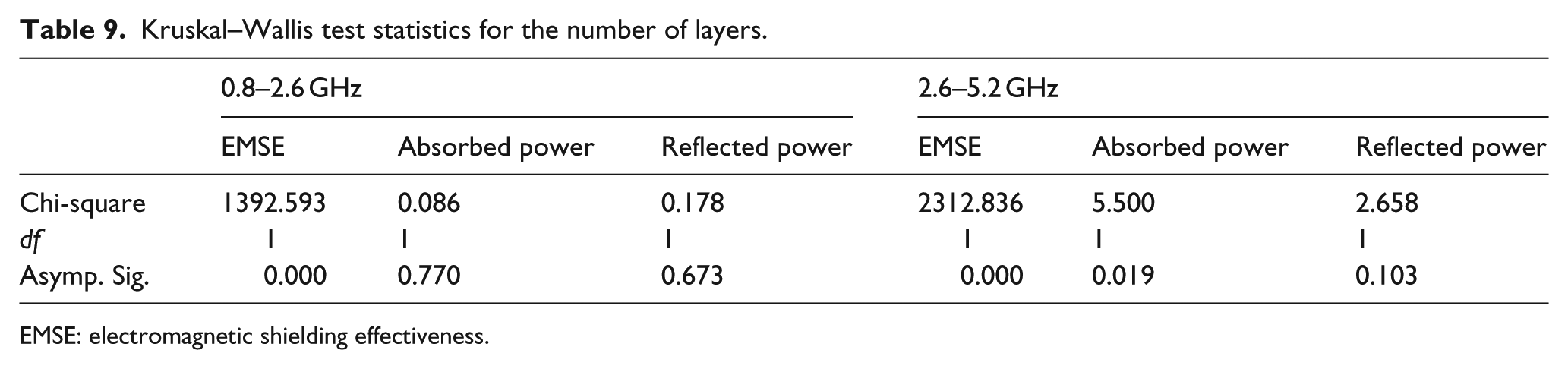
EMSE: electromagnetic shielding effectiveness.
As shown in Table 9, the number of layers did not affect the absorbed and reflected power in the range of 0.8–2.6 GHz. However, the significant difference (p = 0.019) above the frequency of 2.6 GHz for the absorbed power ratio was attributed to the increased number of layers. Absorbed power of the incident wave of the double-layer sample is higher than that of the single-layer sample for the 2.6–5.2 GHz frequency range.
A possible explanation for this might be that the wavelength of the incident wave decreases with the increasing frequency. Thus, shorter waves can easily penetrate the gaps of fabrics. Placement of the second layer reduces the size of the pores. Furthermore, with the addition of the second layer, three shielding mechanisms emerge in the fabric structure. In the first mechanism, the waves passing through the first layer are absorbed by the second layer. In the second mechanism, some of the waves reflected from the second layer are absorbed by the first layer. In the third mechanism, repetitive reflections occur between the first and second layers and these waves are mostly absorbed and transformed into heat. These three mechanisms support absorption and are significant at high frequencies. In addition to the mentioned mechanisms, when waves that are reflected from the first and layers are in the opposite direction to each other, destructive interference occurs and creates a wave that is weaker than either of them.26,27
Effects of placement of the hybrid yarn on EM shielding properties
The mean rank results obtained from hybrid yarn placements are presented in Table 10.
Mean ranks of Kruskal–Wallis test for hybrid yarn placement.

EMSE: electromagnetic shielding effectiveness.
According to the mean rank values, EMSE of different hybrid yarn placements can be sorted as follows: full > 2-metal > 1-metal for both frequency ranges. From the data in Tables 11 and 12, the statistical results showed that the placement is a significant factor in EMSE due to the increase in the metal content of the fabrics. These findings are consistent with previous research focusing on SS,7,24,28 copper,4,11,29 and silver 12 wires in the reviewed literature.
Kruskal–Wallis test statistics for hybrid yarn placement.

EMSE: electromagnetic shielding effectiveness.
Mann–Whitney test statistics for hybrid yarn placement.
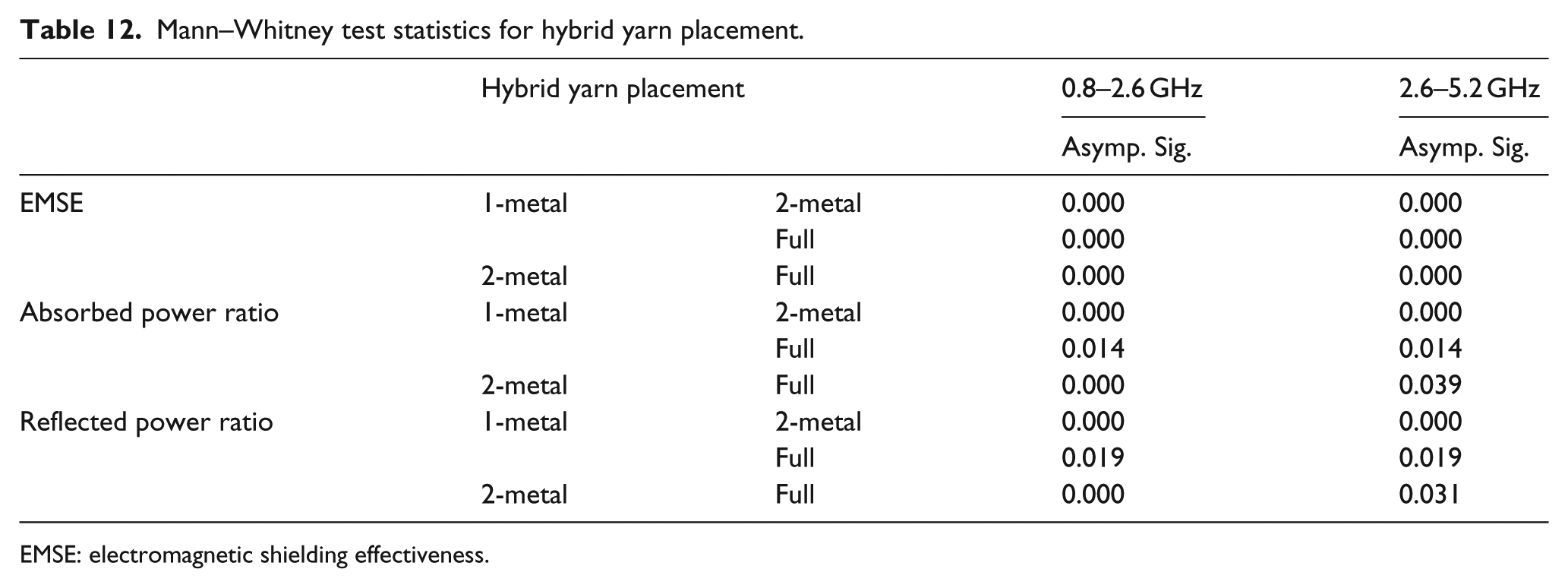
EMSE: electromagnetic shielding effectiveness.
The ranking value of absorbed power ratio was different from EMSE. Two-metal placement showed a higher mean rank value than full and one-metal placements, respectively. This situation resulted from hybrid yarn placement in the fabric structure.
The decrease in the distance between hybrid yarns increased the absorbed power ratio in EMSE, thanks to the dipole effect up to a certain limit for fabrics containing two metals. In the fabrics including hybrid yarns in their all wefts, EMSE increases by the increasing density of the hybrid yarn, but the ratio of absorbed waves in EMSE reduces. The increase in EMSE values was based on reflection. Furthermore, the reflected power ratio was the opposite of the absorbed one as expected. Figures 6 to 8 support these findings. Statistical comparisons showed that there was a significant difference between fabrics having different hybrid yarn placements (Tables 11 and 12).
In this research, the effects of metal type, number of layers, and placement of hybrid yarn on EMSE were investigated separately. No statistically significant differences were found between metal type and EMSE. Moreover, it was found that the number of layers and hybrid yarn placement have a significant effect on EMSE. These findings are clearly compatible with previous studies in the literature. The results from this work make several contributions to the existing literature: the technique of metal hybrid yarn production (commingling) is the first novelty of this study; the second novelty is the statistical evaluation of absorbed and reflected power ratio in EMSE for the low and high frequency ranges separately.
Conclusion
In this study, the effects of metal types, number of fabric layers, and placement of hybrid yarn on the EMSE, as well as the absorption and reflection properties of the woven fabrics, were investigated. SS, copper, and silver wires and two nylon filaments were commingled for the production of hybrid yarn. Nine different plain woven fabrics were produced with three different placements (densities) of the metal hybrid weft using the projectile weaving machine. EMSE measurements were carried out according to the free space test method by an Agilent PNA-L model network analyzer with the range of 0.8–5.2 GHz. The samples were rotated 90 degrees clockwise and tested in the weft and warp directions separately. The obtained results were evaluated using statistical methods.
The following results were determined in this study:
➢ In this research, metal wires were only used in the weft yarn structure. Therefore, EM shielding has emerged in the single axis in accordance with the literature. The SE values in the warp direction of all samples were lower than 5 dB.
➢ Metal types have no statistically significant effect on EMSE. However, fabrics containing SS have higher absorption power ratios than the copper and silver samples. The differences in absorption values were statistically significant.
➢ Double-layer samples have higher EMSE values than single-layer fabrics for both frequency ranges. However, the effect of the number of layers was not statistically significant on the absorbed and reflected power in the range of 0.8–2.6 GHz. There was a significant difference above the frequency of 2.6 GHz for the absorbed power ratio.
➢ The increase in the density of hybrid yarns in the fabric structure increases the EMSE value. The absorbed power ratio showed a different ranking from EMSE for different placements. Two-metal placement has higher absorbed power than the full and one-metal placements, respectively.
➢ The increase in both reflection and absorption supports the EMSE values. However, the increase in reflection causes secondary interference (secondary pollution) from the shield to environment. Therefore, a high absorption rate in EMSE reduces secondary interference. With the addition of the second layer, three shielding mechanisms emerge in the fabric structure. In the first mechanism, the waves passing through the first layer are absorbed by the second layer. In the second mechanism, some of the waves reflected from the second layer are absorbed by the first layer. In the third mechanism, repetitive reflections occur between the first and second layers and these waves are mostly absorbed and transformed into heat. These three mechanisms and destructive interference effect support the absorption ratio in EMSE.
➢ The samples which have double layers and included metal wire in all its wefts reached the maximum EMSE values for SS (78.70 dB), copper (72.69 dB), and silver (57.50 dB) composite fabrics.
➢ This study set out to determine the composite fabric having maximum EMSE based on absorption. Taking into account all of these results, a reasonable construction consists of two layers. All weft yarns of the second layer should include SS wires. The first layer should have some distance between hybrid yarns according to the second layer. Thus, the three mentioned shielding mechanisms make more of a contribution to EMSE and absorption in a designed structure.
➢ Further study is needed to better understand the EMSE, absorption, and reflection behavior of multilayer composite fabrics. Thus, fabric structures having the desired EMSE level with suitable absorption and reflection properties can be developed.
Footnotes
Declaration of conflicting interests
The author(s) declared no potential conflicts of interest with respect to the research, authorship, and/or publication of this article.
Funding
The author(s) received no financial support for the research, authorship, and/or publication of this article.
