




Abstract
Given continued physical activity disparities among college students based on gender identity, race, and sexual orientation, it is important to identify policies and practices to support more equitable physical activity participation opportunities. This mixed-methods study examined perceptions of equity policies and practices among North American campus recreation staff (n = 254). Institution and staff characteristics along with department values, existence of written policies, and perceptions of current and potential equity policies/practices were collected via an online survey in November 2020. Quantitative data were analyzed with descriptive statistics and importance-performance analysis; qualitative data were analyzed using thematic analyses. Findings indicate an apparent disconnect between campus recreation departments’ stated values and written policies, and reveal gaps between perceived importance and performance of equity priorities. However, qualitative responses included many promising equity practices which could help facilitate physical activity participation for all students through creation of an inclusive, safe, and welcoming environment for diverse student populations.
Introduction
Many post-secondary education (i.e. college, university) students in the United States (Wilson & Bopp, 2021) and around the world (Wilson et al., 2021) participate in insufficient levels of both aerobic and muscle-strengthening activities. Given the association of physical activity with physical and mental health (Bull et al., 2020), physical activity promotion is of utmost importance. Campus recreation departments typically play an important role in student physical activity promotion. Beyond promoting physical activity and the well-established health benefits, campus recreation departments help to provide students with a sense of belonging (e.g. Miller, 2011), and play an important role in the recruitment and retention of students too (e.g. Forrester et al., 2018; Kampf & Teske, 2013).
Although campus recreation departments provide opportunities for physical activity, there are considerable disparities in college student aerobic and muscle-strengthening activities based on gender identity, race/ethnicity, and sexual orientation (Wilson & Bopp, 2021; Wilson et al., 2021a, 2021b). Consistent with physical activity disparities, women, transgender/non-binary individuals, sexual minorities, and people of color often face additional constraints to physical activity and campus recreation center use than their more advantaged peers (Anderson et al., 2020; Carter-Francique, 2011; Hoang et al., 2016; Shaikh et al., 2018). Feeling uncomfortable or unwelcome, experiencing harassment, or experiencing discrimination can limit individuals’ use of campus recreation facilities and engagement in physical activity (Austin Robert Anderson et al., 2020; Carter-Francique, 2011; Hoang et al., 2016; Shaikh et al., 2018; Stankowski et al., 2017; Wilson et al., 2020).
Various policies and practices in campus recreation could help to alleviate constraints, provide negotiations, and create an overall more inclusive, safe, and welcoming environment for diverse student populations. In fact, legislation such as Title IX of the Education Amendments of 1972 and American with Disabilities Act (ADA) should prohibit post-secondary institutions in the United States from discrimination based on gender identity, sex, sexual orientation, and/or disability (USDHHS, 2021; USDL, 2021). However, evidence suggests that such legislation is being overlooked, and policies and practices are simply not in place and/or prioritized. For example, while gendered spaces represent barriers to use of campus recreation facilities for members of the lesbian, gay, bisexual, transgender and queer or questioning (LGBTQ) community and modifications to existing infrastructure may not be immediately feasible (Anderson et al., 2018), there is little stopping campus recreation departments from implementing policies to protect LGBTQ community members (Patchett & Foster, 2015) or providing their staff with training which is uncommon (Kaltenbaugh et al., 2017; Patchett & Foster, 2015) despite being effective (Anderson et al., 2021). All the more confusing is that department missions, visions, values typically encompass equity, diversity, and inclusion (Wilson et al., 2020; Patchett & Foster, 2015) yet relevant policies remain largely absent (Patchett & Foster, 2015).
Although larger diversity and inclusion initiatives are often present at universities (e.g., recruiting a more racially and ethnically diverse student body), many fail to address the complexities of intergroup interactions occurring among diverse students (Linley, 2018). Intergroup contact can occur on the basis of gender, sexuality, race, ethnicity, and many more student characteristics. Negative intergroup interactions including microaggressions and direct experiences with discrimination (e.g., racism) can result in minoritized students (e.g., students of color, LGBTQ students) feeling unwelcome on campus (Linley, 2018), and these concerns can transcend recreation spaces (Powers, 2021). As such, it is important for campus recreation departments to employ policies and practices which attend to intergroup interactions and seek to provide a more welcoming and inclusive environment for minoritized students.
Thus, the implementation, enforcement, and evaluation of policies, programs, and practices designed to address physical activity inequities is a crucial component of physical activity promotion efforts. However, little is known about the existing policies, programs, and practices intended to address inequities. Given this apparent gap in knowledge, the purpose of this study was to examine the policies, programs, and practices used to support more equitable physical activity from the perspective of campus recreation staff.
Methods
Participants and Procedures
Data for this cross-sectional mixed-methods study were collected using an open-link, Qualtrics (Provo, UT) survey distributed via email by the National Intramural and Recreational Sports Association (NIRSA) on 11/10/20 to campus recreation department staff who were NIRSA members (n = 2,563, 2,556 emails delivered). Reminder emails were sent on 11/12 and 11/18. Data collected by the survey covered a range of topics including: campus recreation policies, programs and practices; diversity, equity, and inclusion; and the impact of the pandemic on campus recreation staff/departments. This study focuses exclusively on the equity related topics, with pandemic related findings reported in a prior study (Powers et al., 2022b). All equity related questions instructed to participants to answer questions as they would prior to the pandemic, as opposed to in the mist of the pandemic. 254 provided responses to at least one equity related open-ended question and were therefore included in the analyses for this paper (response rate of 10%). Quantitative analyses included all 254 respondents, and qualitative analyses of each open-ended question included respondents to that question. The [Pennsylvania State University] institutional review board approved this study. Informed and voluntary consent was implied through a forced response question following the presentation of the participant information sheet detailing how participant confidentiality and anonymity would be maintained.
Quantitative Measures
Qualitative Measures
Data Analyses
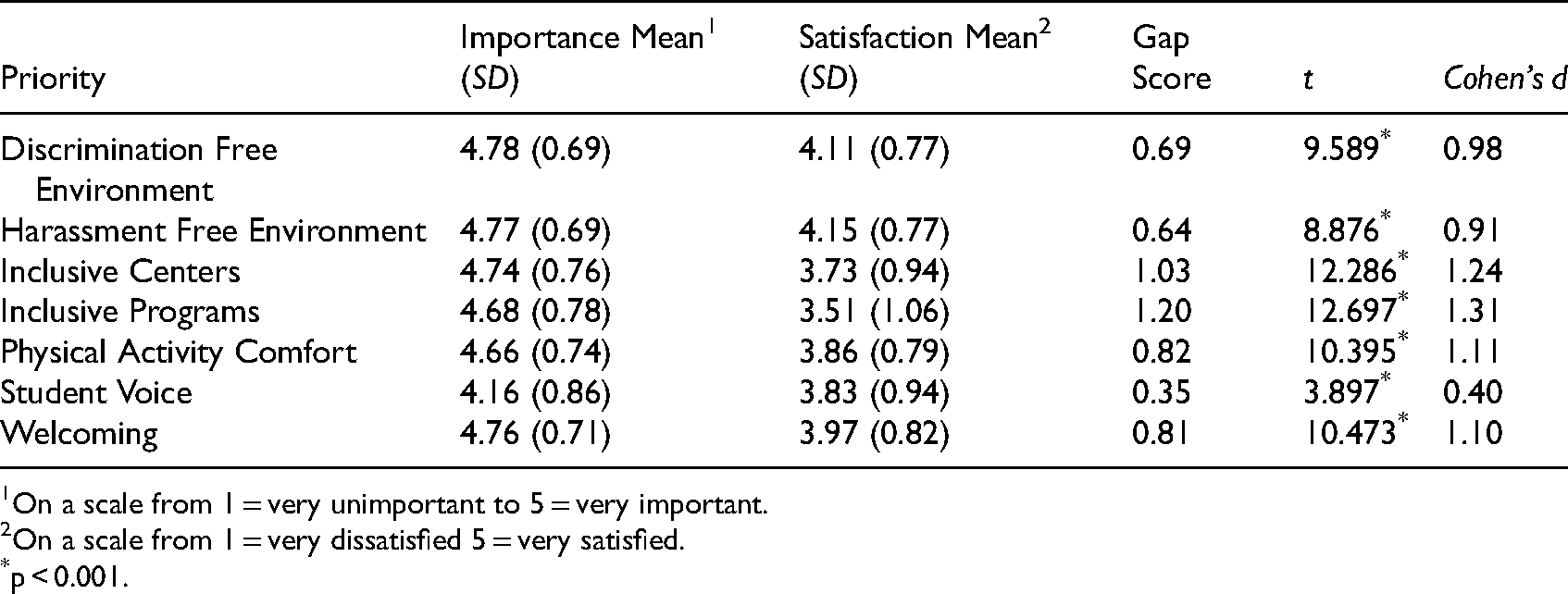
Quantitative analyses were conducted using IBM SPSS Statistics Version 26.0 (IBM, Armonk, NY). Descriptive statistics were computed to describe the sample with regard to staff member characteristics, institution characteristics, and existence of pre-defined policies. An importance-performance analysis was conducted in which respondents’ ratings of priority importance were plotted against their satisfaction with their agency's performance on the same priorities. The IPA scatterplot is a four-quadrant matrix encompassing: (1) keep up the good work, (2) possible overkill, (3) low priority, and (4) concentrate here. A mean quadrant approach was applied to examine relative rather than absolute levels of importance and performance (Bacon, 2003; Martilla & James, 1977). A gap score was calculated by subtracting performance from importance; positive scores indicate areas of concern and negative score indicate satisfactory performance (Lück & Porter, 2019; Powers et al., 2020). Paired sample t-tests with Cohen's d as a measure of effect size were used to test the statistical significance of these gaps (Lück & Porter, 2019; Powers et al., 2020); for effect size, 0.2 is a small effect, 0.5 is a medium effect, and 0.8 is a large effect (Huck, 2012). For the three qualitative measures, thematic analyses were conducted to identify the dominant themes and sub-themes in qualitative data (Braun & Clarke, 2006). Three undergraduate research assistants independently read and re-read qualitative data in a first round of descriptive coding (Saldaña, 2015). Then, a meeting was held between the authors and research assistants to develop an initial codebook, but we used the constant comparison method to continually evaluate and update the codebook as needed throughout the analysis (Corbin & Strauss, 2014). Each researcher, including the first authors, coded qualitative data independently, before resolving any disagreements to arrive at a consensus. Throughout the coding process, simultaneous coding was used to allow for comments to be coded in several categories (Saldaña, 2021), as respondents often discussed multiple types of values, practices, programs, and/or policies in their comments. This process ultimately translated to some quotes falling under several themes given the diverse subjects addressed in respondents’ comments. Trustworthiness was supported through using well-established methods, trained researchers experienced in campus recreation operations, and having multiple researchers involved in the analyses (Shenton, 2004). The authors of this study are experienced researchers in the field of campus recreation, and have expertise in topics of diversity, equity, and inclusion in physical activity and recreation settings.
Results
Participant Characteristics
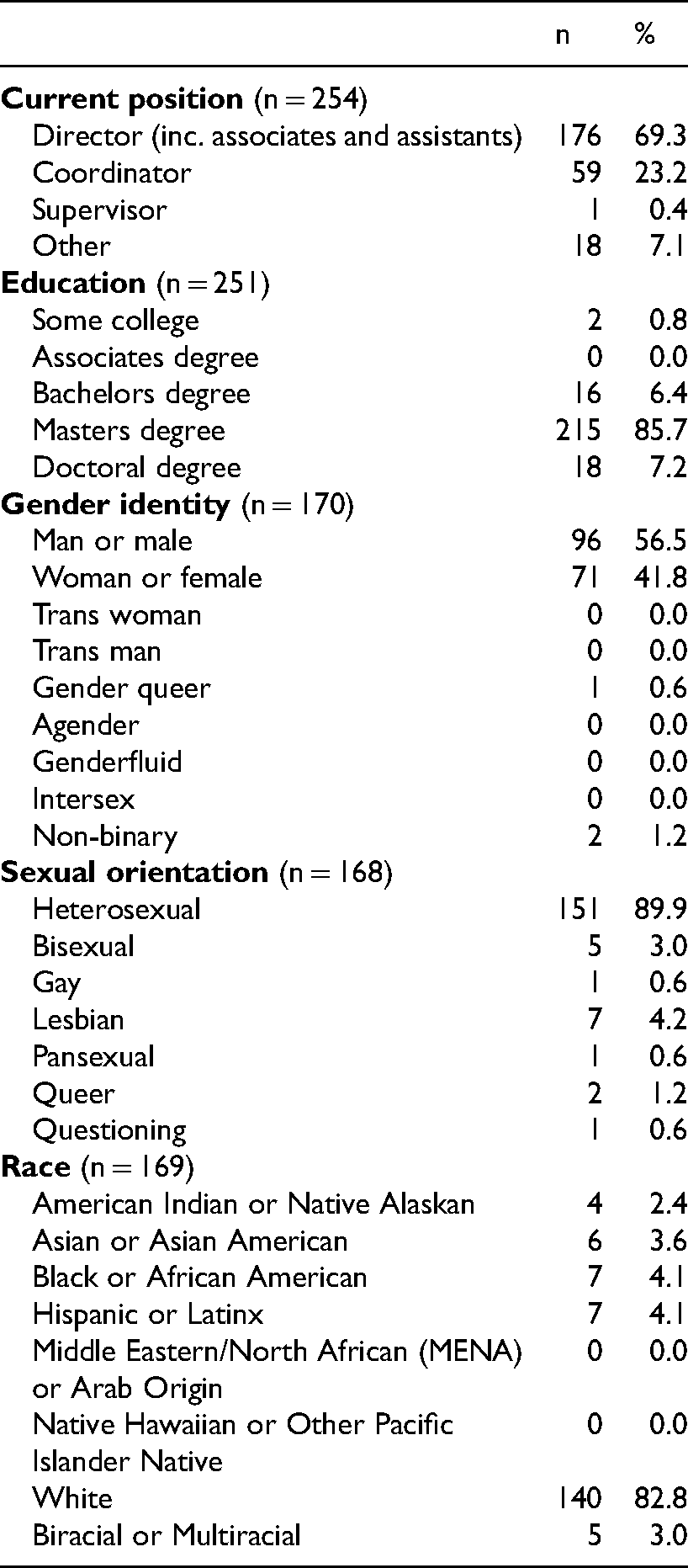
Respondents (n = 254) were primarily campus recreation directors (including associate or assistant directors). Respondents averaged 9.1 years working in campus recreation (SD = 3.9), 5.9 years at their current institution (SD = 4.2), and 4.1 years in their current position (SD = 3.7). Most respondents had a master's degree or higher. Respondents were most likely to be male, straight/heterosexual, and Non-Hispanic White (Table 1).
Participant Characteristics.
Institution Characteristics
Most respondents worked at public institutions serving both undergraduate and graduate students. The sample included respondents from all NIRSA regions and about half reported their institution is located in a metro area. The median student population size was 17,000, with an interquartile range of 9,000 to 30,000. Twenty eight percent of respondents were from a minority serving institution and 9% were at religiously affiliated institutions. A sizeable majority worked at institutions where a mandatory student fee fully covered campus recreation membership costs. Across all membership models, the median student membership price was $130 with an interquartile range of $55 to $200 per academic year (Table 2).
Institution Characteristics.
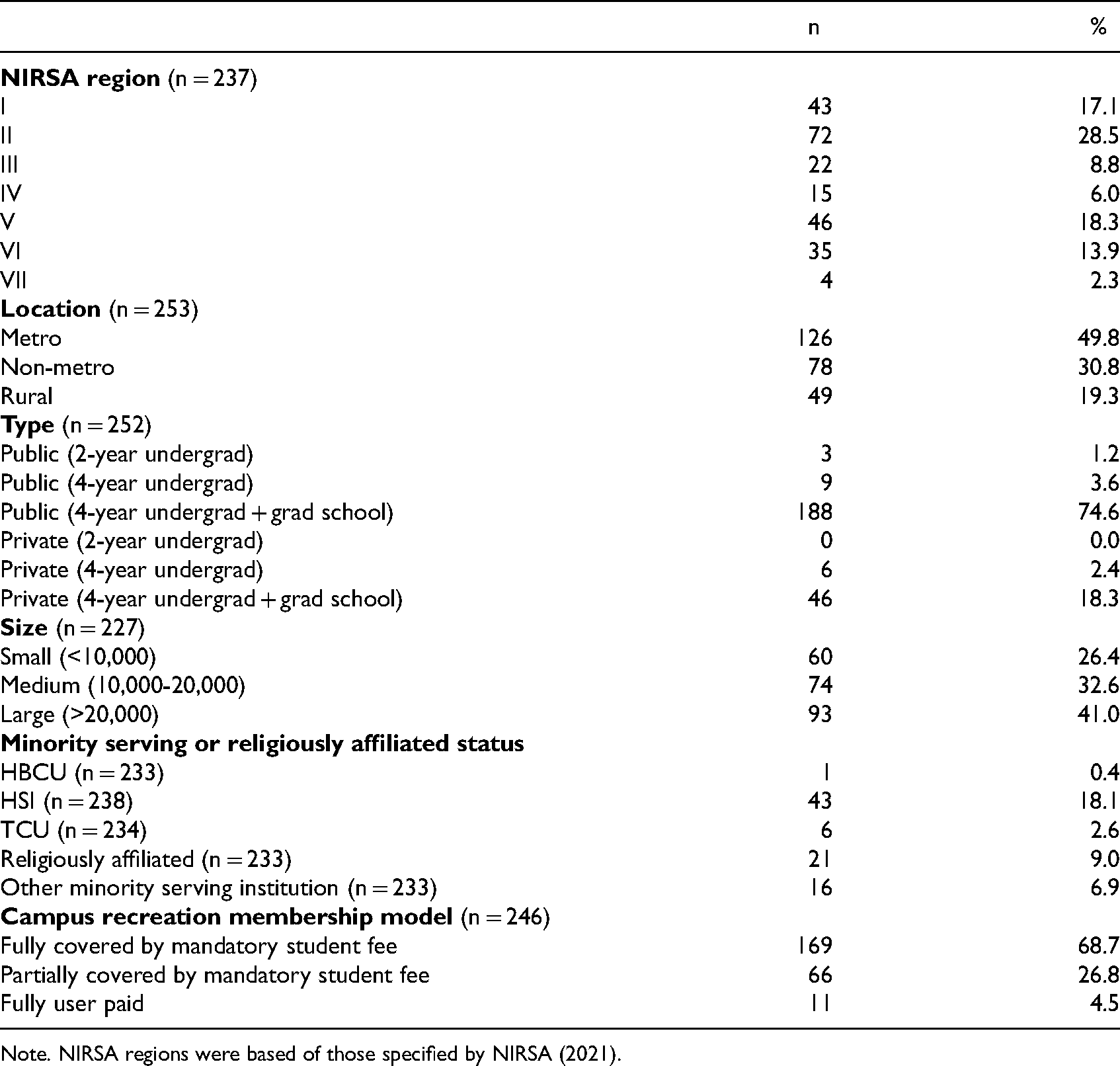
Note. NIRSA regions were based of those specified by NIRSA (2021).
Values
There were 242 responses to the values question and ten relatively distinct values were identified. The most common values were inclusivity (n = 134, 55.4%), health and wellness (n = 106, 43.8%), community and engagement (n = 91, 37.6%), and integrity and respect (n = 85, 35.1%) which were evident in the responses of the majority of participants. The remaining values included development (n = 78, 32.2%), service (n = 66, 27.3%), fun (n = 60, 24.8%), teamwork (n = 51, 21.1%), leadership (n = 39, 16.1%), and sustainability (n = 20, 8.3%).
Polices
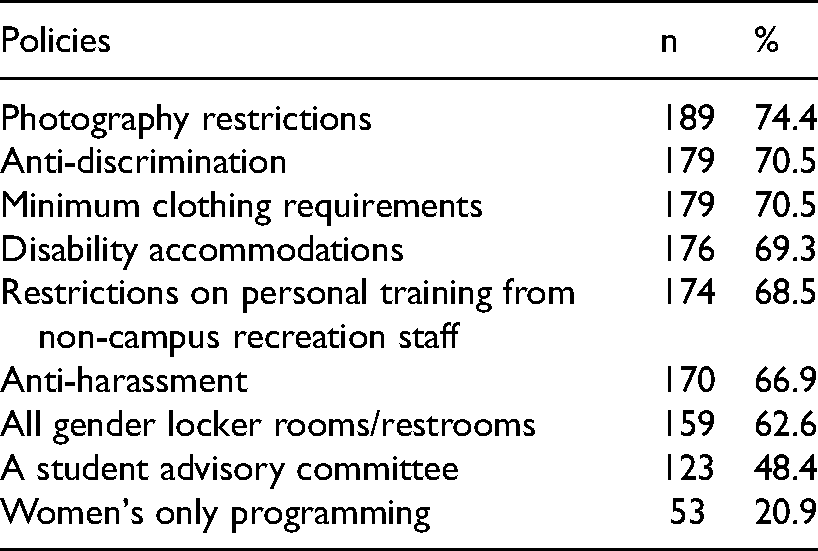
With the exception of women's only programming and a student advisory committee, written policies existed for all other policies at the majority of participant's institutions (Table 3). Responses to the ‘other’ policies option included responses referring to: students being able to “play on the team that best matches their gender identity based on self-identified or expressed gender”; “Men's only programming (required by Title IX)”; “transgender membership demographics, locker rentals and locker rooms”; “policies exist just not documented well or in a visible format”; “Privacy policy”; “guest policy”; “Social Media”. Several other participants commented that policies pertaining to disability, harassment, and discrimination were university level policies and did not select relevant response options pertaining to their department
Campus Recreation Department Policies.
Campus Recreation Priorities
When examining campus recreation priorities, there were significant gaps between importance and performance for all items (Figure 1; Table 4). Items pertaining to environments which are welcoming and free of both harassment and discrimination fell in the ‘keep up the good work’ quadrant. Ensuring campus recreation centers and programs are inclusive to all students and ensuring all students feel comfortable being physical active at campus recreation centers fell into the ‘concentrate here’ quadrant. Finally, ensuring students have a voice in campus recreation planning and management was identified as a ‘low priority’.
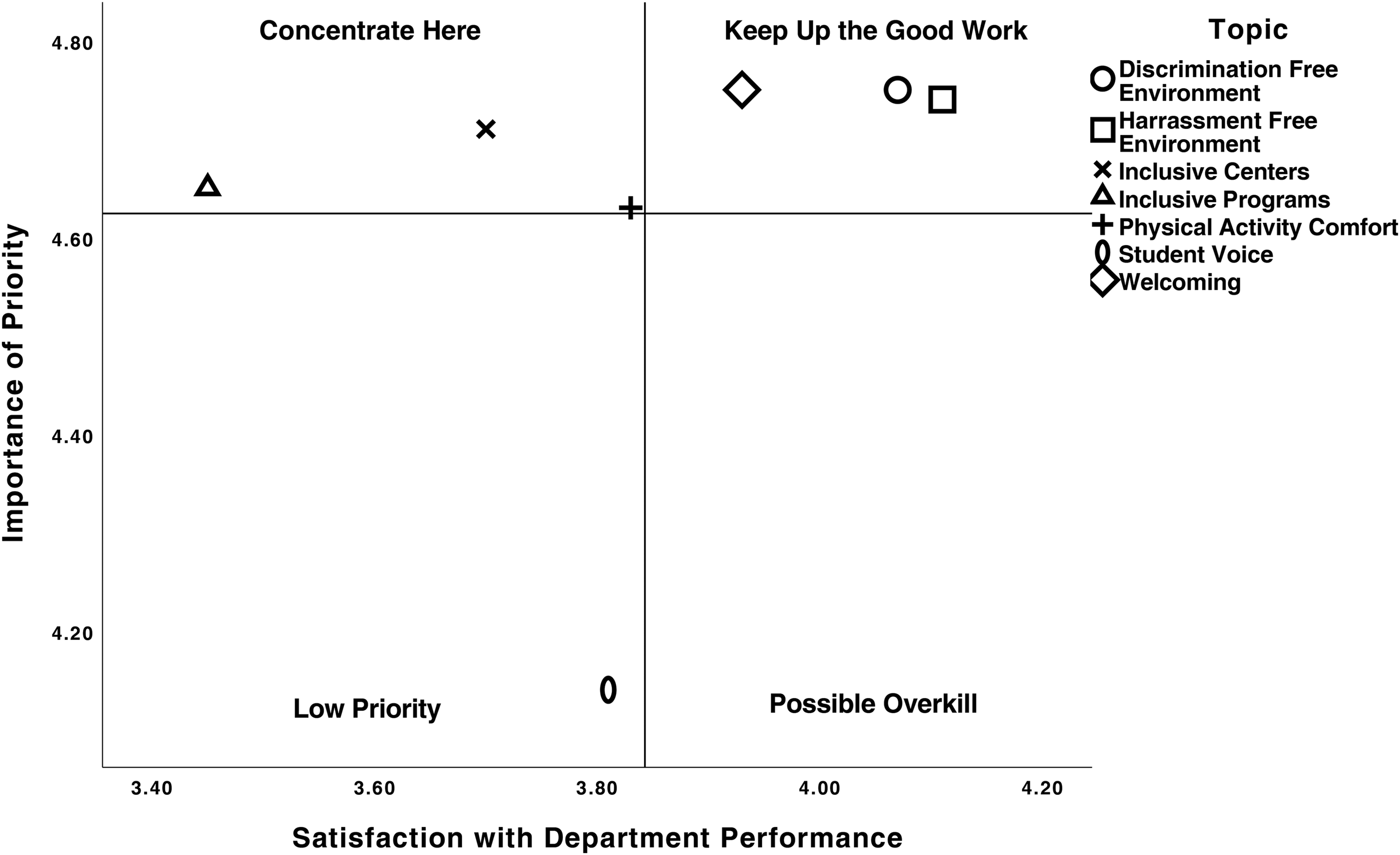
Importance performance analysis for campus recreation priorities.
Importance and Satisfaction with Performance on Campus Recreation Priorities.
On a scale from 1 = very unimportant to 5 = very important.
On a scale from 1 = very dissatisfied 5 = very satisfied.
p < 0.001.
Existing Department Equity-Related Policies/Practices
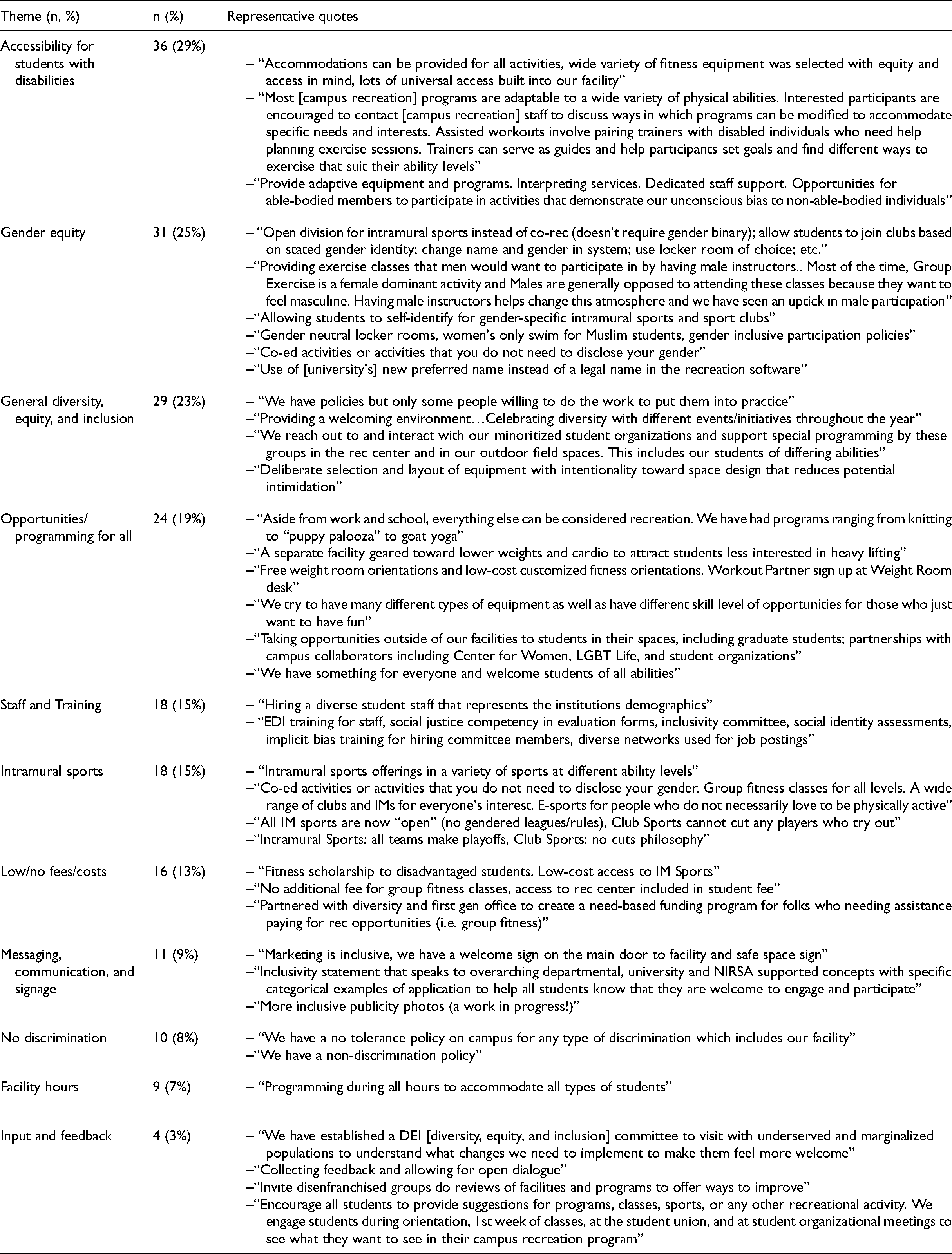
Campus recreation directors identified a variety of existing equity-related policies and practices related to accessibility for students with disabilities; gender equity; general diversity, equity, and inclusion; opportunities/programming for all; staff and training; intramural sports; low/no fees; messaging, communication, and signage; no discrimination; facility hours; and input and feedback. There were 124 responses to this question and examples of current policies/practices can be found in Table 5. One participant made a comment explicitly related to religion “women's only swim for Muslim students.” A few respondents (n = 4, 3%) indicated their department did not have any policies or practices to encourage equitable physical activity.
Existing Department Equity-Related Policy/Practice Themes.
Potential Department Equity-Related Policies/Practices
There were 99 responses to this question and themes are discussed in text below. Promotion (n = 16, 16%) and accessibility (n = 14, 14%) were the most common responses concerning what policies/practices could be implemented to encourage equitable physical activity opportunities. Many of the comments regarding promotion pertained to reaching students from all parts of the student community: “Better outreach across campus to inform all students what is available to everyone,” “More inclusive marketing tactics,” “More promotions in areas further away from the Student Life center to ensure all students are aware of programs and opportunities,” and “Reach out to student organizations on campus that involve many minority students to invite students to participate”. Comments regarding accessibility included those relating to creating more space in general and extending operating hours.
Relating to space, multiple participants (n = 11, 11%) made comments regarding the provision of gender spaces to improve gender equity. Comments pertained to gender-neutral bathrooms and locker rooms, and designated workout times/areas by identity group. Along similar lines, several participants made comments regarding private reservable spaces in general (n = 6, 6%). With respect to race, one participant responded: “More women's only, black, aboriginal and POC specific safe spaces and programs in our rec centre;” and, another mentioned “BIPOC initiatives”.
A number of participants also commented on the need for more opportunities for students with disabilities (n = 13, 13%), including facilities and amenities (locker/bathroom accessibility), adaptive equipment, and intramurals. Comments included: “Better disability access (working automatic doors, more handicap parking spots),” “Restroom remodel to provide closed changing areas and larger bathroom stalls to accommodate wheelchairs,” and “Intramurals for students with disabilities, cardio equipment on the first floor.” Respondents also suggested changes to fess and costs that would make physical activity more equitable for all students (n = 8, 8%). For instance, one person suggested: “Mandatory dedicated student fee. Currently, the “pay-to-play” model is broken. It does not allow all students access.” Other echoed similar sentiments: “Scholarship funds to cover student fees,” “Eliminate extra fees for program specific areas, i.e. intramural team sports, group fitness,” and “Remove all fees and provide all necessary equipment and supplies.”
Respondents suggested a variety of potential programs that could help support more equitable physical activity (n = 14, 14%) including “Targeted marketing for specific populations, more programming outside of traditional hours, continued virtual opportunities, identity based programming, increased collaboration with other DSA departments,” “More inclusive campaigns…bring back cultural activities,” and “More targeted inclusion of various populations in program to encourage and invite all to feel welcome.” Diversity with respect to the hiring and training of staff was also mentioned by a number of participants (n = 13, 13%), with comments including “Hiring a more diverse staff representative of the student population,” Diversity training for student staff,” and “Better retention efforts for diverse folks who are hired to work for us.” A few comments specifically referred to planning and assessment. For instance, respondents stated: “Allow more students to be involved in the pre-planning and decision-making process,” “More intentional policy planning for marginalized communities,” and “Continue building on assessment work begun to assess facility use and assessing non-users (student focus groups).”
Discussion
Providing equitable physical activity participation opportunities is key to alleviating physical activity and associated health outcome inequities. Findings reveal an alarming level of apparent disconnect between the stated values of campus recreation departments, such as inclusion, and the existence of policies pertaining to the accommodation of individuals with disabilities, providing equitable amenities for all genders, and anti-harassment/discrimination. Beyond institutional policies pertaining to inclusivity and equity, the direct contrast between some findings and existing federal legislation, such as ADA and Title IX, is also of concern. Moreover, the apparent absence of a student advisory committee at most institutions is troubling given the importance of student input to proactively address students’ needs. Although practices to promote equity identified through qualitative comments were not pervasive across institutions, responses are heartening and reveal the potential of campus recreation to provide leadership beyond higher education in the provision of equitable opportunities to participate in physical activity for all members of society.
Campus recreation directors identified current and potential equity practices regarding gender, disability, income, race, and religion. Regarding gender equity, respondents identified a variety of practices including having gender neutral spaces (e.g., locker rooms) and allowing students to participate in clubs, intramural sports, and use facilities based on their stated gender identity. Such policies would help to address existing inequities in physical activity based on gender identity among college students in the United States (Wilson & Bopp, 2021)
Additionally, several respondents noted that they currently (or could in the future) provide female only or private workout spaces. Relative to the latter, private or female only workout spaces could help to reduce constraints associated with harassment or intimidation from male users, helping to address the physical activity comfort priority identified in the ‘concentrate here quadrant’ (Austin Robert Anderson et al., 2020; Carter-Francique, 2011; Hoang et al., 2016; Shaikh et al., 2018; Stankowski et al., 2017; Wilson et al., 2020). Moreover, many universities have developed facility/equipment reservation systems during the COVID-19 pandemic that could be leveraged for scheduling private workout spaces in advance (Powers et al., 2022b). Reservations systems could support physical activity prioritization, an important strategy for negotiating constraints to physical activity at campus recreation centers (Powers et al., 2019).
In the IPA, providing discrimination and harassment free environments as well as welcoming environments fell into the “keep up the good work” quadrant; however, there were still significant gaps between importance and performance indicating the need for additional policies and practices to support these priorities. Providing inclusive and comfortable environments for physical activity through facilities and programs fell into the “concentrate here” quadrant; unsurprisingly, there were also considerable gaps between important and performance. This findings indicate that campus recreation staff feel there is a need for their department's to focus on creating more inclusive and comfortable environments for physical activity. Research in other recreation contexts has identified the importance of input in decision making, representation of diversity among staff and in communication materials, and inclusive programs as important strategies for stimulating a sense of welcome, belonging, and comfort (Powers et al., 2022a). Less than half of respondents indicated their department has a student advisory committee and student voice fell into the “low priority” quadrant in the IPA, two concerning findings given that students could provide valuable perspectives and feedback ensure that departments achieve their goals of equity.
On the topic of student representation, seeking input from underrepresented groups and both users and non-users of programs and facilities would help to address the need to work on inclusive programs. Along similar lines, hiring of more diverse staff and diversity, equity, and inclusion (DEI) training provide a chance for greater continuity of diverse perspectives compared to relying purely on students where the turnover is far higher.
Limitations & Recommendations for Future Research
This study was cross-sectional and thus reflects perceptions of campus recreation professionals at a single point in time. The study was also limited to professionals who were members of NIRSA, and thus may not reflect all campus recreation staff; additionally, it is a possibility that multiple respondents could have been from the same institution, although we did not collect this data. As efforts to address inequities develop, campus recreation departments may have to overcome new challenges. Future research should evaluate the impact the existing and proposed policies and practices aimed to provide more equitable opportunities have on student participation. Investigating policies and practices more explicitly, rather than in an exploratory manner, has the potential to provide a deeper understanding of the prevalence and effectiveness of these across institutions. Similarly, investigation of students’ perspectives of the efforts of campus recreation departments to address inequities likely holds value to inform future improvements to policies and programs. Given that not all DEI initiatives have been shown to be effective at supporting minoritized students (Linley, 2018), particularly when they fail to account for intergroup interactions that occur (e.g., interactions between racially and ethnically diverse students), it is imperative for future research to better understand the student perspective and the role of intergroup contact in DEI. As suggested in prior recreation and education-based research Powers et al., 2022; Powers & Webster, 2021), it is important to attend to intergroup interactions in order to create more equitable and inclusive environments for minoritized individuals, and thus future research should investigate the role of intergroup interactions in the campus recreation experience.
Conclusion
In summary, the efforts of campus recreation departments to address inequities vary greatly in terms of the existence of policies and implementation of programs and practices that uphold such policies. It is evident that much work is needed adopt, implement, and evaluate initiatives to address inequities in physical activity participation opportunities among students. Findings of this study may help campus recreation professionals/departments to consider and eventually implement and evaluate revised and/or new policies, programs, and practices that provide equitable opportunities for all students to participate in physical activities that they enjoy.
Footnotes
Acknowledgments
The authors would like to thank the participants who took the time to respond offer candid responses to the survey, as well as NIRSA for supporting this research with a NIRSA Research Grant.
Declaration of Conflicting Interests
The author(s) declared no potential conflicts of interest with respect to the research, authorship, and/or publication of this article.
Funding
The author(s) disclosed receipt of the following financial support for the research, authorship, and/or publication of this article: This work was supported by the National Intramural and Recreational Sports Association.
