



Abstract
The amenity arms race among post-secondary institutions is driving the new development or expansion of campus recreation facilities. However, investing in new and larger campus recreation facilities may not necessarily translate into usage and ultimately provide the associated benefits to students. This study explored whether human resource capacity and program capacity are mechanisms that help explain the conditions under which facility capacity translates into facility usage. Secondary data were obtained from NIRSA's research and assessment initiative from post-secondary institutions in the United States (n = 103) that contained measures of relevance to this study. Regression analyses with bootstrapping were conducted to examine the hypothesized relationships including mediation. Results identified that an indirect only mediation model (full mediation) was present, such that greater facility capacity translates into increased facility usage through human resource capacity and program capacity. Therefore, recreation professionals and programs are indicated as pivotal to making the most of facility capacity.
Keywords
In the United States, the media has described capital investment into non-academic facilities at post-secondary institutions as an ‘amenity arms race’ with institutions in constant competition among one another to construct the biggest and best infrastructure (McClure, 2019). Campus recreation facilities are central in this discussion with $1.8 billion in capital projects currently underway (NIRSA, 2020). Meanwhile, within post-secondary institutions there has also been a growing concern among academics, administrators, and policy makers with respect to student recruitment, retention, and wellness (Aljohani, 2016; Eisenberg et al., 2012). Research indicates that campus recreation facilities can help to address some of these issues. Specifically, campus recreation facilities have been found to influence student recruitment (Kampf et al., 2018; Lindsey & Sessoms, 2006), and once students are enrolled, usage has been associated with wellness, academic success, and retention (e.g., Forrester, 2015; Forrester et al., 2018; Vasold et al., 2021). Therefore, it is likely that investments in campus recreation facilities is a reactionary attempt by institutions to address some of these important concerns. However, investing in new or upgraded campus recreation facilities may not necessarily translate into usage and ultimately provide the associated benefits to students. Thus, exploring the relationship between facility capacity and usage by identifying the mechanisms or conditions under which facility capacity translates into usage would be beneficial.
The organizational capacity literature in sport management indicates that a capacity shortfall results in an inability for an organization to deliver on its goals (Doherty et al., 2014; Millar & Doherty, 2021), such as attracting participants. Organizational capacity has been defined as “the ability of an organization to draw on various assets and resources in order to achieve its mandate and objectives” (Doherty et al., 2014, p. 125S). Hall et al.’s (2003) organizational capacity framework suggests that human resources, organizational relationships, finances, infrastructure, and strategic planning are important resources that non-profits can draw upon to reach their goals. Scholars have found that human resource and infrastructure capacity are of particular importance to sustainable operations (Rosso & McGrath, 2017; Wicker & Breuer, 2011) because organizations who lack these critical capacity dimensions tend to be stuck focusing on their day-to-day operations (Doherty et al., 2014).
Rossman and Schlatter (2011) considered the role of recreation practitioners to be experience facilitators that design and stage (i.e., plan) programs aimed to maximize the probability of participation and enjoyment. In the context of campus recreation, some of the typical programs that require planning are intramural sports, sport clubs, outdoor recreation, and fitness programs. Despite their pivotal roles, the importance of practitioners and the programs they develop for cultivating and retaining participation has largely been overlooked. Therefore, the purpose of this study was to examine whether human resource capacity (i.e., practitioners) and program capacity help explain the conditions under which greater facility capacity leads to increased facility usage in the context of campus recreation. The following sections describe the specific relationships being examined in this study, including the associated hypotheses.
Facility Capacity and Usage
Research has identified a positive relationship between the availability of facilities and participation (e.g., Atkinson et al., 2005; Deelen et al., 2017; Eime et al., 2017; Haug et al., 2008; Limstrand & Rehrer, 2008; Wicker et al., 2009). In some cases greater participation coincides with the availability of facilities because participation in activities such as swimming or tennis are more reliant on specialized facilities than participation in activities that can be played in more diverse environments like soccer (Hallmann et al., 2011; Hallmann et al., 2012; Wicker et al., 2012). Therefore, greater facility capacity can lead to an increased number of participants by removing a constraint to participation. In other cases, the existence of facilities serves to nudge or inspire participants to become active when they are in their neighborhood or nearby built environment (Deelen et al., 2016; Wicker et al., 2013). As such, the following hypothesis is advanced. H1: Facility capacity will be positively associated with facility usage.
Program Capacity as a Mediator
Participation has also been found to improve when there are organized and structured programs for people to engage in (e.g., registered programs) (Borgers et al., 2016). Previous research has found that campus recreation departments prioritize having a diverse range of available programming (Lower-Hoppe et al., 2019) that can include intramurals, sport clubs, drop-in sports, outdoor recreation, group fitness, aquatics, instructional programming, special events and community activities (Stier et al., 2005). Stier et al. (2005) highlighted that both facilities and participation opportunities (i.e. programs) are required to cultivate participation. The breadth of program options may also encourage participation by helping students navigate various constraints as they vary depending on program offering (i.e. intramurals being different from drop-in sports), nature of program (i.e. group or individual), level of competition and previous knowledge (i.e. understanding how to use weights) (Selvaratnam et al., 2021; Stankowski et al., 2017; Wilson et al., 2021). Given the central role that programs play in driving participation, the following hypothesis is advanced to explore the role they may play in explaining why greater facility capacity results in increased facility usage. H2: Program capacity will positively mediate the relationship between facility capacity and facility usage.
Human Resource Capacity as a Mediator
Along with designing programs, research has found that campus recreation practitioners believe they require a broad range of skills and knowledge for their role such as risk management, facility management, human resource management, intrapersonal skills, strategic planning, research and evaluation, and student development theory to coordinate programming (Beggs et al., 2018). These practitioners must also adopt constantly evolving marketing strategies to boost students’ awareness of programs and encourage participation (Achen, 2015; Milton & Patton, 2011). Considering how previous research has highlighted the importance of human resource capacity to the sustainable operations of community sport organizations (Rosso & McGrath, 2017; Wicker & Breuer, 2011), this study will examine the role of campus recreation practitioners (human resource capacity) in explaining participation in campus recreation. Therefore, the following hypothesis was advanced. H3: Human resource capacity will positively mediate the relationship between facility capacity and facility usage.
Human Resources Before Program Capacity
Importantly, human resource capacity is also a necessary precursor to the development of programs (i.e., program capacity) as individuals are needed to develop and execute recreation programming. However, when examining population level participation at the geographic level, programs and facilities are often examined together as a general infrastructure construct (e.g. Downward et al., 2014b; Eime et al., 2017; Wicker et al., 2012). Because of the importance of human resources to the development of programs, in the present study, it would be expected that human resource capacity would influence program capacity. As such, the following hypothesis will be tested. H4: Human resource capacity and program capacity will serially mediate the relationship between facility capacity and facility usage.
Method
To test the hypotheses, secondary data were obtained from the National Intramural Recreational Sport Association (NIRSA). NIRSA is a membership-based organization comprised of post-secondary institutions, professionals, and students who are typically responsible for providing collegiate recreation and wellness services for post-secondary students in North America. In 2011, NIRSA began collecting aggregate data to share across its membership. The data set includes general institution details, participation rates, program and service offerings, facility characteristics, and operational and construction trends (NIRSA, n.d.). The digital platform used for the collection and hosting of the data is funded through the support of the NIRSA Foundation, a non-profit organization that supports research and assessment, professional development, and student scholarships.
Each year NIRSA members are asked to voluntarily input their institution's data into the digital platform. Members who answer a minimum of 50% of the questions can access the reporting capabilities of the platform that hosts the data. Once data is entered, it remains in the data set and each year members are again asked to update the data. General institutional details that are publicly available are also pre-populated within the data set.
The data set was made available to the authors from NIRSA on February 11th, 2021 and initially contained information from 445 post-secondary institutions, however, it appeared that many institutions only provided the minimum requirements necessary to access the data. Upon reviewing the data, most institutions who responded to the question “annual number of recreation facility visits” also responded to most of the other questions. Given the study is examining the influence of different factors on participation, institutions who did not provide an answer to this question were therefore removed from the data set. In addition, at this stage, only one Canadian institution remained and therefore it was removed from the data set due to its different context. This process resulted in 103 usable responses. In the United States there are currently 4,034 degree-granting institutions (National Center for Education Statistics, n.d.), however in 2016, through an independent market analysis, NIRSA determined that only 2,458 institutions have campus recreation programs (C. Haluzak, NIRSA, personal communication, April 19th, 2021). Using this information as the population, the data set represented roughly 4.2% of the post-secondary institutions with campus recreation programs in the United States.
Measures
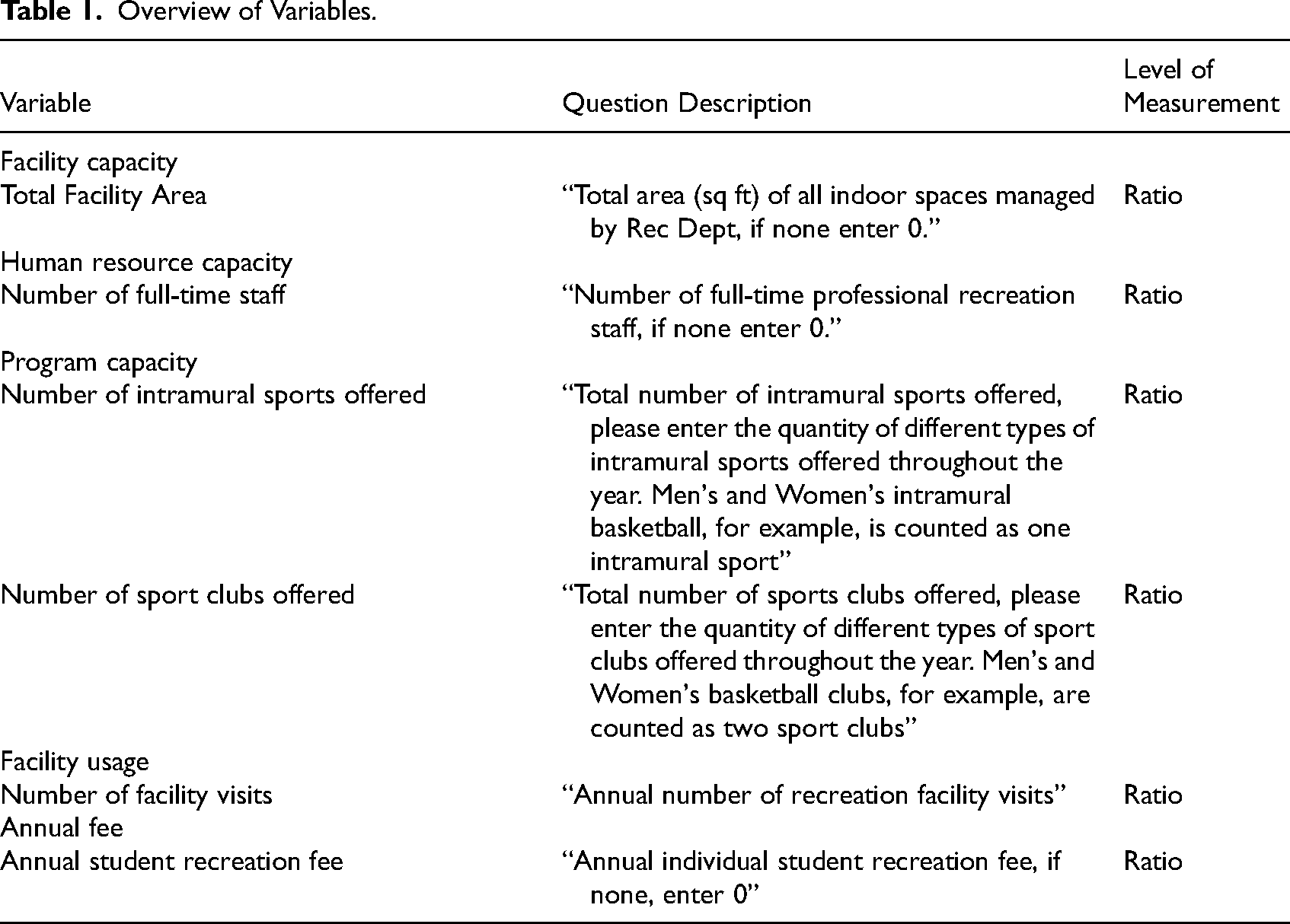
The Institutional Data Set contained 120 questions, however only 119 were provided by NIRSA to help maintain institutional confidentiality. Upon review of the data set, items were selected that related to organizational level variables, similar to those that have been used in previous research (e.g., Hallmann et al., 2012; Wicker et al., 2012; Wicker et al., 2013). The items used appear in Table 1. Specifically, the facility capacity variable was a single-item measure. Prior to inputting the variable into the regression models, the Log 10 Transformation function was used to address skewness (sk = 2.84) and the variable was labeled Facility Capacity LG. Additionally, the program capacity variable was constructed using two items that measured the total number of two different programs offered (i.e., intramurals and sports clubs). These measures were transformed into z-scores and computed to form a single measure (r = 0.594, p < 0.001). Human resource capacity was a single-item measure. Participation was measured by facility usage which was a single-item measure. It should be noted that the survey also asked how these visits were tracked and indicated that they could be tracked through card-swipes, headcounts, sign-in sheets, other, or no method. The annual fee that students are charged was included as a control variable due to financial resource capacity's importance in the organizational capacity framework (Doherty et al., 2014; Hall et al., 2003).
Overview of Variables.
Data Analysis
The data were entered into SPSS for statistical analysis. Descriptive statistics were computed for all variables and a correlation analysis was also conducted to examine the relationships among the variables. Multiple linear regression analyses were conducted to examine the association between facility capacity and facility usage, and to determine whether human resource capacity and program capacity mediated the relationship (Hayes, 2009). To examine multiple mediation paths, a serial mediation test was conducted using the PROCESS SPSS macro model 6 (Hayes, 2012; Hayes et al., 2011). This approach to mediation uses a bootstrapping method of repeatedly (in this case 10,000 times) sampling and resampling the data to estimate indirect effects between variables (Hayes, 2009). Sorting the distribution of effects then enables the construction of 95% confidence intervals that can be considered statistically significant if they do not contain or cross zero (Hayes, 2009). The approach was used to estimate the total effect, direct effect, and indirect effects through the serial mediators, human resource capacity and program capacity. It also examines the indirect paths through each mediator. The control variable was also included in both Model 1 and 2, and the potential mediators added in Model 2 (see Table 4).
Results
Descriptive statistics for all variables appear in Table 2 and results of the correlation analysis appears in Table 3.
Descriptive Statistics of Facility Usage, Annual Fee, Facility Capacity, Human Capacity, Program Capacity and Items Used in variable Construction.
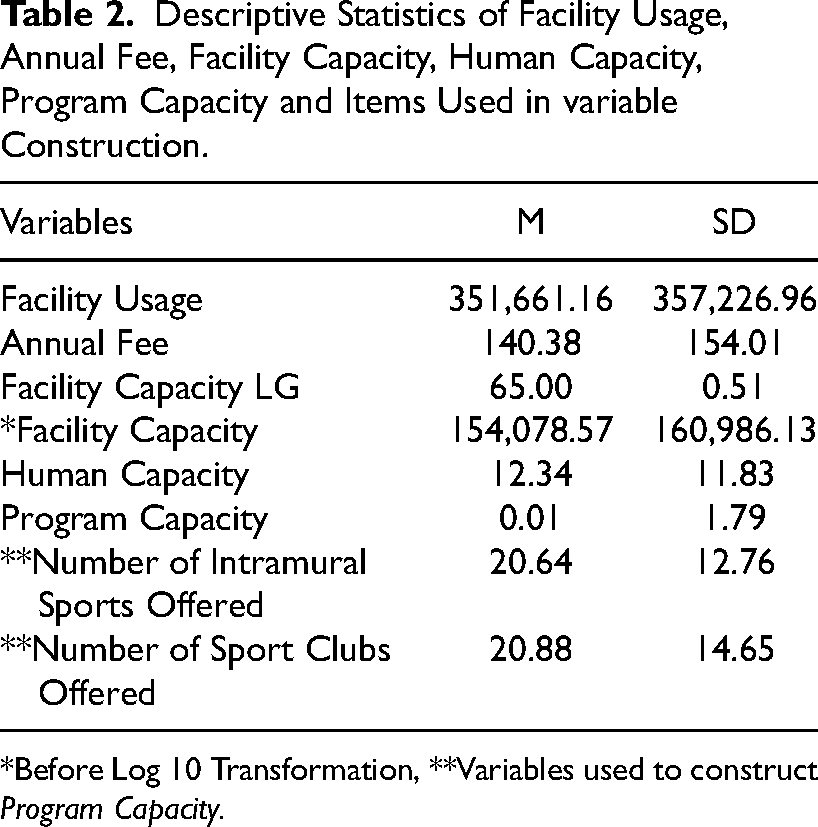
*Before Log 10 Transformation, **Variables used to construct Program Capacity.
Correlations of Facility Usage, Annual Fee, Facility Capacity LG, Human Capacity and Program Capacity.
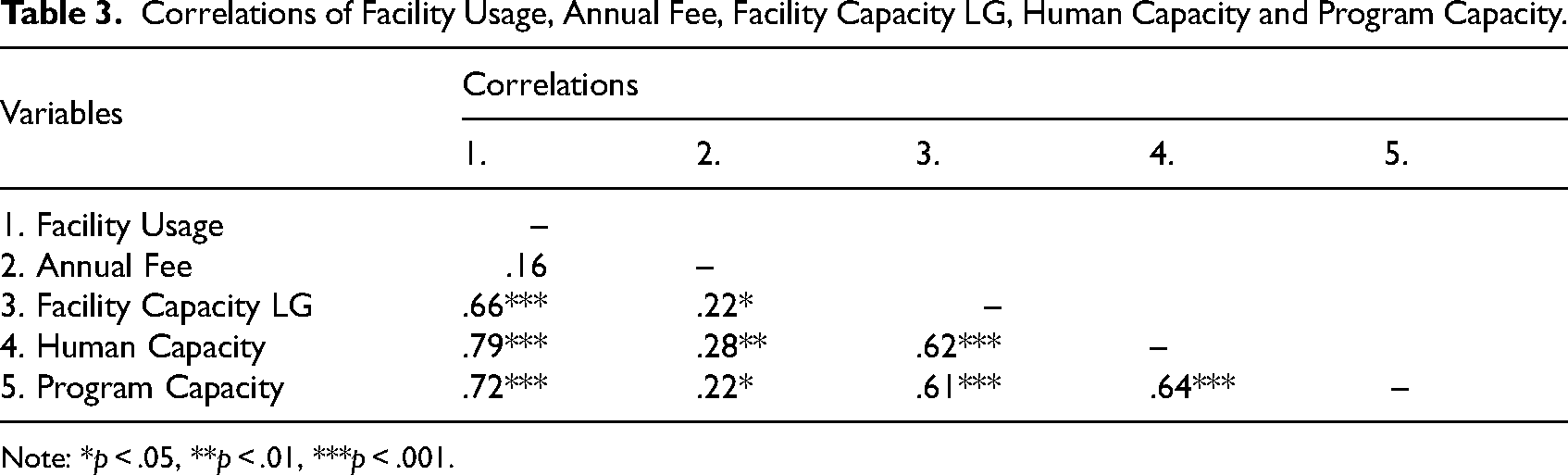
Note: *p < .05, **p < .01, ***p < .001.
Regression Model 1 identified that the association between facility capacity and facility usage was positive and statistically significant (p < 0.001) when examined with only the control variable entered into the model. However, there was no longer a positive and direct association between facility capacity and facility usage (p > .05) when the mediators were added in Model 2. Therefore, hypothesis 1 (facility capacity will be positively associated with facility usage) is only conditionally accepted. Additionally, the control variable (p > .05) did not demonstrate a statistically significant association with facility usage (see Table 4).
Unstandardized Regression Coefficients for Regression Models Showing Association of Control Variables, Facility Capacity, Human Capacity and Program Capacity with Facility Usage.
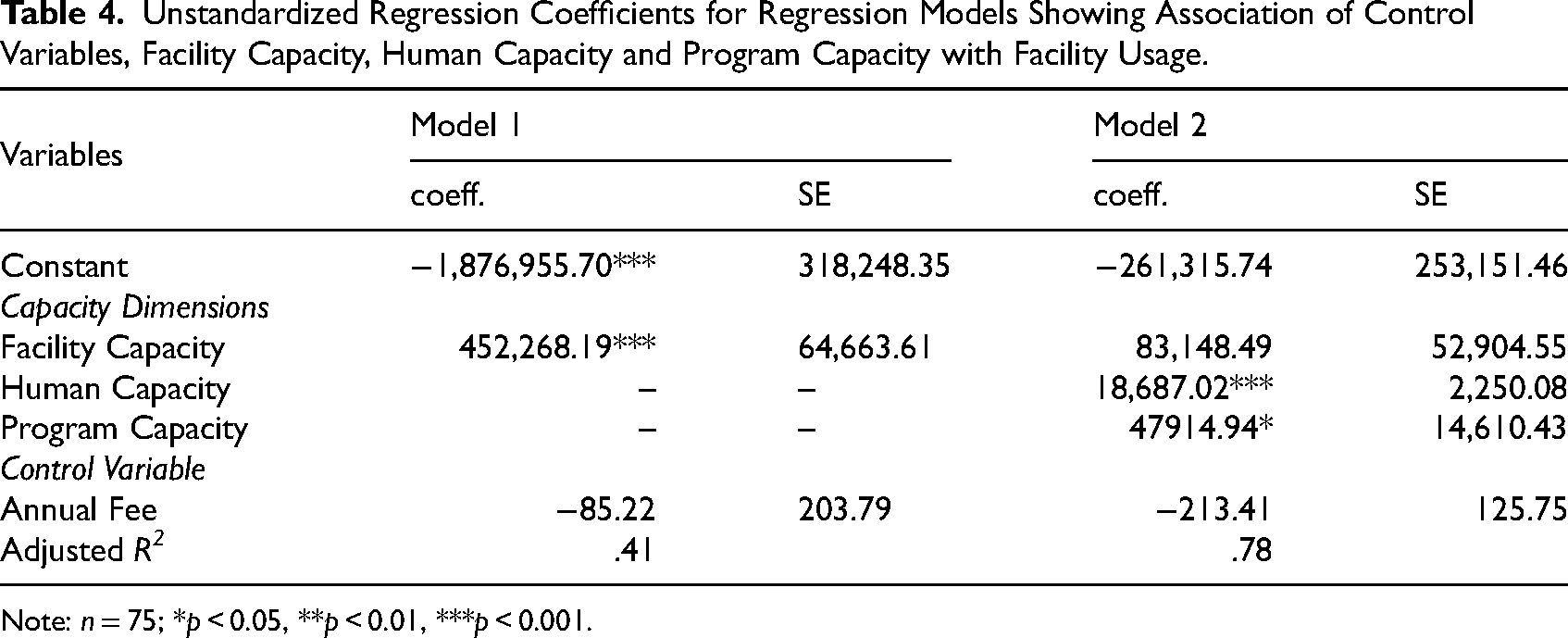
Note: n = 75; *p < 0.05, **p < 0.01, ***p < 0.001.
Results from regression Model 2 shows that the mediators human resource capacity (p < .001) and program capacity (p < .05), were also positively and significantly associated with facility usage, and again, the control variable (p > .05) was not statistically significant (see Table 4). Next, an inspection of the indirect effects in Table 5 indicates the bootstrapped confidence intervals do not contain or cross zero (Preacher & Hayes, 2008), which means that an indirect only mediation model is appropriate (Zhao et al., 2010). Therefore, facility capacity has an indirect only effect on facility usage through human resource capacity and program capacity, thereby supporting hypotheses 2 and 3. In other words, human resource capacity and program capacity must be present for increased program capacity to lead to increased participation.
Bootstrap Analysis of Total Effect for the Association of Facility Usage with Facility Capacity and Direct and Indirect Effects Mediated Through Program Capacity (PC) and Human Capacity (HC).
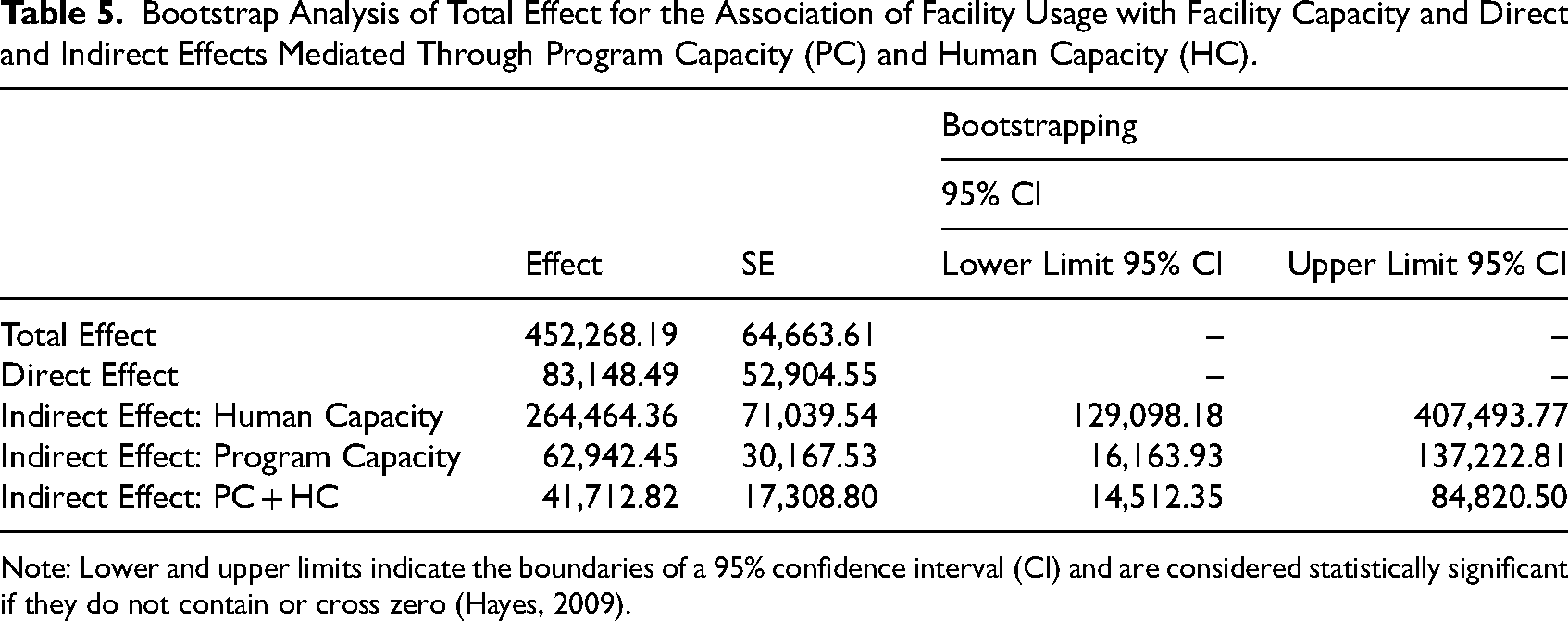
Note: Lower and upper limits indicate the boundaries of a 95% confidence interval (CI) and are considered statistically significant if they do not contain or cross zero (Hayes, 2009).
Figure 1 also reveals that serial mediation is appropriate. Specifically, in addition to human resource capacity and program capacity separately serving as mediators, results also indicate a sequential pathway from facility capacity to human resource capacity to program capacity to facility usage. Therefore hypothesis 4 is supported. Put differently, human resource capacity needs to be increased before program capacity is increased in order to see program capacity translate into participation. Finally, a comparison of the two regression models also revealed that Model 2 (R2 = 0.78, F = 4, 70, p < .001) accounted for substantially more of the variance in facility usage than Model 1 (R2 = 0.41, F = 2, 72, p < .001) further confirming that Model 2 (mediated model) better predicts facility usage.
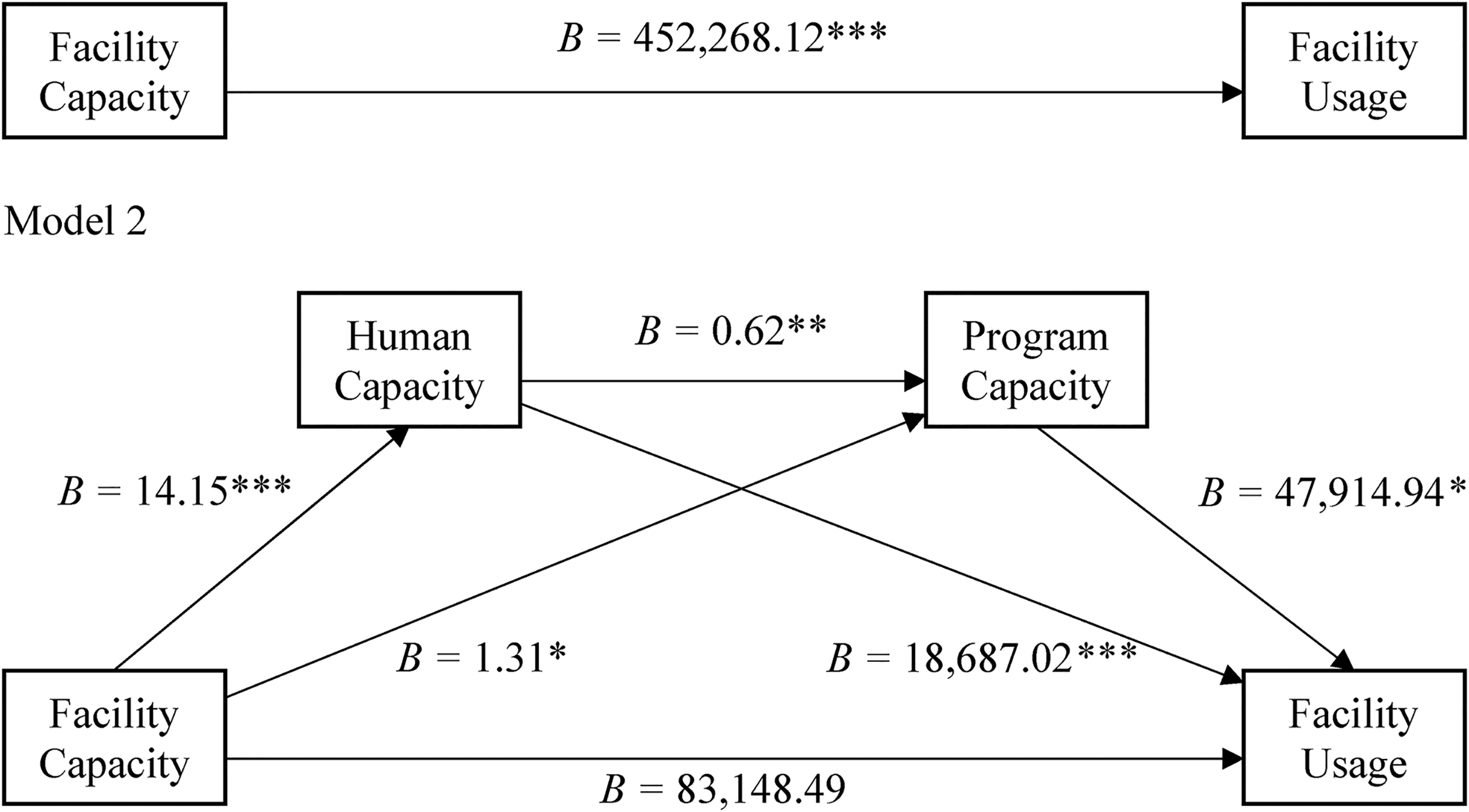
Association between facility capacity, and facility usage (Model 1), and human resource capacity and program capacity mediating the association (Model 2). Note: *p < .05, **p < .01, ***p < .001.
Discussion
The current study investigated the association between facility capacity and facility usage and introduced mechanisms to explain the association in the campus recreation context. The results demonstrate that human resource capacity and program capacity are central mechanisms that explain why greater facility capacity can lead to higher levels of facility usage. Results show that recreation professionals are essential in ensuring greater facility capacity translates into greater facility usage in two ways. First, recreation professionals indirectly influence facility usage by ensuring that programming is offered that meets the interest of students. Second, recreation professionals directly influence facility usage. Previous research suggests that recreation professionals may do so directly through marketing (Achen, 2015; Milton & Patton, 2011). This study also highlights the distinct role that programs play in translating facility capacity into usage that also supports previous research (Stier et al., 2005). Therefore, when large investments are being made to develop or expand campus recreation infrastructure, it is essential that a commensurate investment also be made in human resources so that programs may be developed and ultimately the facilities can be used maximally. Additionally, these findings also provide evidence to support the inclusion of human resources (i.e., recreation professionals) as a dimension of infrastructure in the sport participation model (Wicker et al., 2012).
Broadly, the results coincide with previous literature that has demonstrated an association between facility capacity and participation (in this case measured by facility usage) (e.g., Downward et al., 2014a; Wicker et al., 2013). The current study also contributes to the body of knowledge related to understanding how infrastructure is associated with usage by demonstrating how important human resource capacity and program capacity are to the infrastructure-usage relationship (e.g., Ebrahimi et al., 2016; Grima et al., 2017; Hallmann et al., 2012; Limstrand and Rehrer, 2008; Wicker et al., 2012). The need to identify the interrelationships among organizational capacity dimensions has been called for by researchers and this study does so in the context of campus recreation (Millar & Doherty, 2016).
Lastly, the findings also contribute to collective understandings of organizational capacity in the sport setting by examining capacity within the context of campus recreation. To date, the existing body of literature has primarily investigated capacity within community sport and sport for development organizations (e.g., Clutterbuck & Doherty, 2019; Doherty et al., 2014; Millar & Doherty, 2018). In the context of post-secondary institutions, however, human resource capacity has been identified as a critical component in the development of student athletes and the acquisition of outside funding (i.e., financial resources) (Andrassy et al., 2014). Campus recreation, however, is more similar to community sport organizations than varsity athletics, as campus recreation prioritizes participation over competition. They are however also different in that campus recreation departments have their own or shared facilities, employ full-time staff, and dedicate resources to strategic planning (Haines, 2010; Lower-Hoppe et al., 2019). More generally, these findings underscore the importance of facilities, human resources and programs for sport organizations that prioritize participation.
Practical Implications
Positively influencing usage of recreational facilities in the post-secondary environment is important as it expands the number of students who experience the benefits associated with participation, including student wellness, academic success, and retention (e.g., Forrester, 2015; Forrester et al., 2018; Vasold et al., 2021). Resultantly, these findings may be of particular interest for post-secondary administrators, academics, and policy makers who are increasingly under pressure to address student wellness while operating under a resource-constrained environment. Perhaps the most profound implication is the critical role of recreation professionals and programs for cultivating participation. This research highlights the importance of recreation professionals which should demonstrate to administrators that these staff are critical to ensuring that there is an adequate return on investment for the investment into new campus recreation facilities. Furthermore, professionals who are adept at developing and delivering inclusive programs that drive usage are particularly important.
Limitations and Future Research
The study contains limitations and opportunities for future research. The data in the dataset was entered manually through an online portal and institution representatives may have estimated some statistics. Future research should seek to gather data using more reliable measures. However, attaining large samples of sector data can be a lengthy and costly process, and so, the dataset itself is an appropriate industry tool to begin investigating organizational theory in this context. Although an indirect only model (full mediation), as the one found in this study, suggests that further mediators are unlikely to be missing from the model (Zhao et al., 2010), there are some unexplained pathways. Specifically, this study was unable to explain why human resource capacity has an impact on facility usage beyond ensuring program capacity, and why program capacity outside of the influence of human resource capacity was influential as a mediator. Future research could explore the addition of mediators that explain these unanswered questions.
Conclusion
The current study took an organizational approach to examine influences on facility usage rather than the more commonly used geographical or social-psychological approaches. Utilizing an organizational approach is an important contribution to this line of research as it allows sport and recreation organizations to consider how investments into facilities may improve organizational goals, such as increasing usage. In particular, the study highlights the importance of also investing in human capacity and program capacity along with facility investments to ensure that usage occurs.
Footnotes
Declaration of Conflicting Interests
The author(s) declared no potential conflicts of interest with respect to the research, authorship, and/or publication of this article.
Funding
The author(s) received no financial support for the research, authorship and/or publication of this article.
