



Abstract
This rapid review was conducted to synthesize the empirical research related to campus recreation participatory experiences that was published between 2011 and 2021. To carry out the review, three databases (SPORTDiscus, Web of Science, Scopus) were systematically searched for peer reviewed empirical literature related to campus recreation participatory sport experiences. The results were then screened with predetermined criteria and 180 studies remained for data extraction. Data was extracted and trends were identified for discussion. When comparing the results to a similar review conducted on literature published between 1998–2010 (cf. Barcelona & Sweeney, 2012), the results of the reveal that the use of theory is becoming increasingly prevalent as scholars are more regularly providing theoretical frameworks, key constructs and discussing scholarly contributions. The review also revealed limitations such as inconsistencies with measurement and that most studies have been conducted at single institutions, which should both be addressed in future research.
Introduction
The first integrative review of campus recreational sport literature was conducted by Sweeney and Barcelona (2012) exclusively focusing on research published within the Recreational Sports Journal. They suggested that future reviews should include a wider range of journals. The review revealed that the use of theory was noticeably absent from the body of literature even though campus recreation departments are housed within postsecondary institutions. Eight categories of research emerged from the review: participation and constraints, administration, benefits/outcomes, research/program evaluation, professional development, health and wellness, facilities and equipment, marketing/service quality, risk management and sociodemographic differences (Sweeney & Barcelona, 2012). Scholars that conduct research in the campus recreation space will likely benefit from another review that broadens its manuscript selection strategy while further concentrating on a particular theme. The purpose of this paper is to conduct a review of the empirical research related to campus recreation participatory experiences in a broader range of academic journals than previous reviews.
Design
To address the purpose, a comprehensive rapid review was conducted. Rapid reviews employ abbreviated systematic review methods in order to assess what is known about a policy or practical issue (Tricco et al., 2017). Rapid reviews employ comprehensive searches and then make careful methodology concessions that may include but are not limited to restricting the sources to peer reviewed literature, extracting only specific data from each source or modifying the quality appraisal steps through the review (Grant & Booth, 2009; Tricco et al., 2017). Rapid reviews can provide timely and user-friendly evidence to the scientific community (Khangura et al., 2012). To account for these methodological concessions and ensure replicability of the review, authors are to report each step of the search and selection of sources (Grant & Booth, 2009). The following sections outline the preferred reporting items for systematic reviews and meta analyses (PRISMA) methodology used for conducting this rapid review.
Search Strategy
The electronic databases selected for this review included SPORTDiscus, Scopus and Web of Science. These were identified by an academic librarian as the most prominent databases for sport, recreation and leisure literature. While searching the Scopus database, some subjects (medicine; biochemistry, genetics and molecular biology; neuroscience; and pharmacology, toxicology and pharmaceutics) were excluded to reduce the number of irrelevant studies. The search strategy consisted of the following keywords and applied the “related words” feature in each database: (a) “campus recreation*” OR “collegiate recreation” OR intramural* OR “college sport*” OR “university Sport*”; AND (b) “consumer behavior” OR “consumer behaviour” OR marketing OR “program outcome*” OR “service quality” OR satisfaction OR engagement OR experience* OR participat* OR play. The year of publication was not limited during the initial search. In total, two searches were conducted with the final round on October 4th, 2021. The results of the searches were uploaded to the online management system Covidence to assist with screening. It is noteworthy that some duplicate entries were uploaded, however the Covidence management system was able to help manage these by removing all duplicate records. The PRISMA chart, reports the total number of records that were uploaded to Covidence (n = 16,009; see Figure 1).
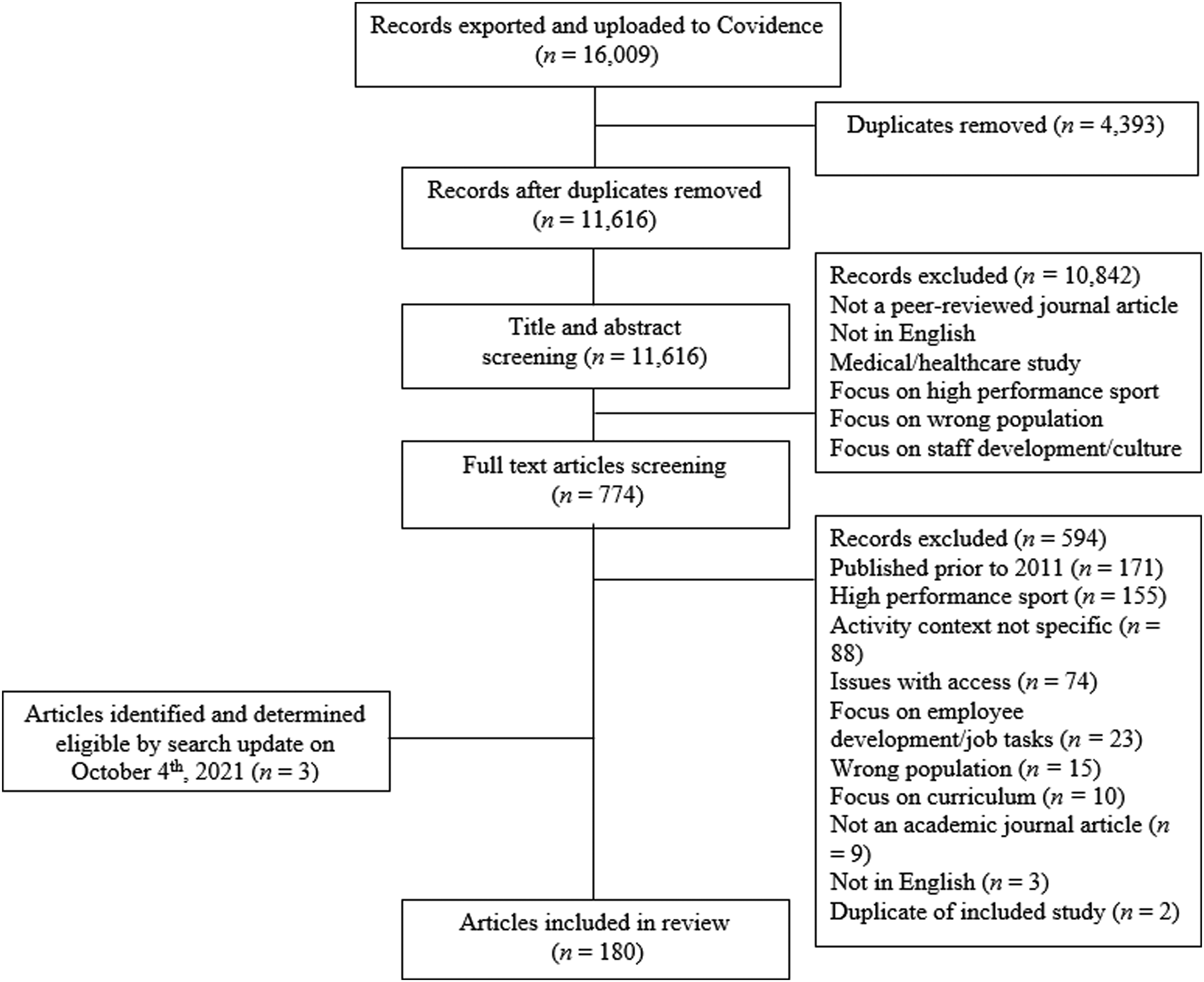
PRIMA flow chart.
Study Selection
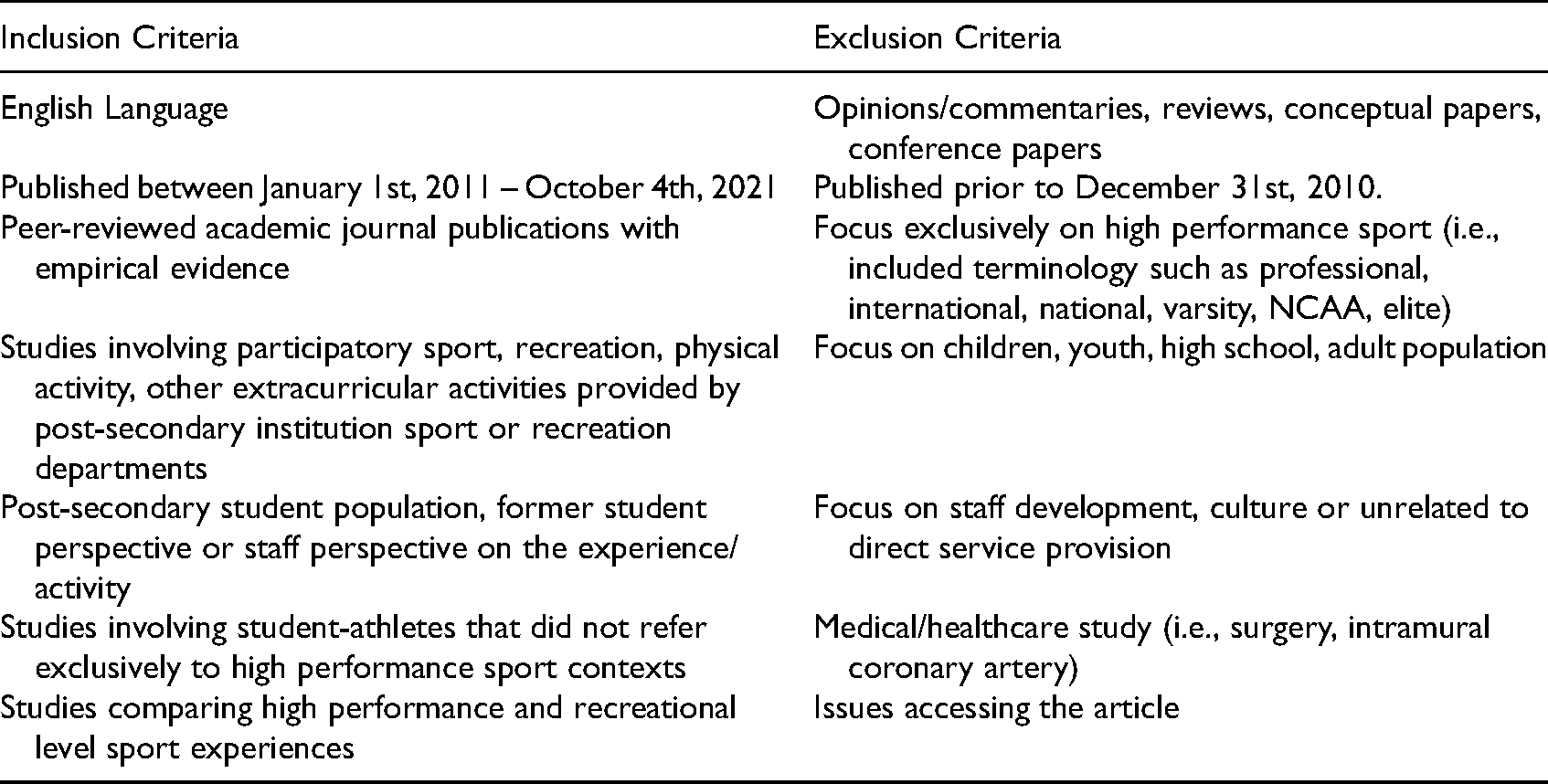
Inclusion and exclusion criteria were established that related to campus recreation participatory experiences provided by postsecondary institutions (see Table 1). Using the established criteria, the title and abstract of each study were then screened to remove irrelevant studies. During the title and abstract screening phase, studies were included if they did not explicitly meet the exclusion criteria. For example, studies that referred to the sample population as student athletes, but did not explicitly state varsity, NCAA or elite were included at this stage. All sources that remained after the title and abstract screening phase were then retrieved for full text screening. The full text of each study was then examined to determine if it should be included in the final study selection. During the full text stage, only studies that were published after January 1st, 2011 were included to avoid duplication and allow for comparisons with the Sweeney and Barcelona (2012) review. Through the full text screening phase, the reasons for exclusion were recorded (see Figure 1 for PRISMA flow chart).
Title and Abstract Inclusion and Exclusion Criteria.
Data Extraction and Analysis
After the study selection was completed, data from each study was extracted that pertained to: first author, year, country, journal, purpose, theory or key constructs, methodology, methods, scales/analysis, sample size, sample characteristics, number of institutions the study was carried out at, activity context, key findings and future research.
Deductive coding was then used to categorize studies into themes by similar topics and theoretical perspectives. Four themes were used that related to Funk’s (2017) conceptualization of sport experiences: sociodemographic/participation trends, antecedents to participation, interactions and outcomes of participation. Specifically, antecedents to participation pertained to studies that examined preconceived thoughts, feelings or emotions that lead up to participation (i.e., motivations or constraints). Interactions pertained to participants’ perception of an interaction that took place before, during or after a participatory experience. Outcomes pertained to subjective or objective measures associated with participation (i.e., sense of community, student retention). Sociodemographic/participation trends included studies that investigated relationships between sociodemographic variables and participation trends. Like previous reviews, this process used a nonexclusive scheme to ensure the intent of each study was being captured (Barcelona & Quinn, 2011; Sweeney & Barcelona, 2012). Once the author completed extracting and charting all sources, a subsequent check was completed to confirm accuracy and completeness of all extracted data.
Results
Selection of Sources
A total of 16,009 articles were uploaded to the Covidence platform. The platform removed 4,396 duplicates and the inclusion/exclusion criteria was applied to 11,616 sources during title and abstract screening phase. After the title and abstract screening phase, 774 articles remained for full text screening. The full text screening resulted in the removal of 594 articles. In total, the systematic search and screening process identified 180 peer reviewed empirical articles to be included in the review (see Figure 1 for PRIMSA flow chart).
Source Characteristics
The trend line depicted in Figure 2 illustrates that the number of studies published each year has generally increased between 2011 and 2021. It was found that the majority of studies were conducted in the United States (n = 127, 70.3%), followed by Canada (n = 14, 7.5%), the United Kingdom (n = 9, 5.0%), Turkey (n = 4, 2.2%) and Germany (n = 3, 1.7%). There were also 19 countries where only one or two studies were conducted (n = 24, 13.3%). The Recreational Sports Journal published almost half (n = 81, 45.0%) of the studies, followed by the Journal of American College Health (n = 7, 3.9%), and the Journal of Human Sport & Exercise; Sport, Education and Society; and the International Journal of Sport Management, Recreation & Tourism each published 3 studies (n = 1.7%). Most studies were published in journals related to sport, recreation or leisure (n = 121, 67.2%).
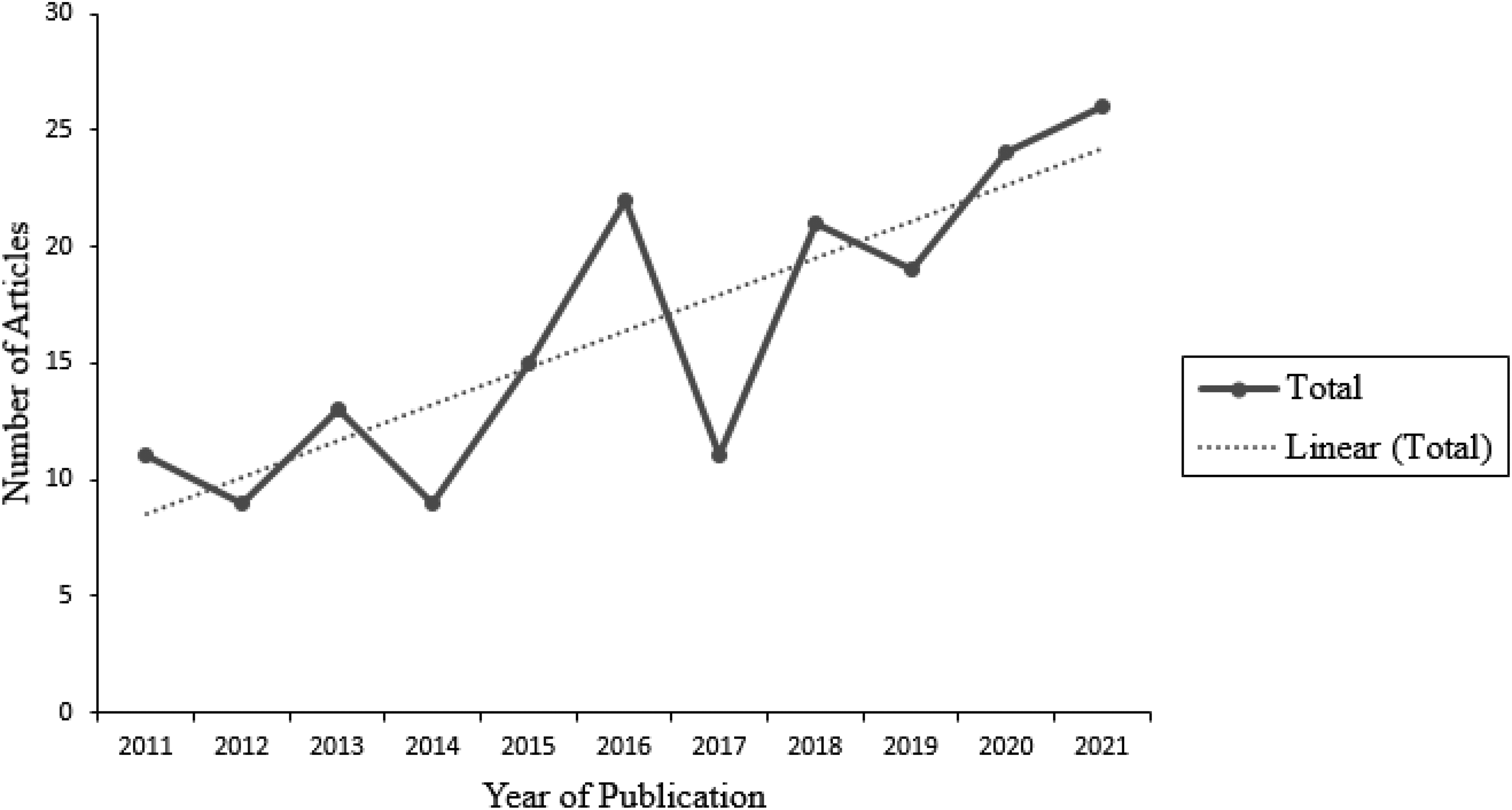
Number of published articles each year.
Most studies were conducted at single postsecondary institutions (n = 134, 74%) where the sample derived consisted primarily of members of that institution. Many studies (n = 62, 34.4%) acknowledged this to be a limitation and recommended that future research should capture larger and more diverse sample sizes at other institutions or geographic regions. Meanwhile, only 27 (15.0%) studies were conducted at multiple institutions and it could not be determined how many institutions were involved in 19 (10.6%) studies.
General campus recreation participation experiences were the context of 79 studies (43.9%). More specific programs or contexts included intramural sport (n = 41, 22.8%), sport clubs (n = 29, 16.1%), inclusive programing (n = 18, 10.0%), and others (see Table 2).
Program Area Focus.
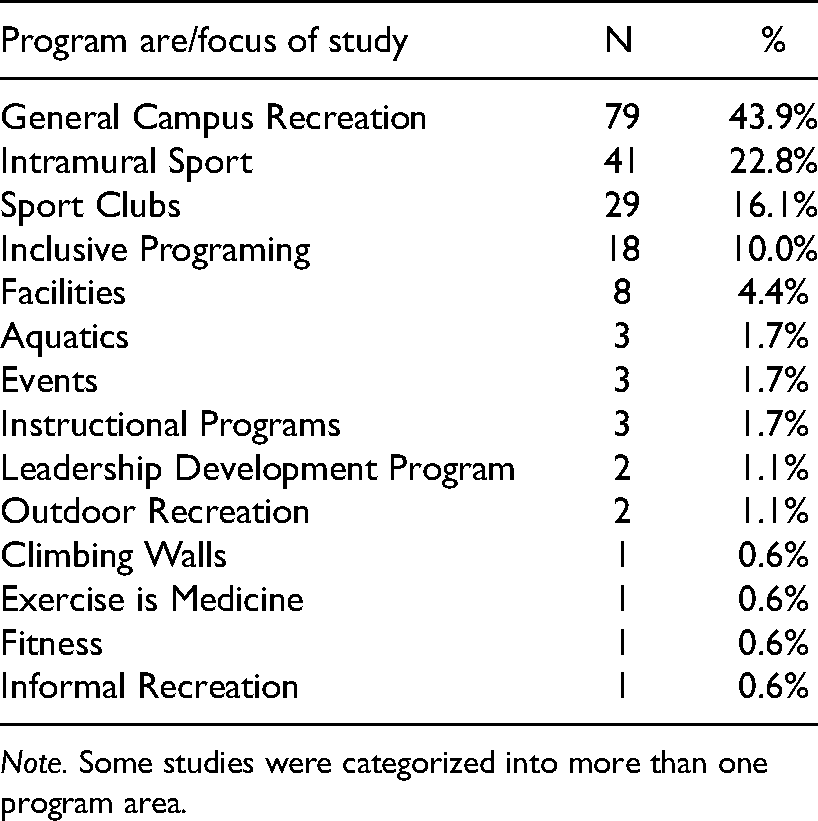
Note. Some studies were categorized into more than one program area.
Research Methodology
The majority (n = 128, 71.1%) of studies identified by this review used quantitative methods. The total sample population of these studies was 408,103 (M = 3,264.82, SD = 11,053.76) and data was collected through cross sectional (n = 87), longitudinal (n = 14), pre and post test (n = 11), matching pair samples (n = 9) secondary data (n = 5), minute by minute particle testing (n = 1) and unspecified (n = 1) study designs. Of these, 89 used at least one established scale or instrument, 36 created their own instruments and five used only secondary behavioral measures with no other accompanying instrument.
There were 30 (16.7%) studies that used qualitative methods. The total sample population of qualitative studies was 759 (M = 27.11, SD = 33.23) and data was collected through open ended interviews (n = 13), focus groups (n = 5), observation (n = 1), cross sectional qualitative surveys (n = 1) and through another qualitative method to supplement open ended interviews (n = 13). There were also 22 (12.2%) mixed methods studies which the total sample population was 10,244 (M = 539.16, SD = 1,345.85).
Use of Theory
Most (n = 126, 69.2%) studies identified a theory, framework or key constructs to inform the study, or identified a theoretical contribution in the discussion. The most frequently cited was the student involvement theory (Astin, 1984), followed by leisure constraints theory (Crawford et al., 1991), student departure model (Tinto, 1993), self determination theory (Ryan & Deci, 2000), and the achievement goal theory (LeUnes, 2008). Table 3 depicts the theoretical perspectives or key constructs that were used more than three times. Meanwhile, almost one third (n = 54, 29.7%) of studies were considered atheoretical as they did not identify a theory or key constructs that guided the research.
Theories or Primary Constructs Utilized.
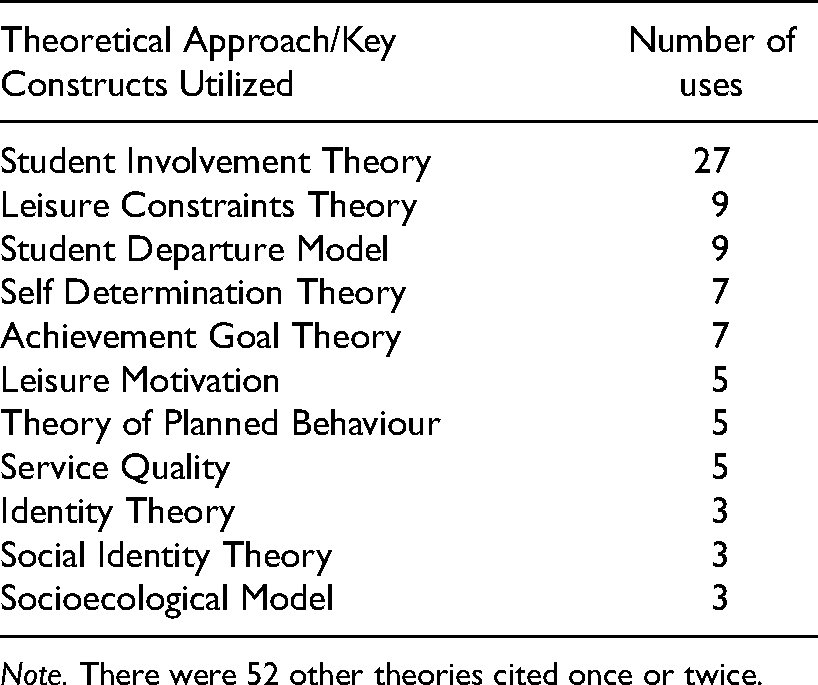
Note. There were 52 other theories cited once or twice.
Themes
The number of studies that pertained to each overarching theme were as follows: sociodemographic/participation trends (n = 52), antecedents to participation (n = 62), interactions (n = 56), and outcomes of participation (n = 100). These themes are discussed below.
Sociodemographic/Participation Trends
The sociodemographic/participation trends theme included studies that focused on the sociodemographic characteristics of participants and the various activities that subpopulation groups do or do not participate in. For example, studies examined participation among various ethnic groups, that included broadly defined international students (e.g., Allen & Lyons, 2019; Buzzelli, 2016, Guo & Ross, 2014) and more specific groups like African American students (e.g., Barney et al., 2019; Patterson & Dorwart, 2019), international Asian students (e.g., Malette & Ismailzai, 2020). Studies also examined complexities related to gender such participation differences between man and woman (e.g., Chu & Zhang, 2018; Cooper et al., 2012; Guan et al., 2020), the LGTBQ community (e.g., Anderson et al., 2020; Patchett & Foster, 2015; Phipps, 2021) and the relationship between gender and the provision of programing (e.g., McDowell et al., 2016; Schneider et al., 2014; Soler et al., 2017). Studies also investigated the experiences of students with physical disabilities (e.g., Devine, 2016; Dysterheft et al., 2018; McKay et al., 2019), the design of adaptive programing (e.g., Fines & Block, 2021; Gillies & Dupuis, 2013; Shapiro et al., 2020) and the prevalence of programing for vulnerable populations (e.g., Horacek et al., 2014; Zuest et al., 2021). Some scholars also examined participation trends among students registered in specific educational programs (e.g., Gathman et al., 2017; Slade & Kies, 2015), differences between undergraduate and graduate students (e.g., Henchy, 2013) and participation among first year students (e.g., Chu & Zhang, 2018; Deng et al., 2021; Helms & Moiseichik, 2018).
Antecedents to Participation
The antecedents to participation theme included studies that focused on participant thoughts, feelings or emotions prior to participation, and the navigation of these leading up to participation. For example, many studies focused on participation constraints such as time and energy, school (e.g., Barney et al., 2019; Diehl et al., 2018; Guo & Ross, 2014; Lerner et al., 2011), required commitment (e.g., St Quinton & Brunton, 2018), skill, competition (e.g., Brunton & St Quinton, 2021; Rundio & Bunning, 2021; Selvaratnam et al., 2021; Shaikh et al., 2018), the equipment, built environment (e.g., Henchy, 2011; Martin & Griffiths, 2016; Spivey & Hritz, 2013) and activity alternatives (e.g., Stankowski et al., 2017). To combat constraints, studies identified participation enablers such as peers (e.g., Webb & Forrester, 2016), the breadth and access to opportunities (e.g., Brunton & St Quinton, 2021; Lower et al., 2015; Snyder et al., 2017; Zuest et al., 2021), financial resources (e.g., Fricke et al., 2018; Wood & Danylchuk, 2015), self efficacy (e.g., Lower-Hoppe et al., 2021) and previous experience (Lyons et al., 2018. Studies also explored the motivational factors of participation such as socialization/peer support, competency/mastery (e.g., Anderson & Ramos, 2018; Beggs et al., 2014; Carter-Francique, 2011; Deng et al., 2021; Ramos et al., 2018), appearance (e.g., Cooper et al., 2012; Diehl et al., 2018), goal achievement (e.g., Lower-Hoppe et al., 2021; Snyder et al., 2017), entertainment/stimulation (e.g., Munusturalar et al., 2015; Shapiro et al., 2020). A few studies also investigated communication and marketing practices like information dissemination (e.g., Lee et al., 2020), the use of social media (e.g., Achen, 2015), the internet and word of mouth (e.g., Bilos & Galic, 2016), promotional items (e.g., Ciuffo et al., 2014), advertising and branding (e.g., Mills & Williams, 2016), and the campus recreation facility as an institutional recruitment tool (e.g., Weaver et al., 2017).
Interactions
Interactions was a theme that included studies pertaining to encounters with objects, the postsecondary institution, the campus recreation department/facility, or others involved in the activity. For example, many studies investigated the perception of campus recreation facilities such as the perceived adequacy (e.g., Horacek et al., 2014; Zubiaur et al., 2021), level of comfort while inside (e.g., Wilson et al., 2021), proximity to accommodation and transportation (e.g., Rahman et al., 2020) and service quality (e.g., Makubuya et al., 2020; Martinez et al., 2019; Wilson & Millar, 2021). Studies also investigated interactions with digital mediums such as social media (e.g., Achen, 2015) and digital tracking systems (e.g., Shutova et al., 2021). Another topic of interest was the interactions between students while participating in activities or at facilities (e.g., Warner & Dixon, 2013; Wilson et al., 2020). One study investigated air quality using minute by minute particle testing (e.g., Zajchowski et al., 2020).
Outcomes of Participation
The outcomes of participation included studies that investigated subjective or objective measures that were associated with participation. These investigated outcomes that occurred at the time of participation (i.e., during episodes), or indirectly after participation had concluded (i.e., between or after episodes) and outcomes could be considered either positive or negative. For example, many studies explored relationships between participation and various aspects of wellbeing such as physical fitness (e.g., Chrismas et al., 2019), socialization (e.g., Czekanski & Lower, 2019; Elkins et al., 2011), stress relief (e.g., Chang et al., 2019), happiness (e.g., Eubank & DeVita, 2021), health and wellness (e.g., Bachert et al., 2021; Forrester, 2015). Studies also investigated how participation led to the development of social capital (e.g., deBrun et al., 2021), leadership (e.g., Dugan et al., 2015), higher education learning outcomes (e.g., Flosdorf et al., 2016) and other workplace competencies (e.g., Brunton et al., 2020; Buzzelli, 2016). The association between participation and various measures of academic success was also investigated using grade point average (e.g., Brock et al., 2015; Chu & Zhang, 2018), student retention (e.g., Forrester et al., 2018) and degree completion (e.g., Byun et al., 2012). Some also investigated the associations between campus recreation participation and gambling (e.g., Martin et al., 2016) or alcohol consumption (e.g., Andes et al., 2012; Barry et al., 2015).
Discussion
The review systematically gathered and reviewed literature pertaining to participatory sport, recreation and physical activity experiences provided by postsecondary institutions and categorized them according to themes related to Funk’s (2017) sport experience framework. Along with themes, the results described the research methodologies, use of theory, and indicate that the amount of research being published from this context is increasing.
The review revealed that most studies published between 2011 to 2021 identified a theory, framework or key constructs to inform the research, or at least referenced a theoretical contribution in the discussion. This is important as theory has been referred to as “the currency of our scholarly realm” (Corley & Gioia, 2011, p.12). When discussing the development of theory in sport management, Doherty (2013) argued that “the strength of an academic discipline is its distinct body of knowledge” (p. 6). The Sweeney and Barcelona (2012) review identified 2006 as a point of academic maturation where the number of empirical papers published each year increased. Although the application of theory in research in this context appears to be increasing, the prevalence of atheoretical research may reflect more applied, pragmatic, research where scholars and practitioners work together to address institution-specific problems. Pragmatic research is also important and Corley and Gioia (2011) advocate for scholars to conduct research that has both a practical and theoretical utility so that knowledge is concurrently generated for academia and disseminated into practice. The increased use of theory found by this review is encouraging and it is recommended that scholars seek utility in both theoretical and practical contributions when conducting future research in this context.
Like the previous review, the most prominent theory remains to be the student involvement theory (Astin, 1984) likely due to its focus on higher education contexts (Sweeney & Barcelona, 2012). This may seem like a surprise considering that most of the research is published in sport, recreation and leisure related journals. However, scholars have found that sport-related research is noticeably absent in higher education journals (Foster et al., 2021). There has also been a greater number of theories adopted from outside higher education that were not identified in the previous review. For example, leisure motivation, service quality, identity theory and the socioecological model were not identified in the previous review (cf. Sweeney & Barcelona, 2012). The adoption of theory from outside the higher education discipline is important because borrowing theory from alternative academic disciplines can help to adapt, extend and generate new theories, while also determining applicability from one context to another (Doherty, 2013). Campus recreation sport experiences by nature are multi-disciplinary as they take place in the higher education context, however, are also related to other social science disciplines such as sport management, physical education and leisure. As such, scholars should continue to adopt theories from various disciplines to determine their applicability to the campus recreation context.
Also like the previous review, most studies identified by this review used various quantitative methods to collect data (cf. Sweeney & Barcelona, 2012). However, within this body of literature, some constructs were not always measured through consistent methods of data collection and some scholars did not use established scales. To measure grade point average and campus recreation participation, for example, scholars have used cross sectional surveys (e.g., Mayers et al., 2017) or obtained secondary data from the campus recreation software or institution’s office of the registrar (McElveen & Rossow, 2014; Zegre et al., 2022). Using different measures to study the same construct can strengthen the findings of a particular body of work (Newman et al., 2013), however, it can also negatively affect the validity and reliability of the body of literature that has concentrated a particular construct (Babbie, 2020). A study found by this review (Standish & Umbach, 2019) highlighted this measurement issues as they found a nonresponse bias when they comparing both subjective and objective collected data for campus recreation facility usage, sport participation (i.e., intramural or club) and grade point average. Scholars have identified this and have started to refine issues with measuring facility usage (Zegre et al., 2022), however additional work should be conducted to address measurement issues.
The review found that the predominant theme of research was outcomes of participation. This demonstrates that scholars have begun to address Sweeney and Barcelona’s (2012) call to shift the research emphasis from motivations, facilitators and constraints (i.e., antecedents) to outcomes and impacts. The shift aligns with the “benefits movement” that emphasizes outcome-oriented program evaluations (Ellis et al., 2002) and can help campus recreation professionals better communicate and position the service within postsecondary institutions (Weese, 2010). The current review also corroborated Sweeney and Barcelona's (2012) noted deficiency in the number of studies that investigated program quality, as it was the least prevalent topic of research. Program quality therefore remains to be an area for future investigation especially given the association between interactions (i.e., service quality) and outcomes (Denison, 2013).
The most frequently cited limitation identified by this review was that research was being conducted single institutions limiting the generalizability. This limitation is further demonstrated as research following similar methods has found conflicting results (e.g., Forrester et al., 2018; McElveen & Ibele, 2019; Slade & Kies, 2015). The conflicting results points to the contextual differences of sport, recreation and physical activity offerings between institutions, campus recreation departments or activities. Future scholars should therefore conduct research at multiple institutions and seek to understand contextual similarities and differences. This is particularly important for determining the underlying mechanisms contributing to outcomes of participation and from a practical standpoint, may help institutions when determining where to allocate resources to obtain the most “return on investment”.
There are some limitations that should be acknowledged. The review was conducted by a single author, and so, including a second author through the quality appraisal steps would improve the rigor and reduce potential bias. Further, only three databases were searched and future research could expand the search to include additional databases. Finally, aligning with rapid review methodology, a thorough assessment of rigor was also beyond the scope of this paper (Grant & Booth, 2009). To address these limitations, future scholars should consider using systematic or scoping review designs (Grant & Booth, 2009. Despite these limitations, the review still addressed the current gap in the literature.
To conclude, this review described the various theories, and methods used by scholars who have investigated recreation and sport-based consumer experiences among postsecondary populations. The review was also the first to address a notable gap (cf. Sweeney & Barcelona, 2012) by systematically searching databases and identifying literature in multiple journals to depict a clearer understanding of the body of literature.
Footnotes
Declaration of Conflicting Interests
The author(s) declared no potential conflicts of interest with respect to the research, authorship, and/or publication of this article.
Funding
The author(s) received no financial support for the research, authorship, and/or publication of this article
