



Abstract
The restructuring of gender identities and shifting social expectations of fathers have resulted in increased interest in understanding contemporary discourses about involved fathering. This article contributes to that scholarship by providing a narrative analysis about men’s experiences with fatherhood in heterosexual relationships. Drawing from a photovoice study with 16 fathers, we report three discrete but interrelated narratives. The first narrative Sacrifices in being a provider featured fathers’ diverse alignments to traditional masculinities as well as investments in contemporary involved fathering. The second narrative Balance in caring encompassed fathers’ efforts for adapting to ever-changing parenting responsibilities, and strategies for preserving intimate partnerships and a sense of self amid parenting demands. The final theme, Liberation of contemporary father identities, described participants’ reflexive identity [re]construction of masculinity in experiencing fatherhood. These findings highlight a matrix of modern-day fathering expectations and fathers’ relational practices in navigating shifting gender relations and masculinities.
Keywords
Introduction
Fatherhood can be an immensely rewarding journey for many men, benefiting their self-worth and the quality of their intimate partnerships. It represents a profound identity transition that is often marked by competing challenges, constant needs for adjustments, and mental health challenges due to fear, stress, and lack of support, which can directly impact the wellbeing of their children and partners (Baldwin et al., 2018; Isacco et al., 2016). Women’s increased involvement in the paid labor market, along with political, economic, and social reforms and transformations over the past decades, has resulted in the restructuring of gender identities and shifting expectations of fathers, including egalitarian splits in child care and domestic labor (Crespi & Ruspini, 2015). Such focus on change also highlights normative fathering as cultural and ideological constructs, an increasingly morally inscribed terrain, as well as the agential negotiation and reconstruction across individual families in shaping contemporary fathering discourses (Beglaubter, 2017; Miller, 2017). Over the past two decades, there is a notable increased interest in understanding contemporary fatherhood, especially in regard to the political and cultural discourse of responsible and involved fathering and its implications for gender relations and changing masculinities (Kotelchuck, 2022). This article contributes to that scholarship by exploring men’s narratives about their experiences with fatherhood in heterosexual relationships.
Theorizing Men’s Fathering Experiences
Fathers’ involvement in parenting is intricately connected to masculinities wherein Connell’s (2005) framework has been applied to elucidate men’s fathering experiences. Specifically, hegemonic masculinities (Connell & Messerschmidt, 2005) have provided a centerpiece for interpreting the prevailing alignments of many fathers to breadwinner roles (Carlson et al., 2015; Nayak, 2023). Petts et al. (2018) assert that, despite contemporary fatherhood ideals, hegemonic masculinities continue to exert powerful influence in guiding and regulating gendered fathering practices. Herein, fathers’ visionary approaches to involved fatherhood can clash with breadwinner ideals and performances that are structurally normed (Miller, 2011) and/or co-constructed with their partners (Buchler et al., 2017). The entrenched masculine norms for men to enact particular forms of hegemonic masculinity, including protector roles and the embodiment of independence and stoicism, amid explicitly rejecting antithetical femininities, can challenge men’s full embrace of contemporary fatherhood (Hunter et al., 2017). These internal tensions can cause frustration, isolation, and increased mental health risks for depression and anxiety with role stigma affecting fathers’ self-esteem and cognitive well-being (Pedersen et al., 2021).
Aiming to account for some men’s shifted practices and identities in fatherhood, particularly in Scandinavia and North America, a wave of research over the past decade has examined fathers’ construction of nondominant masculinities in negotiating gender roles and expectations. Most notable is the utilization of caring masculinity, a progressive form of masculinity that describes men’s rejection of and distance from traditional masculine norms and embracing of caring values (Elliott, 2016). Caring masculinities have often been positioned as arising from the increase in fathers being primary caregivers and mothers as main breadwinners and underline the uptake and integration of caring, interdependence, emotions, and other femininities into fathering identities (Lee & Lee, 2018). Being deeply immersed in parenting can facilitate learning, adaptability, and the development of new cognitive and emotional skills (Alemann et al., 2020) with research indicating that fathers have increased appreciation for the unpaid labor associated with nurturing and caring, valuing emotional involvement and communication (Takács, 2020), and developing caring masculinities (Beglaubter, 2021; Nayak, 2023). These promising outcomes have led some researchers to propose caring masculinities as a critical acknowledgment of men’s engagement with contemporary gender work, which destabilizes dominant masculine norms (Jordan, 2020) and makes available valuable identity alternatives (Brandth & Kvande, 2018). Involved and nurturing fatherhood is closely linked to better emotional well-being, as a result of feelings of fulfillment, closer family bonds, and greater life satisfaction (Alemann et al., 2020). The application of caring masculinities, however, has tended to focus on reporting the experiences of fathers who take paternity leave (Beglaubter, 2021) and/or primary caregivers (Lee & Lee, 2018), highlighting the need to understand how fathers juggle participation in formal and informal economies, which might lead to elevated cognitive demands and fatherhood role strain (Watkins et al., 2024).
Although originally developed to describe the identity construction of privileged men that integrates marginalized gender expressions (Bridges, 2014), hybrid masculinities have also been recently applied to explain men’s fathering practices. Taking a critical lens, the framework of hybrid masculinities has been employed to explicate men’s masculine performances wherein specific elements of subordinate masculinities are incorporated and conceded to maintaining rather than disrupting the traditional gendered divisions of labor (Carian & Abromaviciute, 2023). Hybrid fatherhood—characterized by progressive masculinities that claim to integrate elements of femininity, such as emotional engagement—accepts and relies on (rather than challenges) the distinctions between motherhood and fatherhood and dominant and subordinate masculinities as a discursive mechanism to reinforce the symbolic boundaries of gender (Jordan, 2020; Randles, 2018). Such critique highlights the gaps between intentions and practices in contemporary fatherhood (Borgkvist et al., 2020), whereby Eisen and Yamashita (2019) suggest that some fathers intentionally borrow and appropriate feminine states to socially distance themselves from traditional masculinities. Hunter et al. (2017) similarly caution that the rise of involved fathering and men being primary caregivers for their children should not be seen as entirely new masculinities but rather a broadening of hegemonic masculinities.
Much of the previous work, as illustrated above, has tended to center particular masculine forms and associated fathering practices, and further work is needed to add nuance to the phenomenology of fathering and gendered identities, which reach beyond masculine typologies (Coles et al., 2018; Dolan, 2014; Hauser, 2015). Despite empirical and gender theory advancements in the fatherhood and masculinities literature, narrative analyses are conspicuously absent for relationally explaining how fathers situate themselves within contemporary fathering practices, and negotiate and co-construct roles and expectations with partners within broader socially constructed idealized heterosexual gender relations. Addressing these knowledge gaps, the current article answers the research question, What are the storylines men use to explain their experiences with fatherhood in heterosexual relationships? Utilizing narrative analysis, we specifically examined how men relationally positioned themselves as fathers and partners.
Methodology
Photovoice methods (Wang & Burris, 1997) and narrative inquiry (Clandinin & Caine, 2013) were employed to facilitate and interpret participants’ story-telling wherein they were asked to submit and narrate photographs to share their intimate partnership and fathering experiences. Applying the participatory-action research (PAR) tenets of photovoice and focusing on how and why participants’ narratives were presented (Smith & Sparkes, 2006), men’s accounts of their experiences with fatherhood were understood as reflexive and analyzed through the lens of intentions, timelines, and interactions.
Recruitment, Participants, and Data Collection
The current article and findings are drawn from 16 fathers, a sub-cohort harvested from a larger photovoice study (Oliffe et al., 2023) that examined men’s experiences of, and perspectives about, intimate partner relationships. Following university ethics approval, participants were recruited online via social media with the following inclusion criteria: self-identified as an English-speaking man, 19 to 44 years old, and previously or currently in an intimate partner relationship. Eligible participants were followed up with by the project manager and invited to complete Qualtrics-hosted consent and submit 5–10 photographs to illustrate their intimate partner relationship experiences, ahead of completing an individual Zoom photovoice interview with one of the six Canadian-based researchers (four men and two women). The sub-cohort of 16 fathers for the current article was identified by reviewing the transcripts of the 110 interviews from the larger study, and participants who self-identified as having children were included.
The 16 fathers self-identified as heterosexual and ranged in age from 32 to 43 years old (M = 36; SD = 3.4) (see Table 1—Participant Demographics). Almost half resided in Canada (n = 7; 44%), and most were partnered or married (n = 14; 88%) when interviewed. The interviews were completed between July and December 2022 and ranged in length from 63 to 150 minutes (M = 87; SD = 23.9). While the study focused on equitable and sustainable intimate partner relationships, interview questions including “How do you divide parenting and household responsibilities?” and “How do you keep the relationship fresh?” were asked to prompt participants to elaborate on their related experiences with fathering and intimate partner relationships. Audio-recorded interviews were transcribed verbatim, accuracy checked, labeled with researcher-assigned pseudonyms and uploaded to NVivo for coding.
Participant Demographics (n = 16).

Data Analysis
Guided by constructionist approaches to narrative analysis (Esin et al., 2014), two authors (N.G. and C.C.) reviewed the 16 transcripts with an emphasis on interpreting how and why participants shared their stories and lived experiences. Recognizing the simultaneous construction of meaning from participants in relation to speaking about their fathering practices, we aimed to answer the inductively derived research question, What are the storylines men use to explain their experiences with fatherhood in heterosexual relationships? Regarding steps for narrative analyses, written summaries of photovoice interviews aided researchers’ familiarity with the participants’ relationship and fathering contexts. Transcripts were initially coded to fracture the data to distill the specific fathering practices and milestones of participants. Through regular researcher meetings and discussions, the initial codes were subsumed and refined into storyline categories inclusive of metaphors, interactions, and evolutions in participants’ experiences. In the last stage—theoretical coding—recurring narratives from the refined categories were clustered, integrating masculinity frameworks to conceptually advance the narrative findings.
Three discrete but interrelated narratives capturing participants’ experiences with fatherhood were derived. The first narrative Sacrifices in being a provider featured fathers’ diverse alignments to traditional masculinities as well as investments in contemporary involved fathering. The second narrative Balance in caring encompassed fathers’ efforts for adapting to ever-changing parenting responsibilities and strategies for preserving intimate partnerships and a sense of self amid parenting demands. The final theme, Liberation of contemporary father identities described participants’ reflexive identity [re]construction of masculinity in transitioning to fatherhood. While the first two narratives focused on participants’ active doing of fathering (i.e., fulfilling responsibilities), the last storyline emphasized their reflections on fatherhood (i.e., shifted perspectives on masculinities). The three narratives prevailed across men’s fathering accounts; however, with an international sample of men who resided and engaged in fathering in diverse structural and social environments, relevant contexts for specific narratives were also discussed. For each of the three narrative findings, we included illustrative quotes and one participant-submitted photograph.
Results
Sacrifices in Being a Provider
Across the interviews, men’s sacrifices in being a provider narratives permeated and punctuated their accounts of intimate partner relationships that had transitioned to fatherhood. Illuminating the growing up and taking responsibility transition, participants commented on identity shifts from being a couple to being co-parents. Harper, a 32-year-old Australian man who had a 20-month-old son and was expecting a second child with his partner of 3 years, elaborated:
Parenting has to be done before anything else can be done . . . with your first kid, you’re constantly worried that everything that you do is going to ruin them or kill them . . . accepting that spontaneity that you have when you’re in your 20s in your pistol time, is not going to happen. You’re on a different rhythm, and you’ve just got to live with it.
Positioning the first pregnancy as accidental, which initially “scared the shit out of [him],” Harper said everything “turned out so well” that he and his partner decided to “go back for more.” There were, however, concessions in Harper’s sacrifice narrative wherein he left behind a care-free spontaneous lifestyle and consciously worked through the physical, mental, and financial challenges with becoming a father. Similarly, many participants reorganized their life priorities, making key decisions about their adjustments, particularly related to careers as a means to adequately fulfill provider roles informed by traditional masculine norms.
A few participants strongly resonated with being the sole or main breadwinner in the family. For example, Mason, a 32-year-old American father who had a 1-year-old daughter with his partner of 5 years, characterized his role as: “Mine is to make provisions, in terms of the finances, to pay the rent, to pay for the groceries, to pay for the gas,” contrasting his partner’s work as “take(ing) care of me, the home and the child.” Mason described the arrangement as “agreed to” even “liked” by his partner, who was working before they had the baby and transitioned to being a stay-at-home mom. Although he later noted his partner lacked the “strength and capability” to provide in the way he could, positioning him taking on the provider (i.e., more challenging) role as making a sacrifice to protect his partner from the competitive job market and career progressions. Mason considered his sacrifice as a “healthy” way of “managing the relationship” where he and his partner “both know [their] places, know [their] responsibilities,” with efficiency claimed in those public-private divisions of labor.
The navigation of such traditional provider role in fatherhood was, however, troubled when there was discord about partner’s role expectations. Theo, a 36-year-old self-employed Canadian health care professional, who shared two children with his now ex-wife, discussed a shift in power dynamics in the relationship after receiving financial aid from his in-laws when the second child was born:
As a young couple, we wouldn’t be able to buy our place in East Van[couver] if it wasn’t for her parents . . . her parents just came up with an insane amount of money . . . there was no sitting down, no agreement . . . it was just done and that’s when I felt there was entitlement . . . when it became very prominent to me that her family matters more than my family.
Amid the indebtedness to his in-laws for the down payment on his family’s property, Theo felt the emasculation for falling short of his provider ideals. The loss of control and lack of autonomy in the decision-making was also marginalizing, and Theo felt pressured to have a home he could not independently afford, a tension he coped with by throwing himself into work and his business, explaining: “I wanted to be the provider and cover and pay off our debts and focus on getting us into a stress-free environment.” In his attempt to reclaim his sole provider role, Theo was completely blind-sided by his partner’s dissatisfaction regarding his lack of involvement as a parent, saying:
I relied heavily on my ex to do the parenting or do the scheduling and cleaning . . . I believe that’s when she felt like a single parent . . . I thought I was protecting my ex when I was further distancing myself from her.
While acknowledging his failure to meet his wife’s expectations, Theo suggested he had little choice and argued his sacrifices of stoically being the family’s provider and protector—working as a frontline health worker during COVID-19 to manage his business—were underappreciated by his partner. He detailed feeling unsupported navigating life challenges when he lost his father to suicide during the pandemic. Smoking cannabis for some respite, Theo said he “felt so betrayed” by his wife’s decision to separate. Such moral divergence—separately making sacrifices for the family, claiming injustice and expecting (and needing) more from the other with little communication—led to growing distance and resentments, which eventually ended their marriage.
Contrasting these participants’ alignments to traditional breadwinner fathering roles, most men were co-providers and viewed being an involved father as a contemporary masculine ideal for fathering. They strategically chose and/or negotiated paid work and careers that enabled co-provider responsibilities while affirming work–life balance. For example, Leo, a 39-year-old Canadian father who moved to China with his Chinese partner in a bid for both of them securing academic positions in the same university, detailed their motivation as jointly shared:
We both invested a ton of time in our PhDs, and we both wanted the opportunity to further our careers together. And in Canada, that’s almost impossible . . . It’s not just can we do the career, we also want to do a career that doesn’t take you away from your kids . . . it’s quality of life, we weren’t willing to be professors and sacrifice [our son’s] childhood for it.
Adjoined career aspirations and parenting goals, Leo reflected on their fortune rhetorically asking “what other jobs do I get to do where I can both help my wife and connect with my boy and be a university professor, that’s absolutely phenomenal.” Nonetheless, Leo submitted Figure 1 titled Moving for opportunities—sacrifices, in narrating the cost of moving to achieve the work–life balance they wanted:
It’s intimidating, especially for a kid from small town, Saskatchewan. This is what I looked at, when I first came. I couldn’t speak to anyone, not really, I knew a few words, but that’s about it . . . I will explain to people who asked that I basically acted like a rat for the first little while . . . I was running around, not wanting to talk to anyone, frankly because I couldn’t. Going into coffee shops and doing a lot of pointing and learning how to pay with Chinese money, figure out what good prices were. This was China for me for a long time and it was really narrow.

Moving for Opportunities—Sacrifices
Capturing the spanning concrete hardness in a foreign city dense with high-rise buildings and small apartment living spaces, Leo deeply contrasted his prior life growing up in the sprawling Canadian prairies. Acknowledging the isolating effects and sometimes excruciating transition pangs, Leo chronicled his sacrifices as worth it, with both he and his partner securing tenure, and comfortably providing for and actively co-parenting their son.
These relational transitions were often longitudinal and required continued adjustments. Arthur, a 39-year-old Scottish father who had a son with his wife of 10 years, recalled a specific period of time when he was the main caregiver for their young son and the family breadwinner while his partner was finishing her PhD. Complicating this, Arthur was furthering his own education (i.e., completing his master’s and applying for a PhD) to better his job prospects. He explained how these challenges eventually wore him down:
I wouldn’t go as far as to call it a breakdown, but I was definitely getting there . . . the doctor put me on cognitive behavioural therapy, I was put on a course for that . . . that was a point for me where I was doing too much . . . I just got to the stage I kind of cracked.
Arthur went on to elaborate the role of his partner: “She was really supportive, she was the one who told me to go to the doctor.” What followed was their joint compromise for him to reduce hours of paid work amid recognizing and rationalizing that “we won’t have as much money, but we just need to deal with that.” Arthur’s disclosures about “slowing down a bit . . . being able to say ‘I’m worried and I’m feeling stressful’” were brokered by his partner’s call (and permission) for him to prioritize his mental health over traditional breadwinner roles.
In summary, the sacrifices in being a provider narratives were deeply and diversely embedded in gendered roles. Men’s sacrifices in navigating and meeting the relationally constructed fathering expectations were understood as a continuum of masculine performances ranging from steadfast alignments to traditional masculinities to varying investments in contemporary fathering.
Balance in Caring
The balance in caring narratives encompassed participants’ efforts for adapting to ever-present parenting responsibilities inclusive of domestic work for a balanced division of labor, and strategies for ensuring relationship quality and maintaining a sense of self. Participants who approximated fathering with being the primary financial provider were more likely to view their involvement in parenting as secondary to their partner’s. Mason, introduced earlier, said:
I understand being a homemaker can be hectic . . . so sometimes when I see that my partner has been taken up by most of the house chores, I can assist her in taking care of the child.
The assistance was seen by Mason as going out of his way to help his partner out when child care was needed, rather than being an active co-parent, to ensure other domestic labor demands were met. Interestingly, Patrick, a 36-year-old American father who had two daughters (one 4-year-old, one 9-month-old) with his wife of 12 years, explained it was made easier for him to be involved when they had their second daughter:
When we just had one, [my wife] certainly took on more of the responsibility . . . at best I’m carrying 10% of it. It just seemed like she was a little bit more natural with the child right away . . . And it’s been so great for me to be able to help more now that we have two . . . when [my wife] is putting the baby down to bed, I’m reading books with the four-year-old.
Although espousing a balance in caring, Patrick attributed his emergent involvement as delayed by defaulting to his partner as the primary caregiver to their first daughter when she was younger “she had been trained to go to mom . . . did not want anything other than mom” and suggested the increased workload “forced upon me to be more involved because we have two kids now.” He further characterized his role as the fun parent, “using the gifts that I’ve been given to have fun and be silly and play games,” emphasizing interaction and activity in contrast to labor intensive tasks such as meal preparation and bathing, and unwittingly reproducing the gendered division of parenting.
Most participants, however, made equal and/or equity-based efforts for balancing responsibilities as they resonated strongly with being an involved and hands-on father. Arthur, introduced earlier, discussed the situational contexts that led him to be the main caregiver for their adolescent son during COVID-19:
She [my partner] was working on COVID[-related policies], was very high pressure, she was working more than she ever has done before and I needed to compensate for that . . . I suspended my PhD for 10 months so I could homeschool [my son] . . . the thing is that his education is more important.
Prioritizing their son’s education revealed the relational reach of their equity efforts in that the configuration of practice was adjusted to what was evaluated as fair and just. His partner’s reduced availability for domesticities and parenting required Arthur to nimbly re-balance based on changing priorities. He further acknowledged that there were times in their 16-year-relationship when the roles were reversed, stating:
The idea of having a 50-50 split all the time is unrealistic and I think that’s actually a completely inequitable relationship because you’re not allowing each other time to need help and support.
Arthur eloquently differentiated equity (fairness where both partners justly contributed to and benefited from the relationship) from equality (quantifiable 50–50 count for all tasks), emphasizing flexibility and reciprocity needed for building and sustaining long-term relationships and effective parenting. For some participants, a more nuanced understanding of gender relations was narrated as an enlightenment garnered from fathering. William, a 41-year-old Canadian man who had two children (one 5-year-old and one 2-year-old) with his partner of 8 years, commented on the cognitive labor in their relationship:
I remember us talking about this really interesting research . . . it’s one thing to share household labor—which I do think we do quite equally—but then there’s this whole other element of cognitive labor . . . thinking about all the tasks that need to be done . . . I think that was a bit of an ah-ha moment where I realized, if my partner is the one always ordering things and shopping for things and thinking about what’s needed for school or meal prep, that’s a lot of work.
Bringing into focus the potential for invisible, assumed female domestic management and leadership, William positioned their joint parenting as an “evolution,” reliant on conscious awareness, communication, and negotiation wherein a balance in caring was both a process and product of involved fathering.
In their attempts to fulfill contemporary fatherhood expectations, participants identified the loss of couple and their alone time. Harper, introduced earlier, encapsulated this: “The time alone to ourselves, which is the one that gives the most, it’s sort of the prize at the top of the ladder in terms of what we strive for.” To sustain and enhance the relationship, many participants were adamant about maintaining self identities to avoid being fully consumed by their fathering role. Submitting Figure 2 titled Partner’s Hobbies, Harper detailed this self-identity work as joint equity-based goals after becoming parents:
We want our kids to grow up seeing their parents having lives and being people. It’s important for me for them to see me that way, but it’s especially important for me to make space for [my partner] to be able to do that. In terms of social expectations, when they [my kids] start being exposed to a bigger world of ideas, it’s going to be way easier for them to see their mother as just being a caregiver.

Partner’s Hobbies
Foregrounding the knitting basket Harper suggested his partner’s knitting was “emblematic that she can just do for any duration of time.” The framed photograph of their son in the background illustrated a balance in caring purposefully encompassing parenting responsibilities with a sense and nurturing of self. Saying he was “working really hard to make sure that [his partner] has time to do stuff for herself and not just be a parent,” Harper underscored his push against the traditional unequal societal expectations on parenting for mothers and fathers in this gender equity work. Relatedly, Jackson, a 34-year-old Canadian father who recently had a baby with his wife of 4 years, quipped in addressing the loss of couple time, “busy day, long commute, grab a bite to eat on the go, put the kids to bed and pass out in front of the TV, that’s not what we want our life to be.” Instead, Jackson and his partner ensured there was “space and routine” just for them as a couple to enjoy quality time and talk through challenges together in supporting each other and nourishing their relationship.
In addition, participants were conscious of the risks that fatiguing fathering demands posed for their mental health, and many men explicitly asserted the need for self-care to effectively show up for their families. For example, Chris, a 39-year-old Canadian man who had two daughters with his wife of 15 years, described the need to “keep a good internal measure,” elaborating:
My wife and kids were sick . . .pretty much for about two or three weeks . . . and so the caregiver role had fallen to me . . . then finally, it seemed like everyone was feeling better . . . I was sick of them being sick, that’s the way to put it . . . I phoned my brother and we went for a hike. Having that ability to have the physical space from them, from my wife, as well as that mental space away, really helped me clear my mind, decompress, reinvigorate myself. By doing that, I was able to be a better partner when I come back, be more engaged, a bit more relaxed.
Evident in Chris’s narrative was his mindfulness of the intricate balance between extensive family responsibilities, his mental health, the quality of the relationship, and his parenting. Taking the weight of acutely being the sole caregiver for his family demanded some respite, which Chris underlined as understood and encouraged by his wife. Relationally, Chris reciprocated, ensuring that his partner had her mental health breaks, “She has made it very clear for her mental health that she needs to have a house cleaner on the regular come by every week or two weeks . . . it’s a bit of a treat for herself.” While equality—both needing a break from the domesticities—was jointly achieved, equity was also diversely parceled to meet individual preferences and contexts.
The balance in caring narratives chronicled a range of relational practice configurations within the consistent pursuit of shared parenting intent on the preservation of self and the primary partnership as nourishing their capacity. Indeed, participants positioned caring as part of their identities, with most men relying on high-level communication, thoughtful exploration of gender dynamics, and adaptability to sustain the partnership, self, and family unit.
Liberation of Contemporary Father Identities
Most participants’ narratives about transitioning to fatherhood involved some growth garnered through their identity [re]construction. Frequently referencing they and me/us contrasts, many men declared their embodiment of the family-oriented man and/or contemporary father identities. Leo, introduced earlier, said:
I find guys don’t ask that question enough . . .what are my priorities . . .my job as a husband is to put my wife, my kid at the center of my life . . .It’s the eye of the hurricane. Even if everything else is going a little nuts, you maintain that.
The triage Leo narrated was contextualized with him being the primary caregiver to their son (amid paid-work demands) during a summer when daycare was closed and his partner had career pressures and deadlines. Similarly, Chris, a 39-year-old Canadian man who moved to Thailand as a stay-at-home dad for his two daughters to support his partner’s career advancement, lobbied other men to embrace such gender equity:
Don’t worry about what society expects of men to do versus women to do. It’s your relationship, it’s no one else’s. Society might think, ‘well, men shouldn’t be stay-at-home dads,’ but guess what, society is not the one that is living in your house trying to make your life easier or the one that is going to look after your children if your wife needs to go and work till 10pm at night. You are. You need to be comfortable with what’s happening in your relationship and your own role, and leave the judgments that might be put on you.
Arguing his agency as protesting the normative masculine and fathering discourses, and forging an alternative fathering practice, Chris pragmatically prioritized allegiances to his partner and children as determining his role as a partner and father. There were liberating effects here, wherein Leo and Chris, and many men, decisively prioritized jointly agreed upon goals in legitimating men’s practices of caring about and nurturing others in contemporary intimate partnerships.
For some participants, refuting and rejecting traditional masculine norms were explicitly positioned as the essence of contemporary involved fathering. Harper, introduced earlier, detailed the conscious rethinking of his masculinities:
As a teenager and as a young man in my early—20s, thought of it as a personal failing, I wasn’t sufficiently masculine. I never felt comfortable around hyper—masculine culture. All of the stuff that I lost when I became a parent—like going out and getting pissed all the time, and not knowing how to relate to strangers in public. I don’t miss any of it. It turned out, fortunately, that it was not a part of my social identity that really served me.
Becoming a father presented Harper opportunities to re-evaluate his priorities and masculine identity. Giving up what was retrospectively understood as a faux hedonistic masculinity, Harper embraced his fatherhood identity, and the nurturing he centered in that work, “we had to get [my son] a passport . . .I’m a little bit proud of the fact that in contrast to some of my male friends, I know that I can do all of that stuff.” Fatherhood offered Harper an arena to step away from the hyper-masculine cultures that failed to satiate him in his 20s, and discover and express his caring and nurturing capacities. This appreciation of femininities also prevailed in men’s understandings of their partners’ gendered pressures. While giving his partner of 4 years full credit for being the stay-at-home mom to their 3-year-old daughter while completing her master’s, Robert, a 39-year-old American father, reframed the caregiver role, traditionally seen as subordinate to the financial provider role, as more significant:
She does way more than I do. Hands down. The things she does carry more weight. She is basically raising our daughter in the sense that she has her five days a week while I’m at work, sure I go to work . . .the work she does is far greater to us than the work that I do because two-way finance and personal growth, what she’s doing is more important.
Such recognition demonstrated understandings of and defense of his partner’s day-to-day caregiving and domesticities, honoring and legitimizing her participation in informal economies as valuable and key.
More specifically, some fathers highlighted having more appreciation for the role of emotions and communication in relationships through parenting. Jackson, introduced earlier, discussed how being involved in child birthing was eye-opening for him:
We had a doula [a non-medical birth worker] and she was an amazing encourager for my wife during childbirth and I was like, ‘Ah, I’ve never seen that before. . .’ kind of picked that up and try to be more encouraging during those difficult times for my wife.
Foregrounding his previous approach: “When my wife would cry, I was there for hugs and I got that part right but I expected for her to deal with her emotions herself,” Jackson suggested in the process of becoming a father, “I’ve learned over time that I have a more active role to play when she’s upset.” Engaging his partner’s emotions, and by extension expressing his own emotions, was positioned as benefiting from and value adding to his fathering role. Underscored in participants’ liberation narratives were relational embraces of feminine nurture—an asset-building masculine project.
Situating their own fathering practices, participants also referenced the social and structural environments that shaped their values and experiences. Harper, introduced earlier, commented on the benefits of having positive role models “in negotiating [his] own values in a masculine culture”:
The role models that I’ve had are men that just absolutely joyfully threw themselves into parenthood, including all of the really mundane, boring, work-y bits . . .seeing a couple of my friends just refusing to make any sort of trade-off made a big difference.
Similarly, Fisher, a 32-year-old man living in Hong Kong, who had two daughters with his wife of 6 years, reflected on the direction toward a more family-friendly society, with paternal leave going, “from zero to 5 and then to 7 [days] in the past few years . . .when the elder one was born, it was 5, with the younger one, it became 7.” Fisher pointed to such structural changes as having broader influences, wherein he attended the parent–teacher association committee at his older daughter’s school, “Most of the committee members are female, but there was one other father as well, so it’s not alone . . .it’s more acceptable now . . . I enjoy my role as a father.” Although his agency was every present, Fisher’s involved fathering practices were locale-specific and structurally available through social policy reforms and emergent norms.
While Harper and Fisher underscored the value of enabling social environments, Jackson, introduced earlier, wanted to normalize contemporary father identities, submitting Figure 3 titled Parenting not Babysitting:
I took paternal leave, and that was a really important thing to me, not just for building that relationship with my daughter, but also showing to my wife, and to society as a whole that anyone can take care of a kid, gender doesn’t disqualify you from being a caregiver. One thing that really bugs me is when I [stay] at home with my daughter and someone will be like, “oh, you’re babysitting,” it’s like, ‘no, I’m parenting.
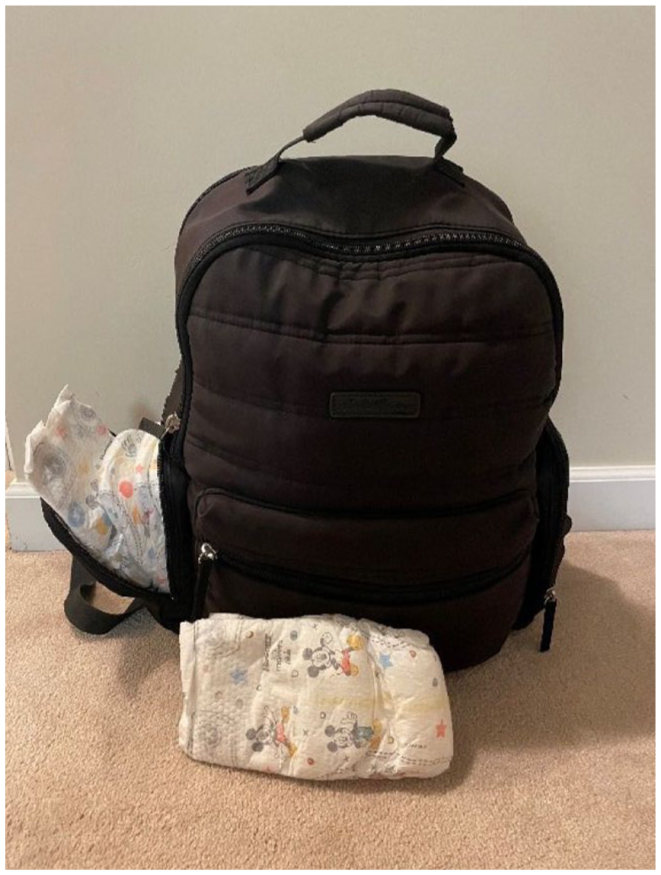
Parenting not Babysitting
There was assertion in Jackson’s liberation narrative about his competence as a father who freely chose 6-month paternity leave as an equity-informed decision made with his partner—pleasurable and strength-based rather than tokenistic or subordinating within masculine hierarchies. Relatedly, Arthur, introduced earlier, discussed the stalling and restrictive discourse of traditional masculinities for fatherhood:
I certainly think I have been a very different father to [my son] than my dad was to me . . .he was a loving father, but he always felt quite distant . . . I have taken a bit of pride in my role with him and the way that’s worked out . . .People tend to think of the women as being the more emotionally supportive and the emotionally caring person . . .but I think I’m those things . . .I’m a man so I’m a type of masculinity . . .this is how a man can be.
Highlighting a lack of visibility of men who opt out of the stereotypical, patriarchal father roles, Arthur’s goal, similar to Jackson’s, of wanting liberation from restrictive masculinities was ever-present. The identity [re]construction herein went beyond the scope of their individual fathering and relationship experiences to relationally contest traditional masculinities as outdated in understanding fathering experiences and legitimize contemporary practices inclusive of wide-ranging gender ideals.
Threaded across men’s liberation of contemporary father identities narratives was their deliberate distancing from traditional masculinities. While the protective and liberating effects were pervasive for fathers to ease into contemporary fathering practices in their milieus, their pursuits of equity-based gender relations and relationally progressing father identities were ever-present.
Discussion and Conclusion
The current study findings highlight the relationality of men’s experiences with adapting to fatherhood and sustaining primary relationships with their partners, making vividly apparent the troubles and opportunities in this transformative period of life. Beyond the gendered tussles, men’s accounts of fathering experiences also reflected broader social issues, including fathers’ participation in formal and informal economies, and the new affective practices in fathering. In what follows, we situate the research findings within these social dynamics to offer some theory insights on the field of fatherhood and masculinities, and implications of the research findings to bolster men’s fatherhood involvement.
The sacrifices in being a provider narratives illuminated the relationality of fathering wherein the intertwinements of traditional breadwinner expectations and contemporary involved father roles jointly operated to shape many men’s fathering experiences, especially in dual-income families. This is in line with previous findings from Takács (2020) that involved fathering is, in its essence, the modified breadwinner role with the added element of emotional communication and involvement. The prevalence of the sacrifice narrative featured fathers caught in complex, competing logics of moral norms and economic necessity (Miller, 2017), which, according to Lewington et al. (2021), can capture men in a gendered limbo. Affirming previous work from Bach (2019), such uncertainty and ambiguity left some fathers contesting and acquiescing traditional ideals of fatherhood simultaneously in their construction of nondominant masculinities. The everyday fathering practices, bound up and limited by pervasive economic headwinds and moral codes, put renewed emphasis on understanding how pressing social structures can inflect the boundaries placed on fathers’ ability to shift practices and participation, as previously illustrated by Black and Keyes (2020). In depicting the challenges they faced in navigating these dynamics, men, however, disclosed their vulnerabilities within a resilience narrative. Such disclosure of strength-based vulnerabilities, as termed by Oliffe (2023), was evident wherein their sacrifice was positioned as an inevitable loss to traditional masculinities, while also reframed as their deliberate commitment to and pursuits of contemporary egalitarian and family-oriented values.
Participants’ balance in caring narratives mapped a continuum of their gender equality and equity work, and the relationality of their fatherhood experiences was made explicit by the co-constructed practices of doing and undoing gender (Butler, 2004). The active engagement in caring for their child(ren) and partner enabled fathers to recognize that masculinity and caring were compatible (and perhaps compulsory) for emerging care-oriented masculinities, which aligns with Scheibling (2020)’s previous findings about fathers learning to view caring as a masculine strength synonymous with embodying pro-feminist perspectives. There was evidence of hybrid masculinities in some fathers working within the gendered division of labors (e.g., caring viewed as a peripheral role) that significantly constrained their involvement in parenting. However, as fathers, along with their partners, challenged the prevailing winds of heteronormative living through transgressive parenting and even participation in informal economies, they slowly and collectively raised the capital of involved, intimate fathering. Participants’ balancing act and emphasis on self-care and boundaries underscored the need of upstream fathering and/or relationship programs for men to develop the awareness and skills to effectively communicate, jointly compromise, and equitably adapt with the goal of sustainably nourishing their own wellbeing and intimate partner relations. This is especially crucial with research identifying men’s mental illness risks during transition to fatherhood (Baldwin et al., 2018) with Gruson-Wood et al. (2022), in particular, delineating the emotional toll of the triple standards (i.e., breadwinner, carer and feminist) on modern-day fathers.
The liberation of contemporary father identities narratives featured the fluidity of men’s construction of masculinities that has the potential to cope, evolve, and transform. Gender being socially constructed underscores the relationality of fathers’ masculine performance that is interactive with child(ren), partners, peers, and other social audiences and influences. Men’s storylines helped develop a picture of how the economic, moral, and affective intensities that bind fathers into particular roles and relations were navigated, disrupted, and mobilized to enact different subjectivities, and illuminate the need to explore in creative ways how geographically diverse men are navigating the significant life chapter of fatherhood. The health implications of men’s caring identities are often situated in the context of gender relations, with much less discussion on its impact on fathers themselves (Watson-Phillips, 2016). The current study contributes to the literature by reporting the liberating and protective effects of men’s fathering practices as they troubled and protested the stalled discourses on contemporary father identities. The acquired sense of liberation explicated fathers’ reflexivity while illuminating their collective gender work in progressing feminist and post-feminist masculinities as previously documented by Gruson-Wood et al. (2022). To amplify potential benefits for fathers, programs that target fathers’ needs in their navigation of the new role and identity, as well as meaningful structural and institutional changes supporting the cultural shifts in contemporary fathering, can help maintain their emotional wellbeing while facilitating the uptake of equity-informed fatherhood involvement as normative (Eerola & Mykkänen, 2015; Kotelchuck, 2022).
Study limitations include our reliance on men’s accounts of the relational construction of gender roles in their intimate partnerships while missing the voices of their partners and child(ren). The study’s focus on men’s strength-based work might have led men to overestimate the efforts and impact of their involvement in parenting and domesticities. Future studies might purposively employ couple-dyad research designs and consider the social and economic status of the family unit to further explore the co-constructed and negotiated nature of men’s fatherhood involvement. The small sample size of 16 fathers from a wide range of locales is also acknowledged as limiting the generalization and transferability of the study findings. As the sample included mostly fathers in their 30s who were married, future studies are needed to further explore the experiences of young fathers and/or single/never married or separated/divorced fathers co-parenting with a partner in separate households.
In conclusion, the three interrelated narratives revealed in men’s experiences with fatherhood highlight their complicity and resistance to traditional fathering practices. Fathers’ relational work in forging ever-shifting contemporary fathering and intimate partnership practices illuminates these gendered projects as many men deliberately and decidedly norming progressive father identities.
Footnotes
Acknowledgements
Christy Chan is supported by a stipend from the University of British Columbia Reducing Male Suicide research cluster and John Oliffe’s Tier 1 Canada Research Chair in Men’s Health Promotion stipend. John L. Oliffe is supported by a Tier 1 Canada Research Chair in Men’s Health Promotion. We would like to thank Mary T. Kelly, Calvin C. Fernandez, Matthew Sha, and Hooman Salavati for their assistance with collecting data for the current manuscript.

Funding
The authors disclosed receipt of the following financial support for the research, authorship, and/or publication of this article: This study was supported by the New Frontiers in Research Fund (grant no. F21-04676).
Declaration of Conflicting Interests
The authors declared no potential conflicts of interest with respect to the research, authorship, and/or publication of this article.