



Abstract
Men’s disproportionate rate of suicide and substance use has been linked to problematic conformity to traditional masculine ideals. Mental health promotion interventions directed toward men should address the gender-specific needs of men; yet, no tools exist to provide such guidance. To address this need, the Check-Mate tool was developed as part of a global evaluation of the Movember Foundation’s Social Innovators Challenge (SIC). The tool provides an initial set of evidence-based guidelines for incorporating gender-related influences in men’s mental health promotion programs. This article describes the development of Check-Mate and an evaluation of its usability and usefulness. Using a qualitative descriptive approach, semistructured interviews were conducted with the leads for eight of the SIC projects; they used the tool for these. Data were analyzed using conventional content analysis. Overall, project leads found the tool user-friendly. Identified strengths of Check-Mate included its practicality, adaptability, usefulness for priming thinking on gender sensitization, and value in guiding program planning and implementation. With respect to limitations, project leads explained that the complexity of men’s mental health promotion programming may limit applicability of some or all approaches included in Check-Mate. They also expressed concern about how using Check-Mate might reinforce hegemonic masculine ideals. It was suggested that examples illustrating the use of Check-Mate would be a helpful accompaniment to the tool. Findings indicate that Check-Mate is a useful guide in men’s mental health promotion programming. In addition to future testing of the tool in different settings, links between the tool’s approaches and program outcomes should be explored.
Keywords
Mental health promotion for men has emerged as a public health priority in recent years. According to the World Health Organization (2018), men represent over 75% of suicide rates in North America. In addition, men are more likely than women to use all types of illicit drugs, and illicit drug use among men is more likely to result in emergency visits and overdose deaths compared to their female counterparts (NIDA, 2017). Considering these alarming trends alongside the disproportionately low number of men who seek help for mental health problems, researchers have asserted that there is a silent crisis in men’s mental health (Affleck, Carmichael, & Whitley, 2018). Conformity to traditional masculine norms (e.g., men are tough) has been implicated in men’s experiences of mental health problems and their reticence to seek help. Reaching and engaging men in mental health promotion would require navigating these masculine norms through the incorporation of gender-sensitive approaches (methodologies that ensure that unique needs, concerns, and capacities of men are taken into account) in mental health promotion interventions. However, gender-sensitive approaches have been limited in men’s mental health promotion efforts and this has been linked to underutilization of these services (Ogrodniczuk, Oliffe, Kuhl, & Gross, 2016; Whitley, 2018).
Omitting gender-sensitive approaches in mental health services has also been found to negatively influence the success of mental health services aimed at helping men. A recent systematic review examining the outcomes of men’s mental health promotion interventions and their use of gender-sensitive approaches found that only 5 programs in the 25 included articles incorporated a gender-sensitive approach (Seaton et al., 2017). The interventions that did not include a gender-sensitive approach were found to be less successful than those that did consider the gendered needs of men (Seaton et al.). The success of the gender-sensitive programs was attributed to various factors, including the availability of all-male group support, activity- or workshop-based designs, not framing the program as “therapy,” and using sport to normalize conversations around mental health (Seaton et al.). Robertson et al. (2015b) conducted a scoping review of mental health promotion interventions that targeted boys and men and also found that a gender-sensitive approach lent to successful outcomes. Indeed, moving men’s mental health promotion forward is still in a nascent stage, and successful strategies for reaching and engaging diverse populations of men need to be identified and built upon.
An opportunity to explore and leverage gender-sensitive strategies for men’s mental health promotion is through the work of the Movember Foundation, the only global charity dedicated exclusively to male health. As one of the most noteworthy contributors to shifting the conversation around men’s health, the Movember Foundation covers the topic areas of prostate cancer, testicular cancer, poor mental health, and physical inactivity. Established in 2003, the Movember Foundation has grown at a significant pace, currently signified by over 1,200 funded projects, 20 men’s health partners, and campaigns in 20 countries.
In the area of mental health, Movember launched the Social Innovators Challenge (SIC) in 2015, a funding competition with a goal to promote male mental health and well-being through improved social connections. The SIC was designed to support a multiphased (three phases) innovation program that moves both national and international ideas from inspiration to testing to expansion over 2.5 years. To apply for this challenge, the Movember Foundation invited applicants from Australia, Canada, and the United Kingdom to submit ideas online. Applicants with the most creative and innovative ideas were then invited to pitch their idea. In Phase 1 (developing the project idea), up to 50 grants were offered to support initial research, engaging the proposed target population and developing a plan for the pitched ideas. Based on a review of the project plans, up to 14 projects would be supported in Phase 2 (piloting). For this phase, 12 diverse projects across 3 countries were selected, as described in Table 1. After the 2-year pilot phase, project teams are expected to submit a business case, with detailed outputs from their pilot work. The most promising projects will receive continued investment for scale-up (Phase 3). The SIC projects provide a unique opportunity for learning about approaches and strategies for recruiting and engaging different groups of males in a variety of settings for mental health promotion.
Description of the 12 SIC Projects.

Note. SIC = Social Innovators Challenge.
The SIC includes a participatory (includes engagement with Movember and the SIC project leads) global evaluation designed by an external evaluator, the Propel Centre for Population Health Impact, at the University of Waterloo, Ontario, Canada. This evaluation included the development of a framework for assessing the outcomes of each of the 12 projects, as well as the SIC program at large. A developmental task for the evaluation was to identify knowledge needs in relation to the SIC projects, one of which is how to recruit and engage diverse groups of males—especially those who live in vulnerable situations—in mental health promotion initiatives. To address this knowledge gap, a generative approach was used in the SIC evaluation, starting with a synthesis of best available evidence on gender-sensitive approaches to men’s health promotion. The product of this synthesis was the Check-Mate tool that we describe in this article, a tool that would assist with designing, implementing, and evaluating the SIC projects in the short term and, through testing and refinement, have broader application for planning and evaluation purposes.
The dual purpose of this article is to (a) to describe the process of developing the Check-Mate tool and (b) to present findings from a study on the usability and usefulness of the Check-Mate tool within the SIC projects. Study findings are intended to inform use of the Check-Mate tool in mental health programming, and health promotion programming more broadly. This research has been reviewed and received ethics clearance through a University of Waterloo Research Ethics Committee (ORE #22845).
Methods
Phase I: Tool Development
Development of the Check-Mate tool consisted of two main components: a targeted literature review and expert consultations.
Targeted literature review
The targeted literature review aimed to summarize what is currently known about gender sensitization of health promotion programs for men. Rather than a formal literature review, five men’s health research experts (two content experts on the SIC evaluation team and three scientific advisors for Movember) were asked to nominate articles that captured recent innovations in effectively designing health promotion interventions for men. In other words, the findings were built upon real-world experiences with interventions that were successful in reaching and engaging men. In this regard, the review focused on learnings from extant men’s health programming and excluded articles that did not reference real-world application. A total of nine articles (Beyondblue, 2014; Bunn, Wyke, Gray, Maclean, & Hunt, 2016; Galdas et al., 2014; Lefkowich, Richardson, & Robertson, 2015; Mackenzie et al., 2017; Oliffe, Bottorff, & Sarbit, 2012; Robertson and Baker 2016; Robertson, Witty, Zwolinsky, & Day, 2013; Seidler, Dawes, Rice, Oliffe, & Dhillon, 2016) were included in the review: six of these were nominated, and three were identified through review of the nominated articles’ reference lists. Through thematic coding, a framework that included a set of approaches, actions, and illustrative examples for planning and implementing male-friendly health promotion programming was incorporated into a preliminary version of the Check-Mate tool.
Expert consultations
The same five men’s health experts noted earlier reviewed a draft of the Check-Mate tool. As part of this review, they also identified an additional 13 articles not included in the first round (Baker & Shand, 2017; Bottorff et al., 2017; Heilman, Barker, & Harrison, 2017; Kiselica, Benton-Wright, & Englar-Carlson, 2016; Menshealthforum.org, 2014; Ogrodniczuk et al., 2016; Oliffe et al., 2016; Pirkis, Spittal, Keogh, Mousaferiadis, & Currier, 2017; Prevention Institute for the Movember Foundation, 2014; Robertson, Bagnall, & Walker, 2015a; Seidler, Rice, River, Oliffe, & Dhillon, 2017; Whitley, Jarrett, Young, Adeyemi, & Perez, 2007). All 13 articles were reviewed; they were found to support the findings of the review and not contain any substantive new insights. The expert consultations also provided suggestions for enhancing the feasibility of using the Check-Mate tool in the field. As a result, language in the tool was simplified and clarified and statements were made more action oriented.
The resulting Check-Mate tool (see Table 2) consisted of five key approaches that were identified as effective for planning, implementing, and evaluating health promotion programs for men. These five approaches include
Creating a male-friendly space
Basing the program on activities that are appealing to men
Using masculine ideals to increase the well-being of men and their families
Considering aspects of men’s identities other than gender
Encouraging independence and participation
Each approach consisted of several actions (the “how”) that could be employed in men’s health programming (e.g., using familiar language to help create a male-friendly space). These actions were drawn from the reviewed literature, in which the authors provided specific actionable strategies to operationalize a gender-sensitized approach using male-friendly strategies. The tool guides users to review the list of approaches and actions and indicate which they are currently using and describe how they were put in practice in the context of their programs. The intention is to both identify approaches and strategies already being used to incorporate gender-related factors and prompt thinking about other evidence-informed approaches that could be incorporated into program design and adaptations. It must be noted that the list of approaches and actions is not deemed to be final. Instead, the tool is a practical beginning to developing a comprehensive list of gender-sensitive approaches for men’s health promotion programming, which is reflected in the invitation for authors to provide additional approaches and actions not listed in the tool through the “other” categories.
The Check-Mate Tool.

Phase II: Usability and Usefulness Testing
To test the usability and usefulness of the Check-Mate tool, a qualitative descriptive approach was utilized. Qualitative description sits in the pragmatic tradition and aims to inform and improve practice (Sandelowski, 2000, 2010). In this study, use of qualitative description provided the potential for identifying practical directions for moving the field of men’s health forward, with applications for this tool specifically.
Recruitment and sample
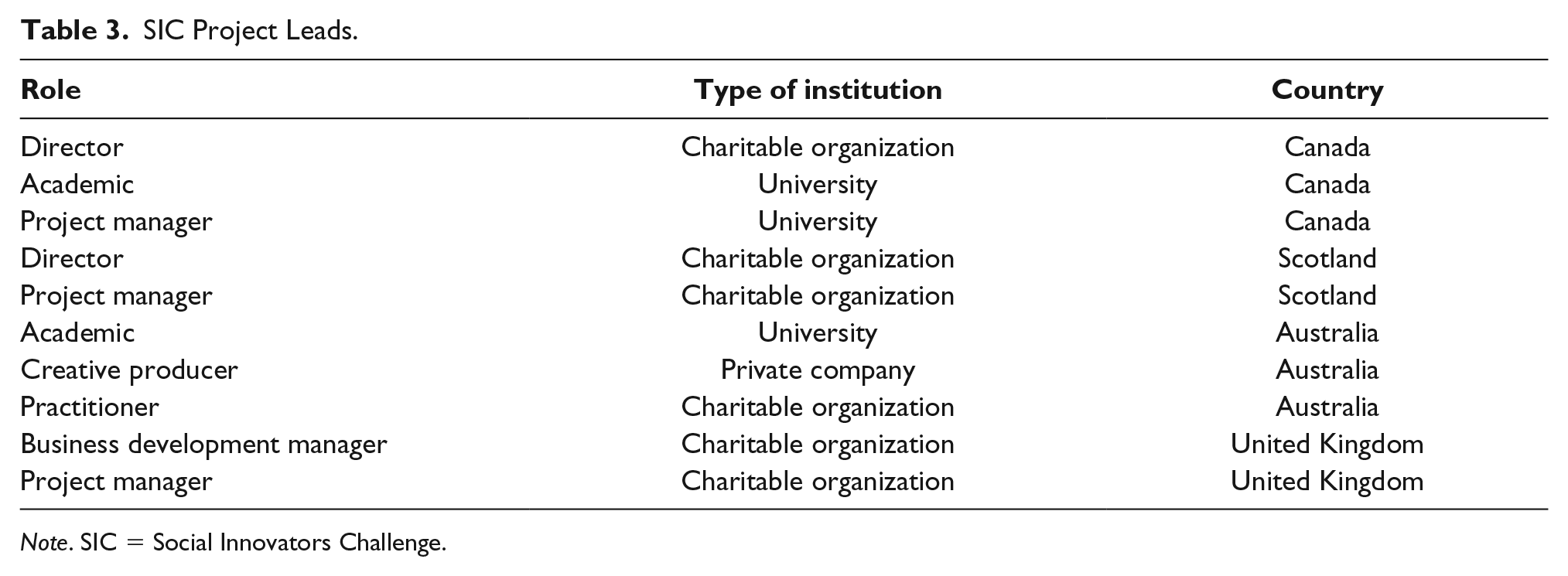
Six months after receiving SIC funding and entering the pilot phase (which is when they received the Check-Mate tool), all of the project leads were invited via e-mail to participate in an interview to explore their experience using the Check-Mate tool. To be eligible to participate, individuals had to be directly involved in leading the planning and implementation of an SIC project. In total, 10 project leads representing 8 of the 12 SIC projects were recruited into the study. The project leads had a range of experience in men’s health, research, and community-based health promotion, with some well versed in all three. Table 3 provides a description of the project leads’ vocational roles, institutional work settings, and country of location.
SIC Project Leads.
Note. SIC = Social Innovators Challenge.
Data collection
Each project lead participated in a semistructured individual interview of 45–60 min. In two instances, two coleads from the same project participated in an interview together, and in another instance, two leads from separate projects participated in an interview together. Semistructured interviews allow for an exploration of an individual’s ideas and provide a structured flexibility that facilitates engagement between the researcher and the interviewee (McIntosh & Morse, 2015). Interview questions covered project leads’ perceptions on the usability of the tool (e.g., “Are the instructions clear? If not, where is clarification needed?”), the perceived usefulness of the tool in relation to their project (e.g., “What did you find most helpful about this tool for your project?”), and perceived potential for this tool in other projects (e.g., “How do you envision using this tool again in other/future projects?”). Interviews were held via Zoom videoconferencing and were scheduled at a time convenient for participants. Each interview was attended by two qualitative researchers, with one researcher leading the interview and the other taking detailed notes. Interviews were audio-recorded and transcribed. At the completion of every interview, field notes were discussed and summarized by the researchers.
Data analysis
Interview transcripts were uploaded into NVivo 12 analysis software and were analyzed using conventional content analysis. Conventional content analysis is where categories and subcategories are inductively derived from the data but interpretations do not sway far from the raw data itself (Sandelowski, 2000, 2010). Transcribed interviews were checked for accuracy and coded. An iterative analysis process was used where new data were interrogated in subsequent interviews to ensure that codes were adequately covered. The first two transcripts were coded independently by two researchers. Once differences were clarified, a preliminary coding framework was agreed upon and one researcher completed the coding of the remaining transcripts. At the conclusion of the analysis, both researchers checked the codes and coding for confirmability. Final categories and subcategories were based on both researchers agreeing on code relationships and comparison of the categories with each other.
Findings
Through the process of interviewing project leads about the usability and usefulness of the Check-Mate tool, project leads were overall very positive about the value of the tool in planning and adapting their SIC projects. One project lead reported that he did not use the tool during initial planning because the project design started early and before rollout of the tool but that it would have proved very useful at the early stages of project development. All other leads reported using the tool during project planning and implementation and they intended to continue using it. Several project leads indicated that they intended to incorporate the Check-Mate tool as part of their lessons learned in relation to how to improve or enhance the gender sensitization of their program for men. The following findings provide details on project leads’ perceptions on use of this tool and have been categorized as follows: usability, perceived strengths, perceived limitations, and suggested improvements.
Usability
Easy to use
All participants agreed that the Check-Mate tool was easy to use, describing it as “user-friendly” (P3), “clear” (P4), and “straightforward” (P6). Several participants highlighted the familiar language used in the tool and suggested that this lent to the tool’s ease of use.
Intuitive reporting mechanism
Participants found that filling out the tool was an intuitive process. They noted that the amount of detail was appropriate in that it wasn’t overburdening, but it prompted reporting the necessary breadth of detail required to benefit from filling out the tool. In describing the process of filling out the Check-Mate tool, one participant said that the tool was laid out “in a way that takes you through a journey.” (P3)
Perceived strengths
Practicality
The biggest strengths of the Check-Mate tool as described by the participants were that it was “practical” and “concrete.” One project lead said that the suggested actions made it easy to put the approaches included in the tool into action: We really found that this tool really put us on the ground. You were not talking about “cloud” information, you were talking about information that was on the ground and applicable. You gave us concrete things to do, which is a great advantage of the tool. (P8)
Having a current, research-informed tool was perceived as a useful way to benchmark their work against other programs that target men, which may or may not utilize these strategies. In this way, they could begin to implement and assess best practices in men’s health programming: Benchmarking helps the team—these are the things we’ll be assessed upon or we should be assessing ourselves—this is what we should be aiming for—operationalizes it, gives some concreteness. (P2)
Adaptability
Participants frequently referred to the approaches in the Check-Mate tool as guiding principles in that they were adaptable to any context. This is exemplified in the following statement about how the approach “creating a male-friendly space” was adapted to the prison context: So we had a room and had to think about how to make that “room” male-friendly—such as through creating ground rules. It’s not just about the physical space. We did bring in posters one day about being a Dad in prison, but this approach helped us think more broadly about how to create a male-friendly space beyond the physical space. (P8)
Primes thinking
In addition to the practicality of the tool, participants described the tool as something that “primes” their thinking in relation to gender sensitization. This was the case regardless of the existing knowledge base of the participants. Project leads who were not familiar with the literature on tailoring interventions for men based on understandings of men’s preferences and the influence of masculinities on men’s health said the tool not only created awareness of this evidence, but it also gave them confidence as they moved their projects forward. For those project leads who were familiar with the literature, the tool provided a useful reminder and guide for conversations with partners and team colleagues. They also said that the tool helped them focus on thinking through relevant ways to incorporate these evidence-based approaches into their projects: It’s a way of focusing your thinking on what the project is supposed to be about so you don’t get carried away. Forces you to reflect on how decision making from a game play perspective supports those goals. (P5)
A living tool
Participants often described the Check-Mate tool as a “living resource” in that it was not something that they consulted with once; rather, they found this tool useful throughout all stages of their projects, from planning and implementation to evaluation. Many participants were using and planning to use this tool beyond the overall SIC program requirements, such as during regular team meetings and in framing their lessons learned. This is exemplified in the following excerpt by a project lead who led a program for unemployed men: It [Check-Mate] served as a very useful tool to keep developing our sessions. This tool will be very applicable to going all the way through to next year. We’re only half way through, we are developing what we do—and we still have another 12 months. It’s a live tool-resource that we can consult with and keep developing what we’re doing. We have three to four more programs to go. There is plenty of life left in it for us. (P6)
Qualitative nature
The qualitative nature of the Check-Mate tool, whereby participants were invited to describe how they were employing the approaches in their project context, was perceived as a major strength. They said that the tool was not prescriptive and they appreciated the opportunity to include descriptions of how they were incorporating the approaches in their own projects because it provided a rationale for their efforts to move men’s health programming forward: There are narratives in here [Check-Mate] to help explain why [project leads] are doing it. In the context of practice: What happened and how did it happen should be asked . . . what are some of things that are coming out? People will interpret things in their own way. So it’s more about the context and the narrative that this tool creates. (P1)
Perceived limitations
Complexity of male health programming
Participants thought that the complexity of male health programming was not adequately acknowledged in the Check-Mate tool. They explained that not all approaches may be applicable in all contexts and described the importance of emphasizing a “fit for purpose” approach when considering use of the suggested approaches. In addition, a few participants explained that some approaches may be employed very covertly, while others more overtly. For example, a couple of participants who led an eHealth project described how they asked men to rate their experiences with playing a game that enabled teamwork and communication. In this regard, they were able to focus on a strengths-based approach without causing men to compare themselves and each other to “male” strengths. They thought that the tool enabled them to be creative in utilizing the approaches without describing the program as “male-friendly” or based on “male strengths,” which would dissuade men from participating: Understanding we can’t be overt but that doesn’t mean we haven’t been using those [approaches]. . . . We are finding creative ways to incorporate the [approaches] into those discussions [with the program participants]. (P7)
Masculine ideals
Participants expressed concern about the politics behind gender sensitization and navigating masculine ideals in their projects. While they acknowledged that certain traditional masculine ideals (e.g., men are strong) that prevent them from seeking health care could be used to draw men into programs (e.g., strong men take care of themselves and their families), they said that there was a need to be tactful about the ways in which masculine ideals were defined in their projects so that these ideals didn’t undermine their work: As a father of two daughters I might see being strong as exposing vulnerabilities because that’s how my kids interact but if I said this to members of the group, it might not apply at all. The issue is definition of strength—stronger to show vulnerability or hide vulnerability. The intention of the question is clear but [it is] more about answering the question in a way that intentions sync up. (P4)
A project lead of an eHealth program explained that it is also important to consider how masculinity is considered in the project and the potential implications outside of the program, which directly link back to sustainability of the program: The main distinction is that you’re not doing things at the expense of other groups [e.g., women]—not a higher priority than anyone else. [That’s] where the main conflicts arise. Not saying this is the most important thing to consider, but should be considered alongside other groups of people . . . to the general public, it may be a thorny issue. (P5)
Suggested improvements
Provide examples
Participants unanimously agreed that a repository of examples of how the tool was applied in different contexts would be helpful and would further the development of the evidence base around what works for whom and in what context. This is exemplified in the following statement: When you give an example that allows someone to connect to what’s been asked on a deeper level. People can look at the question—but how do you know what a “male-friendly” word or label is? If you provide an example, that helps to make it more clear. In a football club and in a strong male environment—we’ve adapted to use football language. In our program, we talk about pre-match warm-up because men understand that. “First half,” “second half”—using that kind of language from a male dominated area, and use of banter. As this [Check-Mate tool] gets used—one thing you can start to do is to give some good examples that make people think a bit more, to influence a bit more, or give confidence in their approach. (P3)
Recognize complexity of male health programming
In keeping with the need to adapt the Check-Mate tool according to project context, participants suggested making this more explicit in the tool. They thought that it would ensure that no projects “get lost” and also encourage project leads to think about how these suggested approaches could be adapted to their contexts. Instructions could be included for using the Check-Mate tool indicating that not all approaches are necessarily applicable and that some approaches might be used to underpin strategies rather than be overtly obvious.
Discussion
To our knowledge, the Check-Mate tool is the first of its kind and responds to calls for resources to guide approaches for integrating gender-related influences in health promotion programming and report on these approaches (Gahagan, Gray, & Whynacht, 2015; Gelb, Pederson, & Greaves, 2012; Heidari, Babor, De Castro, Tort, & Curno, 2019). Based on expert review and testing for usability and usefulness, the findings of this study indicate that the Check-Mate tool is a promising guide for men’s mental health programming. Even though the study sample was limited to SIC projects, the tool was used effectively in a variety of project settings, with diverse groups of males, across three countries (Australia, Canada, and the United Kingdom). The Check-Mate tool, therefore, may be transferable to other male mental health promotion initiatives, and potentially to men’s health promotion programming more broadly. Check-Mate essentially provides a list of gender-sensitive strategies that have been evidenced to enhance the success outcomes of interventions for men. Using this tool in men’s mental health promotion programming at large holds great promise for enhancing the success of such interventions and, ultimately, improving health and well-being of the men who participate in them.
A significant finding is that the tool provides grounding in the field of men’s health promotion for those who range from having little preexisting knowledge of men’s health literature to those with extensive knowledge. This may be due in part to the iterative process involved in developing the tool and incorporating feedback from research and practice experts in male health promotion. Their input was instrumental in simplifying and clarifying language in the tool and making items action oriented (i.e., gave users something to do). The importance of engaging in cocreation processes such as these in the design of research products is increasingly recognized as critical to bringing research and practice together (Damschroder et al., 2009; Rycroft-Malone et al., 2016). The coproduced nature of the Check-Mate tool contributes to the application of the tool’s approaches and actions in practice as well as to the uptake and spread of using the tool (Langley, Wolstenholme, & Cooke, 2018).
Initial testing of the Check-Mate tool demonstrates the adaptability of the tool’s approaches and actions to various projects, in diverse settings, with diverse participants, and at various stages in the planning and implementation of the projects. In this regard, the approaches in the tool represent a set of guiding principles because they prompted thinking about how to engage men effectively in health programming without constraining their application. Since no one size fits all for male-friendly programming, the approaches in the tool enable creative freedom in putting them into action. Rather than being a prescriptive list for a confined context, the approaches serve as a menu of approaches that are malleable in how they are applied so that applications are sensitive to context.
The findings in relation to Approach #3 (Using masculine ideals to increase the well-being of men and their families) in the tool warrant further discussion. The resistance toward “using masculine ideals” is due to concerns about promoting masculine ideals that may cause harm (e.g., being a provider when a man cannot work). In addition, there is political pushback in relation to masculinities that may reinforce inequities among certain groups of men as well as between women and men. This is in keeping with recent recommendations to incorporate gender-transformative approaches to programing, which aim to promote healthy masculinities, challenge hegemonic masculinities, promote gender equality, and highlight intersections of masculinity with other aspects of social identity (Dworkin, Fleming, & Colvin, 2015; Paretz, Lehrer, & Dworkin, 2018). In light of these positive trends related to transformational gender norms, it is important that this transformative language is more carefully reflected in the tool’s approaches and does not inadvertently reinforce hegemonic masculine ideals.
The new American Psychological Association (APA) guidelines for working with boys and men (APA, 2018), developed to ensure culture- and gender-sensitive practices among psychologists, provide guidance on how masculine norms could be incorporated into a program in a transformative way. For example, the guidelines suggest that rather than using a predetermined and potentially inappropriate lens to view masculine ideals, masculine ideals are developed and discussed with the target population of men. This approach is supported by other researchers. For example, Wong et al. (2016) examined subjective masculine norms among university students in Singapore through asking participants about their perceptions of the most important masculine norms in their society. This approach enabled the identification of masculine norms that were personally relevant and meaningful to men in context. In this regard, positive masculine ideals that are used in a program are appropriate to the culture and context of the target population.
Also noteworthy is that participants wanted a repository of examples of how the tool was applied. Generating an exchange network that connects a diverse community of people in the area of men’s health promotion, such as through an online forum, could be key to informing and mobilizing transformational work. For example, both novices and veterans in men’s health promotion programming could come together to discuss which approaches in the tool work for whom and in what context, as well as contribute to additions and refinements to the tool and the growing repository of examples of applying approaches. Communication technologies could be leveraged to facilitate sharing and use of all forms of evidence (research, practice based, lived experience) to inform change efforts in the various contexts for men’s health promotion programming.
Future Research
Further testing and validating the tool in alternative health promotion programming contexts is needed. In addition, there is a need for research that explores the relationship between the approaches listed in the tool and program outcomes, including recruitment, retention, engagement, and the desired primary and secondary outcomes. This is a natural next step in developing the evidence base for this tool and will be explored to the extent possible in the SIC evaluation. Exploring how approaches may be sequenced and combined over time with different groups of men in diverse contexts is also needed.
Limitations
A first limitation is the targeted sources (literature and consultations) used for tool development. Other perspectives and other literature may have differentially influenced the tool’s approaches and actions. Second, while this tool is based on research findings, it is not yet known how the implementation of proposed approaches influences participant engagement and outcomes with different groups of men and in different settings. Additionally, the usefulness of this tool for projects with contexts and health promotion goals different from those of the SIC is unknown. A third limitation could be a social desirability bias in reporting. The study was linked to an evaluation of the SIC. Even though the learning focus of the evaluation was reinforced extensively, evaluation is not generally perceived in that way and participants may have reported in ways they think would reflect well on their projects.
Conclusion
The Check-Mate tool is a promising addition to the field of men’s health promotion program planning and evaluation. Initial testing revealed several strengths of the tool, namely, the ways in which the tool provides an accessible grounding in the literature regardless of one’s level of expertise and the demonstrated adaptability of the tool for diverse groups of males and in different settings and countries. Additional research, especially exploring the relationship between the use of male-friendly strategies and meaningful outcomes, will help to refine and validate the tool.
Footnotes
Acknowledgements
Movember advisors; Movember staff team, with special thanks to Anna Flego and Ivy Lim-Carter; First Person Consulting (Melbourne, Australia); and the SIC project leads.
Declaration of Conflicting Interests
The author(s) declared no potential conflicts of interest with respect to the research, authorship, and/or publication of this article.
Funding
The author(s) disclosed receipt of the following financial support for the research, authorship, and/or publication of this article: the Movember Foundation.
