




Abstract
Framed within Lefebvre’s concepts of “differential space” and “autogestion”, this article examines how coproduced design processes enabled an architectural team and women with lived experience of criminalization to materialize principles of trauma-informed practice in the design of Hope Street, a residential alternative to custody in Southampton, UK. The research analyzed outputs from consultation workshops with women impacted by the justice system and/or homelessness and a focus group with the Hope Street architectural team. Findings reveal the process of conceptualizing and materializing spatial design based on trauma-informed principles offering the potentiality to redefine traditionally institutional spaces as places of sanctuary and healing as opposed to places of punishment.
Introduction
Both the UK Female Offender Strategy (Ministry of Justice, 2018) and US Federal Bureau of Prisons Female Offender Manual (US Department of Justice Federal Bureau of Prisons, 2021) cite the need for trauma-informed programs, services, and policies to reduce recidivism, improve engagement, and create more just outcomes for criminalized women in recognition of the centrality of violence and trauma in women’s pathways to offending. However, trauma-informed practice implemented in traumagenic spaces is likely to be insufficient to reduce trauma, promote healing, and support desistance from crime. As Yvonne Jewkes and colleagues have argued, trauma-informed care and practice “must be viewed as a holistic set of practices that include and are inextricably linked to the environmental context in which they take place” (Jewkes et al., 2019, p. 2). Although in its infancy, there is growing attention to the spatial dimensions of trauma and the importance of the built environment as a key component in trauma-informed practice (Courage & McKeown, 2024).
This article examines the process of translating the principles of trauma-informed practice as defined by the Substance Abuse and Mental Health Services Administration (SAMHSA, 2014) into the design of Hope Street, a residential alternative to custody for women impacted by the criminal justice system in Southampton, UK and run by the charity One Small Thing. A pioneering element of Hope Street is that it is purpose-built, intentionally incorporating the values of trauma informed care into not only its approach to practice, but also its design and build.
Hope Street offers accommodation for twenty-six women and their children. Women can serve their sentences at Hope Street as part of a community order, when on remand, or after release from prison. The building incorporates private residential space as well as communal spaces where women can mix with one another and visiting friends and family. There is an on-site café and activity space, both of which are open to the public.
Hope Street also provides therapeutic interventions, education and employability skills training, drug and mental health treatment services, and assistance in engaging with health and social care providers with support from full-time on-site staff, drawing on the model of women’s centers. Women can stay at Hope Street as long as they need to, though the expected stay is of three months. It is then intended that women are supported into follow-on accommodation via Hope Houses which are semi-independent, shared accommodation where trauma-informed perspectives influence the interventions that the women engage in, but where the design of the space itself does not adopt trauma-informed principles. The overall goal of Hope Street is to reduce the number of women who are sent to prison and provide a more effective residential community alternative to the current arrangements for women in the justice system.
Framed within Lefebvre’s concepts of differential space and autogestion, this article examines how co-produced design processes enabled the architectural team and women with lived experience of criminalization and homelessness to work together to materialize principles of trauma-informed practice in a physical space. The research involved analyzing outputs from consultation workshops with women impacted by the justice system and/or homelessness and a focus group with Hope Street’s architectural team. Findings reveal the process of conceptualizing and materializing, through coproduction, spatial design based on trauma-informed principles, offering the potential to redefine the design of traditionally institutional spaces as places of sanctuary and healing as opposed to places of punishment.
Literature Review
Trauma-Informed Design
Trauma-informed design is emerging as an interdisciplinary collaboration between architecture, geography, and health and social sciences, with the aim of improving the psychological wellbeing of individuals impacted by trauma (Owen & Crane, 2022). Emerging scholarship on trauma-informed design is evidencing how the architectural and structural elements of a building can play a significant role in modulating the physical, psychological and emotional impacts of trauma (Rosato, 2025).
The co-constituted relationship between space, place, and the self has long been recognized as a significant way that sense can be made of the world. Space has tremendous power to make us feel one way or another (Picon, 2020). How feelings resonate with the materiality of the space in which they emerge lays bare the interconnected quality of how we feel, where we are, and our embodiment (Ahmed, 2004; Massey, 2005; Tuan, 1974). Love of space, or what Yi-Fu Tuan (1974) termed “topophilia” evokes the ways in which spaces become intimately meaningful at an affective level, and through this affect, become knowable. Spaces can be sites of love (philia), they can also hold trauma and be sites of despair and anguish (Clark, 2015; Stoppani, 2016).
All trauma is rooted in space. Trauma can unsettle an individual’s connection to space and can transform seemingly benign buildings and environments into sources of distress, triggering trauma responses including dissociation, emotional detachment, intrusive memories, hypervigilance and the persistent expectation of danger (Herman, 2015; Rosato, 2025). Trauma-informed design understands the body as a channel between space and an individual’s emotional and psychological reality, and it questions the role of space in reinforcing or mitigating the impact of trauma (Grabowska et al., 2021).
Many women with experience of the criminal justice system have encountered intersecting harms including childhood trauma, domestic and sexual violence, substance misuse, housing insecurity, and poverty (see for example Belknap, 2007; Corston, 2007; Daly, 1994; Petrillo, 2023). They are then further marginalized by systems that are punitive, patriarchal, and frequently (re)traumatizing. The attention to the quality of the built environment when conceptualizing Hope Street reflected learning from efforts to implement trauma-informed practice across the women’s prison estate in England. Studies into the efficacy of initiatives to “trauma-inform” women’s prisons in both the USA and UK report differing degrees of success, some reporting significant improvements in women’s wellbeing (see for example, Messina et al., 2016; Petrillo, 2021) whilst others describe them as little more than “window dressing” (Jewkes et al., 2019, p. 2). However, they coalesce around the belief that trauma-informed programs will always be limited if they are implemented in traumatizing places such as prisons (Jewkes et al., 2019; Miller & Najavits, 2012).
The theoretical formulation of TID remains in its infancy (Bollo & Donofrio, 2021; Pable et al., 2021). A key challenge for the designers of Hope Street was that there are few examples of intentional trauma-informed design in architecture and there are none anywhere in the justice system. The brief for Hope Street demanded they not only design a new kind of building, but a whole new spatial concept.
Theoretical Framework
What should it be?
…there’s been an intention for it not to be the things that we’re trying to dissociate from….I think a building is weak if its identity is only what it’s not rather than what it is, and that’s harder. It’s easier to say, “Let’s make it less prison-y,” than to say, “What should it be?” when there’s no real sort of starting point (Architects focus group).
This question of “what should it be” is a provocatively positive proposition which opens up the possibilities of what space can do to an array of potentialities (Deleuze & Guattari, 1987). What these potentialities can do, or “should be” is complicated by the fact that Hope Street deliberately nurtures a marginal and transitional space. It is a building that remains connected to the criminal justice system, and the rigidities that are associated with it. Yet, simultaneously, it is attempting to profoundly reconceptualize what alternatives to custody might be if their foundations were cemented in responsivity to the gendered trauma which is frequently the catalyst for women’s offending. It harbors the potentiality of creating what we might call a smooth space, from which lines of flight to different ways of doing, or being, might emerge (Deleuze & Guattari, 1987). In this way, there are elements of Hope Street that connect with the feminist, anti-carceral endeavor, but as a feminist, anti-carceral space within the striates of a carcerally-oriented justice system, the answer to the question of what should it be? could not be simply actualized. It had to be created through action and experimentation.
For this reason, Hope Street presents a potentially radical intervention in how the justice system might respond to women’s offending. Rather than tinkering with the existing (arguably misogynistic, traumatized/ing, abusive) system, it sought to build something new, collaboratively, with those who will be impacted by it (Cullors, 2022).
Hope Street as “Differential Space”
For Lefebvre (1991), differential space recognizes that spaces are not monolithic, homogenous stillnesses, but living spaces continually transformed by how a building is used and inhabited, and imbued with social and cultural contexts that shape their character and significance. The concept of differential space challenges designers to go beyond utilitarian and aesthetic considerations to incorporate a deeper understanding of the social, experiential, sensual, affective, and embodied dimensions of architecture (Lefebvre, 1991; see also Kinkaid, 2020; Pallasmaa, 2024).
Hope Street was conceptualized as a building that would stand in contrast to monofunctional carceral spaces by embracing the physical, symbolic, functional, temporal, social, and power dynamics that would need to be held by the space. The ethos of the building seeks to attend to the residents’ whole lives, their histories, their stories, and their own potentialities.
So perhaps we can think of Hope Street as conceptualized as a differential space. But how do we create such spaces?
“Autogestion” and architectural coproduction
For Lefebvre (1991), a way to produce differentiated space is through autogestion. Autogestion, as articulated by Lefebvre, communicates the idea that those who inhabit and interact with spaces should have a say in how those spaces are organized and utilized. In the context of co-production in architecture, autogestion aligns with the principle that users are not passive recipients of designed spaces but active participants in their creation and evolution (Lefebvre, 1991, 2009; Wolf & Mahaffey, 2016).
In the co-production of trauma-informed space specifically, autogestion can translate into giving survivors a voice in shaping the spaces they will utilize. Rather than imposing a design, architects collaborate with trauma survivors to understand their specific needs, preferences and triggers (Brisson et al., 2023). This ensures the resulting spaces are not only physically accommodating but also emotionally safe and supportive. It embodies a commitment to creating environments that truly support recovery, resilience, and wellbeing through experimentation with new solutions, connecting different sources of knowledge, and elevating traditionally devalued knowledge (Brisson et al., 2023; Pable et al., 2021).
Together these ideas help us to start to answer the question of “what should it be?” and the inevitable follow-up question; how do we actualize it?
Methodology
There is no agreed definition of trauma-informed architecture, and relatively little evidence as to how it should be implemented in process and practice (Courage & McKeown, 2024; Shopworks Architecture, 2020). There is, however, consensus that the process starts with a recognition that that there is constant communication between space and those who inhabit it, and that experiences of trauma and adversity can shape a person’s experience of space (see, for example, Brisson et al., 2023; McLane & Pable, 2020). Therefore, the primary research question for this project was “how can architects materialize the principles of trauma-informed practice in a physical space?”
The data for this study were collected through design consultation events and individual interviews with women impacted by criminalization, and one focus group with the architectural team. The methodology for this project was co-designed by the lead author and the Head of Policy, Research and Influencing at One Small Thing. Our primary considerations were how to investigate the research question in a way that was trauma-informed, prioritized the wellbeing of the participants, and protected the integrity of the consultation process. Two key concerns guided the data collection process. Firstly, that the research should avoid unnecessary demands on the women’s time beyond that they were already contributing to the consultation process. We wanted to avoid asking the women to share their ideas and experiences on the design process outside of the consultations, recognizing that system-impacted women are often asked to repeat stories, experiences, and needs to multiple professionals. Secondly, that observation of the consultations without participation should be avoided. The consultations were an explicit attempt to center the women’s knowledge and experiences in the architectural design process. Therefore, the research was undertaken at a distance. Participants were informed about the research project and consented to outputs being shared with researchers, but the researchers were not involved in the recruitment of participants and were not present at the consultations. The data was a by-product of the consultations as opposed to having been gathered with the specific purpose of answering the research question. This required us as researchers to relinquish control over what data we were able to gather and instead work with what was provided to us.
There are a number of limitations and challenges to undertaking research in this way. We had to work with gaps in information. This meant sitting with the academic discomfort of being unable to ask follow-up questions, seek nuance in the women’s interpretations and experiences, and of not being privy to the whole story behind the women’s responses to design features. From an academic perspective, this limited the quantity and depth of the data we had to work with but encouraged reflection on how much and what kind of data is enough when taking a trauma-informed approach. Not placing too many demands on the women’s time and labor and not interfering with the consultation process meant although the data we had to work with was not exactly the type of data we would have wanted, it was sufficient to start to uncover the process of translating the principles of trauma-informed practice in the design of Hope Street.
Four consultations involving nine women in two rounds, and supplementary individual conversations were undertaken between November 2019 and January 2020 and led by the architectural team and the Director of Hope Street. Each consultation event involved between six and nine women who were using homelessness services in Hampshire, UK. Coproduction, at its core seeks a rebalancing of power. In the context of criminal justice, women who have encountered the system as defendants, prisoners, survivors of violence, or mothers separated from their children, hold gendered lived experience knowledge that is often overlooked in traditional policy or service design (Johns et al., 2022). As such, they brought not only personal insight but also systemic critique.
In the first round, the participants were asked about the components of the space as a whole, for example what kinds of shared space they needed, what independent space. Then more detail about each of those spaces such as what features the shared kitchen and living spaces would need, what would need to be considered for areas that were child-focused, and what they wanted their private accommodation to look like.
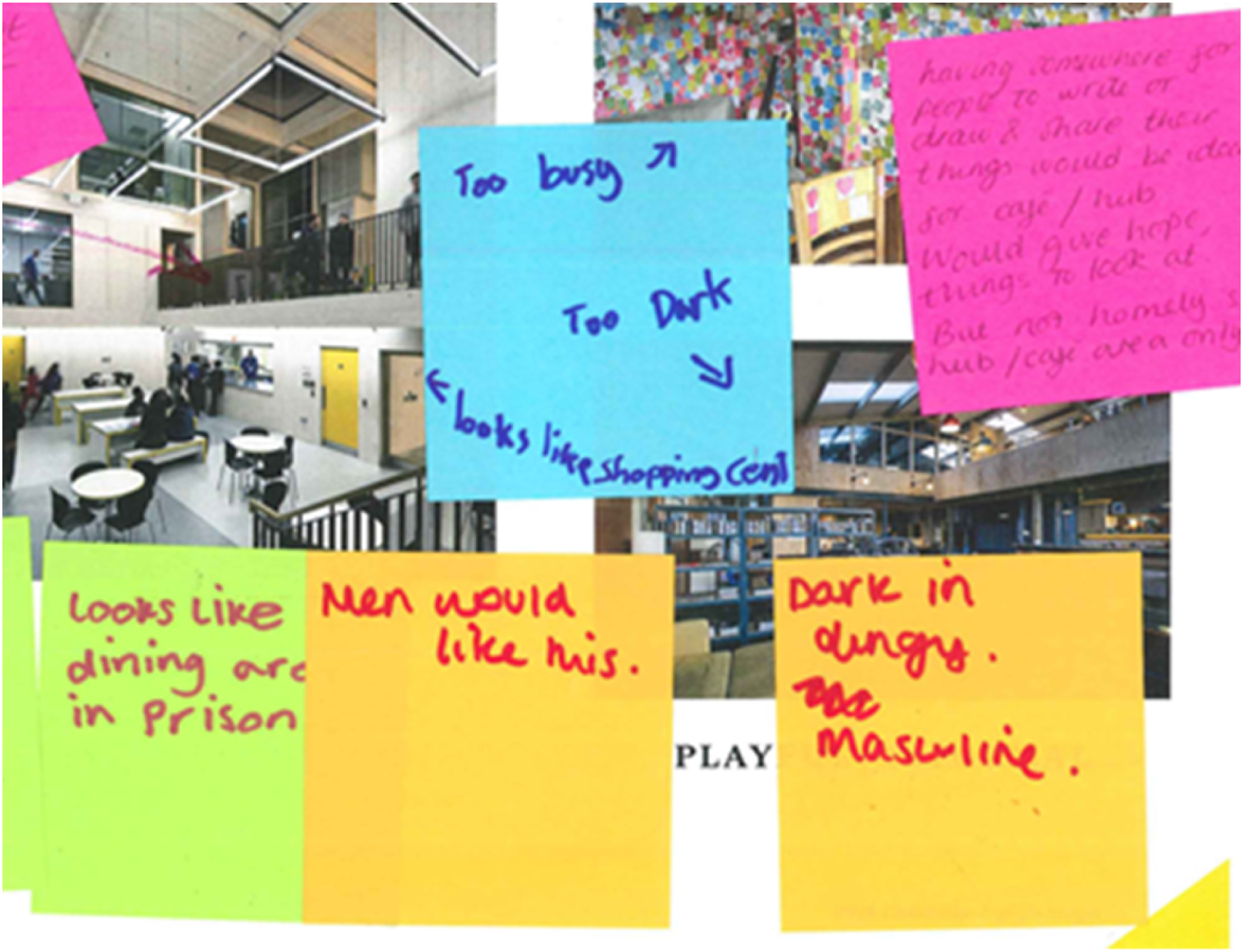
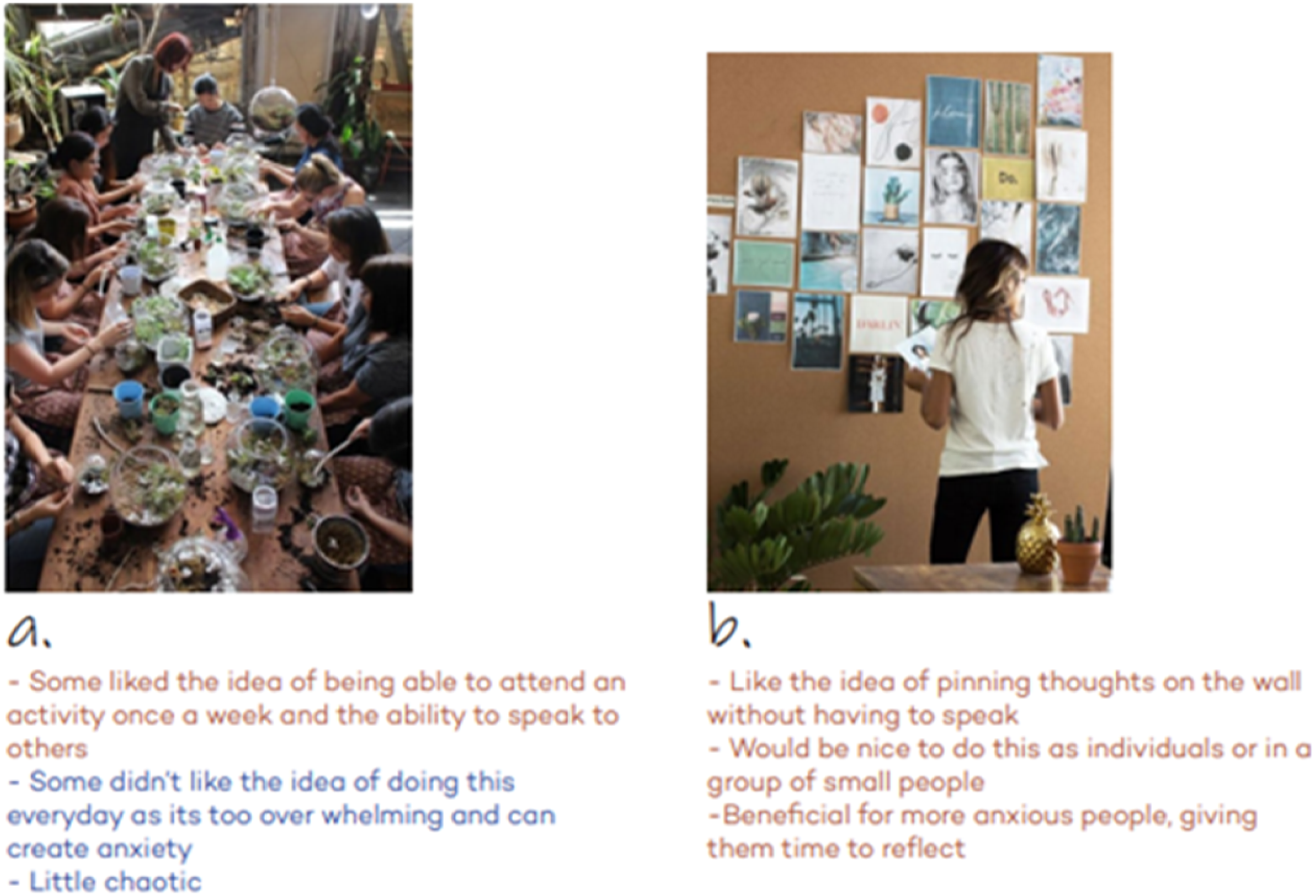
The second phase involved sharing images with the women that responded to their initial brief to stimulate discussion and ideas about translating trauma informed principles into a physical building. Open questions were used to generate discussion such as “How does this make you feel?” “What words come to mind when you look at this image?” “What might be your reaction to something like this?” Specific questions were also asked that related to the principles of trauma-formed practice, for example, “Which of these environments do you feel safe in?” These consultations covered all aspects of Hope Street including design, materiality, lighting, décor, privacy, landscaping, and security and produced rich data about the women’s affective reactions to different types of design. The women involved in the consultations had current experience of criminalization, addiction, mental illness, trauma, and insecure housing. Additionally, they included women from minoritized cultural and ethnic backgrounds, women who are mothers, and one woman who is transgender. Therefore, although few in number, the women had experience of intersectional discrimination. However, their responses were analyzed as a group and were not broken down according to identity characteristics.
Once the consultation process had ended and building work on Hope Street was underway, two researchers carried out a focus group discussion with the architectural team on the experience of translating principles of trauma-informed practice into the design of the building and of collaborating with women with lived experience on this work. The purpose of the focus group was to explore how the architects incorporated the women’s ideas and observations in the final design of Hope Street as a way of mapping this process. The data in this paper comes from both the outputs from the consultations and the architects focus group.
The images and notes from the consultations and the transcription from the focus group were analyzed using deductive thematic analysis. Deductive thematic analysis uses a pre-existing theory or framework to guide coding and theme development (Braun & Clarke, 2006). Deductive coding is a top-down approach where pre-existing theories, models, or codes form the basis for the interpretation of the data (Terry et al., 2017). It involves the application of an existing conceptual framework, in this case the principles of trauma-informed practice, to structure and interpret the data. The analysis involved a to-ing and fro-ing between the different forms of data looking for synergies and disparities in interpretation of the principles of trauma-informed practice. 1
The following section presents findings from the consultations and the architects focus group structured thematically around the principles of trauma-informed practice (SAMHSA, 2014) to reveal how each principle came to be conceptualized in design features of Hope Street.
Findings
Building Trust
The “trust” principle became the crux of defining the identity of Hope Street. For many women in the justice system, experiences of trauma and victimization are such that spaces that cause harm and spaces where they receive care are not mutually exclusive (Brais & Riva, 2024), creating uncertainty about which spaces are trustworthy. A central question became “How might the building build trust?” What are the trigger factors that will prevent trust and create associations with places where the women were not trusted, or should not extend their trust?
The women defined the purpose and identity of Hope Street as a “home”. This provided the clarity of purpose to enable the space to convey “trust”.
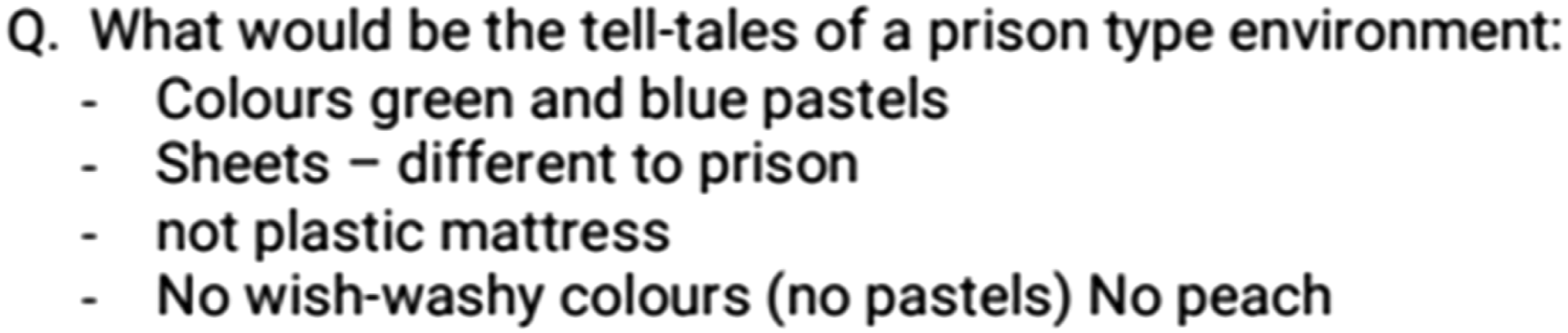
As a home, Hope Street needed to eschew the trappings of institutions. The tell-tale signs of a prison environment were identified as strip lighting, statutory signage, plastic mattress covers, and institutional smells such as very noticeable smells of cleaning products. There was consensus that pastel colors, particularly blues, greens, and peach should be avoided. The architects commented that these colors are usually associated with improved mood and are perceived as relaxing because of their associations with nature. But for the women, these colors trigger memories of care homes, hospitals, and prison. one of the things that stands out to me was, you know, when we started talking about colors and things like that. I’ve not been to prison, but from what they say, all the prisons are painted pastel greens and pastel blues, and therefore, from a layperson’s point of view, you could say, ‘Well, that’s a great, relaxing environment’, and that’s what…people who design and decorate prisons have come to that conclusion. And it probably is correct, it’s just now it comes with an association [with prison]… (architects focus group).
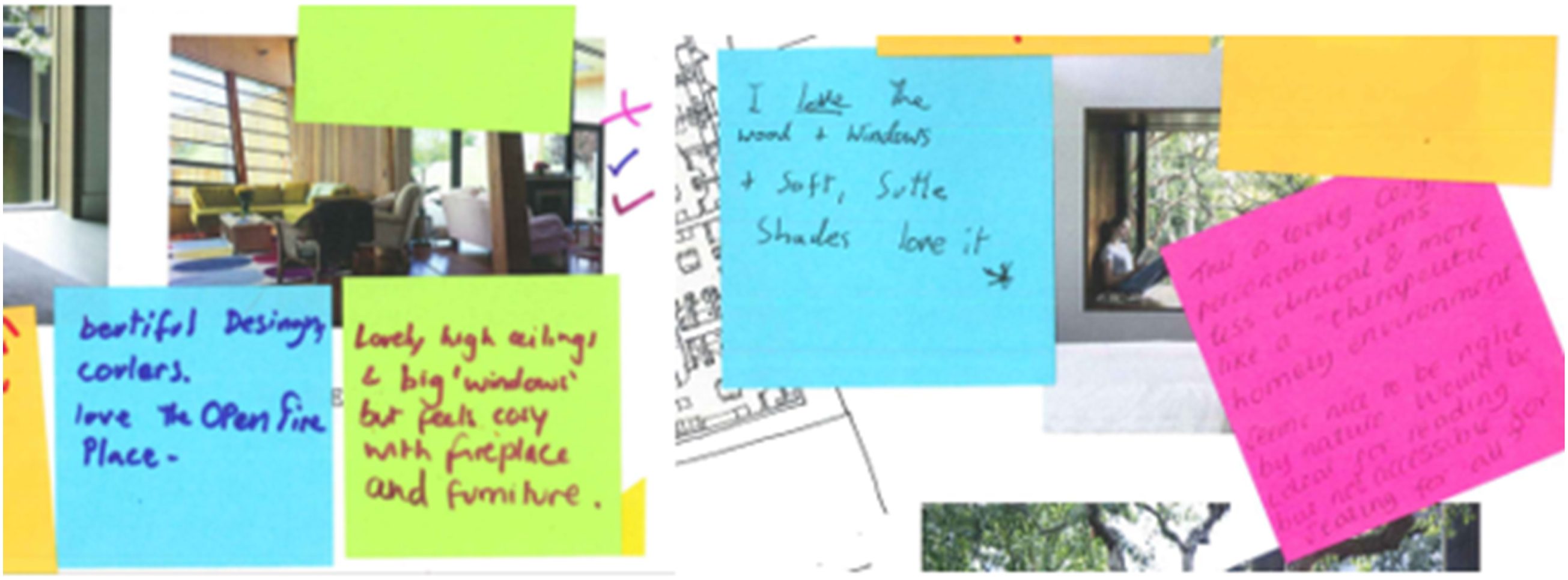
Features that would give the space a “homely feel” (Individual interview) included the use of soft furnishings such as carpeting, rugs, mirrors and curtains (Consultations 3 & 4). Fireplaces, big windows, and natural materials such as wood were also identified as creating a homely environment. As a result, one way in which “home” was designed into the space was a fireplace in the communal lounge generating a domestic focal point that draws women into the community and distinguishes the space from an institution. However, smaller design features were considered with similar attention to creating a homely space, “even down to the front door handle – it’s a wooden, rounded door handle so that the first thing women touch in the building dispels associations with institutions” (architects focus group). The color palette of Hope Street uses natural, neutral tones throughout.
The consultations revealed the women’s concept of home was not necessarily based on any existing model, but rather on their sensory understanding of what a home feels like. They used words such as “cozy”, “homely” (consultation 2), “a homely feel” (individual interview) to characterize design features that denoted home.
The architects explained that “once the women defined the identity and purpose of Hope Street as a home, that became the lens through which decisions about content, layout, design, and décor were filtered” (architects focus group).
Building Safety
We want to find different ways within the organization to increase feelings of safety and decrease feelings of threat, fear, and danger so people can engage with the healing process. Much of this is about the relationships within those spaces - but the space itself also has a role to play (architects focus group).
For organizations to be trauma-informed, safety is paramount. When organizations feel unsafe, staff and service users can feel fearful, anxious, and stressed.
Analyzing the consultation data about how the women identified issues around safety, three themes came to light: security, privacy, and predictability.
Security
“Not big brother. Observation will feel like being spied on” (Consultation 2).
The women did not equate safety with increased surveillance. Features commonly assumed to afford some kind of protection, such as CCTV, for them represented over-intrusive monitoring. The women recognized the need for security features and acknowledged the value of some surveillance measures in the building, but asked that these were kept to a minimum, were as unobtrusive as possible, and restricted to key areas.
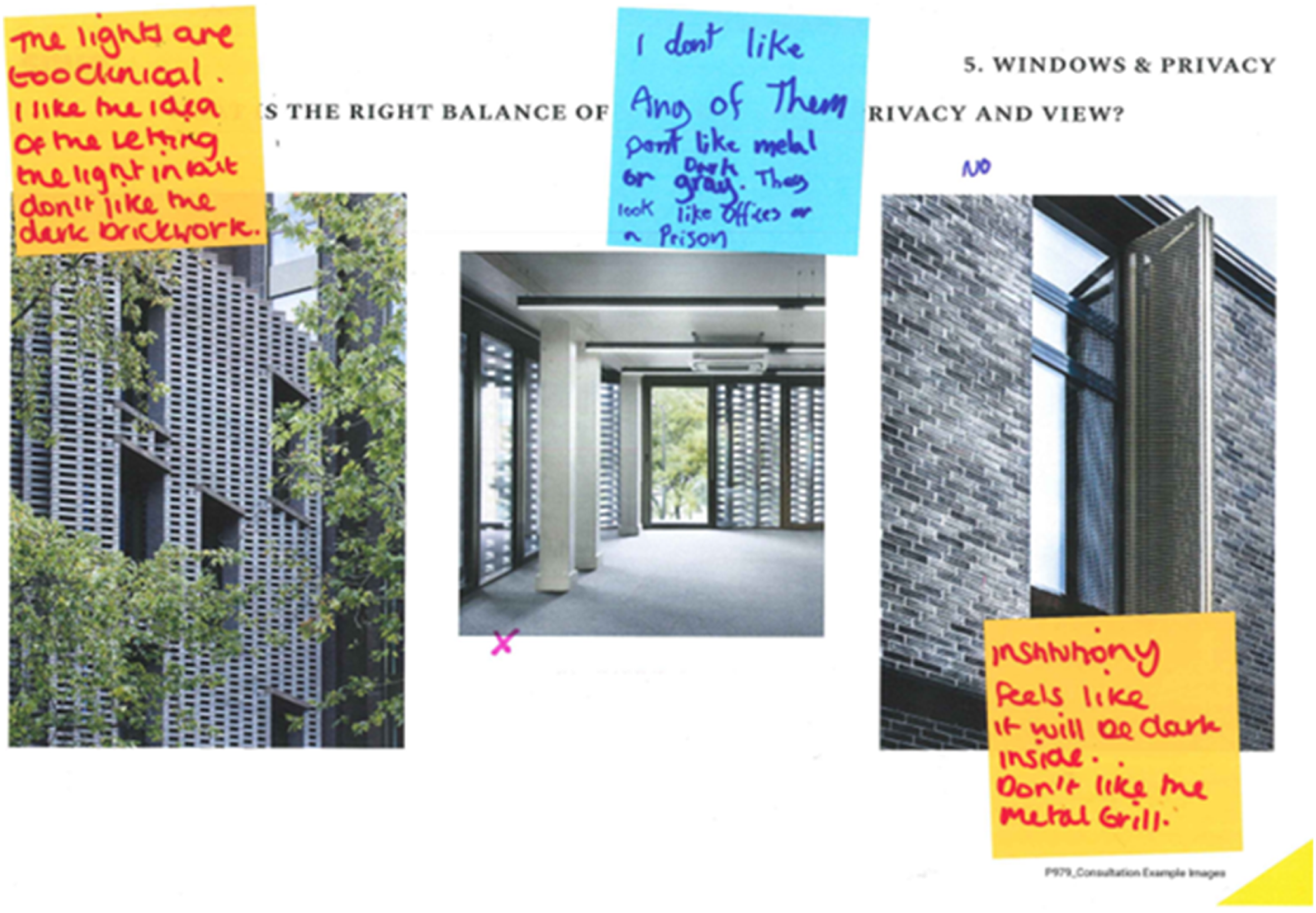
Ensuring Hope Street is not reminiscent of institutions in which women may have experienced trauma meant they also did not want security to be materialized through bars, mesh, or metal on the windows (Consultation 1 & 2). Dark brickwork and the use of metal were identified as particularly “institutiony” (Consultation 4).
Privacy
“Sharing a bathroom isn’t a great thing and can be a trigger for some people” (Individual interview).
Privacy was particularly important in the design of Hope Street as some spaces in the building are open to the public. The architects had to ensure there was a very clear delineation between the public and private spaces within the building.
However, privacy was not just an issue that affected the interaction between public and private spaces. In the consultations and individual interviews, it was deemed important for the women to have private space within their communal living environment, for example having private bathrooms so women have control over when and how their bodies are exposed. This contrasts with the lack of privacy or violations of privacy that are common in prisons in the name of safety and security.
Predictability
Safety is provided through natural surveillance, presence and layout rather than through CCTV, control and obvious security check points. Control is placed in the hands of women who are able to move freely and literally, ‘have the keys’ to their own homes, but reside in a community that they know to be secure (architects focus group).
Treisman (2021) suggests that predictability means knowing what will happen, with whom, in which spaces within the building. The space should be open and simple as too much visual complexity can increase feelings of unpredictability. Noise also plays a role in the predictability of space. Unexpected noise such as shouting, doors slamming, fire alarms that might trigger a physical response should be minimized.
Ideas on how to achieve predictability that emerged from the consultations were having clear sight lines so where people are going to and coming from is clear, ensuring the space is easy to navigate, and that attention is given to how people orient themselves around the building, as not knowing how to get from one place to another can create feelings of physical threat.
Responding to the women’s feedback about how to create a sense of safety without over-intrusive surveillance or the usual trappings of home security meant finding a way for safety to emerge organically through the design of the building. There is CCTV only in the parts of the building that are open to the public.
Building Collaboration
I can’t draw a lot on my resources about being a woman, having a traumatic lifestyle, having been involved kind of in the prison service, or maybe having my children threatened to be taken away. So, there was a degree of trying to get to that position in understanding, which was helped by talking those things through, doing some of our own research, and then having the opportunity to have consultations with women who had that lived experience (architects focus group).
The co-production aspects of the design process represented an intention to apply the principle of collaboration to the design of Hope Street from the outset. The process reiterated the importance of valuing lived experience knowledge if Hope Street was to successfully represent principles of trauma-informed practice.
Collaboration in the design process was also particularly important in understanding how to ensure the space is gender-as well as trauma-informed. For instance, the women explicitly identified some relatively superficial design features, such as heavy wooden furniture, dark colors, and leather upholstery as “masculine” and “things men would like” (consultation 4) and therefore undesirable in the space.
The women’s responses to designs provided knowledge that would not have otherwise been accessible to the architectural team.
Building Empowerment, Choice and Voice
There are a lot of shelves. I imagine a lot of them will be populated by houseplants and, you know, biophilic things, which is wonderful, but you can also start to put things up that start to mean something to the family and things like that as well, so that’s kind of the ownership you were mentioning. How can you occupy a building, and how you occupy it can be part of who owns it, you know, what is it saying (architects focus group).
During the consultations, the women emphasized the importance of having a degree of control and choice over the different spaces. They wanted the freedom to make some spaces their own, have choice over some household items, “being able to unpack properly and feel at home” (Consultation 1). This helped the architectural team conceptualize how principles of choice and voice can be embodied through ownership of space.
In relation to empowerment, the consultations revealed how important it was for the women to have some autonomy over how they engage with the space. This significantly influenced how the layout of Hope Street was designed. ‘Do I need privacy, sanctuary or community?’ Well, you know, they need both, but the starting position is, ‘I need my own space, I need to be private. I need to be able to retreat’, and then you can start to engage from there. So, in some respects, … you arrive at the front, but you actually start your healing process at the back of the building, your residential bedroom, into your shared flat, through the gardens, into the counselling spaces, and arguably you then graduate to being in the public café in the community with the wider world, if you like, which is quite nice (architects focus group).
There are clear associations between how the building can support women to feel empowered and how it creates a sense of safety. Spaces are more likely to feel safe when individuals have agency over how they exist in that space. The architects here describe the building, and the way that it “works” as a flow. There is a rhythm to the building: between the front and the back; between privacy, and sanctuary, and community. Understanding the rhythms of the building helps us better to see what Hope Street “should be” as a space through which people might have agency within the flow. We are only able to perceive these potentialities because of what is offered up by the trauma-informedness of the design itself.
Building Peer Support
Peer support, particularly sharing stories and experiences, has long been recognized in trauma-informed practice as a powerful vehicle through which to promote recovery and healing. Women’s consciousness raising groups that contributed to early conceptualizations of complex trauma during the second wave feminist movement of the 1960s and 70s were based on women openly sharing their stories and providing mutual validation to “overcome barriers of denial, secrecy and shame” (Herman, 2015, p. 29). Furthermore, storytelling is a practice associated with healing across different cultures (for example, Beltrán & Begun, 2014; Kent, 2016) and opportunities for narrative construction can be seen in trauma-informed interventions addressing a range of issues including poverty (Kent, 2016), and mental health (Nurser et al., 2018), as well as trauma (Francis East & Roll, 2015). Providing space for women to share their stories enables them to come together to begin the processes of creating social support, reducing isolation, and (re)connecting with their emotional selves (Francis East & Roll, 2015); processes which start to build feelings of empowerment and safety.
During the consultations, the women identified ways that Hope Street could create opportunities for mutual self-help. They identified the importance of the space being able to accommodate bringing people together through activities such as film nights or Sunday roasts (Consultation 1). These would be informal, relaxed opportunities for the women to connect with each other. They also suggested space for more structured leisure activities that would support the development of connections and friendships with women resident at Hope Street. The women responded well to the idea of “mood walls” as a means of sharing and supporting each other (Consultation 3 & 4). These felt like a safe way to express emotions and could provide the foundation for more structured conversations.
However, a theme in all the consultations was the importance of having control over the extent to which they participated in peer support activities. The architects translated this into the idea of “edge spaces” that support observation of the space and invite, rather than oblige the women to participate. How can you design in the ‘edge spaces’ where you can dwell?., like, the corner of the café space, or even if it’s the little window seat with the large window…These spaces allow women to watch and gradually make decisions about how much they want to participate, but they also allow the rest of the community to invite them to belong as well…And it’s often the part that’s missing as well, because they’re so shunned and stigmatized (architects focus group).
In addition to fostering peer support among residents, Hope Street also seeks to encourage connections with others in the local community. Prisons are generally hidden from view, “non-places for non-people” (Jewkes et al., 2017). Hope Street is intentionally located in the midst of a local community, on a busy street near the city-center. It is visible and accessible and intended as a hub for women in the community. The café and activity spaces host classes such as yoga and arts and crafts which are open to the public, building peer support networks through challenging the “othering” of, and promoting connection with, justice-experienced women.
The peer support principle of trauma-informed care recognizes women’s shared experiences of trauma. Many women experience relational and systemic violence, and all women are impacted by the patriarchal structures that excuse violence against women or blame women for their victimization. These experiences are not the reserve of women in the criminal justice system.
Cultural, Gender, and Historical Inclusivity
I think the most important part is it’s responsive to women, and it’s particularly responsive to women who have experienced trauma, because the people we consulted are women who experienced trauma. We listened to them. We posed things…we listened to what their reactions were. So, I think that is probably the strongest aspect, the people we consulted with were the right people.... (architects focus group).
There has been some critique of the westernized understandings of trauma inherent in constructions of trauma-informed practice. Recommendations for intersectional, culturally safe trauma-informed practice include recognizing how marginalization can impact on the prevalence of trauma within certain groups, and the experiences of collective and intergenerational trauma such as that caused by colonialism and systemic discrimination (Pihama et al., 2017).
Despite concerns, advocates of trauma-informed practice in areas including intimate partner violence (Kulkarni, 2019) and mental health (Sweeney et al., 2018), highlight the similarities between trauma-informed approaches and intersectional practice. These include a commitment to collaborative practice, authentic relationships, individualized services, advocacy, and the centering of cultural values, identities, and contexts (Kulkarni, 2019).
Some aspects of inclusivity can be incorporated into a building in relatively straightforward ways. For example, Hope Street is fully accessible for women who have disabilities. There is a multi-faith room for religious/spiritual practice. Other elements were more complex, for example, the question of how to accommodate children in the space. Hope Street was always conceptualized as a gender-responsive space with women and children at its heart, immediately addressing the issue of family separation that is so often the result of women’s involvement with the criminal justice system. This meant children’s indoor and outdoor play areas and creche provision were designed into the building from the outset. However, accommodating families in the building required a delicate balance of ensuring the children’s safety, supporting the needs of mothers, and sensitivity to women resident at Hope Street who had lost or had other trauma related to children. The consultations clarified some of the detail of what was required for these spaces. For instance, the women raised the issue of how the space could accommodate and support children who have special needs without over-impacting on how others experience the space (consultation 2). This led to the addition of a sensory room to the design. Importantly, the consultations involved women from a range of backgrounds and experiences, including transwomen, to understand what was required from the space to be meaningfully inclusive.
Discussion and Limitations
The commitment of the architectural team to incorporating women’s understanding of principles of trauma-informed care is visible in the design of Hope Street. The strongest feedback from the consultations was that there should be no associations with prison in the design. The finished building does not reference prisons or institutions more generally. Natural materials, neutral colors, spaces that can be personalized, big windows that let in natural light, limited CCTV or visible security measures, clearly defined public, communal, and residential spaces are all features the women identified as important to the trauma-informedness of the building and have all been incorporated into its final design (current images of Hope Street are available at Redesign — One Small Thing).
Building on Lefebvre’s critique of the “delusion” of objective knowledge in architecture (1991, p. 361), Garrett Wolf and Nathan Mahaffey (2016) highlight that spaces that are produced through architecturally-driven processes, even when they include collaboration and engagement, are all rooted in the professional positionality of the architect, meaning both the individual designer, and the shared outlook of the field of architecture. This is never more evident than in the carceral, trans-carceral, and institutional spaces which criminalized women are required to inhabit. These spaces are very clearly defined by their function of containment, whether for treatment or punishment, and are constantly produced and reproduced from this perspective. This has created assumptions about design features required in these spaces. They need barred windows, anti-ligature points, alarms, immovable furniture, hard, durable surfaces. Finding a practical way to create something new which dismantles these assumptions was a monumental task that involved questioning the taken for granted notions about carceral/trans carceral space. To an extent, the consultations succeeded in challenging traditional hierarchies of knowledge. The women were involved from the outset in defining the identity and different elements of the space. The outputs from the consultations analyzed alongside the architects’ reflections on the interpretative process evidence a toppling of traditional notions of expertise. The contributions from the women clearly challenged assumptions previously held by the architects and the responses and reflections from the consultations have been incorporated into the final design of Hope Street.
Nonetheless, the co-production process had some limitations. The women’s input was primarily consultative and was limited to the initial design. Consultation was not ongoing throughout the build. The women did not have input into resource allocation. Importantly, both trauma-informed practice and co-production can overlook intersectional realities. The power in both approaches is their potential to shake up hegemonic ways of knowing, thereby elevating traditionally marginalized voices and perspectives. But there remains a risk of tokenism and the reinforcement of obstacles which prevent involvement and perpetuate marginalization (Johns et al., 2022). The methodology for this research precluded an intersectional analysis of women’s experiences of participating in the consultations. Further research on co-designing trauma-informed space should explore how intersectional marginalization shapes experiences of harm and recovery and what this might mean for culturally specific understandings of spaces that offer safety and healing. This leaves scope for a further dismantling of knowledge hierarchies in trauma-informed design, for example by supporting women to be co-creators, producing their own designs rather than responding to those presented to them by the architects (McCarry et al., 2018).
Conclusion - The Story of a Building?
It has made me think more about what is the story that a building is telling….I think how you organize buildings, particularly public buildings that are dealing with people…starts to say what the values are of an organization. And I think if you’re trying to build trust with someone, what you receive about those buildings is actually quite significant…this project is not about architecture, but about people (architects focus group).
It remains to be seen what the full story of Hope Street will be. As a building, Hope Street is steeped in complexity, but in its complexity, it challenges our notion of a penal space. It is an assemblage of spaces. It is a criminal justice space where sentences of the courts are delivered. It is also a treatment space. A residential space. A space to learn in. A space for children. A space for Sunday lunches. A social space for the community. A trauma-informed space.
Lefebvre describes autogestion as an “opening toward the possible” (Lefebvre, 2009, p. 150). Lefebvre did not believe any condition is either eternal, or inevitable, which means that radical transformation can be pragmatic and include ongoing evolution and a tolerance of incremental change (Coleman, 2020). This “possible”, in terms of Hope Street as a differential space, is an understanding that the space is dynamic and evolving, with constant potentiality. These characteristics align with feminist anti-carceralism. Our intervention is to reground ourselves in the inseparability of feminism from abolition and to insist that not only is it critical to make space for what we have not yet been able to imagine, but at the same time to amplify that the practice is grounded, everyday, and already unfolding – now (Davis et al., 2022)
As a residential alternative to custody for women, Hope Street symbolizes the potential to realize a radical, feminist, anti-carceral approach to working with women in the justice system that, in common with abolitionist ideals, has been historically dismissed as impossible, naïve, and idealistic, but for which the work is already underway (Images 1–6). Notes from Consultation 3 Notes from Consultation 4 Post-it Note Scans from Consultation 3 Post-it Note Scans from Consultation 1 Post-it Note Scans from Consultation 4 Notes from Consultations 3 & 4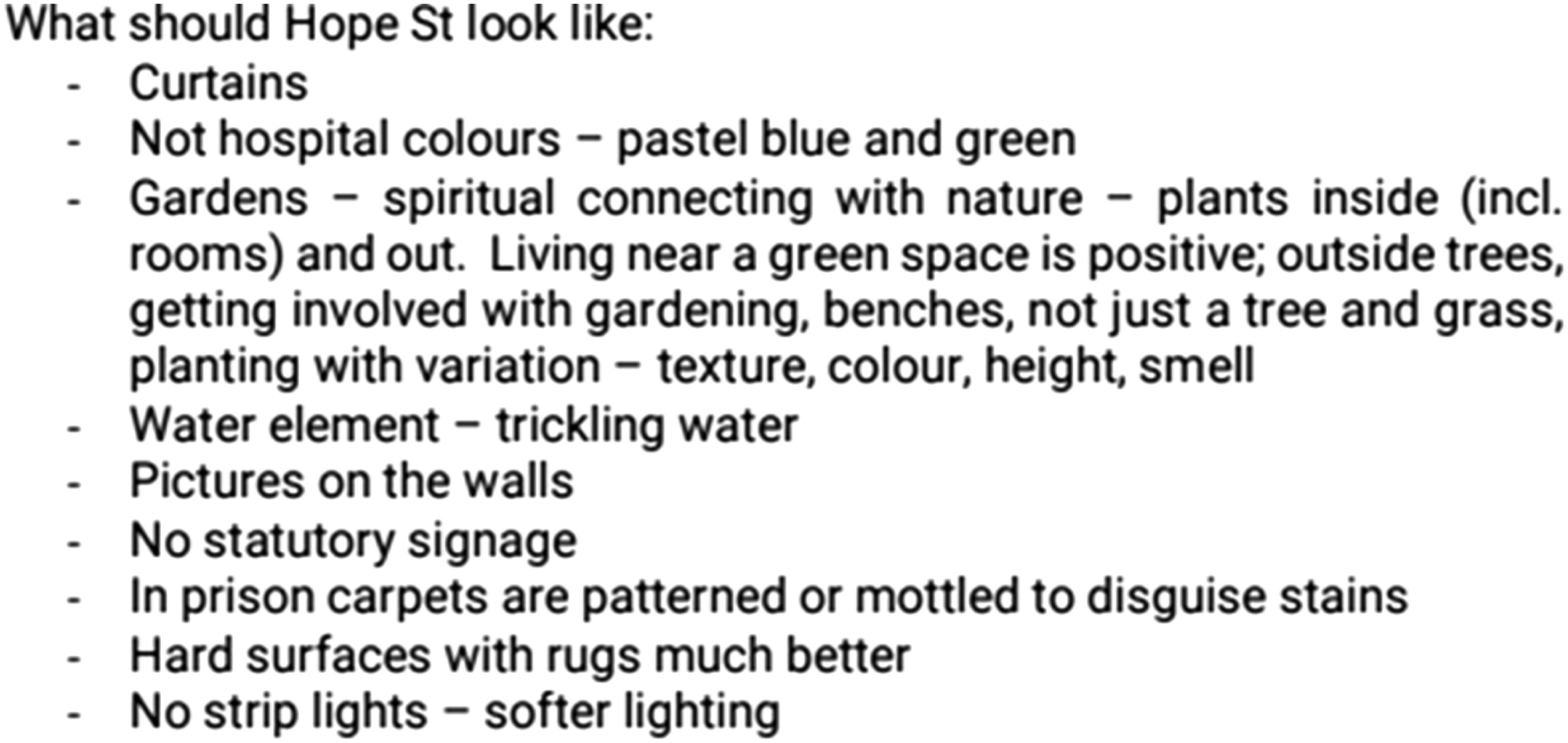
Footnotes
Acknowledgements
The authors would like to acknowledge the work of Megan Thomas, University of Portsmouth, in co-facilitating the focus group with the architectural team that informs this paper.

Ethical Considerations
This study was granted ethical approval by the University of Greenwich University Research Ethics Board (approval number UREB/23.4.6.ii.a).
Consent to Participate
Informed consent for anonymised outputs of the consultation workshops to be used in future research was taken verbally. Informed consent from the architectural team to participate in the focus group was taken verbally and recorded. This included the use of anonymised verbatim quotes in print and online publications.
Funding
The author(s) received no financial support for the research, authorship, and/or publication of this article.
Declaration of Conflicting Interests
The author(s) declared no potential conflicts of interest with respect to the research, authorship, and/or publication of this article.