




Abstract
This study, part of a collaborative project with the women’s prison in City A, China, aims to understand the experience of regaining employment among 18 white-collar ex-prisoners. Findings include shame and internalized stigmatization, labor market marginalization, and the political background check as a central part of the Chinese motherhood penalty. This paper demonstrates how the consequences of the women’s conviction and incarceration interact with individual, familial, and structural factors, leading some to return to domestic gender roles and pushing most into a state of precariousness. The study aims to contribute to the emerging field of feminist desistance research.
Keywords
Empirical studies on the labor market reentry of ex-prisoners in the Chinese context are very limited, and the few existing studies have focused solely on the male experience (Adorjan & Chui, 2014; Chui & Cheng, 2014). Using interview data collected from a collaborative project conducted between 2021 and 2023 with the women’s prison in City A, China, the author examined and analyzed the reentry experiences of 18 women into the job market. This study aims to address the gap in the literature by shedding light on the unique challenges faced by women and enhancing our gendered understanding of punishment and its aftermath. Employing a critical feminist desistance perspective, the research objective is to investigate the experiences of women incarcerated for white-collar crimes in a major Chinese city, focusing on gender-specific barriers in their efforts to re-engage with the labor market.
City A is one of the largest cities on the coast of China and is among the most economically and financially vibrant areas. In the years 2018–2020, City A witnessed a sudden and harsh crackdown on peer-to-peer (P2P) lending platforms (He & Li, 2021). The increased participation of women in the labor market and the effects of the crackdown led to a rise in white-collar, especially finance-related, offenders in the women’s prison in City A (based on internal data not available for referencing). This circumstance has prompted the focus of our study. By investigating the struggles of white-collar female ex-prisoners in the labor market, this study aims to gain insights into the gender-specific structural impediments that criminalized women may face.
This study seeks to contribute to critical feminist desistance research by focusing on women’s struggles in regaining employment in the Chinese context. In a recent study on difficulties and strategies for obtaining employment after prison for women with a history of substance treatment, researchers found that having held a job previously significantly increased one’s chance of re-employment (Roddy, 2023). By exploring the challenges faced by a group of women with relatively higher levels of education, previous work experience, and various forms of capital, this research aims to strengthen our understanding of the urgency of structural changes in the pursuit of gender-responsive reintegration and desistance.
Literature Review
Employment and Feminist Desistance
Much research on women’s reentry includes discussions on regaining employment (Colette, 2022; O’brien & Leem, 2007; Valera et al., 2017). Blitz’s study (2006) focused on personal factors and concluded that education and treatment for behavioral problems are key to gaining work for female ex-prisoners. Other studies have considered more diverse factors, such as the effects of internal and external shaming on gender and race-based stigma in the labor market (Dodge, 2001). Sciulli (2013) utilized British national statistics to find that female ex-offenders “pay a three times greater price for conviction than males in terms of employment rate,” which could be attributed to discouragement, attitudes towards self-employment, or excluding factors such as difficulties in accessing borrowing (p. 1114). Jeffries et al.’s study (2020) highlighted the difficulties in securing full-time employment and the lack of resources to become self-employed.
Feminist desistance comprises an emerging body of critical feminist work on desistance from crime, challenging the lack of a gendered perspective in mainstream desistance research. It focuses on the structural conditions and intersectionality of both women’s criminalization and desistance (Barr, 2019; Hart, 2016; Hale, 2020; Oroz et al., 2023). In Österman’s comparative study (2017) involving 24 adult female repeat offenders from Sweden and England, it was found that Swedish women faced fewer structural challenges and more opportunities to overcome barriers, illustrating how varied macro-structures influence women’s micro experiences of desisting. Barr’s research (2023), involving narrative interviews and a year of observation at English Women’s Centers, demonstrated how societal expectations and structural inequalities contribute to the struggles of criminalized women in securing employment.
Korzh’s study (2022) on female ex-prisoner reentry in the Ukrainian context revealed that a lack of housing, insufficient educational background, and professional training, along with limited options due to criminal background checks, make regaining employment particularly difficult. In Low’s exploration (2023), Indigenous women with histories of imprisonment in New Zealand faced a multitude of inequalities in their efforts to find employment, including socio-economic disadvantages, trauma, and stigma. However, there is currently a lack of empirical research on this topic from the East Asian context.
Motherhood Penalty for the “Double Deviant”
From a critical feminist perspective, it is essential to recognize and understand how gender-specific factors can impact women’s ability to find stable work. Parry’s study in South Africa (2022) explored the intersections of gender, motherhood, and incarceration, focusing on how motherhood added to the “pains of imprisonment.” The term “motherhood penalty” was first coined by Budig and England (2001) when they discovered, using national data in the United States, a wage penalty of 7% per child for women. However, only a few studies have specifically focused on how women’s roles as mothers negatively impact their reentry into the labor market post-incarceration (Berman, 2005). Using national statistics from the United States, research has shown that having dependent children is one of the prominent variables that limit the employment of formerly incarcerated women, as women are much more likely to take on childcare responsibilities compared to men (Curcio & Pattavina, 2018).
Scholars have also investigated the impact of motherhood on employment and income among Chinese women and consistently found a positive correlation between childbirth and a decreased wage, particularly for women with young children (Shen, 2022; Zhao, 2018). This study aims to fill the gap by examining how motherhood interacts with ex-prisoner identity within the Chinese socio-economic landscape.
Focusing on White-Collar Female Ex-Prisoners
This study has chosen to focus on the reintegration into employment of formerly incarcerated women convicted of white-collar crimes. White-collar crime is generally considered less harmful and morally deviant than other types of crime, and women’s involvement in white-collar crime is seen as a by-product of historical improvements in women’s education, social, and economic participation (Dodge, 2019; Friedrichs, 2009). As consistently found in the studies discussed above, better educational attainment, stronger social capital, and previous work experience all contribute positively to successful reentry in terms of employment. These individual-level characteristics are commonly found among white-collar offenders (Gottschalk, 2020). However, there is a gap in research investigating whether formerly incarcerated women convicted of white-collar crimes have an easier experience in gaining employment.
In the Chinese context, there is still a long way to go in terms of gender equality in labor market participation in general. Utilizing data from a survey conducted by the Chinese National Women’s Federation on women’s social status in 2000 and 2010, Liu (2018) found that the labor market participation rate for married women between the ages of 20 and 54 is 72.07%, which is 17.16% lower than that of their male counterparts. Therefore, the phenomenon of female white-collar offending and desistance has received minimal attention to date, both domestically and internationally.
Research Methodology
Data Collection and Participants
The author was invited to participate in a three-year collaborative research project with the female prison in City A in 2021, aiming to investigate the reentry experience of women who had left this prison to improve their pre-release programs. The sample selection was narrowed down to white-collar ex-prisoners because Prison A has witnessed a rise in the number of female offenders in its custody in the past five years who have committed white-collar crimes. The shift in the inmate demographic necessitates changes in terms of management and rehabilitation programs, motivating the initiation of this prison’s research project. Other selection criteria included women who had served time in Prison A within the past 12 months and were residing in City A at the time of the study.
This paper discusses part of the results of this research, focusing specifically on these women’s reentry to employment. To understand the women’s experience from their own perspective, a semi-structured in-depth interview method was chosen to facilitate an understanding of the research question using the women’s narratives of gendered barriers and coping strategies. The outline of interview questions included queries about their offense and incarceration history, current employment status, the journey of returning home and looking for a job, difficulties and discrimination they faced, their domestic gender role and relationships, as well as strategies to overcome barriers.
The interviews were conducted by the author with the facilitation of two prison officers who had previously worked with the interviewees in some capacity at Prison A. This arrangement was deliberately made for research access and rapport-building purposes. To reach potential research participants, the officers contacted their family members, as the women’s contacts were saved in their pre-release files. Approximately 85% of the women agreed to participate in this study, while the remaining ones were either unreachable or unwilling to consent. Most of the women agreed to be interviewed due to the positive relationships they had with the two officers during their time inside, making access easier and providing a solid foundation for trust and rapport during our interviews.
Interviews were held at locations proposed by the interviewees, with most of them conducted in cafes and, with a few exceptions, in their offices or restaurants. On several occasions, we also had dinner with the women, providing additional opportunities for observation.
Research Ethics and Data Analysis
Concerning ethical conduct, oral consent was obtained from all interviewees regarding the management of data and its use for academic research and publication. Details regarding the names of persons have been anonymized for the protection of privacy. The absence of written consent was a decision made by the interviewees; while they agreed to take part in this study, they did not wish to formally have their names on any written documents.
Before the meetings, information about the study was explained over the phone, including how the data would be stored and used anonymously. Interviewees provided oral consent regarding voice recording and participation in general. For two participants who did not consent to recording, we took notes during and after the interview. One other participant did not want to meet in person; therefore, the interview was conducted online via a conference video call. For recorded interviews, files were kept on a secured laptop for transcription, and the original files were deleted from the voice recording device.
The predominant ethical concern during the study was the potential impact of the positive relationship one of the prison officers had with the women participants on the research itself (Yuan, 2018). While this positive history was crucial for their participation, it also created a power dynamic where some women appeared to look up to the officer-interviewer, attempting to please or impress her, such as trying to pay for coffee and food. In one instance, the author arrived first at the interview location, and the interviewee, who was having a cigarette, immediately stood up and disposed of her cigarette upon the officer-interviewer’s arrival, despite being at least twenty years older than the officer-interviewer.
To address this, a conscious conversation was held among the interviewers, and a clearer division of roles was established. During the main part of the interviewing process, the officer-interviewer would leave most of the question-asking to the author to minimize the impact of the previous relationship. It was interesting to observe how the prisoner-staff relationship could have a long-lasting effect. It’s important to note that the impact of relationship history varies greatly between individuals.
The analysis of interview data was conducted by the author and can be divided into two main stages. In the first stage, timely transcription of recordings occurred after each interview was completed. Simultaneously, further data collection was undertaken while initiating an initial analysis of the existing data. Additional reading of relevant literature and theory was also carried out during this stage. The second stage involved multiple rounds of coding and code theorization through content and thematic analysis, utilizing NVivo 12 Pro for Windows and Mac.
A total of fifty-nine codes were generated from the qualitative data, which included memos derived from initial readings of the data. The codes were then categorized using a combination of themes from the existing literature, such as the impact of a criminal record, motherhood penalty, precarious labor market, mental health, and social capital. Additionally, themes specific to the study findings emerged, including collective punishment and family-level resilience. Throughout the coding and analysis process, multiple rounds of discussions also took place with the two officers involved in the interview process.
Findings
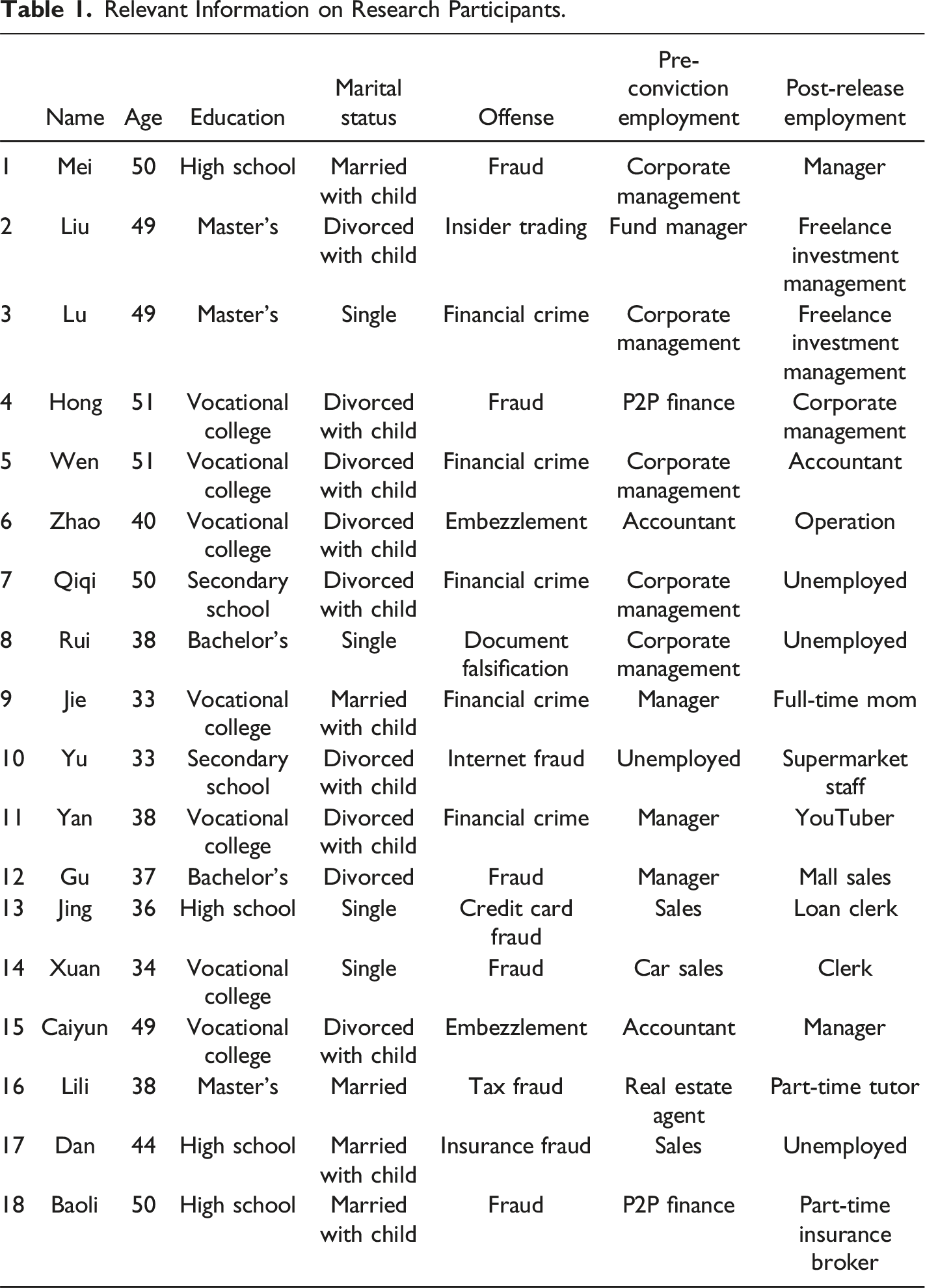
Chen et al. (2014) categorized factors impacting women’s participation in the labor market into individual and family factors. In the present study, structural and institutional stigmatization are also discussed and emphasized, recognizing that both individual and familial factors are heavily shaped by broader constraints. Among the 18 research participants interviewed, fewer than half are currently in full-time employment. There is a pervasive sense that these women have veered off course from the job market, and once this occurs, returning becomes challenging. Nearly all interviewees held full-time jobs until their arrest, and the shift to life without employment represents a new and profound experience affecting their everyday lives.
This paper presents findings regarding aspects of shame and stigmatization felt by the women themselves, the structural constraints they face when re-entering the labor market, the collective punishment system, and the guilt shared by their families. It also explores the coping strategies employed by these women in the face of precarious reentry.
Participant Characteristics
Relevant Information on Research Participants.
Shame and Internalized Stigmatization
Chui and Cheng (2014) investigated discrimination and internalized-stigmatization among young ex-prisoners in Hong Kong and found that perceived discrimination from employers is closely intertwined with internalized stigmatization, making it challenging for them to secure suitable employment.
Shame is defined as a self-referential moral emotion, triggered by external impacts through intrapersonal interaction, and it holds a strong connection to one’s self-value and identity (Key, 2021; Lewis, 1971). In the criminal justice context, Braithwaite’s (1989) reintegrative shaming theory distinguishes between “disintegrative shaming” and “reintegrative shaming.” The former focuses on stigmatization directed at the individual, while the latter targets the offending behavior alone. Rutter and Barr (2021) discovered that shame and stigmatization negatively impact relational networks, leading to a denial of victimhood among criminalized women.
It is apparent that the women we interviewed felt ashamed of themselves as individuals rather than separating behavioral faults from their self-identity. Dan talked about how she felt when she was first arrested and then prosecuted; an intense fear of stained identity overtook her, “I thought that I would rather be told I don’t have much longer to live than to be prosecuted” vividly illustrates the intensity of shame Dan felt.
Shame creates an internal and often hidden emotion of self-isolation where one feels “‘small,’ worthless, and powerless, exposed … a painful self-focused emotion linked to hiding or escaping” (Tangney et al., 2011, pp. 707–708). Consequently, this results in a restricted social life, as Gu explained, stating that the mere thought of disclosure would discourage her from maintaining work connections: I don’t want to get in touch with people who I worked with anymore because you can’t explain what you went through to every one of them. To be honest, they would probably find it absurd; I went to prison for something ridiculous. Plus, I will have to think about all those things again if I see them.
It is evident that shame has a negative impact on formerly incarcerated women’s inner strength to return to social and economic life and to re-engage with employment. Re-entering the labor market means putting oneself back into social situations, often requiring a demonstration of confidence among strangers to secure a new job. Feeling deeply ashamed makes this “leap of faith” tremendously difficult.
Shame creates an internalized stigmatized identity, which some women have adopted, proving to be a significant hindrance in seeking employment and rebuilding their lives. Women are also more likely to be subjected to gender-specific judgment or even harassment, leading to a stronger tendency toward social avoidance among formerly incarcerated women. For example, Liu shared, Frankly, I don’t like to hang out with people in my field much. As women yourselves, you would know what I am talking about. As a single woman, I received a lot of attention, and I am very mindful of that, so I don’t go out unless it’s necessary. Sometimes, I won’t leave the house for a whole week.
Therefore, while shame is a personal psychological state, it is largely shaped and formed by the wider social, cultural, and gender landscape.
Structural Constraints on Labor Market Reentry
Insufficient Policy Support and Discrimination in the Labor Market
According to Article 100 of the Criminal Law of the People’s Republic of China, “When people join the military or seek employment, those who received criminal punishment according to the law shall factually report to the relevant units the punishments they received and may not conceal them.” Some fields of employment explicitly state that the hiring of formerly incarcerated people is prohibited, including criminal justice staff, civil servants, and journalists, while other prohibitions target specific crimes in specific fields or the length of time since conviction. In theory, most of the interviewees who had committed a white-collar crime and were seeking employment in the private sector should be protected regarding their right to work.
However, despite nationally and locally issued government opinions on restricting an employer’s access to the criminal record of potential employees, having a criminal record is still commonly found to have a detrimental effect on the job-seeking process, as happened to Yu: Nowadays many companies require a criminal background check, maybe you can get away with it only if you apply for some hourly paid job like temporary security guards. But if we cannot get jobs when we return to society after prison, isn’t that a vicious cycle?
While individuals with a criminal record are obliged to disclose their offense history according to the Criminal Law of the People’s Republic of China, employers are also required not to discriminate against them. However, the reality is far more complicated. Often, when an ex-prisoner is rejected or fired, it is challenging to hold the employer accountable for discrimination, as there are many ways to disguise the real reasons behind their decision.
Lili is well-educated and can speak Japanese fluently. One might assume that she possesses more resources and advantages in the job market than others, but she has yet to find a stable full-time job and was doing part-time tutoring at the time of the interview. She told us: Japanese bosses are very strict and serious, what if they checked your criminal record? That would be so awkward. If I were to apply for a job at a Japanese firm, that would become the reality, so it’s either that or settle for a small firm which would probably not check you out. But the market is so bad right now, where do you find small firms? It’s all so difficult.
Lili’s experience illustrates that the difficulty of obtaining and sustaining employment with a criminal record is not a problem that can be solved simply by improving policy; it is also embedded in the cultural dynamics of moral judgment and risk aversion.
Another crucial cultural factor in seeking employment in China is guanxi: the Chinese expression of interpersonal connections essential in Chinese social, political, and economic life. Research has shown an increasing reliance on guanxi in the labor market since marketization started in 1978 (Bian, 2018, 2019). This implies that personal connections could potentially help overcome shortcomings or obstacles and secure a desired job. However, guanxi is built on trust and reciprocity; thus, having a criminal record weakens one’s social trustworthiness and diminishes the value of one’s social standing.
Similar to the circumstances faced by Yu and Lili, Xuan anticipated that she would have to watch her back all the time, even if she did get a job initially. The possibility of being fired for any number of reasons once the employer found out about her criminal record deterred her from actively seeking jobs that she would be qualified for. In the end, Xuan settled for working for a small redecoration company that required her to work six days a week: I went to more than ten interviews, and three of them offered me the job, but I didn’t dare to go. I was anxious about being accepted and then kicked off if they ever find out about my past. They say it is extremely easy to check if someone has a conviction on the internet, and I have found it to be quite true now that I am doing some recruitment myself. There is a background check app where you can find out about someone’s credit situation for just 79 yuan.
The prospect of involuntary disclosure has significantly hindered formerly incarcerated women’s attempts at job market reentry.
Navigating a Precarious Labor Market
Even though most of our interviewees are engaged with work to some extent, once we talked to them about their jobs, it became apparent that the Chinese labor market, in general, is currently in a highly precarious state lacking both predictability and security. Research conducted in one of the biggest provinces in China has shown that unemployment rose by 72% post-pandemic in 2020, with women over the age of 40 disproportionately affected, mainly due to their employment in hospitality industries (Li et al., 2023). For the women who had just exited prison, they found themselves in a much less hopeful position than they had anticipated. Rui talked about how anxious she was about trying to get back into the job market: I am a very positive-minded person. At the beginning, I was confident about myself, but soon after, I became much more anxious as I realized the whole job market is poor and people around me are all regressing or stalling in some way. There is a general atmosphere of depression, and one’s positivity becomes idealism.
The precarity of the women’s work manifests, first, in the low income level for some of them. Living in City A, which has one of the highest costs of living in China, Yu needs to work 18 full night shifts per month, and her monthly income is merely 5000 yuan (equivalent to around 688 USD). Xuan’s monthly take-home income is 6000 yuan (equivalent to around 825 USD) with only one day off per week, contrary to what the labor law mandates.
Another aspect of precarity shows itself in the lack of protection for employees, as many employers do not adhere to the Labor Law of the People’s Republic of China. Interviewee Baoli’s job does not provide her with any base salary; anything she earns is subject to her performance, and the company has also refused to provide her with any type of national insurance. Yu was also not offered any insurance by the convenience store where she works; there is not even a contract, and wages are paid to her through WeChat (a Chinese social and online payment app) instead of a bank transfer through the company’s account. While this is a wider social issue not specific to formerly incarcerated people, it forms an important backdrop and experience in their struggle to regain employment in post-Covid China.
Gu has a bachelor’s degree, and she has secured a full-time job since her release from prison. However, Gu’s company also does not contribute to her national insurance, and the stability of her job remains uncertain: ‘Things are a bit tense now after the New Year. Operations are the foundation, so they are safe, but Sales like us are not. They want to reduce our base salary so that they can cut costs.' All these labor relations that violate the law can easily result in precarity in the employee’s work and life. However, these women simply do not have either the bargaining power or any institutional support to advocate for their rights.
Collective Punishment and Guilt: State Imposed Motherhood Penalty
This section delves into how women’s criminal convictions affect their family relationships and family members, and how these consequences, in turn, influence their decision-making regarding re-entering employment.
In the Chinese context, family remains central to understanding personhood and the life course. A criminal conviction often entails the payment of fines, loss of employment, and an extended period without income. All of these factors contribute to reduced household income, and the income per family is closely linked to women’s participation in the labor market (Liu, 2018). For unemployed women not under stress about their situation, their family may be able to support their everyday living costs, with either their parents providing financial assistance or the woman’s husband. However, most of our interviewees with current full-time or flexible employment were experiencing a strained economic situation at home, compelling them to share the burden of providing for the household.
In addition to the evident economic pressure, there is also a shared emotional cost for some families. In the Chinese context, one’s identity is relational and prominently shaped by familial relationships (Choi & Han, 2009). The feeling of shame and a stigmatized identity often extend beyond the ex-prisoner herself to encompass the entire family, adding stress and strain to familial relationships and to the women themselves.
In the current study, an understudied institutionalized motherhood penalty specific to the system involving mothers in China has been identified: a mother’s criminal record negatively affects the career choices of her children due to the ‘Political Background Check.’ This type of vetting process is required by the Communist Party of China for individuals seeking certain government jobs, such as civil servant and police positions, and some state-owned company positions (Duan & So, 2022). For example, Hong had divorced her husband before she was convicted, and her husband was given full custody of their daughter. However, it has always been her mother and Hong herself who took care of Hong’s daughter. When asked why she does not ask for the legal right as her guardian, her answer was: I have a bad credit score now and I am not allowed to travel on trains nor planes. That’s why I don’t want to have official custody of my daughter, just in case when she gets affected because of me. I told my daughter that she would have trouble getting a job as a civil servant, and she has lost the chance to join the military because of me.
Hong is prohibited from traveling by plane or train due to her financial offense, which led to her inclusion in the list of ‘discredited persons’ as part of the ‘social credit system’ established in the 2000s. This system aims to reduce loan defaults and enhance the creditworthiness rating system (Cheung & Chen, 2022). However, what is more troubling for Hong is the persistence of the collective punishment system in China, stemming from the ‘political background check.'
In imperial China, a collective liability system called Lianzuo was applied, where one lawbreaker was punished by punishing their own family (Kim & LeBlang, 1975). This concept evolved into the ‘mutual responsibility system’ during the Republic of China era, holding family members and neighbours accountable for not reporting each other’s deviance and offenses (Dutton, 1992). In contemporary China, this practice endures through the Political Background Check, akin to National Security Vetting in the United Kingdom or Security Clearance in the United States but with Chinese characteristics.
While termed a Political Background Check, it is not strictly related to one’s political involvement but encompasses moral performance (including marriage status or documented rule violations), political background (such as participation in Party activities), and criminal records. The impact extends beyond personal records; if one’s spouse or parents have serious ‘stains,' such as a criminal record, it might jeopardize their job offers. The exact regulations vary between different fields or institutions, and there are no clear legal documentations regarding the Political Background Check as it falls under Party governance (Bian et al., 2001).
Although not universally applicable, the one-Party system in China makes government or State-owned enterprise jobs highly sought-after. Consequently, the political background check’s influence is pervasive (Xu & Chen, 2021). While the impact is also felt by formerly incarcerated men, it significantly burdens mothers more, given their greater investment in child-rearing (Zhao, 2020). Fear of their children’s Political Background Check is even a common reason for victims of domestic violence not to report or seek justice against their abusive partners.
While the collateral impact on their children causes the utmost distress, sometimes their husbands are also affected. Qiqi said that “my husband and I are divorced on paper. He proposed for the divorce because what happened to me does have some impact on him. I felt sad initially but now we are still like family.” The family members most affected by the consequences are still the children: There is a great negative impact on our next generation. I kept thinking that hopefully our country will come up with a new policy where our children won’t be punished for what we did anymore. Or maybe if our liar of a boss would repay all the money owed to the victims, our children would be unaffected then. (Jie)
Jie’s case vividly illustrates how the repercussions of collateral punishment extend throughout a lifetime. The political background check, lacking clear definitions and regulations, often operates on a case-by-case basis. This inherent unpredictability intensifies the anxiety felt by women in these circumstances. Yan, expressing concern about her son’s future, remarks, ‘I don’t think he will pass the civil service examination; my situation will undoubtedly affect him in our country. We can only see what happens as we go along.' The exercise of collective punishment through familial relations becomes the ultimate state-sanctioned motherhood penalty for women who have found themselves on the wrong side of the law.
Leaning in on Their Own
The identity of motherhood and the responsibilities that come with being a parent emerge as crucial aspects of these women’s lives, with 11 out of 18 being mothers. The sense of responsibility these women bear for their children, coupled with the guilt stemming from their law-breaking history, propels them to prioritize their children. Even in less financially secure situations, such as Jie’s family, women choose to be full-time mothers despite the necessity for a frugal lifestyle. Qiqi told us that “I stayed at home because my daughter was preparing for college entrance exam. When she finished the exams, I then started to look for work.”
However, for those who persist with ‘leaning in,' the journey can become exceedingly stressful. Yan, despite having her mother’s support in caring for her son, still grappled with the challenge of balancing her roles as both a mother and an employee: I wanted to learn more about e-commerce; therefore, I have been putting my CV through to these types of firms thinking I might be able to learn about their operation on the job. But there is significant risk attached to it and I can’t afford taking risks now I am no longer in my twenties. It’s a risk because these jobs require a lot of your time, most liking having to work six days a week, which clashes with my childcare duties as I also must help with my son’s studies in the evenings and weekend.
In the end, she had to forego a job offer she had already accepted for something more flexible but less stable. Apart from contending with the persistent shadow of a criminal record and the associated psychological stress, these women must also bear the brunt of household chores and caregiving duties, even if they are married. This is due to the prevailing societal norm were responsibilities for childcare and elderly care disproportionately burden women. For instance, Yu, who works the night shift at a convenience store, finds it challenging to rest properly during the day. When I get home in the morning, I must take my kid to school, and come back to make breakfast and dinner for the kids and the elderlies at home. Then in the afternoon I go and pick up my child from school and help him with homework, and then I am off to work, until it’s morning again.
The shame brought upon one’s family members and the punitive consequences endured by the future generation further increase women ex-prisoners’ self-stigmatization and guilt. A push-and-pull effect has formed, where familial responsibilities, mostly childcare and elderly care, as well as guilt, have pulled them back into a more domestic role, while shame and discrimination have made it difficult for them to venture back into the labor market.
Strategies for Coping with Labor Market Marginalization
Despite the above-discussed restrictive factors, our interviewees have utilized several strategies to reduce labor market marginalization. The most common one is seeking support from within the family, providing financial, childcare, and social capital support. For example, Zhao mentioned that the father of her child is responsible for the child’s tuition fees, and her cousin will also help financially if needed, which greatly reduces the financial burden on her and gives her more space to find the ideal job. Yan’s parents take care of her child full-time, allowing her to focus on her career. Other than sharing responsibility for parenting, family members also provide these women with various types of resources in relation to work. Caiyun said that she went straight back to work after release from prison: ‘I grew up in the construction industry, and my dad has worked there his whole life. I began going to construction sites from the time I was little, I know the industry well and I had connections.’
On the individual level, a return to domestic life, at least temporarily, does not necessarily mean a less satisfactory life for these women. This is especially true in the Chinese context where family and one’s involvement within one’s family are still crucial to their social life and identity. Almost all the interviewees said that when they need support, they turn to members within their family first. Most of the women also spoke of the comfort and strength their children give them. “My daughter comforts me, she says that there are lots of shit going on with her classmate’s families, she doesn’t think I have sinned greatly, so nothing to be afraid of” (Mei).
It was found that many of the women we interviewed do not have a strong community or social support network outside their family. The support they receive from their family means that it is easier for them to share their feelings and seek emotional support that is otherwise difficult to obtain. Other than the reasons discussed in the previous sections regarding their conscious withdrawal from social life due to shame, this might have to do with living in a big city where most people lead a highly individualized and private lifestyle. Being needed by their family provides the women with an important feeling of fulfilment despite all the difficulties they face in rebuilding their lives, especially when many of them are not yet able to access formal employment.
Confidence in Positive Core Self
Liu mentioned that she was seriously beaten down after her conviction, and she has not fully recovered from being incarcerated, but she remains positive about her future: “I have worked for years in the industry, doing the same work, and I have managed so much money before, including investment management; these experiences can’t be taken away from me.”
While the women were intensely affected by shame and stigmatization, they have also worked hard to elevate themselves from such negative self-perceptions. This is achieved first by comparing their offenses to other, more serious crimes, especially violent crimes. For instance, Yu argued that “I have forgiven myself; I don’t feel I am stained. My family and friends treat me well, and they tried to introduce new partners for me, I would tell them upfront about having spent time in prison.” They also re-evaluate and reject the label of offender in the context of their everyday life and consequently rebuild their self-identity post-conviction.
Liu finds her confidence back by reconstructing her life narratives: “I think I am a very resilient person; the financial market is ever-changing anyway; I have always been able to adapt to changes. So thinking about how I had been through the worse moments already, I am getting better, at least I am free now.”
Exploring Self-Employment
Four interviewees are freelancers. Self-employment emerges as a popular alternative between full-time employment and unemployment, given that these types of work often do not require the same background checks as regular positions. They involve simpler interpersonal relationships and offer flexible working hours to accommodate domestic responsibilities.
Two of the women expressed their interest in trying to sell products online through livestreaming platforms, as they have heard it is a popular way to earn money. The online economy for the self-employed has been gaining popularity in recent years, especially since the strict Covid-19 restrictions imposed by China at the start of 2020 (Tang et al., 2022). Another woman is taking a class to become a voice-over actress, discovering the potential to earn money by reading audiobooks for several popular apps. Emerging forms of labor, mostly born out of online platform companies, may offer them a chance to bypass and overcome some of the restrictions they face. However, it’s important to note that these kinds of work can also be precarious and even exploitative in their own way (Schmidt, 2017). Moreover, relying on self-employment can be challenging, especially during economic downturns when the greater economy is performing poorly.
All the above-discussed strategies are personal and individual, and the women have limited options to address their situation socially or through policy changes.
Discussion
All but one of the 18 interviewees were employed full-time prior to their convictions; however, only half of them are working full-time after returning to their community. This study has identified numerous barriers to their reentry into the labor market, despite their relatively higher educational background, work experience, and social capital.
Life without stable work is new to them, and many are finding it hard to seek employment with their new identity as formerly incarcerated people. The most impactful factor affecting their successful reentry into the labor market is formal and informal social and employer censure resulting from their criminal record. Having a criminal record has severely restricted the career choices of these women who previously held white-collar jobs. The prominent self-perception among formerly incarcerated women is that their identities have been tarnished due to their conviction, and they feel a great amount of shame in social situations. The shock, stress, and shame experienced by these women create a significant psychological burden that hinders their normal social life and return to their career life.
Shame gives birth to internalized stigmatization, but it is important to note that stigmatization is a socially constructed reality the women face. The interviews have shown a lack of policy support for both employers and potential employees to better manage issues involving a criminal record, as labor market discrimination can take various forms. For those currently employed, most are not satisfied with their work either. Under the impact of a slowing economy, options are limited, and their labor rights are often not protected.
In addition to the shame and economic pressure shared by the whole family due to a woman’s criminal conviction, the collective punishment system has an even more detrimental impact on women’s engagement with the labor market. Many lines of work in China require a Political Background Check, which includes screening of the criminal background of one’s parents. Therefore, once these women were convicted, certain career paths became closed to their children. Most of the women we interviewed are mothers, and their role as a parent is highly important to them; therefore, when the collateral damage of their criminal record has a severe negative impact on their children, it can intensify their guilt toward their family. In some cases, they also receive a certain degree of shaming and pressure from other family members to focus on their domestic roles rather than pursue their own goals.
This system of shared penalty in contemporary China can be said to be historically influenced by the collective responsibility model in imperial Chinese law and the Soviet practice of kinship and collective punishment, which continues to play a role in the current political and social system (Alexopoulos, 2008; Turner et al., 2015). This type of motherhood penalty is an institutionalized stigmatization and will likely increase women’s internalized stigmatization and withdrawal from the labor market. Because of the lifelong impact on their children, serious guilt may accompany them for decades, and they may even decide to become a full-time mother to compensate for their children, as seen in some of the cases in this study.
In terms of everyday life, most interviewees are the main caretaker in their household; therefore, even when they find suitable jobs, they sometimes give them up because of care responsibilities. These disadvantages in terms of wage, recognition, and benefits for working mothers in the labor market are termed the “motherhood penalty,” and its effect is intensified for formerly incarcerated women.
Regarding strategies to manage and reduce stigmatization, Harding (2003) found three primary strategies for managing stigma: nondisclosure, conditional disclosure, or full disclosure. Umeh (2020) has also determined that female ex-offenders are likely to resort to finding employers that do not require a background check, utilizing personal connections, and employing creative ways of providing disclosure as strategies to overcome reentry obstacles. In our study, disclosure in the job-seeking process or even in social contexts is simply not an option. To manage potential stigma they might face, many of these women chose to seek financial and emotional support and practical resources within their immediate family. There was a strong sense of positive selfhood among some of the women despite an adversarial environment. Several of these women are exploring self-employment as an alternative, which could help them bypass some of the limitations they face. Nevertheless, compared with formal employees and business owners, participants in the informal economy report the lowest monetary and subjective well-being (Liang et al., 2016). Self-employment is no less precarious in today’s labor market, and it might not be the lifesaver these women hope for in their struggle to find balance between family responsibilities and career development.
Conclusion
Regaining stable employment is a crucial part of successful and sustainable reentry for ex-prisoners, continuing to be a focal point of feminist desistance research. This study illustrates that the path toward re-entering the labor market is highly gendered, proving more complicated and precarious for women due to a combination of personal, familial, and structural reasons. The specific barriers faced by women with a criminal record emanate from an administrative exclusion and punishment system designed for social control to uphold traditional gender roles and political compliance. The punitive effects of stigmatization resulting from labelling criminals or ex-criminals weigh more heavily on women, particularly those who are also mothers.
While shame, guilt, and collective punishment push formerly incarcerated women away from re-entering the labor market, these factors simultaneously pull them back toward domestic gender roles. Their familial role appears to function as a double-edged sword, holding them back psychologically and practically from social and economic participation, yet providing resources to cope with their stigmatized identity and an alternative option for a potentially satisfying everyday life.
This study also demonstrates that strategies to overcome structural constraints without the ability to engage with civil society or effect policy changes are limited in terms of enhancing women’s lives. The risk for formerly incarcerated women may lie more in their withdrawal from social and economic life, exacerbating gender inequality, rather than in their return to a criminal lifestyle. The author proposes that the future of critical feminist desistance research may benefit from questioning the very focus of desistance from crime itself in research, practice, and policy regarding ex-prisoner reintegration.
Being the first research on formerly incarcerated women's reentry into employment, this study is limited in the variety of data and depth of analysis in each aspect discovered. Future research could benefit from investigating each theme individually and incorporating multiple research sites.
Footnotes
Declaration of Conflicting Interests
The author(s) declared no potential conflicts of interest with respect to the research, authorship, and/or publication of this article.
Funding
The author(s) received no financial support for the research, authorship, and/or publication of this article.
