




Abstract
This study addresses a significant knowledge gap regarding the gendered extent and nature of Technology-Facilitated Abuse (TFA). Drawing on a representative sample of 4,562 Australian adults, the results demonstrate that though prevalence of any lifetime TFA victimization is not specifically gendered, there are clear gendered patterns in the extent and nature of particular types of TFA experienced. Here, women are more likely to report experiencing sexual coercion, as well as intimate partner abuse and co-occurring forms of abuse from the same perpetrator. The results support aspects of the gendered violence thesis and suggest avenues for future research into TFA victimization.
Technology-Facilitated Abuse (TFA) has emerged as an umbrella term for various subtypes of aggressive, stalking, and/or harassing behaviors, perpetrated with the aid of internet-enabled and other digital technologies. Though early studies into these online forms of interpersonal violence tended to focus on children and young people (e.g., cyberbullying, sexual exploitation, Quayle & Taylor, 2002; Smith et al., 2008), as well as cyber stalking (Sheridan & Grant, 2007; Spitzberg & Hoobler, 2002), contemporary research has expanded to consider a wide range of harms against both young people and adults. These include for example, online harassment (Nadim & Fladmoe, 2021), technology facilitated sexual violence (Powell, 2022; Powell & Henry, 2019), image based sexual abuse (DeKeseredy & Schwartz, 2016; Flynn et al., 2016; Henry et al., 2020; Powell et al., 2022), and digital coercive control (Dragiewicz et al., 2018; Woodlock et al., 2020). TFA is also increasingly being adopted in government policy, program and service sectors in countries including the United States (Witwer et al., 2020), Canada (Office of the Privacy Commissioner Canada, 2021), and Australia (Commonwealth of Australia, 2022), as well as global organizations such as UN Women (2022), further highlighting the importance of research to drive understanding of its extent and nature in order to inform responses.
Though some research to date has sought to examine the gendered nature of image based abuse (e.g., Henry et al., 2020; Powell & Henry, 2017), as well as dating abuse experienced by youth and/or college student populations (e.g., Brown et al., 2021; DeKeseredy et al., 2019; Seewald et al., 2022), there are very few quantitative studies that have investigated the gendered nature of TFA across multiple abuse types and within representative samples of adults. This study addresses this significant gap in the literature by focusing on victimization experiences across multiple types of TFA. Furthermore, it addresses an increasingly controversial issue within the field of interpersonal violence; that is, the extent and ways in which online and other TFA might mirror or depart from the gendered nature of interpersonal violence that is well-established in many face-to-face abuse types. Drawing on a representative sample of Australian adults (n = 4,562), we investigate the prevalence and gendered nature of TFA victimization, with respect to its extent, perpetrator gender, victims’ relationship to perpetrators, and the presence of co-occurring abuse.
Conceptualizing Technology Facilitated Abuse
Also referred to as ‘technology enabled abuse’ or ‘technology facilitated violence’, TFA was initially referred to by scholars in both the fields of intimate partner violence (e.g., Woodlock & Webster, 2013) and child sexual exploitation (e.g., Moser, 2012). Since then, a growing field of scholarship has emerged which has deepened understandings of the role of technology in both partner violence (including stalking and coercive control (e.g., Dragiewicz et al., 2018; Woodlock et al., 2020) and child exploitation (e.g., Finkelhor et al., 2022; Guerra & Westlake, 2021), whilst also broadening understandings of the wide range of contexts in which TFA occurs (e.g., Powell, 2022; Powell & Henry, 2019, 2017). Contemporary research into technology facilitated forms of interpersonal violence and abuse encompass behaviors experienced from intimate partners, as well as other known people, acquaintances, and strangers online (see Holt et al., 2017 for an overview).
It is well-established that women’s experiences of violence more generally are commonly experienced from male perpetrators and in particular, men who are known to them as either current or former intimate partners, occurring largely in private space (Renzetti, 2018; Westmarland, 2015). There is also long recognition among feminist criminologists of the gendered nature of intimate partner and sexual violence in particular (e.g., Daly & Chesney-Lind, 1988; Kelly, 1987; Stanko, 1985). In the Australian context for instance, 1 in 5 women and 1 in 20 men report ever having experienced sexual violence (defined as completed or attempted sexual assault) since the age of 15, while 1 in 4 women and 1 in 13 men report experiencing violence from a current or former intimate partner (ABS, 2019). Conversely, men’s experiences of violence continue to occur at the hands of other men, and often from strangers or unknown men in public space (Fleming et al., 2015; Pease, 2021). Similar trends are reported in other developed countries. In the US, for instance, 1 in 4 women and 1 in 9 men have experienced intimate partner physical violence, intimate partner contact sexual violence, and/or intimate partner stalking (US Department of Justice, 2014), whilst in the UK, 1 in 4 women have experienced sexual assault and 1 in 4 women have experienced non-sexual intimate partner violence (Home Office, 2012; Office for National Statistics, 2021).
An emerging body of literature further identifies that women’s experiences of intimate partner and sexual violence increasingly feature technology facilitated forms of abuse (Bailey & Burkell, 2021; Bates, 2017; Dragiewicz et al., 2018; Dunn, 2021; Tanczer et al., 2021; Woodlock et al., 2020). However, much of this rapidly developing field comprises qualitative studies or small samples with women’s support services and women victims (e.g., Flynn et al., 2021; Woodlock et al., 2020). Meanwhile, among the limited quantitative studies of online abuse, gendered differences appear to be less consistent across the literature than for in-person violence and abuse. For example, some studies have found little differences in the extent of online abuse victimization between men and women (Brown et al., 2021; Champion et al., 2022; Patel & Roesch, 2022). Other studies have found gendered differences in prevalence for some abuse types, such as sexual violence specifically (Powell et al., 2020; Powell & Henry, 2019). Meanwhile, some studies have suggested that there is a different character or nature to the abuse experienced by men and women, such that many women’s experiences of general online harassment are more likely to feature sexualized and/or misogynistic abuse (e.g., Nadim & Fladmoe, 2021), or that women experience greater negative impacts from TFA relative to men (e.g., Brown et al., 2021; Henry et al., 2020). Indeed, given the embedded nature of technology in our everyday lives (including being vital for access to work, education, civic participation and social connection), TFA arguably contributes to structural gender inequality whereby women’s (and indeed other marginalized groups) digital participation is constrained due to violence and abuse; effectively silencing women’s voices (e.g., Bailey & Burkell, 2021; Dunn, 2021).
Conceptually then, there is controversy within the field as to whether technology facilitated forms of interpersonal violence, harassment and abuse can be explained as an extension of gendered violence. For the purposes of this article, we refer to this conceptualization as the gendered violence thesis, which asserts that the extent, nature and/or impacts of some forms of violence and abuse can usefully, though not necessarily exclusively, be understood through an examination of the differential experiences of people according to gender, and as a result of unequal gendered power relations (Walby et al., 2014; Westmarland, 2015). Though ‘gender’ is often read as referring solely to ‘women’, it is arguably a more inclusive term that can encompass analyses of violence and abuse characterized by a broader range of unequal gendered power relations, such as men’s experiences within the context of social structures of masculinity, and transphobic violence directed towards those of differing gender identities. Nonetheless, there is some debate attached to the term gendered violence, as it may itself obscure the fact that many forms of gendered violence are largely perpetrated by men against women (Boyle, 2018; Westmarland, 2015). In choosing to refer to the gendered violence thesis here, we seek to examine the extent and nature of TFA within a conceptual framework that both identifies the differential experiences of women as an unequal social group, whilst also acknowledging that there may be broader ways in which these harms are, and are not, associated with women’s gendered positioning.
As feminist scholars have long identified, women’s victimization through sexual violence, intimate partner abuse, and harassment are rarely experienced as singular, isolated incidents (Kelly, 1987; see also Boyle, 2019; Dekeseredy et al., 2019; Vera-Gray, 2018). Rather, following Liz Kelly (1987), these experiences can be understood along a continuum of related phenomena that reinforce women’s unequal position in society relative to men (see also Boyle, 2019). With each incident that occurs across their lives, not only do women bear the increasing psychological toll of ‘safety work’ by varying their behavior in an attempt to avoid such victimization (Vera-Gray, 2018), but these harms also have a cumulative effect; arguably solidifying an individual woman’s expectations of men’s violence, at the same time as reinforcing women’s shared status as targets of men’s violence. Indeed, some scholars have suggested that women’s experiences of repeated patterns of sexual and/or partner abuse, as well as other polyvictimizations, are an important dimension to understanding gendered violence (Corbett et al., 2022; Dekeseredy et al., 2019; Hagerlid, 2021; Walby et al., 2014). Yet to date, there is a noticeable gap in the research into online and other TFA that examines not only its extent, but its nature and contexts, including whether victimization takes place in the context of multiple or co-occurring forms of abuse from the same perpetrator.
Methods
The larger research project from which this study is drawn was funded by Australia’s National Research Organisation for Women’s Safety (ANROWS) to examine the lifetime prevalence of TFA in the Australian adult population, as well as to enhance understanding of the potentially gendered nature of these harms. The project sought to address a substantial gap in the literature that examines the extent and nature of multiple types of TFA within a representative adult sample. The research design and instruments were approved by the ethical committee of the authors’ institutions. In this article, we report on a subset of data from our larger study, namely a representative community sample of Australian adults’ experiences of TFA victimization.
Research Questions
This article aims to investigate whether there are aspects of TFA victimization that can usefully be understood as consistent with the gendered violence thesis. To address this aim, the study examines three key research questions: (1) What is the prevalence of TFA victimization among Australian women and men? (2) What is the gendered relational nature and context of this victimization? (3) To what extent does gender, when controlling for, and alongside other demographic and experiential variables, help to explain the risk of TFA victimization?
Sample and Procedures
The Social Research Centre, a subsidiary of the Australian National University, was engaged to administer the survey, including respondent recruitment. The Social Research Centre undertook recruitment and administration of the survey through a combination of their Life in Australia TM panel (n = 3,369), along with an additional booster sample via an opt-in online panel (n = 1,217), as requested by the funder to supplement the sample to facilitate analyses between smaller sub-population groups. Life in Australia TM represents a methodologically rigorous online panel, exclusively using random probability-based sampling methods. This in turn enables results from Life in Australia TM surveys to be generalizable to the Australian population. Life in Australia TM has a further advantage over other research panels, as it includes people both with and without regular internet access. Those who are not comfortable completing surveys over the internet or do not have access, an issue that may be particularly relevant for those who have experienced online abuse, are able to participate in surveys via telephone. Both the main sample and the small booster sample were weighted and then integrated into a single sample set for analyzes. The Social Research Centre undertook weighting to calibrate the combined sample with the Australian population, drawing on population distributions from the 2016 Australian Census (including: age, gender, state/territory, languages other than English (LOTE) at home and level of education). The method for weighting was regression calibration (Deville et al., 1993), implemented in R (R Core Team, 2021) using the survey package (Lumley, 2020). This method reduces the extent of potential bias due to factors such as unequal chances of selection or survey non-response. All respondents received a nominal compensation for their time (a voucher up to a value of $10) to complete the survey.
The total initial sample comprised 4,586 Australian adults aged 18 years or over. Due to insufficient numbers for comparative statistical analysis, those identifying as transgender, non-binary, intersex and/or another gender identity (n = 21), as well as a further three respondents who did not disclose a gender identity, were excluded from the analysis presented here. This resulted in a final sample for the present analyses of 4,562 (women: 54.8%, n = 2,499, men: 45.2%, n = 2,063). We recognise the problematic exclusion of gender minorities in criminological and other social research (e.g., Powell et al., 2020) and have described the TFA experiences of these 21 participants elsewhere (Powell, Flynn & Hindes, 2022). The majority of respondents, 90.5% (n = 4129), described their sexuality as heterosexual, while 9.5% (n = 433) identified as lesbian, gay, bisexual, queer, asexual or an individually described sexuality (LGBQA+). 1 The mean age range was 35–44 years (18.6%, n = 848). A majority of respondents identified as non-Indigenous Powell, Flynn and Hindes (2022) (98.4%, n = 4488), with 1.6% (n = 74) identifying as Indigenous or First Nations’ (Aboriginal and/or Torres Strait Islander) background. Most respondents spoke only English at home (84.0%, n = 3832), while 16.0% (n = 730) spoke a LOTE at home. Finally, 31.2% of respondents (n = 1423) described having a disability, health condition (including mental health) or injury that has lasted or is likely to last six months or more, with 68.8% (n = 3139) not reporting a disability, ongoing health condition or injury.
Measures
In order to examine the lifetime prevalence of TFA victimization and its nature, an online survey was developed by the authors with adaptations from existing instruments. A draft of the survey was provided to a Project Advisory Group for feedback from key experts and stakeholders including representatives from technology platforms, domestic and violence services, multicultural health, disability services, as well as sexuality and transgender services, with a particular emphasis on inclusiveness in the instrument design (Powell, Flynn & Hindes, 2022). The measures drawn upon for this study are further outlined below.
Demographics
Survey respondents answered a series of questions on demographic items including reporting their: gender, sexuality, age, languages other than English (LOTE) spoken at home, Indigenous and First Nations’ (Aboriginal and/or Torres Strait Islander) status, and disability status.
TFA Victimization
The TFA items were drawn with permission from: the TFA in relationships (TAR) scale developed by Brown and Hegarty (2021), as well as image based abuse items first developed by Powell and Henry (2017, 2019). This resulted in a set of 30 items describing unwanted, harassing and harmful behaviors that they had ever experienced either online or via any ‘digital devices’, such as mobile phones, tablets, laptop or desktop computers, gaming consoles and/or telephones. Example items include, where someone has: “Threatened on a digital device to physically hurt you”, “Monitored your location with tracking software”, “Pressured you on a digital device to engage in sexual acts”, and “Sent you threatening messages through a digital device”. The original TAR scale was designed for measuring TFA in the specific context of intimate and dating relationships and presented four factor groupings which Brown and Hegarty (2021) labelled: Humiliation, Monitoring and Control, Sexual Coercion, and Threats. For this research, respondents were instructed to consider any unwanted, harassing and harmful behaviors via digital devices whether from a current or ex-partner, a family member or friend, another known person, or a stranger; with respondents subsequently asked for further details about their most recent experience, and with additional and adjusted items on image based abuse. Even so, in the current research, factor analysis (principal components extraction, with varimax rotation) indicated a clear four factor structure largely compatible with that found by Brown and Hegarty (2021). The four factors were: Humiliation (8 items, α = .847), Monitoring and Control (7 items, α = .905), Sexual Coercion (7 items, α = .884), and Threats (8 items, α = .928). A different response frame to the original scale was used, asking respondents: “How often, if at all, have you ever experienced each of the following behaviours where someone has…” (Never, 1-2 times, 3-4 times, 5 or more times). Responses within each of the four factors were summed and coded to create binary variables for type of TFA victimization (Yes, No), and overall responses were also summed and coded to create a binary ‘any lifetime’ TFA victimization variable (Yes, No).
Features of Most Recent TFA Victimization Incident
After responding to the 30-item set, respondents who had disclosed any experience of TFA victimization were asked a series of follow-up questions. These included the gender of the perpetrator, and the victims’ relationship to the perpetrator (for example, an intimate partner or ex-partner, other known people, or strangers) in their most recent experience. Respondents were further asked whether the same perpetrator had ever engaged in a set of co-occurring abuse behaviors towards them (Yes, No). Example items include: “They physically hurt me”, and “They made me afraid for my personal safety”. Items were summed and coded into a binary ‘any, co-occurring abuse’ variable (Yes, No).
TFA Perpetration
A repeated set of the 30 TFA items above were adapted for asking respondents about their own engagement in these behaviors. Overall responses were also summed and coded to create a binary ‘any lifetime’ TFA perpetration variable (Yes, No).
Digital Participation Score
Respondents answered questions including three sets of items measuring key aspects of digital participation. These were: frequency of internet access (7-point Likert scale where 1 = Less than monthly, 2 = Once a month, 3 = Every few weeks, 4 = One to two days a week, 5 = Three to five days a week, 6 = About once a day, 7 = Several times a day); frequency and breadth of participation across a range of online activities, such as streaming content, online banking, social media and online dating (7-point Likert scale where 1 = Less than monthly, 2 = Once a month, 3 = Every few weeks, 4 = One to two days a week, 5 = Three to five days a week, 6 = About once a day, 7 = Several times a day); and attitudes items from the Digital Ability Sub-Index (Thomas et al., 2018), including “Computers and technology give me more control over my life” and “I go out of my way to learn everything I can about new technologies” (5-point Likert scale where 1 = Strongly disagree, 5 = Strongly agree). Item ratings were summed to create a categorical digital participation measure, whereby low digital participation represented frequency of online activities of about monthly or less and/or low confidence in one’s digital ability (12–39), moderate participation represented frequency of online activities of weekly or several times a week and/or neutral confidence (40–70), and high digital participation represented frequency of at least daily across more activities and/or high confidence in digital ability (71–106).
Analytic Strategy
Data analysis was undertaken using IBM SPSS (Mac OS, version 28) and proceeded in three stages. First, descriptive statistical analyses were conducted to report on prevalence of individual items, as well as overall lifetime experience of any TFA behaviors. Second, bivariate analyses through a series of Pearson chi-square tests of independence (χ2) were conducted to examine whether there were significant differences in TFA victimization items according to respondent gender, with Bonferroni corrected significance levels (p < .001). An additional series of chi-squares further examined significant differences between women and men victims of TFA with respect to the gender of the perpetrator, relationship to perpetrator, and co-occurring abuse experienced in their most recent incident. Finally, two sets of binary logistic regression modelling were conducted to further explore correlates of TFA victimization, and of partner abuse in most recent TFA incident, whilst controlling for other variables. The first set of modelling examined the significance of six demographic variables (gender, age, sexuality, Indigeneity, LOTE and disability), two experiential variables (digital participation and TFA perpetration), and interaction effects for gender, with the two experiential variables as correlates of any lifetime TFA victimization. The second set examined the significance of six demographic variables (gender, age, sexuality, Indigeneity, LOTE and disability), as well as three experiential variables (digital participation, TFA perpetration and the presence of co-occurring abuse), and interaction effects for gender with three experiential variables, for associations with partner perpetration of abuse in the most recent TFA incident. Both sets of models proceeded using the backward entry (least likelihood) method, with a p-value of .05 for variable retention.
Results
Lifetime Prevalence of TFA Victimization by Gender
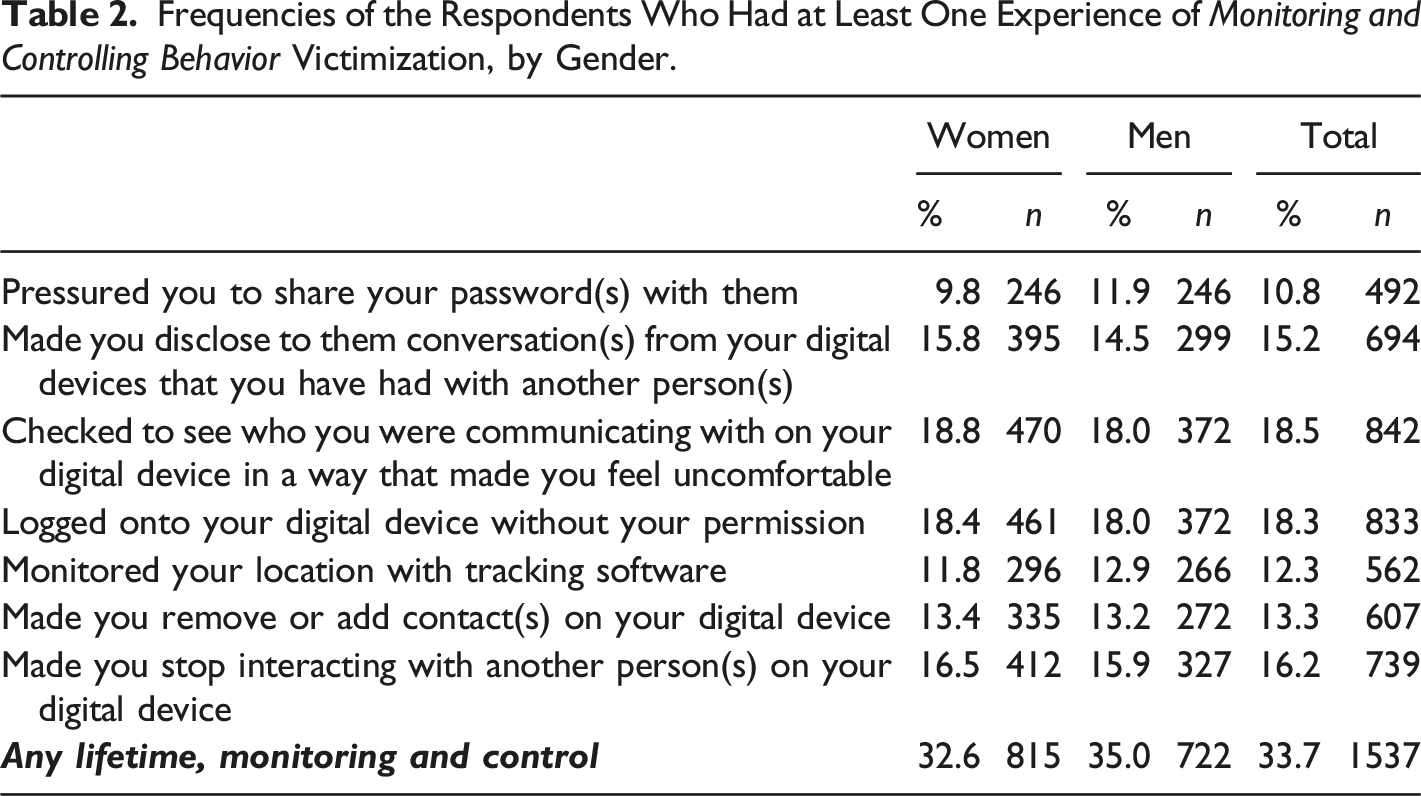
Overall, one in two (51.0%, n = 2,325) Australian adults surveyed had experienced at least one of the TFA behaviors surveyed at some point in their lifetime (women: 51.1%, n = 1,276; men: 50.8%, n = 1,049). Whilst no significant differences between women and men were found for the overall lifetime prevalence of any TFA victimization, a series of chi-squares indicated significant differences by gender for several abuse types.
Frequencies of the Respondents Who Had at Least One Experience of Sexual Coercion, by Gender.
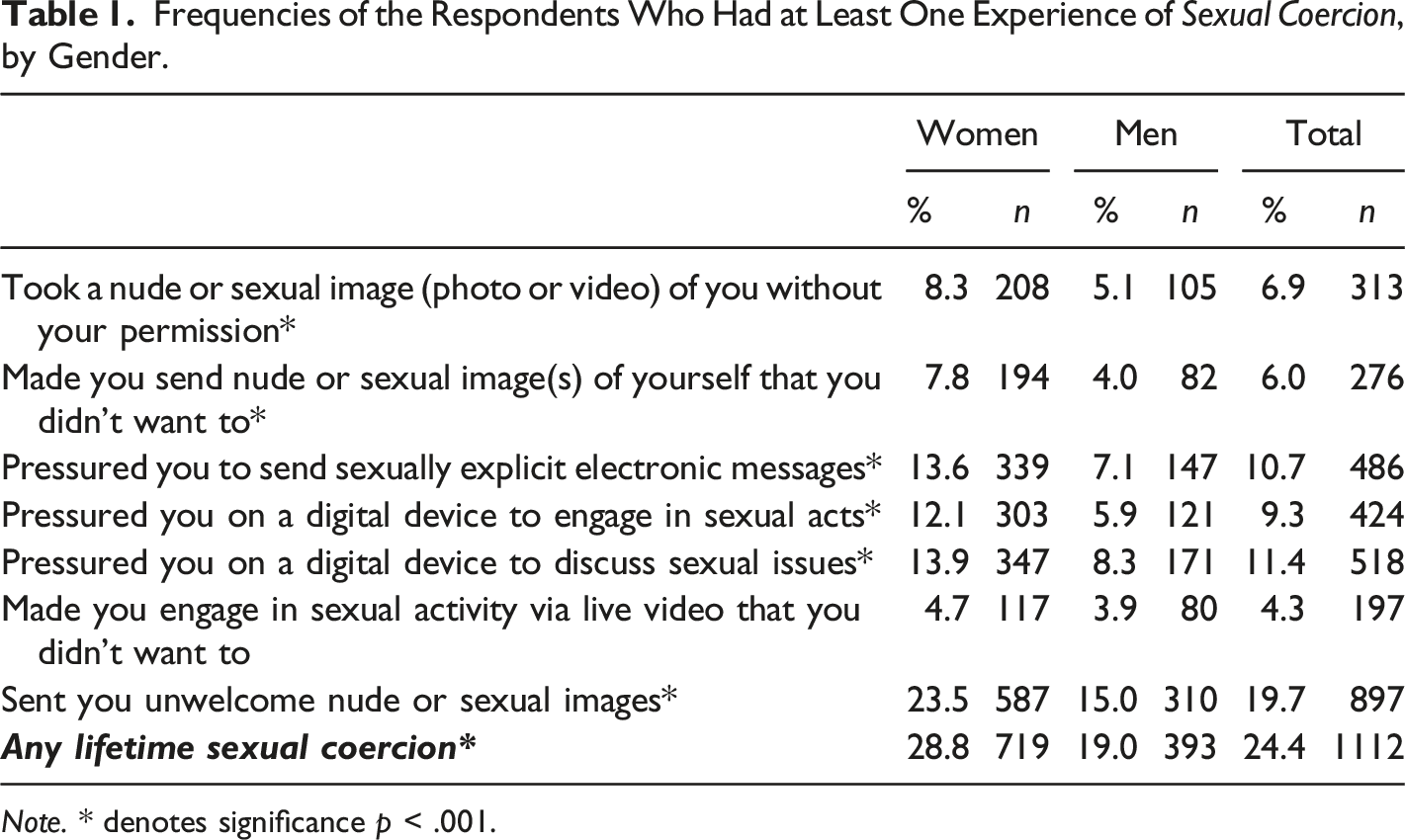
Note. * denotes significance p < .001.
Frequencies of the Respondents Who Had at Least One Experience of Monitoring and Controlling Behavior Victimization, by Gender.
Frequencies of the Respondents Who Had at Least One Experience of Threats Victimization, by Gender.
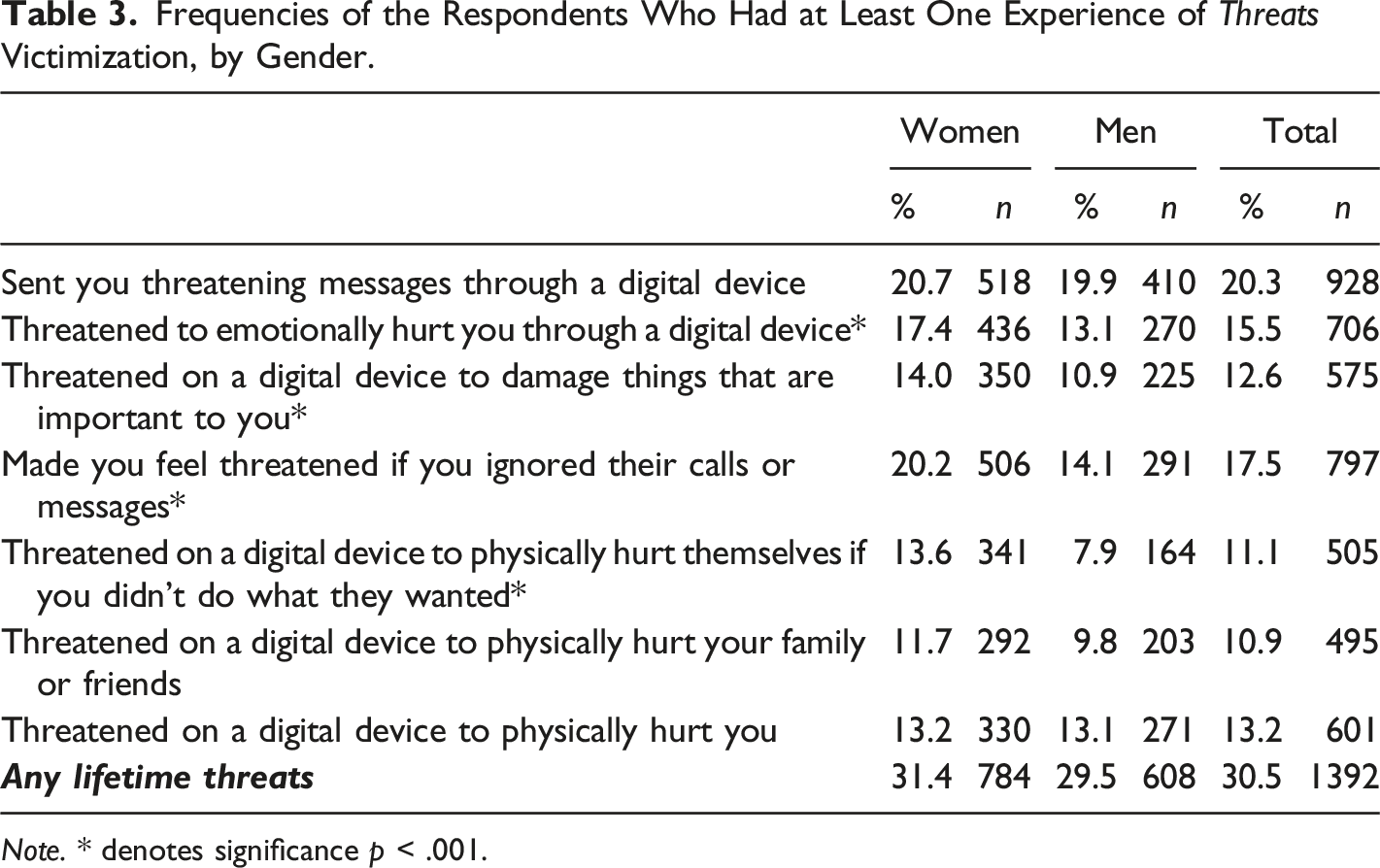
Note. * denotes significance p < .001.
Frequencies of the Respondents Who Had at Least One Experience of Humiliation Victimization, by Gender.
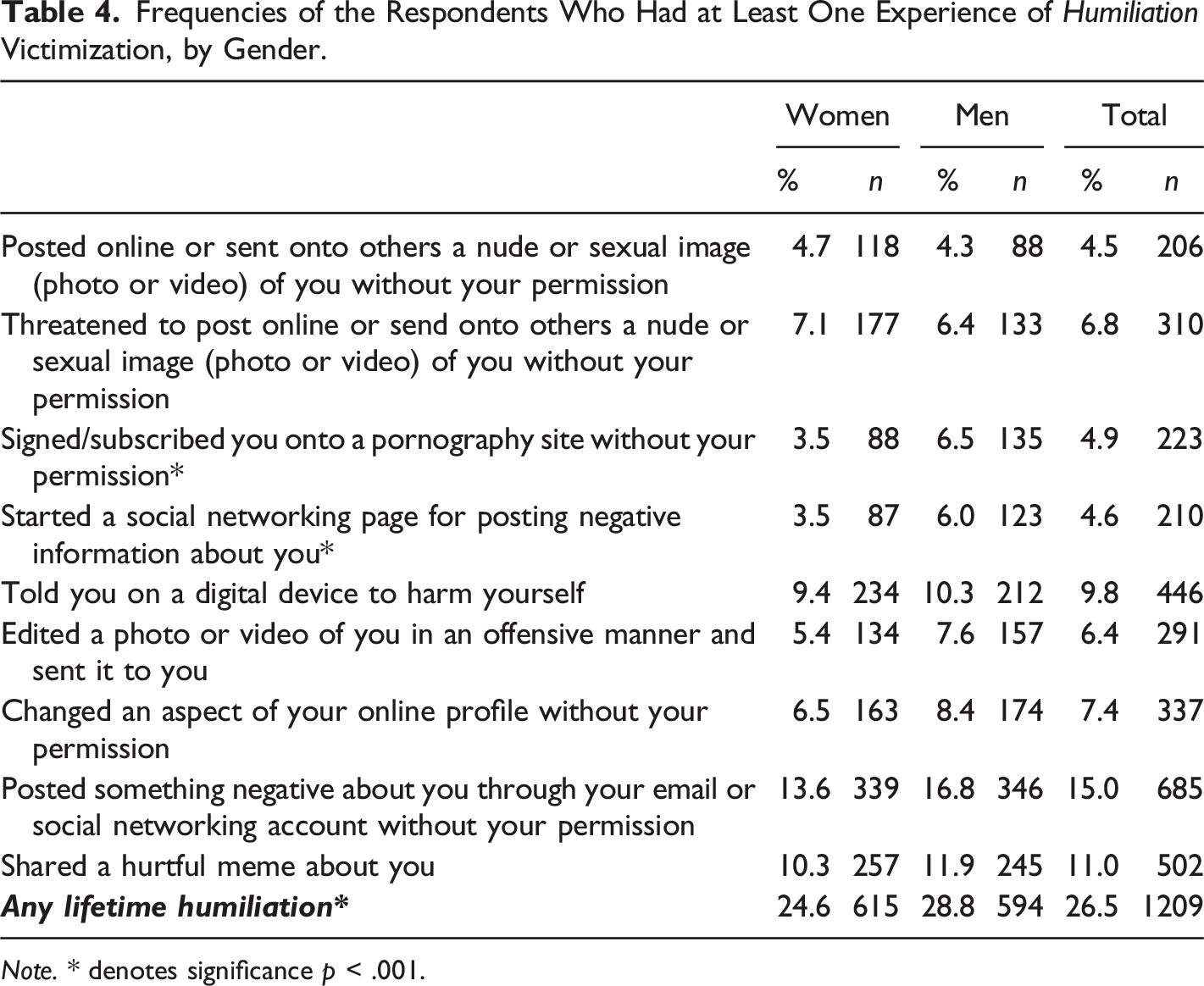
Note. * denotes significance p < .001.
Gendered Nature of Most Recent Incident of TFA Victimization
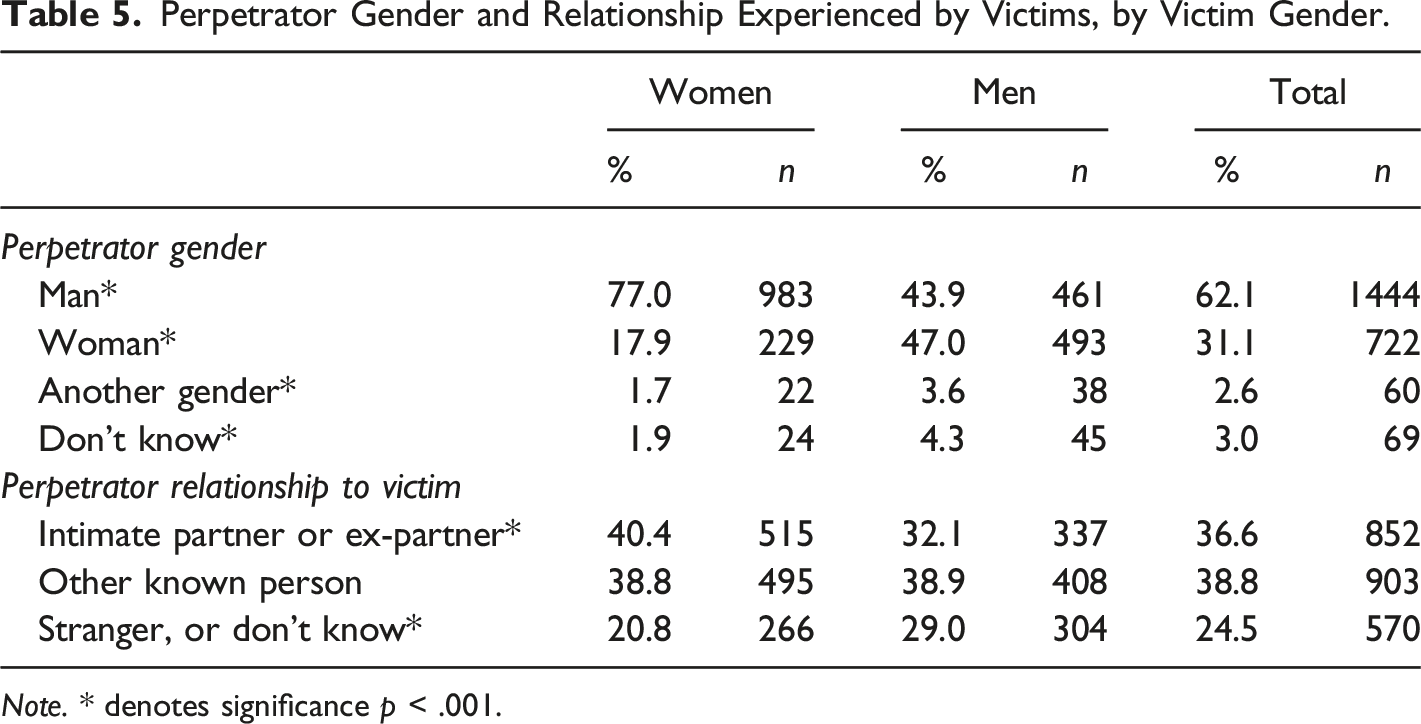
Perpetrator Gender and Relationship Experienced by Victims, by Victim Gender.
Note. * denotes significance p < .001.
As further shown in Table 5, women (40.4%, n = 515) were also more likely than men (32.1%, n = 337) to report that the perpetrator was an intimate partner or ex-partner, whilst men (29.0%, n = 304) were more likely than women (20.8%, n = 266) to report that the perpetrator was a stranger or of unknown identity: X2 (1, n = 2325) = 26.190, p < .001).
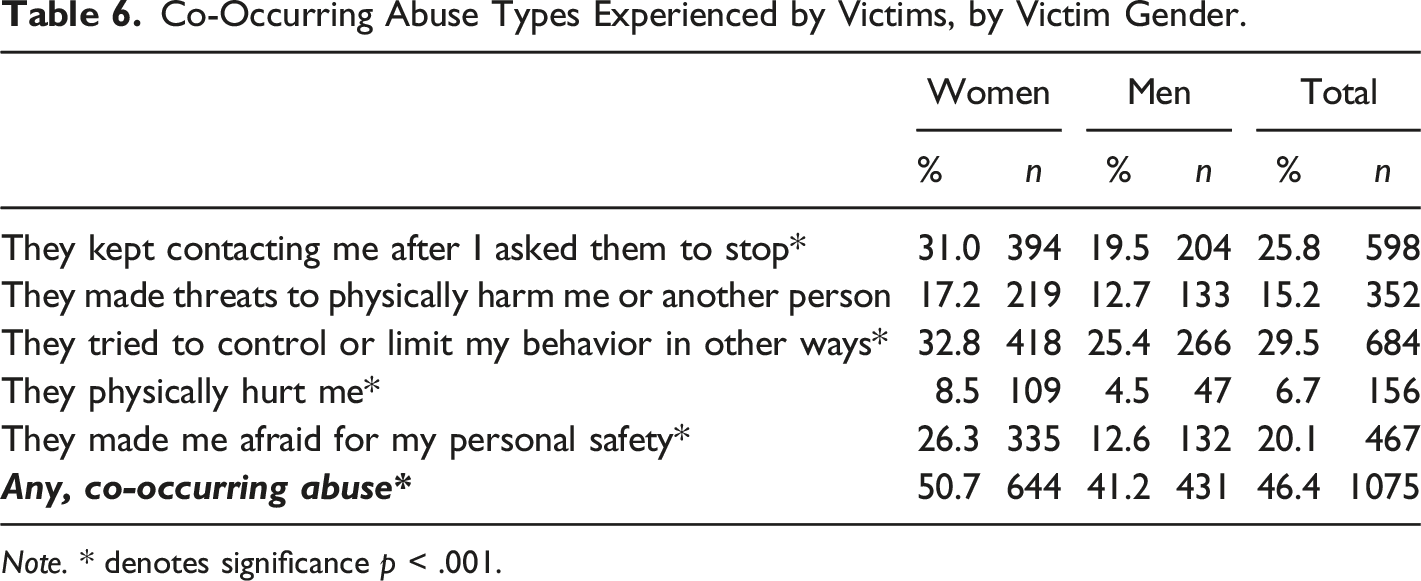
Co-Occurring Abuse Types Experienced by Victims, by Victim Gender.
Note. * denotes significance p < .001.
Correlates of TFA Victimization
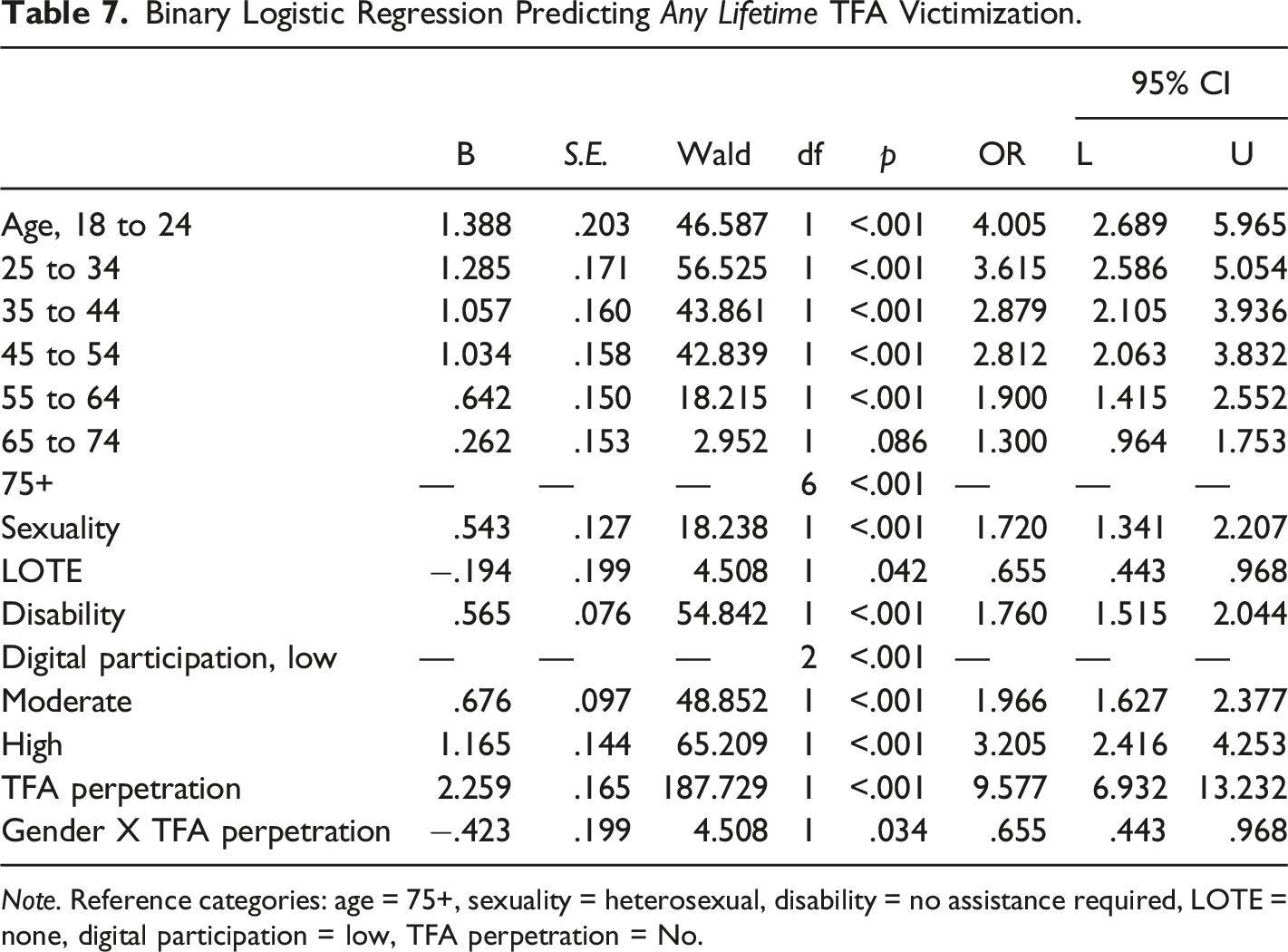
Binary Logistic Regression Predicting Any Lifetime TFA Victimization.
Note. Reference categories: age = 75+, sexuality = heterosexual, disability = no assistance required, LOTE = none, digital participation = low, TFA perpetration = No.
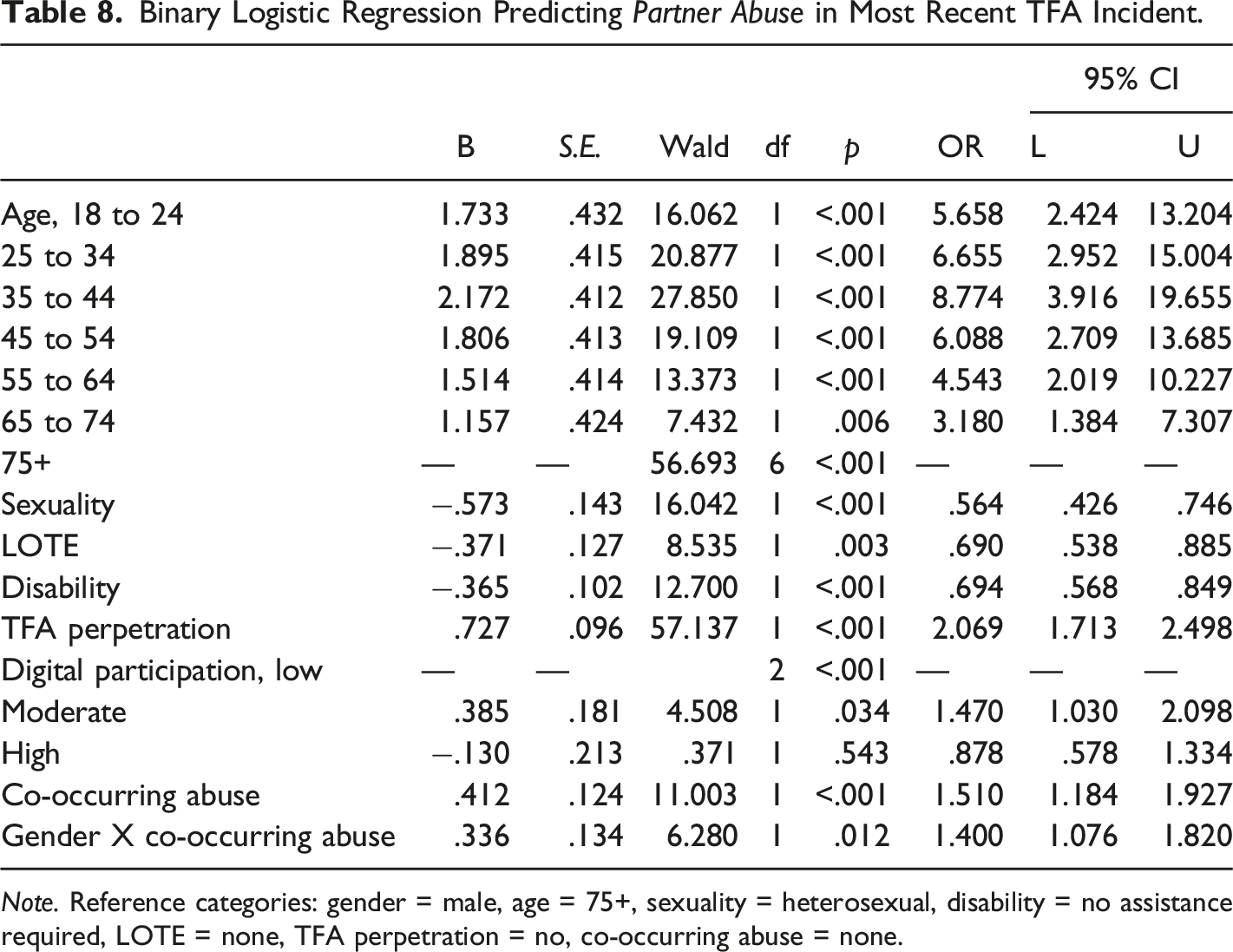
Binary Logistic Regression Predicting Partner Abuse in Most Recent TFA Incident.
Note. Reference categories: gender = male, age = 75+, sexuality = heterosexual, disability = no assistance required, LOTE = none, TFA perpetration = no, co-occurring abuse = none.
Respondents who had experienced co-occurring abuse from the same perpetrator had 1.51 (p < .001) times higher odds of also reporting that the perpetrator was a partner or ex-partner than those who had not experienced co-occurring abuse. Furthermore, there was also a significant interaction effect of gender and experiencing co-occurring abuse, such that women who had experienced co-occurring abuse from the same perpetrator had 1.4 times (p = .012) higher odds than men who reported experiencing co-occurring abuse, to have been abused by a current or former intimate partner in their most recent incident.
Discussion
Overall, the results of this study demonstrate that the experience of any lifetime TFA among adults in the general community is very common. It is perhaps unsurprising that we found TFA victimization to be strongly associated with younger age, and with higher digital participation. Previous studies have likewise found a relationship between technology uptake among younger people with exposure to cyberbullying and other forms of online abuse and exploitation (e.g., Balakrishnan, 2015; Craig et al., 2020). The findings further reflect a trend in the broader literature suggesting that the extent of online abuse victimization may not be specifically gendered (Brown et al., 2021; Flynn et al., 2022; Henry et al., 2020; Patel & Roesch, 2022; Powell & Henry, 2019). Rather, we found that other demographic variables such as sexuality and disability, as well as engagement in perpetration of online abuse, were significant predictors of overall TFA victimization, whilst gender was not.
Nonetheless, the findings presented here also provide important insights into the gendered nature of TFA. In particular, our findings provide robust support for aspects of the gendered violence thesis, found within a representative sample of adults, and thus reinforcing the literature to date that has highlighted the importance of abuse type, context and impacts in understanding women and men’s experiences of online abuse (e.g., Brown et al., 2021; Powell, 2022). Specifically, we found women were more likely than men to experience online sexual coercion, as well as being more likely to experience TFA in the context of a current or former intimate partner relationship, and with the presence of co-occurring abuse from the same perpetrator. These three critical features of sexual violence, intimate partner violence, and a pattern of multiple tactics of abuse from the same perpetrator, arguably represent consistencies with what is known about the nature and contexts of gendered violence more broadly (Kelly, 1987; Stanko, 1985; Walby et al., 2014; Westmarland, 2015). To our knowledge, these results present the most robust evidence to date of the gendered nature of TFA among an adult population and support the qualitative and smaller studies into women’s experiences of technology facilitated sexual violence (Bates, 2017; Douglas et al., 2019), technology facilitated partner abuse (Flynn et al., 2022), and the views of stakeholder professionals supporting women victims of sexual and partner violence (Flynn et al., 2021; Tanczer et al., 2021; Woodlock et al., 2020). Arguably, these findings point to the critical importance of recognizing technology as a tool of abuse that is used by perpetrators within particular contexts of interpersonal violence and that when we ignore that context, and focus only on the extent of TFA behaviors, we miss potential vital explanations of the risks and impacts of these harms. Indeed, as Dunn (2021) has further argued, there is a tendency to minimise the harms of TFA because of its digital nature, rather than understanding its impacts within a broader context of gendered violence (see also Bailey & Burkell, 2021).
Our results further suggest some differences, albeit perhaps subtle, in the role of digital participation in TFA victimization. Specifically, while overall lifetime TFA is associated with high digital participation, partner TFA is associated only with moderate digital participation, rather than high. These findings may suggest that victims’ engagements with technology do not play the same heightened role in partner abuse as they do in TFA overall. In light of much criminological literature into cybercrime and online abuse that continues to investigate victims’ online activities as heightening their risk of victimization (see e.g., Holt et al., 2017 for a critical discussion), we suggest that these findings are worthy of further exploration in future research and arguably in mainstream cybercrime research examining online abuse. In particular, the all too familiar advice offered to victims of online abuse to withdraw from their devices fails to acknowledge the embedded nature of digital participation in contemporary society (across work, education, civic and personal domains, see Henry et al., 2020; Powell & Henry, 2017); as well as replicating gender inequality in women’s safe and equitable access to digital participation (see Bailey & Burkell, 2021; Dunn, 2021).
The results presented here clearly indicate that men also experience TFA, and at similar overall rates to women. Men’s experiences were less likely to occur in intimate partner contexts, and within a pattern of co-occurring abuse from the same perpetrator. Rather, our results found that men’s experiences of TFA were perpetrated by both men and women, and were more likely to be experienced from other known people and strangers. This trend holds some similarities to men’s experiences of in-person violence in which men, both strangers and acquaintances, feature as the predominant perpetrators (e.g., ABS, 2019). These findings should not negate the need for responses to men’s victimization experiences; but rather, require analyses that attend to the reproduction of aggressive, violent and harmful masculinities within male dominated peer and online contexts (see e.g., DeKeseredy & Schwartz, 2016). However, we suggest, responses should recognize the heightened risk that when women report TFA victimization, it may be associated with an ongoing pattern of relational abuse and thus warrant additional attention to safety assessment and longer-term supports, as we further elaborate below.
Policy and Program Implications
Many governments are increasingly concerned with addressing TFA in policy, program and service sectors. Globally, TFA has been the subject of multiple position papers by governments and non-government organizations (Office of the Privacy Commissioner Canada, 2021; UN Women, 2022; Witwer et al., 2020). In the Australian context, TFA is identified as a priority issue within the National Plan to End Violence Against Women and Children (Commonwealth of Australia, 2022), suggesting some recognition of the potential gendered nature of this form of abuse. Taking into account the gendered dimensions to TFA might not suggest the development of new supports, but rather ensuring that appropriate risk assessment and referrals to women’s sexual and/or domestic violence services are made where women are experiencing TFA in partner contexts and/or within a pattern of abuse. This might involve quite a different response than for other more general forms of online abuse that might be responded to through regulatory means, such as holding technology service providers to community safety and wellbeing standards, as well as through broader cybercrime education and prevention measures. Considering previous research that has found a poor understanding and response to technology based harms among justice and support professionals, especially police (e.g., Dragiewicz et al., 2018; Flynn et al., 2023; Tanczer et al., 2021), these findings further suggest it may be particularly important for these professionals to be trained to recognize, respond and refer TFA victims to support services appropriate to the different contexts of their abuse experience.
Study Limitations and Future Research
This study provides some support for a multifaceted gendered nature to TFA victimization, suggesting that these harms warrant further investigation with representative samples in other countries to determine the replicability of the trends reported here across international contexts. Importantly however, the findings also highlight that whilst scholarly focus on the gendered nature of TFA continues to be of relevance for informing policy responses or indeed, ensuring that the responses match the experiences (for example, locating services for intimate partner technology facilitated abuse vs. holding service providers accountable for removing and preventing harassing commentary online), there are important diversity dimensions to experiences of TFA victimization, which we further explore elsewhere (Flynn et al., 2022). Future research might also consider more targeted sampling to examine the specific nature of these potentially intersectional abuses, such as homophobic and racist abuse for instance, or seek to better quantify the harms and impacts that might be specific to these groups.
Criminological research, particularly in the field of men’s violence against women, has also increasingly highlighted the relevance of examining repeat victimization in order to make patterns of gendered violence more visible (see Walby et al., 2016). Indeed, Sylvia Walby et al. (2016, 2017) further suggests that high-frequency victimization measures (beyond a maximum cap of 5 incidents) more accurately captures the nature of women’s violent victimization in domestic and intimate partner contexts. Thus, there are some limitations to the analyses presented here which employ a binary (Yes/No) set of measures of victimization and as such, may inadvertently obscure nuances in the gendered frequency of TFA incidents. Future research into TFA should consider a response frame that enables measurement of a higher frequency of victimization, whilst still capturing comparable lifetime prevalence measures.
Finally, there continues to be a gap in research addressing the potential male peer and other dynamics of masculinities in men’s experiences of, and indeed engagements in, TFA (for an exception, see DeKeseredy & Schwartz, 2016). As Brown and et al. (2022) have suggested, there is comparatively little research that has examined the role of masculinity in shaping both men’s engagement in TFA, and men’s responses to different contexts of TFA victimization. The current study has not captured men’s engagement in TFA, particularly in networked and gender-based hate contexts (see Chan, 2023 for a more detailed discussion). Applying gendered analyses to men’s engagements in, and experiences of, TFA is a clear avenue for further research.
Conclusion
There has been a substantial gap in quantitative research that examines TFA victimization with respect to abuse types, as well as the relational contexts of abuse, and presence of co-occurring abuse. The results of this support the continuing relevance of the gender-based violence thesis for understanding the nature, relational contexts and patterns of co-occurring abuse within TFA. We contend that in order to understand the gendered nature of these harms, such multifaceted analyses are of vital importance. When analyses focus only on the higher-level prevalence and demographic correlates of online and TFA, there is a risk that gendered dimensions of these harms are obscured. Such gender differences may have important implications for responding to TFA. In particular, general forms of online abuse might be readily responded to through regulatory means, such as holding technology service providers to community safety and wellbeing standards, whilst there may be additional policing and/or justice and support responses to experiences of TFA that occur in the contexts of specific abuse types – such as sexual and/or intimate partner violence.
Overall, the study suggests that future research into TFA needs to attend to the nature of abuse types, relational context and patterns of co-occurring abuse from the same perpetrator to avoid obscuring gendered differences in victimization experiences. Though lifetime TFA may not be specifically gendered in its overall extent, there is much that our existing concept of gendered violence can offer future research as it continues to map the nature and contexts of TFA and, ultimately, tailored support and justice responses for different victimization patterns.
Footnotes
Declaration of Conflicting Interests
The author(s) declared no potential conflicts of interest with respect to the research, authorship, and/or publication of this article.
Funding
The author(s) disclosed receipt of the following financial support for the research, authorship, and/or publication of this article: This work was supported by Australia’s National Research Organisation for Women’s Safety (ANROWS), 4AP.3: Fourth Action Plan Research of the National Plan to Reduce Violence against Women and their Children 2010–2022.
