




Abstract
Objective:
Cardiac sympathetic denervation (CSD) is a surgical antiadrenergic procedure that can reduce sustained ventricular tachyarrhythmia (VT). Video-assisted thoracoscopic surgery (VATS) is currently the standard approach used in CSD, and the practicality for robot-assisted thoracoscopic surgery (RATS) has yet to be investigated.
Methods:
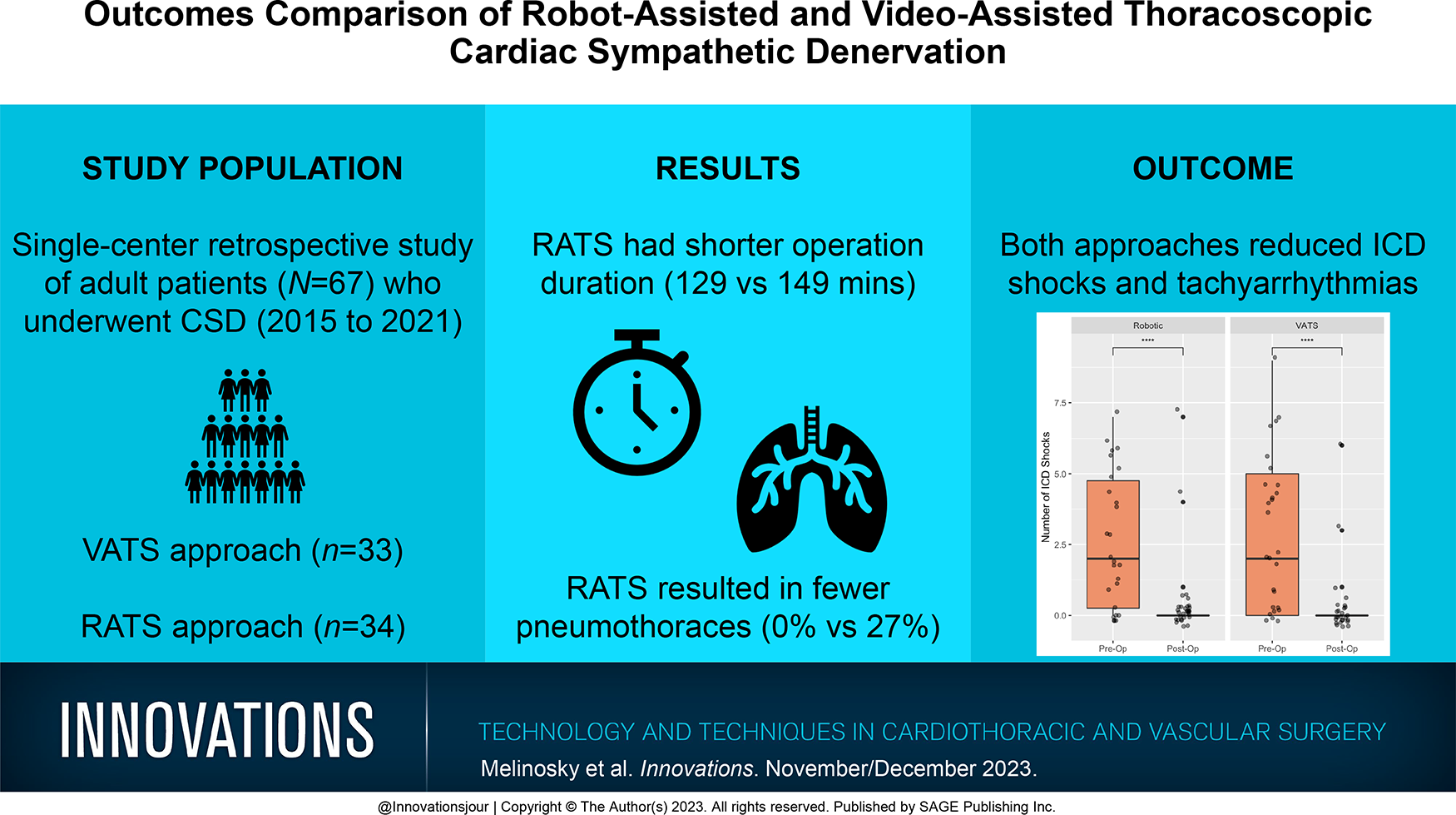
We conducted a single-center retrospective study of all adult patients (N = 67) who underwent CSD from 2015 to 2021. We compared short-term outcomes of those treated with RATS versus VATS thoracic sympathectomy. For patients with VT, we examined the effectiveness of a RATS approach in reducing implantable cardioverter defibrillator (ICD) shock burden.
Results:
A total of 34 patients underwent RATS cardiac denervation, and 33 underwent VATS cardiac denervation. Those undergoing RATS denervation had a significantly shorter procedure duration with a median of 129 min (P = 0.008). Patients receiving the VATS approach were significantly more complicated by pneumothorax (P = 0.004) and overall complications (P = 0.01) when compared with the RATS approach. At 1 year after surgery, both groups had significant reductions in ICD shocks compared with before surgery, both decreasing from a median of 4 to 0 shocks (P < 0.001). In addition, at 1 year after surgery, the percentage of patients with persistent ICD shocks and the median of ICD shocks were similar between the groups.
Conclusions:
The RATS approach to cardiac denervation has similar 1-year follow-up outcomes in reducing recurrent VT as the VATS approach. However, patients undergoing RATS denervation experienced better perioperative outcomes. This shows promise for robotic CSD to be an effective and safe therapeutic option for patients with malignant arrhythmias.
Get full access to this article
View all access options for this article.
References
Supplementary Material
Please find the following supplemental material available below.
For Open Access articles published under a Creative Commons License, all supplemental material carries the same license as the article it is associated with.
For non-Open Access articles published, all supplemental material carries a non-exclusive license, and permission requests for re-use of supplemental material or any part of supplemental material shall be sent directly to the copyright owner as specified in the copyright notice associated with the article.
