




Abstract
Aim:
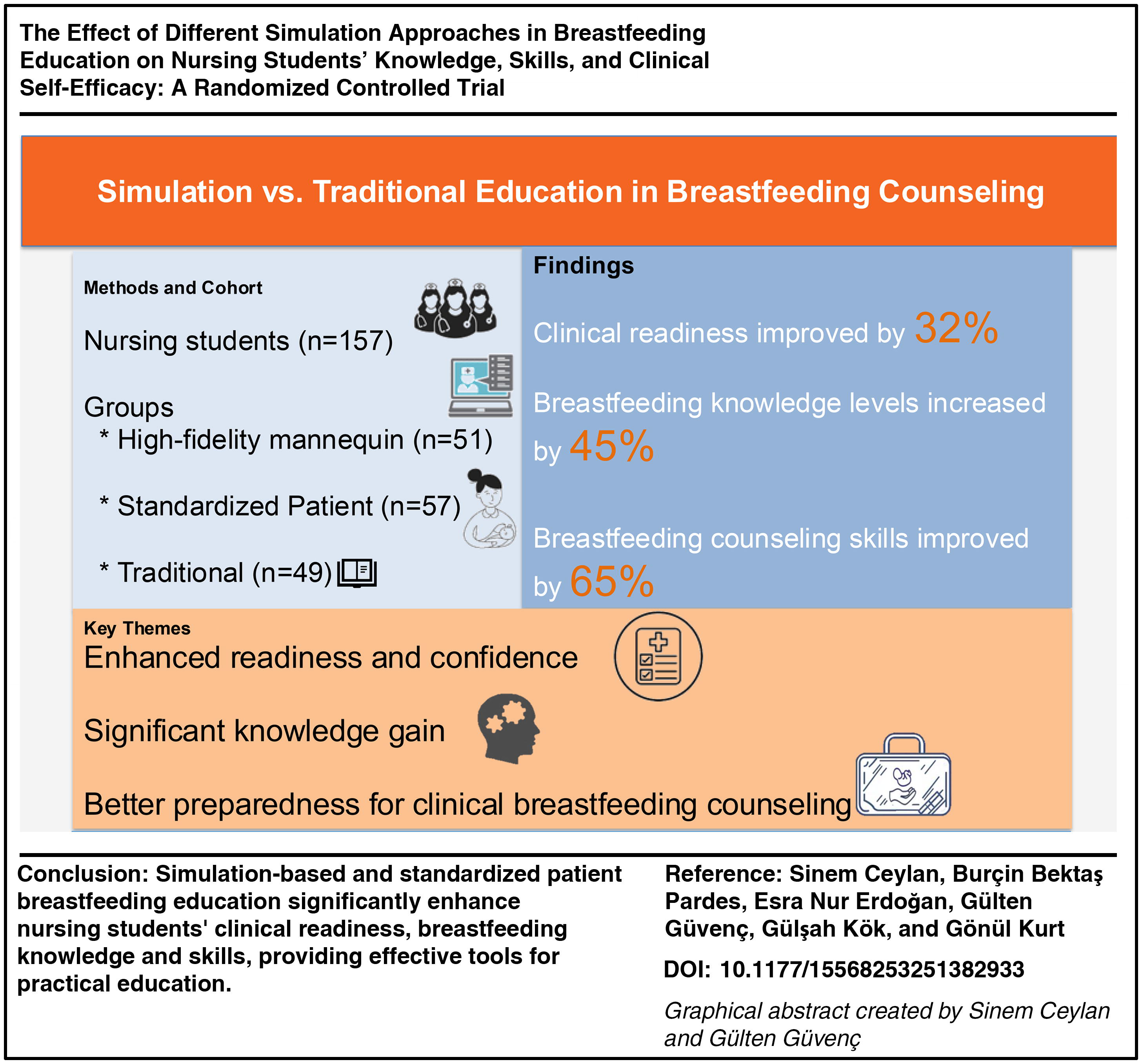
This study aimed to compare the effectiveness of theorical education, standardized patients, and high-fidelity mannequins in improving nursing students’ breastfeeding counseling skills.
Design and Methods:
A single-center randomized controlled trial was conducted in a nursing faculty in Türkiye with final-year students who had completed women’s and child health courses. A total of 157 final-year nursing students participated. Students were randomly assigned to one of three groups: control group (theoretical education), standardized patient training, or high-fidelity mannequin-based simulation. Data were collected at three time points using four measurement tools. One-way ANOVA and post hoc tests were used for analysis.
Results:
Both simulation groups scored significantly higher than the control group in knowledge and preparedness (p < 0.001). The highest self-efficacy and counseling scores were observed in the high-fidelity simulation group. No significant difference was found between the two simulation groups (p > 0.05).
Conclusions:
Innovative, hands-on educational strategies can enhance clinical competence in breastfeeding counseling and contribute to improved postpartum maternal and infant care quality.
Get full access to this article
View all access options for this article.