



Abstract
In recent years, semi-peripheral industries have produced numerous video games that use local settings but aim at a global audience. We explore this trend using five cases of commercially released Czech indie games that feature local themes and settings. Our research combines qualitative content analysis of representation with developer interviews, which we analyze to reveal motivations for including local content, its implementation, localization, and reception. We find that the games provide a unique image of the country by virtue of showing the country's peripheral regions and everyday material culture. The developers’ motivations for using local culture range from creative (creating believable stories and environments) to practical (access to reference material). They maintain a dual allegiance to the international and local audiences because while they make most of their profits abroad, the local communities play key roles by providing initial feedback, encouragement, and development assistance.
Keywords
The 2023 game HROT (meaning “tip of a blade” in Czech) is one of the “boomer shooters” that became popular in the late 2010s. Its brown palette and low-poly environments make it look like Quake (id Software, 1996), but instead of abstract military bases and gothic mazes, it takes place in a postapocalyptic version of 1980s Czechoslovakia. You will visit twisted versions of local landmarks, such as Prague's Vyšehrad castle (see Figure 1), as well as Communist-era apartment blocks and castles in the countryside. To regain health, you eat liver dumplings (a staple of Czech Sunday dinners), and as a boss of the first episode, you will fight a spider monster with the head of Klement Gottwald, the first Communist president of Czechoslovakia. Few foreign players can understand these references, but the game sold especially well in the US, making it a minor indie hit.
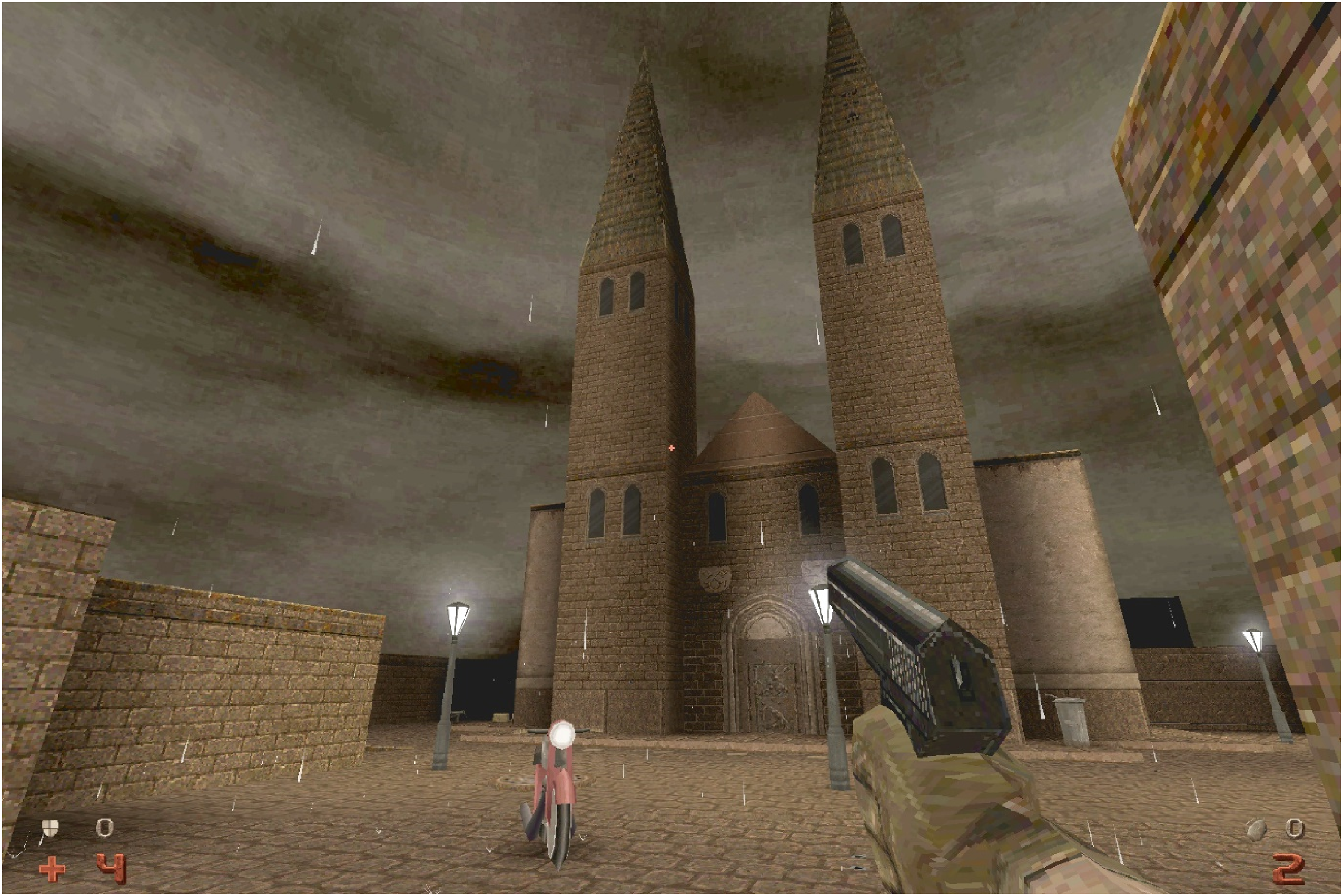
A view of the Vyšehrad castle complex in HROT.
As a title with strong local cultural markers sold to a global audience, HROT is part of a broader trend that has been called translocal games (Eklund et al., 2024) and identified in Western Europe, Central and Eastern Europe, and Latin America (Martín & del Olmo, 2020; Majkowski et al., 2023; Ramírez-Moreno & Navarrete-Cardero, 2024). While the existing literature has focused mostly on the content of these games, this article will add a production perspective, asking why and how Czech game developers include local themes, settings, and cultural references in a game like HROT.
Conceptualizing Local Content in Local Game Production
Our work occupies an unexplored intersection of two strands of literature: (1) research on games and local or national cultures and cultural heritage, and (2) game production studies focusing on the local and peripheral development scenes. Both provide inspiration for our study while leaving gaps that this article aims to fill.
Similarly to the literature on national cinemas (Hjort & Petrie, 2007), research on games and national culture sees games as a part of the cultural effort to maintain or promote a nation as an “imagined community” (Anderson, 2006). According to Webber (2020), games can be used to project a national identity to a global audience as a part of national branding, soft power, and cultural diplomacy; like in cinema, this may be especially beneficial for peripheral or semi-peripheral nations (Hjort & Petrie, 2007). A recent study on Latin American games has identified a group of cosmopolitan games that appeal to an international audience by employing a hybridized set of local and global inspirations, often with fantasy elements (Ramírez-Moreno & Navarrete-Cardero, 2024).
A significant strand of literature emphasizes the potential of games to represent and disseminate cultural heritage, including both material culture (buildings, crafts) and intangible heritage (including language and folklore) (Mochocki, 2021; Zeiler & Thomas, 2021). Games may, for example, popularize local aesthetics, such as the Spanish game Blasphemous, whose distinct visual design was influenced by Andalucian sacral art and architecture (Martín & del Olmo, 2020). In some countries, such as the UK or Norway, the perceived value of games in cultural diplomacy and heritage dissemination is enshrined in policy support for games with local cultural markers (Sotamaa et al., 2020; Webber, 2020). In Czechia, a public funding scheme for games is set to launch in 2025. At the moment, local developers may apply for the EU-wide Creative Europe grants; some educational game developers have also taken advantage of research grants.
The representation of cultural heritage is generally seen as a positive value, promoting diversity and mutual understanding (Pnueli & Gluzman, 2022). However, peripheral games can also promote chauvinistic discourses—as shown in Polish games that evoke “imperial nostalgia” (Majkowski, 2018; Majkowski et al., 2023). They can also contribute to self-stereotyping and self-exoticization, as shown in horror games that portray Eastern Europe as a haunted wasteland (Fousek Krobová et al., 2022). Importantly, the values of creators do not always align with those of their states. That is, for example, the case of Odd Meter, a Russian studio exiled to Kazakhstan that made Indika (2024), an adventure game that mocks the Russian Orthodox Church while faithfully recreating its cultural heritage, such as religious artifacts.
Within game production research (see Sotamaa & Švelch, 2021), studies from individual countries or regions emphasize the interplay of international flows of capital and culture with the local social and economic contexts (Keogh, 2021; Kerr & Cawley, 2012; Young, 2018). Peripheral industries are characterized by their dependency on respective centers, relying on deals with publishers or investors from more central or more affluent countries, and using engines, tools, and genre templates originating in the centers (Baeza-González, 2021; see also Mukherjee, 2022). Lower labor costs in some peripheral regions might make local producers more competitive on the global market, but local companies may then specialize in outsourcing work rather than creation of locally owned intellectual property (Ozimek, 2021). The lack of investment funding means that local developers have often taken the route of crowdfunding or early access (Martín & del Olmo, 2020). Nevertheless, peripheral productions also harbor a promise of diversifying game production through niche genres and themes (Švelch, 2021b).
Given their orientation towards the global audience, studios from a specific city or small country rarely compete with each other on the market. Instead, local developers form professional networks to share resources and skills (Keogh, 2021; Young, 2018). Czechia has two major industry clusters (see Lehtonen et al., 2020) in the cities of Prague and Brno (GDACZ, 2024); on top of these, Czech game producers—both larger and independent—are connected through shared spaces and events, such as developer conferences or the Czech Game of the Year awards. Also important is the communication infrastructure of gaming media or social media groups; despite the availability of international sources, Czech players primarily follow Czech-language gaming media (Šisler et al., 2017). These online and offline spaces are especially important for independent developers, who use them to present their projects and collect feedback. Overall, Czech developers accept the dominance of the industry centers and major markets, but also identify with the national or local scenes and, similarly to the Brazilian programmers investigated by Takhteyev, depend on “local networks, local relations of production, local institutions,” (2012, p. 205). This duality—which we may call dual allegiance—shapes their creative practice and encourages them to make games that resonate with both local and global communities. This concept will elucidate the developers’ reasoning behind using local themes.
Both approaches outlined in the previous paragraphs—the national culture and heritage approach and the local scene approach—have their blind spots. The former mainly focuses on cultural policy and content but rarely addresses the process of making local games and the economic, creative, or personal motivations for doing so. The latter, on the other hand, tends to assume the perspective of political economy (on the macro level) or ethnography (on the micro level) and bracket out the games’ content. This article will connect the textual and production perspectives on local games by tracing the inclusion of local content in the production process. First, it will contextualize the current translocal production within the historical development of the country's industry. After explaining the methodology, the empirical part will discuss the games themselves, their representation of local culture, and their production process.
A History of Local Themes in Czech Games
Czechia (until 1993 a part of Czechoslovakia) has long been on the periphery of international game production (Švelch, 2021b). Over the years, its peripheral position has resulted in various modes of using local settings: hyperlocal, local, globalized, and translocal. Although these modes have emerged at specific times in history, they coexist rather than displace each other.
In the 1980s and 1990s, amateurs in late socialist Czechoslovakia made games set in their towns, schools, factories, and apartments, often with autobiographical elements. Analogously to the term hyperlocal media, these have been called hyperlocal games (Švelch, 2021a). Despite targeting an audience of friends and acquaintances, some hyperlocal games became popular across the country; that was the case of 1989's Revenge of the Insane Atari Owner, which took place in a small-town computer club.
After the introduction of the free market, commercial production took off in the 1990s, aimed primarily at the national (or, at its most ambitious, Central/Eastern European) audience. Many Czech titles, especially adventure games, drew from local popular culture. These included the comedy series Polda (sometimes translated as Detective Hayseed) and Hot Summer, both of which featured voiceovers by prominent local comedians. A different slice of local culture appeared in the Warcraft-like real-time strategy game The Hussite (Phoenix Arts, 1998). The game takes place during the 15th century Hussite wars between religious reformists and the Catholic forces of the Holy Roman Empire; as a period when Czechia was the epicenter of European history, the era became a recurring setting of Czech games. The general tendency to produce locally-themed games for local markets has been observed in both semi-peripheral and peripheral countries, including France, Spain, Russia, and China (Cao et al., 2023; Fernández-Vara, 2022; Jankowski, 2022; Serada, 2022). It was a viable business strategy as long as the revenue from the local market exceeded development costs. But as costs went up due to technological advances, (semi-)peripheral companies had to seek foreign publishers and address the global markets.
Around 1999, the Czech game industry started producing games that can be called globalized. In pursuit of international audiences, many local developers suppressed overt markers of locality. A typical example is Mafia (Illusion Softworks, 2002), whose content bore no overt traces of Czechness, although its Czech localization included voiceovers by some of the country's top actors.
Between 1999 and 2018, Czech games rarely used Czech themes or settings, with the exception of Polda sequels, educational titles, amateur games, and freeware games made for local developer competitions. This started changing in 2014 when the Prague-based developer Warhorse Studios launched the crowdfunding campaign for Kingdom Come: Deliverance, a mid-budget (or “AA”) medieval role-playing game (RPG) set in the Hussite era. The campaign was a success, as was the game's 2018 release. This successful example, combined with the triumph of the Polish Witcher series, contributed to the normalization of Central/Eastern European video game settings, both historical and folkloric. The resulting production trend can be called translocal (Eklund et al., 2024), covering games that abide by global standards and come out on global platforms but employ local themes and settings.
Table 1 shows a list of locally set or themed games made in Czechia since 2018, broken down by the type of setting or historical period. The table shows the ongoing interest in the Hussite era, although both 1428: Shadows over Silesia and Felvidek combine it with fantasy elements. Notably, it is not only Czech-owned studios that produce translocal games. Warhorse Studios keeps working on the Kingdom Come series after its acquisition by the multinational conglomerate Embracer Group. Another Embracer-owned Czech studio Ashborne Games has released Last Train Home, a tactical game following the story of the Czechoslovak Legion during World War I.
List of Czech Games Using Local Themes or Settings Produced Since 2018.
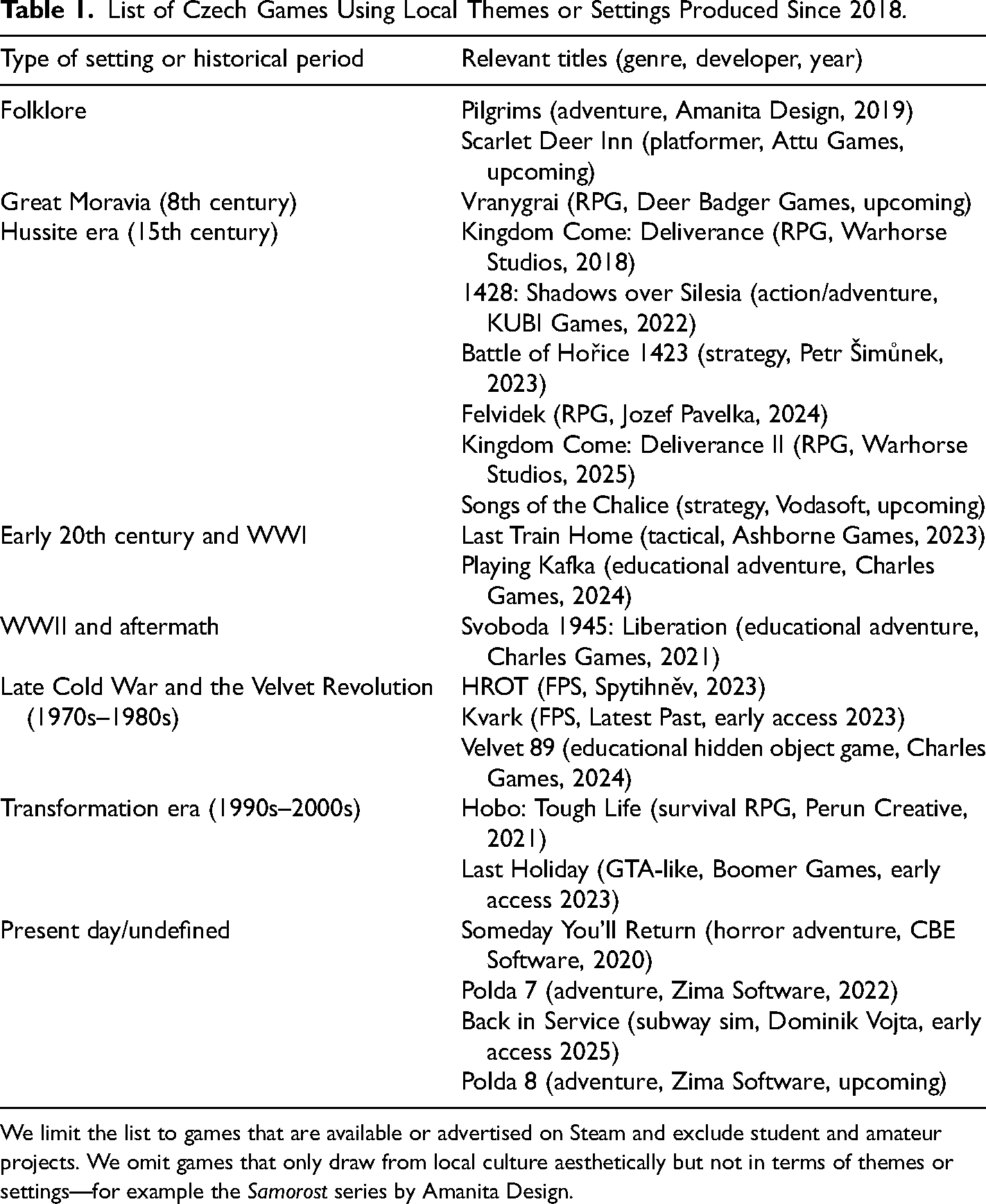
We limit the list to games that are available or advertised on Steam and exclude student and amateur projects. We omit games that only draw from local culture aesthetically but not in terms of themes or settings—for example the Samorost series by Amanita Design.
Methodology
In our qualitative research, we focused on five titles from Table 1, all released in the wake of Kingdom Come: Deliverance's success: (1) Hobo: Tough Life (2021; hereafter referred to as Hobo), (2) HROT (2023), (3) Last Holiday (early access in 2023), (4) 1428: Shadows over Silesia (2022; Shadows for short) and (5) Someday You’ll Return (2020; SYR). The selection was guided by several factors, including the availability of playable (early access or finished) versions of the game, diversity in terms of setting or historical period, and diversity in the region(s) represented by the games. We picked independent titles made by smaller teams where we could interview individuals making creative and managerial decisions: both HROT and Shadows were made by solo developers, SYR by a two-person studio, and Hobo and Last Holiday by teams of around ten people. We excluded publicly funded educational titles, which have been analyzed elsewhere (Šisler et al., 2022).
Our principal research question was: Why and how do Czech developers implement local themes and settings in their video games? To answer it, we combine the following material: (1) the games themselves, and (2) interviews with lead designers, directors, or primary (co-)authors of the games: Jiří Vašica and Petr Bělohrad for Hobo, Spytihněv for HROT, Antonín Capoušek for Last Holiday, Petr Kubíček for Shadows, and Jan Kavan and Lukáš Medek for SYR. The interviews were conducted in person, except for the SYR devs, interviewed using video chat. 1 All participants consented to have their full names published in the paper, with the exception of Spytihněv, who prefers to go by his nom-de-plume. We drew additional factual information from media interviews and official paratexts, including Steam pages. All seven respondents are male Czech developers in their late 20s to 40s. Although the selection is lacking in demographic diversity, it corresponds to the fact that the Czech game industry workforce is 81% male (GDACZ, 2024).
Game analyses followed the principles laid out by Fernández-Vara (2015), but they function primarily as a stepping stone to the analysis of the game's production and should not be mistaken for full-fledged close readings. The interview material was analyzed following the principles of thematic analysis (Ayres, 2008). Based on existing game production studies literature and a preliminary probe into the material, we identified four basic themes that guided the coding process, each of which corresponds to a stage of the games’ production: motivation for the inclusion of local content, its implementation, localization, and the reception of the games. We did not, however, analyze game reviews or player feedback, and our findings regarding reception (including sales figures) therefore only reflect the developers’ knowledge and perspective.
Representation and Cultural Heritage
While set in Czechia, the five games mostly follow mechanical and narrative conventions of existing, internationally recognizable (sub-)genres. HROT is a boomer shooter (a retro first-person shooter game inspired by Doom and Quake), Hobo is a survival RPG, Someday You’ll Return, a horror game inspired by the Silent Hill series. Last Holiday was inspired by the Finnish title My Summer Car (Amistech Games, 2016) and similarly centers around building one's car in a rural setting; Shadows contains a mix of adventure, action, and RPG mechanics.
As seen in Table 2, the games include a diverse range of locations, as well as tangible and intangible heritage (Mochocki, 2021). When foreign developers set their games in Czechia, they almost exclusively use Prague and its surroundings, as seen in Tomb Raider: The Angel of Darkness (Core Design, 2003), Call of Duty: Modern Warfare 3 (Infinity Ward, 2011), and Deus Ex: Mankind Divided (Eidos Montreal, 2016). In our sample, only Hobo and HROT use Prague and both combine it with other locations. To complement Prague's landmarks such as the astronomical clock, HROT takes the player to mundane or unattractive sites, such as the Malešice incineration plant, whose tall smokestack looms over Prague's eastern periphery. As the developer puts it, “you can see it from almost anywhere in Prague. It is in fact Prague's true landmark.” Perhaps the most peripheral is the setting of Last Holiday: the village of Bžany in rural North Bohemia, commonly portrayed as a poor and depressed region.
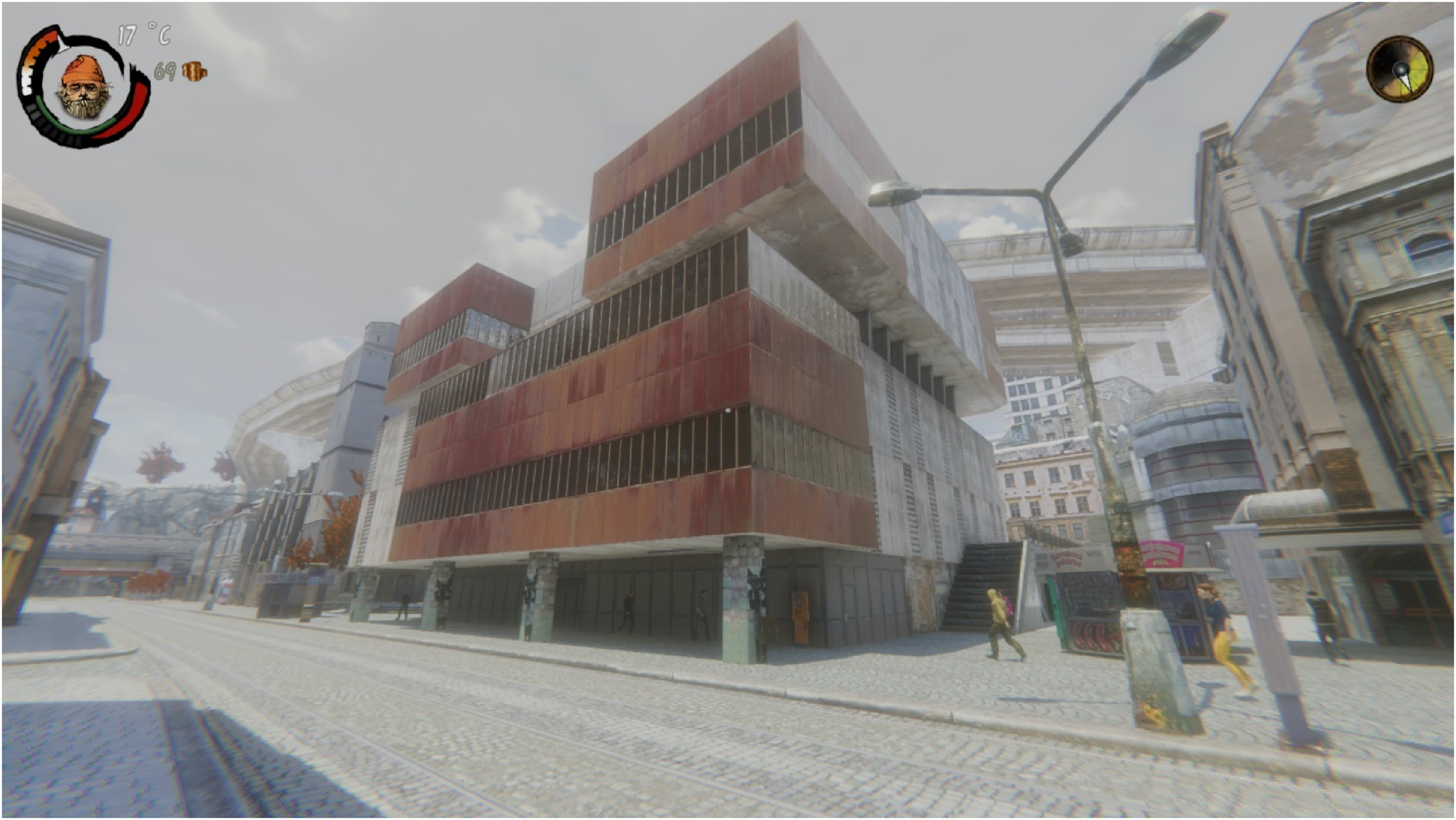
The now-rebuilt Prior department store in Olomouc as seen in Hobo: Tough Life.
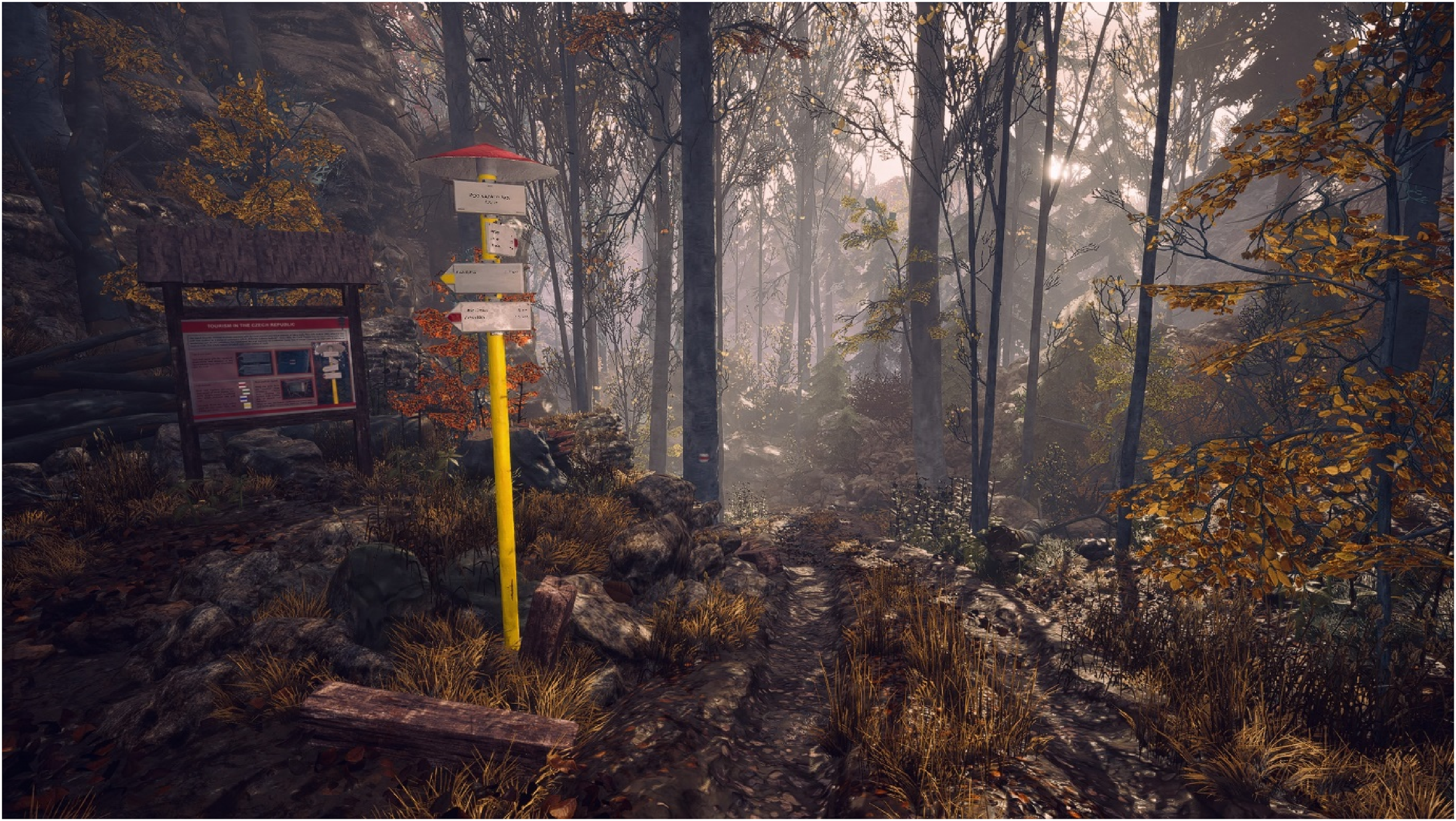
A trailhead in Someday You'll Return with typical Czech trail markers.
A Non-Exhaustive Overview of Locations, Cultural Heritage, and Other Locally Specific Content Featured in Our Sample.
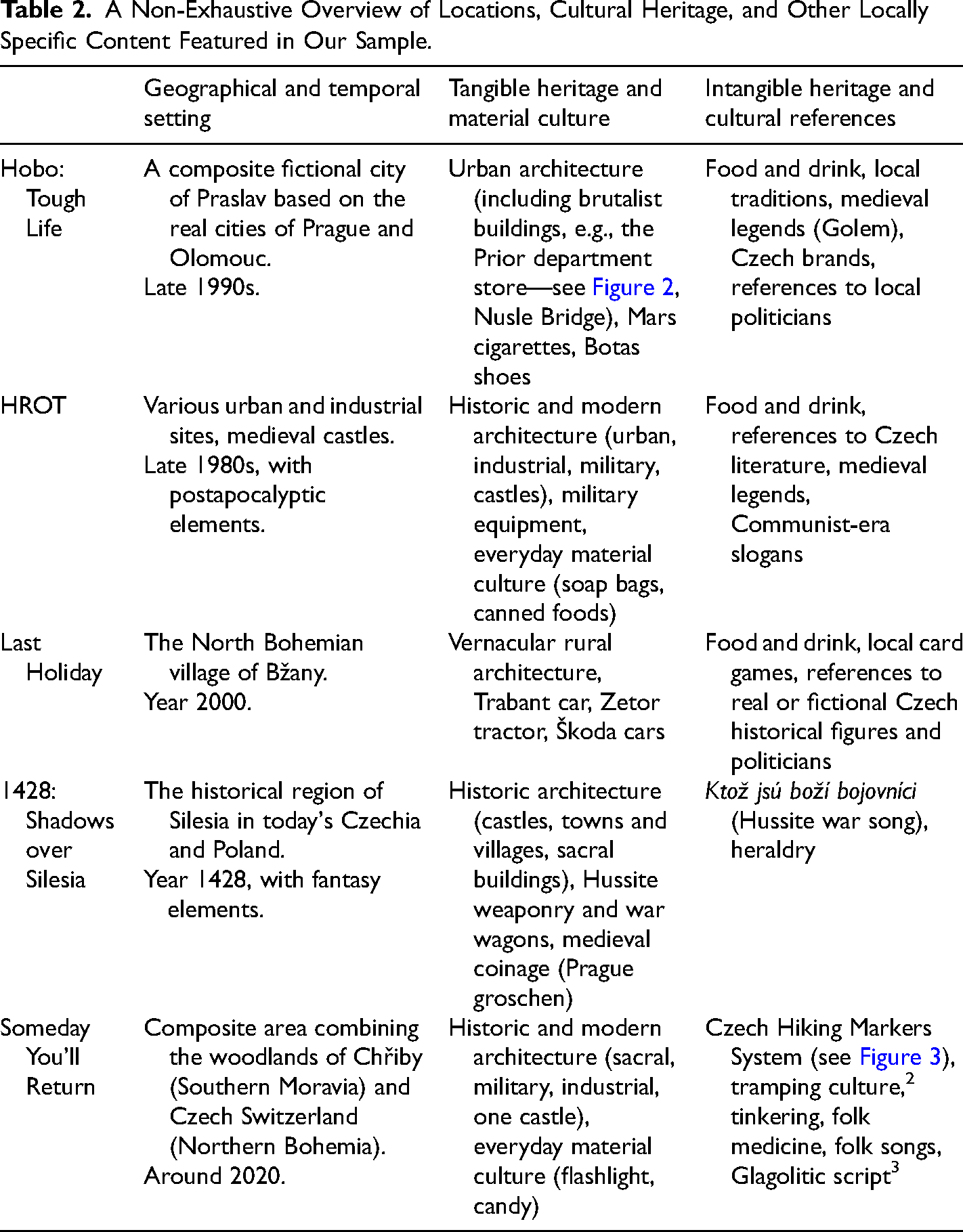
All games feature detailed recreations of material culture, including everyday household objects that are recognizable by local players as Czech or Central/Eastern European. This includes the plastic mesh soap bags that were once a staple of schools and households (HROT) or various discontinued local brands—such as Mars cigarettes, rendered in Hobo as “Merkur” to avoid trademark litigation. The games likewise include intangible heritage, such as the 9th century Glagolitic script used in SYR's code-breaking puzzles.
However, we should not equate being set in the territory of Czechia with being about the country—or about Czechs as a nation—on the narrative level. In general, the developers seek patterns that can appeal to the international audience: SYR developers wanted to create a “universally recognizable story,” in this case of a father-daughter relationship; and the designer of Shadows expressed the need for a strong narrative that “could just as well be set in the Star Wars universe.” As Hjort has pointed out in the case of a Danish film, the use of “recognisably Danish locations, the Danish language, Danish actors and props that mirror the material culture of Danes” do not by themselves constitute the film's theme (2000, p. 99). It is possible to say that the five games are, in a sense, about Czechia—but the word “about” would refer to what Hjort calls banal aboutness, inspired by Billig's conceptualization of banal nationalism, meaning the background, implicit use of everyday markers of nationality (Billig, 1995). In our games, the Czechness likewise tends to be in the background—always there but rarely focalized at key points of the narrative. A deeper understanding of cultural heritage is not required to make sense of the story or advance in the games, making them playable for international audiences. Moreover, HROT and Shadows combine local settings with science fiction and fantasy—postapocalyptic mutants in the former and an army of hell in the latter. Thanks to the globalized nature of these tropes, they make the settings more familiar and, arguably, more cosmopolitan (see Ramírez-Moreno & Navarrete-Cardero, 2024).
Despite the games not being explicitly about Czechness, they do follow conventional ways of representing the country and its inhabitants, including common self-stereotypes. A prominent example present in almost all five games is the depiction of Czechs as heavy drinkers (see Ferenčík, 2024) and the associated acceptance of alcohol consumption. Hynek, the Hussite deuteragonist of Shadows, is a rude drunkard and his encounters with fantasy creatures are therefore quickly discarded by NPCs as “drunk visions”. But he is correct and eventually becomes an action hero fighting the Devil's army despite his previous shortcomings.
In Hobo, excessive alcohol consumption can lead to the player character's death, but players are also encouraged to increase their PC's tolerance to alcohol. The PC can become a “Legendary Guzzler” by winning drinking contests against NPCs. Doing so helps in gaining perks such as Alcoholic, which grants +10 charisma, helping in the interactions with Praslav's (mostly unfriendly) citizens. Similarly, Last Holiday follows My Summer Car in celebrating alcohol consumption as a way of quenching thirst and staying alive; one of HROT's most potent healing items is a bottle of “Bušek z Velhartic,” a brand of sweet red wine popular in the 1980s. The developers of Hobo and Last Holiday even created and distributed exclusive beer brands based on their fictional in-game counterparts.
Another prevalent self-stereotype is that of “Czech tinkering”, connected with the myth of golden Czech hands. It celebrates Czech skillfulness and self-reliance when met with a lack of material resources (Holý, 1996). In SYR, tinkering by “crafting” specialized tools is among the most frequent puzzle-solving mechanics. In the case of Last Holiday, it is embodied in the mechanic of building a Trabant car.
Although not a rampant issue, some of the games contain out-group stereotypes in the representation of ethnic minorities. Generally, these minorities are sparsely represented in the analyzed titles and are never cast as protagonists. Both in Hobo and Last Holiday, Roma people are stereotypically cast as scrap metal collectors. The portrayal and dubbing of the Vietnamese shopkeeper in Last Holiday have been criticized by Czech game journalists (Indian, 2023); the NPC is referred to by racial slurs and her accent is ridiculed. These Vietnamese stereotypes, while widely criticized, are not uncommon in recent Czech media and popular culture (Sherman & Homoláč, in print). As a joke responding to the critique of Central European games’ lack of non-white characters (see Majkowski 2018), Last Holiday includes a token black male NPC who has just one line in English (voiced by AI) stating he is in the game so “guys from Boomer Games have no troubles with distribution in the West”. These examples show that the commendable use of local cultural heritage sometimes comes hand in hand with locally engrained stereotypes (see Eklund et al. 2024).
Motivations to use Local Themes and Settings
The production of translocal games needs to be understood in the context of the local histories and traditions. Some of the developers we interviewed pointed to existing titles that had inspired their choice of setting. While Shadows was partially inspired by the success of Kingdom Come: Deliverance, the author of HROT dates his interest in locally themed games to the hyperlocal text adventure Saboteur (Pospíšil, 1993), whose homegrown appeal made him realize that games can be made by local enthusiasts, not just foreign professionals, and set him on a path of an independent game developer.
The motivations to use local settings range on a continuum from creative to practical. As for the creative reasons, the developers generally agree that setting a game in a familiar place can help them create more believable stories and environments. According to Jan Kavan of SYR, setting their game elsewhere would mean that they would not know “what the air smells like there,” pointing to the genius loci that locals are well equipped to capture. The creative reasons often overlap with personal histories. HROT's Spytihněv drew directly from his grandfather's collection of communist-era memorabilia. The developers of SYR, Last Holiday, and to some extent HROT and Hobo, set their games in places of their childhood (or adolescent) memories. Last Holiday is perhaps the most personal project, partially inspired by the lead developer's desire “to relive those holidays” in a village where he spent the summers with his grandparents; some in-game missions are consequently inspired by the real-life shenanigans of him and his friends.
The practical reasons include the availability of reference material. While big studios may send their artists abroad to collect references, the HROT dev can just step outside of his apartment: “When I’m representing the Prague metro, I can go there and see what exactly it looks like.” All five games use local history, folklore, and tall tales as their worldbuilding elements. Says HROT's Spytihněv: “When I happen to be at a castle and hear a story about that castle, I immediately think of it as a theme.” The maker of Shadows points to the fact that local history can function as ready-made worldbuilding: “Making a historical game saves you a lot of work. Because you don’t have to write the lore.” In SYR, the key herbalism mechanic draws heavily from the local folk medicine tradition.
Using local sources is efficient because one can draw on their life experience and cultural background; it is a strategy that turns one's whole life experience into passive research for the game. The developers use ideas they have absorbed over the years of education, work, and leisure in the country. The popularity of the Hussite era in Czech games does not only testify to the influence of Kingdom Come: Deliverance but also correlates with its prominence in the Czech school curriculum. Likewise, HROT includes two missions closely tied to works of Czech literature, namely The Grandmother by Božena Němcová and War with the Newts by Karel Čapek—both taught prominently at Czech high schools.
Financial calculus played little role in the inclusion of local themes. Only one game out of five –SYR—received public funding, namely from the Creative Europe program. Although the program does not score projects based on the inclusion of local culture (European Commission 2015), SYR's Lukáš Medek admits that the game's setting might have helped it score in the rubrics of originality and innovation. On the other hand, some developers saw the inclusion of local themes as risky from a sales perspective. As Shadows’ Kubíček points out, “business-wise, the US is the most important. But my target audience was rather Central European […] The story is written for our mentality.” SYR's Jan Kavan outright calls himself a “very bad marketer” for not paying more attention to the potential audiences. However, as independent (or even hobbyist) developers, their projects’ financial success was just one of the many factors leading their creative decisions (see Lipkin, 2019). Most of them did not have a clear and stable “imagined audience” (Parker, 2020) in mind when making the games, and corrected their assumptions about the audiences after their game's release.
Implementation of Local Content
Developers consider local content convenient in terms of physical access, which helps in the process of level design and asset creation. The developers of Hobo went to Olomouc and Prague to take photographs they would use as in-game textures. For Last Holiday, both reference photography and motion capture sessions took place on location in the village of Bžany. However, the promise of easy access is not always pursued. While extolling the accessibility of locations, the HROT dev only surveyed one subway station and recreated other real-life environments from publicly available information. Shadows’ Petr Kubíček did not make a trip to Silesia, although it is only a three-hour drive away. Instead, he based the locations on historical and archaeological evidence found in academic papers and other online sources. Interestingly, even the most photorealistic title—SYR—used neither 3D scanning nor photogrammetry; instead, the textures and the terrain were hand-made. This is in contrast with some other regional productions, such as The Vanishing of Ethan Carter, an aesthetically similar Polish game that used photogrammetry to capture the Polish landscape, which was, however, used to represent Wisconsin.
Today's game production—especially in the independent sector—often relies on readily available graphical assets, sold through asset stores. Here, a local setting may prove a hindrance because locally specific assets from a peripheral region are unlikely to be for sale. As Last Holiday's Capoušek has put it, “you just can’t buy a [Czech] village, as if going to an asset store and saying ‘give me one Bžany.’” In the end, the team only purchased animal models from an asset store, and modeled buildings and cars in-house. Shadows was essentially a one-person project and therefore relied extensively on 3D models from the Unity Asset Store, but there were specific models—such as Hussite war wagons—that were unavailable (see Figure 4). As a result, the dev outsourced their creation to a Turkish freelancer through the Fiverr platform. Paradoxically, the creation of locally specific assets was thus outsourced to a laborer from a comparatively more peripheral country. The choice between generic or locally specific assets depends on the focus of each game: Last Holiday's focus on cars required custom vehicle models, while in Hobo, cars are just a part of the background and the studio purchased them from the asset store. SYR's Lukáš Medek consciously avoided the Unreal asset store to maintain a consistent visual style (Retronation, 2023). In HROT, the models are handmade, too, partly because the game runs on an idiosyncratic custom engine.
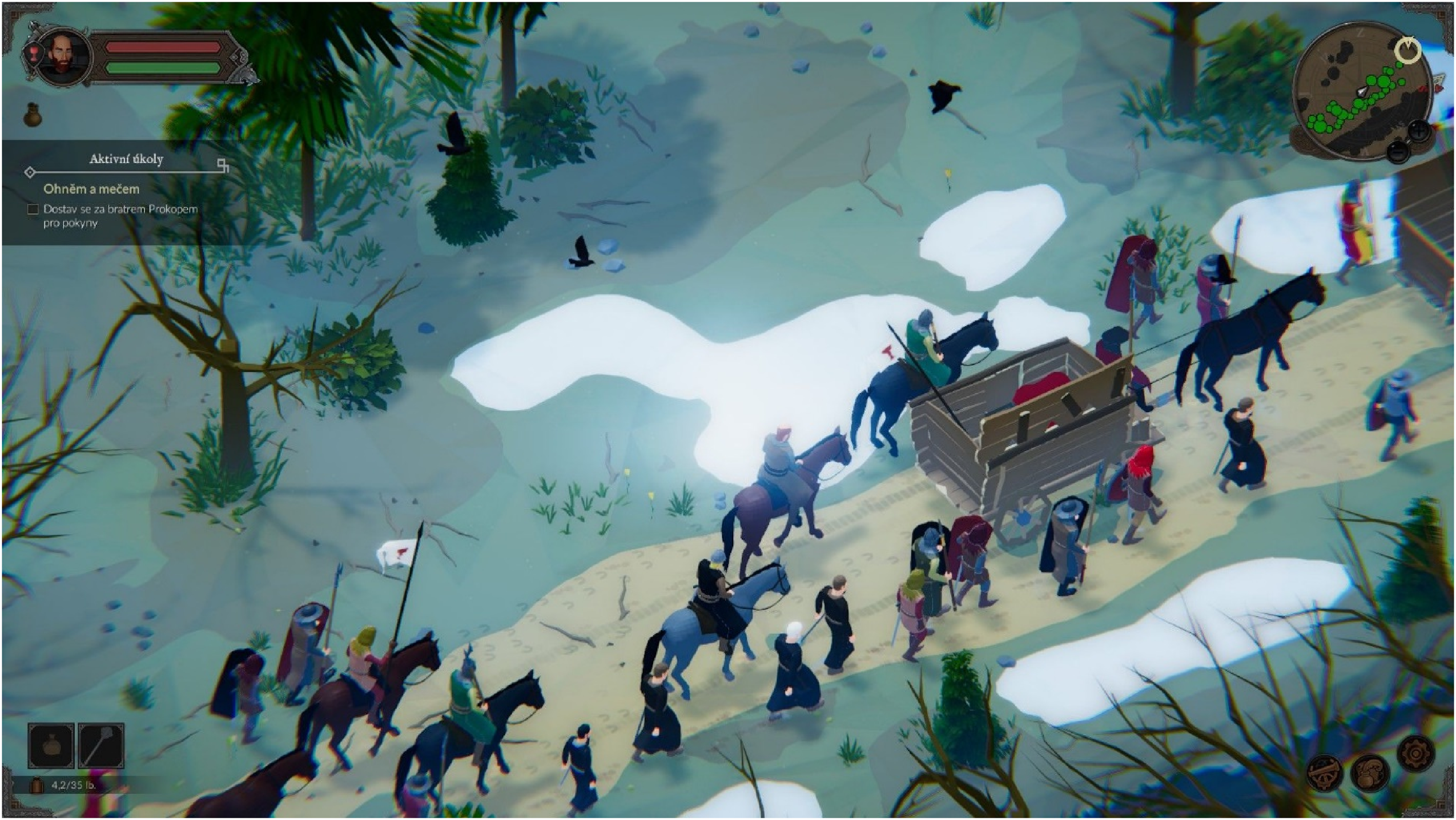
Hussite raiders and their wagons in 1428: Shadows over Silesia.
The representations of places and objects vary in terms of verisimilitude. The locations are adjusted for their use in the game, both for gameplay reasons and because of the technological limitations of tools and engines. This is a process that Aarseth has called ludoforming (Aarseth, 2019). According to Shadows’ Kubíček, using real locations saves time because it is easier to “take an existing layout of the original castle” than creating one's own. Nevertheless, he admits that the game's towns are condensed in comparison to historical maps so that the player does not have to “run around for three hours”—an approach Aarseth has labeled ludo-compression. SYR, in Aarseth's terms, used ludoforming as a cut-up technique, assembling the in-game map from two separate real-life woodlands, condensed into a smaller area for easier navigation (Aarseth, 2019, pp. 131, 133). HROT's mission maps resemble the landmarks they are supposed to represent but their layouts are riddled with the maze-like tunnels and secret passageways typical of 1990s shooter games—not to mention that they are overrun with bizarre monsters. Only Last Holiday aimed for a 1:1 copy of the actual village (see Figures 5 and 6) but this realistic hyperlocal approach created performance issues.
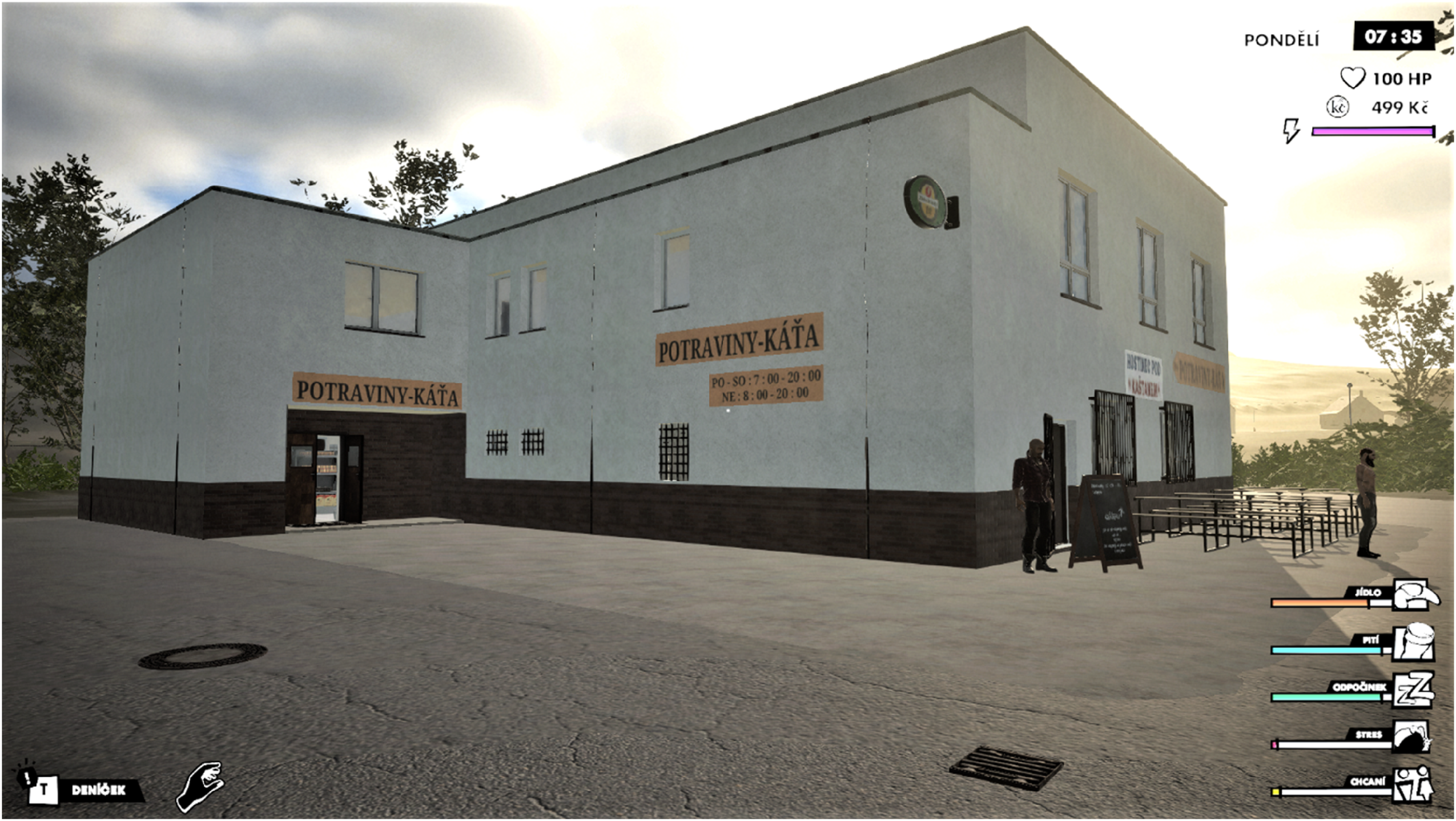
A convenience store in Bžany, as seen in Last Holiday.
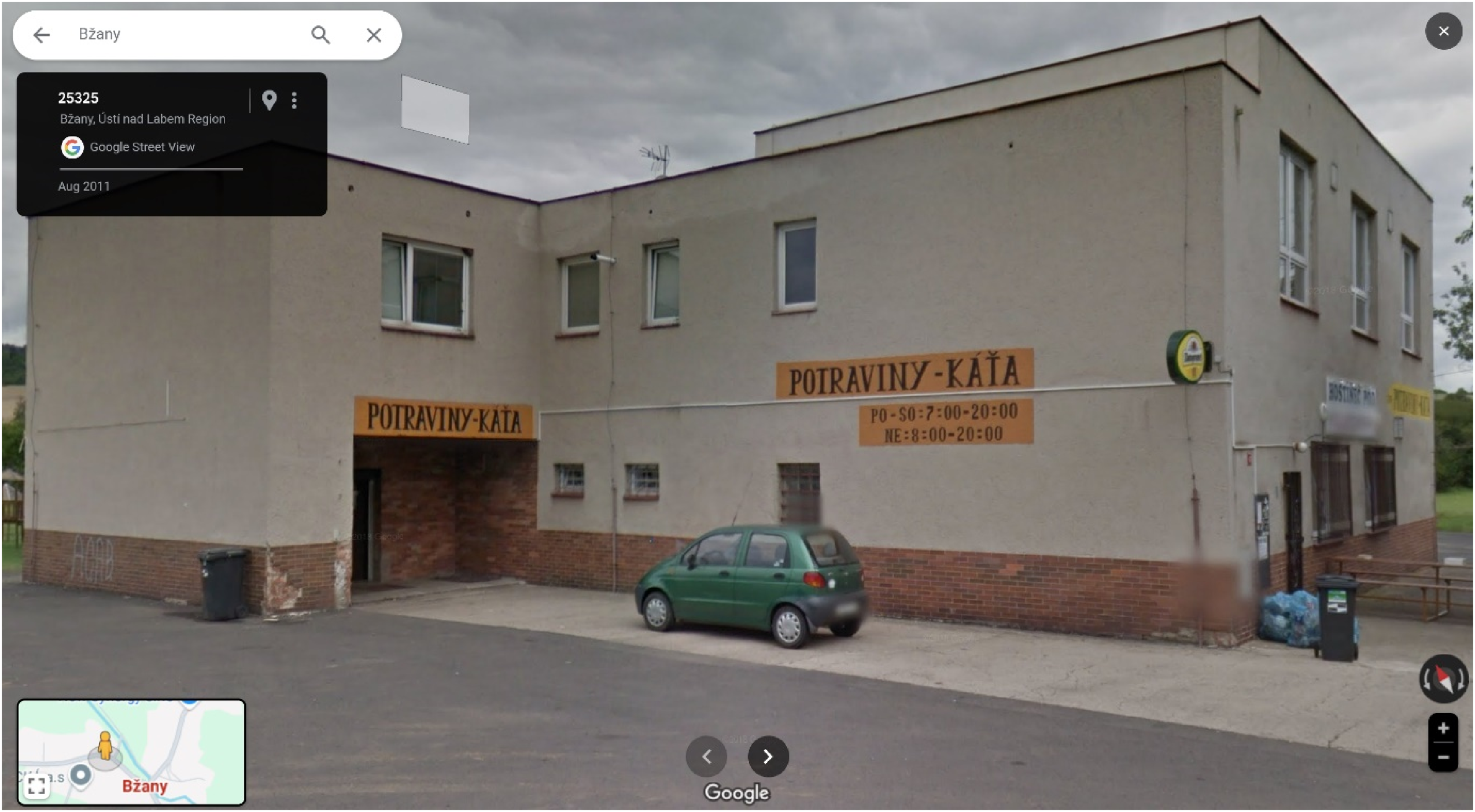
A convenience store in Bžany, captured in Google Street View.
Localization
While official localization of mainstream games has become fairly standardized (O’Hagan & Mangiron, 2013), the localization of translocal games brings specific issues, such as the high volume of cultural references or the question of whether to prioritize the local audience or the international ones (see Šisler et al., 2022).
All five games feature at least Czech and English language versions, but the approach to localization and its extent varies depending on the developers’ production routines and imagined audiences. SYR was perhaps the most internationalized game of the five, owing to CBE Software's previous experience with international publishing. It was the only game whose original script was written in English and it only included English voice acting. Czech players reportedly complained about the lack of Czech dubbing (Burian, 2020), but the developers decided it would be too costly and labor-intensive. On the other hand, Last Holiday was written in Czech and only features professional voiceovers by Czech actors, advertised as a selling point during the crowdfunding phase. Despite being a one-man project, Shadows has both English dubbing (in semi-professional quality) and Czech dubbing (done for free by the amateur group Fénix ProDabing). As games with less prominent narratives, Hobo and HROT lack full voiceovers and only feature barks recorded in Czech by developers themselves; these appear in all language versions and contribute local color. The translations between Czech and English were done by professionals only in the case of SYR and the final proofs of Hobo. The rest had their content translated into English by amateur game translators, developers themselves, or their friends. Some games relied on fan localizations—Hobo was translated into Simplified Chinese by Chinese players and some language versions of Shadows, including Italian or Russian, were community-made.
The developers generally aim to immerse players in the local environment, meaning that Czech (and possibly Central/Eastern European) players should feel at home, while players from other regions should experience foreignness. As a result, the games’ textual graphics, such as diegetic signage, is mostly (Hobo, SYR) or solely (HROT, Last Holiday) in Czech. As explained by Hobo's Bělohrad, players were supposed to be immersed in a Czech city (albeit fictional) and “learn their ways in it” as a part of survival mechanics. HROT's Spytihněv explains his choice by consistency and believability: “I did not want to have Czechoslovakia with English signs on the walls.” Both did, however, provide assistance to foreign players: Hobo includes English-language signs for important interactive objects and HROT displays English subtitles for Czech signage when players interact with them.
Judging from the English localizations, the content of the games was very rarely culturalized in terms of adapting content to cultural conventions and preferences of foreign players (O’Hagan & Mangiron, 2013). Some cultural references or shout-outs to local celebrities were lost in translation. Likewise, the games contain plenty of tangible and intangible heritage (see Table 2) that could be unfamiliar to international players. Out of the five games, Hobo has the most elaborate culturalization strategy. The game foregrounds and explains cultural differences, most visibly in item descriptions. For example, the in-game Santa hat is presented as “the biggest cliché that you can embarrass your head with around Christmas time”. This is because in Czechia, the traditional Christmas gift-bringer is the Christkind (Infant Jesus), while Santa is considered an imported figure. This dedication to explaining local context extends to “Beyond Hobo”—a series of Reddit posts that explains the meanings and origins of local cultural heritage and everyday objects. The series started with introducing Praslav's architecture and its real counterparts—the Prior department store in Olomouc or Prague's astronomical clock—and later moved to more down-to-earth topics, such as the specifics of Czech rum, which is not sugarcane-based. While Hobo used Reddit, HROT facilitated the exchange of knowledge about local culture on the game's Discord server.
Reception by Local and Global Audiences
Interview material attests to the fact that the local gaming community—including developers, journalists, streamers, and players—played a key role during the production of our five games. In the initial phases of development, our respondents usually conversed with other indie developers or with actors outside of game development, such as their family members and player communities. Shadows’ Kubíček gathered feedback on Retro Nation, a Facebook group for fans of retro games organized around the eponymous YouTube channel, letting its members test his prototype. During the crowdfunding campaign for Shadows, approximately one-fifth of backers were Czech game developers, a sign of mutual support common in the dev community. During later stages of development, individual game developers from local AA studios provided marketing or technical assistance and/or advice to both solo developers (Shadows) and smaller teams (Hobo, Last Holiday). However, the advice coming from the AA sector was sometimes seen as difficult to implement in indie productions due to smaller workforce or budget constraints.
Local journalists give developers what Hobo's Vašica has called “home team advantage,” offering free and sympathetic coverage of the projects or their crowdfunding campaigns in their reporting and social media feeds; in the case of crowdfunding reporting, the support attracted additional backers. To thank them for their help, the developers included the representations or references of local journalists, YouTubers, and streamers in their games (Last Holiday, Hobo, Shadows). Only Last Holiday's Capoušek was critical of their involvement, noting the problematic “bottleneck” of streamers as today's opinion leaders. This might be, however, caused by the underwhelming technical qualities of the game's early access version.
The respondents manifested dual allegiance (see Takhteyev, 2012) to both local and international players. Czechs were often regarded pragmatically as a test audience, to see if the game would be popular internationally. All developers except HROT's Spytihněv used crowdfunding campaigns and/or domestically distributed collectors’ editions to get additional financial support from the local community. The analyzed titles proved successful among Czech players, with Czechia comprising around 1/3 of sales for Last Holiday and Shadows, and around 10% for Hobo, HROT, and SYR (still a notable proportion given the size of the market). Top-selling countries included the US for HROT (with over 1/2 sales), Last Holiday (around 40%), and SYR (around 30%). Hobo sold the most in China (around 1/2), while Shadows was the only game that did best in Czechia. Some sales spikes resulted from coincidences such as Hobo and Last Holiday being featured by influential Chinese or Spanish YouTubers, respectively. For the most part, it seems that the local setting did not attract substantial numbers of players from other Central and Eastern European countries (except for Last Holiday, which did well in Poland). This illustrates the limited reach of Czech-language gaming media, who can boost the visibility of local games, but only on the national level.
Locally specific content has been enjoyed by both local and foreign players. According to our respondents, local players of Last Holiday, SYR, and Hobo appreciated the faithful representations of their regions or hometowns and the effort to popularize the peripheral contexts. As the Last Holiday dev has put it: “In Bžany, some people were excited that Bžany will finally be recognized by the world.” Foreign players have also appreciated the local content, with some expressing their interest in traveling to locations represented in HROT and SYR as tourists. Furthermore, foreign HROT players have documented their attempts to cook 1980s-style Czech dishes following the in-game recipes. At the same time, developers noticed that foreign players, journalists, and content creators may also misinterpret or misunderstand the games’ local elements. HROT and its locations were mislabeled by the media and content creators as Soviet or Russian (see Modrák, 2023). Some players of Last Holiday likewise described the game as Russian in Steam or YouTube comments or wondered whether Czech (the sole voiceover language) is a made-up language similar to the one in The Sims series. But as respondents agreed, players can educate themselves about local contexts or their history either through their own gameplay, historical sources, or metatexts.
Out of our five games, two—Hobo and HROT—were minor hits, selling around 600,000 and 200,000 copies, respectively. 4 In part, this is because both are well-designed specimens of niche genres with dedicated player bases—the survival RPG and the boomer shooter; moreover, both genres favor exploration, a good fit for a setting that is foreign to most of its players’ base. The sales of SYR have been described as disappointing (Vortex, 2023), but the game was rereleased in the Director's Cut edition (2023) in collaboration with the major Czech studio Bohemia Interactive. As for Shadows, its sales were lower than Kubíček's expectations, which were based on the high number of Steam users who added the game to their wishlists. It is possible that a portion of wishlisting came from local players who intended to declare their support for the project thanks to the media coverage but failed to purchase the finished game. Nevertheless, the game has an active community and is still being updated with DLCs, incorporating further local historical figures such as the Hussite general Jan Žižka. Last Holiday has been the most ill-fated project out of the five, with its development on hiatus because of lower-than-expected sales and the team's waning enthusiasm.
Conclusions and Future Directions
This article has expanded on the existing literature on translocal games and cultural heritage by asking why and how local developers use local themes and settings. Regarding the why, the answer lies with the developers. Despite its significant volume, translocal game production in Czechia is a bottom-up activity. The devs include local settings for creative reasons—to draw on their own memories and experiences or to create more believable, authentic stories and environments. Some of them cite practical reasons, too, such as easier access to the physical places they might need for reference collection. The developers do not see the local setting as a recipe for success, but thanks to the previous hits like Kingdom Come: Deliverance, they see it as a possibility; some of them also refer to a longer history of hyperlocal games and games for the local market.
Regarding the how, local settings can provide benefits—such as easy access and ready-made worldbuilding—as well as challenges—such as the lack of locally specific assets in asset stores. In practical terms, using local settings is not particularly more efficient than using, for example, a generic fantasy setting. This is in contrast to the film, which may capture banal aboutness (Hjort, 2000) accidentally while shooting on location. In games, developers have to purposefully create, commission, or license locally specific assets (3D models or 2D graphics). So, even when games are only banally about Czechia and use it as a backdrop, it is not banal to create such a backdrop. This emphasizes the importance of creative motivations for using local environments.
Starting in the early prototype stages, the local community is a key intermediary in the production of translocal games. Developers rely on the community for feedback, encouragement, advice, and recruit collaborators among its members. Independent developers in Czechia—and possibly other (semi-)peripheral industries—exhibit a dual allegiance by addressing both the local audience and the global market. The local audience might not be quantitatively relevant for the developers, but it is often qualitatively important. It is usually easier for local creators to imagine Czech players than the distant and unpredictable global audience. Local themes are something developers can discuss and bond over with fans and colleagues at local events or in Czech-language gaming media and online communities.
Our material suggests that addressing translocal games to audiences that are too local or too international may cause issues. In hindsight, Last Holiday was perhaps overly dependent on the Czech audience by preferring costly Czech dubbing over other production expenses. On the other hand, by only offering English dubbing, SYR's developers risked the dissatisfaction of Czech players who tend to appreciate and call for Czech dubbing in Czech games. According to Shadows’ Kubíček, these (often forceful) calls led him to add Czech dubbing. By opting for no dubbing at all, Hobo and HROT managed to sidestep this issue.
Our findings have important implications for cultural policy, showing that state funding is not a precondition for producing games with cultural heritage. What turned out to be important in our cases was a robust national scene that can nurture and appreciate projects with local content. Such a scene can benefit from general policy support for the local game industry and community infrastructure (such as clusters, game design and game studies education, conferences, exhibitions, and other events), especially when targeted at the independent sector. This is not to say that direct public support for individual game projects is inefficient but that structural and project-oriented funding can complement each other.
Similarly to the examples discussed by Eklund et al. (2024) and Ramírez-Moreno & Navarrete-Cardero (2024), the five games might play their part in cultural diplomacy and cultural heritage dissemination (see Webber, 2020). They offer unique perspectives on Czechia that are vastly different from how the country has been presented by foreign studios, especially in capturing the country's peripheral regions and everyday material culture. While games from peripheral countries bring diversity to the international arena, one must acknowledge that they might not be representative of the diversity within those countries. In our cases, for example, the creative vision of women developers is mostly absent, with the exception of Shadows, which credits the developer's wife Michaela Kubíčková as a co-author of the screenplay. As suggested by Eklund et al. (2024), translocal games may also perpetuate local stereotypes and self-stereotypes, as seen in the stereotypical portrayals of minorities in Last Holiday and Hobo. These kinds of representations may then frame Czech culture as provincial and conservative.
Due to the low number of games investigated, our findings cannot be generalized to all Czech translocal games, let alone games from other countries. Nevertheless, we believe that our method of combining qualitative content analysis of representation with interviews that reveal motivations for including local content, its implementation, localization, and reception—may be applied in other contexts, allowing for comparative studies, particularly with other small countries. Another promising direction is to study the reception of translocal games by players or the media.
The trend of translocal game production is not exclusive to Czechia, as evidenced by the recent open-world hit Dungeons of Hinterberg (Microbird Games, 2024), an Austrian indie game set in in the Austrian Alps, or the well-received RPG Thaumaturge (Fool's Theory, 2024), which takes place in a fantasy version of 1905 Warsaw. The trend is also likely to continue, as many translocal titles are currently in development. As this article has shown, to better understand this trend, we will have to not only analyze those games, but also talk to their developers.
Footnotes
Acknowledgments
We would like to thank Tereza Fousek Krobová for her part in the material collection and Jan Švelch for his feedback on previous versions of the article.
Declaration of Conflicting Interests
The author(s) declared no potential conflicts of interest with respect to the research, authorship, and/or publication of this article.
Funding
Research for this article was supported by Charles University project PRIMUS/21/HUM/005—Developing Theories and Methods for Game Industry Research, Applied to the Czech Case.
Ethical Approval and Informed Consent
The Research Ethics Committee of the Faculty of Social Sciences of Charles University approved the study in its decision no. 142/2024. All participants in the study gave verbal informed consent to participate in the study as well as consent with the publication of their names, with the exception of one respondent who prefers to go by his nom-de-plume.
