




Abstract
The COVID-19 pandemic has affected our lives in many ways, including how we choose to spend our time and deal with unprecedented circumstances. Anecdotal reports suggest that many have turned to playing video games during the pandemic. To better understand how games are being used during the lockdown, we conducted an online survey (N = 781) that focused on gameplay habits and effects on players’ well-being. We find that time spent playing games has increased for 71% of respondents, while 58% of respondents reported that playing games has impacted their well-being, with the overwhelming majority of responses indicating a positive impact. We identify seven ways that games have affected players, such as providing cognitive stimulation and opportunities to socialise, and a variety of benefits related to mental health, including reduced anxiety and stress. Our findings highlight the sociocultural significance of video games and the potentially positive nature of games’ effects on well-being.
Introduction
The COVID-19 pandemic has impacted virtually all aspects of our lives, with the associated lockdown restrictions affecting how we work, socialise, shop and study. Inevitably, such wide-ranging changes to our day-to-day lives have raised questions about well-being and how we cope with these unusual and uncertain circumstances. This study aims to explore anecdotal reports that suggest many have turned to playing video games during the pandemic. The motivation for carrying out the study extends beyond anecdotal observations; however, many of the potential benefits of playing games discussed below have previously been documented. These benefits include stress relief (Reinecke, 2009), cognitive skills development (Barr, 2017), combatting loneliness (Kaye, Kowert, & Quinn, 2017) and more. So, while games have previously been shown to be helpful in dealing with trauma and improving well-being (Colder Carras et al., 2018), this study sheds light on how games have helped players cope with the unprecedented effects of the COVID-19 pandemic.
Method
Procedure
We conducted an online survey comprised of basic demographic questions, closed questions related to gameplay habits and two open-ended questions. The first of these open-ended questions was presented only if the respondent indicated that the types of games they play had changed during the COVID-19 outbreak, and asked them to explain what has changed and why? The second open-ended question asked respondents to describe in as much detail as possible how playing video games has impacted their well-being during the COVID-19 outbreak. Again, this question was only displayed if respondents responded ‘yes’ to a prior question, worded as follows: ‘Do you feel that playing video games has had any impact on your well-being during the COVID-19 outbreak? The impact may be positive or negative’. The survey URL was distributed via the first author’s social networks (Twitter and Facebook) and posted to gaming-related groups on Reddit. The purpose of the study, as stated at the beginning of the survey, was ‘to explore how people have been playing video games during coronavirus (COVID-19) lockdown, and particularly if playing games has had any effect on players’ well-being’. The survey ran for 10 days from June 23, 2020. Ethical approval was obtained from the appropriate College Ethics Committee prior to publication of the survey.
Participants
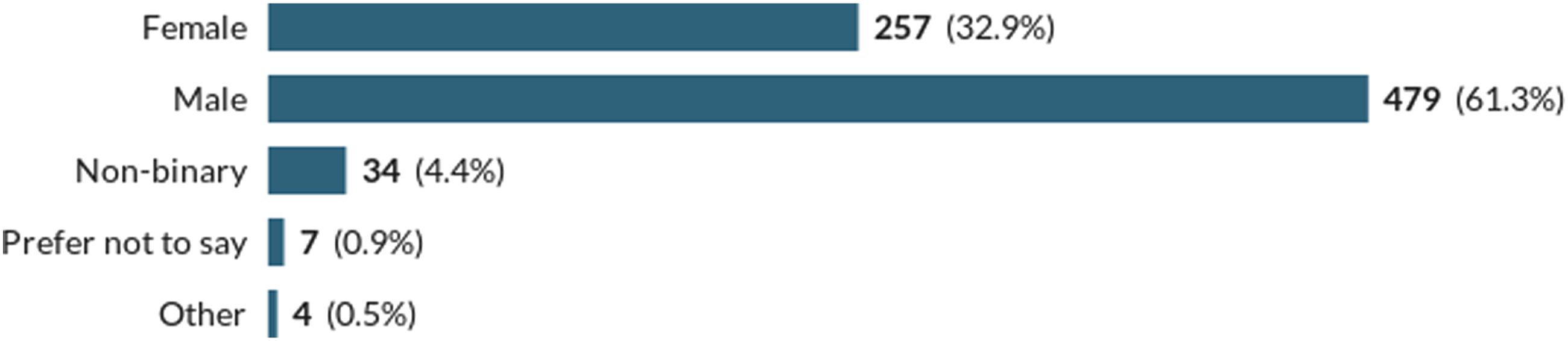
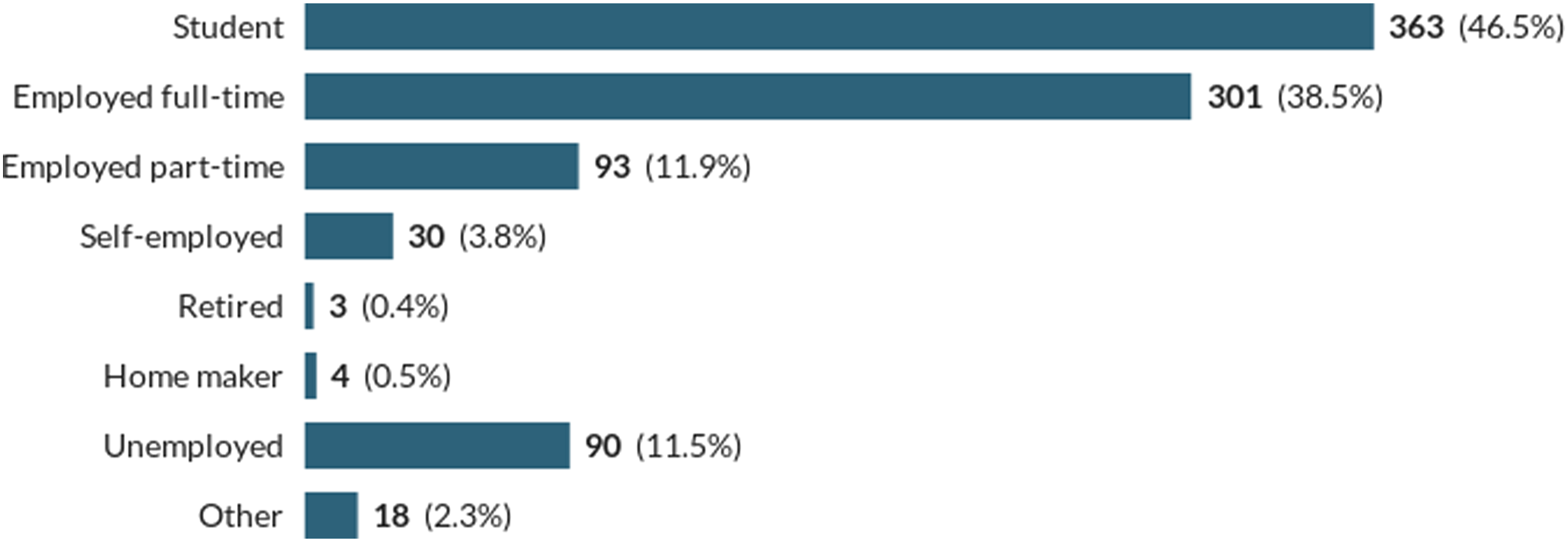
A total of 781 respondents completed the survey. All respondents were aged 16 years or older, with 47.4% of respondents falling into the 16–24 age range. 25–34 year olds accounted for 35.5% of responses, 35–44 year olds for 11.7%, 45–54 year olds for 4.5%, 55–64 year olds for 0.6% and 65+ year olds for 0.5% (Figure 1). 61.3% of respondents identified as male, 32.9% as female and 4.4% as non-binary. 0.9% of respondents opted not to specify their gender, while 0.5% of respondents specified an alternate gender (Figure 2). 50.4% of respondents were employed, either full-time (38.5%) or part-time (11.9%), and a further 3.8% identified as self-employed. Students accounted for 46.5% of responses, while 11.5% of respondents stated that they were unemployed. Retirees and homemakers together accounted for 0.9% of responses, while the remaining 2.3% of respondents indicated that their circumstances fell into none of the categories above (Figure 3). The highest level of educational qualification attained by most respondents (38.2%) was high school/secondary school, followed by university graduates (31.8%), postgraduate qualifications (22.9%) and vocational qualifications (7.2%). Respondent age ranges. Respondent genders. Respondent occupations.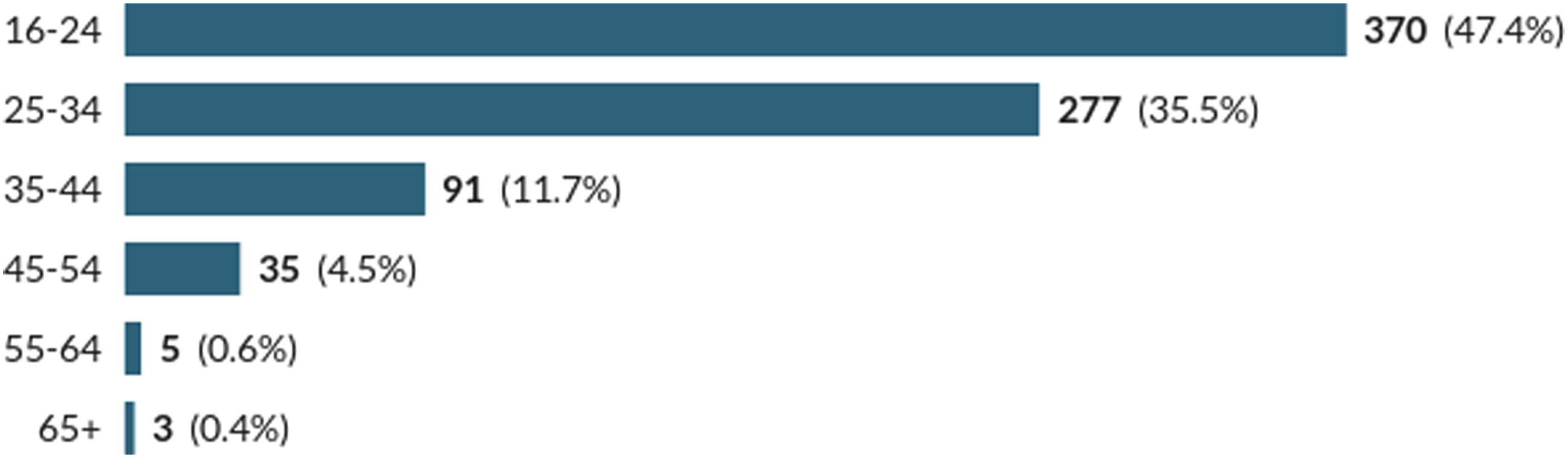
Analysis
Answers to the first open-ended question, about changing gameplay habits, were organised along two dimensions: what had changed and why it had changed. Answers to the second question, about games’ impact on well-being, were coded in terms of sentiment (positive, negative and neutral). The data were then analysed using inductive thematic analysis, in keeping with the approach described by Braun and Clarke (2006), and as applied in previous survey-based human-computer interaction (HCI) work, for example, Bopp et al. (2019) and Gowler and Iacovides (2019). Guidance on improving reliability in qualitative HCI research, as provided by McDonald et al., was followed to help ensure consistency in the development of codes (McDonald, Schoenebeck, & Forte, 2019). Analysis began with the first author reviewing all of the data and developing an initial set of codes for both open-ended questions. These codes were then discussed with the second author and refined as required. The first author then applied these codes to the data as a whole and discussed the results with the second author. This led to a further refinement of the codes and the development of an initial understanding of the emerging themes. Both authors then applied the codes to the first 100 cases (accounting for at least 10% of the data for each question), allowing agreement to be assessed and Cohen’s kappa coefficients for inter-rater reliability to be calculated. Where the kappa value indicated disagreement (κ ≤ 0.8, based on Landis and Koch’s normative scale Landis & Koch, 1977), the relevant codes were discussed once more and subsequently reapplied. By the end of this iterative process, kappa values ranged from 0.82 to 1 for the first open-ended question and 0.83 to 1 for the second. The first author then analysed the remaining data using these codes. Finally, both authors discussed and agreed upon the grouping of codes into larger themes, which are presented below.
Results and Discussion
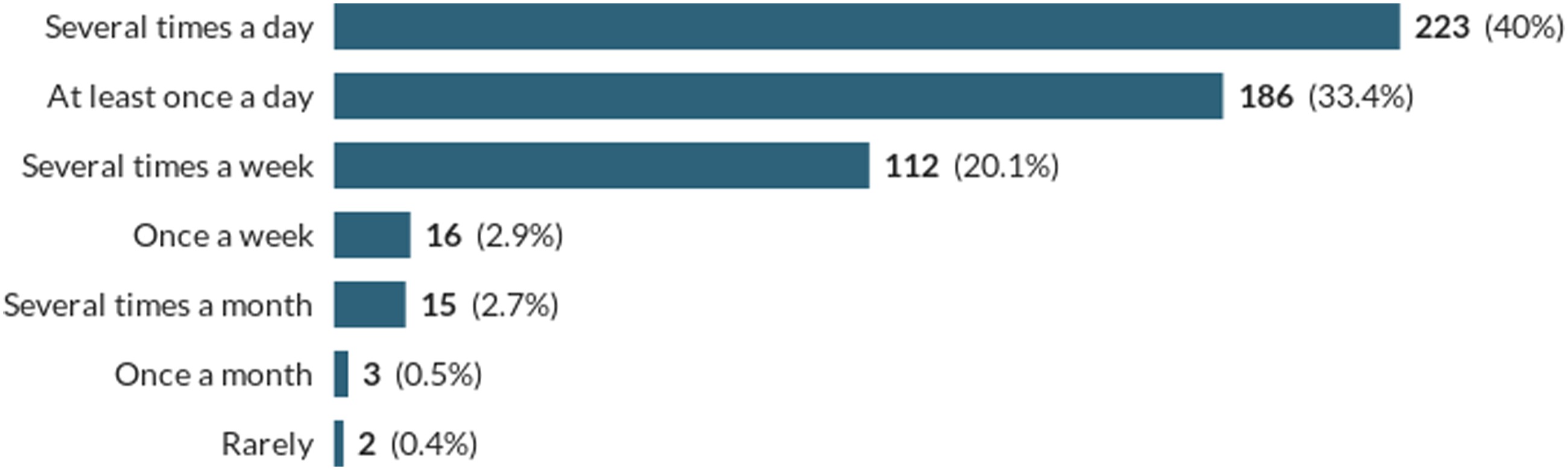
71.3% of respondents reported that the time they spend playing video games had changed during the COVID-19 pandemic, while 63.1% stated that the types of games they play had changed. Figures 4 and 5 show respondents’ gameplay habits before and after the COVID-19 outbreak, demonstrating a clear shift towards increased frequency of play. For example, Figure 4 shows that 10.5% of respondents report playing video games several times a day prior to the pandemic, while Figure 5 shows this figure has increased to 40%. At the other end of the scale, 5.4% of respondents indicated they rarely played games before the outbreak, a figure that drops to just 0.4% after the outbreak. Pre-outbreak gameplay habits. Post-outbreak gameplay habits.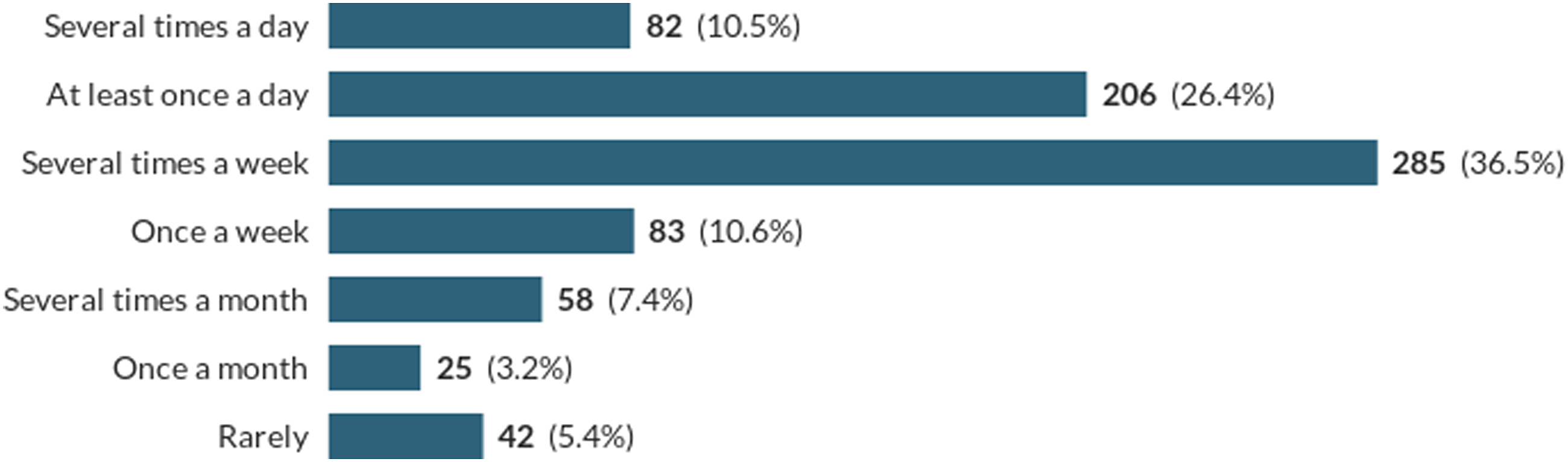
Changes in Games Played
In relation to
Modes of play
This theme refers to games being played in either single player or multiplayer mode, either online or offline. Respondents most commonly reported an increase in multiplayer: ‘I play multiplayer games now but never used to’ (P60). This increase is driven by a desire to socialise: ‘Changed to mostly multiplayer so I can faux-socialise’ (P122); ‘Playing more multiplayer games to make up for the lack of in person communication’ (P366) and ‘Played more multiplayer games with friends to keep us in contact’ (P54). As such, this aspect of what changed in terms of games played is closely associated with the theme of Socialisation (see 3.2.7 below).
The move to multiplayer is also associated with a shift to playing online: ‘Before the outbreak I often played single player games, now I mostly play online’ (P362). This increase in online gaming has also affected the types of games played, moving towards more accessible genres with broad appeal: ‘Started to play a lot more party games, since many more people are consistently online’ (P748); ‘Party games that can be streamed to non-gamer friends (Jackbox in particular) has been amazing during lockdown’ (P353). However, the increased interest in multiplayer games has not been limited to online: ‘My family started playing local-multiplayer games so we could play together’ (P574); ‘I acquired a console just before the lockdown, and have started playing local co-op games with my partner. Before, I played mostly solo games’ (P115). While an increase in multiplayer might be expected under lockdown conditions, it is notable that the data feature around half as many references to increased single player gaming as to multiplayer, for example, ‘[I] stopped playing MMORPGs and moved to single player Sim Two Point Hospital. I find the latter more relaxing and escaping, because I’m not required to make particular commitments and go at the pace of others or engage in talk about current affairs’ (P57). This is, perhaps, a somewhat unexpected finding. While anecdotal evidence might predict a rise in the use of multiplayer games that afford socialisation during lockdown, it is less obvious that players might seek solace in a single player game. On reflection, however, it is possible to interpret such a shift in preferences as a response to the phenomenon known as ‘Zoom fatigue’ (Wiederhold, 2020). Given that so much of our daily interaction with colleagues and peers is mediated by digital technology, perhaps the allure of online gaming is diminished for some.
Looking elsewhere
Respondents who reported differences in their post-outbreak gameplay habits frequently cited changes in the games they chose to play. This theme may be sub-divided into responses that indicate specific changes in the types of games they play, and those that indicate an increase in the variety of games played. As alluded to above, there has been a shift towards multiplayer titles, but many players also report switching genres: ‘I started playing more management games’ (P349); ‘I have been playing more puzzle and rhythm games because my preferences for games have changed’ (P608). Players also report a new appreciation of more relaxing, comforting or passive games: ‘Chill games like Terraria rather than action games’ (P130); ‘I’ve spent more time on background idling type games which I can dip in and out of, like Slay the Spire’ (P58). Players’ enthusiasm for competition also appears to have lessened: ‘Started playing less competitive games, looked for a more relaxing experience’ (P532); ‘A lot more interpersonal games or casual games than competitive’ (P489). Players also report being attracted to different themes in the games they play. Related to the reduced interest in competitive or antagonistic mechanics, players note that they are ‘more likely to play games from less violent genres’ (P88) or ‘games with mostly non-fighting mechanics’ (P224). Hinting that the wane in appeal of certain genres is a direct result of the pandemic, one respondent remarks: ‘I don’t enjoy playing horror games anymore. The world is already scary enough’ (P657). To a lesser degree, players expressed an increased desire for games featuring exploration: ‘During the first few weeks I played much more games based on exploration, No Man’s Sky for example’ (P384). This idea emerges more strongly in the analysis of games’ impact on well-being below, particularly where the theme of Cognitive stimulation is concerned (see 3.2.4 below). An increase in the variety of games played is expressed in a number of ways, for example, ‘Used to play just strategy games, now playing strategy, creative, RPG, FPS’ (P399); ‘I’m trying more things – browsing various homebrew games online and experimenting with them’ (P178). Where an explanation for this increased interest in variety is provided, it is mostly related to having more time: ‘I used to play only certain game genres but now I’m more willing to play games I wouldn’t normally play because I have more time’ (P354); or, to stave off boredom: ‘I have played so many games that I am getting bored of them, trying new games seems to be the solution’ (P245).
Looking to the new
The theme of Looking elsewhere for different types of game naturally intersects with an interest in new games, even if the titles in question do not represent a departure from existing player preferences. Many respondents indicate they have purchased new games during the lockdown, although it is difficult to be certain that the number of games purchased has increased as a result of the pandemic. Some responses imply this is the case: ‘Purchased a number of new games to play with friends’ (P717). However, the purchase of new titles appears to be driven equally by discounted prices: ‘I have purchased new games and started playing them, mostly because they were on sale’ (P537). Many participants referred to specific new titles bought during lockdown, and by far the most prevalent title here was Nintendo’s Animal Crossing: New Horizons. Indeed, many of the responses to this question simply stated ‘Animal Crossing came out’ (P573), or similar. More detailed answers revealed the extent to which Animal Crossing has dominated lockdown existence: ‘Since COVID I have been playing Animal Crossing nearly every day. Almost ALL DAY in the beginning and now just a few hours in the mornings so that I have something quiet to do while my significant other is sleeping’ (P636).
There is little doubt that the latest entry in the Animal Crossing series has been something of a lockdown phenomenon. However, while both that game and perhaps the next most often-cited title, the remake of Square Enix’s Final Fantasy VII, are new releases, they are also intensely familiar experiences for fans of those series.
Looking to the old
The lure of the familiar during the pandemic is evident throughout these data, with participants making explicit reference to returning to old favourites: ‘I have found myself reaching for more comforting games, or revisiting old favourites’ (P39); ‘Playing older games that I have fond memory of and are easy/familiar’ (P747). As such, it could be argued that this desire to revisit familiar experiences connects with the theme of Normalisation, discussed under 3.2.6 below.
In other cases, players are looking to the past not for familiarity or comfort, but out of a desire to go back and play through the ‘backlog’ of unplayed or unfinished games purchased during online sales events or as part of a bundle or subscription. For example, ‘Played older game to reduce my backlog’ (P313); ‘I’ve decided to go through my backlog of Steam games’ (P12); ‘I’ve been playing longer games that I kept postponing due to lack of time’ (P31). Or, indeed: ‘I FINALLY beat GTA: San Andreas after 15 years of trying! SUCK IT ‘Learning to Fly’ and ‘Supply Lines!' (P768).
Duration of play
Many players connect the ability to play games to completion with an increase in the time available to play during lockdown, for example: ‘I’m playing more games fully completing them 100%, instead of just casual playing a game then not finishing them. It’s changed because now I actually have time to unwind and play them fully’ (P121).
As well as being able to complete more games, participants note that lockdown has enabled them to tackle longer or more involved games: ‘I started playing some games that required more time investment such as Dark Souls’ (P134). In particular, players identify games with complex narratives becoming a more viable option under lockdown conditions, related to being able to play for longer periods: ‘Because of the illusion of having more time I allowed myself to be fully engrossed in narrative/storytelling video games, and to play for longer stretches of time’ (P175).
While playing for longer could be associated with any of the positive outcomes discussed below, this is also the theme that perhaps connects most directly with the small number of negative responses analysed here (see 3.2.8 below).
Hardware
This was a somewhat unexpected, but easily understood, theme to emerge from the data. Specifically, participants noted that their lockdown circumstances dictated the hardware on which they could play: ‘No longer had access to console or PC so I found some good mobile games’ (P317); or, they had purchased or otherwise gained access to new hardware: ‘I bought a Nintendo Switch so I have been playing games such as Pokemon and Animal Crossing fairly often’ (P51); ‘I moved back to parents for a while, which gave me access to the Xbox there’ (P315); ‘I started to play more VR games because I bought a VR headset’ (P333); ‘A friend lent me a PS3’ (P62). In a smaller number of cases, the circumstances resulted in players making a choice to play on alternative hardware, for example, to avoid more computer screen time: ‘I have played more games on portable console (Nintendo Switch), whereas generally I play video games on desktop computer [...] This may be due to decreased motivation to play computer games after working from home on computer for eight hours each day’ (P587).
In relation to
Coping
Using video games to cope with – or escape – the pandemic is a central theme in the discussion of well-being that follows (see, in particular, 3.2.3 below). However, much of the data relating to why participants’ gameplay habits have changed also points to games being used as a coping mechanism, for example: ‘I play more ‘relaxing’ games. I guess it’s a way of coping. I don’t recall ever making the conscious decision, like ‘I need to play something more relaxing to calm myself’ or anything like that; I have just found myself gravitating towards low stakes, simple, relaxing games’ (P4).
Socialising
Likewise, choosing to play games on the basis of their potential for socialisation is strongly reflected in the discussion of games and well-being (see 3.2.7 below). It is also alluded to in the Looking elsewhere theme above. A typical response here was ‘Gaming is now more social, and as such the titles I play have changed to facilitate as many people playing at the same time’ (P9).
Time
By far the most prevalent reason for players’ changing gameplay habits was the increase in time they had available, as a result of the lockdown: ‘Usually I don’t feel I have time for video games, but since lockdown because I am at home a lot more, I now find myself with nothing else to do’ (P119). Having more time has influenced the mode of play: ‘More multiplayer because everyone has time now’ (P533); the genre of game: ‘I can play more sandbox type games due to having more time on my hands’ (P552); the variety of games: ‘playing more types of games/different genres. More time’ (P570) and the length of a typical play session: ‘I played the same games but A LOT longer’ (P726). As such, this idea connects with several of the well-being themes discussed below. Players also report that working from home has had an effect on when, and for how long, they play: ‘I work from home, so play games in lunch break and between calls/during quiet periods. Because of this tend to play more games that can be played for 5m at a time’ (P69).
Games’ Impact on Well-Being
Here, the data coded as positive were around 10 times more numerous than those coded as negative. Negative impacts are, therefore, analysed separately, as these relatively sparse data coalesce less readily into coherent themes. From the positive responses, we identified seven themes across 22 individual codes, as follows. The themes are discussed in what is thought to be a logical order: the prevalence of each theme in the data is not implied by the ordering here. However, it may be noted that Escape, Socialisation and Stress relief were the most prevalent themes to emerge during coding.
Mental health
I got really anxious around the time of COVID outbreak in the UK and in Portugal (where my family is). Games have always helped with anxiety as they give me something else to focus on (P32).
The data include many references to gameplay improving mood: ‘having the time to engage in something I enjoy has had an overall positive improvement on my mood’ (P171); keeping players grounded: ‘I feel video games have had a positive impact on my well-being and have helped me ground myself’ (P250) and keeping players sane: ‘Animal Crossing was like therapy that saved my sanity’ (P514). There are also similarly non-specific references to games as a coping mechanism: ‘I think it allowed me to cope with the lockdown better’ (P108). Relatively few respondents identified specific conditions such as depression here, but many respondents linked playing games with a reduction in anxiety: ‘Playing games helps with my anxiety. I especially love playing Red Dead Redemption 2 as it relaxes me and eases my anxiety so it’s my go to’ (P735); ‘It kept my anxiety in check’ (429); ‘I feel much less anxious than if I had been spending the equivalent amount of time on social media absorbing bad news instead’ (P76).
Games’ potentially positive effects on mental health are already well documented, and the mechanisms by which these effects have also been explored. For example, Csikszentmihalyi’s flow (Csikszentmihalyi, 1991) is a state of optimal experience that is frequently ascribed to video games, which offer a flow-inducing balance of challenge versus achievement (Chen, 2007; Klimmt, Hartmann, & Frey, 2007; Sweetser & Wyeth, 2005). By ensuring that games continually present players with challenges that are commensurate with their current skill level, they are designed to have a positive effect on players’ mood, to be enjoyable to play. Indeed, games’ capacity for restorative effects on mood has been demonstrated in experimental studies (Bowman & Tamborini, 2012; Rieger, Wulf, Kneer, Frischlich, & Bente, 2014). Thus, it is perhaps unexpected that participants here reported that playing video games had an ameliorative effect on their mental health.
Stress relief
I generally focused on more feel-good games to begin with, like Stardew Valley or Harvest Moon. [...] As for well-being, I play games to chill out and relax, hence the feel-good style. That has helped immensely with COVID and other world issues at the moment, so it’s absolutely had a positive influence on my well-being (P89).
Closely related to Mental health, but prevalent enough to warrant a theme in its own right, were responses that referred to games’ capacity to calm: ‘My mind sinks into the game and there’s no time to worry about the outbreak. It can really calm me down’ (P190); relax or de-stress: ‘Playing them has relaxed me or at least kept stress at bay’ (P241); ‘I’ve felt more creative and less stressed after playing video games’ (P447); ‘I find playing video games enjoyable and relaxing, taking time out to play games can mean I return to what I was doing in a less stressed frame of mind’ (P227). It is unsurprising that stress relief is also linked to the enjoyment that games bring: ‘It’s definitely a stress relief, and provides entertainment when other sources are shut down’ (P688).
Evidence for games’ capacity to help players ‘de-stress’ may also be found in the literature. One study, for example, found that games were used by players to recover from exposure to stressful situations (Reinecke, 2009). Elsewhere, players have reported stress relief as an unexpected side effect of playing games (Barr, 2019). Participants here are certainly aware of video games’ stress relieving properties, whether they have consciously chosen to play games for this purpose, or if the benefits have only become apparent in retrospect.
Escape
The impact has been positive. As an outlet for engaged escapism video games have been a perfect fit for the times, with ‘better’ uses of leisure time being off limits. With the breadth of video games available, even on consoles, the ability to pursue diverse experiences and mindsets has been extremely valuable while otherwise stuck inside (P93).
Much of games’ capacity to reduce stress stems from their function as a distraction or escape, for example: ‘Video games have been a good escape when feeling stressed about the pandemic’ (P560). However, the benefits of being able to ‘escape’ the pandemic extend beyond reducing stress, as the numerous and variegated responses grouped under this theme demonstrate. For example, one participant, shielding a family member diagnosed with cancer, states ‘The escapism from the current situation is helping as my attention isn’t focused on COVID or going on social media and feeling negatively about others’ perceptions of keeping safe’ (P84). Other responses include: ‘I would have really struggled without the distraction’ (P79); ‘Provide a good distraction from everything going on’ (P170); ‘Definitely had a positive impact. It’s allowed me to escape from reality for a time’ (P197); ‘Games provide an escape from the world for a limited time. They create a distraction from everything and also it is good exercise for the brain’ (P310).
Escapism, or the ability to become immersed in another world, is a well-established motivation for playing games. In the 1950s, Roger Caillois identified mimicry as one of four ludic activities that characterise games, referring to how the player ‘escapes the real world and creates another’ (Caillois, 1958/1961). More contemporary work on video games, specifically, has also revealed escapism as a motivation for play (Ghuman & Griffiths, 2012; Scharkow, Festl, Vogelgesang, & Quandt, 2015; Yee, 2006), suggesting that the ability to immerse oneself in another world is appealing to players irrespective of a global pandemic.
Cognitive stimulation
I’ve had a lot of trouble focusing on work or otherwise, so video games have been the perfect outlet to keep my attention just enough not to become overwhelming. They’ve been a great help, giving me a much needed distraction while doing something that still felt like it was engaging my mind (P43).
Exercising the brain connects with this next theme, which also covers games’ role in combating boredom during lockdown: ‘It’s keeping me busy and my brain occupied’ (P180); ‘They exercise the brain in different ways after a day of work’ (P1); ‘Keeps my mind busy, and sharp’ (P411). Responses relating to boredom are often very straightforward: ‘It helped me not get bored and made quarantine barely a problem’ (P594). However, it is clear that games staving off boredom are intertwined with several other themes, including Escape, Mental health and Socialisation: ‘It helps with boredom and taking your mind off the daily madness on the news’ (P211); ‘It has improved my well-being. It’s given me an escape and something to do’ (P647); ‘It’s been something to pass the time and distract me for multiple hours so I don’t bask in my own anxiety and uselessness’ (P640); ‘It’s definitely kept me mentally healthier, given me something to do and allowed me to maintain my social life whilst trapped indoors’(P232). Being able to explore and find new experiences us also an important source of mental stimulation: ‘It’s a way to go out and explore, when I’m stuck inside’ (P2); ‘It allowed me to live all sorts of experiences and stories’ (P229).
The appeal of the cognitive stimulation offered by games has been explored rather less than their capacity to develop cognitive skills. Previous work has, variously, suggested that playing video is associated with improved spatial skills (Uttal et al., 2013), creativity (Jackson et al., 2012) and communication skill, adaptability and resourcefulness (Barr, 2017). However, the existence of such a large body of work on the cognitive benefits of playing video games must go some way towards vindicating the beliefs expressed by participants here.
Agency
It is a welcome distraction from the news, there’s a feeling of control within the context and confines of the game (P3).
This theme brings together responses relating to feelings of competence and achievement: ‘It gives me a sense of purpose. Something to work towards and a sense of achievement’ (P394); productivity: ‘The reward system gives the illusion of productivity’ (P115) and fulfillment: ‘It’s been a very stabilising influence – having a hobby where I can practice and improve is very fulfilling, and having something satisfying to work towards has been important’ (P26). As noted elsewhere, games are here compared favourably with social media: ‘It’s something ‘productive’, in that I have missions that unfold into more objectives. It’s like a fun check list to do and it makes me feel like I’m doing more than just scrolling mindlessly on social media or something’ (P624); and more passive entertainment: ‘feels far more fulfilling than just watching something on Netflix’ (P399). Players also gain an otherwise lacking feeling of being in control from playing games: ‘It’s helped provide a weird sense of accomplishment and control’ (P196); ‘I feel a better sense of control’ (P250).
Player agency is widely considered to be a significant property of video games, and an intrinsic aspect of their appeal (Domsch, 2013; Frasca, 2001). This appeal is rooted in the feelings of competence (or efficacy) and autonomy (or personal agency) that games are apt to produce. According to self-determination theory (SDT), competence and autonomy are, along with relatedness, the three basic psychological needs that humans must have satisfied to ensure well-being (Ryan & Deci, 2000). SDT is frequently used to understand motivations for playing video games (Ryan, Rigby, & Przybylski, 2006) and to help explain some of the positive outcomes associated with well-being (Adachi & Willoughby, 2017; Jackson et al., 2012; Reer & Krämer, 2018). Certainly, the theory provides a useful means of understanding why participants here connect playing games with improved well-being: games are addressing basic needs that are otherwise not being satisfied under lockdown conditions.
Normalisation
Participants noted that continuing to play video games gave them a sense of normality: ‘Playing video games has brought a sense of normality to everything’ (P18); ‘...being able to play them like normal with more time a day for them just lets me maintain a comfortable sense of normalcy’ (P599). Players report that games provide structure and routine, too: ‘Animal Crossing gave me a sense of routine; a world to go to at particular times every day’; ‘The routine in [Stardew Valley] helped fill in where my personal routine was gone’ (P224). Including games in the daily routine also helps demarcate work life from home life, in the absence of a normal routine or commute: ‘I play at the end of the working day, it helps separate work time from non-work, a separation that used to be marked by commuting home’ (P219); ‘A different stimulus from the working from home routines’ (P222).
In their guidance for coping with coverage of the coronavirus, the American Psychological Association suggests that ‘maintaining social networks can foster a sense of normality’ (APA, 2020). Meanwhile, the US Centers for Disease Control and Prevention state that citizens should ‘try to do enjoyable activities and return to normal life as much as possible’ during a crisis (CDC, 2020). The social aspects of gaming are discussed below, but the emphasis on maintaining a sense of normality is clear in both pieces of advice. As well as providing a means of socialising, it is apparent that players also see playing games as a continuation of their normal lives, and an enjoyable experience, too.
Socialisation
‘It has helped to keep me in touch with friends who I can’t see in person, and has kept me from being completely isolated at home. Some friends have started to play video games with our gaming group when they had not expressed an interest before. This has been very positive – it’s good to be able to share your hobby with people!’
Finally, the social nature of video games pervades the data relating to well-being: ‘...allows me to socialise with friends nearly every day’ (P60); ‘It’s made it easier for me as I live alone. I can enjoy playing games online with family/friends and it’s a good way to stay social’ (P200); ‘I’ve also been playing a lot of multiplayer games with friends [...] and it’s helping everyone combat loneliness and isolation’ (P18). Players also feel connected, or part of a community, for example, ‘I felt connected to a community of people who I could talk to’ (P21). Family cohesion is also enhanced: ‘Video games have had a really positive impact on our family relationships as we are playing a lot of games together’ (P218); ‘I’ve also been gaming with my sibling, which we did not previously do regularly, and that weekly social contact has been very valuable for us’ (P29).
The social aspects of playing video games, while not always at the forefront of the public consciousness, are well documented in the literature. The social capital (Bourdieu, 1986; Putnam, Putnam, & Malkin, 2000) accumulated through online multiplayer gaming, for example, has been associated with improved well-being, health and happiness (Reer & Quandt, 2019). Game-based socialisation has also been found to be associated with reduced feelings of loneliness, as expressed by participants here (Kaye et al., 2017). Of particular relevance here is the finding that playing games online can provide both online and offline social support (Trepte, Reinecke, & Juechems, 2012).
Negative impact
As noted, the reported negative effects on well-being were few. Indeed, in several cases, negative comments about the impact of playing video games on well-being were balanced with more positive sentiments. The most common negative theme to emerge from the analysis concerned the perception that playing games was a means of wasting time, or being less productive, for example, ‘I find myself being much more easily distracted. I’m a lot more likely to jump onto a game to do a small thing instead of some other productive work’ (P45); ‘A welcome distraction and a way of letting off steam. But also a time-sink, when I could be doing work things’ (P34). For other participants, however, this trade-off was acceptable: One minor issue I can mention is I might have spent a bit too long playing games than usual but I think in the current situation the positive side completely outweighs the negative and can justify the time spent (P85).
Conclusion
Playing video games has had a positive effect on players’ perceived well-being during the COVID-19 pandemic. Games have provided an enjoyable means of maintaining social contact, and a stress relieving and mentally stimulating escape from the effects of lockdown. While these findings are generally supported by prior research, it is notable that the public perception of video games has not entirely caught up with the available evidence.
If video games can have such positive effects on player well-being during a global pandemic, perhaps more should be done to raise awareness of this potential. It may not be entirely unreasonable to suggest that video games be included in official guidance on coping with the effects of similar lockdown situations.
Limitations and Further Work
It is important to emphasise that these results concern perceived effects on well-being, and that the data are necessarily self-reported in nature. While self-report measures of subjective well-being may be considered reliable (Diener, 2009), subsequent work on the relationship between video games and well-being might explore the use of physiological or observational measures. However, the context for this work – conducted under lockdown conditions – precluded the social contact that such measures would require.
The effects of self-selection also cannot be ignored. While the participants in the study were demographically heterogeneous, they are almost certainly not representative of the global game-playing population. In the United States, for example, the Entertainment Software Association’s 2020 survey indicates that 41% of players are female, compared with 33% of respondents here (ESA, 2020). Furthermore, ethical concerns precluded the participation of players under the age of 16 years, who are thus missing from the analysis. Self-selection bias may also be partly responsible for the overwhelmingly positive nature of responses: perhaps those players who are most positive about playing video games are more disposed towards completing a survey related to their pastime.
Footnotes
Declaration of Conflicting Interests
The author(s) declared no potential conflicts of interest with respect to the research, authorship, and/or publication of this article.
Funding
The author(s) received no financial support for the research, authorship, and/or publication of this article.
