




Abstract
This article explores the representation of monstrous-feminine agency through the character of Kerrigan in the StarCraft series with emphasis on StarCraft II: Heart of the Swarm. Kerrigan’s subjectivity as a player-character complicates her in ways that require a different application of the monstrous-feminine from those characters from literature, film, and video games that position them as enemies to overcome. The article begins examining Kerrigan through the lens of the monstrous-feminine and the abject before discussing how her hypersexualization ostensibly contradicts her monstrosity as an empowering force. The author then explores the obstacles Kerrigan must overcome and how this struggle reifies her disruption of and resistance against the symbolic order. The discussion concludes that Kerrigan’s connection between the player and monstrous-feminine character is a significant paradigm shift for the female monster and how agency and empathy allow players to understand the monstrous-feminine in a new perspective.
Introduction
While initially discussed through literary and film scholarship, the abject and the monstrous-feminine describe horror tropes commonly remediated in video games. Most games position the engagement with the monstrous-feminine by allowing the player to embody often white, male protagonists who fight against and kill these monsters. However, the StarCraft series (Blizzard Entertainment, 1998a, 1998b, 1998c, 2010, 2013, 2015a, 2015b, 2017) offers the rare opportunity to reposition the engagement with the monstrous-feminine by allowing the player to embody the monstrous-feminine herself. The playable monstrous-feminine character, Sarah Kerrigan, is an example of a new version of the monstrous-feminine who is arguably empowered by both her position in the narrative as a central force and as a player-character. Despite her monstrous form, she is often hypersexualized even as her monstrous-feminine agency suggests a certain degree of social progress. In this article, I examine how Kerrigan remediates the monstrous-feminine characters of literature and film while offering new grounds for understanding the monstrous-feminine within the connection between a player and player-character. This analysis is grounded in feminist game scholarship and the monstrous-feminine. The former examines how video games center around male characters while often under-representing or perpetuating problematic tropes of female characters (Cassell & Jenkins, 1998; Chess, 2018; Kennedy, 2002; Murray, 2018; Sarkeesian, 2013–2017; Shaw, 2017; Walkerdine, 2007), while the latter explores female monstrosity in film and literature (Creed, 1986, 1993; Caputi, 2004; Halberstam, 1995; Pulliam, 2014). However, there is a growing confluence of these two fields that studies female monstrosity in games (Santos & White, 2005; Sarkeesian, 2016b; Spittle, 2011; Stang, 2018, 2019; Stang & Trammell, 2019; Taylor, 2006; Trépanier-Jobin & Bonenfant, 2017). Kerrigan, then, is an important point of discussion in this growing body of work as a rare example of the playable monstrous-feminine.
Engaging with Kristeva’s concept of the abject and Creed’s concept of the monstrous-feminine, as well as game scholars employing these concepts including Spittle, Sarkeesian, and Stang, I explore the representation of monstrous-feminine agency through the character of Kerrigan in the StarCraft series with emphasis on StarCraft II: Heart of the Swarm (Blizzard, 2013). As Stang argues, “allowing players to embody the monstrous-feminine could be read as a progressive move and a decentering of patriarchal ideology. Kerrigan is, however, an ambiguous character, and… she is entrenched within patriarchal control structures even as she fights to resist them” (2019, p. 245). This entrenchment is vital to understanding Kerrigan as a tragic character caught in cycles of violence who uses this violence to collapse the symbolic order through the only means she understands. Furthermore, her monstrous-feminine subjectivity as a player-character complicates Kerrigan in ways that require a different application of the monstrous-feminine from those characters from literature, film, and video games that position them as enemies to overcome. However, before examining how Kerrigan complicates the monstrous-feminine as a player-character, it is important to establish the theoretical foundations of the monstrous-feminine and how Kerrigan exemplifies the concept in both her representation and narrative in the games, specifically the single-player campaigns.1 I begin by examining Kerrigan through the lens of the monstrous-feminine and the abject before discussing how her hypersexualization ostensibly contradicts her monstrosity as an empowering force. I then explore the obstacles Kerrigan must overcome in her drive to seek vengeance and how this struggle reifies her disruption of and resistance against the symbolic order. Finally, I focus on Kerrigan as a player-character and how the connection between the player and monstrous-feminine character is a significant paradigm shift for the female monster and how agency and empathy allow players to understand the monstrous-feminine in a new perspective.2
Monstrous-Feminine: Film and Video Game
The monstrous-feminine, as discussed by Creed, is a persistent trope that spans history and media. Though Creed situates the monstrous-feminine in film studies, she argues, “All human societies have a conception of the monstrous-feminine, of what it is about women that is shocking, terrifying, horrific, abject” (1993, p. 1). The abject, then, is crucial in understanding the monstrous-feminine. The abject, which Kristeva explains is “neither subject nor object” (1982, p. 135), encompasses the occurrences that challenge Lacan’s (1988) notion of the symbolic order, or the realm of symbolic definition and distinction, being and non-being, and other binary constructs. Lacan argues that reality “is founded on the existence of established bonds, ties, pacts” that “have determined their places, names, their essences” (p. 197). Thus, symbolic order manifests as the phallocentric system that dictates normativity and order. The abject opposes the symbolic order because it “disturbs identity, system, order” (Kristeva, 1982, p. 4). For Kristeva, “The vision of the abject is, by definition, the sign of an impossible object, a boundary and a limit” (p. 154). The abject is impossible within the realm of the symbolic order and in that space disrupts the symbolic order because, as Kristeva argues, “from its place of banishment, the abject does not cease challenging its master” (p. 2). It exists at what Kristeva considers “A boundary between nature and culture, between the human and the nonhuman” (p. 75) and is intertwined in the horror of the monstrous-feminine because it obscures such binaries. Indeed, Creed numerates how the monstrous is produced at the borders “between human and inhuman, man and beast”; “between the normal and the supernatural, good and evil”; “at the border which separates those who take up their proper gender roles and those who do not”; and, finally, “between normal and abnormal sexual desire” (1993, p. 11).
Creed’s monstrous-feminine is a terrifying subject, often the protagonist or antagonist of horror films, othered by both her sexuality and her connection to the abject. As Stang explains, Creed “found that it is the female physicality of cinematic monsters that was so disturbing and abject: their horror is inextricably tied to their gender” (2018, p. 20). Thus, Kerrigan’s monstrosity hinges upon her hybridity in a multitude of ways, especially her humanity. The human aspect of the monstrous-feminine hybrid is crucial to her horrific nature. Indeed, as Stang argues, “Their similarity to human women makes them uncanny—an important component of horror and abjection” (p. 29). This uncanniness is doubly present in the monstrous-feminine as Kerrigan is both woman and monster and woman as Other within Lacanian symbolic order. Femininity and female sexuality are at the core of this horror and abjection because “the concept of the monstrous-feminine, as constructed within/by a patriarchal and phallocentric ideology, is related intimately to the problem of sexual difference and castration” (Creed, 1993, p. 2). The psychoanalytic fear of sexual difference and castration is grounded in Freud linking a man’s fear of woman to his infantile belief that the mother is castrated: “Probably no male human being is spared the fright of castration at the sight of a female genital” (2010, p. 843). He then applies this notion to Medusa’s head, arguing that “If Medusa’s head takes the place of a representation of the female genitals, or rather if it isolates their horrifying effects from their pleasure-giving ones, it may be recalled that displaying the genitals is familiar in other connections as an apotropaic act” (2007, p. 533).
The Medusa myth then is the monstrous-feminine par excellence as it “is mediated by a narrative about the difference of female sexuality as a difference which is grounded in monstrousness and which invokes castration anxiety in the male spectator” (Creed, 1993, p. 2). Along with Medusa, Creed includes the vampire, the undead, and the witch as well as the cyborg and the Xenomorph. The monsters are unique in their connection to the feminine, and Creed notes that “The reasons why the monstrous-feminine horrifies her audience are quite different from the reasons why the male monster horrifies his audience” (p. 3). These examples all share a common origin and transgression because, as Stang notes, “These monsters invoke disgust and horror, yet they also represent that which most disrupts normative, patriarchal symbolic order: powerful, uncontrollable, and dangerous female bodies” (2018, p. 20). While this monstrosity is bound to the feminine, Creed clarifies that “the feminine is not per se a monstrous sign; rather, it is constructed as such within a patriarchal discourse which reveals a great deal about male desires and fears” (1986, p. 70). Stang notes this construction of the monstrous sign “is likely because the films Creed analyzed were all directed by men and appear to be intended for male audience members. The same can be said of most mainstream video games” (2019, p. 236). Video games, like film, are thus important for analyzing how the monstrous-feminine still perpetuates narratives around female representation and subjectivity.
Background
Sarah Kerrigan, best known as the Zerg Queen of Blades, holds a central position in the StarCraft universe. Born with powerful psychic powers, Kerrigan is conscripted into the Terran military at a young age after she kills her mother and severely injures her father in an accident. She is tortured by her captors to unlock her repressed psychic abilities and is transformed into an elite psychic covert, or ghost as they are called in StarCraft (Blizzard, 1998a). She is eventually rescued by a rebel group of Terran led by the radical Arcturus Mengsk, becoming his second-in-command. She then assists Mengsk in his unethical rise to power as her psychic abilities become a tool for Mengsk to control the alien race called the Zerg. The Zerg, as one of the three playable races in StarCraft, are no doubt ancestors of both Scott/Geiger’s Xenomorphs and Heinlein’s Arachnids. Though a collective of originally different creatures, the nightmarish Zerg all possess a great capacity for rapid evolution, which allows them to grow “armour piercing spines, razor-sharp limbs, and ultra-dense carapaces” (Blizzard, 1998c, p. 52). The Zerg, compared to the Terran and Protoss, are the only non-humanoid, non-logocentric beings in StarCraft’s galaxy and, as such, they are regulated to an animal and monstrous existence.
Exploiting this sense of ostensibly Terran superiority over the Zerg, Mengsk uses them as a weapon—much like his exploitation of Kerrigan—and begins to take control of Terran planets through orchestrated Zerg attacks despite Kerrigan’s growing unease of his terrible stratagem. Upon Mengsk’s last psionically controlled Zerg attack on a civilian planet, Kerrigan is abandoned, discarded, and left for dead as an erased memory of Mengsk’s horrific past. She is the last known reminder of the costs for his rise to power from the testing and torture of both Terran and Zerg subjects to the corruption of Terran politics to the attempted genocide of Terran and Zerg planets alike. She is cast off as abject being no longer useful to Mengsk—even dangerous to his sovereignty—and he leaves her to die by the Zerg. Kerrigan is abject to the symbolic order upheld by Mengsk and his hegemonic, militaristic patriarchy. Mengsk leaves Kerrigan for dead—a corpse to be discarded—and the corpse, Kristeva argues, “is the utmost of abjection” (1982, p. 4). However, her death is only symbolic as the Zerg take her and transform her from Terran women to a Zerg agent. She is infested and reborn as a Terran/Zerg hybrid.
Kerrigan’s sense of self is tethered to the porous boundaries between the human and the nonhuman. She is at once Terran and non-Terran, Zerg and non-Zerg, Subject, and Other. Once part of the human Terran, Kerrigan is forcefully taken against her will by the Zerg Overmind—the leader of the Zerg—and infested into a monstrous creature with more attuned psychic abilities and a voracious appetite for destruction. The Overmind orchestrates Kerrigan’s capture, claiming, “I have found a creature that may yet become the greatest of my agents” (Blizzard, 1998a). She is reborn into the Zerg swarm as an infested Terran, a hybrid of Terran and Zerg. She thus becomes the Overmind’s second-in-command, carrying out its will before taking over and leading the Zerg after the Overmind is killed at the end of the first game. She becomes the best of both races, a powerful new being with the Overmind ensuring “the greatness of her spirit has been left to her; that the Swarms might benefit from her fierce example” (Blizzard, 1998a). Kerrigan then, as a hybrid, challenges the notion of humanity as Creed’s concept of the monstrous-feminine. Despite her closeness with the Overmind and then the heir apparent for the Zerg race, Kerrigan’s humanity remains present. To invoke Cixous, in Kerrigan’s transformation she has “internalized this horror of the dark” (1976, p. 878). Though she mutates from a Terran woman to a feminine-coded Zerg creature with monstrous claws, tendril/antennae hair, skeletal wings, and insectoid-like carapace (see Figure 1(a) and (b)), she is still recognizable by her old companions and retains her brilliant tactics and leadership. (a, b) Kerrigan as a Terran ghost and later the Queen of Blades (StarCraft II).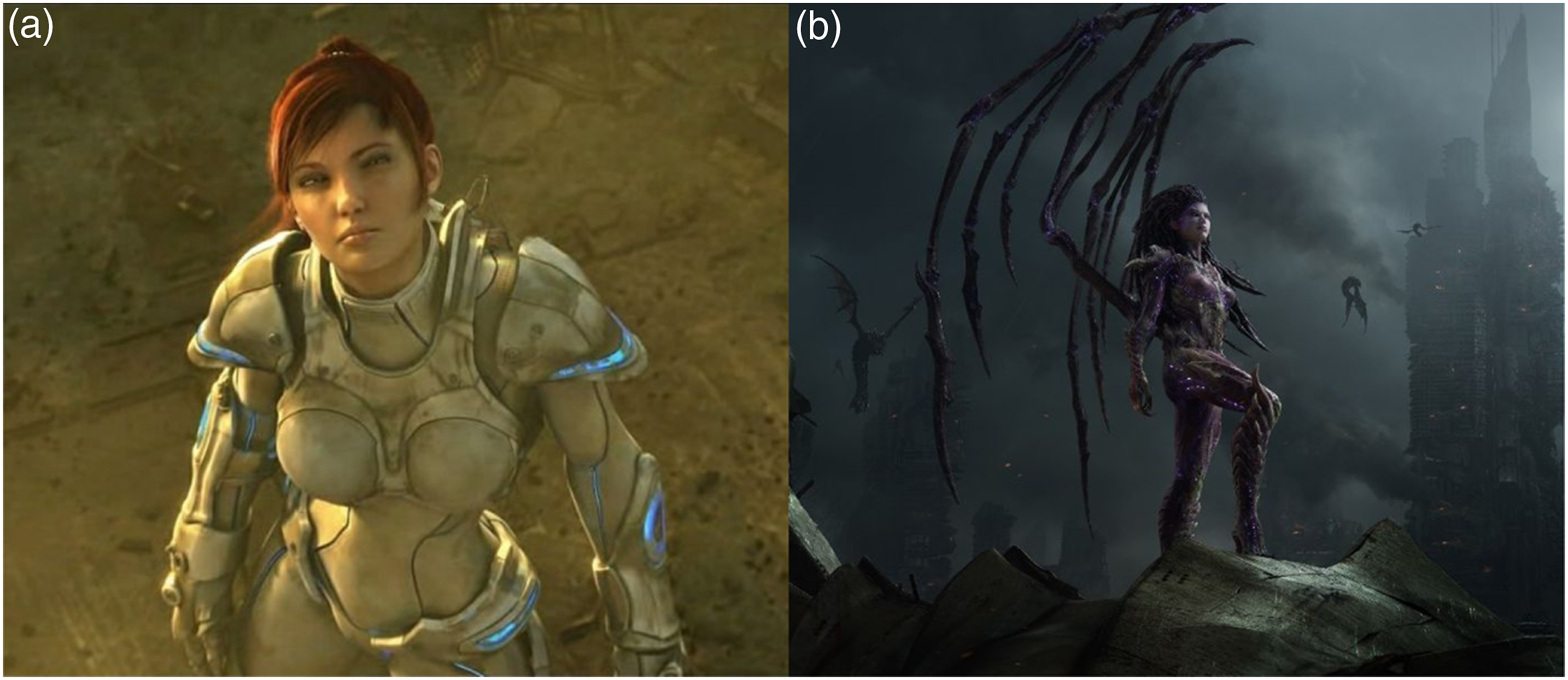
Kerrigan as Monstrous-Feminine
Despite becoming an empowered female protagonist, she is uncanny. Though left for dead, she returns as something human yet inhuman and familiar yet unfamiliar while being hypersexualized as a female monster. Unlike Stang’s assessment of the Sirens and Bruxae who “while often nearly naked, are grotesque and so probably not intended to titillate the assumed male player; rather, they speak to fears of female power embedded in patriarchal culture” (2018, p. 30), Kerrigan—even as Zerg monster—is designed to be alluring and modeled after her voice actor Tricia Helfer. Othered as an alien and as an infested Terran, she is positioned in a state of neither human nor Zerg, alive yet symbolically dead—the abject that disrupts boundaries. As such, Sarkeesian’s “Drop Dead Gorgeous” trope can aid in understanding Kerrigan, as seemingly undead and alien though appealing through her visual design and conventional beauty standards. Sarkeesian defines this trope as “the collusion of violence done to women’s bodies and the fact that it is often sexualized” invoking “the idea being that a dead woman is still inherently beautiful, even if her body has been maimed, her life stolen from her, something arousing still remains available for male consumption” (Sarkeesian (2014), 3:17–3:40 minutes). Since her humanity has been stolen from her, Kerrigan has lost all connections to her previous life, thus symbolically dying upon her infestation, yet despite her abject connection to the corpse and the monster, she is still put on display.
Kerrigan, as a Zerg infested monster, is no longer human, necessarily, but her human female form is still exaggerated through hypersexualization. While no longer solely human, her alien carapace is shaped in a way to remind the player of her breasts, hips, and buttocks (see Figure 2(a) and (b)). Even her feet are shaped to resemble stiletto high heels, adding another degree of sex appeal in utter contrast to her monstrous claws, tendril/antennae hair, and skeletal wings. To further heighten her contradictory sexualization, Kerrigan possesses an exaggerated hip sway when she walks due, perhaps, to her high-heel-styled feet. Sarkeesian explains, “the way that women move in games isn’t just used to suggest their confidence or their skill or some other facet of their personality. It’s very often used, in conjunction with other aspects of their design, to make them exude sexuality for the entertainment of the presumed straight male player” (2016a, 2:30–2:42 minutes). This presumption is reflected in IGDA’s findings that 71% of game developers are male (Weststar, Kwan, & Kumar, 2019), and game scholars note many developers design games for their demographics (Chess, 2018; Juul, 2010; Shaw, 2017). Furthermore, Sarkeesian argues, “With all the fighting, running, and climbing these women have to do, dressing them in heels is clearly a decision rooted in sexualized aesthetic pleasure rather than believability” (4:24–4:32 minutes). As a brutal Zerg agent often killing and maiming her enemies, Kerrigan’s feet should, arguably, be weapons such as claws or talons (like other Zerg) where form follows function. Instead, her form follows function in the sense of titillating a presumed straight male player rather than exemplifying her alien animality. (a, b) Kerrigan’s design as the Primal Queen of Blades (StarCraft II).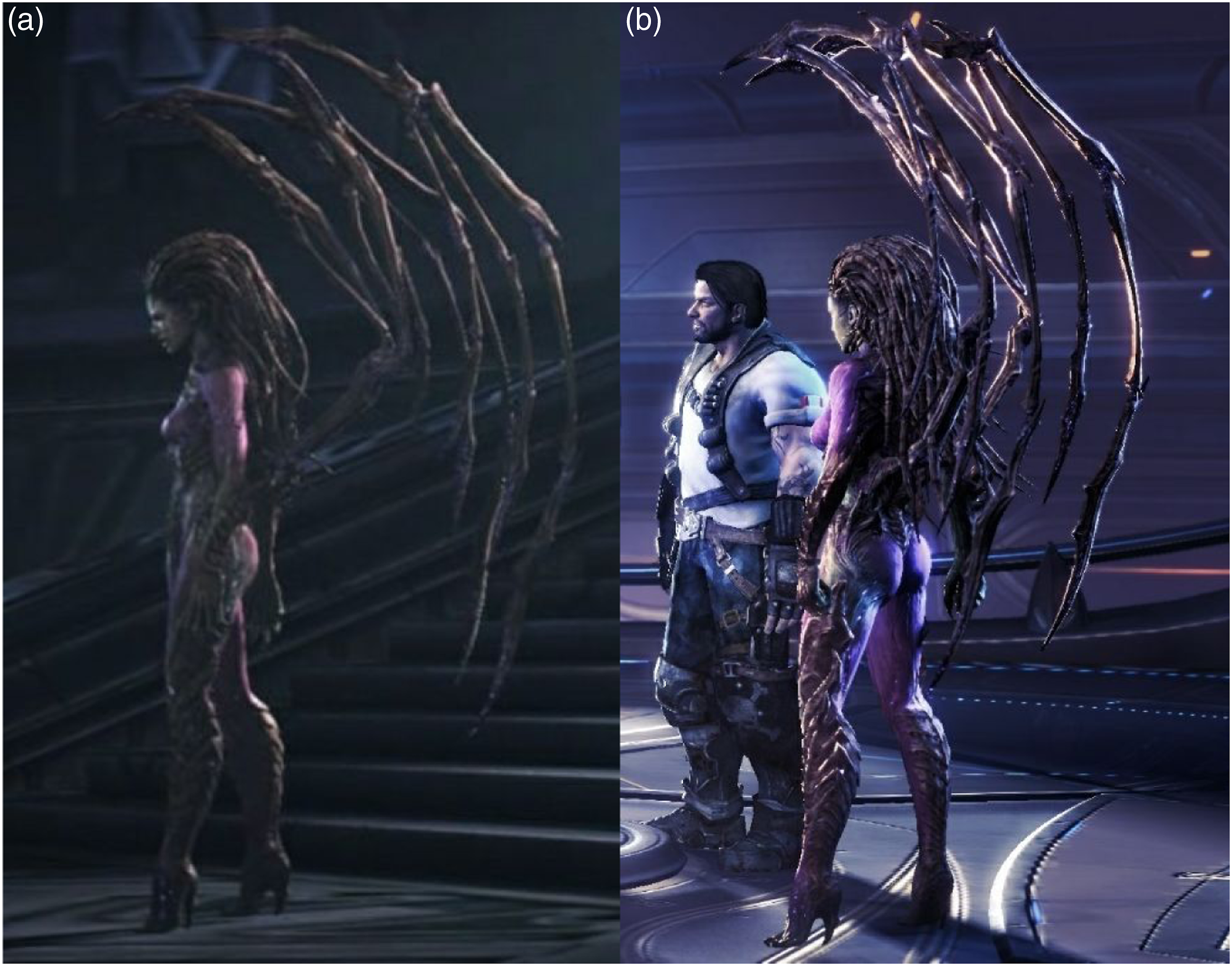
The monstrous female body teeters on two binaries that both empower and disempower Kerrigan. The female/monster hybridity ostensibly emphasizes both aspects of Kerrigan, revealing the ostensibly paradoxical sexual nature of her hypersexualized body while also trying to obscure her feminine form by fusing it with alien and animalistic anatomy. Her sexualized female body is seemingly safe to the normative, patriarchal symbolic order. However, it only becomes more dangerous as her monstrous features such as her claws and wings position her as a castrating, phallic monster. With her phallic claws and wings, she penetrates, rips apart, and kills Terrans and Protoss alike, castrating their power with their deaths. With her power to kill and remove the heads of her enemies and their armies, Kerrigan disrupts the traditional Freudian position that men fear women because they are castrated—lacking a phallus and power within the symbolic order—as harbingers of transgression and examples of punishment. Kerrigan’s enemies, to paraphrase Creed, fear her not because she is castrated but because she is not castrated (1993, p. 6)—she is whole and wholly dangerous. Furthermore, Kerrigan mirrors Creed’s discussion of Lurie’s (1982) assertion that “the male fears woman because woman is not mutilated like a man might be if he were castrated; woman is physically whole, intact and in possession of all her sexual powers” (1993, p. 6).
Kerrigan thus operates in multiple liminal spaces: abject borders of the human and inhuman, alive and dead, and sexual yet castrating. She is, as Stang describes the monstrous-feminine, “the horrifying, monstrous embodiment of male anxiety about female madness and vengeful, castrating women” (2018, p. 27). Nevertheless, she is also designed ostensibly to titillate players. As both monstrous Zerg and sexualized Terran woman, Kerrigan is a confluence of the Mother Alien and Ripley in Creed’s examination of Alien film series. On one hand, she shares the monstrous nature of the Mother Alien through her status as Zerg queen as “primarily a terrifying figure not because she is castrated but because she castrates” (1993, p. 22). On the other hand, she also follows Creed’s reading of Ripley as “She signifies the ‘acceptable’ form and shape of woman” (p. 23), as discussed above. Kerrigan’s hybridity is paradoxical yet powerful as “The visually horrifying aspects of the Mother are offset through the display of woman as reassuring and pleasurable sign” (p. 23–24). As Sarkeesian notes, the grotesque nature of female monsters is “inextricably tied to their gender” where “Elements that are often presented as titillating in other contexts are twisted and made repugnant, so that their femaleness itself is what serves to make them disgusting” (2016b, 5:00–5:11 minutes). Kerrigan exists as an uncanny being left for dead yet returned as something human yet inhuman and known but unknown with a blatant sex appeal centered in the monstrous-feminine.
Kerrigan, as queen of the Zerg, is situated further as abject through her alignment with these monstrous creatures. As a hybrid of symbolically undead Terran and the infested alien Zerg, she occupies several sites of abjection and uncanniness; however, in these multiple layers of Other, Kerrigan’s status as a powerful subject grows more dangerous to the symbolic order. Attempting to disempower Kerrigan as nothing more than a bestial monster, her enemies often reduce Kerrigan’s complex nature using animalistic or inhuman comparisons. The words bitch, monster, and animal are but a few examples of the insults thrown at Kerrigan as she quickly begins to avenge the Zerg race after Terran and Protoss forces destroy the Overmind. However, she revels in her newfound power as the self-proclaimed Queen of Blades, and she dismisses the reaction of Terran resistance leader Jim Raynor, her old lover, to her ostensibly abject new form, explaining “I am one of the Zerg now, and I like what I am. You can’t imagine how this feels” (Blizzard, 1998a). In her power as the monstrous-feminine disrupting the multiple boundaries of subjectivity, she no longer adheres to the patriarchal symbolic order that abandoned her.
Raynor: Savior and Saved
Raynor, posing as the white knight, does not immediately understand this reality of Kerrigan’s new identity and power, and the narrative of StarCraft II: Wings of Liberty (2010) revolves around Raynor attempting to “save” Kerrigan from herself. In Wings of Liberty, the player, as Jim Raynor, must construct the ancient artifact of the Xel’naga—the originating race who created the Protoss and the Zerg—to destroy the Zerg aspect of Kerrigan in order to rescue whatever human aspect still lingers in her monstrous hybridity. Despite what may appear to be valiant efforts to save Kerrigan from the Zerg and her new self, other characters consistently remind the player through the game that there is no guarantee the artifact’s power will not kill Kerrigan in the process. Wings of Liberty exploits the tired cliché of the Damsel in Distress, and its variant “the Euthanized Damsel” (Sarkeesian, 2013b, 12:40–12:42 minutes). to justify Raynor’s heroism. The plan is desperate and offers little to no concern for Kerrigan herself, making her what Sarkeesian would consider to be “reduced to a state of helplessness from which she requires rescuing by a typically male hero for the benefit of his story arc” (2013a, 13:21–13:27 minutes). Raynor acts upon Kerrigan in the guise of saving her when he reaps all the benefits of “saving” Kerrigan in the fashion of old romance. He needs to save her more than she needs him to save her because, as Sarkeesian explains, “the saving of a defenceless woman was often portrayed as the raison d’être—or reason for existence—in romance tales or poems of the era involving a ‘Knight-errant’” (2013a, 4:25–4:34 minutes). Without a monster, there is no hero. Thus, in the final sequences of the game, the player as Raynor uses the Xel’naga artifact to eradicate the main Zerg force on their home planet and minimize the Queen of Blades to a naked, helpless woman who must be literally carried off into the sunset by Raynor (see Figure 3). Consequently, Raynor must revert Kerrigan to her human form in order to save her because she must become a (human) damsel in distress, so he can rescue her from the terrible monster despite her being the terrible monster. Raynor carrying de-infested Kerrigan into the sunset (StarCraft II).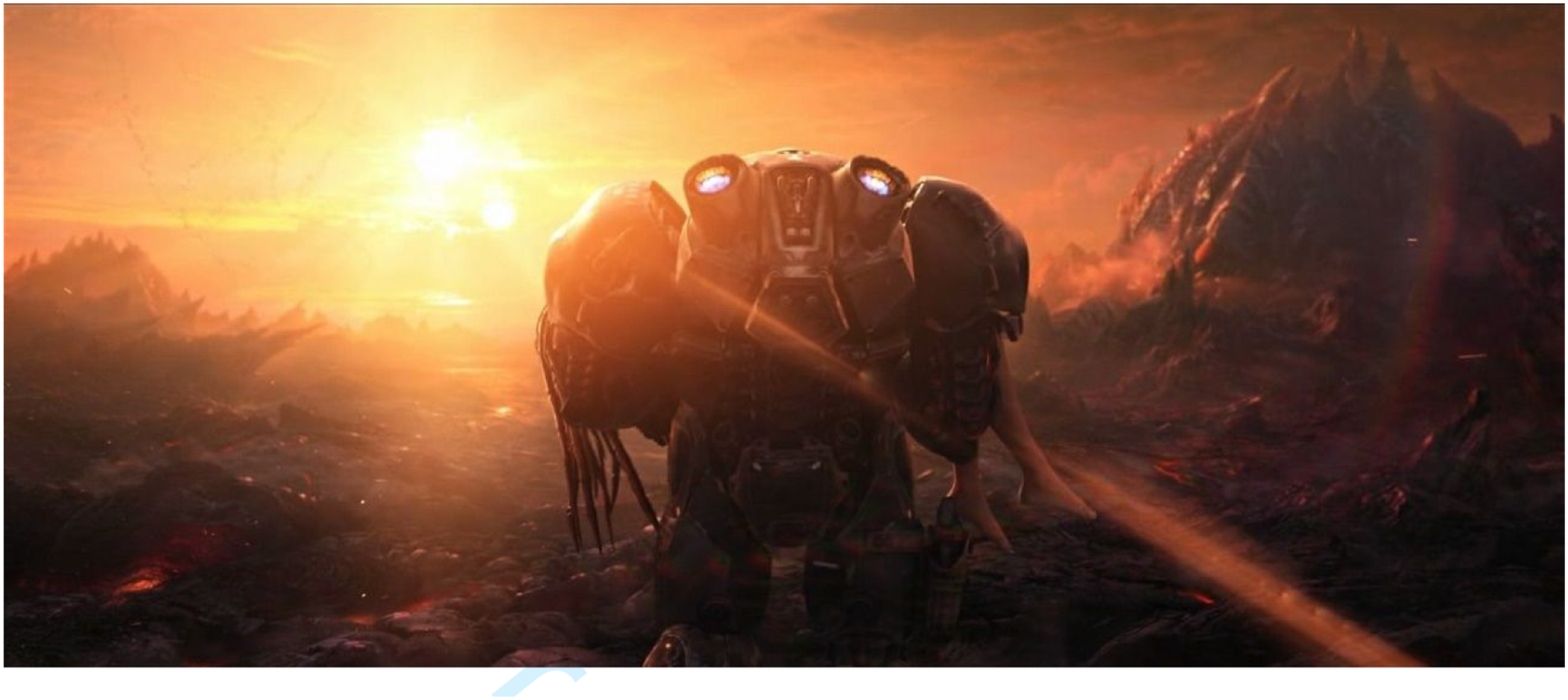
Following the trope of the Euthanized Damsel, the end of Wings of Liberty has the player/Raynor essentially kill the alien part of Kerrigan with the Xel’naga artifact, so he can rescue a human damsel. The artifact is the last gambit for a desperate Raynor, and later the villain Mengsk, to overcome the hybrid monster Kerrigan has become. As such, the artifact is a perpetuation of patriarchy: Raynor and his men use it to pacify Kerrigan, to remove her power, and to make her human once again. Kerrigan, once a powerful agent of the Zerg, is reverted to human because she must become a damsel in distress, so Raynor can save her from the beast/monster despite being the enthralling monster herself. This ending is a regression of the original game that follows the ascension of Kerrigan through the Zerg race to become their all-powerful queen. Upon her victory against all her enemies at the end of Brood War, she proclaims that “every living thing in the universe will bow before the Queen of Blades, or else they will die” (Elder & Kamarga, 2008, p. 42). Consequently, Kerrigan, though one of the most powerful and dangerous characters in the original StarCraft, is left little more than a weakened Terran woman supposedly once trapped in a monstrous Zerg body—a depiction that completely ignores the fact that her hybridity defined Kerrigan. Kerrigan-as-object works to help Raynor restore his status as male Subject/protagonist and the savior of his damsel Kerrigan. His restoration as Subject costs Kerrigan her own identity, and the de-infested Kerrigan grapples with the actions—and the paradoxical freedom—of her former self. Before the beginning of Heart of the Swarm, she explains to Raynor: “I was a billion claws. A billion fangs. I was in control. I killed. And killed. I was in control. At my word, mountains fled. Planets died. I was in control, and I was the monster” (Dayton, 2013, p. 9). Kerrigan was not trapped in her hybridity—she embraced it. However, forced back into the symbolic order, she is lost. As Stang notes, “Kerrigan’s de-infestation also disempowers her: she loses her confidence and her self-assurance, she questions her own identity and purpose” (2019, p. 246). As the Queen of Blades, Kerrigan was free as a monster, and that freedom made her even more dangerous to the symbolic order.
In Heart of the Swarm, where Kerrigan is the primary character and hero, she regains her former agency from StarCraft and StarCraft: Brood War (Blizzard, 1998b) as the all-powerful Queen of Blades but still endures hostility and mistrust from the other major characters. The game begins almost immediately after the events of Wings of Liberty, and the now-human Kerrigan is a prisoner in a research lab. Using her psychic power and lingering control over the Zerg, Kerrigan can escape on her own, subverting Sarkeesian’s Damsel in Distress trope and begins her campaign to enact revenge on those who had originally left her for dead before the Zerg choose her as their queen. Here is where Kerrigan transcends her position in Wings of Liberty as Raynor’s “raison d’etre.” Once she reunites her Zerg forces, she willingly metamorphoses back into a Zerg hybrid to participate in a reversed Damsel in Distress to save a captured Raynor from Mengsk—her commander who originally abandoned her to the Zerg. However, upon coming to Raynor’s rescue, Kerrigan is rejected by him because of her willingness to return to what he considers an abomination. Kerrigan attempts to explain that she returned to her hybridity in order to save him and, as a last hope, pleads with him to understand: “I love you, Jim. Never forget it” (Blizzard, 2013). Nevertheless, Raynor understands Kerrigan’s decision to return to her identity as the Queen of Blades as a refusal to accept his sacrifice to save her humanity. He offers no gratitude to his savior, and he makes it clear to her how he sees her rescue as a betrayal by merely telling her, “We’re done” (Blizzard, 2013). Indeed, his rejection is a desperate attempt to reestablish the symbolic order of patriarchy and containment of the monstrous Other.
Reduced to a damsel, Kerrigan played an essential role in restoring the phallocentric symbolic to which Raynor, and, by extension, the supposed male player, is steadfastly tethered; however, Kerrigan’s return to Queen of Blades once again disrupts that order. Lacan’s intersubjective pattern describes the framework of (symbolic) interactions that weave together to form the everyday occurrences that constitute the symbolic order, and it is perpetuated in such a way that the trajectory becomes repetitive, predictable, and, most importantly, safe for those in power. This trajectory is what Lacan calls the “symbolic inertia” (1988, p. 197). The monstrous female, then, is a traumatic disruption of the patriarchal hierarchies that allow the intersubjective pattern to remain steadfast. At the outset of the StarCraft, Kerrigan appears to maintain the intersubjective pattern as a loyal psychic soldier of the Terran Dominion and military complex. Kerrigan, then as the Queen of Blades, is an uncanny obstacle for the symbolic inertia as a dangerous female Subject. The impossibility of the monstrous female Subject, let alone connecting with the said Subject, in a (still) phallocentric world necessitates the monstrous female as a threatening abjection. Monstrosity allows the female Subject to exist only as separate and distanced from the seemingly true male Subject; the double Othering of the wholly Other seemingly justifies Raynor’s rejection of Kerrigan with the symbolic order and her necessary restoration to humanity through disposing of her empowered alien form. However, she persists, and her persistence manifests into resistance through her return to her monstrous form.
Kerrigan: Phallic and Castrating
Creed notes that the monstrous-feminine “was accused of the most hideous crimes: cannibalism, murder, castration of male victims, and the advent of natural disasters such as storms, fires and the plague” (1993, p. 2). No doubt Kerrigan follows in this legacy as she heads a brutal campaign against both the Terran and Protoss, with her brood dismembering, penetrating, and consuming her enemies in StarCraft and Brood War. Early in Heart of the Swarm before Kerrigan has metamorphized back into the Queen of Blades, she leads a resistance against Terran forces on the Zerg home planet. Kerrigan subverts the tropes against her in Wings of Liberty and reascends through the Swarm to reclaim her power, all the while, struggling with self-discovery and her past. Despite being in her Terran form, Kerrigan is still ruthless and strategic, decimating the Terran defenses to take down one of Mengsk’s top commanders, General Warfield. She finds him penetrated by a steel girder—a symbol of the Terran militant-industrial complex—in his base during her invasion. Despite his grave injuries, he attempts to disempower Kerrigan as nothing more than a monster, reducing Kerrigan’s complex nature with animalistic and inhuman comparisons: “You bitch; you’re not even human anymore. You betrayed us all. For what? Petty revenge? How many innocents have you killed? How many more have to die? What if Raynor could see you right now?” (Blizzard, 2013). His attacks are a desperate attempt to realign the symbolic order, attacking her gender as much as her monstrosity, continuing a hateful tradition in StarCraft and Brood War that initially led Kerrigan to mockingly refer to herself as “the Queen Bitch of the Universe” (Blizzard, 1998b).3 Sarkeesian argues these attacks are as centered on her sexuality as her monstrosity: their femaleness or sexuality is an intrinsic part of what is intended to make them dangerous or repulsive. As a result, when male heroes defeat them, their victory is often explicitly gendered, emphasizing that the male protagonist has overcome the female threat and reinserted his dominance and control. This can be as simple as the use of gendered slurs” (2016b, 9:11-9:30 minutes).
Nevertheless, she stands silently until Warfield brings up Raynor, when she telekinetically pushes the girder through him, killing him by fully penetrating him with his symbolic complex. Still silent, she walks away from his corpse, and through his radio, the player can hear a soldier exclaim that “the Zerg pulled back… It’s a miracle… We are going to make it!” (Blizzard, 2013). Once she kills Warfield, she psychically calls a retreat and ends the battle without causing more Terran causalities. To the Terran, the monstrous Zerg/Terran hybrid is nothing more than evil, an abomination, but Kerrigan has not lost all her sense of humanity. Her restraint in the face of hate and abuse humanizes Kerrigan’s monstrosity, and she uses her power over the Zerg swarm to only secure necessary victories.
Upon her final confrontation with Mengsk in at the end of Heart of the Swarm, Kerrigan has once again become Zerg but as the Primal Queen of Blades, using ancient Zerg essence to become even more powerful than her previous form to confront Mengsk. Like Warfield, Mengsk attempts to reduce her with comparisons to an animal when he asks her: “Did you think I’d keep an animal like you close to me without some kind of insurance policy?” (Blizzard, 2013) before using the Xel’naga artifact to try and kill her. However, Raynor comes to her aid, and Kerrigan penetrates him through the chest with her skeletal wings (see Figure 4). Gasping for air, he attempts one last attack on her identity, claiming that “I made you into a monster, Kerrigan” only to have her defiantly retort that “You made us all into monsters” (Blizzard, 2013). Mengsk’s taunt is apt in understanding the layered monstrosity that establishes Kerrigan’s identity. One is not born a monster but rather is given that title by another, often a fragile subject seeking to abject the other. Kerrigan’s “authentic” self is impossible to trace with her continuous trauma: tortured as a science experiment before becoming a Terran ghost, forced to commit genocide as Mengsk’s second-in-command, abandoned (left for dead) to the Zerg as Mengsk’s scapegoat, and taken by the Zerg and infested against her will. Indeed, Mengsk is right that he made her a monster and Kerrigan, as Spittle would argue, is “decisively wronged by patriarchy, which has sought to use her power to control thought and actions in the service of its destructive project” (2011, p. 321); however, when her power is her own, she is capable of challenging her maker. While Stang rightfully argues “her empowerment came at the cost of her own agency and placed her within a militaristic command structure” (2019, p. 249), only through Kerrigan’s acceptance of her power as the monstrous-feminine is she able to dismantle the normative, patriarchal symbol order that Mengsk represents and enacts. Tragically, violence is the only tool she has against her oppressors. While Kerrigan is by no means an ideal empowered female character, her desire and ability to dismantle the symbolic order complicates her character, emphasized by her monstrosity. Her victory is a victory for everyone not willing to live in the shadow of tyranny. Kerrigan impaling Mengsk with her spinal wings (StarCraft II).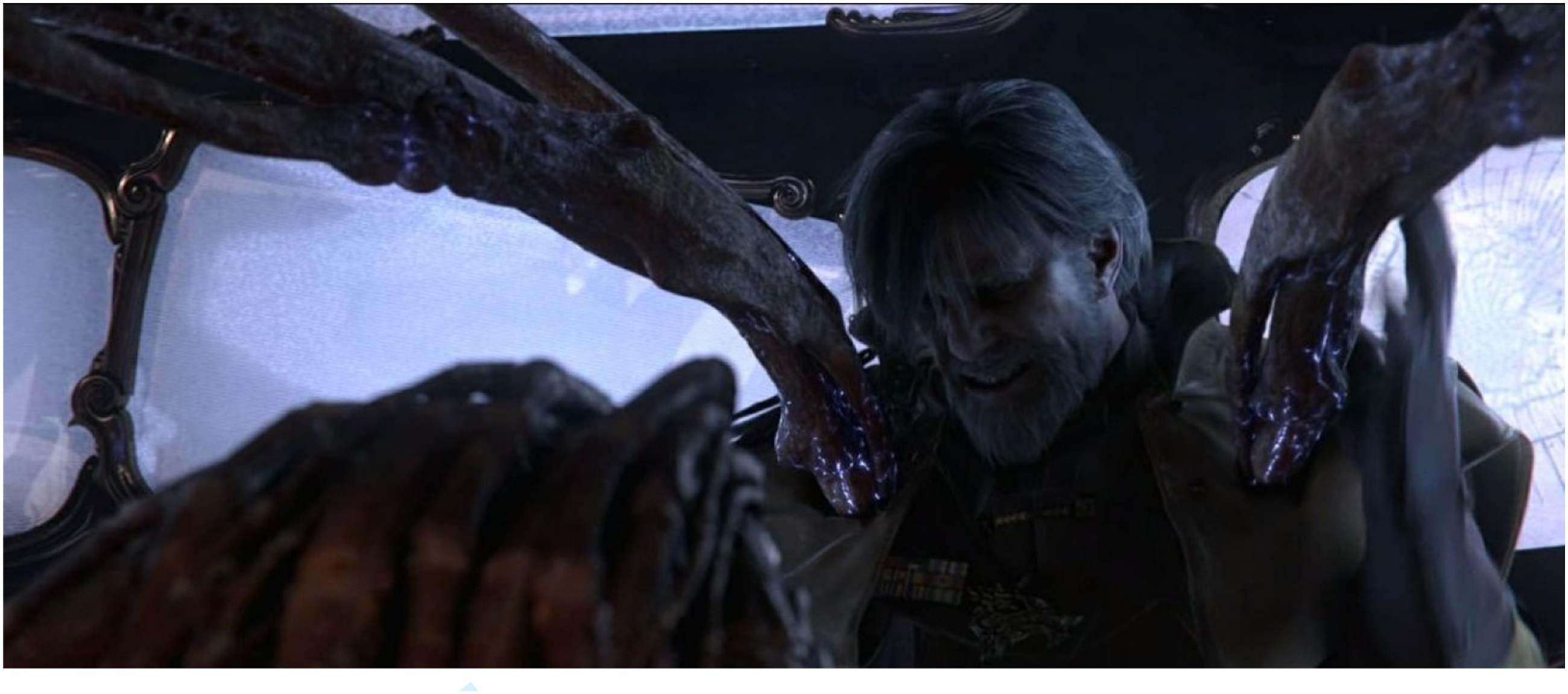
Kerrigan’s victory over Mengsk further humanizes Kerrigan’s monstrosity, adding to the complexity of her character as a monstrous-feminine hybrid. Her violent Zerg nature aligned with her empathetic Terran nature makes her an even more imposing adversary and more complex protagonist. Mengsk, seeing her only as a monster, underestimates her ability to inspire empathy and comradery in others, despite her monstrosity, and Kerrigan can defeat Mengsk with the support of Raynor and his army. Despite his initial horror, Raynor comes to terms with Kerrigan’s hybridity in order to dismantle Mengsk’s tyrannical reign. Though he cannot truly accept her as a monstrous Other, he has no choice but to understand her as a power for change. With her power belonging outside the patriarchy, Kerrigan can expose what Creed considers “the frailty of the symbolic order through her evocation of the natural, animal order and its terrifying associations with the passage all human beings must inevitably take from birth through life to death” (p. 83). Though empathetic, she still draws her strength from her monstrous-feminine identity, power she finally embraces as the Primal Queen of Blades. Kerrigan kills two of her most dangerous foes, General Warfield and Emperor Mengsk, by penetrating them, destroying key patriarchal figures in the Terran military. This penetration—enacting by a female monster—subverts heteronormative gender roles: she penetrates with a phallic weapon to castrate the symbolic order. By removing their power and rank and, of course, their lives, Kerrigan castrates both military officers as well as the armies these men lead. Creed is careful to point out that “the archetypes of the phallic and castrating woman are quite different and should not be confused: the former ultimately represents a comforting phantasy of sexual sameness, and the latter a terrifying phantasy of sexual difference (p. 158). However, Kerrigan acts as both phallic and castrating woman who does not attempt to alleviate any anxiety surrounding her identity and acceptance as a monstrous-feminine agent. Though she struggles momentarily with her identity when she is first de-infested at the beginning of Heart of the Swarm, she embraces her monstrosity as the Queen of Blades and then, more importantly, when she chooses to become the Primal Queen.
The Monster as Agent
As a video game protagonist rather than a film protagonist, Kerrigan offers players an opportunity to enact a certain level of agency through her character that her predecessors do not, and, consequently, Kerrigan, I argue, remediates monstrous-feminine in ways underexplored in Creed’s original conception and the subsequent application of the concept in game studies. Part of Creed’s analysis was to challenge contemporary film scholarship as she explains, “Clearly existing theories of spectatorship are inadequate: they do not help us theorize the presence of woman as active monster in the horror text, her relationship to the characters in the diegesis, or the relationship of the spectators—male and female—in the cinema” (1993, p. 153). Extending Creed’s exploration, Stang argues “female monstrosity is a fruitful area of analysis and intervention across all media” (2018, p. 30). Indeed, this noted inadequacy arises in game studies. As discussed above, Sarkeesian (2016b) also reflects on the problematic return of the monstrous-feminine in games. Likewise, Trépanier-Jobin and Bonenfant note that “Occasionally, female game characters are neither sexy action heroines nor passive victims, but terrifying monsters that the player must eliminate in order to survive” (2017, p. 42). These examinations are crucial to understanding Creed’s concept in video games, yet very few discuss the monstrous-feminine in terms of protagonists, only as antagonists or bosses that a male character must overcome.
While the monstrous-feminine is replete within video games, examples of playable female monsters (and scholarship of these engagements) are scarce. Indeed, as Stang notes, “Rarely are players given the opportunity to embody the monstrous-feminine themselves” (2019, p. 237). With this rarity in games and game scholarship, considerations of the monstrous-feminine in video games often obscure characters like Kerrigan. However, Stang argues that Kerrigan “embodies aspects and tropes of the horrific monstrous-feminine, but she also subverts them in several ways and is, most importantly, a playable character” (p. 237, original emphasis). Indeed, Kerrigan is one of the main—if not most important—characters in the StarCraft series, especially Heart of the Swarm. Not once in the entire series must the player (try to) kill Kerrigan when not actually playing as Kerrigan or as one of her minions. Even during the final mission of Wings of Liberty before Raynor “saves” Kerrigan, the player must only ward off her attacks, forcing her to retreat. If the player is not assuming the role of Kerrigan, they must help or avoid her. Playing as or playing with the monstrous Queen of Blades is a significant departure for the monstrous-feminine in film and even video games.
In over a third of the StarCraft series, Kerrigan is the primary playable character and heroine, where players assume the role of and control Kerrigan, navigating a harsh campaign against those who threaten her identity as the monstrous-feminine and her Zerg swarm. In other games, the player-Subject defines themselves against the NPC-Other as monstrous-feminine, where her wholly Otherness is only met with visceral and emotional reactions such as horror. Playing as Kerrigan then necessitates the player-Subject engage with and assume the role of monstrous-feminine Other. This connection is important to the video game experience, and Black argues that “the player seemingly has the experience of acting through a virtual body upon a virtual space—some kind of direct, preconscious engagement with virtual body and space is necessary in order to play the game” (2017, p. 183). For most video games that include the monstrous-feminine, this engagement is normative and violent against female monsters. As Stang argues, “by forcing the player to control a generally normative, non-monstrous heroic representative of the symbolic order, games make players complicit in the violence enacted against monstrous bodies” (2019, p. 237). Unlike the horror film, Stang notes, “we do not simply watch the cathartic re-enactment of patriarchal violence directed at non-normative and transgressive reproductive female bodies as in the horror films discussed by Creed—we perform it” (p. 237). In direct contradiction to this problematic trope, to play StarCraft and StarCraft II, a player must act through the virtual body of Kerrigan. However, Black notes this connection is not straightforward: “In effect, there is the player, and there is the game character, whom the player effectively becomes while playing the game. But, in reality, how the player is positioned relative to the game world, and which vantage point on it the player is invited to identify with, is much more complex” (2017, p. 190). The game makes space for the connection to the monstrous-feminine reliant, of course, on the player’s engagement.
The player continually negotiates their position as a player and game character, but the “player always is—and always must be—an embodied physical presence who does not look out onto the virtual environment through the game character’s eyes but looks at a screen with her own eyes and does not engage in embodied activity in the virtual environment but rather manipulates one or more control devices” (Black, 2017, p. 194). Nevertheless, the emotional and physical investment in playing as a game character is part of the shifting identity a player may have while experiencing the game as both embodied, physical player in the real world and the virtual body in the game world. Playing a video game enacts this process continuously. Black argues that “We routinely shift the boundaries of our bodily experience in multiple ways and to multiple degrees, and the simulated spaces and bodies of video games generate sensory, kinesthetic, and affective engagement by inviting us to extend this capacity into their virtual worlds” (p. 197). The player-Subject must assume the role of Other, and the consequent identity is a new reality for whatever amount of time and point of suspended disbelief through the gameplay experience.
If the player plays the game, they must inevitably engage, at some level, with the monstrous-feminine as they embody Kerrigan to complete the StarCraft series. Lankoski argues this kind of engagement requires what he sees as “two processes: goal-related and empathic engagement” (2011, p. 294). For Lankoski, “In goal-related engagement, players derive their goals from a PC [player character], and this in turn structures the affective experience of a player” (p. 306). One could only think of the statements: “I keep dying on this level” or “that boss keeps killing me.” This particular investment is vital for Kerrigan’s survival from mission to mission because her success is also the player’s success. If she dies or fails, the player also fails and progression halts. The second aspect of engaging with a character, which Lankoski calls empathic engagement, “is essentially about reacting to the character’s actions” (p. 306). The player-Subject must recognize the character-Other at some level of either empathy or even antipathy (their goals still align with the character). The player and character create a virtual bond that allows for the player’s emotional connection to Kerrigan despite being the monstrous-feminine in order to complete the game. Connected through mechanical, technological, and virtual means, each represents two halves of a ludic whole: the player-Subject is the character-Other, and the character-Other is the player-Subject. This engagement does not negate Kerrigan’s identity as monstrous-feminine any more that it negates the player’s identity; her power as a disruptive force becomes the player’s power, ensuring the often-challenging experience of the real-time strategy gameplay is conquerable just as—and simultaneously enacted as—defeating Mengsk and his connection to the patriarchal symbolic order—even if only implicitly.
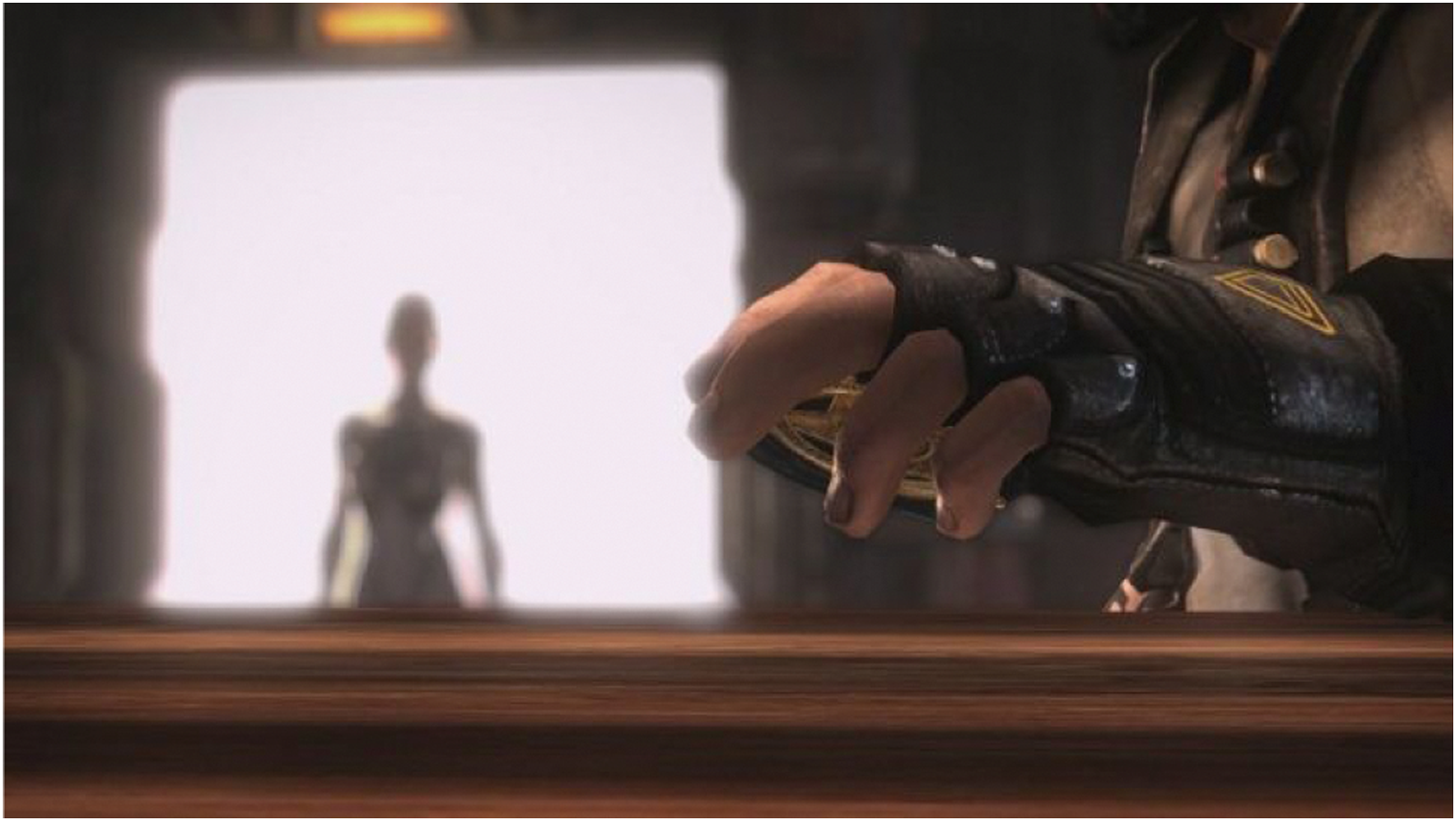
Kerrigan’s victory—and, by extension, the player’s victory—implicitly challenges the symbolic order that positions Kerrigan as such a powerful disruption of these forces, and Kerrigan can, I argue, exist as a celebrated, albeit complicated, example of the monstrous-feminine player-character. Kerrigan’s story concludes at the end of StarCraft II: Legacy of the Void (2015b) when she sacrifices herself to become a Xel’naga goddess to destroy Amon (see Figure 5). In an epilogue following this encounter, Kerrigan returns in her human form—albeit obscured by a halo of light—in a final cutscene with Raynor where they greet each other happily (see Figure 6). This return, Stang argues, implies that “Kerrigan is granted a ‘happy’ ending; however, it is important to note that she appears fully human in the final scene, suggesting that the monstrous-feminine can only get a happy ending if she gives up her monstrousness in favour of normalcy” (2019, p. 250). Kerrigan, once again, is forced to work within constraints, much like the player must work within the game’s constraints to succeed. To paraphrase Cixous, Kerrigan is riveted “between two horrifying myths: between the Medusa and the abyss” (1976, p. 885), and she uses both to enact her goals. To protect the universe, she becomes a goddess to overcome the seemingly impossible constraint placed against her. Though she receives a happy ending in her human form, she is remembered, celebrated, and beloved as monstrous-feminine in popular reception—particularly fan art and cosplay—and in later Blizzard games and marketing. In their celebration, fans (and even the creators) show they see Kerrigan as a monstrous-feminine rather than a human or goddess. Kerrigan as Xel’naga goddess. Kerrigan returning as human (StarCraft II).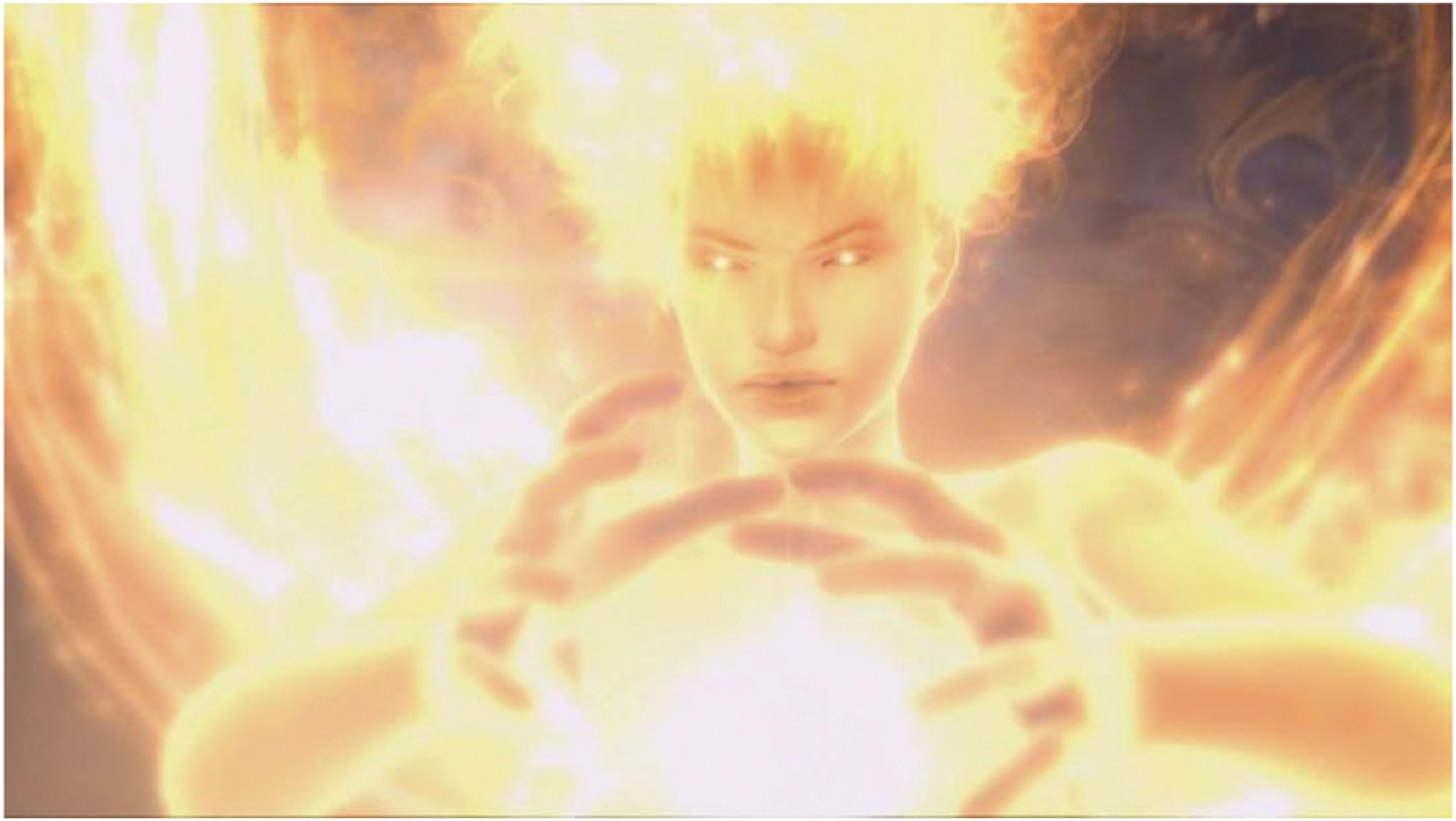
Conclusion
This celebration of Kerrigan as monstrous-feminine, despite the game’s conclusion, is as complicated as Kerrigan herself. Stang argues “Kerrigan cannot be uncritically celebrated as an example of ‘positive’ female empowerment: though Kerrigan is undeniably ‘empowered’ in the sense that she is powerful, her powers—both psychic and Zerg—were forced upon her against her will by male characters and her empowerment occurs within the violent, militaristic context of galactic conquest and bloody vengeance” (2019, p. 251). It is important to note, however, that while the Ghost program tortured Kerrigan in order to hone her psychic powers, her psychic abilities were not forced upon her—she is born with her powers. Her psychic power and her status as a warrior then lead the Zerg Overmind to mutate her into its champion. The Zerg thus tortured her to hone her powers further and in their image, but she is chosen for both acts of violence against her because her power can further their agendas. She is not made powerful or empowered through violence; both transformations are done to forcibly fit her into military complexes of both the Terran and the Zerg—led by Mengsk and the Overmind. She was always a disruption to the symbolic order, empowered through her innate gifts, and fights the symbolic order in the only way she understands: through violence. She has no other option, and while violence either against or perpetuated by her does not make her a “positive” example of female empowerment, this lack of choice makes her a tragic—and humanizing—character. This complicated nature is then furthered in the monstrous-feminine. Until her choice to become the Primal Queen of Blades—and then later the Xel’naga goddess—she is acted upon and against: forced into the Terran military, infested against her will, and de-infested against her will. As the Primal Queen of Blades, she not only has her own will, she valiantly proclaims “I am the swarm” (Blizzard, 2013) as her will now extends beyond herself.
As simultaneously a monstrous Other and a player-character, Kerrigan’s narrative in the StarCraft series is particularly useful in understanding how the construction of the monstrous-feminine in video games simulates and reifies the female monster character’s struggle for agency and attempt to transcend the role of wholly Other. Kerrigan’s agency as monstrous-feminine for both herself and the player exists as a terrifying and traumatic disruption of a patriarchal symbolic order as perpetuated in many Triple-A video games. Despite sexist tropes that hypersexualize her character design and her enemies’ abuse that attempt to deny her power, Kerrigan’s monstrous-feminine subjectivity as a player-character illuminates the monstrous-feminine in new—though complicated—ways beyond traditional examples of Creed’s concept. As I have argued, Kerrigan as a player-character is a crucial paradigm shift for the female monster that rejects hegemonic masculinities common in video games for agency and empathy situated upon the monstrous-feminine. Indeed, through Kerrigan, the player can—for at least the length of the games—move toward a form of subjectivity that challenges the negativity of the monstrous-feminine as the player-as-Kerrigan possesses hope of overcoming. This hope of overcoming becomes the very overcoming that drives the StarCraft series’ story and gameplay forward and a hope that can also drive the social imaginary of complicated, powerful, and empowered video game heroines forward.
Footnotes
Declaration of Conflicting Interests
The author(s) declared no potential conflicts of interest with respect to the research, authorship, and/or publication of this article.
Funding
The author(s) received no financial support for the research, authorship, and/or publication of this article.
