



Abstract
Character-driven storytelling is increasingly recognised as central to creating emotionally resonant and meaningful experiences in digital games. This scoping review maps existing research to support developers and scholars in understanding how narrative and character design intersect in interactive contexts. Sixty-nine studies were identified through a systematic search and analysed in two stages: a descriptive analysis and thematic analysis. The findings revealed a diverse research landscape and a range of storytelling techniques shaped by ludonarrative structures, audiovisual elements, and thematic frameworks. The review highlights key character design factors, emphasizing the importance of believable, relatable, and emotionally engaging characters in fostering immersive narratives. It also explores the broader impact of character-driven storytelling on players, including its potential to support learning, evoke emotion, promote social awareness, and enrich gameplay.
Keywords
Introduction
Digital games are increasingly recognized not only as entertainment but also as powerful tools for education and social impact, capable of enhancing learning outcomes and fostering empathy, perspective-taking, and social awareness (Lai & Bower, 2020; Ouariachi et al., 2019; Whittle et al., 2022). Central to these effects are characters and narratives, which shape player experience through emotional resonance and immersive storytelling (Christy & Fox, 2016). However, designing such experiences remains complex. While traditional narratology offers valuable insights, the interactive nature of games presents unique challenges and opportunities (Aarseth, 2012).
While studies have explored aspects such as character attachment (Burgess & Jones, 2017), identification (Shaw, 2011), and player–avatar relationships (Erb et al., 2021), they remain fragmented across disciplines like game studies, film theory, computer science, and psychology. This fragmentation hinders the development of a cohesive understanding of how character and narrative interact, especially when shaped by gameplay mechanics. For example, designing a morally complex character may require integrating ethical choice-based mechanics, branching narrative structures, and cinematic techniques that evoke emotional nuance. Without a consolidated view, it becomes challenging to translate academic insights into effective design strategies for character-driven games, particularly in games where narratives must respond dynamically to player-driven environments (de Lima et al., 2022).
This scoping review addresses the gaps by systematically mapping existing research on character-driven storytelling in digital games. It identifies how characters are constructed, represented, and deployed through both narrative and ludic mechanisms to foster emotional engagement and narrative immersion. The review offers practical insights for developers, theoretical foundations for interdisciplinary research, and pedagogical values for educators exploring games for empathy-building and learning. It also identifies underexplored areas and suggests directions for future interdisciplinary research. This review will address the following research questions:
This scoping review adopts “character-driven storytelling” as an umbrella concept for research exploring how characters shape game narratives through ludonarrative elements. It includes studies on player characters (PCs), nonplayer characters (NPCs), avatars, agents, and companions, considering narrative and gameplay features that influence character experience. While not all studies use this exact term, they engage with the narrative centrality of characters, which this review synthesises under a unified framework.
From Linear to Interactive Storytelling
Rooted in ancient philosophy, traditional narratology provides tools for analyzing narrative structure, character development, and story impact (Barthes, 1966; Herman, 2011). Frameworks such as the Monomyth (Campbell, 1949; Vogler, 2007) or Propp's Model (Propp, 1968) have long provided structured templates for understanding linear narratives. However, traditional models reveal limitations when applied to contemporary video games as they were not designed to accommodate player choices or interactivity (Brusentsev et al., 2012; Kosmas et al., 2023). They also do not fully capture the complexity, diversity, and fluidity of character psychology, nor players’ psychological development that parallels the character's trajectory (Ensslin & Goorimoorthee, 2020). Such limitations prompted a shift from linear storytelling to approaches embracing player agency (Aarseth, 2012; Dubbelman, 2011; Kosmas et al., 2023).
During the golden age of video games (1977–1984), narratives were minimal, typically linear without meaningful progression or character development beyond mechanical success or failure (Zalot, 2018). Immersion in early titles like Super Mario and Donkey Kong was rooted not in storytelling but oriented toward kinesthetic pleasures, high scores, and level achievements (Hayot, 2021; Zalot, 2018). Despite this, they still leveraged narrative strategies, drawing on familiar tropes and genres to connect players to broader cultural texts and media (Hayot, 2021; Zalot, 2018), laying the groundwork for more complex story-driven design in contemporary games.
In the following decades, successful video game sequels focused primarily on visual and technical upgrades such as improved graphics, advanced rendering, and the transition from 2D to 3D engines (Okur et al., 2024; Sebastian & Whitehead, 2008). Sebastian and Whitehead (2008) warned that the industry risked falling into “franchise fatigue,” where familiar gameplay and story structures are recycled, offering visual spectacles but limited narrative development. They argued that as visual realism and gameplay become standard, storytelling will become a key factor in distinguishing successful games (Sebastian & Whitehead, 2008). Eventually, interest grew among researchers and designers in exploring interactive storytelling through diverse design strategies and technical frameworks (Chen et al., 2023; Swain, 2008).
In narrative-based games, rich storytelling is a central design priority, where player immersion often emphasizes emotional resonance and narrative agency (Daneels et al., 2021; Leach & Dehnert, 2021). Players now embody protagonists and influence story progression, forming emotional attachments to characters whose fates are tied to their in-game choices (Bizzocchi & Tanenbaum, 2012; Tu et al., 2023). The emotional arc of a story often mirrors the protagonist's psychological journey and can parallel the player's emotional experience (Tu et al., 2023). Plot structure emerges from a protagonist's pursuit of goals and their responses to the challenges encountered along the way (Tu et al., 2023). Consequently, character-driven narratives become central to contemporary narrative games, deepening emotional engagement and driving narrative momentum (Boothe & Brenneman, 2024; Salen & Zimmerman, 2003). Unlike earlier linear frameworks, character-driven narrative adapts to the player's presence, allowing personal meaning-making to emerge through interaction. Nevertheless, this raises a critical question: What constitutes a compelling narrative in a medium where players actively shape the experience?
Crafting Characters
In a narrative-driven game, characters are central to how players experience and interpret the story (Anyó & Colom, 2021). Well-developed protagonists with clear personalities, goals, and emotional complexity often foster deeper engagement than less complex characters in games prioritizing mechanics over narrative (Tu et al., 2023). In this review's context, character-driven storytelling design refers to narratives where characters’ personalities, motivations, and interpersonal dynamics are central to driving the story forward. This approach not only influences player choices but also evokes strong emotional responses as players navigate moral dilemmas, relationships, and evolving character arcs (Daneels et al., 2021). By centering emotional engagement, character-driven storytelling design fosters immersion and connection, as empathetic players are more likely to become invested in the narrative and experience the game world on a personal level (Dickey, 2007; Tu et al., 2023).
Designing characters in narrative games requires considering both narrative and ludic elements (Iantorno & Consalvo, 2023; Tu et al., 2023). Narrative elements like roles, traits, appearance, actions, and context shape character identity (Smith, 2022), while ludic elements such as skills, attributes, controls, and dialogue choices add player engagement and character development (Bizzocchi & Tanenbaum, 2012; Iantorno & Consalvo, 2023). For example, a character's movement, animations, and special abilities can reinforce their personality and narrative role, intertwining gameplay mechanics and storytelling (Iantorno & Consalvo, 2023).
Character creators illustrate how narrative and ludic elements converge at the earliest point of player interaction. Common in role-playing games (RPGs), these systems let players define a character's identity through choices like race, class, and background. More than interface tools, they encode assumptions about who can occupy certain roles in the game world, embedding ideologies of race, gender, and class into both story and system (Iantorno & Consalvo, 2023).
Complementing this design perspective, Vandewalle et al. (2023) propose a characterization framework that distinguishes between storyworld cues (e.g., dialogue, action) and medium-specific cues (e.g., interface, sound, visuals), highlighting how characters are constructed not only through narrative content but also through the formal features of the medium. They also highlight the variability of player interpretation, noting that character perception may shift depending on individual choices, playstyles, or even game settings.
This leads to the following questions: What key insights can be gleaned from existing research to guide the effective crafting of compelling characters in narrative games? Moreover, how do these design choices ultimately impact player engagement, emotional connection, and overall game enjoyment? Addressing these questions requires a comprehensive understanding of the existing scholarship across multiple disciplines. Given this breadth and diversity, a structured method was needed to systematically map the literature and identify thematic patterns.
Methodology
The Scoping Review
A scoping review was chosen to map the breadth of research on character-driven storytelling design and identify key themes. This approach is well suited for synthesizing broad, interdisciplinary evidence and clarifying the scope of literature (Arksey & O’Malley, 2005). The review follows Arksey and O’Malley's five-stage methodological framework: identifying the research question, finding relevant studies, selecting studies, charting data, and reporting results. In addition, the review adheres to the PRISMA-ScR (Preferred Reporting Items for Systematic Reviews and Meta-Analyses extension for Scoping Reviews) (Tricco et al., 2018), guided by the Joanna Briggs Institute (JBI) methodology for scoping reviews (Peters et al., 2022; Pollock et al., 2023) for further transparency and rigor.
Study Selection and Eligibility
Figure 1 illustrates the scoping review process following the PRISMA-ScR flow diagram. In the identification phase, 886 potentially relevant studies were retrieved from Scopus, Web of Science (WoS), and ACM Digital Library and reduced to 626 after removing duplicates. To align with the review's focus, three core keywords, “character, storytelling and digital game” were chosen and expanded using Boolean operators: (Character OR NPC OR Avatar OR Agent) AND (Storytelling OR Story OR Narrative) AND (“video game” OR “video games” OR “digital game” OR “digital games”). No date restrictions were applied; however, an abstract-only search was used to manage the high volume of irrelevant studies observed during initial testing.
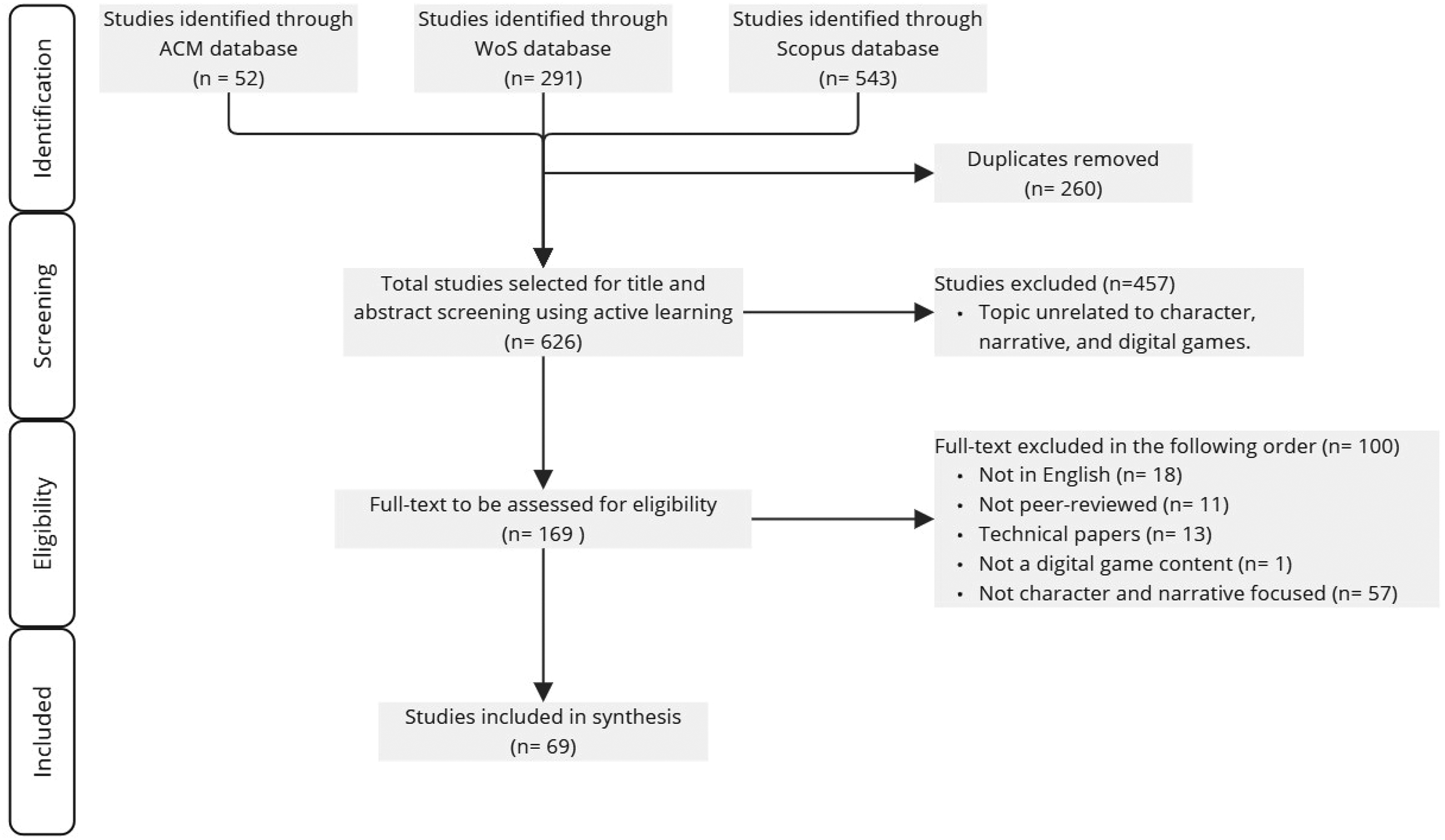
Scoping Review Flow Diagram (Peters et al., 2020).
Titles and abstracts were screened using ASReview. This active learning tool employs a “researcher-in-the-loop” approach to label studies as relevant or irrelevant, improving efficiency and reducing human errors (Van De Schoot et al., 2021). Working in tandem, ASReview prioritized potentially relevant papers, while researchers iteratively screened and labeled them based on their alignment with the review's core themes of character, narrative, and digital games. When abstracts were vague or lacked sufficient detail, full texts were examined to support decision-making. Moreover, 457 studies were excluded at this stage.
A total of 169 full texts were assessed, with 100 excluded due to not fulfilling the following criteria:
Language: Studies must be written or translated into English. (Excluded n = 18) Peer-reviewed: Studies must be a peer-reviewed publication. (Excluded n = 11) Digital game context: Studies must focus on digital video games, instead of nondigital formats like board games. (Excluded n = 1) Technical focus exclusion: Studies that focused solely on technical game aspects without discussing character and narration are excluded. (Excluded n = 13) Narrative and character focus: Studies must address both narrative and character elements while establishing a clear connection between them or examine how one influences the other within the context of digital games. (Excluded n = 57)
Although scoping review guidelines do not require critical appraisal of individual studies (Peters et al., 2022; Tricco et al., 2018), only peer-reviewed publications were included to maintain academic rigour. Peer-reviewed studies typically offer clearer articulation of methodological design and disciplinary context, supporting a more reliable synthesis of the literature. Ultimately, 69 studies met the inclusion criteria for data extraction and analysis.
Data Extraction and Analysis
Data analysis was conducted in two stages: (a) descriptive analysis and (b) thematic analysis. Descriptive analysis was used to map key patterns and trends across the dataset, offering an overview of the research landscape. This included publication year, interdisciplinary topics and subtopics, keywords (word cloud), geographical distribution, journal ranking, research types, research methods, and data sources. Data were extracted using a form adapted from JBI's recommended extraction table (Pollock et al., 2023).
In the second stage, a qualitative thematic analysis was conducted to address the research questions, following Braun and Clarke's (2006) framework, chosen for its flexibility in identifying and synthesizing patterns within qualitative data. Each full text was reviewed in detail, and relevant passages were coded to capture concepts and techniques related to the research focus. As coding progressed, codes were manually and iteratively organized into broader themes. Codes lacking conceptual depth were excluded, as they could not be meaningfully integrated into the themes (Nowell et al., 2017). Themes were then reviewed to ensure they reflected the dataset's overarching meanings. The research team reviewed the entire process collaboratively and iteratively to ensure accuracy and rigor.
Findings
The Research Landscape
Figure 2 illustrates the publication years of studies included in this scoping review. It shows a relatively low number of publications between 2003 and 2010, with a noticeable increase starting in 2011. A peak is observed in 2015 and 2021, with fluctuations between them. The highest number of publications occurred in 2023, followed by a decrease in 2024. The overall trend suggests a growing body of research in the field covered by the scoping review, particularly from 2011 onward.
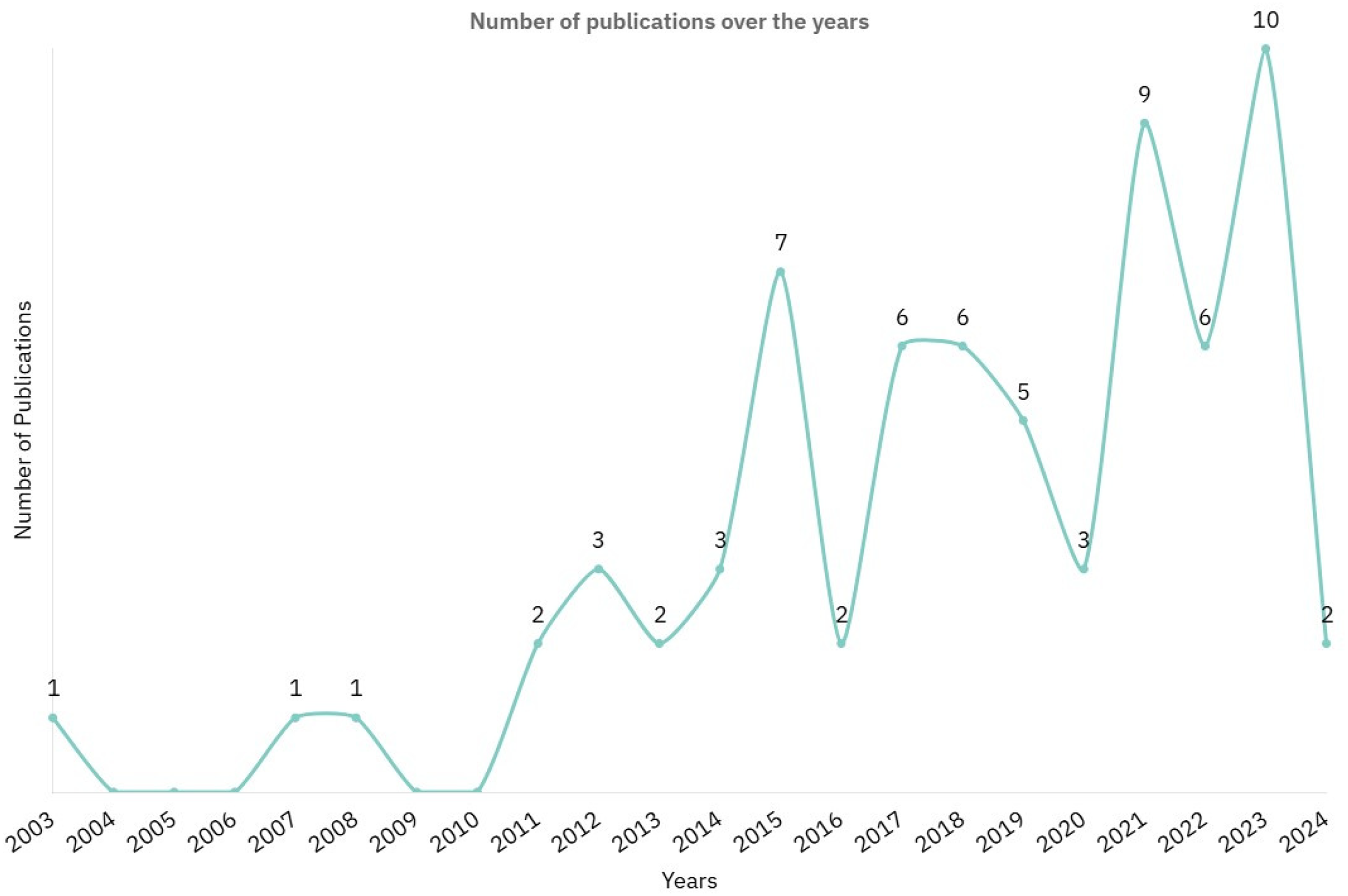
Publication Trend Between 2003 and 2024.
The studies cover diverse topics, categorized into main topics and subtopics in Table 1. The matrix is designed to capture key nuances while remaining broad enough to include all 69 studies. It highlights topic frequency, their intersections, and the multidisciplinary nature of game-related research, revealing uneven attention across different areas.
Mapping of Main and Subtopics in the Reviewed Literature.

Game Design and Development emerges as a key focus, with studies spanning multiple subtopics, particularly in Education/Learning, and Game Studies (Narrative Analysis and Player Experience), indicating a strong interdisciplinary connection. Psychology also features prominently, with research linking it to game-related experiences, learning, health, and human–computer interaction.
The “Others” category includes studies connecting Game Studies (Narrative Analysis and Player Experience) with broader cultural, social, and psychological inquiries. These studies explore various aspects, such as the ethical, philosophical, and societal implications of gaming, moral decision-making, player emotional responses, player–avatar identification and relationship, player agency, and narrative immersion. Interestingly, topics like Game Studies (Representation/Diversity and Transmedia Storytelling) appear underrepresented as main topics, suggesting potential research gaps. The matrix highlights well-explored and underexplored intersections within game studies, emphasizing the field's multidisciplinary nature and possible directions for future investigation.
Word clouds were generated to identify shifts in research focus across 2003–2012 and 2015–2024 (Figure 3). While “narrative” was already prominent earlier, its stronger association with “video” in the later period signals the growing importance of video game narrative as a narrative medium. Early terms like “structure,” “model,” and “Propp” reflect a formalist focus. In contrast, later terms such as “experience,” “emotional,” “behavior,” “relationship,” and “moral” indicate a shift toward psychological and social dimensions of gameplay that both shape and are shaped by player interactions. The rising prominence of terms like “avatar,” “NPCs,” “companions,” and “moral” indicates emerging subfields exploring identity, social interaction, and ethics in games. These trends reflect a broader move from structural analysis toward understanding games as culturally situated, emotionally resonant, and socially impactful experiences. The geographical distribution of the 69 studies included in this scoping review was analysed based on author affiliations. Figure 4 illustrates the number of studies conducted in each country across two decades: 2003–2012 and 2015–2024. The United States accounts for a significant portion of research output, with 21 studies between 2015 and 2024, compared to just 3 in the earlier decade. While North America remains a dominant hub for research on character-driven game narratives, the latter period reveals a more geographically diverse distribution, with contributions spanning Europe, Asia, South America, and Africa. This diversification suggests a growing global interest in the topic and an increased engagement from diverse cultural and academic perspectives. Despite this increased diversity, international collaborations remain relatively rare. Of the 69 studies, only three involved international collaboration: Malaysia with Indonesia (Liew et al., 2024), Canada with the United States (Desai et al., 2016), and Australia with the United Kingdom (Sauer et al., 2015).
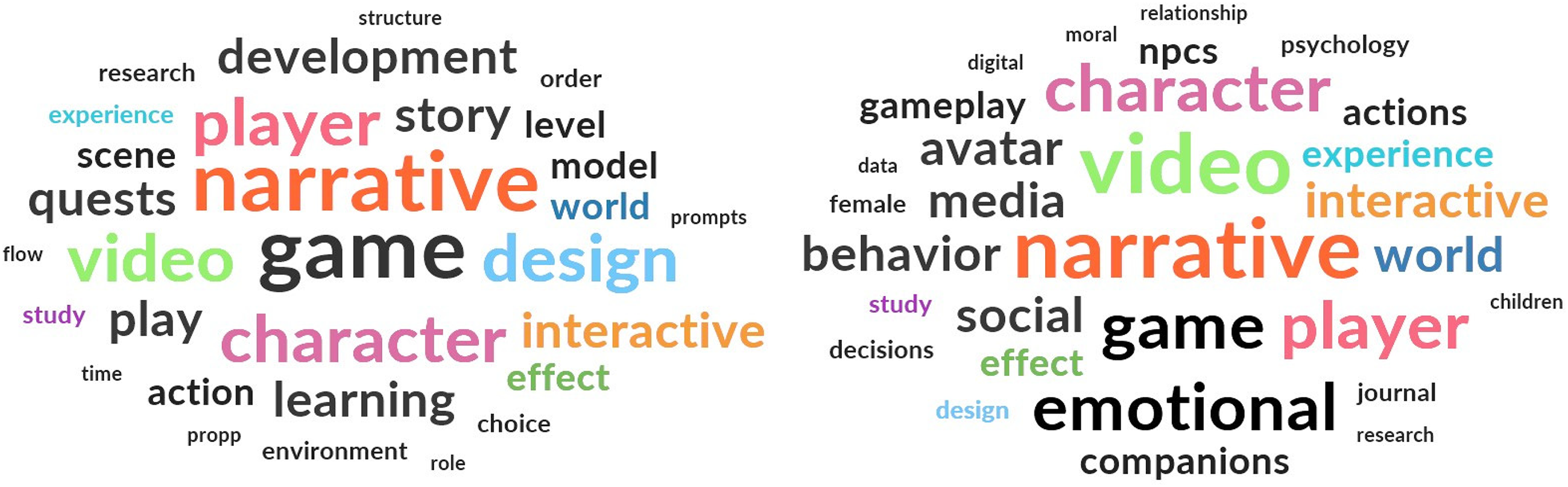
Word Clouds From 2003–2012 (Left) and 2015–2024 (Right).
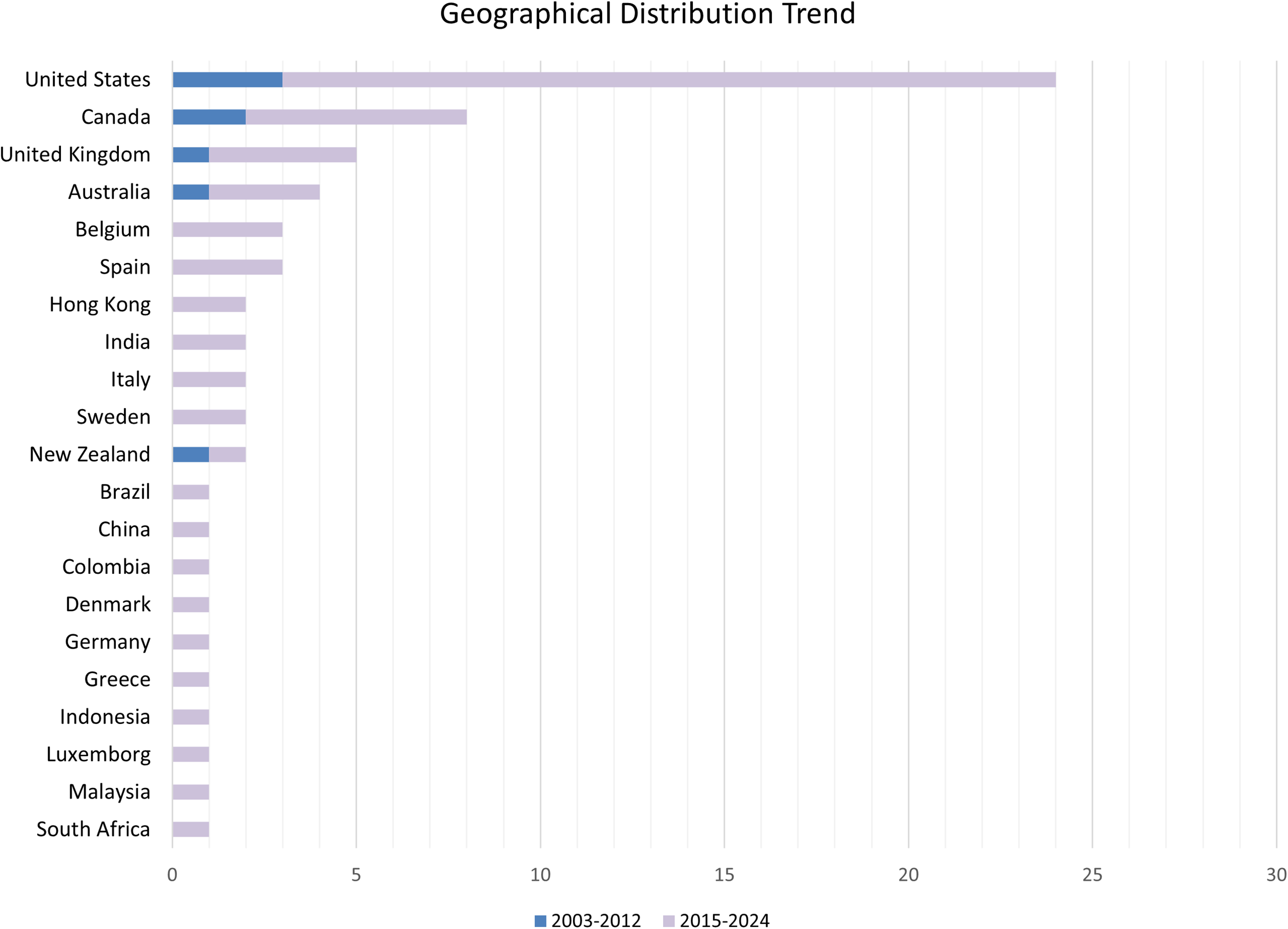
Geographical Distribution of Studies in 2003–2012 and 2015–2024.
The reviewed studies include 21 in Q1, 6 in Q2, 7 in Q3, 2 in Q4, and 33 unranked, including conferences (28), book chapters (2), and nonranked journals (3), based on SCImago Journal Rank at time of publication (Figure 5). Moreover, 48% of the included studies employed empirical methods, while the remaining 52% were nonempirical (Figure 6). Methodologically, 38 studies used qualitative methods, 13 used quantitative methods, and 7 adopted mixed methods (Figure 7). The remaining 11 studies include theoretical or conceptual papers, methodological proposals, and design or development papers that do not follow traditional research methods.
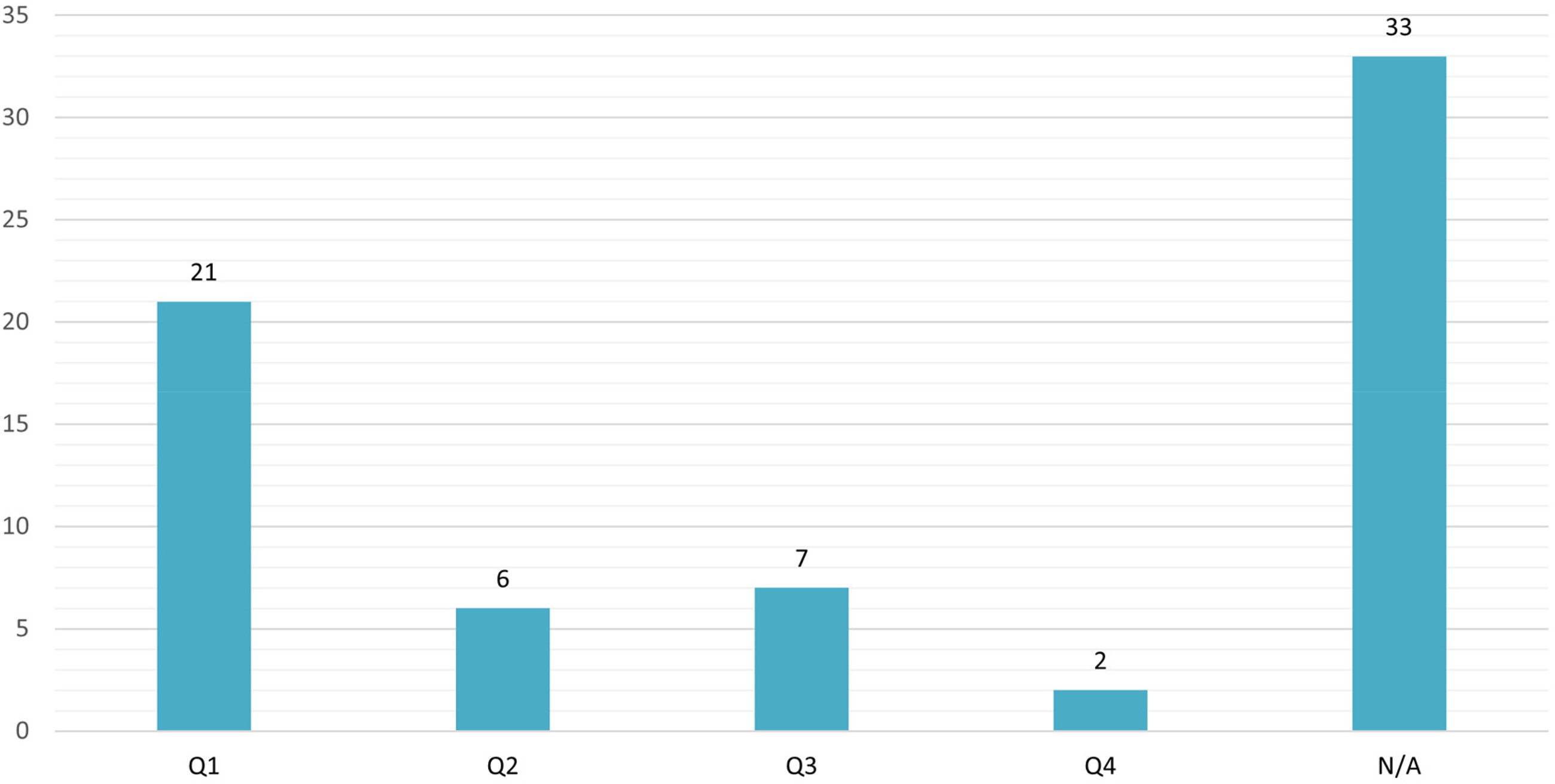
Journal Ranking Distribution.
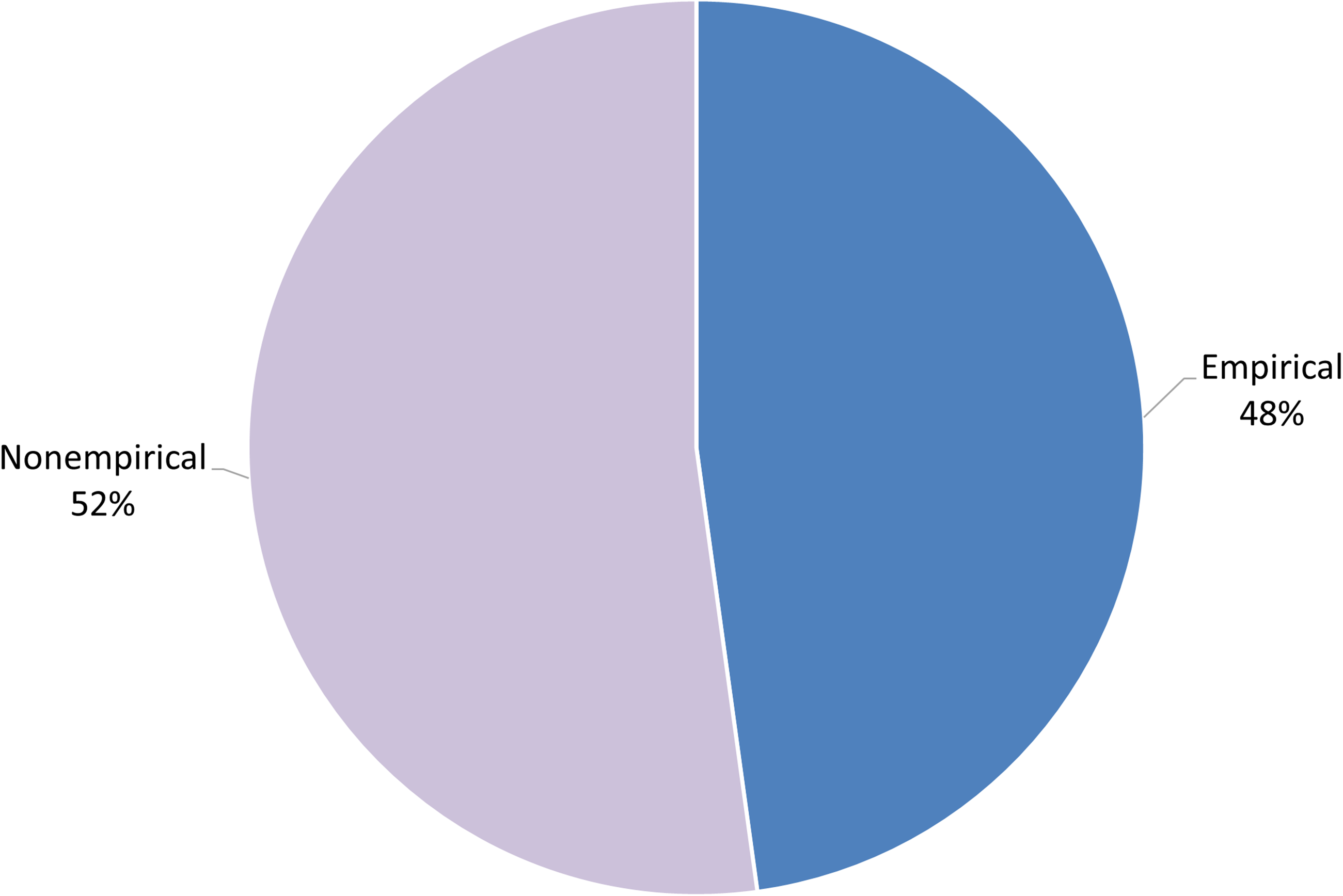
Research Type Distribution.
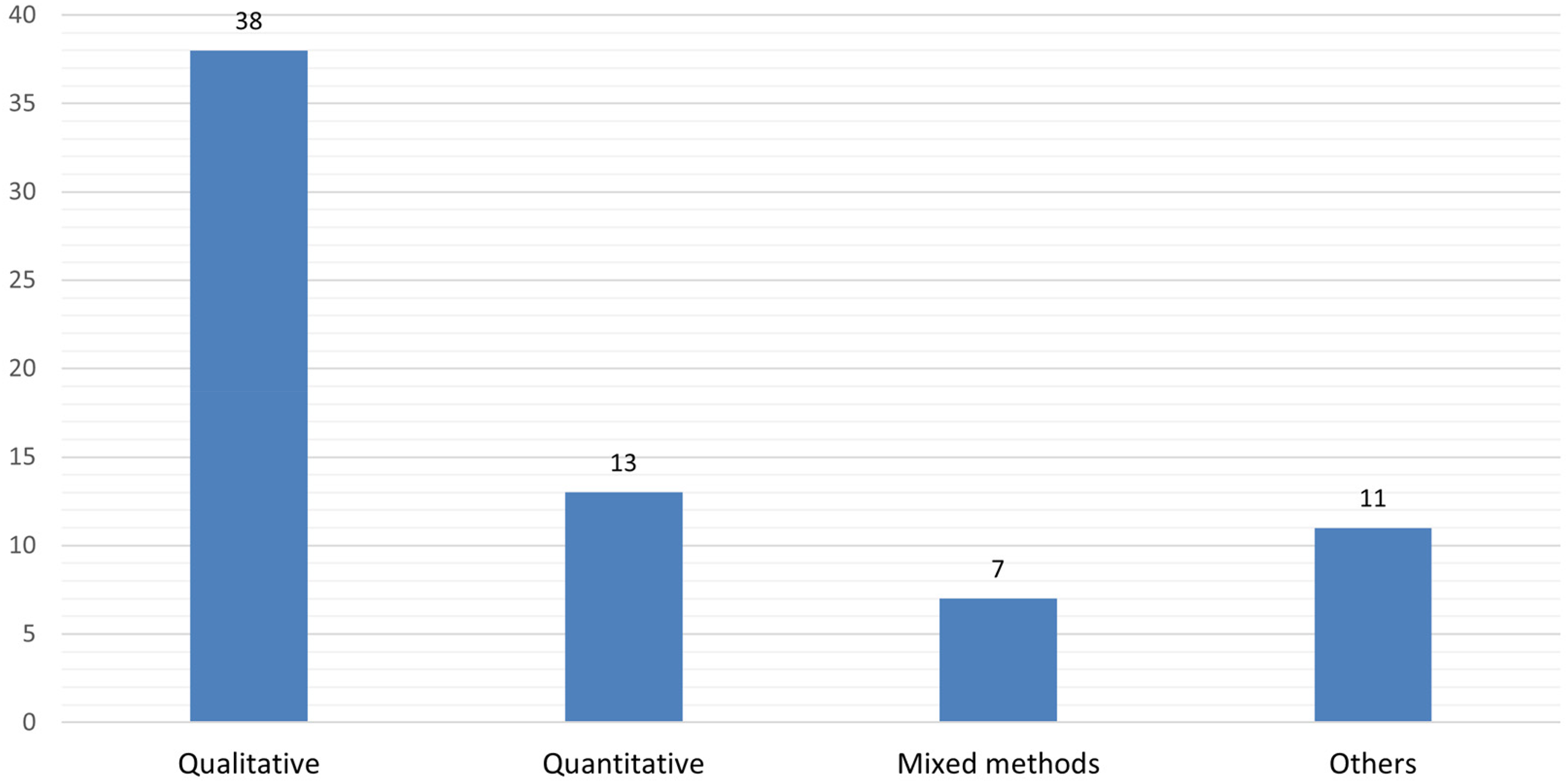
Research Method Distribution.
Figure 8 illustrates a treemap of data sources, encompassing both primary data and analyses of preexisting materials. Game content, surveys/questionnaires, and traditional/digital texts were most common, followed by observation/recordings, interviews, experiments, and film/cinema/TV content. Less common sources include physiological data, user studies, focus groups, and autoethnography. Studies that did not specify data sources often present theoretical critiques, design decisions, or philosophical reflections.
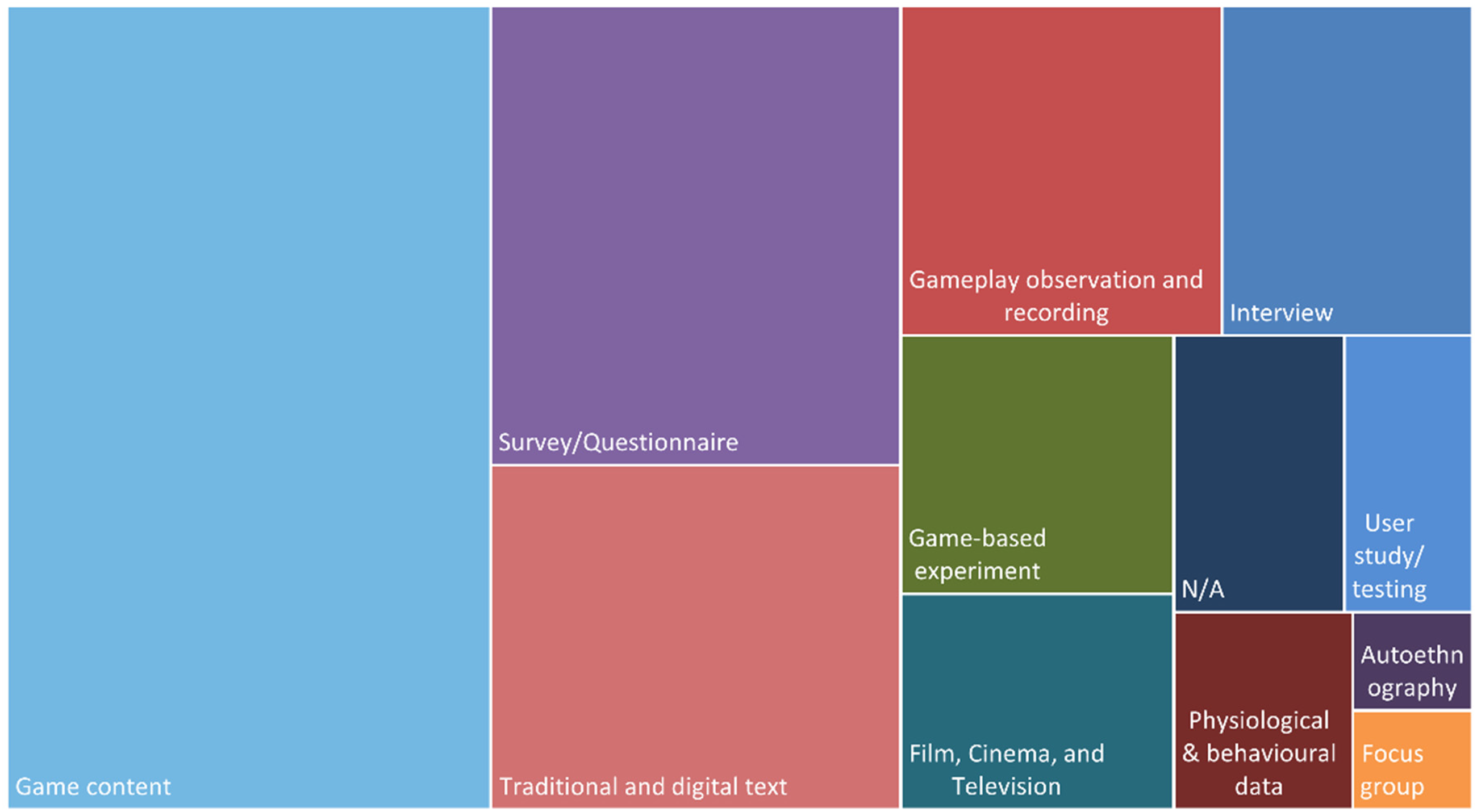
Data Sources Across Studies.
Thematic Findings
Themes were identified from relevant sections addressing storytelling techniques, character design, and their influence, as shown in Figure 9. Several design elements were found to overlap across thematic categories. For example, archetypes appeared in multiple themes. Figure 10 further illustrates that individual studies often contributed to multiple themes rather than aligning with a single focus. This highlights the interconnected nature of the literature and reveals insights that extend beyond isolated findings or singular thematic groupings.
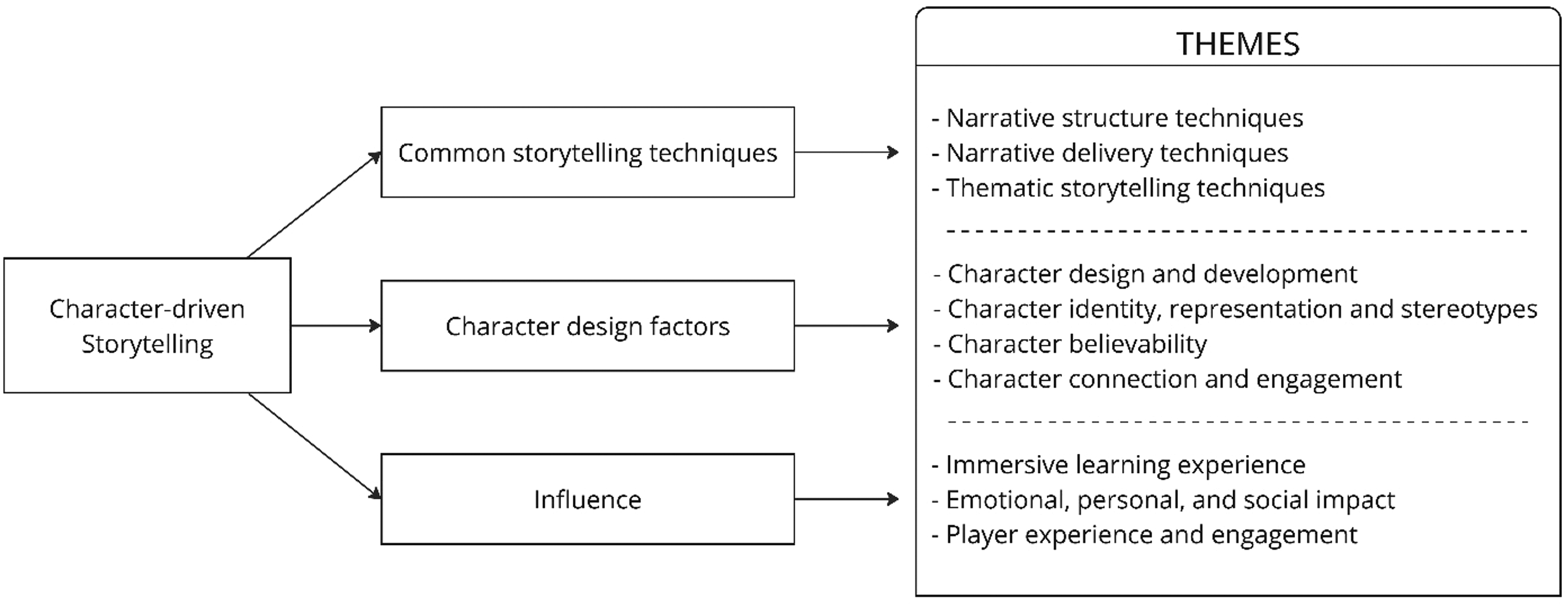
Overview of Themes Organized by the Research Questions.
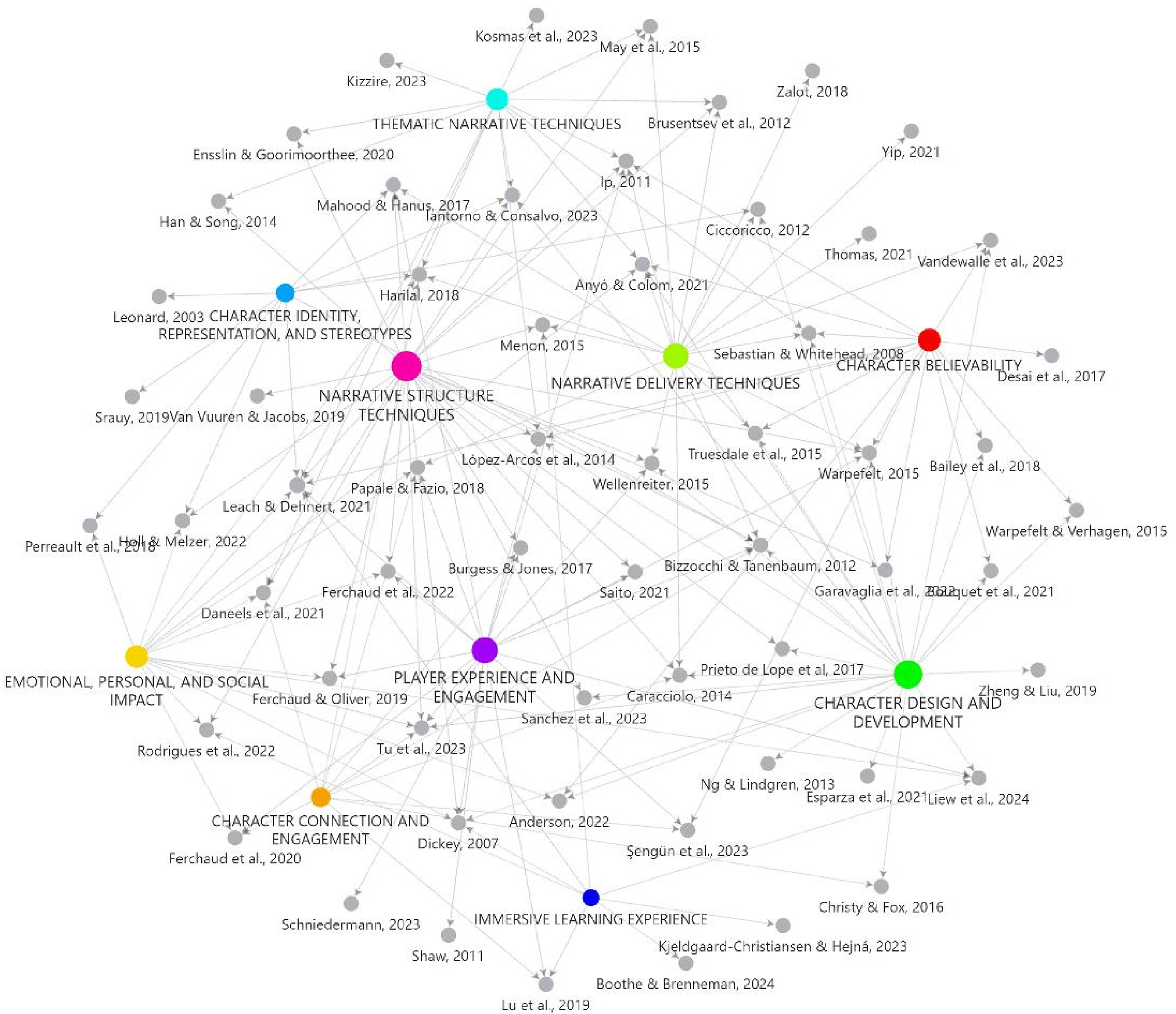
Clusters of Studies Across Multiple Themes.
Storytelling Techniques in Character-Driven Digital Game Research
In response to the first research question, “What storytelling techniques are commonly discussed in character-driven digital game research?,” the findings were organized into three themes reflecting how stories are structured, conveyed, and conceptualized in character-driven games: “Narrative Structure Techniques,” “Narrative Delivery Techniques,” and “Thematic Narrative Techniques.”
Narrative Structure Techniques
One common cluster of studies focused on narrative structure as a core storytelling scaffold, especially in relation to player agency and emotional immersion. Studies emphasize how games adopt structural frameworks such as monomyth, episodic storytelling, branching narratives, interactive storytelling, and emergent narrative to shape the player's journey and narrative experience.
The literature engaged with the monomyth, or “The Hero's Journey,” a narrative structure comprising twelve recurring stages such as the “Call to Adventure” and “The Ordeal/Final Boss” (Ip, 2011; López-Arcos et al., 2014). While traditionally applied in linear formats, it takes on a new dimension in video games, where players embody the hero and influence the journey through interactive gameplay (Han & Song, 2014). This interactivity offers a sense of freedom or escape from real-world limitations (Han & Song, 2014; Jiménez Sánchez et al., 2023). However, despite these strengths, the monomyth's linear and universal structure is still limited. Ensslin and Goorimoorthee (2020) argue that the monomyth falls short of capturing the full complexity of narrative development in video games due to its oversimplification and fragmented nature.
Another narrative structure observed is the use of episodic and branching storytelling. Episodic allows for unique playthroughs, with player choices influencing the narrative, sometimes leading to exclusive subchapters (Holl & Melzer, 2021). Similarly, branching narratives, often called multiple “storylines, paths, outcomes, or endings,” are a powerful narrative technique once considered too complex for writers and demanding on hardware (Burgess & Jones, 2017; Wellenreiter, 2015). However, as technology has advanced, branching narratives have become more feasible and practical. Such designs balance agency and structured storytelling, providing freedom within a fixed narrative framework (Ip, 2011; Menon, 2015).
The literature identifies various methods of episodic and branching narrative. One common type features a predetermined narrative where branches eventually reconverge, influencing character interactions and player choices without being entirely open-ended (Iantorno & Consalvo, 2023). Alternatively, some games follow linear narratives with variations and multiple endings, including branching within levels, alternative routes, free-roaming, or side quests (Daneels et al., 2021). This led to emergent storytelling, particularly in open-world games, where the plot evolves dynamically based on player actions (Saito, 2021; Van Vuuren & Jacobs, 2019; Warpefelt, 2015; Wellenreiter, 2015). While traditional linear story models struggle to capture fluidity (Brusentsev et al., 2012; Wellenreiter, 2015), emergent storytelling captures the spontaneous and unpredictable nature of gameplay (Van Vuuren & Jacobs, 2019). All three types (reconverge branches, linear with variations, and dynamically evolving plots) incorporate player choice. However, they vary in how they construct narrative agency, as some simulate openness while guiding players along predetermined paths.
Structures like episodic, branching, and emergent are approaches to interactive storytelling, which is the most widely discussed narrative form in the literature. It arises from the dynamic relationships between a game's narrative elements (López-Arcos et al., 2014). Compelling interactive storytelling prioritises user experience, emphasizing usability and playability (López-Arcos et al., 2014), enabling players to engage deeply with stories, make moral decisions, and experience their consequences (Brusentsev et al., 2012; Daneels et al., 2021; Ferchaud & Beth Oliver, 2019). However, this reveals a core tension in interactive storytelling: balancing player agency with narrative cohesion, as interactivity can sometimes compromise esthetic design and immersion (Bizzocchi & Tanenbaum, 2012; Saito, 2021).
Narrative Delivery Techniques
Another thematic focus in the literature is how narratives are delivered to players during gameplay. Studies explore cutscenes, cinematic techniques, and environmental storytelling, all of which serve to communicate narrative content, shape player perception, and support emotional engagement.
Among the various delivery techniques discussed, cutscenes, which are noninteractive video segments, are identified as crucial for linking gameplay and advancing narrative (May et al., 2014). They introduce characters, facilitate level transitions, and highlight consequences of player actions (Brusentsev et al., 2012; Ip, 2011; Menon, 2015; Wellenreiter, 2015; Zalot, 2018). Cutscenes provide multiple character perspectives (Sebastian & Whitehead, 2008) and serve as emotional anchors, helping players connect with characters and the story's stakes (Mahood & Hanus, 2017). For example, The Last of Us (TLOU) (Naughty Dog, 2014) uses cutscenes with reverse shots and flashbacks to heighten emotional impact (Anyó & Colom, 2021), while Mass Effect (BioWare, 2007) conveys the character's sorrow and terror through a triggered cutscene (Mahood & Hanus, 2017). However, despite their narrative utility, cutscenes are often criticized for disrupting gameplay flow by temporarily removing player control, breaking agency, and immersion (Thomas, 2021). To minimise this, interactive cutscenes help preserve player agency by incorporating decision points before, during, or after the sequence (Ip, 2011).
While cutscenes offer scripted cinematic moments, the literature also highlights the use of broader cinematic techniques within gameplay to enhance storytelling and emotion. Drawing from filmmaking principles, many games incorporate techniques like editing, cinematography, and sound not merely for esthetic appeal, but as active storytelling components (Bizzocchi & Tanenbaum, 2012). For instance, TLOU uses camera angles and spatial design to heighten suspense and emotional depth (Anyó & Colom, 2021). Similarly, Hotline Miami (Dennaton Games, 2012) employs flashbacks to align narrative perspective with the protagonist's memories (Caracciolo, 2014), while Mirror's Edge (DICE, 2008) enhances immersion through dynamic camera movements that simulate the character's speed and momentum (Ciccoricco, 2012). Collectively, these techniques illustrate how cinematic design choices within gameplay can function as narrative tools that shape player experience and deepen emotional engagement.
The literature describes environmental storytelling as a means of drawing players into the narrative by integrating story elements directly into the game world. Elements such as architecture, weather, and NPC attire convey setting and story details (Warpefelt, 2015). Environmental storytelling often employs metaphor to artistically distort reality for dramatic impact (Caracciolo, 2014). In TLOU, abandoned buildings, scattered vehicles, and the absence of religious symbols shape the tone and atmosphere (Harilal, 2018). Environments also influence character interactions in Grand Theft Auto V (GTA) (Rockstar North, 2013), where NPC reactions to theft vary by a neighbourhood's social standing (Truesdale et al., 2015). Jenkins’ concept of “narrativised game architecture” integrates backstory like information about races, cultures, and individuals into the game world and is explicitly revealed through player encounters. At the same time, other elements are more subtle, like the advertisements heard on the radio.
Thematic Narrative Techniques
Another cluster of focus in the literature examines how thematic narrative techniques draw on familiar character archetypes and established genre tropes to evoke specific emotional responses, set narrative expectations, and guide player interpretation.
Archetypes, recurring patterns that represent universal human experiences, shape video game narratives and characters where players embody these archetypes through immersive gameplay (Han & Song, 2014). Vladimir Propp identified eight key archetypes, including the hero and villain, alongside 31 narrative functions, which can be used to analyse and create diverse story structures (Brusentsev et al., 2012). The monomyth, similarly, relies on archetypes like the hero, mentor, and allies (Daneels et al., 2021; Ip, 2011; Kosmas et al., 2023; López-Arcos et al., 2014), reflecting societal values, with heroes gaining status through trials and transformation (Han & Song, 2014).
A common flaw in early games is portraying characters as overly virtuous, restricting morally ambiguous or questionable actions (Sebastian & Whitehead, 2008). This lack of realism prevents players from fully connecting with the characters and experiencing the story's emotional depth. On the other hand, modern games often explore more complex and nuanced characters and narratives (Ensslin & Goorimoorthee, 2020). Final Fantasy VII (Square Enix, 1997) presents morally complex characters rather than clear-cut heroes and villains (Kizzire, 2023). GTA reverses the hero archetype, placing players in morally ambiguous roles with no redemption arc (Sebastian & Whitehead, 2008). While the monomyth remains a practical framework, it often oversimplifies modern games’ psychological depth and nuanced character arcs (Ensslin & Goorimoorthee, 2020). One strategy is to mix archetypal roles to create more complex and interesting characters (López-Arcos et al., 2014).
Genres have distinct expectations and conventions that should be considered during developing and analysing a game (López-Arcos et al., 2014). For example, a survival horror game like TLOU (Anyó & Colom, 2021; Harilal, 2018) relies on high-stakes decision-making and cinematic tension. In contrast, a puzzle-adventure game like Brothers (Starbreeze Studio, 2013) (May et al., 2014) relies on minimal dialogue and symbolic mechanics. While both games explore emotional themes, their genre frameworks shape how these narratives and gameplay are delivered and how players interact with them. As a result, players engage with and interpret the story differently.
Character Design Factors Influencing Narrative Construction
The second research question, “What character design factors are identified as crucial drivers of game narratives?” led to the identification of key design elements, organized into four key themes: “Character Design and Development,” “Character Identity, Representation and Stereotypes,” “Character Believability,” and “Character Connection and Engagement.”
Character Design and Development
The following theme highlights how character design and development support narrative experience. The literature examines elements such as character visuals, role, skills, attributes, character customization, and enhancement, all of which shape how players perceive, relate to, and engage with the story and its characters.
Tu et al. (2023) classify games by character depth, ranging from self-based games with minimal characters (e.g., Minecraft), proto-character games that feature basic figures (e.g., Mario Kart), to character-based games that present complex protagonists. Many applications pursue high realism and fidelity in character design (Bailey et al., 2018), which reflects an effort to enhance believability and deepen player connection.
Visual elements such as anatomy, proportions, attire, and accessories function as narrative devices that communicate character identity and role (Esparza et al., 2021; Zheng & Liu, 2019). Besides that, players interpret markers like gender, age, ethnicity, and status to infer personality, behavior, and abilities, illustrating how visual design shapes narrative expectations and player engagement (Bouquet et al., 2021). Character appearance is not only expressive but also developmental. For example, Joel's design in The Last of Us supports his role as Ellie's protector, while his evolving look reflects his psychological shift from confidence to vulnerability (Wellenreiter, 2015).
Designing a character that effectively drives narration involves understanding the various roles, skills, and attributes they embody. Several studies discuss distinct character roles, specifically types of NPCs, ranging from merchants to allies (Bouquet et al., 2021; Liew et al., 2024; Warpefelt, 2015; Warpefelt & Verhagen, 2015). For protagonists, archetypes offer narrative scaffolding, shaping character motivations, actions, and development while maintaining coherence and engagement (López-Arcos et al., 2014). Skills and attributes are not only mechanical features but also narrative tools that define a character's limitations and agency (Iantorno & Consalvo, 2023). For instance, Faith's acrobatic abilities in Mirror's Edge shape both mechanics and narrative to create a specific viewpoint or ideology.
Customizing character features can lead to a deep sense of identification as players can craft characters resembling themselves or explore different identities (Christy & Fox, 2016; Wellenreiter, 2015). This raises questions about sexual identity, gender, and sexual orientation, as avatars may deviate from players’ real-world identities (Jiménez Sánchez et al., 2023). Even if players do not share many traits with their characters, they may still identify with certain aspects due to perceived similarity, a feeling of embodiment, or the desire to see themselves as an idealized version (Christy & Fox, 2016).
Character Identity, Representation, and Stereotypes
Another key theme in the literature explores how identity and representation function as narrative signals through race, gender, class, and social roles. These choices shape character perception and positioning, influencing story framing, player identification, and emotional engagement.
Character class includes both socioeconomic status and archetypal roles. Socioeconomic class defines a character's social standing, while archetypal roles (or game classes) are predefined character types (Iantorno & Consalvo, 2023). These backgrounds shape player identification, as complex backstories, regardless of whether positive or negative, can intensify emotional engagement and guilt (Mahood & Hanus, 2017). Socioeconomic class is symbolically represented in games with real-world occupations. For example, GTA highlights class disparities by depicting wealthy, elderly white citizens as innocent while linking lower-class individuals to violence (Leonard, 2003). TLOU uses diverse social structures to emphasise moral relativism, challenging players’ ethical assumptions (Harilal, 2018). Modern games may include recognisable socioeconomic markers, while fantasy RPGs often feature conflicts between oppressive ruling classes and downtrodden working classes. However, socioeconomic class is underexplored in video game studies (Iantorno & Consalvo, 2023).
In games, “race” extends beyond humans to elves, dwarves, and aliens (Srauy, 2019). It predetermines character backgrounds, reinforcing stereotypes and limiting socioeconomic roles (Iantorno & Consalvo, 2023). Games can reflect real-world societal beliefs, sometimes portraying problematic racial stereotypes due to economic pressures (Srauy, 2019). For instance, GTA III stereotypes racial minorities while portraying white citizens and police as virtuous (Leonard, 2003). While games offer fictionalized social commentary, they also expose underlying real-world biases (Leonard, 2003), as seen in Detroit: Become Human (DBH) (Quantic Dream, 2018), where Markus's journey mirrors the black civil rights movement (Leach & Dehnert, 2021).
Some games reinforce gender stereotypes, while others challenge them (Ciccoricco, 2012). In World of Warcraft (Blizzard Entertainment, 2004), female characters are often linked to healing roles, while male characters are perceived as better suited for combat (Holl & Melzer, 2021). Over time, female character representation has evolved, with protagonists like Ellie (TLOU), Elizabeth (BioShock Infinite), Lara Croft (Tomb Raider), and Jodie (Beyond: Two Souls) offering more nuance and complexity (Perreault et al., 2018).
While social roles, race, and gender can enhance character design and deepen narrative meaning, the literature shows they can also reflect societal ideologies in ways that either challenge norms or reinforce harmful stereotypes.
Character Believability
The next theme explores how character believability is constructed through narrative expectations, consistent behavior, and emotional cues. Together, these elements foster player–character relationships by supporting relatability and emotional investment. To forge player-character connection, characters must meet player expectations shaped by narrative cues and perceived roles (Bouquet et al., 2021; Leach & Dehnert, 2021; Warpefelt, 2015; Warpefelt & Verhagen, 2015). Consistency in actions, reactions, and motivations is crucial (López-Arcos et al., 2014; Warpefelt, 2015), while sudden shifts in morality or uncharacteristic decisions break believability (Sebastian & Whitehead, 2008; Truesdale et al., 2015). For instance, a guard character is expected to react aggressively to intruders (Warpefelt, 2015). Using archetypes can help create believable characters, but over-reliance can lead to predictability (López-Arcos et al., 2014). Just as actions should align with established personality, visual elements such as appearance and animation must support their narrative role and function (Warpefelt, 2015; Warpefelt & Verhagen, 2015). Incongruences between design and narrative can disrupt immersion and weaken credibility. Emotional expression further enhances believability by signalling inner states, motivations, and relationships, allowing characters to feel more human and relatable (Anyó & Colom, 2021). This includes verbal and non-verbal cues, such as expressive dialogue, body language, facial expressions, and voice acting (Kjeldgaard-Christiansen & Hejna, 2023). Subtle cues like posture, vocal tone, facial wrinkles, and eye movements also enhance emotional realism (Bailey et al., 2018; Bouquet et al., 2021). When characters display genuine emotion, players are more likely to empathise and invest in them (Anderson, 2022; Şengün et al., 2023). The literature shows that character believability cues can humanize characters and strengthen engagement, while mismatches in design or behaviour can break immersion. Believability is therefore essential to sustaining player connection and narrative impact.
Character Connection and Engagement
The following theme centers on how character connection and engagement are built throughout gameplay. These studies examine mechanisms such as attachment and identification, which foster emotional player–character bonds, enhance narrative investment, and shape the player's experience of the story.
Character attachment, the psychological merging of the player with their character, is driven by several factors, with the interactive nature of video games playing a fundamental role. Unlike passive media, video games grant players agency (Burgess & Jones, 2017), fostering a sense of control, responsibility, and even blurring the lines between player and character (Burgess & Jones, 2017; Daneels et al., 2021). This enhances character immersion, where players embody rather than merely empathize with their character, akin to an actor inhabiting a role (Tu et al., 2023).
Mechanics like dialogue choices further solidify this bond by allowing players to shape their character's personality (Bizzocchi & Tanenbaum, 2012). Kinaesthetic engagement through controls and narrative depth strengthens this connection (Caracciolo, 2014). The visceral experience of controlling a character's movements, particularly in action-heavy games, enhances the feeling of being “in the character's shoes.” However, immersion also requires compelling storytelling with relatable motivations and emotional stakes to deepen player investment in the character's journey (Lu et al., 2019).
While attachment merges player and character, identification involves cognitive and emotional processes where players may lose self-awareness and see the world through their character's eyes (Burgess & Jones, 2017; Ferchaud et al., 2020). This hinges on the ability to empathise with the characters, understand their motivations, and share their experiences (Ferchaud et al., 2020; Şengün et al., 2023). The degree of identification depends on the player's ability to experience the story vicariously through the character, a process facilitated by their control over the character's thoughts and actions (Ferchaud et al., 2020).
Several studies suggest that identification leads to the player becoming the character (Burgess & Jones, 2017; Ferchaud et al., 2020; Shaw, 2011; Şengün et al., 2023). However, Shaw (2011) mentioned that players often perceive the character as a separate entity, forming sympathetic or empathetic bonds without fully losing self-awareness. Rather than a singular process, this dynamic is influenced by multiple factors, including the player's active role in making extradiegetic decisions that affect intradiegetic actions (Anyó & Colom, 2021). Identification may also stem from a character's function as a set of capabilities or actions (Van Vuuren & Jacobs, 2019). These experiences are often situational and fleeting, driven by gameplay and narrative cues (Şengün et al., 2023).
Customization can enhance identification for some players (Christy & Fox, 2016), but moral alignment is unnecessary. Games like TLOU, where characters make morally ambiguous choices, can still provoke empathy and self-reflection (Harilal, 2018). The key is a believable character with consistent internal logic, even if their actions challenge the player's values (Caracciolo, 2014; Harilal, 2018).
The Influence of Character-Driven Storytelling
For the third research question, “What are the core themes identified in the study concerning the influence of character-driven storytelling?,” the literature highlights three central themes: “Immersive Learning Experience,” “Emotional, Personal, and Social Impact,” and “Player Experience and Engagement.”
Immersive Learning Experience
This theme underscores the pedagogical potential of character-driven storytelling in digital games, emphasizing how immersive narrative contexts can enhance learning outcomes. By embedding educational content within compelling storylines, such narratives foster deeper engagement, motivation, and improved knowledge retention (Lu et al., 2019). This approach taps into intrinsic motivation, making learning enjoyable and effective while reducing cognitive load (Lu et al., 2019).
Digital characters further enrich this experience by providing context, guidance, and feedback, creating dynamic and believable learning environments (Boothe & Brenneman, 2024). They can act as mentors, peers, or even adversaries, offering challenges and opportunities for growth within the narrative framework (Liew et al., 2024). The interactions between players and characters can be carefully crafted to deliver key learning points, provide feedback on decision-making, and guide players towards a deeper understanding of the subject matter.
Games like DBH exemplify this approach by positioning players in marginalised roles, thereby prompting critical engagement with social issues like racism and systemic inequality (Leach & Dehnert, 2021). Through interactive decision-making, players are encouraged to reflect on ethical dilemmas and consider perspectives beyond their own lived experiences. This interactivity cultivates a sense of agency and moral responsibility, as player choices directly influence narrative trajectories and character outcomes (Rodrigues et al., 2022). Moreover, historically grounded games enable players to explore reconstructed pasts, drawing connections between historical events and contemporary issues (Menon, 2015).
Ultimately, character-driven narratives serve as a powerful tool for promoting empathy, social awareness, and inclusivity by helping players navigate complex social dynamics and challenge biases (Dickey, 2007; Leach & Dehnert, 2021). Digital environments also provide a safe space for exploring sensitive topics and engaging in risk-taking behaviors, thereby enriching the educational experience through experiential learning.
Emotional, Personal, and Social Impact
A recurring emphasis in the literature is the power of character-driven storytelling to elicit emotional responses, foster personal reflection, and promote social awareness, both within and beyond the game world.
Games facilitate empathy and broaden perspectives by immersing players in emotionally resonant narratives (Ferchaud et al., 2020; Leach & Dehnert, 2021). The interplay of player agency and character development intensifies emotional impact, allowing players to form meaningful connections with the narrative and its characters (Ferchaud et al., 2022).
This emotional engagement often introduces complex moral dilemmas, requiring players to navigate ethically charged decisions (Daneels et al., 2021; Ferchaud & Beth Oliver, 2019), and sometimes performing acts they find morally reprehensible in real life (Anderson, 2022). Justifying violence or dehumanizing opponents within a game's narrative can lead to moral disengagement, reducing feelings of guilt and raising ethical concerns (Holl & Melzer, 2021). The emotional weight of these decisions often persists beyond the gaming experience, prompting players to reflect on their own values and the nature of morality itself (Harilal, 2018).
Narrative interactivity also supports identity exploration and personal growth. Players experiment with alternative selves, often finding empowerment through relatable characters and storylines (Dickey, 2007). For marginalized individuals, these virtual experiences can offer a sense of validation and self-expression (Liew et al., 2024).
Socially, relatable characters and narratives can ignite discussions among players, fostering connections and communities that transcend geographic boundaries (Dickey, 2007). The immersive quality of well-developed characters enhances social presence, blurring the line between virtual and real-world relationships (Liew et al., 2024).
However, intense emotional engagement can have drawbacks. Players with mental health challenges may become overly immersed in virtual worlds, potentially exacerbating existing issues (Rodrigues et al., 2022).
Player Experience and Engagement
The theme of player experience and engagement highlights the multifaceted impact of character-driven storytelling on how players connect with and immerse themselves in games. Character-driven storytelling creates positive experiences through compelling character design and narrative structure. This approach draws players into the game world and fosters emotional investment (Leach & Dehnert, 2021; Tu et al., 2023), shaped mainly by players’ perceptions and connections with in-game characters (López-Arcos et al., 2014; Papale & Fazio, 2018; Shaw, 2011).
Relatable characters with complex motivations foster identification and empathy (Bizzocchi & Tanenbaum, 2012; López-Arcos et al., 2014), while poorly designed or stereotypical characters can create detachment, diminishing enjoyment (Shaw, 2011). Empathy toward well-developed characters deepens narrative engagement, allowing players to experience the game world as a personal journey (Dickey, 2007; Tu et al., 2023). The character's emotional arc intertwines with the player's experience, creating a feedback loop that enhances engagement and enjoyment (Tu et al., 2023; Wellenreiter, 2015).
Parasocial relationships strengthen this bond between player and character, enhancing immersion and influencing behavior (Burgess & Jones, 2017; Leach & Dehnert, 2021; Şengün et al., 2023). Players who form such relationships feel responsible for characters, leading to thoughtful choices and a stronger sense of personal agency (Ferchaud et al., 2022; Leach & Dehnert, 2021).
The narrative structure of a game also influences player engagement and the types of experiences they seek out. Choice-driven narratives appeal to those valuing autonomy (Saito, 2021), while linear stories provide intense experiences through compelling characters and high-stakes conflicts (Schniedermann, 2023). When choices have meaningful consequences, players become more invested in the unfolding story (Ferchaud & Beth Oliver, 2019; Warpefelt, 2015). Conversely, false affordances or inconsequential choices can frustrate players and weaken the overall experience (Warpefelt, 2015).
Ultimately, the impact of character-driven storytelling can transcend gameplay, shaping players’ perceptions and behaviours in real life (Ferchaud et al., 2020; Mahood & Hanus, 2017).
Conclusion and Discussion
This scoping review examined research on character-driven storytelling in digital games, aiming to understand key techniques, design factors, and influences shaping this field. The review analyzed 69 studies, revealing diverse approaches to crafting engaging narratives through compelling characters.
The review identified key storytelling techniques in character-driven games, categorized into three themes: “Narrative Structure Techniques,” “Narrative Delivery Techniques,” and “Thematic Storytelling Techniques.” It also identified crucial character design factors, categorized into four themes: “Character Design and Development,” “Character Identity, Representation and Stereotypes,” “Character Believability,” and “Character Connection and Engagement.” Lastly, the review explored the influence of character-driven storytelling, finding three core themes: “Immersive Learning Experience,” “Emotional, Personal, and Social Impact,” and “Player Experience and Engagement.” This thematic analysis highlights the interplay between narrative design, character development, and player experience.
A key takeaway is the evolution of storytelling in games, where traditional structures like the monomyth are adapted into nonlinear narratives, emphasizing player agency and gameplay mechanics (Burgess & Jones, 2017; Warpefelt, 2015). Rather than following a fixed hero's journey, players navigate archetypal stages through branching choices and emergent storylines. This shift leverages games’ unique interactive capabilities, allowing players to engage with familiar narrative frameworks in personalized and dynamic ways (Ferchaud & Beth Oliver, 2019). On the other hand, cinematic techniques such as cutscenes and environmental storytelling remain integral, enhancing narrative delivery (Anyó & Colom, 2021; Bizzocchi & Tanenbaum, 2012). This suggests that film techniques complement interactive elements rather than replacing them, enabling developers to blend cinematic storytelling with agency and gameplay to expand the possibilities of interactive narrative.
Character design plays a vital role in narrative engagement, shaping how players perceive, relate to, and interact with characters on emotional, ethical, and experiential levels. Effective design goes beyond visual appeal, incorporating expressive features, meaningful choices, and immersive gameplay that reinforce a character's identity within the story. Characters must be believable, relatable, and emotionally resonant (Bizzocchi & Tanenbaum, 2012; López-Arcos et al., 2014), shaped by elements like backstories, motivations, and relationships that deepen player connection, fostering empathy and investment (Anyó & Colom, 2021; Truesdale et al., 2015). When players understand a character's history, motivation, and emotional responses to events, the characters transcend being mere pixels on a screen. They become meaningful participants in a shared story, capable of eliciting empathy, understanding, and even a sense of companionship. However, further research is needed to determine which aspects of character design most effectively foster emotional bonds between players and characters.
This review highlights the multifaceted ways players engage with game worlds. It was found that while some studies focus on merging player and character through identification (Ferchaud et al., 2020), others emphasise players’ active role in constructing meaning and shaping their experiences within the game system (Anyó & Colom, 2021). However, the literature lacks research on how players alternate between their real-life selves and their in-game characters and on the role of “implied player” in mediating the relationship between character and narrative experiences.
The review also underscores games’ potential to foster learning, evoke emotions, and promote social awareness (Dickey, 2007; Ferchaud et al., 2020; Menon, 2015). For example, embodying characters in DBH deepens understanding of racism and prejudice (Leach & Dehnert, 2021). These experiences demonstrate how games can transcend entertainment, serving as tools for education, advocacy, and personal growth. Through relatable characters and morally complex scenarios, players gain new perspectives, question their beliefs, and develop greater empathy (Harilal, 2018; Leach & Dehnert, 2021). The immersive nature of these narratives can lead to lasting shifts in attitudes and behaviours (Liew et al., 2024). While these findings demonstrate the strengths of character-driven storytelling, they also reveal potential drawbacks such as stereotyping, shallow characterization, and uncritical portrayals of sensitive issues.
Taken together, the themes illustrate how narrative structures and character design in games are not merely stylistic choices but are deeply entangled with questions of player agency, emotional resonance, and gameplay logic. Rather than treating the themes in isolation, this review reveals a shared emphasis on how character and narrative experience mutually shape one another within interactive environments.
Limitations, Gaps, and Future Directions
This scoping review has certain limitations. The strategy may not have captured all relevant studies despite a comprehensive search. The focus on character-driven storytelling may have excluded research on narrative structures or game mechanics that do not explicitly address character design. Similarly, studies on character design without considering its narrative role may have been overlooked. Nonetheless, this review provides a valuable overview of current research on character-driven storytelling in digital games.
Despite the growing body of research exploring character-driven storytelling in video games, several critical gaps remain. These gaps limit the breadth and inclusivity of current understandings, particularly in relation to character diversity, player experience, and methodological innovation. Addressing these limitations is essential for advancing a more comprehensive, globally relevant, and player-responsive approach to character design in games.
Evolving Character Storytelling Design
Traditional character archetypes have provided a valuable foundation for storytelling across media. However, they often originate from historical and culturally narrow perspectives that may not align with the values and identities of modern players. There is a clear need to rethink and reinvent character archetypes to resonate with diverse backgrounds and social realities. This involves developing new frameworks that move beyond rigid tropes to embrace fluidity, inclusivity, and authenticity in character design.
While the review identified studies addressing character race, gender, and social class (Iantorno & Consalvo, 2023; Leonard, 2003; Srauy, 2019), representation and diversity-focused topics remain underexplored (Table 1). Besides, media studies, including video game research, often neglect socioeconomic class (Iantorno & Consalvo, 2023). Future research should move beyond surface-level inclusion and delve into more nuanced and authentic representations that challenge stereotypes and reflect the richness of human experience, fostering empathy and cross-cultural understanding.
Suppose new models of character archetypes require fluidity and adaptability to reflect the complexity of modern identities and player expectations. Addressing how character design can evolve to meet these demands in real-time is a critical challenge for developers. One promising direction is integrating AI into character creation to enable real-time responsiveness, generating dynamic personalities and adaptive narratives tailored to player choices for a more personalized, immersive experience.
Additionally, research on character-driven narratives often overlooks nonhuman characters such as animals, monsters, robots, and fantastical creatures. As Bouquet et al. (2021) note, game companions can be both human and nonhuman. Studies should examine how these characters elicit emotional responses such as empathy or fear, as well as their narrative and ethical implications, including potentially harmful stereotypes. This exploration could provide valuable insights into expanding the emotional palette of character-driven narratives and creating more diverse gaming experiences.
Another key limitation in the literature is the minimal cross-genre analysis. Research on character-driven storytelling often centers on narrative-heavy genres like RPGs and action-adventure titles. While these genres naturally foreground story and character development, this focus has inadvertently led to the under-examination of other genres such as strategy, simulation, and puzzle games that also incorporate rich character in a more subtle way. For instance, simulation games like The Sims enable emergent character interaction and roleplay that are not conventionally recognised as storytelling. This genre bias restricts our understanding of how character experiences are constructed across the broader gaming landscape.
Representing the Player Experience
Despite increased global interest between 2003 and 2024, studies remain predominantly concentrated in North America (Figure 4). This concentration, while situated within a multidisciplinary framework, limits the diversity of perspectives and player experiences represented in the literature. Moreover, the recurring focus on games such as TLOU, GTA, and DBH in the literature reflects a deep grounding in Western cultural contexts, further reinforcing this imbalance. The continued focus on predominantly Western viewpoints in research underpinning game design hinders games’ ability to achieve true cultural inclusivity and narrative authenticity. This underscores the need for global perspectives to avoid reinforcing narrow cultural assumptions. Cross-cultural collaboration and support for underrepresented regions are essential to ensure diverse voices shape character design and storytelling.
Additionally, the emphasis on player agency in character-driven games raises ethical questions (Holl & Melzer, 2021). Players are often given the freedom to make morally ambiguous choices, yet the implications of these choices are not fully understood. These decisions may influence players’ moral development and their perception of right and wrong, prompting critical reflection on the psychological and ethical dimensions of gameplay. Similarly, the question of how game developers can balance agency with ethical responsibility remains pressing, particularly in relation to the risk of normalizing or glorifying harmful behaviours. Future research should examine the ethical impact of morally ambiguous choices and consider frameworks through which developers might responsibly design such scenarios.
This points to a key gap in the short-term focus of existing research. While character-driven narratives can influence empathy, social awareness, and moral reasoning (Ferchaud et al., 2020; Mahood & Hanus, 2017), their long-term effects remain unclear. Such limitations hinder our understanding of how players form lasting emotional or moral reflections related to characters and stories. Longitudinal studies could examine how prolonged engagement with these narratives shapes attitudes, behaviours, and real-world interactions.
Frameworks, Tools, and Technologies
Artificial Intelligence (AI) offers new possibilities for enhancing character-driven games. Research should explore how AI can improve character believability, emotional expression, and player connection through dynamics, choice-responsive narratives that support player choices without disrupting gameplay. AI-driven storytelling could address common concerns by balancing player agency with narrative coherence, ensuring that interactivity and personalisation enhance rather than diminish storytelling depth, authorial intent, and player immersion.
Additionally, there is a need for more robust tools to design and evaluate character-driven storytelling experiences. Existing research often highlights principles but stops short of offering concrete methodologies that practitioners can apply. Future studies should aim to develop comprehensive, standardized tools such as templates, design guides, toolkits, or evaluative checklists that can assist game creators in crafting impactful character experiences and provide standardised methods for assessing their impact.
While this review outlines the landscape of character-driven storytelling, further research is needed to identify which narrative techniques and character design factors most effectively forge strong emotional player–character connections. There is a lack of an evaluative framework or scale that measures the perceived effectiveness or value of these elements from the player's perspective. Without such a framework, it is challenging to prioritise design choices, compare narrative impact across genres, or understand which elements resonate most with players. Understanding the mechanisms that drive emotional investment and shared experiences can optimise intrinsic motivation in game design. These insights could extend beyond gaming into education, therapy, and social activism, fostering engagement, empathy, and behavioral change. Developers and scholars can create games that transcend entertainment by advancing research in this evolving field, offering meaningful, socially responsible experiences.
Footnotes
Acknowledgments
The authors would like to express their gratitude to the University of Auckland for supporting this research. We also extend our appreciation to our family, friends, and colleagues, whose encouragement and support made this work possible.

Ethical Approval
There are no human participants in this article and informed consent is not required.
Consent to Participate
Not applicable.
Consent for Publication
Not applicable.
Funding
The author(s) received no financial support for the research, authorship, and/or publication of this article.
Declaration of Conflicting Interests
The author(s) declared no potential conflicts of interest with respect to the research, authorship, and/or publication of this article.