




Abstract
This paper is developed from a keynote presentation to the Hazardous Heritage Conference, Antwerp, 23 to 24 October 2023. It aims to contribute to the ongoing conversation around toxic heritage in museums and archives. It focuses on the ways that the asbestos story has been archived and curated at the UK’s largest aggregation of asbestos-related archives at the Archives and Special Collections, University of Strathclyde, Glasgow, Scotland. Particular attention is placed on the University’s asbestos-related oral history interviews and the potential of oral history as “intangible heritage.” The focus here is on the community behind the heritage. I discuss how the witness stories of workers exposed to asbestos, their family members and activists and advocacy groups help us to better understand the toxic heritage of asbestos and the impact of the asbestos disaster.
Scholars of cultural industrial heritage studies have recently noted the need to not only focus on the buildings, the machines and the physical artifacts, but also to pay attention to the “intangible” and what have been termed by Josephine Sweeney “the dispersed relics,” including memories (Sweeney 2021, 50). The same might be said for sounds. Hilary Orange in her brilliant edited collection Reanimating Industrial Spaces (Orange 2016) has made a strong case for the integration of oral testimony gathering as a way of breathing life back into derelict industrial spaces:
Memory work, like any method, has its strengths and limitations . . . it can form the core or subsidiary component which can interweave with other methods symphonically, or at other times strike discordant notes and in turn raise interesting (or vexing) questions. Developing an open, multi-vocal and reflexive practice which actively seeks viewpoints and perspectives beyond disciplinary boundaries is key. Memory work provides a mechanism to reanimate individual and collective experience. . . (Orange 2016, 15)
I want to build on these ideas and deepen the conversation around sound and memories as artifacts, linking this to a major document and oral based archive on asbestos. My focus is the asbestos-related archives and oral history interview collections at the University of Strathclyde, Glasgow, Scotland and the oral-history interview collections therein. Some of these are based around research undertaken on the asbestos tragedy in Scotland, largely talking to victims, families and their advocates, which was undertaken twenty years ago for the book Lethal Work (Johnston and McIvor 2000). I have recently been revisiting these interviews (and others) in a heritage context and for my latest book, Jobs and Bodies (McIvor 2024a; and see McIvor 2024b). But, first a few words on asbestos to provide context, and then on to the asbestos-related archives.
Contextualizing Asbestos
Asbestos has been known for centuries (back to BC). It is a naturally occurring fibrous mineral found in rock formations and mined across the world (but notably in Canada, South Africa, Russia, and China). It was a brilliant fire retardant and virtually indestructible (indeed the name comes from greek word for inextinguishable), becoming known as the “magic mineral.” The fibers from within the ore were woven and mixed with other materials and manufactured into a wide range of products. It was and remains everywhere—embedded in more than 3,000 products in the twentieth century from insulation for pipes and boilers on locomotives and ships, to fire retardant in high rise buildings, brake linings in vehicles, “artex” decorative plaster on walls and ceilings in homes, to household items like ironing boards and hair dryers. It was even in some toothpaste. And, of course, asbestos is present in UK museums—in the buildings and in many of the exhibits and artifacts. Many have come across it in their work in the heritage sector as curators and conservators. Various mitigation and regulations were put in place to protect museum staff, including encasing the material in air-proof exhibition cases and cabinets, and various methods of consolidating the material to ensure it was no longer friable and hence not leaching out asbestos fibers into the atmosphere.
The story of workplace exposure and the global asbestos disaster has now been recounted in many publications, amidst some historiographical controversy over responsibility and blame (Tweedale 2001; McCulloch and Tweedale 2008; Bartrip 2001). The latter pivots around differing interpretations of when medical knowledge of the harmful (pneumoconiosis) and carcinogenic (mesothelioma) nature of asbestos was known and how this was communicated (or hidden) from workers—such as the fallacy of white asbestos being harmless compared to blue and brown asbestos, and the ways that the industry controlled knowledge accumulation, for example through sponsorship of the Asbestosis Research Council. The consensus now is that industry was culpable and that the state could have responded earlier with more effective regulation. The toxic and harmful nature of working with asbestos was first identified in the UK by a female Factory Inspector, Lucy Deane, in 1899. Occupational exposure deaths with asbestosis were being reported before First World War, though it was not until 1931 that the first statutory regulations were introduced. In the 1950s and 1960s the link between asbestos exposure and various cancers was firmly established, and more effective (though still limited) controls were imposed with the Asbestos Regulations in 1969. Mesothelioma—the cancer of the lining of the lung caused by asbestos was known by this time. It was still a further thirty years before asbestos was finally banned totally in the UK, paralleling similar bans in European Union (EU) member states in the 1990s, followed by a total ban across the EU in 2005.
What is clear is that dockers unloading asbestos, those working in asbestos factories and those workers using the material in construction, shipbuilding, engineering, and a host of other sectors—including women working sewing asbestos insulation mattresses and making gas masks, notably during Second World War—were widely exposed to a deadly, carcinogenic material during their employment. And what is also clear and undisputed is that the contamination could not be contained in the workplace, leaking into the home and the wider environment. And it was a global problem stretching from the asbestos mines of Russia, China, South Africa and Canada, through to the developed nations—the USA, Europe, Japan, and elsewhere—who used the product extensively in the twentieth century (See McCulloch and Tweedale 2008).
The ubiquitous nature of asbestos and its “magic” properties combined with its deadly potential led to it featuring in cultural representations—films; novels; poetry; art and sculpture, comics (Van Horssen 2016; Van Horssen and McAllister 2009). An example would be the Marvel comics as villains fighting superhero “Flash” (whose power was to conjure up fire), with “Asbestos Lady” appearing first in 1947 and “Asbestos Man” in 1963 (and finally almost forty years later in a less anti-heroic storyline where he is still fighting as a villain, but has cancer).
The University of Strathclyde Asbestos-Related Archives
The first and most important deposit that initiated the asbestos-related archives at the University of Strathclyde in Glasgow, Scotland came on 6 February 2008. On the back of our Lethal Work book (2000—mentioned above) and expertise in the field I was approached with an enquiry as to whether the University would be interested in acquiring as a “gift” the entire collection of papers of the Occupational and Environmental Diseases Association (OEDA), previously (until 1996) the Society for the Prevention of Asbestos and Industrial Diseases (SPAID). This was the London-based asbestos, industrial and environmental health advocacy and campaigning group set up by Nancy Tait (1920–2009) in 1978, following the death of her husband Bill (a post-office worker) from the asbestos cancer mesothelioma. This was the world’s first asbestos victims’ pressure group and was the model for many national and local groups that followed thereafter (Castleman and Tweedale 2012). I liaised with the University Archivist, Margaret Harrison, who was immediately supportive and enthusiastic about the potential acquisition. Margaret arranged for the collection to be brought up from London. It comprised an extensive set of metal filing cabinets housing case files on individual asbestos victims, mostly from the London area. Also the full papers of SPAID/OEDA and much supporting documentation, including letters with lawyers, medical professionals, trade unions, and politicians. More alarmingly, the collection also contained several biological samples of asbestos-contaminated tissue and “sample” asbestos products, including wall and roof tiles. After a risk assessment these were identified as an exposure bio-hazard to archival staff and researchers and sent away for safe disposal (Figure 1).
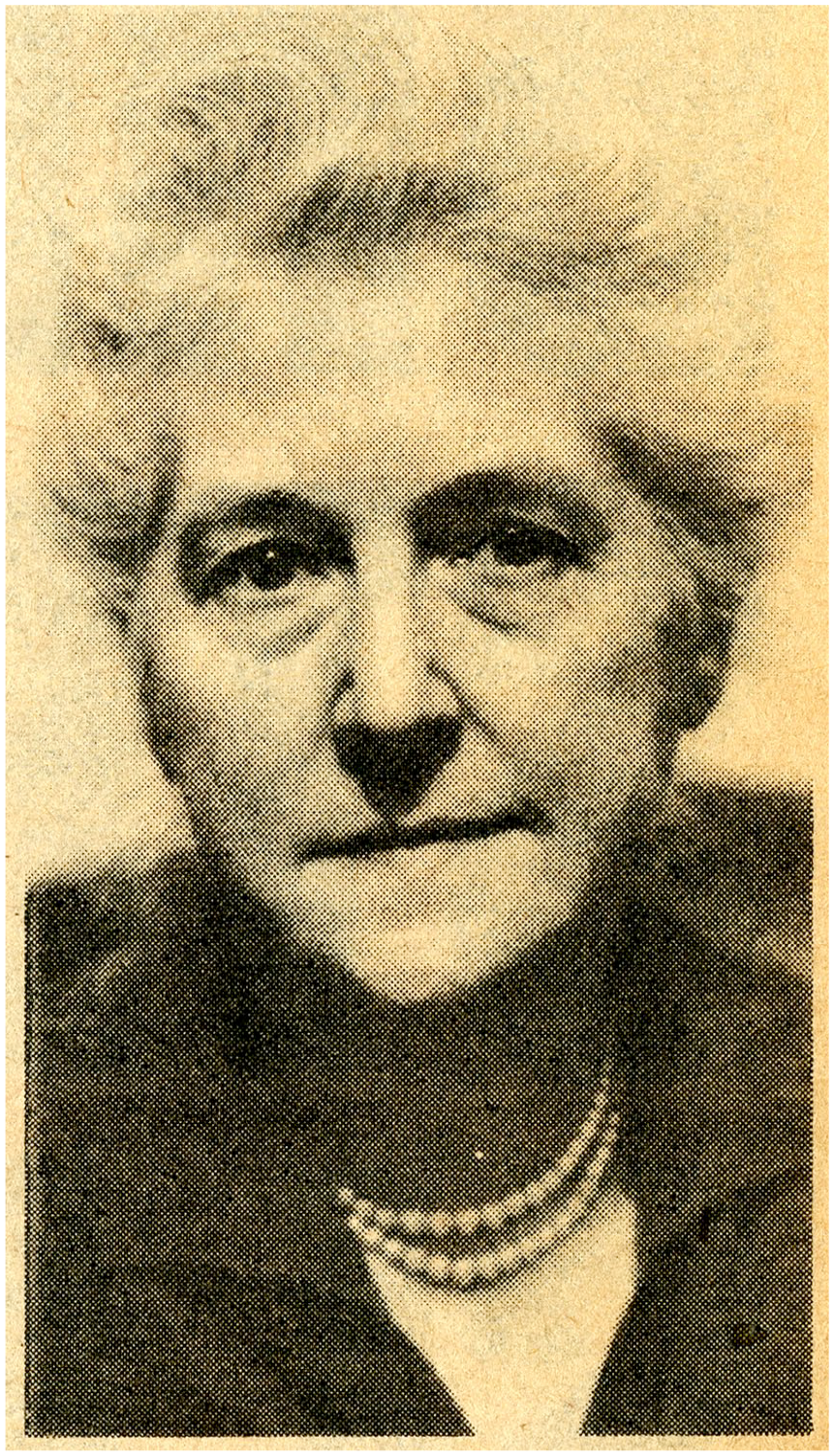
Newspaper clipping image of Nancy Tait. Courtesy of University of Strathclyde Archives and Special Collections (Archives reference: OEDA/A/1/4).
Since the initial deposit the asbestos-related collections have grown with the addition of the papers of several asbestos and occupational health activists, including collections of papers from activists Alan Dalton, Laurie Flynn, and Geoff Tweedale (University of Strathclyde Archives and Special Collections; GB 249 DAL; GB 249 FLYNN; GB 249 TWE). The extensive documentary archives have been supplemented with a number of asbestos-related oral history collections over the past twenty years or so. These include those related to my research in Scotland (with Ronnie Johnston), student and post-doctoral research interviewing projects on asbestos (including David Walker’s collection of interviews with Glasgow dockers, including James McGrath) and a wonderful collection of interviews donated in 2017 by the Greater Manchester Asbestos Victims’ Support Group. These comprise the stories of a number of female activists, most of whom husbands died of mesothelioma. This material has featured in my past research, including in Working Lives (2013) and most recently in Jobs and Bodies (2024). The collection also includes an interview I did in 2013 with one of the leading asbestos campaigners in the UK at present, Phyllis Craig, MBE (Craig 2013, SOHC/016/A35). I’ll come back to comment in more detail on the oral history interview collection later (Figure 2).

Phyllis Craig. Manager and Senior Welfare Rights Officer, Action on Asbestos (formerly Clydeside Action on Asbestos). Courtesy of Phyllis Craig.
The aggregation of asbestos-related archives is truly remarkable and we are privileged to have them here at the University of Strathclyde. The Archive comprises 15 asbestos collections in total with the SPAID/OEDA Archive alone comprising 117 linear meters in 624 archive boxes. These include an extensive collective of minutes of meetings, correspondence, reports, and audio-visual material relating to cases and the work of SPAID/OEDA. The papers of Geoff Tweedale include a pretty full deposit of the infamous Chase Manhattan case papers, including copies of Turner and Newall company documents obtained through the US legal system of “discovery” which enables company records to be seized and copied. Two other sets of these documents are also in the Archive, deriving from the local group Clydeside Action on Asbestos and from the Tait SPAID/OEDA collection. The Laurie Flynn papers relate to gold, diamond and asbestos mining, particularly in South Africa. Flynn was a pioneering journalist who produced a film (Flynn 1981) and wrote a scathing account of the exploitation of black miners in South Africa under apartheid (Flynn 1992). Flynn’s papers provide revealing context to the recent legal case taken against Cape Asbestos for asbestos-disease related liabilities in South African asbestos mining. There are also papers from the Cancer Prevention Society from 1979 that relate to asbestos-related cancers, and a set of papers from M.J. Sanders (University of Strathclyde Archives and Special Collections; GB 249 CPSG; GB 249 SAND). The latter was a research scientist who worked at the UK Environmental Research Laboratory involved in asbestos dust sampling and airborne fiber testing. The latter was particularly important after the 1969 Asbestos Regulations were passed tightening permissible exposure limits. The papers cover Sanders work from the 1960s through to the early 1990s. Recently the papers of the international ban asbestos activist Laurie Kazan-Allen have been added to the collections (University of Strathclyde Archives and Special Collections; GB 249 OEDA/F/4/3/1). The majority of the asbestos-related archives have now been cataloged and are hence much more accessible. Information about the collections with links to detailed catalogs can be found at https://guides.lib.strath.ac.uk/archives/asbestos (Figure 3).
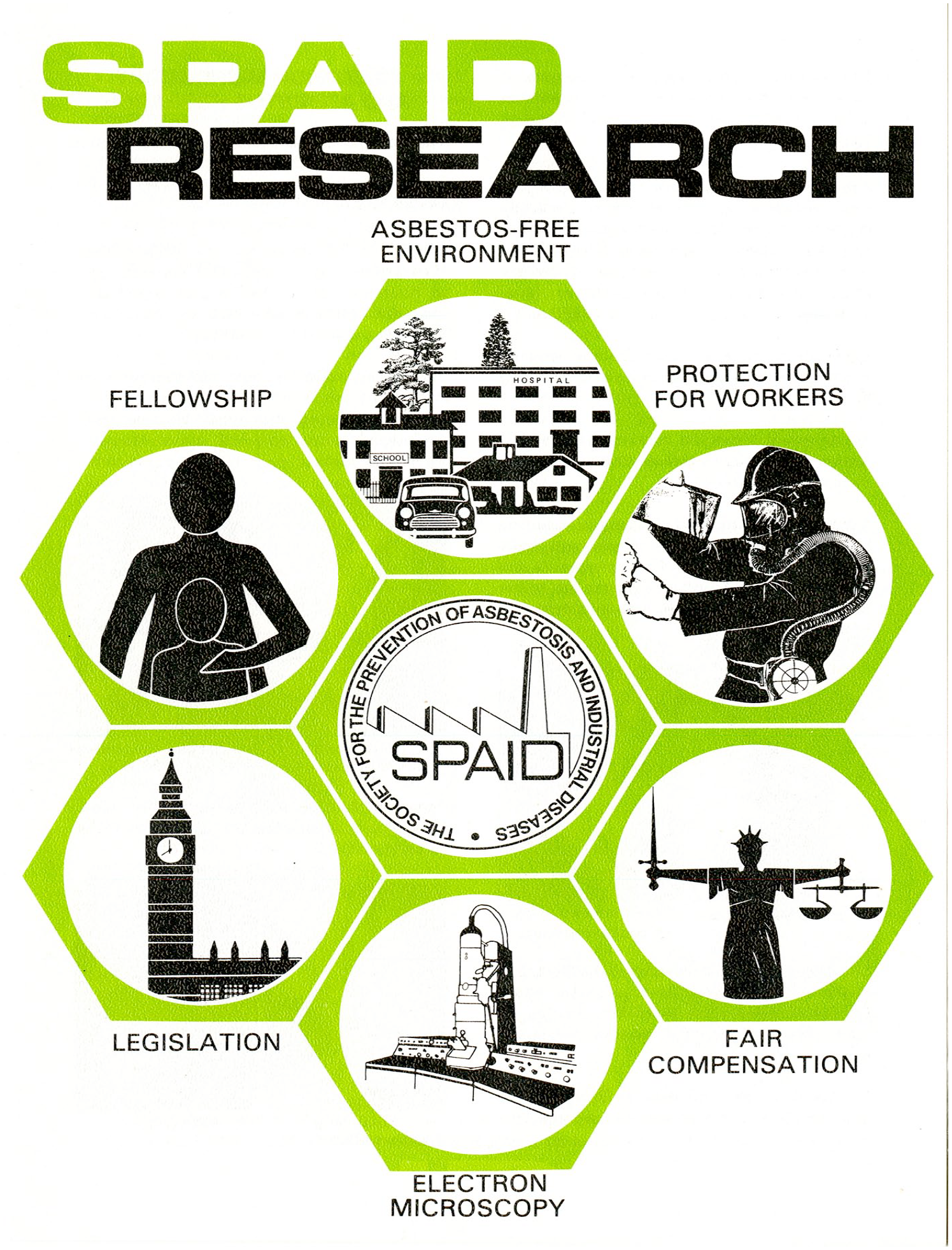
SPAID poster, late 1980s. Courtesy of University of Strathclyde Archives and Special Collections (Archives reference: OEDA/A/1/5).
Over the years since 2008 the asbestos-related archives have been utilized in a wide range of ways and by a variety of people. The SPAID/OEDA and Tweedale collections have appeared within UoS Archives top five most commonly consulted collections over the three years 2020–23. One of the first uses, even before the collection was fully cataloged, was by research student William McDougall who produced an outstanding PhD critically examining the role of SPAID/OEDA in asbestos campaigning (McDougall 2013). More recently Josephine Sweeney has drawn upon the Archive in her wonderful Masters thesis investigating the environmental impacts of asbestos and its hidden, intangible toxic qualities (Sweeney 2021). Other researchers have drawn upon the Archive, including writers, historians, and novelists. Most recently, Prof David McKinley of Sydney University Law School has consulted the Laurie Flynn papers in the archive to research a book he is writing. An historian (Adam Page) has used the archive to research asbestos in schools, relating this to the current ongoing scandal around reinforced autoclaved aerated concrete (Raac) in schools (Page 2023). Tom White has also made extensive use of the Archive (including the Alan Dalton and Laurie Flynn papers, as well as the Nancy Tait Archive) to research a book he is writing on the history of asbestos for Repeater Books (White 2022, 2023).
Beyond deepening our understanding of the politics of asbestos, the role of advocacy and campaigning groups and the grim physical, economic and psycho-social impacts of contracting ARDs another important way in which the archives have been used is in legal cases to obtain financial compensation. Important here is finding clear written and dated evidence of medical knowledge of damage to health and connecting levels of knowledge to company policy in using this carcinogenic product—for example in negligently failing in their duty of care. Legal firms and insurance brokers have consulted the archives for evidence of exposure, product placement and employer knowledge of dangers and risks. This particularly relates to companies like Turner and Newall and Cape Asbestos. Occasionally we have also been asked and provided names of living witnesses for court cases who could give verbal evidence and attest to asbestos exposure and the products being used, sometimes decades prior to the legal action. In one such case we (Ronald Johnston and I) identified two witnesses who worked on the Queen Mary liner refit in the early 1950s in Southampton docks and the legal firm paid their costs to travel to San Francisco to testify. Unfortunately, the plaintiff Thomas Wilmot died of mesothelioma before the judgment was reached awarding the family $500,000 in financial compensation (Johnston and McIvor 2001). In some cases, the Archivists have copied sets of documents from the archives for legal firms, including one in the USA. The Laurie Flynn collection has been entirely digitized from lawyers copy order requests (17 m of records). This has the advantage of providing digital copies for future requests for the same material. All-in-all uses of the asbestos-related archives at the University have been pivotal in deepening understanding of the asbestos tragedy and assisting compensation cases for victims as far afield as California. I’m sure it will continue to do so in the future. The asbestos-related archives thus act not just as a “passive” repository of documents and oral testimonies but as a facilitator of environmental justice campaigning and advocacy.
Hearing Victims’ Voices: The Oral History Collection and the Value of Archived Memories
The oral history interview collections at the University of Strathclyde associated with asbestos run to some forty-four audio-recorded interviews and/or interview transcripts. They include asbestos related disease victims, mostly with mesothelioma, their wives, daughters and widows, voluntary organization and trade union activists, and medical professionals. Talking directly to advocates like Phyllis Craig, and those who directly experienced exposure to asbestos and the awful disease, disability and death associated with it provides us with a privileged lens into lived experience, from insiders—an emic view revealing a gamut of feelings and emotions around asbestos.
Respondents speak evocatively of workplace exposure and the meaning of having ARD to them. Other testimonies speak of work-health cultures, managerial exploitation, “cutting corners,” the expression of toxic masculinity on the job, and the devastating impacts of contracting lung cancer or mesothelioma, on individuals, the family and communities. And of how workers and families pushed back, campaigning through their trade unions or through community activism. They speak of corporate misuse of power and gross irresponsibility, with asbestos multi-national companies like Cape, Eternit and Turner & Newall progressively acquiring over time knowledge of the harms its product caused, obfuscating this through its control over research, marketing and legal and compensation strategies, influencing (and delaying) effective regulatory processes. As a Clydeside insulation engineer remarked: “They made us work with poisonous materials that were killing us, and never told us” (University of Strathclyde Archives and Special Collections, anonymous, Asbestos interviews, 016/A23). Undeniably industry in pursuit of profit was directly responsible for the grim toll asbestos has had and continues to have.
Personal testimonies gathered through oral history interviews and transmitted by voice drawing upon memories do need to be treated with care and caution; with the critical eye that we would cast over any archival primary sources—documentary, visual, or aural. There are several potential pitfalls with this evidence that might be highlighted:
MEMORY: People’s memories only go back a finite period of time and can go no further. There is a time-bar on new interview evidence (though much has already been archived). And memory is fallible and sometimes unreliable: people are often being asked to recall events from a long way back and sometimes they struggle & misremember.
CULTURAL CIRCUIT: Linked to memory, narrated stories can be influenced by what’s been termed “the cultural circuit”—what’s happened since the event being recalled; things seen and read in movies, TV and books, for example. For asbestos, the changing culture of responsibility, litigation and compensation has had an impact on how people remember and how they apportion blame. The present can influence how we recall the past. Nostalgia is also significant here and has been the subject of much discussion in oral history circles. On all things relating to oral history theory, including issues around memory and the cultural circuit Lynn Abrams is the go-to book (Abrams 2010).
INTERVIEWING QUALITY/ERROR: Leading and loaded questions can invalidate answers, influencing direction, and emphasis in storytelling. Questions or statements like “conditions were bad in those days weren’t they?” Or, “tell us about how dusty it was in your workplace”—assumes something and leads the narrator to answer in a certain, usually affirmative way. We need to do the oral history interviewing litmus test, scrutinizing the quality of the interviewer as part of the critical review we practice on all historical sources, weighing their credibility and veracity, asking is their bias; how was the source created? Sometimes narrator responses just have to be ignored as they are invalid because of the way the question was asked.
INTER-SUBJECTIVITY: More subtly, perhaps, are the inter-subjectivities within the interview—the clash of subjectivities in the dialogic exchange. Gender, age, and social class come in here, influencing how narrators tell their stories. Narrators may react and shape their stories differently in recall to a young female interviewer compared to an older male interviewer. One of my PhD students (Alison Chand) interviewed two of the same interviewees as me and reflected critically on similarities and differences in these accounts (Chand 2021). Sometimes narrators are projecting a sense of self, for example wanting to emphasize their identity as a “new man,” projecting that into the past, and playing down their buying in to toxic masculinity.
BIAS & MISINTERPRETATION: Another potential pitfall is the representation of the subjective as objective—or over-extrapolation and misinterpretation from the experience of one individual, or a small group. For example our cluster of early asbestos interviews, sourced directly from the contact list of the pressure group Clydeside Action on Asbestos, were very critical of trade union inaction on asbestos. These might be categorized as “betrayal narratives.” Had we based our interpretation on those first accounts we would have been unfairly critical of the role of trade unions like the Transport and General Workers’ Union (TGWU) in the unfolding asbestos tragedy. As we widened our interview cohort and recruited from other sources, including the TGWU, the picture became more nuanced, indicating a range of trade union positions and action on asbestos, differences between “rank and file” and leadership tactics on asbestos and significant change over time, as toxic masculine cultures on the job declined over time and working class environmentalism developed.
Hilary Orange counsels for care deploying an oral history methodology, but also recognizes its significant potential in the heritage field, to “reanimate” the past; to bring it to life (Orange 2016). Oral history interviews are subjective sources and should be celebrated as such, for their uniqueness and capacity to shed insights and provide a personal lens into the past—one that provides a different dimension—of feelings; aspirations and emotions. And a recognition of flaws and limitations (as noted above) and critical awareness and reflexivity can minimize issues with the methodology. Ultimately, these are witnesses’ own stories which have tended to be ignored or marginalized in the past. They merit at least as much attention as the archived documentary sources, which themselves are subject to bias and should be treated with the critical evaluation we impose as researchers upon all evidence.
These oral histories of asbestos victims and advocates, I would argue, provide us with privileged insights, giving us the capability of standing on the shoulders of those who directly witnessed or experienced industrial work and its myriad hazards and risks; seeing things through their eyes; their world. The experience of exposure to hazards was expressed in a sensory way: seeing; hearing; smell, touching; inhaling the asbestos dust clouds on the job. “I remember seeing the air literally foggy. Thick with asbestos dust. And it passed through my mind then, I thought ‘this cannot be good for us’” (University of Strathclyde Archives and Special Collections, anonymous, Asbestos interviews, 016/A8) And a gamut of emotions bubble through; pride in the job and a strong work ethic; self-blame in retrospect; embarrassment and shame as physical capacities wane and breathlessness and fatigue develop; stoicism; fatalism; fear; anxiety, bitterness; anger. The daughter of an asbestos-related disease sufferer commented: “My Dad was a very proud person . . . he was ashamed that his body was failing him” (Julie Blair, University of Strathclyde Archives and Special Collections, Inverclyde Oral History Project, SOHC 21/1).
The approach democratizes knowledge, accepting that eye-witness accounts are valuable and valid; that we can learn from those who directly experienced the past. That patterns can be discerned from analysis of multiple interviews and, in many cases, from triangulation with and verification from other primary sources. That said, oral testimonies are justified in many cases in their own right for their capacity to reveal hidden histories and the stories of marginalized individuals and groups who leave few documents—laborers, women workers, asbestos laggers, mattress sewers, dockers, asbestotics, cancer victims and their carers. We get beyond the cold documentary records and statistics of ill-health to more complex and multi-layered stories. They view the asbestos story through their lens and relay that to us to enable better understanding of the meanings of their working lives, work-health cultures and how they navigated identity transitions from fit, able breadwinner, to disabled, dependent, and dying. We get a better sense of what asbestos meant to them, the dystopia of their world turned upside down by their interaction with a toxic and carcinogenic product, leading to a chronic deadly industrial disease. And, importantly, how they were active agents in this process, not just passive victims. They reacted to corporate irresponsibility and managerial exploitation, putting production and profit before health, by mobilizing and campaigning—pushing back through their TUs and through community activism and hence mediating, to varying degrees, the impact of asbestos, the worst occupational and environmental health crisis in modern times in many countries across the globe.
The story of asbestos as an environmental hazard, and the community activism around environmental risk and damage, however, remains less well researched. Around 4,000 to 5,000 people every year still die of asbestos-related cancer (including mesothelioma) in the UK, though the peak of mortality has now been reached and looks set to decline (Hodgson et al. 2005). An increasing proportion of these deaths are now down to wider environmental exposure, rather than direct contact through workers’ occupations. Aside from demolition and asbestos removal, relatively few worked directly with the “magic mineral” after the 1980s and it was totally banned in the UK from 1999. Asbestos represents perhaps the classic example of the toxic heritage of industry, and it continued to cast a deadly shadow long after it ceased being used.
Like most port and industrial cities, Glasgow and the industrial conurbation of Clydeside was an asbestos “blackspot.” Whilst the initial focus was on asbestos as an occupational disease, it became increasingly apparent that the carcinogenic fibers could not and were not contained within the environs of the asbestos factories, shipyards and building sites. The microscopic toxic fibers belched from factory, building site, shipyards, and workshop extractor systems, leaking into the environment, spread on the wind across the city. And the deadly fibers were brought into local shops, cafes, on to trams, trains and buses transporting workers, and home on the skin, hair and clothes of workers to contaminate the home. As with the toxic chemical dumps, asbestos was dumped around the city and kids would play amidst the waste material in derelict sites.
And the material was embedded everywhere in infrastructure as a fire retardant, including in houses, schools, factories, and hospitals. Poor demolition and removal practices, cutting corners to make more profit, also contributed to releasing deadly asbestos fibers into the atmosphere—as some of the oral testimonies in the asbestos-related archives evidence. “So we were told ‘just take it aff [dry], just stick it’ . . . We kept quiet” (University of Strathclyde Archives and Special Collections, anonymous, Asbestos interviews, 016/A16). Another commented: “We were continually told that if you complained about working in a dusty atmosphere that it didnae do you any harm” (University of Strathclyde Archives and Special Collections, anonymous, Asbestos interviews, 016/A5). Just as mining communities were blighted with respiratory disability (pneumoconiosis and bronchitis), urban industrial working class communities were plagued by asbestos-related disease deaths.
One estimate in the mid-1970s was that urban areas had around ten times the asbestos fiber content free-floating in the air compared to rural areas (Asbestos Bulletin 1974). In the immediate environs of asbestos processing plants the asbestos content in the air was more than double this average urban air asbestos contamination level. Streets adjacent to Turners asbestos factory in Clydebank, near Glasgow, were covered in white dust which settled on cars and on window sills (Johnston and McIvor 2000, 2001).
The first known cases of secondary or “bystander” exposure leading to cancer (i.e., with no direct relationship to occupation) appeared in the 1960s, with eleven cases of mesothelioma amongst people who had a separate family member working directly with asbestos (Gorman 2000) Most were housewives contaminated from their husband’s bringing the toxic fibers into the house from their work. One in Glasgow recalled:
I said [to her husband] ‘why are you all white’? . . . Your black hair was pure white with the dust . . . the man came home and he was pure white, actually white with dust. It was a nightmare, a pure nightmare (University of Strathclyde Archives and Special Collections, anonymous, Asbestos iinterviews, 016/A22).
In a similar vein an employee of Turners Asbestos Cement factory in Clydebank commented: “We nearly all carried newspapers just tae sit on in the buses so it didnae affect too many people. But we didnae know we were killing them” (University of Strathclyde Archives and Special Collections, anonymous, Asbestos interviews, 016/A19). Indeed, bus conductors are amongst those subsequently known to have died of mesothelioma. However, it was not until 1995 that the first successful legal action to claim compensation for a “bystander” asbestos-related disease took place when June Hancock was awarded £65,000 in Leeds High Court in 1995 against Turner and Newall in Armley (Tweedale 2001).
Asbestos also proved to be a wider environmental hazard. Children played on asbestos tips (for example in Falkirk) and were exposed to asbestos dust blowing around school playgrounds, for example in Drumchapel, Glasgow (The Scotsman 1986, 5). One issue that features in the archives is the controversy over the remediation of the toxic derelict site of the massive Turner and Newall Asbestos Cement (TAC) factory in Clydebank, and the subsequent building of a private hospital (the Jubilee Hospital) on the site. The TAC factory in Clydebank left a massive uncovered asbestos waste pile on the site after it closed in 1970 as it had dumped all its waste from 1938 down at the river bank and mudflats adjacent to the factory. An ex-Turners employee responsible for waste disposal from the plant testified to this in 1987 recalling that “all the ground between the factory and the river along the whole frontage was reclaimed by dumping asbestos waste,” estimated at around 1,200 m long by 50 m wide and 8 m deep (Evening Times 1967). Several years before (in 1980) the Director of the Cancer Prevention Society had exposed what he called the “scandalous contamination” of the community and the heightened cancer risks in nearby Clydebank (The Scotsman 1980). Remediation of the site cost the local council £8.4m (Figures 4 and 5).
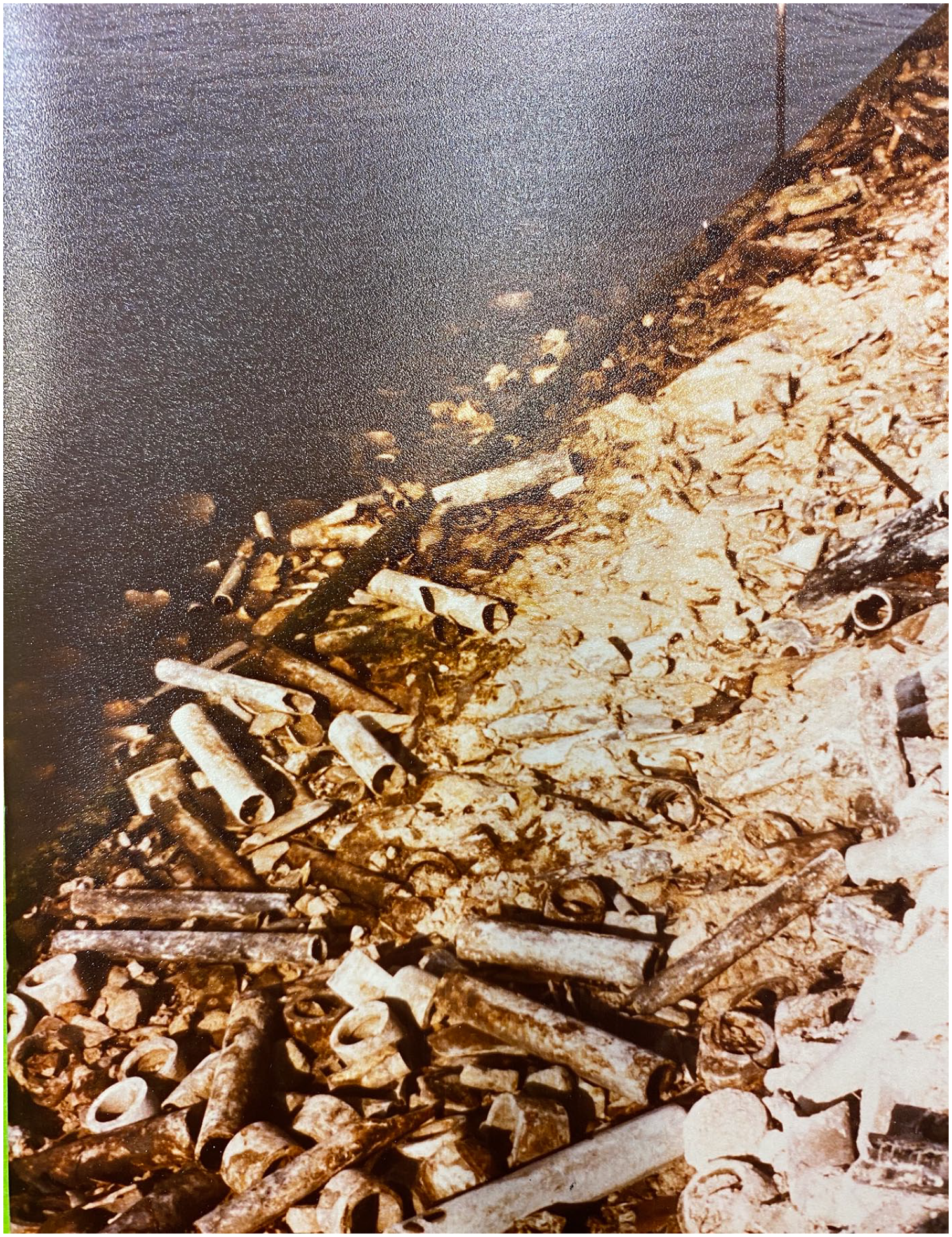
The TAC factory waste dump alongside the river Clyde. Courtesy of University of Strathclyde Archives and Special Collections (Archives reference: OEDA/C/3/3/3).
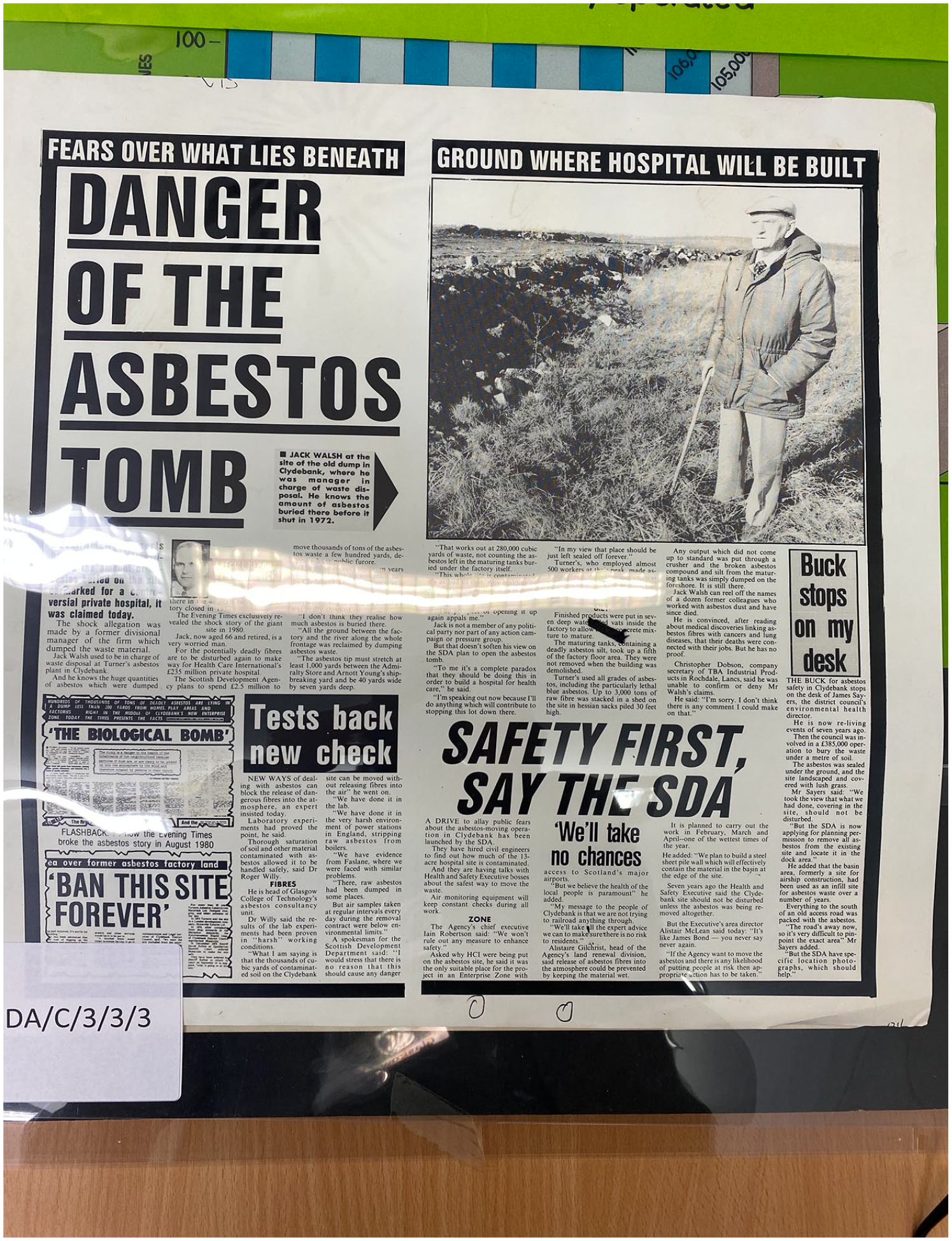
Newspaper extract, “Danger of the Asbestos Tomb.” Courtesy of University of Strathclyde Archives and Special Collections (Archives reference: OEDA/C/3/3/3).
Epidemiological studies have found significantly higher rates of mesothelioma and cancer amongst those who lived in such communities adjacent to asbestos factories and mines (Reid et al. 2013). Deprived and impoverished working class neighborhoods were the worst hit, deepening existing health inequalities across industrial cities like Glasgow. This undervaluing of working class lives has been described aptly by Karen Bell as “environmental classism” (Bell 2020). And asbestos exposure continues to be an issue. It is now routinely identified in Scottish private home sellers “home reports,” not least in the artex (patterned plaster) used widely in home decoration from the 1960s to the 1980s. This is similar to the asbestos attestation policy in Belgium, where (since 2022) an asbestos expert has to undertake a test and provide an “asbestos certificate” detailing in an inventory any asbestos in the fabric of the building. Given such wide environmental exposure, the “magic mineral” is going to be causing damage to people’s bodies for many more years to come.
The politics of asbestos as an environmental hazard since c1960 through the lens of city politics in places like Glasgow remains to be written. The UoS Archives, including the papers relating to the Cancer Prevention Society, would shed much light on this. Several points might be drawn out from the fragmentary evidence to hand. Firstly, the city appears to have been as keen as most to utilize the product in its heyday and may well have been responsible for ignoring the precautionary principle. For example, in steamrollering ahead with the use of asbestos insulation in the high rise flats program in the 1960s, despite growing concerns at the time over the toxic nature of the product, for example at the Red Road flats complex—then the highest flats in Europe. It was not until the early 1980s that Glasgow Council began advising tenants in their high rise flats not to do any home maintenance for fear of disturbing the deadly fibers (Daily Record 1984). In a scathing issue of the activist journal, “Glasgow Keelie,” in May 1991 the Labour-controlled Glasgow Council was branded as “corrupt” and responsible for “criminal negligence” on its urban planning, asbestos and environmental record (Glasgow Keelie 1991). This merits more forensic research, which might include triangulating the archival papers of Glasgow Council (in the Mitchell Library, Glasgow) and the asbestos-related archives in the University of Strathclyde (Figure 6).
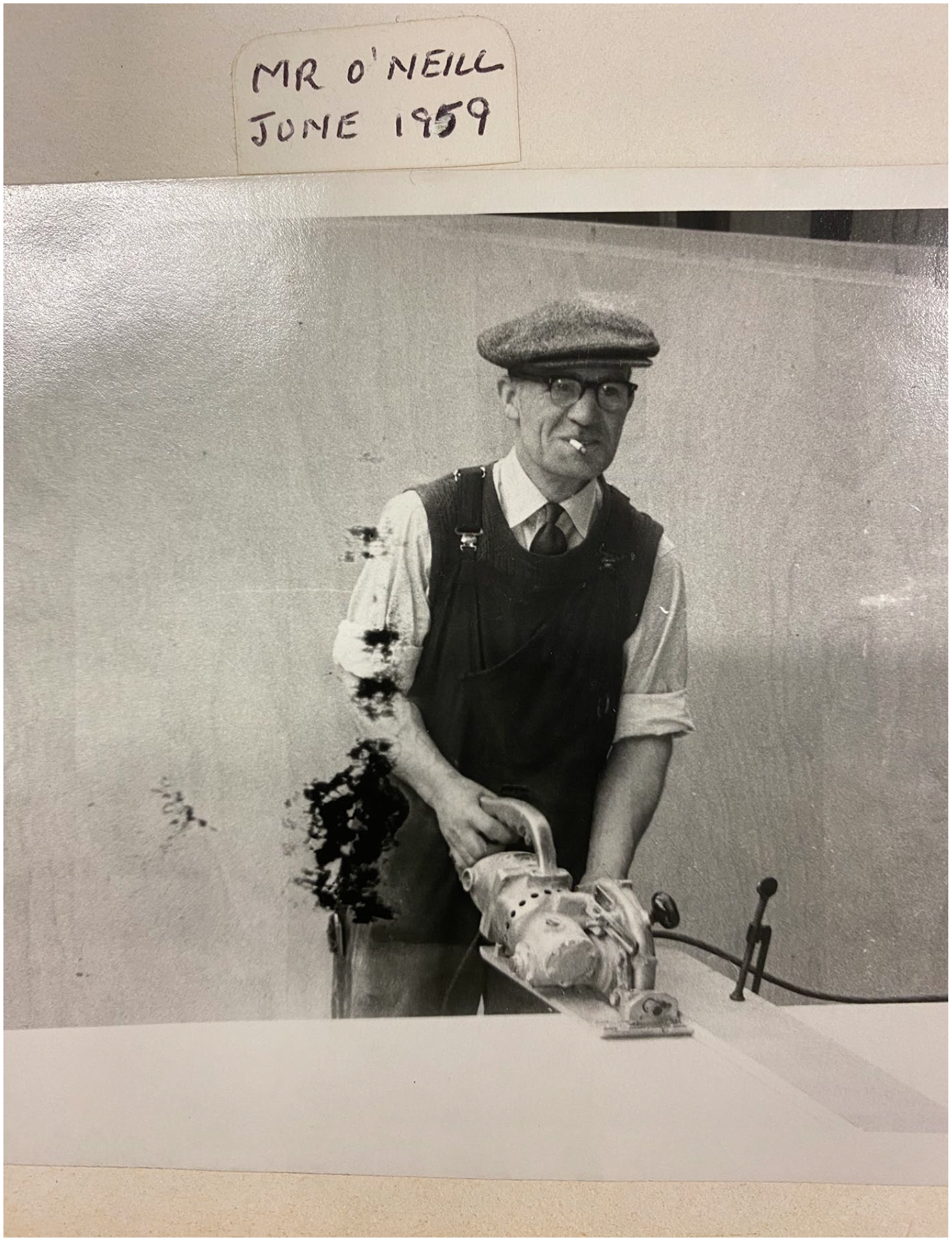
Joiner cutting asbestolux boards. Courtesy of University of Strathclyde Archives and Special Collections (Archives reference: OEDA/A/6/3).
Secondly, in a period of deepening deindustrialization and accelerating job losses as shipyards, factories and mines closed it is evident that there was some tension in the campaign against asbestos, with job security being weighed against occupational and wider environmental risks and harms. This comes through several of the archived oral interviews in the University asbestos-related collections. For example, a Turners Asbestos Cement Factory worker commented: “I knew it was dangerous before I went in there cause there was people complaining but when you have a family to bring up it was better than walking the streets. I never was idle in my life” (University of Strathclyde Archives and Special Collections, anonymous, Asbestos interviews, 016/A22). This is understandable in the context—working class families needed to maximize earnings to compensate for downturns, short-time working and spells of unemployment (especially as other forms of welfare and social support were limited). Industrial workers were inured to a wide range of risks and whilst not “passive” were under-informed as environmental hazards were not well publicized in the media or in public heritage spaces (see below). The oral evidence supports the view that workers had much lay knowledge, but lacked detailed medical awareness of the risks—for example believing for a long time the management-spun idea that white asbestos was harmless. Moreover, the exercise of autocratic managerial power enforced risk-taking on the job, as did a toxic machismo work culture, where men had to be seen performing as “real men.” The oral testimonies speak eloquently of prevailing macho work cultures where younger workers were socialized into tolerating the dangers and hazards of the job.
Amongst workers a full asbestos ban was divisive, as workers feared for their jobs. And, for a period in the 1960s and 1970s, limited regulation and control of asbestos had the support of some trade unions at the same time as others were campaigning for its outright ban. Earlier, as Tweedale’s work has shown—and our oral evidence supports this—trade unions in the UK were not key players in regulating asbestos and are virtually absent from the discussions that led to the first regulations in 1931 and quiet on the issue through the 40s and 50s (Tweedale 2001). Push-back was much more evident after the link was made with cancer, from c 1960. There were local strikes against asbestos use in Glasgow and Clydeside in the 1960s and 1970s heyday of asbestos use—and many of our narrators speak of this. By the 1980s the UK union leadership were almost solidly in favor of a full ban on asbestos—headed by the Trades Union Congress and the Scottish Trade Union Congress. From around 1980 the TUs played a key role in shifting the discourse on the occupational and environmental harms of asbestos. Again, there are substantial references to trade unions and their campaigning (and, in some cases, neglect on the issue) in the asbestos archives, so there is much potential for further research here—including issues over “jobs before health” and on the transition within the TU movement toward environmentalism (McIvor 2020).
Another area where the oral evidence now available at the archives at the University really deepened our understanding was in relation to the lived experience of being ill and disabled with asbestos-related diseases (ARDs), the impacts this had on living standards and identities and how individuals, families and communities coped with loss of work, pain and suffering and death. One recurring theme, and motif in the stories, was of emasculation and shame as men transitioned from being primary breadwinners to home-bound dependents. One interviewee commented that his friends disappeared after his diagnosis: “people stopped coming” and how he “couldn’t go to pubs or clubs, cinemas anywhere where they might smoke . . . we’re hermits.” He added: “We used to love going to the dancing. Now if I dae one turn around the hall I’m buggered.” The phrase “lepers” was also used to describe isolation (anonymous, Asbestos interviews 016/A9). Another reflected: “You need to adjust . . . actually it’s depressing. I get what would you say, flashbacks. And then I rare up. Frustration” (University of Strathclyde Archives and Special Collections, anonymous, Asbestos interviews 016/A16). For women with ARDS there was often a profound sense of identity disintegration, with encroaching inability to fulfill gendered feminized duties as a mother and wife—the unraveling of femininity is much in evidence here, as Phyllis Craig relates (Craig 2013). The stories of women responsible for caring for disabled and dying partners were also deeply moving and revealing of the ways women’s lives were ruptured and dislocated by asbestos. The set of three interviews with daughters and wives in the Inverclyde area and the seven interviews with widows from the Manchester area in the asbestos-related archives are particularly revealing in this respect. These are examined in some detail in Jobs and Bodies (McIvor 2024a, 91–95).
Thirdly, a powerful grassroots anti-asbestos movement emerged in the 1970s and 1980s across the UK, including Glasgow, to advocate for victims, and this morphed over time into an influential environmental justice movement. Nancy Tait’s SPAID/OEDA was a key element in this, so the asbestos-related archives have an important role in preserving this legacy. In Glasgow, campaigners coalesced around Clydeside Action on Asbestos (CAA), formed in 1985. In Scotland, community activism drew upon and found inspiration in a long tradition of irreverent radical protest, associated in Glasgow with the tag “Red Clydeside.” This protest and push-back was fueled by a strong sense of community, equality and fairness linked to ideas around the moral economy, and a leftist politics that found expression in strong support for socialism and the Labour Party in the city, and, as deindustrialization deepened, support for a left-leaning populist Scottish National Party.
This leads me to another point: from devolution and the establishment of the Scottish Parliament in 1999 the environment, whilst contested, emerges as a key priority policy in the legislature. In relation to asbestos, the Scottish Parliament developed one of the most wide-reaching prevention, compensation, and regulatory regimes of all developed countries in the early twenty-first century. In part, this was the product of a Scottish trade union movement that had transitioned from a focus on wage and job preservation and occupational safety and health to one where green politics, sustainability, and environmental justice was prioritized. More research is needed to investigate how this played out. However, it appears from the University of Strathclyde asbestos-related archives that working class environmentalism, epitomized in voluntary citizen-led groups like SPAID and CAA, and unions like the General and Municipal Builders’ (GMB) and the Trade Union Congress (TUC), and widely supported politically and in civic society from the 1990s, was important in shaping a vibrant and influential environmental justice movement. The asbestos-related archives remain an important resource for those interested in this and for the growing research in working class environmentalism (See, e.g., McIvor 2024a, chapter 7, 179–216; and University of Strathclyde Archives and Special Collections, GB 249 DAL/3; especially DAL3/1; DAL3/2 and DAL 3/7).
Storytelling and “banter” has a long tradition in Scotland, and in Glasgow toxic heritage legacies are recollected vividly in memory practices. This is very evident in the interviews in the archives. In these stories, dark humor often mediates the real risks to health being navigated every day by workers in the decades post-Second World War when blue collar working still dominated the landscape of employment. Such “citizen stories” are witnesses to environmental harm and a vital resource for understanding the past. These are heritage practices, where folk are vividly recalling the past in the present. In the face of criminally negligent employers and “recalcitrant” polluters, erasure, invisibility and what Steven High has called “class cleansing” and “forced forgetting” (High 2021, 173), the wonderful materials in the asbestos-related archives at the University shows there was considerable agency, push-back and resistance.
Concluding Comments
The asbestos-related archives at the University of Strathclyde are all the more remarkable and important because of the virtual erasure of the toxic environment subject from the museums, heritage centers and memorialization in Glasgow and more widely in Scotland. We have nothing like the volunteer-run Asbestos Museum in the Netherlands (Near Rotterdam) in the UK to my knowledge. There is an impressive shipbuilding museum housed in the extant surviving Fairfields shipyard office buildings in Govan, Glasgow, but it only devotes one information panel to asbestos use in the yards, which was extensive, with relatively few safeguards before the passage of the Asbestos Regulations of 1969. The ecomuseum movement of France has found no place as yet in Glasgow and the wider Clydeside urban conurbation. There is a remarkable international monument to those who have died of ARDs near Glasgow in the shipbuilding town of Clydebank—but this stands out for being exceptional.
The massive volume of documents in the asbestos-related archives at the University of Strathclyde provide wonderful insights into the advocacy politics of asbestos pressure groups, their sustained campaigning over many decades and the selfless devotion to helping victims by the diseased workers’ movement in the UK and beyond. The recently gifted papers of Laurie Kazan-Allen (acquired in 2021), Secretary and leading light of the International Ban Asbestos Secretariat, promise to add substantially to this (see http://www.ibasecretariat.org/). Whilst the archived oral testimonies are testament to the willingness of witnesses to share their stories; to place on record their memories for future generation to learn from and hopefully not repeat the monumental errors that went along with the managerial and employer negligence that caused the asbestos disaster. This tragedy of course is still unfolding as I write, with large numbers of people and families affected by contracting life-limiting and fatal asbestos-related cancers. The interviews provide a strong case for the importance of oral history, and sound as an artifact, in the hazardous or toxic heritage story. To be sure, these sources need to be used with care and sensitivity. I would encourage wider use of this wonderful resource and more such collections to be created and/or archived at the University, or elsewhere. That is as long as these are in the public domain and accessible through archives to the research community, subject of course to narrators and contributors wishes and to the ethical and legal considerations of oral history practice and data protection.
Footnotes
Acknowledgements
I am grateful to participants at the Hazardous Heritage conference, Antwerp, 23–4 Oct 2023 for their comments on this keynote paper and to Doris Blancquaert for the initial invitation to participate. Also to the University Archivists Victoria Peters and Rachael Jones for commenting on this paper and valuable assistance with the Archive and figures. Also thanks to Tom White, Adam Page, and David McKinley for responding to my requests for further information on their use of the Archive.
Declaration of Conflicting Interests
The author declared no potential conflicts of interest with respect to the research, authorship, and/or publication of this article.
Funding
The author received no financial support for the research, authorship, and/or publication of this article.
