




Abstract
In the Pop-up-VR Museum, a selection of design objects from the Design Museum collection can be explored as virtual reality experience together with stories and comments collected in workshops organized with senior communities and museum visitors amongst others. The collaboration between the museum and the Aalto University Department of Art and Media in the EU Horizon 2020 project SPICE (2020–2023), seeks to increase social cohesion and inclusion through cultural heritage. Using semantic tools designed and developed in the project, it studies ways to promote novel forms of “citizen curation” activities.
The article discusses the co-design process between media designers, heritage professionals, and different user communities, with varying understandings and needs regarding museum data and Finnish design heritage. In the museum, community-based data raises practical as well as ethical issues. Also the new digital artifacts challenge existing systems: what and how should be preserved in the museum collection from the dialogue with the user that takes place in the Pop-up VR Museum and does this new data demand re-assessing earlier information and, how does should the process of creating new digital artifacts be documented and described.
Keywords
Rather than providing a single, authoritative view, contemporary museums aim increasingly to present multiple voices related to their collection and exhibitions, including those coming from the museum visitors themselves. 1 The EU Horizon 2020 funded project SPICE (Social cohesion, Participation, and Inclusion through Cultural Engagement (2020–2023) 2 proposed the term Citizen Curation 3 to describe processes in which cultural heritage objects are used as a resource by people and communities to develop their own personal interpretations. It is a methodology for producing, collecting, interpreting, and archiving people’s responses to cultural objects, with the aim of favoring the emergence of multiple, sometimes conflicting, viewpoints and motivating users and memory institutions to reflect upon them. 4 In the SPICE project, technologies were developed to help individuals and communities select paintings, artefacts, and other museum objects and share their interpretations with other communities. The project studied the possibilities of digital media to create these links and to provide platforms for interpretation and reflection. 5
Amongst the five case studies of the SPICE project, the Finnish case study provided The Pop-up-VR Museum as one of the results. 6 As collaboration between Aalto University School of Arts, Design and Architecture and the Design Museum Helsinki a virtual experience of museum objects was created, where you can listen and read stories about these design objects and contribute your own story while experiencing objects in a novel playful way in a virtual environment. The Pop-up-VR Museum was designed to enable senior citizens and other people living physically or socially remote from the Design Museum to engage with its contents and to share their personal stories and interpretations of Finnish design heritage. Making artefacts and interpretations available in touring galleries aims at generating dialogue and increasing understanding across generations and geographical communities. The application has been co-designed in a series of facilitated workshops bringing together different communities, museum professionals, developers, designers, educators, researchers, and other stakeholders. Throughout the course of the project, more than 1,000 people have participated in the co-design of the Pop-up VR Museum including around 400 test-users and 500 contributors of stories and around fifty professionals that include designers, researchers, museum professionals, health care professionals, and mediators (Figure 1).
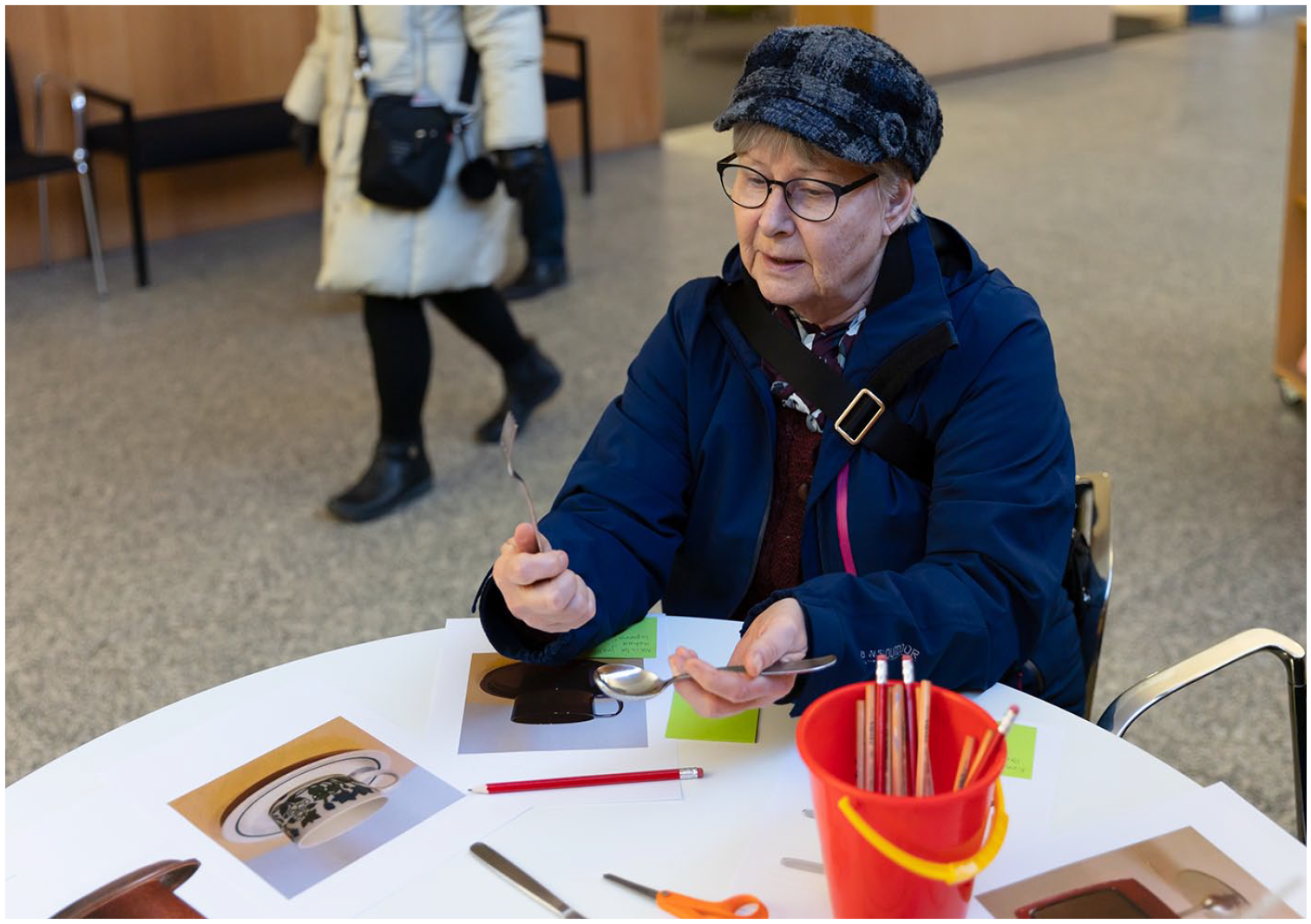
Personal stories and comments about design objects were gathered in workshops using images and physical objects to trigger the participants. Contributions were received as hand-written notes and audio recordings and even drawings. This user-generated content was transcribed and translated for the Pop-up-VR Museum. Photo Linda Svarfvar.
This article discussed the co-design process between media designers, heritage professionals, and user communities, with different understandings and needs regarding museum data. In the museum, collecting “citizen data” raises practical as well as ethical issues. Also new digital objects challenge existing systems: what is preserved in the collection and how. For example, how should digital objects be described, and will there be a need of re-assessing the existing data of their (physical) “sibling” objects.
Enriching Data about Finnish Design with Citizens’ Voice
Simon (2010) states in The Participatory Museum that contributing is the most common way for the visitors to participate with cultural institutions. Visitors can contribute their personal objects or creative works in exhibitions and collection projects and share their opinions, stories, and memories in activities within the museum and online. Simon writes:
Visitors’ contributions personalise and diversify the voices and experiences presented in cultural institutions. They validate visitors’ knowledge and abilities, while exposing audiences to content that could not be created by staff alone.
7
In the SPICE project, Citizen Curation was explored as methodology for producing, collecting, interpreting, and archiving people’s responses to cultural objects, with the aim of favoring emergence of multiple or even conflicting viewpoints. The activities were designed to encourage citizens to make their own interpretations, to share their own perspective and to appreciate the perspectives of others. 8
The Pop-up-VR Museum invites users to “Experience personal stories about Design Museum objects in a Virtual Reality world!” Everyday life objects possess a unique ability to evoke memories and promote storytelling and key motivation for building the Pop-up-VR Museum was to enrich the traditional “museum data” created and curated by museum professionals with content created by visitors. In the context of audience engagement and museum pedagogy, we often encourage visitors to engage in dialogue by pointing out that, in fact, they are the true experts of design as the users of design objects and the designed environment. Can this thinking be applied also to the museum collection?
In the Pop-up-VR Museum, Finnish design objects are used as a platform for dialogue. In Finland, due to the specific national history, well-known modern design objects are everyday items in many households. As in many European nation states, national industries were promoted from the late nineteenth century, and when Finland got independence from Russia in 1917, there was wide production of consumer goods for the domestic market. After the second world war a “closed” national system was sustained based on monopolies in design industries and collaboration of the state and corporations, resulting in economic success. The 1950s is called the Golden Age of Finnish Design as designers and Finnish design industries came to international reputation, and in these years of economic upspring, modern design products were used also in Finnish homes. Historical changes started in the late 1960s when international markets opened and there was growing import. However, until the 1980s there remained a widely shared culture of consumer goods in Finnish homes due to strong industries and socio-political ideologies of the welfare state. Developments in international trade, entering the EU in 1995 and finally, change of global production systems and mobility of people in the new millennia crumbled the national institutions and industries. Nevertheless, iconic Finnish design objects of the 1950s and 1960s still are esteemed in the present time of climate awareness, anti-capitalist, and post-national design criticism. 9
Compared to unique art objects, specimens of natural history or many cultural historical artefacts, design objects possess a double nature. Although kept in a museum collection as individual objects they may have thousands or even millions of copies in “real life,” being outcomes of serial production. This specific nature of design objects affects their role in the museum. Visitors may find in museum exhibitions items which they have in their own home and in use as part of their everyday life. In some cases, it is possible to have a visually and technically identical copy of a collection object for hands-on experience in the museum. In fact, we were able to use items from the Design Museum pedagogical handling collection in the process of making the 3D objects, which also made the process easier.
Based on previous experience, there was confidence about visitor’s interest to communicate about their views on design in the museum. In the project The Secret Life of Objects (2007–2008) a participative digital board—based on the ImaNote software developed at the Aalto university Media Lab—with a selection of objects from Design Museum collections, was used in the permanent collection exhibition. 10 Digital content included input collected in workshops and events in the form of images, videos, sounds, and texts as well as annotations given in the physical exhibition. This was the doctorate project of Mariana Salgado who researched interactive design that encourages participation of the museum community in exhibitions. The co-design process between the designers and researchers from the university and the museum staff gave an original and educative character to the project. 11
Salgado uses the term community-generated content instead of user-generated to break the dichotomy between visitors and museum professionals. According to her, community-created content can increase accessibility, extend engagement, and support learning. It can validate multiple perspectives and generate dialogue as well as integrate new members to the museum community. Eventually, community-generated content can also produce complementary documentation and interpretative material on the artefacts. It can provide information about context of use and perception of the objects, their intangible heritage and pertinent oral information. 12
Elderly people were the main user group targeted with the Finnish SPICE case study. The work for Pop-up-VR Museum started with collecting stories and learning about the needs of senior people by interviewing workshop participants and senior care experts and observing their institutional environments. The first stories about design objects for the Pop-up VR Museum were collected in workshops with senior citizens. Workshops were led by museum educators, and they were based on object-based museum pedagogy and storytelling methods, using images of design objects and the museum’s handling collection. Workshops were organized for invited groups in the museum and outside—visiting for example neighborhood circles in Helsinki and club meetings for seniors in nearby cities. Collaboration with the museum’s friends’ association was pivotal and produced a series of focus group workshops based on service design methods.
The co-design workshops brought together designers and researchers and museum educators with the user communities. When the first version of the Pop-up VR Museum with the first twelve objects was ready for testing, more co-design workshops were organized with both user-testing of the VR and hands-on dialogue around the design objects. To gain experience of and stories from a more varied user group, free open workshops were organized in the Design Museum during the national Museum Week and during the monthly free design evenings. Amongst the participants there were many tourists and foreign students and we indeed received feedback and material with a wide age distribution. To gain experience about the pop-up activity, also libraries and events outside Helsinki were visited with the same workshop concept.
The secondary user group targeted in the Finnish case study was asylum seekers. This was, similarly to senior citizens, a relatively novel community for the Design Museum audience engagement. The hypothesis was that collaboration with communities that come from “outside” the Finnish design culture can produce different kinds of stories which in turn, would create new perspectives and more versatile dialogue in the Pop-up VR Museum. Groups of refugees and asylum seekers were reached through immigrant authorities and collaboration with Finnish language teaching for immigrants. However, due to project schedule and challenges caused by the pandemia, there were not as much workshop activities with these communities as was planned. Nevertheless, the first experiences and results were interesting, and the work will continue.
Promoting Equality and Democracy
Regarding the material and knowledge collected in the workshops, both richness and complexity were gained. On one hand, it was an opportunity to learn from the interaction of citizens with the collection items. Here the digital collection becomes a prism that allows us into different (and more private) experiences. On the other hand, through the stories we can perhaps access aspects of the viewpoint of citizens’ everyday life. We received personal stories and histories and intimate comments linking to the objects that we have in the museum collection, and this treasure is yet to be analyzed and evaluated: how will these contributions enrich the museum?
One key observation is the dual time frame of the collected narratives. The stories contain private memories of the past but at the same time, they reflect the values and discussions of the present. This “dialogue” is present in the story of 66-year-old Olli, who tells about the Pastille chair designed in 1968:
Eero Aarnio’s Pastille chair represents to me just one of the top products in Finnish design. Today, and judged from this angle, there is a bit of a controversy in that era when plastic permeated itself in various products and designs. There was not so much concern for responsibility, and no talk of ecological materials [. . .] I believe that with today’s technologies, many of these ideas can still be developed into products that are suitable and sustainable, and I hope that they will continue to be seen around! Figure 2.
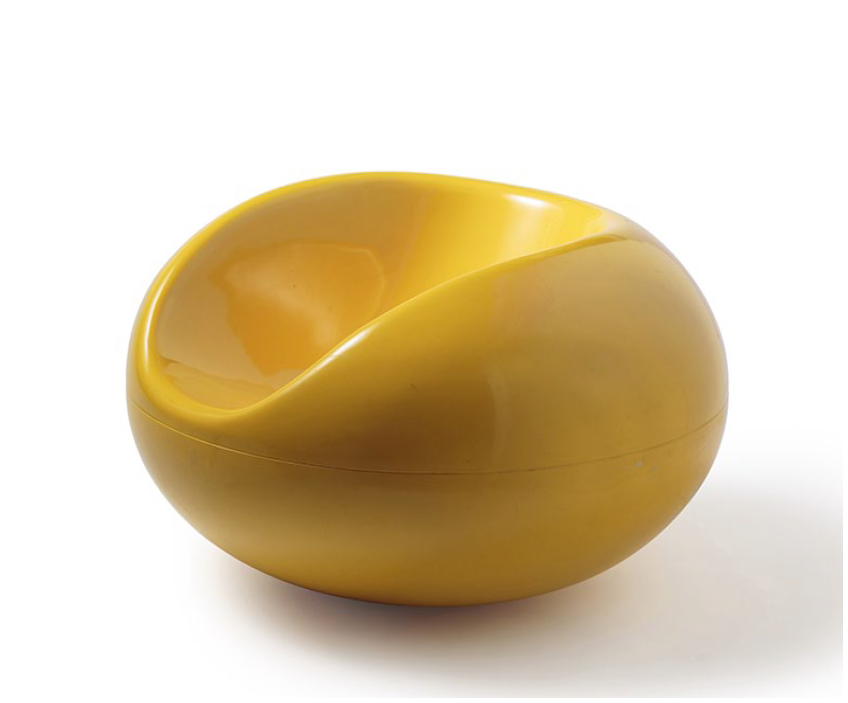
One of the Finnish design classics selected to the Pop-up-VR Museum collection was the Pastille Chair designed by Eero Aarnio in 1968, made of fiberglass which was a novelty material of that time. Photo Rauno Träskelin.
The Pastille Chair is a good example of an object which was acquired in the museum collection as example of award-winning design of the 1960s, but which today may also be seen as harmful, unsustainable design. When the concept and understanding of design is changing, how is this reflected in the museum collection? How do we document the time-bound experiences of museum objects? These questions relate to the changing role of the museums. According to the new museum definition of ICOM approved in 2022, museums are open to the public, accessible and inclusive and they foster diversity and sustainability. 13
Also the new museum law in Finland which came into effect in 2020, reversing the museum law from 1992, underlines the wide responsibility of museums. The aim of the law is
(1) to maintain and strengthen the understanding and participation of individuals and communities in culture, history, and the environment,
(2) to promote the preservation of cultural and natural heritage and art for future generations,
(3) to promote community, continuity, and cultural diversity and
(4) to promote civilization, well-being, equality, and democracy. 14
Objects used by some in their everyday life may seem luxury for others and sometimes also Finnish design may be considered elitist. To overcome the challenge of “not for us,” strategies of including narratives coming outside the museum, similar to those used in the Pop-up-VR Museum have been introduced also in other museums. 15
It could be argued that democratic aspects are potentially embedded in the Pop-Up VR Museum, partly due to its digital nature which is not permanently bound to any particular form (or mode) of representation. To begin with, the application was not designed as a permanent structure but rather capitalizes on the fact that current virtual reality hardware has become portable and thus, accessible beyond the physical museum. Secondly, as a born-digital product, it can be extended and varied to accommodate diverse users, for example by widening the language selection. At the moment the virtual museum can be experienced using three languages: Finnish, English, and Swedish. Thirdly, the Pop-Up VR Museum acts as a platform for information exchange: as the infrastructures are accessible via its design, the application can process inputs entered by audiences throughout the course of their visit.
Digital media like the Pop-up-VR Museum can be used to increase diversity. The application gives access to objects and stories and possibility (for their own voice) to communities that are under-represented in museum visitors, including those of newcomers into the culture, such as asylum seekers. Here the collection, presenting items that, as a part of everyday activities, have been a steady reference source in Finnish culture can offer innumerable opportunities for acquisition of cultural and linguistic knowledge.
How We Built the Virtual Design Museum Experience
The Pop-up-VR Museum was created on the basis of the Design Museum Helsinki permanent collection exhibition. The project team of experts from the museum and the Aalto university curated a collection of objects representative of well known Finnish design used in the everyday context. The photographing of collection items took place at the museum and at the Aalto university. The management of the new digital collection based on an Excel document with similar content and categories or object types that are used in the museum collection database. During the project, another document was compiled with stories produced in workshops.
The Pop-up VR Museum should not be regarded as a digital reconstruction, though as part of the work realized there now exists a “digital collection” that recreates the visual characteristics of the selected collection objects. This digital corpus was created using photogrammetry techniques to gather volumetric and photometric data from the original museum artefacts. The visual representations fabricated using that data were enhanced during the 3D modeling process.
In the context of the SPICE project, the key objectives were: (1) Through the use of a specially created VR application, to provide an affective experience of engagement with the museum collection that is distinct from the actual museum visit, (2) Using the VR application, to create a repository of user-generated content related to Finnish design objects in the museum collection that in turn promotes further engagement with the cultural artefacts, (3) With the VR as a platform, to enable further investigation regarding the role of cultural heritage artefacts in the reflection and interpretation of personal histories as well as past and current socio-cultural conditions.
From a computer-mediated communications perspective, the design of a VR application such as the Pop-up-VR Museum comprises three different perspectives. 16 On the syntactic level the audio-visual representations are structured so as to focus on achieving a coherent experience that supports the interaction. Thus, after selecting the language 17 and reviewing a simple tutorial and answering a few demographic-related queries, the visitor—who is at all times sitting on a chair—enters a 3D virtual space, rendered as an impressionist imaginary landscape. In this landscape the user interface menu is presented in the form of circular spheres with iconic representations indicating the categories of objects in the “digital collection” as in the museum catalog—such as, for example, chairs, dinnerware, and fashion items among others, available (Figure 3). There are also other iconic elements complemented by linguistic signs, such as a small black chalkboard that is used to display the object information or metadata, or the album book in front with Post-it notes which displays a selection of stories that have been gathered about the object.
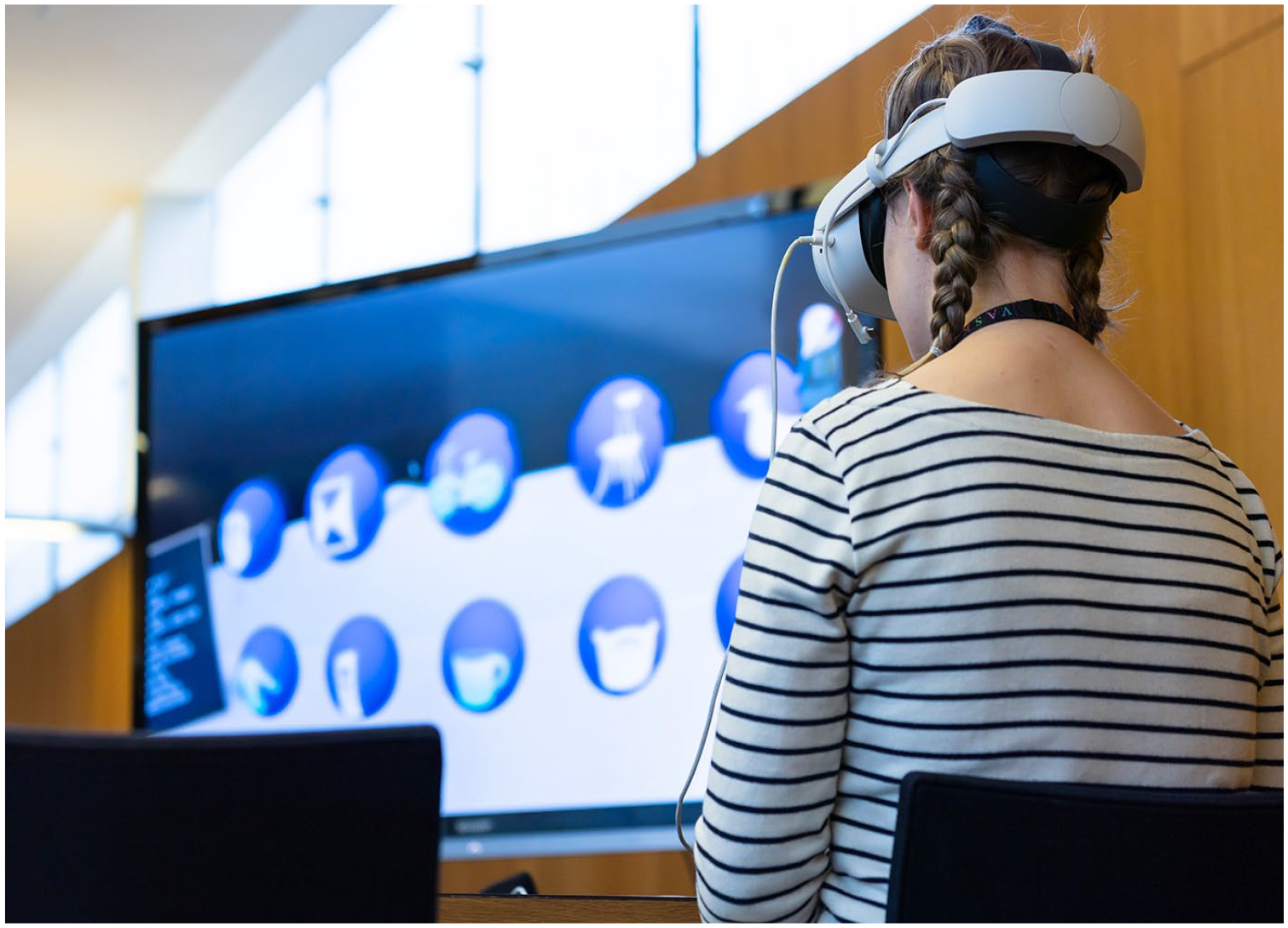
In the beginning of the virtual visit, you have to select between categories of objects in the “digital collection.” The virtual visit is simultaneously streamed on screen to make the activity attractive and accessible also for those who don’t want to use VR glasses. Photo Linda Svarfvar.
In addition to the syntactic level, there is also a semantic level which in the case of the Pop-up-VR Museum application comprises a narrative layer implicit in the “digital collection” that is related to the history and everyday context of Finnish design. As already noted, the experience of using the artefacts in the real world constitutes a common discursive experience for many, at least among visitors and users who have lived in Finland. Therefore, examining this semantic level possibly reveals how the meaningful aspects of the interaction emerge through the association of the virtual experience in the present with knowledge gained through previous engagements with similar artefacts. In this manner, it can be said that the interaction is already pregnant with meaning and this might be a factor that promotes the visitors’ recalling and sharing their experiences and memories (Figure 4).
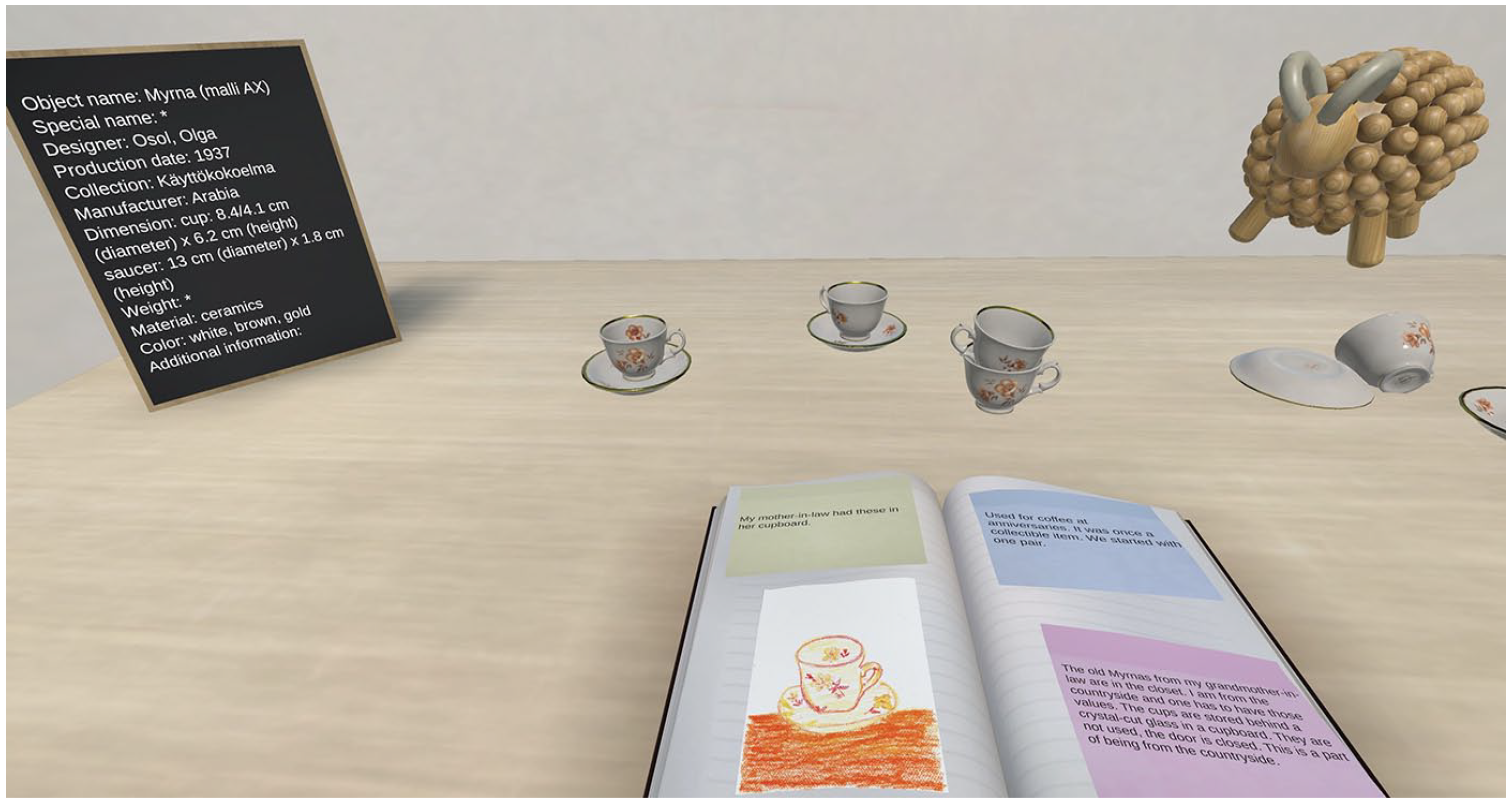
Screenshot from the Pop-up-VR Museum shows how “museum data” and citizen’s contributions about collection objects are presented. The customary object information is written on the black chalkboard. In front of the 3D-representations of the coffee cup and saucer of the series Myrna, in production from 1938 to 2005 by the Helsinki-based Arabia porcellain factory, there is an album with crayon drawing of the beloved flower-decorated cup and written comments about the same object on post-it notes.
The third level of analysis present is a pragmatic layer instantiated at the moment of interaction with the virtual reality environment itself. Here a robust interactivity in a carefully crafted 3D computer generated space that uses the “natural sensorimotor contingencies of the human body” 18 is what distinguishes VR from other immersive media, such as cinema. The sense of immersion and presence, coupled with a designed interaction strategy can make the artificial world interesting to the extent of transporting the visitor to a different world. It is important to observe however, that by itself communication does not generate meaning but rather, meaning emerges via the interactive and experiential context of a culture that is shared (Eco). 19 Thus, interpretation does not occur prior or after interaction but is part of the process itself. And by engaging, the interactant is not just a recipient but rather an active co-creator of interpretation and meaning.
Interacting with the Digital Collection
Currently, there are sixty-three objects from the Design Museum’s collection that have been virtualized and are available for interaction in the Pop-up VR Museum. Once the user selects a virtual object, options for interaction and navigation appear. These include: Read, Listen, Immerse, Collect, and Contribute. Each option appears only if its associated entity exists. For example, the Listen option is activated only if the selected design objects contain at least one collected audio-recorded story.
Upon selecting Read, users are able to see randomly selected written stories displayed in front of them. Similarly, on choosing Listen, the user can listen to a twenty-five to forty-second-long audio-recorded story in Finnish accompanied by subtitles in the user’s preferred language. The decision to provide options to read and listen to stories contributed by other individuals and community members is based on the goal to present a variety of interpretations and perspectives about design objects, thus representing multiple voices and encouraging new interpretations and reflections.
The object classification, consisting of the conventional “museum data” about each entry as well as all collected stories in audio and text format, are structured and stored as a JavaScript Object Notation (JSON) 20 representation within the Linked Data Hub (LDH) server created for the SPICE project to bring together and store the data from all case studies. As a lightweight data interchange format commonly used for transmitting data between a server and an application, JSON data is organized in the LDH repository in a hierarchical manner using key-pair values (Figure 5). 21
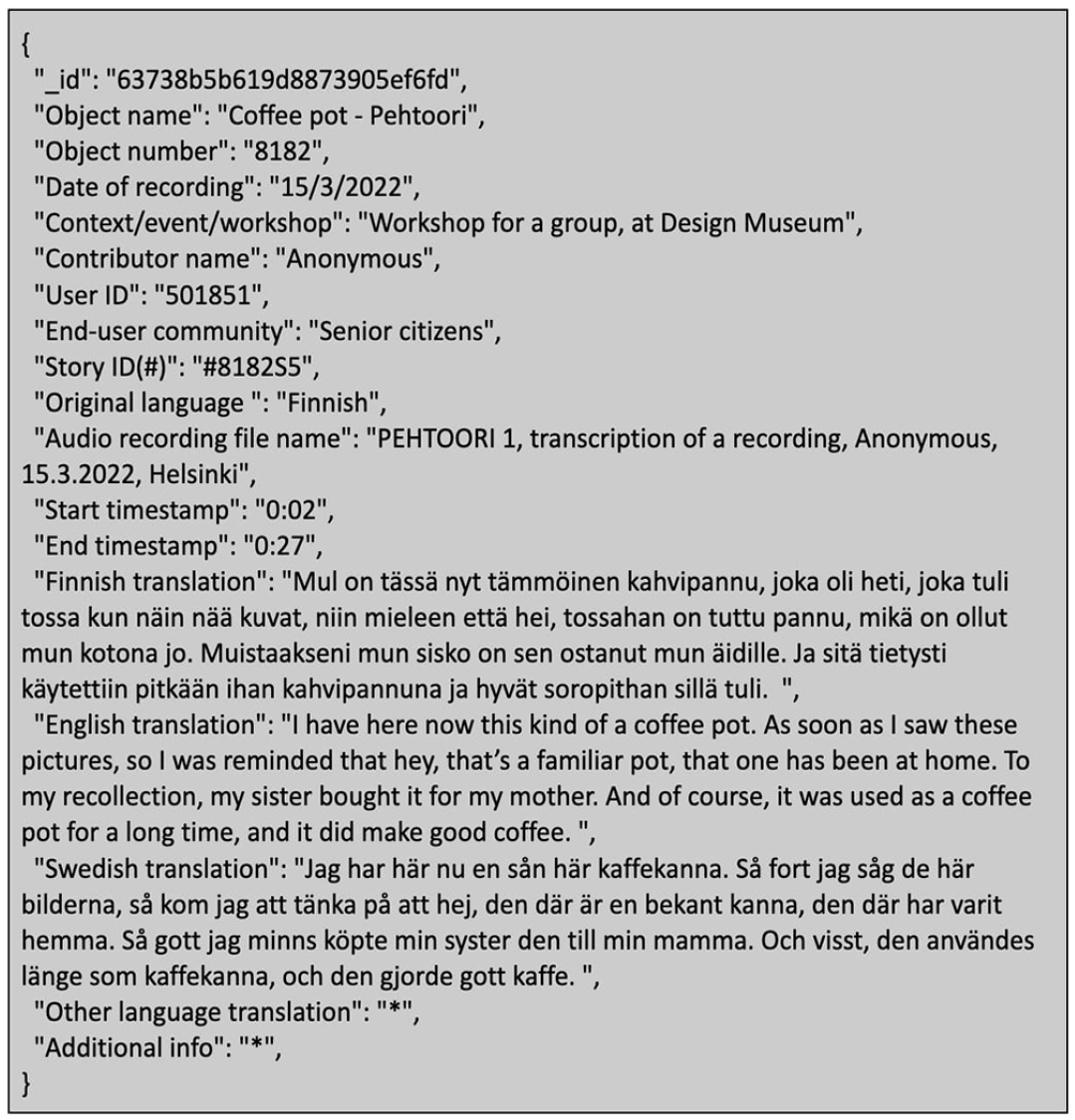
An example of a story about the coffee pot Pehtoori designed by Antti Nurmesniemi in the 1950s. The audio-recorded story in Finnish was transcribed and translated into Swedish and English, and the data is stored as JSON representation.
Meanwhile, the Immerse option transforms the virtual environment to provide an engaging and playful visual experience of the object created by the experience designers. These novel interpretations are based on the object’s characteristics along with the use of affordances of VR such as scale, color variants, as well as artistic renderings about the use and function of the design objects. For example, when a user selects the Pastille Chair and chooses Immerse, the virtual environment transforms and different colored variants of the plastic chair appear in front. Upon placing their hands inside a chair, the color changes to the selected variant (Figure 6).
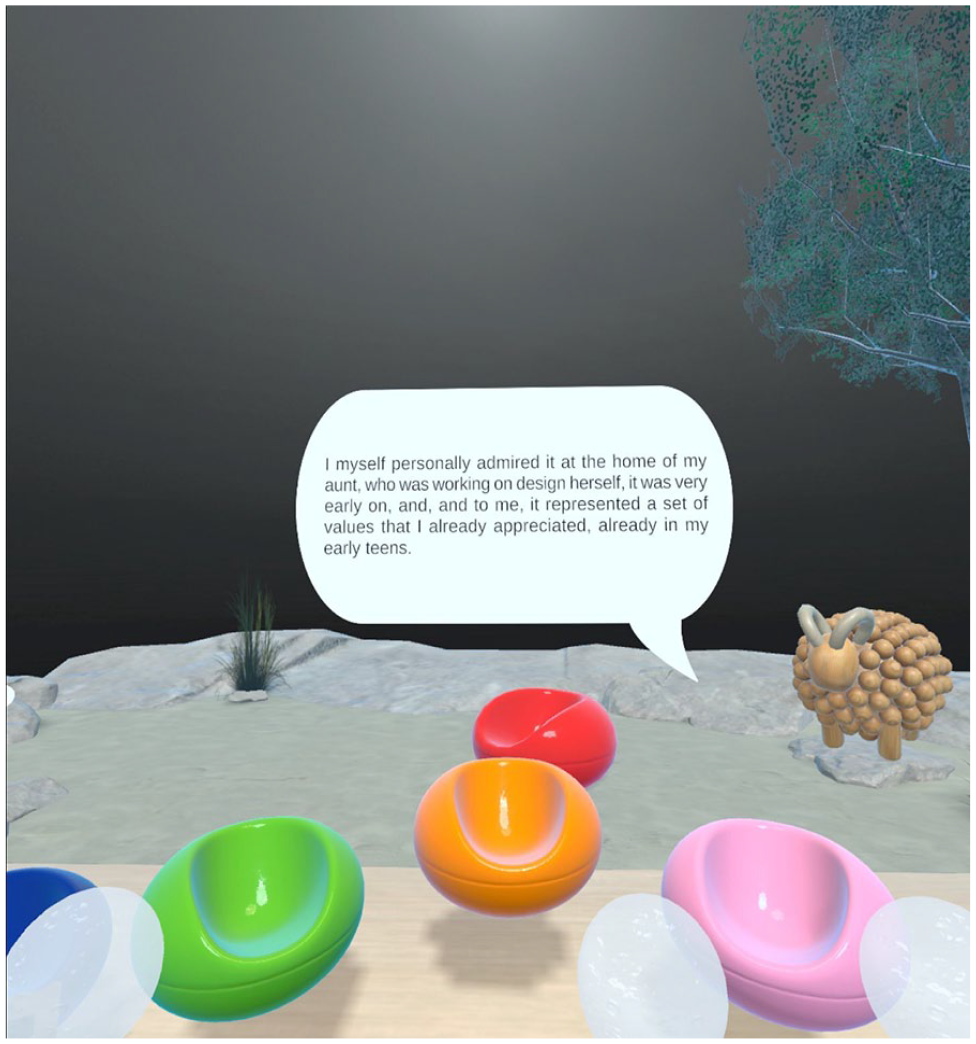
When the user studies the Pastille Chair and selects the Immerse option, colored variants appear along with one of the stories related to this design object. The story, both in audio (in Finnish) and text (translated) is presented to the audience by the virtual companion or avatar which is also one of the collection objects, namely the wooden Pässi (ram) by Aarikka.
In this application, gamification is part of the design strategy, aiming at raising the interest and encouraging interaction. 22 If the user selects the Listen and Immerse buttons, the Collect button is revealed, and the object is now collectable and can be added to the user’s personalized virtual collection within the Pop-up VR Museum. The collected items can be re-experienced during any stage of the virtual visit. The intention behind the design of this option was to foster a “Leaderboard” as a gamified mechanic and share the personal selection of objects with other users.
Having selected an object, users are also given the option to Contribute their own story or provide any comment. When this option is selected, a virtual keyboard opens up in the VR environment for typing with a screen where the typed text is visible. There is a limit of three lines for the stories. The stories entered by the visitors are uploaded to the dataset of the written stories in the LDH. There are two intentions: First is to entice visitors to share their story, the gamification strategy encouraging this activity. Second is to share the new stories contributed during the visit, to support further reflection and new interpretations by other visitors.
The Pop-up-VR Museum application was co-designed using the workshops as a platform for dialogue with users. Data was gathered through observation, questionnaires, and interviews and with the VR application. As part of the usability testing and gameplay analysis the visitors’ behavior was recorded anonymously throughout the virtual experience. The data was collected in the back-end of the application without interrupting the users during their experience. This type of silent unobtrusive approach possibly contributed to maintaining a user’s sense of presence in VR. Following the data gathering strategy, the triggers and markers were set as data points for each interaction variable in the application. The parameters that were gathered to the JSON representation were: age-group of the user, objects selected, stories listened to, objects immersed in, objects collected, and gameplay time.
From the testing carried out with 271 virtual visitors, we noticed for example that senior users were more interested in reading and listening to the stories and they also spent more time in the application. Meanwhile, the younger generational groups were more interested in immersing themselves in the virtual objects and experiencing different environmental transformations as well as collecting objects. We learned that seniors needed a lot of support and encouragement while young adults and children were eager to “scan” the whole experience independently—which can also affect the amount of time spent. However, for most of the virtual visitors the Pop-up-VR Museum was the first time using VR ever. Those who were the most eager to test were people interested in games or technology in general.
Is There a Data Challenge? Some Reflections
Digital design practices often struggle with the reality of an industry and market-driven perspective that is constantly focused on new developments. In a world that is seeking to grapple with problems related to ecological collapse versus sustainability it often seems that only the new is regarded as valuable and very little thought is given to stabilization and preservation of newly implemented platforms. There is a marked need for better definitions of what constitutes quality in the domain of the digital in general. With regards to digital cultural heritage, institutionally every time that new digital components are brought in, a future need for maintenance as well as for planned integration and upgradeability in relation to the already existing museum’s digital semiosphere should be noted. 23
This is in stark contrast to the long-term care and preservation devoted to objects kept by museums in their storage premises. There is a marked need for better definitions of what constitutes quality in the domain of the digital in general. It could be argued that maintenance and durability is as much a quality and sustainability-related issue for virtual (digital) objects as it is for their physical counterparts. This raises the question of whether it is possible to design a similar kind of durability into digital objects, especially the digitally born as well as those which are being created to serve as substitutes for material objects in the physical world.
From this it follows that one of the most important attributes of cultural heritage artefacts is in their ability to conjure multiple historical narratives, bringing to the foreground (in the present) the sensibilities and nuances of an epoch that otherwise leans back toward the past. As Walter Benjamin set forth in his essay The Work of Art in the Age of Mechanical Reproduction, it is in their connection (and distinction) from human actors that objects emerge from their everyday materiality to constitute themselves as separate worlds in the sphere of human culture. 24 Through their interactions in the socio-cultural realm, humans create memories which in turn spawn narratives that impart the special objects with aura. If there is no interaction, the object’s significance recedes to the background. Museum experts need to understand how this basic quality of artefacts as objects of culture extends to the digital as well. In the case of user-generated content, this necessitates an observation of the use for being able to get relevant information for the acquisition; monitoring the use and interaction which itself raises myriad questions of an ethical nature regarding privacy issues. 25
The aim of the SPICE project was to co-create and experiment advanced interfaces in the case studies and to research the processes and data gathered in them. 26 Aside from the 3D models that are based on the collection, the Pop-up-VR Museum for example, comprises several types of digital objects: There are the visual effects that are responsive through human interaction, such as the gentle steam arising from the—presumably ready to eat—salmon soup contained in the iconic cast iron pot designed by Timo Sarpaneva. There is no material counterpart in the way as with the objects modeled in 3D since this is a procedurally generated pattern created using code. Furthermore, display of the effect is possibly contingent on many factors, from the operating system to the version number of the license being used to create the virtual reality application. So, the question emerges: how do we document and preserve the interaction that happens in the VR and with the VR?
As a result of these questions, we have tentatively decided to preserve in the Design Museum collection from the Pop-up-VR Museum project the following artefacts:
the digital application with the digital objects produced;
the process of co-design as documented through photos, videos, and reports as well as the documents created in the process in the stories and interpretations of citizen (audio, written texts, scanned post-it notes, and drawings);
the consent forms which themselves stand as evidence of our society’s struggles regarding privacy issues are also part of a trove set aside for preservation.
Obviously, dealing with material coming from people and communities brings along heavy ethical and data management issues. Appreciating the equal voice of community contributors in the museum, we wanted to give workshop participants the opportunity to give input with their proper names and not only anonymously. During the project we were committed to a data management process, and we planned carefully when we would need written consents and how we could get them. One of the challenges after the EU project is to ensure that agreements made with individual participants are respected in a meaningful way. If these kind of methods of Citizen Curation are to be used in museums in the future, there needs to be a solid process of consents and agreements linked with the pipeline of content-creation in the digital solution.
Managing and retrieving information, promoting effective use and analysis of the cataloged materials are key principles when cataloging even this kind of special project. The new digital artifact will be assigned a catalog number that corresponds to its specific category or physical item. This number provides information about the artifact and its’ location, and the date of acquisition or creation. Detailed descriptions, images, and relevant metadata would accompany this identifier in the cataloging system—in this case, the MuseumPlus Collection Management Software—to offer a comprehensive overview of the artifact. In the case of co-designed process elements, a similar approach can be taken. Each element, such as a design concept or a collaborative phase, is given a distinct identifier. This identifier might include details about the project, the collaborators involved, and the nature of the process element itself. This way, anyone accessing the catalog can quickly understand the context and significance of each element. When it comes to consent forms, they can also be cataloged using a numbering system. Each consent form is assigned a unique identifier that includes information about the purpose of the form, the parties involved, and the date of issuance or signing and associated metadata including details about the legal and ethical implications of the form’s content.
When cataloging contributions, using inclusive and neutral terminology becomes paramount. Benjamin’s approach to history as a collection of “constellations” rather than a linear progression, highlights the importance of interconnectedness and context. This perspective resonates deeply with the idea of a multidimensional taxonomy, where entries are linked by their interrelations rather than being confined to a rigid hierarchy. Such a taxonomy can encourage a nuanced understanding of historical contributions and their influences, showcasing the intricate web of ideas and events.
Footnotes
Declaration of Conflicting Interests
The author(s) declared no potential conflicts of interest with respect to the research, authorship, and/or publication of this article.
Funding
The author(s) disclosed receipt of the following financial support for the research, authorship, and/or publication of this article: This work has received funding from the European Union’s Horizon 2020 research and innovation program under grant agreement No 870811 (SPICE project).

1.
About the history and development of participatory practises in museums, see Hetland et al., A History of Participation in Museums and Archives.
3.
The term is related to the well-established concept of “citizen science,” institution-guided participatory practices engaging the public to contribute to scientific knowledge. Citizen curation is not connected to the citizen status of participants but rather, describes the inclusive objectives of cultural heritage institutions. Here the term citizen carries a broader connotation. For example, in our documentation asylum seekers have also been referred to as “potentially new citizens.”
4.
Daga et al., “Integrating Citizen Experiences.”
5.
Bruni et al., “Towards Advanced Interfaces.”
6.
Other case studies in the project were located in the Galleria d’Arte Moderna (GAM) in Torino, Italy, in the HECHT Museum of Archaeology of Haifa, Israel, in the Irish Museum of Modern Art (IMMA) in Dublin and in the Museum of Natural History Madrid in Spain.
7.
Simon, “The Participatory Museum,” Chapter 6: Contributing to Museums.
8.
Daga et al., “Integrating Citizen Experiences.”
9.
About Finnish design history and the Design Museum collection, see Leppänen et al., “Ideology, Form, Material.”
10.
Salgado, Designing for an Open Museum; see also Díaz and Partanen, “Digital Cultural Heritage to Support Novel Activities” and Díaz et al., “ImaNote: A Web-Based Multi-User Image Map Viewing And Annotation Tool.”
11.
Salgado et al., “Co-Designing Participatory Practices Around a Design Museum Exhibition,” 106–109.
12.
Salgado, Designing for an Open Museum, 84–117.
13.
ICOM Museum Definition.
14.
Museum Law in Finland. (Translated by the author)
15.
Boonen et al., “Design Is Not for Us.”
16.
Baricelli et al., “Semiotics of Virtual Reality as a Communications Process.”
17.
All content is in three languages: Finnish and Swedish—which are both official languages in Finland—and in English. These are also the standard languages in the exhibitions at the Design Museum Helsinki.
18.
Slater et al., “A Separate Reality.”
19.
Eco, A Theory of Semiotics.
20.
Pezoa et al., “Foundations of JSON Schema.”
21.
Carvalho et al., “SPICE Linked Data Hub.”
22.
Vishwanath, “Enhancing Engagement through Digital Cultural Heritage.”
23.
Fiore, “Ethics of Technology and Design Ethics in Socio-Technical Systems.”
24.
Benjamin, “The Work of Art in the Age of Mechanical Reproduction.”
25.
See also discussion in Daga et al., “Integrating Citizen Experience.”
26.
See for example Bruni et al., “Towards Advanced Interfaces for Citizen Curation,” Damiano et al., “Exploring Values in Museum Artifacts in the SPICE Project,” and Kadastik et al., “Citizen Curation Methods for Interpretation and Reflection on Cultural Heritage.”