




Abstract
Using a practical case study co-curated by the author and Garazi Ansa as a departing point for reflection, this article addresses a number of questions that arise when organizing exhibitions of female artists in collections. First, it examines the danger of falling into categories such as “women artists.” Second, it discusses the possibilities for the exhibition to have an impact on other activities of the museum, such as collecting. Finally, it proposes alternatives to extend the curatorial purpose on time by other by-practices, such as editing children’s book about the exhibited artists.
Introduction
This paper begins with a specific practical case study: the exhibition Baginen Bagara. Women artists. Logics of (in)visibility, curated by Garazi Ansa and myself for the San Telmo Museum (STM) in San Sebastian, Spain. 1 The exhibition was on view from November 2021 to March 2022 and featured around 110 artworks by seventy-four female and seven male artists from the collections of the museum and the Gipuzkoa Regional Government. They dated from mid-nineteenth century through contemporary works, with emphasis on works from the 1950s onward (Figures 1 and 2). 2
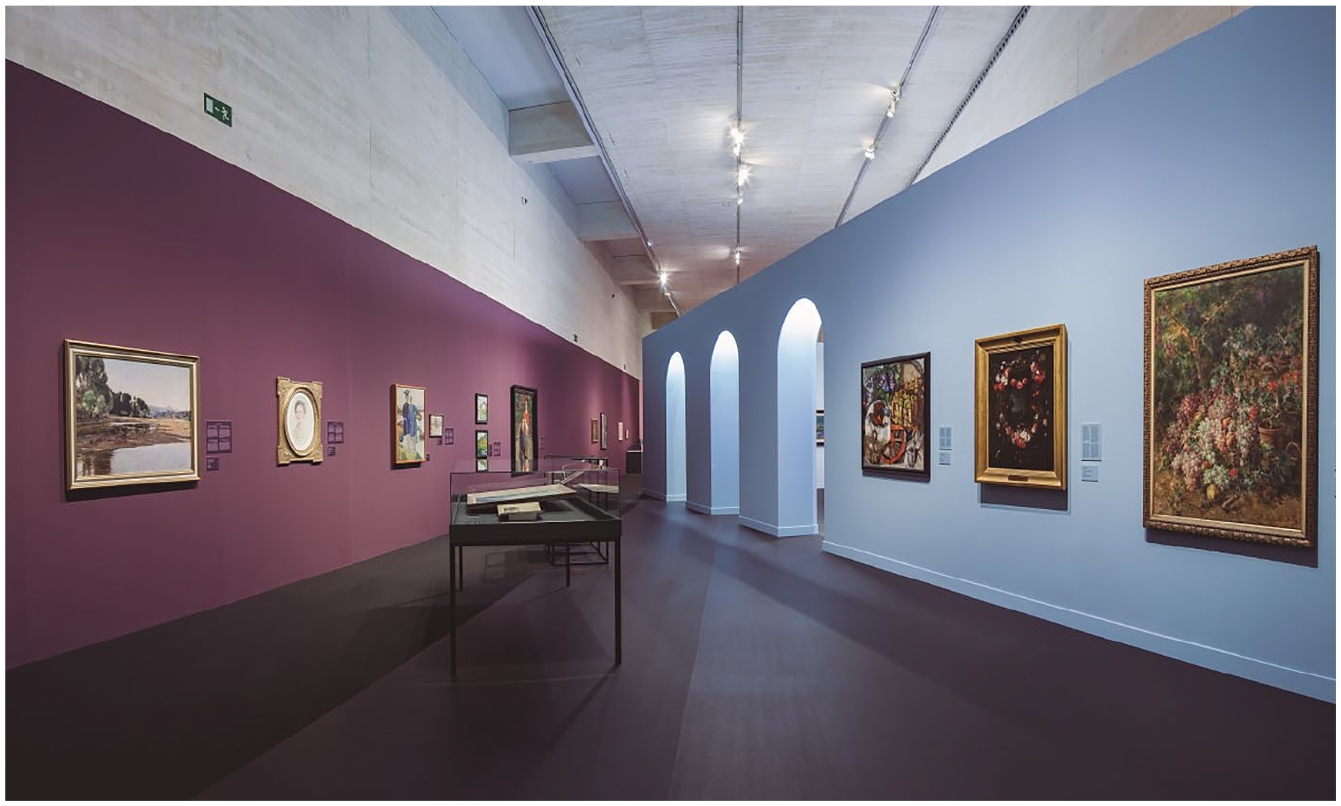
Baginen Bagara. Courtesy of STM.
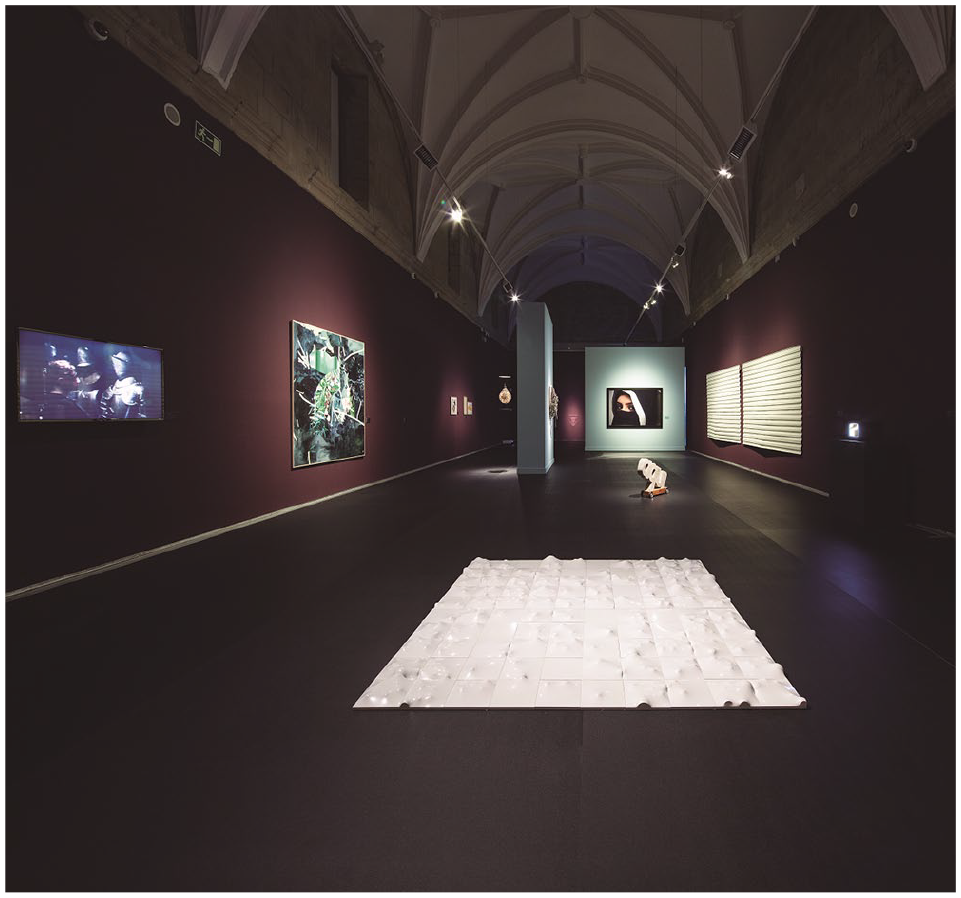
Baginen Bagara. Courtesy of STM.
I do not intend to present this case as a cautionary example of exhibition making: I rather propose it as a departing point to bring up fundamental questions that frequently come up when dealing with collections and exhibitions of female artists. I consider that any coherent feminist curatorial purpose needs to pose these questions, although their answers will vary depending on context and situation.
In the following sections, I will address these questions into three groups. First, I will present the case study and address the challenges it posed regarding inclusion and categorizing: does it make sense to curate a “women’s art exhibition” nowadays? Can we think of ways in which we make visible the gender discrimination these artists have suffered while we elude their categorizing as “women artists”?
In the second section, I will tackle the tensions between exhibition making and collection making. In fact, sometimes museums use exhibitions as “purple washing” to publicly show an interest in gender balance while they continue collecting from a patriarchal perspective. Can exhibitions bring change to museums? How and to what extent can they do it?
Finally, and relating to the previous point, I will propose other complementary ways to reinforce the curatorial purpose. In this case, I will present a project of children’s books that departed from questions raised by the exhibition and that can offer an example of long-term intervention into art historical canons.
Facing a Curatorial Challenge
Baginen Bagara. Women artists. Logics of (in)visibility grew out of an invitation to Garazi Ansa and me: both of us are lecturers of Art History at the University of the Basque Country. The San Telmo Museum wanted to show and highlight the works by female artists treasured in its collection and which, in most cases, had never been exhibited. Although we welcomed the invitation to curate the project with enthusiasm, we had doubts about the approach: we feared that theming the exhibition under the definition of “women artists” could prove conflictive.
On the one hand, it could lead to an exhibition with no other guiding line than the gender of the artists, lumping together works that are very diverse in subject, technique, and understanding of art. We could thus “re-victimize” the artists, giving prominence to the same perspective that had led to their discrimination in the first place: that of categorization by gender. But, on the other hand, we were aware that many works, analyzed from a feminist point of view, did show gender conditioning factors that had in many cases influenced technical, thematic, and formal decisions of their authors, as well as their reception. Not acknowledging these would subordinate many works to the canonical, clearly gender-biased reading of Basque art 3 that had left them aside.
The discussions about the pros and cons of women artists’ exhibitions have been recurrent in the last decades in Spain. Due to Franco’s Dictatorship (1939–1975), feminist perspective in the arts developed later than in the Anglo-Saxon realm. There had been some women’s exhibitions before the Civil War (1936–1939) (Tejeda Martín, 2022) and several women’s art competitions with a heavy patriarchal perspective during the Dictatorship (Vadillo, 2021), but the first shows with a clear feminist stance arrived in the 1990s. From that moment, a debate has been going on: it questions if all-women exhibitions without a feminist perspective do combat the patriarchal canon or, instead, can even reinforce it, confirming women’s otherness—an otherness directly related to inferiority (Rodríguez Caldas, 2021).
As art historians, we acknowledged that some all-women exhibitions without a strong feminist linking thread have sometimes been important in a basic yet relevant function: they have presented unknown works and authors to both public and academia, as a first step to boost research and build new narratives. Nonetheless, we wanted to go beyond that and reflect on the construction of Basque art that had so firmly excluded women.
In consequence, we decided to tackle some fundamental points: first, visibility, or the lack thereof in the case of our artists. Baginen Bagara means in Basque “we were and we are”; the title supported the idea that the exhibited works in public collections proved that women had consistently made art. Nevertheless, their artworks had not been systematically collected and their presence responded to random factors rather than to conscious planning: most of them where included due to prize winning or donations.
To raise the visibility of this issue, we included in all labels how each work had entered the collection, whether by acquisition, donation, or legacy. Therefore, it became obvious that it had not been easy for women artists to be part of public collections: it rarely happened through economic exchange and, most times, it implied that they had had to give their works for free. Yet, getting into the collection did not assure their visibility, since most of them were never shown before Baginen Bagara. Thus, it was important for us to underline their presence, commitment, and endurance, while also exposing the system that had made them invisible.
To target that system, we focused on the deconstruction of some categories that conform to gendered hierarchies. We addressed the representation of flowers, chairs, 4 and portraiture as undervalued characteristic female practices, as well as the gendered construction of “feminine” and “masculine” in art critique. We also proposed a reflection on the category of “professionalism,” which is often used in a very inconsistent way to build separate realms for male and female artists. 5
After deconstruction came construction, in sections where we proposed other possible readings for the most contemporary artists’ work, looking for new genealogies between them instead of always relating them to the main historical masculine figures. In some cases, we used some particular works by male artists to build our curatorial narrative through contrast. As a result, the exhibition became a discussion about the position of women artists in the Basque art context, rather than just a women artist’s show.
Exhibiting and Collection-Making
One of the factors that encouraged us to take on this project was that the museum wanted to use the occasion to increase the presence of women artists in the collection. They were aware that it was scarce and inconsistent, and they wanted to direct their collecting strategies toward a more balanced representation. We understood that the exhibition could be a turning point for more gender-conscious collection planning. We also hoped that our critique of the Basque art system and canon could influence other activities in the museum.
This commitment from the museum was especially important due to the discouraging history of institutions in the region. As a precedent, the Fine Art Museum of Bilbao, the main public collection in the territory, hosted three important feminist or gender-oriented group exhibitions in the period of 2002 to 2014 (Women Impressionists in 2002, Kiss kiss bang bang in 2007, and There is more in you in 2011). Nonetheless, in the same period, its acquisitions of contemporary women artists’ works only reached 7 percent of total purchases. Also, it celebrated around forty individual shows of male artists versus none of females. Thus, it posited women artists and feminism as the exception and reinforced the canonical, masculinist art history of the region as the norm (Barcenilla 2014).
This precedent, not exclusive to the Basque region, often puts feminist curators in an uncomfortable position. We always find ourselves questioning if our project is going to “purplewash” patriarchal collecting and/or exhibiting politics. In our case, and although we did not know to what extent the exhibition would influence collection politics in the long run, we did value the possibility to intervene on the collection, as Pollock (2003) would say, at least partially and for a certain timeframe.
In fact, our experience told us that the deficit in collecting and exhibiting female artists had led to a disheartening lack of research about their oeuvre. Only five of the exhibited artists had monographic catalogs or serious research published. In many cases, we knew the name of some artists because we had seen it referenced in collections’ databases, but we had never seen a work of art by their hand. Not being visible in public collections made them very hard to find in specialized research and inexistent to the public.
Therefore, San Telmo’s commitment to invest in women artists was very encouraging news. The museum did not only buy works for the exhibition, but also acquired a number of pieces with a long-term vision, which integrated the collection in spite of not finding their place in the curatorial narrative. In total, from the sixty-eight works in view from the STM collection, 6 twenty-four were new acquisitions, and the museum acquired a significantly bigger number of artworks during the two years of research work.
The increase of women artists’ representation in the collection is without doubt one of the important inputs of Baginen Bagara and it shows that temporal exhibitions can also signify change for long-term, structural sections of museums. However, we need to mention that since the exhibition ended, changes in the museum have not been so drastic. The canonical art history that was criticized in Baginen Bagara was unfortunately reinforced in the following show of Chillida and Oteiza, both referential male “genius” artists that coined Basque art’s language. Regarding the collection, the impulse of buying women artists’ works has decreased. Of course, we cannot expect to alter radically the politics of a museum. And yet, we might want our work and research to have a more lasting impact and to keep intervening the canonical history of art.
Is There Life Beyond the Exhibition?
While we were working on the exhibition, we knew that its impact was going to be limited in time: it is the fate of all exhibitions, even the most emblematic ones. We dedicated care and effort to the catalog, knowing that it will be the lasting memory of the proposal, but we also knew that these by-products arrive to a very selective and specific type of public.
Since women artists in the Basque Country had become temporarily visible, we wanted to keep that trace: make it last longer in time and arrive to a broader audience. Thus, we came to the idea of producing children’s books based on the work of women artists. We decided to dedicate each book to one artist’s work and to invite women writers and illustrators to work on them.
It was important for us that the books would depart from an artist’s work and not her biography. We did not want a victimized or hero-type account of her life, but an invitation to delve into her artistic, aesthetic world. Consequently, we chose writers who had a clear art knowledge, and illustrators to whom the aesthetic proposal of the selected artists would resonate. We raised money and approached the editing house Pamiela, which enthusiastically joined us in the undertaking. To this date, the Bagara collection has published three books 7 and is working in a fourth (Figures 3 and 4).
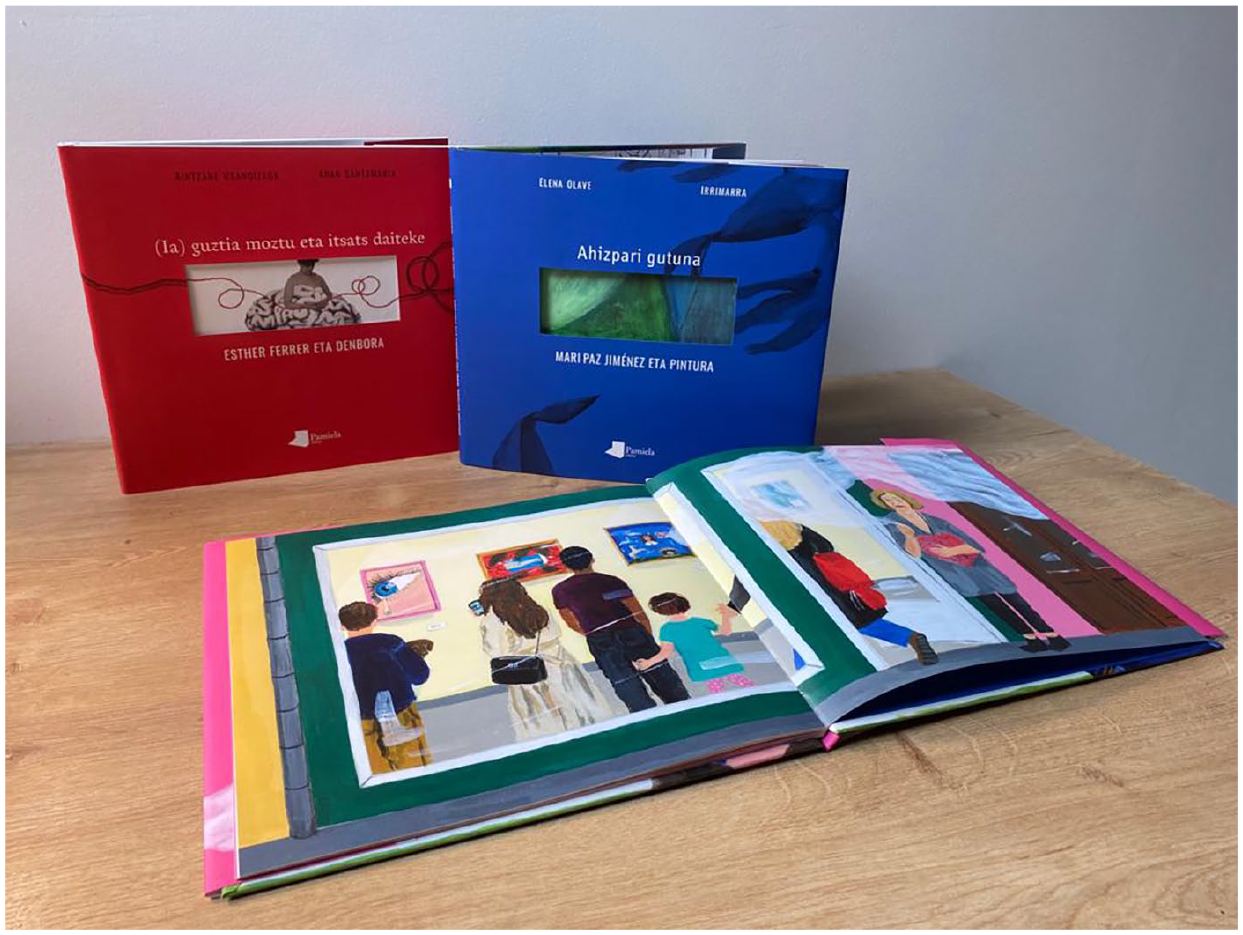
Bagara collection.
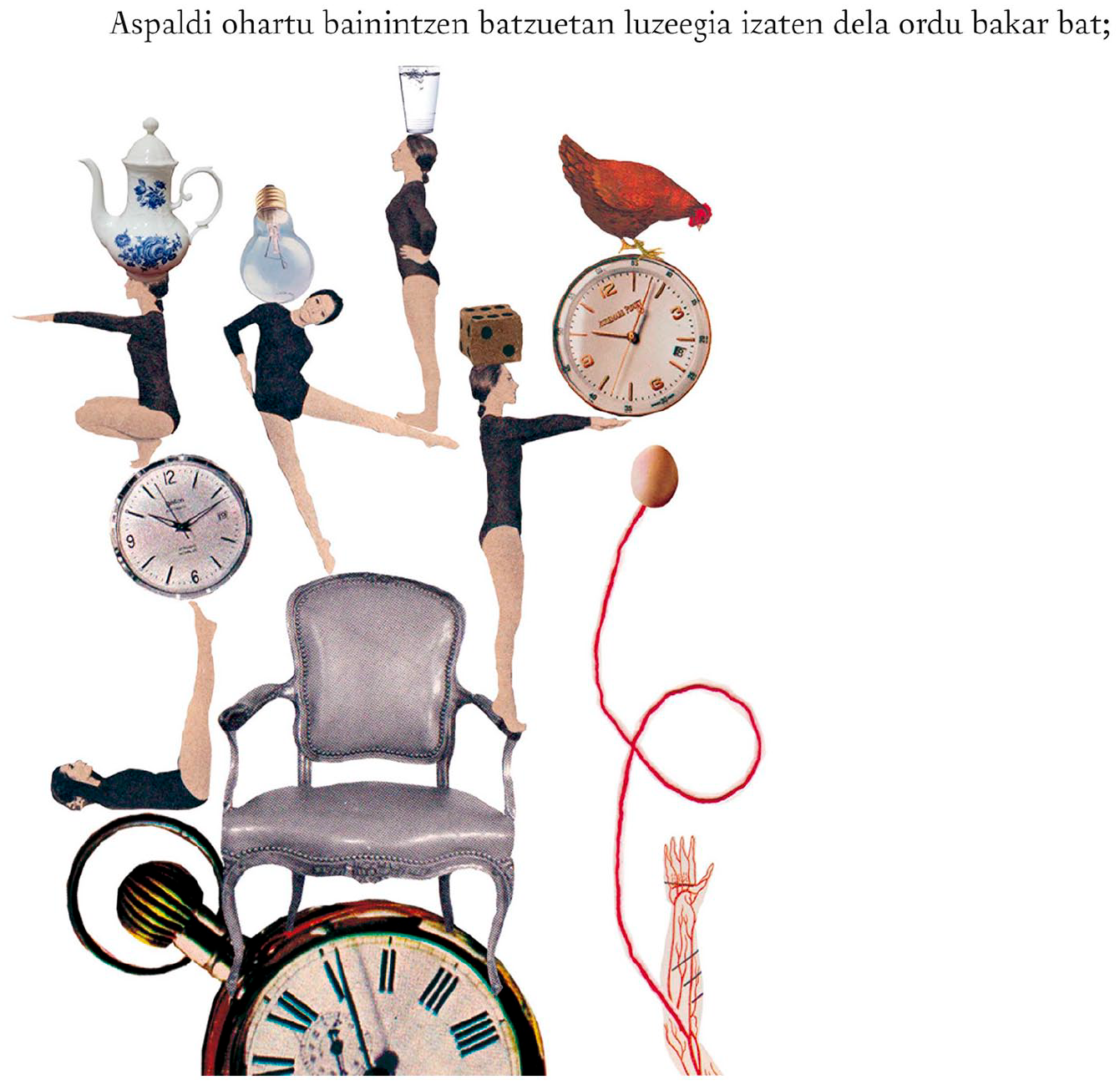
Bagara collection, detail. Courtesy of Pamiela.
These books fulfill some important objectives: first, they normalize these artists among children, intervening on their art imaginary from an early age. We consider this paramount. Moreover, since children often read accompanied, parents can also get to know the artists. Secondly, we have provided some of the artists in the exhibition a new reading by young female creatives in the Basque context. Our canonical historical narrative had cut the transmission of knowledge between senior and junior female art makers: Bagara has created new intergenerational bonds to replace those that were lost in the patriarchal writing of art history.
Conclusion
Baginen Bagara gave visibility and a narrative to many Basque female artists, and provided curatorial and academic challenges that can be of use to many of us. At the same time, the Bagara series has started a new collection: a collection of books, of course, but also a collection of references, relations, networks, and sensitivities. We hope that it will bring new light and life to the wonderful works of those women artists that are waiting for us to tell their art’s history.
Footnotes
Declaration of Conflicting Interests
The author declared no potential conflicts of interest with respect to the research, authorship, and/or publication of this article.
Funding
The author received no financial support for the research, authorship, and/or publication of this article.
1.
San Telmo Museum defines itself as the “museum of Basque society.” Its funds include also ethnographic and anthropological objects. It features a small art section in permanent display and it regularly presents considerable collective and thematic art shows in the 1000 m2 dedicated to temporary exhibitions.
2.
For more specific information and images of the exhibition, visit https://www.santelmomuseoa.eus/index.php?option=com_flexicontent&view=items&cid=33&id=13120&Itemid=69&lang=es.
3.
The category of “Basque art” is clearly identifiable in Spanish art history. It implies a tendency to abstraction and sculpture, in materials such as wood, metal, and stone, which appear clearly related to masculine Basque traditions. Most Basque women artists did figurative painting and resulted therefore excluded from the canon. See Ane Lekuona, “La historiografía del arte del País Vasco. Una revisión feminista a la segunda mitad del siglo XX,” Historia Actual Online, 51 ( ): 141–52.
4.
Our research showed an important presence of chairs that became a very intriguing subject.
5.
For example, a man artist who has a non-artistic day job to subsist but exhibits with a certain regularity would be considered a professional artist while a woman who is an art teacher but does not exhibit so often would not be considered a professional.
6.
Thirty-two pieces belonged to the collection of the Regional Government of Gipuzkoa and ten to the collection of Kutxa, a bank that had organized a historical women artists’ competition and generously let us show some of their works.
7.
The first one, dedicated to Esther Ferrer and her use of time in art, written by Aintzane Usandizaga and illustrated by Aran Santamaria; the second, focused in Maria Paz Jimenez and painting, by Elena Olave and the collective Irrimarra; the third, presenting Rosa Valverde and her artistic boxes, by Maialen Lujanbio and Arrate Rodriguez.