



Abstract
With the popularity of the concept of big health and the important role of wearable devices in medical health, users pay more attention to the collection and acquisition of physiological data, but wearable devices attached to human users are independent, and the degree of data sharing is low. Improving the data sharing, accuracy, and reliability of wearable device monitoring is a problem that the article needs to study and solve. Specifically, the researcher summarizes the characteristics of the physiological monitoring smart clothing, and the basic physiological data parameters of human body, and analyzes the collection of three basic signals of electrocardiogram, body temperature, and human movement. This article summarizes the requirements and key technologies of body area network transmission of smart clothing, and studies the body area network node design, energy consumption optimization mode, and network architecture of physiological monitoring smart clothing. At the same time, based on the previous research, the multi-interaction process of smart clothing is formed, and then the standard evaluation system of smart clothing body domain network for evaluation is proposed. The results show that the optimized structure of the body area network of smart clothing proposed by the researchers is efficient, convenient, and mobile, and meets the characteristics of safety, reliability, low power consumption, and portability of smart clothing, especially in the field of physiological monitoring. The standard evaluation system of smart clothing body area network provides a practice-oriented theoretical reference for the current research of smart clothing body area network.
Introduction
According to the planning criteria established by the Population Aging and Its Social and Economic Consequences of the United Nations, the population aging is associated with more than 10% of the population over 60 years in society or more than 7% of the population over 65 years. The projections from the United Nations show that the proportion of the world’s elderly population will reach 15.1% 1 in 2025. Meanwhile, the United Nations recently released the latest age-dividing criteria for the population: the youth is from 18 to 65 years old, the middle-aged from 66 to 79 years old, and the elderly from 80 to 99 years old, so the “elderly” defined in opening sentences includes the relevant population groups in the above three stages, resulting in the growing importance of health care the differentiation of diseases and populations, so that the increasing trend of aging has a higher requirement for the development of medical supervision. Along with the continuous development of the national economy and the transformation of human’s life and work style, various chronic diseases lurk in the wider population and tend to be universal and younger. These diseases often cannot be monitored in real time, and even are easy to cause sudden death because of the lack of early monitoring and treatment, so the smart wearable clothing for physiological monitoring comes into being. The monitoring of physiological signals includes physiological and psychological factors; when people are stressed and emotionally tense, the physiological signals may be changed and the long accumulation of the emotions will lead to the occurrence of diseases. The smart clothing for physiological monitoring can realize the real-time monitoring of human physiological indicators through the sensor nodes installed on the clothing. For instance, Hexoskin developed a smart T-shirt that measured heart rate, heart rate variation, and respiration in the day, and tracked the sleeping environment at night. 2 The University of Illinois developed an electronic tattoo thermometer, which was an ultra-thin circuit chip that could be attached to the skin to measure human temperature and blood flow. Tsinghua University, through the combination of graphene and tattoos, imitated the electronic skin function, which could collect human data to form a smart health intervention program through resistance changes to achieve personalized and accurate health management. The researchers of Jiangnan University designed a smart urine moisture sensing baby wear, which had flexible inductive wires in the bottom part of the wear and would induce the sensation when encountering liquid; the related data would be collected by micro-sensors and be transmitted by Bluetooth to the mobile phone app, and the phone would give the alarm, which could effectively improve the replacement frequency of baby diapers. From the above, it can be found that whether domestic or foreign universities, enterprises, and other institutions regard physiological monitoring function as a research hotspot and focus in wearable products. Researchers have investigated a large number of data and analysis in the early stage and found that there are many problems at present. The wearable devices on the human body work independently and can be considered as a separate natural system; one-way communication transmission leads to low efficiency, poor accuracy, and high power consumption. By what means, how to solve the multiple interactive connections between wearable devices applied to smart clothing? At the same time, it can also give an evaluation standard for the design and development of smart clothing and give a reasonable reference, which is also an urgent challenge and the core research problem of this article.
The researcher proposed to solve the problem of independent work of wearable devices attached to smart clothing through the wireless sensor network carrier form of body area network (BAN). The combination of BAN and smart clothing is not only the combination of technology and scientific aesthetics but also the human–computer interaction in three directions extending the interaction with wearable sensors on human body parameters, external environment, and other devices. This is also a research motivation for the author to put forward the research problems of this article based on the previous foundation. BAN is very important in the research and development of the smart clothing for physiological monitoring, which can be said to be the smallest sensor network, that is, to wear some sensor nodes to collect vital signs on the human body and transmit to the portable terminal through the wireless network and other means; it plays an important role in the human body physiological monitoring, medical monitoring, disaster emergency rescue, remote medical treatment, home care, and many other directions. 3 Therefore, in order to meet the needs of data transmission, the study of BAN plays an important role in the research and development of smart clothing for physiological monitoring. By analyzing the current situation of smart clothing and medical health monitoring and integrating the characteristics, performance, and requirements of human physiological multi-source signals, physiological monitoring smart clothing, and body domain network transmission technology, the researchers put forward the optimization of smart clothing body domain network based on physiological monitoring and the evaluation standard system of smart clothing body domain network. It mainly describes the relationship between smart clothing multi-interaction process (physiological monitoring process) and wearable device data standards and service framework. The researcher hopes to provide a theoretical reference for relevant personnel in this field.
Related works
Clothing is the second skin of the human body, which plays an important role in the protection and heat preservation of the human body. With the development of artificial intelligence and Internet of Things technology, clothing has not only ordinary functions but also technological clothing with wearable technology, slowly entering the lives of consumers. Smart clothing is a miniature integrated network system that can monitor physiological parameters such as heart rate, blood oxygen, temperature, brain waves, and respiration, reducing dependence on expensive monitoring equipment and treatment systems; smart clothing can track chronic diseases for a long time and can help people’s health. Treatment is also a method that can create design value, improve health monitoring, and reduce consumption costs, while providing consumers or medical staff with a data evaluation.
Status quo of smart clothing
In the first quarter of 2019, China’s wearable device shipments were 19.50 million units, of which smart clothing accounted for 3%; smart clothing and smart toys, smart gloves, somatosensory chips, and so on accounted for the types of wearable industry corporate financing products, from 2015 to 2017, 51%; it can be seen that smart clothing is still a product direction with great potential in the wearable field, and it is also a mainstream product for future clothing companies. At present, smart clothing is mainly used in sports, medical treatment, and entertainment. Among them, flexible materials, wearable components, and wireless networks are the three directions of the smart clothing system, and they are also indispensable components.
In foreign studies, Jun Yang et al. 4 in AI-enabled emotion-aware robot: The Fusion of Smart Clothing, Edge Clouds and Robotics put forward an emotion-aware system that Integrates a personal robot, smart clothing, and cloud terminal. A new “people-centered” emotion-interaction mode is realized. Ming Li et al., 5 in Wearable Measurement of ECG Signals Based on Smart Clothing, proposed a novel wearable measurement of electrocardiogram (ECG) signals. There are only three ECG textile electrodes knitted into the fabric of smart clothing. The acquired ECG signals can be transmitted to a smartphone via Bluetooth, and they can also be sent out to a personal computer (PC) terminal by a smartphone via WiFi or Internet. Jie Luo et al. 6 in Sensor-Based Smart Clothing for Women’s Menopause Transition Monitoring through the sensor implanted in the obvious contact parts of clothing, monitoring the hot and humid information, data transmission to the computer, frequency, intensity and duration calculation, get more years ago accurate diagnosis. Abu Sadat Muhammad Sayem et al. 7 in Review on Smart Electro-Clothing Systems (SeCSs) present an overview of the smart electro-clothing systems (SeCSs) targeted at health monitoring, sports benefits, fitness tracking, and social activities. Technical features of the available SeCSs, covering both textile and electronic components, are thoroughly discussed and their applications in the industry and research purposes are highlighted. Xiong Pu et al. 8 in Wearable Self-Charging Power Textile Based on Flexible Yarn Supercapacitors and Fabric Nanogenerators discuss that the yarn supercapacitor and fabric triboelectric nanowave generator are used as energy collection devices to realize a new and scalable self-charging power textile.
At the same time, the time period is set from 2000 to 2020, as shown in Figure 1, and the number is labeled as keyword clustering analysis, and 11 clustering regions are obtained. It can be seen that the more important directions in the research of smart clothing are e-textiles, belt sensor, smart fabric, bio-fiber surface, thermal energy storage, polyaniline, and so on. Due to software reasons, only a few hot core keywords can be seen, and the enlarged part is on the right side of the picture. At the same time, we can also see that in foreign-related research, we have carried out in-depth research on sensors, textile materials, and biomaterials with good prospects in the future, which is also an advantage. The laboratory products have long been into commercial operation, and there are many clothing technology enterprises involved in the direction of smart clothing, such as Adidas, NIKE, VS, and Google.

Knowledge mapping analysis of keywords related to smart clothing papers abroad.
In domestic studies, we analyze several representative research results. Li and Lu 9 in Research and development of smart garments for waist muscle injury protection aimed at the problem that beginners of hard pulling project are prone to waist muscle injury; the wearer has developed a wearable muscle fatigue detection system, which enables the wearer to master the fatigue of erector spinalis muscle in real time, so as to avoid muscle over fatigue. Shen Lei et al. 10 in the Research and development of smart cycling clothing based on outdoor visual warning function discussed the design of fluorescent riding apparel based on posture control light emitting diode (LED), which is carried out from the perspectives of fabric, smart components, style structure, and color matching, and the subjective evaluation test of visual effect effectiveness is conducted. Wu Yizhi 11 in the Research on information fusion of body area sensor networks for smart clothing found that the subject of body domain sensor network information fusion for smart clothing aims to establish a low power flexible human life information perception and transmission network, and explore information fusion methods for specific applications such as medicine, sports physiology, and psychological analysis. It provides a powerful theoretical framework and system prototype platform for the key technology and functional research of smart clothing. Liang Bing and Li 12 in the Evaluation method for treatment of cerebral palsy children based on somatosensory network propose to use the body domain sensor network, combined with equestrian movement to obtain the three-dimensional movement data of children with cerebral palsy, and analyze the joint angle and motion posture to evaluate the rehabilitation effect of patients after equestrian therapy. And then, we obtain papers on smart clothing published in China, and use CiteSpace data analysis software to set the time period from 1980 to 2020. The results of keyword co-occurrence network analysis are shown in Figure 2, and the studies on smart clothing are relatively late; at present, the research mainly focuses on smart clothing design, sensor networks, smart materials, conductive fibers, flexible sensors, phase change materials, and scheme evaluation (blue mark in the figure), most of which are still in the laboratory stage and have not entered into industrialization. However, there are a lot of colleges and enterprises in the domestic studies of smart clothing; at the same time, with the development of domestic artificial intelligence, Internet of Things technology, and 5G technology, the domestic studies in the scope of involvement, the number of programs, and potential in the future will have a greater advantage.
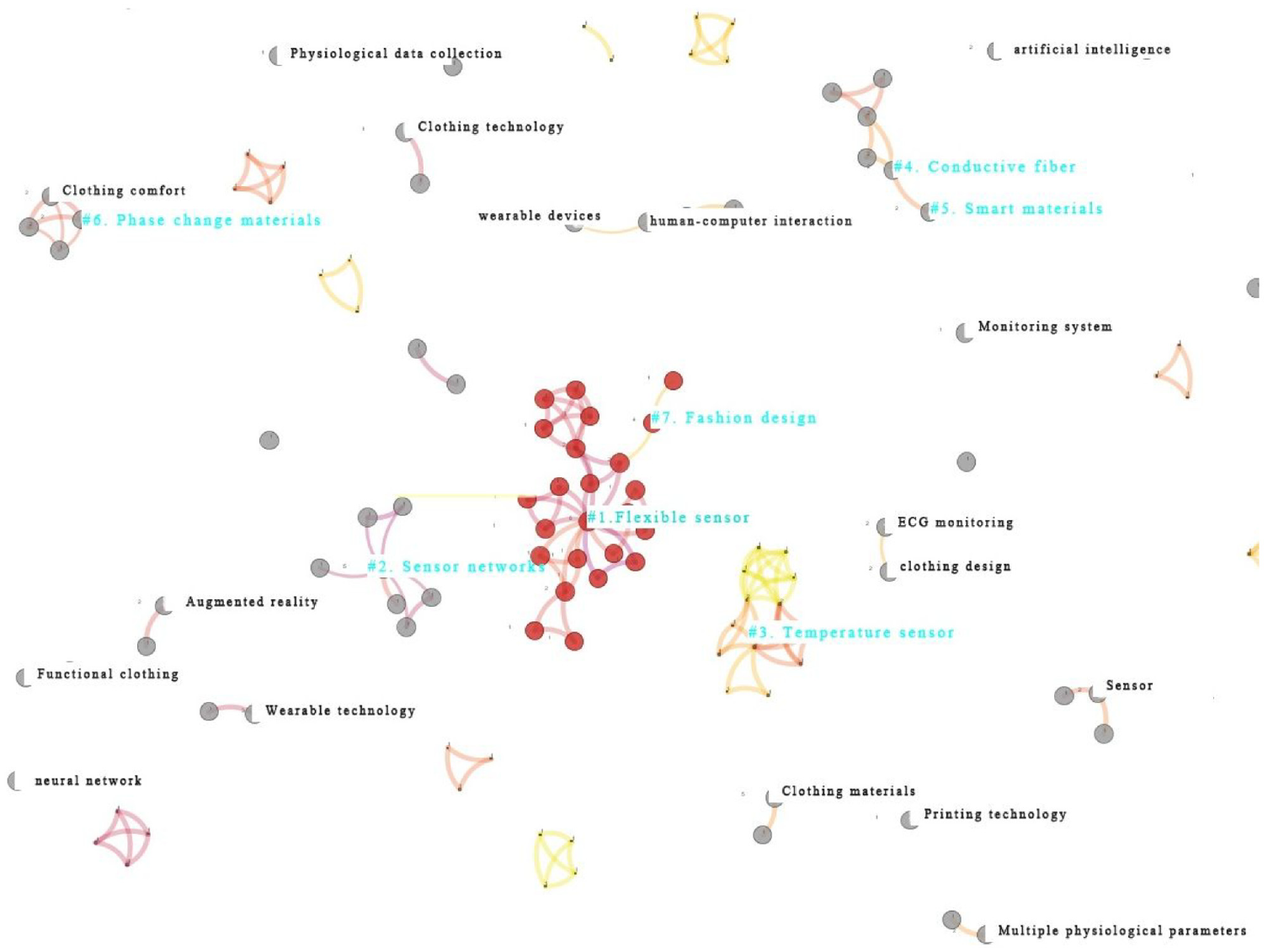
Knowledge mapping analysis of keywords in smart clothing research in China.
Judging from the current research status at home and abroad, most of the research has been carried out on wearable devices and flexible materials, and certain progress has been made. Foreign countries will have more advantages in research depth compared with domestic ones. However, there are fewer studies on wireless network technology at home and abroad, especially BAN, which is suitable for combining with smart clothing and has more single research on network technologies such as Bluetooth and global positioning system (GPS), that is, independent network communication and independent sensor sensing, which will lead to low interaction, low data sharing, and high power consumption between independent sensors. How to solve the problems of data sharing and excessive energy consumption? This is also the key issue to be studied in this article. Any new thing will produce a series of problems with the development of the situation, so how to analyze the relevant evaluation criteria before entering the market to avoid the occurrence of related problems is another research question of this article. This is future trend of smart clothing development, It is also a technical direction that must be broken through.
Medical health monitoring
Smart clothing is currently mainly used in the medical, sports, and entertainment fields, but from the functions, more is based on the physiological data monitoring of the human body; it is also a tool for smart clothing to assist in monitoring physiological data. There are also wearable devices such as smart watches, smart headbands, smart rings, and smart glasses that monitor physiological data on the market. At present, wearable devices are still concentrated in the field of “wearing.” Even smart clothing with the concept of “wearing” has many limitations.
Medical health monitoring can be divided into two types: the wearable (including clothing) and instrument; based on the focus of this study, only the wearable devices are described. In 2014, Google released the smart contact lens tear blood glucose monitoring project, 13 which plans to embed a micro-sensor in the contact lens to monitor the blood glucose value in the tears of patients in real time, replacing the traditional detection method and reducing the pain of patients. KickStarter has released a headband called Prolivio. 14 Prolivio adopts a new thermoelectric cooling technology, which can instantly produce the coldness of the ice pack and effectively relieve headaches, built-in portable cooler, and processor temperature control technology, which can adjust the temperature at any time; it can also be connected to a smartphone and controlled by app Adjust the temperature of Prolivio. Monash University researchers’ revolutionary portable blood pressure monitoring device 15 uses continuous wave radar (CWR) and photoplethysmography (PPG) sensors to calculate continuous blood pressure measurements. CWR and PPG sensors were placed on the sternum and left earlobe of the participants. By using radar technology to estimate the patient’s blood pressure while sitting, lying, or exercising, researchers at the University of California have developed a tattoo sticker that can continuously detect blood glucose levels and a flexible device that can be placed in the mouth to obtain uric acid data. These data are usually obtained by finger blood or venous blood test, which is very important for patients with diabetes and gout. A domestic company launched Cinvstop micro-electric pulse meter, which first detects the wearer’s body information, such as temperature, pulse, and skin resistance. Then, according to the actual situation, the electrode sends “no drug resistance” electric pulse. On one hand, it blocks nerve conduction, thus interfering with vomiting reflex and, on the other hand, delaying gastric peristalsis, so as to effectively reduce the frequency of vomiting; Feimusi Company develops a new type of heating material nano flexible heating film, which is designed by ultra-thin film technology, with two integrated sensors and flexible heating layer. The thickness of the heating layer is only 0.5 mm. Jiangnan University has developed a smart diabetic sock. Aiming at the patient’s high body temperature causing foot ulcers or even amputations, smart socks are designed, which are monitored by the temperature sensor at the bottom of the foot, transmitted to the processor of the sock, and then transmitted to the mobile app for fixed-point reporting. Foot temperature changes prevent foot ulcers in advance. Novel coronavirus pneumonia monitoring system 16 is developed by Tianjin University. It can dynamically analyze and predict the disease status of new crown pneumonia patients, monitor the blood oxygen content, respiratory rate, heart rate, posture, respiratory resistance, and other physiological indicators. The hardware module has been certified by medical devices.
In the field of medical health monitoring, foreign universities and enterprises mostly use medical health-related wearables for research and development; in China, smart glasses, smart bands, and smart clothing are regarded as the main direction of research and development. The studies’ depth and market prospect in foreign countries are not comparable in China, and foreign countries pay more attention to the direction of medical health. Generally speaking, physiological monitoring is the key direction in the wearable field at present and in the future. Changes in physiological data will have an impact on human behavior, thoughts, and actions. There is a lack of research on the location of physiological data monitoring at home and abroad, and most of them are monitored by using wearable equipment alone. Relatively speaking, physiological monitoring is an important way for medical health to obtain data information. At present, medical health monitoring equipment is only a single monitoring process uploading to the cloud, without interacting with other wearable devices on the human body, and resources will not be fully utilized. Of course, the human body needs data of many parts. So when smart clothing is combined with BAN, not all the sensor monitoring data covered by the BAN are needed, and it will also lead to data waste. How to better solve the process of arranging the monitoring positions (nodes) on the human body is a problem.
Methods
Analysis of multiple physiological signals in human body
The physiological signals represent a process of changes in the state and condition of the body. 17 Cardiovascular and cerebrovascular diseases, myocardial infarction, and other unexpected diseases, due to the lack of advance prevention and diagnosis, often lead to the death without treatment. Cancer, heart disease, diabetes, hypertension, kidney diseases, and other diseases are involved in the changes of various physiological signals, such as heart rate, blood pressure, temperature, and others. Smart clothing can continuously monitor the physiological data of the human body through the combination of various sensors and other smart elements, thus meeting the needs of real-time monitoring of the human body.
Features of smart clothing for physiological monitoring
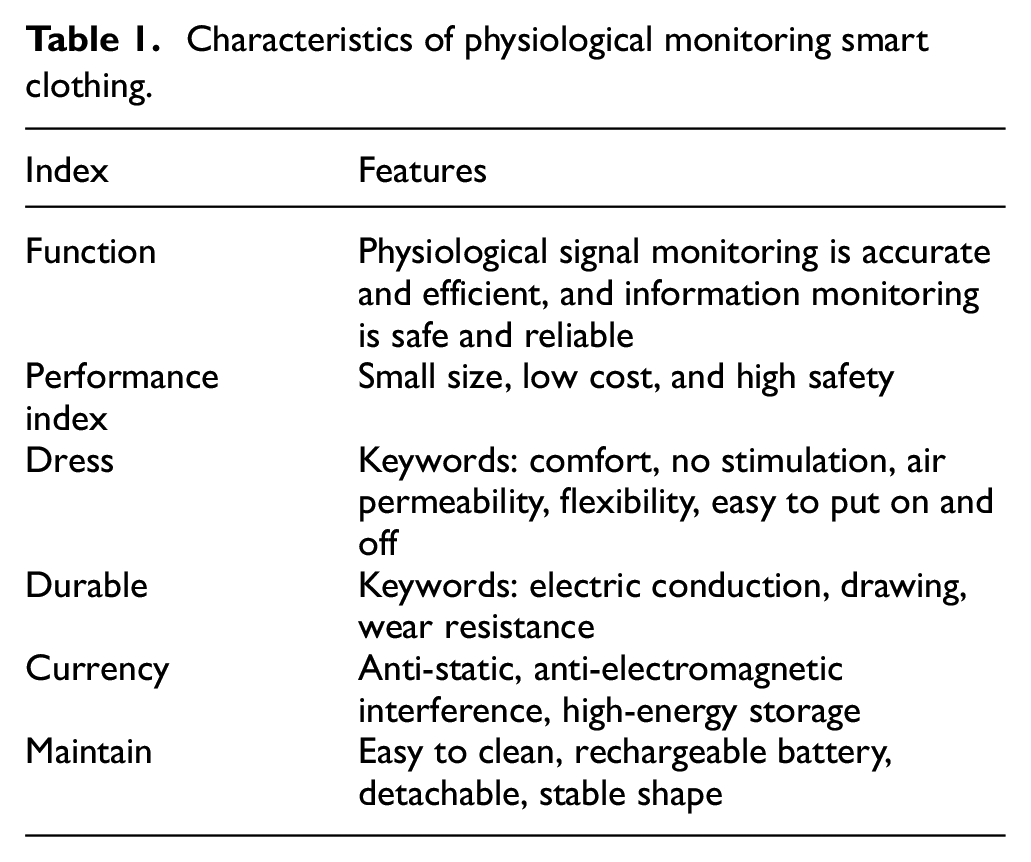
Smart clothing for physiological monitoring, as a kind of close-fitting clothing, can monitor various physiological signals of the body in real time, and it should have certain characteristics in terms of performance indicators, wear, durability, general purpose, and maintenance, as shown in Table 1.
Characteristics of physiological monitoring smart clothing.
Basic physiological data of human body
In medical diagnosis, it is necessary to collect the basic physiological data of humans as the basis of medical diagnosis. The basic physiological data of the human body mainly include ECG, heart rate (HR), respiratory rate (RESP), body temperature (TEMP), blood pressure (BP), blood oxygen saturation (SAO2), and pulse, which have normal range values. Smart clothing for physiological monitoring in the wearing process can be used to detect human body indicators and the collection locations of data mainly include chest, armpit, fingers, and arms. There are certain requirements for signal frequency and the data transmission rate during detection. The relevant physiological parameters of adults are shown in Table 2.
Adult basic physiological data parameters.

ECG: electrocardiogram.
Requirements and key technologies of BAN transmission
BAN, also known as a wireless personal area network, is a wireless network composed of wearable or embedded devices around the human body through wireless technology. The most recent international standard adopted at present is the IEEE802.15.6 standard, which is used primarily in the early stages as continuous monitoring and recording of physiological data of chronic patients, providing a basis for treatment for medical staff. As the smallest coverage network, the BAN has broad application prospects in many fields such as medical treatment, health care, and consumer electronics. Clothing is the second layer of skin of the human body, combined with the BAN, forming a personal area network around the clothing, which can monitor various diseases and has a wide range of applications in a variety of fields. Therefore, the researchers not only analyzed the collection types of physiological data and the location of human body but also analyzed the typical communication technology structure of BAN, and put forward the current challenges of BAN.
Acquisition and analysis of typical physiological data
ECG signal acquisition
When collecting the ECG signals, the electrode has good stability, accuracy, and other performance, and it has an important position in wearable monitoring.18,19 In the signal exchange between the human body and the electrodes, biomedical electrodes are needed as the conversion medium. When the human body is measured by the electrodes, the human body fluids and tissue fluids can be used as an electrolyte solution; the traditional electrode mostly adopts a disposable Ag/AgCl sticking electrode, also known as a wet electrode. However, as it is a disposable product, it cannot be repeated or monitored for a long time, and its conductivity will decline after drying, so it is not suitable for the wearable field. The new flexible electrode is suitable for wearable clothing system. At present, the new wearable electrodes mainly include metal dip-coated fabric electrode, polymer dry electrode, hollow micro-needle electrode, carbon nanotube array electrode, carbon nanotube conductive fiber electrode, and copper sputtering fabric electrode.20,21
Temperature signal acquisition
Temperature signal acquisition is simpler than ECG signal acquisition; on one hand, body temperature is non-electrical, and in the measurement, it is not interfered with by other electromagnetic signals, and on the other hand, body temperature changes slowly, and the acquisition method is more direct. 22 In order to improve the comfort of wearable clothing, the flexible smart temperature sensor is usually used. The body surface temperature of all parts of the human body varies greatly and is influenced by the environment. In winter, the temperatures of the hands and feet are low, but the temperatures of the head and the viscera change small; the changes in body temperature and ambient temperature are shown in Figure 3.

Changes in body temperature and ambient temperature.
Human movement signal acquisition
The application of human motion signals is very wide, including the analysis of athletes’ movements, medical monitoring, and safety protection. The typical postures detected and discriminated in smart clothing include 9 postures such as sitting, standing, lying down, bowing, walking, running, upstairs, downstairs, and biking. Wearable motion signal collection is mostly realized by wearable sensors, such as accelerometers, magnetic field meters, and motion inclination sensors, which dynamically measure the output signals of the limbs in the gravity field, magnetic field components, and angular velocity, which are processed and analyzed by the processing module, so as to recognize the human body movement posture. The method is simple in operation and low in cost, and can accurately estimate the movement attitude. The sensor’s distribution in the clothing is mainly the head, chest, cuff, waist, and leg: sensor 1 (collecting electrical impedance respiration chart, etc.), sensor 2 (capturing head impact data), sensor 3 (non-invasive wireless drug administration glucose monitoring system), sensor 4 (obtaining physiological data), sensor 5 (activity monitor), sensor 6 (electronic health recorder), sensor 7 (monitoring water state in the body), and sensor 8 (detecting user’s walking postures and modes); the sensor deployment is shown in Figure 4.

Sensor deployment.
Intelligent garment - wireless body area sensor network (IG-WBASN) of smart clothing for physiological monitoring is the bottom layer of the medical wireless sensor network, and is the basis of local area network and wide area network. The scope of IG-WBASN is human body area and is the most basic component of wireless body area sensor network (WBASN). The IG-WBASN is composed of various sensor nodes deployed on smart clothing, which will acquire the data to conduct analysis, and the data will be uploaded to the local area and wide area networks. The key technologies applied include ZigBee, GPS, Global System for Mobile Communication (GSM)/General Packet Radio Service (GPRS), and others. 23
Requirements for network transmission
The deployment of IG-WBASN sensor nodes on the human body generally requires the characteristics of light weight and miniaturization. In addition, it has certain requirements on the network transmission rate, reliability, mobility, power consumption, transmission time, and others. 24
Transmission rate
There are many kinds of instruments used in medical testing, and they also have different requirements for transmission rate. The frequency of acquisition is from 1 Hz to several thousand hertz. The frequency of ECG acquisition is 200 Hz, and the frequency of electroencephalogram (EEG) acquisition is 1000 to 2000 Hz. In addition, the frequencies of data acquisition for chronic disease monitoring and health recovery are also very different.
Reliability
The reliability of network transmission is related to the patient’s life, health, and safety, so there are certain requirements for the reliability of network transmission. On one hand, the integrity of the data should be preserved during the network transmission process, and the privacy of the patient should be protected to ensure that the patient’s information is not leaked, and the error cannot exceed a certain range, otherwise it is very adverse to the patient treatment.
Mobility
The sensor nodes of the smart clothing for physiological monitoring are distributed on various parts of the human body. The friction between the human body and the clothing will affect the measurement results, but in the actual measurement, these subtle changes are ignored, so node mobility is almost ignored.
Power consumption
Due to the mobility of wearable nodes, battery power is generally used. Smart clothing for physiological monitoring generally needs long-term continuous monitoring, and increasing the capacity of the battery generally needs to increase the volume of the battery, which is not conducive to the wearable comfort; at present, lithium batteries are mostly used for power supply.
Transmission time
The data transmission time allows a certain range of delay, and the delay time cannot be too long, generally within a few hundred milliseconds.
Analysis of key network technologies
The smart clothing for physiological monitoring needs to collect the physiological data through the sensor nodes installed on the clothing and transmit the data through the transmission network. At present, the commonly used transmission networks include ZigBee, GPS, and GSM/GPRS.
ZigBee
ZigBee technology is a wireless connectivity technology with strong device networking features. The complete ZigBee suite includes the specification layer, application layer, network layer, data link layer, and physical layer. 25 In addition, the ZigBee network can also organize a new network form according to the requirements, in which the mesh structure has good reliability and stability, suitable for wearable smart clothing requirements of low cost, low power consumption, and low transmission rate.
GPS
GPS positioning system has been widely used in various fields; its basic principles are that the satellite continuously sends its signals, the users receive them and calculate the data and feed it back to the mobile terminals, thus realizing the effective transmission of data. 26 The main uses of GPS include navigation positioning, measurement, and time synchronization. For the users, as long as the user terminals embedded with the GPS receiving system, the user location information can be obtained free of charge.
GSM/GPRS
GSM is a global mobile communication technology, GSM transmission rate is 9.6 kbit/s, GPRS is a wireless packet interaction technology based on a GSM system, and its transmission rate can reach 115 kbit/s and is very suitable for the real-time transmission of ECG signals. 27
Current challenges of BAN
The current challenge of BAN is an important research hotspot. It can obtain users’ health information by monitoring physiological parameters. At the same time, as a smart clothing that can wear the next outlet, the combination of the two will definitely play a greater advantage and role. So, what are the challenges facing the BAN in the field of smart clothing? The researchers propose the direction of the challenges from the following four aspects.
Security and privacy
BAN can remotely monitor and obtain a large amount of physiological information. If it is leaked during the transmission process, it will be used by others, causing serious personal harm. At the same time, the physiological data are also personal privacy. In particular, BAN advocates not only connecting with sensors in the body but also going to other people in the surrounding environment for perceptual interconnection. This will also cause data security problems under uncontrollable conditions.
Data accuracy
Although the BAN can integrate the data attached to the sensors on the body, not every data information is useful to users and even doctors, which causes data waste and congestion. Therefore, how to filter and process useful value data is a difficult problem.
The problem of energy consumption
The BAN contains many nodes. Many nodes are each wearable device attached to the smart clothing (body). Based on the divergence structure of the BAN, multiple interactive nodes are formed, but each node needs battery supply and cannot be taken out at any time. Physiological monitoring is a long-term process; node and serial interface are the ports to transmit data, so how to solve the design of node and serial interface is a challenge.
Integration with smart clothing (Ergonomics)
BAN is a type of wireless sensor network. No matter which type of network forms, it will cause radiation to have a certain impact on the body. At the same time, each node (sensor) of BAN will be combined with the body. Therefore, in the design, the impact of materials, modeling, and other factors on the integrity of the combination of BAN and smart clothing should be considered.
The current challenges of BAN cannot be solved immediately. It needs more time to study and practice.
Results
Study on BAN optimization of smart clothing and evaluation criteria
The BAN design, due to the activities of the human body and the changes in the surrounding environment, the signal of the BAN has a strong time-varying nature. If the sensor node can know the change of the signal, it can adjust the transmitted power according to the human body movement and the surrounding environment. It can reduce energy consumption as much as possible. At the same time, based on the previous research foundation and the evaluation standards formulated by the country, associations, and other departments, the researchers proposed a smart clothing evaluation standard system around the BAN.
Research on BAN of smart clothing
Design optimization of wireless sensor network
Sensor node design: The collected information is screened and extracted by using MSP430 low power microcontroller (mixed signal processor), and the filtered information is transmitted to the CC2430 wireless transceiver module(system on chip (SOC) complementary metal oxide semiconductor (CMOS) solution) through the serial port and finally sent to the center node of the BAN. The sensor node design is shown in Figure 5 (MCS51 means general name of series single chip microcomputer).
Design of body area center node: The center node of the BAN plays a certain role in coordination. The core processor generally adopts ARM; CC2430 carries out various operations of data information fusion in advanced RISC machine (ARM) after obtaining the data of the sensor node, and then transmits to the cloud through GPRS module. The design of the body area center node is shown in Figure 6.
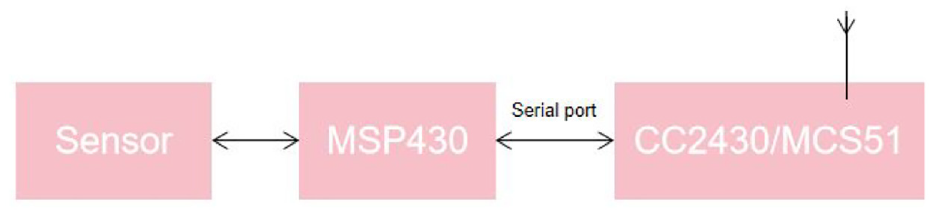
Sensor node design.

Body area center node design.
Energy consumption optimization of BAN
The energy consumption of the BAN is related to two aspects: one is the setting of the transmission power and the other is the receiving power of the signal.28,29 These two aspects are mutually restricted; the study shows that the transmission energy consumption is more than 50% of the total energy consumption, so reducing the node transmission power can reduce the energy consumption, but when the node transmission power is reduced, the signal receiving power will be affected by the transmission power and also be reduced, resulting in low transmission efficiency. Therefore, the sensor should adjust the transmission power according to the changes of human movement and the surrounding environment, so as to achieve the minimum energy consumption. 30 Centralized control and distributed control are two common methods. The centralized control sending process is more complicated and consumes a lot of energy. In order to simplify the sensor node structure and make it easier for the human body to wear, the energy consumption optimization of the BAN generally adopts a distributed control method.
Architecture optimization of BAN
The BAN of smart clothing for physiological monitoring mostly uses WBSN; considering the use environment of smart clothing and the characteristics of data transmission, the key of network transmission is to meet the transmission requirements of high reliability, low power consumption, and distributed control method. 31 The BAN of smart clothing for physiological monitoring integrates sensor technology, wireless transmission technology, and so on. It can collect physiological information of human body by using wearable sensor nodes under the premise of not affecting human body wearing, and analyze these data and send the analysis results to the medical center or guardian through remote; the medical center can judge the situation of patients with the help of these physiological data, and feed back the information to patients. 32 At the same time, the whole framework is also divided into three parts: monitoring and acquisition terminal, near-field and far-field communication technology and mobile communication mode end, and data sharing terminal. It is also a progressive relationship, and the architecture is shown in Figure 7.
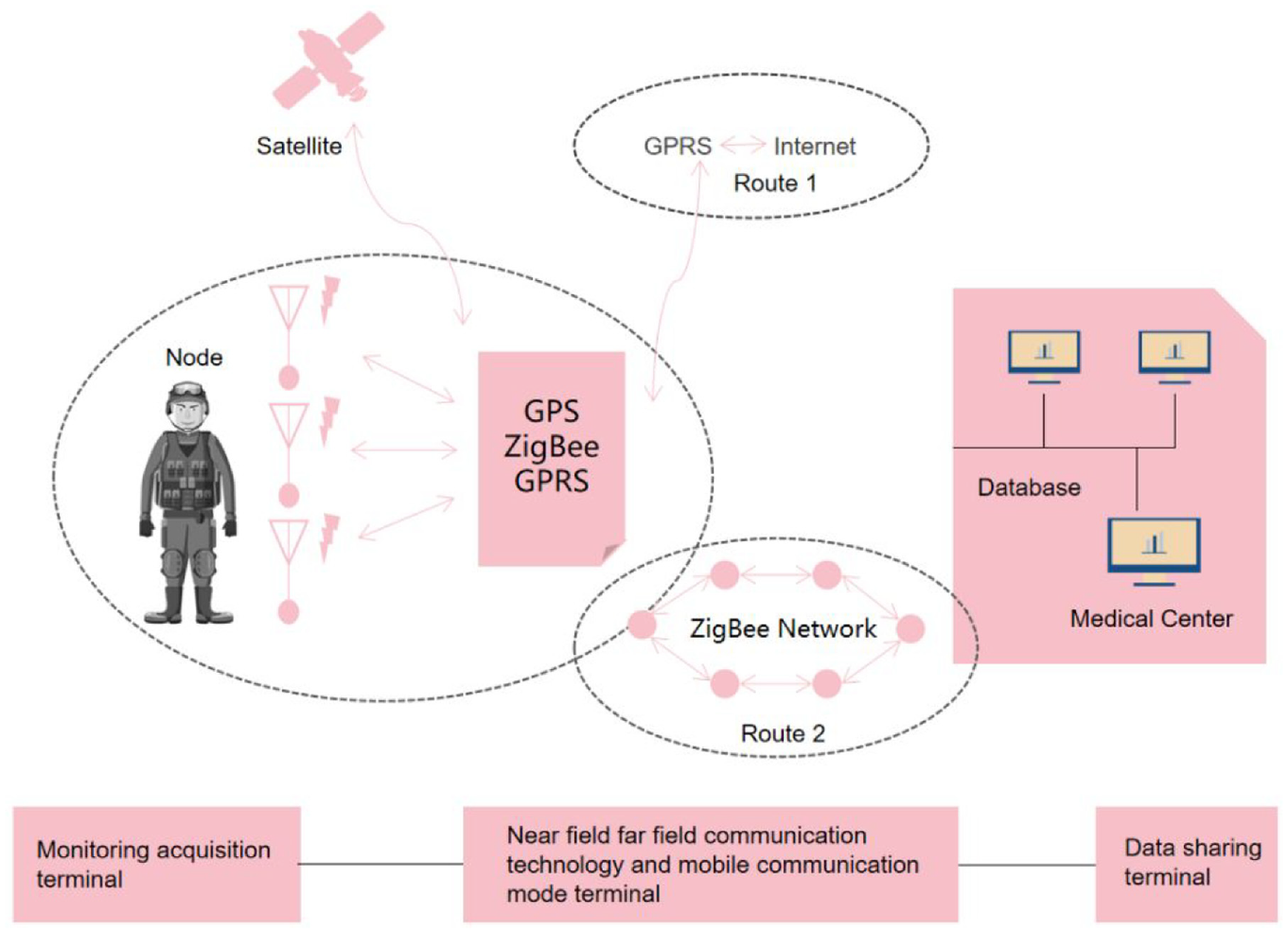
Wireless body domain sensor network architecture.
Research on the evaluation standard system of smart clothing BAN
At present, there are many scholars who study the BAN of smart clothing from the direction of physiological monitoring, but there are few evaluation standards extended to the BAN of smart clothing, and there are almost no relevant rules, regulations, and norms. At the same time, according to the current challenges of smart clothing body domain network research, the subject of the researchers is the direction of design, which needs to be guided by practice to promote the progress of discipline theory, and at the same time, theory guides practice. Therefore, in view of physiological monitoring function, it is necessary to study the BAN evaluation standard of smart clothing, and it is also an important link for the realization of smart clothing from laboratory to industrialization.
The evaluation standard system of the smart clothing BAN is to describe the relationship between the smart clothing multi-interaction process (physiological monitoring process) and the data standard and service framework of the wearable device. The whole framework is divided into two aspects. On one hand, the process and content of the physiological monitoring data of smart clothing, including four modules of user, smart clothing, mobile terminal, and medical care terminal, can be expressed as the user wearing smart clothing (collecting data, integrated transmission, and other functions); the mobile app receives data information, performs index calculation and visual data analysis, and uploads the medical care terminal (cloud) through GPRS and other methods. Medical staff can understand the patient’s physiological data in real time and can also make an appointment for on-site treatment. The above procedures are connected as a whole framework. On the other hand, the evaluation criteria of smart clothing BAN mainly include whether there is a standard for forming, whether it meets the data collection standard, whether it meets the application field, and whether it meets the three standard levels. Each link will be compared: if it meets the requirements, proceed to the next step, and if it fails, return to the original step. The entire standard evaluation system is sustainable, and any problem in any link can be solved by returning to the original place, and it is also applicable to related smart wearable products (Figure 8).

Content of evaluation standard of smart clothing body area network.
As shown in Figure 9, the evaluation standard system of smart clothing BAN is to describe the relationship between smart clothing multi-interaction process (physiological monitoring process) and wearable device data standard and service framework. The whole framework is divided into two aspects. On one hand, the process and content of the physiological monitoring data of smart clothing include four modules: users wear smart clothes (with functions of data collection, integrated transmission, etc.), the app of the mobile terminal receives data information, performs index calculation and visual data analysis, upload the medical client (cloud) through GPRS and other wireless transmission methods, and the medical staff can understand the patient’s physiological data in real time, or make an appointment for door-to-door treatment. On the other hand, the evaluation criteria of smart clothing BAN mainly include whether there are molding standards, whether it meets the data collection standards, whether it conforms to the application field, and whether it meets the three standard levels. Each link will be compared, and if it conforms to the next step, it will go back to the original step if it does not. The whole standard evaluation system is sustainable, any link problems can be solved back to the original place, and it is also applicable to relevant smart wearable products.

Evaluation system of smart clothing body area network standard based on physiological monitoring.
Conclusion
According to the World Health Organization, 30% of diseases are preventable ahead of time and can be treated early to achieve a certain effect; this is also the summary of the author’s work:
High speed, reliable and low power consumption communication network is an important part of intelligent clothing. Due to the characteristics of convenient deployment and mobility, wireless body area sensor network has a wide range of application scenarios in many fields, and still has the characteristics of high speed, reliability, low power consumption and portability after wearing clothing. At the same time, there is little research on the application combination of BAN in the most smart clothing, Therefore, according to the analysis of the comprehensive articles, the author suggests that the research of this topic has certain advanced and valuable in this field.
The characteristics of smart clothing with physiological monitoring function are put forward, and the types of adult physiological monitoring data and the physiological data acquisition forms of important parts of human body are determined. The network transmission structure suitable for the field of smart clothing is analyzed.
Put forward the current challenge of BAN, and the author puts forward the solutions in the results according to the four directions under the challenge.
The optimization design of serial port node and BAN central node in BAN is proposed, which effectively solves the problems of high-energy consumption, data sharing, and multi-interaction of equipment in smart clothing monitoring. However, the problems of battery power supply and volume size of sensors are still unsolvable, and more time is needed to study.
The evaluation standard system of smart clothing body domain network based on physiological monitoring includes two contents: smart clothing multi-interaction process (physiological monitoring) and wearable device data standard and service framework. It is sustainable as a whole. Any link can be returned to the source, and it is also applicable to other smart wearable products. At the same time, this is an evaluation test for products that have been applied to smart clothing by BAN to enter the consumer market, which can effectively improve the stability, value, and traceability of products.
Footnotes
Handling Editor: Lyudmila Mihaylova
Declaration of conflicting interests
The author(s) declared no potential conflicts of interest with respect to the research, authorship, and/or publication of this article.
Funding
The author(s) disclosed receipt of the following financial support for the research, authorship, and/or publication of this article: This research was supported by Key Special Projects of 2019 National Key R & D Plan (Project No. 2019YFB1405704) and 2020 Humanities and Social Sciences Planning Fund Project of the Ministry of Education (Project No. 20YJAZH087). The authors acknowledge the above financial support.
